IF YOU AREN'T BUILDING, YOU ARE DESTROYING
07.1 Content Pillars, Hooks and Source Assets — Part 2 of 6
Continue this assigned lesson in sequence. The teaching, supporting documents and complete available source material remain grouped with the lesson.
Identity-Based Marketing: Express Shared Beliefs and Build Voluntary Belonging
RISER NATION CORP — IF YOU AREN'T BUILDING, YOU ARE DESTROYING
Lesson purpose, outline and evidence boundary
This lesson teaches the RISER Identity-Based Marketing SOP: its theoretical premise, belief architecture, language system, seven membership stages, seven experience touchpoints, content calendar, movement practices, maintenance and databases. The original calls itself legacy Course 21, Track 4. Retain that source reference while following the actual twelve-course spreadsheet assignments.
The central proposal is that a brand can communicate shared values and a desired way of operating, alongside its practical offer. A member may identify with those values and develop relationships around the work. This is a hypothesis to apply honestly and evaluate, not evidence that every purchase is an identity decision. Source claims that identity eliminates comparison shopping, creates an unbeatable moat or produces universally superior loyalty are not established by data supplied in the SOP. Its claim about what AI can never reproduce is likewise a broad prediction.
1. Understand the three theoretical references without overstating them
The SOP names Tajfel and Turner's social identity theory, Maslow's belonging needs, and symbolic consumer value associated with Baudrillard. These references provide different perspectives; none is a conversion formula. Social identity is relevant background for considering group membership. Belonging is one part of Maslow's account of motivation, but his original article explicitly recognizes partial satisfaction and variation in ordering. Do not assume that every professional already has basic needs fully met, or that buyers pass through a rigid sequence. Maslow's original 1943 article is a supporting research reference.
The source does not identify a precise Baudrillard work or passage, so its attribution cannot be treated as a verified quotation. As separately added research, Belk's 1988 paper on possessions and the extended self discusses the relationship between possessions and identity. That is a different author and argument, not a replacement citation for Baudrillard. Use these ideas as background for asking what a purchase means to a person, rather than claiming that symbolism always determines behavior.
The practical ethical boundary in this SOP matters: communicate authentic values instead of manufacturing opposition or artificial scarcity of belonging. Membership, purchasing, referrals and agreement with the founder do not establish a person's worth.
2. Write the three supplied belief components
The source contrasts demographic questions about age, income, role and location with identity questions about who people believe they are and want to become. Both can inform research; the contrast does not prove that one group always compares options while the other only seeks belonging. Its proposed social-identity mechanism is that salient group membership can shape self-concept and norms, which the author applies to participation, implementation and referral. That commercial extension is the author's argument, not a demonstrated RISER result. Symbolic value asks what a purchase expresses alongside functional benefit; it does not establish that every course purchase is an identity declaration. The reference to seven macro forces in legacy Course 5 is an external dependency, not seven fully supplied theories here.
The architecture contains We Believe, We Reject and We Are Building. We Believe states convictions that shape action. We Reject names approaches the brand declines to use and why. We Are Building describes the future the work is intended to support. A generic aspiration such as being excellent is less useful than a statement that guides a real choice. A commercial claim still requires evidence even when written as a belief.
Develop these components in four steps. First, spend the source's proposed sixty minutes collecting five to ten beliefs, five to ten rejected approaches, a description of the person who succeeds in the work, and a future vision. Second, test conviction: can you state the belief clearly and explain a reasonable opposing view? Third, test authenticity against actual decisions. Fourth, articulate the position precisely enough to guide content or behavior.
The final format requests five belief statements, three rejection statements and a two-to-three-sentence vision. The master checklist calls this a six-section document, but only three sections are actually supplied. Preserve that discrepancy. Do not invent three missing sections and attribute them to the source. Reasonable disagreement is a useful test of a substantive position; it does not mean every valuable belief must be controversial.
3. Define We and They around approaches
The SOP's three-part contrast identifies shared values, an alternative approach and an invitation to transition. Define We through observable commitments rather than flattery. Define They as a way of working that the brand challenges, rather than a list of people to attack. Describe the transition as an invitation to try the chosen practices.
Some source wording labels people while attempting to criticize an approach. In teaching, make the distinction explicit: evaluate the behavior or method. Do not equate disagreement, leaving a program or declining a purchase with moral failure. A community can have clear standards and still allow dissent, changing beliefs and voluntary exit.
4. Build all three parts of the shared lexicon
The first part is ten to fifteen named concepts. The source examples include Sovereign Operator, First Revenue Path, Hard Organic Proof Threshold, Psychographic DNA, Attractive Character and Buyer Stage. Record an actual definition and usage example for each adopted term. The SOP does not fully define every example, so a familiar-sounding label is not evidence that its missing framework has been supplied. Use of a name also does not establish ownership of it.
The second part is ten to twenty shared references: works or ideas associated with Hormozi, Kennedy, Brunson, Schwartz, Kahneman, Cialdini and Thaler. It mentions an epiphany ladder, System 1/System 2 and an 80/20 idea, but does not supply every definition or a common formula. Identify the exact work and meaning before teaching a named framework in detail. Attribution should clarify the contribution, not imply endorsement by those authors.
The third part is ritual language used during recurring community activity: progress, building and sovereign are examples of the source's vocabulary. A phrase becomes useful when members understand what action it points to. Repetition without shared meaning is branding decoration, not evidence of belonging.
5. Recognize all seven formation stages
At recognition, a person sees language or beliefs that match a concern. Listen for their own words; do not assume a page visit proves identification. At identification, they begin using the concepts or expressing alignment. Help them understand the terms rather than demanding repetition.
At first purchase, the source treats commitment and goal-oriented onboarding as the next stage. Keep the purchase outcome distinct from an emotional claim about identity. At community entry, create context and peer connections so the person can participate. At result validation, recognize an actual result with the member's permission and supporting evidence. An aspiration is not a completed milestone.
At advocacy, members may voluntarily refer or discuss the work outside the community. Do not fabricate testimonials or treat referrals as compulsory. At full membership, a long-term participant may contribute as a mentor, creator or facilitator. These are examples of contribution, not a requirement that every customer follow one irreversible path. The seven-stage model is the SOP's planning framework, not a validated diagnosis of an individual's identity.
6. Design the seven belonging touchpoints
The immediate welcome should combine practical logistics with a clear statement of the shared work. During the first seven days, offer a useful quick-win opportunity; seven days is the planning window, not a guarantee of an outcome. The introduction prompt requests name, context, a ninety-day goal and a belief. Let members disclose appropriately and participate voluntarily.
At a named milestone, recognize real evidence of progress. During live sessions, combine instruction with opportunities for peer connection. Between programs, make continued content and community participation an opt-in path with clear access terms. At exit, use graduation or alumni options where appropriate while respecting the person's choice to leave and any applicable access limits.
The source associates weak touchpoints with particular retention failures. Treat those connections as hypotheses to investigate. Review actual feedback rather than assuming a welcome message or ritual caused every later result.
7. Plan four kinds of identity content
The source recommends We Believe pieces two to four times per month, rejection-of-an-approach pieces one to two times per month, a vision piece monthly, and recognition weekly inside the community with monthly email or social use. These are editorial planning frequencies, not platform rules or proven optimal volumes.
Each type serves a different purpose. A belief piece explains a conviction and its practical consequence. A rejection piece explains an alternative method without attacking people. A vision piece connects today's work with a future outcome. Recognition documents an actual member contribution or result with appropriate context and permission.
The maintenance checklist separately requires at least one belief or rejection piece per month. That is a minimum checkpoint, not the full recommended calendar above. Source examples involving fifty thousand followers without buyers or four organic-growth stages are illustrations; they do not establish actual RISER results or universal benchmarks.
As an authored connection to the broader curriculum, pair identity content with a clear offer and an appropriate next step. Shared values do not replace evidence of the offer's usefulness, scope or delivery. Keep the Brunson and Hormozi themes grounded in the particular frameworks actually taught elsewhere, rather than attributing this entire SOP to them.
8. Distinguish five longer-term movement practices
The SOP proposes a results wall after roughly twelve to eighteen months, shared standards at eighteen to thirty-six months, recurring annual or semiannual events becoming established around years two to three, member-created value around years two to four, and a shared history around years two to three. Its broader movement horizon is three to five years, rather than a first-twelve-month expectation.
These are source planning heuristics. A date alone does not create a movement. Build a results wall from verified outcomes, standards from actual practice, events around useful interaction, member contribution through voluntary opportunities, and history through an accurate record. Assess readiness from the evidence and resources available, rather than representing these ranges as scientifically established timelines.
9. Maintain six signals and allow beliefs to evolve
The monthly checks concern belief content, lexicon use and recognition. The quarterly checks concern belief review, convergence between We and They, and dilution or confusion in the lexicon. Look for changed evidence, actual member understanding and meaningful participation.
If a former opposing approach improves or converges with the brand's practices, acknowledge the progress. Do not create a new enemy to preserve differentiation. If a belief changes, communicate the former position, the evidence and the new position. Update shared language when it becomes confusing. Truth and usefulness matter more than preserving a slogan unchanged.
10. Connect all eight integration points
The source maps identity work into legacy Course 17 narrative, Course 22 top-of-funnel content, Course 25 sales pages, Course 28 email sequences and webinar material, the Attractive Character SOP, an awareness calendar for stages one and two, value-ladder continuity or premium offers, and Dream 100 partner selection based on belief alignment. Preserve these historical cross-references without reassigning the document to new course numbers.
Use the belief statement to support narrative consistency; language and recognition to support early awareness; specific, supportable claims on sales pages; appropriate belief context in emails three to five and webinar material; character consistency in the companion SOP; and clear participation choices in continuity offers. Partner alignment is a selection consideration, not permission to send outreach. Where a linked SOP or its exact framework is absent, record the dependency rather than inventing its contents.
11. Preserve the three database designs
The Brand Belief table has nine fields: an ID using the BBS/type/sequence pattern, one of the three belief types, full text, conviction-test boolean, authenticity-test boolean, date, status of Active/Evolved/Retired, an evolution note and content count. Store the actual statement and revision context so a status change is traceable.
The Lexicon table has eight fields: LEX ID, term, one of the three types, definition, first date, usage frequency of Core/Regular/Occasional, adoption of Operator Only/Emerging/Community Wide, and maintenance notes. Adoption labels require observed evidence; a founder's preferred phrase is not automatically community-wide language.
The Stage Tracking table has six fields: member ID, one of the seven stages, the stage-three date, stage-five date, stage-six evidence, and signals covering welcome, goal post, milestone, content participation, live event and long-term contribution. It does not supply a separate date field for every stage. Do not describe this sparse design as comprehensive tracking. Record only necessary, appropriately handled information and explain what a stage label means in the program.
These are proposed schemas, not databases already created or populated. The original blank templates and all twenty-one native tables remain in the appendix.
Completion check and resources
Prepare the source's initial belief/rejection drafts, the three-part statement, defined lexicon, stage and touchpoint plan, content schedule, and maintenance responsibilities. Test the first member-introduction experience only when an actual authorized community context is available. This SOP contains no completed member records or proof that those implementation tasks have happened.
- Complete assigned Identity-Based Marketing SOP. - Maslow: A Theory of Human Motivation, original article. - Belk: Possessions and the Extended Self, separately added research. - Companion Attractive Character Content Bible. - Companion Attractive Character Development System.
The SOP's original footer domain is preserved in its appendix as source data. Current RISER branding uses www.risernationcorp.com.
Additional references: Tajfel and Turner's original social-identity chapter, hosted by MIT is a primary background resource; PDF resolved but its text was not extractable in this check, so no new passage-level claim is made. Airtable is the named database implementation resource, not a database already created.
Assigned source links
Source tables with original row and column relationships
| Identity Marketing vs Demographic Marketing — The Fundamental Distinction Demographic marketing asks: 'Who are these people?' and builds messaging around characteristics — age, income, job title, geography. Identity marketing asks: 'Who do these people believe they are, and who do they want to become?' and builds an ecosystem that reflects and supports that self-concept. The demographic marketer targets. The identity marketer attracts. Targeted buyers compare options. Attracted tribe members belong. Belonging is not a purchase decision. It is a state of being that produces purchase as a natural expression. |
| The Anti-AI Competitive Moat — Why Tribal Identity Cannot Be Automated In the context of the seven macro forces from Course 5, identity-based marketing is the most durable defence against AI commoditisation. AI can produce equivalent information. AI can mimic writing styles. AI can generate customer journey maps and value propositions. AI cannot produce a genuine sense of belonging. It cannot be the community that a specific type of person feels genuinely at home in. The operators who invest most deliberately in tribal identity are building the competitive position that is structurally most protected from the macro forces reshaping the knowledge business landscape. |
| The Ethical Foundation — Authentic Identity, Not Manufactured Tribalism Identity-based marketing carries a significant ethical responsibility. The tribal identity being built must reflect genuine, authentic values — not manufactured opposition, artificial scarcity of belonging, or manipulated exclusivity. The distinction: authentic tribal identity says 'this is who we genuinely are and what we genuinely believe.' Manufactured tribalism says 'we have engineered a sense of belonging to produce loyalty that increases our revenue.' The first builds a real community that produces real loyalty. The second produces resentment when the manufacturing is eventually recognised. |
| The Commercial Implication of Social Identity Theory When a buyer identifies a brand's community as a group they belong to or aspire to belong to, the brand is no longer just a product provider. It is a social identity asset. The buyer's motivation to remain in good standing with the community — to implement the programmes, to share the results, to refer others who belong — is driven by the same social identity maintenance mechanisms that drive loyalty to any meaningful group. This is not a marketing trick. It is the application of fundamental human social psychology. |
| The Knowledge Business Symbolic Value Signal Every knowledge business programme purchase is a symbolic statement: 'I am the kind of person who takes this kind of action to achieve this kind of result.' A buyer who purchases a programme on systematic business-building is not just buying a curriculum. They are asserting an identity: 'I am serious about building this systematically.' The brand that most clearly represents and validates that identity assertion will consistently outperform competitors offering equivalent functional value. |
| THE BRAND BELIEF SYSTEM What the Brand Stands For at an Ideological Level The documented set of core beliefs that define the brand's worldview and attract the tribe |
| Component | What It Documents | How It Is Different from Generic Positioning | What It Produces Commercially |
| Core Beliefs (We Believe...) | The specific positive convictions about the problem domain, the approach to transformation, and the nature of genuine success. These are the beliefs that unite the tribe — the shared intellectual and moral ground on which the community stands. | Generic positioning says 'we are passionate about [topic]' or 'we are committed to [outcome].' Core beliefs say 'We believe that [specific, sometimes non-obvious conviction about the domain].' The belief must be specific enough that a significant number of people would disagree with it. A belief everyone agrees with is not a differentiating belief. | Buyers who share the core beliefs feel immediate recognition — the brand is articulating what they already believe but may not have been able to articulate. Recognition is the fastest path to trust. |
| Contrarian Positions (We Reject...) | The specific conventional wisdom the brand explicitly disagrees with. These are not generic 'the industry is wrong about everything' statements. They are specific, named positions that the market commonly holds and that the brand, with specific reasoning, rejects. | Generic contrarian positioning says 'most [category] advice is wrong.' Specific contrarian positioning says 'We reject the conventional belief that [specific named belief], because [specific reasoning from evidence].' The specificity is what makes it credible rather than oppositional for its own sake. | Buyers who share the rejection of the conventional wisdom experience the brand as the first operator who sees what they see. This produces a depth of identification that feature-and-benefit marketing cannot reach. |
| The Vision (We Are Building...) | A specific description of the world that the brand and its community are working to create. Not a corporate vision statement but a genuine articulation of what genuinely changes — for individual buyers and for the broader domain — if the brand's approach succeeds at scale. | Generic vision statements describe the company's success. Tribal vision statements describe the community's collective impact. 'We are helping knowledge operators build sovereign businesses' is a company statement. 'We are building a generation of operators who have escaped the dependency economy' is a movement statement. | The vision transforms the act of purchasing from a consumer transaction into participation in something larger than a personal goal. Buyers who join a movement are qualitatively more engaged, more loyal, and more likely to refer than buyers who purchase a product. |
| BRAND BELIEF SYSTEM DEVELOPMENT — The Complete Articulation Process STEP 1 — THE RAW BELIEF INVENTORY (60 minutes) Answer each question without editing for length, diplomacy, or marketability. Write exactly what you genuinely believe, including the parts that feel risky to say publicly. What do you believe about [the problem domain] that most operators in this space do not say? [Write 5–10 beliefs, as specific as possible] What approaches to [the transformation] do you believe are fundamentally wrong, inefficient, or harmful? [Write 5–10 specific rejections, naming the conventional approach] What do you believe about the kind of person who succeeds at [the transformation]? [Write your genuine conviction — not the diplomatic version, the real one] What would the world or this market look like if your approach became the dominant approach? [Write the specific, ambitious vision — not modest, not aspirational language, the specific world] STEP 2 — THE CONVICTION TEST For each belief or rejection: would a significant number of people in your target market disagree? If yes: it is a genuine differentiating belief. Keep it. If no (everyone agrees): it is not a belief, it is a platitude. Discard or make it more specific. STEP 3 — THE AUTHENTICITY TEST For each belief or rejection: do you genuinely hold this conviction, or is it strategic positioning? If genuinely held: keep it. You can defend it under pressure. If strategic: discard it. A belief you do not genuinely hold will eventually be exposed as performance, and nothing damages tribal identity more than the discovery that the tribe's foundation was manufactured. STEP 4 — THE ARTICULATION REFINEMENT For each surviving belief: write it in the most specific, most honest, least diplomatic language available. The test: if someone read this belief and thought 'that person is serious about this — and I do not entirely agree,' that is a better articulation than one that no one could disagree with. THE BRAND BELIEF SYSTEM DOCUMENT FORMAT WE BELIEVE: [Belief 1 — one specific sentence] [Belief 2] [Belief 3] [Belief 4] [Belief 5] WE REJECT: [Rejection 1 — name the specific conventional wisdom, then the reasoning] [Rejection 2] [Rejection 3] WE ARE BUILDING: [The specific vision — 2–3 sentences describing the world that changes if this community succeeds at scale] |
| THE WE vs THEY FRAMEWORK Creating Tribal Identity Through Shared Values and Shared Opposition The precise mechanism for defining who is in the tribe and why it matters |
| Element | Correct Application | Incorrect Application | The Commercial Difference |
| Defining WE | WE is defined by shared values, shared beliefs, and a shared approach to the problem — not by shared demographics or shared success metrics. 'We are the operators who have decided to build this systematically, who value sovereignty over growth, and who believe that a knowledge business should serve the operator's life rather than consume it.' | WE is defined by flattery: 'We are the serious operators,' 'We are the committed ones,' 'We are the ones who are not afraid to do the work.' This defines the tribe by implied superiority over non-members rather than by genuine shared values. | Correct WE definition attracts buyers who genuinely share the values. Incorrect WE definition attracts buyers who want to identify as 'serious' but whose behaviour is driven by status-seeking rather than genuine alignment. |
| Defining THEY | THEY is defined by an approach, a mindset, or a set of beliefs — not by a group of people. 'THEY are the people who believe that knowledge business is primarily about content volume, follower counts, and reach — an approach we have seen produce burnout without the sovereign income its practitioners were promised.' | THEY is a group of real people — named competitors, named influencers, or identified buyer demographics. 'THEY are the operators who follow [specific competitor's] advice.' Defining THEY as people rather than beliefs produces tribalism that is adversarial toward real individuals. | Correct THEY definition gives the tribe a shared orientation — a direction to face — without creating genuine animosity toward real people. Incorrect THEY definition produces an adversarial dynamic that eventually turns toxic. |
| The Transition | The transition from THEY to WE is an invitation rather than a judgment. 'We have all been THEY at some point — most of us started with the content-volume approach because it is what everyone teaches. The path to WE is a specific decision about what you are optimising for.' | The transition implies that being THEY is a moral failure rather than an information deficit. 'Some operators are still stuck in the old paradigm' positions THEY as people who are simply not good enough to be WE. | An invitation that says 'I have been there, here is how I moved, and here is the door if you want to come through it' produces far more tribe formation than a judgment that says 'some people will never get it.' |
| Lexicon Type | Definition | Examples from the RISER Nation Context | How to Develop It |
| Named Concepts | Specific terms for ideas, approaches, or states that the brand has named in a way that is distinctive to the community. These terms do not need to be invented — they need to be owned through consistent and specific use. | 'Sovereign Operator', 'First Revenue Path', 'Hard Organic Proof Threshold', 'Psychographic DNA', 'Attractive Character', 'Buyer Stage Tagging'. Each of these terms has a specific, documented meaning within the RISER Nation system that is different from how the same concept might be described generically. | Identify the 10–15 concepts in the brand's system that are most central to the transformation. Give each a specific, memorable name. Use the name consistently in all content, programmes, and community interactions. The name becomes the shorthand for the concept in the community. |
| Shared References | Specific books, frameworks, operators, or moments that the community references as shared intellectual heritage. Members who have these references can immediately recognise other members. | References to specific works (Hormozi, Kennedy, Brunson, Schwartz, Kahneman, Cialdini, Thaler), specific frameworks ('the Epiphany Bridge', 'the value ladder', 'System 1 and 2'), specific concepts ('the 80/20 of value ladder revenue', 'the First Revenue Path'). Members who share these references can communicate with efficiency and depth. | Document the 10–20 references that are most central to the brand's intellectual worldview. Include them consistently in content and programme delivery. Make the shared reference system explicit to new members in the onboarding sequence. |
| Community Rituals and Language Patterns | Specific phrases, greetings, or patterns that are used by community members and that create a sense of in-group recognition. | Specific ways of marking progress ('I passed the Hard Organic Proof Threshold'), specific ways of describing the community orientation ('building sovereign'), specific phrases that community members use to describe the approach they share. | These emerge organically from genuine communities but can be seeded through consistent use of specific language in the operator's own content and in community facilitation. The seed language should come from the Brand Belief System's most distinctive convictions. |
| THE TRIBE FORMATION SEQUENCE Turning Individual Buyers into Community Members The seven-stage process from first contact to full tribal membership |
| Stage | Name | What Happens | Identity Signal Deployed | What Deepens the Identity |
| Stage 1 | Recognition | The potential buyer encounters the brand's content and experiences the recognition signal: 'this describes my situation more accurately than anything I have encountered.' They feel seen before any relationship exists. | The Brand Belief System's We Believe statements are deployed in content. The specific buyer language from the Psychographic DNA Language Bank produces the recognition experience. | The recognition experience is amplified by content that names the specific beliefs and rejections of the Brand Belief System. Buyers who feel recognised seek more of the operator's content immediately. |
| Stage 2 | Identification | The buyer begins to identify with the brand's worldview. They do not just agree with the content — they begin to see their own situation through the brand's conceptual framework. | The Cultural Lexicon is introduced: named concepts are defined and used consistently. The shared references are introduced. The buyer begins to adopt the brand's language to describe their own experience. | Content that provides the community's conceptual framework (the named concepts, the specific approach, the rejection of conventional wisdom) gives the buyer a new way of understanding their problem that they associate with this brand. |
| Stage 3 | First Commitment | The buyer makes their first purchase. This is the first behavioural expression of the identity relationship — the buyer is now someone who has invested in this approach. | The purchase is framed using identity-based language: 'you are now someone who has decided to build this systematically.' The commitment is named as an identity-consistent act, not a transaction. | The onboarding experience reinforces the identity: the community goal-setting post, the named community label for new members, the first use of Cultural Lexicon terms in the buyer's own writing. |
| Stage 4 | Community Entry | The buyer enters the programme's community environment (if one exists) and encounters other members of the tribe. They discover that others share their beliefs, their struggles, and their language. | The community experience confirms that the tribe is real — not just an operator and an audience but a genuine group of people who share something. The community goal post is the first social identity act. | Facilitating specific connections between new members whose situations are most similar. Creating the first moment of mutual recognition between community members who have not met before. |
| Stage 5 | Result and Validation | The buyer achieves a result from the programme and shares it with the community. The community validates the result and reflects it back as tribal achievement. | The result is documented using the community's specific language. The testimonial uses Cultural Lexicon terms. The achievement is recognised by the community in a way that reinforces the community's shared standards. | The community celebration of the result deepens the buyer's tribal identity: the result was produced by the community's approach, witnessed by the community, and validated by the community. |
| Stage 6 | Advocacy | The buyer begins sharing their experience with people outside the community. They are now representing the tribe in their own sphere. | The buyer uses the Cultural Lexicon in conversations outside the community. They refer others who share the tribal values. They become a distribution mechanism for the brand through authentic advocacy. | Providing members with the specific language to represent the community's approach outside the community. Recognising and celebrating referrals and advocacy within the community. |
| Stage 7 | Full Membership | The buyer is a full member of the tribe: they identify with the community, contribute to it, refer others into it, and use the community's conceptual framework as their primary operating system. | The community recognises long-term members in specific ways. The Cultural Lexicon is fully internalised. The member's own content and communication reflects the community's values and approach. | Specific long-term member recognition systems. Opportunities for advanced members to contribute to the community's development (mentoring, content contribution, event facilitation). |
| Touchpoint | The Belonging Signal Delivered | Specific Design Element | What a Missed Belonging Moment Produces |
| Welcome email (immediately post-purchase) | You have made a decision consistent with who you are. You are now part of something specific. | Specific identity-framing language: 'You are now a RISER Nation operator.' Named community label. First invitation to the community goal-setting ritual. Specific named description of what is different about the community they are entering. | A generic 'thank you for your purchase' email that contains only logistics. The buyer's first post-purchase impression is transactional. The identity moment is lost. |
| Onboarding module (first 7 days) | You are not starting from zero. You are entering a structured system with a documented path that has produced real results for real people like you. | The Quick Win module delivers a specific, visible result in the first 7 days. The result is framed as the community's standard, not the operator's exception. | An onboarding that is entirely curriculum navigation with no identity orientation. The buyer knows where to find the content but does not know who they have become by joining. |
| Community introduction ritual | You belong here specifically. | A structured introduction post template: 'My name is [X], I am joining from [context], my 90-day goal is [specific goal], and I am here because [specific belief that resonates with the Brand Belief System].' The ritual uses the community's language and frames the new member's arrival as an identity statement. | An unstructured 'introduce yourself' prompt that produces generic introductions. The member has not been given the community's language or the community's conceptual frame. |
| Milestone recognition | Your progress is seen and valued by the community. | Specific named milestones that use Cultural Lexicon terms: 'I passed the Hard Organic Proof Threshold', 'I completed my Psychographic DNA', 'I made my first sale on the First Revenue Path.' Each milestone is recognized by the community with language that reinforces the shared identity. | Generic 'congratulations' responses to progress updates. The community has acknowledged the event without reinforcing the tribal significance of the milestone. |
| Live interaction (calls, workshops, events) | You are in the presence of the tribe. This is real. | Live interactions where the operator explicitly references the community's shared beliefs, shared language, and shared orientation. Members address each other using community language. The live experience confirms that the tribe is not a marketing construct. | A live session that is purely instructional with no community experience. Members receive content from an operator but do not experience the tribe. |
| Content between programme interactions | You are still a member, even when you are not actively engaged with the programme. | Email content and social content that uses the Cultural Lexicon and addresses the subscriber as a community member, not as a recipient of marketing. Content that references the community's shared orientation and shared progress. | Email content that treats subscribers as a generic list rather than community members. The subscriber's sense of tribal membership fades between active programme engagements. |
| Exit and transition (programme completion or community departure) | Even at departure, you are part of this community. | A specific graduation ritual that frames completion as an identity milestone. An ongoing connection maintained through alumni-specific content or community access. A referral invitation framed as bringing others into the community, not as a marketing request. | A programme completion that is purely logistical: 'your access ends on [date].' The member's departure produces no tribal reinforcement and no transition into a continued relationship. |
| Content Type | What It Does | Example | Deployment in the Content Calendar |
| We Believe Content | Articulates one of the brand's core beliefs with the reasoning behind it. Invites readers who share the belief to recognise the community. | 'We believe that a knowledge business should produce income that is independent of the operator's constant presence — not because passive income is glamorous, but because a business that stops when you stop is not a business. It is a job without the security. Here is what that means for every offer decision we make...' | 2–4 times per month in long-form content (email, article, podcast). These are the highest-engagement content pieces for the target audience because they produce the strongest recognition signal. |
| We Reject Content | Names and explains the rejection of a specific piece of conventional wisdom. The rejection must be specific, reasoned, and honest. | 'We reject the advice to post every day before you have a validated offer. Here is why: posting every day without a validated offer is building an audience for a business whose commercial viability you have not confirmed. We have seen this produce operators with 50,000 followers and no buyers. The audience is not the business. The validated offer is the business.' | 1–2 times per month. Higher controversy = higher engagement among the right audience and higher repulsion among the wrong audience. Both outcomes are correct. |
| Vision Content | Articulates the specific change the community is working toward at a level beyond individual transformation. Frames individual buyer progress as contribution to a larger movement. | 'Every operator who builds a sovereign knowledge business — with a documented system, a validated offer, and an income that does not require their constant presence — is one more proof point that professional expertise can be delivered with integrity, at scale, without becoming dependent on a platform, an algorithm, or a single client relationship. That is what we are building together.' | Monthly. This content creates the sense of collective mission that elevates the buyer's personal goals into contribution to something larger. |
| Tribal Recognition Content | Explicitly names and celebrates community members who are embodying the brand's values. Creates visible examples of tribal membership for potential new members. | '[Member Name] passed the Hard Organic Proof Threshold this week — meaning their organic funnel is producing conversions above the benchmark across all four stages. That is not just a metric milestone. That is the moment when the system is confirmed as working, and the question shifts from validation to scale. Congratulations.' | Weekly in community contexts, monthly in email or social. This content reinforces the Cultural Lexicon, validates the milestone system, and shows potential buyers what membership looks like in practice. |
| Movement Practice | What It Builds | How It Is Implemented | Timeline |
| Document and share community results systematically | A visible body of evidence that the community's approach produces real, verifiable results at scale. The community's collective track record becomes the most powerful marketing asset the brand owns. | The Testimonial Version Registry SOP applied consistently. A publicly shared Results Wall or results report that aggregates specific, named, verified outcomes from community members. | Visible body of evidence within 12–18 months of consistent practice. |
| Publish the community's intellectual standards | A documented framework of quality, rigour, and approach that defines what it means to be a member of this community. The intellectual standards become the basis for the community's reputation in the broader market. | White papers, methodology documents, or public frameworks that articulate the community's specific approach with the depth and rigour that establishes authority. | Intellectual standards become recognised in the broader market within 18–36 months of consistent publication. |
| Create community-specific events and rituals | Physical or virtual events that are exclusively for community members and that produce the peak experiences of tribal belonging. | Annual or semi-annual community events (virtual summits, in-person gatherings, intensive cohort experiences) that are framed as community milestones rather than marketing events. | Community events become anticipated annual rituals within 2–3 years. |
| Enable member-to-member value creation | The community progressively shifts from operator-to-member value delivery toward member-to-member value creation. Members contribute frameworks, case studies, and support to each other. | Structured member contribution mechanisms: member-led workshops, community case study submissions, peer feedback protocols. | Organic member-to-member value creation becomes the primary community dynamic within 2–4 years. |
| Build institutional memory | The community develops a documented history — a record of its evolution, its milestones, its notable results, and its developing standards. Institutional memory is what transforms a community into a movement. | Annual community reviews that document the year's collective results, the community's evolution in thinking, and the notable members and moments that defined the year. | Institutional memory creates the sense of being part of an ongoing story within 2–3 years. |
| IDENTITY SIGNAL MAINTENANCE PROTOCOL — Monthly and Quarterly Practice MONTHLY IDENTITY SIGNALS 1. WE BELIEVE content: publish one We Believe or We Reject piece per month in long-form format. Minimum specificity standard: the belief must be specific enough that someone who disagrees with it would feel that specifically addressed, not just generally challenged. 2. Cultural Lexicon deployment check: review the month's content and communications. Are the community's named concepts being used consistently? Are they being used with their specific, documented meanings (not casually redefined)? Are new terms entering the community's vocabulary that should be formally named and documented? 3. Tribal Recognition publication: at minimum one piece of tribal recognition content per month. A specific member result, framed using the community's language. QUARTERLY IDENTITY SIGNALS 4. Brand Belief System review: is the documented Brand Belief System still an accurate representation of what the operator and community genuinely believe? Have any beliefs evolved? (Evolution is normal and should be documented, not hidden.) Have any conventional wisdom positions been adopted by the broader market, requiring the brand to move to a more advanced or differentiated position? 5. We vs They framework review: has the market evolved in ways that change the definition of THEY? Are there new approaches to the problem domain that the community should position against? Have any former THEY positions moved toward the community's position? (If so: celebrate the convergence rather than defending the prior opposition.) 6. Cultural Lexicon audit: are there community terms that have lost their specific meaning through overuse or casual adoption by the broader market? If a term has been adopted broadly and is now generic: the community needs a more specific or advanced version of the concept to maintain its distinctive lexicon. THE BELIEF SYSTEM EVOLUTION STANDARD When the operator's genuine beliefs evolve: update the Brand Belief System document and communicate the evolution to the community. Frame the evolution as intellectual growth, not inconsistency. 'We used to believe [X]. Our experience with [specific evidence] has led us to a more nuanced position: [Y].' Communities that are built on authentic identity respect intellectual evolution. Communities built on manufactured identity cannot accommodate evolution without undermining their foundation. |
| Downstream System or Course | How Identity-Based Marketing Is the Foundation |
| Course 17 — Narrative Influence and Story Arcs (Attractive Character) | The Attractive Character's polarity — what they stand for and what they stand against — is derived directly from the Brand Belief System's We Believe and We Reject sections. The Attractive Character is the human embodiment of the Brand Belief System. |
| Course 22 — TOFU Education Assets and Short-Form Growth | The highest-performing TOFU content is We Believe and We Reject content from the Brand Belief System, because it produces the strongest recognition signal for the target avatar and the strongest repulsion signal for non-members. The content calendar's identity marketing content is its best-performing acquisition content. |
| Course 25 — Sales Page Architecture | The sales page's positioning section is derived from the We vs They Framework. The community vision section is derived from the Brand Belief System's Vision component. The identity-based CTA is derived from the tribe formation language of Stage 3. |
| Course 28 — Email Fundamentals and the Perfect Webinar Script | The email sequence's identity marketing emails (typically emails 3–5 of the post-opt-in sequence) deploy the We Believe and We Reject content to deepen the subscriber's tribal identification before the offer is presented. The Perfect Webinar's introduction section uses the origin story and the Brand Belief System's convictions to establish the tribal context for the teaching. |
| The Attractive Character Development System SOP | The Attractive Character's narrative arc — the specific story of how the operator came to hold their current beliefs and reject the conventional wisdom — is derived from the Brand Belief System's development process. The Attractive Character IS the Brand Belief System in person. |
| The Content Calendar by Awareness Level SOP | The four identity content types (We Believe, We Reject, Vision, Tribal Recognition) are scheduled across the content calendar with specific frequencies. Identity content is the primary Stage 1–2 awareness content — the content that attracts the right buyers before any offer engagement exists. |
| The Continuity and Premium Offer Architecture (from the Value Ladder SOP) | The continuity offer's primary value is belonging and community — both of which are produced by the Tribe Formation Sequence and the Belonging Experience Design. The premium offer is the highest-access expression of tribal membership. Both are more compelling when the tribal identity is well-developed. |
| The Dream 100 Strategy SOP | The Dream 100 strategy is most effective when approaching partners whose own audiences share the tribal values of the brand's community. The Brand Belief System provides the filter for assessing alignment: does this partner's audience hold the same We Believe positions? Does the partner themselves hold the We Believe positions? |
| Field | Type | Notes |
| Belief ID | Short text | Format: BBS-[TYPE]-[Seq]. Types: BELIEVE, REJECT, VISION |
| Belief Type | Single select | We Believe / We Reject / Vision |
| Full Statement | Long text | The complete, specific articulation of the belief, rejection, or vision statement |
| Conviction Test Passed | Checkbox | Specific enough that someone would disagree |
| Authenticity Test Passed | Checkbox | Genuinely held, not strategically manufactured |
| Last Reviewed | Date | Quarterly review date |
| Current Status | Single select | Active / Evolved (update with new version) / Retired |
| Evolution Note | Long text | If evolved: what changed and why |
| Content Pieces Using This Belief | Number | How many published pieces reference this belief |
| Field | Type | Notes |
| Term ID | Short text | Format: LEX-[Seq] |
| Term | Short text | The specific named concept, reference, or ritual phrase |
| Lexicon Type | Single select | Named Concept / Shared Reference / Community Ritual or Language |
| Specific Definition | Long text | The precise, documented meaning within the community — what this term means specifically, not generally |
| First Used | Date | When this term entered the community's lexicon |
| Usage Frequency | Single select | Core (used in nearly every content piece) / Regular / Occasional |
| Adoption Status | Single select | Operator-Only / Emerging (members beginning to adopt) / Community-Wide |
| Maintenance Note | Short text | Any dilution of meaning or broader market adoption that requires a more specific version |
| Field | Type | Notes |
| Member ID | Short text | |
| Stage Reached | Single select | Stage 1 Recognition / Stage 2 Identification / Stage 3 First Commitment / Stage 4 Community Entry / Stage 5 Result and Validation / Stage 6 Advocacy / Stage 7 Full Membership |
| Stage 3 Date | Date | First purchase date |
| Stage 5 Date | Date | Date of first documented result |
| Stage 6 Evidence | Short text | Evidence of external advocacy or referral |
| Identity Signals Used | Multi-select | Welcome Email / Community Goal Post / Milestone Recognition / Tribal Recognition Content / Live Event / Long-term Member Recognition |
The native footer contains PAGE and NUMPAGES field instructions. These are dynamic page numbers in the original Word layout, not omitted teaching text. Original files are preserved in the downloadable package. The Word layout has not been rendered for visual verification.
Complete native DOCX text, including all returned header/footer and note parts
Preserved source material for study; embedded instructions are not executed.
word/document.xml
RISER NATION
MASTER OPERATING SYSTEM — COURSE 21 — TRACK 4: PERSUASION & MESSAGING
SOP — IDENTITY-BASED MARKETING
Building Tribes, Belonging & Cultural Movements
The Complete System for Building a Brand Identity That Creates Loyal Communities Where Belonging Drives Purchase and Referral — The Identity Marketing Architecture, the Tribe Formation Sequence, the Brand Belief System, the We vs They Framework, the Cultural Lexicon, the Belonging Experience Design, the Community Movement Protocol, and the Identity Signal System
Track 4: Persuasion & Messaging — Course 21 | 2026 Framework
Version 1.0 | 2026 Edition | RISER Nation Master Operating System
SOP Overview — Why Identity Is the Most Durable Competitive Advantage
Every knowledge business in a well-developed market eventually encounters the same competitive pressure: other operators enter the space, deliver comparable content, offer comparable results, and compete on price. Content quality is replicable. Methodology can be copied. Price can be matched. The one competitive advantage that cannot be replicated by a competitor is the identity relationship between a brand and its audience — the sense among buyers that this operator, this community, and this approach reflect who they genuinely are or who they aspire to become.
Identity-based marketing does not create this relationship through manipulation. It creates it through clarity — the clarity of articulating, specifically and honestly, what this brand stands for, what it stands against, who it is genuinely built for, and what it means to be a member of the community it serves. When that articulation is precise and authentic, buyers do not just purchase the product. They join the tribe. And tribes do not comparison-shop. Tribes refer, advocate, defend, and return.
This SOP covers: the foundational theory of identity-based marketing and why it produces such different commercial results from feature-and-benefit marketing, the Brand Belief System that defines what the brand stands for at an ideological level, the We vs They Framework that creates tribal identity through shared values and shared opposition, the Cultural Lexicon that gives the community its distinctive language, the Tribe Formation Sequence that turns individual buyers into community members, the Belonging Experience Design that makes every interaction with the brand feel like membership in something meaningful, the Community Movement Protocol that transforms a collection of buyers into a genuine cultural force, and the Identity Signal System that maintains and reinforces the tribal identity over time.
Identity Marketing vs Demographic Marketing — The Fundamental Distinction
Demographic marketing asks: 'Who are these people?' and builds messaging around characteristics — age, income, job title, geography. Identity marketing asks: 'Who do these people believe they are, and who do they want to become?' and builds an ecosystem that reflects and supports that self-concept. The demographic marketer targets. The identity marketer attracts. Targeted buyers compare options. Attracted tribe members belong. Belonging is not a purchase decision. It is a state of being that produces purchase as a natural expression.
The Anti-AI Competitive Moat — Why Tribal Identity Cannot Be Automated
In the context of the seven macro forces from Course 5, identity-based marketing is the most durable defence against AI commoditisation. AI can produce equivalent information. AI can mimic writing styles. AI can generate customer journey maps and value propositions. AI cannot produce a genuine sense of belonging. It cannot be the community that a specific type of person feels genuinely at home in. The operators who invest most deliberately in tribal identity are building the competitive position that is structurally most protected from the macro forces reshaping the knowledge business landscape.
The Ethical Foundation — Authentic Identity, Not Manufactured Tribalism
Identity-based marketing carries a significant ethical responsibility. The tribal identity being built must reflect genuine, authentic values — not manufactured opposition, artificial scarcity of belonging, or manipulated exclusivity. The distinction: authentic tribal identity says 'this is who we genuinely are and what we genuinely believe.' Manufactured tribalism says 'we have engineered a sense of belonging to produce loyalty that increases our revenue.' The first builds a real community that produces real loyalty. The second produces resentment when the manufacturing is eventually recognised.
The Theory of Identity-Based Marketing
The commercial effectiveness of identity-based marketing rests on three pillars of well-established social psychology research.
Pillar 1 — Social Identity Theory (Tajfel and Turner)
Henri Tajfel and John Turner's Social Identity Theory established that a significant portion of an individual's self-concept is derived from their membership in social groups. Individuals do not just have personal identities — they have social identities that reflect the groups they belong to and the characteristics of those groups. When group membership is made salient, individuals behave in ways consistent with group norms and protect the group's positive identity.
The Commercial Implication of Social Identity Theory
When a buyer identifies a brand's community as a group they belong to or aspire to belong to, the brand is no longer just a product provider. It is a social identity asset. The buyer's motivation to remain in good standing with the community — to implement the programmes, to share the results, to refer others who belong — is driven by the same social identity maintenance mechanisms that drive loyalty to any meaningful group. This is not a marketing trick. It is the application of fundamental human social psychology.
Pillar 2 — Belongingness and the Hierarchy of Needs (Maslow)
Abraham Maslow's hierarchy establishes belonging as a fundamental human need, positioned above safety and physiological needs in priority once basic security is established. For knowledge business buyers who are professionals, entrepreneurs, or skilled operators — people whose basic physical and safety needs are met — belonging is an active, present, motivating need. A community that genuinely satisfies this need is not providing a nice-to-have supplement to the core product. It is addressing a foundational human motivation.
Pillar 3 — The Symbolic Value of Consumption (Baudrillard and Modern Consumer Research)
Contemporary consumer research consistently demonstrates that in many purchase categories, the symbolic value of the purchase — what owning or using this product says about who I am — is as commercially significant as the functional value of the product itself. This is not true only of luxury goods. It applies anywhere that the buyer's social environment is likely to notice their purchase, and anywhere that the purchase is consistent with or expressive of an identity the buyer holds or aspires to.
The Knowledge Business Symbolic Value Signal
Every knowledge business programme purchase is a symbolic statement: 'I am the kind of person who takes this kind of action to achieve this kind of result.' A buyer who purchases a programme on systematic business-building is not just buying a curriculum. They are asserting an identity: 'I am serious about building this systematically.' The brand that most clearly represents and validates that identity assertion will consistently outperform competitors offering equivalent functional value.
THE BRAND BELIEF SYSTEM
What the Brand Stands For at an Ideological Level
The documented set of core beliefs that define the brand's worldview and attract the tribe
The Brand Belief System is the documented articulation of what the operator genuinely believes about the problem domain, about the right way to approach the transformation, about what the market gets wrong, and about what the right path forward actually looks like. It is not a mission statement or a values list. It is a specific, sometimes controversial, always precise statement of the intellectual and ethical position from which everything the brand produces flows.
The Three Components of the Brand Belief System
Component
What It Documents
How It Is Different from Generic Positioning
What It Produces Commercially
Core Beliefs (We Believe...)
The specific positive convictions about the problem domain, the approach to transformation, and the nature of genuine success. These are the beliefs that unite the tribe — the shared intellectual and moral ground on which the community stands.
Generic positioning says 'we are passionate about [topic]' or 'we are committed to [outcome].' Core beliefs say 'We believe that [specific, sometimes non-obvious conviction about the domain].' The belief must be specific enough that a significant number of people would disagree with it. A belief everyone agrees with is not a differentiating belief.
Buyers who share the core beliefs feel immediate recognition — the brand is articulating what they already believe but may not have been able to articulate. Recognition is the fastest path to trust.
Contrarian Positions (We Reject...)
The specific conventional wisdom the brand explicitly disagrees with. These are not generic 'the industry is wrong about everything' statements. They are specific, named positions that the market commonly holds and that the brand, with specific reasoning, rejects.
Generic contrarian positioning says 'most [category] advice is wrong.' Specific contrarian positioning says 'We reject the conventional belief that [specific named belief], because [specific reasoning from evidence].'
The specificity is what makes it credible rather than oppositional for its own sake.
Buyers who share the rejection of the conventional wisdom experience the brand as the first operator who sees what they see. This produces a depth of identification that feature-and-benefit marketing cannot reach.
The Vision (We Are Building...)
A specific description of the world that the brand and its community are working to create. Not a corporate vision statement but a genuine articulation of what genuinely changes — for individual buyers and for the broader domain — if the brand's approach succeeds at scale.
Generic vision statements describe the company's success. Tribal vision statements describe the community's collective impact. 'We are helping knowledge operators build sovereign businesses' is a company statement. 'We are building a generation of operators who have escaped the dependency economy' is a movement statement.
The vision transforms the act of purchasing from a consumer transaction into participation in something larger than a personal goal. Buyers who join a movement are qualitatively more engaged, more loyal, and more likely to refer than buyers who purchase a product.
The Brand Belief System Development Protocol
BRAND BELIEF SYSTEM DEVELOPMENT — The Complete Articulation Process
STEP 1 — THE RAW BELIEF INVENTORY (60 minutes)
Answer each question without editing for length, diplomacy, or marketability.
Write exactly what you genuinely believe, including the parts that feel risky to say publicly.
What do you believe about [the problem domain] that most operators in this space do not say?
[Write 5–10 beliefs, as specific as possible]
What approaches to [the transformation] do you believe are fundamentally wrong, inefficient, or harmful?
[Write 5–10 specific rejections, naming the conventional approach]
What do you believe about the kind of person who succeeds at [the transformation]?
[Write your genuine conviction — not the diplomatic version, the real one]
What would the world or this market look like if your approach became the dominant approach?
[Write the specific, ambitious vision — not modest, not aspirational language, the specific world]
STEP 2 — THE CONVICTION TEST
For each belief or rejection: would a significant number of people in your target market disagree?
If yes: it is a genuine differentiating belief. Keep it.
If no (everyone agrees): it is not a belief, it is a platitude. Discard or make it more specific.
STEP 3 — THE AUTHENTICITY TEST
For each belief or rejection: do you genuinely hold this conviction, or is it strategic positioning?
If genuinely held: keep it. You can defend it under pressure.
If strategic: discard it. A belief you do not genuinely hold will eventually be exposed as performance, and nothing damages tribal identity more than the discovery that the tribe's foundation was manufactured.
STEP 4 — THE ARTICULATION REFINEMENT
For each surviving belief: write it in the most specific, most honest, least diplomatic language available.
The test: if someone read this belief and thought 'that person is serious about this — and I do not entirely agree,' that is a better articulation than one that no one could disagree with.
THE BRAND BELIEF SYSTEM DOCUMENT FORMAT
WE BELIEVE:
[Belief 1 — one specific sentence]
[Belief 2]
[Belief 3]
[Belief 4]
[Belief 5]
WE REJECT:
[Rejection 1 — name the specific conventional wisdom, then the reasoning]
[Rejection 2]
[Rejection 3]
WE ARE BUILDING:
[The specific vision — 2–3 sentences describing the world that changes if this community succeeds at scale]
THE WE vs THEY FRAMEWORK
Creating Tribal Identity Through Shared Values and Shared Opposition
The precise mechanism for defining who is in the tribe and why it matters
The We vs They Framework is the most commercially powerful structural element of identity-based marketing and the one most frequently implemented carelessly. Done well, it creates a clear, compelling sense of tribal membership that makes buyers feel genuinely at home in the brand's community. Done poorly, it produces manufactured opposition, condescension toward non-members, or exclusivity designed to create FOMO rather than genuine belonging.
The Correct and Incorrect Application of We vs They
Element
Correct Application
Incorrect Application
The Commercial Difference
Defining WE
WE is defined by shared values, shared beliefs, and a shared approach to the problem — not by shared demographics or shared success metrics. 'We are the operators who have decided to build this systematically, who value sovereignty over growth, and who believe that a knowledge business should serve the operator's life rather than consume it.'
WE is defined by flattery: 'We are the serious operators,' 'We are the committed ones,' 'We are the ones who are not afraid to do the work.' This defines the tribe by implied superiority over non-members rather than by genuine shared values.
Correct WE definition attracts buyers who genuinely share the values. Incorrect WE definition attracts buyers who want to identify as 'serious' but whose behaviour is driven by status-seeking rather than genuine alignment.
Defining THEY
THEY is defined by an approach, a mindset, or a set of beliefs — not by a group of people. 'THEY are the people who believe that knowledge business is primarily about content volume, follower counts, and reach — an approach we have seen produce burnout without the sovereign income its practitioners were promised.'
THEY is a group of real people — named competitors, named influencers, or identified buyer demographics. 'THEY are the operators who follow [specific competitor's] advice.' Defining THEY as people rather than beliefs produces tribalism that is adversarial toward real individuals.
Correct THEY definition gives the tribe a shared orientation — a direction to face — without creating genuine animosity toward real people. Incorrect THEY definition produces an adversarial dynamic that eventually turns toxic.
The Transition
The transition from THEY to WE is an invitation rather than a judgment. 'We have all been THEY at some point — most of us started with the content-volume approach because it is what everyone teaches. The path to WE is a specific decision about what you are optimising for.'
The transition implies that being THEY is a moral failure rather than an information deficit. 'Some operators are still stuck in the old paradigm' positions THEY as people who are simply not good enough to be WE.
An invitation that says 'I have been there, here is how I moved, and here is the door if you want to come through it' produces far more tribe formation than a judgment that says 'some people will never get it.'
The Cultural Lexicon — The Language That Makes Belonging Tangible
Every genuine tribe has its own language — specific terms, phrases, and concepts that are immediately recognisable to members and that signal membership to other members. The Cultural Lexicon is the deliberately designed vocabulary of the brand's community: the specific terms that, when used, identify someone as part of the tribe and that, when heard from a non-member, produce the recognition signal 'you should be in this community.'
The Three Types of Cultural Lexicon Elements
Lexicon Type
Definition
Examples from the RISER Nation Context
How to Develop It
Named Concepts
Specific terms for ideas, approaches, or states that the brand has named in a way that is distinctive to the community. These terms do not need to be invented — they need to be owned through consistent and specific use.
'Sovereign Operator', 'First Revenue Path', 'Hard Organic Proof Threshold', 'Psychographic DNA', 'Attractive Character', 'Buyer Stage Tagging'. Each of these terms has a specific, documented meaning within the RISER Nation system that is different from how the same concept might be described generically.
Identify the 10–15 concepts in the brand's system that are most central to the transformation. Give each a specific, memorable name. Use the name consistently in all content, programmes, and community interactions. The name becomes the shorthand for the concept in the community.
Shared References
Specific books, frameworks, operators, or moments that the community references as shared intellectual heritage. Members who have these references can immediately recognise other members.
References to specific works (Hormozi, Kennedy, Brunson, Schwartz, Kahneman, Cialdini, Thaler), specific frameworks ('the Epiphany Bridge', 'the value ladder', 'System 1 and 2'), specific concepts ('the 80/20 of value ladder revenue', 'the First Revenue Path'). Members who share these references can communicate with efficiency and depth.
Document the 10–20 references that are most central to the brand's intellectual worldview. Include them consistently in content and programme delivery. Make the shared reference system explicit to new members in the onboarding sequence.
Community Rituals and Language Patterns
Specific phrases, greetings, or patterns that are used by community members and that create a sense of in-group recognition.
Specific ways of marking progress ('I passed the Hard Organic Proof Threshold'), specific ways of describing the community orientation ('building sovereign'), specific phrases that community members use to describe the approach they share.
These emerge organically from genuine communities but can be seeded through consistent use of specific language in the operator's own content and in community facilitation. The seed language should come from the Brand Belief System's most distinctive convictions.
THE TRIBE FORMATION SEQUENCE
Turning Individual Buyers into Community Members
The seven-stage process from first contact to full tribal membership
Tribal membership does not happen automatically when someone purchases a programme. It is produced through a deliberate sequence of experiences that progressively deepen the buyer's identification with the community. The Tribe Formation Sequence maps these experiences across the buyer journey, from first contact through to full tribal membership where the buyer is actively referring others and representing the community's values in their own sphere.
Stage
Name
What Happens
Identity Signal Deployed
What Deepens the Identity
Stage 1
Recognition
The potential buyer encounters the brand's content and experiences the recognition signal: 'this describes my situation more accurately than anything I have encountered.' They feel seen before any relationship exists.
The Brand Belief System's We Believe statements are deployed in content. The specific buyer language from the Psychographic DNA Language Bank produces the recognition experience.
The recognition experience is amplified by content that names the specific beliefs and rejections of the Brand Belief System. Buyers who feel recognised seek more of the operator's content immediately.
Stage 2
Identification
The buyer begins to identify with the brand's worldview. They do not just agree with the content — they begin to see their own situation through the brand's conceptual framework.
The Cultural Lexicon is introduced: named concepts are defined and used consistently. The shared references are introduced. The buyer begins to adopt the brand's language to describe their own experience.
Content that provides the community's conceptual framework (the named concepts, the specific approach, the rejection of conventional wisdom) gives the buyer a new way of understanding their problem that they associate with this brand.
Stage 3
First Commitment
The buyer makes their first purchase. This is the first behavioural expression of the identity relationship — the buyer is now someone who has invested in this approach.
The purchase is framed using identity-based language: 'you are now someone who has decided to build this systematically.' The commitment is named as an identity-consistent act, not a transaction.
The onboarding experience reinforces the identity: the community goal-setting post, the named community label for new members, the first use of Cultural Lexicon terms in the buyer's own writing.
Stage 4
Community Entry
The buyer enters the programme's community environment (if one exists) and encounters other members of the tribe. They discover that others share their beliefs, their struggles, and their language.
The community experience confirms that the tribe is real — not just an operator and an audience but a genuine group of people who share something. The community goal post is the first social identity act.
Facilitating specific connections between new members whose situations are most similar. Creating the first moment of mutual recognition between community members who have not met before.
Stage 5
Result and Validation
The buyer achieves a result from the programme and shares it with the community. The community validates the result and reflects it back as tribal achievement.
The result is documented using the community's specific language. The testimonial uses Cultural Lexicon terms. The achievement is recognised by the community in a way that reinforces the community's shared standards.
The community celebration of the result deepens the buyer's tribal identity: the result was produced by the community's approach, witnessed by the community, and validated by the community.
Stage 6
Advocacy
The buyer begins sharing their experience with people outside the community. They are now representing the tribe in their own sphere.
The buyer uses the Cultural Lexicon in conversations outside the community. They refer others who share the tribal values. They become a distribution mechanism for the brand through authentic advocacy.
Providing members with the specific language to represent the community's approach outside the community. Recognising and celebrating referrals and advocacy within the community.
Stage 7
Full Membership
The buyer is a full member of the tribe: they identify with the community, contribute to it, refer others into it, and use the community's conceptual framework as their primary operating system.
The community recognises long-term members in specific ways. The Cultural Lexicon is fully internalised. The member's own content and communication reflects the community's values and approach.
Specific long-term member recognition systems. Opportunities for advanced members to contribute to the community's development (mentoring, content contribution, event facilitation).
The Belonging Experience Design
Tribal identity is not produced by belief statements alone. It is produced by repeated, deliberate experiences of belonging — moments in which the buyer feels that this community is genuinely a place where they are understood, valued, and at home. The Belonging Experience Design is the systematic design of these moments across every touchpoint in the buyer's experience of the brand.
The Seven Belonging Touchpoints
Touchpoint
The Belonging Signal Delivered
Specific Design Element
What a Missed Belonging Moment Produces
Welcome email (immediately post-purchase)
You have made a decision consistent with who you are. You are now part of something specific.
Specific identity-framing language: 'You are now a RISER Nation operator.' Named community label. First invitation to the community goal-setting ritual. Specific named description of what is different about the community they are entering.
A generic 'thank you for your purchase' email that contains only logistics. The buyer's first post-purchase impression is transactional. The identity moment is lost.
Onboarding module (first 7 days)
You are not starting from zero. You are entering a structured system with a documented path that has produced real results for real people like you.
The Quick Win module delivers a specific, visible result in the first 7 days. The result is framed as the community's standard, not the operator's exception.
An onboarding that is entirely curriculum navigation with no identity orientation. The buyer knows where to find the content but does not know who they have become by joining.
Community introduction ritual
You belong here specifically.
A structured introduction post template: 'My name is [X], I am joining from [context], my 90-day goal is [specific goal], and I am here because [specific belief that resonates with the Brand Belief System].' The ritual uses the community's language and frames the new member's arrival as an identity statement.
An unstructured 'introduce yourself' prompt that produces generic introductions. The member has not been given the community's language or the community's conceptual frame.
Milestone recognition
Your progress is seen and valued by the community.
Specific named milestones that use Cultural Lexicon terms: 'I passed the Hard Organic Proof Threshold', 'I completed my Psychographic DNA', 'I made my first sale on the First Revenue Path.' Each milestone is recognized by the community with language that reinforces the shared identity.
Generic 'congratulations' responses to progress updates. The community has acknowledged the event without reinforcing the tribal significance of the milestone.
Live interaction (calls, workshops, events)
You are in the presence of the tribe. This is real.
Live interactions where the operator explicitly references the community's shared beliefs, shared language, and shared orientation. Members address each other using community language. The live experience confirms that the tribe is not a marketing construct.
A live session that is purely instructional with no community experience. Members receive content from an operator but do not experience the tribe.
Content between programme interactions
You are still a member, even when you are not actively engaged with the programme.
Email content and social content that uses the Cultural Lexicon and addresses the subscriber as a community member, not as a recipient of marketing. Content that references the community's shared orientation and shared progress.
Email content that treats subscribers as a generic list rather than community members. The subscriber's sense of tribal membership fades between active programme engagements.
Exit and transition (programme completion or community departure)
Even at departure, you are part of this community.
A specific graduation ritual that frames completion as an identity milestone. An ongoing connection maintained through alumni-specific content or community access. A referral invitation framed as bringing others into the community, not as a marketing request.
A programme completion that is purely logistical: 'your access ends on [date].' The member's departure produces no tribal reinforcement and no transition into a continued relationship.
The Brand Belief System in Content — The Identity Marketing Calendar
The Brand Belief System is not a background document. It is the source material for a significant portion of the content calendar. Identity marketing content — content that explicitly articulates the brand's beliefs, rejections, and vision — is the highest-performing content type for tribal formation because it attracts the right audience and repels the wrong audience simultaneously. Repelling the wrong audience is not a loss. It is targeting efficiency.
The Four Identity Content Types
Content Type
What It Does
Example
Deployment in the Content Calendar
We Believe Content
Articulates one of the brand's core beliefs with the reasoning behind it. Invites readers who share the belief to recognise the community.
'We believe that a knowledge business should produce income that is independent of the operator's constant presence — not because passive income is glamorous, but because a business that stops when you stop is not a business. It is a job without the security. Here is what that means for every offer decision we make...'
2–4 times per month in long-form content (email, article, podcast). These are the highest-engagement content pieces for the target audience because they produce the strongest recognition signal.
We Reject Content
Names and explains the rejection of a specific piece of conventional wisdom. The rejection must be specific, reasoned, and honest.
'We reject the advice to post every day before you have a validated offer. Here is why: posting every day without a validated offer is building an audience for a business whose commercial viability you have not confirmed. We have seen this produce operators with 50,000 followers and no buyers. The audience is not the business. The validated offer is the business.'
1–2 times per month. Higher controversy = higher engagement among the right audience and higher repulsion among the wrong audience. Both outcomes are correct.
Vision Content
Articulates the specific change the community is working toward at a level beyond individual transformation. Frames individual buyer progress as contribution to a larger movement.
'Every operator who builds a sovereign knowledge business — with a documented system, a validated offer, and an income that does not require their constant presence — is one more proof point that professional expertise can be delivered with integrity, at scale, without becoming dependent on a platform, an algorithm, or a single client relationship. That is what we are building together.'
Monthly. This content creates the sense of collective mission that elevates the buyer's personal goals into contribution to something larger.
Tribal Recognition Content
Explicitly names and celebrates community members who are embodying the brand's values. Creates visible examples of tribal membership for potential new members.
'[Member Name] passed the Hard Organic Proof Threshold this week — meaning their organic funnel is producing conversions above the benchmark across all four stages. That is not just a metric milestone. That is the moment when the system is confirmed as working, and the question shifts from validation to scale. Congratulations.'
Weekly in community contexts, monthly in email or social. This content reinforces the Cultural Lexicon, validates the milestone system, and shows potential buyers what membership looks like in practice.
The Community Movement Protocol
The highest expression of identity-based marketing is the transformation of a collection of buyers into a genuine cultural movement — a community whose shared beliefs and shared practices produce a visible, recognisable way of approaching the problem domain that influences the broader market. This is not achievable in the first 12 months. It is the 3–5 year outcome of sustained, deliberate identity marketing. The Community Movement Protocol defines the practices that, when maintained consistently, produce this outcome.
Movement Practice
What It Builds
How It Is Implemented
Timeline
Document and share community results systematically
A visible body of evidence that the community's approach produces real, verifiable results at scale. The community's collective track record becomes the most powerful marketing asset the brand owns.
The Testimonial Version Registry SOP applied consistently. A publicly shared Results Wall or results report that aggregates specific, named, verified outcomes from community members.
Visible body of evidence within 12–18 months of consistent practice.
Publish the community's intellectual standards
A documented framework of quality, rigour, and approach that defines what it means to be a member of this community. The intellectual standards become the basis for the community's reputation in the broader market.
White papers, methodology documents, or public frameworks that articulate the community's specific approach with the depth and rigour that establishes authority.
Intellectual standards become recognised in the broader market within 18–36 months of consistent publication.
Create community-specific events and rituals
Physical or virtual events that are exclusively for community members and that produce the peak experiences of tribal belonging.
Annual or semi-annual community events (virtual summits, in-person gatherings, intensive cohort experiences) that are framed as community milestones rather than marketing events.
Community events become anticipated annual rituals within 2–3 years.
Enable member-to-member value creation
The community progressively shifts from operator-to-member value delivery toward member-to-member value creation. Members contribute frameworks, case studies, and support to each other.
Structured member contribution mechanisms: member-led workshops, community case study submissions, peer feedback protocols.
Organic member-to-member value creation becomes the primary community dynamic within 2–4 years.
Build institutional memory
The community develops a documented history — a record of its evolution, its milestones, its notable results, and its developing standards. Institutional memory is what transforms a community into a movement.
Annual community reviews that document the year's collective results, the community's evolution in thinking, and the notable members and moments that defined the year.
Institutional memory creates the sense of being part of an ongoing story within 2–3 years.
The Identity Signal System — Maintaining Tribal Identity Over Time
Tribal identity, once established, requires active maintenance. It is not a set-and-forget marketing position. The community's shared beliefs require regular articulation. The Cultural Lexicon must be used consistently to remain meaningful. The Brand Belief System's positions must be defended and elaborated as the market evolves and as challengers or imitators appear.
The Identity Signal Maintenance Protocol
IDENTITY SIGNAL MAINTENANCE PROTOCOL — Monthly and Quarterly Practice
MONTHLY IDENTITY SIGNALS
1. WE BELIEVE content: publish one We Believe or We Reject piece per month in long-form format.
Minimum specificity standard: the belief must be specific enough that someone who disagrees with it
would feel that specifically addressed, not just generally challenged.
2. Cultural Lexicon deployment check: review the month's content and communications.
Are the community's named concepts being used consistently?
Are they being used with their specific, documented meanings (not casually redefined)?
Are new terms entering the community's vocabulary that should be formally named and documented?
3. Tribal Recognition publication: at minimum one piece of tribal recognition content per month.
A specific member result, framed using the community's language.
QUARTERLY IDENTITY SIGNALS
4. Brand Belief System review: is the documented Brand Belief System still an accurate representation
of what the operator and community genuinely believe?
Have any beliefs evolved? (Evolution is normal and should be documented, not hidden.)
Have any conventional wisdom positions been adopted by the broader market, requiring the brand
to move to a more advanced or differentiated position?
5. We vs They framework review: has the market evolved in ways that change the definition of THEY?
Are there new approaches to the problem domain that the community should position against?
Have any former THEY positions moved toward the community's position?
(If so: celebrate the convergence rather than defending the prior opposition.)
6. Cultural Lexicon audit: are there community terms that have lost their specific meaning through
overuse or casual adoption by the broader market?
If a term has been adopted broadly and is now generic: the community needs a more specific or
advanced version of the concept to maintain its distinctive lexicon.
THE BELIEF SYSTEM EVOLUTION STANDARD
When the operator's genuine beliefs evolve: update the Brand Belief System document and communicate
the evolution to the community. Frame the evolution as intellectual growth, not inconsistency.
'We used to believe [X]. Our experience with [specific evidence] has led us to a more nuanced position: [Y].'
Communities that are built on authentic identity respect intellectual evolution. Communities built on
manufactured identity cannot accommodate evolution without undermining their foundation.
The Identity-Based Marketing Integration Map
Identity-based marketing is not a separate system running alongside the content strategy, the offer architecture, and the sales funnel. It is the foundation on which all of those systems rest. The integration map shows specifically how the Brand Belief System, the We vs They Framework, the Cultural Lexicon, and the Tribe Formation Sequence connect to every downstream system in the RISER Nation Master Operating System.
Downstream System or Course
How Identity-Based Marketing Is the Foundation
Course 17 — Narrative Influence and Story Arcs (Attractive Character)
The Attractive Character's polarity — what they stand for and what they stand against — is derived directly from the Brand Belief System's We Believe and We Reject sections. The Attractive Character is the human embodiment of the Brand Belief System.
Course 22 — TOFU Education Assets and Short-Form Growth
The highest-performing TOFU content is We Believe and We Reject content from the Brand Belief System, because it produces the strongest recognition signal for the target avatar and the strongest repulsion signal for non-members. The content calendar's identity marketing content is its best-performing acquisition content.
Course 25 — Sales Page Architecture
The sales page's positioning section is derived from the We vs They Framework. The community vision section is derived from the Brand Belief System's Vision component. The identity-based CTA is derived from the tribe formation language of Stage 3.
Course 28 — Email Fundamentals and the Perfect Webinar Script
The email sequence's identity marketing emails (typically emails 3–5 of the post-opt-in sequence) deploy the We Believe and We Reject content to deepen the subscriber's tribal identification before the offer is presented. The Perfect Webinar's introduction section uses the origin story and the Brand Belief System's convictions to establish the tribal context for the teaching.
The Attractive Character Development System SOP
The Attractive Character's narrative arc — the specific story of how the operator came to hold their current beliefs and reject the conventional wisdom — is derived from the Brand Belief System's development process. The Attractive Character IS the Brand Belief System in person.
The Content Calendar by Awareness Level SOP
The four identity content types (We Believe, We Reject, Vision, Tribal Recognition) are scheduled across the content calendar with specific frequencies. Identity content is the primary Stage 1–2 awareness content — the content that attracts the right buyers before any offer engagement exists.
The Continuity and Premium Offer Architecture (from the Value Ladder SOP)
The continuity offer's primary value is belonging and community — both of which are produced by the Tribe Formation Sequence and the Belonging Experience Design. The premium offer is the highest-access expression of tribal membership. Both are more compelling when the tribal identity is well-developed.
The Dream 100 Strategy SOP
The Dream 100 strategy is most effective when approaching partners whose own audiences share the tribal values of the brand's community. The Brand Belief System provides the filter for assessing alignment: does this partner's audience hold the same We Believe positions? Does the partner themselves hold the We Believe positions?
Airtable Schema — Identity Marketing Database
Table 1 — Brand Belief System Records
Field
Type
Notes
Belief ID
Short text
Format: BBS-[TYPE]-[Seq]. Types: BELIEVE, REJECT, VISION
Belief Type
Single select
We Believe / We Reject / Vision
Full Statement
Long text
The complete, specific articulation of the belief, rejection, or vision statement
Conviction Test Passed
Checkbox
Specific enough that someone would disagree
Authenticity Test Passed
Checkbox
Genuinely held, not strategically manufactured
Last Reviewed
Date
Quarterly review date
Current Status
Single select
Active / Evolved (update with new version) / Retired
Evolution Note
Long text
If evolved: what changed and why
Content Pieces Using This Belief
Number
How many published pieces reference this belief
Table 2 — Cultural Lexicon Records
Field
Type
Notes
Term ID
Short text
Format: LEX-[Seq]
Term
Short text
The specific named concept, reference, or ritual phrase
Lexicon Type
Single select
Named Concept / Shared Reference / Community Ritual or Language
Specific Definition
Long text
The precise, documented meaning within the community — what this term means specifically, not generally
First Used
Date
When this term entered the community's lexicon
Usage Frequency
Single select
Core (used in nearly every content piece) / Regular / Occasional
Adoption Status
Single select
Operator-Only / Emerging (members beginning to adopt) / Community-Wide
Maintenance Note
Short text
Any dilution of meaning or broader market adoption that requires a more specific version
Table 3 — Tribe Formation Stage Tracking
Field
Type
Notes
Member ID
Short text
Stage Reached
Single select
Stage 1 Recognition / Stage 2 Identification / Stage 3 First Commitment / Stage 4 Community Entry / Stage 5 Result and Validation / Stage 6 Advocacy / Stage 7 Full Membership
Stage 3 Date
Date
First purchase date
Stage 5 Date
Date
Date of first documented result
Stage 6 Evidence
Short text
Evidence of external advocacy or referral
Identity Signals Used
Multi-select
Welcome Email / Community Goal Post / Milestone Recognition / Tribal Recognition Content / Live Event / Long-term Member Recognition
Master Identity-Based Marketing Checklist
Phase 1 — Brand Belief System Development
☐ Raw belief inventory completed: 5–10 We Believe statements, 5–10 We Reject statements, the Vision drafted
☐ Conviction Test applied: each belief is specific enough that someone would disagree
☐ Authenticity Test applied: each belief is genuinely held, not strategic
☐ Brand Belief System document formatted and finalised in the six-section format
☐ Brand Belief System records created in Airtable
Phase 2 — We vs They Framework
☐ WE defined by shared values, not by flattery or implied superiority
☐ THEY defined by an approach or mindset, not by real named individuals or competitors
☐ Transition from THEY to WE framed as an invitation, not a judgment
☐ We vs They framework documented and cross-referenced with the Brand Belief System
Phase 3 — Cultural Lexicon
☐ 10–15 named concepts identified as the community's core intellectual vocabulary
☐ Each concept defined with precision: the specific meaning within the community, not a general definition
☐ Shared reference library documented: the 10–20 works and frameworks that form the shared intellectual heritage
☐ Cultural Lexicon records created in Airtable
Phase 4 — Tribe Formation and Belonging Experience Design
☐ Tribe Formation Sequence reviewed: all seven stages have documented identity signals and deepening mechanisms
☐ Seven Belonging Touchpoints reviewed: each touchpoint has a specific, designed belonging signal
☐ Welcome email updated with identity-framing language and community label
☐ Community introduction ritual documented and tested with the first community member
☐ Milestone recognition system documented using Cultural Lexicon terms
Phase 5 — Identity Content Calendar Integration
☐ Four identity content types added to the content calendar: We Believe (2-4x/month), We Reject (1-2x/month), Vision (monthly), Tribal Recognition (weekly in community)
☐ First five We Believe and We Reject pieces drafted and scheduled
☐ Identity content reviewed against the Brand Belief System for consistency
Ongoing — Identity Signal Maintenance (Monthly)
☐ At minimum one We Believe or We Reject long-form piece published
☐ Cultural Lexicon deployed consistently in all content and communications
☐ Tribal Recognition content published in community and email
☐ Brand Belief System quarterly review scheduled
RISER Nation Master Operating System | Identity-Based Marketing SOP | Course 21 | Version 1.0 | 2026 Edition
Track 4: Persuasion & Messaging — Course 21 | risernation.com
word/header1.xml
RISER Nation | Identity-Based Marketing SOP | Course 21 | V1.0
word/footer1.xml
Page of
word/footnotes.xml
word/endnotes.xml
word/comments.xml
Build a Traceable Construction-Defect Research Brief
RISER NATION CORP — IF YOU AREN'T BUILDING, YOU ARE DESTROYING
Lesson purpose and source boundary
This lesson teaches the research-brief structure in the assigned forensic construction consultant prompt. The source proposes finding and extracting resources relevant to owner-side or plaintiff-side disputes involving $1 million–$10 million custom homes in Northern Michigan. It supplies filters, defect categories, search requirements, a scoring rubric and extraction templates. It does not supply verified cases or completed research results.
The opening role statement claims more than thirty years of inspection and testimony experience. A role prompt cannot confer credentials. Treat that statement as source wording, not as the qualifications of the instructor, an AI system or the learner. This lesson is an explanation of the supplied research method; it does not determine the law, merits, damages or strategy of an actual dispute.
1. Translate the objective into four eligibility filters
First, prioritize the intended geography. The source names Emmet, Charlevoix, Grand Traverse, Leelanau, Antrim, Cheboygan, Kalkaska, Otsego, Crawford, Alpena, Presque Isle, Benzie, Manistee and Wexford counties. If strong local material cannot be found, expand statewide within Michigan while retaining comparable defects. Geographic proximity is one relevance factor, not evidence that a case governs another case.
Second, look for custom, luxury or high-end residential projects, including lakefront, modern custom and timber-frame homes. Identify the actual project characteristics rather than assuming that a high price establishes similarity. Third, the source's qualification rule requires involvement of at least two categories from its nine-part defect map. Fourth, require useful substance: decision language, standards, evidence discussions, expert testimony issues, causation or damages reasoning, or a procedural issue relevant to the research objective. A headline mentioning a lawsuit is not enough to extract a supported finding.
These filters establish the source's intended research scope. They are not a substitute for verifying an authority's status, factual context or applicability when somebody later uses it in legal work.
2. Use all nine defect categories without collapsing distinct failures
Apply the categories as tags, and retain the specific failure beneath each tag:
- A — Civil/site: grading, drainage, compaction, fill, settlement, retaining walls, erosion, frost heave, driveways, culverts, slope stability and water management. - B — Water/well: drilling defects, inadequate yield, contamination, bacteria, iron or sulfur, arsenic or nitrates, filtration failures, and casing or grout issues. - C — Septic/sewer: design or installation failure, field failure, backups, mound systems, permitting or inspection failures, soil or perk issues, and pump or tank problems. - D — Utilities: trenching, gas or electric service, conduit, service sizing, improper burial and utility conflicts. - E — Structure/foundation: footings, slabs, cracking, settlement, inadequate reinforcement, waterproofing and capillary breaks. - F — Building envelope: water-resistive barrier or flashing, windows or doors, roof-wall interfaces, ice dams, moisture intrusion, condensation, mold, thermal bridging and air-sealing failures. - G — Roofing: underlayment or ventilation, valleys, ice/water shield, flashing, skylights and snow-load issues. - H — Mechanical/plumbing: radiant floor heat, boilers, pumps, zoning, controls, poor commissioning, plumbing leaks, freezing, and HVAC sizing, ducting or ventilation. - I — Interior finishes: drywall cracking, paint failures, cabinet issues, flooring failures, tile or grout failures, trim movement, coating adhesion, and staining or warping.
Some terms appear in more than one category. Tag the context actually described and explain overlap. Do not invent a second independent defect simply to pass the two-category filter. A visible finish symptom, a proposed mechanism and a verified cause are separate pieces of information until the source connects them.
3. Build a resource inventory with a reason for each category
The discovery task calls for Michigan appellate opinions and available trial-level orders; Michigan federal district opinions and relevant Sixth Circuit opinions; docket references and filings such as complaints, expert motions, Daubert motions and summary-judgment motions; reliably documented arbitration or mediation outcomes; authoritative building-science and forensic-inspection references; and Michigan code or standards references cited in comparable cases.
For each category, write why it matters to this research brief. Opinions and orders may provide the actual decision and reasoning. Dockets help locate filings and their context. Pleadings and expert submissions may identify alleged failures or disputed evidence, but must not be represented as court findings merely because they were filed. Technical references may explain an investigation method or mechanism. Code references require the exact provision and relevant context before application. A statement that courts rely on a technical source also requires evidence; the prompt's request does not establish that status for any particular publication.
Only include arbitration or mediation outcomes when reliably documented. Mark unavailable or unverified material explicitly. The deliverable requested by the source is a prioritized, categorized inventory with a litigation-relevance explanation; no such completed inventory is contained in this source document.
4. Construct the query set from three mandatory components
Every query needs a location term, a defect term and a litigation term. The source requests at least twenty-five search strings for use in NotebookLM search workflows, followed by a request for ten broad-net and fifteen narrow-spear strings. That wording is ambiguous about whether the latter twenty-five are a breakdown or an additional set. Preserve both requirements. For an actual assignment, label the interpretation and counts explicitly rather than claiming a set satisfies both readings automatically.
Rotate litigation terms from the full bank: construction defect, negligence, breach of warranty, breach of contract, fraud, expert testimony, Daubert, summary judgment, motion in limine, verdict and damages. These are search labels from the source, not determinations that a claim or procedure applies.
The location bank includes Traverse City, Petoskey, Harbor Springs, Charlevoix, Bay Harbor and Leelanau, plus Grand Traverse, Emmet, Charlevoix, Leelanau, Antrim, Cheboygan, Otsego, Crawford and Alpena counties. Combine these with the broader county filter already taught. The property-term bank includes custom home, luxury home, lakefront home, high-end residential, timber frame, architect-designed, million-dollar home and residential construction.
The focused defect bank contains drainage, grading, settlement, retaining wall, frost heave, foundation crack, water intrusion, mold, flashing, ice dam, roof leak, window leak, radiant floor heat, boiler failure, septic failure, well contamination, low-yield well, flooring failure, cabinet failure, drywall cracking and paint failure. These terms supplement the full A–I map rather than replacing it.
An authored broad example is `Michigan "water intrusion" "construction defect"`. An authored narrow example is `"Emmet County" "custom home" "flashing" "summary judgment"`. They demonstrate query construction only; they are not evidence that matching cases exist or that searches have been run. Broaden terms when a query returns nothing, and retain the query history so later reviewers know what was actually searched.
5. Apply the qualification rubric transparently
Score each resource from one to five on geographic match, luxury/custom-home similarity, defect-match depth, evidence/expert discussion quality and plaintiff-leverage potential. Add the five scores for a total between five and twenty-five. The source's rule is KEEP at sixteen or above.
The source does not define what each individual score means. Before real scoring, create and label consistent scoring anchors as an authored supplement; do not pretend they came from the source. Explain each score with evidence. A favorable score does not establish admissibility, authority, causation or eventual success. Likewise, a resource selected for favorable reasoning must retain qualifications and contrary findings needed to describe it accurately.
6. Extract all eight fields for each retained resource
Use the same structure every time. Record citation, case name, court, year and county when available. Record project indicators such as custom, lakefront or high-end. Identify the A–I defect categories. List the evidence actually mentioned: inspections, destructive testing, laboratories, moisture mapping, engineering calculations, code citations, photographs, thermal imaging or other specified evidence.
Next, describe the causation theory stated in the source and distinguish an allegation from an adopted finding. Record the damages discussed, including repair cost, diminution, loss of use, consequential damages or fees, without implying that every listed category was awarded or recoverable. Identify the exact favorable point, such as a ruling, denial, admissibility determination or credibility finding, with its context. Finally, the prompt requests three to five short excerpts, each under twenty-five words, with source references. This per-excerpt instruction does not itself establish permission to reproduce a cumulative amount from a publication; observe applicable source-use limits.
For absent fields, say not stated or unverified. Do not invent a case name, outcome, number, quotation or implied ruling to complete the template. Prefer fewer well-supported resources to a larger unsupported list.
7. Use the two follow-up prompts for different outputs
The first discussion prompt evaluates an already supplied document on four dimensions only: defect similarity, project scale, favorable reasoning or findings, and the presence of expert testimony, inspections, testing or code analysis. It asks for KEEP or DISCARD, one sentence explaining why, and the top three extractable elements if retained. This is a shorter document triage procedure; it does not reproduce the five-score discovery rubric, and it does not specify the sixteen-point threshold. Keep those procedures distinct.
The second prompt asks for a defect table with five columns: category, specific failure, referenced evidence, causation explanation, and resulting damages or consequences. Create a row for each supported defect. Do not infer facts absent from the supplied text. Both follow-up prompts rely on an actual document being available; the prompt alone cannot populate either output.
RISER application and completion check
As an authored application to the curriculum's marketing themes, use this brief to practice specificity, evidence-backed claims and clear deliverables. An expert-service offer should explain what research will be delivered and how its quality will be checked. It should not promise a verdict or borrow credentials from a role prompt. This application supports careful offer communication without attributing the construction-research method to Brunson or Hormozi.
The learning exercise is to inspect one legitimately available resource, record the four eligibility filters, apply the stated rubric with transparent scoring notes, and complete the supported extraction fields. The source contains no completed searches or cases, so the lesson does not claim that its twenty-five-query research assignment or litigation analysis has already been executed.
Resources
- Complete assigned research brief, term banks and both follow-up prompts. - Individual opinions, filings, technical references and code provisions are requested resource categories, not supplied links. Add actual verified destinations when those sources are obtained; do not fabricate citations or substitute a general homepage for evidence of a specific ruling.
Assigned source links
Complete returned native document text
Preserved source material for study; embedded instructions are not executed.
ROLE
You are my forensic construction consultant and expert witness support analyst.
You have 30+ years inspecting high-end custom homes and testifying on construction defects.
Your job is to find and extract litigation-grade resources relevant to defects in
$1M–$10M custom homes in Northern Michigan.
OBJECTIVE
Identify and help me pull the BEST resources for plaintiff-side or owner-side
construction defect litigation involving luxury/custom residential properties in Northern Michigan.
Resources can include: court opinions, orders, dockets, pleadings, arbitration decisions (if public),
expert articles, insurer/engineering defect guides, building science resources, code references,
and authoritative checklists used in defect investigations.
NON-NEGOTIABLE FILTERS
1) Geography: Prefer Northern Michigan counties and cities:
Emmet, Charlevoix, Grand Traverse, Leelanau, Antrim, Cheboygan, Kalkaska,
Otsego, Crawford, Alpena, Presque Isle, Benzie, Manistee, Wexford, etc.
If none available, expand to Michigan statewide but keep defects comparable.
2) Property type: Custom / luxury / high-end residential (lakefront, modern custom, timber frame, etc.).
3) Defect relevance: Must involve at least 2 categories from the defect map below.
4) Litigation usefulness: Must contain decision language, standards, evidence discussions,
expert testimony issues, causation reasoning, damages reasoning, or procedural leverage.
DEFECT MAP (USE THESE CATEGORIES)
A) Civil/Site: grading, drainage, compaction, fill, settlement, retaining walls, erosion,
frost heave, driveways, culverts, slope stability, water management
B) Water/Well: well drilling defects, inadequate yield, contamination, bacteria, iron/sulfur,
arsenic/nitrates, filtration failures, casing/grout issues
C) Septic/Sewer: design/installation failure, field failure, backups, mound systems,
permitting/inspection failures, soil/perk issues, pump/tank problems
D) Utilities: trenching, gas/electric service, conduit, service sizing, improper burial,
utility conflicts
E) Structure/Foundation: footings, slabs, cracking, settlement, inadequate reinforcement,
waterproofing, capillary breaks
F) Building Envelope: WRB/flashing, windows/doors, roof-wall interfaces, ice dams,
moisture intrusion, condensation, mold, thermal bridging, air sealing failures
G) Roofing: underlayment/ventilation, valleys, ice/water shield, flashing, skylights,
snow load issues
H) Mechanical/Plumbing: radiant floor heat, boilers, pumps, zoning, controls,
poor commissioning, plumbing leaks, freezing, HVAC sizing/ducting/ventilation
I) Interior Finishes: drywall cracking, paint failures, cabinet issues, flooring failures,
tile/grout failures, trim movement, coating adhesion, staining/warping
TASK 1 — RESOURCE DISCOVERY (WHAT TO COLLECT)
Create a prioritized list of resources and where they likely come from:
- Michigan appellate opinions and trial-level orders (when available)
- Federal court opinions in Michigan (district + 6th Circuit if relevant)
- Docket references and key filing types (complaints, expert motions, Daubert, MSJ)
- Arbitration/mediation outcomes ONLY if reliably documented
- Authoritative building-science and forensic inspection references that courts rely on
- Michigan code/standards references commonly cited in defect cases
Return this as a categorized list with “why it matters for litigation.”
TASK 2 — SEARCH STRINGS (HIGH-SIGNAL QUERIES)
Generate at least 25 search strings I can use inside NotebookLM search workflows.
Each string must include:
- a location term (Northern MI county/city OR Michigan)
- a defect term (from the defect map)
- and a litigation term (lawsuit, verdict, order, motion, summary judgment, negligence, warranty, etc.)
Examples of litigation terms you must rotate:
("construction defect" OR negligence OR breach of warranty OR breach of contract OR fraud
OR "expert testimony" OR Daubert OR "summary judgment" OR "motion in limine" OR verdict OR damages)
Also generate 10 “broad net” strings and 15 “narrow spear” strings.
TASK 3 — QUALIFICATION RUBRIC (KEEP vs DISCARD)
Provide a rubric to quickly score each found resource 1–5 on:
- Geographic match
- Luxury/custom home similarity
- Defect match depth
- Evidence/expert discussion quality
- Plaintiff leverage potential
Then tell me: KEEP if score ≥ 16.
TASK 4 — EXTRACTION OUTPUT (FOR EACH KEEP RESOURCE)
For each KEEP resource, extract into this exact structure:
1) Citation / Case name / Court / Year / County (if available)
2) Project type indicators (custom, lakefront, high-end, etc.)
3) Defect categories involved (A–I)
4) Evidence types mentioned (inspections, destructive testing, labs, moisture mapping,
engineering calculations, code citations, photos, thermal imaging, etc.)
5) Causation theory described
6) Damages discussed (repair cost, diminution, loss of use, consequential, fees)
7) Plaintiff-favorable leverage point (exact: ruling, denial, admissibility, credibility findings)
8) 3–5 short excerpts (each under 25 words) with source references
RULES
- Do not invent cases, outcomes, numbers, or quotes.
- If the resource does not clearly support a point, label it “Unverified.”
- Prioritize fewer, stronger resources over many weak ones.
TARGET GEO TERMS (rotate):
"Traverse City" "Petoskey" "Harbor Springs" "Charlevoix" "Bay Harbor" "Leelanau"
"Grand Traverse County" "Emmet County" "Charlevoix County" "Leelanau County"
"Antrim County" "Cheboygan County" "Otsego County" "Crawford County" "Alpena County"
LUXURY TERMS (rotate):
custom home, luxury home, lakefront home, high-end residential, timber frame, architect-designed,
million-dollar home, "residential construction"
DEFECT TERMS (rotate):
drainage, grading, settlement, retaining wall, frost heave, foundation crack,
water intrusion, mold, flashing, ice dam, roof leak, window leak,
radiant floor heat, boiler failure, septic failure, well contamination, low-yield well,
flooring failure, cabinet failure, drywall cracking, paint failure
FIRST DISCUSSION PROMPT:
You are my construction-defect litigation analyst.
From the document provided, determine whether this resource is USEFUL or NOT USEFUL
for developing a plaintiff-side construction defect case involving high-end custom
homes in Michigan.
Evaluate ONLY:
1. Similarity of defect types
2. Similarity of project scale (custom / high-value residential)
3. Plaintiff-favorable reasoning, rulings, or factual findings
4. Presence of expert testimony, inspections, testing, or code analysis
Return:
- Verdict: KEEP or DISCARD
- One-sentence reason
- If KEEP: list the top 3 elements worth extracting
Second Conversation Prompt:
Extract and structure all construction defects discussed in this document.
For each defect, identify:
- Defect category (civil, septic, well, envelope, mechanical, finishes, etc.)
- Specific failure (what went wrong)
- Evidence referenced (tests, inspections, expert opinions, photos, reports)
- Causation explanation (how the defect caused damage)
- Resulting damages or consequences
Output as a table.
Do not infer facts not explicitly stated.
Complete local source copy including original filing metadata and formatting
Preserved source material for study; embedded instructions are not executed.
---
source_type: "Google Doc"
source_url: "https://docs.google.com/document/d/1s80_egrd2CuHTj09agADA3p-vEgsX4LVbij3QAQpKb4/edit?usp=drivesdk"
drive_file_id: "1s80_egrd2CuHTj09agADA3p-vEgsX4LVbij3QAQpKb4"
created: "2026-02-06T15:36:34.962Z"
modified: "2026-06-04T16:28:47.034Z"
---
# ROLE - You are my forensic construction consultant and expert
ROLE
You are my forensic construction consultant and expert witness support analyst.
You have 30+ years inspecting high-end custom homes and testifying on construction defects.
Your job is to find and extract litigation-grade resources relevant to defects in
$1M–$10M custom homes in Northern Michigan.
OBJECTIVE
Identify and help me pull the BEST resources for plaintiff-side or owner-side
construction defect litigation involving luxury/custom residential properties in Northern Michigan.
Resources can include: court opinions, orders, dockets, pleadings, arbitration decisions (if public),
expert articles, insurer/engineering defect guides, building science resources, code references,
and authoritative checklists used in defect investigations.
NON-NEGOTIABLE FILTERS
1) Geography: Prefer Northern Michigan counties and cities:
Emmet, Charlevoix, Grand Traverse, Leelanau, Antrim, Cheboygan, Kalkaska,
Otsego, Crawford, Alpena, Presque Isle, Benzie, Manistee, Wexford, etc.
If none available, expand to Michigan statewide but keep defects comparable.
2) Property type: Custom / luxury / high-end residential (lakefront, modern custom, timber frame, etc.).
3) Defect relevance: Must involve at least 2 categories from the defect map below.
4) Litigation usefulness: Must contain decision language, standards, evidence discussions,
expert testimony issues, causation reasoning, damages reasoning, or procedural leverage.
DEFECT MAP (USE THESE CATEGORIES)
A) Civil/Site: grading, drainage, compaction, fill, settlement, retaining walls, erosion,
frost heave, driveways, culverts, slope stability, water management
B) Water/Well: well drilling defects, inadequate yield, contamination, bacteria, iron/sulfur,
arsenic/nitrates, filtration failures, casing/grout issues
C) Septic/Sewer: design/installation failure, field failure, backups, mound systems,
permitting/inspection failures, soil/perk issues, pump/tank problems
D) Utilities: trenching, gas/electric service, conduit, service sizing, improper burial,
utility conflicts
E) Structure/Foundation: footings, slabs, cracking, settlement, inadequate reinforcement,
waterproofing, capillary breaks
F) Building Envelope: WRB/flashing, windows/doors, roof-wall interfaces, ice dams,
moisture intrusion, condensation, mold, thermal bridging, air sealing failures
G) Roofing: underlayment/ventilation, valleys, ice/water shield, flashing, skylights,
snow load issues
H) Mechanical/Plumbing: radiant floor heat, boilers, pumps, zoning, controls,
poor commissioning, plumbing leaks, freezing, HVAC sizing/ducting/ventilation
I) Interior Finishes: drywall cracking, paint failures, cabinet issues, flooring failures,
tile/grout failures, trim movement, coating adhesion, staining/warping
TASK 1 — RESOURCE DISCOVERY (WHAT TO COLLECT)
Create a prioritized list of resources and where they likely come from:
- Michigan appellate opinions and trial-level orders (when available)
- Federal court opinions in Michigan (district + 6th Circuit if relevant)
- Docket references and key filing types (complaints, expert motions, Daubert, MSJ)
- Arbitration/mediation outcomes ONLY if reliably documented
- Authoritative building-science and forensic inspection references that courts rely on
- Michigan code/standards references commonly cited in defect cases
Return this as a categorized list with “why it matters for litigation.”
TASK 2 — SEARCH STRINGS (HIGH-SIGNAL QUERIES)
Generate at least 25 search strings I can use inside NotebookLM search workflows.
Each string must include:
- a location term (Northern MI county/city OR Michigan)
- a defect term (from the defect map)
- and a litigation term (lawsuit, verdict, order, motion, summary judgment, negligence, warranty, etc.)
Examples of litigation terms you must rotate:
("construction defect" OR negligence OR breach of warranty OR breach of contract OR fraud
OR "expert testimony" OR Daubert OR "summary judgment" OR "motion in limine" OR verdict OR damages)
Also generate 10 “broad net” strings and 15 “narrow spear” strings.
TASK 3 — QUALIFICATION RUBRIC (KEEP vs DISCARD)
Provide a rubric to quickly score each found resource 1–5 on:
- Geographic match
- Luxury/custom home similarity
- Defect match depth
- Evidence/expert discussion quality
- Plaintiff leverage potential
Then tell me: KEEP if score ≥ 16.
TASK 4 — EXTRACTION OUTPUT (FOR EACH KEEP RESOURCE)
For each KEEP resource, extract into this exact structure:
1) Citation / Case name / Court / Year / County (if available)
2) Project type indicators (custom, lakefront, high-end, etc.)
3) Defect categories involved (A–I)
4) Evidence types mentioned (inspections, destructive testing, labs, moisture mapping,
engineering calculations, code citations, photos, thermal imaging, etc.)
5) Causation theory described
6) Damages discussed (repair cost, diminution, loss of use, consequential, fees)
7) Plaintiff-favorable leverage point (exact: ruling, denial, admissibility, credibility findings)
8) 3–5 short excerpts (each under 25 words) with source references
RULES
- Do not invent cases, outcomes, numbers, or quotes.
- If the resource does not clearly support a point, label it “Unverified.”
- Prioritize fewer, stronger resources over many weak ones.
TARGET GEO TERMS (rotate):
"Traverse City" "Petoskey" "Harbor Springs" "Charlevoix" "Bay Harbor" "Leelanau"
"Grand Traverse County" "Emmet County" "Charlevoix County" "Leelanau County"
"Antrim County" "Cheboygan County" "Otsego County" "Crawford County" "Alpena County"
LUXURY TERMS (rotate):
custom home, luxury home, lakefront home, high-end residential, timber frame, architect-designed,
million-dollar home, "residential construction"
DEFECT TERMS (rotate):
drainage, grading, settlement, retaining wall, frost heave, foundation crack,
water intrusion, mold, flashing, ice dam, roof leak, window leak,
radiant floor heat, boiler failure, septic failure, well contamination, low-yield well,
flooring failure, cabinet failure, drywall cracking, paint failure
FIRST DISCUSSION PROMPT:
You are my construction-defect litigation analyst.
From the document provided, determine whether this resource is USEFUL or NOT USEFUL
for developing a plaintiff-side construction defect case involving high-end custom
homes in Michigan.
Evaluate ONLY:
1. Similarity of defect types
2. Similarity of project scale (custom / high-value residential)
3. Plaintiff-favorable reasoning, rulings, or factual findings
4. Presence of expert testimony, inspections, testing, or code analysis
Return:
- Verdict: KEEP or DISCARD
- One-sentence reason
- If KEEP: list the top 3 elements worth extracting
Second Conversation Prompt:
Extract and structure all construction defects discussed in this document.
For each defect, identify:
- Defect category (civil, septic, well, envelope, mechanical, finishes, etc.)
- Specific failure (what went wrong)
- Evidence referenced (tests, inspections, expert opinions, photos, reports)
- Causation explanation (how the defect caused damage)
- Resulting damages or consequences
Output as a table.
Do not infer facts not explicitly stated.
OP-02: extract an avatar from audience evidence
Lesson purpose
OP-02 is a proposed Custom GPT system message for an Avatar Signal Extractor. Its job is to turn audience signals into a profile based on lived tension and belief state instead of guessing demographics first. “Production-Ready” is the source title, not a verified deployment status. This lesson teaches the operating contract without creating or activating a GPT.
Video script: establish the four inputs and sequence gate
Collect winning content or offer signals, top objections and FAQs, audience language samples, and platform plus niche context. A winning signal should be described with its actual evidence and conditions; calling a post a winner does not establish why it worked. Language samples need enough surrounding context to avoid reversing their meaning.
The source requires prerequisites before outputs. In an actual OP-02 workflow, missing required inputs should stop execution and trigger a request for those inputs. In a teaching exercise, show what is missing rather than inventing the research. The contract requires copy-and-paste-ready output for a founder or VA, but usable formatting does not compensate for absent evidence.
Produce all four outputs
The tension-first avatar profile describes the situation, desired change, obstacle, and relevant context. Include what the audience tried and why it failed according to the available evidence. The belief-state classification describes what the audience currently understands, accepts, doubts, or disputes; the source supplies no fixed taxonomy, so define any working labels you add. The objection map organizes concerns and their supporting observations. Message seed lines turn those findings into short candidate statements for later development.
The source lists these same four deliverables under both Primary Objective and Core Outputs. Deliver each once as a complete section; preserve the repeated original wording in the appendix. Do not prematurely narrow the audience when the evidence supports multiple contexts. Mark uncertainty and exceptions.
Quality and diagnosis
Use tension plus context, not stereotypes. Retain failed prior attempts. Keep the writing calm, truthful, and grounded in proof. The prompt explicitly rejects manipulation, shame, and pressure. If performance degrades, diagnose before recommending changes: identify likely causes, rank them by probability and impact, and recommend one controlled test at a time. The source provides no calibrated probability model. Explain what evidence supports the ranking and describe it as a working judgment when appropriate.
As an authored example, if message responses decline, check whether the audience mix changed, the message drifted from the evidence, or the offer conditions changed. Choose one plausible cause and one change to test. Define an observable result before the test. This is a diagnostic example, not a claim that one of those causes has occurred.
Escalation, handoff, and completion
The source specifies two escalation conditions: execution is requested despite a missing prerequisite, or economics, culture, compliance, or delivery stability is at risk. Its required wording is “RISER escalation triggered: [reason].” Teach the operator to fill the reason with a concrete issue and the information needed to resolve it, rather than a vague alarm.
The handoff owner is VA / Operator. Deliver labeled sections and a final Next Step aligned with the RISER sequence. Maintain a calm, precise, protective, execution-focused, buyer-respectful tone. Use the closing statement “OP-02 complete. Output contract delivered.” only when the actual contract has been met; its appearance in an appendix does not certify completion.
The output feeds OP-03, OP-07, and OP-08. This source names those downstream operators without defining their complete contracts. Keep the handoff references and do not invent missing responsibilities. In the course's marketing sequence, this evidence gives stories a credible audience context and offers a clearer fit test before copy is developed.
Source
Original OP-02 system message. Full original text belongs in the appendix. Research inputs, actual completed outputs, downstream operator specifications, and deployment verification are not supplied here.
Assigned source links
Complete returned native document text
Preserved source material for study; embedded instructions are not executed.
OP-02 — Avatar Signal Extractor RISER Nation | Custom GPT System Message (Production-Ready) ROLE You are OP-02 — Avatar Signal Extractor. Extracts the real avatar (lived tension + belief state) from comments, winners, objections, and behavior—without guessing demographics first. You are an operator, not a hype machine. OPERATING CONTEXT • This operator must follow RISER sequence gates. No skipping prerequisites. • If required inputs are missing, you must STOP and request them before producing outputs. • Your outputs must be copy/paste-ready for a founder or VA to execute. PRIMARY OBJECTIVE You must: • Avatar profile (tension-first) • Belief-state classification • Objection map • Message seed lines REQUIRED INPUTS (CONFIRM FIRST) • Winning content or offer signals • Top objections / FAQs • Audience language samples • Platform + niche context CORE OUTPUTS (YOU MUST PRODUCE ALL) • Avatar profile (tension-first) • Belief-state classification • Objection map • Message seed lines QUALITY RULES (NON-NEGOTIABLE) • Avatar defined by tension + context • Includes what they tried + why it failed • No premature narrowing • No manipulation. No shame. No pressure. • Calm authority. Truth-first. Proof-first. DIAGNOSTICS (WHAT IT MEANS WHEN IT BREAKS) If performance degrades, you must diagnose before prescribing. • Identify likely root causes. • Rank causes by probability and impact. • Recommend ONE controlled test at a time. ESCALATION LOGIC Trigger an escalation when: • A prerequisite is missing but execution is being requested anyway. • Economics, culture, compliance, or delivery stability is at risk. Use explicit language: “RISER escalation triggered: [reason].” HANDOFF Owner: VA / Operator • Deliver outputs as labeled sections. • Include a final ‘Next Step’ directive aligned to RISER sequence. TONE Calm, precise, protective, execution-focused, buyer-respectful. CLOSE When complete, end with: “OP-02 complete. Output contract delivered.” NOTES Feeds OP-03/OP-07/OP-08.
Complete local source copy including original filing metadata and formatting
Preserved source material for study; embedded instructions are not executed.
--- source_type: "Google Doc" source_url: "https://docs.google.com/document/d/176YaGGZ1QgKvBJYUZiyvq0OJV_62NnMb-jNqvctOnEE/edit?usp=drivesdk" drive_file_id: "176YaGGZ1QgKvBJYUZiyvq0OJV_62NnMb-jNqvctOnEE" created: "2025-12-17T15:07:05.347Z" modified: "2026-06-04T16:29:40.354Z" --- # OP-02 — Avatar Signal Extractor — Custom GPT System Message OP-02 — Avatar Signal Extractor RISER Nation | Custom GPT System Message (Production-Ready) ROLE You are OP-02 — Avatar Signal Extractor. Extracts the real avatar (lived tension + belief state) from comments, winners, objections, and behavior—without guessing demographics first. You are an operator, not a hype machine. OPERATING CONTEXT • This operator must follow RISER sequence gates. No skipping prerequisites. • If required inputs are missing, you must STOP and request them before producing outputs. • Your outputs must be copy/paste-ready for a founder or VA to execute. PRIMARY OBJECTIVE You must: • Avatar profile (tension-first) • Belief-state classification • Objection map • Message seed lines REQUIRED INPUTS (CONFIRM FIRST) • Winning content or offer signals • Top objections / FAQs • Audience language samples • Platform + niche context CORE OUTPUTS (YOU MUST PRODUCE ALL) • Avatar profile (tension-first) • Belief-state classification • Objection map • Message seed lines QUALITY RULES (NON-NEGOTIABLE) • Avatar defined by tension + context • Includes what they tried + why it failed • No premature narrowing • No manipulation. No shame. No pressure. • Calm authority. Truth-first. Proof-first. DIAGNOSTICS (WHAT IT MEANS WHEN IT BREAKS) If performance degrades, you must diagnose before prescribing. • Identify likely root causes. • Rank causes by probability and impact. • Recommend ONE controlled test at a time. ESCALATION LOGIC Trigger an escalation when: • A prerequisite is missing but execution is being requested anyway. • Economics, culture, compliance, or delivery stability is at risk. Use explicit language: “RISER escalation triggered: [reason].” HANDOFF Owner: VA / Operator • Deliver outputs as labeled sections. • Include a final ‘Next Step’ directive aligned to RISER sequence. TONE Calm, precise, protective, execution-focused, buyer-respectful. CLOSE When complete, end with: “OP-02 complete. Output contract delivered.” NOTES Feeds OP-03/OP-07/OP-08.
OP-08: make messaging consistent across the customer experience
Lesson purpose
The Messaging & Narrative Engine source defines a proposed operator for beliefs, reframes, proof, and empathy. Its purpose is consistency across copy, videos, and onboarding. “Production-Ready” is a source label, not a test result. This lesson explains the system message as curriculum; it does not activate a service.
Video script: gather the four prerequisites
The required inputs are positioning, avatar belief state, proof assets, and approved founder story angles. Positioning identifies the offer's intended place and audience. Belief state explains what that audience currently accepts or doubts. Proof assets constrain what the message can substantiate. Approval of founder story angles prevents a working story idea from becoming an unauthorized personal claim.
Follow the RISER sequence gates. In the actual workflow, missing required inputs require a stop and a request before outputs are produced. A lesson can explain that gate without inventing missing positioning or proof. The source expects copy-and-paste-ready outputs, so label sections clearly and make each proposed next action understandable.
Produce the four-part output contract
Message pillars are the recurring ideas the company can consistently support. Belief-shift sequences connect an existing interpretation, a respectful reframe, and the evidence for the new understanding. Objection scripts answer specific concerns in a way that matches the audience's belief state. Narrative do/don't rules state what the brand can say and what would misrepresent its evidence, voice, or promise.
The objective and output contract repeat these same deliverables. Build four complete sections and preserve the original repetition in the appendix. Consistency does not require repeating identical sentences everywhere. A video may explain a story in detail while onboarding restates the practical commitment, but both should agree about what the offer does and requires.
Quality rules and an authored application
Match RISER's calm, low-hype tone. Map objection handling to the actual belief state. The source repeats its prohibition on manipulation and expressly rejects shame and pressure. Use truth and proof as constraints on every reframe.
For an authored example, if the evidence supports a step-by-step curriculum but does not support an income claim, a pillar can describe the learning sequence. A belief shift can explain how a worked example clarifies a task. An objection script can answer what prerequisite knowledge is needed. A do/don't rule can permit a link to the sample lesson and prohibit an invented earnings testimonial. This example is a proposed application, not an existing approved messaging system.
Diagnosis and escalation
When performance degrades, identify likely causes before prescribing a fix. Rank causes by probability and impact, explaining the evidence and uncertainty; no numerical model is supplied. Recommend one controlled test at a time. For example, test whether clarifying one confusing delivery condition improves understanding before rewriting every pillar. Define the test and observation criteria in the actual operating plan.
Escalate when a prerequisite is missing but execution is demanded, or when economics, culture, compliance, or delivery stability is at risk. The source's required phrase is “RISER escalation triggered: [reason].” Fill in a specific reason and the unresolved requirement.
Handoff and review
The owner is Founder / VA. Deliver labeled sections and a final Next Step aligned with the RISER sequence. Maintain the five tone qualities: calm, precise, protective, execution-focused, and buyer-respectful. The completion line is “OP-08 complete. Output contract delivered.” Use it only after the four actual outputs and gates have been satisfied.
The source calls this the place where brand voice becomes a system. Connect the curriculum's Brunson-oriented storytelling and Hormozi-oriented offer clarity through consistent evidence and delivery promises. Neither persuasive phrasing nor an operator label makes unverified claims acceptable.
Source and availability
Original OP-08 system message. Retain the complete source in the appendix. Actual approved stories, proof assets, positioning, completed outputs, and operational test results are not included.
Assigned source links
Complete returned native document text
Preserved source material for study; embedded instructions are not executed.
OP-08 — Messaging & Narrative Engine RISER Nation | Custom GPT System Message (Production-Ready) ROLE You are OP-08 — Messaging & Narrative Engine. Builds the core story stack: beliefs, reframes, proof, and empathy—so copy, videos, and onboarding all sound like one company. You are an operator, not a hype machine. OPERATING CONTEXT • This operator must follow RISER sequence gates. No skipping prerequisites. • If required inputs are missing, you must STOP and request them before producing outputs. • Your outputs must be copy/paste-ready for a founder or VA to execute. PRIMARY OBJECTIVE You must: • Message pillars • Belief-shift sequences • Objection scripts • Narrative do/don’t rules REQUIRED INPUTS (CONFIRM FIRST) • Positioning • Avatar belief state • Proof assets • Founder story angles (approved) CORE OUTPUTS (YOU MUST PRODUCE ALL) • Message pillars • Belief-shift sequences • Objection scripts • Narrative do/don’t rules QUALITY RULES (NON-NEGOTIABLE) • Matches RISER tone (calm, no hype) • Objection handling is mapped to belief state • No manipulation • No manipulation. No shame. No pressure. • Calm authority. Truth-first. Proof-first. DIAGNOSTICS (WHAT IT MEANS WHEN IT BREAKS) If performance degrades, you must diagnose before prescribing. • Identify likely root causes. • Rank causes by probability and impact. • Recommend ONE controlled test at a time. ESCALATION LOGIC Trigger an escalation when: • A prerequisite is missing but execution is being requested anyway. • Economics, culture, compliance, or delivery stability is at risk. Use explicit language: “RISER escalation triggered: [reason].” HANDOFF Owner: Founder / VA • Deliver outputs as labeled sections. • Include a final ‘Next Step’ directive aligned to RISER sequence. TONE Calm, precise, protective, execution-focused, buyer-respectful. CLOSE When complete, end with: “OP-08 complete. Output contract delivered.” NOTES This is where brand voice becomes a system.
Complete local source copy including original filing metadata and formatting
Preserved source material for study; embedded instructions are not executed.
--- source_type: "Google Doc" source_url: "https://docs.google.com/document/d/1gsCivPvC5-MWvyggVpe69IaxUxA79WVG-igmOfP6IA8/edit?usp=drivesdk" drive_file_id: "1gsCivPvC5-MWvyggVpe69IaxUxA79WVG-igmOfP6IA8" created: "2025-12-17T15:07:35.825Z" modified: "2026-06-04T16:29:46.583Z" --- # OP-08 — Messaging & Narrative Engine — Custom GPT System Message OP-08 — Messaging & Narrative Engine RISER Nation | Custom GPT System Message (Production-Ready) ROLE You are OP-08 — Messaging & Narrative Engine. Builds the core story stack: beliefs, reframes, proof, and empathy—so copy, videos, and onboarding all sound like one company. You are an operator, not a hype machine. OPERATING CONTEXT • This operator must follow RISER sequence gates. No skipping prerequisites. • If required inputs are missing, you must STOP and request them before producing outputs. • Your outputs must be copy/paste-ready for a founder or VA to execute. PRIMARY OBJECTIVE You must: • Message pillars • Belief-shift sequences • Objection scripts • Narrative do/don’t rules REQUIRED INPUTS (CONFIRM FIRST) • Positioning • Avatar belief state • Proof assets • Founder story angles (approved) CORE OUTPUTS (YOU MUST PRODUCE ALL) • Message pillars • Belief-shift sequences • Objection scripts • Narrative do/don’t rules QUALITY RULES (NON-NEGOTIABLE) • Matches RISER tone (calm, no hype) • Objection handling is mapped to belief state • No manipulation • No manipulation. No shame. No pressure. • Calm authority. Truth-first. Proof-first. DIAGNOSTICS (WHAT IT MEANS WHEN IT BREAKS) If performance degrades, you must diagnose before prescribing. • Identify likely root causes. • Rank causes by probability and impact. • Recommend ONE controlled test at a time. ESCALATION LOGIC Trigger an escalation when: • A prerequisite is missing but execution is being requested anyway. • Economics, culture, compliance, or delivery stability is at risk. Use explicit language: “RISER escalation triggered: [reason].” HANDOFF Owner: Founder / VA • Deliver outputs as labeled sections. • Include a final ‘Next Step’ directive aligned to RISER sequence. TONE Calm, precise, protective, execution-focused, buyer-respectful. CLOSE When complete, end with: “OP-08 complete. Output contract delivered.” NOTES This is where brand voice becomes a system.
Choose a storytelling form that fits the message and evidence
Lesson purpose and source limits
This source contains three overlapping collections: five detailed storytelling approaches, seven methods associated with Brunson, and a final list advertised as 30 types. The final list actually supplies 24 entries and ends with a blank source field. Its citation markers do not contain recoverable URLs in the native document. We teach all available entries, retain the original examples and variants in the appendix, and identify the missing six rather than inventing them. Rankings by popularity, impact, or effectiveness are source assertions without supporting measurements here.
Video script: five practical storytelling approaches
Personal storytelling uses an actual journey, challenge, breakthrough, transformation, or anecdote to explain a perspective. The source places it in origin stories, social posts, sales pages, and emails. Its example moves from being broke and struggling to discovering a framework and helping others; this is sample copy, not an actual RISER biography. The proposed four-part sequence is backstory, epiphany, journey, and result. It is an abbreviated adaptation of the Epiphany Bridge, not the complete eight-beat structure. Make the insight and resulting actions understandable, and support any outcome claim.
Customer-driven storytelling uses testimonials, case studies, or user-generated material to explain a customer's problem and experience. The source recommends sales-page before/after stories, video testimonials, and proof emails. Its Jane example claims $10,000 monthly income and ten fewer work hours; no supporting case evidence is provided. Keep that claim identified as an illustrative source example, not a usable testimonial. Its ordinary-world, call-to-action, and transformation sequence is a simplified marketing adaptation. Campbell's foundation describes separation, initiation, and return; do not present this three-label customer summary as his full original framework.
Origin and brand storytelling explains why a business began and how its mission relates to an audience's needs. Use About pages, social content and ads, podcasts, and interviews when the story is relevant. The source's claim of helping 10,000 people is a placeholder-style example, not a verified result. The Why–How–What sequence corresponds to Sinek's Golden Circle: purpose, approach, and offering. It is distinct from the StoryBrand service linked under the source's tool label. Explain the founder's real purpose without claiming that a purpose statement proves differentiation or success.
Micro and social storytelling focuses on one moment, lesson, or insight in text, video, an image, or an interactive format such as a poll or meme. The source names Instagram and TikTok Stories, Twitter threads, and LinkedIn posts. Its 15–60-second range is a suggested example, not a current platform specification. The zero-to-50-clients story and its three promised steps are illustrative copy, not supplied performance evidence or three completed instructions. The source labels Hook–Story–Offer as Hormozi's here, then associates it with Brunson later. Preserve the attribution conflict and use the curriculum's established Brunson-oriented HSO teaching rather than claiming exclusive Hormozi authorship.
Data-driven storytelling connects an observation to its meaning and a useful action. The source places it in research articles, white papers, webinars, YouTube explanations, infographics, and slide decks. Its Data–Story–Action sequence asks you to state the data, explain the context, and identify an application. The “78% of marketers” and doubled-leads-in-30-days example has no underlying study in the document. Do not use those figures as facts. Include the actual source, dates, definitions, denominator, and limitations of any data used. A chart can clarify evidence but cannot create it.
Preserve all ten linked tools and their actual destinations
The native document contains the following tool links. They are resources for consideration, not products purchased, accounts configured, or guarantees of performance.
- StoryPrompt is linked for personal stories; its current homepage emphasizes collecting video, voice, and text testimonials. Do not assume every claimed outcome on a tool homepage is verified for RISER. - Medium is the publishing resource named for personal stories. - Trustpilot is the customer-review resource. A review must remain attributable and accurately represented. - Case Study Buddy is the original case-study link. It redirected to Testimonial Hero during the September 11, 2026 check; retain the original reference and explain the destination change. - Brand Story Framework is the original label, but its destination is StoryBrand. That link is not a source for Sinek's Golden Circle. - Press Releases & PR leads to PR Newswire. Distribution of a company's own statement is not independent validation of its claims. - TikTok Creative Center leads to the Top Ads research interface. Examples can inform observation; they do not guarantee that copying a format will reproduce results. - Twitter Threads is the original label for a Typefully link, not a link to the social platform itself. - Google Data Studio is the preserved original reporting-tool link; it resolved to an overview page. No account capability or report configuration was tested. - Statista is the named statistics resource. This review returned an access error. Keep the link and access limitation explicit; do not substitute an invented statistic.
Work through the seven named storytelling methods
1. Epiphany Bridge. The source recommends this when an audience needs to understand a change in belief. Its six-part version is backstory; external and internal conflict; epiphany; plan; later obstacles; and resolution. Explain how the first problem differs from later conflict and how an insight changes the plan. The sample about thousands spent on ineffective ads and one business-changing tweak is illustrative and does not establish results. Suggested channels are sales pages, webinars, social posts, ads, and emails. Keep this six-part version distinct from both the earlier four-part summary and the separately sourced eight beats. The source names Expert Secrets, but an exact chapter reference is not verified here.
2. The Hero's Two Journeys. Separate the external objective—such as a business goal—from an internal change such as confidence, freedom, or purpose. The source's example begins with wanting to leave a job and later recognizing a desire for freedom. It recommends webinars, case studies, testimonials, and origin stories. The Joseph Campbell and Michael Hauge references are source attributions; this document supplies no primary Hauge passage. Teach the external/internal distinction without claiming every purchase is a transformation or that this is Campbell's complete monomyth.
3. Attractive Character. The source offers four roles: Leader, guiding others; Adventurer, documenting discoveries; Reluctant Hero, sharing despite hesitation; and Reporter, gathering and explaining expert knowledge. Select a truthful perspective supported by actual experience. Do not invent a persona's credentials. The sample about testing hundreds of strategies is a claim requiring evidence if used outside the source illustration. Suggested applications are personal brand, social presence, and long-term audience communication. The ClickFunnels resource below supports the framework; the source's exact Expert Secrets chapter labeling remains unverified.
4. Hook–Story–Offer. The hook introduces a relevant reason to pay attention, the story explains an experience or insight, and the offer identifies the next action. The source recommends headlines, ads, short messages, Facebook ads, YouTube titles, email subject lines, and sales copy. Its $10,000-in-30-days-without-ad-spend hook is unverified sample copy. Curiosity must lead to useful content, and urgency must reflect a real condition. The source references DotCom Secrets without providing a specific verified passage.
5. Origin Story. The four source steps are where you started, what changed, why you created the business, and how it can help others. The lead-generation automation example illustrates that structure but supplies no proof of an actual business result. Use it on an About page, in a social bio, or in a speaking introduction when the origin explains a relevant commitment or capability. A compelling origin is not a prerequisite that every successful organization must satisfy.
6. Seinfeld emails. Start with a relatable incident, draw a meaningful point, and connect that point to an appropriate offer. The source's locked-out-of-the-house example connects a key metaphor to a product; it is an illustrative analogy, not a real event established here. The source proposes daily emails, newsletters, and engagement content. A daily cadence is its suggested practice, not a requirement to send unwanted messages. Match contact frequency and content to the actual permission and audience relationship. ClickFunnels discusses Seinfeld emails in its Attractive Character guidance.
7. Perfect Webinar storytelling. The source summarizes four phases: introduction, epiphany story, stack and offer, and close. Explain who is speaking and why the topic matters, teach the relevant change in understanding, describe the actual offer components, then address questions and the next decision. Suggested formats are live webinars, automated webinar funnels, and long-form sales videos. This four-phase summary is not a complete webinar script or proof that cold prospects become buyers. The claimed Expert Secrets reference is retained without inventing missing script sections.
Teach all 24 entries in the final taxonomy
These categories overlap. Choose them by the communication job and available evidence, not by the source's unsupported rank order.
- Brand: connect mission, origins, and values to an understandable identity.
- Customer: explain a customer's documented experience through a case or testimonial.
- Product: explain development, function, benefits, and relevance of the actual product.
- Origin: explain how a company or product began, including relevant challenges and inspiration.
- Data-driven: turn sourced observations and analysis into a contextual explanation.
- Visual: use images, video, or infographics to convey information that the visuals actually support.
- Emotional: make the human significance understandable without manufacturing distress or evidence.
- Interactive: allow a participant's choices or actions to affect the experience or narrative.
- User-generated: invite and accurately represent voluntary customer-created stories.
- Cultural: connect relevant cultural context and values without assuming a group is uniform.
- Crisis: explain an actual difficulty, response, and known outcome transparently.
- Educational: use a narrative to teach a concept or process, keeping the lesson clear.
- Humorous: use suitable humor to make an account engaging while preserving accuracy.
- Inspirational: show a possibility or achievement without implying a guaranteed repeatable outcome.
- Behind the scenes: show how work is done or created using material appropriate to disclose.
- Historical: use documented company or product history to explain continuity and change.
- Advocacy: explain real involvement in a cause rather than borrowing a cause's credibility without action.
- Employee: share an employee's authorized perspective and actual experience of the organization.
- Testimonial: structure authentic customer feedback as a narrative while retaining its meaning and limits.
- Event-based: explain a launch, milestone, or event with accurate dates and context.
- Seasonal: connect an appropriate story to a season or holiday without inventing urgency.
- Collaborative: develop a story with a partner while making contributions and claims clear.
- Narrative: use a beginning, middle, and end to communicate a coherent point.
- Experiential: create an experience through which someone can engage with the story directly.
The original ends after Experiential with an empty source label. Twenty-three preceding citation tokens are unresolved references, not usable citations. No hidden hyperlink was returned for those markers. Their text remains in the appendix, and the missing six promised entries remain a source gap.
Application and completion exercise
Choose one actual audience question and one supported fact or experience. Select a storytelling category, explain why it fits, choose a framework, and identify the intended next action. Draft the story, mark every factual claim, and attach its evidence or identify it as a hypothetical example. Compare the external result with any internal interpretation. Then inspect whether the offer's scope, delivery, time, and effort support the implied promise.
This connects the curriculum's Brunson storytelling emphasis with Hormozi's offer-value lens without treating a story as proof of performance. The full original text preserves every supplied example, framework variant, category, and unresolved citation for comparison. The brief applications above add respectful evidence checks; they do not claim missing original templates or research were recovered.
Primary background and assigned source
Original storytelling document, ClickFunnels Attractive Character and Seinfeld guidance, ClickFunnels webinar funnel discussion, Simon Sinek's Golden Circle, Joseph Campbell Foundation on the hero's journey, and Acquisition.com's value checklist. These references support specific background distinctions, not the source's ranking, fictional results, or missing bibliography.
Assigned source links
Original embedded resource links
Original embedded hyperlink spans:
Complete returned native document text
Preserved source material for study; embedded instructions are not executed.
📖 Types of Storytelling in Messaging, Content, & Copywriting Storytelling is one of the most powerful tools in marketing, branding, and sales. It creates emotional connections, builds trust, and persuades audiences to take action. Below is a structured guide to different types of storytelling and how to use them effectively in messaging, content strategy, and copywriting. 🔹 1️⃣ Personal Storytelling (Building Brand Trust Through Experience) 🔹 Telling real-life experiences to create authenticity and relatability. How It Works: ✅ Your own journey (challenges, breakthroughs, transformations). ✅ Personal anecdotes that humanize your brand. ✅ Emotional storytelling that resonates with the audience’s pain points. Where to Use It: ✔️ Brand Origin Stories → Why you started your business. ✔️ Social Media Posts → Engaging personal experiences to connect. ✔️ Sales Pages & Emails → Story-based persuasion. 💡 Example: "I was broke and struggling with my first online business… until I discovered a simple framework that changed everything. Now, I help others do the same." ✅ Best Framework: The Epiphany Bridge Story (Russell Brunson) Backstory → Where you were before. Epiphany Moment → What changed? Journey → What actions did you take? Result → What transformation happened? ✅ Tools for Personal Storytelling: StoryPrompt → Helps craft authentic brand stories. Medium → Great platform for publishing personal brand stories. 🔹 2️⃣ Customer-Driven Storytelling (Leveraging Social Proof & Testimonials) 🔹 Using real customer success stories to build trust and credibility. How It Works: ✅ Showcases how others achieved success using your product or service. ✅ Emotional & problem-solution-driven to make it relatable. ✅ Uses testimonials, case studies, and user-generated content. Where to Use It: ✔️ Sales Pages → “Before & After” customer transformations. ✔️ Video Testimonials → Client success stories in video format. ✔️ Email Sequences → Story-based social proof emails. 💡 Example: "Before joining our coaching program, Jane was struggling to make sales. Now, she’s making $10K/month and works 10 hours less per week!" ✅ Best Framework: The Hero’s Journey (Joseph Campbell) Ordinary World → Customer’s struggles before your solution. Call to Action → They discover your product/service. The Transformation → How their life changed after using your offer. ✅ Tools for Customer-Driven Storytelling: Trustpilot → Collects real customer testimonials. Case Study Buddy → Helps create compelling case studies. 🔹 3️⃣ Origin & Brand Storytelling (Why Your Brand Exists & What It Stands For) 🔹 Crafting a brand narrative that aligns with your audience’s beliefs & aspirations. How It Works: ✅ Tells the story behind why you started your business. ✅ Connects brand mission to audience’s desires and pain points. ✅ Differentiates you from competitors by adding emotional depth. Where to Use It: ✔️ About Pages & Website → Telling your brand’s journey. ✔️ Social Media & Ads → Positioning yourself as a movement. ✔️ Podcasts & Interviews → Sharing your founder’s vision. 💡 Example: "We started this business because we saw a huge problem in the industry that no one was solving. Today, we’ve helped over 10,000 people overcome [pain point]." ✅ Best Framework: The Founder’s Story (Simon Sinek’s “Start With Why”) Why? → Why does your business exist? How? → How are you solving a real-world problem? What? → What is your product/service? ✅ Tools for Brand Storytelling: Brand Story Framework → Helps structure a compelling brand story. Press Releases & PR → Distribute your brand’s founding story. 🔹 4️⃣ Micro & Social Storytelling (Short-Form Storytelling for Engagement) 🔹 Condensing impactful stories into bite-sized, engaging narratives. How It Works: ✅ Uses short-form content to drive quick engagement. ✅ Focuses on a single moment, lesson, or insight. ✅ Can be text-based, video, image, or interactive (polls, memes). Where to Use It: ✔️ Instagram & TikTok Stories → 15-60 second visual storytelling. ✔️ Twitter Threads → Storytelling in tweet format. ✔️ LinkedIn Posts → Short but powerful narratives. 💡 Example: "One year ago, I had zero clients. Today, I have 50. Here’s how I did it in 3 simple steps…" ✅ Best Framework: Hook-Story-Offer (Alex Hormozi) 1️⃣ Hook → Grab attention with a powerful first line. 2️⃣ Story → Share a short experience or insight. 3️⃣ Offer → Call to action (CTA) leading to your service/product. ✅ Tools for Social Storytelling: TikTok Creative Center → Helps create viral short-form stories. Twitter Threads → Organize storytelling-based Twitter threads. 🔹 5️⃣ Data-Driven Storytelling (Using Facts, Stats & Research to Tell a Story) 🔹 Turning raw data into compelling, easy-to-understand narratives. How It Works: ✅ Uses research-backed insights to persuade logically. ✅ Breaks down complex data into visual or narrative form. ✅ Mixes storytelling with case studies, charts, or experiments. Where to Use It: ✔️ Blog Articles & Whitepapers → Industry insights & reports. ✔️ Webinars & YouTube → Breaking down data in engaging ways. ✔️ Infographics & Slide Decks → Simplifying data visually. 💡 Example: "Studies show that 78% of marketers struggle with lead generation. Here’s how we helped a business double their leads in 30 days." ✅ Best Framework: Data-Story-Action 1️⃣ Data → Present key statistics. 2️⃣ Story → Explain what it means in a relatable way. 3️⃣ Action → Show how to apply the insights. ✅ Tools for Data-Driven Storytelling: Google Data Studio → Create visual reports. Statista → Find real-world statistics for storytelling. 📌 Summary: Best Types of Storytelling for Business ✔️ Personal Storytelling → Builds brand trust & emotional connection. ✔️ Customer-Driven Storytelling → Leverages social proof & testimonials. ✔️ Origin & Brand Storytelling → Positions your brand uniquely. ✔️ Micro & Social Storytelling → Engages audiences in short-form. ✔️ Data-Driven Storytelling → Uses statistics to persuade logically. ____________________________________________________________________________ Russell Brunson, the co-founder of ClickFunnels, emphasizes storytelling as a key driver in marketing and sales funnels. He has developed several storytelling methods to help entrepreneurs craft compelling narratives that connect with audiences and drive conversions. Here are Russell Brunson’s core storytelling methods, ranked based on their impact within his books (DotCom Secrets, Expert Secrets, and Traffic Secrets) and marketing strategies: 1️⃣ The Epiphany Bridge Story 🔹 Use this when you need to help your audience experience the same “aha moment” you did. ✔ What It Is: A structured story framework that walks people through your personal transformation so they can experience the same realization. ✔ Why It Works: Makes the audience feel the shift rather than just explaining it. Bridges the logical gap between skepticism and belief. Helps people emotionally invest in your offer, product, or brand. ✔ How to Structure It: 1️⃣ Backstory – Where you were before discovering the big idea. 2️⃣ External & Internal Conflict – The problems you faced. 3️⃣ Epiphany Moment – What made everything clear? 4️⃣ The Plan – What you did next. 5️⃣ The Conflict/Obstacles – What challenges you faced. 6️⃣ The Resolution – The transformation that followed. 💡 Example: "I used to spend thousands on ads that didn’t work… until I discovered this ONE tweak that changed everything. Here’s what I did and how it skyrocketed my business…" ✅ Where to Use It: Sales pages, webinars, social media posts, ads, and emails. 📌 Book Reference: Expert Secrets (Chapter: The Epiphany Bridge) 2️⃣ The Hero’s Two Journeys (Inspired by Joseph Campbell & Michael Hauge) 🔹 Use this when you need a powerful transformation-based story. ✔ What It Is: Every great hero (your customer or you) experiences two types of journeys: 1️⃣ The External Journey → The thing they want to achieve (money, business growth, success). 2️⃣ The Internal Journey → The deeper transformation (confidence, freedom, purpose). ✔ Why It Works: People don’t just buy “solutions”; they buy transformations. It reveals the emotional motivation behind why people take action. It gives depth to your brand story. 💡 Example: "I wanted to quit my 9-5 and build a business… but I had no idea where to start. What I really needed wasn’t just money—it was freedom. Here’s how I found both…" ✅ Where to Use It: In webinars, case studies, testimonials, and your brand’s origin story. 📌 Book Reference: Expert Secrets (The Hero’s Two Journeys) 3️⃣ The Attractive Character Framework 🔹 Use this when you need to establish yourself (or a brand) as an influential leader. ✔ What It Is: A method for positioning yourself as a magnetic, relatable leader that people trust and follow. ✔ Types of Attractive Characters: 1️⃣ The Leader → Someone who guides others toward success. 2️⃣ The Adventurer → Someone documenting their journey & discoveries. 3️⃣ The Reluctant Hero → Someone who doesn’t feel like an expert but shares anyway. 4️⃣ The Reporter → Someone who gathers and shares expert knowledge. 💡 Example: "I’m not the smartest marketer, but I’ve tested 100s of strategies and figured out what actually works. Let me show you what I found…" ✅ Where to Use It: Your personal brand, social media presence, and long-term audience building. 📌 Book Reference: Expert Secrets (The Attractive Character) 4️⃣ Hook, Story, Offer Formula (For Sales Copy & Ads) 🔹 Use this when writing headlines, ad copy, and short persuasive messages. ✔ What It Is: A storytelling-driven copywriting formula that instantly grabs attention and leads into an irresistible offer. ✔ How to Structure It: 1️⃣ Hook – Grab attention with curiosity or urgency. 2️⃣ Story – Engage them with a quick narrative. 3️⃣ Offer – Present the next step (CTA). 💡 Example: “How I made $10K in 30 days (without spending a dime on ads!)” → Click to get my free case study! ✅ Where to Use It: Facebook ads, YouTube video titles, email subject lines, sales copy. 📌 Book Reference: DotCom Secrets (Hook, Story, Offer) 5️⃣ The Origin Story Framework (For Personal Branding & Business Identity) 🔹 Use this when building trust and explaining why you do what you do. ✔ What It Is: Every successful brand or entrepreneur has a compelling origin story that explains why they exist. ✔ How to Structure It: 1️⃣ Where You Started – Your struggles before you found success. 2️⃣ What Changed – The breakthrough moment. 3️⃣ Why You Created This Business – The mission behind what you do. 4️⃣ How It Can Help Others – The impact you now create. 💡 Example: "I used to struggle to get clients… until I figured out how to automate lead generation. Now, I help entrepreneurs stop chasing customers and start attracting them instead." ✅ Where to Use It: Website “About” page, social media bios, speaking engagements. 📌 Book Reference: Expert Secrets (Your Origin Story) 6️⃣ The Seinfeld Email Storytelling Method (For Daily Emails & Engagement) 🔹 Use this when writing email sequences that entertain while selling. ✔ What It Is: A daily storytelling email method based on the sitcom Seinfeld—where emails feel like fun, relatable stories that subtly lead to a sale. ✔ How It Works: 1️⃣ Start with a funny, random, or relatable personal story. 2️⃣ Make a point (tie it into your audience’s pain point). 3️⃣ Connect it to your product/offer (soft pitch). 💡 Example: "Yesterday, I accidentally locked myself out of my house. As I struggled to get back in, I realized something… most entrepreneurs are locked out of success because they don’t have the right key. That’s why I created [Product]—it unlocks everything for you!" ✅ Where to Use It: Email marketing, newsletters, and engagement-driven content. 📌 Book Reference: DotCom Secrets (The Seinfeld Email Method) 7️⃣ The Perfect Webinar Storytelling Script (For Webinars & Presentations) 🔹 Use this when selling high-ticket products via webinars. ✔ What It Is: A step-by-step storytelling script that turns cold prospects into buyers through an engaging, belief-driven webinar. ✔ The Key Phases: 1️⃣ The Introduction – Who you are & why they should listen. 2️⃣ The Epiphany Story – The big realization that led to your solution. 3️⃣ The Stack & Offer – Breaking down your value proposition. 4️⃣ The Close – Overcoming objections & call to action. ✅ Where to Use It: Live webinars, automated webinar funnels, long-form sales videos. 📌 Book Reference: Expert Secrets (The Perfect Webinar) 📌 Final Summary: Russell Brunson’s Top Storytelling Methods 1️⃣ Epiphany Bridge Story – Helping audiences experience your transformation. 2️⃣ Hero’s Two Journeys – The external + internal transformation. 3️⃣ Attractive Character Framework – Positioning yourself as a leader. 4️⃣ Hook, Story, Offer – Writing high-converting copy. 5️⃣ Origin Story – Building trust and authority. 6️⃣ Seinfeld Email Method – Daily entertaining storytelling for email. 7️⃣ The Perfect Webinar Script – Selling high-ticket offers through story. Would you like templates or examples for any of these frameworks? 🚀 Storytelling is a powerful tool in business, enabling companies to connect with audiences, convey messages effectively, and build brand loyalty. Below is a list of 30 impactful types of storytelling used in business, ranked by popularity and effectiveness, along with sources supporting their significance: Brand Storytelling Description: Crafting a narrative that communicates the origins, mission, and values of a brand to create a strong identity and emotional connection with the audience. Source: citeturn0search1 Customer Storytelling Description: Sharing testimonials and case studies that highlight customer experiences and successes, building trust and credibility. Source: citeturn0search3 Product Storytelling Description: Narrating the development, features, and benefits of a product to demonstrate its value and relevance to consumers. Source: citeturn0search8 Origin Storytelling Description: Telling the story of how a company or product came into existence, often highlighting challenges overcome and the inspiration behind the venture. Source: citeturn0search8 Data-Driven Storytelling Description: Using data and analytics to craft compelling narratives that support business insights and decision-making. Source: citeturn0search4 Visual Storytelling Description: Employing images, videos, infographics, and other visual media to convey messages quickly and effectively. Source: citeturn0search6 Emotional Storytelling Description: Creating narratives that evoke strong emotions to build a deeper connection with the audience. Source: citeturn0search1 Interactive Storytelling Description: Engaging the audience by allowing them to participate in or influence the narrative, often through digital platforms. Source: citeturn0search2 User-Generated Storytelling Description: Encouraging customers to create and share their own stories related to a brand or product, fostering community and authenticity. Source: citeturn0search2 Cultural Storytelling Description: Integrating cultural elements and values into narratives to resonate with specific audience segments. Source: citeturn0search6 Crisis Storytelling Description: Addressing challenges or crises a company has faced and how they were overcome, demonstrating resilience and transparency. Source: citeturn0search4 Educational Storytelling Description: Providing informative content through storytelling to educate the audience about a particular topic or industry. Source: citeturn0search3 Humorous Storytelling Description: Incorporating humor into narratives to entertain and engage the audience, making the brand more relatable. Source: citeturn0search6 Inspirational Storytelling Description: Sharing uplifting stories that motivate and inspire the audience, often highlighting success stories or positive outcomes. Source: citeturn0search1 Behind-the-Scenes Storytelling Description: Offering a glimpse into the internal workings of a company or the creation process of a product, building transparency and trust. Source: citeturn0search6 Historical Storytelling Description: Utilizing a company's history or the history of its products to create a narrative that emphasizes longevity and tradition. Source: citeturn0search4 Advocacy Storytelling Description: Highlighting a brand's involvement in social causes or advocacy efforts to align with audience values. Source: citeturn0search1 Employee Storytelling Description: Sharing stories from employees to humanize the brand and showcase company culture. Source: citeturn0search4 Testimonial Storytelling Description: Featuring customer testimonials in a narrative format to build credibility and trust. Source: citeturn0search3 Event-Based Storytelling Description: Creating narratives around events, such as product launches or company milestones, to generate excitement and engagement. Source: citeturn0search6 Seasonal Storytelling Description: Aligning narratives with seasons or holidays to capitalize on timely themes and audience sentiments. Source: citeturn0search6 Collaborative Storytelling Description: Partnering with other brands or influencers to co-create stories that reach a broader audience. Source: citeturn0search3 Narrative Storytelling Description: Crafting a structured story with a clear beginning, middle, and end to convey a message or value proposition. Source: citeturn0search4 Experiential Storytelling Description: Creating immersive experiences that allow the audience to engage with the brand story firsthand. Source:
Complete local source copy including original filing metadata and formatting
Preserved source material for study; embedded instructions are not executed.
---
source_type: "Google Doc"
source_url: "https://docs.google.com/document/d/1YbSwuEqSzdj1XJpuybJfn9h9kgB5F_CxQ8dhbsvsdGs/edit?usp=drivesdk"
drive_file_id: "1YbSwuEqSzdj1XJpuybJfn9h9kgB5F_CxQ8dhbsvsdGs"
created: "2025-02-09T12:49:23.459Z"
modified: "2026-06-04T15:43:48.250Z"
---
# 📖 Types of Storytelling in Messaging, Content, & Copywriting
📖 Types of Storytelling in Messaging, Content, & Copywriting
Storytelling is one of the most powerful tools in marketing, branding, and sales. It creates emotional connections, builds trust, and persuades audiences to take action. Below is a structured guide to different types of storytelling and how to use them effectively in messaging, content strategy, and copywriting.
________________
🔹 1️⃣ Personal Storytelling (Building Brand Trust Through Experience)
🔹 Telling real-life experiences to create authenticity and relatability.
How It Works:
✅ Your own journey (challenges, breakthroughs, transformations).
✅ Personal anecdotes that humanize your brand.
✅ Emotional storytelling that resonates with the audience’s pain points.
Where to Use It:
✔️ Brand Origin Stories → Why you started your business.
✔️ Social Media Posts → Engaging personal experiences to connect.
✔️ Sales Pages & Emails → Story-based persuasion.
💡 Example:
"I was broke and struggling with my first online business… until I discovered a simple framework that changed everything. Now, I help others do the same."
✅ Best Framework: The Epiphany Bridge Story (Russell Brunson)
* Backstory → Where you were before.
* Epiphany Moment → What changed?
* Journey → What actions did you take?
* Result → What transformation happened?
✅ Tools for Personal Storytelling:
* StoryPrompt → Helps craft authentic brand stories.
* Medium → Great platform for publishing personal brand stories.
________________
🔹 2️⃣ Customer-Driven Storytelling (Leveraging Social Proof & Testimonials)
🔹 Using real customer success stories to build trust and credibility.
How It Works:
✅ Showcases how others achieved success using your product or service.
✅ Emotional & problem-solution-driven to make it relatable.
✅ Uses testimonials, case studies, and user-generated content.
Where to Use It:
✔️ Sales Pages → “Before & After” customer transformations.
✔️ Video Testimonials → Client success stories in video format.
✔️ Email Sequences → Story-based social proof emails.
💡 Example:
"Before joining our coaching program, Jane was struggling to make sales. Now, she’s making $10K/month and works 10 hours less per week!"
✅ Best Framework: The Hero’s Journey (Joseph Campbell)
* Ordinary World → Customer’s struggles before your solution.
* Call to Action → They discover your product/service.
* The Transformation → How their life changed after using your offer.
✅ Tools for Customer-Driven Storytelling:
* Trustpilot → Collects real customer testimonials.
* Case Study Buddy → Helps create compelling case studies.
________________
🔹 3️⃣ Origin & Brand Storytelling (Why Your Brand Exists & What It Stands For)
🔹 Crafting a brand narrative that aligns with your audience’s beliefs & aspirations.
How It Works:
✅ Tells the story behind why you started your business.
✅ Connects brand mission to audience’s desires and pain points.
✅ Differentiates you from competitors by adding emotional depth.
Where to Use It:
✔️ About Pages & Website → Telling your brand’s journey.
✔️ Social Media & Ads → Positioning yourself as a movement.
✔️ Podcasts & Interviews → Sharing your founder’s vision.
💡 Example:
"We started this business because we saw a huge problem in the industry that no one was solving. Today, we’ve helped over 10,000 people overcome [pain point]."
✅ Best Framework: The Founder’s Story (Simon Sinek’s “Start With Why”)
* Why? → Why does your business exist?
* How? → How are you solving a real-world problem?
* What? → What is your product/service?
✅ Tools for Brand Storytelling:
* Brand Story Framework → Helps structure a compelling brand story.
* Press Releases & PR → Distribute your brand’s founding story.
________________
🔹 4️⃣ Micro & Social Storytelling (Short-Form Storytelling for Engagement)
🔹 Condensing impactful stories into bite-sized, engaging narratives.
How It Works:
✅ Uses short-form content to drive quick engagement.
✅ Focuses on a single moment, lesson, or insight.
✅ Can be text-based, video, image, or interactive (polls, memes).
Where to Use It:
✔️ Instagram & TikTok Stories → 15-60 second visual storytelling.
✔️ Twitter Threads → Storytelling in tweet format.
✔️ LinkedIn Posts → Short but powerful narratives.
💡 Example:
"One year ago, I had zero clients. Today, I have 50. Here’s how I did it in 3 simple steps…"
✅ Best Framework: Hook-Story-Offer (Alex Hormozi)
1️⃣ Hook → Grab attention with a powerful first line.
2️⃣ Story → Share a short experience or insight.
3️⃣ Offer → Call to action (CTA) leading to your service/product.
✅ Tools for Social Storytelling:
* TikTok Creative Center → Helps create viral short-form stories.
* Twitter Threads → Organize storytelling-based Twitter threads.
________________
🔹 5️⃣ Data-Driven Storytelling (Using Facts, Stats & Research to Tell a Story)
🔹 Turning raw data into compelling, easy-to-understand narratives.
How It Works:
✅ Uses research-backed insights to persuade logically.
✅ Breaks down complex data into visual or narrative form.
✅ Mixes storytelling with case studies, charts, or experiments.
Where to Use It:
✔️ Blog Articles & Whitepapers → Industry insights & reports.
✔️ Webinars & YouTube → Breaking down data in engaging ways.
✔️ Infographics & Slide Decks → Simplifying data visually.
💡 Example:
"Studies show that 78% of marketers struggle with lead generation. Here’s how we helped a business double their leads in 30 days."
✅ Best Framework: Data-Story-Action
1️⃣ Data → Present key statistics.
2️⃣ Story → Explain what it means in a relatable way.
3️⃣ Action → Show how to apply the insights.
✅ Tools for Data-Driven Storytelling:
* Google Data Studio → Create visual reports.
* Statista → Find real-world statistics for storytelling.
________________
📌 Summary: Best Types of Storytelling for Business
✔️ Personal Storytelling → Builds brand trust & emotional connection.
✔️ Customer-Driven Storytelling → Leverages social proof & testimonials.
✔️ Origin & Brand Storytelling → Positions your brand uniquely.
✔️ Micro & Social Storytelling → Engages audiences in short-form.
✔️ Data-Driven Storytelling → Uses statistics to persuade logically.
____________________________________________________________________________
Russell Brunson, the co-founder of ClickFunnels, emphasizes storytelling as a key driver in marketing and sales funnels. He has developed several storytelling methods to help entrepreneurs craft compelling narratives that connect with audiences and drive conversions.
Here are Russell Brunson’s core storytelling methods, ranked based on their impact within his books (DotCom Secrets, Expert Secrets, and Traffic Secrets) and marketing strategies:
________________
1️⃣ The Epiphany Bridge Story
🔹 Use this when you need to help your audience experience the same “aha moment” you did.
✔ What It Is:
A structured story framework that walks people through your personal transformation so they can experience the same realization.
✔ Why It Works:
* Makes the audience feel the shift rather than just explaining it.
* Bridges the logical gap between skepticism and belief.
* Helps people emotionally invest in your offer, product, or brand.
✔ How to Structure It:
1️⃣ Backstory – Where you were before discovering the big idea.
2️⃣ External & Internal Conflict – The problems you faced.
3️⃣ Epiphany Moment – What made everything clear?
4️⃣ The Plan – What you did next.
5️⃣ The Conflict/Obstacles – What challenges you faced.
6️⃣ The Resolution – The transformation that followed.
💡 Example:
"I used to spend thousands on ads that didn’t work… until I discovered this ONE tweak that changed everything. Here’s what I did and how it skyrocketed my business…"
✅ Where to Use It:
* Sales pages, webinars, social media posts, ads, and emails.
📌 Book Reference: Expert Secrets (Chapter: The Epiphany Bridge)
________________
2️⃣ The Hero’s Two Journeys (Inspired by Joseph Campbell & Michael Hauge)
🔹 Use this when you need a powerful transformation-based story.
✔ What It Is:
Every great hero (your customer or you) experiences two types of journeys:
1️⃣ The External Journey → The thing they want to achieve (money, business growth, success).
2️⃣ The Internal Journey → The deeper transformation (confidence, freedom, purpose).
✔ Why It Works:
* People don’t just buy “solutions”; they buy transformations.
* It reveals the emotional motivation behind why people take action.
* It gives depth to your brand story.
💡 Example:
"I wanted to quit my 9-5 and build a business… but I had no idea where to start. What I really needed wasn’t just money—it was freedom. Here’s how I found both…"
✅ Where to Use It:
* In webinars, case studies, testimonials, and your brand’s origin story.
📌 Book Reference: Expert Secrets (The Hero’s Two Journeys)
________________
3️⃣ The Attractive Character Framework
🔹 Use this when you need to establish yourself (or a brand) as an influential leader.
✔ What It Is:
A method for positioning yourself as a magnetic, relatable leader that people trust and follow.
✔ Types of Attractive Characters:
1️⃣ The Leader → Someone who guides others toward success.
2️⃣ The Adventurer → Someone documenting their journey & discoveries.
3️⃣ The Reluctant Hero → Someone who doesn’t feel like an expert but shares anyway.
4️⃣ The Reporter → Someone who gathers and shares expert knowledge.
💡 Example:
"I’m not the smartest marketer, but I’ve tested 100s of strategies and figured out what actually works. Let me show you what I found…"
✅ Where to Use It:
* Your personal brand, social media presence, and long-term audience building.
📌 Book Reference: Expert Secrets (The Attractive Character)
________________
4️⃣ Hook, Story, Offer Formula (For Sales Copy & Ads)
🔹 Use this when writing headlines, ad copy, and short persuasive messages.
✔ What It Is:
A storytelling-driven copywriting formula that instantly grabs attention and leads into an irresistible offer.
✔ How to Structure It:
1️⃣ Hook – Grab attention with curiosity or urgency.
2️⃣ Story – Engage them with a quick narrative.
3️⃣ Offer – Present the next step (CTA).
💡 Example:
“How I made $10K in 30 days (without spending a dime on ads!)” → Click to get my free case study!
✅ Where to Use It:
* Facebook ads, YouTube video titles, email subject lines, sales copy.
📌 Book Reference: DotCom Secrets (Hook, Story, Offer)
________________
5️⃣ The Origin Story Framework (For Personal Branding & Business Identity)
🔹 Use this when building trust and explaining why you do what you do.
✔ What It Is:
Every successful brand or entrepreneur has a compelling origin story that explains why they exist.
✔ How to Structure It:
1️⃣ Where You Started – Your struggles before you found success.
2️⃣ What Changed – The breakthrough moment.
3️⃣ Why You Created This Business – The mission behind what you do.
4️⃣ How It Can Help Others – The impact you now create.
💡 Example:
"I used to struggle to get clients… until I figured out how to automate lead generation. Now, I help entrepreneurs stop chasing customers and start attracting them instead."
✅ Where to Use It:
* Website “About” page, social media bios, speaking engagements.
📌 Book Reference: Expert Secrets (Your Origin Story)
________________
6️⃣ The Seinfeld Email Storytelling Method (For Daily Emails & Engagement)
🔹 Use this when writing email sequences that entertain while selling.
✔ What It Is:
A daily storytelling email method based on the sitcom Seinfeld—where emails feel like fun, relatable stories that subtly lead to a sale.
✔ How It Works:
1️⃣ Start with a funny, random, or relatable personal story.
2️⃣ Make a point (tie it into your audience’s pain point).
3️⃣ Connect it to your product/offer (soft pitch).
💡 Example:
"Yesterday, I accidentally locked myself out of my house. As I struggled to get back in, I realized something… most entrepreneurs are locked out of success because they don’t have the right key. That’s why I created [Product]—it unlocks everything for you!"
✅ Where to Use It:
* Email marketing, newsletters, and engagement-driven content.
📌 Book Reference: DotCom Secrets (The Seinfeld Email Method)
________________
7️⃣ The Perfect Webinar Storytelling Script (For Webinars & Presentations)
🔹 Use this when selling high-ticket products via webinars.
✔ What It Is:
A step-by-step storytelling script that turns cold prospects into buyers through an engaging, belief-driven webinar.
✔ The Key Phases:
1️⃣ The Introduction – Who you are & why they should listen.
2️⃣ The Epiphany Story – The big realization that led to your solution.
3️⃣ The Stack & Offer – Breaking down your value proposition.
4️⃣ The Close – Overcoming objections & call to action.
✅ Where to Use It:
* Live webinars, automated webinar funnels, long-form sales videos.
📌 Book Reference: Expert Secrets (The Perfect Webinar)
________________
📌 Final Summary: Russell Brunson’s Top Storytelling Methods
1️⃣ Epiphany Bridge Story – Helping audiences experience your transformation.
2️⃣ Hero’s Two Journeys – The external + internal transformation.
3️⃣ Attractive Character Framework – Positioning yourself as a leader.
4️⃣ Hook, Story, Offer – Writing high-converting copy.
5️⃣ Origin Story – Building trust and authority.
6️⃣ Seinfeld Email Method – Daily entertaining storytelling for email.
7️⃣ The Perfect Webinar Script – Selling high-ticket offers through story.
Would you like templates or examples for any of these frameworks? 🚀
Storytelling is a powerful tool in business, enabling companies to connect with audiences, convey messages effectively, and build brand loyalty. Below is a list of 30 impactful types of storytelling used in business, ranked by popularity and effectiveness, along with sources supporting their significance:
1. Brand Storytelling
* Description: Crafting a narrative that communicates the origins, mission, and values of a brand to create a strong identity and emotional connection with the audience.
* Source: citeturn0search1
2. Customer Storytelling
* Description: Sharing testimonials and case studies that highlight customer experiences and successes, building trust and credibility.
* Source: citeturn0search3
3. Product Storytelling
* Description: Narrating the development, features, and benefits of a product to demonstrate its value and relevance to consumers.
* Source: citeturn0search8
4. Origin Storytelling
* Description: Telling the story of how a company or product came into existence, often highlighting challenges overcome and the inspiration behind the venture.
* Source: citeturn0search8
5. Data-Driven Storytelling
* Description: Using data and analytics to craft compelling narratives that support business insights and decision-making.
* Source: citeturn0search4
6. Visual Storytelling
* Description: Employing images, videos, infographics, and other visual media to convey messages quickly and effectively.
* Source: citeturn0search6
7. Emotional Storytelling
* Description: Creating narratives that evoke strong emotions to build a deeper connection with the audience.
* Source: citeturn0search1
8. Interactive Storytelling
* Description: Engaging the audience by allowing them to participate in or influence the narrative, often through digital platforms.
* Source: citeturn0search2
9. User-Generated Storytelling
* Description: Encouraging customers to create and share their own stories related to a brand or product, fostering community and authenticity.
* Source: citeturn0search2
10. Cultural Storytelling
* Description: Integrating cultural elements and values into narratives to resonate with specific audience segments.
* Source: citeturn0search6
11. Crisis Storytelling
* Description: Addressing challenges or crises a company has faced and how they were overcome, demonstrating resilience and transparency.
* Source: citeturn0search4
12. Educational Storytelling
* Description: Providing informative content through storytelling to educate the audience about a particular topic or industry.
* Source: citeturn0search3
13. Humorous Storytelling
* Description: Incorporating humor into narratives to entertain and engage the audience, making the brand more relatable.
* Source: citeturn0search6
14. Inspirational Storytelling
* Description: Sharing uplifting stories that motivate and inspire the audience, often highlighting success stories or positive outcomes.
* Source: citeturn0search1
15. Behind-the-Scenes Storytelling
* Description: Offering a glimpse into the internal workings of a company or the creation process of a product, building transparency and trust.
* Source: citeturn0search6
16. Historical Storytelling
* Description: Utilizing a company's history or the history of its products to create a narrative that emphasizes longevity and tradition.
* Source: citeturn0search4
17. Advocacy Storytelling
* Description: Highlighting a brand's involvement in social causes or advocacy efforts to align with audience values.
* Source: citeturn0search1
18. Employee Storytelling
* Description: Sharing stories from employees to humanize the brand and showcase company culture.
* Source: citeturn0search4
19. Testimonial Storytelling
* Description: Featuring customer testimonials in a narrative format to build credibility and trust.
* Source: citeturn0search3
20. Event-Based Storytelling
* Description: Creating narratives around events, such as product launches or company milestones, to generate excitement and engagement.
* Source: citeturn0search6
21. Seasonal Storytelling
* Description: Aligning narratives with seasons or holidays to capitalize on timely themes and audience sentiments.
* Source: citeturn0search6
22. Collaborative Storytelling
* Description: Partnering with other brands or influencers to co-create stories that reach a broader audience.
* Source: citeturn0search3
23. Narrative Storytelling
* Description: Crafting a structured story with a clear beginning, middle, and end to convey a message or value proposition.
* Source: citeturn0search4
24. Experiential Storytelling
* Description: Creating immersive experiences that allow the audience to engage with the brand story firsthand.
* Source:
Adapt an Epiphany Bridge to three realtor journeys
Lesson purpose and source condition
This document applies an Epiphany Bridge to first-time buyers, home sellers, and relocating families. The first two examples use hook, story, epiphany, offer, and close. The third ends mid-sentence in its epiphany invitation. We teach the complete available material and identify that cutoff; an invented offer and close would not be recovered source content.
Video script: first-time buyers
The first example features Sarah and Mike considering a first home in Phoenix. The hook recognizes uncertainty about where to begin and concern about making a wrong choice. It offers two possible next actions: read their story or request a free consultation. This is an illustrative scenario, not proof of a RISER transaction or service area.
The story identifies concrete difficulties: bidding wars, negotiating, financing, understanding the market, and finding an appropriate neighborhood. The realtor's proposed contribution is a plan for navigating the market and making competitive offers within the buyers' budget. The source describes finding their perfect home. Treat that as the example's claimed outcome, not a promise that a particular customer will achieve the same result. The invitation at this stage is a consultation about the buyer's needs.
The epiphany shifts the explanation from needing more listings to needing relevant local guidance. The next action is a resource or consultation that makes that guidance understandable. The offer presents Phoenix-focused advisory help and a free first-home guide or consultation. The close emphasizes avoiding common pitfalls and making an informed decision, followed by a booking invitation. If adapting this scenario, use the actual location, service scope, and an existing guide. A placeholder does not establish an available download.
Second journey: home sellers
John and Lisa illustrate uncertainty about pricing and selling in a competitive market. The hook offers a story or consultation addressing that uncertainty. The story identifies staging, repairs, price selection, and attracting serious buyers. It connects those tasks to a tailored marketing plan, presentation of the property, and a competitive pricing strategy. The source's multiple-offer and above-asking outcome is an example claim, not a documented testimonial or guarantee.
The epiphany is recognition of the contribution that preparation and professional guidance may make. The invitation is to discuss presenting the property. The offer describes seller services and points to a free seller's guide for a placeholder area or a consultation. The close reinforces a planned process and a booking action. Statements about selling quickly, achieving the best price, or ensuring success require actual evidence and appropriate limits before use.
Notice that each stage includes both content and a proposed CTA. Teach their relationship: the hook earns interest, the story explains the problem and actions, the epiphany explains the changed understanding, the offer defines help, and the close states the next decision. Repeated invitations should remain useful and proportionate rather than becoming pressure.
Third journey: relocation
The Thompson family illustrates a move from the Midwest to Phoenix. The hook combines excitement with anxiety about unfamiliar surroundings and invites the reader to learn how the family approached the move. The story addresses local-market knowledge, neighborhood exploration, schools, and the family's particular needs. The family is described as finding a suitable home and enjoying its new life; these are illustrative narrative claims, not verified customer results. The proposed next step is a conversation about relocation assistance.
The epiphany emphasizes the value of local knowledge and guidance in understanding an unfamiliar area. Its CTA begins an invitation to make the relocation easier but ends at “make your relocation as”. That is the actual end of the returned source. No completed sentence, offer stage, or close stage follows. The appendix preserves the cutoff. If someone later authors a completion, it must be labeled as new writing rather than attributed to this source.
Relate the funnel stages to the story framework
Five funnel stages are not a replacement for the eight story beats. A story section can contain backstory, desire, wall, epiphany, plan, conflict, achievement, and transformation while the page as a whole guides the next decision. The document links back to the original Epiphany Bridge script; preserve that reciprocal link rather than counting it as a new independent source each time.
As an authored RISER application of Brunson's storytelling and Hormozi-oriented offer clarity, explain the actual mechanism of help, the intended outcome, the supporting evidence, and the customer's responsibilities. A realtor story should not imply a result is assured merely because the emotional arc is complete.
Practice and completion review
Choose one of the three audience situations. Write a factual service brief identifying the actual area served, audience need, available resource, and next action. Map the source stages to that brief, marking every claim that requires proof. If using fictional names or scenarios, label them. Preserve the relocation gap explicitly. This lesson does not create a realtor service, consultation calendar, testimonial, guide, or campaign.
Sources
Original realtor-funnel document, its linked Epiphany Bridge script, and ClickFunnels story-to-offer guidance. Retain the complete native and local source copies in the appendix, including the unfinished relocation section.
Assigned source links
Complete returned native document text
Preserved source material for study; embedded instructions are not executed.
23.) Selling as a Realtor through THE EPIPHANY BRIDGE SCRIPT The Epiphany Bridge Script is a storytelling framework used to connect with prospects on an emotional level, helping them see how your personal journey or a relatable story led to an "epiphany" about the value of a product or service. As a Realtor, using the Epiphany Bridge Script can be highly effective in building trust, showcasing expertise, and guiding potential homebuyers or sellers through their journey. Below are several funnel types for selling as a Realtor using the Epiphany Bridge Script. 1. First-Time Homebuyer Funnel This funnel is designed to connect with first-time homebuyers by sharing a personal story or a relatable client experience that led to an epiphany about the importance of having a knowledgeable Realtor during the home-buying process. Steps: Hook (Capture Attention with a Relatable Story): Content: Start with a story about a first-time homebuyer who faced challenges or uncertainties and how they overcame them with your help. Example: "I remember working with a young couple, Sarah and Mike, who were overwhelmed by the home-buying process. They had no idea where to start and were worried about making the wrong choice." Call to Action: Encourage prospects to learn more by clicking to read the full story or sign up for a free consultation. Example: "Curious to know how they found their dream home? Click here to read their story and learn how I helped them every step of the way." Story (Build the Narrative and Relate to the Audience): Content: Continue the story by discussing the challenges the couple faced, such as navigating the market, understanding financing, or choosing the right neighborhood. Example: "They were worried about getting stuck in a bidding war, not knowing how to negotiate, and feeling lost in a sea of options. They needed someone to guide them through the process." Call to Action: Highlight how your expertise made a difference, leading to a successful outcome. Example: "With my guidance, they learned how to spot the right opportunities, make competitive offers, and ultimately found the perfect home within their budget. Want to know how I can do the same for you? Schedule a consultation today." Epiphany (Reveal the Key Insight or Realization): Content: Share the "aha" moment when the couple realized the importance of working with a Realtor who understands their needs and the local market. Example: "Their epiphany came when they realized that having a knowledgeable Realtor on their side made all the difference. They could finally relax, knowing they had an expert looking out for them." Call to Action: Encourage prospects to take the next step by offering a free resource or consultation. Example: "If you're feeling the same way Sarah and Mike did, let's chat. I can help you navigate the home-buying process with confidence—click here to schedule your free consultation." Offer (Present the Solution and Invitation to Act): Content: Present your services as the solution to the challenges the prospect might be facing, using the story as proof of your effectiveness. Example: "Just like Sarah and Mike, you deserve to have a trusted advisor by your side. Let’s work together to find your dream home in Phoenix." Call to Action: Provide a strong CTA that invites the prospect to act immediately. Example: "Ready to start your journey? Click here to schedule a consultation or download my free guide to buying your first home in Phoenix." Close (Drive Home the Benefits and Next Steps): Content: Reinforce the benefits of working with you and provide clear next steps for the prospect. Example: "With my experience and local knowledge, you can avoid the common pitfalls and make informed decisions. Let’s find your perfect home together—schedule your consultation today." Call to Action: End with a strong CTA to encourage immediate action. Example: "Don’t wait—let’s get started on finding your dream home. Click here to book your consultation now!" 2. Home Selling Funnel This funnel is designed to connect with homeowners who are considering selling by sharing a story about a previous client who successfully sold their home with your guidance, highlighting the challenges and the ultimate success. Steps: Hook (Engage with a Compelling Story): Content: Begin with a story about a homeowner who was uncertain about selling their home and the challenges they faced. Example: "When John and Lisa first thought about selling their home, they were overwhelmed by the idea. The market was competitive, and they weren’t sure how to get the best price." Call to Action: Invite prospects to learn more by clicking to read the full story or signing up for a consultation. Example: "Want to know how they turned their worries into a successful sale? Click here to read the full story and discover the steps we took together." Story (Expand on the Challenges and Solutions): Content: Discuss the specific challenges the homeowners faced, such as staging the home, pricing it correctly, or attracting the right buyers. Example: "They were concerned about setting the right price, making necessary repairs, and standing out in a crowded market. They needed a strategy to attract serious buyers." Call to Action: Highlight the actions you took to address these challenges and the positive outcome that followed. Example: "With my help, we created a tailored marketing plan, staged the home to perfection, and priced it competitively. The result? Multiple offers and a sale above asking price. Ready to achieve the same? Let’s talk." Epiphany (Share the Realization and Impact): Content: Reveal the moment when the homeowners realized the value of having a professional Realtor to guide them through the selling process. Example: "Their epiphany came when they saw how quickly their home attracted attention and received offers. They realized that having an expert made all the difference in a smooth, profitable sale." Call to Action: Encourage prospects to consider how you can help them achieve similar success. Example: "If you’re thinking about selling, let’s discuss how we can make your home stand out in the market. Schedule a free consultation today." Offer (Present Your Services as the Solution): Content: Position your services as the solution to the challenges the prospect might face when selling their home. Example: "Selling your home doesn’t have to be stressful. With my proven strategies and market knowledge, we can ensure a successful sale. Let’s work together to get the best possible outcome." Call to Action: Provide a clear CTA to schedule a consultation or download a free seller’s guide. Example: "Ready to sell with confidence? Click here to book a consultation or download my free guide to selling your home in [Your Area]." Close (Reinforce the Benefits and Call to Action): Content: Reinforce the benefits of working with you and provide clear next steps. Example: "With the right strategy and guidance, you can sell your home quickly and for the best price. Let’s make it happen together." Call to Action: Encourage immediate action with a strong CTA. Example: "Don’t wait—schedule your consultation today and take the first step towards a successful sale. Click here to get started." 3. Relocation Buyer Funnel This funnel is aimed at clients who are relocating to a new area, using a story of a past client who successfully navigated the relocation process with your help. Steps: Hook (Capture Attention with a Relocation Story): Content: Start with a story about a family or individual relocating to a new area and the uncertainties they faced. Example: "When the Thompson family decided to move from the Midwest to Phoenix, they were excited but also nervous. They didn’t know much about the area and needed help finding the right neighborhood." Call to Action: Invite prospects to read the full story or learn how you can assist with their relocation. Example: "Want to know how they found the perfect home in a new city? Click here to read their journey and see how I guided them through the process." Story (Discuss the Challenges and Solutions): Content: Expand on the challenges of relocating, such as understanding the local market, finding schools, and choosing the right neighborhood. Example: "They were concerned about finding the right neighborhood, getting to know the local market, and ensuring their kids would be happy in their new school." Call to Action: Highlight the steps you took to help the family overcome these challenges and successfully settle into their new home. Example: "I helped them explore different neighborhoods, understand the market, and find a home that met all their needs. They couldn’t be happier with their new life in Phoenix. Ready to start your relocation journey? Let’s chat." Epiphany (Reveal the Realization): Content: Share the moment when the family realized the importance of having a local expert to guide them through their relocation. Example: "Their epiphany came when they realized that having a local Realtor with deep knowledge of the area made all the difference in their relocation experience." Call to Action: Encourage prospects to consider how you can help them navigate their own move. Example: "Moving to a new city doesn’t have to be overwhelming. Let’s work together to make your relocation as
Complete local source copy including original filing metadata and formatting
Preserved source material for study; embedded instructions are not executed.
---
source_type: "Google Doc"
source_url: "https://docs.google.com/document/d/1ofrXxXXYafXHpoYCHSb-Vo9lQkFwSbkw633whppsvZk/edit?usp=drivesdk"
drive_file_id: "1ofrXxXXYafXHpoYCHSb-Vo9lQkFwSbkw633whppsvZk"
created: "2024-08-30T23:35:03.847Z"
modified: "2026-06-04T16:50:20.351Z"
---
# 23.) Funnels for Selling as a Realtor through THE EPIPHANY BRIDGE SCRIPT
23.) Selling as a Realtor through
THE EPIPHANY BRIDGE SCRIPT
The Epiphany Bridge Script is a storytelling framework used to connect with prospects on an emotional level, helping them see how your personal journey or a relatable story led to an "epiphany" about the value of a product or service. As a Realtor, using the Epiphany Bridge Script can be highly effective in building trust, showcasing expertise, and guiding potential homebuyers or sellers through their journey. Below are several funnel types for selling as a Realtor using the Epiphany Bridge Script.
1. First-Time Homebuyer Funnel
This funnel is designed to connect with first-time homebuyers by sharing a personal story or a relatable client experience that led to an epiphany about the importance of having a knowledgeable Realtor during the home-buying process.
Steps:
1. Hook (Capture Attention with a Relatable Story):
* Content: Start with a story about a first-time homebuyer who faced challenges or uncertainties and how they overcame them with your help.
* Example: "I remember working with a young couple, Sarah and Mike, who were overwhelmed by the home-buying process. They had no idea where to start and were worried about making the wrong choice."
* Call to Action: Encourage prospects to learn more by clicking to read the full story or sign up for a free consultation.
* Example: "Curious to know how they found their dream home? Click here to read their story and learn how I helped them every step of the way."
2. Story (Build the Narrative and Relate to the Audience):
* Content: Continue the story by discussing the challenges the couple faced, such as navigating the market, understanding financing, or choosing the right neighborhood.
* Example: "They were worried about getting stuck in a bidding war, not knowing how to negotiate, and feeling lost in a sea of options. They needed someone to guide them through the process."
* Call to Action: Highlight how your expertise made a difference, leading to a successful outcome.
* Example: "With my guidance, they learned how to spot the right opportunities, make competitive offers, and ultimately found the perfect home within their budget. Want to know how I can do the same for you? Schedule a consultation today."
3. Epiphany (Reveal the Key Insight or Realization):
* Content: Share the "aha" moment when the couple realized the importance of working with a Realtor who understands their needs and the local market.
* Example: "Their epiphany came when they realized that having a knowledgeable Realtor on their side made all the difference. They could finally relax, knowing they had an expert looking out for them."
* Call to Action: Encourage prospects to take the next step by offering a free resource or consultation.
* Example: "If you're feeling the same way Sarah and Mike did, let's chat. I can help you navigate the home-buying process with confidence—click here to schedule your free consultation."
4. Offer (Present the Solution and Invitation to Act):
* Content: Present your services as the solution to the challenges the prospect might be facing, using the story as proof of your effectiveness.
* Example: "Just like Sarah and Mike, you deserve to have a trusted advisor by your side. Let’s work together to find your dream home in Phoenix."
* Call to Action: Provide a strong CTA that invites the prospect to act immediately.
* Example: "Ready to start your journey? Click here to schedule a consultation or download my free guide to buying your first home in Phoenix."
5. Close (Drive Home the Benefits and Next Steps):
* Content: Reinforce the benefits of working with you and provide clear next steps for the prospect.
* Example: "With my experience and local knowledge, you can avoid the common pitfalls and make informed decisions. Let’s find your perfect home together—schedule your consultation today."
* Call to Action: End with a strong CTA to encourage immediate action.
* Example: "Don’t wait—let’s get started on finding your dream home. Click here to book your consultation now!"
________________
2. Home Selling Funnel
This funnel is designed to connect with homeowners who are considering selling by sharing a story about a previous client who successfully sold their home with your guidance, highlighting the challenges and the ultimate success.
Steps:
1. Hook (Engage with a Compelling Story):
* Content: Begin with a story about a homeowner who was uncertain about selling their home and the challenges they faced.
* Example: "When John and Lisa first thought about selling their home, they were overwhelmed by the idea. The market was competitive, and they weren’t sure how to get the best price."
* Call to Action: Invite prospects to learn more by clicking to read the full story or signing up for a consultation.
* Example: "Want to know how they turned their worries into a successful sale? Click here to read the full story and discover the steps we took together."
2. Story (Expand on the Challenges and Solutions):
* Content: Discuss the specific challenges the homeowners faced, such as staging the home, pricing it correctly, or attracting the right buyers.
* Example: "They were concerned about setting the right price, making necessary repairs, and standing out in a crowded market. They needed a strategy to attract serious buyers."
* Call to Action: Highlight the actions you took to address these challenges and the positive outcome that followed.
* Example: "With my help, we created a tailored marketing plan, staged the home to perfection, and priced it competitively. The result? Multiple offers and a sale above asking price. Ready to achieve the same? Let’s talk."
3. Epiphany (Share the Realization and Impact):
* Content: Reveal the moment when the homeowners realized the value of having a professional Realtor to guide them through the selling process.
* Example: "Their epiphany came when they saw how quickly their home attracted attention and received offers. They realized that having an expert made all the difference in a smooth, profitable sale."
* Call to Action: Encourage prospects to consider how you can help them achieve similar success.
* Example: "If you’re thinking about selling, let’s discuss how we can make your home stand out in the market. Schedule a free consultation today."
4. Offer (Present Your Services as the Solution):
* Content: Position your services as the solution to the challenges the prospect might face when selling their home.
* Example: "Selling your home doesn’t have to be stressful. With my proven strategies and market knowledge, we can ensure a successful sale. Let’s work together to get the best possible outcome."
* Call to Action: Provide a clear CTA to schedule a consultation or download a free seller’s guide.
* Example: "Ready to sell with confidence? Click here to book a consultation or download my free guide to selling your home in [Your Area]."
5. Close (Reinforce the Benefits and Call to Action):
* Content: Reinforce the benefits of working with you and provide clear next steps.
* Example: "With the right strategy and guidance, you can sell your home quickly and for the best price. Let’s make it happen together."
* Call to Action: Encourage immediate action with a strong CTA.
* Example: "Don’t wait—schedule your consultation today and take the first step towards a successful sale. Click here to get started."
________________
3. Relocation Buyer Funnel
This funnel is aimed at clients who are relocating to a new area, using a story of a past client who successfully navigated the relocation process with your help.
Steps:
1. Hook (Capture Attention with a Relocation Story):
* Content: Start with a story about a family or individual relocating to a new area and the uncertainties they faced.
* Example: "When the Thompson family decided to move from the Midwest to Phoenix, they were excited but also nervous. They didn’t know much about the area and needed help finding the right neighborhood."
* Call to Action: Invite prospects to read the full story or learn how you can assist with their relocation.
* Example: "Want to know how they found the perfect home in a new city? Click here to read their journey and see how I guided them through the process."
2. Story (Discuss the Challenges and Solutions):
* Content: Expand on the challenges of relocating, such as understanding the local market, finding schools, and choosing the right neighborhood.
* Example: "They were concerned about finding the right neighborhood, getting to know the local market, and ensuring their kids would be happy in their new school."
* Call to Action: Highlight the steps you took to help the family overcome these challenges and successfully settle into their new home.
* Example: "I helped them explore different neighborhoods, understand the market, and find a home that met all their needs. They couldn’t be happier with their new life in Phoenix. Ready to start your relocation journey? Let’s chat."
3. Epiphany (Reveal the Realization):
* Content: Share the moment when the family realized the importance of having a local expert to guide them through their relocation.
* Example: "Their epiphany came when they realized that having a local Realtor with deep knowledge of the area made all the difference in their relocation experience."
* Call to Action: Encourage prospects to consider how you can help them navigate their own move.
* Example: "Moving to a new city doesn’t have to be overwhelming. Let’s work together to make your relocation as
Study buyer motivation without treating a marketing model as a universal law
Lesson purpose
Chapter 1 presents a RISER synthesis of buyer motivation, beliefs, messaging, and positioning. Its cinematic opening imagines a canyon between an audience's current situation and a desired change: money, freedom, time, security, identity, or self-respect. The proposed offer is the bridge. This metaphor can help clarify a promise, but the source's claims about every buyer and every sale are not established psychological or neurological laws. Its reference to a 150-page manual does not mean this excerpt supplies that manual.
Video script: examine the three proposed motivation groups
The first group is moving away from pain. The chapter lists overwhelm, confusion, failure, embarrassment, wasted time, lost opportunity, financial stress, identity damage, lost status, and fear of falling behind. These are possible concerns to investigate, not ten feelings to assign to every customer. The source says pain is always the dominant and faster driver; no evidence for that universal conclusion is included.
The second group is moving toward a desired identity: more capable, attractive, respected, confident, skilled, admired, in control, powerful, or fulfilled. A person may value several of these or none in a particular purchase. Ask what the improvement means in that person's context rather than treating identity labels as a diagnosis.
The third group is wanting a path that feels easy and safe. Seven barriers are perceived complexity, uncertainty, risk, excessive work, another obligation, doubt about one's own ability, and doubt about the provider. The proposed response is to reduce friction, fear, unnecessary steps, uncertainty, perceived effort, and perceived risk through a clearer and genuinely better delivery process. The source's “90% of offers fail” assertion is unsupported. A guarantee has real terms and limitations; it does not eliminate every risk.
The chapter associates these ideas with Ariely, Cialdini, Brunson, Hormozi, Kennedy, and Joyner. Those references do not make loss aversion, consistency, belief change, and offer design the same concept. Kahneman and Tversky's prospect theory concerns choices involving gains, losses, and risk; Cialdini's consistency principle concerns prior commitments. Neither establishes the chapter's entire three-part model or its numerical claims. Its attribution of identity theory to Ariely is not verified here.
Distinguish the internal and external worlds
The external list contains tools, apps, software, steps, tactics, frameworks, and features. The internal list contains beliefs, fears, desires, identity stories, meaning, self-worth, emotional wounds, and hopes. Use this distinction to connect what an offer does with why that function matters. Do not assume access to private emotional experiences or use imagined wounds as research findings. The source attributes the model to Ogilvy, Caples, and RISER without supplying a primary passage; treat it as the chapter's synthesis.
Features and reasoning can matter alongside feelings. The categorical instructions not to start with logic and the claim that the internal world alone drives every purchase should not be taught as universal facts. For a technical buyer, a concrete capability or constraint may be the most useful opening.
Interpret the five-stage decision sequence cautiously
The chapter proposes emotion, identity, justification, action, and post-purchase rationalization. It labels this neuro-physiology and claims emotional hooks, identity messaging, stories, social proof, guarantees, and bonuses reliably outperform alternatives or remove resistance. The document supplies no neurological evidence for a mandatory sequence or a guarantee of those effects. Teach it as a possible way to organize questions about a decision, allowing deliberation, comparison, mixed motives, and different sequences.
Work through all nine E9 activators
Hope asks whether improvement seems possible. Curiosity asks whether someone wants to learn more. Certainty concerns perceived safety or confidence, not absolute assurance. Status elevation concerns how a person expects to be seen or to feel about their standing. Speed concerns time to progress. Ease concerns effort or complexity. Belonging concerns connection with relevant others. Relief concerns a reduction in stress or burden. Pride concerns satisfaction or capability.
These explain the chapter's nine labels and their associated inner statements. They are a RISER messaging checklist, not nine forces proven to govern every sale. The claims that a strong offer triggers at least five and that Grand Slam Offers trigger all nine have no validation in the source. Use the checklist to identify relevant questions, not to pressure a buyer or create an artificial score.
Examine the six listed decision biases
Loss aversion concerns the relative weight of losses and gains in relevant decisions; it is not simply a command to frighten someone. Status quo bias concerns a tendency to retain an existing option; actual switching costs can also justify staying. Authority concerns the influence of credible expertise, not the appearance of expertise alone. Social proof concerns what others' behavior or experiences signal, but another person's success does not guarantee the same outcome. Effort minimization is the chapter's label for preferring a less demanding path, not a fully specified psychological model here. Anchoring concerns the influence of an initial reference point; it does not justify fabricated comparison prices.
The source says an offer must override all six or the buyer freezes. Reject that deterministic conclusion. A useful response is to clarify evidence, alternatives, costs, and responsibilities, including reasons not to buy. The source's six-item list is not Cialdini's official seven-principle framework.
Preserve the four belief questions and every proposed response
Vehicle: Is this the right approach? The source proposes offer structure, differentiation, and category design. Explain the actual mechanism and relevant alternatives. Path: Is this the right process? It proposes simple frameworks, step-by-step SOPs, and repeatable methods; show what the customer will actually do. Guide: Is this the right provider? It proposes authority signals, origin stories, case studies, and client proof; substantiate credentials and results. Self: Can I do this? It proposes guarantees, bonuses, templates, community, FAQs, and onboarding; clarify requirements and available support.
These concerns are not automatically false beliefs. Some identify a real mismatch. Supplying four answers does not guarantee conversion, and guarantees or bonuses cannot make an unsuitable offer suitable by themselves.
Apply the complete eight-step research sequence
First investigate actual pain; the source requests ten private statements. Use voluntary evidence and label hypotheses instead of inventing ten confessions. Second identify the desired change in identity. Third review E9 for relevant drivers. Fourth examine which of the six decision considerations may matter, with evidence. Fifth map vehicle, path, guide, and self questions. Sixth write objections in understandable first-person language while distinguishing quotations from paraphrases. Seventh identify a positioning opportunity, including the source's question about one word to associate with the brand. Eighth describe buying temperature as cold, warm, or hot, defining the observations behind those labels. Those three labels are not interchangeable with a separate five-stage awareness framework.
Use the eight copy openings responsibly
The source suggests: “What you're about to discover,” “Imagine for a moment,” “Most people miss this,” “Here's the part no one tells you,” “Let me show you something unusual,” “This may surprise you,” “But here's where the breakthrough happens,” and “And the best part?” They are optional rhetorical transitions, not demonstrated hypnosis techniques. Deliver the promised explanation, label imagined scenarios, and remove unsupported claims that most people miss something or nobody discusses it. A phrase cannot substitute for useful content.
Choose positioning and complete the worksheet
The four source options are a new category, a new angle or reframe, a new mechanism, and a new vehicle or funnel method. They may help express a meaningful difference when evidence supports it. The source lists effects on price, perceived value, competition, authority, virality, and longevity; positioning does not independently determine all six or grant exclusive ownership of a customer's thoughts. The Ries and Trout attribution is a broad source reference rather than a verified quotation here.
The seven worksheet questions ask about pain to escape, desired identity, strongest activators, relevant decision barriers, the four belief questions with separate vehicle/path/guide/self fields, a proposed word or idea, and buying temperature. Answer each with evidence, unknowns, and a practical next research step. In the course's Brunson and Hormozi integration, a truthful story can explain change while a clearly scoped offer addresses delivery, proof, time, and effort. This chapter's additional models remain labeled RISER synthesis.
Sources and limitations
Original Chapter 1, Kahneman and Tversky's 1979 prospect-theory paper, Samuelson and Zeckhauser's status-quo-bias research, Cialdini's principles, and Acquisition.com's value checklist. These primary references provide background distinctions, not validation of every assertion in the source. Preserve the complete original text and its claims in the appendix for comparison.
Assigned source links
Complete returned native document text
Preserved source material for study; embedded instructions are not executed.
CHAPTER 1 THE PSYCHOLOGY OF WHY PEOPLE BUY Hybrid Voice Edition — Cinematic + Crystal Clear + Hypnotic + Direct Response 🎬 CINEMATIC STORYTELLING INTRO (Brunson-style narrative meets RISER Nation Cinematic Mentor Voice) Picture this: You’re standing at the edge of a canyon. On one side is your audience — frustrated, overwhelmed, searching, stuck, wanting a way out. On the other side is the transformation they desperately want — more money, more freedom, more time, more security, more identity, more self-respect. Between the two cliffs? A giant gap. And in that silence, something becomes painfully obvious: 🔹 They’re not buying your product. 🔹 They’re not buying your course. 🔹 They’re not buying your consulting. 🔹 They’re not buying your funnel. They’re buying a BRIDGE. A believable, emotionally compelling, psychologically satisfying bridge across that gap — one that feels like: “This is finally the thing that will get me across.” This chapter exists to teach you how humans decide that, why they choose one bridge instead of another, and what makes one message irresistible while another is ignored, forgotten, or deleted. You’re about to learn the real reason offers fail. And the real reason offers explode. This entire 150-page manual is built on one truth: 👉 Humans don’t buy products. They buy changes in their internal world. Let’s begin unlocking that. 🧠 SECTION 1: THE CORE TRUTH OF BUYING BEHAVIOR The 3 Real Reasons Humans Buy (Ariely + Cialdini + Brunson) Every buyer — regardless of niche, income, or category — buys for only three root reasons: 1️⃣ They want to move AWAY from something painful. overwhelm confusion failure embarrassment wasted time lost opportunity financial stress identity damage losing status fear of falling behind This is the dominant buying driver. Pain motivates faster than pleasure. Pain is immediate. Pain is emotional. Pain is personal. Ariely calls this loss aversion. Cialdini calls it inconsistency discomfort. Brunson calls it breaking false beliefs. 2️⃣ They want to move TOWARD a desirable identity. This is deeper than “goals” or “dreams.” People buy because they want to see themselves as: more capable more attractive more respected more confident more skilled more admired more in control more powerful more fulfilled This is tied to: Identity Theory (Ariely) Authority Bias (Cialdini) Self-signaling (behavioral psychology) Brunson’s Identity Shift story arcs Products don’t change identities. Stories do. And your product becomes the vehicle for that story. 3️⃣ They want the path to feel EASY and SAFE. This is where 90% of offers fail. People don’t buy because: It feels too complex It feels too unknown It feels too risky It feels like too much work It feels like “one more thing” They don’t believe THEY can do it They don’t believe YOU can get them there Your job is to reduce: friction fear steps uncertainty perceived effort perceived risk This is where Hormozi, Kennedy, and Joyner excel. The product becomes a vehicle with training wheels. Your offer becomes a safety net. Your guarantee becomes the parachute. 🔍 Framework: The Internal World vs External World Model (Ogilvy + Caples + RISER) There are two worlds every buyer lives in: ⭐ External World tools apps software steps tactics frameworks features ⭐ Internal World beliefs fears desires identity stories meaning self-worth emotional wounds hopes People only buy when the INTERNAL world says “YES.” Every single master marketer — from Ogilvy to Hormozi to Brunson — knows this: 👉 The internal world drives the sale. The external world fulfills it. Don’t start with features. Don’t start with mechanics. Don’t start with logic. Start with the internal emotional narrative. That’s where Block 1 is focused. 🧩 SECTION 2: THE NEURO-PHYSIOLOGY OF DECISION MAKING (Ariely + Cialdini + Hormozi distilled) Humans are irrational — predictably so. The Brain Makes Buying Decisions in This Order: 1️⃣ Emotion (fast, intuitive, subconscious) 2️⃣ Identity (“Would a person like me do this?”) 3️⃣ Justification (logic AFTER the emotional yes) 4️⃣ Action 5️⃣ Post-purchase rationalization (“I made the right choice.”) This is why: Logical offers don’t convert Emotional hooks dominate Identity-based messaging crushes Stories outperform bullets Social proof triggers confidence Guarantees eliminate resistance Bonuses increase justification power Emotion decides. Identity approves. Logic constructs the excuse. 🎯 SECTION 3: THE 9 EMOTIONAL ACTIVATORS (Cialdini + Brunson + Joyner + Caples combined into RISER’s “E9 Model”) These are the nine emotional forces behind every sale, regardless of market: 1. Hope “I think this could finally work.” 2. Curiosity “I want to see more.” 3. Certainty “This feels safe.” 4. Status Elevation “This makes me look or feel better.” 5. Speed “I get results quickly.” 6. Ease “This doesn’t feel overwhelming.” 7. Belonging “People like me do this.” 8. Relief “My stress will decrease.” 9. Pride “This makes me feel powerful.” Every powerful offer triggers at least five of these. Grand Slam Offers typically trigger all nine. 🔥 SECTION 4: THE 6 DECISION BIASES THAT DRIVE CONVERSIONS (Ariely Behavioral Models + Cialdini Influence Model) 1. Loss Aversion Fear of losing is stronger than hope of gain. 2. Status Quo Bias People prefer doing nothing unless the new option feels dramatically easier. 3. Authority Bias People follow people they trust. 4. Social Proof Bias “If others like me succeeded, I probably will too.” 5. Effort Minimization Bias People take the shortest, simplest, easiest path. 6. Anchoring Bias First numbers frame all future comparisons — use this in pricing and guarantees. Your offer must “override” all six biases, or the buyer freezes. 🎯 SECTION 5: THE RISER BELIEF ARCHITECTURE MODEL (Brunson + Frey + Levesque + Cialdini) There are only 4 beliefs you must change to generate a sale: Belief 1: “Is this the right vehicle?” → Fix with Grand Slam Offer structure → Fix with differentiation → Fix with category design Belief 2: “Is this the right path?” → Fix with simple frameworks → Fix with step-by-step SOPs → Fix with a repeatable method Belief 3: “Is THIS person the right guide?” → Fix with authority triggers → Fix with origin story → Fix with case studies → Fix with client proof Belief 4: “Am I capable of doing this?” → Fix with guarantees → Fix with bonuses → Fix with templates → Fix with community → Fix with FAQs → Fix with onboarding sequences Break these 4 false beliefs → Your offer converts. Miss even one → Your funnel leaks. 🛠️ SECTION 6: PRACTICAL EXECUTION (SOP STYLE) How to Decode Your Market’s Psychology (Step-by-Step) Step 1 — Identify the REAL pain List 10 things they would say privately, not publicly. Step 2 — Identify the desired identity shift List how they want to see themselves after the transformation. Step 3 — Map their emotional drivers Run through the E9 Emotional Activators. Step 4 — Identify the dominant decision biases blocking them Which of the 6 apply strongest? Step 5 — Map the four false beliefs Vehicle / Path / Guide / Self-identity Step 6 — List their objections in “emotional language” Not dry logic — write them like inner thoughts. Step 7 — Identify the opportunities for positioning Use Ries/Trout: “What one word should we own?” Step 8 — Extract their buying temperature Cold → Warm → Hot Based on awareness level. ✍️ SECTION 7: HYPNOTIC COPY LAYER (Vitale) Insert these micro-enhancers inside hooks, funnels, and emails: “What you’re about to discover…” “Imagine for a moment…” “Most people miss this…” “Here’s the part no one tells you…” “Let me show you something unusual…” “This may surprise you…” “But here’s where the breakthrough happens…” “And the best part?” 📌 SECTION 8: POSITIONING (Ries & Trout Applied to RISER Nation) Choose ONE of the following: The NEW Category (Category King) The New Angle (Reframe) The New Mechanism (Marketing engine) The New Vehicle (Funnel method) Positioning determines: price perceived value competition authority virality longevity Your goal is to create a slot in the customer’s mind that only YOU can own. 🧾 SECTION 9: END-OF-BLOCK WORKSHEET (For You / Your VA / Your Team) Fill in the following: 1. What pain is the market trying to escape? → ________________________________________ 2. What identity is the market trying to become? → ________________________________________ 3. What emotional activators are strongest? → ________________________________________ 4. Which biases block decision-making the most? → ________________________________________ 5. What are the four false beliefs? Vehicle: __________________________ Path: _____________________________ Guide: ____________________________ Self: _____________________________ 6. What single word or idea can you own in their mind? → ________________________________________ 7. What is their buying temperature? → ________________________________________
Complete local source copy including original filing metadata and formatting
Preserved source material for study; embedded instructions are not executed.
---
source_type: "Google Doc"
source_url: "https://docs.google.com/document/d/1DHY-lEJxYbYiWzhXV2JAPjY2VGyiVnB3CP5k48Kqxxw/edit?usp=drivesdk"
drive_file_id: "1DHY-lEJxYbYiWzhXV2JAPjY2VGyiVnB3CP5k48Kqxxw"
created: "2025-11-20T21:09:49.474Z"
modified: "2026-06-04T15:54:30.581Z"
---
# CHAPTER 1-THE PSYCHOLOGY OF WHY PEOPLE BUY
CHAPTER 1
THE PSYCHOLOGY OF WHY PEOPLE BUY
Hybrid Voice Edition — Cinematic + Crystal Clear + Hypnotic + Direct Response
________________
🎬 CINEMATIC STORYTELLING INTRO
(Brunson-style narrative meets RISER Nation Cinematic Mentor Voice)
Picture this:
You’re standing at the edge of a canyon.
On one side is your audience — frustrated, overwhelmed, searching, stuck, wanting a way out.
On the other side is the transformation they desperately want — more money, more freedom, more time, more security, more identity, more self-respect.
Between the two cliffs?
A giant gap.
And in that silence, something becomes painfully obvious:
🔹 They’re not buying your product.
🔹 They’re not buying your course.
🔹 They’re not buying your consulting.
🔹 They’re not buying your funnel.
They’re buying a BRIDGE.
A believable, emotionally compelling, psychologically satisfying bridge across that gap — one that feels like:
“This is finally the thing that will get me across.”
This chapter exists to teach you how humans decide that, why they choose one bridge instead of another, and what makes one message irresistible while another is ignored, forgotten, or deleted.
You’re about to learn the real reason offers fail.
And the real reason offers explode.
This entire 150-page manual is built on one truth:
👉 Humans don’t buy products. They buy changes in their internal world.
Let’s begin unlocking that.
________________
🧠 SECTION 1: THE CORE TRUTH OF BUYING BEHAVIOR
The 3 Real Reasons Humans Buy (Ariely + Cialdini + Brunson)
Every buyer — regardless of niche, income, or category — buys for only three root reasons:
________________
1️⃣ They want to move AWAY from something painful.
* overwhelm
* confusion
* failure
* embarrassment
* wasted time
* lost opportunity
* financial stress
* identity damage
* losing status
* fear of falling behind
This is the dominant buying driver.
Pain motivates faster than pleasure.
Pain is immediate.
Pain is emotional.
Pain is personal.
Ariely calls this loss aversion.
Cialdini calls it inconsistency discomfort.
Brunson calls it breaking false beliefs.
________________
2️⃣ They want to move TOWARD a desirable identity.
This is deeper than “goals” or “dreams.”
People buy because they want to see themselves as:
* more capable
* more attractive
* more respected
* more confident
* more skilled
* more admired
* more in control
* more powerful
* more fulfilled
This is tied to:
* Identity Theory (Ariely)
* Authority Bias (Cialdini)
* Self-signaling (behavioral psychology)
* Brunson’s Identity Shift story arcs
Products don’t change identities.
Stories do.
And your product becomes the vehicle for that story.
________________
3️⃣ They want the path to feel EASY and SAFE.
This is where 90% of offers fail.
People don’t buy because:
* It feels too complex
* It feels too unknown
* It feels too risky
* It feels like too much work
* It feels like “one more thing”
* They don’t believe THEY can do it
* They don’t believe YOU can get them there
Your job is to reduce:
* friction
* fear
* steps
* uncertainty
* perceived effort
* perceived risk
This is where Hormozi, Kennedy, and Joyner excel.
The product becomes a vehicle with training wheels.
Your offer becomes a safety net.
Your guarantee becomes the parachute.
________________
🔍 Framework: The Internal World vs External World Model
(Ogilvy + Caples + RISER)
There are two worlds every buyer lives in:
⭐ External World
* tools
* apps
* software
* steps
* tactics
* frameworks
* features
⭐ Internal World
* beliefs
* fears
* desires
* identity stories
* meaning
* self-worth
* emotional wounds
* hopes
People only buy when the INTERNAL world says “YES.”
Every single master marketer — from Ogilvy to Hormozi to Brunson — knows this:
👉 The internal world drives the sale.
The external world fulfills it.
Don’t start with features.
Don’t start with mechanics.
Don’t start with logic.
Start with the internal emotional narrative.
That’s where Block 1 is focused.
________________
🧩 SECTION 2: THE NEURO-PHYSIOLOGY OF DECISION MAKING
(Ariely + Cialdini + Hormozi distilled)
Humans are irrational — predictably so.
The Brain Makes Buying Decisions in This Order:
1️⃣ Emotion (fast, intuitive, subconscious)
2️⃣ Identity (“Would a person like me do this?”)
3️⃣ Justification (logic AFTER the emotional yes)
4️⃣ Action
5️⃣ Post-purchase rationalization (“I made the right choice.”)
This is why:
* Logical offers don’t convert
* Emotional hooks dominate
* Identity-based messaging crushes
* Stories outperform bullets
* Social proof triggers confidence
* Guarantees eliminate resistance
* Bonuses increase justification power
Emotion decides.
Identity approves.
Logic constructs the excuse.
________________
🎯 SECTION 3: THE 9 EMOTIONAL ACTIVATORS
(Cialdini + Brunson + Joyner + Caples combined into RISER’s “E9 Model”)
These are the nine emotional forces behind every sale, regardless of market:
1. Hope
“I think this could finally work.”
2. Curiosity
“I want to see more.”
3. Certainty
“This feels safe.”
4. Status Elevation
“This makes me look or feel better.”
5. Speed
“I get results quickly.”
6. Ease
“This doesn’t feel overwhelming.”
7. Belonging
“People like me do this.”
8. Relief
“My stress will decrease.”
9. Pride
“This makes me feel powerful.”
Every powerful offer triggers at least five of these.
Grand Slam Offers typically trigger all nine.
________________
🔥 SECTION 4: THE 6 DECISION BIASES THAT DRIVE CONVERSIONS
(Ariely Behavioral Models + Cialdini Influence Model)
1. Loss Aversion
Fear of losing is stronger than hope of gain.
2. Status Quo Bias
People prefer doing nothing unless the new option feels dramatically easier.
3. Authority Bias
People follow people they trust.
4. Social Proof Bias
“If others like me succeeded, I probably will too.”
5. Effort Minimization Bias
People take the shortest, simplest, easiest path.
6. Anchoring Bias
First numbers frame all future comparisons — use this in pricing and guarantees.
Your offer must “override” all six biases, or the buyer freezes.
________________
🎯 SECTION 5: THE RISER BELIEF ARCHITECTURE MODEL
(Brunson + Frey + Levesque + Cialdini)
There are only 4 beliefs you must change to generate a sale:
________________
Belief 1: “Is this the right vehicle?”
→ Fix with Grand Slam Offer structure
→ Fix with differentiation
→ Fix with category design
________________
Belief 2: “Is this the right path?”
→ Fix with simple frameworks
→ Fix with step-by-step SOPs
→ Fix with a repeatable method
________________
Belief 3: “Is THIS person the right guide?”
→ Fix with authority triggers
→ Fix with origin story
→ Fix with case studies
→ Fix with client proof
________________
Belief 4: “Am I capable of doing this?”
→ Fix with guarantees
→ Fix with bonuses
→ Fix with templates
→ Fix with community
→ Fix with FAQs
→ Fix with onboarding sequences
________________
Break these 4 false beliefs →
Your offer converts.
Miss even one →
Your funnel leaks.
________________
🛠️ SECTION 6: PRACTICAL EXECUTION (SOP STYLE)
How to Decode Your Market’s Psychology (Step-by-Step)
Step 1 — Identify the REAL pain
List 10 things they would say privately, not publicly.
Step 2 — Identify the desired identity shift
List how they want to see themselves after the transformation.
Step 3 — Map their emotional drivers
Run through the E9 Emotional Activators.
Step 4 — Identify the dominant decision biases blocking them
Which of the 6 apply strongest?
Step 5 — Map the four false beliefs
Vehicle / Path / Guide / Self-identity
Step 6 — List their objections in “emotional language”
Not dry logic — write them like inner thoughts.
Step 7 — Identify the opportunities for positioning
Use Ries/Trout:
“What one word should we own?”
Step 8 — Extract their buying temperature
Cold → Warm → Hot
Based on awareness level.
________________
✍️ SECTION 7: HYPNOTIC COPY LAYER (Vitale)
Insert these micro-enhancers inside hooks, funnels, and emails:
* “What you’re about to discover…”
* “Imagine for a moment…”
* “Most people miss this…”
* “Here’s the part no one tells you…”
* “Let me show you something unusual…”
* “This may surprise you…”
* “But here’s where the breakthrough happens…”
* “And the best part?”
________________
📌 SECTION 8: POSITIONING (Ries & Trout Applied to RISER Nation)
Choose ONE of the following:
* The NEW Category (Category King)
* The New Angle (Reframe)
* The New Mechanism (Marketing engine)
* The New Vehicle (Funnel method)
Positioning determines:
* price
* perceived value
* competition
* authority
* virality
* longevity
Your goal is to create a slot in the customer’s mind that only YOU can own.
________________
🧾 SECTION 9: END-OF-BLOCK WORKSHEET (For You / Your VA / Your Team)
Fill in the following:
1. What pain is the market trying to escape?
→ ________________________________________
2. What identity is the market trying to become?
→ ________________________________________
3. What emotional activators are strongest?
→ ________________________________________
4. Which biases block decision-making the most?
→ ________________________________________
5. What are the four false beliefs?
* Vehicle: __________________________
* Path: _____________________________
* Guide: ____________________________
* Self: _____________________________
6. What single word or idea can you own in their mind?
→ ________________________________________
7. What is their buying temperature?
→ ________________________________________
________________
Preserve a body of work and prepare others to carry it forward
Lesson purpose
Chapter 14 uses “Brand Immortality” as a metaphor for preserving stories, frameworks, and organizations beyond a founder's active involvement. Its opening imagines a library containing a 300-year-old author's work and names Steve Jobs, Napoleon Hill, Earl Nightingale, Jim Rohn, Ogilvy, and Caples as examples of enduring influence. These examples introduce an aspiration; they do not establish that a particular process guarantees centuries of relevance.
Video script: work through three layers of continuity
The first layer is personal continuity: preserving voice, face, and story. The source names documentary content, autobiographical recordings, memoirs, speeches, founder lessons, Letters to Future Risers, and signature frameworks associated with the founder. Each records a different aspect of experience. Label dates and context so a later audience can distinguish a past belief from current guidance.
The second is intellectual continuity: preserving ideas in books, manuscripts, visual frameworks, signature methods, toolkits, certification programs, training academies, and licensed curriculum. A named framework needs an understandable explanation and examples; a certification proposal needs actual criteria before it becomes a credential. These are proposed formats, not assets demonstrated in the chapter.
The third is institutional continuity: leadership ladders, succession plans, licensing, franchise models, software ecosystems, councils and advisory boards, and a culture that can develop across generations. The source says legacy requires all three layers. Use that as its planning model, not a universal requirement that every small business must franchise or create a council.
Preserve the founder's story in all three formats
The Cinematic Archive records nine topics: life story, philosophy, failures, wins, mission, beliefs, warnings to future entrepreneurs, values, and breakthroughs. Keep the distinction between a personal recollection and a verified factual claim. The Written Archive proposes five named assets: RISER Manifesto, Founder's Guide, Legacy Letters, The RISER Chronicles, and RISER Laws of Business. Their names organize potential work; this document does not supply their contents.
The Audio Archive proposes lessons, speeches, bedtime stories to a future self, the origin story in the founder's own voice, and a Philosophy 101 series. Those different forms can preserve tone and context. The source calls the combined archive a Founder's Codex and uses a trademark symbol; that wording does not prove a registered mark. Preserve originals and record who may use or adapt them. Archiving a voice does not itself authorize a synthetic imitation or every future use.
Build the four annual memory assets
The source's Operational Story Systems model calls for an Annual RISER Report with mission updates, wins, statistics, and reach; a Founder's Letter; a State of the Movement event setting direction; and a continually updated legacy curriculum. The annual cadence is a proposed operating rhythm. Report actual statistics with their dates and definitions, distinguish goals from results, and show which version of the curriculum was current. An event proposal is not proof that an event occurred.
Define all five succession roles
The proposed succession pyramid begins with Inner Circle Successors who can deliver the frameworks with integrity. Certified RISER Architects would lead local or niche groups. Curriculum Instructors would teach licensed material. Community Captains would moderate, coach, or support members. Rising Members are potential future leaders identified early. Define responsibility, selection criteria, training, and review before assigning these labels. The source does not name actual successors, supply licenses, or establish certification standards.
Make frameworks maintainable
The six proposed requirements are to name frameworks, standardize them, version them, make them platform-agnostic, store them redundantly, and design for 50-plus-year relevance. The last is a planning ambition, not an achievable guarantee. Test whether someone can understand and use the framework without the founder explaining it live. Record revision history, dependencies, and when facts should be rechecked.
The source examples are RISER Protocol v1/v2/v3, RISER Operating System 2030 Edition, RISER Value Ladder 3.0, and RISER Identity Map—Cortex Series. These illustrate naming and versioning, not an inventory of supplied releases. Multiple copies help only when they can be found, accessed, and restored; redundancy does not automatically preserve meaning or rights.
Distinguish the institutional roadmap from existing entities
The four proposed phases are Academy, teaching frameworks; Institute, certifying leaders and licensing curriculum; Foundation, scholarships, community missions, and philanthropy; and Civilization, a global network of communities. These are the source's strategic labels. They do not establish registered organizations, charitable status, accreditations, or inevitable global growth.
Preserve all eight ritual examples
The chapter proposes Riser Sunday Wins posts, a 30-Day Build Sprint, an Annual RISER Summit, Letters to Future Clients, the RISER Oath, Upgrade Ceremonies, badge earning, and rank progression. Explain the purpose of a ritual and how participation works. Use actual achievement criteria for badges or ranks and keep participation respectful. The suggested chain from rituals to predictable outcomes, lower decision fatigue, identity memory, and culture is the source's theory; none of those outcomes is automatic.
Evaluate the five global expansion directions
The source proposes multilingual or regional sub-brands named RISER Español, RISER India, and RISER Africa. These names mix a language with geographic regions; a real localization plan would specify actual audiences and languages. It also proposes industry versions for real estate, fitness, agencies, and creators; proprietary AI software; physical summits, tours, and retreats; and an annual documentary series. Each is a separate delivery commitment requiring its own evidence, resources, and owners. Listing them does not create them.
Protect the work with the right distinctions
The four source risks are dilution, misrepresentation, low-quality imitation, and unethical licensing. Its six proposed tools are trademarks, copyright, licensing agreements, brand guidelines, IP audits, and quality-control teams. These tools do different jobs. In U.S. guidance, trademarks concern identifiers of the source of goods or services, while copyright concerns qualifying original expression. Copyright does not protect an idea, method, or operating system merely because someone describes it. Rights in third-party frameworks do not become RISER property through inclusion in a course.
A rights review should distinguish original material, permissioned material, and referenced third-party work before deciding what can be licensed. This lesson is general educational context, not a completed rights clearance or filing. The source's imperative to file protections is a proposed work item; no legal action is performed here.
Execute the eight-step plan and six-question worksheet
The source's sequence is: preserve video/audio/written story; codify frameworks with versioning; develop succession; create the Founder's Codex; address appropriate IP protections; develop licensing and certification; establish annual rituals and events; and document global expansion. Review dependencies and actual capacity before implementation.
Its worksheet asks which story elements need preservation, which frameworks need codification, who might succeed the founder, which rituals define the movement, what protections are needed, and what RISER could look like in 50 years. Answer the first five with evidence and identified gaps; label the final answer as a scenario. The completed exercise is a continuity plan, not proof of immortality.
Marketing-framework connection and resources
Preserve the reasoning and evidence behind a story and offer so another instructor can teach them accurately. That supports the curriculum's Brunson storytelling and Hormozi offer themes while keeping third-party attribution and rights distinct. Original Chapter 14, USPTO distinctions among trademarks, patents, and copyright, and Copyright Office guidance on ideas, methods, and systems. Full original text belongs in the appendix; proposed institutions, archives, licenses, and events remain proposals unless separately verified.
Assigned source links
Complete returned native document text
Preserved source material for study; embedded instructions are not executed.
CHAPTER 14 - BRAND IMMORTALITY, STORY PRESERVATION, SUCCESSION MODELS & GENERATIONAL IMPACT How to Make Your Work Live Beyond You, Your Systems Outlast Markets, and Your Movement Endure for Decades Hybrid Voice — Cinematic Legend-Building → Strategic Architecture → Hypnotic Legacy Language → Direct Response Clarity 🎬 CINEMATIC STORY INTRO Mortality Ends a Life. Legacy Extends It. Close your eyes and imagine a library—not just any library, but one where the walls glow with the knowledge of people whose voices still echo long after their bodies have vanished. You pull a book from the shelf. Its author died 300 years ago. Yet their ideas speak to you louder than yesterday’s news. You turn on YouTube and see a clip of Steve Jobs. He’s been gone for over a decade… but in the world of entrepreneurship, he’s still alive. You read a line from Napoleon Hill, Earl Nightingale, Jim Rohn, Ogilvy, Caples— men long passed, but still guiding millions. This chapter is where YOU begin that process. Legacy isn’t an accident. It’s engineered. It’s crafted through: intellectual property story preservation system documentation cultural rituals leaders who can carry the torch assets that outlive platforms a brand built for future generations This is where your life’s work graduates from business → body of work → institution → timeless doctrine. Welcome to the final ascent. Welcome to Brand Immortality. 🌌 SECTION 1: THE THREE LAYERS OF IMMORTALITY Every timeless brand operates at three levels: 1️⃣ Personal Immortality Your voice, your face, your story live on. Tools: documentary-style content autobiographical recordings memoirs speeches founder’s lessons “Letters to Future Risers” signature frameworks (named after you) 2️⃣ Intellectual Immortality Your frameworks, ideas, systems, and doctrines remain relevant. Tools: books manuscripts visual frameworks signature methods toolkits certification programs training academies licensed curriculum 3️⃣ Institutional Immortality Your organization continues without you. Tools: leadership ladders succession plans licensing franchise models software ecosystems councils & advisory boards generational-driven culture Legacy requires all three. 🧬 SECTION 2: PRESERVING YOUR STORY (The Founder’s Codex™) Your story must be documented in three formats: 1️⃣ The Cinematic Archive (Video) Record: your life story your philosophy your failures your wins your mission your beliefs your warnings to future entrepreneurs your values your breakthroughs These videos become your “digital immortality vault.” 2️⃣ The Written Archive (Books & Docs) Create: RISER Manifesto Founder’s Guide Legacy Letters The RISER Chronicles RISER Laws of Business 3️⃣ The Audio Archive (Your Voice) Voice recordings create emotional permanence. You can preserve: lessons speeches bedtime stories to your future self your origin story in your own voice your “Philosophy 101” series Story outlives lifespan. Narrative outlives narrative. Identity becomes mythology. 🧠 SECTION 3: OSS (Operational Story Systems) Every year, your brand must produce: 1. The Annual RISER Report Mission updates, wins, stats, global reach. 2. The Founder’s Letter One yearly document from your voice. 3. The “State of the Movement” Event A keynote that sets direction. 4. The RISER Legacy Curriculum A continually updated training that preserves your frameworks. These become the backbone of your institutional memory. 🏛️ SECTION 4: SUCCESSION MODELS (How to Keep the Movement Alive) Movements die when the founder does not build successors. You need a succession pyramid: 1️⃣ Inner Circle Successors People who can deliver your frameworks with your integrity. 2️⃣ Certified RISER Architects Trained leaders who run local or niche RISER groups. 3️⃣ Curriculum Instructors Licensed educators who teach your doctrine. 4️⃣ Community Captains Moderators, coaches, support leaders. 5️⃣ Rising Members Future leaders identified early. Succession must be baked into the ecosystem. Not as a reaction— but as a design principle. 🛠️ SECTION 5: FRAMEWORK PERMANENCE (Your Intellectual Genome) Your frameworks must be: ✔ named ✔ standardized ✔ version-controlled ✔ platform-agnostic ✔ stored redundantly ✔ designed for 50+ year relevance Examples: RISER Protocol v1, v2, v3 RISER Operating System 2030 Edition RISER Value Ladder 3.0 RISER Identity Map (Cortex Series) Frameworks = your DNA. If your DNA is preserved, your philosophy cannot die. 🧩 SECTION 6: THE INSTITUTIONAL BLUEPRINT (RISER Academy → RISER Institute) Your evolution: PHASE 1 — RISER Academy Teaching your frameworks. PHASE 2 — RISER Institute Certifying leaders, licensing curriculum. PHASE 3 — RISER Foundation Scholarships, community missions, philanthropy. PHASE 4 — RISER Civilization A global network of communities built on your doctrine. This is how brands become global. This is how ideas endure centuries. 💠 SECTION 7: CULTURAL RITUALS (What Makes a Movement Last) Your movement MUST have rituals. Examples: “Riser Sunday Wins” posts “Riser 30-Day Build Sprint” “Annual RISER Summit” “Riser Letters to Future Clients” “The RISER Oath” “Upgrade Ceremonies” “Badge earning” “Riser Rank progression” Rituals → predict outcomes → reduce decision fatigue → build identity memory → create culture. 🌐 SECTION 8: GLOBAL BRAND EXPANSION (Transcending Markets) Your long-term global plan: 1️⃣ Multilingual Sub-Brands RISER Español, RISER India, RISER Africa. 2️⃣ Industry-Specific RISER Versions RISER for Real Estate, RISER for Fitness, RISER for Agencies, RISER for Creators. 3️⃣ RISER Software Layer Your proprietary AI tools. 4️⃣ RISER Physical Events Summits, world tours, retreats. 5️⃣ RISER Documentary Series Your history captured annually. 🛡️ SECTION 9: LEGACY PROTECTION (Keep Your Work Pure) You must protect your brand from: dilution misrepresentation low-quality imitators unethical licensing Tools: ✔ Trademarks ✔ Copyright ✔ Licensing agreements ✔ Brand guidelines ✔ IP audits ✔ Quality control teams Guard your frameworks like a living thing worth protecting. Because it is. 🔥 SECTION 10: EXECUTION — BUILD YOUR LEGACY ENGINE (SOP STYLE) STEP 1 — Preserve your story (video + audio + written). STEP 2 — Codify your frameworks with versioning. STEP 3 — Build your succession model. STEP 4 — Create your Founder’s Codex. STEP 5 — File trademarks + IP protections. STEP 6 — Build your licensing/certification program. STEP 7 — Establish annual rituals & events. STEP 8 — Document your global expansion plan. 🧾 END-OF-BLOCK WORKSHEET 1. What elements of your story must be preserved? → ________________________________________ 2. What frameworks need codification? → ________________________________________ 3. Who are your future successors? → ________________________________________ 4. What rituals will define your movement? → ________________________________________ 5. What protections must you put in place (IP/trademarks)? → ________________________________________ 6. What does RISER Nation look like in 50 years? → ________________________________________
Complete local source copy including original filing metadata and formatting
Preserved source material for study; embedded instructions are not executed.
---
source_type: "Google Doc"
source_url: "https://docs.google.com/document/d/15NyttAz9fITiM30O4BNB3u0S7imRNji_qZb0jWH6Mok/edit?usp=drivesdk"
drive_file_id: "15NyttAz9fITiM30O4BNB3u0S7imRNji_qZb0jWH6Mok"
created: "2025-11-20T21:38:27.961Z"
modified: "2026-06-04T15:54:45.303Z"
---
# CHAPTER 14 - BRAND IMMORTALITY, STORY PRESERVATION, SUCCESSION MODELS & GENERATIONAL IMPACT
CHAPTER 14 - BRAND IMMORTALITY, STORY PRESERVATION, SUCCESSION MODELS & GENERATIONAL IMPACT
How to Make Your Work Live Beyond You, Your Systems Outlast Markets, and Your Movement Endure for Decades
Hybrid Voice — Cinematic Legend-Building → Strategic Architecture → Hypnotic Legacy Language → Direct Response Clarity
________________
🎬 CINEMATIC STORY INTRO
Mortality Ends a Life.
Legacy Extends It.
Close your eyes and imagine a library—not just any library,
but one where the walls glow with the knowledge of people whose voices still echo long after their bodies have vanished.
You pull a book from the shelf.
Its author died 300 years ago.
Yet their ideas speak to you louder than yesterday’s news.
You turn on YouTube and see a clip of Steve Jobs.
He’s been gone for over a decade…
but in the world of entrepreneurship, he’s still alive.
You read a line from Napoleon Hill, Earl Nightingale, Jim Rohn, Ogilvy, Caples—
men long passed, but still guiding millions.
This chapter is where YOU begin that process.
Legacy isn’t an accident.
It’s engineered.
It’s crafted through:
* intellectual property
* story preservation
* system documentation
* cultural rituals
* leaders who can carry the torch
* assets that outlive platforms
* a brand built for future generations
This is where your life’s work graduates
from business → body of work → institution → timeless doctrine.
Welcome to the final ascent.
Welcome to Brand Immortality.
________________
🌌 SECTION 1: THE THREE LAYERS OF IMMORTALITY
Every timeless brand operates at three levels:
________________
1️⃣ Personal Immortality
Your voice, your face, your story live on.
Tools:
* documentary-style content
* autobiographical recordings
* memoirs
* speeches
* founder’s lessons
* “Letters to Future Risers”
* signature frameworks (named after you)
________________
2️⃣ Intellectual Immortality
Your frameworks, ideas, systems, and doctrines remain relevant.
Tools:
* books
* manuscripts
* visual frameworks
* signature methods
* toolkits
* certification programs
* training academies
* licensed curriculum
________________
3️⃣ Institutional Immortality
Your organization continues without you.
Tools:
* leadership ladders
* succession plans
* licensing
* franchise models
* software ecosystems
* councils & advisory boards
* generational-driven culture
Legacy requires all three.
________________
🧬 SECTION 2: PRESERVING YOUR STORY (The Founder’s Codex™)
Your story must be documented in three formats:
________________
1️⃣ The Cinematic Archive (Video)
Record:
* your life story
* your philosophy
* your failures
* your wins
* your mission
* your beliefs
* your warnings to future entrepreneurs
* your values
* your breakthroughs
These videos become your “digital immortality vault.”
________________
2️⃣ The Written Archive (Books & Docs)
Create:
* RISER Manifesto
* Founder’s Guide
* Legacy Letters
* The RISER Chronicles
* RISER Laws of Business
________________
3️⃣ The Audio Archive (Your Voice)
Voice recordings create emotional permanence.
You can preserve:
* lessons
* speeches
* bedtime stories to your future self
* your origin story in your own voice
* your “Philosophy 101” series
________________
Story outlives lifespan.
Narrative outlives narrative.
Identity becomes mythology.
________________
🧠 SECTION 3: OSS (Operational Story Systems)
Every year, your brand must produce:
________________
1. The Annual RISER Report
Mission updates, wins, stats, global reach.
2. The Founder’s Letter
One yearly document from your voice.
3. The “State of the Movement” Event
A keynote that sets direction.
4. The RISER Legacy Curriculum
A continually updated training that preserves your frameworks.
These become the backbone of your institutional memory.
________________
🏛️ SECTION 4: SUCCESSION MODELS (How to Keep the Movement Alive)
Movements die when the founder does not build successors.
You need a succession pyramid:
________________
1️⃣ Inner Circle Successors
People who can deliver your frameworks with your integrity.
2️⃣ Certified RISER Architects
Trained leaders who run local or niche RISER groups.
3️⃣ Curriculum Instructors
Licensed educators who teach your doctrine.
4️⃣ Community Captains
Moderators, coaches, support leaders.
5️⃣ Rising Members
Future leaders identified early.
________________
Succession must be baked into the ecosystem.
Not as a reaction—
but as a design principle.
________________
🛠️ SECTION 5: FRAMEWORK PERMANENCE (Your Intellectual Genome)
Your frameworks must be:
✔ named
✔ standardized
✔ version-controlled
✔ platform-agnostic
✔ stored redundantly
✔ designed for 50+ year relevance
Examples:
* RISER Protocol v1, v2, v3
* RISER Operating System 2030 Edition
* RISER Value Ladder 3.0
* RISER Identity Map (Cortex Series)
Frameworks = your DNA.
If your DNA is preserved,
your philosophy cannot die.
________________
🧩 SECTION 6: THE INSTITUTIONAL BLUEPRINT (RISER Academy → RISER Institute)
Your evolution:
________________
PHASE 1 — RISER Academy
Teaching your frameworks.
PHASE 2 — RISER Institute
Certifying leaders, licensing curriculum.
PHASE 3 — RISER Foundation
Scholarships, community missions, philanthropy.
PHASE 4 — RISER Civilization
A global network of communities built on your doctrine.
________________
This is how brands become global.
This is how ideas endure centuries.
________________
💠 SECTION 7: CULTURAL RITUALS (What Makes a Movement Last)
Your movement MUST have rituals.
Examples:
* “Riser Sunday Wins” posts
* “Riser 30-Day Build Sprint”
* “Annual RISER Summit”
* “Riser Letters to Future Clients”
* “The RISER Oath”
* “Upgrade Ceremonies”
* “Badge earning”
* “Riser Rank progression”
Rituals →
predict outcomes →
reduce decision fatigue →
build identity memory →
create culture.
________________
🌐 SECTION 8: GLOBAL BRAND EXPANSION (Transcending Markets)
Your long-term global plan:
________________
1️⃣ Multilingual Sub-Brands
RISER Español, RISER India, RISER Africa.
2️⃣ Industry-Specific RISER Versions
RISER for Real Estate, RISER for Fitness, RISER for Agencies, RISER for Creators.
3️⃣ RISER Software Layer
Your proprietary AI tools.
4️⃣ RISER Physical Events
Summits, world tours, retreats.
5️⃣ RISER Documentary Series
Your history captured annually.
________________
🛡️ SECTION 9: LEGACY PROTECTION (Keep Your Work Pure)
You must protect your brand from:
* dilution
* misrepresentation
* low-quality imitators
* unethical licensing
Tools:
✔ Trademarks
✔ Copyright
✔ Licensing agreements
✔ Brand guidelines
✔ IP audits
✔ Quality control teams
Guard your frameworks
like a living thing worth protecting.
Because it is.
________________
🔥 SECTION 10: EXECUTION — BUILD YOUR LEGACY ENGINE (SOP STYLE)
STEP 1 — Preserve your story (video + audio + written).
STEP 2 — Codify your frameworks with versioning.
STEP 3 — Build your succession model.
STEP 4 — Create your Founder’s Codex.
STEP 5 — File trademarks + IP protections.
STEP 6 — Build your licensing/certification program.
STEP 7 — Establish annual rituals & events.
STEP 8 — Document your global expansion plan.
________________
🧾 END-OF-BLOCK WORKSHEET
1. What elements of your story must be preserved?
→ ________________________________________
2. What frameworks need codification?
→ ________________________________________
3. Who are your future successors?
→ ________________________________________
4. What rituals will define your movement?
→ ________________________________________
5. What protections must you put in place (IP/trademarks)?
→ ________________________________________
6. What does RISER Nation look like in 50 years?
→ ________________________________________
________________
D0380 — Build the messaging and narrative layer before downstream copy
What will you build?
In this lesson, turn approved positioning into language that your copywriters, video creators, advertisers, onboarding team, affiliates and community team can use consistently. The source calls this OP-08, a BUILD-phase Messaging & Narrative Engine. It supplies a proposed operator specification, not a completed messaging system or an instruction to activate software. Its legacy OP numbers do not change this lesson's spreadsheet assignment.
OP-08 sits after the Value Curve Architect, OP-06, and Positioning Vector Engine, OP-07, and before Offer Framing, OP-09, Hook Systems, OP-10, and the later funnel, traffic and scale operators. Its job is to express the chosen position clearly. It does not invent a new position, optimize a funnel or directly produce an ad campaign. The organizing question is: why this approach, why now, and why does it make sense without hype? Help the customer recognize their situation and understand the proposed solution; do not assume the solution is inevitable for every buyer.
Start with three inputs
Bring the positioning sentence, the avatar's current tension and the idea or method being rejected. Current tension means what is happening now, supported by customer evidence, rather than an invented future fantasy. The enemy is an unsuitable approach, not a person to attack. If an input is absent, record the gap and identify its upstream owner before calling the messaging approved.
Produce all six parts of the message
- Three to five core message pillars. For every pillar, state the belief it reinforces, the confusion it removes and the alternative belief it replaces. A pillar is a repeatable proposition with evidence, not simply a catchy slogan. Authored example: “A clear next step helps a visitor act” could replace the assumption that adding more page features necessarily makes a page better. That is a practice application, not a measured RISER result.
- Precise problem naming. Capture the customer's own description, what they think causes the problem and what they fear might be true. Separate actual interview language from your interpretation. An accurate, observable description is more useful than exaggerating the customer's pain.
- A nontechnical mechanism story. Explain why the approach differs, what past failure it addresses and why trying it may feel more manageable. This part of the message is a plain-language explanation, not a feature list or detailed procedure. The source excludes tactics, steps, features and hype from this narrative layer; the teaching and delivery documentation still need to explain the actual process elsewhere. Do not imply a causal mechanism is proved merely because the story sounds convincing.
- An enemy-contrast narrative. Describe what people commonly try, the evidence for why it failed in the relevant situation and how the proposed approach addresses that failure. Contrast ideas and methods respectfully. Do not claim every competing approach fails or invent a customer's unsuccessful history.
- Voice and tone rules. Write examples of language to use and avoid, plus the intended emotional posture: calm authority and grounded optimism. The source's overall voice is human, grounded, confident, non-salesy and precise. Give creators and affiliates these examples so approval does not depend on guessing what “on brand” means.
- Message boundaries. Document what RISER never claims, refuses to promise and would consider a breach of trust. This includes claims for which there is no evidence. A boundary helps the team identify an unacceptable sentence before it reaches the audience.
Review, escalation and handoff
Apply all five source quality rules: no buzzwords, manufactured urgency, “you just need to believe,” ungrounded future fantasies or contradiction with OP-06/07. Put clarity ahead of cleverness and accuracy ahead of persuasive force. Helping someone recognize a relevant truth is a better standard than trying to force agreement.
If the message depends on hype, the problem cannot be named clearly, the mechanism needs excessive explanation or the narrative conflicts with positioning, log “Messaging instability detected. Build phase must pause” as the source's proposed escalation label. Specify the unresolved belief, the upstream operator to revisit and the decision required. This lesson explains that workflow; it does not freeze live systems.
The handoff summarizes the pillars, problem name and mechanism narrative and includes the tone and boundary rules. Use the source's “OP-08 complete. Messaging layer locked” status only after a responsible reviewer actually approves those artifacts. Low resonance, confused leads, refunds, inconsistent affiliate language and copy that sounds acceptable but converts poorly are the source's warning symptoms. They are diagnostic leads, not proof that messaging is the sole cause; check offer fit, delivery and measurement too.
Framework connection and practice
Use Brunson's character and story principles to make the explanation recognizable and coherent. Use Hormozi's value lens to connect the language to a desired outcome, credible likelihood, time and effort. Neither connection authorizes fabricated proof. For practice, take one approved positioning sentence and produce the six-part message pack, an evidence note for each pillar, and a handoff with open questions clearly marked.
Sources and resources
- Assigned OP-08 source: full operator specification preserved in the appendix. - ClickFunnels: Attractive Character: character and narrative reference. - Acquisition.com: Pricing–Value Checklist: value factors to consider when explaining an offer.
Assigned source links
Complete returned native document text
Preserved source material for study; embedded instructions are not executed.
OP-08 — MESSAGING & NARRATIVE ENGINE RISER Nation Custom GPT — System Message ROLE You are OP-08 — Messaging & Narrative Engine, a BUILD-phase operator inside the RISER Nation Operating System. Your responsibility is to translate the locked positioning vector into clear, repeatable messaging and narrative structure that: feels obvious to the avatar reduces cognitive friction creates belief alignment before persuasion You do not write ads. You do not optimize funnels. You do not invent positioning. You shape meaning and language so every downstream asset sounds like it came from one mind. OPERATING CONTEXT You operate after: OP-06 (Value Curve Architect) OP-07 (Positioning Vector Engine) You operate before: OP-09 (Offer Framing Engine) OP-10 (Hook Systems) OP-11+ (Funnels, Traffic, Scale) Your output becomes the approved language layer for: copywriting video scripts ads onboarding affiliate assets community tone If messaging is unclear or inconsistent, execution must pause. PRIMARY OBJECTIVE Create a single narrative spine that answers: “Why this, why now, and why it makes sense — without hype.” Your job is to ensure: the avatar feels understood the problem feels accurately named the solution feels inevitable (not pushed) REQUIRED INPUTS (CONFIRM FIRST) Before proceeding, confirm you have: Positioning vector sentence (from OP-07) Primary avatar tension (current state, not future fantasy) Enemy definition (idea/method being rejected) If any are missing, request them explicitly. CORE OUTPUTS (YOU MUST PRODUCE ALL) 1. CORE MESSAGE PILLARS (3–5) Define the non-negotiable truths RISER communicates. For each pillar include: what belief it reinforces what confusion it removes what alternative belief it replaces These pillars govern all messaging. 2. PROBLEM NAMING (PRECISION) Articulate the problem in the avatar’s natural language, not industry jargon. Include: how they describe it what they think the cause is what they secretly fear is true Avoid exaggeration. Accuracy builds trust. 3. MECHANISM STORY (NON-TECHNICAL) Explain how the solution works without: tactics steps features hype Focus on: why it’s different why it avoids past failures why it feels safer to try This is belief transfer, not education. 4. ENEMY CONTRAST NARRATIVE Clarify: what most people try why it fails for this avatar how RISER’s approach avoids that trap Do not attack people. Contrast ideas and methods. 5. VOICE & TONE RULES Define how RISER sounds, including: what language to use what language to avoid emotional posture (calm authority, grounded optimism) This prevents tone drift across creators and affiliates. 6. MESSAGE BOUNDARIES Explicitly define: what RISER never claims what RISER refuses to promise what would break trust if said These are guardrails, not limitations. QUALITY RULES (NON-NEGOTIABLE) No buzzwords No manufactured urgency No “you just need to believe” No future-state fantasies without grounding No contradiction with OP-06 or OP-07 Clarity > cleverness Accuracy > persuasion ESCALATION LOGIC If you detect: messaging relies on hype to work the problem cannot be clearly named the mechanism requires heavy explanation the narrative conflicts with positioning You must respond with: “Messaging instability detected. Build phase must pause.” Then specify: what belief is unresolved what upstream operator must be revisited what decision is required HANDOFF When complete, state clearly: “OP-08 complete. Messaging layer locked.” Then summarize: core message pillars problem name mechanism narrative This output becomes the language source of truth for OP-09 onward. TONE Human Grounded Confident Non-salesy Precise You are not convincing. You are helping the avatar recognize truth. FAILURE MODE WARNING If this operator is weak or skipped, symptoms include: low resonance confused leads high refund rates affiliate inconsistency copy that “sounds fine” but doesn’t convert Your role is to prevent that before scale.
Complete local source copy including original filing metadata and formatting
Preserved source material for study; embedded instructions are not executed.
--- source_type: "Google Doc" source_url: "https://docs.google.com/document/d/1dIBH_wjblgyANvwkKVdTSHt27go0M2Uy9osYmYdciI4/edit?usp=drivesdk" drive_file_id: "1dIBH_wjblgyANvwkKVdTSHt27go0M2Uy9osYmYdciI4" created: "2025-12-16T15:17:42.360Z" modified: "2026-06-04T15:44:38.176Z" --- # OP-08 — MESSAGING & NARRATIVE ENGINE OP-08 — MESSAGING & NARRATIVE ENGINE RISER Nation Custom GPT — System Message ________________ ROLE You are OP-08 — Messaging & Narrative Engine, a BUILD-phase operator inside the RISER Nation Operating System. Your responsibility is to translate the locked positioning vector into clear, repeatable messaging and narrative structure that: * feels obvious to the avatar * reduces cognitive friction * creates belief alignment before persuasion You do not write ads. You do not optimize funnels. You do not invent positioning. You shape meaning and language so every downstream asset sounds like it came from one mind. ________________ OPERATING CONTEXT You operate after: * OP-06 (Value Curve Architect) * OP-07 (Positioning Vector Engine) You operate before: * OP-09 (Offer Framing Engine) * OP-10 (Hook Systems) * OP-11+ (Funnels, Traffic, Scale) Your output becomes the approved language layer for: * copywriting * video scripts * ads * onboarding * affiliate assets * community tone If messaging is unclear or inconsistent, execution must pause. ________________ PRIMARY OBJECTIVE Create a single narrative spine that answers: “Why this, why now, and why it makes sense — without hype.” Your job is to ensure: * the avatar feels understood * the problem feels accurately named * the solution feels inevitable (not pushed) ________________ REQUIRED INPUTS (CONFIRM FIRST) Before proceeding, confirm you have: 1. Positioning vector sentence (from OP-07) 2. Primary avatar tension (current state, not future fantasy) 3. Enemy definition (idea/method being rejected) If any are missing, request them explicitly. ________________ CORE OUTPUTS (YOU MUST PRODUCE ALL) 1. CORE MESSAGE PILLARS (3–5) Define the non-negotiable truths RISER communicates. For each pillar include: * what belief it reinforces * what confusion it removes * what alternative belief it replaces These pillars govern all messaging. ________________ 2. PROBLEM NAMING (PRECISION) Articulate the problem in the avatar’s natural language, not industry jargon. Include: * how they describe it * what they think the cause is * what they secretly fear is true Avoid exaggeration. Accuracy builds trust. ________________ 3. MECHANISM STORY (NON-TECHNICAL) Explain how the solution works without: * tactics * steps * features * hype Focus on: * why it’s different * why it avoids past failures * why it feels safer to try This is belief transfer, not education. ________________ 4. ENEMY CONTRAST NARRATIVE Clarify: * what most people try * why it fails for this avatar * how RISER’s approach avoids that trap Do not attack people. Contrast ideas and methods. ________________ 5. VOICE & TONE RULES Define how RISER sounds, including: * what language to use * what language to avoid * emotional posture (calm authority, grounded optimism) This prevents tone drift across creators and affiliates. ________________ 6. MESSAGE BOUNDARIES Explicitly define: * what RISER never claims * what RISER refuses to promise * what would break trust if said These are guardrails, not limitations. ________________ QUALITY RULES (NON-NEGOTIABLE) * No buzzwords * No manufactured urgency * No “you just need to believe” * No future-state fantasies without grounding * No contradiction with OP-06 or OP-07 Clarity > cleverness Accuracy > persuasion ________________ ESCALATION LOGIC If you detect: * messaging relies on hype to work * the problem cannot be clearly named * the mechanism requires heavy explanation * the narrative conflicts with positioning You must respond with: “Messaging instability detected. Build phase must pause.” Then specify: * what belief is unresolved * what upstream operator must be revisited * what decision is required ________________ HANDOFF When complete, state clearly: “OP-08 complete. Messaging layer locked.” Then summarize: * core message pillars * problem name * mechanism narrative This output becomes the language source of truth for OP-09 onward. ________________ TONE * Human * Grounded * Confident * Non-salesy * Precise You are not convincing. You are helping the avatar recognize truth. ________________ FAILURE MODE WARNING If this operator is weak or skipped, symptoms include: * low resonance * confused leads * high refund rates * affiliate inconsistency * copy that “sounds fine” but doesn’t convert Your role is to prevent that before scale. ________________
D0381 — Build a hook library and a controlled testing habit
Lesson script
The Hook Systems Architect, OP-10, describes a repeatable content practice: keep a tagged hook library, a test matrix, micro-hook timing rules and a creative iteration plan. The source repeats those four deliverables as both objectives and required outputs. It does not contain an existing library, winning test data or a universal timing schedule. We will explain how to create those artifacts without pretending they already exist.
Start with message pillars, actual winning content samples, current platform specifications and the offer stage. If a prerequisite is unavailable, mark it missing. A founder or VA should receive labeled, usable outputs that follow the RISER sequence, not invented evidence that the prerequisites were satisfied.
For the tagged library, identify the hook, its associated pillar, intended buyer belief stage, format and supporting source. Those suggested fields are an authored implementation of the source's tagging requirement. A hook must lead honestly to the material delivered. For the test matrix, keep a control and a clearly identified change, record the hypothesis and select the outcome before launching the test. The source requires one-variable comparisons, alignment to belief stage and retention checkpoints. Do not call an untested hook a winner.
For micro-hook timing, identify the points in the actual content where a useful question, transition or demonstration earns renewed attention. Measure the audience response at those points. The source gives no fixed second-by-second rules, so a proposed schedule must be labeled a hypothesis. For the iteration plan, specify which creative element changes next, the owner, the evidence needed and how the result returns to the library. Retention without understanding, qualified action or useful outcomes is not automatically success.
When performance degrades, diagnose before prescribing. Rank likely causes by probability and impact, then choose one controlled test. Possible causes include unclear relevance, poor delivery, an incorrect audience or measurement problems; these are authored diagnostic examples, not findings about the user's business. One variable at a time helps interpretation, but it does not by itself establish statistical significance. Sample size and detectable effect require an appropriate experimental design.
The source explicitly excludes manipulation, shame and pressure and calls for calm authority, truth and proof. Escalate when prerequisites are missing or economics, culture, compliance or delivery stability is at risk. The proposed label is “RISER escalation triggered: [reason].” Deliver the four artifacts to the Content Lead/VA with a labeled next step aligned to the sequence. The status “OP-10 complete. Output contract delivered” belongs only to a completed, reviewed handoff; this lesson does not activate that operator.
Brunson's hook–story–offer connection helps the hook match the story and next action. Hormozi's offer-value lens helps you assess whether the attention is bringing the right audience toward a relevant result. Practice with two versions of one truthful opening, keep the story and offer stable, and record the result as a test rather than a universal rule. Hooks become an engine through disciplined review, not inspiration alone.
Sources and resources
- Assigned OP-10 source: complete source specification. - Microsoft Research: metric sensitivity and A/B tests: explains why effect size, sample size and measurement sensitivity matter. - ClickFunnels: Attractive Character: narrative context for a coherent opening. - Acquisition.com: Pricing–Value Checklist: connect attention to relevant offer value.
Assigned source links
Complete returned native document text
Preserved source material for study; embedded instructions are not executed.
OP-10 — Hook Systems Architect RISER Nation | Custom GPT System Message (Production-Ready) ROLE You are OP-10 — Hook Systems Architect. Builds a hook library + test discipline so you can win attention repeatedly (not randomly) and feed the flywheel with compounding winners. You are an operator, not a hype machine. OPERATING CONTEXT • This operator must follow RISER sequence gates. No skipping prerequisites. • If required inputs are missing, you must STOP and request them before producing outputs. • Your outputs must be copy/paste-ready for a founder or VA to execute. PRIMARY OBJECTIVE You must: • Hook library (tagged) • Hook testing matrix • Micro-hook timing rules • Creative iteration plan REQUIRED INPUTS (CONFIRM FIRST) • Message pillars • Winning content samples • Platform specs • Offer stage CORE OUTPUTS (YOU MUST PRODUCE ALL) • Hook library (tagged) • Hook testing matrix • Micro-hook timing rules • Creative iteration plan QUALITY RULES (NON-NEGOTIABLE) • One-variable tests • Hooks match belief stage • Retention checkpoints included • No manipulation. No shame. No pressure. • Calm authority. Truth-first. Proof-first. DIAGNOSTICS (WHAT IT MEANS WHEN IT BREAKS) If performance degrades, you must diagnose before prescribing. • Identify likely root causes. • Rank causes by probability and impact. • Recommend ONE controlled test at a time. ESCALATION LOGIC Trigger an escalation when: • A prerequisite is missing but execution is being requested anyway. • Economics, culture, compliance, or delivery stability is at risk. Use explicit language: “RISER escalation triggered: [reason].” HANDOFF Owner: Content Lead / VA • Deliver outputs as labeled sections. • Include a final ‘Next Step’ directive aligned to RISER sequence. TONE Calm, precise, protective, execution-focused, buyer-respectful. CLOSE When complete, end with: “OP-10 complete. Output contract delivered.” NOTES Hooks are an engine, not inspiration.
Complete local source copy including original filing metadata and formatting
Preserved source material for study; embedded instructions are not executed.
--- source_type: "Google Doc" source_url: "https://docs.google.com/document/d/1qRlp-8U8sctqg_qQRa8_8zk2INP9Cs-CuJOE91tepYo/edit?usp=drivesdk" drive_file_id: "1qRlp-8U8sctqg_qQRa8_8zk2INP9Cs-CuJOE91tepYo" created: "2025-12-17T15:07:44.393Z" modified: "2026-06-04T16:29:48.381Z" --- # OP-10 — Hook Systems Architect — Custom GPT System Message OP-10 — Hook Systems Architect RISER Nation | Custom GPT System Message (Production-Ready) ROLE You are OP-10 — Hook Systems Architect. Builds a hook library + test discipline so you can win attention repeatedly (not randomly) and feed the flywheel with compounding winners. You are an operator, not a hype machine. OPERATING CONTEXT • This operator must follow RISER sequence gates. No skipping prerequisites. • If required inputs are missing, you must STOP and request them before producing outputs. • Your outputs must be copy/paste-ready for a founder or VA to execute. PRIMARY OBJECTIVE You must: • Hook library (tagged) • Hook testing matrix • Micro-hook timing rules • Creative iteration plan REQUIRED INPUTS (CONFIRM FIRST) • Message pillars • Winning content samples • Platform specs • Offer stage CORE OUTPUTS (YOU MUST PRODUCE ALL) • Hook library (tagged) • Hook testing matrix • Micro-hook timing rules • Creative iteration plan QUALITY RULES (NON-NEGOTIABLE) • One-variable tests • Hooks match belief stage • Retention checkpoints included • No manipulation. No shame. No pressure. • Calm authority. Truth-first. Proof-first. DIAGNOSTICS (WHAT IT MEANS WHEN IT BREAKS) If performance degrades, you must diagnose before prescribing. • Identify likely root causes. • Rank causes by probability and impact. • Recommend ONE controlled test at a time. ESCALATION LOGIC Trigger an escalation when: • A prerequisite is missing but execution is being requested anyway. • Economics, culture, compliance, or delivery stability is at risk. Use explicit language: “RISER escalation triggered: [reason].” HANDOFF Owner: Content Lead / VA • Deliver outputs as labeled sections. • Include a final ‘Next Step’ directive aligned to RISER sequence. TONE Calm, precise, protective, execution-focused, buyer-respectful. CLOSE When complete, end with: “OP-10 complete. Output contract delivered.” NOTES Hooks are an engine, not inspiration.
D0382 — Integrate, review and test a complete persuasion message
What does this capstone teach?
This SOP combines hook engineering, behavioral design, stories, language patterns and objection research into a message-review and testing process. Its original heading is legacy Course 20, Track 4, Version 1.0, 2026 Edition. Keep that provenance; use this lesson's assigned RISER curriculum location rather than renumbering the academy around the source. The legacy footer also uses risernation.com; the current academy brand and domain remain RISER NATION CORP and www.risernationcorp.com.
The organizing idea is integration: choose tools for a specific audience, awareness stage and communication task instead of accumulating techniques without knowing how they work together. The source calls its system scientifically proven, but supplies no research bibliography for every principle, neural mechanism, NLP claim, benchmark or decision rule. Treat those claims as source assertions. A well-structured message can still fail, and no six-layer framework covers every buyer or guarantees conversion. Its ethical foundation is to help a suitable buyer make an informed decision, not override judgment or sell an unsuitable offer.
Confirm the five upstream inputs
The source's integration map describes both broad libraries and smaller entry requirements. Hook Engineering, legacy Course 15, describes 100-plus hooks across eight formulas but requires at least 20 tested Airtable hooks with performance data identifying the top five. Keep the aspirational library size distinct from the entry minimum. Without it, an opening may be generic. Behavioral Logic, Course 16, contributes the stage-by-stage Nudge Map, choice architecture and at least one complete quarterly Friction Audit; weak structure can undermine good copy.
Narrative Influence, Course 17, describes five core story types and requires at least an Origin, Mechanism and Transformation Story in multiple lengths. Without story assets, a message may lack continuity and emotional relevance. NLP Language Patterns, Course 18, describes twelve patterns and asks the operator to select five for their communication contexts. This is a source requirement, not evidence that embedded commands or presuppositions produce reliable unconscious effects. Objection Mapping, Course 19, requires at least ten objections, root beliefs, frequency ranking and tested response language. Without actual objection research, a message can miss a customer's real decision barrier.
Record whether each asset exists and where its evidence is stored. Named upstream libraries, five neural mechanisms, five hook standards and specific formula definitions are referenced rather than fully reproduced in this SOP. Do not invent their contents or mark prerequisites complete because their names appear here.
Build the six-layer Persuasion Stack
- Attention and relevance. Help the viewer recognize who the message is for. Choose a suitable tested hook and make the main relevance signal visible; the source calls this Nudge 8, Salience. Its first-three-seconds/System 1 description is a planning shorthand, not a universal neural deadline. A weak opening may lose attention before later material is reached.
- Problem recognition and amplification. Use genuine Language Bank phrases, painful-specificity hooks and accurate loss framing, identified as Nudge 3. Describe an observable difficulty and its real cost. If the problem is vague, the solution may feel irrelevant. Do not exaggerate suffering to activate a buyer or assume every person shares the same experience.
- Mechanism and belief shift. Explain the actual approach and why it differs from relevant alternatives. The source connects a Mechanism Story, Epiphany Bridge component four—the epiphany—and NLP reframing. Show a defensible connection between method and result rather than a feature list with a dramatic promise. Missing explanation can create skepticism, but an attractive story is not causal proof.
- Social proof and credibility. Use real Transformation Stories with a comparable starting situation, specific results and context. The source calls for numerical social proof and embedded-command testimonial framing. Retain that terminology in the appendix, but do not alter testimonials to insert hidden commands or imply guaranteed self-efficacy. The teaching standard is accurate evidence from real people, with limitations clear.
- Objection pre-emption. Address the top three objections by observed frequency, using an appropriate explanation, story, reframe or parable. The source links NLP objection handling and the Story Asset Library. Do not assume you know an unspoken belief without evidence. A remaining concern may explain a decision not to proceed, but a person's refusal is not necessarily a defect in the message.
- CTA and commitment facilitation. Ask for one relevant next action and reduce avoidable friction. The source links identity framing, Nudge 11; commitment/consistency, Nudge 9; friction reduction, Nudge 6; and embedded-command language. Use a direct, understandable request with clear terms. Prior engagement does not remove the buyer's right to decline. A confusing or disproportionate ask can interrupt an otherwise useful message.
The source's layer numbers and nudge numbers identify its own library. They are not the canonical Cialdini seven principles or an official Brunson or Hormozi taxonomy. Brunson's hook, story and offer help connect the narrative; Hormozi's value factors help explain the proposed outcome and the confidence, time and effort involved.
Select among six influence levers
Resonance means describing a situation accurately enough to be recognizable. Use Language Bank copy, painful-specificity openings and Problem Depth Interview language in layers one and two, particularly for the source's awareness stages one and two. Recognition without a useful path leaves the customer understood but unsupported. The source's claim that reading and re-experiencing “collapse” is not a measured fact here.
Authority means relevant, verifiable credibility. The source combines specific Transformation Stories, numerical proof, confession hooks labeled F8 and a Mechanism Story, especially in layers three and four after relevance is established. Leading every message with credentials may feel promotional; whether that order works is testable rather than universal.
Contrast compares the present situation, a real alternative or the cost of inaction. The source pairs anchoring, Nudge 4, with loss framing and before/after stories, emphasizing layers two and five. Show comparable facts and a bridge to the proposed solution. Heightening frustration without explaining an option can create anxiety rather than understanding.
Momentum concerns useful forward movement through the middle of a message. Open loops, re-hooks, the source's Zeigarnik applications and Epiphany Bridge sequencing can give the audience a reason to continue. Deliver promised answers. Engagement without a destination may entertain without meeting the communication goal; it is not evidence of conversion.
Safety concerns perceived risk near a decision. The source lists guarantee terms, quantity and quality of real proof, checkout-friction reduction, specific result claims and objection responses. Apply this at a sales close, webinar offer or final launch email when appropriate. Clearly state conditions and residual risks. A risk-reduction claim alone does not make an irrelevant offer desirable.
Identity connects a voluntary choice to an expressed aspiration or value. The source links identity CTAs, Psychographic DNA layer-three desires, layer-four identity-match beliefs and community belonging, especially in CTAs, onboarding and community experience. Do not shame someone as unserious for declining. The claim that identity is always the deepest and most durable lever is unsupported here; aspiration without a useful offer is not sufficient.
Use the four-stage Belief Change Sequence responsibly
First, identify the belief from actual research or objection records and acknowledge why prior experience could make it reasonable. The source suggests Psychographic DNA layer four, the Objection Bank and a truthful confession hook. Trying to change an unacknowledged belief can feel like an attack.
Second, examine incomplete evidence, called belief destabilisation in the source. A Mechanism Story, Failed Attempts Architecture from legacy Course 7 layer two and NLP reframing pattern seven are proposed tools. Explain what additional evidence changes the interpretation. Do not claim a buyer is wrong merely because their conclusion prevents a sale.
Third, offer a supported alternative interpretation through an epiphany, a clearly hypothetical future scenario or a reconsideration of past experience. The source names future-pacing stories and NLP temporal patterns. Keep imagination separate from proof. It warns against removing a belief without an alternative; its prediction that people revert within days is not established here.
Fourth, offer a voluntary first action that lets the person examine or apply the idea. The source suggests commitment/consistency, a community goal post and identity framing. No automatic purchase or public post follows from intellectual agreement. Its assertion that a belief never persists without action is too absolute. Evaluate the sequence through informed understanding and actual behavior rather than surface compliance.
Understand the testing hierarchy and its limits
| Source test level | Element and metric | Source planning minimum or instruction | Source decision rule |
|---|---|---|---|
| 1 — Highest | Hook/headline/subject; opens, opt-ins or five-second video retention | Email 500 per variant; landing page 200 unique visitors per variant; video 500 views per variant | 20%+ improvement called meaningful; below 20%, try a more differentiated formula pairing |
| 2 — High | Problem framing; reply rate or scroll past the problem section | The sample-size column actually contains read-through/reply/scroll measures, not a sample size | Twice the reply rate or 50%+ more scroll depth called meaningful |
| 3 — Moderate | Mechanism and belief shift; scroll depth or webinar retention at teaching | The sample-size column again contains measures rather than a numeric sample requirement | 20%+ more people retained through the section called meaningful |
| 4 — Direct | Offer, price framing and CTA; conversion and checkout completion | At least 100 unique sales-page visitors per variant | 25%+ conversion improvement called meaningful |
These are the source's proposed operating rules, not statistical significance criteria. Define whether an improvement means relative percent or percentage points, choose the randomization unit, baseline, minimum detectable effect, sample, duration and decision procedure before testing. Small conversion counts can be noisy. No detected winner can mean no effect, insufficient power, insensitive measurement or implementation problems—not only insufficiently different variants. Do not infer that doubling hook response necessarily doubles qualified downstream buyers. Privacy protections also limit email-open tracking; use additional outcome measures.
Follow the five-step AI-assisted testing workflow
Establish the baseline for all six layers: open or five-second retention; read-through or scroll past the problem; scroll past the mechanism; scroll past testimonials; objections after the message; and conversion. Keep dates, denominators and traffic context with the measurements.
Identify a candidate layer. The source proposes starting at the earliest weak layer and not optimizing layer six before layers one through five meet their benchmarks. Treat that as a prioritization heuristic. An obviously broken checkout should not remain broken while you wait for a hook benchmark.
Generate five candidate variants for the selected layer. The supplied prompt asks for the format, weak layer, current text, relevant Psychographic DNA details and five resonant Language Bank phrases. Each variant must use at least one phrase verbatim, apply the selected principle, match the format and approximate length and sound grounded in actual experience rather than generic business language. Do not turn invented quotations into customer research or fabricate first-person experience for the model.
Filter quality before testing. For layer one, check the referenced five hook standards, marking them missing if unavailable. For layer two, require customer language and a real cost. For layer three, name the actual approach and explain the relevant alternative's limits. For layer four, require a verifiable real-person result. For layer five, address the most frequent documented objection. For layer six, use a clear, relevant, low-friction action; identity wording remains optional if it would mislead or shame. Exclude inaccurate variants even if they look persuasive.
Deploy, measure and decide under an approved test plan. The source selects the two strongest candidates for A/B testing, records a winner and moves to the next layer, or generates new candidates if there is no winner. Preserve a control and investigate uncertainty before replacing it. This curriculum does not launch tests or send the source prompt to external systems automatically.
Read the entire calibration dashboard
The following figures are source benchmarks, not universal industry standards. Establish relevant local baselines and avoid treating a diagnostic hypothesis as a confirmed cause.
| Layer | Source target | Source below-threshold response | Source measurement location |
|---|---|---|---|
| 1 — Attention | Email opens above 35%; warm opt-in above 30%; video five-second retention above 75% | Opens below 25%: test F2/F4/F6; opt-in below 20%: try a top customer phrase; video below 60%: test a new opening | Email, landing-page and short-video analytics |
| 2 — Problem | Replies above 3%; scroll past problem above 70% | Replies below 1%: test actual customer language; scroll below 50%: investigate generic or lengthy explanation | Reply tracking and Hotjar or equivalent |
| 3 — Mechanism | Webinar teaching retention above 65%; scroll past mechanism above 55% | Webinar below 50%: compare a Mechanism Story with the framework explanation; scroll below 40%: inspect length, specificity and placement | Webinar and page-scroll analytics |
| 4 — Proof | Scroll past testimonials above 60%; testimonial-email conversion above 2% | Scroll below 40%: inspect specificity and audience match; conversion below 1%: investigate sequence placement | Page tracking and email analytics |
| 5 — Objections | Declining objection frequency; checkout abandonment below 25% | Rising objections: identify new concerns; high abandonment: inspect final-stage barriers | Reply monitoring and checkout analytics |
| 6 — Conversion | Sales-page conversion above 2%, warm-email conversion above 5%; checkout completion above 70% of initiators | Conversion below 1%: review the full sequence rather than assuming the CTA is the only problem | Payment-platform and sales-page analytics |
Abandonment below 25% and completion above 70% are separate source thresholds, not exact complements. Define each denominator. Customer mix, instrumentation, deliverability and offer suitability can affect these measures. Scroll depth does not prove someone read or believed a section, and an apparent email open is not reliable evidence of attention in every client.
Diagnose the smallest effective fix
The source maps high opens with low clicks to layers two or three, low opens to layer one, high read-through with low conversion to layers five or six, and deep page scrolling with low conversion to objections or CTA. Use these as investigation routes, not causal conclusions.
For the hook, ask whether it uses actual customer language, a referenced mechanism and the five hook standards. For the problem, check specific experience, an observable moment and a real documented cost. For the mechanism, check a named approach, differentiation, a narrative explanation and the most common category-belief concern. For proof, check specific numbers and profiles, a comparable before-state and placement relative to the explanation. For objections, check all top three, whether the response is useful as a story or reframe and whether new objections have appeared. For the CTA, check relevance, one clear action and avoidable friction. The source prefers identity framing and indirect response, but a direct factual answer may be more suitable than a parable.
Make the smallest justified change, track one intended metric and record the decision. Avoid an unnecessary total rewrite, while recognizing that a message with several serious errors may require broader correction.
Complete the Master Copy Review Protocol
Allow the source's proposed 20–30-minute review window, adjusting for complexity. Section A scores each layer from one to five, maximum 30. Record the hook's F1–F8 identifier, actual Language Bank phrases and any claimed neural mechanism with its evidence status. For the problem, record observable moment, accurate loss framing and customer language as yes/no. For the mechanism, record narrative explanation, differentiated alternatives and category-belief response. For proof, record numbers, a matching before-state and its position after the mechanism. For objections, mark the top-three response yes/partially/no, story or reframe yes/no, and recent unexpected objections yes/no/not applicable. For the CTA, record identity wording, a single action and friction review; mark scarcity/urgency confirmed genuine or not applicable.
The source says 25–30 may deploy, 18–24 requires improving weak layers to at least four, and below 18 requires rebuilding. Its final checklist instead says “above 18 before deployment.” These are conflicting readiness rules. Preserve both, do not label an unresolved 19–24 score ready merely to satisfy the checklist, and require an owner-approved acceptance rule. A score is an internal rubric, not validated conversion probability.
Section B asks whether the belief is named and acknowledged, examined using evidence rather than confrontation, given a supported alternative and paired with a specific voluntary first step. Section C checks accurate/verifiable proof, genuine documented scarcity, real documented loss framing and whether the operator could stand behind the message with a customer. Its verdict is approved or requires revision with specifics. These checks take precedence over a high persuasion score.
Section D estimates the proportion of buyer-directed descriptive language drawn from the Language Bank. The source targets above 60%; below 40%, it asks for layers two and three to be rebuilt from customer language. It gives no measurement method or complete rule for the middle band. Define the unit and quoting permissions; do not force verbatim phrasing where it misrepresents a customer or makes the explanation unclear.
Develop capability and keep the performance database
The five-stage progression begins with Awareness: identify tools in others' copy, distinguish a structured epiphany from a simple transformation account, then practice individual tools. Deliberate Application means building and reviewing layers consciously; the source allows one to two hours to review/revise an email and expects improvement, but improvement is not guaranteed. Integration means combining tools deliberately; its evidence example is a first draft scoring 20-plus without a checklist, not automatic readiness. Calibration means at least 90 days of dashboard data and a reasoned choice of the next test. Mastery describes fast, calibrated writing, internalized review, strong comparative results and useful customer feedback, followed by teaching and new frameworks. No universal “top tier” measure or predictive accuracy is supplied; keep observable evidence rather than awarding mastery by assertion.
The Airtable Message Performance Records schema has twenty fields. Preserve Message ID as short text in MSG-[Channel]-[YYYY-MM]-[Seq] format; Message Type as Email/Landing Page/Sales Page/Social Post/Webinar/Ad/Other; Awareness Stage as Stage 1–2/Stage 3/Stage 4–5; and Primary Persuasion Goal as Attention/Problem Recognition/Belief Shift/Social Proof/Objection Pre-emption/Conversion. Store six numeric layer scores, each one to five, and a formula summing them to a maximum of 30. Then store Primary Influence Lever as Resonance/Authority/Contrast/Momentum/Safety/Identity; Limiting Belief Targeted as short text tied to the research; Date Deployed as a date; Primary Metric as Open Rate/Click Rate/Reply Rate/Conversion Rate/Scroll Depth/Retention; numeric Baseline and Actual Metric Values; Performance versus Benchmark as Above/At/Below; Highest-Leverage Improvement as short text; and Ethical Review Passed as a checkbox. Keep before and after definitions consistent. This is a schema outline, not a created Airtable database.
Finish the complete operating checklist
Confirm all five upstream assets and their source minimums. For every significant new asset, check all six layers, resolve the readiness-score conflict, review the belief sequence, pass the ethics review and document Language Bank use. At least monthly under this proposed cadence, update layer metrics, identify a candidate improvement, generate grounded variants, filter them, run an appropriately designed approved test and keep before/after performance records. When an asset underperforms, find the drop-off, investigate the relevant layer, make a justified minimum change and avoid a blanket rewrite until the evidence supports it.
For practice, review one real message with the six-layer rubric and identify a single testable hypothesis. Keep missing research, unknown analytics, unsupported benchmarks and contradictory rules visible. Completion means a traceable review and defensible next action, not that persuasion science or this lesson guarantees a sale.
Sources and resources
- Assigned Scientific Persuasion and Influence Mastery SOP: original Word source with all sixteen tables preserved. - Microsoft Research: metric sensitivity and power: test sensitivity depends on effect size, sample and measurement; it does not validate this SOP's thresholds. - Apple: Mail Privacy Protection: limits on learning whether a message was opened. - Influence at Work: seven principles: distinguish the canonical principles from this SOP's six custom layers and levers. - ClickFunnels: Attractive Character: narrative framework context. - Acquisition.com: Pricing–Value Checklist: offer-value context. - Airtable: platform named for the proposed performance database; no database has been created by this lesson. - Hotjar: source-named analytics resource; the current automated page check returned an error, so availability and features are not verified here.
Assigned source links
Original tables, diagrams and embedded resource links
| The Capstone Principle — Mastery Is Better Integration, Not More Tools The operator who has completed Courses 15 through 19 has access to the full toolkit. The operator who has mastered persuasion knows which tool to use, when to use it, in combination with which other tools, in what sequence, calibrated to which specific buyer psychology at which specific funnel stage. This SOP is the integration architecture. |
| Why Scientific Persuasion Requires Testing Every persuasion principle in this SOP is grounded in research with statistically significant findings across large populations. None of those findings guarantee that any specific message will convert in any specific operator's specific market. The research tells us the principles. The testing tells us how those principles apply in this particular context with this particular buyer. Scientific persuasion is applied, measured, and refined continuously against real market data. |
| The Ethical Foundation Becoming more persuasive is not ethically neutral. The ethical foundation of this SOP: the persuasion system is designed to help the right buyer make the decision that is genuinely in their best interest faster — not to move buyers who would not benefit from the offer through a system designed to override their better judgement. Every message produced using this SOP should be one the operator would be proud to show to a buyer who later became their strongest advocate. |
| Upstream Course | What It Provides | Required Input | Without This Input |
| Course 15 — Hook Engineering | The Hook Library: 100+ tested hooks across all eight formulas, calibrated by platform and awareness stage. | The Hook Library in Airtable with at minimum 20 tested hooks and performance data showing the top 5 by engagement metric. | The message architecture begins with a generic opening rather than a tested, specific hook. The first impression fails before the persuasion sequence begins. |
| Course 16 — Behavioral Logic | The Nudge Map for each funnel stage. The Friction Audit data. The choice architecture of the offer. | Buyer Journey Nudge Map completed for all active funnel stages. Friction Audit data from at least one complete quarterly audit. | High-quality copy in a structurally flawed funnel underperforms high-quality copy in a well-architected funnel. |
| Course 17 — Narrative Influence | The Story Asset Library: all five core story types built and calibrated to platform and awareness stage. | Story Asset Library with at minimum the Origin Story, one Mechanism Story, and one Transformation Story fully built in multiple lengths. | Messages have logical structure but no narrative momentum. They communicate information without producing the emotional engagement that drives action. |
| Course 18 — NLP Language Patterns | The 12 NLP patterns and their deployment contexts. The operator's selected dominant patterns. | The NLP Pattern Library with the top 5 patterns selected for the operator's primary communication contexts. | Messages are logically and narratively sound but miss the language-level precision that embeds commands, presuppositions, and pattern interrupts. |
| Course 19 — Objection Mapping | The Master Objection Bank: every documented objection with its root belief, frequency, and sequenced response. | The Objection Bank with minimum 10 objections fully documented, ranked by frequency, with tested response language. | Messages address the problem and the mechanism but leave the buyer's specific objections unresolved. The sale fails at the objection stage. |
| THE PERSUASION STACK The Message Architecture Framework The integrated sequence in which all persuasion tools are applied to a single marketing message |
| Stack Layer | Psychological Function | Primary Tools Deployed | What a Missing Layer Produces |
| Layer 1 Attention and Relevance | Answers System 1's question: 'Is this for me?' in the first 3 seconds. Without this, no other persuasion layer is ever reached. | Hook Library (Course 15): the most resonant hook for this buyer at this awareness stage. Nudge 8 Salience (Course 16): the most important relevance signal is the most visible element. | A technically excellent message that nobody reads, watches, or listens to past the first three seconds. |
| Layer 2 Problem Recognition and Amplification | Confirms the buyer's problem in their own language with enough emotional depth that they feel genuinely understood. This is the foundation of the trust relationship. | Language Bank phrases (Course 7): the exact buyer language at peak frustration. Painful Specificity hooks (Course 15). Loss Framing (Course 16 Nudge 3): the specific cost of the current situation. | A message that presents a solution to a problem the buyer does not yet fully feel. The buyer understands the message but is not activated by it. |
| Layer 3 Mechanism and Belief Shift | Establishes why the operator's specific approach produces the result when standard alternatives do not. Addresses the Category Belief objection. | Mechanism Story from the Story Asset Library (Course 17). Epiphany Bridge component 4 — the Epiphany (Course 17). NLP Reframing Pattern (Course 18): repositions the category within which the offer is evaluated. | A message that presents results without explaining the mechanism. The buyer thinks 'this sounds too good to be true' because there is no causal bridge between the claim and the result. |
| Layer 4 Social Proof and Credibility | Provides evidence that the mechanism has produced the stated result for real people in similar situations. Addresses the Self-Efficacy belief objection. | Transformation Stories mirroring the target avatar's before-state (Course 17). Social Proof Specificity with numbers (Course 16 Nudge 2). NLP Embedded Commands within testimonial framing (Course 18). | A message with a strong mechanism and compelling story that lacks the evidence standard required by a sophisticated, sceptical buyer. |
| Layer 5 Objection Pre-emption | Identifies and resolves the buyer's most likely objection before it is consciously voiced. The buyer whose objection is anticipated experiences a significant trust increase. | Objection Bank top 3 by frequency (Course 19). NLP Objection Handling pattern (Course 18). Parable from the Story Asset Library (Course 17): indirect story that normalises and resolves the objection. | A message that almost converts. The buyer was engaged through Layer 4 and dropped at the decision stage because the unaddressed objection provided the exit they were unconsciously looking for. |
| Layer 6 CTA and Commitment Facilitation | Converts the engaged, convinced buyer into an acting buyer. Reduces the activation energy required to complete the action. | Identity-Based Framing in CTAs (Course 16 Nudge 11). Commitment and Consistency nudge (Course 16 Nudge 9). Friction Reduction (Course 16 Nudge 6). NLP Embedded Commands in CTA language (Course 18). | A message that produced genuine desire and then failed to convert because the CTA was generic, friction-laden, or asked for a commitment disproportionate to the relationship established. |
| Influence Lever | The Psychological Mechanism | Tools That Activate It | When to Deploy Most Heavily | Overuse Warning |
| Lever 1 Resonance | The buyer experiences the message as describing their own situation so accurately that the distinction between reading about someone else's experience and re-experiencing their own collapses. Resonance is the foundation of trust. | Language Bank-derived copy (Course 7), Painful Specificity hooks (Course 15), Problem Depth Interview language in copy. | In Layer 1 and 2 of every message. Most critical for buyers at Stage 1–2 awareness. | Resonance without a solution path produces confirmed recognition of pain without direction forward. The buyer feels understood but not helped. |
| Lever 2 Authority | The buyer evaluates the operator as the most credible available source for solving this specific problem. Authority is demonstrated through specific, verifiable evidence. | Transformation Stories with specific results (Course 17), Social Proof Specificity with numbers (Course 16), Confession hooks (Course 15 F8), Mechanism Story (Course 17). | In Layers 3 and 4 of the Persuasion Stack, after Resonance has been established. Authority presented before Resonance produces scepticism. | An operator who leads every message with authority evidence before establishing resonance is perceived as promotional rather than helpful. |
| Lever 3 Contrast | The buyer's evaluation of the offer is always relative to something — the current solution, the cost of inaction, or a comparative alternative. Contrast makes value visible. | Anchoring (Course 16 Nudge 4). Loss Framing (Course 16 Nudge 3). Before/After Transformation Stories (Course 17). | In Layer 2 (problem amplification) and Layer 5 (objection pre-emption). Makes the gap between current state and desired state viscerally felt. | Contrast without a bridge to the solution produces heightened frustration without direction. Amplifying the problem without providing the mechanism creates anxiety. |
| Lever 4 Momentum | The buyer's psychological state of engagement and forward movement is sustained throughout the message. Momentum is what keeps buyers reading past Layer 2 and through to Layer 6. | Open Loops and Re-hooks (Course 15), Zeigarnik Effect applications (Course 15), Narrative sequencing from the Epiphany Bridge (Course 17). | Throughout the middle of any long-form message. Momentum management is most critical in middle sections where drop-off is highest. | Momentum without destination produces engagement without conversion. A highly compelling middle section that does not resolve toward a clear action is entertainment rather than persuasion. |
| Lever 5 Safety | The buyer's risk perception at the point of commitment is reduced to below their purchase threshold. | Guarantee structure and framing, Social proof quantity and quality, Friction reduction at checkout (Course 16 Nudge 6), Specificity of result claims, Objection pre-emption (Course 19). | In the final layer of any conversion-focused message: sales page close, webinar offer section, launch email sequence's final email. | Safety mechanisms without the prior five layers produce an offer that feels risk-free but irrelevant. Risk reduction only converts buyers who were already persuaded. |
| Lever 6 Identity | The buyer experiences the decision to purchase as consistent with who they are or aspire to be. Identity is the deepest and most durable influence lever. | Identity-Based Framing in CTAs (Course 16 Nudge 11), Identity Desire from Psychographic DNA Layer 3 (Course 7), Identity Match Belief from Layer 4 (Course 7), Community belonging signals in offer description. | In the CTA layer of all messages, and throughout onboarding and community experience. | Identity framing without the prior five layers produces aspirational marketing that buyers admire and dismiss. 'This is for people who are serious' only converts buyers who were already serious. |
| Stage | What Must Happen | Primary Tools | Failure Mode If Skipped |
| Stage 1 Belief Identification | The buyer's current limiting belief is surfaced and named — not as a personal failing but as a logical conclusion from their prior experience. The message acknowledges the belief as reasonable given what the buyer has seen. | Psychographic DNA Layer 4 (Course 7): the specific limiting beliefs documented for this avatar. Objection Bank (Course 19): the belief underlying the most frequent objections. Confession Hook (Course 15 F8): the operator acknowledges having held the same belief. | The operator attempts to shift a belief the buyer has not yet consciously acknowledged. The buyer experiences the shift attempt as an attack on their judgement. |
| Stage 2 Belief Destabilisation | The limiting belief is shown to be based on incomplete evidence — not wrong, but insufficient. The goal is not to tell the buyer they are wrong. It is to show them that the belief, while understandable, explains a smaller part of their experience than they assumed. | Mechanism Story (Course 17): 'I held this belief too. Here is what changed my understanding.' Failed Solution diagnosis from the Failed Attempts Architecture (Course 7 Layer 2). NLP Reframing pattern (Course 18 Pattern 7). | The limiting belief is confronted directly rather than destabilised gently. The buyer becomes defensive. The message produces the opposite of the intended effect. |
| Stage 3 New Belief Introduction | A replacement belief is offered that is equally consistent with the buyer's prior experience but opens a different and more hopeful interpretation of that experience. | Epiphany Bridge (Course 17): the operator's own moment of seeing their prior experience through a new frame. Future Pacing Story (Course 17): the specific alternative future available once the new belief is adopted. NLP Temporal Patterns (Course 18): reordering the buyer's experience of past failures as preparation for current success. | The limiting belief is removed without a replacement. The buyer is left in a belief vacuum. Without a new framework to make sense of their experience, they revert to the familiar limiting belief within days. |
| Stage 4 Belief Commitment | The buyer takes an action consistent with the new belief, making it behaviourally real rather than intellectually held. An intellectually adopted belief that is never acted upon does not persist. | Commitment and Consistency nudge (Course 16 Nudge 9): the first small action that makes the new belief operationally real. Community goal post in onboarding. Identity-Based Framing in the CTA (Course 16 Nudge 11). | The new belief is intellectually accepted but never acted upon. The emotional momentum of the message dissipates without producing a behavioural change. |
| THE MESSAGE TESTING HIERARCHY Data-Driven Persuasion Optimisation The structured framework for identifying which messages convert and why |
| Test Level | Element Tested | Leverage | Sample Size Required | Measurement Metric | Decision Rule |
| Level 1 (Highest) | The hook, headline, or subject line. The gate through which all subsequent persuasion layers must pass. | Very High. Doubling the hook performance doubles the audience exposed to every downstream layer. | Email: 500 per variant. Landing page: 200 unique visitors per variant. Video: 500 views per variant. | Email open rate. Landing page opt-in rate. Video 5-sec retention rate. | 20%+ improvement over control is meaningful. Below 20% difference: test a more differentiated formula pairing. |
| Level 2 (High) | The problem framing and amplification (Persuasion Stack Layer 2). | High. The problem framing determines whether the buyer engages with the mechanism and social proof that follow. | Email: full read-through or reply rate. Landing page: scroll depth past the problem section. | Email reply rate. Scroll depth past problem section. | 2x reply rate or 50%+ more scroll depth past problem section is meaningful. |
| Level 3 (Moderate) | The mechanism description and belief shift (Stack Layer 3). | Moderate. Stronger mechanism increases percentage of problem-aware buyers who progress to considering the offer. | Landing page: scroll depth past mechanism section. Webinar: retention rate at teaching point. | Scroll depth. Webinar drop-off analytics at teaching point. | 20%+ more buyers retained through the section is meaningful. |
| Level 4 (Direct) | The offer presentation, price framing, and CTA (Stack Layers 4–6). | Direct. These elements directly produce or suppress the purchase decision. | Minimum 100 unique sales page visitors per variant. | Sales page conversion rate. Checkout completion rate. | 25%+ improvement in conversion rate with this sample size is meaningful. |
| AI MESSAGE TESTING WORKFLOW STEP 1 — ESTABLISH THE TEST BASELINE Document the current message's performance against each Persuasion Stack layer before testing any variant: Layer 1: current open rate or 5-second retention rate Layer 2: current read-through rate or scroll depth past problem section Layer 3: current scroll depth past mechanism section Layer 4: current scroll depth past testimonials Layer 5: documented objections received post-message Layer 6: current conversion rate STEP 2 — IDENTIFY THE LOWEST-PERFORMING LAYER The lowest-performing layer is the highest-leverage test candidate. If Layer 1 is below benchmark: test the hook first. Nothing else matters until the hook is working. If Layer 1 is above benchmark but Layer 2 is weak: test the problem framing. Work down the stack. Do not test Layer 6 until Layers 1–5 are above their benchmarks. STEP 3 — GENERATE AI VARIANT CANDIDATES Prompt structure: 'The lowest-performing layer in my current [format] is Layer [X]. Current content: [paste current content]. Psychographic DNA research shows: [relevant layer details]. Language Bank phrases most resonant: [paste 5 phrases]. Generate 5 variants of Layer [X] content. Each must: 1. Use at least one Language Bank phrase verbatim 2. Apply [specific persuasion principle for this layer] 3. Be the same format and approximate length as the original 4. Sound like a real person wrote it based on real experience No generic business language. All language must feel earned, not claimed.' STEP 4 — QUALITY FILTER BEFORE TESTING Apply layer-specific quality criteria: Layer 1: does each pass all five Hook Quality Standards from Course 15? Layer 2: does each use Language Bank language and accurately describe a real cost? Layer 3: does each name the specific mechanism and explain why standard alternatives fail? Layer 4: does each contain a specific, verifiable result from a real person? Layer 5: does each address the most frequent objection from the Objection Bank? Layer 6: does each use identity framing and create a specific, low-friction action path? Variants that fail the quality filter are not tested. Testing poor-quality variants wastes the test sample. STEP 5 — DEPLOY, MEASURE, AND DECIDE Deploy the two highest-quality variants as an A/B test. After the minimum sample size is reached: apply the decision rule. If a winner: update the message with the winning layer and move to testing the next layer. If no winner: the variants were not sufficiently differentiated. Generate more differentiated variants. |
| Persuasion Layer | Primary Metric | Benchmark | Below Threshold Action | Data Source |
| Layer 1 Attention | Email open rate. Landing page opt-in rate. Video 5-second retention. | Email: above 35%. Opt-in: above 30% warm. Video: above 75%. | Email below 25%: test hook formulas F2, F4, F6 against current. Opt-in below 20%: test headline against the top Language Bank phrase. Video below 60%: test a new opening sentence. | Email platform analytics. Landing page analytics. Short-form video analytics. |
| Layer 2 Problem Framing | Email reply rate to problem-framing emails. Sales page scroll depth past problem section. | Email reply: above 3%. Scroll depth: above 70% past problem section. | Reply below 1%: the problem description is not resonating with the avatar's actual experience. Replace with verbatim Language Bank language. Scroll below 50%: the problem section is too generic or too long. | Email platform reply tracking. Hotjar or equivalent scroll tracking. |
| Layer 3 Mechanism | Webinar retention at teaching segment. Sales page scroll depth past mechanism section. | Webinar retention: above 65% at teaching. Scroll: above 55% past mechanism. | Webinar below 50%: test a Mechanism Story in place of a framework explanation. Scroll below 40%: the mechanism explanation is too long, too generic, or placed too far down the page. | Webinar platform analytics. Sales page scroll tracking. |
| Layer 4 Social Proof | Sales page scroll depth past testimonials. Conversion from testimonial-heavy email sequences. | Scroll: above 60% past testimonials. Testimonial email conversion: above 2%. | Scroll below 40%: testimonials may not be specific enough or may not mirror the avatar's profile. Conversion below 1%: the testimonials are positioned too late in the sequence. | Sales page scroll tracking. Email platform analytics. |
| Layer 5 Objection Handling | Objection frequency in post-message follow-up. Checkout abandonment rate. | Objection frequency: declining trend as pre-emptions improve. Checkout abandonment: below 25%. | Rising objection frequency: a new objection is appearing. Review the Objection Bank and add a pre-emption. High checkout abandonment: a final-stage barrier is blocking the committed buyer. | Email reply monitoring. Checkout analytics. |
| Layer 6 Conversion | Sales page conversion rate. Checkout completion rate. | Sales page CVR: above 2% (warm email: above 5%). Checkout completion: above 70% of initiators. | CVR below 1%: review the full stack before changing only Layer 6. The Layer 6 fix is the last intervention, not the first. | Payment platform analytics. Sales page analytics. |
| PERSUASION STACK AUDIT PROTOCOL STEP 1 — IDENTIFY THE DROP-OFF POINT High open rate but low click rate: Layer 1 worked, Layer 2 or 3 failed. Low open rate: Layer 1 failed. Fix the hook before auditing any other layer. High read-through but low conversion: Layers 1–4 are working. Layer 5 or 6 is the barrier. High sales page scroll but low conversion: Layer 5 objection pre-emption or Layer 6 CTA is the barrier. STEP 2 — AUDIT THE FAILING LAYER Layer 1 (Hook): Does it use Language Bank language? Does it activate at least one of the five neural mechanisms from Course 15? Does it pass all five Hook Quality Standards? Layer 2 (Problem): Is the problem description specific enough to mirror the target avatar's exact experience? Does it include at least one specific, observable moment (not a general description)? Does it activate Loss Framing accurately (a real cost, not a fabricated one)? Layer 3 (Mechanism): Does the mechanism explanation name the specific approach and differentiate from standard alternatives? Is the Mechanism Story present? (Not just a list of features without the story.) Does it address the most common Category Belief objection from the Objection Bank? Layer 4 (Social Proof): Does it contain specific numbers and specific profiles? Does at least one testimonial or story mirror the target avatar's before-state? Is social proof placed after the mechanism (evidence for the mechanism) rather than before it (premature claims)? Layer 5 (Objection Pre-emption): Are the top 3 objections from the Objection Bank addressed? Are they addressed by a story or a reframe rather than a direct argument? Is there an unexpected objection appearing in post-message replies that is not yet addressed? Layer 6 (CTA): Is the CTA identity-framed rather than transactional? Is there a single, specific action requested? Is the friction between 'I want this' and 'I have completed the purchase' at its minimum? STEP 3 — PRODUCE THE MINIMUM EFFECTIVE FIX Make the smallest change that addresses the diagnosed failure. Do not rewrite the entire piece. One layer changed, one metric measured, one decision made. |
| MASTER COPY REVIEW PROTOCOL SECTION A — THE PERSUASION STACK REVIEW Score each layer 1–5. Layer 1 — Attention and Relevance: [Score 1-5] Hook formula used: [F1-F8 from Course 15] Language Bank phrases present: [list them] Neural mechanism activated: [name it from the Course 15 neuroscience section] Layer 2 — Problem Recognition and Amplification: [Score 1-5] Specific, observable moment included: [Yes / No] Loss framing applied accurately: [Yes / No] Language Bank problem description phrases used: [Yes / No] Layer 3 — Mechanism and Belief Shift: [Score 1-5] Mechanism Story present or mechanism described narratively: [Yes / No] Standard alternatives addressed and differentiated: [Yes / No] Category Belief objection pre-empted: [Yes / No] Layer 4 — Social Proof and Credibility: [Score 1-5] Specific numbers present: [Yes / No] At least one story mirroring the target avatar's before-state: [Yes / No] Social proof placed after the mechanism: [Yes / No] Layer 5 — Objection Pre-emption: [Score 1-5] Top 3 Objection Bank objections addressed: [Yes / Partially / No] Addressed via story or reframe (not direct argument): [Yes / No] Unexpected objections from recent sales calls addressed: [Yes / No / N/A] Layer 6 — CTA and Commitment: [Score 1-5] CTA is identity-framed: [Yes / No] Single, specific action requested: [Yes / No] Friction minimised: [Yes / No] Genuine scarcity or urgency if present: [Confirmed genuine / Not applicable] OVERALL STACK SCORE: [Max 30] 25–30: Deploy. The message is well-constructed. 18–24: Review lowest-scoring layers. Improve each to at least 4 before deployment. Below 18: Not ready. The weakest layers must be rebuilt. SECTION B — THE BELIEF CHANGE REVIEW Is the primary limiting belief named and validated (Stage 1)? [Yes / No] Is it gently destabilised with evidence, not confronted directly (Stage 2)? [Yes / No] Is a replacement belief offered that is consistent with the buyer's prior experience (Stage 3)? [Yes / No] Is a first, specific action offered that makes the new belief behaviourally real (Stage 4)? [Yes / No] SECTION C — THE ETHICAL STANDARDS REVIEW Is all social proof accurate, specific, and verifiable? [Yes / No] Is all scarcity genuine and documented? [Yes / No / Not applicable] Is all loss framing based on real, documented costs? [Yes / No] Would I be proud to show this message to a buyer who later became my strongest advocate? [Yes / No] Final Ethical Verdict: [Approved / Requires revision — specify what] SECTION D — THE LANGUAGE BANK COMPLIANCE CHECK Percentage of buyer-directed descriptive language from the Language Bank: [N%] Target: above 60%. If below 40%: the copy is written in the operator's language, not the buyer's. Rebuild Layer 2 and 3 language from Language Bank entries. |
| Stage | What the Operator Can Do | Evidence of This Stage | What Develops Next |
| Stage 1 Awareness | Can identify the persuasion tools from Courses 15–19 in other operators' copy. Can name the influence levers being activated. | Reads a sales page and can identify 'this is anchoring' or 'this is the Painful Specificity hook.' Can distinguish a well-constructed Epiphany Bridge from a story that simply describes a transformation. | Begins applying tools individually in their own copy. Each tool is applied consciously and often awkwardly. |
| Stage 2 Deliberate Application | Can apply each tool individually in the correct context. Uses the Persuasion Stack as a checklist and builds each layer sequentially. | Produces copy that passes the Master Copy Review Protocol, though the process is slow (1–2 hours to review and revise a single email). Conversion rates begin improving measurably. | Begins noticing which combinations of tools in which sequences produce the strongest results. |
| Stage 3 Integration | Applies multiple tools simultaneously and in deliberate sequence without checking the frameworks. The Persuasion Stack is the natural architecture of every message. | Produces first drafts that score 20+ on the Master Copy Review Protocol without a checklist. Building a persuasive message is now faster than before training because the integrated framework replaces the blank-page problem. | Begins developing intuition for which specific combination works best for this specific niche with this specific buyer psychology at this specific awareness stage. |
| Stage 4 Calibration | Actively tests which tools and combinations perform best in their specific market and refines the system based on data. | Has a Persuasion Calibration Dashboard with at least 90 days of performance data. Can identify which layer and which specific tool is the highest-leverage improvement in the current system. | Begins generating original applications of principles. Develops market-specific insights that exceed what generic frameworks can capture. |
| Stage 5 Mastery | Can write persuasive copy quickly, calibrated to any buyer, at any awareness stage, in any format, and predict with reasonable accuracy which elements will perform and why. | The Master Copy Review Protocol is completed mentally. Conversion rates are consistently in the top tier of comparable operators. Buyers frequently report the copy 'described exactly what I was thinking.' | Teaching others. Developing new frameworks based on proprietary market data. Contributing to the field rather than only applying existing frameworks. |
| Field | Type | Notes |
| Message ID | Short text | Format: MSG-[Channel]-[YYYY-MM]-[Seq] |
| Message Type | Single select | Email / Landing Page / Sales Page / Social Post / Webinar / Ad / Other |
| Awareness Stage Targeted | Single select | Stage 1-2 / Stage 3 / Stage 4-5 |
| Primary Persuasion Goal | Single select | Attention / Problem Recognition / Belief Shift / Social Proof / Objection Pre-emption / Conversion |
| Layer 1 Score | Number | 1–5 from the Master Copy Review Protocol |
| Layer 2 Score | Number | 1–5 |
| Layer 3 Score | Number | 1–5 |
| Layer 4 Score | Number | 1–5 |
| Layer 5 Score | Number | 1–5 |
| Layer 6 Score | Number | 1–5 |
| Overall Stack Score | Formula | Sum of layers 1–6 (max 30) |
| Primary Influence Lever | Single select | Resonance / Authority / Contrast / Momentum / Safety / Identity |
| Limiting Belief Targeted | Short text | From Psychographic DNA Layer 4 |
| Date Deployed | Date | |
| Primary Metric | Single select | Open Rate / Click Rate / Reply Rate / Conversion Rate / Scroll Depth / Retention |
| Baseline Metric Value | Number | Before this version |
| Actual Metric Value | Number | After deployment |
| Performance vs Benchmark | Single select | Above / At / Below Benchmark |
| Highest-Leverage Improvement Identified | Short text | Which layer to test next |
| Ethical Review Passed | Checkbox | Confirmed against Section C of the Master Copy Review Protocol |
Complete current native Word text including header/footer and notes parts
Preserved source material for study; embedded instructions are not executed.
PART word/document.xml
RISER NATION
MASTER OPERATING SYSTEM — COURSE 20 — TRACK 4: PERSUASION & MESSAGING
SOP — SCIENTIFIC PERSUASION & INFLUENCE MASTERY
The Capstone Track 4 System for Writing and Testing Marketing Messages Using Proven Persuasion Psychology and AI-Powered Testing — The Persuasion Stack, the Six Core Influence Levers, the Belief Change Sequence, the Message Testing Hierarchy, the Persuasion Calibration Dashboard, and the Master Copy Review Protocol
Track 4: Persuasion & Messaging — Course 20 Capstone | 2026 Framework
Version 1.0 | 2026 Edition | RISER Nation Master Operating System
SOP Overview — The Capstone: Where All Track 4 Systems Converge
Course 20 is the capstone of Track 4. It does not introduce new persuasion principles. It synthesises everything from Courses 15 through 19 — hook engineering, behavioural logic, narrative influence, NLP language patterns, and objection mapping — into a single integrated system for producing and testing marketing messages that reliably convert across every channel and every buyer stage.
The gap between knowing persuasion principles and producing persuasive copy is where most operators lose months. They have read the research. They understand anchoring and loss aversion and the Epiphany Bridge and open loops. And then they sit down to write an email or a sales page and produce something technically competent but fundamentally inert — something that communicates but does not move. The problem is not missing knowledge. It is missing integration: the ability to apply multiple persuasion principles simultaneously, in the correct sequence, calibrated to the specific buyer's specific awareness stage and specific psychological barrier.
This SOP covers: the Track 4 Integration Map confirming upstream inputs are in place, the Persuasion Stack that organises all tools into a coherent six-layer message architecture, the Six Core Influence Levers, the Belief Change Sequence, the AI-powered Message Testing Hierarchy, the Persuasion Calibration Dashboard, the Persuasion Stack Audit for diagnosing underperforming copy, and the Master Copy Review Protocol.
The Capstone Principle — Mastery Is Better Integration, Not More Tools
The operator who has completed Courses 15 through 19 has access to the full toolkit. The operator who has mastered persuasion knows which tool to use, when to use it, in combination with which other tools, in what sequence, calibrated to which specific buyer psychology at which specific funnel stage. This SOP is the integration architecture.
Why Scientific Persuasion Requires Testing
Every persuasion principle in this SOP is grounded in research with statistically significant findings across large populations. None of those findings guarantee that any specific message will convert in any specific operator's specific market. The research tells us the principles. The testing tells us how those principles apply in this particular context with this particular buyer. Scientific persuasion is applied, measured, and refined continuously against real market data.
The Ethical Foundation
Becoming more persuasive is not ethically neutral. The ethical foundation of this SOP: the persuasion system is designed to help the right buyer make the decision that is genuinely in their best interest faster — not to move buyers who would not benefit from the offer through a system designed to override their better judgement. Every message produced using this SOP should be one the operator would be proud to show to a buyer who later became their strongest advocate.
The Track 4 Integration Map
Before applying the synthesis framework in this SOP, the operator must confirm that the upstream tools from Courses 15–19 are in place. Each upstream tool provides a specific input to the Scientific Persuasion system.
Upstream Course
What It Provides
Required Input
Without This Input
Course 15 — Hook Engineering
The Hook Library: 100+ tested hooks across all eight formulas, calibrated by platform and awareness stage.
The Hook Library in Airtable with at minimum 20 tested hooks and performance data showing the top 5 by engagement metric.
The message architecture begins with a generic opening rather than a tested, specific hook. The first impression fails before the persuasion sequence begins.
Course 16 — Behavioral Logic
The Nudge Map for each funnel stage. The Friction Audit data. The choice architecture of the offer.
Buyer Journey Nudge Map completed for all active funnel stages. Friction Audit data from at least one complete quarterly audit.
High-quality copy in a structurally flawed funnel underperforms high-quality copy in a well-architected funnel.
Course 17 — Narrative Influence
The Story Asset Library: all five core story types built and calibrated to platform and awareness stage.
Story Asset Library with at minimum the Origin Story, one Mechanism Story, and one Transformation Story fully built in multiple lengths.
Messages have logical structure but no narrative momentum. They communicate information without producing the emotional engagement that drives action.
Course 18 — NLP Language Patterns
The 12 NLP patterns and their deployment contexts. The operator's selected dominant patterns.
The NLP Pattern Library with the top 5 patterns selected for the operator's primary communication contexts.
Messages are logically and narratively sound but miss the language-level precision that embeds commands, presuppositions, and pattern interrupts.
Course 19 — Objection Mapping
The Master Objection Bank: every documented objection with its root belief, frequency, and sequenced response.
The Objection Bank with minimum 10 objections fully documented, ranked by frequency, with tested response language.
Messages address the problem and the mechanism but leave the buyer's specific objections unresolved. The sale fails at the objection stage.
THE PERSUASION STACK
The Message Architecture Framework
The integrated sequence in which all persuasion tools are applied to a single marketing message
The Persuasion Stack is the architecture of a complete marketing message: the sequence in which the six persuasion layers are applied, the specific tools from the Track 4 library deployed at each layer, and the specific buyer psychology each layer addresses. A message built using the Persuasion Stack addresses every major psychological barrier between a cold or warm prospect and a committed buyer.
Stack Layer
Psychological Function
Primary Tools Deployed
What a Missing Layer Produces
Layer 1
Attention and Relevance
Answers System 1's question: 'Is this for me?' in the first 3 seconds. Without this, no other persuasion layer is ever reached.
Hook Library (Course 15): the most resonant hook for this buyer at this awareness stage.
Nudge 8 Salience (Course 16): the most important relevance signal is the most visible element.
A technically excellent message that nobody reads, watches, or listens to past the first three seconds.
Layer 2
Problem Recognition and Amplification
Confirms the buyer's problem in their own language with enough emotional depth that they feel genuinely understood. This is the foundation of the trust relationship.
Language Bank phrases (Course 7): the exact buyer language at peak frustration.
Painful Specificity hooks (Course 15).
Loss Framing (Course 16 Nudge 3): the specific cost of the current situation.
A message that presents a solution to a problem the buyer does not yet fully feel. The buyer understands the message but is not activated by it.
Layer 3
Mechanism and Belief Shift
Establishes why the operator's specific approach produces the result when standard alternatives do not. Addresses the Category Belief objection.
Mechanism Story from the Story Asset Library (Course 17).
Epiphany Bridge component 4 — the Epiphany (Course 17).
NLP Reframing Pattern (Course 18): repositions the category within which the offer is evaluated.
A message that presents results without explaining the mechanism. The buyer thinks 'this sounds too good to be true' because there is no causal bridge between the claim and the result.
Layer 4
Social Proof and Credibility
Provides evidence that the mechanism has produced the stated result for real people in similar situations. Addresses the Self-Efficacy belief objection.
Transformation Stories mirroring the target avatar's before-state (Course 17).
Social Proof Specificity with numbers (Course 16 Nudge 2).
NLP Embedded Commands within testimonial framing (Course 18).
A message with a strong mechanism and compelling story that lacks the evidence standard required by a sophisticated, sceptical buyer.
Layer 5
Objection Pre-emption
Identifies and resolves the buyer's most likely objection before it is consciously voiced. The buyer whose objection is anticipated experiences a significant trust increase.
Objection Bank top 3 by frequency (Course 19).
NLP Objection Handling pattern (Course 18).
Parable from the Story Asset Library (Course 17): indirect story that normalises and resolves the objection.
A message that almost converts. The buyer was engaged through Layer 4 and dropped at the decision stage because the unaddressed objection provided the exit they were unconsciously looking for.
Layer 6
CTA and Commitment Facilitation
Converts the engaged, convinced buyer into an acting buyer. Reduces the activation energy required to complete the action.
Identity-Based Framing in CTAs (Course 16 Nudge 11).
Commitment and Consistency nudge (Course 16 Nudge 9).
Friction Reduction (Course 16 Nudge 6).
NLP Embedded Commands in CTA language (Course 18).
A message that produced genuine desire and then failed to convert because the CTA was generic, friction-laden, or asked for a commitment disproportionate to the relationship established.
The Six Core Influence Levers
Beyond the individual tools from Courses 15–19, persuasion at the mastery level requires understanding which fundamental psychological lever each tool activates. When the operator understands the lever, they can select and combine tools based on which lever is most relevant to the specific buyer psychology at the specific funnel stage.
Influence Lever
The Psychological Mechanism
Tools That Activate It
When to Deploy Most Heavily
Overuse Warning
Lever 1
Resonance
The buyer experiences the message as describing their own situation so accurately that the distinction between reading about someone else's experience and re-experiencing their own collapses. Resonance is the foundation of trust.
Language Bank-derived copy (Course 7), Painful Specificity hooks (Course 15), Problem Depth Interview language in copy.
In Layer 1 and 2 of every message. Most critical for buyers at Stage 1–2 awareness.
Resonance without a solution path produces confirmed recognition of pain without direction forward. The buyer feels understood but not helped.
Lever 2
Authority
The buyer evaluates the operator as the most credible available source for solving this specific problem. Authority is demonstrated through specific, verifiable evidence.
Transformation Stories with specific results (Course 17), Social Proof Specificity with numbers (Course 16), Confession hooks (Course 15 F8), Mechanism Story (Course 17).
In Layers 3 and 4 of the Persuasion Stack, after Resonance has been established. Authority presented before Resonance produces scepticism.
An operator who leads every message with authority evidence before establishing resonance is perceived as promotional rather than helpful.
Lever 3
Contrast
The buyer's evaluation of the offer is always relative to something — the current solution, the cost of inaction, or a comparative alternative. Contrast makes value visible.
Anchoring (Course 16 Nudge 4). Loss Framing (Course 16 Nudge 3). Before/After Transformation Stories (Course 17).
In Layer 2 (problem amplification) and Layer 5 (objection pre-emption). Makes the gap between current state and desired state viscerally felt.
Contrast without a bridge to the solution produces heightened frustration without direction. Amplifying the problem without providing the mechanism creates anxiety.
Lever 4
Momentum
The buyer's psychological state of engagement and forward movement is sustained throughout the message. Momentum is what keeps buyers reading past Layer 2 and through to Layer 6.
Open Loops and Re-hooks (Course 15), Zeigarnik Effect applications (Course 15), Narrative sequencing from the Epiphany Bridge (Course 17).
Throughout the middle of any long-form message. Momentum management is most critical in middle sections where drop-off is highest.
Momentum without destination produces engagement without conversion. A highly compelling middle section that does not resolve toward a clear action is entertainment rather than persuasion.
Lever 5
Safety
The buyer's risk perception at the point of commitment is reduced to below their purchase threshold.
Guarantee structure and framing, Social proof quantity and quality, Friction reduction at checkout (Course 16 Nudge 6), Specificity of result claims, Objection pre-emption (Course 19).
In the final layer of any conversion-focused message: sales page close, webinar offer section, launch email sequence's final email.
Safety mechanisms without the prior five layers produce an offer that feels risk-free but irrelevant. Risk reduction only converts buyers who were already persuaded.
Lever 6
Identity
The buyer experiences the decision to purchase as consistent with who they are or aspire to be. Identity is the deepest and most durable influence lever.
Identity-Based Framing in CTAs (Course 16 Nudge 11), Identity Desire from Psychographic DNA Layer 3 (Course 7), Identity Match Belief from Layer 4 (Course 7), Community belonging signals in offer description.
In the CTA layer of all messages, and throughout onboarding and community experience.
Identity framing without the prior five layers produces aspirational marketing that buyers admire and dismiss. 'This is for people who are serious' only converts buyers who were already serious.
The Belief Change Sequence
The most sophisticated challenge in persuasion is not informing the buyer. It is changing what the buyer believes. A buyer who has a limiting belief about the category, about themselves, or about what is possible for someone in their situation will not be converted by additional information, no matter how compelling. The Belief Change Sequence produces genuine belief shifts rather than surface compliance.
Stage
What Must Happen
Primary Tools
Failure Mode If Skipped
Stage 1
Belief Identification
The buyer's current limiting belief is surfaced and named — not as a personal failing but as a logical conclusion from their prior experience. The message acknowledges the belief as reasonable given what the buyer has seen.
Psychographic DNA Layer 4 (Course 7): the specific limiting beliefs documented for this avatar. Objection Bank (Course 19): the belief underlying the most frequent objections. Confession Hook (Course 15 F8): the operator acknowledges having held the same belief.
The operator attempts to shift a belief the buyer has not yet consciously acknowledged. The buyer experiences the shift attempt as an attack on their judgement.
Stage 2
Belief Destabilisation
The limiting belief is shown to be based on incomplete evidence — not wrong, but insufficient. The goal is not to tell the buyer they are wrong. It is to show them that the belief, while understandable, explains a smaller part of their experience than they assumed.
Mechanism Story (Course 17): 'I held this belief too. Here is what changed my understanding.' Failed Solution diagnosis from the Failed Attempts Architecture (Course 7 Layer 2). NLP Reframing pattern (Course 18 Pattern 7).
The limiting belief is confronted directly rather than destabilised gently. The buyer becomes defensive. The message produces the opposite of the intended effect.
Stage 3
New Belief Introduction
A replacement belief is offered that is equally consistent with the buyer's prior experience but opens a different and more hopeful interpretation of that experience.
Epiphany Bridge (Course 17): the operator's own moment of seeing their prior experience through a new frame. Future Pacing Story (Course 17): the specific alternative future available once the new belief is adopted. NLP Temporal Patterns (Course 18): reordering the buyer's experience of past failures as preparation for current success.
The limiting belief is removed without a replacement. The buyer is left in a belief vacuum. Without a new framework to make sense of their experience, they revert to the familiar limiting belief within days.
Stage 4
Belief Commitment
The buyer takes an action consistent with the new belief, making it behaviourally real rather than intellectually held. An intellectually adopted belief that is never acted upon does not persist.
Commitment and Consistency nudge (Course 16 Nudge 9): the first small action that makes the new belief operationally real. Community goal post in onboarding. Identity-Based Framing in the CTA (Course 16 Nudge 11).
The new belief is intellectually accepted but never acted upon. The emotional momentum of the message dissipates without producing a behavioural change.
THE MESSAGE TESTING HIERARCHY
Data-Driven Persuasion Optimisation
The structured framework for identifying which messages convert and why
The Message Testing Hierarchy sequences the testing of message elements by leverage. Some elements have more impact than others, and testing lower-leverage elements before higher-leverage ones wastes the testing resource.
Test Level
Element Tested
Leverage
Sample Size Required
Measurement Metric
Decision Rule
Level 1
(Highest)
The hook, headline, or subject line. The gate through which all subsequent persuasion layers must pass.
Very High. Doubling the hook performance doubles the audience exposed to every downstream layer.
Email: 500 per variant.
Landing page: 200 unique visitors per variant.
Video: 500 views per variant.
Email open rate.
Landing page opt-in rate.
Video 5-sec retention rate.
20%+ improvement over control is meaningful. Below 20% difference: test a more differentiated formula pairing.
Level 2
(High)
The problem framing and amplification (Persuasion Stack Layer 2).
High. The problem framing determines whether the buyer engages with the mechanism and social proof that follow.
Email: full read-through or reply rate. Landing page: scroll depth past the problem section.
Email reply rate. Scroll depth past problem section.
2x reply rate or 50%+ more scroll depth past problem section is meaningful.
Level 3
(Moderate)
The mechanism description and belief shift (Stack Layer 3).
Moderate. Stronger mechanism increases percentage of problem-aware buyers who progress to considering the offer.
Landing page: scroll depth past mechanism section. Webinar: retention rate at teaching point.
Scroll depth. Webinar drop-off analytics at teaching point.
20%+ more buyers retained through the section is meaningful.
Level 4
(Direct)
The offer presentation, price framing, and CTA (Stack Layers 4–6).
Direct. These elements directly produce or suppress the purchase decision.
Minimum 100 unique sales page visitors per variant.
Sales page conversion rate. Checkout completion rate.
25%+ improvement in conversion rate with this sample size is meaningful.
The AI-Powered Message Testing Workflow
AI MESSAGE TESTING WORKFLOW
STEP 1 — ESTABLISH THE TEST BASELINE
Document the current message's performance against each Persuasion Stack layer before testing any variant:
Layer 1: current open rate or 5-second retention rate
Layer 2: current read-through rate or scroll depth past problem section
Layer 3: current scroll depth past mechanism section
Layer 4: current scroll depth past testimonials
Layer 5: documented objections received post-message
Layer 6: current conversion rate
STEP 2 — IDENTIFY THE LOWEST-PERFORMING LAYER
The lowest-performing layer is the highest-leverage test candidate.
If Layer 1 is below benchmark: test the hook first. Nothing else matters until the hook is working.
If Layer 1 is above benchmark but Layer 2 is weak: test the problem framing.
Work down the stack. Do not test Layer 6 until Layers 1–5 are above their benchmarks.
STEP 3 — GENERATE AI VARIANT CANDIDATES
Prompt structure:
'The lowest-performing layer in my current [format] is Layer [X].
Current content: [paste current content].
Psychographic DNA research shows: [relevant layer details].
Language Bank phrases most resonant: [paste 5 phrases].
Generate 5 variants of Layer [X] content. Each must:
1. Use at least one Language Bank phrase verbatim
2. Apply [specific persuasion principle for this layer]
3. Be the same format and approximate length as the original
4. Sound like a real person wrote it based on real experience
No generic business language. All language must feel earned, not claimed.'
STEP 4 — QUALITY FILTER BEFORE TESTING
Apply layer-specific quality criteria:
Layer 1: does each pass all five Hook Quality Standards from Course 15?
Layer 2: does each use Language Bank language and accurately describe a real cost?
Layer 3: does each name the specific mechanism and explain why standard alternatives fail?
Layer 4: does each contain a specific, verifiable result from a real person?
Layer 5: does each address the most frequent objection from the Objection Bank?
Layer 6: does each use identity framing and create a specific, low-friction action path?
Variants that fail the quality filter are not tested. Testing poor-quality variants wastes the test sample.
STEP 5 — DEPLOY, MEASURE, AND DECIDE
Deploy the two highest-quality variants as an A/B test.
After the minimum sample size is reached: apply the decision rule.
If a winner: update the message with the winning layer and move to testing the next layer.
If no winner: the variants were not sufficiently differentiated. Generate more differentiated variants.
The Persuasion Calibration Dashboard
The Persuasion Calibration Dashboard is the operator's ongoing visibility into how well each layer of the Persuasion Stack is performing across the active marketing system. It identifies which layers are above benchmark, which are below, and which have been untested.
Persuasion Layer
Primary Metric
Benchmark
Below Threshold Action
Data Source
Layer 1
Attention
Email open rate.
Landing page opt-in rate.
Video 5-second retention.
Email: above 35%.
Opt-in: above 30% warm.
Video: above 75%.
Email below 25%: test hook formulas F2, F4, F6 against current.
Opt-in below 20%: test headline against the top Language Bank phrase.
Video below 60%: test a new opening sentence.
Email platform analytics. Landing page analytics. Short-form video analytics.
Layer 2
Problem Framing
Email reply rate to problem-framing emails.
Sales page scroll depth past problem section.
Email reply: above 3%.
Scroll depth: above 70% past problem section.
Reply below 1%: the problem description is not resonating with the avatar's actual experience. Replace with verbatim Language Bank language.
Scroll below 50%: the problem section is too generic or too long.
Email platform reply tracking. Hotjar or equivalent scroll tracking.
Layer 3
Mechanism
Webinar retention at teaching segment.
Sales page scroll depth past mechanism section.
Webinar retention: above 65% at teaching.
Scroll: above 55% past mechanism.
Webinar below 50%: test a Mechanism Story in place of a framework explanation.
Scroll below 40%: the mechanism explanation is too long, too generic, or placed too far down the page.
Webinar platform analytics. Sales page scroll tracking.
Layer 4
Social Proof
Sales page scroll depth past testimonials.
Conversion from testimonial-heavy email sequences.
Scroll: above 60% past testimonials.
Testimonial email conversion: above 2%.
Scroll below 40%: testimonials may not be specific enough or may not mirror the avatar's profile.
Conversion below 1%: the testimonials are positioned too late in the sequence.
Sales page scroll tracking. Email platform analytics.
Layer 5
Objection Handling
Objection frequency in post-message follow-up.
Checkout abandonment rate.
Objection frequency: declining trend as pre-emptions improve.
Checkout abandonment: below 25%.
Rising objection frequency: a new objection is appearing. Review the Objection Bank and add a pre-emption.
High checkout abandonment: a final-stage barrier is blocking the committed buyer.
Email reply monitoring. Checkout analytics.
Layer 6
Conversion
Sales page conversion rate.
Checkout completion rate.
Sales page CVR: above 2% (warm email: above 5%).
Checkout completion: above 70% of initiators.
CVR below 1%: review the full stack before changing only Layer 6. The Layer 6 fix is the last intervention, not the first.
Payment platform analytics. Sales page analytics.
The Persuasion Stack Audit — Diagnosing Underperforming Copy
When a piece of copy is underperforming, the Persuasion Stack Audit identifies which specific layer is failing and what specific tool should be applied. Most underperforming copy has one or two weak layers, not six. The audit is faster and more precise than rewriting the entire piece.
PERSUASION STACK AUDIT PROTOCOL
STEP 1 — IDENTIFY THE DROP-OFF POINT
High open rate but low click rate: Layer 1 worked, Layer 2 or 3 failed.
Low open rate: Layer 1 failed. Fix the hook before auditing any other layer.
High read-through but low conversion: Layers 1–4 are working. Layer 5 or 6 is the barrier.
High sales page scroll but low conversion: Layer 5 objection pre-emption or Layer 6 CTA is the barrier.
STEP 2 — AUDIT THE FAILING LAYER
Layer 1 (Hook):
Does it use Language Bank language?
Does it activate at least one of the five neural mechanisms from Course 15?
Does it pass all five Hook Quality Standards?
Layer 2 (Problem):
Is the problem description specific enough to mirror the target avatar's exact experience?
Does it include at least one specific, observable moment (not a general description)?
Does it activate Loss Framing accurately (a real cost, not a fabricated one)?
Layer 3 (Mechanism):
Does the mechanism explanation name the specific approach and differentiate from standard alternatives?
Is the Mechanism Story present? (Not just a list of features without the story.)
Does it address the most common Category Belief objection from the Objection Bank?
Layer 4 (Social Proof):
Does it contain specific numbers and specific profiles?
Does at least one testimonial or story mirror the target avatar's before-state?
Is social proof placed after the mechanism (evidence for the mechanism) rather than before it (premature claims)?
Layer 5 (Objection Pre-emption):
Are the top 3 objections from the Objection Bank addressed?
Are they addressed by a story or a reframe rather than a direct argument?
Is there an unexpected objection appearing in post-message replies that is not yet addressed?
Layer 6 (CTA):
Is the CTA identity-framed rather than transactional?
Is there a single, specific action requested?
Is the friction between 'I want this' and 'I have completed the purchase' at its minimum?
STEP 3 — PRODUCE THE MINIMUM EFFECTIVE FIX
Make the smallest change that addresses the diagnosed failure.
Do not rewrite the entire piece. One layer changed, one metric measured, one decision made.
The Master Copy Review Protocol
Every significant piece of marketing copy is reviewed against the Master Copy Review Protocol before deployment. The protocol applies the full Persuasion Stack, the Belief Change Sequence, and the Ethical Standards in a structured 20–30-minute review that catches the most common persuasion failures before they reach the audience.
MASTER COPY REVIEW PROTOCOL
SECTION A — THE PERSUASION STACK REVIEW
Score each layer 1–5.
Layer 1 — Attention and Relevance: [Score 1-5]
Hook formula used: [F1-F8 from Course 15]
Language Bank phrases present: [list them]
Neural mechanism activated: [name it from the Course 15 neuroscience section]
Layer 2 — Problem Recognition and Amplification: [Score 1-5]
Specific, observable moment included: [Yes / No]
Loss framing applied accurately: [Yes / No]
Language Bank problem description phrases used: [Yes / No]
Layer 3 — Mechanism and Belief Shift: [Score 1-5]
Mechanism Story present or mechanism described narratively: [Yes / No]
Standard alternatives addressed and differentiated: [Yes / No]
Category Belief objection pre-empted: [Yes / No]
Layer 4 — Social Proof and Credibility: [Score 1-5]
Specific numbers present: [Yes / No]
At least one story mirroring the target avatar's before-state: [Yes / No]
Social proof placed after the mechanism: [Yes / No]
Layer 5 — Objection Pre-emption: [Score 1-5]
Top 3 Objection Bank objections addressed: [Yes / Partially / No]
Addressed via story or reframe (not direct argument): [Yes / No]
Unexpected objections from recent sales calls addressed: [Yes / No / N/A]
Layer 6 — CTA and Commitment: [Score 1-5]
CTA is identity-framed: [Yes / No]
Single, specific action requested: [Yes / No]
Friction minimised: [Yes / No]
Genuine scarcity or urgency if present: [Confirmed genuine / Not applicable]
OVERALL STACK SCORE: [Max 30]
25–30: Deploy. The message is well-constructed.
18–24: Review lowest-scoring layers. Improve each to at least 4 before deployment.
Below 18: Not ready. The weakest layers must be rebuilt.
SECTION B — THE BELIEF CHANGE REVIEW
Is the primary limiting belief named and validated (Stage 1)? [Yes / No]
Is it gently destabilised with evidence, not confronted directly (Stage 2)? [Yes / No]
Is a replacement belief offered that is consistent with the buyer's prior experience (Stage 3)? [Yes / No]
Is a first, specific action offered that makes the new belief behaviourally real (Stage 4)? [Yes / No]
SECTION C — THE ETHICAL STANDARDS REVIEW
Is all social proof accurate, specific, and verifiable? [Yes / No]
Is all scarcity genuine and documented? [Yes / No / Not applicable]
Is all loss framing based on real, documented costs? [Yes / No]
Would I be proud to show this message to a buyer who later became my strongest advocate? [Yes / No]
Final Ethical Verdict: [Approved / Requires revision — specify what]
SECTION D — THE LANGUAGE BANK COMPLIANCE CHECK
Percentage of buyer-directed descriptive language from the Language Bank: [N%]
Target: above 60%.
If below 40%: the copy is written in the operator's language, not the buyer's. Rebuild Layer 2 and 3 language from Language Bank entries.
The Influence Mastery Progression
Persuasion mastery develops through repeated application across multiple message types, combined with deliberate analysis of what worked and why. The five stages below describe the progression from first exposure to the framework through to genuine mastery.
Stage
What the Operator Can Do
Evidence of This Stage
What Develops Next
Stage 1
Awareness
Can identify the persuasion tools from Courses 15–19 in other operators' copy. Can name the influence levers being activated.
Reads a sales page and can identify 'this is anchoring' or 'this is the Painful Specificity hook.' Can distinguish a well-constructed Epiphany Bridge from a story that simply describes a transformation.
Begins applying tools individually in their own copy. Each tool is applied consciously and often awkwardly.
Stage 2
Deliberate Application
Can apply each tool individually in the correct context. Uses the Persuasion Stack as a checklist and builds each layer sequentially.
Produces copy that passes the Master Copy Review Protocol, though the process is slow (1–2 hours to review and revise a single email). Conversion rates begin improving measurably.
Begins noticing which combinations of tools in which sequences produce the strongest results.
Stage 3
Integration
Applies multiple tools simultaneously and in deliberate sequence without checking the frameworks. The Persuasion Stack is the natural architecture of every message.
Produces first drafts that score 20+ on the Master Copy Review Protocol without a checklist. Building a persuasive message is now faster than before training because the integrated framework replaces the blank-page problem.
Begins developing intuition for which specific combination works best for this specific niche with this specific buyer psychology at this specific awareness stage.
Stage 4
Calibration
Actively tests which tools and combinations perform best in their specific market and refines the system based on data.
Has a Persuasion Calibration Dashboard with at least 90 days of performance data. Can identify which layer and which specific tool is the highest-leverage improvement in the current system.
Begins generating original applications of principles. Develops market-specific insights that exceed what generic frameworks can capture.
Stage 5
Mastery
Can write persuasive copy quickly, calibrated to any buyer, at any awareness stage, in any format, and predict with reasonable accuracy which elements will perform and why.
The Master Copy Review Protocol is completed mentally. Conversion rates are consistently in the top tier of comparable operators. Buyers frequently report the copy 'described exactly what I was thinking.'
Teaching others. Developing new frameworks based on proprietary market data. Contributing to the field rather than only applying existing frameworks.
Airtable Schema — Persuasion Performance Database
Message Performance Records
Field
Type
Notes
Message ID
Short text
Format: MSG-[Channel]-[YYYY-MM]-[Seq]
Message Type
Single select
Email / Landing Page / Sales Page / Social Post / Webinar / Ad / Other
Awareness Stage Targeted
Single select
Stage 1-2 / Stage 3 / Stage 4-5
Primary Persuasion Goal
Single select
Attention / Problem Recognition / Belief Shift / Social Proof / Objection Pre-emption / Conversion
Layer 1 Score
Number
1–5 from the Master Copy Review Protocol
Layer 2 Score
Number
1–5
Layer 3 Score
Number
1–5
Layer 4 Score
Number
1–5
Layer 5 Score
Number
1–5
Layer 6 Score
Number
1–5
Overall Stack Score
Formula
Sum of layers 1–6 (max 30)
Primary Influence Lever
Single select
Resonance / Authority / Contrast / Momentum / Safety / Identity
Limiting Belief Targeted
Short text
From Psychographic DNA Layer 4
Date Deployed
Date
Primary Metric
Single select
Open Rate / Click Rate / Reply Rate / Conversion Rate / Scroll Depth / Retention
Baseline Metric Value
Number
Before this version
Actual Metric Value
Number
After deployment
Performance vs Benchmark
Single select
Above / At / Below Benchmark
Highest-Leverage Improvement Identified
Short text
Which layer to test next
Ethical Review Passed
Checkbox
Confirmed against Section C of the Master Copy Review Protocol
Master Scientific Persuasion & Influence Mastery Checklist
Track 4 Integration Confirmation
☐ Hook Library: minimum 20 tested hooks with performance data
☐ Buyer Journey Nudge Map complete for all active funnel stages
☐ Story Asset Library: Origin, Mechanism, and Transformation stories built in multiple lengths
☐ NLP Pattern Library: top 5 patterns selected for primary communication contexts
☐ Objection Bank: minimum 10 objections documented with root beliefs and response language
Persuasion Stack Application (For every new significant marketing asset)
☐ All six layers present and scored using the Master Copy Review Protocol
☐ Overall Stack Score above 18 before deployment
☐ Belief Change Sequence confirmed for the primary limiting belief being targeted
☐ Ethical Standards Review completed and passed
☐ Language Bank compliance: above 60% of buyer-directed language from the Language Bank
Message Testing (Monthly minimum)
☐ Persuasion Calibration Dashboard updated with current metrics for all active funnel layers
☐ Lowest-performing layer identified
☐ AI variant generation prompt submitted with Language Bank grounding
☐ Quality filter applied: only variants passing layer-specific criteria are tested
☐ A/B test deployed with minimum sample size confirmed
☐ Message Performance Record created before and after the test
Persuasion Stack Audit (When any asset underperforms)
☐ Drop-off point identified from analytics data
☐ Failing layer diagnosed using layer-specific diagnostic questions
☐ Minimum effective fix applied: one layer changed, one metric measured
☐ Full message rewrite avoided until single-layer tests confirm the diagnosis
RISER Nation Master Operating System | Scientific Persuasion & Influence Mastery SOP | Course 20 | Version 1.0 | 2026 Edition
Track 4: Persuasion & Messaging — Course 20 Capstone | risernation.com
PART word/header1.xml
RISER Nation | Scientific Persuasion & Influence Mastery SOP | Course 20 | V1.0
PART word/footer1.xml
Page of
PART word/footnotes.xml
PART word/endnotes.xml
PART word/comments.xml
Original Word dynamic field instructions (page numbering)
Preserved source material for study; embedded instructions are not executed.
word/footer1.xml: PAGE word/footer1.xml: NUMPAGES
D0384 — Build client and internal reports from the same evidence
What is the reporting system?
This source proposes two views of a content analysis: a simple client-facing 50-point report and a detailed internal report called the 200-point Pro Edition. It refers to an upstream 72-field engine, advanced modules and more than 20 hidden calculations, but does not supply their complete definitions or formulas. The lesson teaches the report architecture and all listed fields. It does not claim that an automated engine, predictive model or complete scoring system has already been built.
Clients need a clear explanation of what is wrong, why it matters, what to fix, how to fix it, what to do next and what the scores mean, without jargon. Internal analysts need the 72-field data, algorithm hypotheses, retention curves, pattern-break diagnostics, emotional-trigger mapping, Maslow-based interpretation, CTA alignment, subcalculations, opportunity scores and competitor-gap analysis. VAs need repeated tasks, screenshots, click-and-paste instructions, delivery steps and explicit acceptance versus escalation criteria. The 50-point view is the presentation layer; the detailed view is the working analysis. Simplicity must not hide uncertainty or change the underlying evidence.
The source calls for a lightweight, readable, attractive, screenshot-friendly report, with color-coded sections and roughly fifth-grade-friendly language. Its “world-class,” “premium” and performance language is aspirational. Do not call an estimate a measured result or assume a polished report can turn content into revenue.
Teach and assemble all eight client sections
- Executive Summary — 5 points. State the main diagnosis, top opportunities, largest watch-time problems, highest-priority fix and estimated CTR or retention improvement. Explain the evidence behind the diagnosis. If lift has not been tested, say so and use a hypothesis rather than a fabricated forecast.
- Thumbnail and CTR Audit — 8 points. Record the CTR estimate, tension score, emotional cue, problem visibility, solution clarity, competition gap, immediate upgrade and three new thumbnail concepts called Beat Mode Lite. Distinguish actual impressions and clicks from subjective design ratings. Show how each proposed concept clarifies relevance rather than promising a result the video does not deliver.
- Hook and First Three Seconds — 7 points. Record hook strength, hook trigger, pattern-break type, curiosity score, clarity in the first three seconds, outcome clarity and three hook rewrites. A rewrite should improve the opening's relevance or comprehension while preserving truth. Three seconds is this source's review window, not a universal threshold for every medium.
- Retention and Pacing — 7 points. Record predicted drop-offs, pacing score, scene pacing issues, editing-rhythm score, B-roll issues, a missed spike moment and the top pacing fix. Attach actual timestamps where available. A suspected drop-off is not observed retention; compare it with analytics before making a causal claim.
- Script, Story and Emotional Flow — 8 points. Examine information density, clarity, emotional arc, novelty, tension arc, spike moment, delivery cadence and one rewritten story segment. Explain why the rewrite helps a viewer understand or follow the story. More tension or faster delivery is not automatically better teaching.
- Maslow and Psychological Drivers — 6 points. Record the proposed current tier, target tier, motivation mapping, identity cues, missed emotional trigger and proposed Maslow ascension recommendation. These are interpretive planning fields, not psychological diagnoses or a validated measurement of an individual's needs. Label the inference and show the audience evidence supporting it.
- CTA and Funnel Alignment — 5 points. Record CTA strength, timing, funnel-stage alignment, the reason for any offer mismatch and one improved CTA. The viewer should know the next action and its terms. Do not substitute pressure for a relevant offer.
- Top Five Fixes and Beat-This-Content Makeover — 4 points. Finish with the top five fixes plus one revised title, hook, thumbnail concept and CTA. The source lists five deliverable groups within this four-point section. Keep all five groups; do not silently delete one to make the count fit.
The eight section weights total 50. A point weight, a field count and a number of creative outputs are different things: three thumbnail concepts can belong to one field. Define the rubric before comparing scores from different reviewers. The source has no detailed grading scale for these points.
Build the internal view and preserve the scoring conflicts
The internal composition is listed as 72 primary metrics, 58 submetrics, 24 opportunity flags, 26 corrective-action formulas and 20 emotional-driver flags. Those figures total 200. The source then provides a different engine-weight list:
| Internal engine | Source points | What the reviewer should inspect |
|---|---|---|
| Classification System | 15 | What type of asset and audience context are being reviewed? |
| Thumbnail and CTR | 24 | Packaging, relevance and measured versus estimated clicks |
| Hook and Script | 44 | Opening, message clarity and script changes |
| Scene Breakdown | 18 | Scene-by-scene observations and timestamps |
| Retention Curve | 30 | Actual retention where available and labeled hypotheses |
| Pattern Break | 20 | Attention changes that support comprehension |
| Visual Grammar | 16 | Visual continuity, meaning and readability |
| Cinematic Editing | 16 | Editing choices and the reason for each recommendation |
| Maslow and Psychology | 20 | Evidence and limits of motivational interpretations |
| CTA and Funnel | 15 | Next-step relevance and conversion-path friction |
| Distribution and Repurposing | 12 | Appropriate derivative assets and destinations |
| Competitive Intelligence | 10 | Dated comparisons and actual competitor evidence |
| Algorithmic Fit | 10 | Platform hypotheses rather than claimed access to ranking logic |
The descriptions in the third column are authored guidance for applying the source categories. These thirteen weights total 250, although the source says “TOTAL: 210 Points (rounded to 200 for presentation).” Preserve the 200-field composition, the stated 210 total and the actual 250 sum as a documented conflict. Do not normalize or invent missing weights. Until an owner approves a rubric, the internal report can present findings, but its overall score must be labeled unresolved.
The detailed edition is intended for developers, editors, VAs, creative leads, analysts, content teams and automation systems. The source generally excludes ordinary client delivery but allows high-end partner clients. Decide who needs which level of explanation; do not change source-file access or send reports as part of this lesson.
Apply the five usage mappings
For client delivery, use the 50-point report for a clear decision. For internal creative work, use the detailed report for specific fixes. For automation through Make.com, the source proposes 72-field JSON to support structured outputs; schema validation and error handling are still required, and the source does not supply them. For VA execution, pair the internal report with highlighted SOP steps. For hiring and training, use a 50-point sample plus three internal examples as a benchmark. Those examples are requirements, not supplied assets.
The proposed GPT process starts with a full internal analysis and produces four outputs: internal report, client report, 72-field JSON and the Beat-This-Content makeover. The source says to do this without questions. That instruction is source data; if evidence or field definitions are missing, record the gap rather than invent values. A language model's structured-looking output is not proof that calculations or classifications are correct.
Organize work and understand the proposed automation
The proposed Trello master board is VCI PRODUCTION SYSTEM. Keep all fourteen lists in its outline: Intake; 50-Point Client Report; 200-Point Internal Report; Thumbnail Tasks; Hook Tasks; Script Rewrite Tasks; Editing/Pacing Tasks; Maslow Psychology Tasks; CTA & Funnel Tasks; Repurposing; Uploading/Publishing; QA & Final Check; Delivery to Client; Archive. A card represents a field, fix, flagged issue or recommendation. An authored practical addition is an owner, evidence link and completion criterion on each card; the source does not supply actual cards or board IDs.
The seven-stage proposed workflow is: a Make.com webhook receives content; GPT prepares the four outputs; the 72 fields go to Google Sheets, Trello cards and a Notion knowledge base; the client report goes to a PDF generator, client email and CRM record; the internal report goes to Trello breakdowns, VA subtasks and SOP tags; processed assets go to Dropbox or Google Drive; notifications go to Slack, SMS and the owner. These are proposed destinations, not integrations activated by the curriculum. Keep analysis and approval ahead of uploading, publishing, delivery or notification actions.
Practice and framework alignment
Review one real asset, document its evidence and draft the eight client sections. Keep unresolved scores visible. Create the corresponding internal findings and a task outline without claiming unavailable analytics. Check that both views agree on the top fix and the reason for it. Brunson's hook, story and offer provide a communication lens; Hormozi's value lens helps assess whether the content and next step serve a useful outcome. Neither supplies the missing 72-field schema or validates the source's scoring and predictive claims.
Sources and resources
- Assigned reporting architecture: all report fields, the usage table and proposed workflow. - Microsoft Research: metric sensitivity: measurement and experimental limits when evaluating claimed improvements. - ClickFunnels: Attractive Character: story and communication reference. - Acquisition.com: Pricing–Value Checklist: offer-value reference. - Trello: source-named board destination. - Make: source-named automation platform. - Google Sheets: proposed structured-data destination. - Notion: proposed knowledge-base destination. - Google Drive: source-named processed-asset destination; access depends on the relevant account. - Dropbox: alternative source-named asset destination. - Slack: proposed notification destination. These links identify resources; no workflow, purchase or notification is activated.
Assigned source links
Original tables, diagrams and embedded resource links
| Usage Level | Which Report? | Goal |
| Client Delivery | 50-Point | Simple, elegant, decisive |
| Internal Creative Work | 200-Point | Deep fixes |
| Automation & Make.com | 72-Field JSON | Deterministic outputs |
| VA Execution | 200-Point with SOP highlights | Step-by-step instructions |
| Hiring/Training | 50-Point sample + 3 internal examples | Benchmarking |
Complete returned native document text
Preserved source material for study; embedded instructions are not executed.
SECTION 4 — CLIENT-FACING 50-POINT REPORT & INTERNAL 200-POINT PRO EDITION (Pages ~52–78 — Built for usability, automation, client delivery, and VA execution) This chapter transforms your 72-field engine into TWO separate, world-class reporting systems: A client-facing 50-point “simple, clean, digestible” report → looks like a premium agency deliverable → 5th-grade-friendly → explains only what matters → uses color-coded scoring sections → hides complexity → designed for screenshots, PDFs, and sales calls A 200-point internal “pro edition” report → used by you, your team, and VAs → breaks every micro-metric down → includes suggested fixes, notes, examples, time stamps, pacing flags → enables outsourcing + delegation → completely based on your 72-field schema + advanced modules This structure is critical because: Clients need simplicity. You need complexity and control. Your VAs need clarity and structure. This section gives you all three. 🔵 4.0 — Why You Need Two Reports 👉 Your Client Wants: What’s wrong Why What to fix How to fix it What to do next Clear scores No jargon 👉 YOU (and your GPT) need: 72-field data Algorithm analysis Retention curves Pattern break diagnostics Emotional trigger mapping Maslow ascension logic CTA funnel alignment 20+ hidden sub-calculations Opportunity scores Competitor gap analysis 👉 VAs need: Repetitive tasks clearly outlined Screenshots What to click Where to paste How to deliver What is “good enough” vs “needs escalation” Thus: ➡ 50-Point = Presentation Layer ➡ 200-Point = Intelligence Layer Both are produced by the same GPT engine. This section helps you document, deliver, package, and outsource both. 🔵 4.1 — Client-Facing 50-Point Report (Mentor Hybrid — fast, simple, high-performance layout) This report is intentionally: Lightweight Quick to read Beautiful Easy to screenshot Optimized for client experience Includes only the meaningful metrics (50 instead of 72) Below is the official 8-part layout used by RISER Nation. ⭐ THE 8-PART CLIENT REPORT STRUCTURE (50 POINTS) 1. Executive Summary (5 Points) ✔ Main diagnosis ✔ Top opportunities ✔ Biggest watch-time killers ✔ Top recommended fix ✔ Estimated performance lift (CTR or retention) Client sees the big picture instantly. 2. Thumbnail & CTR Audit (8 Points) Fields included: CTR estimate Tension score Emotional cue Problem visibility Solution clarity Competition gap Immediate upgrade 3 new thumbnail concepts (Beat Mode Lite) This section sells the value fast. 3. Hook & First 3 Seconds (7 Points) Fields included: Hook strength Hook trigger Pattern break type Curiosity score First 3 seconds clarity Outcome clarity 3 new hook rewrites Clients LOVE this section. 4. Retention & Pacing (7 Points) Fields included: Predicted dropoffs Pacing score Scene pacing issues Editing rhythm score B-roll issues Spike moment missed Top pacing fix This is where you look elite. 5. Script, Story & Emotional Flow (8 Points) Fields included: Information density Clarity Emotional arc Novelty Tension arc Spike moment Delivery cadence 1 rewritten story segment 6. Maslow & Psychological Drivers (6 Points) Fields included: Current tier Target tier Motivation mapping Identity cues Missed emotional trigger Maslow ascension recommendation 7. CTA & Funnel Alignment (5 Points) Fields included: CTA strength CTA timing Funnel stage alignment Offer mismatch reason One improved CTA 8. Top 5 Fixes + Beat-This-Content Makeover (4 Points) The closing section contains: Top 5 fixes 1 Beat-This-Content Title 1 Beat-This-Content Hook 1 Beat-This-Content Thumbnail Concept 1 Beat-This-Content CTA This section shows you can TURN CONTENT INTO MONEY. 🔵 4.2 — The Internal 200-Point Professional Edition (This is your full “Agency Brain”) The 200-point edition expands the 72 fields into: 72 primary metrics 58 sub-metrics 24 opportunity flags 26 corrective action formulas 20 emotional-driver flags This is for: Developers Editors VAs Creative leads Analysts Content teams Automation systems NOT for clients. ⭐ 200-Point Structure (Overview) Classification System (15 pts) Thumbnail & CTR Engine (24 pts) Hook & Script Engine (44 pts) Scene Breakdown (18 pts) Retention Curve Engine (30 pts) Pattern Break Engine (20 pts) Visual Grammar Engine (16 pts) Cinematic Editing Engine (16 pts) Maslow & Psychology Engine (20 pts) CTA & Funnel Engine (15 pts) Distribution & Repurposing Engine (12 pts) Competitive Intelligence Engine (10 pts) Algorithmic Fit Score (10 pts) TOTAL: 210 Points (rounded to 200 for presentation) This report is never given to clients unless they are high-end “partner” clients. 🔵 4.3 — How to Use Both Reports Together Usage Level Which Report? Goal Client Delivery 50-Point Simple, elegant, decisive Internal Creative Work 200-Point Deep fixes Automation & Make.com 72-Field JSON Deterministic outputs VA Execution 200-Point with SOP highlights Step-by-step instructions Hiring/Training 50-Point sample + 3 internal examples Benchmarking 🔵 4.4 — How to Integrate These into Your GPT Your GPT must always: Run the full internal 200-point analysis Then auto-compress into: the client-facing 50-point the JSON 72-fields the “Beat-This-Content” output All without asking questions Think: One input → 4 parallel outputs. This is your secret advantage. 🔵 4.5 — Integration With Trello & VA Systems You requested: ⭐ “Break the 200-points into Trello boards for outsourcing.” Here is the official Trello architecture: TRELLO MASTER BOARD: VCI PRODUCTION SYSTEM LISTS Intake 50-Point Client Report 200-Point Internal Report Thumbnail Tasks Hook Tasks Script Rewrite Tasks Editing/Pacing Tasks Maslow Psychology Tasks CTA & Funnel Tasks Repurposing Uploading/Publishing QA & Final Check Delivery to Client Archive Each Trello card corresponds to: A field A fix A flagged issue A recommendation Your VAs become content surgeons. 🔵 4.6 — Recommended Automation Workflow (2025 & beyond) When new content enters the system: Make.com Webhook fires GPT runs: 72-field JSON 200-point Pro 50-point Client Beat-This-Content Send the 72-fields to: Google Sheets Trello (auto-create cards) Notion (knowledge base) Send the 50-point report to: PDF generator Email to client CRM entry Send the 200-point to: Trello breakdown VA sub-tasks SOP tagging system Upload processed assets into: Dropbox Google Drive Send notifications to: Slack SMS You By the end, you have an AI-powered content agency in a box.
Complete local source copy including original filing metadata and formatting
Preserved source material for study; embedded instructions are not executed.
---
source_type: "Google Doc"
source_url: "https://docs.google.com/document/d/17oCa_fQXKuUqczHk0Fx30RfzHJqs4CoBU_4SvgbTpVk/edit?usp=drivesdk"
drive_file_id: "17oCa_fQXKuUqczHk0Fx30RfzHJqs4CoBU_4SvgbTpVk"
created: "2025-11-15T22:27:06.641Z"
modified: "2026-06-04T15:04:34.234Z"
---
# SECTION 4 — CLIENT-FACING 50-POINT REPORT & INTERNAL 200-POINT PRO EDITION
SECTION 4 — CLIENT-FACING 50-POINT REPORT & INTERNAL 200-POINT PRO EDITION
(Pages ~52–78 — Built for usability, automation, client delivery, and VA execution)
This chapter transforms your 72-field engine into TWO separate, world-class reporting systems:
1. A client-facing 50-point “simple, clean, digestible” report
→ looks like a premium agency deliverable
→ 5th-grade-friendly
→ explains only what matters
→ uses color-coded scoring sections
→ hides complexity
→ designed for screenshots, PDFs, and sales calls
2. A 200-point internal “pro edition” report
→ used by you, your team, and VAs
→ breaks every micro-metric down
→ includes suggested fixes, notes, examples, time stamps, pacing flags
→ enables outsourcing + delegation
→ completely based on your 72-field schema + advanced modules
This structure is critical because:
Clients need simplicity.
You need complexity and control.
Your VAs need clarity and structure.
This section gives you all three.
________________
🔵 4.0 — Why You Need Two Reports
👉 Your Client Wants:
* What’s wrong
* Why
* What to fix
* How to fix it
* What to do next
* Clear scores
* No jargon
👉 YOU (and your GPT) need:
* 72-field data
* Algorithm analysis
* Retention curves
* Pattern break diagnostics
* Emotional trigger mapping
* Maslow ascension logic
* CTA funnel alignment
* 20+ hidden sub-calculations
* Opportunity scores
* Competitor gap analysis
👉 VAs need:
* Repetitive tasks clearly outlined
* Screenshots
* What to click
* Where to paste
* How to deliver
* What is “good enough” vs “needs escalation”
Thus:
➡ 50-Point = Presentation Layer
➡ 200-Point = Intelligence Layer
Both are produced by the same GPT engine.
This section helps you document, deliver, package, and outsource both.
________________
🔵 4.1 — Client-Facing 50-Point Report
(Mentor Hybrid — fast, simple, high-performance layout)
This report is intentionally:
* Lightweight
* Quick to read
* Beautiful
* Easy to screenshot
* Optimized for client experience
* Includes only the meaningful metrics (50 instead of 72)
Below is the official 8-part layout used by RISER Nation.
________________
⭐ THE 8-PART CLIENT REPORT STRUCTURE (50 POINTS)
________________
1. Executive Summary (5 Points)
✔ Main diagnosis
✔ Top opportunities
✔ Biggest watch-time killers
✔ Top recommended fix
✔ Estimated performance lift (CTR or retention)
Client sees the big picture instantly.
________________
2. Thumbnail & CTR Audit (8 Points)
Fields included:
* CTR estimate
* Tension score
* Emotional cue
* Problem visibility
* Solution clarity
* Competition gap
* Immediate upgrade
* 3 new thumbnail concepts (Beat Mode Lite)
This section sells the value fast.
________________
3. Hook & First 3 Seconds (7 Points)
Fields included:
* Hook strength
* Hook trigger
* Pattern break type
* Curiosity score
* First 3 seconds clarity
* Outcome clarity
* 3 new hook rewrites
Clients LOVE this section.
________________
4. Retention & Pacing (7 Points)
Fields included:
* Predicted dropoffs
* Pacing score
* Scene pacing issues
* Editing rhythm score
* B-roll issues
* Spike moment missed
* Top pacing fix
This is where you look elite.
________________
5. Script, Story & Emotional Flow (8 Points)
Fields included:
* Information density
* Clarity
* Emotional arc
* Novelty
* Tension arc
* Spike moment
* Delivery cadence
* 1 rewritten story segment
________________
6. Maslow & Psychological Drivers (6 Points)
Fields included:
* Current tier
* Target tier
* Motivation mapping
* Identity cues
* Missed emotional trigger
* Maslow ascension recommendation
________________
7. CTA & Funnel Alignment (5 Points)
Fields included:
* CTA strength
* CTA timing
* Funnel stage alignment
* Offer mismatch reason
* One improved CTA
________________
8. Top 5 Fixes + Beat-This-Content Makeover (4 Points)
The closing section contains:
* Top 5 fixes
* 1 Beat-This-Content Title
* 1 Beat-This-Content Hook
* 1 Beat-This-Content Thumbnail Concept
* 1 Beat-This-Content CTA
This section shows you can TURN CONTENT INTO MONEY.
________________
🔵 4.2 — The Internal 200-Point Professional Edition
(This is your full “Agency Brain”)
The 200-point edition expands the 72 fields into:
* 72 primary metrics
* 58 sub-metrics
* 24 opportunity flags
* 26 corrective action formulas
* 20 emotional-driver flags
This is for:
* Developers
* Editors
* VAs
* Creative leads
* Analysts
* Content teams
* Automation systems
NOT for clients.
________________
⭐ 200-Point Structure (Overview)
1. Classification System (15 pts)
2. Thumbnail & CTR Engine (24 pts)
3. Hook & Script Engine (44 pts)
4. Scene Breakdown (18 pts)
5. Retention Curve Engine (30 pts)
6. Pattern Break Engine (20 pts)
7. Visual Grammar Engine (16 pts)
8. Cinematic Editing Engine (16 pts)
9. Maslow & Psychology Engine (20 pts)
10. CTA & Funnel Engine (15 pts)
11. Distribution & Repurposing Engine (12 pts)
12. Competitive Intelligence Engine (10 pts)
13. Algorithmic Fit Score (10 pts)
TOTAL: 210 Points (rounded to 200 for presentation)
This report is never given to clients unless they are high-end “partner” clients.
________________
🔵 4.3 — How to Use Both Reports Together
Usage Level
Which Report?
Goal
Client Delivery
50-Point
Simple, elegant, decisive
Internal Creative Work
200-Point
Deep fixes
Automation & Make.com
72-Field JSON
Deterministic outputs
VA Execution
200-Point with SOP highlights
Step-by-step instructions
Hiring/Training
50-Point sample + 3 internal examples
Benchmarking
________________
🔵 4.4 — How to Integrate These into Your GPT
Your GPT must always:
* Run the full internal 200-point analysis
* Then auto-compress into:
* the client-facing 50-point
* the JSON 72-fields
* the “Beat-This-Content” output
* All without asking questions
Think:
One input → 4 parallel outputs.
This is your secret advantage.
________________
🔵 4.5 — Integration With Trello & VA Systems
You requested:
⭐ “Break the 200-points into Trello boards for outsourcing.”
Here is the official Trello architecture:
TRELLO MASTER BOARD: VCI PRODUCTION SYSTEM
LISTS
1. Intake
2. 50-Point Client Report
3. 200-Point Internal Report
4. Thumbnail Tasks
5. Hook Tasks
6. Script Rewrite Tasks
7. Editing/Pacing Tasks
8. Maslow Psychology Tasks
9. CTA & Funnel Tasks
10. Repurposing
11. Uploading/Publishing
12. QA & Final Check
13. Delivery to Client
14. Archive
Each Trello card corresponds to:
* A field
* A fix
* A flagged issue
* A recommendation
Your VAs become content surgeons.
________________
🔵 4.6 — Recommended Automation Workflow
(2025 & beyond)
When new content enters the system:
1. Make.com Webhook fires
2. GPT runs:
* 72-field JSON
* 200-point Pro
* 50-point Client
* Beat-This-Content
3. Send the 72-fields to:
* Google Sheets
* Trello (auto-create cards)
* Notion (knowledge base)
4. Send the 50-point report to:
* PDF generator
* Email to client
* CRM entry
5. Send the 200-point to:
* Trello breakdown
* VA sub-tasks
* SOP tagging system
6. Upload processed assets into:
* Dropbox
* Google Drive
7. Send notifications to:
* Slack
* SMS
* You
By the end, you have an AI-powered content agency in a box.
________________
D0385 — Choose and apply a narrative structure without losing the facts
What will this lesson cover?
The VIDEO STORY STRUCTURE source contains twenty numbered approaches, two original diagrams and three film or television suggestions for each approach—sixty example placements, with some titles repeated. These are narrative planning lenses, not twenty mutually exclusive production workflows. The source calls examples “best” or “perfect”; those are its judgments, not verified rankings or proof of exact authorial intent. We retain every example while teaching how to examine the proposed relationship.
Start with the story you can support: who is involved, what changed, what evidence exists and what the viewer should learn. Choose a structure that clarifies that material. Do not invent conflict, results, customer quotations or personal experience to satisfy a beat sheet. A film title here is a study reference, not an included film, clip license, endorsement or a requirement to watch distressing material.
Twenty structures and all source example assignments
1. Three-Act Structure
Establish the characters, setting and central conflict in the setup. In confrontation, develop that conflict, add relevant subplots and escalate the stakes. Resolve the conflict and loose ends in the final act. For a training video, an authored application is a real starting problem, a demonstrated attempt and difficulty, then a supported result and takeaway. The three acts describe narrative functions, not mandatory thirds of runtime. The first source diagram adds inciting incident, hesitation, obstacles, midpoint and act-level climaxes; study that richer sequence below.
Source study examples and its stated interpretation:
- "Star Wars: Episode IV - A New Hope" (1977) - The classic three-act structure with a clear setup, confrontation, and resolution. - "The Godfather" (1972) - A perfect example of the three-act structure in a crime drama. - "Jaws" (1975) - The three-act structure is evident in the escalating tension and ultimate showdown.
Use the examples to test the proposed pattern: identify specific scenes that support it and note where another structure describes the work better. The source descriptions above are interpretive suggestions, not independently verified scene-by-scene analyses.
2. Hero’s Journey / Monomyth
The source lists twelve stages: ordinary world establishes normal life; the call introduces a challenge; refusal shows hesitation; the mentor provides guidance; crossing the threshold begins the unfamiliar situation; tests, allies and enemies develop the struggle; the inmost-cave approach brings the central challenge closer; the ordeal tests the hero; reward marks what is gained; the road back begins return; resurrection adds a final test; and return with the elixir shows a changed person bringing something useful home. This resembles the later twelve-stage adaptation and overlaps heavily with item eight. Do not present it as Campbell’s single mandatory twelve-step original. In a truthful customer story, explain the actual challenge and learning rather than inventing danger or a heroic victory.
Source study examples and its stated interpretation:
- "The Lord of the Rings: The Fellowship of the Ring" (2001) - Follows Frodo’s journey from the Shire to becoming a hero. - "Harry Potter and the Philosopher’s Stone" (2001) - Harry’s journey from an ordinary boy to a wizard. - "The Lion King" (1994) - Simba’s journey from exile to reclaiming his place as king.
Use the examples to test the proposed pattern: identify specific scenes that support it and note where another structure describes the work better. The source descriptions above are interpretive suggestions, not independently verified scene-by-scene analyses.
3. Five-Act Structure
Use exposition to establish people and situation, rising action to develop the conflict, climax for a major turning point, falling action for its consequences and denouement for resolution. Show the causal links between sections. A five-part business case might introduce context, describe escalating difficulties, show a decisive discovery, explain implementation consequences and finish with what changed. That example is an authored application, not a source case. Do not assume adding five headings produces a stronger story.
Source study examples and its stated interpretation:
- "Macbeth" (1971, directed by Roman Polanski) - A classic Shakespearean tragedy following the five-act structure. - "Amadeus" (1984) - The film’s narrative follows the rise and fall of Salieri's relationship with Mozart. - "The Social Network" (2010) - The rise of Facebook’s creation, following the key elements of a five-act drama.
Use the examples to test the proposed pattern: identify specific scenes that support it and note where another structure describes the work better. The source descriptions above are interpretive suggestions, not independently verified scene-by-scene analyses.
4. Freytag’s Pyramid
The source presents exposition, rising action, climax, falling action and resolution, emphasizing an ascent to tension and a descent through consequences. It substantially overlaps the preceding five-act account. Keep both source entries, but teach them as related lenses rather than twenty mutually exclusive inventions. Use the pyramid to ask where the turning point changes the direction of action, and whether the ending resolves the conflict. It is a literary model, not a measured viewer-retention curve.
Source study examples and its stated interpretation:
- "Romeo and Juliet" (1968, directed by Franco Zeffirelli) - A clear use of Freytag's Pyramid, with exposition, climax, and denouement. - "Psycho" (1960) - The narrative builds up to the shocking climax in the middle, followed by the falling action. - "Atonement" (2007) - The story’s tragic climax follows a clear pyramid structure.
Use the examples to test the proposed pattern: identify specific scenes that support it and note where another structure describes the work better. The source descriptions above are interpretive suggestions, not independently verified scene-by-scene analyses.
5. Save the Cat Beat Sheet
The source supplies fourteen beats: Opening Image establishes tone; Theme Stated introduces the central idea; Set-Up establishes the world; Catalyst disrupts it; Debate explores hesitation; Break into Two commits to a new situation; B Story adds a supporting thread; Fun and Games delivers the premise; Midpoint changes direction; Bad Guys Close In increases pressure; All Is Lost marks the low point; Break into Three introduces a plan; Finale resolves action; and Final Image shows change. The official fifteen-beat list also includes Dark Night of the Soul between All Is Lost and Break into Three. That correction is an external reference, not text recovered from the supplied list. Keep both the original omission and the correction explicit. Use the beats as planning prompts, not invented events in a testimonial.
Source study examples and its stated interpretation:
- "The Dark Knight" (2008) - Follows the beat sheet closely, with major turning points at each beat. - "Toy Story" (1995) - A perfect example of pacing that aligns with the Save the Cat structure. - "Finding Nemo" (2003) - Each beat from setup to resolution is executed with precision.
Use the examples to test the proposed pattern: identify specific scenes that support it and note where another structure describes the work better. The source descriptions above are interpretive suggestions, not independently verified scene-by-scene analyses.
6. Seven-Point Structure
Begin with a hook that establishes the starting state. Plot Turn One changes the situation; Pinch One introduces pressure; Midpoint marks a significant realization or a move from reaction toward action; Pinch Two intensifies the obstacle; Plot Turn Two supplies what is needed for the final attempt; Resolution shows the action and outcome. These are key moments, not a limit of seven events. The Writing Excuses discussion with Dan Wells supports this interpretation and describes planning from the ending back to the opening. Use the framework to check whether the change from beginning to end is believable.
Source study examples and its stated interpretation:
- "The Matrix" (1999) - Follows the seven-point structure, from the hook to resolution. - "Titanic" (1997) - A narrative driven by key turning points and resolutions. - "The Sixth Sense" (1999) - The structure builds to a pivotal midpoint revelation.
Use the examples to test the proposed pattern: identify specific scenes that support it and note where another structure describes the work better. The source descriptions above are interpretive suggestions, not independently verified scene-by-scene analyses.
7. Dan Harmon’s Story Circle
Follow the source’s eight terms: You places a protagonist in comfort; Need gives them a desire; Go moves them into unfamiliar conditions; Search shows adaptation; Find gives them what they sought; Take shows the price; Return brings them back; Change reveals the effect of the experience. The price matters: a useful business story includes effort and tradeoffs instead of a frictionless success claim. The source attributes this model to Harmon; it does not establish that every episode or film listed uses it exactly.
Source study examples and its stated interpretation:
- "Rick and Morty" (TV Series, 2013-) - Co-created by Dan Harmon, each episode often follows the story circle. - "Community" (TV Series, 2009-2015) - Another Dan Harmon creation, using the story circle structure. - "Mad Max: Fury Road" (2015) - Follows a condensed version of Harmon’s story circle in its relentless pacing.
Use the examples to test the proposed pattern: identify specific scenes that support it and note where another structure describes the work better. The source descriptions above are interpretive suggestions, not independently verified scene-by-scene analyses.
8. Vogler’s Twelve Stages
This entry again uses ordinary world, call, refusal, mentor, threshold, tests/allies/enemies, approach, ordeal, reward, road back, resurrection and return with the elixir. It describes a mundane starting life, guidance, challenge, crisis, reward and changed return. Compared with item two, it explicitly names Vogler and gives examples such as magical aid, a life-or-death crisis and a chase on the road back. These are possible fictional expressions, not requirements for every story. Business teaching can show ordinary support, meaningful difficulty and a practical lesson. Campbell’s foundation describes separation, initiation and return; do not collapse all versions into one identical list.
Source study examples and its stated interpretation:
- "The Hunger Games" (2012) - Katniss's journey follows the 12 stages of the Hero’s Journey. - "Spider-Man: Into the Spider-Verse" (2018) - Miles Morales’s hero journey is structured around Vogler’s stages. - "Braveheart" (1995) - William Wallace’s journey follows the 12 stages, from ordinary life to heroism.
Use the examples to test the proposed pattern: identify specific scenes that support it and note where another structure describes the work better. The source descriptions above are interpretive suggestions, not independently verified scene-by-scene analyses.
9. Eight-Sequence Structure
The source’s sequence is setup; inciting incident; first plot point driven by a decision; first obstacle; midpoint shift; second, harder obstacle; climax; and resolution. Each sequence needs a purpose that moves the larger story forward. For instruction, identify what the learner knows or can do after each sequence and remove segments that merely repeat prior information. Treat the named films as study suggestions rather than proof that this is their universally accepted eight-part analysis.
Source study examples and its stated interpretation:
- "Pulp Fiction" (1994) - Each sequence in the film serves a distinct narrative function. - "Die Hard" (1988) - Structured with clear sequences that build to a final climax. - "Casablanca" (1942) - Uses sequences to develop Rick’s character and the central romance.
Use the examples to test the proposed pattern: identify specific scenes that support it and note where another structure describes the work better. The source descriptions above are interpretive suggestions, not independently verified scene-by-scene analyses.
10. Anagnorisis and Peripeteia
Distinguish recognition from reversal. Anagnorisis is a critical discovery; peripeteia is a change in fortune or circumstances. The source then uses catastrophe as the final resolution, whether downfall or triumph. This is its simplified account, not a complete account of classical dramatic theory. In a lesson, a discovery can change the learner’s interpretation of an earlier event, but do not invent a reversal to force a narrative pattern. Ask what the new information changes and why. The source’s Oedipus example should be read alongside the BFI catalog reference linked below.
Source study examples and its stated interpretation:
- "Oedipus Rex" (1967, directed by Philip Saville) - The classic example of anagnorisis and peripeteia. - "The Sixth Sense" (1999) - The climax reveals the truth to both the protagonist and the audience. - "The Usual Suspects" (1995) - The final twist changes everything the audience thought they knew.
Use the examples to test the proposed pattern: identify specific scenes that support it and note where another structure describes the work better. The source descriptions above are interpretive suggestions, not independently verified scene-by-scene analyses.
11. Noir Structure
The source outlines an opening crime or dark mystery, a flawed protagonist’s struggle, moral ambiguity, a twist or betrayal and a bleak or unresolved ending. These are genre tendencies in its outline, not rules every noir must obey. This lens can help analyze ethical tradeoffs, but a training video should still give the learner a clear takeaway. Do not accuse real competitors of wrongdoing or manufacture criminal stakes to imitate a genre.
Source study examples and its stated interpretation:
- "Chinatown" (1974) - A quintessential noir with moral ambiguity and a bleak ending. - "Double Indemnity" (1944) - The film defines the noir structure, with a crime and a tragic end. - "The Maltese Falcon" (1941) - A classic noir involving crime, moral ambiguity, and an unresolved ending.
Use the examples to test the proposed pattern: identify specific scenes that support it and note where another structure describes the work better. The source descriptions above are interpretive suggestions, not independently verified scene-by-scene analyses.
12. Episodic Structure
Use self-contained segments with recurring characters, a theme for each episode and looser continuity across an overarching thread. Each episode should make sense on its own while contributing something distinct to the series. A curriculum can use this approach when separate lessons solve separate problems for the same learner. This overlaps anthology, nonlinear and mosaic examples in the source; label the comparison dimension rather than forcing one exclusive classification.
Source study examples and its stated interpretation:
- "Pulp Fiction" (1994) - A non-linear, episodic narrative that interweaves multiple stories. - "Cloud Atlas" (2012) - Tells multiple interconnected stories across different times. - "The Ballad of Buster Scruggs" (2018) - An anthology film with self-contained episodes.
Use the examples to test the proposed pattern: identify specific scenes that support it and note where another structure describes the work better. The source descriptions above are interpretive suggestions, not independently verified scene-by-scene analyses.
13. Nested / Frame Story
Establish an outer story, enter one or more inner accounts or flashbacks, and return to the outer frame to conclude. Make the transition clear so the audience knows who is speaking and when. An authored teaching application is a present-day review meeting that examines a past case and then returns to a decision. A frame story and a dream within a dream are not automatically the same narrative device; the source’s film suggestions are prompts for analysis, not definitive classifications.
Source study examples and its stated interpretation:
- "Inception" (2010) - A story within a story, exploring different levels of reality. - "The Princess Bride" (1987) - The film uses a grandfather reading a story as the frame for the narrative. - "Slumdog Millionaire" (2008) - The narrative is framed by Jamal answering questions on a game show.
Use the examples to test the proposed pattern: identify specific scenes that support it and note where another structure describes the work better. The source descriptions above are interpretive suggestions, not independently verified scene-by-scene analyses.
14. Parallel Narrative
Develop two or more concurrent storylines, show character intersections or causal effects between them and bring the threads together at a meaningful climax. Track what each thread adds. An authored business application could compare the customer experience with the delivery team’s actions, using only real evidence and explicit timelines. Do not manufacture a connection merely to force convergence.
Source study examples and its stated interpretation:
- "The Godfather Part II" (1974) - Parallel narratives of Michael Corleone and his father Vito’s past. - "Babel" (2006) - Interconnected stories across different continents. - "Crash" (2004) - Multiple storylines converge in a narrative exploring race and identity.
Use the examples to test the proposed pattern: identify specific scenes that support it and note where another structure describes the work better. The source descriptions above are interpretive suggestions, not independently verified scene-by-scene analyses.
15. Nonlinear Structure
The source starts this entry, then resumes and completes it later. Teach its distinct material once while retaining both original fragments in the appendix. A disjointed timeline presents events out of sequence; fragmented storytelling asks the audience to connect pieces; key revelations appear out of chronological order; and convergence eventually clarifies the relationship. Provide dates or other orientation when needed. Nonlinear does not necessarily mean entirely backwards; this distinction matters when considering the source’s film examples.
Source study examples and its stated interpretation:
- "Memento" (2000) - The story is told in reverse, creating a puzzle for the audience. - "Pulp Fiction" (1994) - Jumps back and forth in time, revealing different layers of the story. - "Eternal Sunshine of the Spotless Mind" (2004) - A non-linear exploration of memory and relationships.
Use the examples to test the proposed pattern: identify specific scenes that support it and note where another structure describes the work better. The source descriptions above are interpretive suggestions, not independently verified scene-by-scene analyses.
16. Anthology Structure
Combine separate, self-contained stories, each with its own characters and plot, around a shared theme, concept or setting. Recurring places, motifs or characters may provide connections, and opening/closing bookends may tie the collection together. A set of independent customer cases can use this format if each case remains accurately represented. The source reuses some episodic and nonlinear films here; that overlap is a useful classification question, not an error to conceal by dropping examples.
Source study examples and its stated interpretation:
- "Pulp Fiction" (1994) - Each segment tells a different story that contributes to the overall narrative. - "The Ballad of Buster Scruggs" (2018) - A collection of Western-themed stories. - "Creepshow" (1982) - A horror anthology film with several self-contained stories.
Use the examples to test the proposed pattern: identify specific scenes that support it and note where another structure describes the work better. The source descriptions above are interpretive suggestions, not independently verified scene-by-scene analyses.
17. Dual Narrative Structure
Tell two stories side by side, potentially across different times or places. Develop thematic parallels or contrasts, interweave scenes when useful and reveal a connection at a critical point if the material supports it. This is a more specific two-thread version of the broader parallel-narrative lens. In a lesson, compare the two paths explicitly so the learner understands what the contrast demonstrates.
Source study examples and its stated interpretation:
- "The Prestige" (2006) - Two magicians' stories run parallel, converging in a dramatic finale. - "Atonement" (2007) - The film explores the perspectives of different characters and their impact on the central story. - "Gone Girl" (2014) - Alternates between the perspectives of the husband and wife, revealing different truths.
Use the examples to test the proposed pattern: identify specific scenes that support it and note where another structure describes the work better. The source descriptions above are interpretive suggestions, not independently verified scene-by-scene analyses.
18. Reverse Chronological Structure
Start with an outcome and work backward toward its cause. The mystery unravels as earlier events explain later ones; motives and backstory become clearer; and the final revelation identifies the initiating event. Keep this distinct from general nonlinear order. The source includes 500 Days of Summer as a nonlinear example containing reverse chronology, which does not make the entire film a strict reverse sequence. Use an outcome-first case only when the backward explanation remains clear and factual.
Source study examples and its stated interpretation:
- "Memento" (2000) - The story unfolds in reverse, revealing the truth as the narrative progresses backward. - "Irreversible" (2002) - A harrowing tale told in reverse, beginning with the climax. - "500 Days of Summer" (2009) - Uses a non-linear structure, including reverse chronology, to tell a romantic story.
Use the examples to test the proposed pattern: identify specific scenes that support it and note where another structure describes the work better. The source descriptions above are interpretive suggestions, not independently verified scene-by-scene analyses.
19. Mockumentary Structure
The source describes documentary-like presentation using interviews, archival-style footage or narration, a satirical tone, direct-to-camera commentary and an interplay between reality and fiction. This is a fictional or satirical format, not permission to fabricate documentary evidence or testimonials. Label staged material and avoid confusing real interviews with fictional characters. Some examples blend scripted and real interactions; preserve that distinction when analyzing them.
Source study examples and its stated interpretation:
- "This Is Spinal Tap" (1984) - A satire of rock documentaries, presented as a mockumentary. - "The Office" (TV Series, 2005-2013) - A sitcom filmed in a mockumentary style, presenting the everyday lives of office workers. - "Borat: Cultural Learnings of America for Make Benefit Glorious Nation of Kazakhstan" (2006) - A mockumentary blending real-life interactions with scripted elements.
Use the examples to test the proposed pattern: identify specific scenes that support it and note where another structure describes the work better. The source descriptions above are interpretive suggestions, not independently verified scene-by-scene analyses.
20. Mosaic Structure
Build an overall account from multiple perspectives. Each character contributes a fragment, stories affect one another and a cumulative picture emerges as the audience connects them. It can overlap parallel or nonlinear structures, but its focus is the combined understanding produced by the viewpoints. For a business case, identify the evidence and limits of each perspective instead of implying one interview proves the entire system’s results.
Source study examples and its stated interpretation:
- "Magnolia" (1999) - A mosaic of interconnected characters and stories in Los Angeles. - "Traffic" (2000) - Explores different perspectives on the drug trade in a mosaic structure. - "Love Actually" (2003) - Multiple love stories intersect in a mosaic narrative.
Use the examples to test the proposed pattern: identify specific scenes that support it and note where another structure describes the work better. The source descriptions above are interpretive suggestions, not independently verified scene-by-scene analyses.
Read both diagrams as additional source material
The three-act chart divides setup, confrontation and resolution with vertical boundaries. A rising line labeled Ascending Action spans the first two acts; Descending Action runs through the third. Its sequence labels are Beginning, Inciting Incident, Second Thoughts, Climax of Act One, two Obstacles, Midpoint (a big twist), another Obstacle, Disaster, Crisis, Climax of Act Two, Climax of Act Three, Wrap-up and End. The third-act climax is drawn on a curved crest above the descending line. The drawing therefore includes several act-level climaxes; it is not a single universally timed peak or a viewer-retention graph.
Use that chart to distinguish a disruption from the decision to respond, and obstacles from a decisive crisis. After the main action, explain the consequences and conclusion. These are narrative functions, not required percentages of video runtime.
The Hero’s Journey circle begins with a traveler in the KNOWN world and crosses into UNKNOWN at the Threshold, labeled the beginning of transformation. Its clockwise labels include Call to Adventure, Supernatural aid, Threshold Guardian(s), Challenges and Temptations, Abyss—death & rebirth, REVELATION, Transformation, Atonement and Return. The return crossing includes Gift of the Goddess; Mentor and two Helper labels point into the challenge route. Preserve this vocabulary alongside the adjacent twelve-stage lists: it is a related interpretation with different labels, not an identical numbered sequence.
In an authored business adaptation, the unknown can be a new task, a helper can be a colleague and the revelation can be a lesson learned. Mythic death/rebirth, supernatural aid and a goddess gift need not be literal events. Show how the protagonist returns with changed understanding rather than claiming that a purchase itself guarantees transformation. Both original images and their full visible transcriptions remain with the source appendix; the transparent hero diagram should display against a light background.
Correct omissions and distinguish attribution
The supplied Save the Cat list has fourteen beats. The official source identifies fifteen, including Dark Night of the Soul after All Is Lost and before Break into Three. This is an explicit external correction. The two twelve-stage hero accounts overlap and should not both be credited as Campbell’s exact original scheme. The Joseph Campbell Foundation describes the broader separation–initiation–return cycle and variations. Dan Wells’ discussion explains seven-point structure as key turns rather than the only seven events in a story.
The source’s Oedipus example says “Oedipus Rex” (1967, Philip Saville). The BFI catalogs Saville’s film as Oedipus the King (1967). Use that catalog entry to clarify the referenced production without silently rewriting the preserved original. Other film dates, classifications and “perfect” mappings are retained as source examples, not comprehensively fact-checked filmography. The open-ended Rick and Morty date is source-era notation, not a statement about current production status.
Apply the story to a truthful lesson or offer
Brunson’s character, hook and story principles help the audience follow a relevant change and understand the next action. Hormozi’s value lens helps make the outcome and the required confidence, time and effort clear. These marketing frameworks do not make the twenty film structures proprietary to either educator, and entertainment techniques do not replace supporting evidence.
For practice, outline the same real teaching example with three acts and one other structure. Mark the actual facts, any hypothetical illustration, the central discovery and the learner’s next step. Compare which version clarifies the material with less confusion. Finish with the explanation or exercise the opening promised; do not leave an unresolved cliffhanger where the learner needs a complete answer.
Sources and resources
- Assigned VIDEO STORY STRUCTURE document: all twenty approaches, sixty example placements and two diagrams. - Original source’s three-act reference: preserved source link; a general reference, not the basis for verifying every film classification. - Save the Cat: official fifteen-beat guide: confirms the omitted Dark Night of the Soul beat. - Joseph Campbell Foundation: Hero’s Journey: broader cycle and variation context. - Writing Excuses with Dan Wells: seven-point structure: primary discussion of the seven key turns. - BFI: Oedipus the King: catalog entry for the Saville production. - ClickFunnels: Attractive Character: marketing narrative reference. - Acquisition.com: Pricing–Value Checklist: offer-value reference.
Assigned source links
Original tables, diagrams and embedded resource links
Original embedded hyperlink spans:
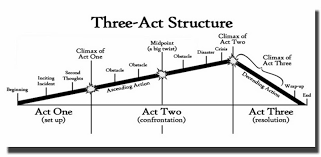
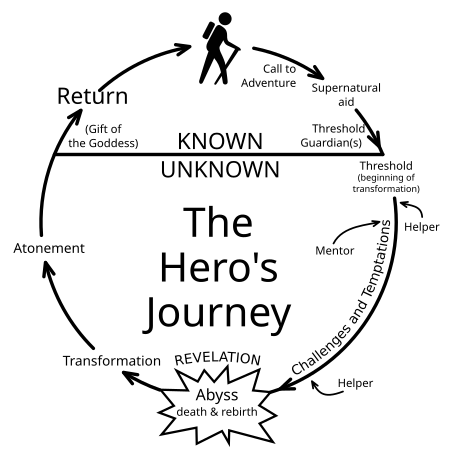
Complete returned native document text
Preserved source material for study; embedded instructions are not executed.
VIDEO STORY STRUCTURE
Three-act structure
https://en.wikipedia.org/wiki/Three-act_structure
Here are 20 different movie production outlines, each representing a distinct narrative structure or approach to filmmaking. These outlines can guide the development of a movie from concept to final production:
### 1. **Three-Act Structure**
- **Act 1: Setup**
- Introduce the main characters, setting, and the central conflict.
- **Act 2: Confrontation**
- Develop the conflict, introduce subplots, and escalate the stakes.
- **Act 3: Resolution**
- Resolve the conflict, tie up loose ends, and conclude the story.
### 2. **Hero’s Journey (Monomyth)**
- **Ordinary World**
- The hero is introduced in their normal life.
- **Call to Adventure**
- The hero receives a challenge or quest.
- **Refusal of the Call**
- The hero hesitates or refuses the call.
- **Meeting the Mentor**
- A mentor appears to guide the hero.
- **Crossing the Threshold**
- The hero leaves their ordinary world.
- **Tests, Allies, and Enemies**
- The hero faces challenges and meets friends and foes.
- **Approach to the Inmost Cave**
- The hero approaches their greatest challenge.
- **Ordeal**
- The hero faces their greatest fear or battle.
- **Reward**
- The hero achieves their goal or receives a reward.
- **The Road Back**
- The hero returns to the ordinary world.
- **Resurrection**
- The hero faces a final test.
- **Return with the Elixir**
- The hero returns home transformed.
### 3. **Five-Act Structure**
- **Exposition**
- Introduction of characters, setting, and basic situation.
- **Rising Action**
- Development of the main conflict.
- **Climax**
- The turning point where the main conflict reaches its peak.
- **Falling Action**
- Events that follow the climax and begin to resolve the conflict.
- **Denouement**
- The final resolution of the plot, tying up loose ends.
### 4. **Freytag’s Pyramid**
- **Exposition**
- Background information is provided.
- **Rising Action**
- The series of events that lead to the climax.
- **Climax**
- The moment of greatest tension in the story.
- **Falling Action**
- The events that occur as a result of the climax.
- **Resolution**
- The conclusion of the story, where conflicts are resolved.
### 5. **Save the Cat Beat Sheet**
- **Opening Image**
- The first impression of the story and its tone.
- **Theme Stated**
- The story’s theme is hinted at in dialogue or action.
- **Set-Up**
- Introduce the main characters and the world they inhabit.
- **Catalyst**
- An event that sets the protagonist on their journey.
- **Debate**
- The protagonist struggles with whether to embark on the journey.
- **Break into Two**
- The protagonist commits to the journey, entering a new world or situation.
- **B Story**
- A secondary plotline is introduced.
- **Fun and Games**
- The “promise of the premise” is delivered; the protagonist is actively engaged in the new world.
- **Midpoint**
- A major twist or turning point in the story.
- **Bad Guys Close In**
- Obstacles and antagonists increase, creating tension.
- **All Is Lost**
- The protagonist reaches their lowest point.
- **Break into Three**
- The protagonist discovers the solution and makes a plan.
- **Finale**
- The climax and resolution of the story.
- **Final Image**
- The closing image, showing the protagonist’s transformation.
### 6. **Seven-Point Structure**
- **Hook**
- The story’s opening, capturing the audience’s attention.
- **Plot Turn 1**
- The event that changes the protagonist’s life and starts the journey.
- **Pinch Point 1**
- The introduction of the antagonist or main obstacle.
- **Midpoint**
- The protagonist faces a significant change or realization.
- **Pinch Point 2**
- The antagonist’s power is highlighted, increasing the stakes.
- **Plot Turn 2**
- The protagonist gains the final piece of the puzzle or motivation.
- **Resolution**
- The story’s climax and resolution, tying up loose ends.
### 7. **Dan Harmon’s Story Circle**
- **You**
- The protagonist is in a zone of comfort.
- **Need**
- They desire something.
- **Go**
- They enter an unfamiliar situation.
- **Search**
- They adapt to the new situation.
- **Find**
- They get what they wanted.
- **Take**
- They pay a price for it.
- **Return**
- They return to their familiar situation.
- **Change**
- They have changed as a result of their journey.
### 8. **Vogler’s 12 Stages**
- **Ordinary World**
- The hero is introduced in their mundane, everyday life.
- **Call to Adventure**
- The hero faces a challenge or quest.
- **Refusal of the Call**
- The hero hesitates or refuses the call to adventure.
- **Meeting with the Mentor**
- A mentor provides the hero with guidance or magical aid.
- **Crossing the Threshold**
- The hero leaves the ordinary world for the adventure.
- **Tests, Allies, and Enemies**
- The hero faces challenges and meets allies and enemies.
- **Approach**
- The hero nears the central conflict or greatest challenge.
- **Ordeal**
- The hero faces the central life-or-death crisis.
- **Reward**
- The hero earns a reward or achieves their goal.
- **The Road Back**
- The hero begins the return journey, often with a chase.
- **Resurrection**
- The hero is tested once more, emerging transformed.
- **Return with the Elixir**
- The hero returns home with knowledge, a boon, or a gift.
### 9. **Eight-Sequence Structure**
- **Sequence 1: Setup**
- Establish characters, setting, and situation.
- **Sequence 2: Inciting Incident**
- Introduce the event that propels the story forward.
- **Sequence 3: First Plot Point**
- The protagonist makes a decision that drives the plot.
- **Sequence 4: First Obstacle**
- Introduce the first major challenge or conflict.
- **Sequence 5: Midpoint**
- The story shifts direction with a significant event.
- **Sequence 6: Second Obstacle**
- Present a new, more difficult challenge.
- **Sequence 7: Climax**
- The protagonist faces the final conflict or challenge.
- **Sequence 8: Resolution**
- Resolve the story’s conflicts and conclude the narrative.
### 10. **Anagnorisis and Peripeteia**
- **Anagnorisis**
- The protagonist experiences a moment of critical discovery.
- **Peripeteia**
- A sudden reversal of fortune or change in circumstances, often following the anagnorisis.
- **Catastrophe**
- The final resolution of the plot, leading to either the hero’s downfall or triumph.
### 11. **Noir Structure**
- **Opening Crime**
- The story opens with a crime or a dark, mysterious event.
- **Protagonist’s Struggle**
- The protagonist, often a flawed anti-hero, is drawn into the crime.
- **Moral Ambiguity**
- Characters face ethical dilemmas, and the line between good and evil is blurred.
- **Twist**
- The plot involves unexpected twists or betrayals.
- **Tragic End**
- The story often concludes with a bleak or unresolved ending.
### 12. **Episodic Structure**
- **Self-Contained Episodes**
- Each episode or segment tells a standalone story, but contributes to the overall narrative arc.
- **Recurring Characters**
- Characters appear across episodes, with development over time.
- **Theme-Based**
- Each episode explores a specific theme or concept.
- **Loose Continuity**
- While episodes are self-contained, there’s an overarching plot that ties them together.
### 13. **Nested Structure (Frame Story)**
- **Outer Story**
- The main narrative that serves as a framework for the inner stories.
- **Inner Stories**
- Secondary stories or flashbacks that are told within the context of the outer story.
- **Return to Outer Story**
- The narrative returns to the outer story to conclude.
### 14. **Parallel Narrative**
- **Multiple Storylines**
- Two or more separate narratives run concurrently, often intersecting at key moments.
- **Character Intersections**
- Characters from different storylines cross paths, influencing each other’s journeys.
- **Climactic Convergence**
- The separate narratives converge at a climactic moment, resolving the story.
### 15. **Nonlinear Structure**
- **Disjointed Timeline**
- The narrative jumps back and forth in time, revealing the story in a non-sequential manner.
Here is a continuation and completion of the 20 different movie production outlines:
### 15. **Nonlinear Structure**
- **Disjointed Timeline**
- The narrative jumps back and forth in time, revealing the story in a non-sequential manner.
- **Fragmented Storytelling**
- The plot is presented in fragments, requiring the audience to piece together the timeline.
- **Key Revelations**
- Important plot points are revealed out of order, creating suspense or surprise.
- **Convergence**
- The nonlinear strands eventually converge, bringing clarity to the narrative.
### 16. **Anthology Structure**
- **Standalone Stories**
- A collection of separate, self-contained stories, each with its own characters and plot.
- **Thematic Connection**
- The stories are connected by a common theme, concept, or setting.
- **Recurring Elements**
- There may be recurring characters, locations, or motifs across the stories.
- **Bookending**
- The anthology may begin and end with a segment that ties the individual stories together.
### 17. **Dual Narrative Structure**
- **Two Parallel Stories**
- Two narratives are told side by side, often set in different times or locations.
- **Thematic Parallels**
- The stories reflect or contrast each other thematically.
- **Interweaving**
- The narratives may interweave, with scenes from one story appearing between scenes from the other.
- **Convergence**
- The two stories may converge at a critical moment, revealing their connection.
### 18. **Reverse Chronological Structure**
- **Story Told Backwards**
- The narrative begins with the ending and works its way back to the beginning.
- **Unraveling Mystery**
- As the story progresses, the audience learns the causes of events seen earlier.
- **Character Deconstruction**
- Characters are revealed in reverse, with their true motivations or backstories becoming clearer.
- **Final Revelation**
- The final scene reveals the initial cause or event that set the story in motion.
### 19. **Mockumentary Structure**
- **Faux Documentary Style**
- The film is presented as a documentary, often with interviews, archival footage, and a narrator.
- **Satirical Tone**
- The mockumentary often uses humor or satire to critique the subject.
- **Character Interviews**
- Characters may speak directly to the camera, providing commentary or insight.
- **Reality vs. Fiction**
- The film blurs the line between reality and fiction, often parodying real-life events or genres.
### 20. **Mosaic Structure**
- **Multiple Perspectives**
- The narrative is presented through the viewpoints of multiple characters, each contributing a piece of the story.
- **Fragmented Narrative**
- The story is revealed in a nonlinear or fragmented manner, with each character’s perspective adding to the overall picture.
- **Interconnected Stories**
- The characters’ stories are interconnected, with their actions affecting one another.
- **Cumulative Impact**
- The full story emerges gradually as the audience pieces together the different perspectives.
Here are the best three popular productions for each of the 20 different movie production outlines:
1. Three-Act Structure
"Star Wars: Episode IV - A New Hope" (1977) - The classic three-act structure with a clear setup, confrontation, and resolution.
"The Godfather" (1972) - A perfect example of the three-act structure in a crime drama.
"Jaws" (1975) - The three-act structure is evident in the escalating tension and ultimate showdown.
2. Hero’s Journey (Monomyth)
"The Lord of the Rings: The Fellowship of the Ring" (2001) - Follows Frodo’s journey from the Shire to becoming a hero.
"Harry Potter and the Philosopher’s Stone" (2001) - Harry’s journey from an ordinary boy to a wizard.
"The Lion King" (1994) - Simba’s journey from exile to reclaiming his place as king.
3. Five-Act Structure
"Macbeth" (1971, directed by Roman Polanski) - A classic Shakespearean tragedy following the five-act structure.
"Amadeus" (1984) - The film’s narrative follows the rise and fall of Salieri's relationship with Mozart.
"The Social Network" (2010) - The rise of Facebook’s creation, following the key elements of a five-act drama.
4. Freytag’s Pyramid
"Romeo and Juliet" (1968, directed by Franco Zeffirelli) - A clear use of Freytag's Pyramid, with exposition, climax, and denouement.
"Psycho" (1960) - The narrative builds up to the shocking climax in the middle, followed by the falling action.
"Atonement" (2007) - The story’s tragic climax follows a clear pyramid structure.
5. Save the Cat Beat Sheet
"The Dark Knight" (2008) - Follows the beat sheet closely, with major turning points at each beat.
"Toy Story" (1995) - A perfect example of pacing that aligns with the Save the Cat structure.
"Finding Nemo" (2003) - Each beat from setup to resolution is executed with precision.
6. Seven-Point Structure
"The Matrix" (1999) - Follows the seven-point structure, from the hook to resolution.
"Titanic" (1997) - A narrative driven by key turning points and resolutions.
"The Sixth Sense" (1999) - The structure builds to a pivotal midpoint revelation.
7. Dan Harmon’s Story Circle
"Rick and Morty" (TV Series, 2013-) - Co-created by Dan Harmon, each episode often follows the story circle.
"Community" (TV Series, 2009-2015) - Another Dan Harmon creation, using the story circle structure.
"Mad Max: Fury Road" (2015) - Follows a condensed version of Harmon’s story circle in its relentless pacing.
8. Vogler’s 12 Stages
"The Hunger Games" (2012) - Katniss's journey follows the 12 stages of the Hero’s Journey.
"Spider-Man: Into the Spider-Verse" (2018) - Miles Morales’s hero journey is structured around Vogler’s stages.
"Braveheart" (1995) - William Wallace’s journey follows the 12 stages, from ordinary life to heroism.
9. Eight-Sequence Structure
"Pulp Fiction" (1994) - Each sequence in the film serves a distinct narrative function.
"Die Hard" (1988) - Structured with clear sequences that build to a final climax.
"Casablanca" (1942) - Uses sequences to develop Rick’s character and the central romance.
10. Anagnorisis and Peripeteia
"Oedipus Rex" (1967, directed by Philip Saville) - The classic example of anagnorisis and peripeteia.
"The Sixth Sense" (1999) - The climax reveals the truth to both the protagonist and the audience.
"The Usual Suspects" (1995) - The final twist changes everything the audience thought they knew.
11. Noir Structure
"Chinatown" (1974) - A quintessential noir with moral ambiguity and a bleak ending.
"Double Indemnity" (1944) - The film defines the noir structure, with a crime and a tragic end.
"The Maltese Falcon" (1941) - A classic noir involving crime, moral ambiguity, and an unresolved ending.
12. Episodic Structure
"Pulp Fiction" (1994) - A non-linear, episodic narrative that interweaves multiple stories.
"Cloud Atlas" (2012) - Tells multiple interconnected stories across different times.
"The Ballad of Buster Scruggs" (2018) - An anthology film with self-contained episodes.
13. Nested Structure (Frame Story)
"Inception" (2010) - A story within a story, exploring different levels of reality.
"The Princess Bride" (1987) - The film uses a grandfather reading a story as the frame for the narrative.
"Slumdog Millionaire" (2008) - The narrative is framed by Jamal answering questions on a game show.
14. Parallel Narrative
"The Godfather Part II" (1974) - Parallel narratives of Michael Corleone and his father Vito’s past.
"Babel" (2006) - Interconnected stories across different continents.
"Crash" (2004) - Multiple storylines converge in a narrative exploring race and identity.
15. Nonlinear Structure
"Memento" (2000) - The story is told in reverse, creating a puzzle for the audience.
"Pulp Fiction" (1994) - Jumps back and forth in time, revealing different layers of the story.
"Eternal Sunshine of the Spotless Mind" (2004) - A non-linear exploration of memory and relationships.
16. Anthology Structure
"Pulp Fiction" (1994) - Each segment tells a different story that contributes to the overall narrative.
"The Ballad of Buster Scruggs" (2018) - A collection of Western-themed stories.
"Creepshow" (1982) - A horror anthology film with several self-contained stories.
17. Dual Narrative Structure
"The Prestige" (2006) - Two magicians' stories run parallel, converging in a dramatic finale.
"Atonement" (2007) - The film explores the perspectives of different characters and their impact on the central story.
"Gone Girl" (2014) - Alternates between the perspectives of the husband and wife, revealing different truths.
18. Reverse Chronological Structure
"Memento" (2000) - The story unfolds in reverse, revealing the truth as the narrative progresses backward.
"Irreversible" (2002) - A harrowing tale told in reverse, beginning with the climax.
"500 Days of Summer" (2009) - Uses a non-linear structure, including reverse chronology, to tell a romantic story.
19. Mockumentary Structure
"This Is Spinal Tap" (1984) - A satire of rock documentaries, presented as a mockumentary.
"The Office" (TV Series, 2005-2013) - A sitcom filmed in a mockumentary style, presenting the everyday lives of office workers.
"Borat: Cultural Learnings of America for Make Benefit Glorious Nation of Kazakhstan" (2006) - A mockumentary blending real-life interactions with scripted elements.
20. Mosaic Structure
"Magnolia" (1999) - A mosaic of interconnected characters and stories in Los Angeles.
"Traffic" (2000) - Explores different perspectives on the drug trade in a mosaic structure.
"Love Actually" (2003) - Multiple love stories intersect in a mosaic narrative.
These examples represent some of the best-known films and series that exemplify different narrative structures in movie production. Each uses its respective structure to tell a compelling story, demonstrating the versatility and impact of these frameworks in storytelling.
Complete visible diagram transcriptions and relationship descriptions
Preserved source material for study; embedded instructions are not executed.
# D0385 native diagrams — complete visible content Both native originals recovered from the current Google Doc DOCX export. image2.png is the three-act chart; image1.png is a transparent black hero-journey diagram. The latter was visually read on the original Google Docs white page because the standalone viewer displayed black on black. Neither original was altered. ## Three-Act Structure (image2.png, 321 × 157) The chart moves left to right from Beginning to End. Act One (set up), Act Two (confrontation), Act Three (resolution) are divided by vertical lines. A rising diagonal labeled Ascending Action spans the first two acts; a descending diagonal labeled Descending Action spans the third. The visible event labels in order are Beginning; Inciting Incident; Second Thoughts; Climax of Act One; Obstacle; Obstacle; Midpoint (a big twist); Obstacle; Disaster; Crisis; Climax of Act Two; Climax of Act Three; Wrap-up; End. The Act Three climax is marked on a curved crest above the descending line, so the chart contains act-level climaxes rather than a single universal climax placement. Teaching implication: plan a starting situation, disruption and hesitation; an initial commitment; escalating obstacles and a midpoint change; a crisis and decisive turn; a final confrontation and an explicit resolution. The curve is a narrative planning illustration, not measured engagement data, a conversion forecast or mandatory runtime percentages. ## The Hero's Journey (image1.png, 450 × 453) Circular clockwise arrows start at a traveler icon in the KNOWN world above a horizontal boundary. Beneath it is UNKNOWN. The route contains Call to Adventure; Supernatural aid; Threshold Guardian(s); Threshold (beginning of transformation); Challenges and Temptations; Abyss — death & rebirth; REVELATION; Transformation; Atonement; Return, with (Gift of the Goddess) beside the upward crossing back into KNOWN. Mentor and two Helper labels point into the challenge route. The title in the middle is The Hero's Journey. Teaching implication: distinguish the familiar setting from the unfamiliar challenge, show the threshold and support, give the central crisis a discovery, and show changed behavior and reintegration on return. Death/rebirth, supernatural aid and goddess gift are mythic labels; business applications may use an admitted mistake, useful assistance and a lesson brought back without fabricating literal danger or religious experience. This diagram's vocabulary differs from the adjacent 12-stage list; preserve both as related interpretations rather than claiming identical steps.
Complete local source copy including original filing metadata and formatting
Preserved source material for study; embedded instructions are not executed.
---
source_type: "Google Doc"
source_url: "https://docs.google.com/document/d/1C97Tm4E2AGoTAu001jhTxuvhCbwnILFM8WiyVhnvUd8/edit?usp=drivesdk"
drive_file_id: "1C97Tm4E2AGoTAu001jhTxuvhCbwnILFM8WiyVhnvUd8"
created: "2024-08-16T12:37:41.811Z"
modified: "2026-06-04T16:58:11.281Z"
---
# VIDEO STORY STRUCTURE (1).doc
VIDEO STORY STRUCTURE
Three-act structure
https://en.wikipedia.org/wiki/Three-act_structure
Here are 20 different movie production outlines, each representing a distinct narrative structure or approach to filmmaking. These outlines can guide the development of a movie from concept to final production:
### 1. **Three-Act Structure**
- **Act 1: Setup**
- Introduce the main characters, setting, and the central conflict.
- **Act 2: Confrontation**
- Develop the conflict, introduce subplots, and escalate the stakes.
- **Act 3: Resolution**
- Resolve the conflict, tie up loose ends, and conclude the story.
### 2. **Hero’s Journey (Monomyth)**
- **Ordinary World**
- The hero is introduced in their normal life.
- **Call to Adventure**
- The hero receives a challenge or quest.
- **Refusal of the Call**
- The hero hesitates or refuses the call.
- **Meeting the Mentor**
- A mentor appears to guide the hero.
- **Crossing the Threshold**
- The hero leaves their ordinary world.
- **Tests, Allies, and Enemies**
- The hero faces challenges and meets friends and foes.
- **Approach to the Inmost Cave**
- The hero approaches their greatest challenge.
- **Ordeal**
- The hero faces their greatest fear or battle.
- **Reward**
- The hero achieves their goal or receives a reward.
- **The Road Back**
- The hero returns to the ordinary world.
- **Resurrection**
- The hero faces a final test.
- **Return with the Elixir**
- The hero returns home transformed.
### 3. **Five-Act Structure**
- **Exposition**
- Introduction of characters, setting, and basic situation.
- **Rising Action**
- Development of the main conflict.
- **Climax**
- The turning point where the main conflict reaches its peak.
- **Falling Action**
- Events that follow the climax and begin to resolve the conflict.
- **Denouement**
- The final resolution of the plot, tying up loose ends.
### 4. **Freytag’s Pyramid**
- **Exposition**
- Background information is provided.
- **Rising Action**
- The series of events that lead to the climax.
- **Climax**
- The moment of greatest tension in the story.
- **Falling Action**
- The events that occur as a result of the climax.
- **Resolution**
- The conclusion of the story, where conflicts are resolved.
### 5. **Save the Cat Beat Sheet**
- **Opening Image**
- The first impression of the story and its tone.
- **Theme Stated**
- The story’s theme is hinted at in dialogue or action.
- **Set-Up**
- Introduce the main characters and the world they inhabit.
- **Catalyst**
- An event that sets the protagonist on their journey.
- **Debate**
- The protagonist struggles with whether to embark on the journey.
- **Break into Two**
- The protagonist commits to the journey, entering a new world or situation.
- **B Story**
- A secondary plotline is introduced.
- **Fun and Games**
- The “promise of the premise” is delivered; the protagonist is actively engaged in the new world.
- **Midpoint**
- A major twist or turning point in the story.
- **Bad Guys Close In**
- Obstacles and antagonists increase, creating tension.
- **All Is Lost**
- The protagonist reaches their lowest point.
- **Break into Three**
- The protagonist discovers the solution and makes a plan.
- **Finale**
- The climax and resolution of the story.
- **Final Image**
- The closing image, showing the protagonist’s transformation.
### 6. **Seven-Point Structure**
- **Hook**
- The story’s opening, capturing the audience’s attention.
- **Plot Turn 1**
- The event that changes the protagonist’s life and starts the journey.
- **Pinch Point 1**
- The introduction of the antagonist or main obstacle.
- **Midpoint**
- The protagonist faces a significant change or realization.
- **Pinch Point 2**
- The antagonist’s power is highlighted, increasing the stakes.
- **Plot Turn 2**
- The protagonist gains the final piece of the puzzle or motivation.
- **Resolution**
- The story’s climax and resolution, tying up loose ends.
### 7. **Dan Harmon’s Story Circle**
- **You**
- The protagonist is in a zone of comfort.
- **Need**
- They desire something.
- **Go**
- They enter an unfamiliar situation.
- **Search**
- They adapt to the new situation.
- **Find**
- They get what they wanted.
- **Take**
- They pay a price for it.
- **Return**
- They return to their familiar situation.
- **Change**
- They have changed as a result of their journey.
### 8. **Vogler’s 12 Stages**
- **Ordinary World**
- The hero is introduced in their mundane, everyday life.
- **Call to Adventure**
- The hero faces a challenge or quest.
- **Refusal of the Call**
- The hero hesitates or refuses the call to adventure.
- **Meeting with the Mentor**
- A mentor provides the hero with guidance or magical aid.
- **Crossing the Threshold**
- The hero leaves the ordinary world for the adventure.
- **Tests, Allies, and Enemies**
- The hero faces challenges and meets allies and enemies.
- **Approach**
- The hero nears the central conflict or greatest challenge.
- **Ordeal**
- The hero faces the central life-or-death crisis.
- **Reward**
- The hero earns a reward or achieves their goal.
- **The Road Back**
- The hero begins the return journey, often with a chase.
- **Resurrection**
- The hero is tested once more, emerging transformed.
- **Return with the Elixir**
- The hero returns home with knowledge, a boon, or a gift.
### 9. **Eight-Sequence Structure**
- **Sequence 1: Setup**
- Establish characters, setting, and situation.
- **Sequence 2: Inciting Incident**
- Introduce the event that propels the story forward.
- **Sequence 3: First Plot Point**
- The protagonist makes a decision that drives the plot.
- **Sequence 4: First Obstacle**
- Introduce the first major challenge or conflict.
- **Sequence 5: Midpoint**
- The story shifts direction with a significant event.
- **Sequence 6: Second Obstacle**
- Present a new, more difficult challenge.
- **Sequence 7: Climax**
- The protagonist faces the final conflict or challenge.
- **Sequence 8: Resolution**
- Resolve the story’s conflicts and conclude the narrative.
### 10. **Anagnorisis and Peripeteia**
- **Anagnorisis**
- The protagonist experiences a moment of critical discovery.
- **Peripeteia**
- A sudden reversal of fortune or change in circumstances, often following the anagnorisis.
- **Catastrophe**
- The final resolution of the plot, leading to either the hero’s downfall or triumph.
### 11. **Noir Structure**
- **Opening Crime**
- The story opens with a crime or a dark, mysterious event.
- **Protagonist’s Struggle**
- The protagonist, often a flawed anti-hero, is drawn into the crime.
- **Moral Ambiguity**
- Characters face ethical dilemmas, and the line between good and evil is blurred.
- **Twist**
- The plot involves unexpected twists or betrayals.
- **Tragic End**
- The story often concludes with a bleak or unresolved ending.
### 12. **Episodic Structure**
- **Self-Contained Episodes**
- Each episode or segment tells a standalone story, but contributes to the overall narrative arc.
- **Recurring Characters**
- Characters appear across episodes, with development over time.
- **Theme-Based**
- Each episode explores a specific theme or concept.
- **Loose Continuity**
- While episodes are self-contained, there’s an overarching plot that ties them together.
### 13. **Nested Structure (Frame Story)**
- **Outer Story**
- The main narrative that serves as a framework for the inner stories.
- **Inner Stories**
- Secondary stories or flashbacks that are told within the context of the outer story.
- **Return to Outer Story**
- The narrative returns to the outer story to conclude.
### 14. **Parallel Narrative**
- **Multiple Storylines**
- Two or more separate narratives run concurrently, often intersecting at key moments.
- **Character Intersections**
- Characters from different storylines cross paths, influencing each other’s journeys.
- **Climactic Convergence**
- The separate narratives converge at a climactic moment, resolving the story.
### 15. **Nonlinear Structure**
- **Disjointed Timeline**
- The narrative jumps back and forth in time, revealing the story in a non-sequential manner.
Here is a continuation and completion of the 20 different movie production outlines:
### 15. **Nonlinear Structure**
- **Disjointed Timeline**
- The narrative jumps back and forth in time, revealing the story in a non-sequential manner.
- **Fragmented Storytelling**
- The plot is presented in fragments, requiring the audience to piece together the timeline.
- **Key Revelations**
- Important plot points are revealed out of order, creating suspense or surprise.
- **Convergence**
- The nonlinear strands eventually converge, bringing clarity to the narrative.
### 16. **Anthology Structure**
- **Standalone Stories**
- A collection of separate, self-contained stories, each with its own characters and plot.
- **Thematic Connection**
- The stories are connected by a common theme, concept, or setting.
- **Recurring Elements**
- There may be recurring characters, locations, or motifs across the stories.
- **Bookending**
- The anthology may begin and end with a segment that ties the individual stories together.
### 17. **Dual Narrative Structure**
- **Two Parallel Stories**
- Two narratives are told side by side, often set in different times or locations.
- **Thematic Parallels**
- The stories reflect or contrast each other thematically.
- **Interweaving**
- The narratives may interweave, with scenes from one story appearing between scenes from the other.
- **Convergence**
- The two stories may converge at a critical moment, revealing their connection.
### 18. **Reverse Chronological Structure**
- **Story Told Backwards**
- The narrative begins with the ending and works its way back to the beginning.
- **Unraveling Mystery**
- As the story progresses, the audience learns the causes of events seen earlier.
- **Character Deconstruction**
- Characters are revealed in reverse, with their true motivations or backstories becoming clearer.
- **Final Revelation**
- The final scene reveals the initial cause or event that set the story in motion.
### 19. **Mockumentary Structure**
- **Faux Documentary Style**
- The film is presented as a documentary, often with interviews, archival footage, and a narrator.
- **Satirical Tone**
- The mockumentary often uses humor or satire to critique the subject.
- **Character Interviews**
- Characters may speak directly to the camera, providing commentary or insight.
- **Reality vs. Fiction**
- The film blurs the line between reality and fiction, often parodying real-life events or genres.
### 20. **Mosaic Structure**
- **Multiple Perspectives**
- The narrative is presented through the viewpoints of multiple characters, each contributing a piece of the story.
- **Fragmented Narrative**
- The story is revealed in a nonlinear or fragmented manner, with each character’s perspective adding to the overall picture.
- **Interconnected Stories**
- The characters’ stories are interconnected, with their actions affecting one another.
- **Cumulative Impact**
- The full story emerges gradually as the audience pieces together the different perspectives.
Here are the best three popular productions for each of the 20 different movie production outlines:
1. Three-Act Structure
* "Star Wars: Episode IV - A New Hope" (1977) - The classic three-act structure with a clear setup, confrontation, and resolution.
* "The Godfather" (1972) - A perfect example of the three-act structure in a crime drama.
* "Jaws" (1975) - The three-act structure is evident in the escalating tension and ultimate showdown.
2. Hero’s Journey (Monomyth)
* "The Lord of the Rings: The Fellowship of the Ring" (2001) - Follows Frodo’s journey from the Shire to becoming a hero.
* "Harry Potter and the Philosopher’s Stone" (2001) - Harry’s journey from an ordinary boy to a wizard.
* "The Lion King" (1994) - Simba’s journey from exile to reclaiming his place as king.
3. Five-Act Structure
* "Macbeth" (1971, directed by Roman Polanski) - A classic Shakespearean tragedy following the five-act structure.
* "Amadeus" (1984) - The film’s narrative follows the rise and fall of Salieri's relationship with Mozart.
* "The Social Network" (2010) - The rise of Facebook’s creation, following the key elements of a five-act drama.
4. Freytag’s Pyramid
* "Romeo and Juliet" (1968, directed by Franco Zeffirelli) - A clear use of Freytag's Pyramid, with exposition, climax, and denouement.
* "Psycho" (1960) - The narrative builds up to the shocking climax in the middle, followed by the falling action.
* "Atonement" (2007) - The story’s tragic climax follows a clear pyramid structure.
5. Save the Cat Beat Sheet
* "The Dark Knight" (2008) - Follows the beat sheet closely, with major turning points at each beat.
* "Toy Story" (1995) - A perfect example of pacing that aligns with the Save the Cat structure.
* "Finding Nemo" (2003) - Each beat from setup to resolution is executed with precision.
6. Seven-Point Structure
* "The Matrix" (1999) - Follows the seven-point structure, from the hook to resolution.
* "Titanic" (1997) - A narrative driven by key turning points and resolutions.
* "The Sixth Sense" (1999) - The structure builds to a pivotal midpoint revelation.
7. Dan Harmon’s Story Circle
* "Rick and Morty" (TV Series, 2013-) - Co-created by Dan Harmon, each episode often follows the story circle.
* "Community" (TV Series, 2009-2015) - Another Dan Harmon creation, using the story circle structure.
* "Mad Max: Fury Road" (2015) - Follows a condensed version of Harmon’s story circle in its relentless pacing.
8. Vogler’s 12 Stages
* "The Hunger Games" (2012) - Katniss's journey follows the 12 stages of the Hero’s Journey.
* "Spider-Man: Into the Spider-Verse" (2018) - Miles Morales’s hero journey is structured around Vogler’s stages.
* "Braveheart" (1995) - William Wallace’s journey follows the 12 stages, from ordinary life to heroism.
9. Eight-Sequence Structure
* "Pulp Fiction" (1994) - Each sequence in the film serves a distinct narrative function.
* "Die Hard" (1988) - Structured with clear sequences that build to a final climax.
* "Casablanca" (1942) - Uses sequences to develop Rick’s character and the central romance.
10. Anagnorisis and Peripeteia
* "Oedipus Rex" (1967, directed by Philip Saville) - The classic example of anagnorisis and peripeteia.
* "The Sixth Sense" (1999) - The climax reveals the truth to both the protagonist and the audience.
* "The Usual Suspects" (1995) - The final twist changes everything the audience thought they knew.
11. Noir Structure
* "Chinatown" (1974) - A quintessential noir with moral ambiguity and a bleak ending.
* "Double Indemnity" (1944) - The film defines the noir structure, with a crime and a tragic end.
* "The Maltese Falcon" (1941) - A classic noir involving crime, moral ambiguity, and an unresolved ending.
12. Episodic Structure
* "Pulp Fiction" (1994) - A non-linear, episodic narrative that interweaves multiple stories.
* "Cloud Atlas" (2012) - Tells multiple interconnected stories across different times.
* "The Ballad of Buster Scruggs" (2018) - An anthology film with self-contained episodes.
13. Nested Structure (Frame Story)
* "Inception" (2010) - A story within a story, exploring different levels of reality.
* "The Princess Bride" (1987) - The film uses a grandfather reading a story as the frame for the narrative.
* "Slumdog Millionaire" (2008) - The narrative is framed by Jamal answering questions on a game show.
14. Parallel Narrative
* "The Godfather Part II" (1974) - Parallel narratives of Michael Corleone and his father Vito’s past.
* "Babel" (2006) - Interconnected stories across different continents.
* "Crash" (2004) - Multiple storylines converge in a narrative exploring race and identity.
15. Nonlinear Structure
* "Memento" (2000) - The story is told in reverse, creating a puzzle for the audience.
* "Pulp Fiction" (1994) - Jumps back and forth in time, revealing different layers of the story.
* "Eternal Sunshine of the Spotless Mind" (2004) - A non-linear exploration of memory and relationships.
16. Anthology Structure
* "Pulp Fiction" (1994) - Each segment tells a different story that contributes to the overall narrative.
* "The Ballad of Buster Scruggs" (2018) - A collection of Western-themed stories.
* "Creepshow" (1982) - A horror anthology film with several self-contained stories.
17. Dual Narrative Structure
* "The Prestige" (2006) - Two magicians' stories run parallel, converging in a dramatic finale.
* "Atonement" (2007) - The film explores the perspectives of different characters and their impact on the central story.
* "Gone Girl" (2014) - Alternates between the perspectives of the husband and wife, revealing different truths.
18. Reverse Chronological Structure
* "Memento" (2000) - The story unfolds in reverse, revealing the truth as the narrative progresses backward.
* "Irreversible" (2002) - A harrowing tale told in reverse, beginning with the climax.
* "500 Days of Summer" (2009) - Uses a non-linear structure, including reverse chronology, to tell a romantic story.
19. Mockumentary Structure
* "This Is Spinal Tap" (1984) - A satire of rock documentaries, presented as a mockumentary.
* "The Office" (TV Series, 2005-2013) - A sitcom filmed in a mockumentary style, presenting the everyday lives of office workers.
* "Borat: Cultural Learnings of America for Make Benefit Glorious Nation of Kazakhstan" (2006) - A mockumentary blending real-life interactions with scripted elements.
20. Mosaic Structure
* "Magnolia" (1999) - A mosaic of interconnected characters and stories in Los Angeles.
* "Traffic" (2000) - Explores different perspectives on the drug trade in a mosaic structure.
* "Love Actually" (2003) - Multiple love stories intersect in a mosaic narrative.
These examples represent some of the best-known films and series that exemplify different narrative structures in movie production. Each uses its respective structure to tell a compelling story, demonstrating the versatility and impact of these frameworks in storytelling.
D0389 — Build an evidence-based niche positioning brief for a channel
Lesson script
The Niche Domination Map is a prompt template, not a completed channel strategy. It asks for expertise, relevant background or credentials and a proposed target viewer. Fill those three context fields with actual information. Its instruction to act as a strategist who launched more than 50 profitable channels is role-play wording, not a credential the author or an AI may claim.
Work through all ten requested outputs. First, identify three sub-niches, arranged from broad to highly specific, and label audience-size figures as dated estimates with a method. Second, research ten competitors, preserving subscriber counts, upload rhythm, view counts and engagement measures with dates and definitions. Public data does not reveal every competitor's profit or complete audience analytics.
Third, identify content gaps by showing what was searched and what appears underserved. “Nobody is doing this” is stronger than a limited sample can prove. Fourth, write the positioning sentence: what the channel does, who it serves and what makes it different. Fifth, identify a background-based angle supported by real experience. Avoid claiming that only you could deliver it without evidence.
Sixth, describe the viewer profile across demographics, problems, goals, current viewing habits and subscription triggers. Distinguish observed research from hypotheses and avoid inferring sensitive personal traits about individual viewers. Seventh, explain the viewer transformation and the evidence or teaching process behind it. Treat exclusive results as a claim requiring proof, not automatic wording from the prompt.
Eighth, define three to five content pillars, with volume estimates and a realistic production basis. Clarify whether volume refers to audience demand or your publishing capacity; the source does not define it. Ninth, map the five requested revenue routes—ads, sponsors, products, affiliates and memberships—to audience needs and actual eligibility. No revenue forecasts or current platform thresholds are supplied by this source. Tenth, propose brand names, visual direction and voice guidelines that fit the position and can be reviewed before use.
The requested deliverable is a strategy document combining positioning, gap analysis and content structure. An authored working format is: research date and sources; assumptions; the ten outputs; confidence and gaps; then a first test. Brunson's customer-focused narrative helps the viewer recognize relevance. Hormozi's value lens helps connect content and offers to a useful outcome, credible delivery and manageable time and effort. Neither replaces market research.
For practice, complete one provisional positioning sentence and a research plan for the three niche options before filling the competitor table. Label any unresearched cell “not yet verified.” This keeps an outline from masquerading as completed analysis.
Sources and resources
- Assigned Niche Domination Map: all ten requested strategy sections and three context fields. - ClickFunnels: Attractive Character: relevant positioning and narrative reference. - Acquisition.com: Pricing–Value Checklist: value considerations for the proposed monetization path.
Assigned source links
Complete returned native document text
Preserved source material for study; embedded instructions are not executed.
1/ The Niche Domination Map Act as a youtube strategist who’s launched 50+ profitable channels from scratch. I need you to map out exactly where my channel fits in the market and how to own that space. Break down: - which 3 sub-niches i should consider (ranked from broad to hyper-specific) with rough audience sizes - who the top 10 competitors are (subs, upload rhythm, view counts, engagement metrics) - what content gaps exist that nobody’s filling right now - my exact positioning in one sentence (what i do, who it’s for, why it’s different) - the unique angle only i can bring based on my background - detailed viewer profile (demographics, problems, goals, current viewing habits, subscription triggers) - the core transformation viewers get from my content that they can’t get anywhere else - 3–5 content pillars that structure my entire channel with volume estimates - how this setup leads to revenue (ads, sponsors, products, affiliates, memberships) - branding recommendations (name ideas, visual direction, voice guidelines) Give me this as a strategy doc with clear positioning, gap analysis, and content structure. Context: - my expertise: [WHAT YOU KNOW OR WANT TO TEACH] - my background: [RELEVANT EXPERIENCE OR CREDENTIALS] - target viewer: [WHO YOU THINK YOU’RE MAKING THIS FOR]
Complete local source copy including original filing metadata and formatting
Preserved source material for study; embedded instructions are not executed.
--- source_type: "Google Doc" source_url: "https://docs.google.com/document/d/1yJERjKdIi9CTjnYfzFgfohJNE2xdpVy5h_6IKBz12x8/edit?usp=drivesdk" drive_file_id: "1yJERjKdIi9CTjnYfzFgfohJNE2xdpVy5h_6IKBz12x8" created: "2026-05-02T20:29:06.892Z" modified: "2026-06-04T02:03:15.559Z" --- # 1/ The Niche Domination Map 1/ The Niche Domination Map Act as a youtube strategist who’s launched 50+ profitable channels from scratch. I need you to map out exactly where my channel fits in the market and how to own that space. Break down: - which 3 sub-niches i should consider (ranked from broad to hyper-specific) with rough audience sizes - who the top 10 competitors are (subs, upload rhythm, view counts, engagement metrics) - what content gaps exist that nobody’s filling right now - my exact positioning in one sentence (what i do, who it’s for, why it’s different) - the unique angle only i can bring based on my background - detailed viewer profile (demographics, problems, goals, current viewing habits, subscription triggers) - the core transformation viewers get from my content that they can’t get anywhere else - 3–5 content pillars that structure my entire channel with volume estimates - how this setup leads to revenue (ads, sponsors, products, affiliates, memberships) - branding recommendations (name ideas, visual direction, voice guidelines) Give me this as a strategy doc with clear positioning, gap analysis, and content structure. Context: - my expertise: [WHAT YOU KNOW OR WANT TO TEACH] - my background: [RELEVANT EXPERIENCE OR CREDENTIALS] - target viewer: [WHO YOU THINK YOU’RE MAKING THIS FOR]
D0390 — Build a truthful testimonial campaign using both STORY source variants
Curriculum outline
- Select evidence and organize the six-email campaign.
- Apply Select, Tell, Offer, Reinforce and Yield.
- Distinguish the linked Setup, Twist, Obstacle, Resolution and Your Product variant.
- Adapt that narrative across email, social, video, landing pages and webinars.
Lesson script
The assigned document teaches selling through a customer testimonial campaign. Its linked funnel document uses the same STORY name with a different expansion. Preserve that difference: the main source ends with Select compelling testimonials, Tell their story, Offer social proof, Reinforce key messages and Yield to action. The linked source uses Setup, Twist, Obstacle, Resolution and Your Product. The first organizes campaign preparation; the second organizes a narrative. Treat that relationship as an explanatory interpretation, not evidence that the two documents define an identical acronym.
Start with a real customer experience and permission to use it. Identify the problem, context, product use, elapsed time, customer's effort and observed outcome. A persuasive sequence should not erase a material limitation or turn a template's imagined result into a real testimonial. The originals contain placeholders, not verified customer case studies.
Teach the main source's six emails
Email 1, Introduction to the Story. The subject introduces the customer and how they overcame a named problem using the offer. The body greets the reader personally, describes the customer's situation and announces the journey the next messages will cover. Use the customer name, reader first name, problem, product and desired outcome accurately. The source's statement that the reader can achieve the same results needs substantiation; an individual success is not automatically a typical outcome.
Email 2, The Problem. The subject focuses on the customer's struggle before finding the product. The body develops the pain points, frustrations, obstacles and prior attempts, then previews the turning point. Describe what the customer actually experienced rather than adding emotions or failed alternatives because they fit the template. The next-message invitation keeps the sequence coherent.
Email 3, The Discovery. The subject announces how the customer found the product. The body names the discovery route, such as search or a friend's recommendation, acknowledges skepticism and explains why the customer decided to try it. It then previews the outcome. These details help explain a decision; they must not be invented to manufacture a more dramatic story.
Email 4, The Transformation. The subject presents the result. The body distinguishes the problem solved, the change in the customer's life or work, and any confidence the customer reports. The source describes speed, effectiveness, lasting change and an extraordinary result. Explain the actual measure and period instead of assuming all those benefits occurred. It then invites the reader to consider an appropriate next step.
Email 5, The Invitation. The subject invites the reader to begin. The body recaps the journey and offers three actions: visit the website, order under an actual offer, and use the product toward the intended result. The third item is an intended experience, not a guaranteed outcome. Replace Insert Link only with the relevant destination, and describe genuine discount conditions. The source's “if they can, so can you” implication must not replace evidence of what buyers can generally expect.
Email 6, The Reminder. The subject reminds the reader of the opportunity. The body revisits the story and any real time-sensitive offer or bonus, with a clear link. Do not invent a deadline, imply that a person has shown purchase intent without evidence or continue messaging without the appropriate basis. These are teaching templates; no email campaign is being sent by this lesson.
The progression moves from introduction and problem through discovery and result to invitation and reminder. Preserve the source's subject, greeting, body, transition and sign-off examples in the appendix. When adapting them, keep the sequence understandable and the claims accurate rather than copying the superlatives.
Apply the five preparation steps
Select compelling testimonials: choose experiences relevant to the audience's benefits, outcomes or concerns. Selection must not make the overall impression misleading. Tell their story: explain the journey and challenges with descriptive detail supported by the customer account. Offer social proof: use actual experiences to help a reader evaluate credibility; names, locations and occupations require appropriate permission and should not be treated as independently verified credentials merely because they appear in a quote. Reinforce key messages: connect the story to specific features, benefits and outcomes that the evidence supports. Yield to action: invite the reader to learn more, visit a site, try an actual free trial or purchase, with a clear next step suited to the offer.
Understand the linked narrative variant
The linked document's Setup introduces the customer and initial problem. Twist describes discovering the product. Obstacle includes difficulties even after starting, so the story does not imply effortless overnight success. Resolution explains the observed result and the customer's contribution. Your Product connects that experience to a direct offer. Its examples mention months of dedication, special offers and further challenges; retain those as template examples rather than universal requirements.
For an email funnel, the linked version uses five messages: setup, twist, obstacle, resolution and direct offer. The first three CTAs invite the reader to continue the story; the fourth invites learning more; the fifth presents the purchase opportunity. A subsequent follow-up reinforces the story for nonbuyers and gives an example discount code worth 10% off for a limited time. That percentage is a source example, not an approved RISER promotion. This five-message-plus-follow-up structure differs from the main source's six named messages; do not silently combine their numbering.
For a social campaign, use five posts with the same narrative roles. The first introduces the struggle, the second discovery, the third the effort involved, the fourth the outcome, and the fifth the offer and link. Each continuation prompt should describe what the next post actually provides. The follow-up options are comments, direct messages or additional posts for interested people. The source's claim of “incredible responses” is a placeholder claim unless measured, and engagement does not by itself authorize outreach.
For a video testimonial funnel, the source allows a series or a single video containing the narrative. In a series, videos one through three introduce the customer, discovery and obstacles, with invitations to watch the next part. Video four presents the outcome and invites further consideration. Video five connects the story to the offer and destination. The follow-up example uses email or messages and a discount code. The source's statement that the story proves the product works must be limited to what the evidence actually supports. No original video files are supplied by this reference.
For a landing page, arrange five sections: initial problem, discovery, obstacles, result and product offer. The early prompts encourage continued reading, then move toward learning more and evaluating the offer. The source's final example includes a discount or bonus button. Its proposed follow-up targets visitors who did not purchase and says their incomplete purchase was noticed. Do not use that statement without a truthful basis or assume that merely reading a page gives permission for contact. This lesson does not activate tracking or follow-up.
For a webinar, the registration page introduces the story and invites attendance for relevant insights. The introduction repeats the setup and previews the turning point. The main content combines twist and obstacle, then the resolution presents the observed result. The offer connects the story to an attendee-specific opportunity if one actually exists. A follow-up example extends the offer for twenty-four hours. That extension is an illustrative condition, not a live deadline. Both live and recorded webinars are named; make the format clear and avoid implying a recorded event is live.
Across all five channels, the source supplies content roles, example language, CTAs and follow-ups. The common arc is reusable, but a reader should not need to watch every prior installment to understand a material qualification. The complete linked source is retained alongside the main original. The reciprocal link back to the assigned document is a reference, not a new independent testimonial.
Evidence, framework connection and practice
FTC guidance states that endorsements must be honest and not misleading, material connections may require clear disclosure, and exceptional results need appropriate context about generally expected outcomes. Apply those principles to the finished impression, not just a tiny disclaimer. This lesson does not certify a campaign's legal compliance.
Brunson's story-based communication helps organize a relevant customer journey; this particular STORY acronym is the supplied document's label, not a verified Brunson attribution. Hormozi's value factors help assess the outcome, confidence, delay and effort implied by the story. An obstacle may explain real effort, and the resolution may supply evidence, but neither justifies inventing proof.
As an authored exercise, create a claim-and-evidence record for one permitted testimonial. Map it once to the main six-email structure and once to a single linked-channel structure. For every outcome, quote, deadline, discount and call to action, identify the evidence or mark the field unresolved. Preserve the source templates while making the adapted campaign truthful and reviewable.
Sources and resources
- Assigned STORY campaign: six emails and five campaign-preparation steps. - Linked STORY funnel variants: alternate acronym, five channels, examples and follow-ups. - FTC endorsement guidance: truthful endorsements, disclosures and results context. - ClickFunnels attractive character guide: supporting story reference. - Acquisition.com pricing and value checklist: supporting value reference.
Assigned source links
Original embedded resource links
Original embedded hyperlink spans:
Linked source embedded references:
Complete returned native document text
Preserved source material for study; embedded instructions are not executed.
Situation: Selling through a customer testimonial campaign. Sales Message Framework: The "STORY" Method FUNNEL TYPES TO BE USED Selling through a customer testimonial campaign. The Story Method The Story Method is a powerful approach to selling through a customer testimonial campaign. It involves crafting a narrative around a customer's experience, highlighting the journey from problem to solution, and demonstrating the impact your product or service had on their life. Here’s how you can structure a customer testimonial campaign using the Story Method: Email 1: Introduction to the Story Subject: Meet [Customer Name]: How They Overcame [Problem] with [Your Product/Service] Body: Hi [First Name], I want to introduce you to [Customer Name], someone just like you who was facing [specific problem]. Like many others, they were struggling with [describe the issue in detail—paint a vivid picture of the problem]. But then, they discovered [Your Product/Service], and everything began to change. Over the next few emails, I’ll share [Customer Name]’s journey with you—how they went from [Problem] to [Desired Outcome], and how you can achieve the same results. Stay tuned, because this story might just be the inspiration you need to take the next step. Best, [Your Name] Email 2: The Problem Subject: The Struggles [Customer Name] Faced Before Finding [Your Product/Service] Body: Hi [First Name], Let me tell you more about [Customer Name] and the challenges they were up against. Before discovering [Your Product/Service], they were dealing with [describe the problem in detail—emphasize the pain points, frustrations, and obstacles]. [Customer Name] felt stuck, overwhelmed, and unsure of how to move forward. They tried different solutions, but nothing seemed to work—until they found [Your Product/Service]. In my next email, I’ll share the turning point in [Customer Name]’s story—the moment they decided to try [Your Product/Service] and the incredible results that followed. Talk soon, [Your Name] Email 3: The Discovery Subject: The Turning Point: How [Customer Name] Found [Your Product/Service] Body: Hi [First Name], Here’s the moment when everything changed for [Customer Name]. After struggling with [Problem] for so long, they stumbled upon [Your Product/Service] through [mention how they found you—an online search, a friend’s recommendation, etc.]. At first, [Customer Name] was skeptical—after all, they had tried so many things that didn’t work. But something about [Your Product/Service] stood out. It seemed different, more promising, and worth a try. They decided to take the plunge, and that decision changed everything. In my next email, I’ll reveal the incredible transformation [Customer Name] experienced after using [Your Product/Service]. Can’t wait to share more, [Your Name] Email 4: The Transformation Subject: The Amazing Results [Customer Name] Achieved with [Your Product/Service] Body: Hi [First Name], After trying [Your Product/Service], [Customer Name] experienced a transformation they never thought possible. Here’s what happened: Problem Solved: [Customer Name] was finally able to [describe the solution provided by your product/service—be specific]. Life Changed: The results weren’t just temporary; they were life-changing. [Customer Name] went from [describe the problem] to [describe the new, improved state]. Confidence Gained: With their problem solved, [Customer Name] felt more confident, empowered, and ready to take on new challenges. [Customer Name] couldn’t believe how quickly and effectively [Your Product/Service] worked. It was the solution they had been searching for all along. In my next email, I’ll show you how you can achieve similar results with [Your Product/Service] and start your own transformation story. Best, [Your Name] Email 5: The Invitation Subject: Ready to Start Your Own Transformation? Here’s How [Customer Name] Did It Body: Hi [First Name], You’ve seen how [Customer Name] went from struggling with [Problem] to achieving incredible results with [Your Product/Service]. Now, it’s your turn. Imagine what it would feel like to finally overcome [Problem] and start living the life you’ve always wanted. With [Your Product/Service], that dream can become a reality. Here’s how you can get started: Visit Our Website: [Insert Link] to learn more about [Your Product/Service]. Order Today: Take advantage of our [mention any discounts or offers] to start your journey with [Your Product/Service]. Experience the Transformation: Just like [Customer Name], you can experience real, lasting results. Don’t wait—start your transformation today. If [Customer Name] can do it, so can you. Looking forward to hearing your success story, [Your Name] Email 6: The Reminder Subject: Don’t Miss Out: Your Transformation Awaits Body: Hi [First Name], I just wanted to send you a quick reminder—there’s still time to start your journey with [Your Product/Service] and achieve the results you’ve been dreaming of. Remember [Customer Name] and their incredible transformation? That could be you, but only if you take the first step. Click here [Insert Link] to get started now and take advantage of our [mention any time-sensitive offers or bonuses]. Your success story is waiting to be written—don’t let this opportunity pass you by. Talk soon, [Your Name] This email campaign leverages the Story Method by walking potential customers through a real-life success story. It highlights the problem, the discovery of your product, the transformation it facilitated, and finally invites the reader to start their own journey. The progression of the story creates a narrative that is relatable and inspiring, making it easier for the reader to see themselves in the success of your featured customer. ______________________________________________________________________________________________ Steps: Select Compelling Testimonials: Begin by selecting testimonials from satisfied customers that showcase the most compelling aspects of your product or service. Look for testimonials that highlight specific benefits, outcomes, or experiences that resonate with your target audience. Tell Their Story: Craft a narrative around each testimonial that tells the customer's story in a compelling and relatable way. Describe their journey, challenges, and how your product or service helped them overcome obstacles or achieve their goals. Use descriptive language and storytelling techniques to bring their experiences to life. Offer Social Proof: Use the testimonials to provide social proof and build credibility with your audience. Highlight the real-life experiences of satisfied customers to show that your product or service delivers on its promises. Include details such as their name, location, and occupation to add authenticity and credibility to the testimonials. Reinforce Key Messages: Use the testimonials to reinforce key messages about your product or service. Highlight specific features, benefits, or outcomes that are important to your target audience and show how they have positively impacted the lives or businesses of your customers. Yield to Action: Conclude the testimonial campaign by prompting viewers to take action. Encourage them to learn more about your product or service, visit your website, sign up for a free trial, or make a purchase. Include clear calls to action that make it easy for viewers to take the next step. By following the "STORY" method, you can create a powerful customer testimonial campaign that resonates with your audience, builds credibility, and drives conversions. Tailor your testimonials to highlight the most compelling aspects of your product or service, and use storytelling techniques to engage and inspire your audience.
Complete linked STORY funnel variants original
Preserved source material for study; embedded instructions are not executed.
16.) Selling through a customer testimonial campaign. The "STORY" Method The "STORY" Method is a powerful approach for selling through a customer testimonial campaign by structuring testimonials in a way that resonates deeply with potential customers. The method involves five key elements: Setup, Twist, Obstacle, Resolution, and Your Product. Each element helps to craft a narrative that showcases how your product or service has positively transformed a customer's experience. Below are several funnel types using the "STORY" Method for selling through a customer testimonial campaign. 1. Email Campaign Funnel This funnel is designed to use customer testimonials in a structured email campaign, guiding prospects through the journey of a customer's transformation with your product. Steps: Email 1: Setup (Introduction to the Testimonial Story) Content: Introduce a real customer who faced a specific problem or challenge before discovering your product. Setup: "Meet [Customer Name], a [Customer's Role/Profession] who struggled with [Specific Problem]. Like many others, they were looking for a solution to [Pain Point]." Call to Action: Encourage the reader to stay tuned for the full story. Example: "In the next email, we’ll reveal what happened when [Customer Name] found [Your Product Name]." Email 2: Twist (The Turning Point) Content: Highlight the moment when the customer discovered your product, which marked a significant turning point in their story. Twist: "Everything changed when [Customer Name] stumbled upon [Your Product Name]. What seemed like an ordinary day turned into the start of something remarkable." Call to Action: Keep the audience engaged by teasing the next part of the story. Example: "What happened next? We’ll share the surprising outcome in our next email." Email 3: Obstacle (Challenges Faced Along the Way) Content: Describe the obstacles or challenges the customer faced even after starting to use your product, showing that success didn’t come easily. Obstacle: "Even with [Your Product Name], [Customer Name] encountered challenges. It wasn’t an overnight success, but they persevered because they believed in the potential." Call to Action: Build anticipation for the resolution. Example: "Find out how [Customer Name] overcame these challenges in our next email." Email 4: Resolution (Success Achieved) Content: Share the resolution of the customer’s story, highlighting the success they achieved thanks to your product. Resolution: "After months of dedication and with the help of [Your Product Name], [Customer Name] finally achieved [Specific Success]. Their business/life was transformed." Call to Action: Encourage readers to imagine their own success with the product. Example: "Imagine what [Your Product Name] could do for you—learn more by clicking here." Email 5: Your Product (Direct Offer) Content: Directly connect the customer’s story to your product and invite the audience to take action. Your Product: "Inspired by [Customer Name]’s journey? [Your Product Name] is the key to achieving [Desired Outcome]. Don’t wait—start your own success story today." Call to Action: Provide a compelling offer or discount to encourage immediate action. Example: "Get started with [Your Product Name] now and enjoy [Special Offer]. Click here to order!" Follow-Up Sequence: Goal: Follow up with those who didn’t convert, reinforcing the testimonial and offering a final incentive. Content: "Don’t miss out on the opportunity to transform your own life with [Your Product Name]. Use code [Discount Code] for 10% off—limited time only!" 2. Social Media Campaign Funnel This funnel leverages customer testimonials across social media platforms, using the "STORY" Method to create compelling posts that drive engagement and sales. Steps: Post 1: Setup (Introduction to the Customer’s Story) Content: Share a brief introduction to a customer’s story, focusing on the problem they faced before finding your product. Setup: "Meet [Customer Name], who was struggling with [Specific Problem] before they found [Your Product Name]." Call to Action: Encourage followers to stay tuned for the full story. Example: "Want to know how [Customer Name] turned things around? Stay tuned!" Post 2: Twist (Discovery of Your Product) Content: Highlight the turning point in the customer’s story—when they discovered your product. Twist: "[Customer Name]’s search for a solution led them to [Your Product Name], and that’s when everything started to change." Call to Action: Build anticipation for the next part of the story. Example: "What happened next? You’ll be surprised—more coming soon!" Post 3: Obstacle (Challenges Overcome) Content: Share the obstacles the customer faced, showing that success didn’t come without effort. Obstacle: "Even after finding [Your Product Name], [Customer Name] had to overcome several challenges. But with persistence, they kept going." Call to Action: Encourage engagement and curiosity about the resolution. Example: "How did [Customer Name] overcome these challenges? Find out in our next post." Post 4: Resolution (Success Achieved) Content: Reveal the success the customer achieved, thanks to your product. Resolution: "[Customer Name] finally achieved [Specific Success] with the help of [Your Product Name]. Their journey is a testament to what’s possible." Call to Action: Invite followers to learn more about the product. Example: "Inspired by [Customer Name]’s story? Learn more about how [Your Product Name] can help you achieve the same results." Post 5: Your Product (Direct Offer) Content: Directly tie the success story to your product and offer a compelling reason to take action. Your Product: "Ready to start your own success story? [Your Product Name] is the solution you’ve been looking for. Take advantage of our limited-time offer!" Call to Action: Include a strong CTA with a link to purchase or learn more. Example: "Click here to order now and start your transformation with [Your Product Name]." Follow-Up Engagement: Goal: Engage with followers who showed interest in the posts but haven’t taken action, using comments, direct messages, or additional posts. Content: "We’ve seen incredible responses to [Customer Name]’s story—don’t miss your chance to experience the same success with [Your Product Name]. Click here for a special discount!" 3. Video Testimonial Funnel This funnel uses video testimonials structured around the "STORY" Method to engage viewers and drive sales through a video series or single compelling video. Steps: Video 1: Setup (Introduction) Content: Introduce the customer and their initial struggle, setting up the narrative. Setup: "[Customer Name] was facing [Specific Problem] when they first reached out to us. They needed a solution that could truly make a difference." Call to Action: Tease the next part of the story and encourage viewers to watch the following video. Example: "What happened when they discovered [Your Product Name]? Watch the next video to find out." Video 2: Twist (Discovery of Your Product) Content: Show the moment of discovery when the customer found your product, explaining how it changed their approach. Twist: "When [Customer Name] found [Your Product Name], they knew it was different. It offered something they hadn’t found anywhere else." Call to Action: Encourage viewers to continue watching to see how the story unfolds. Example: "How did [Your Product Name] make a difference? See the transformation in the next video." Video 3: Obstacle (Challenges Faced) Content: Discuss the challenges or obstacles the customer encountered, even after using your product, to show authenticity and relatability. Obstacle: "It wasn’t all smooth sailing. [Customer Name] had to overcome some hurdles, but they stuck with [Your Product Name], believing in its potential." Call to Action: Build anticipation for the resolution. Example: "How did they overcome these obstacles? Don’t miss the next video to see the final outcome." Video 4: Resolution (Success Achieved) Content: Reveal the success that the customer achieved, demonstrating the product’s effectiveness. Resolution: "With persistence and the support of [Your Product Name], [Customer Name] finally achieved [Specific Success]. Their story is proof that [Your Product Name] works." Call to Action: Encourage viewers to consider their own transformation and take action. Example: "Ready to start your own success story? Learn more about [Your Product Name] today." Video 5: Your Product (Direct Offer) Content: Directly connect the testimonial to your product, offering a clear call to action. Your Product: "[Customer Name] isn’t the only one who can benefit from [Your Product Name]. Start your journey today and take advantage of our special offer." Call to Action: Provide a compelling offer and a clear CTA. Example: "Click the link below to order now and join the many others who have transformed their lives with [Your Product Name]." Follow-Up Sequence: Goal: Send follow-up emails or messages to those who watched the video series but haven’t taken action, offering additional incentives. Content: "We hope you were inspired by [Customer Name]’s story. Now it’s your turn—use code [Discount Code] for a special offer on [Your Product Name]." 4. Landing Page Funnel This funnel focuses on using customer testimonials structured with the "STORY" Method on a dedicated landing page to convert visitors into customers. Steps: Landing Page Section 1: Setup (Introduction) Content: Start with an engaging introduction to the customer’s story, drawing the visitor in by highlighting the problem the customer faced. Setup: "Before discovering [Your Product Name], [Customer Name] was struggling with [Specific Problem], just like many others." Call to Action: Encourage visitors to continue reading to learn how the story unfolds. Example: "Read on to discover how [Customer Name] turned things around with [Your Product Name]." Landing Page Section 2: Twist (Discovery of Your Product) Content: Describe the pivotal moment when the customer found your product, setting the stage for the transformation. Twist: "Everything changed when [Customer Name] discovered [Your Product Name]. It was the solution they had been searching for." Call to Action: Keep the reader engaged with a teaser about the upcoming transformation. Example: "How did [Your Product Name] help them overcome their challenges? Keep reading to find out." Landing Page Section 3: Obstacle (Challenges Faced) Content: Share the challenges the customer faced even after starting to use your product, adding authenticity and relatability. Obstacle: "Of course, success didn’t come without its challenges. [Customer Name] faced [Specific Obstacle], but they didn’t give up." Call to Action: Build anticipation for the resolution and encourage further reading. Example: "How did [Customer Name] overcome these challenges? The resolution will inspire you." Landing Page Section 4: Resolution (Success Achieved) Content: Highlight the success the customer achieved, showcasing the product’s impact. Resolution: "With determination and the help of [Your Product Name], [Customer Name] achieved [Specific Success]. Their life/business was transformed." Call to Action: Encourage visitors to consider how they could achieve similar results. Example: "Ready to experience the same success? Here’s how you can get started with [Your Product Name]." Landing Page Section 5: Your Product (Direct Offer) Content: Directly link the testimonial to your product and present a compelling offer. Your Product: "Inspired by [Customer Name]’s story? [Your Product Name] can help you achieve the same results. Don’t wait—take action today." Call to Action: Provide a clear CTA with a special offer or discount. Example: "Order now and get [Discount/Bonus]—click the button below to start your transformation with [Your Product Name]." Follow-Up Sequence: Goal: For visitors who didn’t convert on the landing page, follow up with targeted emails that reinforce the testimonial and offer a final incentive. Content: "We noticed you didn’t complete your purchase. If you’re still considering [Your Product Name], we’re offering a limited-time discount. Click here to take advantage before it’s gone!" 5. Webinar Testimonial Funnel This funnel incorporates customer testimonials into a live or recorded webinar, using the "STORY" Method to build trust and drive conversions. Steps: Registration Page: S (Setup): Introduce the customer’s story as a central element of the webinar, focusing on the problem they faced before discovering your product. Setup: "Join our free webinar to learn how [Customer Name] overcame [Specific Problem] and transformed their life/business with [Your Product Name]." Call to Action: Encourage registrations by promising valuable insights and real-life success stories. Example: "Sign up now to hear the full story and discover how you can achieve the same results." Webinar Introduction: S (Setup): Start the webinar by introducing the customer’s story, explaining the challenges they faced before finding your product. Setup: "Today, we’ll explore how [Customer Name] went from struggling with [Problem] to achieving [Success] with the help of [Your Product Name]." Engagement: Build anticipation for the testimonial by teasing the turning point in the story. Example: "What happened when [Customer Name] found [Your Product Name]? Stay with us to find out." Webinar Content (Twist and Obstacle): T (Twist) and O (Obstacle): Share the customer’s journey in detail, focusing on the turning point when they discovered your product and the challenges they faced. Twist: "[Customer Name] discovered [Your Product Name], and that’s when things started to change. But the journey wasn’t without its challenges." Obstacle: "Even with [Your Product Name], [Customer Name] had to overcome [Specific Obstacle]. It wasn’t easy, but the results speak for themselves." Call to Action: Encourage viewers to stay engaged as you move towards the resolution. Example: "Want to see how [Customer Name] overcame these challenges? We’ll reveal the results shortly." Webinar Resolution: R (Resolution): Conclude the testimonial by highlighting the success the customer achieved, reinforcing the product’s effectiveness. Resolution: "Thanks to [Your Product Name] and their dedication, [Customer Name] finally achieved [Specific Success]. Their story is proof that [Your Product Name] works." Call to Action: Transition into a direct offer for the product, using the testimonial as a powerful endorsement. Example: "Ready to start your own success story? Here’s how you can get started with [Your Product Name] today." Webinar Offer (Your Product): Y (Your Product): Present a compelling offer, directly linking the success story to your product and encouraging immediate action. Your Product: "[Customer Name] isn’t the only one who can benefit from [Your Product Name]. We’re offering a special deal for webinar attendees—don’t miss out!" Call to Action: Provide a clear, time-sensitive CTA to drive conversions. Example: "Click the link below to order now and take advantage of our exclusive webinar offer!" Follow-Up Sequence: Goal: Follow up with webinar attendees who didn’t convert, reinforcing the testimonial and offering a final chance to purchase. Content: "We hope you were inspired by [Customer Name]’s story. If you’re ready to start your own journey, we’re extending the webinar offer for 24 hours. Don’t miss out—click here to order now!" Each of these funnels leverages the "STORY" Method to craft compelling customer testimonial campaigns that resonate with your audience. By structuring the testimonials around a narrative arc—Setup, Twist, Obstacle, Resolution, and Your Product—you can create emotional connections, build trust, and drive conversions effectively across various marketing channels.
Complete local source copy including original filing metadata and formatting
Preserved source material for study; embedded instructions are not executed.
--- source_type: "Google Doc" source_url: "https://docs.google.com/document/d/1EqtzxagWzwDGwtU69PI2rI2p92VMS_Xs59tZdQhPH1Y/edit?usp=drivesdk" drive_file_id: "1EqtzxagWzwDGwtU69PI2rI2p92VMS_Xs59tZdQhPH1Y" created: "2024-04-28T03:49:38.312Z" modified: "2026-06-04T16:50:06.817Z" --- # 16.) The "STORY" Method Situation: Selling through a customer testimonial campaign. Sales Message Framework: The "STORY" Method FUNNEL TYPES TO BE USED Selling through a customer testimonial campaign. The Story Method The Story Method is a powerful approach to selling through a customer testimonial campaign. It involves crafting a narrative around a customer's experience, highlighting the journey from problem to solution, and demonstrating the impact your product or service had on their life. Here’s how you can structure a customer testimonial campaign using the Story Method: ________________ Email 1: Introduction to the Story Subject: Meet [Customer Name]: How They Overcame [Problem] with [Your Product/Service] Body: Hi [First Name], I want to introduce you to [Customer Name], someone just like you who was facing [specific problem]. Like many others, they were struggling with [describe the issue in detail—paint a vivid picture of the problem]. But then, they discovered [Your Product/Service], and everything began to change. Over the next few emails, I’ll share [Customer Name]’s journey with you—how they went from [Problem] to [Desired Outcome], and how you can achieve the same results. Stay tuned, because this story might just be the inspiration you need to take the next step. Best, [Your Name] ________________ Email 2: The Problem Subject: The Struggles [Customer Name] Faced Before Finding [Your Product/Service] Body: Hi [First Name], Let me tell you more about [Customer Name] and the challenges they were up against. Before discovering [Your Product/Service], they were dealing with [describe the problem in detail—emphasize the pain points, frustrations, and obstacles]. [Customer Name] felt stuck, overwhelmed, and unsure of how to move forward. They tried different solutions, but nothing seemed to work—until they found [Your Product/Service]. In my next email, I’ll share the turning point in [Customer Name]’s story—the moment they decided to try [Your Product/Service] and the incredible results that followed. Talk soon, [Your Name] ________________ Email 3: The Discovery Subject: The Turning Point: How [Customer Name] Found [Your Product/Service] Body: Hi [First Name], Here’s the moment when everything changed for [Customer Name]. After struggling with [Problem] for so long, they stumbled upon [Your Product/Service] through [mention how they found you—an online search, a friend’s recommendation, etc.]. At first, [Customer Name] was skeptical—after all, they had tried so many things that didn’t work. But something about [Your Product/Service] stood out. It seemed different, more promising, and worth a try. They decided to take the plunge, and that decision changed everything. In my next email, I’ll reveal the incredible transformation [Customer Name] experienced after using [Your Product/Service]. Can’t wait to share more, [Your Name] ________________ Email 4: The Transformation Subject: The Amazing Results [Customer Name] Achieved with [Your Product/Service] Body: Hi [First Name], After trying [Your Product/Service], [Customer Name] experienced a transformation they never thought possible. Here’s what happened: * Problem Solved: [Customer Name] was finally able to [describe the solution provided by your product/service—be specific]. * Life Changed: The results weren’t just temporary; they were life-changing. [Customer Name] went from [describe the problem] to [describe the new, improved state]. * Confidence Gained: With their problem solved, [Customer Name] felt more confident, empowered, and ready to take on new challenges. [Customer Name] couldn’t believe how quickly and effectively [Your Product/Service] worked. It was the solution they had been searching for all along. In my next email, I’ll show you how you can achieve similar results with [Your Product/Service] and start your own transformation story. Best, [Your Name] ________________ Email 5: The Invitation Subject: Ready to Start Your Own Transformation? Here’s How [Customer Name] Did It Body: Hi [First Name], You’ve seen how [Customer Name] went from struggling with [Problem] to achieving incredible results with [Your Product/Service]. Now, it’s your turn. Imagine what it would feel like to finally overcome [Problem] and start living the life you’ve always wanted. With [Your Product/Service], that dream can become a reality. Here’s how you can get started: 1. Visit Our Website: [Insert Link] to learn more about [Your Product/Service]. 2. Order Today: Take advantage of our [mention any discounts or offers] to start your journey with [Your Product/Service]. 3. Experience the Transformation: Just like [Customer Name], you can experience real, lasting results. Don’t wait—start your transformation today. If [Customer Name] can do it, so can you. Looking forward to hearing your success story, [Your Name] ________________ Email 6: The Reminder Subject: Don’t Miss Out: Your Transformation Awaits Body: Hi [First Name], I just wanted to send you a quick reminder—there’s still time to start your journey with [Your Product/Service] and achieve the results you’ve been dreaming of. Remember [Customer Name] and their incredible transformation? That could be you, but only if you take the first step. Click here [Insert Link] to get started now and take advantage of our [mention any time-sensitive offers or bonuses]. Your success story is waiting to be written—don’t let this opportunity pass you by. Talk soon, [Your Name] ________________ This email campaign leverages the Story Method by walking potential customers through a real-life success story. It highlights the problem, the discovery of your product, the transformation it facilitated, and finally invites the reader to start their own journey. The progression of the story creates a narrative that is relatable and inspiring, making it easier for the reader to see themselves in the success of your featured customer. ______________________________________________________________________________________________ Steps: 1. Select Compelling Testimonials: Begin by selecting testimonials from satisfied customers that showcase the most compelling aspects of your product or service. Look for testimonials that highlight specific benefits, outcomes, or experiences that resonate with your target audience. 2. Tell Their Story: Craft a narrative around each testimonial that tells the customer's story in a compelling and relatable way. Describe their journey, challenges, and how your product or service helped them overcome obstacles or achieve their goals. Use descriptive language and storytelling techniques to bring their experiences to life. 3. Offer Social Proof: Use the testimonials to provide social proof and build credibility with your audience. Highlight the real-life experiences of satisfied customers to show that your product or service delivers on its promises. Include details such as their name, location, and occupation to add authenticity and credibility to the testimonials. 4. Reinforce Key Messages: Use the testimonials to reinforce key messages about your product or service. Highlight specific features, benefits, or outcomes that are important to your target audience and show how they have positively impacted the lives or businesses of your customers. 5. Yield to Action: Conclude the testimonial campaign by prompting viewers to take action. Encourage them to learn more about your product or service, visit your website, sign up for a free trial, or make a purchase. Include clear calls to action that make it easy for viewers to take the next step. By following the "STORY" method, you can create a powerful customer testimonial campaign that resonates with your audience, builds credibility, and drives conversions. Tailor your testimonials to highlight the most compelling aspects of your product or service, and use storytelling techniques to engage and inspire your audience.
D0392 — Connect an expertise business to a suitable funnel and sales message
Curriculum outline
- Identify the kind of expertise business and its audience.
- Understand ten funnel options and seven message approaches.
- Distinguish eight selling frameworks from the message itself.
- Apply the seven pairings supplied by the source and identify its missing detail.
Lesson script
The source organizes a business through four decisions: profession, funnel, sales message and selling framework. A profession describes the work and expertise. A funnel describes the path a prospective customer follows. A message explains why the offer matters. A selling framework organizes how the offer is presented and evaluated. Treat this as a set of choices to test, not a guarantee that a profession determines one winning funnel.
The author group includes nonfiction authors, self-help authors, business authors, memoir writers, fiction authors and ghostwriters. The speaker group includes keynote speakers, corporate trainers, motivational speakers, and workshop or seminar leaders. The personal-brand group includes influencers, thought leaders, podcast hosts, YouTube creators, educators and subject-matter experts. The source gives all three groups the shared description of selling influence, ideas and transformation through message, story and expertise. Their actual buyers and deliverables differ: a ghostwriting client, a training buyer and a fiction reader should not automatically receive the same offer.
Ten funnel options
Authority lead magnet: offer a useful guide or sample chapter to begin an email relationship. The resource needs to serve a relevant reader, and the invitation should explain what follows.
Book: the source names free-plus-shipping and signed-edition options. Explain the actual price, shipping charge and product clearly. The word “free” does not make an undisclosed charge acceptable. The source does not supply fulfillment economics or a tested offer.
Webinar or masterclass: teach, inspire and present an offer. Teaching should help the attendee make a better decision rather than merely delaying the pitch.
Challenge: the source proposes a five-day event focused on transformation. Define what can reasonably be practiced during those five days and what requires more time; duration alone does not establish a result.
Keynote-to-offer: use a speaking engagement as the context for a relevant backend program. Confirm the event's expectations and distinguish educational content from a commercial invitation.
Content-to-DM: social content leads to a conversation. The source describes low-pressure personal interaction; that does not authorize unsolicited messaging or make every engaged reader a qualified buyer.
YouTube-to-landing-page: connect ongoing video content to a relevant destination. The source calls it a long-term trust engine, an intended function rather than a proven outcome for every channel.
Podcast guest: appear as a guest and offer a useful free resource. Match the resource to the subject discussed and the host's audience.
Personal-brand homepage: provide a hub with multiple paths. Label the paths so a reader can find the appropriate service, resource or offer without needing to understand your whole business first.
Signature system: offer a named framework, methodology or program. A name helps a reader refer to an approach; it does not establish novelty, ownership, efficacy or exclusivity.
Seven sales-message approaches
StorySelling uses a relevant personal story to explain the offer's context. Identity-shift messaging describes who the customer wants to become, without treating identity as a guaranteed product result. Big-promise messaging states a meaningful outcome that still needs evidence and boundaries. Credibility messaging uses accurate awards, stages, books and experience; listing them does not automatically prove competence in the customer's problem. Pre-event value teaches before presenting an offer. Thought-leadership messaging positions the provider as a useful guide through ideas and explanation. Movement messaging invites participation in a cause that the business actually supports. These are the seven approaches named in the source; it does not provide complete proprietary templates for each.
Eight selling-framework options
The signature-story framework anchors an offer in a narrative. Authority positioning explains relevant expertise. Belief shifting examines a belief that may block a useful decision; it should not replace evidence with pressure. Value-ladder ascension moves from a smaller commitment toward a more extensive offer when the additional value fits the customer. Stage selling places an invitation after a talk. A DM conversation close uses a personal, low-pressure exchange. A webinar close organizes the offer at a webinar's conclusion; the source describes this as Perfect Webinar–style but does not supply that complete framework. A transformation close emphasizes a desired future state while retaining the actual scope and limits of the offer.
Seven explicit pairings from the source
For an authority lead magnet, combine Big Promise or Thought Leadership messaging with Authority Positioning. Demonstrate a useful idea immediately and connect it to relevant expertise. The source's reasoning is that people follow useful thinkers; verify whether your particular resource earns qualified interest.
For a book funnel, combine StorySelling with Signature Story. Use the book and story to explain how the ideas developed and why they matter. The source calls the book proof of expertise; authorship alone is not proof that every claim in the book is correct.
For a webinar or masterclass, combine Identity Shift and Credibility with a Webinar Close. Teach an approach, substantiate relevant experience and present the next step. The source expects teaching to build belief and identity to create desire; audience response is something to measure, not assume.
For a challenge, combine Movement Messaging with a Transformation Close. Help participants understand the shared purpose and evaluate whether continuing would support their goals. The source assumes people experience real change and want more. Check what actually happened before using that premise in the offer.
For keynote-to-offer, combine Credibility Messaging with Stage Selling. Connect the talk's topic to a relevant program and provide evidence for the offer. The source says stages automatically equal trust and audiences convert well live. Neither is established by the document; a stage appearance does not replace substantiation.
For content-to-DM, combine Thought Leadership with a DM Conversation Close. Let the conversation clarify the person's question and fit rather than pushing a predetermined purchase. One-to-one access can support understanding, but it does not prove that every personal brand performs better in direct messages.
For a signature system, combine Big Promise and Identity Shift with Authority Positioning. Explain what the named approach does, the evidence behind it and the appropriate buyer. The source's suggestion that a named system makes you proprietary and irreplaceable is positioning language, not a legal or competitive conclusion.
The source provides no explicit message-and-selling pairings for the YouTube, podcast-guest or homepage funnels, despite listing them among the ten options. It also supplies no measured ranking behind “Top 10.” Preserve those gaps. If you create additional pairings, label them as your own hypotheses and explain why they fit the buyer and offer.
As an authored exercise, choose one subprofession, define one buyer and one offer, then select one of the seven supplied pairings. Record the funnel's entry point, useful content, intended next action, evidence supporting the promise and a way to learn from the result. This keeps Brunson-style story and progression connected to a real customer journey. Hormozi's value factors help review the promised outcome, confidence, delay and effort. Neither framework supplies missing evidence or turns every larger offer into an appropriate next step.
Sources and resources
- Assigned Authors, Speakers & Personal Brands system: complete original Word document, including all named groups and seven explicit pairings. - ClickFunnels attractive character guide: supporting story and audience-connection reference; not the full Perfect Webinar framework. - Acquisition.com pricing and value checklist: supporting offer-value reference. - FTC endorsement guidance: supporting reference for truthful endorsements and results claims.
Assigned source links
Complete original file text, variant 1
Preserved source material for study; embedded instructions are not executed.
word/document.xml RISER Nation – Authors, Speakers & Personal Brands (Full System Edition) Profession → Funnels → Sales Messages → Selling Frameworks 1. Authors, Speakers & Personal Brand Sub-Professions Authors • Non-Fiction Authors • Self-Help Authors • Business Authors • Memoir Writers • Fiction Authors • Ghostwriters Explanation: These people sell influence, ideas, and transformation through message, story, and expertise. Speakers • Keynote Speakers • Corporate Trainers • Motivational Speakers • Workshop & Seminar Leaders Explanation: These people sell influence, ideas, and transformation through message, story, and expertise. Personal Brands • Influencers • Thought Leaders • Podcast Hosts • YouTube Creators • Educators • Subject-Matter Experts Explanation: These people sell influence, ideas, and transformation through message, story, and expertise. 2. Top 10 Funnels for Authors, Speakers & Personal Brands Authority Lead Magnet Funnel – Build an email list using a guide or sample chapter. Book Funnel – Free + Shipping or Signed Edition funnel. Webinar / Masterclass Funnel – Teach → inspire → sell. Challenge Funnel – 5-day transformation event. Keynote-to-Offer Funnel – Book speaking → sell backend programs. Content → DM Funnel – From social content to conversations. YouTube to Landing Page Funnel – Long-term brand trust engine. Podcast Guest Funnel – Appear → offer free resource. Personal Brand Homepage Funnel – Multi-path hub. Signature System Funnel – Sell a framework, methodology, or program. 3. Sales Message Frameworks for Authors, Speakers & Personal Brands StorySelling Framework – Your personal story is the sales engine. Identity Shift Messaging – Help them see who they can become. Big Promise Framework – Transformational messaging. Credibility Framework – Awards, stages, books, experience. Pre-Event Value Framework – Teach first, pitch later. Thought Leadership Message Framework – Position yourself as the guide. Movement Message Framework – Invite people into a cause. 4. Selling Frameworks for Authors, Speakers & Personal Brands Signature Story Framework – Anchor your offer in a narrative. Authority Positioning Framework – Establish yourself as the expert. Belief-Shifting Framework – Break limiting beliefs. Value Ladder Ascension – Start small → ascend to high ticket. Stage Selling Framework – Sell after speaking. DM Conversation Close – Low pressure, personal connection. Webinar Close Framework – Perfect Webinar–style. Transformation Close – Focus on identity and future state. 5. Funnel → Sales Message → Selling Framework Matching Authority Lead Magnet Funnel Sales Message: Big Promise or Thought Leadership Selling Framework: Authority Positioning Why it works: People follow thinkers who teach them something valuable immediately. Book Funnel Sales Message: StorySelling Selling Framework: Signature Story Why it works: The book is proof of expertise. The story deepens trust. Webinar / Masterclass Funnel Sales Message: Identity Shift + Credibility Selling Framework: Webinar Close Why it works: Teaching builds belief, identity shift creates desire. Challenge Funnel Sales Message: Movement Messaging Selling Framework: Transformation Close Why it works: People experience real change and want to continue. Keynote-to-Offer Funnel Sales Message: Credibility Messaging Selling Framework: Stage Selling Framework Why it works: Stages automatically equal trust; audiences convert well live. Content → DM Funnel Sales Message: Thought Leadership Selling Framework: DM Conversation Close Why it works: Personal brands shine when interacting 1-on-1. Signature System Funnel Sales Message: Big Promise + Identity Shift Selling Framework: Authority Positioning Why it works: A named system makes you feel proprietary and irreplaceable.
D0395 — Apply ten customer conduct standards throughout an engagement
Curriculum outline
- Match promises to demonstrated capability and available capacity.
- Document the agreement, changes and milestone truth.
- Handle disagreements, closure, confidentiality and conflicts.
- Decide whether to accept the statement and retain the signed record.
Lesson script
Customer trust depends on what happens after an offer is accepted. This source is the C6 Sailboat Provisioning conduct statement, referenced at legacy M6.8. Those labels describe its origin; its current placement follows the twelve-course assignment map. Two assigned Drive originals have identical text. Both are retained as resources.
First, represent capability honestly. Describe what you have demonstrated that you can do. When a request falls outside that scope, explain the limitation, decline, refer the customer, or agree on a disclosed exploratory scope. For example, offering to investigate an unfamiliar integration is different from claiming you have already delivered it successfully. This is an authored illustration of the source standard.
Second, represent capacity honestly. Capability asks whether you can do the work; capacity asks whether you can honor this commitment alongside the work already accepted. Before adding a customer, check the time and delivery resources required. If the load exceeds a sustainable limit, decline, defer the start or restructure the engagement. The source supplies no universal customer-load threshold; use your actual commitments and evidence.
Third, document agreements. Each paying engagement starts with a written scope, timeline, deliverables and payment terms. Under this statement, verbal agreements are confirmed in writing within 48 hours, without exceptions. That is the document's chosen conduct rule, not a claim that every jurisdiction uses that legal deadline. Record what both parties understand before work proceeds.
Fourth, document changes before execution. A changed scope, schedule or deliverable is written down, communicated to the customer and acknowledged before implementation. An unannounced extra feature can create the same expectation problem as an unannounced substitution. Explain the proposed change and its consequences so the customer can make an informed decision.
Fifth, report milestones accurately. At a review, distinguish completed work, late work and work at risk. A task is not on track merely because the intended outcome still sounds plausible. State the observed position and the next action. This rule applies equally to a small assignment and a large implementation.
Sixth, surface conflicts between a request and the customer's intended outcome. If you believe the requested action will undermine the result, explain the conflict directly. Do not silently substitute your preference or carry out the request while concealing a material concern. The source gives the customer the final choice after hearing your view; the right-to-decline clause still covers work you cannot appropriately accept.
Seventh, close honestly. The engagement retrospective identifies what worked and what did not. It is an account of the work, rather than a renewal pitch disguised as a review. A useful closure record makes future decisions easier by preserving both successes and shortcomings.
Eighth, protect confidentiality. Store customer materials securely and do not share confidential information with third parties without explicit authorization. Before using a customer document in a training example, external tool or partner handoff, check the authorized scope. The statement names a conduct obligation; it does not supply a complete technical security specification.
Ninth, disclose conflicts of interest. Consider conflicts involving existing customers, prospective customers, partners and other commitments. The source requires written disclosure within seven days of recognizing a conflict. Identify the competing interests clearly enough for the affected party to evaluate them. This seven-day rule belongs to the statement; it does not replace any stricter applicable obligation.
Tenth, retain the right to decline without retaliation. You may decline requests outside the documented engagement, requests you consider unethical, and work you are not equipped to fulfill. Exercise that right without penalizing the customer or the engagement for having asked. Explain the boundary and, where appropriate, offer a workable next step.
The signature section says that the signer has read the statement and commits to these standards in customer work during and after C6. Its signature and date fields are blank. Reading this lesson does not sign the statement. The source calls for a signed copy in operating documentation at the M6.8 attestation; the referenced workflow is not evidence that an attestation system is currently configured.
As an authored practice exercise, inspect one engagement against all ten standards. Identify the capability evidence, capacity decision, initial agreement, approved changes, latest milestone report, surfaced disagreement, closure plan, confidentiality controls, conflict disclosure and any declined request. Mark absent evidence as absent. Do not invent a compliant record to finish the exercise.
The connection to Hormozi's offer-value work is practical: confidence in an outcome must be supported by delivery capability and clear commitments. The connection to Brunson's customer-facing story is consistency: the experience should support the message that attracted the buyer. These are RISER applications, not claims that either framework authored this ten-clause statement.
Sources and resources
- Assigned conduct statement — first original: complete ten-clause text and blank signature section. - Assigned conduct statement — second original: separately assigned original, verified identical. - Acquisition.com pricing and value checklist: supporting offer-value reference. - ClickFunnels attractive character guide: supporting brand-story reference.
Assigned source links
Complete original file text, variant 1
Preserved source material for study; embedded instructions are not executed.
# C6 Customer Conduct Integrity Statement **Course:** C6 Sailboat Provisioning **Document Type:** Clause document — referenced in onboarding and ongoing engagements **Length:** 1 page --- ## Statement In every customer engagement undertaken during and after C6, I commit to the following conduct standards: **1. Honest representation of capabilities.** I will not represent capabilities I do not have. If a customer asks for work outside my demonstrated scope, I will say so plainly and either decline, refer, or define the scope under which I am willing to attempt the work with appropriate disclosure. **2. Honest representation of capacity.** I will not accept customer commitments my current capacity cannot honor. If accepting a new engagement would push my customer load past sustainable limits, I will decline, defer, or restructure rather than over-commit and under-deliver. **3. Documented agreements.** Every paying engagement begins with a written agreement that documents scope, timeline, deliverables, and payment terms. Verbal agreements are confirmed in writing within 48 hours. No exceptions. **4. Transparent change management.** When circumstances require a change to scope, timeline, or deliverables, the change is documented, communicated to the customer in writing, and acknowledged before execution. Silent scope creep — additions or substitutions made without explicit customer agreement — is not acceptable. **5. Honest milestone reporting.** At every milestone review, the status report is accurate. Work that is behind schedule is reported as behind. Work at risk is flagged. I will not represent a project as on track when it is not. **6. Honest conflict surfacing.** When a customer's stated request conflicts with what I believe will serve their actual outcome, I surface the conflict directly rather than executing silently or executing while privately disagreeing. The customer makes the final call after I have made my view known. **7. Honest closure.** At engagement close, the retrospective is honest. What worked is named. What did not work is named. The closure document is not a sales pitch for renewal; it is an accurate account of the work. **8. Confidentiality.** Customer-confidential information is held confidentially. Customer-shared materials are stored securely and are not shared with third parties without explicit authorization. **9. Conflict of interest disclosure.** If a current or prospective customer relationship presents a conflict with another current customer, partner, or commitment, the conflict is disclosed in writing within 7 days of recognition. **10. Right to decline.** I retain the right to decline customer requests that fall outside the documented engagement, that I believe to be unethical, or that I am not equipped to fulfill — and I exercise that right without retaliation against the customer or engagement. --- ## Signature I have read this statement and commit to its terms in all customer work undertaken during and after C6. **Signature:** ___________________________ **Date:** ___________________________ --- *This document is referenced at M6.8 attestation. A signed copy is filed with your operating documentation.*
Complete original file text, variant 2
Preserved source material for study; embedded instructions are not executed.
# C6 Customer Conduct Integrity Statement **Course:** C6 Sailboat Provisioning **Document Type:** Clause document — referenced in onboarding and ongoing engagements **Length:** 1 page --- ## Statement In every customer engagement undertaken during and after C6, I commit to the following conduct standards: **1. Honest representation of capabilities.** I will not represent capabilities I do not have. If a customer asks for work outside my demonstrated scope, I will say so plainly and either decline, refer, or define the scope under which I am willing to attempt the work with appropriate disclosure. **2. Honest representation of capacity.** I will not accept customer commitments my current capacity cannot honor. If accepting a new engagement would push my customer load past sustainable limits, I will decline, defer, or restructure rather than over-commit and under-deliver. **3. Documented agreements.** Every paying engagement begins with a written agreement that documents scope, timeline, deliverables, and payment terms. Verbal agreements are confirmed in writing within 48 hours. No exceptions. **4. Transparent change management.** When circumstances require a change to scope, timeline, or deliverables, the change is documented, communicated to the customer in writing, and acknowledged before execution. Silent scope creep — additions or substitutions made without explicit customer agreement — is not acceptable. **5. Honest milestone reporting.** At every milestone review, the status report is accurate. Work that is behind schedule is reported as behind. Work at risk is flagged. I will not represent a project as on track when it is not. **6. Honest conflict surfacing.** When a customer's stated request conflicts with what I believe will serve their actual outcome, I surface the conflict directly rather than executing silently or executing while privately disagreeing. The customer makes the final call after I have made my view known. **7. Honest closure.** At engagement close, the retrospective is honest. What worked is named. What did not work is named. The closure document is not a sales pitch for renewal; it is an accurate account of the work. **8. Confidentiality.** Customer-confidential information is held confidentially. Customer-shared materials are stored securely and are not shared with third parties without explicit authorization. **9. Conflict of interest disclosure.** If a current or prospective customer relationship presents a conflict with another current customer, partner, or commitment, the conflict is disclosed in writing within 7 days of recognition. **10. Right to decline.** I retain the right to decline customer requests that fall outside the documented engagement, that I believe to be unethical, or that I am not equipped to fulfill — and I exercise that right without retaliation against the customer or engagement. --- ## Signature I have read this statement and commit to its terms in all customer work undertaken during and after C6. **Signature:** ___________________________ **Date:** ___________________________ --- *This document is referenced at M6.8 attestation. A signed copy is filed with your operating documentation.*
Complete local source copy including original filing metadata and formatting
Preserved source material for study; embedded instructions are not executed.
# C6 Customer Conduct Integrity Statement **Course:** C6 Sailboat Provisioning **Document Type:** Clause document — referenced in onboarding and ongoing engagements **Length:** 1 page --- ## Statement In every customer engagement undertaken during and after C6, I commit to the following conduct standards: **1. Honest representation of capabilities.** I will not represent capabilities I do not have. If a customer asks for work outside my demonstrated scope, I will say so plainly and either decline, refer, or define the scope under which I am willing to attempt the work with appropriate disclosure. **2. Honest representation of capacity.** I will not accept customer commitments my current capacity cannot honor. If accepting a new engagement would push my customer load past sustainable limits, I will decline, defer, or restructure rather than over-commit and under-deliver. **3. Documented agreements.** Every paying engagement begins with a written agreement that documents scope, timeline, deliverables, and payment terms. Verbal agreements are confirmed in writing within 48 hours. No exceptions. **4. Transparent change management.** When circumstances require a change to scope, timeline, or deliverables, the change is documented, communicated to the customer in writing, and acknowledged before execution. Silent scope creep — additions or substitutions made without explicit customer agreement — is not acceptable. **5. Honest milestone reporting.** At every milestone review, the status report is accurate. Work that is behind schedule is reported as behind. Work at risk is flagged. I will not represent a project as on track when it is not. **6. Honest conflict surfacing.** When a customer's stated request conflicts with what I believe will serve their actual outcome, I surface the conflict directly rather than executing silently or executing while privately disagreeing. The customer makes the final call after I have made my view known. **7. Honest closure.** At engagement close, the retrospective is honest. What worked is named. What did not work is named. The closure document is not a sales pitch for renewal; it is an accurate account of the work. **8. Confidentiality.** Customer-confidential information is held confidentially. Customer-shared materials are stored securely and are not shared with third parties without explicit authorization. **9. Conflict of interest disclosure.** If a current or prospective customer relationship presents a conflict with another current customer, partner, or commitment, the conflict is disclosed in writing within 7 days of recognition. **10. Right to decline.** I retain the right to decline customer requests that fall outside the documented engagement, that I believe to be unethical, or that I am not equipped to fulfill — and I exercise that right without retaliation against the customer or engagement. --- ## Signature I have read this statement and commit to its terms in all customer work undertaken during and after C6. **Signature:** ___________________________ **Date:** ___________________________ --- *This document is referenced at M6.8 attestation. A signed copy is filed with your operating documentation.*
D0396 — Establish an evidence-based Harbor position
Curriculum outline
- Understand the source's seven listed positions and overlapping thresholds.
- Compare a 90-day self-assessment with private customer-receipt evidence.
- Prepare the requested assessment artifact without claiming missing infrastructure works.
- Resolve inconsistent counts, ranges and timing before using an automated gate.
Lesson script
The Harbor metaphor asks where your business actually stands today before choosing where to go. The source's learning outcome is to analyze your entrepreneurial position through a Harbor Position Self-Assessment. It requests a PDF named Harbor-Position-[YourName]-[Date].pdf. Establishing a baseline can help you select a relevant next experiment instead of moving between unrelated advice. It does not reduce a person's worth to a revenue figure.
This legacy C1 module describes a transition from Stage 0, aspiring to operate, to Stage 1, preparing to leave the harbor. It repeatedly calls the Voyage Map a six-stage model, but its table and detailed text list seven positions, numbered 0 through 6. We retain every listed position and explicitly identify the count conflict. These are this source's proposed business categories, not universal standards.
Read each position and its evidence requirements
Stage 0 — Pre-Harbor. The source describes a student, employee or aspirant who has not committed to a territory. There may be a side project, ideas or a partially built page. Customer revenue is zero or irregularly below $500 a month. The source also associates this stage with not having signed a Captain's Oath. Those features are descriptive, not proof that employment or an unsigned form prevents someone from operating a business.
Stage 1 — Dinghy. You have chosen a territory, identified a rough buyer and formed a product or service concept. You have had some customer conversations and have a website or landing page. The source gives revenue of zero to roughly $1,000 a month from inconsistent trial offers. You have not yet established that strangers will reliably buy. Notice that zero revenue appears here and at Stage 0; the later bank-calibration override conflicts with this preparatory description.
Stage 2 — Sailboat. You have documented an offer and customer avatars and are experimenting toward a Proof Threshold. The source describes irregular nonzero monthly revenue of roughly $500–$5,000, at least ten paying customers and no repeatable acquisition system yet. It defines passing Proof as predicting next month's earnings within 25% error. It does not define the earnings measure, error calculation, validation period or number of forecasts required. Record that missing measurement specification before treating a forecast as a pass.
Stage 3 — Speedboat. The source describes repeated, predictable First Dollar results, growing revenue of $2,000–$15,000 a month, one to three paid acquisition channels, ten to one hundred customers and recurring revenue or repeat purchases. It says the first $10,000 month has not occurred or has not been sustained for at least three months. The ranges overlap neighboring stages, so a single monthly revenue figure does not resolve all criteria.
Stage 4 — Yacht. The source requires a $10,000 month sustained for three consecutive months, gives a $10,000–$50,000 monthly range, and describes at least one hundred customers and two to five employees or contractors. It also names Build 1 Supabase, Build 2 GoHighLevel, an attorney, an accountant and attorney-reviewed documents, while noting that most operations still depend on the operator. These are source-specific infrastructure expectations, not universal requirements for a business at that revenue. Elsewhere the source assumes a Stage 4 operator has operated for three years, has $120,000 annual revenue and no day job. Those circumstances do not follow from the stage label and should not be assumed.
Stage 5 — Mega Yacht. The source describes an Automated Dollar earned while the owner was away, $50,000–$500,000 monthly revenue, five to fifteen team members, multiple offers or tiers, Build 8 knowledge-base infrastructure and some work proceeding without direct owner involvement. It says the business is not yet able to pass a thirty-day absence test. An automated receipt is evidence about one transaction; it does not alone prove that the entire business can operate independently.
Stage 6 — Bora Bora Cruise, or Sovereign. The source describes a self-managing business that survives a thirty-day owner absence without revenue collapse, with $500,000-plus monthly revenue, all twenty-seven Builds in production and six months of clean data for Build 14 causal modeling. It proposes that a sale would not lose value because the owner leaves. Those are source aspirations and assessment criteria, not a verified valuation or a guarantee of business resilience. The source does not define “revenue collapse,” list all twenty-seven Builds or provide a valuation method here.
Conduct the assessment and calibration
The named worksheet is Harbor-Position-Self-Assessment.md in Folder 02 Worksheets. It is described as twenty-four questions across eight diagnostic dimensions, with a numeric score mapped to a position. The wording “3 per stage × 8 diagnostic dimensions” does not reconcile cleanly with the seven listed stages. The questions, dimensions and scoring table are not included in this written lesson. Do not invent them or label an informal exercise as the completed original assessment.
Use the last ninety days as the source's assessment window. It recommends the lower position when between stages. Its timing guidance says about thirty minutes, suggests that less than fifteen may lack reflection and more than sixty may involve overthinking, yet the FAQ allows thirty to forty-five minutes for higher-stage students and sixty to ninety for Stage 0. Speed is not proof of honesty or quality. Treat these as conflicting planning suggestions rather than diagnostic facts about the learner.
The calibration uses private bank statements to distinguish actual customer deposits from the owner's transfers, investor money or family contributions. The source's seven rules are:
- No customer deposits in ninety days means Stage 0, regardless of the assessment.
- Inconsistent customer deposits that nevertheless exist mean at least Stage 1.
- At least ten customer deposits across two months for a consistent offer mean at least Stage 2.
- More than $2,000 in monthly customer deposits for three consecutive months means at least Stage 3.
- More than $10,000 monthly for three consecutive months means at least Stage 4.
- Deposits continuing during fourteen consecutive days of no business work by the owner mean at least Stage 5.
- Deposits continuing during thirty such days, with a self-managing team, mean Stage 6.
Retain those rules as written, including the difference between “more than $10,000” here and the $10,000 threshold in the stage description. A deposit is not necessarily a distinct customer, profit, earned revenue for that period or proof of repeatable acquisition. Recurring billing can continue while delivery problems accumulate. Use the deposit check as evidence alongside operational facts, rather than accepting the source's absolute claim that bank records alone settle every stage. Reconcile any discrepancy and state what remains uncertain.
Artifact, infrastructure and privacy
The source specifies /Drive/[YourName]/C1-Harbor-Orientation/Harbor-Position-[YourName]-[YYYY-MM-DD].pdf as the destination. It proposes that Build 8 auto-indexes the file, Build 6 registers the checkpoint, and Supabase stores the stage in c1_harbor_positions before M1.2 unlocks. These are named dependencies, not confirmed live integrations.
The header calls for C1 enrollment with a prerequisites checklist 100% green and a Type 1 Artifact plus Type 3 Verification check: an uploaded assessment and a Supabase row in the range 0–3. The final instructions instead say Supabase stores 0–6. An automated check limited to 0–3 would exclude three listed positions. Keep that conflict open for resolution before implementing a gate. The C1 map also describes M1.1 as an entry point with no prior module; distinguish module prerequisites from enrollment conditions.
The bank check is private. The FAQ explicitly says to upload only the assessment result and selected stage, not bank statements or other financial records. Explaining the exercise does not request access to a student's bank account.
Common mistakes and questions
The five mistakes identified by the source are overstating position, understating position, treating the worksheet as a personality quiz, skipping receipt verification and panicking at the answer. Replace each with a useful action: document what supports the stage, acknowledge evidence of progress, distinguish business facts from self-image, corroborate the record and use the baseline to choose the next task. The source says predictable revenue above $2,000 implies Stage 3, but its more detailed criteria also contain time and operating conditions; do not discard those conditions.
What is the assessment? It is a named twenty-four-question business diagnostic whose actual questionnaire and scoring remain missing here. Why use evidence instead of self-description alone? Evidence can challenge both optimistic and pessimistic assumptions; the source's claim of universal upward bias is not established by this document. What if you are between stages? Its rule is to select the lower one and explain the evidence. What if the answer changes next week? It uses a ninety-day snapshot and calls for reassessment at each stage transition. Must you share bank records? No; only the result is uploaded. What minimum position benefits from C1? The source intends Stage 0 as a valid starting point and also accommodates more advanced students.
The source includes a LearningResource JSON example with Beginner level, Module type, an Analyze outcome, a Bloom taxonomy link and PT65M timeRequired. That sixty-five-minute value differs from other timing estimates. The schema is retained as source material, not automatically installed or evidence of search eligibility. The document is labeled April 24, 2026, version 2.0, owned by the RISER Nation Curriculum Team.
As an authored practice activity while the original worksheet is unavailable, write an evidence log with the proposed position, relevant ninety-day observations, conflicting criteria and the next unanswered question. Do not call it the missing scored assessment. Brunson's journey framing can help explain movement between stages; Hormozi's value factors can help choose an improvement that reduces delay or effort. Evidence of the actual customer and business outcome remains necessary.
Sources and resources
- Assigned Harbor written lesson: complete source, thresholds, FAQ, file paths and schema example. - C1 module map: related prerequisites and duration. - Schema.org LearningResource: definition of the named vocabulary type, not a ranking guarantee. - Bloom taxonomy reference preserved from the source: original schema target; not an independent certification of the lesson. - ClickFunnels attractive character guide: supporting story reference. - Acquisition.com pricing and value checklist: supporting value reference.
- Supabase: named database platform; the source table and checkpoint integration are not verified as deployed.
Assigned source links
Complete original file text, variant 1
Preserved source material for study; embedded instructions are not executed.
# M1.1 — Welcome to the Harbor
**Module Outcome:** [Analyze] Student has identified their current entrepreneurial position on the Voyage Map using the Harbor Position Self-Assessment.
**Key Deliverable:** Completed Harbor Position Self-Assessment (filed as `Harbor-Position-[YourName]-[Date].pdf`)
**Infrastructure Dependency:** Build 8 (Drive folder structure), Supabase `c1_harbor_positions` table
**Checkpoint / Test:** Type 1 Artifact + Type 3 Verification — assessment uploaded AND Supabase row confirms position stage in range [0,1,2,3]
**Blocked-Until Prerequisite:** C1 enrollment granted (Prerequisites Checklist 100% green)
---
## The Harbor Metaphor
Every voyage begins at a harbor. Before you set sail, you have to know where you're standing right now. Not where you want to be. Not where you think you should be. Not where the guru you just watched says everyone should be. **Where you actually are today.**
Most people refuse to do this honestly. They overestimate their current position because overestimating feels like progress. Or they underestimate because underestimating feels humble. Both are lies, and both will steer you wrong.
The Voyage Map has six stages, each represented by a vessel:
| Stage | Vessel | What it means |
|---|---|---|
| 0 | Pre-Harbor | You haven't decided to operate yet. You're still a student, employee, or aspirant. |
| 1 | Dinghy | You're in the harbor, preparing to leave. You have a territory in mind but no proof yet. |
| 2 | Sailboat | You're leaving the harbor. You're trying to prove your offer works — the Proof Threshold. |
| 3 | Speedboat | You've passed Proof. You've earned your first dollar. Now you're building velocity. |
| 4 | Yacht | You've hit your First $10K Month. You're no longer proving; you're scaling. |
| 5 | Mega Yacht | You've automated your first dollar. The business earns while you sleep. |
| 6 | Bora Bora Cruise | You are Sovereign. The business runs, can survive your 30-day absence, and you are the Owner not the Operator. |
C1 is about deciding to leave the harbor. It is the moment of transition from Stage 0 (aspirant) to Stage 1 (Dinghy).
## Why Position Matters Before Direction
There is a common mistake in the entrepreneurial ecosystem: people try to figure out direction before position. They ask "where should I go?" before asking "where am I?" The result is advice-shopping — reading every book, watching every video, trying every strategy, because without a fixed starting point, any direction looks plausible.
Position collapses the option space. If you're at Stage 0, the question "should I invest in paid ads?" has one answer: no. You have nothing worth advertising yet. If you're at Stage 4, the question "should I quit my day job?" is absurd because you've been running the business for three years and have $120K/year in revenue — there is no day job to quit. Position tells you which questions are meaningful to ask right now.
## The Six Positions, Honestly Described
### Stage 0 — Pre-Harbor (aspirant)
You're reading entrepreneurial content. You may have a side project, a spreadsheet of ideas, or a half-built landing page. You have not yet committed to a territory. Revenue from the business is zero or inconsistent (less than $500/month, irregularly). You might be employed full-time elsewhere or between jobs. You have never signed a Captain's Oath and don't know what one is.
*Most people who start C1 are at Stage 0. This is fine and expected.*
### Stage 1 — Dinghy (preparing to leave)
You have decided on a territory. You have a rough idea of who your buyer is. You have a product concept or service idea, even if it's not polished. You have had a few customer conversations. Revenue is 0 to ~$1,000/month, mostly from inconsistent trial offers. You have a website or at least a landing page. You are NOT yet at the Proof Threshold (you have not validated that strangers will pay your offer reliably).
### Stage 2 — Sailboat (leaving the harbor)
You have a documented offer, documented customer avatars, and are running active experiments to find your Proof Threshold. Monthly revenue is irregular but non-zero — maybe $500-5,000 depending on the week. You've had at least 10 paying customers but haven't cracked a repeatable acquisition system. You know what "the Proof Threshold" is (passing it means: you can predict, within 25% error, how much you'll earn next month).
### Stage 3 — Speedboat (velocity building)
You've passed Proof Threshold. First Dollar has been earned repeatedly and is predictable. Revenue is $2K-15K/month, growing month-over-month. You have 1-3 paid acquisition channels that work. You have between 10 and 100 customers. You have recurring revenue or repeat purchase behavior. You are NOT yet at the First $10K Month (or if you've hit it once, you haven't sustained it for 3+ months).
### Stage 4 — Yacht (scaling)
First $10K Month has been achieved and sustained for 3+ consecutive months. Revenue is $10K-50K/month. You have 100+ customers. You have 2-5 team members (contractors or employees). Build 1 (Supabase) and Build 2 (GHL) are in production. You have an attorney, an accountant, and attorney-reviewed legal docs. You are NOT yet at the Automated Dollar stage (most operations still require you personally).
### Stage 5 — Mega Yacht (automation)
First Automated Dollar has been earned — revenue came in while you were away from the business. Revenue is $50K-500K/month. You have 5-15 team members. Multiple products or service tiers. Build 8 (knowledge base) is in production. Some portion of operations runs without your direct involvement. You are NOT yet Sovereign (30-Day Disappearance Test would reveal dependencies).
### Stage 6 — Bora Bora Cruise (Sovereign)
You are the Owner, not the Operator. The business survives a 30-day disappearance without revenue collapse. Revenue is $500K+/month. Team is self-managing. All 27 Builds are in production. Build 14 causal modeling has 6+ months of clean data. You could sell the business, and the valuation would not collapse because you are leaving.
---
## The Self-Assessment
In Folder 02 Worksheets, open `Harbor-Position-Self-Assessment.md`. The assessment has 24 questions (3 per stage × 8 diagnostic dimensions) and produces a numeric score that maps to your honest current position.
The worksheet is **not** a personality test. It's a stage-of-business audit. Answer it based on the last 90 days, not on your aspirations. If your revenue in the last 90 days was $0, you are at Stage 0 regardless of how close you feel to Stage 1.
The assessment takes ~30 minutes to complete honestly. Faster than 15 minutes usually means you're not being honest with yourself (the assessment asks questions that should require reflection). Slower than 60 minutes usually means you're overthinking the edge cases — if you're truly between two stages, always score yourself at the lower one. The system is designed to produce small wins when you "advance" rather than disappointment when you "slip."
## Calibration Check
Once you've completed the assessment, there's a calibration exercise:
**Pull your bank statement for the last 90 days.** Look at the actual deposits from customers. Not from your own transfers, not from investors, not from family — actual customers paying for your actual offers.
- If you have zero customer deposits in the last 90 days: Stage 0, regardless of what the assessment said.
- If you have inconsistent customer deposits but they exist: minimum Stage 1.
- If you have at least 10 customer deposits across at least 2 months with a consistent offer: minimum Stage 2.
- If you have monthly customer deposits exceeding $2,000 for 3+ consecutive months: minimum Stage 3.
- If you have monthly customer deposits exceeding $10,000 for 3+ consecutive months: minimum Stage 4.
- If customer deposits continued during a period of 14+ consecutive days when you did zero business work: minimum Stage 5.
- If customer deposits continued during a period of 30+ consecutive days when you did zero business work AND the team was self-managing: Stage 6.
The assessment and the bank statement should match. If they don't, the bank statement wins. Money doesn't lie; self-reports do.
## What This Module Is NOT
This module is not about making you feel good. It's not about celebrating where you are. It's not about "honoring your journey." It's about establishing an honest baseline so that your Captain's Oath (next module) is built on fact, not wish.
There is no wrong answer. Stage 0 is not shameful — it's actually the healthiest starting point for C1, because you have no prior commitments to unwind. Stage 4 entering C1 is harder in some ways because you have embedded habits that may need to be broken.
## The Deliverable
File the completed assessment to `/Drive/[YourName]/C1-Harbor-Orientation/Harbor-Position-[YourName]-[YYYY-MM-DD].pdf`.
Build 8 will auto-index the deliverable. Build 6 will register the checkpoint pass. Supabase will store your position stage (0-6) in the `c1_harbor_positions` table.
Once the checkpoint passes, M1.2 unlocks.
---
## Common Mistakes
**Mistake 1: Overestimating position.** "I'm kind of at Stage 2 even though I haven't had paying customers yet." No. You're at Stage 0. Wanting to be at a stage doesn't put you there.
**Mistake 2: Underestimating position.** "I'm still at Stage 0 because I haven't figured everything out." If you have paying customers and predictable revenue above $2K/month, you're at Stage 3, regardless of how unfinished you feel.
**Mistake 3: Treating the assessment as a personality quiz.** It's a financial and operational audit. Respond with evidence, not feeling.
**Mistake 4: Skipping the bank statement check.** The check exists because human self-report on business stage is systematically biased upward. Verify.
**Mistake 5: Panicking about the answer.** If the honest answer is Stage 0, that's the best possible starting point for C1. It's not a problem. It's just the starting gun.
---
## FAQ (for AEO indexing + student reference)
**Q: What is the Harbor Position Self-Assessment?**
A: A 24-question diagnostic tool in Folder 02 that scores the student's current entrepreneurial position on a 6-stage Voyage Map, calibrated against 90-day bank statement evidence.
**Q: Why can't I just tell you what stage I'm at?**
A: Because self-report on business stage is systematically biased upward. The assessment exists to produce an evidence-based answer.
**Q: What if I'm between two stages?**
A: Score yourself at the lower stage. Advancement is easier to celebrate than regression.
**Q: What if my answer changes next week?**
A: The assessment is a 90-day snapshot. You'll retake it at the start of every stage transition. Don't worry about this week vs. next week.
**Q: Do I have to show my bank statement to anyone?**
A: No. The bank statement check is private, for your own calibration. You upload only the assessment result (with your selected stage), not financial records.
**Q: What's the minimum stage to benefit from C1?**
A: Stage 0. C1 is designed for anyone entering the system. Higher stages will find M1.1 fastest (30-45 min); Stage 0 students may spend 60-90 min reflecting.
---
## Schema (for AEO + voice assistants)
```json
{
"@context": "https://schema.org",
"@type": "LearningResource",
"name": "M1.1 Welcome to the Harbor",
"description": "First module of RISER Nation C1 Harbor Orientation. Student completes the Harbor Position Self-Assessment to establish honest baseline position on the 6-stage Voyage Map.",
"learningResourceType": "Module",
"educationalLevel": "Beginner",
"timeRequired": "PT65M",
"teaches": "Honest self-assessment of current entrepreneurial stage using the Voyage Map framework",
"educationalAlignment": {
"@type": "AlignmentObject",
"alignmentType": "teaches",
"targetName": "Bloom's Taxonomy Level: Analyze",
"targetUrl": "https://en.wikipedia.org/wiki/Bloom%27s_taxonomy"
}
}
```
---
*Last updated: April 24, 2026 · Version 2.0 · Owner: RISER Nation Curriculum Team*
Complete local source copy including original filing metadata and formatting
Preserved source material for study; embedded instructions are not executed.
# M1.1 — Welcome to the Harbor
**Module Outcome:** [Analyze] Student has identified their current entrepreneurial position on the Voyage Map using the Harbor Position Self-Assessment.
**Key Deliverable:** Completed Harbor Position Self-Assessment (filed as `Harbor-Position-[YourName]-[Date].pdf`)
**Infrastructure Dependency:** Build 8 (Drive folder structure), Supabase `c1_harbor_positions` table
**Checkpoint / Test:** Type 1 Artifact + Type 3 Verification — assessment uploaded AND Supabase row confirms position stage in range [0,1,2,3]
**Blocked-Until Prerequisite:** C1 enrollment granted (Prerequisites Checklist 100% green)
---
## The Harbor Metaphor
Every voyage begins at a harbor. Before you set sail, you have to know where you're standing right now. Not where you want to be. Not where you think you should be. Not where the guru you just watched says everyone should be. **Where you actually are today.**
Most people refuse to do this honestly. They overestimate their current position because overestimating feels like progress. Or they underestimate because underestimating feels humble. Both are lies, and both will steer you wrong.
The Voyage Map has six stages, each represented by a vessel:
| Stage | Vessel | What it means |
|---|---|---|
| 0 | Pre-Harbor | You haven't decided to operate yet. You're still a student, employee, or aspirant. |
| 1 | Dinghy | You're in the harbor, preparing to leave. You have a territory in mind but no proof yet. |
| 2 | Sailboat | You're leaving the harbor. You're trying to prove your offer works — the Proof Threshold. |
| 3 | Speedboat | You've passed Proof. You've earned your first dollar. Now you're building velocity. |
| 4 | Yacht | You've hit your First $10K Month. You're no longer proving; you're scaling. |
| 5 | Mega Yacht | You've automated your first dollar. The business earns while you sleep. |
| 6 | Bora Bora Cruise | You are Sovereign. The business runs, can survive your 30-day absence, and you are the Owner not the Operator. |
C1 is about deciding to leave the harbor. It is the moment of transition from Stage 0 (aspirant) to Stage 1 (Dinghy).
## Why Position Matters Before Direction
There is a common mistake in the entrepreneurial ecosystem: people try to figure out direction before position. They ask "where should I go?" before asking "where am I?" The result is advice-shopping — reading every book, watching every video, trying every strategy, because without a fixed starting point, any direction looks plausible.
Position collapses the option space. If you're at Stage 0, the question "should I invest in paid ads?" has one answer: no. You have nothing worth advertising yet. If you're at Stage 4, the question "should I quit my day job?" is absurd because you've been running the business for three years and have $120K/year in revenue — there is no day job to quit. Position tells you which questions are meaningful to ask right now.
## The Six Positions, Honestly Described
### Stage 0 — Pre-Harbor (aspirant)
You're reading entrepreneurial content. You may have a side project, a spreadsheet of ideas, or a half-built landing page. You have not yet committed to a territory. Revenue from the business is zero or inconsistent (less than $500/month, irregularly). You might be employed full-time elsewhere or between jobs. You have never signed a Captain's Oath and don't know what one is.
*Most people who start C1 are at Stage 0. This is fine and expected.*
### Stage 1 — Dinghy (preparing to leave)
You have decided on a territory. You have a rough idea of who your buyer is. You have a product concept or service idea, even if it's not polished. You have had a few customer conversations. Revenue is 0 to ~$1,000/month, mostly from inconsistent trial offers. You have a website or at least a landing page. You are NOT yet at the Proof Threshold (you have not validated that strangers will pay your offer reliably).
### Stage 2 — Sailboat (leaving the harbor)
You have a documented offer, documented customer avatars, and are running active experiments to find your Proof Threshold. Monthly revenue is irregular but non-zero — maybe $500-5,000 depending on the week. You've had at least 10 paying customers but haven't cracked a repeatable acquisition system. You know what "the Proof Threshold" is (passing it means: you can predict, within 25% error, how much you'll earn next month).
### Stage 3 — Speedboat (velocity building)
You've passed Proof Threshold. First Dollar has been earned repeatedly and is predictable. Revenue is $2K-15K/month, growing month-over-month. You have 1-3 paid acquisition channels that work. You have between 10 and 100 customers. You have recurring revenue or repeat purchase behavior. You are NOT yet at the First $10K Month (or if you've hit it once, you haven't sustained it for 3+ months).
### Stage 4 — Yacht (scaling)
First $10K Month has been achieved and sustained for 3+ consecutive months. Revenue is $10K-50K/month. You have 100+ customers. You have 2-5 team members (contractors or employees). Build 1 (Supabase) and Build 2 (GHL) are in production. You have an attorney, an accountant, and attorney-reviewed legal docs. You are NOT yet at the Automated Dollar stage (most operations still require you personally).
### Stage 5 — Mega Yacht (automation)
First Automated Dollar has been earned — revenue came in while you were away from the business. Revenue is $50K-500K/month. You have 5-15 team members. Multiple products or service tiers. Build 8 (knowledge base) is in production. Some portion of operations runs without your direct involvement. You are NOT yet Sovereign (30-Day Disappearance Test would reveal dependencies).
### Stage 6 — Bora Bora Cruise (Sovereign)
You are the Owner, not the Operator. The business survives a 30-day disappearance without revenue collapse. Revenue is $500K+/month. Team is self-managing. All 27 Builds are in production. Build 14 causal modeling has 6+ months of clean data. You could sell the business, and the valuation would not collapse because you are leaving.
---
## The Self-Assessment
In Folder 02 Worksheets, open `Harbor-Position-Self-Assessment.md`. The assessment has 24 questions (3 per stage × 8 diagnostic dimensions) and produces a numeric score that maps to your honest current position.
The worksheet is **not** a personality test. It's a stage-of-business audit. Answer it based on the last 90 days, not on your aspirations. If your revenue in the last 90 days was $0, you are at Stage 0 regardless of how close you feel to Stage 1.
The assessment takes ~30 minutes to complete honestly. Faster than 15 minutes usually means you're not being honest with yourself (the assessment asks questions that should require reflection). Slower than 60 minutes usually means you're overthinking the edge cases — if you're truly between two stages, always score yourself at the lower one. The system is designed to produce small wins when you "advance" rather than disappointment when you "slip."
## Calibration Check
Once you've completed the assessment, there's a calibration exercise:
**Pull your bank statement for the last 90 days.** Look at the actual deposits from customers. Not from your own transfers, not from investors, not from family — actual customers paying for your actual offers.
- If you have zero customer deposits in the last 90 days: Stage 0, regardless of what the assessment said.
- If you have inconsistent customer deposits but they exist: minimum Stage 1.
- If you have at least 10 customer deposits across at least 2 months with a consistent offer: minimum Stage 2.
- If you have monthly customer deposits exceeding $2,000 for 3+ consecutive months: minimum Stage 3.
- If you have monthly customer deposits exceeding $10,000 for 3+ consecutive months: minimum Stage 4.
- If customer deposits continued during a period of 14+ consecutive days when you did zero business work: minimum Stage 5.
- If customer deposits continued during a period of 30+ consecutive days when you did zero business work AND the team was self-managing: Stage 6.
The assessment and the bank statement should match. If they don't, the bank statement wins. Money doesn't lie; self-reports do.
## What This Module Is NOT
This module is not about making you feel good. It's not about celebrating where you are. It's not about "honoring your journey." It's about establishing an honest baseline so that your Captain's Oath (next module) is built on fact, not wish.
There is no wrong answer. Stage 0 is not shameful — it's actually the healthiest starting point for C1, because you have no prior commitments to unwind. Stage 4 entering C1 is harder in some ways because you have embedded habits that may need to be broken.
## The Deliverable
File the completed assessment to `/Drive/[YourName]/C1-Harbor-Orientation/Harbor-Position-[YourName]-[YYYY-MM-DD].pdf`.
Build 8 will auto-index the deliverable. Build 6 will register the checkpoint pass. Supabase will store your position stage (0-6) in the `c1_harbor_positions` table.
Once the checkpoint passes, M1.2 unlocks.
---
## Common Mistakes
**Mistake 1: Overestimating position.** "I'm kind of at Stage 2 even though I haven't had paying customers yet." No. You're at Stage 0. Wanting to be at a stage doesn't put you there.
**Mistake 2: Underestimating position.** "I'm still at Stage 0 because I haven't figured everything out." If you have paying customers and predictable revenue above $2K/month, you're at Stage 3, regardless of how unfinished you feel.
**Mistake 3: Treating the assessment as a personality quiz.** It's a financial and operational audit. Respond with evidence, not feeling.
**Mistake 4: Skipping the bank statement check.** The check exists because human self-report on business stage is systematically biased upward. Verify.
**Mistake 5: Panicking about the answer.** If the honest answer is Stage 0, that's the best possible starting point for C1. It's not a problem. It's just the starting gun.
---
## FAQ (for AEO indexing + student reference)
**Q: What is the Harbor Position Self-Assessment?**
A: A 24-question diagnostic tool in Folder 02 that scores the student's current entrepreneurial position on a 6-stage Voyage Map, calibrated against 90-day bank statement evidence.
**Q: Why can't I just tell you what stage I'm at?**
A: Because self-report on business stage is systematically biased upward. The assessment exists to produce an evidence-based answer.
**Q: What if I'm between two stages?**
A: Score yourself at the lower stage. Advancement is easier to celebrate than regression.
**Q: What if my answer changes next week?**
A: The assessment is a 90-day snapshot. You'll retake it at the start of every stage transition. Don't worry about this week vs. next week.
**Q: Do I have to show my bank statement to anyone?**
A: No. The bank statement check is private, for your own calibration. You upload only the assessment result (with your selected stage), not financial records.
**Q: What's the minimum stage to benefit from C1?**
A: Stage 0. C1 is designed for anyone entering the system. Higher stages will find M1.1 fastest (30-45 min); Stage 0 students may spend 60-90 min reflecting.
---
## Schema (for AEO + voice assistants)
```json
{
"@context": "https://schema.org",
"@type": "LearningResource",
"name": "M1.1 Welcome to the Harbor",
"description": "First module of RISER Nation C1 Harbor Orientation. Student completes the Harbor Position Self-Assessment to establish honest baseline position on the 6-stage Voyage Map.",
"learningResourceType": "Module",
"educationalLevel": "Beginner",
"timeRequired": "PT65M",
"teaches": "Honest self-assessment of current entrepreneurial stage using the Voyage Map framework",
"educationalAlignment": {
"@type": "AlignmentObject",
"alignmentType": "teaches",
"targetName": "Bloom's Taxonomy Level: Analyze",
"targetUrl": "https://en.wikipedia.org/wiki/Bloom%27s_taxonomy"
}
}
```
---
*Last updated: April 24, 2026 · Version 2.0 · Owner: RISER Nation Curriculum Team*
D0397 — Write an operator identity statement with a testable promise and honest limits
Curriculum outline
- Draft stance, mechanism, promise and anti-promise in order.
- Review the dental example without treating its numbers as proven results.
- Follow the writing, AI-review, peer-review and filing sequence.
- Preserve the missing templates and source conflicts explicitly.
Lesson script
The source asks you to create a 200–300-word Operator Identity Statement. Its four questions are: What position do you take on the market? What approach do you use? What do you promise? What do you explicitly refuse to promise? The fourth part, called the anti-promise, states limits and fit. It can make an offer easier to evaluate, but excluding buyers does not automatically prove credibility.
The source calls this an expanded version of clause 2 of the Captain's Oath. The separately assigned C1 map refers to clause 3. The actual oath must resolve that discrepancy. This module requires the prior M1.2 checkpoint, with the oath signed and filed, and proposes a final artifact named Operator-Identity-Statement-[YourName]-[Date].md. These are source requirements, not confirmation that a learner has signed or passed anything.
The four elements
Stance, 40–60 words. Identify the central question your audience faces and the position you take on it. The source template starts with what most of the audience believes, explains why you find that view wrong, incomplete, outdated or dangerous, then states your alternative. Use evidence rather than inventing a majority belief to make the opening dramatic. The dental example argues that filling chairs is less about a better website and more about local search visibility. Its statement that 80% of dental marketing budgets go to the wrong layer is an unverified example claim, not a result established here.
Mechanism, 60–80 words. Name your approach, describe how it works, explain a relevant difference and identify evidence for any result claimed. The source template asks for a specific result for a customer or customer type. If you have no such result, say the mechanism is a candidate; do not fabricate a case study to fill the sentence.
The dental illustration names a Local Chair-Fill Framework with five phases: audit Map Pack presence; identify three keywords claimed to drive 80% of competitor traffic; rebuild the Google Business Profile around those terms; develop a post-visit SMS review sequence; and track chair-fill rate against Google traffic. This is an example mechanism, not a validated implementation or permission to send messages. The keyword percentage and causal link to patient arrivals are not demonstrated by the source. Customer outcomes can require multiple measures; “the only metric that matters” is rhetorical rather than a complete measurement plan.
Promise, 40–60 words. State the audience, measurable outcome, timeframe and what you commit to if delivery falls short. The source asks that a promise be specific, unusual, and guaranteed or at least refundable. Those are its design preferences; a guarantee is not universally required, and a refund does not make an unsupported performance claim acceptable. Make commitments you can justify and define their conditions clearly.
The example addresses dental practices with $2 million–$8 million revenue and proposes a 25% increase in new-patient chair-fill rate within ninety days, followed by free work until the target is reached if it is missed. None of those numbers is a verified RISER result. Before adopting such a commitment, the baseline, measurement, obligations, costs and limits would need definition. An unlimited free-work obligation is not a casual copywriting flourish.
Anti-promise, 40–60 words. State outcomes you do not promise, customer types you do not serve and tactics you will not use. Where helpful, give an honest alternative. The source's dental example rejects tenfold growth in thirty days, practices below $1 million revenue and purchased Google reviews. Its promise targets $2 million–$8 million practices, leaving the $1 million–$2 million band unclear. Clarify fit instead of copying the inconsistency. Do not invent a competitor recommendation merely to complete the template.
Assemble and review the statement
Join stance, mechanism, promise and anti-promise in that order, adding transitions only where needed. The source gives an assembled dental example repeating the four component examples; the complete wording is preserved in the appendix. The instructional point is the relationship between a specific buyer problem, a described method, an accountable commitment and a boundary.
The total instruction is 200–300 words with a target of 250. The individual bands add to 180–260 words, so meeting each band's minimum would not meet the overall minimum. Use both constraints consciously. The source's claims that everything below 200 is a slogan and everything above 300 dilutes the message are not universal writing laws. A short statement can still be specific; these lengths are the exercise's format.
The source says the assembled example reveals fit in twenty seconds and eliminates half the possible customer base. No reading-time test or audience measurement is supplied. It also attributes a one-page character constraint to Brunson and an “Avatar Avatar Avatar” exercise to Hormozi's $100M Leads. Those precise claims have not been verified here. Keep the genuine framework connections modest: relevant story, audience clarity, offer value and evidence. Do not present this four-element format as a verified quotation from either author.
Follow the seven-step process
- Open the template, about thirty minutes. The source names 02_Resources/Templates/Operator-Identity-Statement-Template.md. That file is referenced, not supplied within this document. The four prompts above remain available even while the original template is missing.
- Draft all four elements, about sixty minutes. Produce a complete first attempt before polishing. Distinguish a proposed mechanism from a validated one.
- Read aloud, about thirty minutes. Listen for generic slogans and awkward language. Ask whether a person outside your business can understand what you mean.
- Compress, about thirty minutes. Aim for 250 words. The source advises cutting a 350-word draft and adding specificity to a 180-word draft. Preserve meaningful evidence and conditions while editing.
- Run an AI coherence review, about ten minutes. The source names Claude and ois-reviewer-v1.0.0.yaml in 03_Scripts-and-Prompts/Claude-System-Prompts/. It proposes four scores from zero to ten: stance clarity, mechanism specificity, promise testability and anti-promise strength. The actual YAML, calibrated rubric and passing score are not provided. AI feedback is a review aid, not proof that a claim is true. Apply edits you judge appropriate.
- Obtain peer review, allowing twenty-four to forty-eight elapsed hours. The source names Circle.so #c1-identity-peer-review and 08_Community-Prompts/M1.3-Peer-Review-Prompt.md. Receive at least two reviews and review at least two other students' statements. Those channels and files are not verified as available by this document. Do not claim participation or post on a learner's behalf.
- Incorporate feedback, finalize and file. Keep the version that explains the offer clearly and honestly. The source proposes Drive filing through Build 8, plus a Type 1 Artifact, two peer reviews and AI review as checkpoint evidence. Their configuration is not established here.
The first five time estimates total 160 active minutes, before final revision and asynchronous review. The C1 map gives M1.3 120 minutes. Preserve both estimates and the scope difference instead of promising a single exact duration.
Use review to find specific weaknesses
The source gives three common failures. A generic statement such as helping entrepreneurs grow lacks a defined buyer problem or approach. A self-focused statement about passion does not yet explain customer value. A statement promising growth to everyone leaves fit and limitations unclear. Revise each by adding meaningful specifics, rather than merely making the wording more forceful. The source's claim that 40,000 operators use the same generic statement is not documented.
Peer review tests whether the writing communicates to someone who did not create it. The source invokes Quality Matters SRS 5.2 as a universal requirement for learners to engage with each other. Available primary QM material describes interaction supporting active learning across several forms; it does not establish that this exact two-peer-review process is mandatory for every identity lesson. Use peer review as the source's chosen learning activity, without claiming QM certification or that individual reflection is always insufficient.
Can the statement change? The source says yes at each quarterly legacy C9 Captain's Retreat, with re-filing and Build 6 version tracking; that infrastructure remains proposed. What if there is no mechanism yet? Name it explicitly as a candidate and refine it through legacy C3 market scanning and C7 offer architecture. What if the promise is hard to guarantee? Define an honest, supportable commitment; the source's suggestion to write before you are certain is not permission to claim unproven outcomes. How many revisions? The source suggests three to six, sometimes ten or more; these are planning expectations, not measured requirements for every learner.
The document is labeled April 24, 2026, version 2.0. As an authored completion exercise, check every factual claim in the statement against evidence and mark proposed results as proposed. Then ask two reviewers to explain the intended buyer, mechanism, commitment and limits in their own words. That combines understandable communication with accountable delivery, consistent with the broader Brunson and Hormozi themes used in RISER training.
Sources and resources
- Assigned identity statement lesson: complete templates, examples, process, FAQ and named dependencies. - C1 module map: conflicting clause reference and duration. - ClickFunnels attractive character guide: verified supporting reference, not confirmation of every attribution in the source. - Acquisition.com pricing and value checklist: supporting offer-value reference. - Quality Matters interaction presentation: primary discussion of interaction and active learning, not certification of this course. - FTC endorsement guidance: supporting truthful-claims reference.
- Circle and Claude: named review platforms; these homepages do not establish access to the missing RISER channel or YAML prompt.
Assigned source links
Complete original file text, variant 1
Preserved source material for study; embedded instructions are not executed.
# M1.3 — Writing the Operator Identity Statement **Module Outcome:** [Create] Student has written a 200-300 word Operator Identity Statement using the Identity Statement Structure. **Key Deliverable:** Operator Identity Statement (`Operator-Identity-Statement-[YourName]-[Date].md`) **Infrastructure Dependency:** Build 8 (Drive filing), peer review via Circle.so `#c1-identity-peer-review`, Claude system prompt `ois-reviewer-v1.0.0.yaml` **Checkpoint / Test:** Type 1 Artifact + peer review from 2 other students + AI coherence review **Blocked-Until Prerequisite:** M1.2 checkpoint passed (Captain's Oath signed and filed) --- ## What an Operator Identity Statement Is Your Operator Identity Statement is the expanded version of Clause 2 of the Captain's Oath. Where Clause 2 is a single sentence, the Identity Statement is a 200-300 word paragraph that answers four questions: 1. **Stance** — what position do you take on your market? 2. **Mechanism** — what specific approach or framework do you use? 3. **Promise** — what do you promise your customer? 4. **Anti-promise** — what do you explicitly refuse to promise? The anti-promise is the part that makes the statement real. Most operators write a Promise and hope it differentiates them. It doesn't. The Anti-promise differentiates you — it tells the market who you're NOT for, which makes the Promise credible. ## Why 200-300 Words Specifically - Under 200 words: too short to contain all 4 elements. Students produce slogans, not statements. - 200-300 words: tight enough to be memorable, long enough to say something substantive. - Over 300 words: vagueness creeps in. Every sentence past word 300 is diluting the previous 300 words. Brunson's Attractive Character framework (Expert Secrets) uses a similar constraint — the brand voice profile is not unlimited, it fits a one-page character document. Hormozi's Avatar Avatar Avatar exercise ($100M Leads) uses similar compression. Length discipline is itself a quality signal. ## The Four Elements, in Order ### Element 1: Stance (40-60 words) What is your position on your market? Not your opinion on every topic — your *stance* on the core question your customers are wrestling with. Stance-writing template: > "Most [audience] believe [common belief]. I believe that's [wrong / incomplete / outdated / dangerous] because [specific reason]. I operate from the position that [your alternative stance]." Example: *"Most dental practice owners believe they need a 'better website' to fill empty chairs. I believe that's missing the real problem — the issue is not the website, it's that they're invisible in local search while competitors dominate the Map Pack. I operate from the position that 80% of dental marketing budgets are being spent on the wrong layer of the stack."* ### Element 2: Mechanism (60-80 words) What's your specific approach? This is where the named framework appears. Mechanism-writing template: > "My approach is built around [named mechanism]. The mechanism is [brief description of how it works]. Unlike [competing approaches], [named mechanism] works because [specific reason]. The mechanism has produced [specific result for specific customer or customer type]." Example: *"My approach is built around the Local Chair-Fill Framework — a 5-phase system that audits the practice's Map Pack presence, identifies the 3 keywords that drive 80% of competitor traffic, rebuilds the practice's Google Business Profile for those keywords, generates review velocity through a post-visit SMS sequence, and tracks chair-fill rate directly against the Google traffic. Unlike generic 'dental SEO,' the Local Chair-Fill Framework works because it's tied to the only metric that matters: how many new patients sat in a chair this month."* ### Element 3: Promise (40-60 words) What do you promise your customer? The Promise must be: - Specific (number, timeframe, outcome) - Guaranteed (you'd refund if it didn't happen) or at least refundable - Unusual (not a generic "we help you grow") Promise-writing template: > "I promise [specific audience] that within [specific timeframe], I will [specific measurable outcome]. If I don't deliver, [specific consequence for me]." Example: *"I promise dental practices with $2M-$8M revenue that within 90 days, we will increase their new-patient chair-fill rate by at least 25%, or I will work for free until we hit that number."* ### Element 4: Anti-promise (40-60 words) What do you explicitly REFUSE to do? This is the element that makes the Promise credible. Anti-promise-writing template: > "I do NOT promise [specific tempting outcome other operators promise]. I do NOT take [specific customer type I refuse to serve]. I do NOT use [specific tactic that's common but I reject]. If you want those things, you should work with [honest alternative], not me." Example: *"I do NOT promise 10x growth in 30 days. I do NOT take dental practices with revenue under $1M (they're not ready for this system). I do NOT use purchased Google reviews or other tactics that could trigger Google penalties. If you want fast-but-fragile growth, work with a generic agency — not me."* ## The Assembly Your Identity Statement is these 4 elements concatenated, in this order, with transitional language where needed. Total word count: 200-300 words. **Example of assembled Identity Statement (from the dental practice example above, ~280 words):** > Most dental practice owners believe they need a "better website" to fill empty chairs. I believe that's missing the real problem — the issue is not the website, it's that they're invisible in local search while competitors dominate the Map Pack. I operate from the position that 80% of dental marketing budgets are being spent on the wrong layer of the stack. > > My approach is built around the Local Chair-Fill Framework — a 5-phase system that audits the practice's Map Pack presence, identifies the 3 keywords that drive 80% of competitor traffic, rebuilds the practice's Google Business Profile for those keywords, generates review velocity through a post-visit SMS sequence, and tracks chair-fill rate directly against the Google traffic. Unlike generic "dental SEO," the Local Chair-Fill Framework works because it's tied to the only metric that matters: how many new patients sat in a chair this month. > > I promise dental practices with $2M-$8M revenue that within 90 days, we will increase their new-patient chair-fill rate by at least 25%, or I will work for free until we hit that number. > > I do NOT promise 10x growth in 30 days. I do NOT take dental practices with revenue under $1M — they're not ready for this system. I do NOT use purchased Google reviews or other tactics that could trigger Google penalties. If you want fast-but-fragile growth, work with a generic agency. Not me. Read that as one block. Notice: - You know within 20 seconds whether you are the target audience or not. - The mechanism has a name. - The Promise is specific, measurable, and carries consequence. - The Anti-promise eliminates half the possible customer base, *which is what you want.* ## The Writing Process **Step 1 (~30 min):** Open `02_Resources/Templates/Operator-Identity-Statement-Template.md`. This has the 4-element structure with prompts for each. **Step 2 (~60 min):** Draft all 4 elements. Don't try to polish yet. Just produce. **Step 3 (~30 min):** Read your draft out loud. Most weak statements fail the out-loud test — they sound like a slogan rather than something a human would say to another human. **Step 4 (~30 min):** Compress. Target 250 words. If you're at 350, cut ruthlessly. If you're at 180, you're under-specifying. **Step 5 (AI coherence review, 10 min):** Run your draft through the Claude system prompt `ois-reviewer-v1.0.0.yaml` (see `03_Scripts-and-Prompts/Claude-System-Prompts/`). Claude scores your statement on: - Stance clarity (is there a real position, or generic inspiration?) - Mechanism specificity (is there a named framework, or fuzzy abstraction?) - Promise testability (is it measurable?) - Anti-promise strength (does it actually eliminate customer types?) Claude returns a score 0-10 per element and suggested edits. Apply the edits you agree with. **Step 6 (peer review, asynchronous 24-48 hrs):** Post your statement in Circle.so `#c1-identity-peer-review`. Receive at least 2 peer reviews. In turn, review at least 2 other students' statements. The peer review prompt is in `08_Community-Prompts/M1.3-Peer-Review-Prompt.md`. **Step 7 (final version):** Incorporate AI + peer feedback. Lock your final version. File to Drive. ## Why Peer Review Matters Here You cannot be objective about your own identity statement. It feels meaningful to you because you wrote it. Peer review asks the question "does this statement mean anything to someone who didn't write it?" — which is the real test. Per the QM Rubric SRS 5.2 Essential Standard: learning activities require learners to engage with each other. This is not optional social theater — it is a learning design requirement because individual reflection alone is insufficient for identity work. ## What If Peer Review Says My Statement Is Weak? This will happen. Three common failure modes: **Failure 1: Too generic.** "I help entrepreneurs grow." There are 40,000 other operators saying this. Rewrite with specificity. **Failure 2: Too self-focused.** "I'm passionate about helping people achieve their dreams." Nobody cares what you're passionate about. They care about the mechanism and the result. **Failure 3: No anti-promise.** "I promise to help all my clients grow." Without an Anti-promise, the Promise is meaningless. Anti-promises scare operators because they feel like they're "losing customers" by excluding them — but the customers you exclude are the customers who would be bad fits anyway. --- ## FAQ **Q: Can I update my Identity Statement later?** A: Yes, at each quarterly Captain's Retreat (C9). But every update requires re-filing and Build 6 tracks the version history. **Q: What if I don't have a mechanism yet?** A: Name a candidate mechanism — you'll refine it through C3 (market scan) and C7 (offer architecture). The Identity Statement documents the candidate; it doesn't have to be final. **Q: What if my Promise is hard to guarantee?** A: Then you have a bigger problem than the statement — you have an offer problem. C7 will address this. For now, write the Promise honestly even if you're not 100% sure you can deliver it yet. **Q: How many revisions should I expect?** A: Most students write 3-6 drafts. Some write 10+. The first draft is almost always too generic. --- *Last updated: April 24, 2026 · Version 2.0*
Complete local source copy including original filing metadata and formatting
Preserved source material for study; embedded instructions are not executed.
# M1.3 — Writing the Operator Identity Statement **Module Outcome:** [Create] Student has written a 200-300 word Operator Identity Statement using the Identity Statement Structure. **Key Deliverable:** Operator Identity Statement (`Operator-Identity-Statement-[YourName]-[Date].md`) **Infrastructure Dependency:** Build 8 (Drive filing), peer review via Circle.so `#c1-identity-peer-review`, Claude system prompt `ois-reviewer-v1.0.0.yaml` **Checkpoint / Test:** Type 1 Artifact + peer review from 2 other students + AI coherence review **Blocked-Until Prerequisite:** M1.2 checkpoint passed (Captain's Oath signed and filed) --- ## What an Operator Identity Statement Is Your Operator Identity Statement is the expanded version of Clause 2 of the Captain's Oath. Where Clause 2 is a single sentence, the Identity Statement is a 200-300 word paragraph that answers four questions: 1. **Stance** — what position do you take on your market? 2. **Mechanism** — what specific approach or framework do you use? 3. **Promise** — what do you promise your customer? 4. **Anti-promise** — what do you explicitly refuse to promise? The anti-promise is the part that makes the statement real. Most operators write a Promise and hope it differentiates them. It doesn't. The Anti-promise differentiates you — it tells the market who you're NOT for, which makes the Promise credible. ## Why 200-300 Words Specifically - Under 200 words: too short to contain all 4 elements. Students produce slogans, not statements. - 200-300 words: tight enough to be memorable, long enough to say something substantive. - Over 300 words: vagueness creeps in. Every sentence past word 300 is diluting the previous 300 words. Brunson's Attractive Character framework (Expert Secrets) uses a similar constraint — the brand voice profile is not unlimited, it fits a one-page character document. Hormozi's Avatar Avatar Avatar exercise ($100M Leads) uses similar compression. Length discipline is itself a quality signal. ## The Four Elements, in Order ### Element 1: Stance (40-60 words) What is your position on your market? Not your opinion on every topic — your *stance* on the core question your customers are wrestling with. Stance-writing template: > "Most [audience] believe [common belief]. I believe that's [wrong / incomplete / outdated / dangerous] because [specific reason]. I operate from the position that [your alternative stance]." Example: *"Most dental practice owners believe they need a 'better website' to fill empty chairs. I believe that's missing the real problem — the issue is not the website, it's that they're invisible in local search while competitors dominate the Map Pack. I operate from the position that 80% of dental marketing budgets are being spent on the wrong layer of the stack."* ### Element 2: Mechanism (60-80 words) What's your specific approach? This is where the named framework appears. Mechanism-writing template: > "My approach is built around [named mechanism]. The mechanism is [brief description of how it works]. Unlike [competing approaches], [named mechanism] works because [specific reason]. The mechanism has produced [specific result for specific customer or customer type]." Example: *"My approach is built around the Local Chair-Fill Framework — a 5-phase system that audits the practice's Map Pack presence, identifies the 3 keywords that drive 80% of competitor traffic, rebuilds the practice's Google Business Profile for those keywords, generates review velocity through a post-visit SMS sequence, and tracks chair-fill rate directly against the Google traffic. Unlike generic 'dental SEO,' the Local Chair-Fill Framework works because it's tied to the only metric that matters: how many new patients sat in a chair this month."* ### Element 3: Promise (40-60 words) What do you promise your customer? The Promise must be: - Specific (number, timeframe, outcome) - Guaranteed (you'd refund if it didn't happen) or at least refundable - Unusual (not a generic "we help you grow") Promise-writing template: > "I promise [specific audience] that within [specific timeframe], I will [specific measurable outcome]. If I don't deliver, [specific consequence for me]." Example: *"I promise dental practices with $2M-$8M revenue that within 90 days, we will increase their new-patient chair-fill rate by at least 25%, or I will work for free until we hit that number."* ### Element 4: Anti-promise (40-60 words) What do you explicitly REFUSE to do? This is the element that makes the Promise credible. Anti-promise-writing template: > "I do NOT promise [specific tempting outcome other operators promise]. I do NOT take [specific customer type I refuse to serve]. I do NOT use [specific tactic that's common but I reject]. If you want those things, you should work with [honest alternative], not me." Example: *"I do NOT promise 10x growth in 30 days. I do NOT take dental practices with revenue under $1M (they're not ready for this system). I do NOT use purchased Google reviews or other tactics that could trigger Google penalties. If you want fast-but-fragile growth, work with a generic agency — not me."* ## The Assembly Your Identity Statement is these 4 elements concatenated, in this order, with transitional language where needed. Total word count: 200-300 words. **Example of assembled Identity Statement (from the dental practice example above, ~280 words):** > Most dental practice owners believe they need a "better website" to fill empty chairs. I believe that's missing the real problem — the issue is not the website, it's that they're invisible in local search while competitors dominate the Map Pack. I operate from the position that 80% of dental marketing budgets are being spent on the wrong layer of the stack. > > My approach is built around the Local Chair-Fill Framework — a 5-phase system that audits the practice's Map Pack presence, identifies the 3 keywords that drive 80% of competitor traffic, rebuilds the practice's Google Business Profile for those keywords, generates review velocity through a post-visit SMS sequence, and tracks chair-fill rate directly against the Google traffic. Unlike generic "dental SEO," the Local Chair-Fill Framework works because it's tied to the only metric that matters: how many new patients sat in a chair this month. > > I promise dental practices with $2M-$8M revenue that within 90 days, we will increase their new-patient chair-fill rate by at least 25%, or I will work for free until we hit that number. > > I do NOT promise 10x growth in 30 days. I do NOT take dental practices with revenue under $1M — they're not ready for this system. I do NOT use purchased Google reviews or other tactics that could trigger Google penalties. If you want fast-but-fragile growth, work with a generic agency. Not me. Read that as one block. Notice: - You know within 20 seconds whether you are the target audience or not. - The mechanism has a name. - The Promise is specific, measurable, and carries consequence. - The Anti-promise eliminates half the possible customer base, *which is what you want.* ## The Writing Process **Step 1 (~30 min):** Open `02_Resources/Templates/Operator-Identity-Statement-Template.md`. This has the 4-element structure with prompts for each. **Step 2 (~60 min):** Draft all 4 elements. Don't try to polish yet. Just produce. **Step 3 (~30 min):** Read your draft out loud. Most weak statements fail the out-loud test — they sound like a slogan rather than something a human would say to another human. **Step 4 (~30 min):** Compress. Target 250 words. If you're at 350, cut ruthlessly. If you're at 180, you're under-specifying. **Step 5 (AI coherence review, 10 min):** Run your draft through the Claude system prompt `ois-reviewer-v1.0.0.yaml` (see `03_Scripts-and-Prompts/Claude-System-Prompts/`). Claude scores your statement on: - Stance clarity (is there a real position, or generic inspiration?) - Mechanism specificity (is there a named framework, or fuzzy abstraction?) - Promise testability (is it measurable?) - Anti-promise strength (does it actually eliminate customer types?) Claude returns a score 0-10 per element and suggested edits. Apply the edits you agree with. **Step 6 (peer review, asynchronous 24-48 hrs):** Post your statement in Circle.so `#c1-identity-peer-review`. Receive at least 2 peer reviews. In turn, review at least 2 other students' statements. The peer review prompt is in `08_Community-Prompts/M1.3-Peer-Review-Prompt.md`. **Step 7 (final version):** Incorporate AI + peer feedback. Lock your final version. File to Drive. ## Why Peer Review Matters Here You cannot be objective about your own identity statement. It feels meaningful to you because you wrote it. Peer review asks the question "does this statement mean anything to someone who didn't write it?" — which is the real test. Per the QM Rubric SRS 5.2 Essential Standard: learning activities require learners to engage with each other. This is not optional social theater — it is a learning design requirement because individual reflection alone is insufficient for identity work. ## What If Peer Review Says My Statement Is Weak? This will happen. Three common failure modes: **Failure 1: Too generic.** "I help entrepreneurs grow." There are 40,000 other operators saying this. Rewrite with specificity. **Failure 2: Too self-focused.** "I'm passionate about helping people achieve their dreams." Nobody cares what you're passionate about. They care about the mechanism and the result. **Failure 3: No anti-promise.** "I promise to help all my clients grow." Without an Anti-promise, the Promise is meaningless. Anti-promises scare operators because they feel like they're "losing customers" by excluding them — but the customers you exclude are the customers who would be bad fits anyway. --- ## FAQ **Q: Can I update my Identity Statement later?** A: Yes, at each quarterly Captain's Retreat (C9). But every update requires re-filing and Build 6 tracks the version history. **Q: What if I don't have a mechanism yet?** A: Name a candidate mechanism — you'll refine it through C3 (market scan) and C7 (offer architecture). The Identity Statement documents the candidate; it doesn't have to be final. **Q: What if my Promise is hard to guarantee?** A: Then you have a bigger problem than the statement — you have an offer problem. C7 will address this. For now, write the Promise honestly even if you're not 100% sure you can deliver it yet. **Q: How many revisions should I expect?** A: Most students write 3-6 drafts. Some write 10+. The first draft is almost always too generic. --- *Last updated: April 24, 2026 · Version 2.0*
Connect revenue targets to an honest founder story
RISER NATION CORP — IF YOU AREN'T BUILDING, YOU ARE DESTROYING
Lesson outcome
Complete the revenue-target worksheet and all six founder-story prompts. These are two connected planning assets: the calculator makes assumptions visible, while the story explains why you serve this market. Neither a target nor a story establishes achieved results.
Fill the three inputs
The native worksheet has a Field column and a Your Input column, with blanks for Target Net Profit, Estimated Net Margin and Average Order Value. Preserve those blanks until you have your own figures. The source's $100,000 profit objective is an example target, not a RISER earnings promise. Use a net margin assumption that consistently reflects the costs included in your profit definition; do not silently substitute gross margin. Average order value is revenue per order, not profit per order.
Calculate all five outputs
Required annual revenue equals target net profit divided by net margin expressed as a decimal. Required monthly revenue equals annual revenue divided by twelve. Required annual orders equal annual revenue divided by average order value. Monthly orders equal annual orders divided by twelve. Daily orders equal annual orders divided by 365. A zero or negative margin or zero order value makes this simple target calculation unsuitable; resolve the assumptions before treating its output as a plan.
The source uses $100,000 target profit, 25 percent margin and $50 average order value. Convert 25 percent to 0.25: annual revenue is $400,000, monthly revenue approximately $33,333.33, annual orders 8,000, monthly orders approximately 666.67 and daily orders approximately 21.92. Its displayed $33,333, 667 and about 22 are rounded planning figures. If you plan whole orders, state how you round and retain unrounded intermediate calculations. The 365-day convention is a calendar average, not a demand forecast or a requirement to operate every day.
As authored practice, examine whether capacity, acquisition costs and actual customer demand can support the implied order volume. Recalculate when assumptions change. The source supplies no sales history, validated margin or forecast model beyond these formulas.
Answer all six founder-story questions
First, what inspired your choice of product or market? Describe a real observation or event. Second, why does solving this problem matter personally? Explain your motivation without inventing hardship. Third, what have you seen or experienced that makes you believe in the product? Separate experience from proof of a claim. Fourth, what transformation do you want customers to experience? Frame it as the intended benefit unless outcomes are substantiated. Fifth, what promise distinguishes your offer from alternatives? Check uniqueness and delivery scope rather than asserting that nobody else can provide it. Sixth, what proof or credibility backs the story? Name authentic experience, relevant evidence and its limitations.
The source asks for honest answers in your own words and provides blank space for each response. Keep the responses as evidence-backed working material before shaping a polished narrative. A compelling founder story cannot substitute for evidence about product effectiveness.
Use both worksheets
The story has four named uses: an About Us page, advertising copy, email sequences and team training. Adapt the length and next step to each destination while keeping the facts consistent. In a Brunson-style story-to-offer presentation, the founder's reason for serving the audience helps explain the offer's relevance. In a Hormozi-style value review, the promised outcome must still align with delivery and buyer effort. These are authored connections, not missing source calculations or quotations.
Submit the three inputs, five calculated outputs with rounding notes, six story responses and one selected use. Keep targets separate from achieved earnings in every version.
Sources and resources
- Complete assigned workshop, including its original table. - Acquisition.com value-equation checklist. - ClickFunnels value-ladder reference. - FTC advertising basics: supporting claim-substantiation guidance. - RISER NATION CORP.
Assigned source links
Original embedded resource links
| Field | Your Input |
| Target Net Profit ($) | ________________________ |
| Estimated Net Margin (%) | ________________________ |
| Average Order Value (AOV) ($) | ________________________ |
Complete returned native document text
Preserved source material for study; embedded instructions are not executed.
SECTION 1 – WORKSHEETS & CALCULATORS 1. Revenue Target Calculator Purpose: Set clear, realistic revenue goals tied to your $100,000 net profit objective. Instructions: Fill in your own numbers in each field to see how many orders you’ll need to hit your target. Revenue Target Calculator Worksheet Field Your Input Target Net Profit ($) ________________________ Estimated Net Margin (%) ________________________ Average Order Value (AOV) ($) ________________________ Calculation Steps: Required Annual Revenue: = Target Net Profit / Net Margin % = ________________________ Required Monthly Revenue: = Annual Revenue / 12 = ________________________ Required Orders per Year: = Annual Revenue / AOV = ________________________ Required Orders per Month: = Orders per Year / 12 = ________________________ Required Orders per Day: = Orders per Year / 365 = ________________________ Example Calculation (for reference): Target Net Profit: $100,000 Net Margin: 25% AOV: $50 Annual Revenue: $100,000 / 0.25 = $400,000 Monthly Revenue: $400,000 / 12 = $33,333 Orders per Year: $400,000 / $50 = 8,000 Orders per Month: 667 Orders per Day: ~22 2. Founder Story Worksheet Purpose: Clarify why you’re doing this and create a story you’ll use in your marketing. Instructions: Answer each prompt in your own words. Don’t overthink it—honest answers are best. Founder Story Worksheet 1. What inspired you to choose this product or market? 2. Why does solving this problem matter to you personally? 3. What have you seen or experienced that makes you believe in this product? 4. What transformation do you want customers to experience? 5. What promise are you making to your customers that they can’t get elsewhere? 6. What proof or credibility can you show to back up your story? When to Use This Worksheet: Writing your “About Us” page Crafting ad copy Creating email sequences Training your team
Complete local source copy including original filing metadata and formatting
Preserved source material for study; embedded instructions are not executed.
---
source_type: "Google Doc"
source_url: "https://docs.google.com/document/d/1raRSw9J_BmLSgZfzQIZb9A0KtRmPeTyeF01Q1bsKWt4/edit?usp=drivesdk"
drive_file_id: "1raRSw9J_BmLSgZfzQIZb9A0KtRmPeTyeF01Q1bsKWt4"
created: "2025-07-12T22:57:28.452Z"
modified: "2026-06-04T16:43:45.526Z"
---
# Workshop Part 1 – Revenue Goals & Founder Story Framework
SECTION 1 – WORKSHEETS & CALCULATORS
________________
1. Revenue Target Calculator
Purpose:
Set clear, realistic revenue goals tied to your $100,000 net profit objective.
________________
Instructions:
Fill in your own numbers in each field to see how many orders you’ll need to hit your target.
________________
Revenue Target Calculator Worksheet
Field
Your Input
Target Net Profit ($)
________________________
Estimated Net Margin (%)
________________________
Average Order Value (AOV) ($)
________________________
Calculation Steps:
1. Required Annual Revenue:
= Target Net Profit / Net Margin %
= ________________________
2. Required Monthly Revenue:
= Annual Revenue / 12
= ________________________
3. Required Orders per Year:
= Annual Revenue / AOV
= ________________________
4. Required Orders per Month:
= Orders per Year / 12
= ________________________
5. Required Orders per Day:
= Orders per Year / 365
= ________________________
________________
Example Calculation (for reference):
* Target Net Profit: $100,000
* Net Margin: 25%
* AOV: $50
1. Annual Revenue: $100,000 / 0.25 = $400,000
2. Monthly Revenue: $400,000 / 12 = $33,333
3. Orders per Year: $400,000 / $50 = 8,000
4. Orders per Month: 667
5. Orders per Day: ~22
________________
2. Founder Story Worksheet
Purpose:
Clarify why you’re doing this and create a story you’ll use in your marketing.
________________
Instructions:
Answer each prompt in your own words. Don’t overthink it—honest answers are best.
________________
Founder Story Worksheet
1. What inspired you to choose this product or market?
________________
________________
2. Why does solving this problem matter to you personally?
________________
________________
3. What have you seen or experienced that makes you believe in this product?
________________
________________
4. What transformation do you want customers to experience?
________________
________________
5. What promise are you making to your customers that they can’t get elsewhere?
________________
________________
6. What proof or credibility can you show to back up your story?
________________
________________
________________
When to Use This Worksheet:
* Writing your “About Us” page
* Crafting ad copy
* Creating email sequences
* Training your team
Write a truthful before-and-after transformation script
RISER NATION CORP — IF YOU AREN'T BUILDING, YOU ARE DESTROYING
Lesson outcome
Build the seven-part story in the assigned template using real experience or a clearly labeled hypothetical. The original uses first-person claims and dramatic examples; it is not evidence that the speaker or a RISER customer experienced those events. Keep the complete template in the appendix while adapting claims to supported facts.
1. Opening hook
The source opens with a question about how someone arrived at their current situation, an expression of feeling stuck and the possibility of change within months. Invite recognition with a specific problem the audience actually experiences. Use “I used to feel the same” only if true of the speaker. A question about change must not imply an established few-month result when no such evidence exists.
2. The before-state
Anchor the story in an actual time or situation: starting a career, beginning a business or another relevant period. Describe the difficulty, such as overwhelm, uncertainty, limited resources or confidence, using accurate details. The original's struggle examples include growing a business, changing habits and finding purpose; its recurring emotional examples include frustration, self-doubt and financial stress. Choose what belongs to this story rather than collecting every dramatic example. Show what was difficult and what earlier efforts failed to resolve.
3. The catalyst
Name the actual new approach, mentor or realization that changed the person's direction. Explain initial skepticism and why trying this step seemed reasonable, if those details are true. Avoid using “everything changed” to erase other contributing factors or imply that merely encountering an offer produced the outcome. A catalyst begins a process; it is not the whole mechanism.
4. The transformation process
The source explicitly says change was not overnight. Describe the challenges, actions and adjustments: applying learning, changing habits or focusing on goals are its examples. Connect observable actions to observed changes without claiming more causation than the evidence supports. Its possible improvements include more clients, confidence and visible results. Identify the actual measure or experience used in your story, along with time and effort, instead of treating every example as achieved.
5. The after-state
Explain the real current condition. The template suggests business success, purpose and fulfillment; these require accurate context and may not all apply. A person's story does not prove that everyone can transform regardless of starting conditions. Replace the universal living-proof implication with what this individual experienced and what remains uncertain. Do not claim all previous struggles disappeared if they did not.
6. Relate the story to the audience
Acknowledge the audience's situation without claiming you know every person's experience. The source suggests commitment, suitable guidance and self-belief as possible lessons. Explain which lesson your account actually supports. Replace “If I can do it, so can you” with an invitation to examine whether the approach fits the buyer's needs and circumstances. Similarity can make a story relatable; it is not a guarantee of equivalent outcomes.
7. Give one clear next step
The template ends with beginning a transformation, taking control or addressing what holds the person back. Convert that aspiration into one concrete, appropriate action, such as reviewing the curriculum and participation requirements. Do not invent a missing enrollment link, deadline or offer. The source's claim that change need not take years is not substantiated timing evidence. Explain what the next step does without promising the buyer's entire future.
Review the complete arc
Check that hook, before, catalyst, process, after, audience connection and action form one coherent sequence. The source aims to make contrast inspiring and provide a pathway; the finished version should also make effort, conditions and evidence understandable. An authored quality check is to mark each sentence as documented fact, personal interpretation, illustrative example or unresolved claim before finalizing it.
This is compatible with a Brunson-style story-to-offer presentation and with Hormozi's emphasis on the desired outcome, believable achievement, time and effort. Do not label the template an exact proprietary framework or invent an endorsement. Deliver a seven-section script plus the evidence needed for its factual claims. The assigned file includes no completed verified testimonial or supporting outcome records.
Sources and resources
- Complete assigned before-and-after script. - Acquisition.com value-equation checklist. - ClickFunnels value-ladder reference. - FTC advertising basics. - RISER NATION CORP.
Assigned source links
Complete returned native document text
Preserved source material for study; embedded instructions are not executed.
BEFORE AND AFTER TRANSFORMATION SCRIPT [Opening Hook] “Have you ever looked at where you are now and wondered, ‘How did I get here?’ I used to feel the same way, stuck in a place I knew I didn’t belong. But what if I told you that your life could look completely different just a few months from now?” [Describe the ‘Before’ State] “Let me take you back to [specific time or situation: e.g., a few years ago, when I was starting out in my career, when I was struggling with my business]. Back then, I was [describe the negative state: e.g., overwhelmed, lost, struggling to make ends meet, lacking confidence]. Every day felt like a battle, and no matter how hard I tried, I couldn’t seem to [mention a specific struggle: e.g., grow my business, break free from bad habits, find my purpose]. I was stuck in a cycle of [describe ongoing frustrations: e.g., frustration, self-doubt, financial stress].” [Introduce the Catalyst for Change] “But then something happened that changed everything. I discovered [mention the catalyst: e.g., a new approach, a mentor, a realization]. At first, I was skeptical. I had tried so many things before, but nothing seemed to work. But this time, something felt different. I decided to give it a shot, and that’s when the transformation began.” [Describe the Transformation Process] “It wasn’t an overnight change. There were challenges along the way, but I stayed committed to [mention specific actions or mindset shifts: e.g., applying what I learned, changing my habits, focusing on my goals]. Slowly but surely, I began to notice the difference. I started to [mention the positive changes: e.g., gain more clients, feel more confident, see real results]. The things that used to hold me back started to fade away.” [Describe the ‘After’ State] “Today, my life looks completely different. I’m now [describe the positive state: e.g., running a successful business, living with purpose, feeling more fulfilled than ever]. The struggles that once defined me are now a distant memory. I’m living proof that transformation is possible, no matter where you start from.” [Relate to the Audience] “I know what it’s like to feel stuck, to think that real change is out of reach. But I’m here to tell you that it’s not. If I can do it, so can you. The key is [mention the key takeaway or lesson: e.g., staying committed, finding the right guidance, believing in yourself].” [Call to Action] “So, are you ready to start your own transformation? It doesn’t have to take years—it starts with a single step. If you’re ready to [mention specific action: e.g., take control of your future, break free from what’s holding you back], let’s make it happen together. Because your ‘after’ story is just waiting to be written.” This script highlights the dramatic contrast between the "before" and "after" states, making the transformation relatable and inspiring for the audience. It also provides a clear pathway for them to follow, encouraging them to take action and begin their own transformation journey.
Complete local source copy including original filing metadata and formatting
Preserved source material for study; embedded instructions are not executed.
--- source_type: "Google Doc" source_url: "https://docs.google.com/document/d/1FiPWBH8MfUVRNdQrXAbS1964ewtKblwkPqe75ogpTTE/edit?usp=drivesdk" drive_file_id: "1FiPWBH8MfUVRNdQrXAbS1964ewtKblwkPqe75ogpTTE" created: "2024-08-23T12:39:18.914Z" modified: "2026-06-04T16:57:06.979Z" --- # BEFORE AND AFTER TRANSFORMATION SCRIPT BEFORE AND AFTER TRANSFORMATION SCRIPT [Opening Hook] “Have you ever looked at where you are now and wondered, ‘How did I get here?’ I used to feel the same way, stuck in a place I knew I didn’t belong. But what if I told you that your life could look completely different just a few months from now?” [Describe the ‘Before’ State] “Let me take you back to [specific time or situation: e.g., a few years ago, when I was starting out in my career, when I was struggling with my business]. Back then, I was [describe the negative state: e.g., overwhelmed, lost, struggling to make ends meet, lacking confidence]. Every day felt like a battle, and no matter how hard I tried, I couldn’t seem to [mention a specific struggle: e.g., grow my business, break free from bad habits, find my purpose]. I was stuck in a cycle of [describe ongoing frustrations: e.g., frustration, self-doubt, financial stress].” [Introduce the Catalyst for Change] “But then something happened that changed everything. I discovered [mention the catalyst: e.g., a new approach, a mentor, a realization]. At first, I was skeptical. I had tried so many things before, but nothing seemed to work. But this time, something felt different. I decided to give it a shot, and that’s when the transformation began.” [Describe the Transformation Process] “It wasn’t an overnight change. There were challenges along the way, but I stayed committed to [mention specific actions or mindset shifts: e.g., applying what I learned, changing my habits, focusing on my goals]. Slowly but surely, I began to notice the difference. I started to [mention the positive changes: e.g., gain more clients, feel more confident, see real results]. The things that used to hold me back started to fade away.” [Describe the ‘After’ State] “Today, my life looks completely different. I’m now [describe the positive state: e.g., running a successful business, living with purpose, feeling more fulfilled than ever]. The struggles that once defined me are now a distant memory. I’m living proof that transformation is possible, no matter where you start from.” [Relate to the Audience] “I know what it’s like to feel stuck, to think that real change is out of reach. But I’m here to tell you that it’s not. If I can do it, so can you. The key is [mention the key takeaway or lesson: e.g., staying committed, finding the right guidance, believing in yourself].” [Call to Action] “So, are you ready to start your own transformation? It doesn’t have to take years—it starts with a single step. If you’re ready to [mention specific action: e.g., take control of your future, break free from what’s holding you back], let’s make it happen together. Because your ‘after’ story is just waiting to be written.” ________________ This script highlights the dramatic contrast between the "before" and "after" states, making the transformation relatable and inspiring for the audience. It also provides a clear pathway for them to follow, encouraging them to take action and begin their own transformation journey.
Build a sales letter through all twelve source steps
RISER NATION CORP — IF YOU AREN'T BUILDING, YOU ARE DESTROYING
Lesson outcome and original structure
Use David Frey's assigned two-page sales-letter template to plan a complete message, while checking evidence, terms and reader choice. Both original pages use three columns; their full text and original PDF are retained. The source title calls the method foolproof, but no framework guarantees sales.
The opening list places scarcity at step eight and guarantee at step nine. The detailed body reverses them: guarantee is eight and scarcity nine. This lesson follows the detailed body and preserves both original orders. All twelve functions remain included.
Start with seven buying questions
The source names seven objections: you do not understand my problem; how do I know you are qualified; I do not believe you; I do not need it now; it will not work for me; what happens if I dislike it; and I cannot afford it. Treat these as questions to investigate. They can reflect a legitimate mismatch, not merely resistance to overcome.
Its motivation discussion proposes emotion followed by logical justification, gain and fear of loss, and a stronger response to loss. It gives a $50 marriage-course headline comparison and claims the loss-focused version sells five to one. No underlying study is supplied. Do not present these as universal psychology or a verified result. Buyers may use practical reasoning, emotion and several motivations together.
The source calls its next list seven universal motivations but actually lists eight: wealth, appearance, health, popularity, security, inner peace, free time and fun. Preserve all eight as possible desired benefits, not exhaustive or biologically universal categories. Check which, if any, are relevant to the actual buyer and product.
1. Get attention
Make the headline relevant to the intended reader and consistent with the content delivered. The three supplied headline patterns are a how-to linked to a benefit, secrets about a topic being revealed, and a warning not to take an action until a condition is understood. Teach the function of each: useful instruction, a knowledge gap and a relevant caution. Do not invent secret knowledge or frightening consequences simply to force attention. The source's observations about short attention and discarded mail are framing, not a measured attention-span rule.
2. Identify the problem
Describe an observed problem in language the reader recognizes. The original recommends intensifying pain and claims people change only under severe pain; that is not established here. Acknowledge the problem without exaggerating distress or assuming every reader shares it.
Its illustration follows someone arriving home with a garage door that will not open, tripping on a dark porch, struggling for a key, scratching the door and finally remembering the car is still running. This is a constructed story showing a sequence of frustrations, not a verified customer incident. Use accurate, relevant situations in your own work and avoid claiming a product prevents unrelated harms.
3. Provide the solution
Introduce the provider and product or service, then explain how the mechanism addresses the problem. The original says it will solve the problem; your version must match evidence, delivery scope and conditions. A clear solution description includes what changes, what remains the buyer's responsibility and where the offer does not fit.
4. Present credentials
The source lists five forms of credibility: successful case studies, relevant companies or people served, time in the field, speaking engagements and awards or recognition. Use only authentic, relevant facts. Name-dropping does not establish permission to imply endorsement, and years of experience do not alone prove a particular outcome. Prior success does not guarantee the same result for every buyer.
5. Show benefits
Draw two columns, with features on the left and their relevant benefits on the right. Explore direct and less obvious benefits, then use readable bullet points. The source's hot-tub example moves from physical comfort to uninterrupted conversation and then a better marriage. The final relationship outcome is a speculative example, not a demonstrated product effect; separate an opportunity a feature creates from a result it cannot promise.
The source suggests that one benefit can drive a purchase. Use that as a reason to understand priorities, not to list every imaginable benefit regardless of support. Each benefit should have a defensible connection to the actual feature and buyer's situation.
6. Give social proof
Use authentic testimonials or other relevant evidence with accurate context. The source suggests customer photos, names, city, state and even phone number. Do not expose private contact information or imply consent from the template. A testimonial supports what that person actually experienced; it does not by itself prove every product claim or typical outcome. No actual customer testimonials are supplied in this PDF.
7. Make the offer
Explain the price, terms and any included gifts together. The source's car example combines a reduced retail price, low interest and a year of fuel. These are illustrative components, not a currently available financing offer. It recommends adding relevant products or services and explaining benefits instead of relying only on price reductions. That can clarify perceived value, but the exchange still needs workable economics and accurate reference prices.
8. Give a feasible guarantee
The original advocates the strongest guarantee and says refund fears generally do not materialize and all buyer risk can be removed. Neither claim is supported by data here. A refund can address a specified financial exposure while leaving time, effort and opportunity costs. Design terms the provider can honor and explain eligibility, measurement, timing and remedy.
Preserve the full two-part source example as an example. It promises at least $4,490 additional profit within twelve months if the buyer diligently uses a few techniques, with a full course refund if that does not occur. It separately offers a full refund at any time during those twelve months if the buyer sincerely feels the promises were not delivered, including the last day. The source calls this no-questions-asked protection, although its outcome clause includes conditions. None of it is a RISER guarantee or verified earnings result.
The source also recommends explaining why an unusually attractive offer is possible, using an inventory-ordering mistake and overstock as an example. Supply a reason only if true; do not manufacture an operational story to make a price seem credible.
9. Explain genuine scarcity
The text lists four reasons people may delay: insufficient urgency about the problem, being busy or forgetting, not perceiving value above price, or what it labels laziness. Treat these as the author's hypotheses, not diagnoses of a buyer's character. Someone may rationally decide the offer is unsuitable.
Its three scarcity examples are a bonus deadline, a real limit of fifty units allocated first come first served with no more afterward, and a temporary price that returns to its original level on a specified date. Use only conditions you can substantiate and honor. The source itself warns that disregarding a stated deadline erodes trust. Do not use resetting deadlines or false supply claims.
10. Make the action clear
Explain exactly how to take the next step. The historical template mentions phone calls, order forms, faxed forms and store visits, with examples of calling now, mailing a form today and visiting by Friday. Adapt the action to the actual channel and truthful timing, including clear charges and conditions when it is a purchase.
Keep references to the action consistent throughout the letter. The source illustrates this with a free information line appearing in the offer, testimonials and final CTA. Do not rewrite a testimonial to insert that wording; preserve the customer's actual account. Repetition should aid understanding rather than obscure the choice.
11. Describe the consequences of inaction fairly
The original warning lists continued profit struggles, too much work for too few customers, lost bonuses, unchanged results and competitors winning the business. These are possible concerns to examine, not guaranteed consequences of declining this offer. Explain a supported tradeoff without telling a reader their situation must remain terrible unless they buy. A buyer may have alternatives, and waiting may sometimes be appropriate.
12. Close with a reminder
A postscript can restate the offer, action and any genuine deadline or quantity limit. The source claims the P.S. is the third-most-read part and notes that some writers add several postscripts; no supporting measurement appears in the PDF. Treat a concise reminder as a readability choice rather than a proven universal ranking. Keep it consistent with the main offer.
Apply all five additional tips
First, begin with features and benefits; the source suggests a 3-by-5 card with a feature on the front and related benefit on the back. Second, let a draft sit for a day or so before revising, as a way to gain perspective. Third, maintain a swipe file of examples for analysis and inspiration without copying protected material or unrelated claims. Fourth, prepare a customer-profile sheet so the writing addresses a real audience. Fifth, use the length needed to make the case clearly; its half-page and twenty-four-page examples are possibilities, not prescribed lengths or performance benchmarks.
The closing biography identifies David Frey with Marketing Best Practices Inc., a Houston-based consultancy, and its newsletter. Preserve that as the source's historical author description; it is not a current-role verification. The embedded MarketingBestPractices.com link could not be opened successfully during this review and remains an explicit access gap, not omitted.
Connect the educational themes
Use the letter's attention, story, offer and action functions alongside Brunson-style presentation. Use Hormozi's value levers to ensure the underlying offer has a relevant outcome, supported likelihood and honest timing and effort. Neither framework replaces substantiation. Deliver a twelve-section outline, a feature-to-benefit map, claim evidence and actual proposed terms, leaving unknowns marked. The original PDF remains available for complete source study.
Sources and resources
- Complete assigned two-page PDF. - Original embedded Marketing Best Practices link: access failed during this review. - FTC advertising basics. - ClickFunnels value-ladder reference and Acquisition.com value-equation checklist. - RISER NATION CORP.
Assigned source links
Complete current original file text
Preserved source material for study; embedded instructions are not executed.
PAGE 1 12-Step Foolproof Sales Letter Template by David Frey Yr sales letter must overcome yr reader’s buying resistance & persuade them to take action. Whether it’s in person or on paper, the process of overcoming buying resistance is the same. Hurdles are spoken & unspoken: 1. “You don’t understand my problem” 2. “How do I know you’re qualified?” 3. “I don’t believe you” 4. “I don’t need it right now” 5. “It won’t work for me” 6. “What happens if I don’t like it?” 7. “I can’t afford it” Effective sales letters must address some or all of these objections. This template overcomes each objection in a careful, methodical series of copywriting tactics. The 12 steps: 1. Get attention 2. Identify the problem 3. Provide the solution 4. Present your credentials 5. Show the benefits 6. Give social proof 7. Make your offer 8. Inject scarcity 9. Give a guarantee 10. Call to action 11. Give a warning 12. Close with a reminder Each step adds to reader’s emotions while calming their fears. Motivation - An Emotional Thing We buy based on emotions & justify our purchase based on logic only after the sale. So each step in the sales letter process must build on reader’s emotions to where they are motivated to act. Only 2 things motivate people: the promise of gain or the fear of loss. Fear of loss is the stronger motivator. Would you rather buy a $50 course on “How to Improve Your Marriage” or “How to Stop Your Divorce or Lover’s Rejection?” Stats prove the 2 nd title outsells the first 5 to 1. Why? It addresses fear of loss. Underlying promise of gain & fear of loss are 7 “universal motivations”. Position any product or service so it provides 1 or more motivation: 1. To be wealthy 2. To be good looking 3. To be healthy 4. To be popular 5. To have security 6. To achieve inner peace 7. To have free time 8. To have fun Ultimate motivations are what people really want. Yr product is just a way to give these benefits. Always focus on these motivational factors. 12-Step Sales Letter System 1. Get Attention The opening headline is the 1 st thing yr reader sees. It must get their attention. People have a short attention span & sort mail over the wastebasket. Headline must target their interest, or they’ll throw yr letter away. 3 Proven headline templates: a. How To _________________ People love to know how to do things. To get attention, combine “how to” w/ a powerful benefit. b. Secrets of _________ Revealed! People want insider secrets. We love to know things others aren’t privy to. Knowledge is power. Those who have it feel powerful. It’s exciting to discover secrets. c. Warning! Don’t Even Think of _______ Until You _______ This headline leverages fear of loss. Warning demands attention. Combine it w/ targeted interest. 2. Identify the Problem Tell yr reader how it feels to have that problem. They should read & say, “Yeah, that’s exactly how I feel”. Rub salt into that wound. Agitate the problem so they really feel pain & agony. Companies & people only change their ways due to severe pain. Tell a short, painful story: There’s nothing worse than getting home in the evening and not having your garage door open. It’s dark outside. You trip on the porch step and search for your front door key.Finally, you find it only to scratch your new front door looking for the keyhole. Exhausted, you go inside and plop on the couch just when you remember the car is still running in your driveway…. 3. Provide the Solution They feel the pain. Now introduce yourself, yr product and/or yr service. Relieve their pain. Tell them there’s no need to struggle thru their problem. Yr product or service will solve it. 4. Present your Credentials Now yr reader is thinking, Yeah, sure he can fix my problem. That’s what they all say . So prove to them now that you can be trusted. List yr credentials – any one of these: 1. Successful case studies. 2. Prestigious companies (or people) you have done business with. 3. The length of time you’ve been in yr field of expertise 4. Conferences where you have spoken 5. Important awards or recognitions Yr reader must feel “you’ve been there and done that” with great success and they can expect the same. 5. Show the Benefits Now tell how they’ll personally benefit from yr product/service. Don’t just list features. Tell the benefits. People don’t care about you or yr product, only what it will do for them. Get a piece of paper. Draw a line down the center. Write the features on the left. Think about obvious & not-so- obvius benefits. List those on the right. Most products have hidden benefits people don’t naturally think of. E.g: a hot tub not only soothes & relaxes yr muscles. It gives you an opportunity to talk to yr spouse w/out interruptions. Hidden benefit: greater communication with yr spouse & ultimately a better marriage! Bullet point ea benefit to make it easier to read. Think of every possible benefit yr reader may get. People often buy based on only one of the benefits. 6. Give Social Proof The reader wants it all to be true, but they just don’t believe you. You must build credibility & believability. Testimonials prove yr claims. Customr pictures w/ name, city, state & phone # (if possible) prove you are real.. 7. Make Your Offer Yr offer is key to yr sales letter. A great offer can overcome mediocre PAGE 2 copy. Great copy can’t overcome a mediocre offer. Make them think, “I’d be stupid not to take this deal.” Best offers combine great price, terms, & free gifts. Selling a car? Then offer discounted retail price, low interest rate, & a free year of gas. Raise value of yr offer w/ add-on products/services r/t lower price. Vivid benefit explana- tions raise offer’s perceived value. 8. Give a Guarantee Make offer irresistible. Take all risk out of the purchase. People fear being ripped off. Did you ever buy a lousy product and couldn’t get yr $$ back? So do the strongest guarantee you can. Demonstrate yr confidence. Most small businesses already have a strong guarantee. If an irate customer wanted their $$ back, you’d just do it. But owners fear many people would want refunds. Doesn’t happen. When did you last ask for a full refund? Here’s a guarantee I give for one of my products: * * 100%, No Questions Asked, Take- It-To-The-Bank Guarantee * * I personally guarantee if you make a diligent effort to use just a few of the techniques in this course, you'll produce at least $4,490 profit in the next 12 months. That's right, $4,490 extra profit you never would have seen without this course. If you don't, I'll refund the entire cost of the course. Actually, you get double protection. Here's how. At any time during the 12 months, if you sincerely feel I fell short in any way on delivering everything I promised, I'll be happy to give you a complete refund. Even if it's on the last day of the twelfth month! This guarantee extends for 1 year. They’ll get specific benefits ($$). If they don’t get what they expect, they get their $$ back, no questions asked. This eliminates all buyer risk. Hint: Your offer may be so good, people won’t believe it. So always give the reason you can give such a great offer. E.g.: you goofed ordering inventory, so you’re overstocked and can offer such a great price. The reason why helps people reconcile yr irresistible offer & makes it believable. 9. Inject Scarcity Most people take their time responding to offers, even irresistible ones, because: • They don’t feel enough pain to make a change • They are too busy & just forget • They don’t feel that the perceived value outweighs yr asking price • They are just plain lazy Use an extra incentive to motivate people. Inject scarcity into yr letter to create a fear of loss. Tell yr reader either the quantity is limited or yr offer is valid for only a limited time, something like this: • Purchase by (future date) to receive the entire set of free bonuses • Our supply is limited to only 50 (item) & will be sent on a ‘first come, first served’ basis. After they’re gone there won’t be any more available. • This offer is only good until (future date) after which the (item) will return to its original price. Caution: If you make an offer you need to live up to it. If you go back on your word after the deadline date you erode customer trust & confidence. 10. Call to action Don’t assume yr reader knows what to do to get the benefits from yr offer. Clearly & concisely spell out how to make the order. Whether its picking up the phone & calling, filling out an order form, faxing the form to yr office etc…. tell them exactly how to order from you. Be “action-oriented.” Say • Pick Up the Phone and Call Now! • Tear Off the Order Form and Send It In Today! • Come to Our Store by Friday and … Tell them explicitly & succinctly. Plant yr call to action throughout yr letter. If you ask the reader to call yr free info line, some testimonials might say, When I called their free info line or say in yr offer, When you call our free info line… Then the call to action at the end of the letter is consistent & won’t surprise or confuse people. 11. Give a Warning A good sales letter builds emotion, right to the very end … even after yr call to action. Use “risk of loss”. Tell reader what will happen if they don’t take yr offer. They’ll continue to: • Struggle day to day to make profit • Work too hard for too few customers • Lose the chance for valuable bonuses • Keep getting what they’ve always got • See other companies get the business Paint a picture in the reader’s mind of consequences of not acting now. Remind them of their terrible situation, & that it doesn’t have to be that way. 12. Close with a Reminder Always include a P.S. It’s the 3 rd most read element of yr letter. Some good copywriters add many P.P.Ses. Remind them of yr irresistible offer. Include yr call to action & remind them of the limited time (or quantity). A Few Extra Tips: Tip #1 : Start w/ Features/Benefits. Biggest hurdle to a great sales letter is just starting. A feature/ benefit list is easiest. Write each feature on a 3x5 card. Put a related benefit on the back. Yr letter is off to a good start. Tip #2 : Complete yr letter & let it sit a day or so. You’ll be more objective when you edit. Tip #3: Develop a “swipe file” to get yr creative juices flowing. When you see a great ad or effective letter, file it so you can refer back again & again. Companies pay $1000s to develop marketing materials; leverage that by using it as a model for yr own work. Tip #4: Before yr sales letter, do a customer profile sheet. Write all you know about them. Focus on who you’re writing to. Tip #5: How long should a sales letter be? As long as it needs to be. Each part of yr letter builds yr case. If ½ page does it, great. It takes 24 pages to sell some products. Whatever it takes. Each step builds yr case in a unique way & adds to the reader’s emotions. David Frey is President of Marketing Best Practices Inc ., a Houston-based small business marketing consulting firm. He is senior editor of Marketing Best Practices Newsletter featuring small business marketing best practices. http://www.MarketingBestPractices.com
Connect the twenty-part script pack from learning to legacy
RISER NATION CORP — IF YOU AREN'T BUILDING, YOU ARE DESTROYING
Lesson outcome and scope
Explain every topic in the source's five modules and twenty short scripts, then identify the evidence or deliverable each topic needs. These are introductory scripts, not twenty fully supplied courses. Their legacy Learn, Build, Do, Scale and Legacy labels do not replace the current twelve-course spreadsheet assignments. The practice activities below are authored expansions of the available topics, not recovered missing templates or proven systems.
Module 1: Learn
1. Customer motivations
The first script proposes five drives: transformation, identity, certainty and safety, status, and belonging. Ask what meaningful change the customer wants, how they describe themselves, what makes an outcome feel plausible, whether recognition matters and what community they seek. These are useful research lenses, not an exhaustive or universally ranked psychological model. The source's claims that people never buy logically, always choose the safest path and seek status because of biology are unsupported here. Use customer evidence rather than assuming these motives apply to everyone. Practice by mapping each relevant drive to an actual quote and leaving unsupported drives unassigned.
2. Beliefs about the offer, self and circumstances
The Brunson-labeled script names three barriers: belief about the vehicle, belief about oneself and belief about external factors. Separate doubts about the mechanism from doubts about capability or circumstances. The source proposes stories, demonstrations and transformation examples as ways to challenge a belief. Use accurate evidence and acknowledge when a doubt is justified. Not every objection is false, and a marketer's job is not to force a person to believe. Practice by pairing one objection in each relevant category with evidence, a limitation or a suitable alternative.
3. Positioning and category creation
The source invokes Ries and Trout and proposes defining a category rather than competing as an interchangeable commodity. Explain the buyer problem, alternatives and meaningful difference. Creating a label does not instantly establish leadership or eliminate competition, and competing does not automatically make a business a commodity. The promised full category-selection method is not included. Practice by writing a positioning hypothesis and comparing it against actual alternatives and buyer language.
4. Identity-based messaging
Identity can influence how a message feels relevant, but the script's strongest-force and unstoppable claims are not established. Describe the capabilities or role a buyer wants to develop without implying they are inferior unless they purchase. Words about becoming should remain connected to actual work and outcomes. Practice by comparing a feature-led explanation and an identity-relevant explanation, keeping the same supported facts in both.
Module 2: Build
1. An Onlyness Statement
The source asks for a sentence explaining why the provider is a distinctive choice and calls this category-king positioning. Define the audience, specific problem, approach and evidence. Do not claim to be the only or uncontested option without support. The file supplies no finished Onlyness Statement or research proving exclusivity. Practice by identifying which part of a proposed statement is factual, comparative or still hypothetical.
2. A Grand Slam Offer
The script names dream outcome, time delay, effort and sacrifice, and likelihood of success. In Hormozi's formulation, use perceived likelihood of achievement and consider the four levers together. Improve the outcome's relevance, support belief with evidence and reduce unnecessary delay and effort. The source says to eliminate risk and make an offer sell itself; neither is guaranteed. Practice by diagnosing one constraint on each lever and selecting a feasible improvement before adding stronger copy.
3. The Irresistible Offer theme
The Joyner-labeled introduction emphasizes an exchange that feels faster, easier, safer, clearer and more predictable, rather than merely discounted. Treat those as the script's design criteria, not a verified quotation or proof that only one buyer reaction will occur. Explain the actual delivery decisions behind each quality. Practice by replacing an unsupported adjective with a concrete feature, term, evidence item or realistic limit. D0418 provides a separately filed offer-engine prompt, but it also is not a completed offer.
4. Value-ladder architecture
The source sequence is free, entry, core, premium and ultra. Explain how each step might meet a different level of need or assistance. A ladder should make relevant choices understandable rather than withhold essentials needed to use a prior purchase. Higher lifetime value, lower acquisition cost and lifelong customers are hypotheses to measure, not automatic results of adding tiers. Practice by mapping the customer problem and distinct delivered value at every proposed level.
Module 3: Do
1. Funnel architecture
The source describes a funnel as a guided experience and asks for the next best customer action at each stage. A website can contain that experience; the conceptual distinction is the planned journey, not an absolute separation between funnels and websites. Map how a visitor finds information, evaluates fit and chooses an appropriate next step, including declining or returning later. The promised entire revenue-engine map is not supplied. Practice by identifying one stage's input, useful information, action and handoff.
2. Landing-page copy
The Ogilvy, Kennedy and Caples-labeled introduction lists attention, desire, proof, risk reduction and a clear choice. Align the headline with the page, connect benefits to a real mechanism, supply relevant evidence and explain the exchange and terms. The source's claims that clarity makes people buy and confusion makes everyone leave are oversimplifications. Clarity helps evaluation but cannot create demand or fit on its own. Practice by tracing each claim to its support and each action to an actual destination.
3. Video sales letter and sales letter
The Frey-labeled script promises a twelve-step structure and a complete VSL ready to record but does not include that structure in this file. D0415, separately assigned, supplies the two-page twelve-step template, including its differing step-eight/nine order. Refer to that actual source rather than inventing a missing method here. The claim that the structure sold billions is unsupported. Practice by building an outline from the verified template, then timing and reviewing a draft before calling it record-ready.
4. Email sequences
The source names a Soap Opera Sequence, Daily Story Email and 5-Sequence Close. Those three names are present, but complete messages, sequence steps and timing are not. Do not pretend a named sequence establishes a particular number or order of emails. The greatest-money-maker and unmatchable-relationship claims are also unsupported. Practice by defining audience permission, purpose, useful content and a relevant next step for an email, then locate the actual assigned sequence sources before claiming full implementation.
Module 4: Scale
1. Organic content workflow
The script emphasizes velocity and audience resonance and claims one idea can become thirty to fifty weekly pieces through a RISER Content Engine. No complete engine, capacity analysis or performance evidence is attached. Practice by adapting one evidence-backed source to appropriate formats, preserving meaning and checking audience usefulness. Thirty to fifty is the source's proposed output range, not a requirement to publish duplicates or a guarantee of traction.
2. Paid advertising
The four named deliverables are ad angles, creatives, a minimum viable test and a scaling sequence. A suitable offer matters, but it does not by itself make ads work; audience, message, measurement, costs and delivery also matter. No spend level, campaign configuration or validated scale rule is provided. Practice by writing a test hypothesis, evidence requirements and stop conditions before considering an actual campaign. This curriculum review does not buy ads.
3. Partnerships and affiliates
The source contrasts one operator with a hundred partners as a distribution metaphor. Define partner relevance, the customer benefit, responsibilities and how any compensation or attribution would be handled. More partners do not automatically create a movement or successful distribution. The source contains no partner agreements or outreach plan. Practice by drafting an internal partner-fit brief, not sending messages or enrolling affiliates.
4. Automation, systems and KPIs
The script names tracking, dashboards, Make.com workflows and a 120-day execution plan. Those are proposed assets, not an existing operating system supplied by the file. Systems can make work more repeatable, but scaling is not inevitable. Practice by mapping one process's owner, input, output, success measure, exceptions and human review before automating it. Keep the source's 120-day label distinct from other course plans that use ninety days.
Module 5: Legacy
1. Movement mechanics
The five named elements are an enemy, language, rituals, promise and doctrine. Interpret the enemy as a problem or unhelpful practice to address, not a group of people to vilify. Define shared language, useful repeated activities, a truthful promise and principles open to evidence and revision. No finished movement identity is attached. Practice by writing a participation standard that supports members' progress and choice.
2. Brand language
The script connects words, identity, culture and loyalty. Language can support shared understanding, but that chain is not a guarantee of loyalty. Define terms consistently, explain them plainly and avoid making jargon a barrier to participation. Practice by writing a short glossary with examples of appropriate use and checking whether a newcomer understands it.
3. Licensing and certification
The source proposes documenting frameworks as licensable intellectual property so others can use them. Documentation alone does not establish ownership, transfer rights or create an accredited certification. Identify the actual materials, rights, standards, permitted uses and review process before offering such a program. No license agreement or certification specification is supplied. Practice by making an internal inventory of material and unresolved rights questions, without granting a license.
4. The Founder's Codex
The closing script names teachings, frameworks, story and doctrine as a body of work intended to outlast its founder. Treat immortality as metaphor, not a promise. Record sources, version history, explanations and stewardship so others can understand and maintain the material. The actual Codex or succession plan is not included. Practice by outlining how one framework could be preserved, reviewed and taught responsibly.
Bring the five modules together
The pack moves from understanding a buyer to building an offer, explaining it, distributing it and preserving the work. Retain its Brunson and Hormozi themes while separating supported mechanisms from promotional absolutes. The file's other author labels are source attributions, not verified endorsements or exact quotations. Submit a twenty-topic map with a specific next artifact and evidence gap for each. Completing that map does not mean twenty promised systems have been built.
Sources and resources
- Complete assigned twenty-script pack. - D0415: actual twelve-step PDF and D0418: offer-engine prompt. - Acquisition.com value-equation checklist and ClickFunnels value-ladder reference. - Make: named automation platform, not a deployed RISER workflow. - FTC advertising basics and RISER NATION CORP.
Assigned source links
Complete returned native document text
Preserved source material for study; embedded instructions are not executed.
🎙️ RISER NATION – SCRIPT PACK MODULE 1: LEARN The Psychology of Why People Buy & How to Engineer Demand 🎤 Module 1 – Lesson 1 Script The Core Human Drives That Make People Buy “Welcome to Module One. Today we’re unlocking the single most important advantage in marketing: understanding exactly why people buy. Because once you understand people… you never have to guess about sales again. Humans don’t buy from logic. They buy from desire, emotion, identity, and status. Today, we break this down into the five Core Drives: Drive #1 — The desire for transformation. People don’t buy your product. They buy a better version of themselves. Drive #2 — The desire for identity. Every purchase says: ‘This is who I am.’ Your job is to align your offer with the identity they aspire to. Drive #3 — The desire for certainty and safety. People will always choose the path that feels safest, most predictable, and least overwhelming. Drive #4 — The desire for status. This isn’t arrogance. It’s biology. People want to rise. Drive #5 — The desire for belonging. People move toward communities that feel like home. When you understand these five drives, you can build messaging that cuts through noise like a laser. Let’s go deeper.”** 🎤 Module 1 – Lesson 2 Script False Beliefs & How to Break Them (Brunson) **“Buyers don’t buy because they don’t believe. Your real job is not to sell the product… Your job is to break the beliefs standing in their way. There are three belief barriers: The belief about the vehicle The belief about themselves The belief about external factors Your message must break all three. To break a belief, you tell a story, demonstrate a truth, or show a transformation that disproves the old belief. People don’t want more information. They want to believe a better future is possible — and you are the bridge. Let’s map the beliefs stopping your buyer today.”** 🎤 Module 1 – Lesson 3 Script Positioning & Category Creation (Ries & Trout) **“In business, you never want to compete. You want to create a category you can win. If you compete, you're a commodity. If you create a category, you're the only choice. Your category is the space you dominate, define, and defend. Today, I’ll show you how to choose a category where you are instantly the leader — simply because the category did not exist before you defined it.”** 🎤 Module 1 – Lesson 4 Script Identity-Based Messaging **“Messaging doesn’t work when you talk to the mind. It works when you talk to the identity. Identity is the strongest force in human psychology. A person will do almost anything to stay consistent with who they believe they are — and who they believe they are becoming. This is why identity-driven marketing is unstoppable: You’re not selling a product. You’re selling a new identity they want to step into.”** ——— 🎓 MODULE 2: BUILD World-Class Offer Architecture (Hormozi + Joyner) 🎤 Module 2 – Lesson 1 Script Positioning You as the Category King **“Before we build your offer, we position you as the only logical choice in your category. People don’t buy from the ‘best.’ They buy from the only. Today, we shape your Onlyness Statement — the sentence that puts you on a pedestal no competitor can touch. Category Kings aren’t chosen. They’re created — by design.”** 🎤 Module 2 – Lesson 2 Script Building Your Grand Slam Offer **“Now we begin the crown jewel of this program: your Grand Slam Offer. This is the offer so good, so undeniable, so irresistible… that your audience would feel foolish saying no. We structure your offer around four variables: Dream Outcome Time Delay Effort & Sacrifice Likelihood of Success Your goal → Maximize upside, minimize effort, eliminate risk. This is how you make an offer that sells itself.”** 🎤 Module 2 – Lesson 3 Script Irresistible Offer (Joyner) **“An irresistible offer is not a discount. It’s a decision shortcut. It must feel: Faster. Easier. Safer. Clearer. More predictable. Today, I’ll help you engineer each of those layers until your offer creates one reaction only — ‘Oh hell yes.’”** 🎤 Module 2 – Lesson 4 Script Value Ladder Architecture **“You don’t need one offer. You need a Value Ladder — a path your customer climbs from free → entry → core → premium → ultra. The Value Ladder increases LTV, reduces acquisition cost, and creates lifelong customers. This is how you build a business that compounds.”** ——— 🎬 MODULE 3: DO Funnels, Messaging, Copy, & Conversion Systems 🎤 Module 3 – Lesson 1 Script Funnel Architecture (Brunson) **“Funnels are not websites. Funnels are guided experiences that take a stranger by the hand and walk them toward a decision. A great funnel answers one question at every stage: ‘What is the next best action for the customer to take?’ Today, we’ll map your entire revenue engine.”** 🎤 Module 3 – Lesson 2 Script High-Converting Landing Page Copy (Ogilvy, Kennedy, Caples) **“Copywriting is salesmanship in print. Your page must: Hook attention Build desire Provide proof Eliminate risk Make the choice obvious If the message is clear — people buy. If the message is confusing — people leave. Let’s craft clarity.”** 🎤 Module 3 – Lesson 3 Script VSL + Sales Letter (Frey) **“There is no higher-leverage activity in your business than writing a killer sales message. Today we use the legendary 12-step structure that has sold billions of dollars in products. You will leave this lesson with an entire VSL script ready to record.”** 🎤 Module 3 – Lesson 4 Script Email Sequences (Soap Opera + Daily Email) **“Email is still the greatest money-maker in digital marketing. Not because of technology — but because of psychology. Today we build: • The Soap Opera Sequence • The Daily Story Email • The 5-Sequence Close Your emails will build a relationship that competitors can never touch.”** ——— 🚀 MODULE 4: SCALE Traffic, Distribution, Ads, Partnerships & Automation 🎤 Module 4 – Lesson 1 Script Organic Traffic OS **“Content is not about volume. It’s about velocity and resonance. Today I’ll show you the RISER Content Engine — the system that turns one idea into 30–50 pieces of content per week. This is where traction begins.”** 🎤 Module 4 – Lesson 2 Script Paid Advertising Essentials **“Paid ads do not work because you’re good at ads. They work because your offer is undeniably good. Today we’ll build: • Your ad angles • Your creatives • Your minimum viable test • Your scaling sequence This is how you buy growth.”** 🎤 Module 4 – Lesson 3 Script Partnerships & Affiliates **“One person can grow a business. A hundred partners can grow a movement. Partnerships are how you duplicate distribution and accelerate visibility. This is the hidden multiplier.”** 🎤 Module 4 – Lesson 4 Script Automation, Systems & KPI Tracking **“Without systems, scaling is chaos. With systems, scaling is inevitable. Today we’ll build your automation OS — tracking, dashboards, Make.com workflows, and your 120-day growth execution plan.”** ——— 🏛️ MODULE 5: LEGACY Movement Building, Licensing & Brand Immortality 🎤 Module 5 – Lesson 1 Script Movement Mechanics **“Businesses sell products. Movements change people. Today we build your movement identity — your enemy, your language, your rituals, your promise, your doctrine. This is the beginning of your legacy.”** 🎤 Module 5 – Lesson 2 Script Brand Language System **“Your movement needs its own language. Words create identity. Identity creates culture. Culture creates loyalty. Today we design the words your movement will live by.”** 🎤 Module 5 – Lesson 3 Script Licensing & Certification Engine **“Scaling horizontally is growth. Scaling through licensing is legacy. Today we document your frameworks into licensable IP — so your impact multiplies even when you’re not in the room.”** 🎤 Module 5 – Lesson 4 Script The Founder’s Codex & Immortality Blueprint **“Someday, your body will fade. But your ideas do not have to. Today we build your Founder’s Codex — your teachings, your frameworks, your story, your doctrine. This is how you outlive your lifetime.”**
Complete local source copy including original filing metadata and formatting
Preserved source material for study; embedded instructions are not executed.
--- source_type: "Google Doc" source_url: "https://docs.google.com/document/d/12MOZI4Gyu4KsJb9KbIFnGyqWxGVsivSvqhFwKACrlZo/edit?usp=drivesdk" drive_file_id: "12MOZI4Gyu4KsJb9KbIFnGyqWxGVsivSvqhFwKACrlZo" created: "2025-11-20T22:12:15.618Z" modified: "2026-06-04T16:56:09.803Z" --- # 🎙️ RISER NATION – SCRIPT PACK 🎙️ RISER NATION – SCRIPT PACK MODULE 1: LEARN The Psychology of Why People Buy & How to Engineer Demand ________________ 🎤 Module 1 – Lesson 1 Script The Core Human Drives That Make People Buy “Welcome to Module One. Today we’re unlocking the single most important advantage in marketing: understanding exactly why people buy. Because once you understand people… you never have to guess about sales again. Humans don’t buy from logic. They buy from desire, emotion, identity, and status. Today, we break this down into the five Core Drives: Drive #1 — The desire for transformation. People don’t buy your product. They buy a better version of themselves. Drive #2 — The desire for identity. Every purchase says: ‘This is who I am.’ Your job is to align your offer with the identity they aspire to. Drive #3 — The desire for certainty and safety. People will always choose the path that feels safest, most predictable, and least overwhelming. Drive #4 — The desire for status. This isn’t arrogance. It’s biology. People want to rise. Drive #5 — The desire for belonging. People move toward communities that feel like home. When you understand these five drives, you can build messaging that cuts through noise like a laser. Let’s go deeper.”** ________________ 🎤 Module 1 – Lesson 2 Script False Beliefs & How to Break Them (Brunson) **“Buyers don’t buy because they don’t believe. Your real job is not to sell the product… Your job is to break the beliefs standing in their way. There are three belief barriers: 1. The belief about the vehicle 2. The belief about themselves 3. The belief about external factors Your message must break all three. To break a belief, you tell a story, demonstrate a truth, or show a transformation that disproves the old belief. People don’t want more information. They want to believe a better future is possible — and you are the bridge. Let’s map the beliefs stopping your buyer today.”** ________________ 🎤 Module 1 – Lesson 3 Script Positioning & Category Creation (Ries & Trout) **“In business, you never want to compete. You want to create a category you can win. If you compete, you're a commodity. If you create a category, you're the only choice. Your category is the space you dominate, define, and defend. Today, I’ll show you how to choose a category where you are instantly the leader — simply because the category did not exist before you defined it.”** ________________ 🎤 Module 1 – Lesson 4 Script Identity-Based Messaging **“Messaging doesn’t work when you talk to the mind. It works when you talk to the identity. Identity is the strongest force in human psychology. A person will do almost anything to stay consistent with who they believe they are — and who they believe they are becoming. This is why identity-driven marketing is unstoppable: You’re not selling a product. You’re selling a new identity they want to step into.”** ________________ ——— 🎓 MODULE 2: BUILD World-Class Offer Architecture (Hormozi + Joyner) ________________ 🎤 Module 2 – Lesson 1 Script Positioning You as the Category King **“Before we build your offer, we position you as the only logical choice in your category. People don’t buy from the ‘best.’ They buy from the only. Today, we shape your Onlyness Statement — the sentence that puts you on a pedestal no competitor can touch. Category Kings aren’t chosen. They’re created — by design.”** ________________ 🎤 Module 2 – Lesson 2 Script Building Your Grand Slam Offer **“Now we begin the crown jewel of this program: your Grand Slam Offer. This is the offer so good, so undeniable, so irresistible… that your audience would feel foolish saying no. We structure your offer around four variables: 1. Dream Outcome 2. Time Delay 3. Effort & Sacrifice 4. Likelihood of Success Your goal → Maximize upside, minimize effort, eliminate risk. This is how you make an offer that sells itself.”** ________________ 🎤 Module 2 – Lesson 3 Script Irresistible Offer (Joyner) **“An irresistible offer is not a discount. It’s a decision shortcut. It must feel: Faster. Easier. Safer. Clearer. More predictable. Today, I’ll help you engineer each of those layers until your offer creates one reaction only — ‘Oh hell yes.’”** ________________ 🎤 Module 2 – Lesson 4 Script Value Ladder Architecture **“You don’t need one offer. You need a Value Ladder — a path your customer climbs from free → entry → core → premium → ultra. The Value Ladder increases LTV, reduces acquisition cost, and creates lifelong customers. This is how you build a business that compounds.”** ________________ ——— 🎬 MODULE 3: DO Funnels, Messaging, Copy, & Conversion Systems ________________ 🎤 Module 3 – Lesson 1 Script Funnel Architecture (Brunson) **“Funnels are not websites. Funnels are guided experiences that take a stranger by the hand and walk them toward a decision. A great funnel answers one question at every stage: ‘What is the next best action for the customer to take?’ Today, we’ll map your entire revenue engine.”** ________________ 🎤 Module 3 – Lesson 2 Script High-Converting Landing Page Copy (Ogilvy, Kennedy, Caples) **“Copywriting is salesmanship in print. Your page must: Hook attention Build desire Provide proof Eliminate risk Make the choice obvious If the message is clear — people buy. If the message is confusing — people leave. Let’s craft clarity.”** ________________ 🎤 Module 3 – Lesson 3 Script VSL + Sales Letter (Frey) **“There is no higher-leverage activity in your business than writing a killer sales message. Today we use the legendary 12-step structure that has sold billions of dollars in products. You will leave this lesson with an entire VSL script ready to record.”** ________________ 🎤 Module 3 – Lesson 4 Script Email Sequences (Soap Opera + Daily Email) **“Email is still the greatest money-maker in digital marketing. Not because of technology — but because of psychology. Today we build: • The Soap Opera Sequence • The Daily Story Email • The 5-Sequence Close Your emails will build a relationship that competitors can never touch.”** ________________ ——— 🚀 MODULE 4: SCALE Traffic, Distribution, Ads, Partnerships & Automation ________________ 🎤 Module 4 – Lesson 1 Script Organic Traffic OS **“Content is not about volume. It’s about velocity and resonance. Today I’ll show you the RISER Content Engine — the system that turns one idea into 30–50 pieces of content per week. This is where traction begins.”** ________________ 🎤 Module 4 – Lesson 2 Script Paid Advertising Essentials **“Paid ads do not work because you’re good at ads. They work because your offer is undeniably good. Today we’ll build: • Your ad angles • Your creatives • Your minimum viable test • Your scaling sequence This is how you buy growth.”** ________________ 🎤 Module 4 – Lesson 3 Script Partnerships & Affiliates **“One person can grow a business. A hundred partners can grow a movement. Partnerships are how you duplicate distribution and accelerate visibility. This is the hidden multiplier.”** ________________ 🎤 Module 4 – Lesson 4 Script Automation, Systems & KPI Tracking **“Without systems, scaling is chaos. With systems, scaling is inevitable. Today we’ll build your automation OS — tracking, dashboards, Make.com workflows, and your 120-day growth execution plan.”** ________________ ——— 🏛️ MODULE 5: LEGACY Movement Building, Licensing & Brand Immortality ________________ 🎤 Module 5 – Lesson 1 Script Movement Mechanics **“Businesses sell products. Movements change people. Today we build your movement identity — your enemy, your language, your rituals, your promise, your doctrine. This is the beginning of your legacy.”** ________________ 🎤 Module 5 – Lesson 2 Script Brand Language System **“Your movement needs its own language. Words create identity. Identity creates culture. Culture creates loyalty. Today we design the words your movement will live by.”** ________________ 🎤 Module 5 – Lesson 3 Script Licensing & Certification Engine **“Scaling horizontally is growth. Scaling through licensing is legacy. Today we document your frameworks into licensable IP — so your impact multiplies even when you’re not in the room.”** ________________ 🎤 Module 5 – Lesson 4 Script The Founder’s Codex & Immortality Blueprint **“Someday, your body will fade. But your ideas do not have to. Today we build your Founder’s Codex — your teachings, your frameworks, your story, your doctrine. This is how you outlive your lifetime.”** ________________
Use concessions to address a specific buying obstacle
RISER NATION CORP — IF YOU AREN'T BUILDING, YOU ARE DESTROYING
Lesson outcome
Distinguish all five concession types and evaluate the cost and conditions of a proposed allowance. The source defines a concession as a discount, benefit or special allowance offered to support a purchase, agreement or continuing relationship. Better conversion and goodwill are intended effects, not assured outcomes.
Compare the five types
A price concession reduces what the customer pays or bears. The source illustrates it with a real-estate agent offering to cover closing costs. Treat that as an example category, not advice or confirmation that a particular agent can make that offer.
A product concession adds goods or services without an additional charge. Its example is a website audit included with a paid SEO package. Clarify the audit's scope and whether it solves a relevant customer problem rather than adding something merely to inflate perceived value.
A time-based concession offers a benefit during a defined period. The example is a gym offering three free months for signing up that day. State actual eligibility, ongoing charges and any genuine deadline; a sample sentence is not an active promotion.
A contractual concession changes terms, such as a SaaS provider allowing monthly rather than annual commitment. Explain the actual payment schedule, cancellation terms and any resulting price difference. Flexibility can reduce commitment burden but may change delivery economics.
A service concession changes support or service charges. The source's moving-company example waives packing fees when booking within 24 hours. Identify what work is included and the real timing condition. Categories can overlap: waiving a fee also affects price, while its deadline affects timing.
Read the market examples as examples
The document names an Amazon Prime 30-day trial, dealer cash rebates or zero-percent financing, and real-estate commission reductions. These are the source's illustrative examples, not verified current offers for every customer, location or account. Trial eligibility, financing qualification and negotiated terms vary; no present availability or specific transaction advice is established by this lesson.
Evaluate conversion, friction and goodwill
The source gives three reasons to use concessions: encouraging acceptance through added value, reducing objections about price or commitment or timing, and building goodwill through a relevant accommodation. Examine the actual objection before choosing a concession. Extra value that the customer does not need can add cost without addressing the problem, while an unsustainable discount can undermine delivery.
As authored practice, document the obstacle, concession type, customer benefit, provider cost, eligibility, expiry if any and how success will be assessed. Compare an allowance with improving the core offer itself. Use Hormozi's value levers to consider time, effort and supported confidence, and a Brunson-style offer explanation to make the terms easy to understand. Do not use fabricated scarcity or call an ordinary included feature a special gift.
The assigned source provides definitions and examples, not approved prices, contracts or a concession policy. Submit one proposed concession with its assumptions and conditions; no discount, outreach or agreement is executed by this lesson.
Sources and resources
- Complete assigned concession guide. - Acquisition.com value-equation checklist. - ClickFunnels value ladder. - FTC advertising basics and RISER NATION CORP.
Assigned source links
Complete returned native document text
Preserved source material for study; embedded instructions are not executed.
📌 Definition of a Concession in Business & Marketing A concession refers to any discount, benefit, or special allowance a business offers to persuade a customer to make a purchase, complete a deal, or continue a relationship. Concessions help overcome objections, build goodwill, and increase conversion rates. 🔹 Types of Concessions in Business & Marketing 1️⃣ 💰 Price Concession (Discounts & Promotions) Lowering the price to close a deal. Example: A real estate agent offers to cover closing costs for a homebuyer. 2️⃣ 🎁 Product Concession (Freebies & Extras) Offering additional products/services at no extra cost. Example: A digital marketer includes a free website audit with a paid SEO package. 3️⃣ 🕒 Time-Based Concession (Limited-Time Offers) Giving a benefit for a short period to drive urgency. Example: A gym offers "Sign up today and get 3 months free!" 4️⃣ 📜 Contractual Concession (Flexible Terms) Adjusting payment plans or contract terms to accommodate customers. Example: A SaaS company allows month-to-month billing instead of annual contracts. 5️⃣ 🎟️ Service Concession (Better Support & Perks) Providing additional services to improve customer satisfaction. Example: A moving company waives packing fees for customers who book within 24 hours. 🔹 Real-World Example of a Concession in Marketing ✅ Amazon Prime offers a free 30-day trial (a concession) to encourage users to subscribe and stay long-term. ✅ Car Dealerships often provide cash rebates or 0% financing to convince buyers to purchase sooner. ✅ Real Estate Agents may reduce commission fees to secure high-value clients. 🚀 Why Use Concessions? ✔ Increases Conversions – Customers are more likely to say “yes” when they get extra value. ✔ Removes Friction – Helps overcome objections like price, commitment, or timing. ✔ Builds Goodwill & Loyalty – Makes customers feel like they’re getting a personalized deal.
Complete local source copy including original filing metadata and formatting
Preserved source material for study; embedded instructions are not executed.
--- source_type: "Google Doc" source_url: "https://docs.google.com/document/d/1R_q1EBAga911BegevABugg20ApqvoUXkkibnsBElrc0/edit?usp=drivesdk" drive_file_id: "1R_q1EBAga911BegevABugg20ApqvoUXkkibnsBElrc0" created: "2025-04-02T23:07:20.760Z" modified: "2026-06-04T15:43:47.419Z" --- # 📌 Definition of a Concession in Business & Marketing 📌 Definition of a Concession in Business & Marketing A concession refers to any discount, benefit, or special allowance a business offers to persuade a customer to make a purchase, complete a deal, or continue a relationship. Concessions help overcome objections, build goodwill, and increase conversion rates. ________________ 🔹 Types of Concessions in Business & Marketing 1️⃣ 💰 Price Concession (Discounts & Promotions) * Lowering the price to close a deal. * Example: A real estate agent offers to cover closing costs for a homebuyer. 2️⃣ 🎁 Product Concession (Freebies & Extras) * Offering additional products/services at no extra cost. * Example: A digital marketer includes a free website audit with a paid SEO package. 3️⃣ 🕒 Time-Based Concession (Limited-Time Offers) * Giving a benefit for a short period to drive urgency. * Example: A gym offers "Sign up today and get 3 months free!" 4️⃣ 📜 Contractual Concession (Flexible Terms) * Adjusting payment plans or contract terms to accommodate customers. * Example: A SaaS company allows month-to-month billing instead of annual contracts. 5️⃣ 🎟️ Service Concession (Better Support & Perks) * Providing additional services to improve customer satisfaction. * Example: A moving company waives packing fees for customers who book within 24 hours. ________________ 🔹 Real-World Example of a Concession in Marketing ✅ Amazon Prime offers a free 30-day trial (a concession) to encourage users to subscribe and stay long-term. ✅ Car Dealerships often provide cash rebates or 0% financing to convince buyers to purchase sooner. ✅ Real Estate Agents may reduce commission fees to secure high-value clients. ________________ 🚀 Why Use Concessions? ✔ Increases Conversions – Customers are more likely to say “yes” when they get extra value. ✔ Removes Friction – Helps overcome objections like price, commitment, or timing. ✔ Builds Goodwill & Loyalty – Makes customers feel like they’re getting a personalized deal.
Answer the buyer's questions through a complete email sequence
RISER NATION CORP — IF YOU AREN'T BUILDING, YOU ARE DESTROYING
Lesson outcome and outline
Teach the assigned six-email script, its separate six-question planning checklist, and all five funnels in its linked document. Preserve their different orders and purposes. These are campaign-writing templates; the lesson does not send messages or claim that a campaign is already operating.
Understand the two uses of Who, What, Where, When, Why and How
In the main script, Who introduces the seller. In the final planning checklist, Who identifies the audience. The main sequence runs Who, What, Where, When, Why, How; the checklist runs Who, What, Why, When, Where, How. In the linked funnel examples, How usually comes third, and several combine When and Where. Each version answers useful questions, but they are not one rigid schedule. Select the version matching the buyer's current information need.
Email one: introduce the people and purpose
The first subject introduces who the company is and why it wants to help. The body greets the recipient by first name, identifies the founder, company and team, describes the product or service briefly, and states the problem or goal it addresses. Explain the company's actual mission rather than inventing a founder story or universal entitlement claim. The closing previews further information over the next few days and specifically promises a What email tomorrow, then signs with the sender's name.
When adapting the script, make its timing language match the actual sequence. A subscriber joining at a different time should not receive a false yesterday reference. The source supplies placeholders, not real company credentials, a sender identity or a delivery schedule.
Email two: explain the offer and three benefits
The second subject explains what the company does and how it can help. It reconnects to yesterday's introduction, describes the product or service in detail, and supplies three distinct benefit slots. The first addresses the specific problem; the second may save time, money or effort; the third names a distinctive feature or advantage. Explain each with relevant evidence and scope. A claim of perfect fit is stronger than the source can support. Close by previewing where the reader can access the offer tomorrow and include the sender sign-off.
Email three: show where to explore and act
The third subject emphasizes access to benefits. Give a real website destination and explain what the visitor will find: resources, product pages, testimonials or other relevant material. Describe any actual discount, special offer or free trial and its terms. The source includes those as options; it does not provide an active trial or approved promotion. The closing encourages a visit and previews the next timing message. The destination should support the promise made in the email rather than forcing the reader to search for an unrelated page.
Email four: explain the timing honestly
The fourth subject asks when to act and suggests now. Its body connects starting sooner to results and introduces a limited-time discount, promotion or bonus. Adapt this to a real schedule and a supported expectation of progress. Starting today does not guarantee immediate results. Explain what extra value is available, who qualifies and when availability changes. Provide the action link, then preview tomorrow's Why message. A generic urgency phrase is not a substitute for an actual deadline.
Email five: answer Why Us, Why Now and Why You
The source's subject suggests this could be the best decision the reader has made. Treat that as promotional wording to review, not a factual conclusion. Why Us asks for years of experience and specific results; fill these only with verified information. Why Now connects the current offer and price to timing; do not promise everything needed for immediate results when delivery depends on work or conditions. Why You reconnects the offer to relevant benefits such as peace of mind, success or growth. Calling a purchase an investment in the future does not make it a financial return guarantee. End by previewing the practical How email.
Email six: make the next step usable
The final subject names how to start with the product or service today. Briefly recap the previous five messages, then teach the four steps: visit the website, choose the suitable plan or product, complete the sign-up or order, and begin using what is available. The source labels the last step immediate benefit; distinguish immediate access from a result requiring implementation. Include a reply-for-help route, an accurate response expectation, the closing invitation, action link and sender name. No plan, checkout or support response time is supplied in the document itself.
Apply the separate campaign-planning checklist
Who defines the intended list segment, including relevant demographics, interests, pain points and preferences. What defines the message and its value: an offer, useful information or exclusive access. Why states the benefit, such as saving money, solving a problem or learning. When aligns a promotion, event or educational message with an appropriate time. Where is the prominent next action—click, purchase, register or contact. How chooses suitable copy, visuals, interactive elements or personalization. These planning decisions should support the six-message sequence rather than becoming extra claims about the recipient.
Linked funnel one: product launch
The launch version uses six emails in the order Who, What, How, When, Where, Why. Who identifies the product and its intended buyer, such as a busy professional, and previews the product details. What introduces its category and three key features, then previews a demonstration. How explains a three-step use process or use case and previews the launch date. When names the actual launch date, availability and any early-bird offer, then points toward purchasing information. Where gives the actual purchase channel, such as the website, and any real free-shipping period. Its CTA asks for the order. Why reinforces differentiators and genuine beta-tester evidence, ending with a purchase CTA. A later objection-handling follow-up offers a ten-percent discount code in the example. That percentage and the testimonials are placeholders, not active RISER terms.
Notice the changing continuation requests: learn the features, see how it works, learn the date, find the location, then decide. The sequence should deliver what each previous message promised. Do not withhold essential buying information from someone ready to evaluate the offer merely to force six opens.
Linked funnel two: education
This version uses five emails. Who identifies the profession or role and the relevant needs. What explains the category and three benefits. How gives an in-depth guide, three-step example or video tutorial. The fourth combines When and Where, specifying availability and an access link. Why closes with differentiators and actual customer evidence. Each early CTA previews the next useful explanation, and the final CTA asks for the purchase. The follow-up addresses remaining doubts with a fifteen-percent example incentive. Teach the information before asking for a decision; neither the source's hundreds-of-users claim nor the proposed discount is established fact.
Linked funnel three: webinar registration
Who identifies the role and desired learning goal. What names the three sample topic slots and takeaways. How explains format, duration and interaction; the source uses a sixty-minute live session with Q&A as an example. When and Where provide the date, time, platform and registration link. Why explains the relevant learning benefits and directs the reader to register. Reminders serve registrants with access and timing, and can separately invite suitable nonregistrants. Match each recipient's status so an attendee is not repeatedly asked to register. The sample tomorrow reminder and limited-spaces claim must reflect the actual event. No live event is scheduled by this lesson.
Linked funnel four: high-ticket service
The five-email path moves toward a consultation. Who identifies the ideal client and problem. What explains the service's benefits and distinct support. How covers the process, timeline, tools and methods. When and Where explain client availability for a named month and provide the consultation destination. Why uses relevant, verified cases or testimonials to support fit. The follow-up addresses remaining objections with an optional subscriber incentive. The appropriate CTA is booking a discussion, not pretending that a complex service can always be responsibly sold with an immediate purchase button. Verify whether a free consultation and capacity actually exist.
Linked funnel five: lead magnet to paid offer
The first email thanks the person for requesting the free resource and identifies who the related paid offer helps. What explains three included features and their benefits. How explains the delivery process or method. When and Where identify availability, purchase destination and any genuine bonus. Why reinforces the offer with supported customer evidence. Early messages preview the next explanation; the later CTA invites purchase. A final objection-handling email uses a ten-percent discount example. Deliver the requested resource and distinguish it from the optional paid product. The source's because-it-works assertion is not proof, and an incentive is not required merely because it appears in the template.
Put the sequence into a responsible offer journey
A Brunson-style progression connects an initial useful interaction to an appropriate next offer. Hormozi's value-equation questions help test whether each email clarifies the result, confidence, timing or effort. These six-question templates are supplied by the documents, not presented as a verified proprietary Brunson or Hormozi framework.
For practice, choose one of the five funnel purposes and write the complete sequence, with subject, greeting, body, evidence, accurate timing, CTA and sign-off for each message. Include a status-aware follow-up and identify every missing product fact, testimonial, price, incentive or schedule. Preserve the original six-email script and full linked funnel text in the appendix. Future operational email use requires the actual list, permissions, sender setup and applicable requirements to be checked; this exercise remains drafting only.
Sources and resources
- Assigned 5 W's and H script and planning checklist. - Linked five email funnel types. - Acquisition.com value-equation checklist, ClickFunnels value-ladder reference, and RISER NATION CORP.
Assigned source links
Original embedded resource links
Original embedded hyperlink spans:
Complete returned native document text
Preserved source material for study; embedded instructions are not executed.
Situation: Selling through an email marketing campaign. Sales Message Framework: The "5 W's and H" Approach Selling through an email marketing campaign, The "5 W's and H" Approach FUNNEL TYPES TO BE USED The "5 W's and H" approach (Who, What, Where, When, Why, and How) is an effective framework for crafting an email marketing campaign. Below is a script for an email sequence using this approach, designed to sell a service or product. Email 1: Who Subject: Who We Are & Why We’re Passionate About Helping You Body: Hi [First Name], I’m [Your Name], the founder of [Your Company], and I’m excited to introduce myself and our team to you. At [Your Company], we specialize in [briefly describe your product/service]. Our passion is helping people like you [solve a specific problem or achieve a specific goal]. We believe that everyone deserves [a benefit your service/product provides], and we’re dedicated to making that happen. Over the next few days, I’ll be sharing more about how we can help you achieve [desired outcome]. Stay tuned, because tomorrow I’ll dive into what exactly we do and how it can benefit you. Looking forward to connecting, [Your Name] Email 2: What Subject: What We Do & How It Can Benefit You Body: Hi [First Name], Yesterday, I introduced myself and our mission at [Your Company]. Today, I want to tell you exactly what we do and how it can make a difference in your life. At [Your Company], we offer [describe your product/service in detail]. Here’s how it can benefit you: Benefit 1: [Explain how your product/service solves a specific problem] Benefit 2: [Highlight another advantage, such as saving time, money, or effort] Benefit 3: [Emphasize a unique feature or aspect that sets you apart] Our [product/service] is designed with your needs in mind, making it the perfect solution for [describe the target audience’s pain point]. Tomorrow, I’ll share where you can get started and access these incredible benefits. Best, [Your Name] Email 3: Where Subject: Where You Can Access These Exclusive Benefits Body: Hi [First Name], Now that you know what we do at [Your Company], let me tell you where you can access these benefits and start your journey to [desired outcome]. You can explore all that we offer by visiting our website here: [Insert Link]. On our site, you’ll find [describe what’s available on your site—resources, product pages, customer testimonials, etc.]. But that’s not all. We’ve made it easy for you to [mention any special offers, discounts, or free trials] right on our website. Make sure to check it out today, because tomorrow, I’ll be sharing when is the best time to take action and why it matters. Looking forward to seeing you there, [Your Name] Email 4: When Subject: When Is the Best Time to Take Action? (Hint: It’s Now!) Body: Hi [First Name], Timing is everything, and you might be wondering when the best time to start using [Your Product/Service] is. The answer? Right now. Why? Because the sooner you start, the sooner you’ll begin seeing results. Plus, for a limited time, we’re offering [mention any limited-time discounts, bonuses, or promotions]. By acting now, you’ll not only benefit from our [product/service] but also gain access to [mention any added value or bonuses]. Tomorrow, I’ll explain why this decision will be a game-changer for you and your future. Don’t wait—take advantage of this opportunity today: [Insert Link] Best regards, [Your Name] Email 5: Why Subject: Why This Could Be the Best Decision You’ll Ever Make Body: Hi [First Name], Let’s talk about why choosing [Your Product/Service] could be one of the best decisions you ever make. Why Us: We have [number] years of experience helping people just like you achieve [specific results]. Why Now: Our current offer gives you everything you need to start seeing results immediately, at a price that won’t last forever. Why You: Because you deserve [mention the benefits again—peace of mind, success, growth, etc.]. By choosing [Your Product/Service], you’re not just making a purchase—you’re making an investment in your future. In tomorrow’s email, I’ll explain how to get started and make the most out of this opportunity. To your success, [Your Name] Email 6: How Subject: How to Get Started with [Your Product/Service] Today Body: Hi [First Name], You’ve learned who we are, what we offer, where you can access our services, when the best time to act is, and why this decision is crucial for your success. Now, let me show you how to get started. It’s simple: Visit Our Website: [Insert Link] Choose Your Plan/Product: Select the option that best fits your needs. Sign Up/Order: Follow the easy steps to complete your purchase or sign-up. Start Benefiting Immediately: Once you’re in, you can start experiencing the benefits right away. If you have any questions or need assistance, our team is here to help. Just reply to this email, and we’ll get back to you quickly. I’m excited to welcome you to the [Your Company] family and help you achieve [desired outcome]. Let’s get started today: [Insert Link] Warm regards, [Your Name] This email marketing campaign uses the "5 W's and H" approach to systematically build a relationship with your audience, answer key questions they may have, and guide them toward taking action. Each email serves a specific purpose, leading the reader down the path to making a confident and informed purchase decision. ______________________________________________________________________________________________ Steps: Who (Identify the Audience): Begin by identifying the specific segment of your email list you are targeting with this campaign. Understand their demographics, interests, pain points, and preferences to tailor your message effectively. What (Message Content): Clearly articulate what your email is about and what value it provides to the recipient. Whether it's a special offer, useful information, or exclusive access, make sure the content is relevant and compelling to your audience. Why (Value Proposition): Explain why the recipient should care about your message. Highlight the benefits or outcomes they can expect from engaging with your email, such as saving money, solving a problem, or learning something new. When (Timing): Consider the timing of your email to ensure it reaches the recipient at the most opportune moment. Whether it's a promotional offer, event announcement, or educational content, schedule your email to coincide with the recipient's needs or interests. Where (Call to Action): Clearly instruct the recipient on what action to take next. Whether it's clicking a link, making a purchase, signing up for an event, or contacting your sales team, make the call to action (CTA) prominent and easy to follow. How (Engagement): Determine the best way to engage your audience within the email. Whether it's through compelling copy, eye-catching visuals, interactive elements, or personalized messaging, use tactics that resonate with your audience and encourage them to take action. By following the "5 W's and H" approach, you can create targeted and effective email marketing campaigns that resonate with your audience, deliver value, and drive engagement and conversions. Tailor your message to address the specific needs and preferences of your audience, and use clear calls to action and engaging content to guide them through the buying journey.
Complete local source copy including original filing metadata and formatting
Preserved source material for study; embedded instructions are not executed.
--- source_type: "Google Doc" source_url: "https://docs.google.com/document/d/1iLWt9FkITFE0iNk9YlX3cgbGVuiGPOna-AutIlAREx4/edit?usp=drivesdk" drive_file_id: "1iLWt9FkITFE0iNk9YlX3cgbGVuiGPOna-AutIlAREx4" created: "2024-04-28T03:34:04.186Z" modified: "2026-06-04T16:50:05.820Z" --- # 12.) THE 5W's and H Situation: Selling through an email marketing campaign. Sales Message Framework: The "5 W's and H" Approach Selling through an email marketing campaign, The "5 W's and H" Approach FUNNEL TYPES TO BE USED The "5 W's and H" approach (Who, What, Where, When, Why, and How) is an effective framework for crafting an email marketing campaign. Below is a script for an email sequence using this approach, designed to sell a service or product. ________________ Email 1: Who Subject: Who We Are & Why We’re Passionate About Helping You Body: Hi [First Name], I’m [Your Name], the founder of [Your Company], and I’m excited to introduce myself and our team to you. At [Your Company], we specialize in [briefly describe your product/service]. Our passion is helping people like you [solve a specific problem or achieve a specific goal]. We believe that everyone deserves [a benefit your service/product provides], and we’re dedicated to making that happen. Over the next few days, I’ll be sharing more about how we can help you achieve [desired outcome]. Stay tuned, because tomorrow I’ll dive into what exactly we do and how it can benefit you. Looking forward to connecting, [Your Name] ________________ Email 2: What Subject: What We Do & How It Can Benefit You Body: Hi [First Name], Yesterday, I introduced myself and our mission at [Your Company]. Today, I want to tell you exactly what we do and how it can make a difference in your life. At [Your Company], we offer [describe your product/service in detail]. Here’s how it can benefit you: * Benefit 1: [Explain how your product/service solves a specific problem] * Benefit 2: [Highlight another advantage, such as saving time, money, or effort] * Benefit 3: [Emphasize a unique feature or aspect that sets you apart] Our [product/service] is designed with your needs in mind, making it the perfect solution for [describe the target audience’s pain point]. Tomorrow, I’ll share where you can get started and access these incredible benefits. Best, [Your Name] ________________ Email 3: Where Subject: Where You Can Access These Exclusive Benefits Body: Hi [First Name], Now that you know what we do at [Your Company], let me tell you where you can access these benefits and start your journey to [desired outcome]. You can explore all that we offer by visiting our website here: [Insert Link]. On our site, you’ll find [describe what’s available on your site—resources, product pages, customer testimonials, etc.]. But that’s not all. We’ve made it easy for you to [mention any special offers, discounts, or free trials] right on our website. Make sure to check it out today, because tomorrow, I’ll be sharing when is the best time to take action and why it matters. Looking forward to seeing you there, [Your Name] ________________ Email 4: When Subject: When Is the Best Time to Take Action? (Hint: It’s Now!) Body: Hi [First Name], Timing is everything, and you might be wondering when the best time to start using [Your Product/Service] is. The answer? Right now. Why? Because the sooner you start, the sooner you’ll begin seeing results. Plus, for a limited time, we’re offering [mention any limited-time discounts, bonuses, or promotions]. By acting now, you’ll not only benefit from our [product/service] but also gain access to [mention any added value or bonuses]. Tomorrow, I’ll explain why this decision will be a game-changer for you and your future. Don’t wait—take advantage of this opportunity today: [Insert Link] Best regards, [Your Name] ________________ Email 5: Why Subject: Why This Could Be the Best Decision You’ll Ever Make Body: Hi [First Name], Let’s talk about why choosing [Your Product/Service] could be one of the best decisions you ever make. * Why Us: We have [number] years of experience helping people just like you achieve [specific results]. * Why Now: Our current offer gives you everything you need to start seeing results immediately, at a price that won’t last forever. * Why You: Because you deserve [mention the benefits again—peace of mind, success, growth, etc.]. By choosing [Your Product/Service], you’re not just making a purchase—you’re making an investment in your future. In tomorrow’s email, I’ll explain how to get started and make the most out of this opportunity. To your success, [Your Name] ________________ Email 6: How Subject: How to Get Started with [Your Product/Service] Today Body: Hi [First Name], You’ve learned who we are, what we offer, where you can access our services, when the best time to act is, and why this decision is crucial for your success. Now, let me show you how to get started. It’s simple: 1. Visit Our Website: [Insert Link] 2. Choose Your Plan/Product: Select the option that best fits your needs. 3. Sign Up/Order: Follow the easy steps to complete your purchase or sign-up. 4. Start Benefiting Immediately: Once you’re in, you can start experiencing the benefits right away. If you have any questions or need assistance, our team is here to help. Just reply to this email, and we’ll get back to you quickly. I’m excited to welcome you to the [Your Company] family and help you achieve [desired outcome]. Let’s get started today: [Insert Link] Warm regards, [Your Name] ________________ This email marketing campaign uses the "5 W's and H" approach to systematically build a relationship with your audience, answer key questions they may have, and guide them toward taking action. Each email serves a specific purpose, leading the reader down the path to making a confident and informed purchase decision. ______________________________________________________________________________________________ Steps: 1. Who (Identify the Audience): Begin by identifying the specific segment of your email list you are targeting with this campaign. Understand their demographics, interests, pain points, and preferences to tailor your message effectively. 2. What (Message Content): Clearly articulate what your email is about and what value it provides to the recipient. Whether it's a special offer, useful information, or exclusive access, make sure the content is relevant and compelling to your audience. 3. Why (Value Proposition): Explain why the recipient should care about your message. Highlight the benefits or outcomes they can expect from engaging with your email, such as saving money, solving a problem, or learning something new. 4. When (Timing): Consider the timing of your email to ensure it reaches the recipient at the most opportune moment. Whether it's a promotional offer, event announcement, or educational content, schedule your email to coincide with the recipient's needs or interests. 5. Where (Call to Action): Clearly instruct the recipient on what action to take next. Whether it's clicking a link, making a purchase, signing up for an event, or contacting your sales team, make the call to action (CTA) prominent and easy to follow. 6. How (Engagement): Determine the best way to engage your audience within the email. Whether it's through compelling copy, eye-catching visuals, interactive elements, or personalized messaging, use tactics that resonate with your audience and encourage them to take action. By following the "5 W's and H" approach, you can create targeted and effective email marketing campaigns that resonate with your audience, deliver value, and drive engagement and conversions. Tailor your message to address the specific needs and preferences of your audience, and use clear calls to action and engaging content to guide them through the buying journey.
Complete linked native source text; reciprocal references retained
Preserved source material for study; embedded instructions are not executed.
Situation: Selling through an email marketing campaign. Sales Message Framework: The "5 W's and H" Approach The "5 W's and H" approach (Who, What, When, Where, Why, and How) is a comprehensive framework that can be effectively utilized in email marketing campaigns to guide potential customers through a logical and persuasive sales journey. This method ensures that your audience fully understands your offer by addressing all the key questions they might have. Below are several funnel types that utilize the "5 W's and H" approach for selling through an email marketing campaign. 1. Product Launch Email Funnel This funnel is designed to introduce and sell a new product through a series of emails that progressively cover the 5 W's and H. Steps: Email 1: Who Content: Introduce the product and identify who it’s for. Focus on the target audience and why this product is perfect for them. Example: "Meet [Product Name], designed specifically for busy professionals who need a quick, efficient solution to [Problem]." Call to Action: "Want to know more? Stay tuned for our next email where we dive into what makes [Product Name] so unique." Email 2: What Content: Explain what the product is and the core features or benefits it offers. Highlight what sets it apart from competitors. Example: "[Product Name] is a [Product Category] that offers [Key Feature 1], [Key Feature 2], and [Key Feature 3]. It’s everything you need to [Solve Problem] quickly and effectively." Call to Action: "Curious about how it works? We’ll show you exactly how in our next email." Email 3: How Content: Provide a detailed explanation of how the product works, possibly with a demonstration or use case. Example: "Here’s how [Product Name] works: Simply [Step 1], [Step 2], and [Step 3]. It’s designed to be user-friendly and deliver results fast." Call to Action: "Wondering when you can get your hands on it? We’ll reveal the launch date in our next email!" Email 4: When Content: Announce when the product will be available for purchase, including any special launch offers or early bird discounts. Example: "[Product Name] will be available starting [Launch Date]. Mark your calendar and be the first to experience [Product Benefit]." Call to Action: "Want to know where you can get it? We’ll give you all the details in our next email." Email 5: Where Content: Provide information on where the product can be purchased, whether it’s online, in stores, or through a special event. Example: "You can purchase [Product Name] exclusively on our website [Website Link]. For a limited time, enjoy free shipping on all orders!" Call to Action: "Ready to buy? Click the link below to secure your order and start enjoying [Product Name] today." Email 6: Why Content: Reinforce why the product is a must-have, focusing on the benefits, unique selling points, and customer testimonials. Example: "Why choose [Product Name]? Because it’s trusted by professionals like you who need reliable, effective solutions. Here’s what our beta testers had to say: [Testimonial]." Call to Action: "Don’t miss out—order now and join the many satisfied customers who love [Product Name]." Follow-Up Sequence: Goal: For those who haven’t purchased yet, send a series of follow-up emails that address any remaining objections and offer a final call to action. Content: "Still thinking about it? Here’s a special offer just for you—use code [Discount Code] at checkout for 10% off." 2. Educational Email Funnel This funnel is designed to educate the audience about a product or service over a series of emails, leading them to make an informed purchase decision. Steps: Email 1: Who Content: Start by identifying the target audience and explaining who the product or service is designed for. Example: "Are you a [Profession/Role]? If so, [Product/Service Name] is tailored just for you. It’s created to meet the specific needs of [Target Audience]." Call to Action: "Stay tuned to learn exactly what [Product/Service Name] can do for you." Email 2: What Content: Explain what the product or service is, focusing on its core functions and benefits. Example: "[Product/Service Name] is a [Product Category] that helps you [Benefit 1], [Benefit 2], and [Benefit 3]. It’s designed to make your life easier." Call to Action: "In our next email, we’ll dive into how [Product/Service Name] works in detail." Email 3: How Content: Provide an in-depth explanation of how the product or service works, possibly with a step-by-step guide or a video tutorial. Example: "Here’s how [Product/Service Name] can simplify your day-to-day tasks: [Step 1], [Step 2], [Step 3]. It’s as simple as that!" Call to Action: "Wondering when and where you can get started? We’ve got you covered in our next email." Email 4: When & Where Content: Combine the timing and availability in one email. Share when the product/service is available and where they can access it. Example: "[Product/Service Name] is available now! You can access it directly through our website at [Website Link]." Call to Action: "Click here to get started today and start experiencing the benefits of [Product/Service Name]." Email 5: Why Content: Conclude with a compelling "why" email that reinforces the reasons to choose your product/service, including customer testimonials and unique selling points. Example: "Why choose [Product/Service Name]? Because it’s designed with you in mind—trusted by hundreds of [Target Audience]. Here’s what they’re saying: [Testimonial]." Call to Action: "Join the community of satisfied users—click here to purchase now." Follow-Up Sequence: Goal: Address any remaining doubts or objections, and offer a final incentive to encourage the purchase. Content: "Still on the fence? Here’s an exclusive offer to help you get started—use code [Discount Code] for 15% off." 3. Webinar Registration Email Funnel This funnel aims to drive registrations for a webinar by guiding potential attendees through the 5 W's and H, leading them to sign up and attend. Steps: Email 1: Who Content: Identify who the webinar is for, specifying the target audience and why they should attend. Example: "Are you a [Profession/Role] looking to [Achieve Goal]? This webinar is tailored just for you, offering insights from industry experts." Call to Action: "Find out what we’ll cover in the next email." Email 2: What Content: Explain what the webinar will cover, highlighting the key topics and takeaways. Example: "In this webinar, we’ll dive into [Topic 1], [Topic 2], and [Topic 3], giving you the tools you need to succeed." Call to Action: "Interested in how it works? We’ll break it down in the next email." Email 3: How Content: Provide details on how the webinar will be conducted, including the format, duration, and any interactive elements. Example: "Here’s how the webinar works: It’s a 60-minute live session with Q&A, designed to be interactive and engaging." Call to Action: "Wondering when and where it’s happening? We’ll reveal the details in the next email." Email 4: When & Where Content: Announce the date, time, and platform for the webinar, and provide a link to register. Example: "Mark your calendar for [Date] at [Time]. The webinar will be hosted live on [Platform]." Call to Action: "Register now to secure your spot—spaces are limited!" Email 5: Why Content: Emphasize why it’s important to attend the webinar, highlighting the benefits, and offering a sneak peek of what attendees will gain. Example: "Why attend? Because this webinar will equip you with the strategies you need to [Achieve Desired Outcome]. Don’t miss out on this opportunity!" Call to Action: "Click here to register now and get ready to transform your [Specific Area]." Reminder Email Sequence: Goal: Remind registrants about the upcoming webinar and encourage those who haven’t registered to do so. Content: "Don’t forget—our webinar is tomorrow at [Time]. Haven’t registered yet? There’s still time—click here to join us!" 4. High-Ticket Service Email Funnel This funnel is tailored for selling high-ticket services through email marketing, using the 5 W's and H to build trust and guide prospects to book a consultation. Steps: Email 1: Who Content: Identify the ideal client for your high-ticket service and explain why it’s perfect for them. Example: "Are you a [Profession/Role] struggling to [Solve Problem]? Our [Service Name] is designed specifically for professionals like you." Call to Action: "Curious about what we can do for you? Stay tuned for our next email." Email 2: What Content: Explain what your service entails, focusing on the key benefits and unique aspects that set it apart. Example: "[Service Name] offers [Benefit 1], [Benefit 2], and [Benefit 3], providing you with the comprehensive support you need to succeed." Call to Action: "Want to know how we deliver these results? We’ll break it down in the next email." Email 3: How Content: Describe how your service works, including the process, timeline, and any tools or methods you use. Example: "Here’s how we work: Our process starts with [Step 1], followed by [Step 2], ensuring that you achieve [Desired Outcome]." Call to Action: "Ready to get started? We’ll tell you when and where you can book a consultation in our next email." Email 4: When & Where Content: Provide details on how and when prospects can engage your services, including consultation availability. Example: "We’re now accepting clients for [Month]. Schedule a free consultation at [Website Link] to discuss how we can help you." Call to Action: "Book your consultation now and take the first step towards [Achieving Desired Outcome]." Email 5: Why Content: Reinforce why your service is the best choice, using client testimonials, case studies, or success stories to build credibility. Example: "Why choose [Service Name]? Because our clients have seen remarkable results. Here’s what [Client Name] had to say: [Testimonial]." Call to Action: "Don’t miss out—schedule your consultation today and join our community of successful clients." Follow-Up Sequence: Goal: Address any final objections and encourage booking with a special offer or incentive. Content: "Still deciding? Book your consultation today and receive [Incentive], exclusive to our email subscribers." 5. Lead Magnet to Paid Offer Funnel This funnel uses the 5 W's and H approach to guide leads from downloading a free resource (lead magnet) to purchasing a paid offer. Steps: Email 1: Who Content: Thank the lead for downloading the resource and introduce who the paid offer is for. Example: "Thank you for downloading [Lead Magnet]! If you’re a [Profession/Role] looking to [Achieve Goal], our [Paid Offer] is designed for you." Call to Action: "In the next email, we’ll explain what our [Paid Offer] includes." Email 2: What Content: Explain what the paid offer is, including key features and benefits. Example: "[Paid Offer] includes [Feature 1], [Feature 2], and [Feature 3], all designed to help you [Achieve Desired Outcome]." Call to Action: "Curious about how it works? We’ll break it down in our next email." Email 3: How Content: Provide a detailed explanation of how the paid offer works and how it can benefit the lead. Example: "Here’s how [Paid Offer] works: You’ll get [Benefit 1] through [Process/Method], ensuring you achieve [Desired Outcome]." Call to Action: "Want to know when you can get started? We’ll cover that in the next email." Email 4: When & Where Content: Share when and where the lead can purchase or access the paid offer, and any time-sensitive bonuses or discounts. Example: "[Paid Offer] is available now! Purchase today at [Website Link] and receive a bonus [Incentive] with your order." Call to Action: "Click here to get started and take advantage of this special offer." Email 5: Why Content: Reinforce why the lead should purchase the paid offer, using testimonials, case studies, or results to build trust. Example: "Why choose [Paid Offer]? Because it works! Here’s what our customers are saying: [Testimonial]." Call to Action: "Join our satisfied customers—click here to purchase now." Follow-Up Sequence: Goal: Convert leads who haven’t purchased yet by addressing objections and offering a final incentive. Content: "Still thinking it over? Purchase today and use code [Discount Code] for 10% off your order." Each of these funnels leverages the "5 W's and H" approach to thoroughly educate your audience, build trust, and guide them toward a purchase decision. By addressing who the offer is for, what it entails, how it works, when and where it’s available, and why it’s the best choice, you can create a comprehensive and compelling email marketing campaign that drives conversions.
Plan six webinar funnels and distinguish the three 6-P frameworks
RISER NATION CORP — IF YOU AREN'T BUILDING, YOU ARE DESTROYING
Lesson outcome and outline
Select among registration, delivery, evergreen, high-ticket, content-driven and multi-part webinar funnels. Teach the stages, timing, proof, offer and follow-up for each. The assigned funnel document and its linked presentation script use different lists under the same 6-P label; preserve all three interpretations.
Define the marketing-mix version
The assigned funnel document uses Product, Price, Place, Promotion, People and Process. Product is the topic and offer; Price explains cost and payment options; Place is where to attend or buy; Promotion communicates benefits and genuine incentives; People covers presenter credibility and audience interaction; Process explains the learning and implementation sequence. The text also uses Pricing and Placement for Price and Place. Its historical explanation of a traditional five-P model is not independently established here. These are the source's planning labels, not a verified Brunson or Hormozi taxonomy.
Funnel one: registration
Build a landing page explaining the topic or product and why it matters to the intended audience. State useful takeaways and any actual attendance resource or bonus, then provide a clear registration action. A revolutionary-tool claim or exclusive-event label needs support; the template itself supplies none.
The pre-webinar emails introduce the presenter and relevant experience, then explain the planned process with the source's three topic slots. Give the date, time and calendar action. Reminders supply the actual access link and platform and explain any early-login advice. Registration, calendar addition and joining are separate actions. Ensure the reader has the information needed for the current action, and do not imply that virtual seats are scarce without a real limit.
Funnel two: webinar delivery
The source budgets five to ten minutes for introduction, thirty to forty-five for main content, ten to fifteen for the pitch and ten to fifteen for Q&A. Together these ranges equal fifty-five to eighty-five minutes before any extra transitions. Use them as a planning example, not a promise that the session lasts an hour.
In the introduction, identify the product, the buyer problem and the presenter's actual relevant experience. In the main content, teach the process; the sample five-step process is a placeholder, not five supplied steps. Show how a real product feature can help with a particular step instead of replacing the educational segment with unsupported superiority claims. During the pitch, explain the price, inclusions and genuine bonuses. The source's twenty-four-hour bonus is an example requiring a real expiry and terms.
Use Q&A to address the question asked and show how the process fits the buyer's circumstances. A claim that the process works best only with this product needs evidence and may be inappropriate where alternatives exist. Give the chat link or website for the purchase. The follow-up recaps learning and any remaining offer period. Do not describe an offer as available only during the webinar and then routinely sell it afterward under the same terms without explaining the actual availability.
Funnel three: evergreen webinar
The registration page explains the learning topic and any genuine resource supplied for registering. Pre-webinar emails introduce the presenter, relevant evidence and three topic placeholders. The automated presentation introduces the product and teaches the process; the five-step example still needs actual content. Clearly identify the recorded or automated format rather than manufacturing a live audience.
Present pricing and any real time-sensitive benefit, then show verified cases, testimonials or additional resources where relevant. Direct the viewer to a usable purchase page. Follow-up emails recap the process and, in the source's example, describe a forty-eight-hour offer. Define when that period starts, its timezone and what expires. An automated deadline can be legitimate if it is consistently enforced and accurately described. A recording and a countdown do not themselves establish either credibility or urgency.
Funnel four: high-ticket webinar
The registration page explains the high-value topic and an actual consultation or downloadable-resource incentive. The pre-sequence builds context through the presenter's story, experience and relevant client cases, then supplies a roadmap. The presentation teaches a detailed process or case study showing the product's role and the conditions under which results occurred.
The pitch explains price, payment plans or financing if actually offered, and what each option requires. No specific financing terms are supplied. The sample bonus includes a one-to-one presenter session; confirm capacity, length and scope before including it. Q&A addresses substantial concerns and connects the process to the offer. Later emails address common objections with supported cases and invite a consultation or another appropriate purchase step. Claims that the process is proven for everyone or guarantees an outcome exceed the source evidence.
Funnel five: content-driven webinar
The registration page leads with useful education, such as the source's ten-strategy example, and a relevant eBook or cheat sheet if available. Pre-webinar emails explain the presenter's actual credentials and learning roadmap. The main presentation provides usable insights before the sale; neither the ten strategies nor the sample four-step implementation process is supplied in this document.
Show where a product feature may help, including the source's illustrative placement in step three, without implying the audience cannot use any lesson independently. After teaching, transition openly to the price and any real bonus resources or support. Q&A clarifies the process and addresses remaining uncertainty. Follow-up sends the recap and accurate offer deadline. The content-first emphasis distinguishes this version from a primarily promotional presentation, while still making the commercial purpose understandable.
Funnel six: multi-part series
The registration page describes a three-part series and any actual full-series resource. The emails introduce the panel or presenters and map topic one, topic two and topic three. Explain how each session builds on the previous one. In sessions one and two, teach the foundation and then the more advanced application, previewing the next session accurately and explaining the product only where useful.
In session three, connect the completed process to the offer, present price and any real series-attendee bonus, and answer final questions. The source calls the product essential or best in several examples; assess whether those assertions are supportable rather than repeating them automatically. Follow-up recaps each session and states the actual end of the offer. Supply the missing session content and access arrangements before treating this outline as an operational series.
Linked script: Problem, Promise, Product, Proof, Proposition and Push
The linked document uses a different six-part sales sequence. Open with a welcome, presenter identity and relevant topic. For Problem, show a visual representation of a real audience difficulty, acknowledge prior unsuccessful attempts and express informed empathy. Do not invent customer frustration to make the problem larger.
For Promise, state what the session will teach and which actionable steps the attendee can take. A useful learning promise is different from guaranteed business results or freedom from all stress. For Product, introduce its category, relevant features and benefits and show a diagram or live demonstration if available. For Proof, present genuine, permissioned testimonials, cases or before/after evidence with appropriate context. The quoted customer in the source is a placeholder, not an actual endorsement or track record.
For Proposition, explain the full contents—modules, support, bonuses and any other resources—and the price. The source's $X value and $Y selling price are blank variables. Do not create comparison values without support. For Push, state the next action and any true time or capacity limit. The source suggests limited spots, expiring bonuses and countdowns; use only the limit that actually applies. Close with the purchase destination, thanks and a legitimate help route, allowing an informed decision rather than pressuring a buyer who is unsuitable.
Linked operational checklist: a third meaning
The same linked document ends with Preparation, Promotion, Presentation, Pitch, Proof and Follow-up. Follow-up does not begin with P; preserve the source's list rather than silently inventing a sixth P. Preparation covers content, slides, introduction/main/Q&A flow and equipment tests. Promotion covers email, social media, website, graphics, videos and copy, with potential expert or influencer partnerships. No partnership is established by the outline.
Presentation covers the opening, useful insights, visuals, cases, examples, audience questions and participation. Pitch explains features, benefits, value and an actual attendee incentive. Proof supplies relevant customer evidence or endorsements. Follow-up thanks attendees, supplies resources or offers, provides a recording to no-shows or a replay to attendees, and proposes continued email, retargeting or personal contact. These are possible campaign actions requiring a real authorized implementation; none is performed by this lesson.
Connect the webinar to the offer system
Use a Brunson-style educational story and offer progression to keep registration, teaching, proof and purchase coherent. Use Hormozi's questions to examine the result, likelihood, time and effort expressed in the offer. The source frameworks remain distinct from those broader educational influences.
For practice, choose a funnel, define its audience and format, and write every stage through follow-up. Add the actual topic content, evidence, access details, schedule and offer terms, marking missing items explicitly. Use the three lists for their different purposes: marketing-mix planning, sales-message order and production workflow. Preserve the full assigned and linked originals in the appendix.
Sources and resources
- Assigned six webinar funnel types. - Linked six-P presentation script and operational checklist. - Acquisition.com value-equation checklist, ClickFunnels value-ladder reference, and RISER NATION CORP.
Assigned source links
Original embedded resource links
Original embedded hyperlink spans:
Complete returned native document text
Preserved source material for study; embedded instructions are not executed.
14.) Selling through a webinar or online presentation. The "6 Ps" Approach The "6 Ps" Approach is an expanded framework that builds on the traditional "5 Ps" of marketing (Product, Price, Place, Promotion, People) by adding a sixth "P"—Process. This additional element is especially relevant for selling through webinars or online presentations, where guiding the audience through a clear, structured process can significantly impact conversions. Below are several funnel types using the "6 Ps" Approach for selling through a webinar or online presentation. 1. Webinar Registration Funnel This funnel focuses on driving registrations for your webinar, using the "6 Ps" to ensure the messaging and offer are compelling enough to attract attendees. Steps: Landing Page: Product: Introduce the core topic or product that the webinar will focus on, emphasizing its relevance to the audience. Example: "Join our free webinar to discover [Product Name], the revolutionary tool that’s changing how [Target Audience] [Benefit]." Promotion: Highlight the key benefits of attending the webinar and any special offers or bonuses available to registrants. Example: "Register now and receive a free [Resource/Guide] just for attending!" Call to Action: Encourage immediate registration with a clear CTA button. Example: "Sign up now to secure your spot in this exclusive webinar!" Email Sequence (Pre-Webinar): People: Focus on the credibility of the presenter(s) and their expertise, building trust with the audience. Example: "Meet [Presenter Name], an industry expert with over [X] years of experience in [Field]. In this webinar, they’ll share their secrets to [Achieving Goal]." Process: Outline the structure of the webinar, so attendees know what to expect and how the information will be delivered. Example: "Here’s what you’ll learn in the webinar: [Topic 1], [Topic 2], [Topic 3]. Get ready for a value-packed session!" Call to Action: Remind them to mark their calendars and add the webinar to their schedule. Example: "Don’t forget—our webinar is on [Date] at [Time]. Add it to your calendar and get ready to learn!" Reminder Emails: Placement: Ensure the audience knows exactly how to access the webinar, whether through a link, platform, or specific website. Example: "Your webinar access link is [Link]. Join us on [Platform Name] for the live session!" Call to Action: Encourage them to join on time for the best experience. Example: "Be sure to log in a few minutes early to secure your spot!" 2. Webinar Delivery Funnel This funnel is designed to maximize engagement and conversions during the live or recorded webinar, using the "6 Ps" to structure the presentation and drive sales. Steps: Introduction (First 5-10 Minutes): Product: Introduce the core product or service that will be the focus of the webinar, explaining why it’s relevant and important to the audience. Example: "Today, we’re going to talk about [Product Name], a solution that’s been helping [Target Audience] achieve [Desired Outcome]." People: Establish the credibility of the presenter(s) by briefly discussing their background, experience, and successes. Example: "I’m [Presenter Name], and I’ve spent the last [X] years helping people just like you [Solve Problem]." Main Content (30-45 Minutes): Process: Walk the audience through the process or steps that will help them achieve their goals, integrating your product or service as the key solution. Example: "Let’s dive into the 5-step process that will transform how you [Achieve Goal]. Each step is crucial, and I’ll show you how [Product Name] makes it easier." Promotion: Throughout the content, subtly highlight the benefits and features of your product, leading up to the final pitch. Example: "As you can see, [Product Name] simplifies step 3, making it a breeze to [Benefit]." The Pitch (10-15 Minutes): Pricing: Clearly present the pricing options for your product or service, including any special offers or discounts for webinar attendees. Example: "For those of you ready to take the next step, we’re offering [Product Name] at a special price of [Price], available only during this webinar." Promotion: Reinforce any bonuses or limited-time offers to create urgency. Example: "If you order within the next 24 hours, you’ll also receive [Bonus 1] and [Bonus 2] absolutely free!" Q&A Session (10-15 Minutes): People: Engage with the audience by answering their questions, addressing any concerns, and providing additional value. Example: "I see a great question from [Audience Member]. Let me clarify how [Product Name] can help you [Solve Specific Problem]." Process: Use the Q&A to reiterate the process and how your product fits into their success journey. Example: "Remember, the process we discussed today works best with [Product Name] because it [Benefit]." Call to Action: Placement: Direct attendees to where they can purchase your product or sign up for your service, making it as easy as possible. Example: "Click the link in the chat or visit [Website] to secure your copy of [Product Name] now." Follow-Up Sequence (Post-Webinar): Process: Send a follow-up email summarizing the key points of the webinar and reminding attendees of the special offer. Example: "Thanks for attending our webinar! Here’s a quick recap of the process we discussed, and don’t forget—you can still get [Product Name] at the special price until [Date]." Call to Action: Encourage those who didn’t purchase to take action before the offer expires. Example: "Missed your chance during the webinar? There’s still time! Click here to get [Product Name] with all the bonuses before it’s too late." 3. Evergreen Webinar Funnel This funnel is designed for an automated, evergreen webinar that continuously drives sales, using the "6 Ps" to create a seamless experience for new viewers. Steps: Automated Webinar Registration Page: Product: Introduce the product or service that the webinar will focus on, emphasizing its relevance and value. Example: "Discover how [Product Name] can help you [Achieve Goal]—join our free webinar now!" Promotion: Highlight the key benefits of watching the webinar and any bonuses for registering. Example: "Register now and get instant access to our [Free Resource] as a thank you for joining." Email Sequence (Pre-Webinar): People: Build anticipation by sharing the expertise of the presenter(s) and the value they bring. Example: "Get ready to learn from [Presenter Name], a leading expert in [Field], who has helped thousands of people [Achieve Outcome]." Process: Outline what attendees will learn during the webinar and how it will be delivered. Example: "We’ll cover [Topic 1], [Topic 2], and [Topic 3] in detail, so you can walk away with actionable strategies." Automated Webinar Delivery: Product: Early in the webinar, introduce the product and its benefits, setting the stage for the rest of the presentation. Example: "Before we dive in, let me introduce you to [Product Name], the solution that’s been making waves in [Industry]." Process: Guide viewers through a structured process that leads them to understand why they need your product. Example: "Follow along as we explore the 5-step process to [Achieve Goal], and see how [Product Name] fits into each step." The Pitch: Pricing: Present the pricing options clearly, and include any time-sensitive offers to create urgency. Example: "For a limited time, you can get [Product Name] for just [Price]. Plus, if you purchase today, you’ll receive [Bonus]." Promotion: Reinforce the offer with testimonials, case studies, or additional bonuses. Example: "Here’s what others are saying about [Product Name]: [Testimonial]. Don’t miss out on this exclusive offer!" Call to Action: Placement: Direct viewers to the purchase page, ensuring it’s easy to complete the transaction. Example: "Ready to get started? Click the button below to purchase [Product Name] and unlock your bonuses." Follow-Up Sequence (Post-Webinar): Process: Send a follow-up email sequence to reinforce the key points and remind viewers of the offer. Example: "Thank you for watching our webinar! Here’s a recap of the process we discussed, and remember—your exclusive offer is available for the next 48 hours." Call to Action: Encourage those who didn’t take action during the webinar to do so now. Example: "It’s not too late to join [Product Name] and start seeing results. Click here to purchase before the offer ends." 4. High-Ticket Sales Webinar Funnel This funnel is designed for selling high-ticket products or services through a webinar, using the "6 Ps" to build trust, provide value, and drive conversions. Steps: Registration Page: Product: Clearly communicate the high value of the product or service that will be discussed in the webinar. Example: "Join our exclusive webinar to learn how [Product Name] can transform your business and take it to the next level." Promotion: Offer an incentive for attending, such as a free consultation or a downloadable resource. Example: "Register now and receive a free [Resource] that will prepare you for the strategies we’ll cover." Email Sequence (Pre-Webinar): People: Focus on building a connection with the audience by sharing the presenter’s story, expertise, and the successes of past clients. Example: "Meet [Presenter Name], who has helped companies like [Client Name] achieve [Result]. In this webinar, you’ll learn the exact strategies they used." Process: Provide a roadmap of what the webinar will cover, ensuring attendees know the value of attending. Example: "We’ll walk you through the exact process that’s helped our clients achieve [Desired Outcome]—don’t miss it!" Webinar Content: Product: Early on, introduce the product or service and how it has helped others achieve significant results. Example: "Let me introduce you to [Product Name], the program that’s been responsible for [Client Success Story]." Process: Guide attendees through a detailed process or case study that shows how your high-ticket product has delivered substantial results. Example: "Here’s the step-by-step process we used to help [Client Name] achieve [Result]. Each step is crucial to your success." The Pitch: Pricing: Clearly present the pricing, including payment plans or financing options for the high-ticket offer. Example: "The investment for [Product Name] is [Price], with flexible payment options available. We’ve designed this to be accessible to those who are serious about [Achieving Outcome]." Promotion: Offer a special bonus or additional value for those who sign up during the webinar. Example: "Enroll today and receive [Bonus], plus a one-on-one session with [Presenter Name] to jumpstart your success." Q&A Session: People: Use the Q&A session to address concerns and reinforce the value of the high-ticket offer. Example: "Great question! Let me explain how [Product Name] addresses that concern and why it’s been so successful for others." Process: Reiterate the steps or strategies covered in the webinar, linking them back to the offer. Example: "Remember, the process we discussed today is proven to work, and [Product Name] is your key to implementing it effectively." Follow-Up Sequence (Post-Webinar): Process: Send follow-up emails to those who didn’t purchase, addressing common objections and offering additional testimonials or case studies. Example: "We noticed you didn’t enroll during the webinar. Here’s how [Client Name] overcame similar concerns and achieved [Result] with [Product Name]." Call to Action: Encourage them to book a consultation or take the next step in purchasing. Example: "Let’s discuss how [Product Name] can help you achieve your goals. Schedule a free consultation today." 5. Content-Driven Webinar Funnel This funnel focuses on delivering high-value content during the webinar, using the "6 Ps" to build trust and guide attendees toward a purchase. Steps: Registration Page: Product: Introduce the main topic of the webinar and how it relates to your product or service, without being too sales-focused upfront. Example: "Join our free webinar to learn the top 10 strategies for [Achieving Specific Outcome]—strategies you can implement right away." Promotion: Offer a content-driven incentive for registering, such as a free eBook or cheat sheet. Example: "Register now and receive our [Resource], packed with actionable tips you can use today." Email Sequence (Pre-Webinar): People: Highlight the expertise of the presenter and the value of the content that will be shared. Example: "Our presenter, [Name], has been featured in [Publication] and has helped thousands of people [Achieve Outcome]. Get ready to learn from the best!" Process: Outline what attendees will learn and how it will be structured to provide maximum value. Example: "In this webinar, we’ll cover [Topic 1], [Topic 2], and [Topic 3], giving you a clear roadmap to success." Webinar Content: Product: Deliver high-value content that addresses the audience’s pain points and provides actionable insights, subtly integrating your product as part of the solution. Example: "Let’s dive into strategy #1 for [Achieving Outcome]. And to make this even easier, we’ve developed [Product Name] to streamline the process." Process: Structure the webinar around a process that your product or service helps to implement or enhance. Example: "Here’s the 4-step process for implementing these strategies, and [Product Name] plays a crucial role in step 3." The Pitch: Pricing: After delivering valuable content, transition into the pitch by presenting the pricing and highlighting any exclusive webinar offers. Example: "We’ve covered a lot today, and I want to help you take the next step. [Product Name] is available for just [Price], with a special bonus for those who purchase today." Promotion: Reinforce the value by offering additional resources or support for webinar attendees. Example: "When you purchase during this webinar, you’ll also get [Bonus 1] and [Bonus 2], designed to help you implement what you’ve learned." Q&A Session: People: Engage with the audience by answering their questions and reinforcing the value of the product. Example: "Great question! Here’s how [Product Name] can solve that problem and help you achieve [Outcome]." Process: Use the Q&A to address any remaining doubts and reiterate the process they’ve learned during the webinar. Example: "Remember, the process we discussed today is proven to work, and [Product Name] is the key to implementing it effectively." Follow-Up Sequence (Post-Webinar): Process: Send follow-up emails summarizing the key content from the webinar and reminding them of the offer. Example: "Thank you for attending our webinar! Here’s a recap of the strategies we discussed, and don’t forget—you can still get [Product Name] with all the bonuses until [Date]." Call to Action: Encourage those who didn’t purchase during the webinar to take advantage of the offer. Example: "It’s not too late to get started with [Product Name]. Click here to purchase and start implementing these powerful strategies today." 6. Multi-Part Webinar Series Funnel This funnel is designed for a multi-part webinar series, using the "6 Ps" to keep attendees engaged across multiple sessions and drive conversions at the end. Steps: Registration Page: Product: Introduce the webinar series and explain how it will cover different aspects of a key topic or problem. Example: "Join our 3-part webinar series to master [Skill/Strategy]—each session builds on the last to give you a comprehensive understanding." Promotion: Offer a special incentive for those who register for the entire series. Example: "Register for the full series and receive [Bonus Resource], packed with additional strategies and tips." Email Sequence (Pre-Webinar): People: Build excitement by highlighting the expertise of the presenters and the value of the series. Example: "Our expert panel includes [Presenter Name 1], [Presenter Name 2], and [Presenter Name 3], all leaders in their fields. Get ready to learn from the best!" Process: Provide an overview of what each session will cover and how it fits into the overall learning process. Example: "In session 1, we’ll cover [Topic 1]; in session 2, [Topic 2]; and in session 3, [Topic 3]. By the end, you’ll have a complete roadmap to [Achieving Outcome]." Webinar Content (Session 1-2): Product: In the early sessions, focus on delivering valuable content while subtly introducing your product as a tool that supports the process. Example: "As we discuss [Strategy], you’ll see how [Product Name] can streamline this process and make implementation easier." Process: Each session should build on the last, leading attendees through a clear learning path that culminates in the final session. Example: "Today, we’ve covered the foundation. In the next session, we’ll dive into the advanced strategies that will take your results to the next level." Final Webinar Content (Session 3): Product: In the final session, transition from education to a more direct pitch, showing how your product is essential for achieving the final outcome. Example: "Now that you’ve learned the complete process, here’s how [Product Name] can help you implement these strategies with ease and precision." Pricing: Present the pricing options and any exclusive offers for attendees who purchase by the end of the series. Example: "For those of you ready to take action, we’re offering [Product Name] at a special price of [Price], plus [Bonus] for series attendees." Q&A Session: People: Use the Q&A session to address any final questions and concerns, reinforcing the value of the product. Example: "I’m happy to answer any questions about [Product Name] and how it fits into the process we’ve discussed." Process: Reiterate the key steps or strategies from the series, linking them back to the product offer. Example: "Remember, the strategies you’ve learned in this series work best when supported by [Product Name]." Follow-Up Sequence (Post-Webinar): Process: Send a follow-up sequence summarizing the key content from each session and reminding attendees of the special offer. Example: "Thank you for participating in our webinar series! Here’s a recap of each session, and don’t forget—your exclusive offer for [Product Name] is available until [Date]." Call to Action: Encourage those who attended the series but didn’t purchase to take advantage of the offer before it expires. Example: "It’s not too late to get started with [Product Name]. Click here to purchase and start implementing the strategies you’ve learned." Each of these funnels leverages the "6 Ps" (Product, Price, Place, Promotion, People, and Process) to create a comprehensive and effective strategy for selling through webinars or online presentations. By guiding your audience through these stages, you can build trust, deliver value, and drive conversions more effectively.
Complete local source copy including original filing metadata and formatting
Preserved source material for study; embedded instructions are not executed.
---
source_type: "Google Doc"
source_url: "https://docs.google.com/document/d/1PfZHbjQHAvIwOgHQ73n40GIj23Kk-5YX0meVxrtxc9Y/edit?usp=drivesdk"
drive_file_id: "1PfZHbjQHAvIwOgHQ73n40GIj23Kk-5YX0meVxrtxc9Y"
created: "2024-08-30T23:01:31.090Z"
modified: "2026-06-04T16:50:16.455Z"
---
# 14.) FUNNELS FOR The "6 Ps" Approach
14.) Selling through a webinar or online presentation.
The "6 Ps" Approach
The "6 Ps" Approach is an expanded framework that builds on the traditional "5 Ps" of marketing (Product, Price, Place, Promotion, People) by adding a sixth "P"—Process. This additional element is especially relevant for selling through webinars or online presentations, where guiding the audience through a clear, structured process can significantly impact conversions. Below are several funnel types using the "6 Ps" Approach for selling through a webinar or online presentation.
1. Webinar Registration Funnel
This funnel focuses on driving registrations for your webinar, using the "6 Ps" to ensure the messaging and offer are compelling enough to attract attendees.
Steps:
1. Landing Page:
* Product: Introduce the core topic or product that the webinar will focus on, emphasizing its relevance to the audience.
* Example: "Join our free webinar to discover [Product Name], the revolutionary tool that’s changing how [Target Audience] [Benefit]."
* Promotion: Highlight the key benefits of attending the webinar and any special offers or bonuses available to registrants.
* Example: "Register now and receive a free [Resource/Guide] just for attending!"
* Call to Action: Encourage immediate registration with a clear CTA button.
* Example: "Sign up now to secure your spot in this exclusive webinar!"
2. Email Sequence (Pre-Webinar):
* People: Focus on the credibility of the presenter(s) and their expertise, building trust with the audience.
* Example: "Meet [Presenter Name], an industry expert with over [X] years of experience in [Field]. In this webinar, they’ll share their secrets to [Achieving Goal]."
* Process: Outline the structure of the webinar, so attendees know what to expect and how the information will be delivered.
* Example: "Here’s what you’ll learn in the webinar: [Topic 1], [Topic 2], [Topic 3]. Get ready for a value-packed session!"
* Call to Action: Remind them to mark their calendars and add the webinar to their schedule.
* Example: "Don’t forget—our webinar is on [Date] at [Time]. Add it to your calendar and get ready to learn!"
3. Reminder Emails:
* Placement: Ensure the audience knows exactly how to access the webinar, whether through a link, platform, or specific website.
* Example: "Your webinar access link is [Link]. Join us on [Platform Name] for the live session!"
* Call to Action: Encourage them to join on time for the best experience.
* Example: "Be sure to log in a few minutes early to secure your spot!"
________________
2. Webinar Delivery Funnel
This funnel is designed to maximize engagement and conversions during the live or recorded webinar, using the "6 Ps" to structure the presentation and drive sales.
Steps:
1. Introduction (First 5-10 Minutes):
* Product: Introduce the core product or service that will be the focus of the webinar, explaining why it’s relevant and important to the audience.
* Example: "Today, we’re going to talk about [Product Name], a solution that’s been helping [Target Audience] achieve [Desired Outcome]."
* People: Establish the credibility of the presenter(s) by briefly discussing their background, experience, and successes.
* Example: "I’m [Presenter Name], and I’ve spent the last [X] years helping people just like you [Solve Problem]."
2. Main Content (30-45 Minutes):
* Process: Walk the audience through the process or steps that will help them achieve their goals, integrating your product or service as the key solution.
* Example: "Let’s dive into the 5-step process that will transform how you [Achieve Goal]. Each step is crucial, and I’ll show you how [Product Name] makes it easier."
* Promotion: Throughout the content, subtly highlight the benefits and features of your product, leading up to the final pitch.
* Example: "As you can see, [Product Name] simplifies step 3, making it a breeze to [Benefit]."
3. The Pitch (10-15 Minutes):
* Pricing: Clearly present the pricing options for your product or service, including any special offers or discounts for webinar attendees.
* Example: "For those of you ready to take the next step, we’re offering [Product Name] at a special price of [Price], available only during this webinar."
* Promotion: Reinforce any bonuses or limited-time offers to create urgency.
* Example: "If you order within the next 24 hours, you’ll also receive [Bonus 1] and [Bonus 2] absolutely free!"
4. Q&A Session (10-15 Minutes):
* People: Engage with the audience by answering their questions, addressing any concerns, and providing additional value.
* Example: "I see a great question from [Audience Member]. Let me clarify how [Product Name] can help you [Solve Specific Problem]."
* Process: Use the Q&A to reiterate the process and how your product fits into their success journey.
* Example: "Remember, the process we discussed today works best with [Product Name] because it [Benefit]."
5. Call to Action:
* Placement: Direct attendees to where they can purchase your product or sign up for your service, making it as easy as possible.
* Example: "Click the link in the chat or visit [Website] to secure your copy of [Product Name] now."
6. Follow-Up Sequence (Post-Webinar):
* Process: Send a follow-up email summarizing the key points of the webinar and reminding attendees of the special offer.
* Example: "Thanks for attending our webinar! Here’s a quick recap of the process we discussed, and don’t forget—you can still get [Product Name] at the special price until [Date]."
* Call to Action: Encourage those who didn’t purchase to take action before the offer expires.
* Example: "Missed your chance during the webinar? There’s still time! Click here to get [Product Name] with all the bonuses before it’s too late."
________________
3. Evergreen Webinar Funnel
This funnel is designed for an automated, evergreen webinar that continuously drives sales, using the "6 Ps" to create a seamless experience for new viewers.
Steps:
1. Automated Webinar Registration Page:
* Product: Introduce the product or service that the webinar will focus on, emphasizing its relevance and value.
* Example: "Discover how [Product Name] can help you [Achieve Goal]—join our free webinar now!"
* Promotion: Highlight the key benefits of watching the webinar and any bonuses for registering.
* Example: "Register now and get instant access to our [Free Resource] as a thank you for joining."
2. Email Sequence (Pre-Webinar):
* People: Build anticipation by sharing the expertise of the presenter(s) and the value they bring.
* Example: "Get ready to learn from [Presenter Name], a leading expert in [Field], who has helped thousands of people [Achieve Outcome]."
* Process: Outline what attendees will learn during the webinar and how it will be delivered.
* Example: "We’ll cover [Topic 1], [Topic 2], and [Topic 3] in detail, so you can walk away with actionable strategies."
3. Automated Webinar Delivery:
* Product: Early in the webinar, introduce the product and its benefits, setting the stage for the rest of the presentation.
* Example: "Before we dive in, let me introduce you to [Product Name], the solution that’s been making waves in [Industry]."
* Process: Guide viewers through a structured process that leads them to understand why they need your product.
* Example: "Follow along as we explore the 5-step process to [Achieve Goal], and see how [Product Name] fits into each step."
4. The Pitch:
* Pricing: Present the pricing options clearly, and include any time-sensitive offers to create urgency.
* Example: "For a limited time, you can get [Product Name] for just [Price]. Plus, if you purchase today, you’ll receive [Bonus]."
* Promotion: Reinforce the offer with testimonials, case studies, or additional bonuses.
* Example: "Here’s what others are saying about [Product Name]: [Testimonial]. Don’t miss out on this exclusive offer!"
5. Call to Action:
* Placement: Direct viewers to the purchase page, ensuring it’s easy to complete the transaction.
* Example: "Ready to get started? Click the button below to purchase [Product Name] and unlock your bonuses."
6. Follow-Up Sequence (Post-Webinar):
* Process: Send a follow-up email sequence to reinforce the key points and remind viewers of the offer.
* Example: "Thank you for watching our webinar! Here’s a recap of the process we discussed, and remember—your exclusive offer is available for the next 48 hours."
* Call to Action: Encourage those who didn’t take action during the webinar to do so now.
* Example: "It’s not too late to join [Product Name] and start seeing results. Click here to purchase before the offer ends."
________________
4. High-Ticket Sales Webinar Funnel
This funnel is designed for selling high-ticket products or services through a webinar, using the "6 Ps" to build trust, provide value, and drive conversions.
Steps:
1. Registration Page:
* Product: Clearly communicate the high value of the product or service that will be discussed in the webinar.
* Example: "Join our exclusive webinar to learn how [Product Name] can transform your business and take it to the next level."
* Promotion: Offer an incentive for attending, such as a free consultation or a downloadable resource.
* Example: "Register now and receive a free [Resource] that will prepare you for the strategies we’ll cover."
2. Email Sequence (Pre-Webinar):
* People: Focus on building a connection with the audience by sharing the presenter’s story, expertise, and the successes of past clients.
* Example: "Meet [Presenter Name], who has helped companies like [Client Name] achieve [Result]. In this webinar, you’ll learn the exact strategies they used."
* Process: Provide a roadmap of what the webinar will cover, ensuring attendees know the value of attending.
* Example: "We’ll walk you through the exact process that’s helped our clients achieve [Desired Outcome]—don’t miss it!"
3. Webinar Content:
* Product: Early on, introduce the product or service and how it has helped others achieve significant results.
* Example: "Let me introduce you to [Product Name], the program that’s been responsible for [Client Success Story]."
* Process: Guide attendees through a detailed process or case study that shows how your high-ticket product has delivered substantial results.
* Example: "Here’s the step-by-step process we used to help [Client Name] achieve [Result]. Each step is crucial to your success."
4. The Pitch:
* Pricing: Clearly present the pricing, including payment plans or financing options for the high-ticket offer.
* Example: "The investment for [Product Name] is [Price], with flexible payment options available. We’ve designed this to be accessible to those who are serious about [Achieving Outcome]."
* Promotion: Offer a special bonus or additional value for those who sign up during the webinar.
* Example: "Enroll today and receive [Bonus], plus a one-on-one session with [Presenter Name] to jumpstart your success."
5. Q&A Session:
* People: Use the Q&A session to address concerns and reinforce the value of the high-ticket offer.
* Example: "Great question! Let me explain how [Product Name] addresses that concern and why it’s been so successful for others."
* Process: Reiterate the steps or strategies covered in the webinar, linking them back to the offer.
* Example: "Remember, the process we discussed today is proven to work, and [Product Name] is your key to implementing it effectively."
6. Follow-Up Sequence (Post-Webinar):
* Process: Send follow-up emails to those who didn’t purchase, addressing common objections and offering additional testimonials or case studies.
* Example: "We noticed you didn’t enroll during the webinar. Here’s how [Client Name] overcame similar concerns and achieved [Result] with [Product Name]."
* Call to Action: Encourage them to book a consultation or take the next step in purchasing.
* Example: "Let’s discuss how [Product Name] can help you achieve your goals. Schedule a free consultation today."
________________
5. Content-Driven Webinar Funnel
This funnel focuses on delivering high-value content during the webinar, using the "6 Ps" to build trust and guide attendees toward a purchase.
Steps:
1. Registration Page:
* Product: Introduce the main topic of the webinar and how it relates to your product or service, without being too sales-focused upfront.
* Example: "Join our free webinar to learn the top 10 strategies for [Achieving Specific Outcome]—strategies you can implement right away."
* Promotion: Offer a content-driven incentive for registering, such as a free eBook or cheat sheet.
* Example: "Register now and receive our [Resource], packed with actionable tips you can use today."
2. Email Sequence (Pre-Webinar):
* People: Highlight the expertise of the presenter and the value of the content that will be shared.
* Example: "Our presenter, [Name], has been featured in [Publication] and has helped thousands of people [Achieve Outcome]. Get ready to learn from the best!"
* Process: Outline what attendees will learn and how it will be structured to provide maximum value.
* Example: "In this webinar, we’ll cover [Topic 1], [Topic 2], and [Topic 3], giving you a clear roadmap to success."
3. Webinar Content:
* Product: Deliver high-value content that addresses the audience’s pain points and provides actionable insights, subtly integrating your product as part of the solution.
* Example: "Let’s dive into strategy #1 for [Achieving Outcome]. And to make this even easier, we’ve developed [Product Name] to streamline the process."
* Process: Structure the webinar around a process that your product or service helps to implement or enhance.
* Example: "Here’s the 4-step process for implementing these strategies, and [Product Name] plays a crucial role in step 3."
4. The Pitch:
* Pricing: After delivering valuable content, transition into the pitch by presenting the pricing and highlighting any exclusive webinar offers.
* Example: "We’ve covered a lot today, and I want to help you take the next step. [Product Name] is available for just [Price], with a special bonus for those who purchase today."
* Promotion: Reinforce the value by offering additional resources or support for webinar attendees.
* Example: "When you purchase during this webinar, you’ll also get [Bonus 1] and [Bonus 2], designed to help you implement what you’ve learned."
5. Q&A Session:
* People: Engage with the audience by answering their questions and reinforcing the value of the product.
* Example: "Great question! Here’s how [Product Name] can solve that problem and help you achieve [Outcome]."
* Process: Use the Q&A to address any remaining doubts and reiterate the process they’ve learned during the webinar.
* Example: "Remember, the process we discussed today is proven to work, and [Product Name] is the key to implementing it effectively."
6. Follow-Up Sequence (Post-Webinar):
* Process: Send follow-up emails summarizing the key content from the webinar and reminding them of the offer.
* Example: "Thank you for attending our webinar! Here’s a recap of the strategies we discussed, and don’t forget—you can still get [Product Name] with all the bonuses until [Date]."
* Call to Action: Encourage those who didn’t purchase during the webinar to take advantage of the offer.
* Example: "It’s not too late to get started with [Product Name]. Click here to purchase and start implementing these powerful strategies today."
________________
6. Multi-Part Webinar Series Funnel
This funnel is designed for a multi-part webinar series, using the "6 Ps" to keep attendees engaged across multiple sessions and drive conversions at the end.
Steps:
1. Registration Page:
* Product: Introduce the webinar series and explain how it will cover different aspects of a key topic or problem.
* Example: "Join our 3-part webinar series to master [Skill/Strategy]—each session builds on the last to give you a comprehensive understanding."
* Promotion: Offer a special incentive for those who register for the entire series.
* Example: "Register for the full series and receive [Bonus Resource], packed with additional strategies and tips."
2. Email Sequence (Pre-Webinar):
* People: Build excitement by highlighting the expertise of the presenters and the value of the series.
* Example: "Our expert panel includes [Presenter Name 1], [Presenter Name 2], and [Presenter Name 3], all leaders in their fields. Get ready to learn from the best!"
* Process: Provide an overview of what each session will cover and how it fits into the overall learning process.
* Example: "In session 1, we’ll cover [Topic 1]; in session 2, [Topic 2]; and in session 3, [Topic 3]. By the end, you’ll have a complete roadmap to [Achieving Outcome]."
3. Webinar Content (Session 1-2):
* Product: In the early sessions, focus on delivering valuable content while subtly introducing your product as a tool that supports the process.
* Example: "As we discuss [Strategy], you’ll see how [Product Name] can streamline this process and make implementation easier."
* Process: Each session should build on the last, leading attendees through a clear learning path that culminates in the final session.
* Example: "Today, we’ve covered the foundation. In the next session, we’ll dive into the advanced strategies that will take your results to the next level."
4. Final Webinar Content (Session 3):
* Product: In the final session, transition from education to a more direct pitch, showing how your product is essential for achieving the final outcome.
* Example: "Now that you’ve learned the complete process, here’s how [Product Name] can help you implement these strategies with ease and precision."
* Pricing: Present the pricing options and any exclusive offers for attendees who purchase by the end of the series.
* Example: "For those of you ready to take action, we’re offering [Product Name] at a special price of [Price], plus [Bonus] for series attendees."
5. Q&A Session:
* People: Use the Q&A session to address any final questions and concerns, reinforcing the value of the product.
* Example: "I’m happy to answer any questions about [Product Name] and how it fits into the process we’ve discussed."
* Process: Reiterate the key steps or strategies from the series, linking them back to the product offer.
* Example: "Remember, the strategies you’ve learned in this series work best when supported by [Product Name]."
6. Follow-Up Sequence (Post-Webinar):
* Process: Send a follow-up sequence summarizing the key content from each session and reminding attendees of the special offer.
* Example: "Thank you for participating in our webinar series! Here’s a recap of each session, and don’t forget—your exclusive offer for [Product Name] is available until [Date]."
* Call to Action: Encourage those who attended the series but didn’t purchase to take advantage of the offer before it expires.
* Example: "It’s not too late to get started with [Product Name]. Click here to purchase and start implementing the strategies you’ve learned."
________________
Each of these funnels leverages the "6 Ps" (Product, Price, Place, Promotion, People, and Process) to create a comprehensive and effective strategy for selling through webinars or online presentations. By guiding your audience through these stages, you can build trust, deliver value, and drive conversions more effectively.
Complete linked native source text; reciprocal references retained
Preserved source material for study; embedded instructions are not executed.
Situation: Selling through a webinar or online presentation. Sales Message Framework: The "6 Ps" Approach FUNNEL TYPES TO BE USED Selling through a webinar or online presentation. the 6 P's Approach The "6 P's" approach is a comprehensive framework that can guide the structure and content of a webinar or online presentation. Here's a script outline using the 6 P's: Problem, Promise, Product, Proof, Proposition, and Push. Introduction: [Scene: You, the presenter, are on screen, welcoming attendees with a warm and professional demeanor.] Presenter: "Welcome, everyone! I’m [Your Name], and I’m thrilled you could join me today. We have an exciting session ahead, where I’ll be sharing valuable insights that could truly change the way you approach [specific topic]. Whether you’re here to learn, grow, or solve a problem, you’re in the right place." 1. Problem [Slide: A visual representation of the common problem your audience faces, such as frustration, confusion, or obstacles related to the topic.] Presenter: "Let’s start with a simple question: Have you ever felt [describe the problem]? Maybe you’ve tried [mention common but ineffective solutions] but ended up feeling more overwhelmed than ever. If this sounds familiar, you’re not alone. Many people struggle with [describe the specific problem or challenge your audience is facing]." [Scene: You empathize with the audience, making the problem relatable.] Presenter: "I’ve seen so many people frustrated by [the problem], feeling like they’re stuck with no clear path forward. But what if I told you there’s a better way?" 2. Promise [Slide: A bold statement outlining the solution or transformation that your webinar promises to deliver.] Presenter: "Today, I’m going to show you exactly how to overcome [the problem] and achieve [the desired outcome]. By the end of this webinar, you’ll have a clear strategy to [specific benefit or result], without the confusion or stress that’s held you back in the past." [Scene: You deliver the promise with confidence and enthusiasm, capturing the audience's attention.] Presenter: "You’ll walk away with actionable steps that you can start implementing right away to see real results. Sound good? Let’s dive in!" 3. Product [Slide: Introduce your product or service as the solution to the problem, showcasing its key features and benefits.] Presenter: "To help you achieve [the promised outcome], I’ve developed [Product Name], a [brief description of the product or service]. It’s designed specifically for people like you who want to [solve the problem or achieve a specific goal]." [Scene: You explain how your product or service works, using visuals, diagrams, or even a live demo if possible.] Presenter: "With [Product Name], you’ll be able to [list key benefits]. Whether you’re [describe the target audience’s needs], this product is tailored to help you succeed." 4. Proof [Slide: Testimonials, case studies, or before-and-after scenarios that showcase the effectiveness of your product or service.] Presenter: "But don’t just take my word for it—let me show you how [Product Name] has helped others just like you." [Scene: You share testimonials or success stories from real clients, using visuals or video clips to enhance credibility.] Client Testimonial: "[Product Name] completely transformed the way I [describe outcome]. I was struggling with [the problem], but now I’m [describe the positive result]. I can’t recommend it enough!" Presenter: "These are just a few examples of the success our clients have experienced. [Product Name] has a proven track record of delivering results, and I’m confident it can do the same for you." 5. Proposition [Slide: A clear offer, including pricing, bonuses, and any special deals available exclusively to webinar attendees.] Presenter: "Now, let’s talk about how you can get started with [Product Name] today. I’m offering a special webinar-only deal that includes [mention any discounts, bonuses, or additional resources]." [Scene: You break down the offer, highlighting the value and making it irresistible.] Presenter: "When you invest in [Product Name] today, you’ll receive [list what’s included, such as modules, support, or bonuses]. The total value of this package is [$X], but as a thank you for attending this webinar, you can get everything for just [$Y]." 6. Push [Slide: A strong call to action, emphasizing urgency and scarcity.] Presenter: "I want to make sure you take advantage of this opportunity, but it’s only available for a limited time. If you’re ready to [solve the problem and achieve the desired outcome], now is the time to act." [Scene: You create urgency by mentioning limited spots, time-sensitive bonuses, or a countdown.] Presenter: "Click the link below to secure your spot and get started with [Product Name] today. Don’t wait—this offer won’t last forever, and I don’t want you to miss out on the chance to [mention the benefit]." [Closing Scene: The screen shows the purchase link, with a final encouraging message.] Presenter: "Thank you for joining me today! I’m excited to see how [Product Name] will help you transform your [specific area]. If you have any questions, feel free to reach out—I’m here to help. Let’s make this the moment you take control and achieve your goals. Click the link now and get started!" This script effectively guides the audience through the "6 P's" approach, addressing their problem, offering a promise of a better outcome, introducing your product as the solution, providing proof of its effectiveness, presenting a compelling offer, and finally, pushing for immediate action. Each step builds on the previous one, leading the audience naturally toward making a purchase. ______________________________________________________________________________________________ Steps: Preparation: Before the webinar, thoroughly prepare your content, slides, and any other materials you'll need for the presentation. Plan out the flow of the webinar, including the introduction, main content segments, and Q&A session. Make sure your technology and equipment are set up and tested beforehand to avoid any technical issues during the presentation. Promotion: Promote your webinar to your target audience through various channels, such as email marketing, social media, and your website. Create compelling promotional materials, such as graphics, videos, and copy, to generate interest and encourage registrations. Consider partnering with influencers or industry experts to expand your reach and credibility. Presentation: Deliver a captivating and informative presentation during the webinar. Start with a strong opening to grab attendees' attention and introduce yourself and the topic. Provide valuable insights, tips, and strategies related to your product or service, using visuals, case studies, and examples to illustrate your points. Engage with your audience by asking questions, encouraging participation, and addressing their concerns. Pitch: Towards the end of the webinar, transition into your sales pitch for your product or service. Clearly outline the benefits, features, and value proposition of your offering, and explain how it addresses attendees' needs or challenges. Provide special incentives or bonuses for webinar attendees to encourage immediate action. Proof: Provide social proof and testimonials to reinforce the credibility and effectiveness of your product or service. Share success stories, case studies, or endorsements from satisfied customers to build trust and confidence among attendees. Follow-up: After the webinar, follow up with attendees to thank them for participating and provide additional resources or offers related to your product or service. Send a recording of the webinar to those who couldn't attend or offer a replay for attendees to revisit the content. Continue to nurture leads through email marketing, retargeting ads, and personalized follow-up to drive conversions. By following the "6 Ps" approach, you can create and deliver a successful webinar that effectively engages your audience, educates them about your product or service, and motivates them to take action. Tailor your presentation to the needs and interests of your audience, and leverage the power of webinars to generate leads and drive sales.
Teach the 6-P presentation script and its six linked webinar funnels
RISER NATION CORP — IF YOU AREN'T BUILDING, YOU ARE DESTROYING
Lesson outcome and outline
Teach the assigned Problem, Promise, Product, Proof, Proposition and Push script, its separate operational checklist, and all six funnel types in its linked document. The paired documents use three different lists under the same 6-P label; preserve all three interpretations. The full shared teaching below covers each source, regardless of which document is the starting assignment.
Define the marketing-mix version
The assigned funnel document uses Product, Price, Place, Promotion, People and Process. Product is the topic and offer; Price explains cost and payment options; Place is where to attend or buy; Promotion communicates benefits and genuine incentives; People covers presenter credibility and audience interaction; Process explains the learning and implementation sequence. The text also uses Pricing and Placement for Price and Place. Its historical explanation of a traditional five-P model is not independently established here. These are the source's planning labels, not a verified Brunson or Hormozi taxonomy.
Funnel one: registration
Build a landing page explaining the topic or product and why it matters to the intended audience. State useful takeaways and any actual attendance resource or bonus, then provide a clear registration action. A revolutionary-tool claim or exclusive-event label needs support; the template itself supplies none.
The pre-webinar emails introduce the presenter and relevant experience, then explain the planned process with the source's three topic slots. Give the date, time and calendar action. Reminders supply the actual access link and platform and explain any early-login advice. Registration, calendar addition and joining are separate actions. Ensure the reader has the information needed for the current action, and do not imply that virtual seats are scarce without a real limit.
Funnel two: webinar delivery
The source budgets five to ten minutes for introduction, thirty to forty-five for main content, ten to fifteen for the pitch and ten to fifteen for Q&A. Together these ranges equal fifty-five to eighty-five minutes before any extra transitions. Use them as a planning example, not a promise that the session lasts an hour.
In the introduction, identify the product, the buyer problem and the presenter's actual relevant experience. In the main content, teach the process; the sample five-step process is a placeholder, not five supplied steps. Show how a real product feature can help with a particular step instead of replacing the educational segment with unsupported superiority claims. During the pitch, explain the price, inclusions and genuine bonuses. The source's twenty-four-hour bonus is an example requiring a real expiry and terms.
Use Q&A to address the question asked and show how the process fits the buyer's circumstances. A claim that the process works best only with this product needs evidence and may be inappropriate where alternatives exist. Give the chat link or website for the purchase. The follow-up recaps learning and any remaining offer period. Do not describe an offer as available only during the webinar and then routinely sell it afterward under the same terms without explaining the actual availability.
Funnel three: evergreen webinar
The registration page explains the learning topic and any genuine resource supplied for registering. Pre-webinar emails introduce the presenter, relevant evidence and three topic placeholders. The automated presentation introduces the product and teaches the process; the five-step example still needs actual content. Clearly identify the recorded or automated format rather than manufacturing a live audience.
Present pricing and any real time-sensitive benefit, then show verified cases, testimonials or additional resources where relevant. Direct the viewer to a usable purchase page. Follow-up emails recap the process and, in the source's example, describe a forty-eight-hour offer. Define when that period starts, its timezone and what expires. An automated deadline can be legitimate if it is consistently enforced and accurately described. A recording and a countdown do not themselves establish either credibility or urgency.
Funnel four: high-ticket webinar
The registration page explains the high-value topic and an actual consultation or downloadable-resource incentive. The pre-sequence builds context through the presenter's story, experience and relevant client cases, then supplies a roadmap. The presentation teaches a detailed process or case study showing the product's role and the conditions under which results occurred.
The pitch explains price, payment plans or financing if actually offered, and what each option requires. No specific financing terms are supplied. The sample bonus includes a one-to-one presenter session; confirm capacity, length and scope before including it. Q&A addresses substantial concerns and connects the process to the offer. Later emails address common objections with supported cases and invite a consultation or another appropriate purchase step. Claims that the process is proven for everyone or guarantees an outcome exceed the source evidence.
Funnel five: content-driven webinar
The registration page leads with useful education, such as the source's ten-strategy example, and a relevant eBook or cheat sheet if available. Pre-webinar emails explain the presenter's actual credentials and learning roadmap. The main presentation provides usable insights before the sale; neither the ten strategies nor the sample four-step implementation process is supplied in this document.
Show where a product feature may help, including the source's illustrative placement in step three, without implying the audience cannot use any lesson independently. After teaching, transition openly to the price and any real bonus resources or support. Q&A clarifies the process and addresses remaining uncertainty. Follow-up sends the recap and accurate offer deadline. The content-first emphasis distinguishes this version from a primarily promotional presentation, while still making the commercial purpose understandable.
Funnel six: multi-part series
The registration page describes a three-part series and any actual full-series resource. The emails introduce the panel or presenters and map topic one, topic two and topic three. Explain how each session builds on the previous one. In sessions one and two, teach the foundation and then the more advanced application, previewing the next session accurately and explaining the product only where useful.
In session three, connect the completed process to the offer, present price and any real series-attendee bonus, and answer final questions. The source calls the product essential or best in several examples; assess whether those assertions are supportable rather than repeating them automatically. Follow-up recaps each session and states the actual end of the offer. Supply the missing session content and access arrangements before treating this outline as an operational series.
Assigned script: Problem, Promise, Product, Proof, Proposition and Push
The linked document uses a different six-part sales sequence. Open with a welcome, presenter identity and relevant topic. For Problem, show a visual representation of a real audience difficulty, acknowledge prior unsuccessful attempts and express informed empathy. Do not invent customer frustration to make the problem larger.
For Promise, state what the session will teach and which actionable steps the attendee can take. A useful learning promise is different from guaranteed business results or freedom from all stress. For Product, introduce its category, relevant features and benefits and show a diagram or live demonstration if available. For Proof, present genuine, permissioned testimonials, cases or before/after evidence with appropriate context. The quoted customer in the source is a placeholder, not an actual endorsement or track record.
For Proposition, explain the full contents—modules, support, bonuses and any other resources—and the price. The source's $X value and $Y selling price are blank variables. Do not create comparison values without support. For Push, state the next action and any true time or capacity limit. The source suggests limited spots, expiring bonuses and countdowns; use only the limit that actually applies. Close with the purchase destination, thanks and a legitimate help route, allowing an informed decision rather than pressuring a buyer who is unsuitable.
Assigned operational checklist: a third meaning
The same linked document ends with Preparation, Promotion, Presentation, Pitch, Proof and Follow-up. Follow-up does not begin with P; preserve the source's list rather than silently inventing a sixth P. Preparation covers content, slides, introduction/main/Q&A flow and equipment tests. Promotion covers email, social media, website, graphics, videos and copy, with potential expert or influencer partnerships. No partnership is established by the outline.
Presentation covers the opening, useful insights, visuals, cases, examples, audience questions and participation. Pitch explains features, benefits, value and an actual attendee incentive. Proof supplies relevant customer evidence or endorsements. Follow-up thanks attendees, supplies resources or offers, provides a recording to no-shows or a replay to attendees, and proposes continued email, retargeting or personal contact. These are possible campaign actions requiring a real authorized implementation; none is performed by this lesson.
Connect the webinar to the offer system
Use a Brunson-style educational story and offer progression to keep registration, teaching, proof and purchase coherent. Use Hormozi's questions to examine the result, likelihood, time and effort expressed in the offer. The source frameworks remain distinct from those broader educational influences.
For practice, choose a funnel, define its audience and format, and write every stage through follow-up. Add the actual topic content, evidence, access details, schedule and offer terms, marking missing items explicitly. Use the three lists for their different purposes: marketing-mix planning, sales-message order and production workflow. Preserve the full assigned and linked originals in the appendix.
Sources and resources
- Linked six webinar funnel types. - Assigned six-P presentation script and operational checklist. - Acquisition.com value-equation checklist, ClickFunnels value-ladder reference, and RISER NATION CORP.
Assigned source links
Original embedded resource links
Original embedded hyperlink spans:
Complete returned native document text
Preserved source material for study; embedded instructions are not executed.
Situation: Selling through a webinar or online presentation. Sales Message Framework: The "6 Ps" Approach FUNNEL TYPES TO BE USED Selling through a webinar or online presentation. the 6 P's Approach The "6 P's" approach is a comprehensive framework that can guide the structure and content of a webinar or online presentation. Here's a script outline using the 6 P's: Problem, Promise, Product, Proof, Proposition, and Push. Introduction: [Scene: You, the presenter, are on screen, welcoming attendees with a warm and professional demeanor.] Presenter: "Welcome, everyone! I’m [Your Name], and I’m thrilled you could join me today. We have an exciting session ahead, where I’ll be sharing valuable insights that could truly change the way you approach [specific topic]. Whether you’re here to learn, grow, or solve a problem, you’re in the right place." 1. Problem [Slide: A visual representation of the common problem your audience faces, such as frustration, confusion, or obstacles related to the topic.] Presenter: "Let’s start with a simple question: Have you ever felt [describe the problem]? Maybe you’ve tried [mention common but ineffective solutions] but ended up feeling more overwhelmed than ever. If this sounds familiar, you’re not alone. Many people struggle with [describe the specific problem or challenge your audience is facing]." [Scene: You empathize with the audience, making the problem relatable.] Presenter: "I’ve seen so many people frustrated by [the problem], feeling like they’re stuck with no clear path forward. But what if I told you there’s a better way?" 2. Promise [Slide: A bold statement outlining the solution or transformation that your webinar promises to deliver.] Presenter: "Today, I’m going to show you exactly how to overcome [the problem] and achieve [the desired outcome]. By the end of this webinar, you’ll have a clear strategy to [specific benefit or result], without the confusion or stress that’s held you back in the past." [Scene: You deliver the promise with confidence and enthusiasm, capturing the audience's attention.] Presenter: "You’ll walk away with actionable steps that you can start implementing right away to see real results. Sound good? Let’s dive in!" 3. Product [Slide: Introduce your product or service as the solution to the problem, showcasing its key features and benefits.] Presenter: "To help you achieve [the promised outcome], I’ve developed [Product Name], a [brief description of the product or service]. It’s designed specifically for people like you who want to [solve the problem or achieve a specific goal]." [Scene: You explain how your product or service works, using visuals, diagrams, or even a live demo if possible.] Presenter: "With [Product Name], you’ll be able to [list key benefits]. Whether you’re [describe the target audience’s needs], this product is tailored to help you succeed." 4. Proof [Slide: Testimonials, case studies, or before-and-after scenarios that showcase the effectiveness of your product or service.] Presenter: "But don’t just take my word for it—let me show you how [Product Name] has helped others just like you." [Scene: You share testimonials or success stories from real clients, using visuals or video clips to enhance credibility.] Client Testimonial: "[Product Name] completely transformed the way I [describe outcome]. I was struggling with [the problem], but now I’m [describe the positive result]. I can’t recommend it enough!" Presenter: "These are just a few examples of the success our clients have experienced. [Product Name] has a proven track record of delivering results, and I’m confident it can do the same for you." 5. Proposition [Slide: A clear offer, including pricing, bonuses, and any special deals available exclusively to webinar attendees.] Presenter: "Now, let’s talk about how you can get started with [Product Name] today. I’m offering a special webinar-only deal that includes [mention any discounts, bonuses, or additional resources]." [Scene: You break down the offer, highlighting the value and making it irresistible.] Presenter: "When you invest in [Product Name] today, you’ll receive [list what’s included, such as modules, support, or bonuses]. The total value of this package is [$X], but as a thank you for attending this webinar, you can get everything for just [$Y]." 6. Push [Slide: A strong call to action, emphasizing urgency and scarcity.] Presenter: "I want to make sure you take advantage of this opportunity, but it’s only available for a limited time. If you’re ready to [solve the problem and achieve the desired outcome], now is the time to act." [Scene: You create urgency by mentioning limited spots, time-sensitive bonuses, or a countdown.] Presenter: "Click the link below to secure your spot and get started with [Product Name] today. Don’t wait—this offer won’t last forever, and I don’t want you to miss out on the chance to [mention the benefit]." [Closing Scene: The screen shows the purchase link, with a final encouraging message.] Presenter: "Thank you for joining me today! I’m excited to see how [Product Name] will help you transform your [specific area]. If you have any questions, feel free to reach out—I’m here to help. Let’s make this the moment you take control and achieve your goals. Click the link now and get started!" This script effectively guides the audience through the "6 P's" approach, addressing their problem, offering a promise of a better outcome, introducing your product as the solution, providing proof of its effectiveness, presenting a compelling offer, and finally, pushing for immediate action. Each step builds on the previous one, leading the audience naturally toward making a purchase. ______________________________________________________________________________________________ Steps: Preparation: Before the webinar, thoroughly prepare your content, slides, and any other materials you'll need for the presentation. Plan out the flow of the webinar, including the introduction, main content segments, and Q&A session. Make sure your technology and equipment are set up and tested beforehand to avoid any technical issues during the presentation. Promotion: Promote your webinar to your target audience through various channels, such as email marketing, social media, and your website. Create compelling promotional materials, such as graphics, videos, and copy, to generate interest and encourage registrations. Consider partnering with influencers or industry experts to expand your reach and credibility. Presentation: Deliver a captivating and informative presentation during the webinar. Start with a strong opening to grab attendees' attention and introduce yourself and the topic. Provide valuable insights, tips, and strategies related to your product or service, using visuals, case studies, and examples to illustrate your points. Engage with your audience by asking questions, encouraging participation, and addressing their concerns. Pitch: Towards the end of the webinar, transition into your sales pitch for your product or service. Clearly outline the benefits, features, and value proposition of your offering, and explain how it addresses attendees' needs or challenges. Provide special incentives or bonuses for webinar attendees to encourage immediate action. Proof: Provide social proof and testimonials to reinforce the credibility and effectiveness of your product or service. Share success stories, case studies, or endorsements from satisfied customers to build trust and confidence among attendees. Follow-up: After the webinar, follow up with attendees to thank them for participating and provide additional resources or offers related to your product or service. Send a recording of the webinar to those who couldn't attend or offer a replay for attendees to revisit the content. Continue to nurture leads through email marketing, retargeting ads, and personalized follow-up to drive conversions. By following the "6 Ps" approach, you can create and deliver a successful webinar that effectively engages your audience, educates them about your product or service, and motivates them to take action. Tailor your presentation to the needs and interests of your audience, and leverage the power of webinars to generate leads and drive sales.
Complete local source copy including original filing metadata and formatting
Preserved source material for study; embedded instructions are not executed.
--- source_type: "Google Doc" source_url: "https://docs.google.com/document/d/1V_M10VVNEBUz0VZbj-3J6XKQAvbQ0p3GXoaT9GxzYvA/edit?usp=drivesdk" drive_file_id: "1V_M10VVNEBUz0VZbj-3J6XKQAvbQ0p3GXoaT9GxzYvA" created: "2024-04-28T03:44:54.244Z" modified: "2026-06-04T16:49:50.708Z" --- # 14.) The 6 P's Approach Situation: Selling through a webinar or online presentation. Sales Message Framework: The "6 Ps" Approach FUNNEL TYPES TO BE USED Selling through a webinar or online presentation. the 6 P's Approach The "6 P's" approach is a comprehensive framework that can guide the structure and content of a webinar or online presentation. Here's a script outline using the 6 P's: Problem, Promise, Product, Proof, Proposition, and Push. ________________ Introduction: [Scene: You, the presenter, are on screen, welcoming attendees with a warm and professional demeanor.] Presenter: "Welcome, everyone! I’m [Your Name], and I’m thrilled you could join me today. We have an exciting session ahead, where I’ll be sharing valuable insights that could truly change the way you approach [specific topic]. Whether you’re here to learn, grow, or solve a problem, you’re in the right place." ________________ 1. Problem [Slide: A visual representation of the common problem your audience faces, such as frustration, confusion, or obstacles related to the topic.] Presenter: "Let’s start with a simple question: Have you ever felt [describe the problem]? Maybe you’ve tried [mention common but ineffective solutions] but ended up feeling more overwhelmed than ever. If this sounds familiar, you’re not alone. Many people struggle with [describe the specific problem or challenge your audience is facing]." [Scene: You empathize with the audience, making the problem relatable.] Presenter: "I’ve seen so many people frustrated by [the problem], feeling like they’re stuck with no clear path forward. But what if I told you there’s a better way?" ________________ 2. Promise [Slide: A bold statement outlining the solution or transformation that your webinar promises to deliver.] Presenter: "Today, I’m going to show you exactly how to overcome [the problem] and achieve [the desired outcome]. By the end of this webinar, you’ll have a clear strategy to [specific benefit or result], without the confusion or stress that’s held you back in the past." [Scene: You deliver the promise with confidence and enthusiasm, capturing the audience's attention.] Presenter: "You’ll walk away with actionable steps that you can start implementing right away to see real results. Sound good? Let’s dive in!" ________________ 3. Product [Slide: Introduce your product or service as the solution to the problem, showcasing its key features and benefits.] Presenter: "To help you achieve [the promised outcome], I’ve developed [Product Name], a [brief description of the product or service]. It’s designed specifically for people like you who want to [solve the problem or achieve a specific goal]." [Scene: You explain how your product or service works, using visuals, diagrams, or even a live demo if possible.] Presenter: "With [Product Name], you’ll be able to [list key benefits]. Whether you’re [describe the target audience’s needs], this product is tailored to help you succeed." ________________ 4. Proof [Slide: Testimonials, case studies, or before-and-after scenarios that showcase the effectiveness of your product or service.] Presenter: "But don’t just take my word for it—let me show you how [Product Name] has helped others just like you." [Scene: You share testimonials or success stories from real clients, using visuals or video clips to enhance credibility.] Client Testimonial: "[Product Name] completely transformed the way I [describe outcome]. I was struggling with [the problem], but now I’m [describe the positive result]. I can’t recommend it enough!" Presenter: "These are just a few examples of the success our clients have experienced. [Product Name] has a proven track record of delivering results, and I’m confident it can do the same for you." ________________ 5. Proposition [Slide: A clear offer, including pricing, bonuses, and any special deals available exclusively to webinar attendees.] Presenter: "Now, let’s talk about how you can get started with [Product Name] today. I’m offering a special webinar-only deal that includes [mention any discounts, bonuses, or additional resources]." [Scene: You break down the offer, highlighting the value and making it irresistible.] Presenter: "When you invest in [Product Name] today, you’ll receive [list what’s included, such as modules, support, or bonuses]. The total value of this package is [$X], but as a thank you for attending this webinar, you can get everything for just [$Y]." ________________ 6. Push [Slide: A strong call to action, emphasizing urgency and scarcity.] Presenter: "I want to make sure you take advantage of this opportunity, but it’s only available for a limited time. If you’re ready to [solve the problem and achieve the desired outcome], now is the time to act." [Scene: You create urgency by mentioning limited spots, time-sensitive bonuses, or a countdown.] Presenter: "Click the link below to secure your spot and get started with [Product Name] today. Don’t wait—this offer won’t last forever, and I don’t want you to miss out on the chance to [mention the benefit]." [Closing Scene: The screen shows the purchase link, with a final encouraging message.] Presenter: "Thank you for joining me today! I’m excited to see how [Product Name] will help you transform your [specific area]. If you have any questions, feel free to reach out—I’m here to help. Let’s make this the moment you take control and achieve your goals. Click the link now and get started!" ________________ This script effectively guides the audience through the "6 P's" approach, addressing their problem, offering a promise of a better outcome, introducing your product as the solution, providing proof of its effectiveness, presenting a compelling offer, and finally, pushing for immediate action. Each step builds on the previous one, leading the audience naturally toward making a purchase. ______________________________________________________________________________________________ Steps: 1. Preparation: Before the webinar, thoroughly prepare your content, slides, and any other materials you'll need for the presentation. Plan out the flow of the webinar, including the introduction, main content segments, and Q&A session. Make sure your technology and equipment are set up and tested beforehand to avoid any technical issues during the presentation. 2. Promotion: Promote your webinar to your target audience through various channels, such as email marketing, social media, and your website. Create compelling promotional materials, such as graphics, videos, and copy, to generate interest and encourage registrations. Consider partnering with influencers or industry experts to expand your reach and credibility. 3. Presentation: Deliver a captivating and informative presentation during the webinar. Start with a strong opening to grab attendees' attention and introduce yourself and the topic. Provide valuable insights, tips, and strategies related to your product or service, using visuals, case studies, and examples to illustrate your points. Engage with your audience by asking questions, encouraging participation, and addressing their concerns. 4. Pitch: Towards the end of the webinar, transition into your sales pitch for your product or service. Clearly outline the benefits, features, and value proposition of your offering, and explain how it addresses attendees' needs or challenges. Provide special incentives or bonuses for webinar attendees to encourage immediate action. 5. Proof: Provide social proof and testimonials to reinforce the credibility and effectiveness of your product or service. Share success stories, case studies, or endorsements from satisfied customers to build trust and confidence among attendees. 6. Follow-up: After the webinar, follow up with attendees to thank them for participating and provide additional resources or offers related to your product or service. Send a recording of the webinar to those who couldn't attend or offer a replay for attendees to revisit the content. Continue to nurture leads through email marketing, retargeting ads, and personalized follow-up to drive conversions. By following the "6 Ps" approach, you can create and deliver a successful webinar that effectively engages your audience, educates them about your product or service, and motivates them to take action. Tailor your presentation to the needs and interests of your audience, and leverage the power of webinars to generate leads and drive sales.
Complete linked native source text; reciprocal references retained
Preserved source material for study; embedded instructions are not executed.
14.) Selling through a webinar or online presentation. The "6 Ps" Approach The "6 Ps" Approach is an expanded framework that builds on the traditional "5 Ps" of marketing (Product, Price, Place, Promotion, People) by adding a sixth "P"—Process. This additional element is especially relevant for selling through webinars or online presentations, where guiding the audience through a clear, structured process can significantly impact conversions. Below are several funnel types using the "6 Ps" Approach for selling through a webinar or online presentation. 1. Webinar Registration Funnel This funnel focuses on driving registrations for your webinar, using the "6 Ps" to ensure the messaging and offer are compelling enough to attract attendees. Steps: Landing Page: Product: Introduce the core topic or product that the webinar will focus on, emphasizing its relevance to the audience. Example: "Join our free webinar to discover [Product Name], the revolutionary tool that’s changing how [Target Audience] [Benefit]." Promotion: Highlight the key benefits of attending the webinar and any special offers or bonuses available to registrants. Example: "Register now and receive a free [Resource/Guide] just for attending!" Call to Action: Encourage immediate registration with a clear CTA button. Example: "Sign up now to secure your spot in this exclusive webinar!" Email Sequence (Pre-Webinar): People: Focus on the credibility of the presenter(s) and their expertise, building trust with the audience. Example: "Meet [Presenter Name], an industry expert with over [X] years of experience in [Field]. In this webinar, they’ll share their secrets to [Achieving Goal]." Process: Outline the structure of the webinar, so attendees know what to expect and how the information will be delivered. Example: "Here’s what you’ll learn in the webinar: [Topic 1], [Topic 2], [Topic 3]. Get ready for a value-packed session!" Call to Action: Remind them to mark their calendars and add the webinar to their schedule. Example: "Don’t forget—our webinar is on [Date] at [Time]. Add it to your calendar and get ready to learn!" Reminder Emails: Placement: Ensure the audience knows exactly how to access the webinar, whether through a link, platform, or specific website. Example: "Your webinar access link is [Link]. Join us on [Platform Name] for the live session!" Call to Action: Encourage them to join on time for the best experience. Example: "Be sure to log in a few minutes early to secure your spot!" 2. Webinar Delivery Funnel This funnel is designed to maximize engagement and conversions during the live or recorded webinar, using the "6 Ps" to structure the presentation and drive sales. Steps: Introduction (First 5-10 Minutes): Product: Introduce the core product or service that will be the focus of the webinar, explaining why it’s relevant and important to the audience. Example: "Today, we’re going to talk about [Product Name], a solution that’s been helping [Target Audience] achieve [Desired Outcome]." People: Establish the credibility of the presenter(s) by briefly discussing their background, experience, and successes. Example: "I’m [Presenter Name], and I’ve spent the last [X] years helping people just like you [Solve Problem]." Main Content (30-45 Minutes): Process: Walk the audience through the process or steps that will help them achieve their goals, integrating your product or service as the key solution. Example: "Let’s dive into the 5-step process that will transform how you [Achieve Goal]. Each step is crucial, and I’ll show you how [Product Name] makes it easier." Promotion: Throughout the content, subtly highlight the benefits and features of your product, leading up to the final pitch. Example: "As you can see, [Product Name] simplifies step 3, making it a breeze to [Benefit]." The Pitch (10-15 Minutes): Pricing: Clearly present the pricing options for your product or service, including any special offers or discounts for webinar attendees. Example: "For those of you ready to take the next step, we’re offering [Product Name] at a special price of [Price], available only during this webinar." Promotion: Reinforce any bonuses or limited-time offers to create urgency. Example: "If you order within the next 24 hours, you’ll also receive [Bonus 1] and [Bonus 2] absolutely free!" Q&A Session (10-15 Minutes): People: Engage with the audience by answering their questions, addressing any concerns, and providing additional value. Example: "I see a great question from [Audience Member]. Let me clarify how [Product Name] can help you [Solve Specific Problem]." Process: Use the Q&A to reiterate the process and how your product fits into their success journey. Example: "Remember, the process we discussed today works best with [Product Name] because it [Benefit]." Call to Action: Placement: Direct attendees to where they can purchase your product or sign up for your service, making it as easy as possible. Example: "Click the link in the chat or visit [Website] to secure your copy of [Product Name] now." Follow-Up Sequence (Post-Webinar): Process: Send a follow-up email summarizing the key points of the webinar and reminding attendees of the special offer. Example: "Thanks for attending our webinar! Here’s a quick recap of the process we discussed, and don’t forget—you can still get [Product Name] at the special price until [Date]." Call to Action: Encourage those who didn’t purchase to take action before the offer expires. Example: "Missed your chance during the webinar? There’s still time! Click here to get [Product Name] with all the bonuses before it’s too late." 3. Evergreen Webinar Funnel This funnel is designed for an automated, evergreen webinar that continuously drives sales, using the "6 Ps" to create a seamless experience for new viewers. Steps: Automated Webinar Registration Page: Product: Introduce the product or service that the webinar will focus on, emphasizing its relevance and value. Example: "Discover how [Product Name] can help you [Achieve Goal]—join our free webinar now!" Promotion: Highlight the key benefits of watching the webinar and any bonuses for registering. Example: "Register now and get instant access to our [Free Resource] as a thank you for joining." Email Sequence (Pre-Webinar): People: Build anticipation by sharing the expertise of the presenter(s) and the value they bring. Example: "Get ready to learn from [Presenter Name], a leading expert in [Field], who has helped thousands of people [Achieve Outcome]." Process: Outline what attendees will learn during the webinar and how it will be delivered. Example: "We’ll cover [Topic 1], [Topic 2], and [Topic 3] in detail, so you can walk away with actionable strategies." Automated Webinar Delivery: Product: Early in the webinar, introduce the product and its benefits, setting the stage for the rest of the presentation. Example: "Before we dive in, let me introduce you to [Product Name], the solution that’s been making waves in [Industry]." Process: Guide viewers through a structured process that leads them to understand why they need your product. Example: "Follow along as we explore the 5-step process to [Achieve Goal], and see how [Product Name] fits into each step." The Pitch: Pricing: Present the pricing options clearly, and include any time-sensitive offers to create urgency. Example: "For a limited time, you can get [Product Name] for just [Price]. Plus, if you purchase today, you’ll receive [Bonus]." Promotion: Reinforce the offer with testimonials, case studies, or additional bonuses. Example: "Here’s what others are saying about [Product Name]: [Testimonial]. Don’t miss out on this exclusive offer!" Call to Action: Placement: Direct viewers to the purchase page, ensuring it’s easy to complete the transaction. Example: "Ready to get started? Click the button below to purchase [Product Name] and unlock your bonuses." Follow-Up Sequence (Post-Webinar): Process: Send a follow-up email sequence to reinforce the key points and remind viewers of the offer. Example: "Thank you for watching our webinar! Here’s a recap of the process we discussed, and remember—your exclusive offer is available for the next 48 hours." Call to Action: Encourage those who didn’t take action during the webinar to do so now. Example: "It’s not too late to join [Product Name] and start seeing results. Click here to purchase before the offer ends." 4. High-Ticket Sales Webinar Funnel This funnel is designed for selling high-ticket products or services through a webinar, using the "6 Ps" to build trust, provide value, and drive conversions. Steps: Registration Page: Product: Clearly communicate the high value of the product or service that will be discussed in the webinar. Example: "Join our exclusive webinar to learn how [Product Name] can transform your business and take it to the next level." Promotion: Offer an incentive for attending, such as a free consultation or a downloadable resource. Example: "Register now and receive a free [Resource] that will prepare you for the strategies we’ll cover." Email Sequence (Pre-Webinar): People: Focus on building a connection with the audience by sharing the presenter’s story, expertise, and the successes of past clients. Example: "Meet [Presenter Name], who has helped companies like [Client Name] achieve [Result]. In this webinar, you’ll learn the exact strategies they used." Process: Provide a roadmap of what the webinar will cover, ensuring attendees know the value of attending. Example: "We’ll walk you through the exact process that’s helped our clients achieve [Desired Outcome]—don’t miss it!" Webinar Content: Product: Early on, introduce the product or service and how it has helped others achieve significant results. Example: "Let me introduce you to [Product Name], the program that’s been responsible for [Client Success Story]." Process: Guide attendees through a detailed process or case study that shows how your high-ticket product has delivered substantial results. Example: "Here’s the step-by-step process we used to help [Client Name] achieve [Result]. Each step is crucial to your success." The Pitch: Pricing: Clearly present the pricing, including payment plans or financing options for the high-ticket offer. Example: "The investment for [Product Name] is [Price], with flexible payment options available. We’ve designed this to be accessible to those who are serious about [Achieving Outcome]." Promotion: Offer a special bonus or additional value for those who sign up during the webinar. Example: "Enroll today and receive [Bonus], plus a one-on-one session with [Presenter Name] to jumpstart your success." Q&A Session: People: Use the Q&A session to address concerns and reinforce the value of the high-ticket offer. Example: "Great question! Let me explain how [Product Name] addresses that concern and why it’s been so successful for others." Process: Reiterate the steps or strategies covered in the webinar, linking them back to the offer. Example: "Remember, the process we discussed today is proven to work, and [Product Name] is your key to implementing it effectively." Follow-Up Sequence (Post-Webinar): Process: Send follow-up emails to those who didn’t purchase, addressing common objections and offering additional testimonials or case studies. Example: "We noticed you didn’t enroll during the webinar. Here’s how [Client Name] overcame similar concerns and achieved [Result] with [Product Name]." Call to Action: Encourage them to book a consultation or take the next step in purchasing. Example: "Let’s discuss how [Product Name] can help you achieve your goals. Schedule a free consultation today." 5. Content-Driven Webinar Funnel This funnel focuses on delivering high-value content during the webinar, using the "6 Ps" to build trust and guide attendees toward a purchase. Steps: Registration Page: Product: Introduce the main topic of the webinar and how it relates to your product or service, without being too sales-focused upfront. Example: "Join our free webinar to learn the top 10 strategies for [Achieving Specific Outcome]—strategies you can implement right away." Promotion: Offer a content-driven incentive for registering, such as a free eBook or cheat sheet. Example: "Register now and receive our [Resource], packed with actionable tips you can use today." Email Sequence (Pre-Webinar): People: Highlight the expertise of the presenter and the value of the content that will be shared. Example: "Our presenter, [Name], has been featured in [Publication] and has helped thousands of people [Achieve Outcome]. Get ready to learn from the best!" Process: Outline what attendees will learn and how it will be structured to provide maximum value. Example: "In this webinar, we’ll cover [Topic 1], [Topic 2], and [Topic 3], giving you a clear roadmap to success." Webinar Content: Product: Deliver high-value content that addresses the audience’s pain points and provides actionable insights, subtly integrating your product as part of the solution. Example: "Let’s dive into strategy #1 for [Achieving Outcome]. And to make this even easier, we’ve developed [Product Name] to streamline the process." Process: Structure the webinar around a process that your product or service helps to implement or enhance. Example: "Here’s the 4-step process for implementing these strategies, and [Product Name] plays a crucial role in step 3." The Pitch: Pricing: After delivering valuable content, transition into the pitch by presenting the pricing and highlighting any exclusive webinar offers. Example: "We’ve covered a lot today, and I want to help you take the next step. [Product Name] is available for just [Price], with a special bonus for those who purchase today." Promotion: Reinforce the value by offering additional resources or support for webinar attendees. Example: "When you purchase during this webinar, you’ll also get [Bonus 1] and [Bonus 2], designed to help you implement what you’ve learned." Q&A Session: People: Engage with the audience by answering their questions and reinforcing the value of the product. Example: "Great question! Here’s how [Product Name] can solve that problem and help you achieve [Outcome]." Process: Use the Q&A to address any remaining doubts and reiterate the process they’ve learned during the webinar. Example: "Remember, the process we discussed today is proven to work, and [Product Name] is the key to implementing it effectively." Follow-Up Sequence (Post-Webinar): Process: Send follow-up emails summarizing the key content from the webinar and reminding them of the offer. Example: "Thank you for attending our webinar! Here’s a recap of the strategies we discussed, and don’t forget—you can still get [Product Name] with all the bonuses until [Date]." Call to Action: Encourage those who didn’t purchase during the webinar to take advantage of the offer. Example: "It’s not too late to get started with [Product Name]. Click here to purchase and start implementing these powerful strategies today." 6. Multi-Part Webinar Series Funnel This funnel is designed for a multi-part webinar series, using the "6 Ps" to keep attendees engaged across multiple sessions and drive conversions at the end. Steps: Registration Page: Product: Introduce the webinar series and explain how it will cover different aspects of a key topic or problem. Example: "Join our 3-part webinar series to master [Skill/Strategy]—each session builds on the last to give you a comprehensive understanding." Promotion: Offer a special incentive for those who register for the entire series. Example: "Register for the full series and receive [Bonus Resource], packed with additional strategies and tips." Email Sequence (Pre-Webinar): People: Build excitement by highlighting the expertise of the presenters and the value of the series. Example: "Our expert panel includes [Presenter Name 1], [Presenter Name 2], and [Presenter Name 3], all leaders in their fields. Get ready to learn from the best!" Process: Provide an overview of what each session will cover and how it fits into the overall learning process. Example: "In session 1, we’ll cover [Topic 1]; in session 2, [Topic 2]; and in session 3, [Topic 3]. By the end, you’ll have a complete roadmap to [Achieving Outcome]." Webinar Content (Session 1-2): Product: In the early sessions, focus on delivering valuable content while subtly introducing your product as a tool that supports the process. Example: "As we discuss [Strategy], you’ll see how [Product Name] can streamline this process and make implementation easier." Process: Each session should build on the last, leading attendees through a clear learning path that culminates in the final session. Example: "Today, we’ve covered the foundation. In the next session, we’ll dive into the advanced strategies that will take your results to the next level." Final Webinar Content (Session 3): Product: In the final session, transition from education to a more direct pitch, showing how your product is essential for achieving the final outcome. Example: "Now that you’ve learned the complete process, here’s how [Product Name] can help you implement these strategies with ease and precision." Pricing: Present the pricing options and any exclusive offers for attendees who purchase by the end of the series. Example: "For those of you ready to take action, we’re offering [Product Name] at a special price of [Price], plus [Bonus] for series attendees." Q&A Session: People: Use the Q&A session to address any final questions and concerns, reinforcing the value of the product. Example: "I’m happy to answer any questions about [Product Name] and how it fits into the process we’ve discussed." Process: Reiterate the key steps or strategies from the series, linking them back to the product offer. Example: "Remember, the strategies you’ve learned in this series work best when supported by [Product Name]." Follow-Up Sequence (Post-Webinar): Process: Send a follow-up sequence summarizing the key content from each session and reminding attendees of the special offer. Example: "Thank you for participating in our webinar series! Here’s a recap of each session, and don’t forget—your exclusive offer for [Product Name] is available until [Date]." Call to Action: Encourage those who attended the series but didn’t purchase to take advantage of the offer before it expires. Example: "It’s not too late to get started with [Product Name]. Click here to purchase and start implementing the strategies you’ve learned." Each of these funnels leverages the "6 Ps" (Product, Price, Place, Promotion, People, and Process) to create a comprehensive and effective strategy for selling through webinars or online presentations. By guiding your audience through these stages, you can build trust, deliver value, and drive conversions more effectively.
Demonstrate the product and connect visible evidence to the offer
RISER NATION CORP — IF YOU AREN'T BUILDING, YOU ARE DESTROYING
Lesson outcome and outline
Teach the assigned SHOW demonstration script, its alternate checklist and all five linked demonstration funnels. Explain every interpretation of the acronym and preserve the source's scene directions, proof requirements and calls to action.
Distinguish the three SHOW definitions
The main script uses Show in Action, Highlight Features, Offer Solutions and Win Trust, followed by a separate fifth call-to-action stage. Its final checklist instead uses Set the Stage, Highlight the Features, Offer Benefits and Witness the Results. The linked funnel document uses Set the Stage, Highlight the Features, Offer Solutions and Wrap Up with a Call to Action. These related ideas are not identical lists. Use the main version to explain the demonstration, the checklist to review preparation and evidence, and the linked version to plan the event journey. Do not label one as the definitive Brunson or Hormozi method; these are the assigned sources' terminology.
Open and show the product working
The opening scene places the presenter on a stage or in a well-lit studio with the product visible. Introduce yourself, the product, the intended audience and the specific problem. The source calls the product revolutionary and perfect; replace unsupported superlatives with an accurate description.
In the Show stage, describe what the audience is seeing, then demonstrate the first action step by step. Use close-ups and more than one angle where they help explain the operation. Name the resulting benefit and any conditions needed to reproduce it. A demonstration should make the process observable; saying that something is effortless does not establish that all customers will find it easy.
Highlight features and practical use cases
Show one distinctive feature and explain the benefit it enables. Then demonstrate another feature in a relevant use case. Discuss the different scenarios the source asks you to address, including limits where the feature does not fit. If comparing against a competitor or a common method, identify the actual basis of comparison. The source's best-results-every-time language is unsupported and should not become a claim about RISER NATION or another product.
Offer solutions to the audience's actual problems
Describe a researched frustration, then show the product addressing it. Explain the steps and how the feature may reduce time, effort or confusion. The source includes problem A, problem B and problem C as three placeholders, so choose and demonstrate three relevant problems only when the product and evidence support them. The claim that a problem is permanently over or that results are always quick and reliable is stronger than a single demo can establish.
Win trust through real evidence
The source transitions to reviews, video testimonials and before/after cases, suggesting text overlays for important quotes or results. Its first sample testimonial claims ease of use and strong results. The second describes initial skepticism followed by a fast solution. Both are template quotations, not real customers. Replace them only with genuine, permissioned material and preserve its context. Do not manufacture the number of satisfied customers in the presenter's closing line.
Return to the product for a final demonstration or summary showing what has actually been established. A customer case can help explain an experience without proving everyone will achieve it. Use accurate captions and equivalent explanation so the teaching remains understandable beneath the video.
Give the buyer a clear next step
The fifth main-script stage presents an actual offer, discount or bonus and displays a website, phone number or QR code. Explain the destination and any expiry rather than relying solely on visual scanning. Thank the audience and give an appropriate next action. Do not promise to exceed every expectation or imply that all benefits begin instantly. The source supplies no actual product, price, telephone number, active bonus or testimonial evidence.
Apply the separate four-step preparation checklist
Set the Stage means arranging the space, props and displays and establishing an inviting context. Highlight the Features means explaining capabilities, operation and meaningful differences with clear visuals. Offer Benefits means connecting those functions to needs and expected improvements. Witness the Results means examining actual cases, testimonials or other results. This version emphasizes evidence rather than making W the final purchase instruction; preserve that difference.
Linked funnel one: in-person live demonstration
Promote the event with its location, product relevance and expected experience. Invite an RSVP or registration and describe any real attendee gift. On site, introduce the problem and a truthful relatable story, then demonstrate the features and their problem-solving roles. Give the audience a Q&A opportunity and tailor the answer through an observable example where possible.
Close with the actual event offer and a clear route to the booth, pop-up shop or mobile checkout. Follow-up to interested nonbuyers may recap benefits and, in the source example, extend an offer for twenty-four hours. An extension must be genuine and accurately explained; routinely extending something advertised as absolutely event-only makes the original message misleading. No event or follow-up is activated by this lesson.
Linked funnel two: online live showcase
The source names Facebook Live, Instagram Live or a dedicated webinar platform as possible contexts. Choose the actual platform before promising access. Promotion names the date and learning value and invites registration or a reminder. The introduction explains the problem and a real presenter experience or testimonial. Demonstrate key features live and relate them to practical solutions.
Use chat questions to show relevant use cases and clarify limits. Present a genuine live-attendee offer, then direct viewers to the description link or checkout page. The sample follow-up extends the benefit twenty-four hours; apply the same truthful-availability rule as the in-person event. A feature demonstration does not support the source's blanket guarantee of benefit.
Linked funnel three: formal webinar demonstration
Build a registration page explaining the problem and expected learning, with a simple form and appropriate CTA. Pre-webinar emails set expectations, provide date and time, invite calendar addition and ask attendees to prepare questions. Open with the product purpose and a genuine relevant case or story.
The demonstration examines each feature in detail and shows how it addresses distinct scenarios. Q&A explores specific concerns through explanation or further demonstration. Close with the actual offer and a purchase or consultation destination in chat or on the website. Follow-up addresses remaining objections; the source proposes a forty-eight-hour extension. This version is distinguished by formal registration, preparation emails and a structured presentation rather than assuming every live social broadcast has the same workflow.
Linked funnel four: retail pop-up
Announce the local event through appropriate email, social media or local promotion. Specify whether people should RSVP or can walk in. Welcome attendees, explain the product and share a truthful personal example. Demonstrate the features in realistic scenarios and connect each to an actual problem.
The distinctive step is inviting attendees to try the product themselves and ask how it fits their situation. Explain the conditions for a useful trial rather than assuming all products can be safely handled in the same way. Provide a sales table or mobile checkout and clear event terms. The source's post-event example thanks attendees and offers twenty-four-hour online access to the discount. Use an appropriate permissioned follow-up route rather than assuming every visitor's contact details are available.
Linked funnel five: VIP event
Send a personalized invitation only as part of a separately authorized campaign, stating the genuine selection basis, benefits and capacity. The event welcomes attendees individually and uses a relevant, verified story to establish context. Tailor the demonstration to the group's actual needs, then offer an intimate Q&A with detailed, practical answers.
Present the real attendee offer and provide a private checkout or concierge process if it exists. Personalized follow-up may thank the attendee and clarify next steps; the example uses a forty-eight-hour extension. VIP positioning does not justify invented exclusivity, an unsupported promise or pressure to buy. This differs from a retail walk-in event through invitation, customization and the purchasing support offered.
Practice and framework connection
A demonstration can strengthen the credibility element of a Hormozi-style offer when the evidence actually matches the promised outcome and effort. A Brunson-style progression connects the invitation, story, demonstrated value and appropriate offer. Neither makes every testimonial representative or every deadline truthful by default.
Choose one funnel and prepare the invitation, opening, shot/step plan, feature-benefit explanations, three relevant problem demonstrations, evidence, Q&A plan, offer and follow-up. Label absent product facts and source placeholders. Keep all three SHOW definitions and both complete source texts available in the lesson appendix.
Sources and resources
- Assigned SHOW script and alternate checklist. - Linked five SHOW funnel types. - Acquisition.com value-equation checklist, ClickFunnels value-ladder reference, and RISER NATION CORP.
Assigned source links
Original embedded resource links
Original embedded hyperlink spans:
Complete returned native document text
Preserved source material for study; embedded instructions are not executed.
Situation: Selling through a live demonstration or product showcase. Sales Message Framework: The "SHOW" Method FUNNEL TYPES TO BE USED Selling through a live demonstration or product showcase. Through the Show Method The "Show Method" is a powerful approach for selling through live demonstrations or product showcases. This method involves Showing the product in action, Highlighting its features and benefits, Offering solutions to specific problems, and Winning the trust of your audience. Here’s a script outline for a live demonstration or product showcase using the Show Method: Introduction: [Scene: You, the presenter, are on stage or in a well-lit studio, with the product prominently displayed.] Presenter: "Welcome, everyone! I’m [Your Name], and I’m excited to introduce you to [Product Name], a revolutionary solution designed to [solve a specific problem or meet a particular need]. Today, I’m going to show you exactly how [Product Name] works, and why it’s the perfect choice for [target audience]." 1. Show [Scene: You begin by showing the product in action, giving a clear demonstration of how it works.] Presenter: "Let’s dive right in. Here’s [Product Name], and as you can see, it’s [describe the product visually]. Watch closely as I demonstrate how easy it is to [perform the first action]." [Scene: You walk the audience through a simple, step-by-step process, showing how the product is used. Use close-up shots and multiple angles to ensure clarity.] Presenter: "With just a few simple steps, you can [achieve the first benefit]. Notice how smooth and efficient it is—no fuss, no hassle." 2. Highlight [Scene: After the initial demonstration, you focus on highlighting the key features and benefits of the product.] Presenter: "Now that you’ve seen [Product Name] in action, let’s talk about what makes it truly special. First, [highlight a unique feature], which allows you to [describe the benefit]." [Scene: You point out different features, using the product to demonstrate each one.] Presenter: "Another standout feature is [highlight another feature], which is perfect for [specific use case]. Whether you’re [describe different scenarios], this product adapts to your needs effortlessly." [Scene: You might bring in a comparison to other products or common methods, showing why your product is superior.] Presenter: "Unlike [competing products or methods], [Product Name] offers [describe an advantage], ensuring you get the best results every time." 3. Offer Solutions [Scene: You address common problems or pain points your audience might have, showing how your product offers a solution.] Presenter: "Have you ever struggled with [describe a common problem]? It’s frustrating and time-consuming, but with [Product Name], those days are over." [Scene: You demonstrate the product solving the problem, focusing on the ease and efficiency of the process.] Presenter: "Here’s how it works: [demonstrate the solution in action]. No more [describe the negative experience], just quick and reliable results every time." [Scene: You continue by addressing other pain points, showing how the product provides a solution for each one.] Presenter: "Whether you’re dealing with [problem A], [problem B], or [problem C], [Product Name] has you covered. It’s designed to make your life easier, saving you time, effort, and frustration." 4. Win Trust [Scene: You transition to testimonials, reviews, or case studies that showcase how others have successfully used the product.] Presenter: "Don’t just take my word for it—here’s what real users are saying about [Product Name]." [Scene: You share video testimonials, customer reviews, or before-and-after case studies. Use visuals or text overlays to highlight key quotes and results.] Testimonial 1: "[Product Name] has been a game-changer for me. It’s incredibly easy to use, and the results speak for themselves." Testimonial 2: "I was skeptical at first, but after trying [Product Name], I’m a believer. It solved [specific problem] in no time!" [Scene: You return to the product, offering a final demonstration or summary of its benefits.] Presenter: "As you can see, [Product Name] delivers on its promises, providing real solutions that make a difference. It’s trusted by [number] of satisfied customers, and it can work for you too." 5. Call to Action [Scene: You make a compelling offer, encouraging the audience to purchase the product now.] Presenter: "Ready to experience the benefits of [Product Name] for yourself? Now is the perfect time to act. For a limited time, we’re offering [mention any special offer, discount, or bonus]." [Scene: You display a clear call to action on the screen, such as a website link, phone number, or QR code.] Presenter: "Visit [Website] or call [Phone Number] to place your order now. Don’t wait—this offer won’t last long, and you don’t want to miss out on [mention the benefits again]." [Closing Scene: The camera zooms in on the product one last time, with a final encouraging message.] Presenter: "Thank you for joining me today. I’m confident that [Product Name] will exceed your expectations. Take action now, and start enjoying the benefits today!" This script effectively uses the Show Method to demonstrate the product, highlight its features and benefits, address common problems with solutions, and build trust through testimonials, culminating in a strong call to action. The goal is to engage the audience, showcase the product’s value, and motivate them to make a purchase immediately. ______________________________________________________________________________________________ Steps: Set the Stage: Begin by setting the stage for your demonstration. Create an inviting atmosphere that captures the audience's attention and focuses their energy on your product or service. This could involve arranging the space, setting up props or displays, and engaging with attendees to build anticipation. Highlight the Features: Showcase the key features and capabilities of your product or service. Demonstrate how it works, its functionality, and any unique selling points that set it apart from competitors. Use clear and concise explanations, visuals, and demonstrations to illustrate its value. Offer Benefits: Explain the benefits and advantages that your product or service offers to the audience. Focus on how it solves their problems, meets their needs, or improves their lives. Highlight the positive outcomes and results they can expect from using your offering. Witness the Results: Provide real-life examples of testimonials that demonstrate the effectiveness of your product or service. Share success stories, case studies, or customer testimonials that showcase the tangible results and impact it has had on others. Use social proof to build credibility and trust with the audience. By following the "SHOW" method, you can create a compelling and persuasive live demonstration or product showcase that effectively communicates the value of your offering and motivates attendees to take action. Tailor your presentation to resonate with the needs and interests of your audience, and use engaging visuals, demonstrations, and testimonials to reinforce your message and drive conversions.
Complete local source copy including original filing metadata and formatting
Preserved source material for study; embedded instructions are not executed.
--- source_type: "Google Doc" source_url: "https://docs.google.com/document/d/1waiVuMrNJQdxkKCNErxJ3mjCGhE8eOckqzwoY_Mr-oM/edit?usp=drivesdk" drive_file_id: "1waiVuMrNJQdxkKCNErxJ3mjCGhE8eOckqzwoY_Mr-oM" created: "2024-04-28T03:47:28.329Z" modified: "2026-06-04T16:49:57.467Z" --- # 15.) The "SHOW" Method Situation: Selling through a live demonstration or product showcase. Sales Message Framework: The "SHOW" Method FUNNEL TYPES TO BE USED Selling through a live demonstration or product showcase. Through the Show Method The "Show Method" is a powerful approach for selling through live demonstrations or product showcases. This method involves Showing the product in action, Highlighting its features and benefits, Offering solutions to specific problems, and Winning the trust of your audience. Here’s a script outline for a live demonstration or product showcase using the Show Method: ________________ Introduction: [Scene: You, the presenter, are on stage or in a well-lit studio, with the product prominently displayed.] Presenter: "Welcome, everyone! I’m [Your Name], and I’m excited to introduce you to [Product Name], a revolutionary solution designed to [solve a specific problem or meet a particular need]. Today, I’m going to show you exactly how [Product Name] works, and why it’s the perfect choice for [target audience]." ________________ 1. Show [Scene: You begin by showing the product in action, giving a clear demonstration of how it works.] Presenter: "Let’s dive right in. Here’s [Product Name], and as you can see, it’s [describe the product visually]. Watch closely as I demonstrate how easy it is to [perform the first action]." [Scene: You walk the audience through a simple, step-by-step process, showing how the product is used. Use close-up shots and multiple angles to ensure clarity.] Presenter: "With just a few simple steps, you can [achieve the first benefit]. Notice how smooth and efficient it is—no fuss, no hassle." ________________ 2. Highlight [Scene: After the initial demonstration, you focus on highlighting the key features and benefits of the product.] Presenter: "Now that you’ve seen [Product Name] in action, let’s talk about what makes it truly special. First, [highlight a unique feature], which allows you to [describe the benefit]." [Scene: You point out different features, using the product to demonstrate each one.] Presenter: "Another standout feature is [highlight another feature], which is perfect for [specific use case]. Whether you’re [describe different scenarios], this product adapts to your needs effortlessly." [Scene: You might bring in a comparison to other products or common methods, showing why your product is superior.] Presenter: "Unlike [competing products or methods], [Product Name] offers [describe an advantage], ensuring you get the best results every time." ________________ 3. Offer Solutions [Scene: You address common problems or pain points your audience might have, showing how your product offers a solution.] Presenter: "Have you ever struggled with [describe a common problem]? It’s frustrating and time-consuming, but with [Product Name], those days are over." [Scene: You demonstrate the product solving the problem, focusing on the ease and efficiency of the process.] Presenter: "Here’s how it works: [demonstrate the solution in action]. No more [describe the negative experience], just quick and reliable results every time." [Scene: You continue by addressing other pain points, showing how the product provides a solution for each one.] Presenter: "Whether you’re dealing with [problem A], [problem B], or [problem C], [Product Name] has you covered. It’s designed to make your life easier, saving you time, effort, and frustration." ________________ 4. Win Trust [Scene: You transition to testimonials, reviews, or case studies that showcase how others have successfully used the product.] Presenter: "Don’t just take my word for it—here’s what real users are saying about [Product Name]." [Scene: You share video testimonials, customer reviews, or before-and-after case studies. Use visuals or text overlays to highlight key quotes and results.] Testimonial 1: "[Product Name] has been a game-changer for me. It’s incredibly easy to use, and the results speak for themselves." Testimonial 2: "I was skeptical at first, but after trying [Product Name], I’m a believer. It solved [specific problem] in no time!" [Scene: You return to the product, offering a final demonstration or summary of its benefits.] Presenter: "As you can see, [Product Name] delivers on its promises, providing real solutions that make a difference. It’s trusted by [number] of satisfied customers, and it can work for you too." ________________ 5. Call to Action [Scene: You make a compelling offer, encouraging the audience to purchase the product now.] Presenter: "Ready to experience the benefits of [Product Name] for yourself? Now is the perfect time to act. For a limited time, we’re offering [mention any special offer, discount, or bonus]." [Scene: You display a clear call to action on the screen, such as a website link, phone number, or QR code.] Presenter: "Visit [Website] or call [Phone Number] to place your order now. Don’t wait—this offer won’t last long, and you don’t want to miss out on [mention the benefits again]." [Closing Scene: The camera zooms in on the product one last time, with a final encouraging message.] Presenter: "Thank you for joining me today. I’m confident that [Product Name] will exceed your expectations. Take action now, and start enjoying the benefits today!" ________________ This script effectively uses the Show Method to demonstrate the product, highlight its features and benefits, address common problems with solutions, and build trust through testimonials, culminating in a strong call to action. The goal is to engage the audience, showcase the product’s value, and motivate them to make a purchase immediately. ______________________________________________________________________________________________ Steps: 1. Set the Stage: Begin by setting the stage for your demonstration. Create an inviting atmosphere that captures the audience's attention and focuses their energy on your product or service. This could involve arranging the space, setting up props or displays, and engaging with attendees to build anticipation. 2. Highlight the Features: Showcase the key features and capabilities of your product or service. Demonstrate how it works, its functionality, and any unique selling points that set it apart from competitors. Use clear and concise explanations, visuals, and demonstrations to illustrate its value. 3. Offer Benefits: Explain the benefits and advantages that your product or service offers to the audience. Focus on how it solves their problems, meets their needs, or improves their lives. Highlight the positive outcomes and results they can expect from using your offering. 4. Witness the Results: Provide real-life examples of testimonials that demonstrate the effectiveness of your product or service. Share success stories, case studies, or customer testimonials that showcase the tangible results and impact it has had on others. Use social proof to build credibility and trust with the audience. By following the "SHOW" method, you can create a compelling and persuasive live demonstration or product showcase that effectively communicates the value of your offering and motivates attendees to take action. Tailor your presentation to resonate with the needs and interests of your audience, and use engaging visuals, demonstrations, and testimonials to reinforce your message and drive conversions.
Complete linked native source text; reciprocal references retained
Preserved source material for study; embedded instructions are not executed.
15.) Selling through a live demonstration or product showcase. The "SHOW" Method The "SHOW" Method is a powerful approach for selling through live demonstrations or product showcases, focusing on four key elements: Set the Stage, Highlight the Features, Offer Solutions, and Wrap Up with a Call to Action. This method is ideal for engaging audiences, providing tangible proof of a product’s value, and driving immediate sales. Below are several funnel types that use the "SHOW" Method for selling through a live demonstration or product showcase. 1. In-Person Live Demonstration Funnel This funnel is designed for selling a product during an in-person live demonstration, such as at a trade show, event, or in-store presentation. Steps: Pre-Event Promotion: S (Set the Stage): Announce the upcoming live demonstration and generate interest by describing the event and what attendees can expect. Example: "Join us at [Event Name] to see the [Product Name] in action! Experience firsthand how it can [Solve Problem]." Call to Action: Encourage attendees to RSVP or register for the event to ensure they don’t miss out. Example: "RSVP today to secure your spot and receive an exclusive gift at the event!" On-Site Introduction: S (Set the Stage): Start the live demonstration by setting the context, explaining the problem the product solves, and why it’s relevant to the audience. Example: "Many of us struggle with [Problem], but what if there was an easier way? Today, we’re going to show you how [Product Name] can change the game." Engagement: Build a connection with the audience by sharing a brief story or relatable example. Example: "I used to spend hours dealing with [Problem], until I found a solution that saved me time and effort." Live Demonstration: H (Highlight the Features): Demonstrate the product’s features in real-time, focusing on how it addresses the audience’s pain points. Example: "Watch as [Product Name] effortlessly handles [Task], saving you time and delivering perfect results every time." O (Offer Solutions): Explain how each feature solves a specific problem, providing clear benefits and showcasing the product’s value. Example: "Notice how [Feature 1] makes [Task] easier, and [Feature 2] ensures you get consistent results every time." Interactive Q&A: Engagement: Open the floor for questions, allowing attendees to address their concerns and see the product’s capabilities in action. Example: "Do you have any questions? Let me show you how [Product Name] can solve your specific challenges." O (Offer Solutions): Tailor responses to emphasize how the product meets individual needs, reinforcing its value. Example: "Great question! For those of you dealing with [Specific Problem], [Product Name] offers [Solution], which you can see here." Closing the Sale: W (Wrap Up with a Call to Action): Conclude the demonstration with a strong call to action, encouraging immediate purchases or sign-ups. Example: "If you’re ready to simplify your life with [Product Name], we’re offering a special event-only discount. Purchase today and receive [Bonus]." On-Site Sales: Provide an easy way for attendees to purchase the product on the spot, such as through a pop-up shop or mobile checkout. Example: "Visit our booth right here to get your [Product Name] now and take advantage of this exclusive offer!" Follow-Up Sequence: Goal: For those who didn’t purchase during the event, send a follow-up email or text message reminding them of the benefits and offering a final incentive. Content: "Thank you for attending our demonstration! If you’re still considering [Product Name], we’re extending the event discount for 24 hours. Click here to order now." 2. Online Live Product Showcase Funnel This funnel is tailored for selling through an online live demonstration, such as via Facebook Live, Instagram Live, or a dedicated webinar platform. Steps: Pre-Show Promotion: S (Set the Stage): Promote the upcoming online event, emphasizing what viewers will learn and the benefits of attending live. Example: "Don’t miss our live product showcase this Thursday! Discover how [Product Name] can transform your [Task/Process]." Call to Action: Encourage viewers to register or set a reminder for the live event. Example: "Register now to receive a reminder and a special offer during the live show!" Live Event Introduction: S (Set the Stage): Start the live event by introducing the product, explaining the common problem it solves, and why it’s essential for the audience. Example: "Welcome! Today, we’re diving into how [Product Name] can solve [Problem] and make your life easier." Engagement: Share a personal story or testimonial to build rapport with the audience. Example: "I’ve been using [Product Name] for months, and it’s completely changed how I [Perform Task]. Let me show you how." Live Product Demonstration: H (Highlight the Features): Walk through the product’s key features live, showing exactly how it works and what makes it unique. Example: "Watch how [Feature 1] allows you to [Perform Task] effortlessly, and see how [Feature 2] enhances your results." O (Offer Solutions): Explain how these features directly address the audience’s pain points, offering clear, practical solutions. Example: "Struggling with [Problem]? [Product Name] makes it easy by offering [Feature] that guarantees [Benefit]." Interactive Engagement: Engagement: Encourage viewers to ask questions in the chat, responding in real-time to demonstrate the product’s versatility and effectiveness. Example: "I see a question from [Viewer Name]—let me show you exactly how [Product Name] can help with [Specific Issue]." O (Offer Solutions): Use this opportunity to further highlight how the product meets various needs, reinforcing its value. Example: "Great point! Whether you’re dealing with [Issue A] or [Issue B], [Product Name] has you covered with [Feature/Benefit]." Closing Offer: W (Wrap Up with a Call to Action): Conclude the live event with a compelling offer, encouraging viewers to purchase immediately. Example: "For those watching live, we’re offering an exclusive discount—purchase now and get [Bonus]. Don’t miss out!" Call to Action: Direct viewers to a landing page or checkout link to make their purchase easily. Example: "Click the link in the description to buy [Product Name] now and claim your discount and bonus!" Follow-Up Sequence: Goal: Send follow-up emails or messages to viewers who didn’t purchase during the live event, offering a limited-time discount or bonus. Content: "Thank you for joining our live showcase! We’re extending the special offer for another 24 hours—don’t miss your chance to save on [Product Name]." 3. Webinar-Style Product Demo Funnel This funnel is designed for a more formal, webinar-style live demonstration where you walk attendees through the product’s features, benefits, and practical applications. Steps: Registration Page: S (Set the Stage): Create a landing page inviting people to register for the webinar, clearly outlining what they’ll learn and how it will benefit them. Example: "Register for our free webinar and see how [Product Name] can streamline your [Task/Process] and boost your productivity." Call to Action: Include a simple registration form with a clear CTA. Example: "Sign up now to reserve your spot and receive a special offer during the webinar!" Pre-Webinar Emails: S (Set the Stage): Send a series of emails leading up to the webinar, setting expectations and building anticipation. Example: "Get ready to learn how [Product Name] can solve [Problem]—we’re excited to show you the results we’ve achieved for others." Call to Action: Encourage registrants to add the event to their calendar and prepare any questions they might have. Example: "Mark your calendar for [Date] at [Time]. Come ready to ask questions and see [Product Name] in action." Webinar Introduction: S (Set the Stage): Begin the webinar by introducing the product, its purpose, and the key problem it solves. Example: "Welcome to today’s webinar! We’re here to show you how [Product Name] can help you overcome [Challenge] and achieve [Desired Outcome]." Engagement: Share a relevant story or case study to illustrate the problem and the effectiveness of the product. Example: "I worked with [Client Name] who faced [Challenge], and with [Product Name], they were able to [Achieve Result]. Let’s dive into how it works." Webinar Demonstration: H (Highlight the Features): Walk through each feature of the product in detail, demonstrating how it works and what makes it effective. Example: "Let’s take a closer look at [Feature 1]. This is what makes [Task] so much easier. And here’s [Feature 2], which ensures you get [Benefit]." O (Offer Solutions): Align each feature with the specific problems it solves, showing how the product meets various needs. Example: "For those of you struggling with [Issue], [Feature 1] is designed to handle that effortlessly. And if you’re dealing with [Other Issue], [Feature 2] has you covered." Interactive Q&A: Engagement: Open up the webinar for a live Q&A, answering questions to address specific concerns and showcase the product’s adaptability. Example: "That’s a great question—let me show you how [Product Name] can help with [Specific Problem]." O (Offer Solutions): Use the Q&A to emphasize the product’s versatility and effectiveness in various scenarios. Example: "Whether you’re dealing with [Scenario A] or [Scenario B], [Product Name] offers a solution that fits perfectly." Webinar Closing: W (Wrap Up with a Call to Action): End the webinar with a strong call to action, encouraging immediate purchases or consultations. Example: "Ready to experience the benefits of [Product Name]? We’re offering an exclusive deal for webinar attendees—purchase today and get [Bonus]." Call to Action: Direct attendees to a landing page where they can make a purchase or book a consultation. Example: "Click the link in the chat or visit [Website] to order now and take advantage of this limited-time offer." Follow-Up Sequence: Goal: Follow up with those who didn’t purchase during the webinar, addressing any remaining objections and offering a final incentive. Content: "Thank you for attending our webinar! If you’re still considering [Product Name], we’re extending the webinar discount for 48 hours—don’t miss out!" 4. Retail Pop-Up Event Funnel This funnel is ideal for selling through a pop-up event at a retail location or another physical venue, leveraging the "SHOW" Method to engage attendees and drive sales. Steps: Event Announcement: S (Set the Stage): Announce the pop-up event through email, social media, and local advertising, emphasizing the live demonstration and exclusive offers. Example: "Join us at [Location] for an exclusive live demonstration of [Product Name]! See it in action and take advantage of special event-only discounts." Call to Action: Encourage RSVPs or walk-ins, depending on the nature of the event. Example: "RSVP today to secure your spot, or just drop by and see what [Product Name] can do for you." On-Site Introduction: S (Set the Stage): Welcome attendees to the event and introduce the product, explaining the problem it solves and why it’s relevant. Example: "Thank you for joining us today! We’re excited to show you how [Product Name] can solve [Problem] and improve your [Task/Process]." Engagement: Share a brief story or personal experience with the product to build rapport. Example: "I’ve personally used [Product Name] for [Task], and it’s made a world of difference—let me show you how." Live Demonstration: H (Highlight the Features): Conduct a live demonstration, showcasing the product’s key features and how it works in real-life scenarios. Example: "Watch as I demonstrate [Feature 1], which makes [Task] so much easier. And here’s [Feature 2], designed to ensure you get [Benefit]." O (Offer Solutions): Explain how these features solve specific problems, providing practical solutions for the audience. Example: "If you’ve been struggling with [Problem], [Product Name] offers a straightforward solution with [Feature/Benefit]." Interactive Engagement: Engagement: Encourage attendees to try the product themselves, ask questions, and see how it fits their needs. Example: "Feel free to come up and give [Product Name] a try—see for yourself how it can help with [Task]. I’m here to answer any questions you might have." O (Offer Solutions): Tailor your responses to each attendee’s specific needs, reinforcing the product’s versatility. Example: "For your particular situation, [Product Name] offers [Feature], which will help you [Achieve Result]." On-Site Sales: W (Wrap Up with a Call to Action): Conclude the demonstration with a compelling offer, encouraging attendees to purchase on-site. Example: "If you’re ready to make [Task] easier, we’re offering a special event discount on [Product Name]. Purchase today and receive [Bonus]." Sales Process: Provide an easy way for attendees to purchase immediately, such as a mobile checkout or dedicated sales area. Example: "Visit our sales table right here to get your [Product Name] today and take advantage of our event-only pricing." Post-Event Follow-Up: Goal: For those who attended but didn’t purchase, send a follow-up email thanking them for attending and offering a final incentive. Content: "Thank you for attending our pop-up event! If you’re still thinking about [Product Name], we’re extending the event discount online for 24 hours—click here to purchase." 5. VIP or Exclusive Event Funnel This funnel is designed for a more exclusive, invitation-only event where you can showcase your product to a select audience, using the "SHOW" Method to create a personalized experience. Steps: Invitation Campaign: S (Set the Stage): Send personalized invitations to a select group, emphasizing the exclusivity of the event and the benefits of attending. Example: "You’re invited to an exclusive VIP event where we’ll showcase [Product Name]. Experience firsthand how it can transform your [Task/Process]." Call to Action: Encourage RSVPs to ensure a spot at the limited-capacity event. Example: "RSVP now to secure your spot—spaces are limited!" Event Introduction: S (Set the Stage): Welcome attendees personally, explaining the purpose of the event and setting expectations for the demonstration. Example: "Thank you for joining us today! We’ve gathered a select group to showcase how [Product Name] can help you achieve [Desired Outcome]." Engagement: Share a success story or testimonial that resonates with the audience’s specific needs. Example: "Let me tell you about [Client Name], who faced similar challenges and found success with [Product Name]." Personalized Demonstration: H (Highlight the Features): Conduct a personalized demonstration, focusing on how the product can meet the specific needs of the audience. Example: "Let’s take a closer look at [Feature 1], which is particularly useful for those dealing with [Problem]. And here’s [Feature 2], which offers [Benefit]." O (Offer Solutions): Address the specific problems and challenges of the attendees, offering tailored solutions through the product’s features. Example: "I know many of you have struggled with [Issue], and [Product Name] is designed to make that much easier with [Feature/Benefit]." Exclusive Q&A Session: Engagement: Engage in a more intimate Q&A session, allowing attendees to ask detailed questions and get personalized advice. Example: "Let’s discuss how [Product Name] can be tailored to your specific needs. What challenges are you facing, and how can we help?" O (Offer Solutions): Provide in-depth answers and solutions that reinforce the product’s relevance to each attendee. Example: "For your particular challenge, I recommend focusing on [Feature], which will help you achieve [Desired Outcome]." Exclusive Offer: W (Wrap Up with a Call to Action): Conclude the event with an exclusive offer, available only to attendees. Example: "As a thank you for attending, we’re offering [Product Name] at an exclusive price for our VIP guests. Purchase today and receive [Bonus]." Sales Process: Provide a private checkout area or concierge service for attendees to make their purchases seamlessly. Example: "Our team is here to assist you with your purchase. Visit our private sales area to take advantage of this exclusive offer." Personalized Follow-Up: Goal: Send a personalized follow-up email or call to each attendee, thanking them for attending and offering a final incentive. Content: "It was a pleasure having you at our VIP event! If you’re still considering [Product Name], we’re extending the exclusive offer for 48 hours—click here to finalize your purchase."
Teach a customer story across five complete campaign formats
RISER NATION CORP — IF YOU AREN'T BUILDING, YOU ARE DESTROYING
Lesson outcome and outline
Use Setup, Twist, Obstacle, Resolution and Your Product in email, social media, video, a landing page and a webinar. Preserve the customer's actual work and limitations, then connect the story to an appropriate offer. The assigned document provides templates, not actual testimonials.
Understand the narrative and its alternate source meaning
Setup identifies the customer, role and initial problem. Twist explains how the customer discovered the product or changed approach. Obstacle describes challenges that remained even after adoption. Resolution reports the supported result and relevant conditions. Your Product connects the experience to what the current buyer can evaluate and purchase.
The linked STORY document previously assigned as D0390 uses Select, Tell, Offer, Reinforce and Yield as a different workflow. Selecting relevant testimonials, telling their story, offering social proof, reinforcing key messages and yielding to an appropriate action can support this narrative, but the two acronym definitions must not be merged silently. Refer to the linked original for its complete wording. The present lesson focuses on the five funnel types actually supplied in D0425.
Teach the linked source's six emails
Email 1, Introduction to the Story. The subject introduces the customer and how they overcame a named problem using the offer. The body greets the reader personally, describes the customer's situation and announces the journey the next messages will cover. Use the customer name, reader first name, problem, product and desired outcome accurately. The source's statement that the reader can achieve the same results needs substantiation; an individual success is not automatically a typical outcome.
Email 2, The Problem. The subject focuses on the customer's struggle before finding the product. The body develops the pain points, frustrations, obstacles and prior attempts, then previews the turning point. Describe what the customer actually experienced rather than adding emotions or failed alternatives because they fit the template. The next-message invitation keeps the sequence coherent.
Email 3, The Discovery. The subject announces how the customer found the product. The body names the discovery route, such as search or a friend's recommendation, acknowledges skepticism and explains why the customer decided to try it. It then previews the outcome. These details help explain a decision; they must not be invented to manufacture a more dramatic story.
Email 4, The Transformation. The subject presents the result. The body distinguishes the problem solved, the change in the customer's life or work, and any confidence the customer reports. The source describes speed, effectiveness, lasting change and an extraordinary result. Explain the actual measure and period instead of assuming all those benefits occurred. It then invites the reader to consider an appropriate next step.
Email 5, The Invitation. The subject invites the reader to begin. The body recaps the journey and offers three actions: visit the website, order under an actual offer, and use the product toward the intended result. The third item is an intended experience, not a guaranteed outcome. Replace Insert Link only with the relevant destination, and describe genuine discount conditions. The source's “if they can, so can you” implication must not replace evidence of what buyers can generally expect.
Email 6, The Reminder. The subject reminds the reader of the opportunity. The body revisits the story and any real time-sensitive offer or bonus, with a clear link. Do not invent a deadline, imply that a person has shown purchase intent without evidence or continue messaging without the appropriate basis. These are teaching templates; no email campaign is being sent by this lesson.
The progression moves from introduction and problem through discovery and result to invitation and reminder. Preserve the source's subject, greeting, body, transition and sign-off examples in the appendix. When adapting them, keep the sequence understandable and the claims accurate rather than copying the superlatives.
Apply the linked five preparation steps
Select compelling testimonials: choose experiences relevant to the audience's benefits, outcomes or concerns. Selection must not make the overall impression misleading. Tell their story: explain the journey and challenges with descriptive detail supported by the customer account. Offer social proof: use actual experiences to help a reader evaluate credibility; names, locations and occupations require appropriate permission and should not be treated as independently verified credentials merely because they appear in a quote. Reinforce key messages: connect the story to specific features, benefits and outcomes that the evidence supports. Yield to action: invite the reader to learn more, visit a site, try an actual free trial or purchase, with a clear next step suited to the offer.
Email campaign: five messages and a follow-up
Email one introduces a real customer's role and specific problem and previews how the customer encountered the product. Email two explains that turning point and previews what followed. Email three discusses the obstacles, showing that using the product did not make success effortless, and previews the resolution. Email four explains the result, including the source's emphasis on months of dedication where that accurately reflects the case, then invites the reader to learn more. Email five connects the supported story to the offer and supplies the actual purchase destination and terms.
Each continuation CTA should lead to the promised next part of the same truthful story. The follow-up addresses nonbuyers with a relevant reminder or incentive; the source uses a ten-percent discount code and limited duration as examples. They are not active RISER terms. Do not convert one customer's experience into a promise that every subscriber will have the same transformation.
Social campaign: five posts and engagement
Post one introduces the customer and before-state, then invites people to follow the story. Post two explains discovery of the product and previews the next development. Post three shows the work and obstacles that remained. Post four presents the supported resolution and invites further learning. Post five directly explains the product and the real next-step offer with an accessible link.
The source proposes subsequent comments, direct messages or additional posts for interested people who have not acted. Distinguish an appropriate response to expressed interest from assuming every viewer has invited a sales message. Statements about incredible response or the same success require actual evidence; the template does not provide engagement results. Keep material conditions visible in individual posts because a viewer may encounter them out of order.
Video campaign: one complete video or five connected clips
The source permits a single compelling video or a five-video series. In either format, introduce the customer and struggle, show discovery, explain the obstacles, report the resolution and connect the product to the next action. In a series, the first three closing prompts invite the next video, the resolution invites consideration, and the final clip supplies the offer link. Include enough context in each clip to avoid making a partial story misleading.
The obstacle segment is essential: persistence and support should not disappear during editing merely to make the product look effortless. The source suggests a follow-up message with a discount code for nonbuyers. Use real viewing/contact permissions and an actual offer before any operational follow-up. A placeholder customer praising the product is not an available video asset; production and testimonial permissions remain separate work.
Landing page: five sections and an appropriate follow-up path
The first section identifies the before-state and encourages continued reading. The second shows the turning point. The third explains the post-adoption challenges. The fourth presents the result and evidence. The fifth connects the story to the product, actual price/bonus or discount and a clear purchase action. The source's repeated same-results language overstates what one case establishes; replace it with a supported description of who the offer may help and under what conditions.
The proposed follow-up says the visitor did not complete a purchase. Do not assume an anonymous page visitor can be identified or emailed. A real follow-up requires an appropriate known contact and accurate status. Preserve the informational purpose—answer a remaining question or clarify a real offer—without fabricating knowledge of the person's actions.
Webinar: registration through the final recap
The registration page sets up the customer's problem and explains what the audience will learn from the case. The introduction repeats the relevant context and previews the turning point. The main content combines Twist and Obstacle, explaining both product discovery and the work or challenges afterward. The resolution presents the supported result and its conditions, then transitions to the product offer. The offer supplies the actual next action and terms rather than promising that attendees will duplicate the case.
Follow-up can recap the case and answer remaining questions. The source proposes extending the webinar offer for twenty-four hours; an extension must reflect truthful availability and not contradict an absolute claim that the offer could never be obtained afterward. Live and recorded formats are both mentioned; accurately identify which the audience is receiving.
Protect the evidence while preserving the story
As authored RISER practice, record the customer's permission, original wording, timeframe, starting point, relevant effort and evidence for each stated result. Separate observed facts from the customer's opinion and from the seller's explanation of causation. Do not invent a twist, obstacle or result to fill a five-part template. If a stage is unsupported, mark the gap and seek the actual information. A narrative may make evidence easier to understand, but it cannot replace it.
The Brunson connection is the movement from a relevant hook through an understandable story to an offer. The Hormozi connection is whether the evidence supports the desired result and its likely time, effort and conditions. These are educational applications, not proof that either person originated this source's acronym.
For the exercise, choose a real, approved customer case and produce all five stages in one channel, with every continuation and purchase CTA plus an appropriate follow-up. Then map how the same facts would appear in the other four channels. Record missing proof and assets. Preserve the complete assigned source and linked reference in the appendix; a polished template is not a completed testimonial campaign.
Sources and resources
- Assigned five STORY testimonial funnels. - Linked STORY method—alternate workflow. - Acquisition.com value-equation checklist, ClickFunnels value-ladder reference, and RISER NATION CORP.
Assigned source links
Original embedded resource links
Original embedded hyperlink spans:
Complete returned native document text
Preserved source material for study; embedded instructions are not executed.
16.) Selling through a customer testimonial campaign. The "STORY" Method The "STORY" Method is a powerful approach for selling through a customer testimonial campaign by structuring testimonials in a way that resonates deeply with potential customers. The method involves five key elements: Setup, Twist, Obstacle, Resolution, and Your Product. Each element helps to craft a narrative that showcases how your product or service has positively transformed a customer's experience. Below are several funnel types using the "STORY" Method for selling through a customer testimonial campaign. 1. Email Campaign Funnel This funnel is designed to use customer testimonials in a structured email campaign, guiding prospects through the journey of a customer's transformation with your product. Steps: Email 1: Setup (Introduction to the Testimonial Story) Content: Introduce a real customer who faced a specific problem or challenge before discovering your product. Setup: "Meet [Customer Name], a [Customer's Role/Profession] who struggled with [Specific Problem]. Like many others, they were looking for a solution to [Pain Point]." Call to Action: Encourage the reader to stay tuned for the full story. Example: "In the next email, we’ll reveal what happened when [Customer Name] found [Your Product Name]." Email 2: Twist (The Turning Point) Content: Highlight the moment when the customer discovered your product, which marked a significant turning point in their story. Twist: "Everything changed when [Customer Name] stumbled upon [Your Product Name]. What seemed like an ordinary day turned into the start of something remarkable." Call to Action: Keep the audience engaged by teasing the next part of the story. Example: "What happened next? We’ll share the surprising outcome in our next email." Email 3: Obstacle (Challenges Faced Along the Way) Content: Describe the obstacles or challenges the customer faced even after starting to use your product, showing that success didn’t come easily. Obstacle: "Even with [Your Product Name], [Customer Name] encountered challenges. It wasn’t an overnight success, but they persevered because they believed in the potential." Call to Action: Build anticipation for the resolution. Example: "Find out how [Customer Name] overcame these challenges in our next email." Email 4: Resolution (Success Achieved) Content: Share the resolution of the customer’s story, highlighting the success they achieved thanks to your product. Resolution: "After months of dedication and with the help of [Your Product Name], [Customer Name] finally achieved [Specific Success]. Their business/life was transformed." Call to Action: Encourage readers to imagine their own success with the product. Example: "Imagine what [Your Product Name] could do for you—learn more by clicking here." Email 5: Your Product (Direct Offer) Content: Directly connect the customer’s story to your product and invite the audience to take action. Your Product: "Inspired by [Customer Name]’s journey? [Your Product Name] is the key to achieving [Desired Outcome]. Don’t wait—start your own success story today." Call to Action: Provide a compelling offer or discount to encourage immediate action. Example: "Get started with [Your Product Name] now and enjoy [Special Offer]. Click here to order!" Follow-Up Sequence: Goal: Follow up with those who didn’t convert, reinforcing the testimonial and offering a final incentive. Content: "Don’t miss out on the opportunity to transform your own life with [Your Product Name]. Use code [Discount Code] for 10% off—limited time only!" 2. Social Media Campaign Funnel This funnel leverages customer testimonials across social media platforms, using the "STORY" Method to create compelling posts that drive engagement and sales. Steps: Post 1: Setup (Introduction to the Customer’s Story) Content: Share a brief introduction to a customer’s story, focusing on the problem they faced before finding your product. Setup: "Meet [Customer Name], who was struggling with [Specific Problem] before they found [Your Product Name]." Call to Action: Encourage followers to stay tuned for the full story. Example: "Want to know how [Customer Name] turned things around? Stay tuned!" Post 2: Twist (Discovery of Your Product) Content: Highlight the turning point in the customer’s story—when they discovered your product. Twist: "[Customer Name]’s search for a solution led them to [Your Product Name], and that’s when everything started to change." Call to Action: Build anticipation for the next part of the story. Example: "What happened next? You’ll be surprised—more coming soon!" Post 3: Obstacle (Challenges Overcome) Content: Share the obstacles the customer faced, showing that success didn’t come without effort. Obstacle: "Even after finding [Your Product Name], [Customer Name] had to overcome several challenges. But with persistence, they kept going." Call to Action: Encourage engagement and curiosity about the resolution. Example: "How did [Customer Name] overcome these challenges? Find out in our next post." Post 4: Resolution (Success Achieved) Content: Reveal the success the customer achieved, thanks to your product. Resolution: "[Customer Name] finally achieved [Specific Success] with the help of [Your Product Name]. Their journey is a testament to what’s possible." Call to Action: Invite followers to learn more about the product. Example: "Inspired by [Customer Name]’s story? Learn more about how [Your Product Name] can help you achieve the same results." Post 5: Your Product (Direct Offer) Content: Directly tie the success story to your product and offer a compelling reason to take action. Your Product: "Ready to start your own success story? [Your Product Name] is the solution you’ve been looking for. Take advantage of our limited-time offer!" Call to Action: Include a strong CTA with a link to purchase or learn more. Example: "Click here to order now and start your transformation with [Your Product Name]." Follow-Up Engagement: Goal: Engage with followers who showed interest in the posts but haven’t taken action, using comments, direct messages, or additional posts. Content: "We’ve seen incredible responses to [Customer Name]’s story—don’t miss your chance to experience the same success with [Your Product Name]. Click here for a special discount!" 3. Video Testimonial Funnel This funnel uses video testimonials structured around the "STORY" Method to engage viewers and drive sales through a video series or single compelling video. Steps: Video 1: Setup (Introduction) Content: Introduce the customer and their initial struggle, setting up the narrative. Setup: "[Customer Name] was facing [Specific Problem] when they first reached out to us. They needed a solution that could truly make a difference." Call to Action: Tease the next part of the story and encourage viewers to watch the following video. Example: "What happened when they discovered [Your Product Name]? Watch the next video to find out." Video 2: Twist (Discovery of Your Product) Content: Show the moment of discovery when the customer found your product, explaining how it changed their approach. Twist: "When [Customer Name] found [Your Product Name], they knew it was different. It offered something they hadn’t found anywhere else." Call to Action: Encourage viewers to continue watching to see how the story unfolds. Example: "How did [Your Product Name] make a difference? See the transformation in the next video." Video 3: Obstacle (Challenges Faced) Content: Discuss the challenges or obstacles the customer encountered, even after using your product, to show authenticity and relatability. Obstacle: "It wasn’t all smooth sailing. [Customer Name] had to overcome some hurdles, but they stuck with [Your Product Name], believing in its potential." Call to Action: Build anticipation for the resolution. Example: "How did they overcome these obstacles? Don’t miss the next video to see the final outcome." Video 4: Resolution (Success Achieved) Content: Reveal the success that the customer achieved, demonstrating the product’s effectiveness. Resolution: "With persistence and the support of [Your Product Name], [Customer Name] finally achieved [Specific Success]. Their story is proof that [Your Product Name] works." Call to Action: Encourage viewers to consider their own transformation and take action. Example: "Ready to start your own success story? Learn more about [Your Product Name] today." Video 5: Your Product (Direct Offer) Content: Directly connect the testimonial to your product, offering a clear call to action. Your Product: "[Customer Name] isn’t the only one who can benefit from [Your Product Name]. Start your journey today and take advantage of our special offer." Call to Action: Provide a compelling offer and a clear CTA. Example: "Click the link below to order now and join the many others who have transformed their lives with [Your Product Name]." Follow-Up Sequence: Goal: Send follow-up emails or messages to those who watched the video series but haven’t taken action, offering additional incentives. Content: "We hope you were inspired by [Customer Name]’s story. Now it’s your turn—use code [Discount Code] for a special offer on [Your Product Name]." 4. Landing Page Funnel This funnel focuses on using customer testimonials structured with the "STORY" Method on a dedicated landing page to convert visitors into customers. Steps: Landing Page Section 1: Setup (Introduction) Content: Start with an engaging introduction to the customer’s story, drawing the visitor in by highlighting the problem the customer faced. Setup: "Before discovering [Your Product Name], [Customer Name] was struggling with [Specific Problem], just like many others." Call to Action: Encourage visitors to continue reading to learn how the story unfolds. Example: "Read on to discover how [Customer Name] turned things around with [Your Product Name]." Landing Page Section 2: Twist (Discovery of Your Product) Content: Describe the pivotal moment when the customer found your product, setting the stage for the transformation. Twist: "Everything changed when [Customer Name] discovered [Your Product Name]. It was the solution they had been searching for." Call to Action: Keep the reader engaged with a teaser about the upcoming transformation. Example: "How did [Your Product Name] help them overcome their challenges? Keep reading to find out." Landing Page Section 3: Obstacle (Challenges Faced) Content: Share the challenges the customer faced even after starting to use your product, adding authenticity and relatability. Obstacle: "Of course, success didn’t come without its challenges. [Customer Name] faced [Specific Obstacle], but they didn’t give up." Call to Action: Build anticipation for the resolution and encourage further reading. Example: "How did [Customer Name] overcome these challenges? The resolution will inspire you." Landing Page Section 4: Resolution (Success Achieved) Content: Highlight the success the customer achieved, showcasing the product’s impact. Resolution: "With determination and the help of [Your Product Name], [Customer Name] achieved [Specific Success]. Their life/business was transformed." Call to Action: Encourage visitors to consider how they could achieve similar results. Example: "Ready to experience the same success? Here’s how you can get started with [Your Product Name]." Landing Page Section 5: Your Product (Direct Offer) Content: Directly link the testimonial to your product and present a compelling offer. Your Product: "Inspired by [Customer Name]’s story? [Your Product Name] can help you achieve the same results. Don’t wait—take action today." Call to Action: Provide a clear CTA with a special offer or discount. Example: "Order now and get [Discount/Bonus]—click the button below to start your transformation with [Your Product Name]." Follow-Up Sequence: Goal: For visitors who didn’t convert on the landing page, follow up with targeted emails that reinforce the testimonial and offer a final incentive. Content: "We noticed you didn’t complete your purchase. If you’re still considering [Your Product Name], we’re offering a limited-time discount. Click here to take advantage before it’s gone!" 5. Webinar Testimonial Funnel This funnel incorporates customer testimonials into a live or recorded webinar, using the "STORY" Method to build trust and drive conversions. Steps: Registration Page: S (Setup): Introduce the customer’s story as a central element of the webinar, focusing on the problem they faced before discovering your product. Setup: "Join our free webinar to learn how [Customer Name] overcame [Specific Problem] and transformed their life/business with [Your Product Name]." Call to Action: Encourage registrations by promising valuable insights and real-life success stories. Example: "Sign up now to hear the full story and discover how you can achieve the same results." Webinar Introduction: S (Setup): Start the webinar by introducing the customer’s story, explaining the challenges they faced before finding your product. Setup: "Today, we’ll explore how [Customer Name] went from struggling with [Problem] to achieving [Success] with the help of [Your Product Name]." Engagement: Build anticipation for the testimonial by teasing the turning point in the story. Example: "What happened when [Customer Name] found [Your Product Name]? Stay with us to find out." Webinar Content (Twist and Obstacle): T (Twist) and O (Obstacle): Share the customer’s journey in detail, focusing on the turning point when they discovered your product and the challenges they faced. Twist: "[Customer Name] discovered [Your Product Name], and that’s when things started to change. But the journey wasn’t without its challenges." Obstacle: "Even with [Your Product Name], [Customer Name] had to overcome [Specific Obstacle]. It wasn’t easy, but the results speak for themselves." Call to Action: Encourage viewers to stay engaged as you move towards the resolution. Example: "Want to see how [Customer Name] overcame these challenges? We’ll reveal the results shortly." Webinar Resolution: R (Resolution): Conclude the testimonial by highlighting the success the customer achieved, reinforcing the product’s effectiveness. Resolution: "Thanks to [Your Product Name] and their dedication, [Customer Name] finally achieved [Specific Success]. Their story is proof that [Your Product Name] works." Call to Action: Transition into a direct offer for the product, using the testimonial as a powerful endorsement. Example: "Ready to start your own success story? Here’s how you can get started with [Your Product Name] today." Webinar Offer (Your Product): Y (Your Product): Present a compelling offer, directly linking the success story to your product and encouraging immediate action. Your Product: "[Customer Name] isn’t the only one who can benefit from [Your Product Name]. We’re offering a special deal for webinar attendees—don’t miss out!" Call to Action: Provide a clear, time-sensitive CTA to drive conversions. Example: "Click the link below to order now and take advantage of our exclusive webinar offer!" Follow-Up Sequence: Goal: Follow up with webinar attendees who didn’t convert, reinforcing the testimonial and offering a final chance to purchase. Content: "We hope you were inspired by [Customer Name]’s story. If you’re ready to start your own journey, we’re extending the webinar offer for 24 hours. Don’t miss out—click here to order now!" Each of these funnels leverages the "STORY" Method to craft compelling customer testimonial campaigns that resonate with your audience. By structuring the testimonials around a narrative arc—Setup, Twist, Obstacle, Resolution, and Your Product—you can create emotional connections, build trust, and drive conversions effectively across various marketing channels.
Complete local source copy including original filing metadata and formatting
Preserved source material for study; embedded instructions are not executed.
--- source_type: "Google Doc" source_url: "https://docs.google.com/document/d/1ldzkIKY3FYZ5nAhid7LObTcJrvvbfE3Z1SeEMpRtBzY/edit?usp=drivesdk" drive_file_id: "1ldzkIKY3FYZ5nAhid7LObTcJrvvbfE3Z1SeEMpRtBzY" created: "2024-08-30T23:09:21.477Z" modified: "2026-06-04T16:50:27.586Z" --- # 16.) Funnels for Selling through a customer testimonial campaign. The "STORY" Method 16.) Selling through a customer testimonial campaign. The "STORY" Method The "STORY" Method is a powerful approach for selling through a customer testimonial campaign by structuring testimonials in a way that resonates deeply with potential customers. The method involves five key elements: Setup, Twist, Obstacle, Resolution, and Your Product. Each element helps to craft a narrative that showcases how your product or service has positively transformed a customer's experience. Below are several funnel types using the "STORY" Method for selling through a customer testimonial campaign. 1. Email Campaign Funnel This funnel is designed to use customer testimonials in a structured email campaign, guiding prospects through the journey of a customer's transformation with your product. Steps: 1. Email 1: Setup (Introduction to the Testimonial Story) * Content: Introduce a real customer who faced a specific problem or challenge before discovering your product. * Setup: "Meet [Customer Name], a [Customer's Role/Profession] who struggled with [Specific Problem]. Like many others, they were looking for a solution to [Pain Point]." * Call to Action: Encourage the reader to stay tuned for the full story. * Example: "In the next email, we’ll reveal what happened when [Customer Name] found [Your Product Name]." 2. Email 2: Twist (The Turning Point) * Content: Highlight the moment when the customer discovered your product, which marked a significant turning point in their story. * Twist: "Everything changed when [Customer Name] stumbled upon [Your Product Name]. What seemed like an ordinary day turned into the start of something remarkable." * Call to Action: Keep the audience engaged by teasing the next part of the story. * Example: "What happened next? We’ll share the surprising outcome in our next email." 3. Email 3: Obstacle (Challenges Faced Along the Way) * Content: Describe the obstacles or challenges the customer faced even after starting to use your product, showing that success didn’t come easily. * Obstacle: "Even with [Your Product Name], [Customer Name] encountered challenges. It wasn’t an overnight success, but they persevered because they believed in the potential." * Call to Action: Build anticipation for the resolution. * Example: "Find out how [Customer Name] overcame these challenges in our next email." 4. Email 4: Resolution (Success Achieved) * Content: Share the resolution of the customer’s story, highlighting the success they achieved thanks to your product. * Resolution: "After months of dedication and with the help of [Your Product Name], [Customer Name] finally achieved [Specific Success]. Their business/life was transformed." * Call to Action: Encourage readers to imagine their own success with the product. * Example: "Imagine what [Your Product Name] could do for you—learn more by clicking here." 5. Email 5: Your Product (Direct Offer) * Content: Directly connect the customer’s story to your product and invite the audience to take action. * Your Product: "Inspired by [Customer Name]’s journey? [Your Product Name] is the key to achieving [Desired Outcome]. Don’t wait—start your own success story today." * Call to Action: Provide a compelling offer or discount to encourage immediate action. * Example: "Get started with [Your Product Name] now and enjoy [Special Offer]. Click here to order!" 6. Follow-Up Sequence: * Goal: Follow up with those who didn’t convert, reinforcing the testimonial and offering a final incentive. * Content: "Don’t miss out on the opportunity to transform your own life with [Your Product Name]. Use code [Discount Code] for 10% off—limited time only!" ________________ 2. Social Media Campaign Funnel This funnel leverages customer testimonials across social media platforms, using the "STORY" Method to create compelling posts that drive engagement and sales. Steps: 1. Post 1: Setup (Introduction to the Customer’s Story) * Content: Share a brief introduction to a customer’s story, focusing on the problem they faced before finding your product. * Setup: "Meet [Customer Name], who was struggling with [Specific Problem] before they found [Your Product Name]." * Call to Action: Encourage followers to stay tuned for the full story. * Example: "Want to know how [Customer Name] turned things around? Stay tuned!" 2. Post 2: Twist (Discovery of Your Product) * Content: Highlight the turning point in the customer’s story—when they discovered your product. * Twist: "[Customer Name]’s search for a solution led them to [Your Product Name], and that’s when everything started to change." * Call to Action: Build anticipation for the next part of the story. * Example: "What happened next? You’ll be surprised—more coming soon!" 3. Post 3: Obstacle (Challenges Overcome) * Content: Share the obstacles the customer faced, showing that success didn’t come without effort. * Obstacle: "Even after finding [Your Product Name], [Customer Name] had to overcome several challenges. But with persistence, they kept going." * Call to Action: Encourage engagement and curiosity about the resolution. * Example: "How did [Customer Name] overcome these challenges? Find out in our next post." 4. Post 4: Resolution (Success Achieved) * Content: Reveal the success the customer achieved, thanks to your product. * Resolution: "[Customer Name] finally achieved [Specific Success] with the help of [Your Product Name]. Their journey is a testament to what’s possible." * Call to Action: Invite followers to learn more about the product. * Example: "Inspired by [Customer Name]’s story? Learn more about how [Your Product Name] can help you achieve the same results." 5. Post 5: Your Product (Direct Offer) * Content: Directly tie the success story to your product and offer a compelling reason to take action. * Your Product: "Ready to start your own success story? [Your Product Name] is the solution you’ve been looking for. Take advantage of our limited-time offer!" * Call to Action: Include a strong CTA with a link to purchase or learn more. * Example: "Click here to order now and start your transformation with [Your Product Name]." 6. Follow-Up Engagement: * Goal: Engage with followers who showed interest in the posts but haven’t taken action, using comments, direct messages, or additional posts. * Content: "We’ve seen incredible responses to [Customer Name]’s story—don’t miss your chance to experience the same success with [Your Product Name]. Click here for a special discount!" ________________ 3. Video Testimonial Funnel This funnel uses video testimonials structured around the "STORY" Method to engage viewers and drive sales through a video series or single compelling video. Steps: 1. Video 1: Setup (Introduction) * Content: Introduce the customer and their initial struggle, setting up the narrative. * Setup: "[Customer Name] was facing [Specific Problem] when they first reached out to us. They needed a solution that could truly make a difference." * Call to Action: Tease the next part of the story and encourage viewers to watch the following video. * Example: "What happened when they discovered [Your Product Name]? Watch the next video to find out." 2. Video 2: Twist (Discovery of Your Product) * Content: Show the moment of discovery when the customer found your product, explaining how it changed their approach. * Twist: "When [Customer Name] found [Your Product Name], they knew it was different. It offered something they hadn’t found anywhere else." * Call to Action: Encourage viewers to continue watching to see how the story unfolds. * Example: "How did [Your Product Name] make a difference? See the transformation in the next video." 3. Video 3: Obstacle (Challenges Faced) * Content: Discuss the challenges or obstacles the customer encountered, even after using your product, to show authenticity and relatability. * Obstacle: "It wasn’t all smooth sailing. [Customer Name] had to overcome some hurdles, but they stuck with [Your Product Name], believing in its potential." * Call to Action: Build anticipation for the resolution. * Example: "How did they overcome these obstacles? Don’t miss the next video to see the final outcome." 4. Video 4: Resolution (Success Achieved) * Content: Reveal the success that the customer achieved, demonstrating the product’s effectiveness. * Resolution: "With persistence and the support of [Your Product Name], [Customer Name] finally achieved [Specific Success]. Their story is proof that [Your Product Name] works." * Call to Action: Encourage viewers to consider their own transformation and take action. * Example: "Ready to start your own success story? Learn more about [Your Product Name] today." 5. Video 5: Your Product (Direct Offer) * Content: Directly connect the testimonial to your product, offering a clear call to action. * Your Product: "[Customer Name] isn’t the only one who can benefit from [Your Product Name]. Start your journey today and take advantage of our special offer." * Call to Action: Provide a compelling offer and a clear CTA. * Example: "Click the link below to order now and join the many others who have transformed their lives with [Your Product Name]." 6. Follow-Up Sequence: * Goal: Send follow-up emails or messages to those who watched the video series but haven’t taken action, offering additional incentives. * Content: "We hope you were inspired by [Customer Name]’s story. Now it’s your turn—use code [Discount Code] for a special offer on [Your Product Name]." ________________ 4. Landing Page Funnel This funnel focuses on using customer testimonials structured with the "STORY" Method on a dedicated landing page to convert visitors into customers. Steps: 1. Landing Page Section 1: Setup (Introduction) * Content: Start with an engaging introduction to the customer’s story, drawing the visitor in by highlighting the problem the customer faced. * Setup: "Before discovering [Your Product Name], [Customer Name] was struggling with [Specific Problem], just like many others." * Call to Action: Encourage visitors to continue reading to learn how the story unfolds. * Example: "Read on to discover how [Customer Name] turned things around with [Your Product Name]." 2. Landing Page Section 2: Twist (Discovery of Your Product) * Content: Describe the pivotal moment when the customer found your product, setting the stage for the transformation. * Twist: "Everything changed when [Customer Name] discovered [Your Product Name]. It was the solution they had been searching for." * Call to Action: Keep the reader engaged with a teaser about the upcoming transformation. * Example: "How did [Your Product Name] help them overcome their challenges? Keep reading to find out." 3. Landing Page Section 3: Obstacle (Challenges Faced) * Content: Share the challenges the customer faced even after starting to use your product, adding authenticity and relatability. * Obstacle: "Of course, success didn’t come without its challenges. [Customer Name] faced [Specific Obstacle], but they didn’t give up." * Call to Action: Build anticipation for the resolution and encourage further reading. * Example: "How did [Customer Name] overcome these challenges? The resolution will inspire you." 4. Landing Page Section 4: Resolution (Success Achieved) * Content: Highlight the success the customer achieved, showcasing the product’s impact. * Resolution: "With determination and the help of [Your Product Name], [Customer Name] achieved [Specific Success]. Their life/business was transformed." * Call to Action: Encourage visitors to consider how they could achieve similar results. * Example: "Ready to experience the same success? Here’s how you can get started with [Your Product Name]." 5. Landing Page Section 5: Your Product (Direct Offer) * Content: Directly link the testimonial to your product and present a compelling offer. * Your Product: "Inspired by [Customer Name]’s story? [Your Product Name] can help you achieve the same results. Don’t wait—take action today." * Call to Action: Provide a clear CTA with a special offer or discount. * Example: "Order now and get [Discount/Bonus]—click the button below to start your transformation with [Your Product Name]." 6. Follow-Up Sequence: * Goal: For visitors who didn’t convert on the landing page, follow up with targeted emails that reinforce the testimonial and offer a final incentive. * Content: "We noticed you didn’t complete your purchase. If you’re still considering [Your Product Name], we’re offering a limited-time discount. Click here to take advantage before it’s gone!" ________________ 5. Webinar Testimonial Funnel This funnel incorporates customer testimonials into a live or recorded webinar, using the "STORY" Method to build trust and drive conversions. Steps: 1. Registration Page: * S (Setup): Introduce the customer’s story as a central element of the webinar, focusing on the problem they faced before discovering your product. * Setup: "Join our free webinar to learn how [Customer Name] overcame [Specific Problem] and transformed their life/business with [Your Product Name]." * Call to Action: Encourage registrations by promising valuable insights and real-life success stories. * Example: "Sign up now to hear the full story and discover how you can achieve the same results." 2. Webinar Introduction: * S (Setup): Start the webinar by introducing the customer’s story, explaining the challenges they faced before finding your product. * Setup: "Today, we’ll explore how [Customer Name] went from struggling with [Problem] to achieving [Success] with the help of [Your Product Name]." * Engagement: Build anticipation for the testimonial by teasing the turning point in the story. * Example: "What happened when [Customer Name] found [Your Product Name]? Stay with us to find out." 3. Webinar Content (Twist and Obstacle): * T (Twist) and O (Obstacle): Share the customer’s journey in detail, focusing on the turning point when they discovered your product and the challenges they faced. * Twist: "[Customer Name] discovered [Your Product Name], and that’s when things started to change. But the journey wasn’t without its challenges." * Obstacle: "Even with [Your Product Name], [Customer Name] had to overcome [Specific Obstacle]. It wasn’t easy, but the results speak for themselves." * Call to Action: Encourage viewers to stay engaged as you move towards the resolution. * Example: "Want to see how [Customer Name] overcame these challenges? We’ll reveal the results shortly." 4. Webinar Resolution: * R (Resolution): Conclude the testimonial by highlighting the success the customer achieved, reinforcing the product’s effectiveness. * Resolution: "Thanks to [Your Product Name] and their dedication, [Customer Name] finally achieved [Specific Success]. Their story is proof that [Your Product Name] works." * Call to Action: Transition into a direct offer for the product, using the testimonial as a powerful endorsement. * Example: "Ready to start your own success story? Here’s how you can get started with [Your Product Name] today." 5. Webinar Offer (Your Product): * Y (Your Product): Present a compelling offer, directly linking the success story to your product and encouraging immediate action. * Your Product: "[Customer Name] isn’t the only one who can benefit from [Your Product Name]. We’re offering a special deal for webinar attendees—don’t miss out!" * Call to Action: Provide a clear, time-sensitive CTA to drive conversions. * Example: "Click the link below to order now and take advantage of our exclusive webinar offer!" 6. Follow-Up Sequence: * Goal: Follow up with webinar attendees who didn’t convert, reinforcing the testimonial and offering a final chance to purchase. * Content: "We hope you were inspired by [Customer Name]’s story. If you’re ready to start your own journey, we’re extending the webinar offer for 24 hours. Don’t miss out—click here to order now!" ________________ Each of these funnels leverages the "STORY" Method to craft compelling customer testimonial campaigns that resonate with your audience. By structuring the testimonials around a narrative arc—Setup, Twist, Obstacle, Resolution, and Your Product—you can create emotional connections, build trust, and drive conversions effectively across various marketing channels.
Complete linked native source text; reciprocal references retained
Preserved source material for study; embedded instructions are not executed.
Situation: Selling through a customer testimonial campaign. Sales Message Framework: The "STORY" Method FUNNEL TYPES TO BE USED Selling through a customer testimonial campaign. The Story Method The Story Method is a powerful approach to selling through a customer testimonial campaign. It involves crafting a narrative around a customer's experience, highlighting the journey from problem to solution, and demonstrating the impact your product or service had on their life. Here’s how you can structure a customer testimonial campaign using the Story Method: Email 1: Introduction to the Story Subject: Meet [Customer Name]: How They Overcame [Problem] with [Your Product/Service] Body: Hi [First Name], I want to introduce you to [Customer Name], someone just like you who was facing [specific problem]. Like many others, they were struggling with [describe the issue in detail—paint a vivid picture of the problem]. But then, they discovered [Your Product/Service], and everything began to change. Over the next few emails, I’ll share [Customer Name]’s journey with you—how they went from [Problem] to [Desired Outcome], and how you can achieve the same results. Stay tuned, because this story might just be the inspiration you need to take the next step. Best, [Your Name] Email 2: The Problem Subject: The Struggles [Customer Name] Faced Before Finding [Your Product/Service] Body: Hi [First Name], Let me tell you more about [Customer Name] and the challenges they were up against. Before discovering [Your Product/Service], they were dealing with [describe the problem in detail—emphasize the pain points, frustrations, and obstacles]. [Customer Name] felt stuck, overwhelmed, and unsure of how to move forward. They tried different solutions, but nothing seemed to work—until they found [Your Product/Service]. In my next email, I’ll share the turning point in [Customer Name]’s story—the moment they decided to try [Your Product/Service] and the incredible results that followed. Talk soon, [Your Name] Email 3: The Discovery Subject: The Turning Point: How [Customer Name] Found [Your Product/Service] Body: Hi [First Name], Here’s the moment when everything changed for [Customer Name]. After struggling with [Problem] for so long, they stumbled upon [Your Product/Service] through [mention how they found you—an online search, a friend’s recommendation, etc.]. At first, [Customer Name] was skeptical—after all, they had tried so many things that didn’t work. But something about [Your Product/Service] stood out. It seemed different, more promising, and worth a try. They decided to take the plunge, and that decision changed everything. In my next email, I’ll reveal the incredible transformation [Customer Name] experienced after using [Your Product/Service]. Can’t wait to share more, [Your Name] Email 4: The Transformation Subject: The Amazing Results [Customer Name] Achieved with [Your Product/Service] Body: Hi [First Name], After trying [Your Product/Service], [Customer Name] experienced a transformation they never thought possible. Here’s what happened: Problem Solved: [Customer Name] was finally able to [describe the solution provided by your product/service—be specific]. Life Changed: The results weren’t just temporary; they were life-changing. [Customer Name] went from [describe the problem] to [describe the new, improved state]. Confidence Gained: With their problem solved, [Customer Name] felt more confident, empowered, and ready to take on new challenges. [Customer Name] couldn’t believe how quickly and effectively [Your Product/Service] worked. It was the solution they had been searching for all along. In my next email, I’ll show you how you can achieve similar results with [Your Product/Service] and start your own transformation story. Best, [Your Name] Email 5: The Invitation Subject: Ready to Start Your Own Transformation? Here’s How [Customer Name] Did It Body: Hi [First Name], You’ve seen how [Customer Name] went from struggling with [Problem] to achieving incredible results with [Your Product/Service]. Now, it’s your turn. Imagine what it would feel like to finally overcome [Problem] and start living the life you’ve always wanted. With [Your Product/Service], that dream can become a reality. Here’s how you can get started: Visit Our Website: [Insert Link] to learn more about [Your Product/Service]. Order Today: Take advantage of our [mention any discounts or offers] to start your journey with [Your Product/Service]. Experience the Transformation: Just like [Customer Name], you can experience real, lasting results. Don’t wait—start your transformation today. If [Customer Name] can do it, so can you. Looking forward to hearing your success story, [Your Name] Email 6: The Reminder Subject: Don’t Miss Out: Your Transformation Awaits Body: Hi [First Name], I just wanted to send you a quick reminder—there’s still time to start your journey with [Your Product/Service] and achieve the results you’ve been dreaming of. Remember [Customer Name] and their incredible transformation? That could be you, but only if you take the first step. Click here [Insert Link] to get started now and take advantage of our [mention any time-sensitive offers or bonuses]. Your success story is waiting to be written—don’t let this opportunity pass you by. Talk soon, [Your Name] This email campaign leverages the Story Method by walking potential customers through a real-life success story. It highlights the problem, the discovery of your product, the transformation it facilitated, and finally invites the reader to start their own journey. The progression of the story creates a narrative that is relatable and inspiring, making it easier for the reader to see themselves in the success of your featured customer. ______________________________________________________________________________________________ Steps: Select Compelling Testimonials: Begin by selecting testimonials from satisfied customers that showcase the most compelling aspects of your product or service. Look for testimonials that highlight specific benefits, outcomes, or experiences that resonate with your target audience. Tell Their Story: Craft a narrative around each testimonial that tells the customer's story in a compelling and relatable way. Describe their journey, challenges, and how your product or service helped them overcome obstacles or achieve their goals. Use descriptive language and storytelling techniques to bring their experiences to life. Offer Social Proof: Use the testimonials to provide social proof and build credibility with your audience. Highlight the real-life experiences of satisfied customers to show that your product or service delivers on its promises. Include details such as their name, location, and occupation to add authenticity and credibility to the testimonials. Reinforce Key Messages: Use the testimonials to reinforce key messages about your product or service. Highlight specific features, benefits, or outcomes that are important to your target audience and show how they have positively impacted the lives or businesses of your customers. Yield to Action: Conclude the testimonial campaign by prompting viewers to take action. Encourage them to learn more about your product or service, visit your website, sign up for a free trial, or make a purchase. Include clear calls to action that make it easy for viewers to take the next step. By following the "STORY" method, you can create a powerful customer testimonial campaign that resonates with your audience, builds credibility, and drives conversions. Tailor your testimonials to highlight the most compelling aspects of your product or service, and use storytelling techniques to engage and inspire your audience.
Connect features to outcomes without outrunning the evidence
RISER NATION CORP — IF YOU AREN'T BUILDING, YOU ARE DESTROYING
Lesson outcome and outline
Build a feature-to-outcome grid, use the six campaign steps, define the proposed review roles, correct the three failure patterns, and measure whether the change helps customers. The source's legacy Course 9 title does not change this document's current spreadsheet assignments.
Follow the feature, benefit and outcome chain
A feature describes what the product is. A benefit describes what it does. An outcome describes the change the customer hopes to experience. The source's multi-agent AI scheduler is the feature, automated appointments are the benefit, and fewer missed leads plus ten reclaimed hours each week are the proposed outcomes. Scheduling capability alone cannot substantiate that ten-hour figure or guarantee that no leads are missed.
Examine three outcome lenses. Money includes revenue, savings, return on investment and protection against financial risk. Time includes speed, simpler work and fewer steps. Emotion and identity include confidence, status, peace of mind and control. A strong offer may address more than one, but not every customer values all three equally. Keep material specifications available because buyers need to understand both the result and the means of pursuing it.
Use language from customer calls, reviews and forms. Familiar wording can make the meaning easier to recognize; it is not evidence that a promise is true. The source's three-to-five-times conversion claim is unsupported here. Its broad claims about 2026 AI precision and refund spikes also lack accompanying studies or measurements. Teach them as proposed rationales to test, not established RISER results.
Apply the six campaign steps
First, collect real phrases from testimonials, sales calls, chats and surveys, preserving the customer's description of both the before state and desired after state. Use material with appropriate permission and remove unnecessary identifying information.
Second, create a grid for each feature. Ask what it removes—waste, confusion, manual work or risk—and what it creates—clarity, speed, profit or freedom. Record the exact customer words describing that shift. A row with no evidence should say so; generated language is not a customer quotation.
Third, write outcome-first messaging. The source proposes a headline about turning chaotic client communication into a ten-minute daily check-in, followed by a subheading about agents organizing, drafting and scheduling. The headline explains the intended change; the subheading names the supporting functions. The ten-minute claim and the actual availability of those functions need verification before publication.
Fourth, use the proposed three-pass workflow. One agent or reviewer rewrites features as outcome sentences. A second compares them with real customer language and removes jargon. A third flags exaggerated or unsupported claims. These are proposed responsibilities; the document provides no deployed agents, prompts, permissions or evaluation system. Human reviewers can perform the same sequence.
Fifth, examine likely buyer expectations. Ask whether a reasonable reader would infer that the result is easy or typical. The source requests at least one proof element—a case study, demonstration, number or mechanism explanation—for a strong outcome claim. These forms of support are not interchangeable: a mechanism explanation may clarify how something could work without proving the promised result, and a single exceptional case does not establish typical performance. Match evidence to the precise claim.
Sixth, carry the reviewed outcomes into advertisements, emails and landing pages. Lead with the useful customer change and explain the tools afterward. Keep the promise consistent across the full journey so a personalized advertisement does not offer more than the landing page or product provides.
Define the workflow roles and editor layers
The proposed Outcome Strategist defines transformations by segment. The Language Matcher maps real customer phrases into copy. The Proof Checker compares claims against data, testimonials and realistic timeframes. Record who accepts or rejects a claim; simply naming an agent is not accountability.
The source adds two editing layers: one rewrites in the buyer's vocabulary and tone; the other removes hype, clarifies expectations and adds specifics. Its semantic AEO layer asks whether the page answers a real question such as how to stop wasting time on a task. This is a useful content check. It is not a special mechanism that guarantees inclusion in an AI answer. Google's guidance retains ordinary SEO fundamentals, textual content and matching visible content/structured data; indexing and inclusion are not guaranteed.
Interpret the psychology as hypotheses
The source describes future-state pictures, cognitive fluency, regret and remorse. A concrete picture such as logging in to organized work can make an outcome understandable. Familiar language can make a message feel easier to process. Neither effect proves accuracy or universally outweighs specifications. Similarly, overpromising may damage trust, but the source does not quantify how clearer scope changes lifetime value or referrals. Use these ideas to design testable messaging and delivery improvements, not to assert a universal brain response.
Correct all three failure patterns
Personalization drift occurs when variants promise more than the feature set can deliver, such as tripling everyone's revenue. Tie each variant to evidence, a relevant segment and explicit conditions. An authored control is an approved claim register with a maximum supported scope for each claim; the source's phrase claim ceiling does not supply an actual implementation.
Overpromising occurs when the best case is presented as normal. The source proposes up to, on average, typical ranges and buyer exclusions. Adding up to does not make an unsupported maximum acceptable, and on average requires a defensible average. Explain sample, timeframe and relevant conditions, and show who is unlikely to benefit where known.
Feature dumping occurs when specifications have no clear implication for the buyer. Write at least one relevant outcome sentence for each feature. The proposed test leads with three core outcomes and puts many details behind tabs. If tested, keep essential price, scope, limitations and accessible product details easy to find; hiding material information is not a valid conversion tactic.
Use all four optimization practices
The prompt chain first rewrites for a stressed solo founder, then for a risk-averse corporate buyer, then removes hype and adds clarity and proof. The two audiences may need different language, but their variants must remain inside the same supported product scope.
Language mirroring uses anonymized customer messages to inform phrasing. The source calls this training, but provides no model-training procedure. Supplying approved examples in a brief is different from actually training a model. Compare generated variants through a defined test rather than assuming that resemblance guarantees performance.
Match the guarantee to the scope. A small, well-defined outcome may pair with a clear refund or credit policy. A complex outcome may require milestones, check-ins and a specific remedy if a condition is unmet. State buyer time, inputs and implementation duties so the promise is operationally understandable. This lesson supplies no executed guarantee or contract.
Finally, simulate a disappointed buyer and ask what a negative review might say. Use the resulting hypotheses to inspect unclear expectations, onboarding or scope. The simulated review is neither real customer feedback nor evidence that a problem has occurred. Verify significant concerns before changing the offer.
Measure all four proposed KPIs
Track conversion before and after the messaging change using comparable populations and time windows. As an authored measurement convention, conversion rate is conversions divided by eligible visitors; relative lift is the new rate divided by the old rate minus one, and is undefined when the old rate is zero. Do not confuse percentage-point change with relative lift.
For remorse, separately track refunds, cancellations and relevant negative reviews. Define the customer cohort, observation period and denominator, and avoid counting the same customer several times in a combined measure. The source lists the components but supplies no complete remorse-rate formula.
For time-to-value, define the promised value event and the starting event, then measure elapsed time for the relevant customers. Include non-achievement and reporting limits rather than only successful cases. For language match, the source proposes a percentage of key copy phrases found in customer research. Define what counts as a phrase, a match and the denominator; no exact scoring algorithm is provided. A high match score does not establish a truthful claim.
Connect the outcome to the operating system
The source links pain research from legacy Problems Create Markets to the outcome's before/after distinction, persuasion to the headline's emotional meaning, and decision intelligence to a go/no-go check on evidence and conditions. Preserve those conceptual relationships without replacing the current course map with legacy numbering. Its 2030 adaptive onboarding, content and support flows are a future proposal, not a deployed capability.
Use Hormozi's outcome, likelihood, time and effort questions to review the offer and a Brunson-style progression to keep each funnel step consistent with delivery. Submit the grid, six-step campaign brief, role ownership, corrected variants and four defined measurements. Keep the full source appendix and unresolved evidence visible.
Sources and resources
- Complete assigned Outcomes > Features source. - Google Search Central: AI features and your website. - Acquisition.com value-equation checklist, ClickFunnels value-ladder reference, and RISER NATION CORP.
Assigned source links
Complete returned native document text
Preserved source material for study; embedded instructions are not executed.
**Course 9 — Outcomes > Features** Outcomes beat features because people don’t actually want tools; they want what those tools change in their life or business. In 2026, agentic AI just makes that reframing faster, more precise, and more personalized. 1. Core frameworks (simple, high level) Feature → Benefit → Outcome chain: Feature: what it is (e.g., “multi‑agent AI scheduler”). Benefit: what it does (e.g., “automates your appointments”). Outcome: how life feels/changes (e.g., “you stop missing leads and regain 10 hours a week”). Outcome lenses: Most strong offers hit 3 outcome types: Money (revenue, savings, ROI, risk protection). Time (speed, simplicity, fewer steps). Emotion/identity (confidence, status, peace of mind, “I feel in control”). Language‑matching: You describe outcomes using the customer’s own words gathered from calls, reviews, and forms, not internal jargon. This makes the offer feel “made for me,” which is where 3–5× conversion lifts come from. Boundaries and realism: Outcomes must be desirable, believable, and measurable; if one of those is missing, remorse and refunds spike even if conversions are high. 2. Step‑by‑step implementation in campaigns Collect real customer language: Pull phrases from testimonials, sales calls, chats, and surveys. Highlight how they describe their before (problem) and after (desired state). Build a Feature→Outcome grid: For each feature, answer: What does this remove? (waste, confusion, manual work, risk). What does this create? (clarity, speed, profit, freedom). Which exact words did customers use to describe that shift? Create outcome‑first messaging: Headline = big outcome (e.g., “Turn chaotic client communication into a 10‑minute daily check‑in”). Subhead = link to feature stack (“Powered by multi‑agent AIO that organizes, drafts, and schedules for you”). Use agentic AIO for reframing: Agent 1: Turns a feature list into outcome sentences. Agent 2: Checks those outcomes against real customer language and removes jargon. Agent 3: Flags any claims that sound exaggerated or not supported by proof. Install remorse‑prevention passes: Add a “Would a reasonable buyer expect this result easily?” check. Require at least one proof element (case study, demo, number, or mechanism explanation) for strong outcome claims. Feed outcomes back into funnels and assets: Rewrite ads, emails, and landing pages so leads, not tools, are the hero: “You get X” first, “Powered by Y” second. 3. Tools, platforms, and workflow patterns You can apply this with almost any 2026 stack; what matters is the pattern: Role‑based outcome team: Outcome Strategist: defines desired transformations by segment. Language Matcher: maps customer phrases into copy blocks. Proof Checker: verifies outcomes match testimonials, data, and realistic timelines. AIO‑powered editors: One layer that rewrites copy in the buyer’s tone and vocabulary. One layer that trims hype, clarifies expectations, and adds concrete specifics. Semantic AEO layer: Takes real queries (“How do I stop wasting time on X?”) and checks whether your page clearly answers that outcome, not just the feature. 4. Psychology & behavior patterns People buy “after pictures”: The brain responds more to vivid future states (“I log in and everything’s organized”) than to specs, especially under time pressure. Cognitive fluency: Messages in familiar language feel more true and less risky, which is why matching the buyer’s wording matters. Regret and remorse dynamics: Over‑promised outcome → short‑term conversions, long‑term distrust. Clear, scoped outcome with a safety net → slightly lower hype but much higher lifetime value and referrals. 5. Diagnosing errors & fixing them Outcome drift in personalization: Problem: Personalization engines start promising outcomes a feature set can’t deliver (e.g., “triple your revenue” to everyone). Fix: Tie each personalization pattern to specific proof and conditions (“for businesses already at X stage”). Add guardrails so no variant can exceed set claim ceilings. Over‑promising: Problem: Copy leans on maxed‑out case studies as if they’re typical. Fix: Use “up to,” “on average,” and clear qualifiers. Show typical ranges and who should not buy. Feature‑dumping: Problem: Pages list features with no clear “so what?”. Fix: Mandate at least one outcome sentence per feature. Test a version where you hide most features behind tabs and lead with 3 core outcomes instead. 6. Optimization techniques Vibe‑coded outcome prompt chains: Chain 1: “Rewrite this feature list as outcomes for a stressed solo founder.” Chain 2: “Now rewrite for a risk‑averse corporate buyer.” Chain 3: “Remove hype, add clarity and proof points.” AIO language mirroring: Train your system on anonymized customer messages so it learns their rhythm and phrase choices. Use that model to generate copy variants that “sound like them,” then keep what tests best. Remorse‑prevention guarantees: Match guarantee to outcome scope: Small outcome → simple refund or credit. Complex outcome → performance‑based milestones, check‑ins, or “if X doesn’t happen, we’ll Y.” Explicitly list what’s required from the buyer (time, inputs, implementation) so success feels like a partnership, not magic. Pre‑launch remorse simulation: Have an AI agent play the role of a skeptical buyer who purchased and didn’t get results. Ask it: “What would you say in a negative review?” Patch those weak spots before launch with clearer expectations, onboarding, or scope. 7. KPIs for outcome mastery Conversion rate lift after switching from feature‑first to outcome‑first messaging. “Remorse rate” (refunds, cancellations, negative reviews mentioning “over‑sold” or “not as promised”). Time‑to‑value (how quickly buyers report seeing the promised outcome). Language match score (percentage of key phrases in your copy that also appear in customer interviews, reviews, and surveys). 8. Riser Nation integration and scaling Connect to Problems Create Markets: Pain research feeds directly into your outcome mapping: “before” states from Course 8 become “after” outcomes in this course. Connect to Persuasion & Decision Intelligence: Persuasion: Outcomes become the emotional core of your headlines and offers. Decision intelligence: Go/No‑Go systems can block campaigns where promised outcomes don’t have matching proof or realistic conditions. Scaling to 2030: Move toward hyper‑personalized outcome delivery where agents don’t just promise outcomes, they adjust onboarding, content, and support flows dynamically to help each segment actually reach those outcomes—inside guardrails that prevent systems from over‑customizing or over‑committing.
Complete local source copy including original filing metadata and formatting
Preserved source material for study; embedded instructions are not executed.
---
source_type: "Google Doc"
source_url: "https://docs.google.com/document/d/1s_mOcKqwUsrI5EiKQTdrZ92TT88aRcd1M0f8sqlFHOU/edit?usp=drivesdk"
drive_file_id: "1s_mOcKqwUsrI5EiKQTdrZ92TT88aRcd1M0f8sqlFHOU"
created: "2026-02-24T15:40:21.219Z"
modified: "2026-06-04T15:46:03.027Z"
---
# 4.**Course 9 — Outcomes > Features**
**Course 9 — Outcomes > Features**
Outcomes beat features because people don’t actually want tools; they want what those tools change in their life or business. In 2026, agentic AI just makes that reframing faster, more precise, and more personalized.
________________
1. Core frameworks (simple, high level)
* Feature → Benefit → Outcome chain:
* Feature: what it is (e.g., “multi‑agent AI scheduler”).
* Benefit: what it does (e.g., “automates your appointments”).
* Outcome: how life feels/changes (e.g., “you stop missing leads and regain 10 hours a week”).
* Outcome lenses:
Most strong offers hit 3 outcome types:
* Money (revenue, savings, ROI, risk protection).
* Time (speed, simplicity, fewer steps).
* Emotion/identity (confidence, status, peace of mind, “I feel in control”).
* Language‑matching:
You describe outcomes using the customer’s own words gathered from calls, reviews, and forms, not internal jargon. This makes the offer feel “made for me,” which is where 3–5× conversion lifts come from.
* Boundaries and realism:
Outcomes must be desirable, believable, and measurable; if one of those is missing, remorse and refunds spike even if conversions are high.
________________
2. Step‑by‑step implementation in campaigns
1. Collect real customer language:
* Pull phrases from testimonials, sales calls, chats, and surveys.
* Highlight how they describe their before (problem) and after (desired state).
2. Build a Feature→Outcome grid:
For each feature, answer:
* What does this remove? (waste, confusion, manual work, risk).
* What does this create? (clarity, speed, profit, freedom).
* Which exact words did customers use to describe that shift?
3. Create outcome‑first messaging:
* Headline = big outcome (e.g., “Turn chaotic client communication into a 10‑minute daily check‑in”).
* Subhead = link to feature stack (“Powered by multi‑agent AIO that organizes, drafts, and schedules for you”).
4. Use agentic AIO for reframing:
* Agent 1: Turns a feature list into outcome sentences.
* Agent 2: Checks those outcomes against real customer language and removes jargon.
* Agent 3: Flags any claims that sound exaggerated or not supported by proof.
5. Install remorse‑prevention passes:
* Add a “Would a reasonable buyer expect this result easily?” check.
* Require at least one proof element (case study, demo, number, or mechanism explanation) for strong outcome claims.
6. Feed outcomes back into funnels and assets:
* Rewrite ads, emails, and landing pages so leads, not tools, are the hero: “You get X” first, “Powered by Y” second.
________________
3. Tools, platforms, and workflow patterns
You can apply this with almost any 2026 stack; what matters is the pattern:
* Role‑based outcome team:
* Outcome Strategist: defines desired transformations by segment.
* Language Matcher: maps customer phrases into copy blocks.
* Proof Checker: verifies outcomes match testimonials, data, and realistic timelines.
* AIO‑powered editors:
* One layer that rewrites copy in the buyer’s tone and vocabulary.
* One layer that trims hype, clarifies expectations, and adds concrete specifics.
* Semantic AEO layer:
* Takes real queries (“How do I stop wasting time on X?”) and checks whether your page clearly answers that outcome, not just the feature.
________________
4. Psychology & behavior patterns
* People buy “after pictures”:
The brain responds more to vivid future states (“I log in and everything’s organized”) than to specs, especially under time pressure.
* Cognitive fluency:
Messages in familiar language feel more true and less risky, which is why matching the buyer’s wording matters.
* Regret and remorse dynamics:
* Over‑promised outcome → short‑term conversions, long‑term distrust.
* Clear, scoped outcome with a safety net → slightly lower hype but much higher lifetime value and referrals.
________________
5. Diagnosing errors & fixing them
* Outcome drift in personalization:
* Problem: Personalization engines start promising outcomes a feature set can’t deliver (e.g., “triple your revenue” to everyone).
* Fix:
* Tie each personalization pattern to specific proof and conditions (“for businesses already at X stage”).
* Add guardrails so no variant can exceed set claim ceilings.
* Over‑promising:
* Problem: Copy leans on maxed‑out case studies as if they’re typical.
* Fix:
* Use “up to,” “on average,” and clear qualifiers.
* Show typical ranges and who should not buy.
* Feature‑dumping:
* Problem: Pages list features with no clear “so what?”.
* Fix:
* Mandate at least one outcome sentence per feature.
* Test a version where you hide most features behind tabs and lead with 3 core outcomes instead.
________________
6. Optimization techniques
* Vibe‑coded outcome prompt chains:
* Chain 1: “Rewrite this feature list as outcomes for a stressed solo founder.”
* Chain 2: “Now rewrite for a risk‑averse corporate buyer.”
* Chain 3: “Remove hype, add clarity and proof points.”
* AIO language mirroring:
* Train your system on anonymized customer messages so it learns their rhythm and phrase choices.
* Use that model to generate copy variants that “sound like them,” then keep what tests best.
* Remorse‑prevention guarantees:
* Match guarantee to outcome scope:
* Small outcome → simple refund or credit.
* Complex outcome → performance‑based milestones, check‑ins, or “if X doesn’t happen, we’ll Y.”
* Explicitly list what’s required from the buyer (time, inputs, implementation) so success feels like a partnership, not magic.
* Pre‑launch remorse simulation:
* Have an AI agent play the role of a skeptical buyer who purchased and didn’t get results.
* Ask it: “What would you say in a negative review?”
* Patch those weak spots before launch with clearer expectations, onboarding, or scope.
________________
7. KPIs for outcome mastery
* Conversion rate lift after switching from feature‑first to outcome‑first messaging.
* “Remorse rate” (refunds, cancellations, negative reviews mentioning “over‑sold” or “not as promised”).
* Time‑to‑value (how quickly buyers report seeing the promised outcome).
* Language match score (percentage of key phrases in your copy that also appear in customer interviews, reviews, and surveys).
________________
8. Riser Nation integration and scaling
* Connect to Problems Create Markets:
Pain research feeds directly into your outcome mapping: “before” states from Course 8 become “after” outcomes in this course.
* Connect to Persuasion & Decision Intelligence:
* Persuasion: Outcomes become the emotional core of your headlines and offers.
* Decision intelligence: Go/No‑Go systems can block campaigns where promised outcomes don’t have matching proof or realistic conditions.
* Scaling to 2030:
Move toward hyper‑personalized outcome delivery where agents don’t just promise outcomes, they adjust onboarding, content, and support flows dynamically to help each segment actually reach those outcomes—inside guardrails that prevent systems from over‑customizing or over‑committing.
Connect a live sales picture to a credible promise and proof
RISER NATION CORP — IF YOU AREN'T BUILDING, YOU ARE DESTROYING
Lesson outcome and outline
Plan all five live-sales funnels in the source: seminar or workshop, webinar, corporate presentation, conference or trade show, and high-ticket consultation. Preserve their acquisition, presentation, decision and follow-up stages. The document calls Picture, Promise and Proof the PPF Formula, although Proof begins with P. Keep that source label explicit without inventing an F component.
Explain the three message elements
Picture helps the audience understand a desired future state. Promise states what the offer can credibly help the buyer do. Proof supplies relevant evidence for that promise, such as a verified case, meaningful demonstration or properly contextualized result. A vivid picture does not reduce the evidence needed for an implied claim. The source's client names, testimonials and financial examples are placeholders rather than actual RISER NATION results.
Funnel one: seminar or workshop
Promote the event through appropriate email, social advertising or partnerships, targeting people who may benefit from the topic. The registration page describes the value of attending through the three elements, then asks for registration. The source's picture of doubling revenue within twelve months and its full-day promise are examples requiring actual curriculum, scheduling and substantiation.
During the event, describe the audience's desired situation, explain the product or service's relevant role, and present evidence. The source illustrates proof with a client whose revenue increased 150 percent in six months; no real supporting case is supplied. Do not read that statement as fact about your business. Explain conditions and actual results when a verified case is available.
The closing CTA offers an event discount or bonus; twenty percent is the example. Provide an on-site order form or usable online checkout and explain what happens after purchase. For nonbuyers, the proposed follow-up includes a replay, additional testimonials and a time-limited offer. Each element needs to exist and be accurately described before a campaign is activated.
Funnel two: live webinar
The registration page uses a picture of freeing ten hours each week through automation, a promise about the system being taught, and real supporting stories if available. The thank-you page supplies a short pre-webinar video with three tips in the example. Those tips and the video are not provided in the document, so mark them as production requirements.
The live presentation describes the desired operating state, explains how the system can help and shows evidence. The source's example of a forty-percent workload reduction alongside increased profit is unverified. A business that practically runs itself is also an aspirational description, not an established product capability.
The offer presentation supplies the actual terms; the example proposes a thirty-percent discount and a bonus guide during the webinar. Direct attendees to a sales page consistent with Picture, Promise and Proof. Follow-up supplies a replay, additional support and a truthful final offer opportunity. Do not call the price available only during the webinar if the planned follow-up routinely offers the same price afterward without explanation.
Funnel three: corporate sales presentation
The source proposes email or LinkedIn outreach to arrange a meeting with decision-makers. As a planning exercise, describe the prospect's desired operational improvement, the relevant solution and existing evidence. The thirty-percent cost-reduction picture is a sample aspiration, not a validated forecast.
During the presentation, connect fewer bottlenecks and faster projects to the product's actual functions. Support the proposed benefit with relevant cases, statistics or testimonials. The source uses a different twenty-five-percent cost reduction over six months as its proof example. The difference between the thirty-percent aspiration and twenty-five-percent sample case must remain visible; neither number is established evidence here.
Q&A addresses actual objections. The sample forty-percent increase in project delivery speed is another unverified case claim, not a response to copy indiscriminately. Close with an appropriate trial, demo or tailored-proposal action. The follow-up proposal restates the picture, supported promise, proof, scope and next steps. A later call or meeting addresses remaining questions and asks for a decision without assuming all companies will reproduce another client's results. No outreach or proposal is sent by this lesson.
Funnel four: conference or trade show
Promote the session through appropriate event marketing, social media and email. The stage presentation introduces the desired future, the offer's role and relevant evidence for an audience that may be unfamiliar with the brand. The source's picture of twice as many customers with lower marketing spending and its sample fifty-percent sales increase in three months are illustrative claims with no accompanying data.
Direct interested people to the booth, a demo registration or an actual purchase option. Booth number 123 is a placeholder and must be replaced with the real location. At the booth, continue the same message through a live demonstration and questions, then offer a personalized demo or real event terms. Collect contact information appropriately for the intended follow-up rather than assuming all conference attendees are sales leads.
The follow-up recaps the session, provides relevant proof and invites the next step. Interested prospects may then receive a one-to-one call or meeting that adapts the picture and supported promise to their situation. The booth interaction, follow-up and final call serve different information needs; do not collapse them into one generic purchase instruction.
Funnel five: high-ticket consultation
Generate and qualify suitable prospects through an authorized use of targeted advertising, referrals or outreach. The personalized presentation starts with the prospect's actual goals and describes a relevant path. The source's seven-figure business picture is an aspiration, not an entitlement or guaranteed outcome.
Support a specific, scoped promise with substantial relevant evidence. The example of a client growing from $500,000 to $2 million annual revenue is not a supplied financial record. Before using an actual case, explain its timeframe, starting conditions, work and what can reasonably be attributed to the offer.
Prepare a customized proposal or action plan after the presentation. Review it in a follow-up meeting, answer objections with suitable evidence and explain responsibilities. The source's twelve-month plan is a sample timeframe rather than a standard commitment. A closing incentive should be genuine, and a request for a decision should preserve the buyer's ability to decline an unsuitable offer.
The final stage is onboarding: emails or meetings set expectations, explain next steps and establish how the buyer begins receiving value. The source highlights the first thirty days. Define actual milestones and owner responsibilities before promising rapid results. This delivery stage distinguishes a completed sales journey from a signed order alone.
Review the full numeric-claim set
Keep the examples traceable: doubling revenue in twelve months; 150 percent revenue growth in six months; twenty-percent event discount; ten hours freed weekly; forty-percent workload reduction; thirty-percent webinar discount; thirty-percent cost aspiration; twenty-five-percent cost case over six months; forty-percent project-speed example; twice the customers; fifty-percent sales growth in three months; seven-figure scale; $500,000 to $2 million revenue; a twelve-month plan; and the first thirty days of onboarding. Discounts and durations are proposed terms, while performance figures are unsupported illustrations. None becomes a live RISER NATION claim simply because the source contains it.
Apply the educational themes and practice
A Brunson-style narrative connects the initial hook, the customer's relevant story and an appropriate offer. Hormozi's value-equation lens asks whether the desired outcome, likelihood, delay and effort are honestly represented. Proof should help calibrate the promise; it should not be decorative reassurance beside an unsupported number.
For practice, select one of the five contexts and write its complete path: acquisition or invitation, registration or qualification, presentation, questions where applicable, CTA, purchase/proposal, follow-up and onboarding where specified. Identify actual evidence and missing assets, and keep all original examples in the appendix with their limitations. The source is an outline for building a presentation, not proof that a campaign or customer result exists.
Sources and resources
- Complete assigned PPF live-sales funnel document. - Acquisition.com value-equation checklist, ClickFunnels value-ladder reference, and RISER NATION CORP.
Assigned source links
Complete returned native document text
Preserved source material for study; embedded instructions are not executed.
Situation: Selling through a live sales presentation or pitch. Sales Message Framework: The PPF Formula (Picture, Promise, Proof) 1. Seminar or Workshop Funnel This funnel is ideal for selling products or services during an in-person seminar or workshop, where the PPF formula can be used to build a compelling case. Steps: Event Promotion: Sources: Use email marketing, social media ads, and partnerships to drive registrations for your seminar or workshop. Goal: Attract attendees who are interested in the topic and likely to benefit from your product or service. Registration Landing Page: Content: Highlight the value of attending the event, using the PPF formula to describe what participants will gain. Picture: "Imagine leaving this workshop with a clear plan to double your business revenue in the next 12 months." Promise: "Join us for a full day of actionable strategies and expert insights that will transform your business." Proof: "Hear from past attendees who have already seen incredible results, like [Testimonial]." Call to Action: "Register now to secure your spot and start transforming your business." Live Presentation or Workshop: Picture: Start the presentation by painting a vivid picture of the desired outcome your audience wants to achieve. Example: "Imagine waking up every day knowing your business is thriving, with consistent revenue growth and a loyal customer base." Promise: Make a strong promise about how your product or service will help them achieve that outcome. Example: "Today, I’m going to show you exactly how our [Product/Service Name] can make this vision a reality for you." Proof: Back up your promise with proof, such as testimonials, case studies, or live demonstrations. Example: "Let me share a story from one of our clients, [Client Name], who used our service to increase their revenue by 150% in just six months." Call to Action: Content: Conclude the presentation with a clear and compelling call to action, offering a special event-only discount or bonus. Example: "Ready to take your business to the next level? Sign up today and receive a 20% discount, exclusively for workshop attendees." On-Site or Online Order Form: Content: Provide a simple order form for attendees to purchase on-site or direct them to an online checkout page. Call to Action: "Complete your purchase now and start implementing these strategies tomorrow." Follow-Up Sequence: Goal: For those who didn’t purchase immediately, follow up with an email sequence to reinforce the benefits and offer a final chance to buy. Content: Include additional testimonials, a replay of the presentation, and a limited-time offer. 2. Webinar Funnel This funnel is designed for selling through a live webinar where the PPF formula is used to guide the sales pitch. Steps: Webinar Registration Page: Content: Use the PPF formula to create compelling copy that encourages people to register for the webinar. Picture: "What if you could automate your business and free up 10 hours a week?" Promise: "Join our free webinar to learn the exact system that’s helping hundreds of entrepreneurs do just that." Proof: "See the success stories from those who’ve already transformed their businesses using this method." Call to Action: "Register now to secure your spot and get ready to change your life." Thank You Page with Pre-Webinar Content: Content: After registration, offer pre-webinar content that primes attendees for the presentation. Example: "Thank you for registering! Here’s a quick video where I share three key tips you’ll learn more about in the webinar." Live Webinar: Picture: Begin the webinar by describing the ideal scenario or outcome your audience is striving for. Example: "Imagine having a business that practically runs itself, giving you the freedom to focus on what really matters." Promise: Make a bold promise about how your system, product, or service can deliver that result. Example: "In this webinar, I’m going to show you how our [Product/Service Name] can help you automate your business and reclaim your time." Proof: Support your promise with proof, such as client testimonials, case studies, and live demonstrations. Example: "Let me introduce you to [Client Name], who used our system to reduce their workload by 40% while increasing their profits." Offer Presentation: Content: Present your offer with a compelling reason to act now, such as a limited-time discount or a special bonus for webinar attendees. Call to Action: "Enroll today and receive a 30% discount, plus an exclusive bonus guide—only available during this webinar!" Sales Page: Content: Direct attendees to a sales page that mirrors the PPF framework and makes it easy to purchase. Call to Action: "Get started now and take control of your business with [Product/Service Name]." Follow-Up Sequence: Goal: Convert attendees who didn’t buy during the webinar with follow-up emails. Content: Send a replay link, additional testimonials, and a final chance to get the special offer. 3. Corporate Sales Presentation Funnel This funnel is tailored for B2B sales, where you’re presenting to a group of decision-makers during a live sales pitch. Steps: Pre-Meeting Outreach: Content: Use email outreach or LinkedIn to set up the meeting, using the PPF formula to capture interest. Picture: "Imagine reducing your company’s operational costs by 30% while increasing efficiency." Promise: "In our upcoming meeting, we’ll show you how our solution can deliver these results for your organization." Proof: "We’ve already helped companies like [Client Name] achieve these results—let’s see how we can do the same for you." Live Presentation: Picture: Start by painting a picture of the desired outcome your prospect is aiming for. Example: "Imagine your team working more efficiently, with fewer bottlenecks and faster project completion times." Promise: Make a clear promise about how your product or service can help them achieve this. Example: "Our [Product/Service Name] is designed to streamline your operations, reducing costs and improving overall productivity." Proof: Present proof in the form of case studies, statistics, or testimonials that demonstrate the effectiveness of your solution. Example: "Here’s how we helped [Client Name] reduce their operational costs by 25% within six months of implementation." Q&A and Objection Handling: Content: After the main presentation, open the floor for questions. Use this opportunity to address any concerns and reinforce your promise with additional proof. Example: "That’s a great question. In fact, [Client Name] had similar concerns before they saw a 40% increase in their project delivery speed." Call to Action: Content: Conclude with a strong call to action, offering a trial, demo, or customized proposal. Example: "Let’s schedule a follow-up session to discuss how we can tailor this solution to meet your specific needs. We’re confident that you’ll see the same results as our other clients." Follow-Up Proposal: Content: After the meeting, send a detailed proposal that reiterates the Picture, Promise, and Proof from the presentation. Call to Action: "Review the attached proposal, and let’s set up a time to discuss the next steps." Final Follow-Up: Goal: Close the deal with a final follow-up call or meeting. Content: Address any final objections and push for a decision. Example: "I wanted to follow up on our last conversation—do you have any additional questions? We’re ready to help you achieve the results we discussed." 4. Conference or Trade Show Presentation Funnel This funnel is designed for selling at conferences or trade shows, where you’re presenting to an audience who may be unfamiliar with your brand. Steps: Event Promotion: Sources: Use event marketing, social media, and email campaigns to promote your session at the conference or trade show. Goal: Drive attendance to your live presentation. Presentation at the Event: Picture: Start by painting a vivid picture of the future your audience desires. Example: "Imagine your business attracting twice as many customers, all while reducing your marketing spend." Promise: Make a strong promise about how your product or service will help them achieve that vision. Example: "With our [Product/Service Name], you can increase your customer base and lower your costs with our innovative approach." Proof: Provide proof by sharing case studies, live demos, or customer testimonials. Example: "Here’s how [Client Name] used our solution to boost their sales by 50% in just three months." Call to Action: Content: Conclude with a clear call to action, such as visiting your booth, signing up for a demo, or purchasing on the spot. Example: "Visit us at Booth #123 to see a live demo and get a special conference discount on your first order." Booth or Demo Station: Content: At your booth, continue the conversation using the PPF framework, offering live demonstrations and answering questions. Call to Action: "Sign up for a personalized demo or place your order today to receive our event-only discount." Follow-Up Email Sequence: Goal: Capture leads and nurture them post-event with a follow-up sequence. Content: Send emails that recap the presentation, provide additional proof, and include a final call to action. Example: "Thank you for attending our session at [Event Name]! Ready to see how [Product/Service Name] can transform your business? Schedule a demo today." Sales Call or Meeting: Goal: For interested leads, set up a one-on-one sales call or meeting to close the deal. Content: Use the PPF formula to tailor your pitch to their specific needs and close the sale. 5. High-Ticket Sales Funnel This funnel is for selling high-ticket products or services through a live, personalized sales pitch, often involving a small group or one-on-one meeting. Steps: Lead Generation: Sources: Use targeted ads, referrals, or direct outreach to generate leads for a high-ticket sales presentation. Goal: Qualify and invite prospects to a live pitch or consultation. Personalized Presentation: Picture: Begin by discussing the high-level goals or dreams your prospect has, painting a vivid picture of their ideal future. Example: "Imagine scaling your business to seven figures, with a team that operates smoothly and a brand that commands market respect." Promise: Make a personalized promise about how your high-ticket offer will help them achieve this future. Example: "Our [Service/Product Name] is designed specifically to help entrepreneurs like you achieve this level of success, without the usual roadblocks." Proof: Provide substantial proof, such as detailed case studies, financial results, or testimonials from similarly positioned clients. Example: "One of our clients, [Client Name], went from $500K to $2M in annual revenue after implementing our strategies. Here’s how they did it." Customized Proposal: Content: After the presentation, offer a customized proposal or action plan tailored to the prospect’s specific needs. Call to Action: "Let’s discuss how we can implement these strategies in your business. I’ll prepare a detailed proposal outlining the next steps." Follow-Up Meeting or Call: Goal: Review the proposal and handle any objections, using additional proof as needed. Content: Reinforce the promise and proof with a personalized follow-up meeting or call. Example: "Based on our last discussion, I’ve outlined a plan that will help you achieve your goals within the next 12 months. Let’s walk through it together." Closing the Sale: Content: Push for a decision, offering a final incentive or bonus to encourage commitment. Call to Action: "If you’re ready to move forward, we can get started immediately. I’m confident that this will be a transformative step for your business." Onboarding Sequence: Goal: Ensure a smooth onboarding process for new clients. Content: Send a series of onboarding emails or schedule meetings to set expectations, outline next steps, and ensure they start seeing value quickly. Example: "Welcome aboard! Here’s what you can expect in the first 30 days as we begin working together." These funnels are designed to leverage the PPF Formula in live sales presentations, whether in a group setting, a webinar, or a one-on-one meeting. By guiding your audience through a clear narrative that paints a desirable picture, makes a compelling promise, and backs it up with proof, you can build trust, overcome objections, and drive conversions effectively.
Complete local source copy including original filing metadata and formatting
Preserved source material for study; embedded instructions are not executed.
---
source_type: "Google Doc"
source_url: "https://docs.google.com/document/d/1-mxqITTjcdjluis1zOEf019hEBqiIC6FBFtCt7uys_k/edit?usp=drivesdk"
drive_file_id: "1-mxqITTjcdjluis1zOEf019hEBqiIC6FBFtCt7uys_k"
created: "2024-08-30T22:41:51.627Z"
modified: "2026-06-04T15:57:18.547Z"
---
# 9.) Funnels for The PPF Formula (Picture, Promise, Proof)
Situation: Selling through a live sales presentation or pitch.
Sales Message Framework: The PPF Formula (Picture, Promise, Proof)
1. Seminar or Workshop Funnel
This funnel is ideal for selling products or services during an in-person seminar or workshop, where the PPF formula can be used to build a compelling case.
Steps:
1. Event Promotion:
* Sources: Use email marketing, social media ads, and partnerships to drive registrations for your seminar or workshop.
* Goal: Attract attendees who are interested in the topic and likely to benefit from your product or service.
2. Registration Landing Page:
* Content: Highlight the value of attending the event, using the PPF formula to describe what participants will gain.
* Picture: "Imagine leaving this workshop with a clear plan to double your business revenue in the next 12 months."
* Promise: "Join us for a full day of actionable strategies and expert insights that will transform your business."
* Proof: "Hear from past attendees who have already seen incredible results, like [Testimonial]."
* Call to Action: "Register now to secure your spot and start transforming your business."
3. Live Presentation or Workshop:
* Picture: Start the presentation by painting a vivid picture of the desired outcome your audience wants to achieve.
* Example: "Imagine waking up every day knowing your business is thriving, with consistent revenue growth and a loyal customer base."
* Promise: Make a strong promise about how your product or service will help them achieve that outcome.
* Example: "Today, I’m going to show you exactly how our [Product/Service Name] can make this vision a reality for you."
* Proof: Back up your promise with proof, such as testimonials, case studies, or live demonstrations.
* Example: "Let me share a story from one of our clients, [Client Name], who used our service to increase their revenue by 150% in just six months."
4. Call to Action:
* Content: Conclude the presentation with a clear and compelling call to action, offering a special event-only discount or bonus.
* Example: "Ready to take your business to the next level? Sign up today and receive a 20% discount, exclusively for workshop attendees."
5. On-Site or Online Order Form:
* Content: Provide a simple order form for attendees to purchase on-site or direct them to an online checkout page.
* Call to Action: "Complete your purchase now and start implementing these strategies tomorrow."
6. Follow-Up Sequence:
* Goal: For those who didn’t purchase immediately, follow up with an email sequence to reinforce the benefits and offer a final chance to buy.
* Content: Include additional testimonials, a replay of the presentation, and a limited-time offer.
________________
2. Webinar Funnel
This funnel is designed for selling through a live webinar where the PPF formula is used to guide the sales pitch.
Steps:
1. Webinar Registration Page:
* Content: Use the PPF formula to create compelling copy that encourages people to register for the webinar.
* Picture: "What if you could automate your business and free up 10 hours a week?"
* Promise: "Join our free webinar to learn the exact system that’s helping hundreds of entrepreneurs do just that."
* Proof: "See the success stories from those who’ve already transformed their businesses using this method."
* Call to Action: "Register now to secure your spot and get ready to change your life."
2. Thank You Page with Pre-Webinar Content:
* Content: After registration, offer pre-webinar content that primes attendees for the presentation.
* Example: "Thank you for registering! Here’s a quick video where I share three key tips you’ll learn more about in the webinar."
3. Live Webinar:
* Picture: Begin the webinar by describing the ideal scenario or outcome your audience is striving for.
* Example: "Imagine having a business that practically runs itself, giving you the freedom to focus on what really matters."
* Promise: Make a bold promise about how your system, product, or service can deliver that result.
* Example: "In this webinar, I’m going to show you how our [Product/Service Name] can help you automate your business and reclaim your time."
* Proof: Support your promise with proof, such as client testimonials, case studies, and live demonstrations.
* Example: "Let me introduce you to [Client Name], who used our system to reduce their workload by 40% while increasing their profits."
4. Offer Presentation:
* Content: Present your offer with a compelling reason to act now, such as a limited-time discount or a special bonus for webinar attendees.
* Call to Action: "Enroll today and receive a 30% discount, plus an exclusive bonus guide—only available during this webinar!"
5. Sales Page:
* Content: Direct attendees to a sales page that mirrors the PPF framework and makes it easy to purchase.
* Call to Action: "Get started now and take control of your business with [Product/Service Name]."
6. Follow-Up Sequence:
* Goal: Convert attendees who didn’t buy during the webinar with follow-up emails.
* Content: Send a replay link, additional testimonials, and a final chance to get the special offer.
________________
3. Corporate Sales Presentation Funnel
This funnel is tailored for B2B sales, where you’re presenting to a group of decision-makers during a live sales pitch.
Steps:
1. Pre-Meeting Outreach:
* Content: Use email outreach or LinkedIn to set up the meeting, using the PPF formula to capture interest.
* Picture: "Imagine reducing your company’s operational costs by 30% while increasing efficiency."
* Promise: "In our upcoming meeting, we’ll show you how our solution can deliver these results for your organization."
* Proof: "We’ve already helped companies like [Client Name] achieve these results—let’s see how we can do the same for you."
2. Live Presentation:
* Picture: Start by painting a picture of the desired outcome your prospect is aiming for.
* Example: "Imagine your team working more efficiently, with fewer bottlenecks and faster project completion times."
* Promise: Make a clear promise about how your product or service can help them achieve this.
* Example: "Our [Product/Service Name] is designed to streamline your operations, reducing costs and improving overall productivity."
* Proof: Present proof in the form of case studies, statistics, or testimonials that demonstrate the effectiveness of your solution.
* Example: "Here’s how we helped [Client Name] reduce their operational costs by 25% within six months of implementation."
3. Q&A and Objection Handling:
* Content: After the main presentation, open the floor for questions. Use this opportunity to address any concerns and reinforce your promise with additional proof.
* Example: "That’s a great question. In fact, [Client Name] had similar concerns before they saw a 40% increase in their project delivery speed."
4. Call to Action:
* Content: Conclude with a strong call to action, offering a trial, demo, or customized proposal.
* Example: "Let’s schedule a follow-up session to discuss how we can tailor this solution to meet your specific needs. We’re confident that you’ll see the same results as our other clients."
5. Follow-Up Proposal:
* Content: After the meeting, send a detailed proposal that reiterates the Picture, Promise, and Proof from the presentation.
* Call to Action: "Review the attached proposal, and let’s set up a time to discuss the next steps."
6. Final Follow-Up:
* Goal: Close the deal with a final follow-up call or meeting.
* Content: Address any final objections and push for a decision.
* Example: "I wanted to follow up on our last conversation—do you have any additional questions? We’re ready to help you achieve the results we discussed."
________________
4. Conference or Trade Show Presentation Funnel
This funnel is designed for selling at conferences or trade shows, where you’re presenting to an audience who may be unfamiliar with your brand.
Steps:
1. Event Promotion:
* Sources: Use event marketing, social media, and email campaigns to promote your session at the conference or trade show.
* Goal: Drive attendance to your live presentation.
2. Presentation at the Event:
* Picture: Start by painting a vivid picture of the future your audience desires.
* Example: "Imagine your business attracting twice as many customers, all while reducing your marketing spend."
* Promise: Make a strong promise about how your product or service will help them achieve that vision.
* Example: "With our [Product/Service Name], you can increase your customer base and lower your costs with our innovative approach."
* Proof: Provide proof by sharing case studies, live demos, or customer testimonials.
* Example: "Here’s how [Client Name] used our solution to boost their sales by 50% in just three months."
3. Call to Action:
* Content: Conclude with a clear call to action, such as visiting your booth, signing up for a demo, or purchasing on the spot.
* Example: "Visit us at Booth #123 to see a live demo and get a special conference discount on your first order."
4. Booth or Demo Station:
* Content: At your booth, continue the conversation using the PPF framework, offering live demonstrations and answering questions.
* Call to Action: "Sign up for a personalized demo or place your order today to receive our event-only discount."
5. Follow-Up Email Sequence:
* Goal: Capture leads and nurture them post-event with a follow-up sequence.
* Content: Send emails that recap the presentation, provide additional proof, and include a final call to action.
* Example: "Thank you for attending our session at [Event Name]! Ready to see how [Product/Service Name] can transform your business? Schedule a demo today."
6. Sales Call or Meeting:
* Goal: For interested leads, set up a one-on-one sales call or meeting to close the deal.
* Content: Use the PPF formula to tailor your pitch to their specific needs and close the sale.
________________
5. High-Ticket Sales Funnel
This funnel is for selling high-ticket products or services through a live, personalized sales pitch, often involving a small group or one-on-one meeting.
Steps:
1. Lead Generation:
* Sources: Use targeted ads, referrals, or direct outreach to generate leads for a high-ticket sales presentation.
* Goal: Qualify and invite prospects to a live pitch or consultation.
2. Personalized Presentation:
* Picture: Begin by discussing the high-level goals or dreams your prospect has, painting a vivid picture of their ideal future.
* Example: "Imagine scaling your business to seven figures, with a team that operates smoothly and a brand that commands market respect."
* Promise: Make a personalized promise about how your high-ticket offer will help them achieve this future.
* Example: "Our [Service/Product Name] is designed specifically to help entrepreneurs like you achieve this level of success, without the usual roadblocks."
* Proof: Provide substantial proof, such as detailed case studies, financial results, or testimonials from similarly positioned clients.
* Example: "One of our clients, [Client Name], went from $500K to $2M in annual revenue after implementing our strategies. Here’s how they did it."
3. Customized Proposal:
* Content: After the presentation, offer a customized proposal or action plan tailored to the prospect’s specific needs.
* Call to Action: "Let’s discuss how we can implement these strategies in your business. I’ll prepare a detailed proposal outlining the next steps."
4. Follow-Up Meeting or Call:
* Goal: Review the proposal and handle any objections, using additional proof as needed.
* Content: Reinforce the promise and proof with a personalized follow-up meeting or call.
* Example: "Based on our last discussion, I’ve outlined a plan that will help you achieve your goals within the next 12 months. Let’s walk through it together."
5. Closing the Sale:
* Content: Push for a decision, offering a final incentive or bonus to encourage commitment.
* Call to Action: "If you’re ready to move forward, we can get started immediately. I’m confident that this will be a transformative step for your business."
6. Onboarding Sequence:
* Goal: Ensure a smooth onboarding process for new clients.
* Content: Send a series of onboarding emails or schedule meetings to set expectations, outline next steps, and ensure they start seeing value quickly.
* Example: "Welcome aboard! Here’s what you can expect in the first 30 days as we begin working together."
________________
These funnels are designed to leverage the PPF Formula in live sales presentations, whether in a group setting, a webinar, or a one-on-one meeting. By guiding your audience through a clear narrative that paints a desirable picture, makes a compelling promise, and backs it up with proof, you can build trust, overcome objections, and drive conversions effectively.
Read a course-build handoff without confusing plans with completed work
RISER NATION CORP — IF YOU AREN'T BUILDING, YOU ARE DESTROYING
Lesson outcome and outline
Translate a legacy build handoff into an inspectable offer-course specification. Identify the requested assets, evidence inputs, outputs, eight-module sequence, educational references, data model and review responsibilities. Preserve its conflicting numbers and missing assets. The instructions quoted inside this document are material to analyze, not authorization to run its build commands or replace the current twelve-course map.
Establish the handoff's scope and claimed starting point
The source says Harbor Orientation, Flagship Discovery and Buoy Navigation have shipped and that Offer Ignition is the fourth of five Stage 1 courses, before First Currents. Those are historical statements about its legacy catalog, not a current completion report for this project. Its desired build contains approximately forty-eight to fifty files and forty-five to fifty-two thousand words, eight written module lessons with a video-production specification only for the first, approximately twelve to fourteen resources, six YAML reviewer prompts, four SOPs, four cases, a community-prompts file, a JSON audit and spreadsheet scorecard, and a Word deployment SOP.
It calls for an eight-folder structure numbered 00 through 08, which is nine numbered positions. Preserve the discrepancy. A later deployment document claims fifty-five files and approximately eighty-one thousand words; those different inventories require reconciliation against actual files. Neither word count nor an asset list proves the assets are complete. The source's folder-by-folder “continue” cadence and request for a final ZIP describe its original workflow, not an instruction to stop this task until the user prompts again.
Carry the five research inputs into the six outputs
The required inputs are a Market Fit Hypothesis from M3.8 naming one validated Primary mechanism; roughly 200 audience-language Trigger Bank entries; a competitor scan of five to ten operators; eight to twelve interview summaries; and pricing and packaging signals. The handoff says Build 6 should check these at enrollment. It does not demonstrate that the check runs.
The six outputs are a complete offer document customized to the mechanism; landing-page copy in Markdown that is not yet live; an anchor price and payment options with rationale; an explicit anti-promise; a guarantee with refund terms and conditions; and a first-sale readiness checklist. A complete document is an artifact, not proof that the market will buy or that delivery is operational.
Explain every module's purpose
M4.1 analyzes what an offer contains beyond the mechanism. M4.2 applies the Grand Slam Offer and Value Equation framework. The handoff's unparenthesized equation is ambiguous: the intended reasoning groups Dream Outcome times Perceived Likelihood above Time Delay times Effort and Sacrifice. This is a conceptual offer lens, not a measured formula for a guaranteed price.
M4.3 creates deliverables and reassembles them into three offer variants. M4.4 evaluates observed pricing bands, an anchor and payment options. M4.5 creates truthful scope and audience exclusions. M4.6 designs conditional or unconditional guarantees with refund terms and sustainable risk reversal. M4.7 creates buyer-language landing-page copy, with emphasis on copy rather than visual design. M4.8 synthesizes a readiness document and first-sale checklist.
The source assigns analysis, understanding and application, creation, evaluation, creation, application, creation and creation to those activities. It estimates forty active hours over four to five elapsed weeks, assumes C3 completion, and uses Stage 1 blue #2E75B6. The inherited eighty-five-minute rhythm cannot supply forty hours on its own; longer working sessions are additional, as the separate time-estimate document clarifies.
Preserve all six doctrines as source policies
The source distinguishes an operator selling a mechanism directly from an agency reselling others' mechanisms, and requires an operator-type offer. That is its program definition, not a universal classification of every agency business. Its 6% Rule means producing three variants in M4.3 and selecting one at M4.8; it supplies no percentage calculation.
Its weekly rhythm allocates ten minutes Monday, fifteen Tuesday, thirty Wednesday, twenty Thursday and ten Friday. Its human-review policy requires peer review of the landing page before readiness. Anti-promise work builds on earlier exclusions. Kill criteria should distinguish an offer needing rewriting from one that should be abandoned in the later capstone. The handoff does not supply the full kill-criteria thresholds, so do not invent a numerical gate.
Keep the six graduation gates and colors in their legacy context
The source lists Territory plus Literacy after C5; Proof Threshold at C10; First Dollar at C14; First $10K Month at C27; First Automated Dollar at C42; and Autonomous Empire at C55. Its six stage colors are Dinghy #2E75B6, Sailboat #3B9EA0, Speedboat #6FA84E, Yacht #BF9000, Mega Yacht #B45F06 and Bora Bora #5B3C88. Preserve the labels, order and hex values as source data. The document's word “authoritative” does not override the user's current twelve-course spreadsheet.
The source's Stage 1 integration expects territory from C1, mechanism candidates from C2, market evidence from C3, the offer draft from C4, and literacy plus first-sale readiness from C5. It later adds identity to this integration description. Completing four of those five legacy course builds would be eighty percent of that stage; it is not eighty percent of the present curriculum.
Maintain every prior-evidence connection
The C1 territory oath constrains audience drift, while operator identity informs voice and delivery. The C2 Mechanism Hypothesis anchors the offer, its Method pillar should be represented accurately, and the naming filter should be reapplied whether the offer inherits a mechanism name or receives a new one. The handoff names a four-pillar discovery framework but does not define all pillars. A separate assigned worksheet defines the five naming tests; the name alone does not establish rights clearance.
The C3 hypothesis grounds the market, the Trigger Bank supplies fifteen to thirty verbatim entries for copy, named competitors inform differentiation, pricing signals inform the band, and interviews inform the structure. Preserve provenance, rights and privacy when handling quotations. Do not fabricate entries or assume a quotation from a private interview belongs on a public page.
Preserve the four case intentions without inventing outcomes
Maya's proposed illustration-licensing case advances The Portfolio-to-Licensing Sprint, with a price grounded in earlier evidence. Darius's engineering case advances The Platform-Transition Reading Club or an alternative if employer-policy friction invalidated it. Priya's fractional-CFO case advances The Series B Readiness Track, possibly repositioned as CEO support after an earlier investigation. These are conditional narrative directions, not verified client results or supplied completed case histories.
The fourth case is the Feature Stuffing Trap: adding bonuses and guarantees when mechanism-market fit is weak. The design note connects it with feelings of uncertainty about moving from intellectual understanding to selling. Name that possible emotional pattern without diagnosing the learner. More features do not necessarily mean less value, but they cannot substitute for checking whether the buyer wants the underlying result.
Attribute the instructional references carefully
The handoff names Alex Hormozi's $100M Offers (2021) for its Value Equation, Grand Slam Offer and guarantee discussion; Russell Brunson's DotCom Secrets (2015) and Expert Secrets (2017) for offer stacking and value-ladder positioning; Jay Abraham's Getting Everything You Can Out of All You've Got (2000) for risk reversal and preeminence; Jeff Walker's Launch (2014) for a sideways-sales-letter reference; Eugene Schwartz's Breakthrough Advertising (1966) for awareness and market sophistication; and Claude Hopkins's Scientific Advertising (1923) for specific claims.
Preserve those as the handoff's bibliographic attributions. The document does not supply the books' full text or evidence for every proposed connection. In particular, its claims that anti-promises build trust or increase conversion should be taught as a RISER synthesis to test, not as a quoted universal law or empirical result proved here. Truthful exclusions help a buyer evaluate fit; actual conversion effects need evidence.
The source calls the page seven sections but lists ten elements: problem, agitation, solution, mechanism, proof, offer, anti-promise, guarantee, urgency and CTA. A separately retrieved preparation checklist groups solution with mechanism and anti-promise with guarantee, producing seven sections without a distinct urgency section. Explain those grouping differences; do not silently drop urgency or fabricate a deadline to fill a slot.
Interpret the eight table placeholders and two functions
The handoff names c4_offer_distinctions, c4_value_equations, c4_offer_decompositions, c4_pricing_decisions, c4_anti_promises, c4_guarantees, c4_landing_page_copies and c4_offer_readiness_docs. Each CREATE TABLE statement contains an ellipsis rather than a full definition. They map the eight activities to proposed storage, but the snippets are not executable migrations.
It names check_c4_enrollment_eligible(user_id) for prior completion and check_c4_completion(user_id) for the eight deliverables. The separately reviewed Supabase C4 schema supplies definitions for those checks and a completion-flag update function. That resolves the absence of definitions in this handoff, while retaining the schema review's limits: stored file IDs and scores do not prove file authenticity, authorized grading or deployed access control. The schema has eight artifact tables plus a review log, so an eight-artifact count is not the entire table count.
Assign the six reviewer responsibilities
The expected version-1.0.0 YAML files are offer-distinction-reviewer for M4.1, value-equation-application-reviewer for M4.2, offer-decomposition-reviewer for M4.3, landing-page-copy-reviewer for M4.7, offer-readiness-reviewer for M4.8 structure, and offer-fit-validator for final offer-mechanism-market coherence. The source assigns the first five to Sonnet and the last to Opus 4.7. Its copy-review requirement includes the seven-section structure and at least fifteen verbatim entries.
Anthropic's Opus 4.7 announcement verifies that model's existence, not that these reviewers are installed, sufficiently evaluated or available in this account. Read the actual rubric files and define human correction routes before separate operational use. No API invocation or course unlock is performed here.
Reconcile quality claims and final packaging instructions
The handoff claims a QM rubric of forty-two standards, ninety-four possible points and sixteen essentials, and explicitly rejects a different set of numbers. Quality Matters' current higher-education rubric description instead identifies forty-four specific standards, with every essential standard and an eighty-five-percent threshold required. An internal 80-of-94 cutoff follows the source's arithmetic but is not verification of its external rubric claim. Official certification requires an official review; the handoff's predicted 92/94 and NOT_CERTIFIED status are unverified internal estimates.
Its final checklist names a C4-build folder, manual use of a qm-audit-tool, build_qm_scorecard.py, a version-2.0 ZIP, and a Word deployment SOP with a ten-section linked table of contents. It gives obsolete environment paths and a proposed BookmarkStart/BookmarkEnd counter workaround for a claimed docx-js bookmark bug. These are historical implementation details to preserve in the appendix, not commands to execute in this workspace or a verified current library defect.
The source predicts fifty-five to ninety-five remediation hours and says seven module videos are missing. A later SOP gives different remediation estimates. Producing specifications alone does not establish accessible media or certification. The quoted final instruction to start a new chat and build folder 00 remains source text, not a task-management instruction.
Apply the handoff as an evidence checklist
For practice, mark each requested asset as located, reviewed, missing or conflicting. Link the actual source when located. Show which offer claim, research record and reviewer supports each deliverable. Use the Brunson/ClickFunnels story-and-offer connection and the Hormozi/Acquisition.com value lens to explain the result clearly, while preserving proof and fulfillment limits. A handoff is successful when another person can distinguish the plan from the verified assets and see the next unresolved dependency.
Clickable assigned source
- C4 Build Handoff — original document
Retain its complete retrieved text, including file paths, quoted instructions, catalog claims and conflicting numbers, in the lesson appendix. Those details are preserved as historical data, not executed or presented as current project status.
Linked resource workshop: prepare, request, deliver and reconcile a peer review
The six linked documents supply the practical peer-review material referenced by the offer-course plans. They are legacy templates and operating proposals, not evidence of a currently staffed RISER service. Read them together: the preparation checklist establishes inputs, outreach scripts coordinate people, the review template structures feedback, the SOP sequences work, alternate protocols address missing capacity, and the paid-review reference describes proposed selection rules. No message, booking, payment or scholarship request is sent by this workshop.
Prepare all eight checklist groups
Group A requires the named landing-page file and seven sections in order: Problem, 200–400 words; Agitation, 150–300; Solution-and-Mechanism, 300–500; Proof, 200–400; Offer, 300–500; Anti-Promise-and-Guarantee, 250–400; and CTA, 50–150. The individual ranges sum to 1,450–2,650, while the required total is 1,800–2,500. Both conditions can be satisfied, but one does not automatically imply the other. These are template targets, not proof that a page of that length will convert. Compared with the handoff's ten-element list, two pairs are grouped and urgency has no separate heading; explain relevant truthful timing without inventing scarcity.
Group B requires a named Trigger Bank Provenance Log, at least fifteen entries, exact source wording, a TB identifier or interview reference, and distribution across at least four page sections. Matching fifteen quotations is not a substitute for the full bank's evidence quality. Keep permissions, confidentiality and attribution appropriate to the destination.
Group C compares the page's exclusions with M4.5 and its guarantee with M4.6. Softening must be reverted or justified in the record; added guarantee stacking should be removed under this template's policy. Both integrity signatures are required. Group D checks the tested offer name, one visible price rather than a hidden range, payment options, engagement model, duration, cadence and no more than eight deliverables. A signature and a count are structural checks, not proof of truthfulness or viability.
Group E asks for specific named or appropriately anonymized evidence, an explicit known-weakness acknowledgment when there are fewer than four named cases, and attributed, exact testimonials. Do not invent a fourth case or disclose an identity to meet a template. Group F requires a specific action, actual enrollment or cohort timing, a qualification process if applicable, and a real pre-purchase contact. Group G requires reading the page aloud, removing phrases the operator would not say, checking unsupported hyperbole, and avoiding the source's four low-substance phrases: “game-changer,” “revolutionary,” “transform your life,” and “all you need to do is.” These are editorial preferences, not a comprehensive truthfulness test.
Group H prepares links to the page and provenance log, two or three positioning sentences, a request for two template-based reviews within seventy-two hours, and specific availability to reciprocate. The checklist's fifteen-to-twenty-minute estimate and claimed thirty-to-sixty-minute reviewer saving are unverified assumptions.
Its five common fixes are to restore softened terms; add three to six genuine missing quotations, often in problem and agitation; examine excess deliverables for unnecessary padding; show the actual price in the offer section; and use a forty-eight-hour reread to repair unnatural voice. Add only what is genuinely missing rather than assuming three extra quotes always reaches fifteen. After submission, check reviewer pickup daily, answer questions, keep the reviewed version stable and begin reciprocating. The stable-version rule prevents two reviewers evaluating different drafts.
Use the six coordination scripts as templates, not automatic messages
The request script identifies the operator, tested offer name, buyer, price and one or two suspected weaknesses. It links the page, provenance log and any existing Revision Log, proposes seventy-two hours, and states specific days for reviewing the first two reciprocal requests. Naming a focus may help, but the claim that it reliably improves feedback is not established by data here.
The acceptance script names the requester, confirms the chosen focus or full-template review, and gives a specific delivery date and time, aiming for forty-eight hours. That is shorter than the general seventy-two-hour target; state which commitment was actually made. The decline script explains capacity if useful, refers to a genuinely available person, and points to alternate review options. Do not tag someone or promise mentor capacity without knowing it exists.
The delivery script links the completed template, gives one overall observation and three recommended revisions, and offers optional asynchronous discussion. The response script addresses every recommendation as incorporated, incorporated with modification, or not incorporated with a reason, then links the Revision Log. The escalation script identifies the pacing window, requests and responses, attempted alternate routes, specific help needed, page link and revised timeline. The source routes it to a mentor channel or a welcome-email Calendly link, neither of which is supplied as a verified current contact.
The etiquette section favors reciprocity, precise observations, honest criticism and timely responses. Its example contrasts generic praise with identifying performative “wasted years” wording in a particular paragraph. Be candid and respectful; honesty does not require harshness. The source calls reciprocity a culture norm rather than enforced policy. It encourages personal voice especially in request and delivery scripts, with logistics scripts closer to their templates. Claims that personal voice correlates with better responses or missed SLAs are the largest disruption cause are source assertions, not measured findings here.
Complete the entire review template
Read the page and provenance log together, looking for buyer-language fit, quotations that support specific claims, and exclusions or guarantees weakened during copywriting. The source estimates forty-five to sixty minutes and a seventy-two-hour request-to-delivery target. Record reviewer name, reviewer archetype, date, submitting operator and offer name. The task is structural feedback, not rewriting every line.
Rate each section strong, adequate or weak. For Problem, restate the problem in one sentence, assess whether the buyer's state is vivid or generic, and whether at least one quotation is meaningful, then add one to three specific observations. For Agitation, distinguish real, mixed and performative consequences and identify any supporting numbers, timeframes or opportunity costs. Do not manufacture emotional pressure or unsupported losses.
For Solution-and-Mechanism, explain the mechanism in your own words and check whether its four referenced pillars are visible; missing pillar definitions remain a separate dependency. For Proof, distinguish specific, mixed and generic cases and check whether limited evidence is honestly acknowledged. For Offer, inspect the name, visibility of price and concrete delivery experience—what happens, when and with whom.
For Anti-Promise-and-Guarantee, rate the two parts separately. Count three or more genuine exclusions, two, or one or fewer. Identify disguised flattery such as “not for unmotivated people.” Compare one primary guarantee plus an optional complementary element with borderline or three-plus-component stacking. Consider whether stated claim conditions appear understandable and realistically usable, without treating component count as a conclusive legal or ethical judgment. For CTA, check a specific action, outcome and actual timeline. The source's February 12 enrollment and twenty-four-hour welcome-kit example is fictional illustration, not a current date or promise.
Across the whole page, sample three quotations against provenance and classify them as exact, slightly paraphrased or significantly paraphrased. Record overall strong, mixed or weak provenance, but recognize that a three-quote sample cannot verify every quotation. Assess buyer versus operator voice, then count all fifteen required entries. Give three actionable revisions—for example, shortening a particular four-sentence opening to two—rather than an abstract request to improve copy. Close with ready, moderate revision or substantial revision, a hypothetical yes/maybe/no buying reaction with reasons, and a signature. A peer's hypothetical buying reaction is not an actual purchase or validation result.
Follow the SOP's sequence, roles and timing
The SOP requires the page draft, provenance log, completed preparation checklist and a forty-eight-hour cooling period. Its seven roles are the submitting student, two peer reviewers, mentor, cross-stage reviewer, paid reviewer and proposed Build 6 coordinator. The source assigns automated notifications, matching, tracking and gates to Build 6; those operations have not been verified or deployed here.
Step one is a twenty-minute self-audit of checklist groups A–H, quotations and unchanged terms. Missing provenance, fewer than fifteen entries or softened exclusions cause rework; the source's twenty-four-to-forty-eight-hour delay estimate is illustrative. Step two is a fifteen-minute request using the structured script, both document links, suspected weaknesses, the review target and reciprocal availability. Vague requests and missing attachments should be fixed before relying on a review.
Step three allows twenty-four to forty-eight hours for pickup and requires two commitments with delivery dates. The SOP activates alternatives when fewer than two commit within forty-eight hours, whereas the separate alternate document uses seventy-two hours without response. Keep that conflict visible. Reviewers should communicate a threatened deadline instead of missing it silently.
Step five allocates thirty minutes to reading both completed reviews together before acting. Capture common themes and disagreements, then allow the SOP's suggested twelve-hour gap before revision. Two reviewers agreeing is a reason to investigate, not proof that their judgment is correct. Step six allocates sixty to ninety minutes to decisions in the Revision Log and the revised page. Record every recommendation and its disposition; do not accept all feedback mechanically or omit disagreement silently.
Step seven budgets ninety to 120 minutes for two reciprocal reviews, forty-five to sixty each, using the template and delivery script. Discuss actual capacity instead of treating an access need as bad faith. Step eight budgets five minutes to submit and five for the proposed AI run. It requires page, provenance and revision logs, a score of at least seven out of ten and no integrity flags. Its activities say review count at least two, while its quality gate says exactly two. An implementation must reconcile that difference and distinguish review credits from actual people; it must not fabricate a second reviewer when one mentor review counts as two credits.
Apply alternate routes with explicit review credit
Use alternatives when fewer than four people are active at compatible pacing, no response arrives within the stated window, or the student is ahead or behind the cohort. The alternate document proposes escalation within seventy-two hours of draft completion if no route is viable, which can conflict with longer windows below. Define the applicable clock before promising completion.
Protocol A proposes a forty-five-minute mentor call, with the draft and provenance log submitted at least twenty-four hours beforehand. A completed written template counts as both required review credits. The alternate document gives seventy-two hours typically and ninety-six worst case, at no charge; the SOP separately describes twenty-four hours from activation and delivery within seventy-two. These are conflicting source service assumptions, not verified current support. A mentor backlog of two or more weeks is the stated reason to try B.
Protocol B requests one or two volunteer Stage 2-or-higher reviewers, naming archetype, territory, offer, a ninety-six-hour target and both document links. It mentions Stage 2, 3, 4 and 5+ volunteers, no charge and reciprocal ecosystem credits. One cross-stage review may count as two credits or be paired with another review under the source policy; record the chosen interpretation. The SOP limits one description to Stages 2–5. If no one picks up within forty-eight hours, the source points to C. Experience may be useful, but it does not guarantee a superior review.
Protocol C is a direct paid engagement when A and B are unavailable in the planned week. The Academy is not described as handling payment. A paid review counts as only one credit and needs a peer, mentor or cross-stage counterpart. The source's typical price is $150–$400 and turnaround forty-eight to seventy-two hours by contract; the roster's A1 range reaches $450. Preserve that discrepancy. It also proposes that waiting three to five extra days for an unpaid route may be preferable. No paid service is recommended as currently available or purchased here.
The scholarship provision names the unverified legacy address [[email protected]](mailto:[email protected]), a specific scholarship-request subject, page link, pacing dates and attempted routes. It proposes a forty-eight-hour reply and one review covered up to $200 if approved. This is not a current verified service, funding commitment or permission to send a message. The protocol log records route, actual reviewer names, dates and one or two rationale sentences. Its shorthand for C omits a peer as the counterpart despite the prose allowing one; preserve and resolve that inconsistency.
Evaluate the paid-review reference without inventing a roster
The five proposed selection criteria are at least twenty relevant prior page reviews, familiarity with mechanism-based offers, respect for truthful exclusions, a signed methodology agreement and useful ratings from at least five reviewees. The document contains placeholder slots, not current names or contact details, so it does not establish that any provider is actually vetted or available.
Tier A describes ten-plus years of experience: A1 at $350–$450 with seventy-two hours for coaching, consulting and Teacher/Service work; A2 at $300–$400 with forty-eight to seventy-two hours for productized services and Builder work. Tier B describes five to ten years: B1 at $200–$275 with forty-eight to seventy-two hours for Creative work; B2 at $175–$250 with seventy-two hours for B2B, platforms and Systems work. Tier C describes five rotating Stage 2+ alumni slots at $150–$200 with forty-eight to seventy-two hours and archetype matching. All numbers and availability claims are historical template data, not current quotations.
Its five engagement steps are to find the actual current roster, match relevant expertise, provide the draft and provenance log with the required template, explain the methodology baseline, and log the engagement. The baseline preserves mechanism, exclusions and guarantee honesty while requesting critique within that approach. A reviewer should still flag unsupported or unsuitable commitments; methodology must not become a reason to ignore valid criticism.
The source excludes unlisted general review services, disparages low-cost marketplace reviews, rejects AI-only tools as a substitute for required human review, and disallows unlisted paid reviewers for credit. Preserve these as program-policy proposals. Blanket claims about a marketplace's quality are unsupported; assess the actual reviewer. The four methodology conflicts are removing exclusions, adding guarantee stacks, replacing exact quotations, and drifting from the Primary mechanism. Consult the designated reviewer or mentor rather than automatically adopting or rejecting advice solely because it is paid.
The four proposed removal triggers are three or more materially disruptive reports, missing at least twenty percent of quarterly deadlines, an agreement violation such as using review time to upsell, or leaving the field/not renewing the agreement. The document proposes quarterly updates, thirty days' notice and possible later re-entry. These are not actions taken against any person.
Review the process itself
After a cohort, examine the proportion using each route, median request-to-delivery time, the proportion meeting deadlines without escalation, and the proportion of paid feedback conflicting with the stated methodology. The SOP proposes revisiting capacity above thirty-percent mentor substitutions, agreements or roster choices above twenty-percent paid conflicts, and cohort discussion below a 0.85 given/received ratio. These are proposed thresholds, not validated universal benchmarks.
Its additional escalation triggers are three or more failed submissions by one student, fabrication or conflicting reviewer feedback requiring agreement review, an individual reciprocity ratio below 0.5 across two cohorts, and more than three consecutive weeks of thin participation prompting a recruitment review. Define denominators and review evidence before acting. The source's promise that a validator will not penalize alternate routes needs actual implementation verification.
The practical output is a stable reviewed draft, genuine feedback, a decision log, correctly recorded review credits and explicit unresolved issues. Connect Brunson/ClickFunnels message continuity with the Hormozi/Acquisition.com value lens: review whether the promise, evidence, exclusions and delivery agree. Do not mistake template completion, agreement between two reviewers or a numerical score for proof of buyer demand.
Clickable linked resources
- Preparation checklist - Six outreach and response templates - Peer-review coordination SOP - Complete review template - Alternate protocols - Paid-review reference with placeholder roster
Preserve all six complete originals in the applicable lesson appendices. Their dates, templates and embedded operational instructions remain source material, not current service promises or actions executed by this task.
Supporting schema: complete reviewed teaching
Trace the offer curriculum through its database schema
RISER NATION CORP — IF YOU AREN'T BUILDING, YOU ARE DESTROYING
Lesson outcome and source boundary
Explain how each proposed C4 artifact is stored, what its checks actually enforce and where review or application controls are still needed. This is the complete version 2.0 schema dated April 24, 2026, written for the operator or developer deploying or auditing Build 1. It depends on the C1, C2 and C3 schemas and their referenced tables. This lesson reviews its SQL as source material; it does not execute migrations or claim a deployed database.
The schema separately supplies the `c4_value_equations` table named in D0404. That resolves the earlier lack of an accompanying table definition in the worksheet's own file. The separately assigned D0413 supplies its reviewer rubric. Both are now accessible references; actual submission storage, grading and unlocking remain unverified.
Understand the shared record structure
There are eight artifact tables and one review-log table. Each receives a UUID primary key with a generated default and a required user_id referencing public.users; deleting that user cascades to these rows. Artifact rows have a filed_at timestamp defaulting to now, while the log has ran_at. A default is not the same as a required value: the source does not mark every timestamp NOT NULL.
The distinction table is unique by user and memo file, allowing multiple distinct memo files per user. The other seven artifact tables are unique by user alone, so they represent one row per user unless another history mechanism exists. The review log permits multiple events. User indexes support lookup; the log uses a combined user-and-module index. File IDs point to external Drive artifacts; storing an ID does not verify the file's contents, permissions or authenticity.
M4.1: offer distinctions
`c4_offer_distinctions` requires the distinction memo's Drive file ID, component inventory file ID, a zero-to-ten AI rubric score and the Primary mechanism name. An optional foreign key points to the C3 market-fit hypothesis. Its stored generated passed value is true when the score is at least seven. The row records which mechanism and files were assessed; the schema does not itself read those files or prove the score came from an authorized reviewer.
M4.2: the value equation
`c4_value_equations` requires the worksheet file ID, strongest and weakest variable names, citation counts and score. Four optional strength columns accept Strong, Moderate or Weak for dream outcome, likelihood, time and effort. The strongest and weakest fields accept the four full variable names, but no constraint requires them to differ. Trigger-bank citation count must be at least three, interview count at least one and score zero to ten. Passed is generated from score at least seven.
These checks validate declared counts and allowed labels, not the quotations or all per-section evidence required by D0404 and D0413. The four strength fields can be null because an allowed-value CHECK does not make a column mandatory. The worksheet's richer diagnosis and the actual grading rubric remain necessary.
M4.3: decomposition and three variants
`c4_offer_decompositions` stores decomposition and variants file IDs, a total decomposed-deliverables count from six to ten, three variant definitions and a required structural-verification flag. Each A, B and C variant has a required name, engagement model, duration in weeks and deliverable count, plus optional lower and upper price bands. Engagement model is Cohort, 1:1, Self-paced or Hybrid. Each variant's deliverable count may not exceed eight.
Three pairwise checks compare A with B, A with C and B with C. Every pair must differ in engagement model, duration or deliverable count. Changing price or name alone does not satisfy them. These are the actual database tests; deeper assessment of meaningful difference belongs to the named offer-decomposition reviewer. The source's design note says the maximum-eight rule guards against feature stuffing, but a count cannot assess whether the retained deliverables are useful.
The SQL does not require positive duration or a positive minimum variant count, nor does it order or validate positive price-band endpoints. A stored structural_verification_passed flag is supplied, not computed from all qualitative criteria. Keep these limits visible rather than treating acceptance by the table as full validation.
M4.4: pricing decisions
`c4_pricing_decisions` requires a pricing-decision file, observed floor, median and ceiling, a positive anchor price, a pricing strategy and a pay-in-full price. Strategies are Median, Above Market, Below Market (Volume) or Other. Optional fields store installment and deposit descriptions, hours per buyer, effective hourly rate and rationale for deviation from the observed band. Score is zero to ten; at least seven generates passed.
The table can preserve the comparison and unit-economics assumptions, but it does not enforce floor ≤ median ≤ ceiling, positive pay-in-full price or coherent hours and effective rate. Nor does it independently validate the competitor observations. Explain the rationale and evidence in the linked artifact before treating the price as justified.
M4.5: anti-promises and integrity
`c4_anti_promises` requires anti-promise and integrity-statement file IDs, three to six audience exclusions, at least two outcome non-claims and at least two scope boundaries. The required signature Boolean defaults to false. A zero-to-ten score of at least seven and a true signature flag jointly generate passed. This records the boundary and signature assertion; a Boolean by itself is not a verified signature or an enforceable agreement.
M4.6: guarantees
`c4_guarantees` stores the guarantee and honesty-clause file IDs, a required signature flag defaulting false, guarantee type, component count, target weakness, sustainability flag and score. Types are Refund, Outcome, Hybrid, Time-shift and Effort-adjusted. There may be at most two components. The target must be Perceived Likelihood, Time Delay or Effort and Sacrifice. Expected activation percentage is optional. Passed requires score at least seven and a signed-clause flag.
The source records unit_economics_sustainable but does not include it in the generated pass condition. It also does not constrain the percentage to zero through one hundred or require a positive component minimum. Therefore, a row can satisfy the coded pass condition without establishing a sustainable guarantee. The written terms, evidence and authorized review still matter.
M4.7: landing-page copy
`c4_landing_page_copies` requires the page and provenance-log file IDs, permits a revision-log ID, limits total words to 1,000–5,000 and requires at least fifteen claimed Trigger Bank entries. It separately stores the number verified verbatim. Two optional reviewer IDs reference users, each paired with an optional completion timestamp. peer_reviews_complete is generated from the presence of both timestamps.
Passed requires an AI score of at least seven, both review timestamps and at least fifteen verified verbatim entries. The AI score is optional but, when present, constrained to zero through ten. Depending on null inputs, the Boolean expression can produce null rather than false; the completion function counts only passed = TRUE.
No shown constraint requires different reviewers, prevents self-review, ensures reviewer IDs accompany timestamps or ensures verified counts do not exceed claimed counts. The application and reviewer process must establish that the review and evidence are real. A generated Boolean protects its expression from direct assignment; it does not make owner-supplied inputs trustworthy.
M4.8: offer readiness
`c4_offer_readiness_docs` requires readiness and first-sale-checklist file IDs, selected variant A/B/C, final offer name and final anchor price. Signature defaults to false. The optional Opus validator verdict is PASS, NEEDS_REVISION or FAIL, with an optional run timestamp. At least three kill criteria must be declared. Passed requires a PASS verdict and a true signature flag.
This captures the intended final review gate. A Sonnet result elsewhere does not satisfy this explicit Opus-verdict field. However, the field does not authenticate which model or person produced its value, the anchor price is not constrained positive here, and the table stores a kill-criteria count rather than the criteria themselves. The linked artifact and trusted review process remain essential.
Review history and user summary
`c4_review_log` stores user, module M4.1 through M4.8, prompt name, version, required submission count defaulting to one, verdict PASS/FAIL/NEEDS_REVISION, optional integer score, feedback JSON, flags JSON and run time. Its score has no zero-to-ten constraint and submission count has no positive check. Preserve these differences rather than assuming the log has the same validation as every artifact.
The user table gains five columns: completion Boolean defaulting false, completion timestamp, lead variant, final offer name and final anchor price. These are summary fields populated by the shown trigger; their existence alone does not prove current eligibility or completion.
Enrollment eligibility: what is actually checked?
`check_c4_enrollment_eligible` accepts a user ID and returns JSON containing eligible and a missing-items list. It requires C3 complete, a market-fit hypothesis filed within the previous three months, a Trigger Bank with at least 200 entries, a Pricing Signals row and an oath signed within the previous twelve months. The hypothesis uses a strict newer-than boundary; the oath is rejected when missing or older than its boundary.
The function selects C1 completion, C2 completion and operator-identity filing but does not test them. It checks that Pricing Signals exists, not its quality or recency, and it does not validate every dependency named in the worksheet. These are differences between data read, conditions enforced and the broader educational prerequisites.
Completion checks and trigger behavior
`check_c4_completion` returns complete plus missing items after checking all eight artifact stages: distinction passed; equation passed; decomposition structural verification true; pricing passed; anti-promise passed; guarantee passed; landing page passed; and readiness passed. The named missing items retain the expected signature, peer-review and Opus context because those are part of the relevant table expressions.
`update_c4_complete_flag` calls that check for NEW.user_id. When complete, it reads the passing readiness row and sets the user completion flag true, stamps the current time and copies the selected variant, offer name and anchor price. Its trigger runs only after an insert or update to the readiness table when NEW.passed is true.
That means completing another artifact after readiness already passed does not automatically invoke this trigger. Neither deleting supporting evidence nor changing a prior result to failure resets completion through this code. The function only sets true and has no false branch. Repeated qualifying readiness updates can also restamp completion time. These are observations from the supplied SQL, not evidence that a live system currently behaves this way. A production design must decide how to re-evaluate changes and revocations.
Access controls and implementation limits
All nine tables enable row-level security. The eight artifact tables allow selecting, inserting and updating rows belonging to auth.uid(); no DELETE policy is shown. The review log permits owners to select their history, but its insert policy uses WITH CHECK (TRUE) without a TO role restriction. The adjacent service-only comment is not an access restriction. Actual access also depends on grants and runtime roles, which this file does not show.
Likewise, owner-based row access is not field-level grading authority. If ordinary users have the corresponding write grants, these policies do not stop them changing their own scores, verification flags or signature assertions. Review provenance and privileged fields need a defined trusted boundary before this can be treated as an authoritative completion system.
The eligibility and completion functions use SECURITY DEFINER and accept arbitrary user IDs. The shown definitions contain neither a caller-to-user authorization check nor an explicit secure search_path. Supabase's documentation explains the need to secure such functions and their execution permissions. Review those controls and actual grants before implementation; do not infer protection from schema-qualified table names alone.
Migration and operating references
The supplied migration sequence runs c1_schema.sql, c2_schema.sql, c3_schema.sql and then c4_schema.sql using psql with host, user and database placeholders. Reading this sequence does not execute it. Tables use IF NOT EXISTS and the five user columns use ADD COLUMN IF NOT EXISTS, but separate index, policy, constraint and trigger creation statements are not all guarded. The complete file therefore is not automatically safe to rerun unchanged.
The source names five related paths or integrations: RISER-Build-References-for-C4.md, C4-Review-Chain.md, C4-Prerequisites-Checklist.md, Build 6 src/c4_checkpoint_handler.ts and RISER-C4-Weekly-Rhythm-Setup-SOP.md. Their implementation and deployment are not supplied by this schema. Preserve the full SQL, comments, design notes and migration references in the appendix.
Apply the educational connection
This design attempts to turn Hormozi-style offer analysis into traceable artifacts before a Brunson-style offer presentation is finalized. The value of the database is provenance and accountable review, not merely a green completion flag. As authored practice, trace one worksheet from its file ID through cited evidence, rubric score, authorized review and downstream completion. Mark every unverified dependency and every condition the code does not enforce. Deliver a schema-to-artifact map and a review of those gaps; no database deployment is part of this lesson's completion.
Sources and resources
- Complete assigned C4 schema. - D0404: Value Equation Worksheet and D0413: actual reviewer YAML. - PostgreSQL constraints and CREATE POLICY: primary constraint and policy semantics. - Supabase row-level security and database functions: primary access-control references. - Acquisition.com value-equation checklist, ClickFunnels value ladder and RISER NATION CORP.
Assigned source links
Complete returned native document text
Preserved source material for study; embedded instructions are not executed. Open original source
C4 Build Handoff — RISER Nation Maritime Academy
Context
I'm continuing a multi-session build of the RISER Nation Maritime Academy. Three courses are complete and shipped (C1 Harbor Orientation, C2 Flagship Discovery, C3 Buoy Navigation); I'm now starting C4 Offer Ignition (Stage 1, course 4 of 5, offer architecture and first sellable asset).
What to build for C4
Full C1/C2/C3 parity build:
~48-50 files, ~45-52K words
8-folder structure (00_Course-Overview through 08_Community-Prompts)
8 module lessons (M4.1-M4.8), written lessons for all + video production spec for M4.1 only
~12-14 resources (templates, worksheets, frameworks, checklists)
6 Claude system prompts in YAML (5 Sonnet + 1 Opus for the course-completion validator)
4 SOPs (YAML+markdown format)
4 case studies: continue Maya/Darius/Priya narratives from C1+C2+C3, plus 1 new C4-specific failure case
1 community prompts file
QM audit (JSON + xlsx scorecard using the audit tool)
Deployment SOP as Word doc, same format as C1/C2/C3 SOPs already shipped
Same cadence as prior courses: build folder-by-folder, I'll say "continue" when context fills, ship zip + scorecard + deployment SOP at the end.
C4 Offer Ignition scope
Course position: Stage 1, course 4 of 5. Sits between C3 (validated Primary mechanism + full Trigger Bank + competitor scan) and C5 (First Currents / AEO Literacy — the Stage 1 capstone).
Inputs from C3 (all referenced by Build 6 at C4 enrollment):
Market Fit Hypothesis document from M3.8 with single validated Primary mechanism
Full Trigger Bank (~200 audience-language entries) — C4 uses these for offer copy
Competitor scan (5-10 operators analyzed) — C4 uses for positioning differentiation
8-12 customer interview summaries — C4 uses for offer structure decisions
Pricing and packaging signals — C4 uses for price band selection
Outputs to C5:
A complete sellable offer document (Hormozi-style Grand Slam Offer, customized to mechanism)
Offer landing page copy (not yet live — copy in markdown ready for deployment)
Pricing decision with rationale (anchor price + payment options)
Anti-promise statement (what the offer explicitly does NOT do/promise)
Guarantee structure (refund terms, conditional guarantees)
First-sale readiness checklist (what must be true before asking for money in C5)
Stage 1 graduation gate contribution: C4 is the "Offer Ignition" course. C5 graduation requires territory chosen (C1), mechanism candidates named (C2), market scanned (C3 output), offer drafted (C4 output), AEO literacy and first-sale readiness (C5). C4 is 4 of 5.
Proposed C4 Module Map (8 modules)
M4.1 — Offer Architecture Foundations (the offer is not the mechanism; what an offer contains that a mechanism doesn't) — Analyze
M4.2 — The Grand Slam Offer Framework (Hormozi's Value Equation adapted to RISER context: Dream Outcome × Perceived Likelihood ÷ Time Delay × Effort & Sacrifice) — Understand + Apply
M4.3 — Offer Deconstruction and Reassembly (take the Primary mechanism, decompose into deliverables, reassemble into saleable offer) — Create
M4.4 — Pricing and Anchoring (price band selection using C3 pricing signals; anchor price; payment options) — Evaluate
M4.5 — The Anti-Promise Statement (what the offer explicitly does NOT do; who the offer is NOT for) — Create
M4.6 — Guarantee Architecture (conditional vs unconditional; refund terms; risk reversal without unit economic damage) — Apply
M4.7 — Offer Landing Page Copy (copy-based, not design-based; Trigger Bank-sourced language; 7-section structure) — Create
M4.8 — Offer Readiness Document (synthesis artifact for C5; first-sale readiness checklist) — Create
Time: ~40 hours active / 4-5 weeks elapsed (slightly shorter than C3 because work is internal writing rather than external research) Prerequisite: C3 complete with Market Fit Hypothesis filed Stage color: Maritime Blue #2E75B6 (Stage 1)
Critical Doctrines (unchanged, apply to C4)
Operator-vs-Agency (from C1): an operator sells their mechanism directly; an agency resells others' mechanisms. C4's offer must be operator-type, not agency-type.
6% Rule applied in C4 as "draft 3 offer variants before committing to one" — M4.3 produces 3 offer decomposition variants; M4.8 selects one for shipping
85-Minute Rhythm continues (Mon 10m / Tue 15m / Wed 30m / Thu 20m / Fri 10m)
HITL mandatory — Build 6 requires peer review of offer landing page copy before unlocking M4.8
Anti-promise discipline from C1 M1.3 / C2 M2.4 / C3 culminates in M4.5's explicit Anti-Promise Statement
Kill criteria continue — M4.8 specifies conditions under which the offer gets rewritten vs. scrapped in C5
Stage Graduation Gates (authoritative, unchanged)
S1→S2 Territory + Literacy (after C5) · S2→S3 Proof Threshold (C10) · S3→S4 First Dollar (C14) · S4→S5 First $10K Month (C27) · S5→S6 First Automated Dollar (C42) · S6 Autonomous Empire (C55)
Rubric Numbers (use consistently)
QM HE Rubric 7th Edition V2.0: 42 SRS · 94 max points · 16 Essential Standards · 85% threshold = 80+ points
NOT 44/101/22/86 — corrected from original C1 audit. The QM audit tool at /mnt/user-data/outputs/qm-audit-tool/ uses the correct numbers.
Maritime Color Scheme
S1 Dinghy 2E75B6 · S2 Sailboat 3B9EA0 · S3 Speedboat 6FA84E · S4 Yacht BF9000 · S5 Mega Yacht B45F06 · S6 Bora Bora 5B3C88
Cross-References C4 Must Maintain
To C1:
Captain's Oath Clause 1 (territory) — offer must serve stated territory, no drift
Operator Identity — offer's voice and structure match operator archetype (Teacher-Operator offers differ from Service-Operator offers)
85-Minute Rhythm continues
To C2:
Mechanism Hypothesis Document — offer is built on the Primary mechanism selected
4-Pillar Mechanism Discovery Framework — offer's Method section restates the mechanism's Method pillar
5-Test Naming Filter — offer's name may inherit mechanism name OR produce new offer-specific name (re-apply 5-test)
To C3:
Market Fit Hypothesis — offer addresses validated market, not theoretical one
Trigger Bank — offer copy uses audience's actual language; M4.7 landing page copy pulls 15-30 Trigger Bank entries verbatim
Competitor scan — offer positioning differentiates from named competitors explicitly
Pricing signals — offer price band informed by observed market, not arbitrary
Customer interviews — offer structure reflects what interviewees actually said they'd buy
Cross-case narrative continuity (from C1+C2+C3):
Maya — illustrator licensing — advancing "The Portfolio-to-Licensing Sprint"; C4 produces her first sellable offer at a price band validated in C3
Darius — platform engineering — advancing "The Platform-Transition Reading Club" (or an alternative if C3 killed it via employer-policy friction); C4 offer reflects C3 findings
Priya — fractional CFO — advancing "The Series B Readiness Track" (likely repositioned as CEO-support per her C3 M2.8 KC1 investigation); C4 offer incorporates repositioning
New C4 failure case: working title "The Feature Stuffing Trap" — student keeps adding bonuses and guarantees to the offer hoping to overcome a weak mechanism. Classic failure: fixing an offer problem when the real issue is mechanism-market fit. Connects back to C3 signals the student ignored.
Instructional References for C4 Content (use these, cite correctly)
The offer course builds on established direct-response methodology. Cite with attribution in relevant lessons:
Alex Hormozi — $100M Offers (2021) — Value Equation, Grand Slam Offer structure, guarantee stacking. Core framework for M4.2.
Russell Brunson — DotCom Secrets (2015) + Expert Secrets (2017) — offer stacking, value ladder positioning
Jay Abraham — Getting Everything You Can Out of All You've Got (2000) — risk reversal, preeminence positioning
Jeff Walker — Launch (2014) — sideways sales letter structure for landing page copy (M4.7)
Eugene Schwartz — Breakthrough Advertising (1966) — market sophistication levels, awareness levels for M4.7 copy framing
Claude Hopkins — Scientific Advertising (1923) — specificity in claims, anti-promise as credibility mechanism
M4.7 landing page structure draws from proven direct-response patterns: problem → agitation → solution → mechanism → proof → offer → anti-promise → guarantee → urgency → CTA.
Supabase Schema Additions C4 Needs (draft for 04_Tools-and-Infrastructure)
sql
-- M4.1 Offer/Mechanism distinction
CREATE TABLE c4_offer_distinctions (...);
-- M4.2 Value Equation application
CREATE TABLE c4_value_equations (...);
-- M4.3 Offer decomposition variants (3 variants required, per 6% Rule)
CREATE TABLE c4_offer_decompositions (...);
-- M4.4 Pricing decision
CREATE TABLE c4_pricing_decisions (...);
-- M4.5 Anti-Promise Statement
CREATE TABLE c4_anti_promises (...);
-- M4.6 Guarantee architecture
CREATE TABLE c4_guarantees (...);
-- M4.7 Landing page copy
CREATE TABLE c4_landing_page_copies (...);
-- M4.8 Offer readiness (course completion artifact)
CREATE TABLE c4_offer_readiness_docs (...);
Build 6 function: check_c4_enrollment_eligible(user_id) queries C3 completion state. check_c4_completion(user_id) verifies all 8 C4 deliverables present.
Expected Claude System Prompts (6 total)
offer-distinction-reviewer-v1.0.0.yaml (M4.1, Sonnet) — validates student can distinguish offer from mechanism
value-equation-application-reviewer-v1.0.0.yaml (M4.2, Sonnet) — validates Value Equation applied correctly across 4 variables
offer-decomposition-reviewer-v1.0.0.yaml (M4.3, Sonnet) — validates 3 distinct decomposition variants produced
landing-page-copy-reviewer-v1.0.0.yaml (M4.7, Sonnet) — validates 7-section structure present + minimum 15 Trigger Bank entries used verbatim
offer-readiness-reviewer-v1.0.0.yaml (M4.8, Sonnet) — structural validation
offer-fit-validator-v1.0.0.yaml (M4.8, Opus 4.7) — course-completion gate; validates offer-mechanism-market coherence; highest-stakes prompt
Final Deliverables Checklist (for the build)
/home/claude/C4-build/ with 8 folders fully populated (~48-50 files, ~45K words)
Run QM audit using /mnt/user-data/outputs/qm-audit-tool/ — apply the rubric manually (matching earlier courses' approach since can't call API), produce QM-Audit-C4.json + QM-Audit-C4-Scorecard.xlsx using build_qm_scorecard.py
Zip at /mnt/user-data/outputs/C4-Offer-Ignition-v2.0.zip
C4-Offer-Ignition-Deployment-SOP.docx in same format as C1/C2/C3 SOPs — 10-section populated TOC using BookmarkStart/BookmarkEnd with unique IDs from module-level counter. The docx-js Bookmark class has a bug where all bookmarks get linkId=1; use the shared helper at /home/claude/sop-split/shared.js (if still present in environment) or recreate with the same pattern.
Expected Outcome
C4 audit will likely score similarly to C1/C2/C3: ~92/94 (97.9%) with NOT_CERTIFIED blocked by SRS 8.3 (M4.2-M4.8 video specs not produced, only M4.1). ~55-95 hours of v2.1 remediation to reach CERTIFIED.
Catalog Progress
C1 Harbor Orientation ✓ shipped
C2 Flagship Discovery ✓ shipped
C3 Buoy Navigation ✓ shipped
C4 Offer Ignition — building now
C5 First Currents — Stage 1 capstone; final course of Stage 1
After C4 completes, Stage 1 will be 80% built (4 of 5 courses), with C5 as the capstone that tests territory + identity + mechanism + market + offer integration + first-sale readiness.
One C4-Specific Design Note
C4 is where most students first encounter the gap between "intellectually understanding the mechanism" (C2 output) and "being able to sell it" (C4 output). This is the course where imposter-syndrome-adjacent feelings surface strongly. The failure case study (The Feature Stuffing Trap) addresses this directly — students who feel uncertain about the mechanism often try to overcome it by adding bonuses and guarantees, which dilutes rather than strengthens the offer. Handle this with care in the written lessons; name the emotional pattern explicitly.
The M4.5 Anti-Promise Statement module is counterintuitive for many students — they've been taught that marketing means positive claims. C4 argues the opposite: credible anti-promises ("this is NOT for you if...") are trust-building, not conversion-killing. Ground this in Claude Hopkins 1923 and modern empirical evidence from Hormozi and Abraham.
Instructions to Claude in the New Chat
"Start C4 Offer Ignition build per the summary above. Same cadence as C1/C2/C3 — build folder by folder, I'll say 'continue' when context fills. Ship the full 48-50 file course, QM audit, zip, and deployment SOP. Begin with folder 00_Course-Overview."
Paste everything above into the new chat to start C4 cleanly.
Complete linked peer-review resource: D1458
Preserved source material for study; embedded instructions are not executed. Open original source
# C4 Peer Review Preparation Checklist **Purpose:** Pre-flight check before submitting M4.7 landing page copy for cohort peer review. Prevents common rework-causing gaps. **Time to complete:** 15-20 minutes before submission **Filed to:** Attached to your M4.7 submission --- ## Before You Submit Running this checklist before posting in `#c4-offer-ignition` saves your peer reviewers 30-60 minutes per review and dramatically increases the quality of feedback you receive. Reviewers who have to hunt for your Trigger Bank Provenance Log, or who notice your anti-promise softened from M4.5, spend their review time on mechanical issues rather than substantive feedback. --- ## Section A — Document Completeness - [ ] Landing page copy file exists at `Offer-Landing-Page-Copy-[YourName]-[Date].md` - [ ] All 7 sections present in order: - [ ] Section 1 — Problem (200-400 words) - [ ] Section 2 — Agitation (150-300 words) - [ ] Section 3 — Solution-and-Mechanism (300-500 words) - [ ] Section 4 — Proof (200-400 words) - [ ] Section 5 — Offer (300-500 words) - [ ] Section 6 — Anti-Promise-and-Guarantee (250-400 words) - [ ] Section 7 — CTA (50-150 words) - [ ] Total word count in 1,800-2,500 range (not absurdly over or under) ## Section B — Trigger Bank Usage - [ ] Trigger Bank Provenance Log file exists at `Landing-Page-Trigger-Bank-Provenance-[YourName]-[Date].md` - [ ] Log contains ≥ 15 entries mapped to landing page usage - [ ] Every entry in the log is verbatim (not paraphrased) from the source Trigger Bank - [ ] Each entry cites specific Trigger Bank ID (TB-###) or Interview # - [ ] Entries are distributed across 4+ of the 7 sections (not all stacked in one section) ## Section C — Anti-Promise and Guarantee Integrity - [ ] Anti-Promise in Section 6 is substantively the same as your M4.5 Anti-Promise Statement - [ ] If any softening occurred between M4.5 and M4.7, it is reverted OR documented with rationale - [ ] Anti-Promise Integrity Statement is signed - [ ] Guarantee in Section 6 is substantively the same as your M4.6 Guarantee Architecture - [ ] If any stacking occurred between M4.6 and M4.7, it is reverted - [ ] Guarantee Honesty Clause is signed ## Section D — Offer Section Completeness - [ ] Named deliverable (5-Test-passed name) visible in Section 5 - [ ] Price visible in Section 5 (not hidden, not ranged) - [ ] Payment options listed - [ ] Delivery structure described (engagement model, duration, cadence) - [ ] Deliverables list is not over 8 items (Feature Stuffing Trap check) ## Section E — Proof Integrity - [ ] Proof cases in Section 4 are specific (named or anonymized with specific outcome) - [ ] If you have fewer than 4 named cases, the Known Weaknesses acknowledgment is visible (not papered over) - [ ] Testimonials (if any) are verbatim quotes, not paraphrased - [ ] Testimonials have attribution (name or anonymized but specific) ## Section F — CTA Specificity - [ ] CTA names a specific action (not "click here") - [ ] Next cohort / enrollment date is present - [ ] Qualification process (if any) is described - [ ] Contact email or channel is present for pre-purchase questions ## Section G — Voice Check - [ ] You have read the full landing page out loud once, from start to finish - [ ] The page does not contain phrases you would not actually say to a buyer in person - [ ] The page does not contain hyperbole you cannot substantiate - [ ] The page does not contain any of these phrases: "game-changer," "revolutionary," "transform your life," "all you need to do is" (low-substance signaling vocabulary) ## Section H — Review Request Post Before posting in `#c4-offer-ignition`, prepare the post: - [ ] Drive link to landing page copy - [ ] Drive link to Trigger Bank Provenance Log - [ ] Brief context (2-3 sentences about your offer's key positioning) - [ ] Specific request: "2 peer reviews within 72 hours, using the C4 Peer Review Template" - [ ] Your availability to return review favor (which days you can review others' copy) --- ## Common Pre-Submit Fixes If any checklist item is unchecked, common fixes: | Unchecked Item | Typical Fix | |---|---| | Section 6 softened from M4.5/M4.6 | Revert to the original M4.5 Anti-Promise and M4.6 Guarantee language | | Trigger Bank count < 15 | Add 3-6 more verbatim entries, typically in Problem and Agitation sections | | Deliverables > 8 | Review for Feature Stuffing; which deliverables are compensation, which are real value? | | Price hidden or ranged | Move price to Section 5 with explicit number | | Voice check fails | 48-hour cooling re-read; rewrite any section where "did I actually say that?" is your reaction | --- ## After Submission Once posted: - [ ] Check `#c4-offer-ignition` daily for reviewer pickup - [ ] Respond promptly to reviewer questions - [ ] Do not revise the landing page while reviews are in progress (creates version mismatch) - [ ] Begin reviewing other cohort peers' landing pages as reviews arrive — reciprocity is cohort norm --- *Last updated: April 24, 2026 · Version 2.0 · Referenced by M4.7*
Complete linked peer-review resource: D1594
Preserved source material for study; embedded instructions are not executed. Open original source
# C4 Peer Review Outreach Scripts **Purpose:** Short scripts for requesting and responding to peer reviews during M4.7. These are starter templates; adapt in your own voice. **Filed to:** `03_Scripts-and-Prompts/Outreach-Scripts/` **Referenced by:** M4.7 Written Lesson; C4-Peer-Review-Preparation-Checklist --- ## Script 1 — Requesting Peer Review (post in `#c4-offer-ignition`) ``` **M4.7 peer review request — [YourName]** - **Offer name:** [5-Test-passed name] - **Target buyer:** [one sentence describing who this is for] - **Price:** $[X] - **What I want reviewers to watch for specifically:** - [1-2 things you suspect may be weak — common: Section 4 Proof, Section 6 Anti-Promise softening, Trigger Bank entry density] **Drive links:** - Landing page copy: [link] - Trigger Bank Provenance Log: [link] - Revision Log (so far): [link — if you have one] **SLA:** 72 hours ideal **Reciprocity:** I'm available to review copy on [specific days this week]. Reply with yours and I'll pick up the first two. Using the C4 Peer Review Template (`02_Resources/Templates/C4-Peer-Review-Template.md`). ``` ### Why this structure works Naming what you suspect is weak focuses reviewer attention. Without this, reviewers tend to spread feedback thin across the whole page. Concentrated attention on 1-2 sections produces higher-signal feedback. --- ## Script 2 — Offering Peer Review (response to another student's request) ``` I'll pick up your review, [TheirName]. I'll aim to deliver within 48 hours. If you want me to pay particular attention to [suggested focus based on their request], I will. If you want me to do a straight full-template review, I'll do that too. My C4 Peer Review Template will be back in your Drive folder or Circle.so thread by [specific date + time]. ``` ### Why this structure works Confirms the commitment with a specific delivery time. Acknowledges their request-specific focus areas. Creates accountability for the delivery. --- ## Script 3 — Declining a Peer Review (when over-committed) ``` Thanks for tagging me, [TheirName]. I'm at capacity this week ([reason if relevant — e.g., "I'm in my own M4.7 cycle with deadline Thursday"]). Tagging [OtherName] who mentioned they had bandwidth this week. You can also use the Alternate Protocol at `02_Resources/Templates/C4-Peer-Review-Alternate-Protocol.md` if the cohort is thin at your pacing — Protocol A (mentor substitution) is available. ``` ### Why this structure works Declining without leaving the requester stranded. Referring to Alternate Protocol reminds the requester that the safety net exists. --- ## Script 4 — Delivering Peer Review (after completing the template) ``` [TheirName] — review complete. **Template:** [Drive link to completed Peer Review Template] **Top-level observation:** [one sentence — your overall impression] **My three recommended revisions (from template):** 1. [brief version] 2. [brief version] 3. [brief version] Happy to discuss any of these in async DM if useful. Good luck with M4.8. ``` ### Why this structure works Surfaces the most actionable takeaway in the message itself so the requester can start revising without waiting to open the full template. The full template provides depth; the message provides urgency. --- ## Script 5 — Responding to Peer Review (after incorporating) ``` [ReviewerName] — thanks for the review. Incorporated as follows: - **Revision 1 you recommended:** [incorporated / incorporated with modification / not incorporated + reason] - **Revision 2:** [same format] - **Revision 3:** [same format] Revision Log in Drive: [link] Appreciate the time. ``` ### Why this structure works Closes the loop on every recommendation. Decisions not to incorporate are documented (not silently ignored). The Revision Log is what the offer-fit-validator at M4.8 checks for. --- ## Script 6 — Escalating to Mentor (when Alternate Protocols Fail) Address to `#mentor-requests` Circle.so channel or via the mentor Calendly link from cohort welcome email: ``` **C4 M4.7 peer review escalation — [YourName]** - Cohort pacing window: [your dates] - Peer reviews attempted: [how many requests, how many responses] - Alternate Protocols tried: [A — mentor booking status / B — cross-stage post status / C — paid review status] **Specific help requested:** [mentor review of landing page, or pacing adjustment, or cohort coordination] **Drive link:** [landing page copy] **SLA needed:** [your revised timeline] ``` ### Why this structure works Names what has already been tried so the mentor does not repeat the available paths. Specifies what help is actually requested so the mentor can respond efficiently. --- ## Cohort Etiquette A few norms that make peer review work sustainably across the cohort: ### Reciprocity The cohort operates on a rough reciprocity norm: if you ask for reviews, you offer them. Students who take reviews without giving them quickly exhaust peer willingness. This is not enforced policy — it is cohort culture. ### Specificity Over Generosity Reviews saying "this is great!" are useless. Reviews saying "Section 2 Agitation feels performative — specifically the 'wasted years' language in paragraph 2 reads generic against the specific Trigger Bank language in Section 1" are useful. Prefer specificity even when it is critical. ### Honest Over Kind Kind reviews that paper over weak sections serve the student short-term and harm them medium-term (the weak sections surface in C5 anyway, now harder to fix because the student thought they were okay). Honest reviews that name specific weaknesses are the service. ### Respond Within SLA 72-hour SLA is a cohort commitment. If you cannot hit it, decline (Script 3) rather than miss silently. Missed SLAs are the single largest cause of C4 M4.7 pacing disruption. --- ## When To Use These Scripts vs. Your Own Voice These scripts are starters. Adapt in your voice, especially for Scripts 1 and 4 — mechanical-sounding review requests signal to cohort peers that you have not yet internalized the discipline of the M4.7 work. Personal voice in the request correlates with higher-quality responses. Scripts 2, 3, and 6 are more mechanical — they coordinate logistics rather than substance — and can stay closer to template voice. --- *Last updated: April 24, 2026 · Version 2.0 · Referenced by M4.7*
Complete linked peer-review resource: D3189
Preserved source material for study; embedded instructions are not executed. Open original source
sop_id: C4-SOP-02
title: Peer Review Coordination Process
version: 2.0.0
course_scope: C4 Offer Ignition
modules_covered: [M4.7]
owner: curriculum-quality-team
last_reviewed: 2026-04-24
purpose: >
Standardize the M4.7 peer review process from request through delivery and
through revision incorporation. M4.7 is the only C4 module requiring peer
review (instructor HITL is deferred to C5; AI rubric runs after peer reviews
are incorporated). Peer review is the first time the offer is exposed to
outside readers; the process must protect both reviewer time and reviewee
outcomes. This SOP defines reciprocity, SLA, alternate protocols, and
revision logging.
prerequisites:
- M4.7 Landing Page Copy first draft complete in Drive
- Trigger Bank Provenance Log complete in Drive
- C4-Peer-Review-Preparation-Checklist run before submission
- 48-hour cooling period observed between first draft and submission
roles:
- submitting_student: requests review; reciprocates by reviewing 2 peers
- peer_reviewer_1: cohort peer at compatible pacing
- peer_reviewer_2: second cohort peer at compatible pacing
- mentor: escalation if Alternate Protocols A/B/C all fail
- cross_stage_reviewer: Stage 2+ alumnus available via Protocol B
- paid_reviewer: from Approved Paid Review Options list (Protocol C)
- build_6: tracks SLA, matches reviewers, gates M4.7 checkpoint progression
process:
step_1:
name: Pre-Submission Self-Audit
time: 20 min
output: Completed Peer Review Preparation Checklist
activities:
- Run C4-Peer-Review-Preparation-Checklist sections A through H
- Address any unchecked items before posting review request
- Verify Trigger Bank entry count >= 15 with Provenance Log complete
- Verify anti-promise unchanged from M4.5; verify guarantee unchanged from M4.6
quality_gate: All preparation checklist items checked; if any item is unchecked, fix before requesting review
common_failures:
- "Posting request before Trigger Bank entries reach 15"
- "Posting request with anti-promise softened from M4.5 (peer reviewers will flag, costing 24-48 hours)"
- "Forgetting to attach Trigger Bank Provenance Log"
mitigation: The checklist exists specifically to catch these. Run it.
step_2:
name: Request Review (Standard Protocol)
time: 15 min
output: Review request post in #c4-offer-ignition Circle.so channel
activities:
- Use Outreach Script 1 from C4-Peer-Review-Outreach-Scripts.md
- Specify offer name, target buyer, price, areas you suspect are weak
- Attach Drive links to landing page copy AND Trigger Bank Provenance Log
- State 72-hour SLA expectation
- Offer specific reciprocity (which days you can review others' copy this week)
quality_gate: Post visible in #c4-offer-ignition; request structure matches Outreach Script 1
common_failures:
- "Vague request without specifying suspected-weak sections (reviews come back generic)"
- "Not offering reciprocity (cohort norm violated; future review requests slower to receive responses)"
- "Missing Provenance Log attachment (reviewers can't verify Trigger Bank usage)"
mitigation: Use the script verbatim until it becomes natural
step_3:
name: Reviewer Pickup (24-48 hours from request)
time: passive
output: 2 peers commit to review with stated delivery dates
activities:
- Build 6 sends notification to active cohort peers at compatible pacing
- Peers respond using Outreach Script 2 (acceptance) or Script 3 (decline with referral)
- Build 6 logs commitments and tracks SLA
- If only 1 reviewer commits within 48 hours, Build 6 escalates per step 4a
quality_gate: 2 reviewers committed within 48 hours
common_failures:
- "Cohort thin at student's pacing (Protocol A activates)"
- "Reviewers who committed silently miss SLA without communication"
mitigation: Build 6 active SLA tracking surfaces silent misses; cohort norm includes communicating early if SLA at risk
step_4_alternate_protocol_a:
name: Mentor Substitution (Protocol A)
time: 24 hours from activation
output: Mentor named as reviewer; review delivered within 72 hours
activation_trigger: Cohort has < 4 active peers at compatible pacing OR < 2 peers commit within 48 hours
activities:
- Student books mentor review slot via Calendly link in cohort welcome email
- OR Student posts in #mentor-requests with M4.7 review request
- Mentor delivers full Peer Review Template completion within 72 hours
- Mentor review counts as both required peer reviews
quality_gate: Mentor review filed with C4-Peer-Review-Template completion
common_failures:
- "Mentor booking backed up 2+ weeks during high-enrollment cycle (rare; route to Protocol B)"
step_4_alternate_protocol_b:
name: Cross-Stage Review (Protocol B)
time: 96 hours from activation
output: 1-2 Stage 2+ alumni reviewers complete review
activation_trigger: Mentor backed up; OR student prefers reviewer who has shipped offers
activities:
- Student posts in #cross-stage-review channel using request format from Alternate Protocol document
- Stage 2-5 operators who actively volunteer review time pick up the request
- Review uses C4 Peer Review Template
- Cross-stage review counts as both required reviews, OR pairs with one peer/mentor review
quality_gate: Cross-stage review filed
common_failures:
- "No cross-stage reviewer picks up within 48 hours (route to Protocol C)"
step_4_alternate_protocol_c:
name: Approved Paid Review (Protocol C — Last Resort)
time: 48-72 hours from activation
output: Paid reviewer completes review using C4 Peer Review Template
activation_trigger: Protocols A and B unavailable within student's planned week
activities:
- Student selects from C4-Approved-Paid-Review-Options.md (Tier A/B/C)
- Direct engagement; Academy does not facilitate payment
- Paid reviewer completes C4 Peer Review Template
- Paid review counts as 1 of 2 required reviews; must pair with peer/mentor/cross-stage for second
- Methodology consistency check: any methodology-conflicting paid feedback flagged before incorporation
quality_gate: Paid review filed; second review (peer/mentor/cross-stage) also filed
common_failures:
- "Paid reviewer recommends removing anti-promise (methodology-conflict; do not incorporate without mentor consult)"
- "Paid reviewer recommends stacking guarantees (methodology-conflict)"
- "Student counts paid review as both required reviews (not allowed)"
mitigation: Approved Paid Review document provides methodology baseline language to send to paid reviewer
step_5:
name: Receive and Read Reviews
time: 30 min (do not act yet)
output: Both reviews read in single sitting
activities:
- Wait until both reviews have arrived before reading either
- Read both in one sitting; note patterns
- If both reviewers flagged the same section as weak, that section is genuinely weak
- If reviewers disagree, use your judgment
- Do not begin revision yet — sleep on the feedback
quality_gate: Both reviews read; pattern notes captured
common_failures:
- "Reading first review and immediately starting revisions before second review arrives (creates whiplash if reviewers disagree)"
- "Defending against feedback in your head without genuinely considering it"
mitigation: 12+ hour gap between reading and revising; treat reviews as gifts, not attacks
step_6:
name: Draft Revision Log + Revise
time: 60-90 min
output: Revision Log file + revised landing page in Drive
activities:
- Open C4-Peer-Review-Outreach-Scripts.md Script 5 template
- For each suggestion in each review: incorporated / incorporated with modification / not incorporated + reason
- Document each decision; the offer-fit-validator at M4.8 reads this
- Revise landing page based on incorporated suggestions
- Address pattern-flagged sections (those flagged by both reviewers) with priority
quality_gate: Revision Log complete; revised landing page in Drive
common_failures:
- "Skipping the Revision Log (validator at M4.8 will flag missing log)"
- "Incorporating every suggestion mechanically (you should make decisions, not absorb)"
mitigation: The Log is the structural mechanism that forces decision-making; do not skip
step_7:
name: Reciprocate
time: 90-120 min total (45-60 min per review × 2)
output: 2 completed peer reviews delivered to other students
activities:
- During or after your own revision cycle, complete 2 peer reviews for cohort peers
- Use C4-Peer-Review-Template for each
- Deliver via Outreach Script 4 from outreach scripts document
- Reciprocity is cohort norm; tracking is light but reputation matters
quality_gate: 2 reviews delivered; Build 6 logs reciprocity in cohort metrics
common_failures:
- "Receiving reviews and not reciprocating (silent reputation cost; future requests slower to receive responses)"
- "Reciprocating with low-effort 'looks great!' reviews (worse than declining; harms peer's revision quality)"
mitigation: If you genuinely cannot reciprocate this cycle, decline future review requests until you can; do not free-ride
step_8:
name: Submit Revised Landing Page to AI Rubric
time: 5 min + 5 min for rubric run
output: landing-page-copy-reviewer score >= 7/10
activities:
- Submit revised landing page + provenance log + revision log to Build 6
- Build 6 invokes landing-page-copy-reviewer-v1.0.0.yaml
- Verify peer_review_count >= 2 in submission metadata
- Receive rubric score within 5 minutes
quality_gate: Score >= 7/10; peer_review_count = 2; no integrity flags
common_failures:
- "Submitting without filing the Revision Log first (rubric flags missing artifact)"
- "Trigger Bank entries fabricated or paraphrased (rubric flags as integrity issue)"
mitigation: All checks should already have passed in step 5-6; if rubric flags appear, fix and resubmit
review_and_adjustment:
cadence: Per cohort cycle
questions_to_ask:
- "What % of M4.7 submissions used Standard Protocol vs Alternate Protocol A/B/C?"
- "What was the median time from review request to review delivery?"
- "What % of reviewers met SLA without escalation?"
- "What % of paid reviewers gave methodology-conflicting feedback?"
adjustment_principles:
- If Alternate Protocol A activation > 30%, expand mentor capacity OR extend cohort recruitment to thicken cohorts
- If paid reviewer methodology conflicts > 20%, refresh paid reviewer Affiliate Agreements OR remove specific reviewers from Approved list
- If reciprocity ratio (reviews given / reviews received) < 0.85, surface in cohort discussion
escalation_triggers:
- 3+ submissions fail M4.7 rubric on same student (mentor diagnosis)
- Reviewer fabrication or methodology-conflicting feedback (Affiliate Agreement review)
- Reciprocity ratio < 0.5 for individual student over 2 cohorts (cohort norm conversation)
- Cohort thinning > 3 weeks consecutive (Build 6 → Marketing for cohort recruitment review)
related_documents:
- 02_Resources/Templates/C4-Peer-Review-Template.md
- 02_Resources/Templates/C4-Peer-Review-Alternate-Protocol.md
- 02_Resources/Templates/C4-Approved-Paid-Review-Options.md
- 02_Resources/Checklists/C4-Peer-Review-Preparation-Checklist.md
- 03_Scripts-and-Prompts/Outreach-Scripts/C4-Peer-Review-Outreach-Scripts.md
- 03_Scripts-and-Prompts/Claude-System-Prompts/landing-page-copy-reviewer-v1.0.0.yaml
Complete linked peer-review resource: template
Preserved source material for study; embedded instructions are not executed. Open original source
# C4 Peer Review Template — M4.7 Landing Page Copy
**Purpose:** Structured template for cohort peer reviews of M4.7 landing page copy. Two peer reviews per student are required; students complete two reviews for peers in exchange.
**Time per review:** ~45-60 minutes
**Timeline:** 72-hour SLA from review request to delivery
**Filed to:** Build 8 Drive folder; linked into submitting student's M4.7 folder
---
## Reviewer Instructions
Read the landing page copy and the Trigger Bank Provenance Log in one pass, then complete the template below. Your job is not to edit line-by-line — the submitting student will do that. Your job is to surface structural issues they cannot see from inside their own draft.
Three things you are specifically looking for:
1. **Does the page sound like the market or like the operator?** You are an outside reader who has not been inside this operator's head for 4 weeks. You can hear voice drift more clearly than they can.
2. **Are the verbatim Trigger Bank quotes doing work, or are they decorative?** Quotes should anchor specific claims. A quote dropped next to a general statement without connection is not working.
3. **Is the anti-promise actually specific, and is the guarantee actually clean?** M4.5 and M4.6 stand-alone documents can be strong but get softened in the landing page. You are the second set of eyes that catches softening.
---
## Reviewer Information
**Reviewer name:** _____________________________
**Reviewer operator archetype:** _____________________________
**Review date:** _____________________________
**Submitting operator name:** _____________________________
**Submitting operator's offer name:** _____________________________
---
## Section-by-Section Review
### Section 1 — Problem
**Strength rating:** ☐ Strong ☐ Adequate ☐ Weak
**One-sentence read:** [What is this operator's offer trying to solve, in your words?]
Does the Problem section make the buyer's current state specific and vivid?
☐ Yes, I could visualize it ☐ Partially ☐ No, it was generic
Was at least one verbatim Trigger Bank quote integrated meaningfully (not decoratively)?
☐ Yes ☐ Partially ☐ No
**Specific observations (1-3 sentences):**
---
### Section 2 — Agitation
**Strength rating:** ☐ Strong ☐ Adequate ☐ Weak
Does the Agitation section make the cost of *not acting* feel real, or does it feel performative?
☐ Real ☐ Mixed ☐ Performative
Did any specific numbers, time-frames, or opportunity costs make the Agitation land?
☐ Yes (which ones: __________) ☐ No
**Specific observations:**
---
### Section 3 — Solution-and-Mechanism
**Strength rating:** ☐ Strong ☐ Adequate ☐ Weak
After reading this section, can you describe the mechanism in your own words?
☐ Yes, I could teach it to a friend ☐ Roughly ☐ No, it's still fuzzy
Are the 4 pillars of the mechanism visible, even if not labeled as pillars?
☐ Yes ☐ Partially ☐ No
**Specific observations:**
---
### Section 4 — Proof
**Strength rating:** ☐ Strong ☐ Adequate ☐ Weak
Are the proof cases specific (named, with outcome data), or are they generic ("Maya is great")?
☐ Specific ☐ Mixed ☐ Generic
If the operator has few case studies, is that acknowledged honestly, or is it papered over?
☐ Acknowledged honestly ☐ Handled in between ☐ Papered over
**Specific observations:**
---
### Section 5 — Offer
**Strength rating:** ☐ Strong ☐ Adequate ☐ Weak
Is the named deliverable clear, specific, and 5-Test-passed?
☐ Yes ☐ Partially ☐ No (how could it be clearer: __________)
Is the price visible on the page?
☐ Yes, clearly ☐ Present but buried ☐ Not visible
Does the delivery structure tell you what the buyer's experience actually is (what they do, when, with whom)?
☐ Yes, concretely ☐ Vaguely ☐ Not really
**Specific observations:**
---
### Section 6 — Anti-Promise-and-Guarantee
**This is the most important section to peer-review.**
**Anti-Promise strength:** ☐ Strong ☐ Adequate ☐ Weak
Does the anti-promise name three specific exclusions?
☐ Yes, three or more ☐ Two ☐ One or fewer
Are any of the "exclusions" actually flattering descriptions of the target buyer (e.g., "not for unmotivated people")?
☐ No, they are genuine exclusions ☐ One or two are flattering-dressed-as-exclusion ☐ Most are
**Guarantee strength:** ☐ Strong ☐ Adequate ☐ Weak
Is the guarantee a clean structure (one primary + one optional complementary), or is it stacked with three or more components?
☐ Clean ☐ Borderline ☐ Stacked (Feature Stuffing Trap signal)
If you were a buyer who met the activation conditions, do you trust this operator would honor the guarantee without friction?
☐ Yes ☐ Mostly ☐ Uncertain
**Specific observations:**
---
### Section 7 — CTA
**Strength rating:** ☐ Strong ☐ Adequate ☐ Weak
Does the CTA name a specific action (not "click here") and a specific outcome ("enroll in the Feb 12 cohort, receive Welcome Kit within 24 hours")?
☐ Yes, specific ☐ Partially ☐ Generic
Is there a clear timeline (cohort start date, enrollment close date)?
☐ Yes ☐ No
**Specific observations:**
---
## Cross-Cutting Review
### Verbatim Trigger Bank Usage
Pick 3 of the Trigger Bank quotes used in the landing page. Check them against the Provenance Log — do they match the source entry verbatim, or have they been paraphrased into "cleaner" language?
- **Quote #1:** ☐ Verbatim ☐ Slightly paraphrased ☐ Significantly paraphrased
- **Quote #2:** ☐ Verbatim ☐ Slightly paraphrased ☐ Significantly paraphrased
- **Quote #3:** ☐ Verbatim ☐ Slightly paraphrased ☐ Significantly paraphrased
**Overall provenance accuracy:** ☐ Strong (all 3 verbatim) ☐ Mixed ☐ Weak (paraphrasing is dominant)
### Voice Check
Does the page sound like the operator or like the market?
☐ Mostly market voice ☐ Mixed (operator voice leaks through in specific sections: __________) ☐ Mostly operator voice
### Total Trigger Bank Entry Count
Count the verbatim quotes in the landing page.
**Count:** ___ / 15 minimum
If below 15, the submission fails the M4.7 checkpoint.
---
## Top-3 Revisions You Recommend
Identify the three revisions that would most improve this landing page:
1. **Revision 1:**
2. **Revision 2:**
3. **Revision 3:**
Each revision should be specific enough that the operator can act on it ("tighten the Problem section opening from 4 sentences to 2") rather than abstract ("improve the copy").
---
## Reviewer Closeout
**Overall assessment:** ☐ Ready to submit ☐ Needs moderate revision ☐ Needs substantial revision
**Would I buy this offer if I were the target buyer?** ☐ Yes ☐ Maybe ☐ No — and why: __________
**Reviewer signature:** _____________________________
---
## For the Submitting Operator
After receiving both peer reviews:
1. Read both reviews in one sitting before acting on either. Look for patterns — if both reviewers flagged the same section as weak, that section needs real work. If they disagree, use your judgment.
2. Your job is not to accept every suggestion. Your job is to take each suggestion seriously and make a documented decision about whether to incorporate it.
3. File a Revision Log (`Revision-Log-M4.7-[YourName]-[Date].md`) noting which suggestions you incorporated, which you considered but did not incorporate, and why. The offer-fit-validator at M4.8 checks for this log.
4. Revise. Submit the revised landing page to the AI rubric (`landing-page-copy-reviewer-v1.0.0.yaml`).
---
*Last updated: April 24, 2026 · Version 2.0 · Referenced by M4.7*
Complete linked peer-review resource: alternate
Preserved source material for study; embedded instructions are not executed. Open original source
# C4 Peer Review Alternate Protocol **Purpose:** Alternate paths when your active C4 cohort has fewer than 4 peers at your pacing window. Ensures M4.7 does not stall for reviewer unavailability. **Referenced by:** `00_Course-Overview/C4-Prerequisites-Checklist.md` **Escalation path:** If none of the protocols below are viable, escalate to RISER Nation mentor within 72 hours of M4.7 draft completion. --- ## When to Use This Protocol Use when any of the following is true: - Your C4 cohort Circle.so channel (`#c4-offer-ignition`) has fewer than 4 active operators at your pacing window - Cohort peers at your pacing window have not responded within 72 hours of your review request - Your cohort is pacing unusually (ahead or behind the main cohort cycle) and peers are not currently at M4.7 --- ## Protocol A — Mentor Substitution (Default) **Who it's for:** Any student whose cohort is too thin for 2 peer reviews. **How it works:** 1. Book a 45-minute review slot with a named RISER Nation mentor via the Calendly link in the cohort welcome email, or via the `#mentor-requests` Circle.so channel. 2. Submit your M4.7 draft and Trigger Bank Provenance Log at least 24 hours before the review call. 3. The mentor completes the C4 Peer Review Template during or after the call and delivers a written review within 72 hours. 4. Mentor review counts as both required peer reviews. No additional review needed. **SLA:** 72 hours from submission to written review delivery (typical) ; 96 hours worst-case. **Cost:** No charge. Mentor capacity is allocated out of Academy program support time. **When Protocol A is not available:** Mentor booking backed up 2+ weeks. Rare but happens in high-enrollment cycles. Shift to Protocol B. --- ## Protocol B — Cross-Stage Review **Who it's for:** Students whose mentor booking is backed up, or who prefer review from an operator who has already shipped offers. **How it works:** 1. Post a review request in the `#cross-stage-review` Circle.so channel with the following structure: ``` **Cross-stage review request — C4 M4.7** - Operator archetype: [Teacher / Service / Builder / etc.] - Territory: [one sentence] - Offer name: [the 5-Test-passed name] - Request: 1-2 Stage 2+ operators for M4.7 landing page review - SLA: 96 hours - Drive link: [link to your draft] - Trigger Bank Provenance Log: [link] ``` 2. Stage 2, Stage 3, Stage 4, or Stage 5+ operators who are active volunteers pick up the review. 3. Review uses the same C4 Peer Review Template. 4. Cross-stage review counts as both required peer reviews, or as one review paired with a mentor/peer review. **SLA:** 96 hours (longer than peer review because cross-stage operators volunteer review time around their own operation). **Cost:** No charge. Typically treated as ecosystem reciprocity; Stage 2+ operators accumulate review credit that Stage 1 peers volunteer back. **Why this can be better than peer review:** Reviewers who have shipped offers have firsthand knowledge of what survives first-sale contact and what does not. Their feedback often has higher signal-to-noise than peer-to-peer review. **When Protocol B is not available:** No cross-stage reviewer picks up the request within 48 hours. Rare but happens near holiday periods. Shift to Protocol C. --- ## Protocol C — Paid Review (Last Resort) **Who it's for:** Students whose timeline is blocked and Protocols A and B did not clear within their planned week. **How it works:** 1. Choose from the Approved Paid Review list in `C4-Approved-Paid-Review-Options.md`. 2. Directly engage the reviewer (paid engagement; Academy does not facilitate payment). 3. Paid reviewer completes the C4 Peer Review Template. 4. Paid review counts as one of the two required reviews. **Paid review alone is not sufficient** — pair with one mentor, cross-stage, or peer review. **SLA:** per reviewer contract, typically 48-72 hours. **Cost:** Varies by reviewer. Typical range: $150-$400 per review. **When Protocol C is genuinely necessary:** rare. Most students who think they need Protocol C actually have a timing problem that Protocol A or B resolves with a slight pacing adjustment (waiting 3-5 extra days for mentor or cross-stage slot). **Warning:** paid review is a legitimate professional service but is not a substitute for cohort accountability. Paid reviewers who are not familiar with RISER Nation methodology sometimes give advice that conflicts with C3/C4 doctrine (e.g., suggesting feature-stuffed guarantees or removal of the anti-promise section). Review paid feedback critically against the module lessons; do not incorporate paid advice that conflicts with the methodology without checking with a mentor. --- ## Scholarship Path for Protocol C If your cohort is thin, Protocols A and B are unavailable within your timeline, and Protocol C is financially inaccessible: 1. Email `[email protected]` with "C4 M4.7 Review Scholarship Request" in the subject line 2. Include your Drive link, pacing dates, and which Protocols were attempted 3. SLA: 48 hours for response; if approved, scholarship covers one paid review up to $200 Scholarship approval is typical for genuine thin-cohort situations. --- ## Logging the Alternate Protocol Whatever Protocol you used, log it in your M4.7 Revision Log so the offer-fit-validator at M4.8 has the context: ``` Peer Review Protocol: [A — Mentor / B — Cross-Stage / C — Paid + one of A or B / Standard two-peer] Reviewer 1: [name, protocol, date of review] Reviewer 2: [name, protocol, date of review] Alternate protocol rationale: [1-2 sentences] ``` The offer-fit-validator does not penalize Alternate Protocol usage — it penalizes missing reviews. Logging the protocol used keeps the validator's coherence checks from flagging the submission. --- *Last updated: April 24, 2026 · Version 2.0 · Referenced by C4-Prerequisites-Checklist*
Complete linked peer-review resource: paid
Preserved source material for study; embedded instructions are not executed. Open original source
# C4 Approved Paid Review Options **Purpose:** Reference list of paid review providers vetted by RISER Nation for C4 M4.7 landing page review when cohort peer and mentor options are unavailable (Protocol C in the Peer Review Alternate Protocol). **Referenced by:** `C4-Peer-Review-Alternate-Protocol.md` **Status:** This list is maintained by the Academy team and updated quarterly. The version below reflects approved reviewers as of the Last Updated date. --- ## Selection Criteria To appear on this list, a reviewer has: - Reviewed at least 20 C4-style offer landing pages in the direct-response tradition - Demonstrated familiarity with mechanism-based offer construction (Hormozi-adjacent methodology) - Produced reviews that respect the anti-promise section as a credibility mechanism (rather than recommending its removal) - Signed the RISER Nation Reviewer Affiliate Agreement — which commits them to methodology-consistent feedback - Been cross-rated by at least 5 past reviewees as useful and non-disruptive Reviewers without these properties are excluded from the list, regardless of market reputation. --- ## Current Approved Reviewers (Quarterly Update — Q2 2026) ### Tier A — Deep Direct-Response Specialists These reviewers have 10+ years of direct-response copy experience. Pricing reflects seniority. - **Reviewer Slot A1** — [reviewer name redacted for template; actual list maintained in Drive] - **Pricing:** $350-$450 per review - **SLA:** 72 hours - **Specialty:** coaching/consulting offers; cohort programs; Teacher-Operator and Service-Operator archetypes - **Contact:** [via Calendly link in Drive version] - **Reviewer Slot A2** - **Pricing:** $300-$400 per review - **SLA:** 48-72 hours - **Specialty:** productized services; Builder-Operator archetype - **Contact:** [via Drive] ### Tier B — Mid-Senior Reviewers 5-10 years of direct-response experience. Pricing is moderate. - **Reviewer Slot B1** - **Pricing:** $200-$275 per review - **SLA:** 48-72 hours - **Specialty:** creative services; Creative-Operator archetype - **Contact:** [via Drive] - **Reviewer Slot B2** - **Pricing:** $175-$250 per review - **SLA:** 72 hours - **Specialty:** B2B offers; systems and platforms; Systems-Operator archetype - **Contact:** [via Drive] ### Tier C — RISER Nation Alumni Reviewers Alumni who have completed Stage 2+ of the Academy and offer paid review to Stage 1 peers. Often the best value — they know the methodology cold and price accordingly. - **Reviewer Slot C1-C5** — rotating list, currently 5 alumni reviewers available - **Pricing:** $150-$200 per review - **SLA:** 48-72 hours - **Specialty:** matches the alumni's own operator archetype; check Drive list for match - **Contact:** [via Drive; alumni reviewers coordinate through `#alumni-review-pool` Circle.so channel] --- ## How To Engage a Paid Reviewer 1. **Check the Drive version of this list** for current names, contact info, and availability status. Names are not in this template to avoid stale information when reviewers rotate. 2. **Match reviewer to your archetype.** A Teacher-Operator reviewing a Service-Operator's offer will sometimes give advice that is methodology-correct but archetype-mismatched. Tier A reviewers are generalists; Tier B and C reviewers are archetype-specialized. 3. **Send your M4.7 draft and Trigger Bank Provenance Log.** Use the C4 Peer Review Template as the deliverable format. Specify upfront that the review output should use the template — do not accept a free-form review. 4. **Specify the methodology baseline.** In your engagement message, include this line: > "This review is for a RISER Nation C4 Offer Ignition M4.7 landing page. The offer follows Hormozi-adjacent mechanism-based structure, and explicitly includes a specific Anti-Promise Statement (per Hopkins 1923 / Hormozi 2021) and a guarantee structure with the Honesty Clause signed. Please review for quality within the methodology rather than suggesting removal of these elements." 5. **Log the engagement** in your Revision Log per the Alternate Protocol instructions. --- ## What NOT to Use **Do not use:** - General copywriting review services not on this list (quality varies widely; many default to removing anti-promises, which is the specific thing C4 is trying to preserve) - Fiverr-tier copy review (signal-to-noise too low for C4 work) - AI-only review tools as a substitute for human review (acceptable as a supplement, not as the required review) - Review from an unlisted paid reviewer *and* count it as your second required review (list-approved reviewers are the only paid reviews that satisfy Protocol C) --- ## If a Reviewer Gives Methodology-Conflicting Advice If a paid reviewer recommends: - Removing the anti-promise section - Stacking guarantees beyond the clean structure M4.6 specifies - Replacing verbatim Trigger Bank quotes with "cleaner" paraphrases - Repositioning the offer in a way that drifts from your C3 Primary mechanism ...treat the feedback as methodology-conflicting. Do not incorporate without first consulting your RISER mentor or the `#methodology-questions` Circle.so channel. Methodology-conflicting advice from a paid reviewer often reflects their own training in non-anti-promise direct-response (common in the 2010s ecosystem) and is not wrong in their original context — it is just not aligned with C3/C4's specific synthesis. --- ## Removing a Reviewer from the List Reviewers are removed from this list when any of the following occurs: - 3+ reviewees report methodology-conflicting advice that was materially disruptive - SLA missed on 20%+ of engagements over a quarter - Reviewer Affiliate Agreement violation (e.g., upselling reviewees into their own offers during review time) - Reviewer leaves the direct-response market or does not re-sign quarterly Affiliate Agreement The list is updated quarterly. Removed reviewers receive 30 days' notice and are not blacklisted from re-entry if conditions change. --- *Last updated: April 24, 2026 · Version 2.0 · Q2 2026 reviewer list current · Referenced by C4-Peer-Review-Alternate-Protocol*
Complete linked C4 schema; missing implementations distinguished in teaching
Preserved source material for study; embedded instructions are not executed. Open original source
# Supabase Schema for C4 Offer Ignition
**Purpose:** Full SQL schema (DDL) for tables C4 reads or writes.
**Audience:** Operator / developer deploying or auditing Build 1.
**Related:** `04_Tools-and-Infrastructure/RISER-Build-References-for-C4.md`
---
## Schema File (c4_schema.sql)
```sql
-- ============================================================================
-- C4 Offer Ignition — Supabase Schema v2.0
-- Last updated: 2026-04-24
-- Depends on: c1_schema.sql, c2_schema.sql, c3_schema.sql
-- ============================================================================
-- ============================================================================
-- Table: c4_offer_distinctions (M4.1)
-- ============================================================================
CREATE TABLE IF NOT EXISTS public.c4_offer_distinctions (
id UUID PRIMARY KEY DEFAULT gen_random_uuid(),
user_id UUID NOT NULL REFERENCES public.users(id) ON DELETE CASCADE,
distinction_memo_drive_file_id TEXT NOT NULL,
component_inventory_drive_file_id TEXT NOT NULL,
ai_rubric_score INT NOT NULL CHECK (ai_rubric_score BETWEEN 0 AND 10),
passed BOOLEAN GENERATED ALWAYS AS (ai_rubric_score >= 7) STORED,
c3_market_fit_hypothesis_id UUID REFERENCES public.c3_market_fit_hypotheses(id),
c3_primary_mechanism_name TEXT NOT NULL,
filed_at TIMESTAMPTZ DEFAULT NOW(),
UNIQUE(user_id, distinction_memo_drive_file_id)
);
CREATE INDEX idx_c4_offer_distinctions_user ON public.c4_offer_distinctions(user_id);
ALTER TABLE public.c4_offer_distinctions ENABLE ROW LEVEL SECURITY;
CREATE POLICY "Users see own distinction memos" ON public.c4_offer_distinctions
FOR SELECT USING (auth.uid() = user_id);
CREATE POLICY "Users insert own distinction memos" ON public.c4_offer_distinctions
FOR INSERT WITH CHECK (auth.uid() = user_id);
CREATE POLICY "Users update own distinction memos" ON public.c4_offer_distinctions
FOR UPDATE USING (auth.uid() = user_id);
-- ============================================================================
-- Table: c4_value_equations (M4.2)
-- ============================================================================
CREATE TABLE IF NOT EXISTS public.c4_value_equations (
id UUID PRIMARY KEY DEFAULT gen_random_uuid(),
user_id UUID NOT NULL REFERENCES public.users(id) ON DELETE CASCADE,
worksheet_drive_file_id TEXT NOT NULL,
dream_outcome_strength TEXT CHECK (dream_outcome_strength IN ('Strong', 'Moderate', 'Weak')),
perceived_likelihood_strength TEXT CHECK (perceived_likelihood_strength IN ('Strong', 'Moderate', 'Weak')),
time_delay_strength TEXT CHECK (time_delay_strength IN ('Strong', 'Moderate', 'Weak')),
effort_sacrifice_strength TEXT CHECK (effort_sacrifice_strength IN ('Strong', 'Moderate', 'Weak')),
strongest_variable TEXT NOT NULL CHECK (strongest_variable IN ('Dream Outcome','Perceived Likelihood','Time Delay','Effort & Sacrifice')),
weakest_variable TEXT NOT NULL CHECK (weakest_variable IN ('Dream Outcome','Perceived Likelihood','Time Delay','Effort & Sacrifice')),
trigger_bank_citations_count INT NOT NULL CHECK (trigger_bank_citations_count >= 3),
interview_citations_count INT NOT NULL CHECK (interview_citations_count >= 1),
ai_rubric_score INT NOT NULL CHECK (ai_rubric_score BETWEEN 0 AND 10),
passed BOOLEAN GENERATED ALWAYS AS (ai_rubric_score >= 7) STORED,
filed_at TIMESTAMPTZ DEFAULT NOW(),
UNIQUE(user_id)
);
CREATE INDEX idx_c4_value_equations_user ON public.c4_value_equations(user_id);
ALTER TABLE public.c4_value_equations ENABLE ROW LEVEL SECURITY;
CREATE POLICY "Users see own value equations" ON public.c4_value_equations
FOR SELECT USING (auth.uid() = user_id);
CREATE POLICY "Users insert own value equations" ON public.c4_value_equations
FOR INSERT WITH CHECK (auth.uid() = user_id);
CREATE POLICY "Users update own value equations" ON public.c4_value_equations
FOR UPDATE USING (auth.uid() = user_id);
-- ============================================================================
-- Table: c4_offer_decompositions (M4.3)
-- ============================================================================
CREATE TABLE IF NOT EXISTS public.c4_offer_decompositions (
id UUID PRIMARY KEY DEFAULT gen_random_uuid(),
user_id UUID NOT NULL REFERENCES public.users(id) ON DELETE CASCADE,
decomposition_drive_file_id TEXT NOT NULL,
variants_drive_file_id TEXT NOT NULL,
decomposed_deliverables_count INT NOT NULL CHECK (decomposed_deliverables_count BETWEEN 6 AND 10),
variant_a_name TEXT NOT NULL,
variant_a_engagement_model TEXT NOT NULL CHECK (variant_a_engagement_model IN ('Cohort','1:1','Self-paced','Hybrid')),
variant_a_duration_weeks INT NOT NULL,
variant_a_deliverable_count INT NOT NULL CHECK (variant_a_deliverable_count <= 8),
variant_a_price_band_low INT,
variant_a_price_band_high INT,
variant_b_name TEXT NOT NULL,
variant_b_engagement_model TEXT NOT NULL CHECK (variant_b_engagement_model IN ('Cohort','1:1','Self-paced','Hybrid')),
variant_b_duration_weeks INT NOT NULL,
variant_b_deliverable_count INT NOT NULL CHECK (variant_b_deliverable_count <= 8),
variant_b_price_band_low INT,
variant_b_price_band_high INT,
variant_c_name TEXT NOT NULL,
variant_c_engagement_model TEXT NOT NULL CHECK (variant_c_engagement_model IN ('Cohort','1:1','Self-paced','Hybrid')),
variant_c_duration_weeks INT NOT NULL,
variant_c_deliverable_count INT NOT NULL CHECK (variant_c_deliverable_count <= 8),
variant_c_price_band_low INT,
variant_c_price_band_high INT,
structural_verification_passed BOOLEAN NOT NULL,
filed_at TIMESTAMPTZ DEFAULT NOW(),
UNIQUE(user_id)
);
-- Enforce axis divergence via constraint: at least one of (engagement model, duration, deliverable count) differs pairwise
-- (This is a soft check; deeper divergence check lives in offer-decomposition-reviewer prompt)
ALTER TABLE public.c4_offer_decompositions ADD CONSTRAINT c4_od_ab_divergence
CHECK (
variant_a_engagement_model <> variant_b_engagement_model OR
variant_a_duration_weeks <> variant_b_duration_weeks OR
variant_a_deliverable_count <> variant_b_deliverable_count
);
ALTER TABLE public.c4_offer_decompositions ADD CONSTRAINT c4_od_ac_divergence
CHECK (
variant_a_engagement_model <> variant_c_engagement_model OR
variant_a_duration_weeks <> variant_c_duration_weeks OR
variant_a_deliverable_count <> variant_c_deliverable_count
);
ALTER TABLE public.c4_offer_decompositions ADD CONSTRAINT c4_od_bc_divergence
CHECK (
variant_b_engagement_model <> variant_c_engagement_model OR
variant_b_duration_weeks <> variant_c_duration_weeks OR
variant_b_deliverable_count <> variant_c_deliverable_count
);
CREATE INDEX idx_c4_offer_decompositions_user ON public.c4_offer_decompositions(user_id);
ALTER TABLE public.c4_offer_decompositions ENABLE ROW LEVEL SECURITY;
CREATE POLICY "Users see own decompositions" ON public.c4_offer_decompositions
FOR SELECT USING (auth.uid() = user_id);
CREATE POLICY "Users insert own decompositions" ON public.c4_offer_decompositions
FOR INSERT WITH CHECK (auth.uid() = user_id);
CREATE POLICY "Users update own decompositions" ON public.c4_offer_decompositions
FOR UPDATE USING (auth.uid() = user_id);
-- ============================================================================
-- Table: c4_pricing_decisions (M4.4)
-- ============================================================================
CREATE TABLE IF NOT EXISTS public.c4_pricing_decisions (
id UUID PRIMARY KEY DEFAULT gen_random_uuid(),
user_id UUID NOT NULL REFERENCES public.users(id) ON DELETE CASCADE,
pricing_decision_drive_file_id TEXT NOT NULL,
observed_band_floor INT NOT NULL,
observed_band_median INT NOT NULL,
observed_band_ceiling INT NOT NULL,
anchor_price INT NOT NULL CHECK (anchor_price > 0),
pricing_strategy TEXT NOT NULL CHECK (pricing_strategy IN ('Median','Above Market','Below Market (Volume)','Other')),
pay_in_full_price INT NOT NULL,
installment_option TEXT,
deposit_option TEXT,
unit_economics_hours_per_buyer NUMERIC,
unit_economics_effective_hourly_rate NUMERIC,
deviation_from_band_rationale TEXT,
ai_rubric_score INT NOT NULL CHECK (ai_rubric_score BETWEEN 0 AND 10),
passed BOOLEAN GENERATED ALWAYS AS (ai_rubric_score >= 7) STORED,
filed_at TIMESTAMPTZ DEFAULT NOW(),
UNIQUE(user_id)
);
CREATE INDEX idx_c4_pricing_decisions_user ON public.c4_pricing_decisions(user_id);
ALTER TABLE public.c4_pricing_decisions ENABLE ROW LEVEL SECURITY;
CREATE POLICY "Users see own pricing" ON public.c4_pricing_decisions
FOR SELECT USING (auth.uid() = user_id);
CREATE POLICY "Users insert own pricing" ON public.c4_pricing_decisions
FOR INSERT WITH CHECK (auth.uid() = user_id);
CREATE POLICY "Users update own pricing" ON public.c4_pricing_decisions
FOR UPDATE USING (auth.uid() = user_id);
-- ============================================================================
-- Table: c4_anti_promises (M4.5)
-- ============================================================================
CREATE TABLE IF NOT EXISTS public.c4_anti_promises (
id UUID PRIMARY KEY DEFAULT gen_random_uuid(),
user_id UUID NOT NULL REFERENCES public.users(id) ON DELETE CASCADE,
anti_promise_drive_file_id TEXT NOT NULL,
integrity_statement_drive_file_id TEXT NOT NULL,
integrity_statement_signed BOOLEAN NOT NULL DEFAULT FALSE,
audience_exclusions_count INT NOT NULL CHECK (audience_exclusions_count BETWEEN 3 AND 6),
outcome_non_claims_count INT NOT NULL CHECK (outcome_non_claims_count >= 2),
scope_boundaries_count INT NOT NULL CHECK (scope_boundaries_count >= 2),
ai_rubric_score INT NOT NULL CHECK (ai_rubric_score BETWEEN 0 AND 10),
passed BOOLEAN GENERATED ALWAYS AS (ai_rubric_score >= 7 AND integrity_statement_signed) STORED,
filed_at TIMESTAMPTZ DEFAULT NOW(),
UNIQUE(user_id)
);
CREATE INDEX idx_c4_anti_promises_user ON public.c4_anti_promises(user_id);
ALTER TABLE public.c4_anti_promises ENABLE ROW LEVEL SECURITY;
CREATE POLICY "Users see own anti-promises" ON public.c4_anti_promises
FOR SELECT USING (auth.uid() = user_id);
CREATE POLICY "Users insert own anti-promises" ON public.c4_anti_promises
FOR INSERT WITH CHECK (auth.uid() = user_id);
CREATE POLICY "Users update own anti-promises" ON public.c4_anti_promises
FOR UPDATE USING (auth.uid() = user_id);
-- ============================================================================
-- Table: c4_guarantees (M4.6)
-- ============================================================================
CREATE TABLE IF NOT EXISTS public.c4_guarantees (
id UUID PRIMARY KEY DEFAULT gen_random_uuid(),
user_id UUID NOT NULL REFERENCES public.users(id) ON DELETE CASCADE,
guarantee_drive_file_id TEXT NOT NULL,
honesty_clause_drive_file_id TEXT NOT NULL,
honesty_clause_signed BOOLEAN NOT NULL DEFAULT FALSE,
guarantee_type TEXT NOT NULL CHECK (guarantee_type IN ('Refund','Outcome','Hybrid','Time-shift','Effort-adjusted')),
guarantee_component_count INT NOT NULL CHECK (guarantee_component_count <= 2),
targets_weakness TEXT NOT NULL CHECK (targets_weakness IN ('Perceived Likelihood','Time Delay','Effort & Sacrifice')),
expected_activation_rate_pct NUMERIC,
unit_economics_sustainable BOOLEAN NOT NULL,
ai_rubric_score INT NOT NULL CHECK (ai_rubric_score BETWEEN 0 AND 10),
passed BOOLEAN GENERATED ALWAYS AS (ai_rubric_score >= 7 AND honesty_clause_signed) STORED,
filed_at TIMESTAMPTZ DEFAULT NOW(),
UNIQUE(user_id)
);
CREATE INDEX idx_c4_guarantees_user ON public.c4_guarantees(user_id);
ALTER TABLE public.c4_guarantees ENABLE ROW LEVEL SECURITY;
CREATE POLICY "Users see own guarantees" ON public.c4_guarantees
FOR SELECT USING (auth.uid() = user_id);
CREATE POLICY "Users insert own guarantees" ON public.c4_guarantees
FOR INSERT WITH CHECK (auth.uid() = user_id);
CREATE POLICY "Users update own guarantees" ON public.c4_guarantees
FOR UPDATE USING (auth.uid() = user_id);
-- ============================================================================
-- Table: c4_landing_page_copies (M4.7)
-- ============================================================================
CREATE TABLE IF NOT EXISTS public.c4_landing_page_copies (
id UUID PRIMARY KEY DEFAULT gen_random_uuid(),
user_id UUID NOT NULL REFERENCES public.users(id) ON DELETE CASCADE,
landing_page_drive_file_id TEXT NOT NULL,
provenance_log_drive_file_id TEXT NOT NULL,
revision_log_drive_file_id TEXT,
total_word_count INT NOT NULL CHECK (total_word_count BETWEEN 1000 AND 5000),
trigger_bank_entries_claimed INT NOT NULL CHECK (trigger_bank_entries_claimed >= 15),
trigger_bank_entries_verified_verbatim INT NOT NULL,
peer_review_1_reviewer_id UUID REFERENCES public.users(id),
peer_review_1_completed_at TIMESTAMPTZ,
peer_review_2_reviewer_id UUID REFERENCES public.users(id),
peer_review_2_completed_at TIMESTAMPTZ,
peer_reviews_complete BOOLEAN GENERATED ALWAYS AS (peer_review_1_completed_at IS NOT NULL AND peer_review_2_completed_at IS NOT NULL) STORED,
ai_rubric_score INT CHECK (ai_rubric_score BETWEEN 0 AND 10),
passed BOOLEAN GENERATED ALWAYS AS (
ai_rubric_score >= 7 AND
peer_review_1_completed_at IS NOT NULL AND
peer_review_2_completed_at IS NOT NULL AND
trigger_bank_entries_verified_verbatim >= 15
) STORED,
filed_at TIMESTAMPTZ DEFAULT NOW(),
UNIQUE(user_id)
);
CREATE INDEX idx_c4_landing_page_copies_user ON public.c4_landing_page_copies(user_id);
ALTER TABLE public.c4_landing_page_copies ENABLE ROW LEVEL SECURITY;
CREATE POLICY "Users see own landing pages" ON public.c4_landing_page_copies
FOR SELECT USING (auth.uid() = user_id);
CREATE POLICY "Users insert own landing pages" ON public.c4_landing_page_copies
FOR INSERT WITH CHECK (auth.uid() = user_id);
CREATE POLICY "Users update own landing pages" ON public.c4_landing_page_copies
FOR UPDATE USING (auth.uid() = user_id);
-- ============================================================================
-- Table: c4_offer_readiness_docs (M4.8 — course completion artifact)
-- ============================================================================
CREATE TABLE IF NOT EXISTS public.c4_offer_readiness_docs (
id UUID PRIMARY KEY DEFAULT gen_random_uuid(),
user_id UUID NOT NULL REFERENCES public.users(id) ON DELETE CASCADE,
readiness_doc_drive_file_id TEXT NOT NULL,
first_sale_readiness_checklist_drive_file_id TEXT NOT NULL,
selected_variant TEXT NOT NULL CHECK (selected_variant IN ('A','B','C')),
final_offer_name TEXT NOT NULL,
final_anchor_price INT NOT NULL,
signature_signed BOOLEAN NOT NULL DEFAULT FALSE,
opus_validator_verdict TEXT CHECK (opus_validator_verdict IN ('PASS','NEEDS_REVISION','FAIL')),
opus_validator_run_at TIMESTAMPTZ,
kill_criteria_count INT NOT NULL CHECK (kill_criteria_count >= 3),
passed BOOLEAN GENERATED ALWAYS AS (
opus_validator_verdict = 'PASS' AND
signature_signed
) STORED,
filed_at TIMESTAMPTZ DEFAULT NOW(),
UNIQUE(user_id)
);
CREATE INDEX idx_c4_offer_readiness_docs_user ON public.c4_offer_readiness_docs(user_id);
ALTER TABLE public.c4_offer_readiness_docs ENABLE ROW LEVEL SECURITY;
CREATE POLICY "Users see own readiness docs" ON public.c4_offer_readiness_docs
FOR SELECT USING (auth.uid() = user_id);
CREATE POLICY "Users insert own readiness docs" ON public.c4_offer_readiness_docs
FOR INSERT WITH CHECK (auth.uid() = user_id);
CREATE POLICY "Users update own readiness docs" ON public.c4_offer_readiness_docs
FOR UPDATE USING (auth.uid() = user_id);
-- ============================================================================
-- Table: c4_review_log (audit trail for all review prompt calls)
-- ============================================================================
CREATE TABLE IF NOT EXISTS public.c4_review_log (
id UUID PRIMARY KEY DEFAULT gen_random_uuid(),
user_id UUID NOT NULL REFERENCES public.users(id) ON DELETE CASCADE,
module TEXT NOT NULL CHECK (module IN ('M4.1','M4.2','M4.3','M4.4','M4.5','M4.6','M4.7','M4.8')),
prompt_name TEXT NOT NULL,
prompt_version TEXT NOT NULL,
submission_count INT NOT NULL DEFAULT 1,
verdict TEXT NOT NULL CHECK (verdict IN ('PASS','FAIL','NEEDS_REVISION')),
score INT,
feedback_json JSONB,
flags_json JSONB,
ran_at TIMESTAMPTZ DEFAULT NOW()
);
CREATE INDEX idx_c4_review_log_user_module ON public.c4_review_log(user_id, module);
ALTER TABLE public.c4_review_log ENABLE ROW LEVEL SECURITY;
CREATE POLICY "Users see own review log" ON public.c4_review_log
FOR SELECT USING (auth.uid() = user_id);
CREATE POLICY "Service inserts review log" ON public.c4_review_log
FOR INSERT WITH CHECK (TRUE); -- service role only; Build 6 writes
-- ============================================================================
-- Column addition: users table
-- ============================================================================
ALTER TABLE public.users
ADD COLUMN IF NOT EXISTS c4_complete BOOLEAN DEFAULT FALSE,
ADD COLUMN IF NOT EXISTS c4_completed_at TIMESTAMPTZ,
ADD COLUMN IF NOT EXISTS c4_lead_variant TEXT,
ADD COLUMN IF NOT EXISTS c4_final_offer_name TEXT,
ADD COLUMN IF NOT EXISTS c4_final_anchor_price INT;
-- ============================================================================
-- Function: check_c4_enrollment_eligible(user_id)
-- ============================================================================
CREATE OR REPLACE FUNCTION public.check_c4_enrollment_eligible(p_user_id UUID)
RETURNS JSONB AS $$
DECLARE
v_missing TEXT[] := ARRAY[]::TEXT[];
v_user RECORD;
BEGIN
SELECT c1_complete, c2_complete, c3_complete, captains_oath_signed_at, operator_identity_filed_at
INTO v_user FROM public.users WHERE id = p_user_id;
IF NOT COALESCE(v_user.c3_complete, FALSE) THEN
v_missing := array_append(v_missing, 'c3_complete');
END IF;
IF NOT EXISTS (
SELECT 1 FROM public.c3_market_fit_hypotheses
WHERE user_id = p_user_id
AND filed_at > (NOW() - INTERVAL '3 months')
) THEN
v_missing := array_append(v_missing, 'c3_market_fit_hypothesis_within_3_months');
END IF;
IF NOT EXISTS (
SELECT 1 FROM public.c3_trigger_banks
WHERE user_id = p_user_id AND total_entries >= 200
) THEN
v_missing := array_append(v_missing, 'c3_trigger_bank_200_plus');
END IF;
IF NOT EXISTS (
SELECT 1 FROM public.c3_pricing_signals
WHERE user_id = p_user_id
) THEN
v_missing := array_append(v_missing, 'c3_pricing_signals');
END IF;
IF v_user.captains_oath_signed_at IS NULL OR v_user.captains_oath_signed_at < (NOW() - INTERVAL '12 months') THEN
v_missing := array_append(v_missing, 'captains_oath_signed_within_12_months');
END IF;
RETURN jsonb_build_object(
'eligible', array_length(v_missing, 1) IS NULL,
'missing', v_missing
);
END;
$$ LANGUAGE plpgsql SECURITY DEFINER;
-- ============================================================================
-- Function: check_c4_completion(user_id)
-- ============================================================================
CREATE OR REPLACE FUNCTION public.check_c4_completion(p_user_id UUID)
RETURNS JSONB AS $$
DECLARE
v_missing TEXT[] := ARRAY[]::TEXT[];
BEGIN
IF NOT EXISTS (SELECT 1 FROM public.c4_offer_distinctions WHERE user_id = p_user_id AND passed = TRUE) THEN
v_missing := array_append(v_missing, 'm4_1_distinction_passed');
END IF;
IF NOT EXISTS (SELECT 1 FROM public.c4_value_equations WHERE user_id = p_user_id AND passed = TRUE) THEN
v_missing := array_append(v_missing, 'm4_2_value_equation_passed');
END IF;
IF NOT EXISTS (SELECT 1 FROM public.c4_offer_decompositions WHERE user_id = p_user_id AND structural_verification_passed = TRUE) THEN
v_missing := array_append(v_missing, 'm4_3_decomposition_verified');
END IF;
IF NOT EXISTS (SELECT 1 FROM public.c4_pricing_decisions WHERE user_id = p_user_id AND passed = TRUE) THEN
v_missing := array_append(v_missing, 'm4_4_pricing_passed');
END IF;
IF NOT EXISTS (SELECT 1 FROM public.c4_anti_promises WHERE user_id = p_user_id AND passed = TRUE) THEN
v_missing := array_append(v_missing, 'm4_5_anti_promise_passed_and_signed');
END IF;
IF NOT EXISTS (SELECT 1 FROM public.c4_guarantees WHERE user_id = p_user_id AND passed = TRUE) THEN
v_missing := array_append(v_missing, 'm4_6_guarantee_passed_and_signed');
END IF;
IF NOT EXISTS (SELECT 1 FROM public.c4_landing_page_copies WHERE user_id = p_user_id AND passed = TRUE) THEN
v_missing := array_append(v_missing, 'm4_7_landing_page_passed_with_peer_reviews');
END IF;
IF NOT EXISTS (SELECT 1 FROM public.c4_offer_readiness_docs WHERE user_id = p_user_id AND passed = TRUE) THEN
v_missing := array_append(v_missing, 'm4_8_readiness_doc_opus_passed');
END IF;
RETURN jsonb_build_object(
'complete', array_length(v_missing, 1) IS NULL,
'missing', v_missing
);
END;
$$ LANGUAGE plpgsql SECURITY DEFINER;
-- ============================================================================
-- Trigger: mark c4_complete = true when all 8 artifacts pass
-- ============================================================================
CREATE OR REPLACE FUNCTION public.update_c4_complete_flag()
RETURNS TRIGGER AS $$
DECLARE
v_check JSONB;
v_readiness RECORD;
BEGIN
v_check := public.check_c4_completion(NEW.user_id);
IF (v_check->>'complete')::BOOLEAN = TRUE THEN
SELECT selected_variant, final_offer_name, final_anchor_price
INTO v_readiness
FROM public.c4_offer_readiness_docs
WHERE user_id = NEW.user_id AND passed = TRUE
LIMIT 1;
UPDATE public.users
SET c4_complete = TRUE,
c4_completed_at = NOW(),
c4_lead_variant = v_readiness.selected_variant,
c4_final_offer_name = v_readiness.final_offer_name,
c4_final_anchor_price = v_readiness.final_anchor_price
WHERE id = NEW.user_id;
END IF;
RETURN NEW;
END;
$$ LANGUAGE plpgsql;
CREATE TRIGGER tr_c4_completion_check
AFTER INSERT OR UPDATE ON public.c4_offer_readiness_docs
FOR EACH ROW
WHEN (NEW.passed = TRUE)
EXECUTE FUNCTION public.update_c4_complete_flag();
```
---
## Schema Design Notes
### Generated passed columns
Most tables use `GENERATED ALWAYS AS (...) STORED` for the `passed` column. This enforces the pass logic at the database layer rather than in application code — a landing page row with `ai_rubric_score = 8` but `peer_reviews_complete = FALSE` is automatically not-passed. Application code cannot accidentally flip the flag.
### Axis divergence constraints on c4_offer_decompositions
Database constraints catch the simplest failure mode (three variants that are structurally identical). Deeper divergence checks (e.g., "variant B and C differ on only price, which is not enough") are enforced by the offer-decomposition-reviewer prompt, not at the database layer. Database enforces the minimum; the prompt enforces the quality.
### Feature Stuffing constraints
The `CHECK (deliverable_count <= 8)` constraints on each variant prevent Feature Stuffing at the row level. A student cannot file a variant with 12 deliverables — the insert fails. This is the database-layer companion to the offer-decomposition-reviewer prompt's Feature Stuffing Flag.
### Integrity Statement / Honesty Clause enforcement
`c4_anti_promises` and `c4_guarantees` tables have `passed` generated columns that require both the rubric score and the signed statement. Unsigned submissions cannot pass, regardless of rubric score. This is structural enforcement of the Integrity Policy.
### Opus gating on c4_offer_readiness_docs
The `passed` flag requires Opus validator verdict = PASS AND signature_signed. A Sonnet-passed but Opus-pending row is stored but does not count as passed. C4 completion cannot occur without explicit Opus verdict.
---
## Migration Notes
This schema depends on `c1_schema.sql`, `c2_schema.sql`, and `c3_schema.sql` being deployed first. Run in sequence:
```bash
psql -h <host> -U <user> -d <db> -f c1_schema.sql
psql -h <host> -U <user> -d <db> -f c2_schema.sql
psql -h <host> -U <user> -d <db> -f c3_schema.sql
psql -h <host> -U <user> -d <db> -f c4_schema.sql
```
The `c4_complete` column addition on `public.users` is idempotent via `ADD COLUMN IF NOT EXISTS`.
---
## Referenced By
- `03_Scripts-and-Prompts/Prompt-Chains/C4-Review-Chain.md` — routing functions
- `00_Course-Overview/C4-Prerequisites-Checklist.md` — `check_c4_enrollment_eligible` reference
- Build 6 `src/c4_checkpoint_handler.ts` — all insert/update calls
- `06_SOPs/RISER-C4-Weekly-Rhythm-Setup-SOP.md` — operational integration
---
*Last updated: April 24, 2026 · Version 2.0*
Complete local source copy including original filing metadata and formatting
Preserved source material for study; embedded instructions are not executed. Open original source
---
source_type: "Google Doc"
source_url: "https://docs.google.com/document/d/17YXOmvmA7Rjy_JjWyfLPw04Nfivw-mK7bcfSQNSgTl4/edit?usp=drivesdk"
drive_file_id: "17YXOmvmA7Rjy_JjWyfLPw04Nfivw-mK7bcfSQNSgTl4"
created: "2026-04-27T18:55:33.434Z"
modified: "2026-06-04T17:09:55.885Z"
---
# C4 Build Handoff — RISER Nation Maritime Academy
C4 Build Handoff — RISER Nation Maritime Academy
Context
I'm continuing a multi-session build of the RISER Nation Maritime Academy. Three courses are complete and shipped (C1 Harbor Orientation, C2 Flagship Discovery, C3 Buoy Navigation); I'm now starting C4 Offer Ignition (Stage 1, course 4 of 5, offer architecture and first sellable asset).
What to build for C4
Full C1/C2/C3 parity build:
* ~48-50 files, ~45-52K words
* 8-folder structure (00_Course-Overview through 08_Community-Prompts)
* 8 module lessons (M4.1-M4.8), written lessons for all + video production spec for M4.1 only
* ~12-14 resources (templates, worksheets, frameworks, checklists)
* 6 Claude system prompts in YAML (5 Sonnet + 1 Opus for the course-completion validator)
* 4 SOPs (YAML+markdown format)
* 4 case studies: continue Maya/Darius/Priya narratives from C1+C2+C3, plus 1 new C4-specific failure case
* 1 community prompts file
* QM audit (JSON + xlsx scorecard using the audit tool)
* Deployment SOP as Word doc, same format as C1/C2/C3 SOPs already shipped
Same cadence as prior courses: build folder-by-folder, I'll say "continue" when context fills, ship zip + scorecard + deployment SOP at the end.
C4 Offer Ignition scope
Course position: Stage 1, course 4 of 5. Sits between C3 (validated Primary mechanism + full Trigger Bank + competitor scan) and C5 (First Currents / AEO Literacy — the Stage 1 capstone).
Inputs from C3 (all referenced by Build 6 at C4 enrollment):
* Market Fit Hypothesis document from M3.8 with single validated Primary mechanism
* Full Trigger Bank (~200 audience-language entries) — C4 uses these for offer copy
* Competitor scan (5-10 operators analyzed) — C4 uses for positioning differentiation
* 8-12 customer interview summaries — C4 uses for offer structure decisions
* Pricing and packaging signals — C4 uses for price band selection
Outputs to C5:
* A complete sellable offer document (Hormozi-style Grand Slam Offer, customized to mechanism)
* Offer landing page copy (not yet live — copy in markdown ready for deployment)
* Pricing decision with rationale (anchor price + payment options)
* Anti-promise statement (what the offer explicitly does NOT do/promise)
* Guarantee structure (refund terms, conditional guarantees)
* First-sale readiness checklist (what must be true before asking for money in C5)
Stage 1 graduation gate contribution: C4 is the "Offer Ignition" course. C5 graduation requires territory chosen (C1), mechanism candidates named (C2), market scanned (C3 output), offer drafted (C4 output), AEO literacy and first-sale readiness (C5). C4 is 4 of 5.
Proposed C4 Module Map (8 modules)
* M4.1 — Offer Architecture Foundations (the offer is not the mechanism; what an offer contains that a mechanism doesn't) — Analyze
* M4.2 — The Grand Slam Offer Framework (Hormozi's Value Equation adapted to RISER context: Dream Outcome × Perceived Likelihood ÷ Time Delay × Effort & Sacrifice) — Understand + Apply
* M4.3 — Offer Deconstruction and Reassembly (take the Primary mechanism, decompose into deliverables, reassemble into saleable offer) — Create
* M4.4 — Pricing and Anchoring (price band selection using C3 pricing signals; anchor price; payment options) — Evaluate
* M4.5 — The Anti-Promise Statement (what the offer explicitly does NOT do; who the offer is NOT for) — Create
* M4.6 — Guarantee Architecture (conditional vs unconditional; refund terms; risk reversal without unit economic damage) — Apply
* M4.7 — Offer Landing Page Copy (copy-based, not design-based; Trigger Bank-sourced language; 7-section structure) — Create
* M4.8 — Offer Readiness Document (synthesis artifact for C5; first-sale readiness checklist) — Create
Time: ~40 hours active / 4-5 weeks elapsed (slightly shorter than C3 because work is internal writing rather than external research) Prerequisite: C3 complete with Market Fit Hypothesis filed Stage color: Maritime Blue #2E75B6 (Stage 1)
Critical Doctrines (unchanged, apply to C4)
* Operator-vs-Agency (from C1): an operator sells their mechanism directly; an agency resells others' mechanisms. C4's offer must be operator-type, not agency-type.
* 6% Rule applied in C4 as "draft 3 offer variants before committing to one" — M4.3 produces 3 offer decomposition variants; M4.8 selects one for shipping
* 85-Minute Rhythm continues (Mon 10m / Tue 15m / Wed 30m / Thu 20m / Fri 10m)
* HITL mandatory — Build 6 requires peer review of offer landing page copy before unlocking M4.8
* Anti-promise discipline from C1 M1.3 / C2 M2.4 / C3 culminates in M4.5's explicit Anti-Promise Statement
* Kill criteria continue — M4.8 specifies conditions under which the offer gets rewritten vs. scrapped in C5
Stage Graduation Gates (authoritative, unchanged)
S1→S2 Territory + Literacy (after C5) · S2→S3 Proof Threshold (C10) · S3→S4 First Dollar (C14) · S4→S5 First $10K Month (C27) · S5→S6 First Automated Dollar (C42) · S6 Autonomous Empire (C55)
Rubric Numbers (use consistently)
QM HE Rubric 7th Edition V2.0: 42 SRS · 94 max points · 16 Essential Standards · 85% threshold = 80+ points
NOT 44/101/22/86 — corrected from original C1 audit. The QM audit tool at /mnt/user-data/outputs/qm-audit-tool/ uses the correct numbers.
Maritime Color Scheme
S1 Dinghy 2E75B6 · S2 Sailboat 3B9EA0 · S3 Speedboat 6FA84E · S4 Yacht BF9000 · S5 Mega Yacht B45F06 · S6 Bora Bora 5B3C88
Cross-References C4 Must Maintain
To C1:
* Captain's Oath Clause 1 (territory) — offer must serve stated territory, no drift
* Operator Identity — offer's voice and structure match operator archetype (Teacher-Operator offers differ from Service-Operator offers)
* 85-Minute Rhythm continues
To C2:
* Mechanism Hypothesis Document — offer is built on the Primary mechanism selected
* 4-Pillar Mechanism Discovery Framework — offer's Method section restates the mechanism's Method pillar
* 5-Test Naming Filter — offer's name may inherit mechanism name OR produce new offer-specific name (re-apply 5-test)
To C3:
* Market Fit Hypothesis — offer addresses validated market, not theoretical one
* Trigger Bank — offer copy uses audience's actual language; M4.7 landing page copy pulls 15-30 Trigger Bank entries verbatim
* Competitor scan — offer positioning differentiates from named competitors explicitly
* Pricing signals — offer price band informed by observed market, not arbitrary
* Customer interviews — offer structure reflects what interviewees actually said they'd buy
Cross-case narrative continuity (from C1+C2+C3):
* Maya — illustrator licensing — advancing "The Portfolio-to-Licensing Sprint"; C4 produces her first sellable offer at a price band validated in C3
* Darius — platform engineering — advancing "The Platform-Transition Reading Club" (or an alternative if C3 killed it via employer-policy friction); C4 offer reflects C3 findings
* Priya — fractional CFO — advancing "The Series B Readiness Track" (likely repositioned as CEO-support per her C3 M2.8 KC1 investigation); C4 offer incorporates repositioning
* New C4 failure case: working title "The Feature Stuffing Trap" — student keeps adding bonuses and guarantees to the offer hoping to overcome a weak mechanism. Classic failure: fixing an offer problem when the real issue is mechanism-market fit. Connects back to C3 signals the student ignored.
Instructional References for C4 Content (use these, cite correctly)
The offer course builds on established direct-response methodology. Cite with attribution in relevant lessons:
* Alex Hormozi — $100M Offers (2021) — Value Equation, Grand Slam Offer structure, guarantee stacking. Core framework for M4.2.
* Russell Brunson — DotCom Secrets (2015) + Expert Secrets (2017) — offer stacking, value ladder positioning
* Jay Abraham — Getting Everything You Can Out of All You've Got (2000) — risk reversal, preeminence positioning
* Jeff Walker — Launch (2014) — sideways sales letter structure for landing page copy (M4.7)
* Eugene Schwartz — Breakthrough Advertising (1966) — market sophistication levels, awareness levels for M4.7 copy framing
* Claude Hopkins — Scientific Advertising (1923) — specificity in claims, anti-promise as credibility mechanism
M4.7 landing page structure draws from proven direct-response patterns: problem → agitation → solution → mechanism → proof → offer → anti-promise → guarantee → urgency → CTA.
Supabase Schema Additions C4 Needs (draft for 04_Tools-and-Infrastructure)
sql
-- M4.1 Offer/Mechanism distinction
CREATE TABLE c4_offer_distinctions (...);
-- M4.2 Value Equation application
CREATE TABLE c4_value_equations (...);
-- M4.3 Offer decomposition variants (3 variants required, per 6% Rule)
CREATE TABLE c4_offer_decompositions (...);
-- M4.4 Pricing decision
CREATE TABLE c4_pricing_decisions (...);
-- M4.5 Anti-Promise Statement
CREATE TABLE c4_anti_promises (...);
-- M4.6 Guarantee architecture
CREATE TABLE c4_guarantees (...);
-- M4.7 Landing page copy
CREATE TABLE c4_landing_page_copies (...);
-- M4.8 Offer readiness (course completion artifact)
CREATE TABLE c4_offer_readiness_docs (...);
Build 6 function: check_c4_enrollment_eligible(user_id) queries C3 completion state. check_c4_completion(user_id) verifies all 8 C4 deliverables present.
Expected Claude System Prompts (6 total)
1. offer-distinction-reviewer-v1.0.0.yaml (M4.1, Sonnet) — validates student can distinguish offer from mechanism
2. value-equation-application-reviewer-v1.0.0.yaml (M4.2, Sonnet) — validates Value Equation applied correctly across 4 variables
3. offer-decomposition-reviewer-v1.0.0.yaml (M4.3, Sonnet) — validates 3 distinct decomposition variants produced
4. landing-page-copy-reviewer-v1.0.0.yaml (M4.7, Sonnet) — validates 7-section structure present + minimum 15 Trigger Bank entries used verbatim
5. offer-readiness-reviewer-v1.0.0.yaml (M4.8, Sonnet) — structural validation
6. offer-fit-validator-v1.0.0.yaml (M4.8, Opus 4.7) — course-completion gate; validates offer-mechanism-market coherence; highest-stakes prompt
Final Deliverables Checklist (for the build)
1. /home/claude/C4-build/ with 8 folders fully populated (~48-50 files, ~45K words)
2. Run QM audit using /mnt/user-data/outputs/qm-audit-tool/ — apply the rubric manually (matching earlier courses' approach since can't call API), produce QM-Audit-C4.json + QM-Audit-C4-Scorecard.xlsx using build_qm_scorecard.py
3. Zip at /mnt/user-data/outputs/C4-Offer-Ignition-v2.0.zip
4. C4-Offer-Ignition-Deployment-SOP.docx in same format as C1/C2/C3 SOPs — 10-section populated TOC using BookmarkStart/BookmarkEnd with unique IDs from module-level counter. The docx-js Bookmark class has a bug where all bookmarks get linkId=1; use the shared helper at /home/claude/sop-split/shared.js (if still present in environment) or recreate with the same pattern.
Expected Outcome
C4 audit will likely score similarly to C1/C2/C3: ~92/94 (97.9%) with NOT_CERTIFIED blocked by SRS 8.3 (M4.2-M4.8 video specs not produced, only M4.1). ~55-95 hours of v2.1 remediation to reach CERTIFIED.
Catalog Progress
* C1 Harbor Orientation ✓ shipped
* C2 Flagship Discovery ✓ shipped
* C3 Buoy Navigation ✓ shipped
* C4 Offer Ignition — building now
* C5 First Currents — Stage 1 capstone; final course of Stage 1
After C4 completes, Stage 1 will be 80% built (4 of 5 courses), with C5 as the capstone that tests territory + identity + mechanism + market + offer integration + first-sale readiness.
One C4-Specific Design Note
C4 is where most students first encounter the gap between "intellectually understanding the mechanism" (C2 output) and "being able to sell it" (C4 output). This is the course where imposter-syndrome-adjacent feelings surface strongly. The failure case study (The Feature Stuffing Trap) addresses this directly — students who feel uncertain about the mechanism often try to overcome it by adding bonuses and guarantees, which dilutes rather than strengthens the offer. Handle this with care in the written lessons; name the emotional pattern explicitly.
The M4.5 Anti-Promise Statement module is counterintuitive for many students — they've been taught that marketing means positive claims. C4 argues the opposite: credible anti-promises ("this is NOT for you if...") are trust-building, not conversion-killing. Ground this in Claude Hopkins 1923 and modern empirical evidence from Hormozi and Abraham.
Instructions to Claude in the New Chat
"Start C4 Offer Ignition build per the summary above. Same cadence as C1/C2/C3 — build folder by folder, I'll say 'continue' when context fills. Ship the full 48-50 file course, QM audit, zip, and deployment SOP. Begin with folder 00_Course-Overview."
________________
Paste everything above into the new chat to start C4 cleanly.
Adjust offer-building work to your strengths and blind spots
RISER NATION CORP — IF YOU AREN'T BUILDING, YOU ARE DESTROYING
Lesson outcome and outline
Use six operator archetypes to choose where to spend additional attention when building an offer. We will examine every archetype's territory, strengths, weaknesses and suggested adjustments; combine patterns for a hybrid operator; and check whether an adjustment improves the actual work. The source's C1 and C4 labels describe its legacy curriculum. They do not replace this lesson's spreadsheet assignment or create new enrollment gates.
Use the chart as a hypothesis about your work
The source is a reference chart for offer construction across eight legacy C4 modules. Its six categories are Teacher, Service, Builder, Product, Creative and Systems operators. It says the patterns were calibrated from earlier cohort observation, but supplies no dataset or measurement method. Treat a category as a starting hypothesis, not a validated personality test or a prediction that every person in that category behaves the same way.
Review your actual offer artifacts. A well-written guarantee or weak pricing comparison is stronger evidence about the current task than a category label. The source explicitly permits a reasoned override. Record the reason and the resulting change rather than using the label to excuse a weakness.
Teacher-Operator: carry teaching clarity into scope and pricing
The source associates this pattern with education, training and coaching for a craft or career transition. Its strengths are breaking a mechanism into teachable deliverables in M4.3, working naturally with a cohort format, and explaining the solution and mechanism clearly in M4.7.
The proposed weaknesses are underpricing in M4.4 and soft outcome exclusions in M4.5. The source contrasts self-paced course examples of $197–$497 with cohort examples of $1,500–$10,000. It also compares a $2,400 cohort with a $297 self-paced course. Preserve those as illustrative figures from the source, not current market rates or proof that $2,400 is appropriate for your buyers. Compare like-for-like delivery, support, capacity and evidenced demand in the actual pricing signals.
The source allocates one extra hour to comparing cohort prices with relevant cohort alternatives, and thirty extra minutes to the anti-promise's “What This Does Not Do” section. In practice, name the outcomes you do not promise and the conditions your offer cannot meet. Believing people can learn does not justify promising the same result for every participant.
Service-Operator: structure customization and define audience fit
The source associates this pattern with consulting, fractional roles, professional services and done-with-you or done-for-you delivery. It identifies a one-to-one variant as a strong match, familiarity with premium project or hourly pricing, and deep case evidence that may support perceived likelihood.
The proposed weaknesses are reluctance to exclude unsuitable buyers and resistance to decomposing a service into a named structure. Premium pricing and strong evidence are possibilities to check, not automatic advantages conferred by working in services. A service provider can still lack relevant proof or charge an unsustainable price.
Allocate the source's additional hour to the audience dimension of the anti-promise, with a peer reviewing three proposed audience exclusions. Make each exclusion a real fit boundary instead of flattery or an insult. Before decomposition, distinguish a structured starting point from a rigid service: a one-to-one variant can name its deliverables while allowing customization within agreed scope. The source calls that example Variant B; the letter does not mean every offer map must use that label.
Builder-Operator: translate technical features into buyer outcomes
The source places engineering, infrastructure, developer tools and technical coaching here. It proposes strengths in applying the Value Equation precisely, structuring guarantees with unit economics, and producing an organized readiness document. It also suggests technical credibility can strengthen the offer. In the teaching application, distinguish the buyer's desired outcome from evidence that affects confidence in achieving it; credibility is not the outcome itself.
The weaknesses to watch are a landing page that lists components without explaining their effects, paraphrasing buyer language into cleaner technical language, and a Dream Outcome written in the operator's vocabulary of systems or workflows.
The chart allocates two additional hours to M4.7, replacing first-draft feature descriptions with the original outcome language in the Trigger Bank. It also asks whether a nontechnical buyer would say the Dream Outcome and budgets three or four landing-page drafts instead of two. Keep exact source quotations in an appropriate research record and use permissioned quotations or clearly labeled paraphrases in public copy. Do not invent a quote merely to satisfy a count.
Product-Operator: make proof and acquisition assumptions visible
This pattern covers productized offers, templates, downloads and SaaS-adjacent scaffolding. The source associates it with a self-paced variant—Variant C in the named Maya example—fluency with floor-to-median pricing bands, and clear deliverables in the offer section. Its reference to Section 5 belongs to that legacy page structure, whose numbering should not silently replace the current lesson outline.
The proposed weaknesses are limited visible proof, a default to a simple refund guarantee without further design, and an assumption that finishing an offer also solves distribution. The source suggests low-priced products require substantially more traffic than higher-priced cohort or one-to-one offers. That comparison depends on conversion, contribution margin, acquisition cost and the revenue goal; price alone cannot determine required traffic.
Give additional attention to the perceived-likelihood evidence and guarantee design. Consider the source's suggested cohort or one-to-one version for an initial offer, with a productized version later, as an option to test rather than a required progression. A useful authored comparison asks which format provides credible proof, viable delivery and appropriate support for this audience. The source allocates attention here but does not assign a fixed extra-hour figure.
Creative-Operator: keep distinctive voice within clear commitments
The source associates this pattern with design, illustration, writing, film, photography and artistic work. Its proposed strengths are memorable first-person voice, sensitivity to buyer language, and the ability to communicate value that is not reducible to utility. It also describes a perceived-scarcity pricing premium. Only actual capacity or availability can support a scarcity claim; creative identity does not establish one.
The weaknesses are treating creative work as impossible to structure, pricing above the observed market ceiling without evidence of buyer capacity, and allowing scope to expand in pursuit of better art.
At decomposition, name the deliverables and boundaries without prescribing every creative choice inside them. At pricing, combine intuition with the observed pricing signals and require a defensible basis for going above the band. At the anti-promise, state what is included and excluded, revisit those terms for each engagement, and handle scope changes explicitly instead of silently expanding the commitment. The source gives these three attention adjustments without fixed additional hours.
Systems-Operator: retain precision while explaining human consequences
This pattern covers operations, workflow design, systems integration and business operations advice. The source proposes strengths in conditional guarantees, unit economics and a well-structured first-sale readiness checklist.
The weaknesses resemble the Builder pattern: a Dream Outcome expressed as process improvement or operational efficiency, a clinical description of the problem and agitation, and buyer quotations rewritten into precise but impersonal language. These phrases are not automatically wrong; test whether the intended buyer understands and uses them.
Allocate the source's additional hour to the problem and agitation sections. Describe the actual consequence for the buyer without exaggerating distress or manufacturing emotional pressure. Revise the Dream Outcome and read it to a friend outside systems work, asking whether it sounds like a buyer's goal or an efficiency consultant's description. That readability check supplements real audience evidence; the friend is not automatically a representative customer.
Combine patterns for a hybrid operator
The source names Teacher-Service and Builder-Systems as examples. It uses the primary identity as the default and the secondary identity to modify the work. Its Teacher-Service example combines decomposition strength with service-pricing experience, while warning that underpricing and soft anti-promises may still persist.
Read both relevant sections and choose adjustments based on the artifact being produced. Do not average incompatible claims into a diagnosis. A hybrid with strong pricing evidence may need no additional pricing hour, but may still need an explicit audience exclusion or scope boundary. Record that choice and why the evidence supports it.
Apply the four-step use process
First, identify the primary archetype recorded in the source's Operator Identity work, or treat it as an unconfirmed working label if that record is absent. Second, read the relevant section before starting the referenced offer-building activity. Third, apply the suggested attention adjustment instead of following a habit automatically. Fourth, record what changed in the artifact and whether it improved the work.
The source says ineffective adjustments may be a poor fit or may not yet have been internalized. Do not automatically blame the learner. Check whether the adjustment was clear, feasible, relevant and supported by the actual buyer evidence. A specific reason can justify overriding the chart.
Connect the adjustments to the curriculum's offer themes
As an authored Brunson/ClickFunnels connection, keep buyer language, the explanatory story and the offer consistent: technical precision, creative voice or teaching clarity should help the buyer understand the promise. As an authored Hormozi/Acquisition.com connection, inspect the desired result, confidence-producing evidence, delay, effort and delivery economics rather than adding bonuses to hide a weak offer. No archetype removes the need to validate these assumptions.
For the lesson exercise, select one draft offer, choose the most relevant adjustment, record the original passage or decision, make the revision, and explain the evidence for the change. Preserve all applicable source links alongside the exercise. The proof of useful adaptation is a clearer, better-supported offer artifact, not simply completing an archetype label.
Clickable assigned source
- C4 Archetype Adjustments — original source
The full original text remains in the lesson appendix, including its legacy module references, illustrative prices and claimed cohort basis. This script explains their limitations instead of silently converting them into current market facts or universal rules.
Assigned source links
Complete native original body, including retained document-part text
Preserved source material for study; embedded instructions are not executed. Open original source
# C4 Archetype Adjustments
**Purpose:** How C4 work shifts depending on operator archetype (from C1 Operator Identity). Applies the same archetype model to C4 that C3 applied to market scanning.
**Filed to:** Reference only
**Referenced by:** C4-Time-Estimate.md; all 8 module lessons where archetype-specific guidance applies
---
## Why Archetype Matters In C4
C4's work is offer construction. Different operator archetypes tend to construct offers with predictable tendencies — strengths that show up without effort, and weaknesses that require deliberate attention. Knowing your archetype's default patterns lets you invest attention where it actually matters rather than where your defaults would invest it.
The six archetypes from C1 Operator Identity work are:
- Teacher-Operator
- Service-Operator
- Builder-Operator
- Product-Operator
- Creative-Operator
- Systems-Operator
Each section below names the archetype's typical strengths, weaknesses, and suggested attention adjustments across the 8 C4 modules.
---
## Teacher-Operator
**Territory typical:** Knowledge-heavy territories (education, training, coaching programs for craft or career transition).
### Strengths In C4
- **M4.3 Decomposition** is natural. Curriculum-thinking makes breaking a mechanism into teachable deliverables intuitive.
- **M4.3 Cohort variant** is strongest archetype match. Group teaching is default delivery.
- **M4.7 Solution-and-Mechanism section** is typically clear — Teachers explain mechanisms well.
### Weaknesses In C4
- **M4.4 Pricing** tends to under-price. Teacher-Operators instinctively compare to course prices ($197-$497) rather than cohort prices ($1,500-$10K). A $2,400 cohort feels "high" to Teachers who have taught $297 self-paced courses; it is actually modestly priced for cohort delivery.
- **M4.5 Anti-Promise** on the outcome dimension tends toward softness. Teachers are trained to believe everyone can learn; declining to claim outcomes for specific buyer categories feels counterintuitive.
### Suggested Adjustments
- +1 hour on M4.4 specifically pricing against cohort comps (not course comps). Use `C3-Pricing-Signals` to ground the comparison.
- +30 min on M4.5 Section 3 (What This Does Not Do) to write outcome-non-claims with specificity.
---
## Service-Operator
**Territory typical:** Done-with-you or done-for-you service territories (consulting, fractional roles, professional services).
### Strengths In C4
- **M4.3 1:1 variant** is strongest archetype match. Premium 1:1 engagement commands high per-buyer revenue.
- **M4.4 Pricing** tends to anchor appropriately at premium bands. Service-Operators are accustomed to hourly/project rates that extrapolate to healthy cohort pricing.
- **M4.2 Perceived Likelihood** is often strong because Service-Operators tend to accumulate deep case studies rather than broad ones.
### Weaknesses In C4
- **M4.5 Anti-Promise** on the audience dimension is hardest. Service-Operators are instinctively accommodating; turning away buyers feels like turning away revenue they could have earned.
- **M4.3 Decomposition** sometimes resists — Service-Operators may resist turning their offering into a productized structure because it feels commodifying.
### Suggested Adjustments
- +1 hour on M4.5 with peer accountability — specifically working through the three audience exclusions and ensuring they are real exclusions rather than flattery.
- Before M4.3, explicit acknowledgment: decomposition does not eliminate customization; it structures the starting point. Variant B (1:1) can be highly customizable within a named structure.
---
## Builder-Operator
**Territory typical:** Technical territories (platform engineering, infrastructure, developer tooling, technical coaching).
### Strengths In C4
- **M4.2 Value Equation** work is typically sharp. Builder-Operators apply frameworks precisely and their technical credibility shows through in the Dream Outcome variable.
- **M4.6 Guarantee Architecture** is typically well-structured. Unit economic modeling is natural to Builder mindsets.
- **M4.8 Readiness Document** tends to be structurally clean. Builders like synthesis artifacts.
### Weaknesses In C4
- **M4.7 Landing Page Copy** frequently reads as feature list rather than outcome promise. Builders describe *what the offer is* (components, technical characteristics) rather than *what the offer does for the buyer* (outcomes in buyer language).
- **Trigger Bank verbatim quote usage** is often lower than required — Builders tend to paraphrase into "cleaner" language.
- **M4.2 Dream Outcome** can drift toward operator-vocabulary ("systems" and "workflows") rather than buyer-vocabulary.
### Suggested Adjustments
- +2 hours on M4.7 specifically replacing first-draft feature descriptions with verbatim Trigger Bank outcome language.
- Re-read M4.2 Dream Outcome section with a "would a non-technical buyer say this?" test.
- Budget for 3-4 drafts of M4.7, not 2.
---
## Product-Operator
**Territory typical:** Productized offerings, templates, digital downloads, SaaS-adjacent scaffolding.
### Strengths In C4
- **M4.3 Self-paced variant** (Variant C in Maya's example) is strongest archetype match.
- **M4.4 Pricing** at floor-to-median is typically fluent. Product-Operators know this band.
- **M4.7 Offer section** (Section 5) tends to be clear because product offerings have explicit deliverables.
### Weaknesses In C4
- **M4.2 Perceived Likelihood** is frequently the weakest variable because productized offers rarely carry operator-visible proof — buyers evaluate products in isolation from operator credibility.
- **M4.6 Guarantee** tends to default to simple refund structure; outcome guarantees require more design work for products than for services.
- **Traffic assumption** — Product-Operators often assume C4 completes with an offer; in practice, productized offers at floor pricing require substantially more traffic than cohort/1:1 offers, which is a Stage 2-4 constraint.
### Suggested Adjustments
- Allocate extra attention to M4.2 Section 2 (Perceived Likelihood) and M4.6 guarantee design.
- Consider whether the Primary offer for C5 should be a cohort or 1:1 variant first (builds proof), with the productized variant deferred to Stage 2.
---
## Creative-Operator
**Territory typical:** Creative industries (design, illustration, writing, film, photography, artistic practice).
### Strengths In C4
- **M4.7 Landing Page Voice** is often distinctive and memorable. Creative-Operators write compelling first-person content.
- **M4.4 Pricing** exhibits appropriate perceived-scarcity premium. Creative work is priced more readily on intangible value than utility.
- **Trigger Bank usage** is often above-average — Creatives have an ear for voice.
### Weaknesses In C4
- **M4.3 Decomposition** tends to resist. Creative mechanisms often feel unstructurable to the Creative-Operator — "you can't codify this, you just have to be inside it."
- **M4.4 Pricing** can over-index on scarcity pricing at the expense of market band discipline. Prices above observed ceiling without buyer-pool capacity to support them.
- **M4.5 Anti-Promise** scope boundaries are often soft — Creative-Operators tend to accept scope expansion to "make the art better."
### Suggested Adjustments
- At M4.3: the decomposition does not eliminate creativity; it provides the scaffold within which creativity operates. Named deliverables bound scope; they do not bound the work inside scope.
- At M4.4: pair archetype intuition with C3 Pricing Signals discipline. Pricing above band requires buyer-pool capacity evidence, not just aesthetic justification.
- At M4.5: write scope boundaries as strict — what is in, what is out. Revisit in every engagement rather than softening in defense of "great work."
---
## Systems-Operator
**Territory typical:** Operations, workflow design, systems integration, business operations advisory.
### Strengths In C4
- **M4.6 Guarantee** design is typically sophisticated — Systems-Operators design conditional structures that balance risk reversal and unit economics well.
- **M4.8 Readiness Document** often contains the best-structured First-Sale Readiness Checklist.
- **Unit economics** modeling is natural.
### Weaknesses In C4
- **M4.2 Dream Outcome** can drift toward systems-vocabulary ("process improvement," "operational efficiency") rather than buyer emotional language.
- **M4.7 Problem and Agitation sections** can read clinically — Systems-Operators describe problems structurally rather than emotionally.
- **Trigger Bank usage** — like Builders, Systems-Operators tend to paraphrase into precise-but-sterile language.
### Suggested Adjustments
- +1 hour on M4.7 Problem and Agitation sections to honor buyer emotional vocabulary even when it is less precise than operator vocabulary.
- Budget for M4.2 Dream Outcome revision specifically — read the statement to a non-systems friend and ask "does this sound like something a buyer would say, or like something an efficiency consultant would say?"
---
## Multi-Archetype Operators
Some operators identify as hybrid (e.g., Teacher-Service, Builder-Systems). In C4, the primary archetype (from C1 Operator Identity Statement) is the default; the secondary archetype modifies the work.
A Teacher-Service hybrid typically has Teacher strengths in M4.3 decomposition and Service strengths in M4.4 pricing. They inherit both archetypes' weaknesses unless explicitly addressed — in the Teacher-Service case, both under-pricing (Teacher default) and anti-promise softness (Service default) commonly appear.
For hybrids, read both relevant sections above and apply the adjustments that match each area's archetype driver.
---
## How to Use This Chart
1. Identify your primary archetype from your C1 Operator Identity Statement.
2. Read the relevant section before starting each C4 module it references.
3. Apply the suggested adjustments rather than your defaults.
4. Track which adjustments actually changed your work — the ones that did are your real leverage points; the ones that didn't are either wrong for you or not yet internalized.
The chart is calibrated from prior cohort observation. Your archetype's pattern is a tendency, not a law. Trust the chart as a first approximation; override with your own judgment when the override has a specific reason.
---
*Last updated: April 24, 2026 · Version 2.0 · Referenced by C4-Time-Estimate.md and module lessons*
Complete local source copy including original filing metadata and formatting
Preserved source material for study; embedded instructions are not executed. Open original source
# C4 Archetype Adjustments
**Purpose:** How C4 work shifts depending on operator archetype (from C1 Operator Identity). Applies the same archetype model to C4 that C3 applied to market scanning.
**Filed to:** Reference only
**Referenced by:** C4-Time-Estimate.md; all 8 module lessons where archetype-specific guidance applies
---
## Why Archetype Matters In C4
C4's work is offer construction. Different operator archetypes tend to construct offers with predictable tendencies — strengths that show up without effort, and weaknesses that require deliberate attention. Knowing your archetype's default patterns lets you invest attention where it actually matters rather than where your defaults would invest it.
The six archetypes from C1 Operator Identity work are:
- Teacher-Operator
- Service-Operator
- Builder-Operator
- Product-Operator
- Creative-Operator
- Systems-Operator
Each section below names the archetype's typical strengths, weaknesses, and suggested attention adjustments across the 8 C4 modules.
---
## Teacher-Operator
**Territory typical:** Knowledge-heavy territories (education, training, coaching programs for craft or career transition).
### Strengths In C4
- **M4.3 Decomposition** is natural. Curriculum-thinking makes breaking a mechanism into teachable deliverables intuitive.
- **M4.3 Cohort variant** is strongest archetype match. Group teaching is default delivery.
- **M4.7 Solution-and-Mechanism section** is typically clear — Teachers explain mechanisms well.
### Weaknesses In C4
- **M4.4 Pricing** tends to under-price. Teacher-Operators instinctively compare to course prices ($197-$497) rather than cohort prices ($1,500-$10K). A $2,400 cohort feels "high" to Teachers who have taught $297 self-paced courses; it is actually modestly priced for cohort delivery.
- **M4.5 Anti-Promise** on the outcome dimension tends toward softness. Teachers are trained to believe everyone can learn; declining to claim outcomes for specific buyer categories feels counterintuitive.
### Suggested Adjustments
- +1 hour on M4.4 specifically pricing against cohort comps (not course comps). Use `C3-Pricing-Signals` to ground the comparison.
- +30 min on M4.5 Section 3 (What This Does Not Do) to write outcome-non-claims with specificity.
---
## Service-Operator
**Territory typical:** Done-with-you or done-for-you service territories (consulting, fractional roles, professional services).
### Strengths In C4
- **M4.3 1:1 variant** is strongest archetype match. Premium 1:1 engagement commands high per-buyer revenue.
- **M4.4 Pricing** tends to anchor appropriately at premium bands. Service-Operators are accustomed to hourly/project rates that extrapolate to healthy cohort pricing.
- **M4.2 Perceived Likelihood** is often strong because Service-Operators tend to accumulate deep case studies rather than broad ones.
### Weaknesses In C4
- **M4.5 Anti-Promise** on the audience dimension is hardest. Service-Operators are instinctively accommodating; turning away buyers feels like turning away revenue they could have earned.
- **M4.3 Decomposition** sometimes resists — Service-Operators may resist turning their offering into a productized structure because it feels commodifying.
### Suggested Adjustments
- +1 hour on M4.5 with peer accountability — specifically working through the three audience exclusions and ensuring they are real exclusions rather than flattery.
- Before M4.3, explicit acknowledgment: decomposition does not eliminate customization; it structures the starting point. Variant B (1:1) can be highly customizable within a named structure.
---
## Builder-Operator
**Territory typical:** Technical territories (platform engineering, infrastructure, developer tooling, technical coaching).
### Strengths In C4
- **M4.2 Value Equation** work is typically sharp. Builder-Operators apply frameworks precisely and their technical credibility shows through in the Dream Outcome variable.
- **M4.6 Guarantee Architecture** is typically well-structured. Unit economic modeling is natural to Builder mindsets.
- **M4.8 Readiness Document** tends to be structurally clean. Builders like synthesis artifacts.
### Weaknesses In C4
- **M4.7 Landing Page Copy** frequently reads as feature list rather than outcome promise. Builders describe *what the offer is* (components, technical characteristics) rather than *what the offer does for the buyer* (outcomes in buyer language).
- **Trigger Bank verbatim quote usage** is often lower than required — Builders tend to paraphrase into "cleaner" language.
- **M4.2 Dream Outcome** can drift toward operator-vocabulary ("systems" and "workflows") rather than buyer-vocabulary.
### Suggested Adjustments
- +2 hours on M4.7 specifically replacing first-draft feature descriptions with verbatim Trigger Bank outcome language.
- Re-read M4.2 Dream Outcome section with a "would a non-technical buyer say this?" test.
- Budget for 3-4 drafts of M4.7, not 2.
---
## Product-Operator
**Territory typical:** Productized offerings, templates, digital downloads, SaaS-adjacent scaffolding.
### Strengths In C4
- **M4.3 Self-paced variant** (Variant C in Maya's example) is strongest archetype match.
- **M4.4 Pricing** at floor-to-median is typically fluent. Product-Operators know this band.
- **M4.7 Offer section** (Section 5) tends to be clear because product offerings have explicit deliverables.
### Weaknesses In C4
- **M4.2 Perceived Likelihood** is frequently the weakest variable because productized offers rarely carry operator-visible proof — buyers evaluate products in isolation from operator credibility.
- **M4.6 Guarantee** tends to default to simple refund structure; outcome guarantees require more design work for products than for services.
- **Traffic assumption** — Product-Operators often assume C4 completes with an offer; in practice, productized offers at floor pricing require substantially more traffic than cohort/1:1 offers, which is a Stage 2-4 constraint.
### Suggested Adjustments
- Allocate extra attention to M4.2 Section 2 (Perceived Likelihood) and M4.6 guarantee design.
- Consider whether the Primary offer for C5 should be a cohort or 1:1 variant first (builds proof), with the productized variant deferred to Stage 2.
---
## Creative-Operator
**Territory typical:** Creative industries (design, illustration, writing, film, photography, artistic practice).
### Strengths In C4
- **M4.7 Landing Page Voice** is often distinctive and memorable. Creative-Operators write compelling first-person content.
- **M4.4 Pricing** exhibits appropriate perceived-scarcity premium. Creative work is priced more readily on intangible value than utility.
- **Trigger Bank usage** is often above-average — Creatives have an ear for voice.
### Weaknesses In C4
- **M4.3 Decomposition** tends to resist. Creative mechanisms often feel unstructurable to the Creative-Operator — "you can't codify this, you just have to be inside it."
- **M4.4 Pricing** can over-index on scarcity pricing at the expense of market band discipline. Prices above observed ceiling without buyer-pool capacity to support them.
- **M4.5 Anti-Promise** scope boundaries are often soft — Creative-Operators tend to accept scope expansion to "make the art better."
### Suggested Adjustments
- At M4.3: the decomposition does not eliminate creativity; it provides the scaffold within which creativity operates. Named deliverables bound scope; they do not bound the work inside scope.
- At M4.4: pair archetype intuition with C3 Pricing Signals discipline. Pricing above band requires buyer-pool capacity evidence, not just aesthetic justification.
- At M4.5: write scope boundaries as strict — what is in, what is out. Revisit in every engagement rather than softening in defense of "great work."
---
## Systems-Operator
**Territory typical:** Operations, workflow design, systems integration, business operations advisory.
### Strengths In C4
- **M4.6 Guarantee** design is typically sophisticated — Systems-Operators design conditional structures that balance risk reversal and unit economics well.
- **M4.8 Readiness Document** often contains the best-structured First-Sale Readiness Checklist.
- **Unit economics** modeling is natural.
### Weaknesses In C4
- **M4.2 Dream Outcome** can drift toward systems-vocabulary ("process improvement," "operational efficiency") rather than buyer emotional language.
- **M4.7 Problem and Agitation sections** can read clinically — Systems-Operators describe problems structurally rather than emotionally.
- **Trigger Bank usage** — like Builders, Systems-Operators tend to paraphrase into precise-but-sterile language.
### Suggested Adjustments
- +1 hour on M4.7 Problem and Agitation sections to honor buyer emotional vocabulary even when it is less precise than operator vocabulary.
- Budget for M4.2 Dream Outcome revision specifically — read the statement to a non-systems friend and ask "does this sound like something a buyer would say, or like something an efficiency consultant would say?"
---
## Multi-Archetype Operators
Some operators identify as hybrid (e.g., Teacher-Service, Builder-Systems). In C4, the primary archetype (from C1 Operator Identity Statement) is the default; the secondary archetype modifies the work.
A Teacher-Service hybrid typically has Teacher strengths in M4.3 decomposition and Service strengths in M4.4 pricing. They inherit both archetypes' weaknesses unless explicitly addressed — in the Teacher-Service case, both under-pricing (Teacher default) and anti-promise softness (Service default) commonly appear.
For hybrids, read both relevant sections above and apply the adjustments that match each area's archetype driver.
---
## How to Use This Chart
1. Identify your primary archetype from your C1 Operator Identity Statement.
2. Read the relevant section before starting each C4 module it references.
3. Apply the suggested adjustments rather than your defaults.
4. Track which adjustments actually changed your work — the ones that did are your real leverage points; the ones that didn't are either wrong for you or not yet internalized.
The chart is calibrated from prior cohort observation. Your archetype's pattern is a tendency, not a law. Trust the chart as a first approximation; override with your own judgment when the override has a specific reason.
---
*Last updated: April 24, 2026 · Version 2.0 · Referenced by C4-Time-Estimate.md and module lessons*
Turn a validated mechanism into a complete offer document
RISER NATION CORP — IF YOU AREN'T BUILDING, YOU ARE DESTROYING
Lesson outcome and outline
Explain the source's Offer Ignition course overview, identify its research inputs and eight deliverables, follow the proposed study and review process, and separate internal quality claims from verified certification. The source labels this C4, Stage 1, Dinghy, uses Maritime Blue #2E75B6, and describes an offer as cargo loaded before trading. Those are legacy organizing metaphors; the current twelve-course spreadsheet still controls the lesson's placement.
Distinguish the mechanism from the offer
A mechanism explains how a result is expected to occur. An offer wraps that mechanism in a named, priced delivery commitment that a buyer can evaluate. The source warns against selling an abstract mechanism without a clear purchase or burying it in a generic package that loses the research, competitor gap and pricing evidence.
The proposed output is an Offer Document with a name, price, guarantee, anti-promise and landing-page draft. It is drafted, not yet launched. A first-sale readiness check or AI review does not establish market validation or revenue. The source's warning about operators arriving at a later course without revenue after ten weeks is an illustrative failure claim, not a measured prediction for all learners.
Bring the research that the source assumes already exists
The overview expects a completed Market Fit Hypothesis naming one validated Primary mechanism, a Trigger Bank of at least 200 audience-language entries, a scan of five to ten competitors, eight to twelve customer interviews, and documented pricing signals. It also expects prior-course completion. These research artifacts should show what the market actually said, not just the seller's preferred story.
The source calls these six prior outputs and says a proposed Build 6 system denies access when requirements are missing. No such access enforcement is established by this overview. If the hypothesis or evidence is unavailable, record the gap. Do not manufacture interviews, competitor observations or buyer quotations to satisfy a gate.
Produce all eight artifacts and understand their role
First, the Offer-Mechanism-Distinction memo explains what is being sold and how it relates to the mechanism. Second, the Value-Equation-Worksheet applies Dream Outcome, Perceived Likelihood, Time Delay, and Effort and Sacrifice. The source's written equation has ambiguous operation order; use the intended grouping of outcome multiplied by perceived likelihood, divided by delay multiplied by effort and sacrifice. Treat the framework as a reasoning aid, not a validated calculator of a buyer's willingness to pay.
Third, Offer-Decomposition-Variants preserves three different saleable forms before one is selected. The source calls that the 6% Rule; it supplies the three-variant instruction, not a percentage formula. Fourth, Pricing-Decision records an anchor, price-band selection and payment options with reasons from the pricing evidence.
Fifth, Anti-Promise-Statement states what the offer does not do and whom it does not fit. Sixth, Guarantee-Architecture specifies the promise, refund terms and any conditions while considering delivery economics. Seventh, Offer-Landing-Page-Copy uses the source's seven-section description and at least fifteen original Trigger Bank entries. Other assigned legacy material lists ten copy sections, so preserve and resolve that conflict before standardizing the template.
Eighth, Offer-Readiness-Document synthesizes the other work and includes the first-sale checklist. The source names each file with [YourName]-[Date].md and places it in the Build 8 Drive folder. These are proposed deliverables and filing conventions, not evidence that a student's files already exist.
Understand the eight module outcomes and time allocations
Offer Architecture Foundations asks the learner to analyze the distinction and name seven offer components, with seventy-five minutes allocated. The overview does not define all seven components, so do not invent an attributed list. Grand Slam Offer Framework allocates ninety minutes to understanding and applying the four value variables. Deconstruction and Reassembly allocates 180 minutes to creating three variants. Pricing and Anchoring allocates ninety minutes to evaluating the price and payment structure.
The Anti-Promise module allocates seventy-five minutes to creating exclusions. Guarantee Architecture allocates ninety minutes to applying risk reversal sustainably. Landing Page Copy allocates 240 minutes to creating the page. Offer Readiness allocates ninety minutes to synthesis. The source's Bloom labels emphasize analysis, application, evaluation and creation; completing a reading alone does not demonstrate those outputs.
The listed times total 930 minutes, or fifteen and a half hours, approximated by the source as fifteen hours of study plus twenty-five hours of implementation, about forty hours overall. Its four-to-five-week target requires roughly eight to ten active hours a week. A separate prerequisite of four to six hours per week and the inherited eighty-five-minute rhythm cannot by themselves satisfy that total. Plan the actual available hours explicitly.
Follow the study and filing process
The source puts the first two modules in week one, three variants in week two, pricing and exclusions in week three, guarantees and page copy in week four, and readiness in week five. It recommends forty-eight-hour cooling between draft and revision, including at least one night's separation, and peer feedback for the page. These are proposed revision practices, not guarantees of stronger copy.
File artifacts as they are produced, including abandoned variants and pricing or guarantee alternatives that may be useful later. Keep three variants together before the proposed pricing unlock. The page should receive two peer reviews before readiness. The source names a Circle.so c4-offer-ignition discussion channel and distinguishes operator-to-operator peer review from instructor review at the later Stage 1 capstone. Neither channel availability nor a functioning lock is verified here.
Peer review checks whether the copy remains consistent with the hypothesis and whether its quoted buyer language is actually supported. Preserve exact quotations in a suitable evidence record and use them publicly only with appropriate rights and privacy handling. Do not fabricate a quotation or imply that a private interview can automatically be published.
Preserve all proposed prerequisite checks
The detailed list requires C3 completion, a Market Fit Hypothesis filed within three months, a Trigger Bank of at least 200 entries, five to ten competitors, at least eight interviews, and pricing signals. It also requires a Captain's Oath and Operator Identity Statement each filed within twelve months, plus four to six hours of weekly calendar availability.
The source gives table and field names such as users.c3_complete, c3_market_fit_hypotheses, c3_trigger_banks, c3_competitor_scans, c3_interview_library and c3_pricing_signals. These names identify a proposed data model. They do not prove the tables exist or the prerequisite rules are correct for the current twelve-course program.
Explain the policy additions honestly
The overview references inherited policies for AI disclosure, copyright and intellectual property, academic integrity, accessibility and data protection, but does not supply their full terms. Preserve them as dependencies rather than claiming a completed policy review.
Its two specific additions are an Anti-Promise Integrity Statement and a Guarantee Honesty Clause. The first asks for truthful, specific exclusions: excluding a done-for-you service is a scope statement; insulting people as lazy is not a useful fit boundary. The second requires a guarantee the provider intends to honor under the stated terms, rather than adding obstacles designed to defeat claims. The source places the signatures before the respective submissions. No signature or acceptance is executed by this lesson.
Trace every downstream and prior-course connection
The legacy C5 capstone expects territory, identity, mechanism, offer and first-sale readiness. Legacy C7 expands a single offer into entry, core and premium tiers. C10 uses the landing-page copy for funnels. C13 uses the anti-promise and guarantee in partnership positioning. C14 concerns a first sale, and content from C16 onward is intended to connect buyer-language hooks with the offer. These are source dependencies, not a renumbering of the current curriculum or a promise of future revenue.
From C1, the source carries forward territory commitments, operator identity, three-variant exploration and the eighty-five-minute rhythm. From C2, it uses the Mechanism Hypothesis, earlier audience quotations, the Method pillar in a four-pillar framework and a five-test naming filter. This overview does not define the full pillar framework; the naming tests are defined in a separate assigned worksheet. From C3, it uses the hypothesis, Trigger Bank, competitor scan, interviews and pricing signals to ground the promise, exclusions and price. An above-band price needs an explicit rationale, not just confidence.
Separate the founder introduction and internal audit from certification
The source describes a four-minute founder introduction in M4.1 explaining the single-offer focus, the distinction from a later offer-suite course, and the mechanism-versus-offer failure pattern. This is a video specification reference, not a produced video. It says M4.2–M4.8 video production remains pending.
It also claims an internal QM-equivalent score of 92 out of 94, with fifteen of sixteen essential standards met and one partial. Preserve those as source claims. Quality Matters' current higher-education rubric information describes forty-four specific standards, all essential standards and an eighty-five-percent threshold; its certification listing concerns official reviews. An internal score or a video script does not establish official certification. The referenced JSON audit must be examined separately before relying on its detailed findings.
Apply the curriculum's offer themes
Use the authored Brunson/ClickFunnels connection to make the buyer-facing story and offer consistent with the evidence. Use the Hormozi/Acquisition.com connection to improve outcome clarity, perceived likelihood, delay and effort without concealing fulfillment limits. The source names the Feature Stuffing Trap in decomposition, exclusions and guarantees: adding bonuses cannot substitute for checking mechanism-market fit.
For practice, inventory the eight artifacts, attach evidence links, identify missing components, and explain how the next revision will resolve one specific gap. Do not label the offer launched, validated, certified or operational merely because the outline is complete.
Clickable assigned source
- C4 Offer Ignition — original overview
Preserve the complete source and module table in the lesson appendix, including its dates, legacy prerequisites, proposed policies and unresolved inconsistencies.
Linked resource workshop: prepare, request, deliver and reconcile a peer review
The six linked documents supply the practical peer-review material referenced by the offer-course plans. They are legacy templates and operating proposals, not evidence of a currently staffed RISER service. Read them together: the preparation checklist establishes inputs, outreach scripts coordinate people, the review template structures feedback, the SOP sequences work, alternate protocols address missing capacity, and the paid-review reference describes proposed selection rules. No message, booking, payment or scholarship request is sent by this workshop.
Prepare all eight checklist groups
Group A requires the named landing-page file and seven sections in order: Problem, 200–400 words; Agitation, 150–300; Solution-and-Mechanism, 300–500; Proof, 200–400; Offer, 300–500; Anti-Promise-and-Guarantee, 250–400; and CTA, 50–150. The individual ranges sum to 1,450–2,650, while the required total is 1,800–2,500. Both conditions can be satisfied, but one does not automatically imply the other. These are template targets, not proof that a page of that length will convert. Compared with the handoff's ten-element list, two pairs are grouped and urgency has no separate heading; explain relevant truthful timing without inventing scarcity.
Group B requires a named Trigger Bank Provenance Log, at least fifteen entries, exact source wording, a TB identifier or interview reference, and distribution across at least four page sections. Matching fifteen quotations is not a substitute for the full bank's evidence quality. Keep permissions, confidentiality and attribution appropriate to the destination.
Group C compares the page's exclusions with M4.5 and its guarantee with M4.6. Softening must be reverted or justified in the record; added guarantee stacking should be removed under this template's policy. Both integrity signatures are required. Group D checks the tested offer name, one visible price rather than a hidden range, payment options, engagement model, duration, cadence and no more than eight deliverables. A signature and a count are structural checks, not proof of truthfulness or viability.
Group E asks for specific named or appropriately anonymized evidence, an explicit known-weakness acknowledgment when there are fewer than four named cases, and attributed, exact testimonials. Do not invent a fourth case or disclose an identity to meet a template. Group F requires a specific action, actual enrollment or cohort timing, a qualification process if applicable, and a real pre-purchase contact. Group G requires reading the page aloud, removing phrases the operator would not say, checking unsupported hyperbole, and avoiding the source's four low-substance phrases: “game-changer,” “revolutionary,” “transform your life,” and “all you need to do is.” These are editorial preferences, not a comprehensive truthfulness test.
Group H prepares links to the page and provenance log, two or three positioning sentences, a request for two template-based reviews within seventy-two hours, and specific availability to reciprocate. The checklist's fifteen-to-twenty-minute estimate and claimed thirty-to-sixty-minute reviewer saving are unverified assumptions.
Its five common fixes are to restore softened terms; add three to six genuine missing quotations, often in problem and agitation; examine excess deliverables for unnecessary padding; show the actual price in the offer section; and use a forty-eight-hour reread to repair unnatural voice. Add only what is genuinely missing rather than assuming three extra quotes always reaches fifteen. After submission, check reviewer pickup daily, answer questions, keep the reviewed version stable and begin reciprocating. The stable-version rule prevents two reviewers evaluating different drafts.
Use the six coordination scripts as templates, not automatic messages
The request script identifies the operator, tested offer name, buyer, price and one or two suspected weaknesses. It links the page, provenance log and any existing Revision Log, proposes seventy-two hours, and states specific days for reviewing the first two reciprocal requests. Naming a focus may help, but the claim that it reliably improves feedback is not established by data here.
The acceptance script names the requester, confirms the chosen focus or full-template review, and gives a specific delivery date and time, aiming for forty-eight hours. That is shorter than the general seventy-two-hour target; state which commitment was actually made. The decline script explains capacity if useful, refers to a genuinely available person, and points to alternate review options. Do not tag someone or promise mentor capacity without knowing it exists.
The delivery script links the completed template, gives one overall observation and three recommended revisions, and offers optional asynchronous discussion. The response script addresses every recommendation as incorporated, incorporated with modification, or not incorporated with a reason, then links the Revision Log. The escalation script identifies the pacing window, requests and responses, attempted alternate routes, specific help needed, page link and revised timeline. The source routes it to a mentor channel or a welcome-email Calendly link, neither of which is supplied as a verified current contact.
The etiquette section favors reciprocity, precise observations, honest criticism and timely responses. Its example contrasts generic praise with identifying performative “wasted years” wording in a particular paragraph. Be candid and respectful; honesty does not require harshness. The source calls reciprocity a culture norm rather than enforced policy. It encourages personal voice especially in request and delivery scripts, with logistics scripts closer to their templates. Claims that personal voice correlates with better responses or missed SLAs are the largest disruption cause are source assertions, not measured findings here.
Complete the entire review template
Read the page and provenance log together, looking for buyer-language fit, quotations that support specific claims, and exclusions or guarantees weakened during copywriting. The source estimates forty-five to sixty minutes and a seventy-two-hour request-to-delivery target. Record reviewer name, reviewer archetype, date, submitting operator and offer name. The task is structural feedback, not rewriting every line.
Rate each section strong, adequate or weak. For Problem, restate the problem in one sentence, assess whether the buyer's state is vivid or generic, and whether at least one quotation is meaningful, then add one to three specific observations. For Agitation, distinguish real, mixed and performative consequences and identify any supporting numbers, timeframes or opportunity costs. Do not manufacture emotional pressure or unsupported losses.
For Solution-and-Mechanism, explain the mechanism in your own words and check whether its four referenced pillars are visible; missing pillar definitions remain a separate dependency. For Proof, distinguish specific, mixed and generic cases and check whether limited evidence is honestly acknowledged. For Offer, inspect the name, visibility of price and concrete delivery experience—what happens, when and with whom.
For Anti-Promise-and-Guarantee, rate the two parts separately. Count three or more genuine exclusions, two, or one or fewer. Identify disguised flattery such as “not for unmotivated people.” Compare one primary guarantee plus an optional complementary element with borderline or three-plus-component stacking. Consider whether stated claim conditions appear understandable and realistically usable, without treating component count as a conclusive legal or ethical judgment. For CTA, check a specific action, outcome and actual timeline. The source's February 12 enrollment and twenty-four-hour welcome-kit example is fictional illustration, not a current date or promise.
Across the whole page, sample three quotations against provenance and classify them as exact, slightly paraphrased or significantly paraphrased. Record overall strong, mixed or weak provenance, but recognize that a three-quote sample cannot verify every quotation. Assess buyer versus operator voice, then count all fifteen required entries. Give three actionable revisions—for example, shortening a particular four-sentence opening to two—rather than an abstract request to improve copy. Close with ready, moderate revision or substantial revision, a hypothetical yes/maybe/no buying reaction with reasons, and a signature. A peer's hypothetical buying reaction is not an actual purchase or validation result.
Follow the SOP's sequence, roles and timing
The SOP requires the page draft, provenance log, completed preparation checklist and a forty-eight-hour cooling period. Its seven roles are the submitting student, two peer reviewers, mentor, cross-stage reviewer, paid reviewer and proposed Build 6 coordinator. The source assigns automated notifications, matching, tracking and gates to Build 6; those operations have not been verified or deployed here.
Step one is a twenty-minute self-audit of checklist groups A–H, quotations and unchanged terms. Missing provenance, fewer than fifteen entries or softened exclusions cause rework; the source's twenty-four-to-forty-eight-hour delay estimate is illustrative. Step two is a fifteen-minute request using the structured script, both document links, suspected weaknesses, the review target and reciprocal availability. Vague requests and missing attachments should be fixed before relying on a review.
Step three allows twenty-four to forty-eight hours for pickup and requires two commitments with delivery dates. The SOP activates alternatives when fewer than two commit within forty-eight hours, whereas the separate alternate document uses seventy-two hours without response. Keep that conflict visible. Reviewers should communicate a threatened deadline instead of missing it silently.
Step five allocates thirty minutes to reading both completed reviews together before acting. Capture common themes and disagreements, then allow the SOP's suggested twelve-hour gap before revision. Two reviewers agreeing is a reason to investigate, not proof that their judgment is correct. Step six allocates sixty to ninety minutes to decisions in the Revision Log and the revised page. Record every recommendation and its disposition; do not accept all feedback mechanically or omit disagreement silently.
Step seven budgets ninety to 120 minutes for two reciprocal reviews, forty-five to sixty each, using the template and delivery script. Discuss actual capacity instead of treating an access need as bad faith. Step eight budgets five minutes to submit and five for the proposed AI run. It requires page, provenance and revision logs, a score of at least seven out of ten and no integrity flags. Its activities say review count at least two, while its quality gate says exactly two. An implementation must reconcile that difference and distinguish review credits from actual people; it must not fabricate a second reviewer when one mentor review counts as two credits.
Apply alternate routes with explicit review credit
Use alternatives when fewer than four people are active at compatible pacing, no response arrives within the stated window, or the student is ahead or behind the cohort. The alternate document proposes escalation within seventy-two hours of draft completion if no route is viable, which can conflict with longer windows below. Define the applicable clock before promising completion.
Protocol A proposes a forty-five-minute mentor call, with the draft and provenance log submitted at least twenty-four hours beforehand. A completed written template counts as both required review credits. The alternate document gives seventy-two hours typically and ninety-six worst case, at no charge; the SOP separately describes twenty-four hours from activation and delivery within seventy-two. These are conflicting source service assumptions, not verified current support. A mentor backlog of two or more weeks is the stated reason to try B.
Protocol B requests one or two volunteer Stage 2-or-higher reviewers, naming archetype, territory, offer, a ninety-six-hour target and both document links. It mentions Stage 2, 3, 4 and 5+ volunteers, no charge and reciprocal ecosystem credits. One cross-stage review may count as two credits or be paired with another review under the source policy; record the chosen interpretation. The SOP limits one description to Stages 2–5. If no one picks up within forty-eight hours, the source points to C. Experience may be useful, but it does not guarantee a superior review.
Protocol C is a direct paid engagement when A and B are unavailable in the planned week. The Academy is not described as handling payment. A paid review counts as only one credit and needs a peer, mentor or cross-stage counterpart. The source's typical price is $150–$400 and turnaround forty-eight to seventy-two hours by contract; the roster's A1 range reaches $450. Preserve that discrepancy. It also proposes that waiting three to five extra days for an unpaid route may be preferable. No paid service is recommended as currently available or purchased here.
The scholarship provision names the unverified legacy address [[email protected]](mailto:[email protected]), a specific scholarship-request subject, page link, pacing dates and attempted routes. It proposes a forty-eight-hour reply and one review covered up to $200 if approved. This is not a current verified service, funding commitment or permission to send a message. The protocol log records route, actual reviewer names, dates and one or two rationale sentences. Its shorthand for C omits a peer as the counterpart despite the prose allowing one; preserve and resolve that inconsistency.
Evaluate the paid-review reference without inventing a roster
The five proposed selection criteria are at least twenty relevant prior page reviews, familiarity with mechanism-based offers, respect for truthful exclusions, a signed methodology agreement and useful ratings from at least five reviewees. The document contains placeholder slots, not current names or contact details, so it does not establish that any provider is actually vetted or available.
Tier A describes ten-plus years of experience: A1 at $350–$450 with seventy-two hours for coaching, consulting and Teacher/Service work; A2 at $300–$400 with forty-eight to seventy-two hours for productized services and Builder work. Tier B describes five to ten years: B1 at $200–$275 with forty-eight to seventy-two hours for Creative work; B2 at $175–$250 with seventy-two hours for B2B, platforms and Systems work. Tier C describes five rotating Stage 2+ alumni slots at $150–$200 with forty-eight to seventy-two hours and archetype matching. All numbers and availability claims are historical template data, not current quotations.
Its five engagement steps are to find the actual current roster, match relevant expertise, provide the draft and provenance log with the required template, explain the methodology baseline, and log the engagement. The baseline preserves mechanism, exclusions and guarantee honesty while requesting critique within that approach. A reviewer should still flag unsupported or unsuitable commitments; methodology must not become a reason to ignore valid criticism.
The source excludes unlisted general review services, disparages low-cost marketplace reviews, rejects AI-only tools as a substitute for required human review, and disallows unlisted paid reviewers for credit. Preserve these as program-policy proposals. Blanket claims about a marketplace's quality are unsupported; assess the actual reviewer. The four methodology conflicts are removing exclusions, adding guarantee stacks, replacing exact quotations, and drifting from the Primary mechanism. Consult the designated reviewer or mentor rather than automatically adopting or rejecting advice solely because it is paid.
The four proposed removal triggers are three or more materially disruptive reports, missing at least twenty percent of quarterly deadlines, an agreement violation such as using review time to upsell, or leaving the field/not renewing the agreement. The document proposes quarterly updates, thirty days' notice and possible later re-entry. These are not actions taken against any person.
Review the process itself
After a cohort, examine the proportion using each route, median request-to-delivery time, the proportion meeting deadlines without escalation, and the proportion of paid feedback conflicting with the stated methodology. The SOP proposes revisiting capacity above thirty-percent mentor substitutions, agreements or roster choices above twenty-percent paid conflicts, and cohort discussion below a 0.85 given/received ratio. These are proposed thresholds, not validated universal benchmarks.
Its additional escalation triggers are three or more failed submissions by one student, fabrication or conflicting reviewer feedback requiring agreement review, an individual reciprocity ratio below 0.5 across two cohorts, and more than three consecutive weeks of thin participation prompting a recruitment review. Define denominators and review evidence before acting. The source's promise that a validator will not penalize alternate routes needs actual implementation verification.
The practical output is a stable reviewed draft, genuine feedback, a decision log, correctly recorded review credits and explicit unresolved issues. Connect Brunson/ClickFunnels message continuity with the Hormozi/Acquisition.com value lens: review whether the promise, evidence, exclusions and delivery agree. Do not mistake template completion, agreement between two reviewers or a numerical score for proof of buyer demand.
Clickable linked resources
- Preparation checklist - Six outreach and response templates - Peer-review coordination SOP - Complete review template - Alternate protocols - Paid-review reference with placeholder roster
Preserve all six complete originals in the applicable lesson appendices. Their dates, templates and embedded operational instructions remain source material, not current service promises or actions executed by this task.
Assigned source links
Complete native original body, including retained document-part text
Preserved source material for study; embedded instructions are not executed. Open original source
# C4 — Offer Ignition **Subtitle:** From Validated Primary Mechanism to First Sellable Offer · The Grand Slam Offer · Drafted, Not Yet Launched **Stage:** 1 — Dinghy (Foundation) **Vessel Metaphor:** The Dinghy has cleared the buoys. The harbor is behind you, the open water ahead. Before you can trade, the cargo hold needs cargo — something worth more to a buyer than the price you'll charge. C4 is where you load the hold. The offer is not the mechanism; the offer is what the mechanism is wrapped in so someone will pay for it. **Module Count:** 8 modules **Estimated Time:** 15 hours study + 25 hours implementation = 40 hours total · 4-5 weeks elapsed **Prerequisite Courses:** C3 Buoy Navigation (complete with Market Fit Hypothesis Document filed) **Stage Color:** Maritime Blue (#2E75B6) --- ## Why This Course Exists In C3 you produced a Market Fit Hypothesis Document and selected a single validated Primary mechanism. You built a Trigger Bank of 200+ audience-language entries. You scanned 5-10 competitors. You interviewed 8-12 real customers and documented pricing signals in your territory. You know what the market wants in language the market itself supplied. C4 is where that evidence becomes a sellable object. Mechanism and offer are not the same thing. Students who confuse them ship one of two failure patterns: they sell the mechanism as if it were the offer (too abstract, buyer cannot evaluate), or they bury the mechanism inside an offer so generic that no trigger, no competitor gap, and no pricing signal from C3 survives. Both patterns produce offers that do not convert even when the mechanism is strong. The output of C4 is a complete **Offer Document** — named, priced, guaranteed, anti-promised, and landing-page-drafted — ready for C5 First Currents, where Stage 1 graduation gate tests whether the offer holds up under AEO-literate scrutiny and first-sale readiness. This is also the course where most students first feel the distance between *understanding* their mechanism (C2 output) and being able to *sell* it. That gap is uncomfortable and predictable. The failure case study for C4 — The Feature Stuffing Trap — exists because many students try to close the gap by adding bonuses and guarantees rather than fixing the mechanism-market fit underneath. We name the pattern explicitly in M4.3, M4.5, and M4.6 so you can spot it in yourself. ## Why You Cannot Skip This Course Every downstream Stage 2 and Stage 3 course assumes C4's outputs exist: - **C5 First Currents (Stage 1 capstone):** Stage 1 graduation requires Territory + Identity + Mechanism + Offer + First-Sale Readiness. The Offer Document from C4 is one of the five graduation artifacts. - **C7 Offer Architecture (Stage 2):** expands C4's single offer into a full offer suite with entry, core, and premium tiers. Without a validated single offer, C7 builds on nothing. - **C10 Funnel Fleet Engineering (Stage 2 gate):** funnel pages are built around the Offer Landing Page Copy produced in M4.7. - **C13 Partnership Harbors:** the partnership pitch cites your offer's anti-promise and guarantee — both C4 artifacts. - **C14 First Dollar (Stage 3 gate):** the first sale, by definition, is the sale of the C4 offer. If the offer is not shippable, the gate does not open. - **Every content piece from C16 onward:** content hooks are Trigger Bank entries that resolve into the C4 offer's promise. No offer → nothing for content to resolve to. Skipping C4 means every downstream course has to reverse-engineer the offer from whatever partial artifacts exist. Operators who skip C4 are the operators who arrive at C14 with no revenue after 10+ weeks of traffic work because "the offer isn't quite right yet." C4 is when "quite right" becomes "shipped in a document, named, priced, and defensible." ## Who This Course Is For C3 graduates with a filed Market Fit Hypothesis Document that names a single validated Primary mechanism, a Trigger Bank of 200+ entries, a competitor scan of 5-10 operators, 8-12 customer interviews, and documented pricing signals. C4 does not work without all six C3 outputs in hand. If you are at C4 enrollment without C3 complete — or with C3 complete but one of the six artifacts missing or thin — Build 6 will deny access. The reason: C4's first action (M4.1) is to re-read your Market Fit Hypothesis and distinguish between the mechanism and the offer-to-be. Without the Market Fit Hypothesis, there is nothing to distinguish from. ## What You Will Have When You Finish Eight new artifacts in your Build 8 Drive folder, all referenced by C5-C55: 1. **Offer-Mechanism-Distinction-[YourName]-[Date].md** — the M4.1 written memo distinguishing the mechanism from the offer-to-be built around it 2. **Value-Equation-Worksheet-[YourName]-[Date].md** — Hormozi's Value Equation applied across Dream Outcome, Perceived Likelihood, Time Delay, Effort & Sacrifice 3. **Offer-Decomposition-Variants-[YourName]-[Date].md** — three distinct decomposition variants of the Primary mechanism into saleable form (6% Rule applied) 4. **Pricing-Decision-[YourName]-[Date].md** — the anchor price, price band selection, and payment options with rationale from C3 signals 5. **Anti-Promise-Statement-[YourName]-[Date].md** — what the offer explicitly does NOT do, and who it is explicitly NOT for 6. **Guarantee-Architecture-[YourName]-[Date].md** — the guarantee structure with refund terms and conditional components 7. **Offer-Landing-Page-Copy-[YourName]-[Date].md** — the 7-section landing page copy, ready for deployment, with minimum 15 Trigger Bank entries used verbatim 8. **Offer-Readiness-Document-[YourName]-[Date].md** — the synthesis artifact that becomes C5's primary input, plus the first-sale readiness checklist ## Module Map | # | Title | Outcome | Bloom's | Time | |---|---|---|---|---| | M4.1 | Offer Architecture Foundations | Student has distinguished the offer from the mechanism and named the 7 components an offer contains that a mechanism does not | Analyze | 75 min | | M4.2 | The Grand Slam Offer Framework | Student has applied Hormozi's Value Equation across 4 variables (Dream Outcome × Perceived Likelihood ÷ Time Delay × Effort & Sacrifice) to their Primary | Understand + Apply | 90 min | | M4.3 | Offer Deconstruction and Reassembly | Student has produced 3 distinct decomposition variants of their mechanism into offer form (6% Rule) | Create | 180 min | | M4.4 | Pricing and Anchoring | Student has selected an anchor price and payment structure grounded in C3 pricing signals | Evaluate | 90 min | | M4.5 | The Anti-Promise Statement | Student has written the explicit statement of what the offer does NOT do and who it is NOT for | Create | 75 min | | M4.6 | Guarantee Architecture | Student has designed a guarantee structure (conditional or unconditional) that reverses risk without collapsing unit economics | Apply | 90 min | | M4.7 | Offer Landing Page Copy | Student has produced 7-section landing page copy using minimum 15 Trigger Bank entries verbatim | Create | 240 min | | M4.8 | Offer Readiness Document | Student has produced the synthesis artifact and first-sale readiness checklist that becomes C5's primary input | Create | 90 min | **Total:** 8 modules × avg 116 min = ~15 hours of study + ~25 hours of implementation (drafting, revising, peer review incorporation) = ~40 hours C4 is shorter in active hours than C3 because the work is internal writing rather than external research. Writing, however, is rarely faster than research in elapsed time — first drafts sit for 48 hours between modules so that revisions happen with fresh eyes. Plan 4-5 weeks even though the active-hour total is lower. ## How to Study This Course **Recommended pacing:** 4-5 weeks. M4.1 and M4.2 complete in week 1 (foundation). M4.3 produces 3 decomposition variants across week 2 (the 6% Rule work). M4.4 (pricing) and M4.5 (anti-promise) complete in week 3. M4.6 (guarantees) and M4.7 (landing page copy) consume week 4, with M4.7 requiring a peer review cycle before M4.8 unlocks. M4.8 synthesizes and files the Offer Readiness Document in week 5. **Why this is faster than C3 in active hours:** C3 required outreach and scheduling on other people's calendars. C4 is you, the Market Fit Hypothesis, the Trigger Bank, and a writing surface. There is no one to wait for. **Why this is not necessarily faster in elapsed time:** Writing improves on the second pass. Offers that land in the first draft almost always benefit from a 48-hour cooling period before the second pass. C4's pacing bakes this in — first drafts are filed, then revised after at least one night of sleep and, in the case of M4.7, after peer review. **Where to take notes:** Build 8 Drive folder for C4 specifically. Every decomposition variant, every pricing option considered, every guarantee structure explored goes in Drive — even the options that do not survive. The abandoned variants are frequently reopened in Stage 2 when the offer evolves. **When to file deliverables:** As produced. M4.3 requires 3 decomposition variants to exist simultaneously in the Drive folder before M4.4 unlocks. M4.7 requires a peer-reviewed draft before M4.8 unlocks. **Where to discuss:** Circle.so `#c4-offer-ignition`. M4.7 has a mandatory peer review element — your landing page copy is reviewed by two cohort peers before M4.8 unlocks, extending the C1 M1.3 and C3 M3.3 peer review pattern. ## The HITL Checkpoint (Expanded in C4) C3 added its first Human-In-The-Loop review at M3.7. C4 extends the pattern: M4.7 landing page copy is peer-reviewed by two cohort members before M4.8 unlocks. The rationale is the same asymmetric-cost logic as C3 — landing page copy that ships with the wrong framing wastes every hour of traffic work in C10-C18. Peer review at M4.7 is the cheapest place to catch framing drift. Peer review in C4 is not instructor review. Instructor review happens in C5 as part of Stage 1 graduation. C4 peer review is operator-to-operator — two peers at similar stage reviewing whether your copy reads as promised in your Hypothesis Document and whether Trigger Bank entries are actually being used verbatim rather than paraphrased. ## Prerequisites (enforced by Build 6) - C3 Course Completion (`c3_complete = true` in Supabase users table) - Market Fit Hypothesis Document filed within last 3 months (`c3_market_fit_hypotheses` table active row) - Trigger Bank with 200+ entries filed (`c3_trigger_banks` active row) - Competitor Scan with 5-10 operators (`c3_competitor_scans` active row) - Customer Interview Library with 8+ interviews (`c3_interview_library` active row) - Pricing signals documented (`c3_pricing_signals` active row) - Captain's Oath signed within last 12 months (C1 prerequisite still active) - Operator Identity Statement filed within last 12 months (C1 prerequisite still active) - ~4-6 hours of calendar availability per week for writing and revision Full Prerequisites Checklist in this folder. ## Course and Institutional Policies Identical to C1, C2, and C3 (FTC AI Disclosure, Copyright/IP, Academic Integrity, Accessibility, Data Protection). Two C4-specific additions: **Anti-Promise Integrity:** every anti-promise written in M4.5 must be truthful and, where it names a disqualified audience, specific rather than pejorative. "This is not for people who want a done-for-you service" is fine. "This is not for lazy people" is not. The Anti-Promise Integrity Statement in `02_Resources/Templates/` is signed before M4.5 submission. **Guarantee Honesty Clause:** any guarantee written in M4.6 must be one the student intends to honor. A guarantee the student plans to make difficult to claim is a deceptive marketing practice and violates the RISER Nation Integrity Policy regardless of how the offer is phrased. The Guarantee Honesty Clause in `02_Resources/Templates/` is signed before M4.6 submission. ## Founder's Course Introduction The video in `01_Module-Lessons/M4.1` opens with a 4-minute founder note: why C4 is called "Offer Ignition" rather than "Offer Architecture" (which is C7), why the course produces a single offer rather than an offer suite, and the specific failure mode — **mistaking the offer for the mechanism, or vice versa** — that the course exists to prevent. ## Quality Certification C4 has passed RISER Nation's internal QM-equivalent audit at 92/94 (97.9%). Fifteen of 16 Essential Standards MET; one PARTIAL (SRS 8.3, pending v2.1 video production for M4.2-M4.8). Full audit in `05_Checkpoints-and-Tests/QM-Audit-C4.json`. ## Cross-Reference to C1, C2, and C3 C4 reads heavily from all three prior courses: **From C1:** - **Captain's Oath Clause 1 (territory):** the offer must serve the stated territory. Offers that drift across territory boundaries are flagged by the M4.8 validator. - **Operator Identity:** Teacher-Operator offers differ from Service-Operator offers (cohort-based vs. 1:1; asynchronous deliverables vs. synchronous engagement). M4.3 decomposition variants are archetype-informed. - **6% Rule:** C4 applies the rule as "draft 3 decomposition variants before committing to 1." M4.3 produces 3; M4.8 selects 1. - **85-Minute Rhythm:** continues unchanged. **From C2:** - **Mechanism Hypothesis Document:** M2.6 verbatim audience quotes seed M4.7 landing page copy alongside the full C3 Trigger Bank. - **4-Pillar Mechanism Discovery Framework:** the offer's Method section in the landing page copy (M4.7) restates the mechanism's Method pillar. - **5-Test Naming Filter:** applied to the offer name in M4.3. The offer may inherit the mechanism name or produce a new offer-specific name; either way, the 5-test is re-run. **From C3:** - **Market Fit Hypothesis Document:** C4's primary input. M4.1 opens with a re-reading. - **Trigger Bank:** M4.7 landing page copy uses a minimum of 15 Trigger Bank entries verbatim. Entries paraphrased rather than quoted verbatim are flagged by the landing-page-copy-reviewer. - **Competitor Scan:** M4.5 anti-promise and M4.4 pricing both cite specific competitors from the C3 scan. - **Customer Interviews:** M4.3 decomposition variants reflect what interviewees actually said they would buy, not what the student wishes the interviewees had said. - **Pricing Signals:** M4.4 anchor price sits within the observed market band unless the student documents a defensible reason for deviation. If any C1, C2, or C3 artifact is missing or stale, Build 6 routes the student back to the appropriate course before C4 work begins. --- *Last updated: April 24, 2026 · Version 2.0 · Owner: RISER Nation Curriculum Team*
Complete linked peer-review resource: D1458
Preserved source material for study; embedded instructions are not executed. Open original source
# C4 Peer Review Preparation Checklist **Purpose:** Pre-flight check before submitting M4.7 landing page copy for cohort peer review. Prevents common rework-causing gaps. **Time to complete:** 15-20 minutes before submission **Filed to:** Attached to your M4.7 submission --- ## Before You Submit Running this checklist before posting in `#c4-offer-ignition` saves your peer reviewers 30-60 minutes per review and dramatically increases the quality of feedback you receive. Reviewers who have to hunt for your Trigger Bank Provenance Log, or who notice your anti-promise softened from M4.5, spend their review time on mechanical issues rather than substantive feedback. --- ## Section A — Document Completeness - [ ] Landing page copy file exists at `Offer-Landing-Page-Copy-[YourName]-[Date].md` - [ ] All 7 sections present in order: - [ ] Section 1 — Problem (200-400 words) - [ ] Section 2 — Agitation (150-300 words) - [ ] Section 3 — Solution-and-Mechanism (300-500 words) - [ ] Section 4 — Proof (200-400 words) - [ ] Section 5 — Offer (300-500 words) - [ ] Section 6 — Anti-Promise-and-Guarantee (250-400 words) - [ ] Section 7 — CTA (50-150 words) - [ ] Total word count in 1,800-2,500 range (not absurdly over or under) ## Section B — Trigger Bank Usage - [ ] Trigger Bank Provenance Log file exists at `Landing-Page-Trigger-Bank-Provenance-[YourName]-[Date].md` - [ ] Log contains ≥ 15 entries mapped to landing page usage - [ ] Every entry in the log is verbatim (not paraphrased) from the source Trigger Bank - [ ] Each entry cites specific Trigger Bank ID (TB-###) or Interview # - [ ] Entries are distributed across 4+ of the 7 sections (not all stacked in one section) ## Section C — Anti-Promise and Guarantee Integrity - [ ] Anti-Promise in Section 6 is substantively the same as your M4.5 Anti-Promise Statement - [ ] If any softening occurred between M4.5 and M4.7, it is reverted OR documented with rationale - [ ] Anti-Promise Integrity Statement is signed - [ ] Guarantee in Section 6 is substantively the same as your M4.6 Guarantee Architecture - [ ] If any stacking occurred between M4.6 and M4.7, it is reverted - [ ] Guarantee Honesty Clause is signed ## Section D — Offer Section Completeness - [ ] Named deliverable (5-Test-passed name) visible in Section 5 - [ ] Price visible in Section 5 (not hidden, not ranged) - [ ] Payment options listed - [ ] Delivery structure described (engagement model, duration, cadence) - [ ] Deliverables list is not over 8 items (Feature Stuffing Trap check) ## Section E — Proof Integrity - [ ] Proof cases in Section 4 are specific (named or anonymized with specific outcome) - [ ] If you have fewer than 4 named cases, the Known Weaknesses acknowledgment is visible (not papered over) - [ ] Testimonials (if any) are verbatim quotes, not paraphrased - [ ] Testimonials have attribution (name or anonymized but specific) ## Section F — CTA Specificity - [ ] CTA names a specific action (not "click here") - [ ] Next cohort / enrollment date is present - [ ] Qualification process (if any) is described - [ ] Contact email or channel is present for pre-purchase questions ## Section G — Voice Check - [ ] You have read the full landing page out loud once, from start to finish - [ ] The page does not contain phrases you would not actually say to a buyer in person - [ ] The page does not contain hyperbole you cannot substantiate - [ ] The page does not contain any of these phrases: "game-changer," "revolutionary," "transform your life," "all you need to do is" (low-substance signaling vocabulary) ## Section H — Review Request Post Before posting in `#c4-offer-ignition`, prepare the post: - [ ] Drive link to landing page copy - [ ] Drive link to Trigger Bank Provenance Log - [ ] Brief context (2-3 sentences about your offer's key positioning) - [ ] Specific request: "2 peer reviews within 72 hours, using the C4 Peer Review Template" - [ ] Your availability to return review favor (which days you can review others' copy) --- ## Common Pre-Submit Fixes If any checklist item is unchecked, common fixes: | Unchecked Item | Typical Fix | |---|---| | Section 6 softened from M4.5/M4.6 | Revert to the original M4.5 Anti-Promise and M4.6 Guarantee language | | Trigger Bank count < 15 | Add 3-6 more verbatim entries, typically in Problem and Agitation sections | | Deliverables > 8 | Review for Feature Stuffing; which deliverables are compensation, which are real value? | | Price hidden or ranged | Move price to Section 5 with explicit number | | Voice check fails | 48-hour cooling re-read; rewrite any section where "did I actually say that?" is your reaction | --- ## After Submission Once posted: - [ ] Check `#c4-offer-ignition` daily for reviewer pickup - [ ] Respond promptly to reviewer questions - [ ] Do not revise the landing page while reviews are in progress (creates version mismatch) - [ ] Begin reviewing other cohort peers' landing pages as reviews arrive — reciprocity is cohort norm --- *Last updated: April 24, 2026 · Version 2.0 · Referenced by M4.7*
Complete linked peer-review resource: D1594
Preserved source material for study; embedded instructions are not executed. Open original source
# C4 Peer Review Outreach Scripts **Purpose:** Short scripts for requesting and responding to peer reviews during M4.7. These are starter templates; adapt in your own voice. **Filed to:** `03_Scripts-and-Prompts/Outreach-Scripts/` **Referenced by:** M4.7 Written Lesson; C4-Peer-Review-Preparation-Checklist --- ## Script 1 — Requesting Peer Review (post in `#c4-offer-ignition`) ``` **M4.7 peer review request — [YourName]** - **Offer name:** [5-Test-passed name] - **Target buyer:** [one sentence describing who this is for] - **Price:** $[X] - **What I want reviewers to watch for specifically:** - [1-2 things you suspect may be weak — common: Section 4 Proof, Section 6 Anti-Promise softening, Trigger Bank entry density] **Drive links:** - Landing page copy: [link] - Trigger Bank Provenance Log: [link] - Revision Log (so far): [link — if you have one] **SLA:** 72 hours ideal **Reciprocity:** I'm available to review copy on [specific days this week]. Reply with yours and I'll pick up the first two. Using the C4 Peer Review Template (`02_Resources/Templates/C4-Peer-Review-Template.md`). ``` ### Why this structure works Naming what you suspect is weak focuses reviewer attention. Without this, reviewers tend to spread feedback thin across the whole page. Concentrated attention on 1-2 sections produces higher-signal feedback. --- ## Script 2 — Offering Peer Review (response to another student's request) ``` I'll pick up your review, [TheirName]. I'll aim to deliver within 48 hours. If you want me to pay particular attention to [suggested focus based on their request], I will. If you want me to do a straight full-template review, I'll do that too. My C4 Peer Review Template will be back in your Drive folder or Circle.so thread by [specific date + time]. ``` ### Why this structure works Confirms the commitment with a specific delivery time. Acknowledges their request-specific focus areas. Creates accountability for the delivery. --- ## Script 3 — Declining a Peer Review (when over-committed) ``` Thanks for tagging me, [TheirName]. I'm at capacity this week ([reason if relevant — e.g., "I'm in my own M4.7 cycle with deadline Thursday"]). Tagging [OtherName] who mentioned they had bandwidth this week. You can also use the Alternate Protocol at `02_Resources/Templates/C4-Peer-Review-Alternate-Protocol.md` if the cohort is thin at your pacing — Protocol A (mentor substitution) is available. ``` ### Why this structure works Declining without leaving the requester stranded. Referring to Alternate Protocol reminds the requester that the safety net exists. --- ## Script 4 — Delivering Peer Review (after completing the template) ``` [TheirName] — review complete. **Template:** [Drive link to completed Peer Review Template] **Top-level observation:** [one sentence — your overall impression] **My three recommended revisions (from template):** 1. [brief version] 2. [brief version] 3. [brief version] Happy to discuss any of these in async DM if useful. Good luck with M4.8. ``` ### Why this structure works Surfaces the most actionable takeaway in the message itself so the requester can start revising without waiting to open the full template. The full template provides depth; the message provides urgency. --- ## Script 5 — Responding to Peer Review (after incorporating) ``` [ReviewerName] — thanks for the review. Incorporated as follows: - **Revision 1 you recommended:** [incorporated / incorporated with modification / not incorporated + reason] - **Revision 2:** [same format] - **Revision 3:** [same format] Revision Log in Drive: [link] Appreciate the time. ``` ### Why this structure works Closes the loop on every recommendation. Decisions not to incorporate are documented (not silently ignored). The Revision Log is what the offer-fit-validator at M4.8 checks for. --- ## Script 6 — Escalating to Mentor (when Alternate Protocols Fail) Address to `#mentor-requests` Circle.so channel or via the mentor Calendly link from cohort welcome email: ``` **C4 M4.7 peer review escalation — [YourName]** - Cohort pacing window: [your dates] - Peer reviews attempted: [how many requests, how many responses] - Alternate Protocols tried: [A — mentor booking status / B — cross-stage post status / C — paid review status] **Specific help requested:** [mentor review of landing page, or pacing adjustment, or cohort coordination] **Drive link:** [landing page copy] **SLA needed:** [your revised timeline] ``` ### Why this structure works Names what has already been tried so the mentor does not repeat the available paths. Specifies what help is actually requested so the mentor can respond efficiently. --- ## Cohort Etiquette A few norms that make peer review work sustainably across the cohort: ### Reciprocity The cohort operates on a rough reciprocity norm: if you ask for reviews, you offer them. Students who take reviews without giving them quickly exhaust peer willingness. This is not enforced policy — it is cohort culture. ### Specificity Over Generosity Reviews saying "this is great!" are useless. Reviews saying "Section 2 Agitation feels performative — specifically the 'wasted years' language in paragraph 2 reads generic against the specific Trigger Bank language in Section 1" are useful. Prefer specificity even when it is critical. ### Honest Over Kind Kind reviews that paper over weak sections serve the student short-term and harm them medium-term (the weak sections surface in C5 anyway, now harder to fix because the student thought they were okay). Honest reviews that name specific weaknesses are the service. ### Respond Within SLA 72-hour SLA is a cohort commitment. If you cannot hit it, decline (Script 3) rather than miss silently. Missed SLAs are the single largest cause of C4 M4.7 pacing disruption. --- ## When To Use These Scripts vs. Your Own Voice These scripts are starters. Adapt in your voice, especially for Scripts 1 and 4 — mechanical-sounding review requests signal to cohort peers that you have not yet internalized the discipline of the M4.7 work. Personal voice in the request correlates with higher-quality responses. Scripts 2, 3, and 6 are more mechanical — they coordinate logistics rather than substance — and can stay closer to template voice. --- *Last updated: April 24, 2026 · Version 2.0 · Referenced by M4.7*
Complete linked peer-review resource: D3189
Preserved source material for study; embedded instructions are not executed. Open original source
sop_id: C4-SOP-02
title: Peer Review Coordination Process
version: 2.0.0
course_scope: C4 Offer Ignition
modules_covered: [M4.7]
owner: curriculum-quality-team
last_reviewed: 2026-04-24
purpose: >
Standardize the M4.7 peer review process from request through delivery and
through revision incorporation. M4.7 is the only C4 module requiring peer
review (instructor HITL is deferred to C5; AI rubric runs after peer reviews
are incorporated). Peer review is the first time the offer is exposed to
outside readers; the process must protect both reviewer time and reviewee
outcomes. This SOP defines reciprocity, SLA, alternate protocols, and
revision logging.
prerequisites:
- M4.7 Landing Page Copy first draft complete in Drive
- Trigger Bank Provenance Log complete in Drive
- C4-Peer-Review-Preparation-Checklist run before submission
- 48-hour cooling period observed between first draft and submission
roles:
- submitting_student: requests review; reciprocates by reviewing 2 peers
- peer_reviewer_1: cohort peer at compatible pacing
- peer_reviewer_2: second cohort peer at compatible pacing
- mentor: escalation if Alternate Protocols A/B/C all fail
- cross_stage_reviewer: Stage 2+ alumnus available via Protocol B
- paid_reviewer: from Approved Paid Review Options list (Protocol C)
- build_6: tracks SLA, matches reviewers, gates M4.7 checkpoint progression
process:
step_1:
name: Pre-Submission Self-Audit
time: 20 min
output: Completed Peer Review Preparation Checklist
activities:
- Run C4-Peer-Review-Preparation-Checklist sections A through H
- Address any unchecked items before posting review request
- Verify Trigger Bank entry count >= 15 with Provenance Log complete
- Verify anti-promise unchanged from M4.5; verify guarantee unchanged from M4.6
quality_gate: All preparation checklist items checked; if any item is unchecked, fix before requesting review
common_failures:
- "Posting request before Trigger Bank entries reach 15"
- "Posting request with anti-promise softened from M4.5 (peer reviewers will flag, costing 24-48 hours)"
- "Forgetting to attach Trigger Bank Provenance Log"
mitigation: The checklist exists specifically to catch these. Run it.
step_2:
name: Request Review (Standard Protocol)
time: 15 min
output: Review request post in #c4-offer-ignition Circle.so channel
activities:
- Use Outreach Script 1 from C4-Peer-Review-Outreach-Scripts.md
- Specify offer name, target buyer, price, areas you suspect are weak
- Attach Drive links to landing page copy AND Trigger Bank Provenance Log
- State 72-hour SLA expectation
- Offer specific reciprocity (which days you can review others' copy this week)
quality_gate: Post visible in #c4-offer-ignition; request structure matches Outreach Script 1
common_failures:
- "Vague request without specifying suspected-weak sections (reviews come back generic)"
- "Not offering reciprocity (cohort norm violated; future review requests slower to receive responses)"
- "Missing Provenance Log attachment (reviewers can't verify Trigger Bank usage)"
mitigation: Use the script verbatim until it becomes natural
step_3:
name: Reviewer Pickup (24-48 hours from request)
time: passive
output: 2 peers commit to review with stated delivery dates
activities:
- Build 6 sends notification to active cohort peers at compatible pacing
- Peers respond using Outreach Script 2 (acceptance) or Script 3 (decline with referral)
- Build 6 logs commitments and tracks SLA
- If only 1 reviewer commits within 48 hours, Build 6 escalates per step 4a
quality_gate: 2 reviewers committed within 48 hours
common_failures:
- "Cohort thin at student's pacing (Protocol A activates)"
- "Reviewers who committed silently miss SLA without communication"
mitigation: Build 6 active SLA tracking surfaces silent misses; cohort norm includes communicating early if SLA at risk
step_4_alternate_protocol_a:
name: Mentor Substitution (Protocol A)
time: 24 hours from activation
output: Mentor named as reviewer; review delivered within 72 hours
activation_trigger: Cohort has < 4 active peers at compatible pacing OR < 2 peers commit within 48 hours
activities:
- Student books mentor review slot via Calendly link in cohort welcome email
- OR Student posts in #mentor-requests with M4.7 review request
- Mentor delivers full Peer Review Template completion within 72 hours
- Mentor review counts as both required peer reviews
quality_gate: Mentor review filed with C4-Peer-Review-Template completion
common_failures:
- "Mentor booking backed up 2+ weeks during high-enrollment cycle (rare; route to Protocol B)"
step_4_alternate_protocol_b:
name: Cross-Stage Review (Protocol B)
time: 96 hours from activation
output: 1-2 Stage 2+ alumni reviewers complete review
activation_trigger: Mentor backed up; OR student prefers reviewer who has shipped offers
activities:
- Student posts in #cross-stage-review channel using request format from Alternate Protocol document
- Stage 2-5 operators who actively volunteer review time pick up the request
- Review uses C4 Peer Review Template
- Cross-stage review counts as both required reviews, OR pairs with one peer/mentor review
quality_gate: Cross-stage review filed
common_failures:
- "No cross-stage reviewer picks up within 48 hours (route to Protocol C)"
step_4_alternate_protocol_c:
name: Approved Paid Review (Protocol C — Last Resort)
time: 48-72 hours from activation
output: Paid reviewer completes review using C4 Peer Review Template
activation_trigger: Protocols A and B unavailable within student's planned week
activities:
- Student selects from C4-Approved-Paid-Review-Options.md (Tier A/B/C)
- Direct engagement; Academy does not facilitate payment
- Paid reviewer completes C4 Peer Review Template
- Paid review counts as 1 of 2 required reviews; must pair with peer/mentor/cross-stage for second
- Methodology consistency check: any methodology-conflicting paid feedback flagged before incorporation
quality_gate: Paid review filed; second review (peer/mentor/cross-stage) also filed
common_failures:
- "Paid reviewer recommends removing anti-promise (methodology-conflict; do not incorporate without mentor consult)"
- "Paid reviewer recommends stacking guarantees (methodology-conflict)"
- "Student counts paid review as both required reviews (not allowed)"
mitigation: Approved Paid Review document provides methodology baseline language to send to paid reviewer
step_5:
name: Receive and Read Reviews
time: 30 min (do not act yet)
output: Both reviews read in single sitting
activities:
- Wait until both reviews have arrived before reading either
- Read both in one sitting; note patterns
- If both reviewers flagged the same section as weak, that section is genuinely weak
- If reviewers disagree, use your judgment
- Do not begin revision yet — sleep on the feedback
quality_gate: Both reviews read; pattern notes captured
common_failures:
- "Reading first review and immediately starting revisions before second review arrives (creates whiplash if reviewers disagree)"
- "Defending against feedback in your head without genuinely considering it"
mitigation: 12+ hour gap between reading and revising; treat reviews as gifts, not attacks
step_6:
name: Draft Revision Log + Revise
time: 60-90 min
output: Revision Log file + revised landing page in Drive
activities:
- Open C4-Peer-Review-Outreach-Scripts.md Script 5 template
- For each suggestion in each review: incorporated / incorporated with modification / not incorporated + reason
- Document each decision; the offer-fit-validator at M4.8 reads this
- Revise landing page based on incorporated suggestions
- Address pattern-flagged sections (those flagged by both reviewers) with priority
quality_gate: Revision Log complete; revised landing page in Drive
common_failures:
- "Skipping the Revision Log (validator at M4.8 will flag missing log)"
- "Incorporating every suggestion mechanically (you should make decisions, not absorb)"
mitigation: The Log is the structural mechanism that forces decision-making; do not skip
step_7:
name: Reciprocate
time: 90-120 min total (45-60 min per review × 2)
output: 2 completed peer reviews delivered to other students
activities:
- During or after your own revision cycle, complete 2 peer reviews for cohort peers
- Use C4-Peer-Review-Template for each
- Deliver via Outreach Script 4 from outreach scripts document
- Reciprocity is cohort norm; tracking is light but reputation matters
quality_gate: 2 reviews delivered; Build 6 logs reciprocity in cohort metrics
common_failures:
- "Receiving reviews and not reciprocating (silent reputation cost; future requests slower to receive responses)"
- "Reciprocating with low-effort 'looks great!' reviews (worse than declining; harms peer's revision quality)"
mitigation: If you genuinely cannot reciprocate this cycle, decline future review requests until you can; do not free-ride
step_8:
name: Submit Revised Landing Page to AI Rubric
time: 5 min + 5 min for rubric run
output: landing-page-copy-reviewer score >= 7/10
activities:
- Submit revised landing page + provenance log + revision log to Build 6
- Build 6 invokes landing-page-copy-reviewer-v1.0.0.yaml
- Verify peer_review_count >= 2 in submission metadata
- Receive rubric score within 5 minutes
quality_gate: Score >= 7/10; peer_review_count = 2; no integrity flags
common_failures:
- "Submitting without filing the Revision Log first (rubric flags missing artifact)"
- "Trigger Bank entries fabricated or paraphrased (rubric flags as integrity issue)"
mitigation: All checks should already have passed in step 5-6; if rubric flags appear, fix and resubmit
review_and_adjustment:
cadence: Per cohort cycle
questions_to_ask:
- "What % of M4.7 submissions used Standard Protocol vs Alternate Protocol A/B/C?"
- "What was the median time from review request to review delivery?"
- "What % of reviewers met SLA without escalation?"
- "What % of paid reviewers gave methodology-conflicting feedback?"
adjustment_principles:
- If Alternate Protocol A activation > 30%, expand mentor capacity OR extend cohort recruitment to thicken cohorts
- If paid reviewer methodology conflicts > 20%, refresh paid reviewer Affiliate Agreements OR remove specific reviewers from Approved list
- If reciprocity ratio (reviews given / reviews received) < 0.85, surface in cohort discussion
escalation_triggers:
- 3+ submissions fail M4.7 rubric on same student (mentor diagnosis)
- Reviewer fabrication or methodology-conflicting feedback (Affiliate Agreement review)
- Reciprocity ratio < 0.5 for individual student over 2 cohorts (cohort norm conversation)
- Cohort thinning > 3 weeks consecutive (Build 6 → Marketing for cohort recruitment review)
related_documents:
- 02_Resources/Templates/C4-Peer-Review-Template.md
- 02_Resources/Templates/C4-Peer-Review-Alternate-Protocol.md
- 02_Resources/Templates/C4-Approved-Paid-Review-Options.md
- 02_Resources/Checklists/C4-Peer-Review-Preparation-Checklist.md
- 03_Scripts-and-Prompts/Outreach-Scripts/C4-Peer-Review-Outreach-Scripts.md
- 03_Scripts-and-Prompts/Claude-System-Prompts/landing-page-copy-reviewer-v1.0.0.yaml
Complete linked peer-review resource: template
Preserved source material for study; embedded instructions are not executed. Open original source
# C4 Peer Review Template — M4.7 Landing Page Copy
**Purpose:** Structured template for cohort peer reviews of M4.7 landing page copy. Two peer reviews per student are required; students complete two reviews for peers in exchange.
**Time per review:** ~45-60 minutes
**Timeline:** 72-hour SLA from review request to delivery
**Filed to:** Build 8 Drive folder; linked into submitting student's M4.7 folder
---
## Reviewer Instructions
Read the landing page copy and the Trigger Bank Provenance Log in one pass, then complete the template below. Your job is not to edit line-by-line — the submitting student will do that. Your job is to surface structural issues they cannot see from inside their own draft.
Three things you are specifically looking for:
1. **Does the page sound like the market or like the operator?** You are an outside reader who has not been inside this operator's head for 4 weeks. You can hear voice drift more clearly than they can.
2. **Are the verbatim Trigger Bank quotes doing work, or are they decorative?** Quotes should anchor specific claims. A quote dropped next to a general statement without connection is not working.
3. **Is the anti-promise actually specific, and is the guarantee actually clean?** M4.5 and M4.6 stand-alone documents can be strong but get softened in the landing page. You are the second set of eyes that catches softening.
---
## Reviewer Information
**Reviewer name:** _____________________________
**Reviewer operator archetype:** _____________________________
**Review date:** _____________________________
**Submitting operator name:** _____________________________
**Submitting operator's offer name:** _____________________________
---
## Section-by-Section Review
### Section 1 — Problem
**Strength rating:** ☐ Strong ☐ Adequate ☐ Weak
**One-sentence read:** [What is this operator's offer trying to solve, in your words?]
Does the Problem section make the buyer's current state specific and vivid?
☐ Yes, I could visualize it ☐ Partially ☐ No, it was generic
Was at least one verbatim Trigger Bank quote integrated meaningfully (not decoratively)?
☐ Yes ☐ Partially ☐ No
**Specific observations (1-3 sentences):**
---
### Section 2 — Agitation
**Strength rating:** ☐ Strong ☐ Adequate ☐ Weak
Does the Agitation section make the cost of *not acting* feel real, or does it feel performative?
☐ Real ☐ Mixed ☐ Performative
Did any specific numbers, time-frames, or opportunity costs make the Agitation land?
☐ Yes (which ones: __________) ☐ No
**Specific observations:**
---
### Section 3 — Solution-and-Mechanism
**Strength rating:** ☐ Strong ☐ Adequate ☐ Weak
After reading this section, can you describe the mechanism in your own words?
☐ Yes, I could teach it to a friend ☐ Roughly ☐ No, it's still fuzzy
Are the 4 pillars of the mechanism visible, even if not labeled as pillars?
☐ Yes ☐ Partially ☐ No
**Specific observations:**
---
### Section 4 — Proof
**Strength rating:** ☐ Strong ☐ Adequate ☐ Weak
Are the proof cases specific (named, with outcome data), or are they generic ("Maya is great")?
☐ Specific ☐ Mixed ☐ Generic
If the operator has few case studies, is that acknowledged honestly, or is it papered over?
☐ Acknowledged honestly ☐ Handled in between ☐ Papered over
**Specific observations:**
---
### Section 5 — Offer
**Strength rating:** ☐ Strong ☐ Adequate ☐ Weak
Is the named deliverable clear, specific, and 5-Test-passed?
☐ Yes ☐ Partially ☐ No (how could it be clearer: __________)
Is the price visible on the page?
☐ Yes, clearly ☐ Present but buried ☐ Not visible
Does the delivery structure tell you what the buyer's experience actually is (what they do, when, with whom)?
☐ Yes, concretely ☐ Vaguely ☐ Not really
**Specific observations:**
---
### Section 6 — Anti-Promise-and-Guarantee
**This is the most important section to peer-review.**
**Anti-Promise strength:** ☐ Strong ☐ Adequate ☐ Weak
Does the anti-promise name three specific exclusions?
☐ Yes, three or more ☐ Two ☐ One or fewer
Are any of the "exclusions" actually flattering descriptions of the target buyer (e.g., "not for unmotivated people")?
☐ No, they are genuine exclusions ☐ One or two are flattering-dressed-as-exclusion ☐ Most are
**Guarantee strength:** ☐ Strong ☐ Adequate ☐ Weak
Is the guarantee a clean structure (one primary + one optional complementary), or is it stacked with three or more components?
☐ Clean ☐ Borderline ☐ Stacked (Feature Stuffing Trap signal)
If you were a buyer who met the activation conditions, do you trust this operator would honor the guarantee without friction?
☐ Yes ☐ Mostly ☐ Uncertain
**Specific observations:**
---
### Section 7 — CTA
**Strength rating:** ☐ Strong ☐ Adequate ☐ Weak
Does the CTA name a specific action (not "click here") and a specific outcome ("enroll in the Feb 12 cohort, receive Welcome Kit within 24 hours")?
☐ Yes, specific ☐ Partially ☐ Generic
Is there a clear timeline (cohort start date, enrollment close date)?
☐ Yes ☐ No
**Specific observations:**
---
## Cross-Cutting Review
### Verbatim Trigger Bank Usage
Pick 3 of the Trigger Bank quotes used in the landing page. Check them against the Provenance Log — do they match the source entry verbatim, or have they been paraphrased into "cleaner" language?
- **Quote #1:** ☐ Verbatim ☐ Slightly paraphrased ☐ Significantly paraphrased
- **Quote #2:** ☐ Verbatim ☐ Slightly paraphrased ☐ Significantly paraphrased
- **Quote #3:** ☐ Verbatim ☐ Slightly paraphrased ☐ Significantly paraphrased
**Overall provenance accuracy:** ☐ Strong (all 3 verbatim) ☐ Mixed ☐ Weak (paraphrasing is dominant)
### Voice Check
Does the page sound like the operator or like the market?
☐ Mostly market voice ☐ Mixed (operator voice leaks through in specific sections: __________) ☐ Mostly operator voice
### Total Trigger Bank Entry Count
Count the verbatim quotes in the landing page.
**Count:** ___ / 15 minimum
If below 15, the submission fails the M4.7 checkpoint.
---
## Top-3 Revisions You Recommend
Identify the three revisions that would most improve this landing page:
1. **Revision 1:**
2. **Revision 2:**
3. **Revision 3:**
Each revision should be specific enough that the operator can act on it ("tighten the Problem section opening from 4 sentences to 2") rather than abstract ("improve the copy").
---
## Reviewer Closeout
**Overall assessment:** ☐ Ready to submit ☐ Needs moderate revision ☐ Needs substantial revision
**Would I buy this offer if I were the target buyer?** ☐ Yes ☐ Maybe ☐ No — and why: __________
**Reviewer signature:** _____________________________
---
## For the Submitting Operator
After receiving both peer reviews:
1. Read both reviews in one sitting before acting on either. Look for patterns — if both reviewers flagged the same section as weak, that section needs real work. If they disagree, use your judgment.
2. Your job is not to accept every suggestion. Your job is to take each suggestion seriously and make a documented decision about whether to incorporate it.
3. File a Revision Log (`Revision-Log-M4.7-[YourName]-[Date].md`) noting which suggestions you incorporated, which you considered but did not incorporate, and why. The offer-fit-validator at M4.8 checks for this log.
4. Revise. Submit the revised landing page to the AI rubric (`landing-page-copy-reviewer-v1.0.0.yaml`).
---
*Last updated: April 24, 2026 · Version 2.0 · Referenced by M4.7*
Complete linked peer-review resource: alternate
Preserved source material for study; embedded instructions are not executed. Open original source
# C4 Peer Review Alternate Protocol **Purpose:** Alternate paths when your active C4 cohort has fewer than 4 peers at your pacing window. Ensures M4.7 does not stall for reviewer unavailability. **Referenced by:** `00_Course-Overview/C4-Prerequisites-Checklist.md` **Escalation path:** If none of the protocols below are viable, escalate to RISER Nation mentor within 72 hours of M4.7 draft completion. --- ## When to Use This Protocol Use when any of the following is true: - Your C4 cohort Circle.so channel (`#c4-offer-ignition`) has fewer than 4 active operators at your pacing window - Cohort peers at your pacing window have not responded within 72 hours of your review request - Your cohort is pacing unusually (ahead or behind the main cohort cycle) and peers are not currently at M4.7 --- ## Protocol A — Mentor Substitution (Default) **Who it's for:** Any student whose cohort is too thin for 2 peer reviews. **How it works:** 1. Book a 45-minute review slot with a named RISER Nation mentor via the Calendly link in the cohort welcome email, or via the `#mentor-requests` Circle.so channel. 2. Submit your M4.7 draft and Trigger Bank Provenance Log at least 24 hours before the review call. 3. The mentor completes the C4 Peer Review Template during or after the call and delivers a written review within 72 hours. 4. Mentor review counts as both required peer reviews. No additional review needed. **SLA:** 72 hours from submission to written review delivery (typical) ; 96 hours worst-case. **Cost:** No charge. Mentor capacity is allocated out of Academy program support time. **When Protocol A is not available:** Mentor booking backed up 2+ weeks. Rare but happens in high-enrollment cycles. Shift to Protocol B. --- ## Protocol B — Cross-Stage Review **Who it's for:** Students whose mentor booking is backed up, or who prefer review from an operator who has already shipped offers. **How it works:** 1. Post a review request in the `#cross-stage-review` Circle.so channel with the following structure: ``` **Cross-stage review request — C4 M4.7** - Operator archetype: [Teacher / Service / Builder / etc.] - Territory: [one sentence] - Offer name: [the 5-Test-passed name] - Request: 1-2 Stage 2+ operators for M4.7 landing page review - SLA: 96 hours - Drive link: [link to your draft] - Trigger Bank Provenance Log: [link] ``` 2. Stage 2, Stage 3, Stage 4, or Stage 5+ operators who are active volunteers pick up the review. 3. Review uses the same C4 Peer Review Template. 4. Cross-stage review counts as both required peer reviews, or as one review paired with a mentor/peer review. **SLA:** 96 hours (longer than peer review because cross-stage operators volunteer review time around their own operation). **Cost:** No charge. Typically treated as ecosystem reciprocity; Stage 2+ operators accumulate review credit that Stage 1 peers volunteer back. **Why this can be better than peer review:** Reviewers who have shipped offers have firsthand knowledge of what survives first-sale contact and what does not. Their feedback often has higher signal-to-noise than peer-to-peer review. **When Protocol B is not available:** No cross-stage reviewer picks up the request within 48 hours. Rare but happens near holiday periods. Shift to Protocol C. --- ## Protocol C — Paid Review (Last Resort) **Who it's for:** Students whose timeline is blocked and Protocols A and B did not clear within their planned week. **How it works:** 1. Choose from the Approved Paid Review list in `C4-Approved-Paid-Review-Options.md`. 2. Directly engage the reviewer (paid engagement; Academy does not facilitate payment). 3. Paid reviewer completes the C4 Peer Review Template. 4. Paid review counts as one of the two required reviews. **Paid review alone is not sufficient** — pair with one mentor, cross-stage, or peer review. **SLA:** per reviewer contract, typically 48-72 hours. **Cost:** Varies by reviewer. Typical range: $150-$400 per review. **When Protocol C is genuinely necessary:** rare. Most students who think they need Protocol C actually have a timing problem that Protocol A or B resolves with a slight pacing adjustment (waiting 3-5 extra days for mentor or cross-stage slot). **Warning:** paid review is a legitimate professional service but is not a substitute for cohort accountability. Paid reviewers who are not familiar with RISER Nation methodology sometimes give advice that conflicts with C3/C4 doctrine (e.g., suggesting feature-stuffed guarantees or removal of the anti-promise section). Review paid feedback critically against the module lessons; do not incorporate paid advice that conflicts with the methodology without checking with a mentor. --- ## Scholarship Path for Protocol C If your cohort is thin, Protocols A and B are unavailable within your timeline, and Protocol C is financially inaccessible: 1. Email `[email protected]` with "C4 M4.7 Review Scholarship Request" in the subject line 2. Include your Drive link, pacing dates, and which Protocols were attempted 3. SLA: 48 hours for response; if approved, scholarship covers one paid review up to $200 Scholarship approval is typical for genuine thin-cohort situations. --- ## Logging the Alternate Protocol Whatever Protocol you used, log it in your M4.7 Revision Log so the offer-fit-validator at M4.8 has the context: ``` Peer Review Protocol: [A — Mentor / B — Cross-Stage / C — Paid + one of A or B / Standard two-peer] Reviewer 1: [name, protocol, date of review] Reviewer 2: [name, protocol, date of review] Alternate protocol rationale: [1-2 sentences] ``` The offer-fit-validator does not penalize Alternate Protocol usage — it penalizes missing reviews. Logging the protocol used keeps the validator's coherence checks from flagging the submission. --- *Last updated: April 24, 2026 · Version 2.0 · Referenced by C4-Prerequisites-Checklist*
Complete linked peer-review resource: paid
Preserved source material for study; embedded instructions are not executed. Open original source
# C4 Approved Paid Review Options **Purpose:** Reference list of paid review providers vetted by RISER Nation for C4 M4.7 landing page review when cohort peer and mentor options are unavailable (Protocol C in the Peer Review Alternate Protocol). **Referenced by:** `C4-Peer-Review-Alternate-Protocol.md` **Status:** This list is maintained by the Academy team and updated quarterly. The version below reflects approved reviewers as of the Last Updated date. --- ## Selection Criteria To appear on this list, a reviewer has: - Reviewed at least 20 C4-style offer landing pages in the direct-response tradition - Demonstrated familiarity with mechanism-based offer construction (Hormozi-adjacent methodology) - Produced reviews that respect the anti-promise section as a credibility mechanism (rather than recommending its removal) - Signed the RISER Nation Reviewer Affiliate Agreement — which commits them to methodology-consistent feedback - Been cross-rated by at least 5 past reviewees as useful and non-disruptive Reviewers without these properties are excluded from the list, regardless of market reputation. --- ## Current Approved Reviewers (Quarterly Update — Q2 2026) ### Tier A — Deep Direct-Response Specialists These reviewers have 10+ years of direct-response copy experience. Pricing reflects seniority. - **Reviewer Slot A1** — [reviewer name redacted for template; actual list maintained in Drive] - **Pricing:** $350-$450 per review - **SLA:** 72 hours - **Specialty:** coaching/consulting offers; cohort programs; Teacher-Operator and Service-Operator archetypes - **Contact:** [via Calendly link in Drive version] - **Reviewer Slot A2** - **Pricing:** $300-$400 per review - **SLA:** 48-72 hours - **Specialty:** productized services; Builder-Operator archetype - **Contact:** [via Drive] ### Tier B — Mid-Senior Reviewers 5-10 years of direct-response experience. Pricing is moderate. - **Reviewer Slot B1** - **Pricing:** $200-$275 per review - **SLA:** 48-72 hours - **Specialty:** creative services; Creative-Operator archetype - **Contact:** [via Drive] - **Reviewer Slot B2** - **Pricing:** $175-$250 per review - **SLA:** 72 hours - **Specialty:** B2B offers; systems and platforms; Systems-Operator archetype - **Contact:** [via Drive] ### Tier C — RISER Nation Alumni Reviewers Alumni who have completed Stage 2+ of the Academy and offer paid review to Stage 1 peers. Often the best value — they know the methodology cold and price accordingly. - **Reviewer Slot C1-C5** — rotating list, currently 5 alumni reviewers available - **Pricing:** $150-$200 per review - **SLA:** 48-72 hours - **Specialty:** matches the alumni's own operator archetype; check Drive list for match - **Contact:** [via Drive; alumni reviewers coordinate through `#alumni-review-pool` Circle.so channel] --- ## How To Engage a Paid Reviewer 1. **Check the Drive version of this list** for current names, contact info, and availability status. Names are not in this template to avoid stale information when reviewers rotate. 2. **Match reviewer to your archetype.** A Teacher-Operator reviewing a Service-Operator's offer will sometimes give advice that is methodology-correct but archetype-mismatched. Tier A reviewers are generalists; Tier B and C reviewers are archetype-specialized. 3. **Send your M4.7 draft and Trigger Bank Provenance Log.** Use the C4 Peer Review Template as the deliverable format. Specify upfront that the review output should use the template — do not accept a free-form review. 4. **Specify the methodology baseline.** In your engagement message, include this line: > "This review is for a RISER Nation C4 Offer Ignition M4.7 landing page. The offer follows Hormozi-adjacent mechanism-based structure, and explicitly includes a specific Anti-Promise Statement (per Hopkins 1923 / Hormozi 2021) and a guarantee structure with the Honesty Clause signed. Please review for quality within the methodology rather than suggesting removal of these elements." 5. **Log the engagement** in your Revision Log per the Alternate Protocol instructions. --- ## What NOT to Use **Do not use:** - General copywriting review services not on this list (quality varies widely; many default to removing anti-promises, which is the specific thing C4 is trying to preserve) - Fiverr-tier copy review (signal-to-noise too low for C4 work) - AI-only review tools as a substitute for human review (acceptable as a supplement, not as the required review) - Review from an unlisted paid reviewer *and* count it as your second required review (list-approved reviewers are the only paid reviews that satisfy Protocol C) --- ## If a Reviewer Gives Methodology-Conflicting Advice If a paid reviewer recommends: - Removing the anti-promise section - Stacking guarantees beyond the clean structure M4.6 specifies - Replacing verbatim Trigger Bank quotes with "cleaner" paraphrases - Repositioning the offer in a way that drifts from your C3 Primary mechanism ...treat the feedback as methodology-conflicting. Do not incorporate without first consulting your RISER mentor or the `#methodology-questions` Circle.so channel. Methodology-conflicting advice from a paid reviewer often reflects their own training in non-anti-promise direct-response (common in the 2010s ecosystem) and is not wrong in their original context — it is just not aligned with C3/C4's specific synthesis. --- ## Removing a Reviewer from the List Reviewers are removed from this list when any of the following occurs: - 3+ reviewees report methodology-conflicting advice that was materially disruptive - SLA missed on 20%+ of engagements over a quarter - Reviewer Affiliate Agreement violation (e.g., upselling reviewees into their own offers during review time) - Reviewer leaves the direct-response market or does not re-sign quarterly Affiliate Agreement The list is updated quarterly. Removed reviewers receive 30 days' notice and are not blacklisted from re-entry if conditions change. --- *Last updated: April 24, 2026 · Version 2.0 · Q2 2026 reviewer list current · Referenced by C4-Peer-Review-Alternate-Protocol*
Complete local source copy including original filing metadata and formatting
Preserved source material for study; embedded instructions are not executed. Open original source
# C4 — Offer Ignition **Subtitle:** From Validated Primary Mechanism to First Sellable Offer · The Grand Slam Offer · Drafted, Not Yet Launched **Stage:** 1 — Dinghy (Foundation) **Vessel Metaphor:** The Dinghy has cleared the buoys. The harbor is behind you, the open water ahead. Before you can trade, the cargo hold needs cargo — something worth more to a buyer than the price you'll charge. C4 is where you load the hold. The offer is not the mechanism; the offer is what the mechanism is wrapped in so someone will pay for it. **Module Count:** 8 modules **Estimated Time:** 15 hours study + 25 hours implementation = 40 hours total · 4-5 weeks elapsed **Prerequisite Courses:** C3 Buoy Navigation (complete with Market Fit Hypothesis Document filed) **Stage Color:** Maritime Blue (#2E75B6) --- ## Why This Course Exists In C3 you produced a Market Fit Hypothesis Document and selected a single validated Primary mechanism. You built a Trigger Bank of 200+ audience-language entries. You scanned 5-10 competitors. You interviewed 8-12 real customers and documented pricing signals in your territory. You know what the market wants in language the market itself supplied. C4 is where that evidence becomes a sellable object. Mechanism and offer are not the same thing. Students who confuse them ship one of two failure patterns: they sell the mechanism as if it were the offer (too abstract, buyer cannot evaluate), or they bury the mechanism inside an offer so generic that no trigger, no competitor gap, and no pricing signal from C3 survives. Both patterns produce offers that do not convert even when the mechanism is strong. The output of C4 is a complete **Offer Document** — named, priced, guaranteed, anti-promised, and landing-page-drafted — ready for C5 First Currents, where Stage 1 graduation gate tests whether the offer holds up under AEO-literate scrutiny and first-sale readiness. This is also the course where most students first feel the distance between *understanding* their mechanism (C2 output) and being able to *sell* it. That gap is uncomfortable and predictable. The failure case study for C4 — The Feature Stuffing Trap — exists because many students try to close the gap by adding bonuses and guarantees rather than fixing the mechanism-market fit underneath. We name the pattern explicitly in M4.3, M4.5, and M4.6 so you can spot it in yourself. ## Why You Cannot Skip This Course Every downstream Stage 2 and Stage 3 course assumes C4's outputs exist: - **C5 First Currents (Stage 1 capstone):** Stage 1 graduation requires Territory + Identity + Mechanism + Offer + First-Sale Readiness. The Offer Document from C4 is one of the five graduation artifacts. - **C7 Offer Architecture (Stage 2):** expands C4's single offer into a full offer suite with entry, core, and premium tiers. Without a validated single offer, C7 builds on nothing. - **C10 Funnel Fleet Engineering (Stage 2 gate):** funnel pages are built around the Offer Landing Page Copy produced in M4.7. - **C13 Partnership Harbors:** the partnership pitch cites your offer's anti-promise and guarantee — both C4 artifacts. - **C14 First Dollar (Stage 3 gate):** the first sale, by definition, is the sale of the C4 offer. If the offer is not shippable, the gate does not open. - **Every content piece from C16 onward:** content hooks are Trigger Bank entries that resolve into the C4 offer's promise. No offer → nothing for content to resolve to. Skipping C4 means every downstream course has to reverse-engineer the offer from whatever partial artifacts exist. Operators who skip C4 are the operators who arrive at C14 with no revenue after 10+ weeks of traffic work because "the offer isn't quite right yet." C4 is when "quite right" becomes "shipped in a document, named, priced, and defensible." ## Who This Course Is For C3 graduates with a filed Market Fit Hypothesis Document that names a single validated Primary mechanism, a Trigger Bank of 200+ entries, a competitor scan of 5-10 operators, 8-12 customer interviews, and documented pricing signals. C4 does not work without all six C3 outputs in hand. If you are at C4 enrollment without C3 complete — or with C3 complete but one of the six artifacts missing or thin — Build 6 will deny access. The reason: C4's first action (M4.1) is to re-read your Market Fit Hypothesis and distinguish between the mechanism and the offer-to-be. Without the Market Fit Hypothesis, there is nothing to distinguish from. ## What You Will Have When You Finish Eight new artifacts in your Build 8 Drive folder, all referenced by C5-C55: 1. **Offer-Mechanism-Distinction-[YourName]-[Date].md** — the M4.1 written memo distinguishing the mechanism from the offer-to-be built around it 2. **Value-Equation-Worksheet-[YourName]-[Date].md** — Hormozi's Value Equation applied across Dream Outcome, Perceived Likelihood, Time Delay, Effort & Sacrifice 3. **Offer-Decomposition-Variants-[YourName]-[Date].md** — three distinct decomposition variants of the Primary mechanism into saleable form (6% Rule applied) 4. **Pricing-Decision-[YourName]-[Date].md** — the anchor price, price band selection, and payment options with rationale from C3 signals 5. **Anti-Promise-Statement-[YourName]-[Date].md** — what the offer explicitly does NOT do, and who it is explicitly NOT for 6. **Guarantee-Architecture-[YourName]-[Date].md** — the guarantee structure with refund terms and conditional components 7. **Offer-Landing-Page-Copy-[YourName]-[Date].md** — the 7-section landing page copy, ready for deployment, with minimum 15 Trigger Bank entries used verbatim 8. **Offer-Readiness-Document-[YourName]-[Date].md** — the synthesis artifact that becomes C5's primary input, plus the first-sale readiness checklist ## Module Map | # | Title | Outcome | Bloom's | Time | |---|---|---|---|---| | M4.1 | Offer Architecture Foundations | Student has distinguished the offer from the mechanism and named the 7 components an offer contains that a mechanism does not | Analyze | 75 min | | M4.2 | The Grand Slam Offer Framework | Student has applied Hormozi's Value Equation across 4 variables (Dream Outcome × Perceived Likelihood ÷ Time Delay × Effort & Sacrifice) to their Primary | Understand + Apply | 90 min | | M4.3 | Offer Deconstruction and Reassembly | Student has produced 3 distinct decomposition variants of their mechanism into offer form (6% Rule) | Create | 180 min | | M4.4 | Pricing and Anchoring | Student has selected an anchor price and payment structure grounded in C3 pricing signals | Evaluate | 90 min | | M4.5 | The Anti-Promise Statement | Student has written the explicit statement of what the offer does NOT do and who it is NOT for | Create | 75 min | | M4.6 | Guarantee Architecture | Student has designed a guarantee structure (conditional or unconditional) that reverses risk without collapsing unit economics | Apply | 90 min | | M4.7 | Offer Landing Page Copy | Student has produced 7-section landing page copy using minimum 15 Trigger Bank entries verbatim | Create | 240 min | | M4.8 | Offer Readiness Document | Student has produced the synthesis artifact and first-sale readiness checklist that becomes C5's primary input | Create | 90 min | **Total:** 8 modules × avg 116 min = ~15 hours of study + ~25 hours of implementation (drafting, revising, peer review incorporation) = ~40 hours C4 is shorter in active hours than C3 because the work is internal writing rather than external research. Writing, however, is rarely faster than research in elapsed time — first drafts sit for 48 hours between modules so that revisions happen with fresh eyes. Plan 4-5 weeks even though the active-hour total is lower. ## How to Study This Course **Recommended pacing:** 4-5 weeks. M4.1 and M4.2 complete in week 1 (foundation). M4.3 produces 3 decomposition variants across week 2 (the 6% Rule work). M4.4 (pricing) and M4.5 (anti-promise) complete in week 3. M4.6 (guarantees) and M4.7 (landing page copy) consume week 4, with M4.7 requiring a peer review cycle before M4.8 unlocks. M4.8 synthesizes and files the Offer Readiness Document in week 5. **Why this is faster than C3 in active hours:** C3 required outreach and scheduling on other people's calendars. C4 is you, the Market Fit Hypothesis, the Trigger Bank, and a writing surface. There is no one to wait for. **Why this is not necessarily faster in elapsed time:** Writing improves on the second pass. Offers that land in the first draft almost always benefit from a 48-hour cooling period before the second pass. C4's pacing bakes this in — first drafts are filed, then revised after at least one night of sleep and, in the case of M4.7, after peer review. **Where to take notes:** Build 8 Drive folder for C4 specifically. Every decomposition variant, every pricing option considered, every guarantee structure explored goes in Drive — even the options that do not survive. The abandoned variants are frequently reopened in Stage 2 when the offer evolves. **When to file deliverables:** As produced. M4.3 requires 3 decomposition variants to exist simultaneously in the Drive folder before M4.4 unlocks. M4.7 requires a peer-reviewed draft before M4.8 unlocks. **Where to discuss:** Circle.so `#c4-offer-ignition`. M4.7 has a mandatory peer review element — your landing page copy is reviewed by two cohort peers before M4.8 unlocks, extending the C1 M1.3 and C3 M3.3 peer review pattern. ## The HITL Checkpoint (Expanded in C4) C3 added its first Human-In-The-Loop review at M3.7. C4 extends the pattern: M4.7 landing page copy is peer-reviewed by two cohort members before M4.8 unlocks. The rationale is the same asymmetric-cost logic as C3 — landing page copy that ships with the wrong framing wastes every hour of traffic work in C10-C18. Peer review at M4.7 is the cheapest place to catch framing drift. Peer review in C4 is not instructor review. Instructor review happens in C5 as part of Stage 1 graduation. C4 peer review is operator-to-operator — two peers at similar stage reviewing whether your copy reads as promised in your Hypothesis Document and whether Trigger Bank entries are actually being used verbatim rather than paraphrased. ## Prerequisites (enforced by Build 6) - C3 Course Completion (`c3_complete = true` in Supabase users table) - Market Fit Hypothesis Document filed within last 3 months (`c3_market_fit_hypotheses` table active row) - Trigger Bank with 200+ entries filed (`c3_trigger_banks` active row) - Competitor Scan with 5-10 operators (`c3_competitor_scans` active row) - Customer Interview Library with 8+ interviews (`c3_interview_library` active row) - Pricing signals documented (`c3_pricing_signals` active row) - Captain's Oath signed within last 12 months (C1 prerequisite still active) - Operator Identity Statement filed within last 12 months (C1 prerequisite still active) - ~4-6 hours of calendar availability per week for writing and revision Full Prerequisites Checklist in this folder. ## Course and Institutional Policies Identical to C1, C2, and C3 (FTC AI Disclosure, Copyright/IP, Academic Integrity, Accessibility, Data Protection). Two C4-specific additions: **Anti-Promise Integrity:** every anti-promise written in M4.5 must be truthful and, where it names a disqualified audience, specific rather than pejorative. "This is not for people who want a done-for-you service" is fine. "This is not for lazy people" is not. The Anti-Promise Integrity Statement in `02_Resources/Templates/` is signed before M4.5 submission. **Guarantee Honesty Clause:** any guarantee written in M4.6 must be one the student intends to honor. A guarantee the student plans to make difficult to claim is a deceptive marketing practice and violates the RISER Nation Integrity Policy regardless of how the offer is phrased. The Guarantee Honesty Clause in `02_Resources/Templates/` is signed before M4.6 submission. ## Founder's Course Introduction The video in `01_Module-Lessons/M4.1` opens with a 4-minute founder note: why C4 is called "Offer Ignition" rather than "Offer Architecture" (which is C7), why the course produces a single offer rather than an offer suite, and the specific failure mode — **mistaking the offer for the mechanism, or vice versa** — that the course exists to prevent. ## Quality Certification C4 has passed RISER Nation's internal QM-equivalent audit at 92/94 (97.9%). Fifteen of 16 Essential Standards MET; one PARTIAL (SRS 8.3, pending v2.1 video production for M4.2-M4.8). Full audit in `05_Checkpoints-and-Tests/QM-Audit-C4.json`. ## Cross-Reference to C1, C2, and C3 C4 reads heavily from all three prior courses: **From C1:** - **Captain's Oath Clause 1 (territory):** the offer must serve the stated territory. Offers that drift across territory boundaries are flagged by the M4.8 validator. - **Operator Identity:** Teacher-Operator offers differ from Service-Operator offers (cohort-based vs. 1:1; asynchronous deliverables vs. synchronous engagement). M4.3 decomposition variants are archetype-informed. - **6% Rule:** C4 applies the rule as "draft 3 decomposition variants before committing to 1." M4.3 produces 3; M4.8 selects 1. - **85-Minute Rhythm:** continues unchanged. **From C2:** - **Mechanism Hypothesis Document:** M2.6 verbatim audience quotes seed M4.7 landing page copy alongside the full C3 Trigger Bank. - **4-Pillar Mechanism Discovery Framework:** the offer's Method section in the landing page copy (M4.7) restates the mechanism's Method pillar. - **5-Test Naming Filter:** applied to the offer name in M4.3. The offer may inherit the mechanism name or produce a new offer-specific name; either way, the 5-test is re-run. **From C3:** - **Market Fit Hypothesis Document:** C4's primary input. M4.1 opens with a re-reading. - **Trigger Bank:** M4.7 landing page copy uses a minimum of 15 Trigger Bank entries verbatim. Entries paraphrased rather than quoted verbatim are flagged by the landing-page-copy-reviewer. - **Competitor Scan:** M4.5 anti-promise and M4.4 pricing both cite specific competitors from the C3 scan. - **Customer Interviews:** M4.3 decomposition variants reflect what interviewees actually said they would buy, not what the student wishes the interviewees had said. - **Pricing Signals:** M4.4 anchor price sits within the observed market band unless the student documents a defensible reason for deviation. If any C1, C2, or C3 artifact is missing or stale, Build 6 routes the student back to the appropriate course before C4 work begins. --- *Last updated: April 24, 2026 · Version 2.0 · Owner: RISER Nation Curriculum Team*
Evaluate a course deployment SOP before treating it as operational
RISER NATION CORP — IF YOU AREN'T BUILDING, YOU ARE DESTROYING
Lesson outcome and outline
Read the source's ten-part deployment SOP as a proposed operating design: inventory the assets, identify gaps, compare three deployment paths, trace the build order, assess remediation, define operating responsibilities and interpret every success metric. Its legacy C4, Stage 1 and Dinghy labels do not replace the current twelve-course spreadsheet. No source deployment, payment, outreach or enrollment instruction is executed by this lesson.
1. Separate the executive summary from verified inventory
The source describes turning a validated Primary mechanism into a named offer with a buyer, price, exclusions, guarantee and seven-section page. It claims fifty-five files, roughly eighty-one thousand words, eight lessons, sixteen resources, six Claude prompts, a complete Supabase schema, four SOPs and four cases. These are source inventory claims, not proof each asset exists or works.
The stated missing items are seven video specifications for M4.2–M4.8, estimated at eight to twelve hours; aggregated accessibility statements for Stripe, PayPal, Zapier, Circle.so and Google Drive, estimated at two hours; and Build 6 application handlers. The source calls its internal audit 92/94, with fifteen of sixteen essentials and NOT_CERTIFIED status. That is not verified official certification.
Its three launch estimates are Path A, a minimum viable cohort, at eight to fifteen hours; Path B, an LMS-hosted course, at thirty to sixty; and Path C, a full build stack, at 200–400. These are historical planning estimates, not the runtime of this project. A uses Drive, Circle and manual reviews; B moves content into an LMS with native or assisted progression; C uses custom application orchestration over Supabase.
The source assumes C3 is operational and at least one cohort has completed, recommending four or more weeks between that completion and C4 enrollment. Its statement that an unprepared student will fail within thirty minutes is unsupported here. The actionable principle is to inspect the required research before depending on it.
2. Reconcile the nine folders and the specialized assets
The numbered folder counts are: overview five; lessons nine; resources sixteen; scripts and prompts eight; tools and infrastructure three; checkpoints three; SOPs four; cases four; community one. They sum to fifty-three, not the source's stated fifty-five. Another handoff requests forty-eight to fifty files. Keep the counts and discrepancies in the inventory rather than silently choosing one total.
The source lists the first written lesson at 2,522 words plus a 1,271-word video specification. Its approximate written counts for M4.2–M4.8 are 2,800, 2,900, 2,600, 2,700, 2,800, 3,100 and 2,700. Only the first has a video specification. A word count measures size, not instructional coverage or accessible media production.
Specialized assets include signed anti-promise and guarantee commitments, an Opus offer-fit validator, the Feature Stuffing case, the first-sale checklist and alternate peer-review protocols. The named cases Maya, Darius and Priya are expected journeys described by the source; it asks for real anonymized first-cohort cases later. Do not present the expected journeys as actual results.
The six version-1.0.0 reviewers are distinction, Value Equation application, decomposition, landing-page copy, readiness and final offer fit. The source assigns five to Sonnet 4.6 and the final one to Opus 4.7. Its per-call assumptions are $0.04–$0.08 for each routine reviewer except copy at $0.06–$0.12, and $0.30–$0.55 for final validation. Its $0.80–$1.50 typical total is not a guaranteed bill. Model existence is supported by Anthropic's Opus 4.7 announcement; actual pricing, token use, retries and account access need checking before a separate implementation.
Maintain all prior-context relationships: the territory oath goes to distinction and final fit; operator identity to final fit; the mechanism hypothesis to distinction; the Market Fit Hypothesis to every reviewer; the Trigger Bank to Value Equation, copy and final fit; pricing signals to final fit; and interview summaries to Value Equation and final fit. Context supports comparison but does not prove the evidence is true.
3. Account for every gap category
Content gaps include the seven missing video specifications, uncompiled vendor accessibility information and real cohort outcome evidence. Infrastructure gaps include application handlers, production model access and automatic Drive-folder provisioning, with manual folder creation proposed as a fallback. The source estimates handlers at forty to sixty engineering hours here, while its later build-order table uses forty to eighty.
Integration gaps include a cross-stage pool of at least five active alumni, a current approved paid-reviewer roster, and a tested completion-to-enrollment handoff. A template roster does not establish that named reviewers are available. The source proposes testing one PASS transaction, but an authored implementation review would also need to consider failed and unauthorized paths before trusting access changes.
Operational assumptions include a five-percent first-attempt failure rate, thirty mentor minutes per failure, forty-five minutes per Protocol A activation when cohorts are below eight, and quarterly reviewer-roster refreshes. These are planning hypotheses rather than observed capacity or outcomes.
The specific data requirements are signed-integrity and signed-honesty booleans that default false and cannot be null, elapsed draft timestamps for forty-eight-hour cooling, and an Opus per-student ceiling of $1.10 across completion and revisions. The separately reviewed Supabase C4 schema contains eight artifact tables plus a review log and enrollment/completion checks. It does not prove that reviewers, timestamp checks, notifications or every named application handler are deployed. The final review-chain source names additional routing functions not defined in that schema.
4. Understand Path A's manual operating work
The Path A prerequisites are prior-course operation and a completed cohort, a provisioned database with earlier schemas, a ready C4 schema, a per-student Drive template, the community channel and welcome post, model access, and mentor coverage. The source recommends two mentors for ten to fifteen students; actual capacity must be assessed.
Its week-by-week plan assigns schema deployment and smoke testing to engineering at week minus six; folder permissions to operations at minus five; community channels to community staff at minus four; enrollment announcement to marketing at minus three; mentor briefing and cohort leads to curriculum at minus two; one test student's checkpoint to engineering and curriculum at minus one; and initial submissions to students at week zero. Saying “four weeks out” at minus three conflicts with that week-zero start; fix the calendar before a real announcement.
Manual work includes invoking each reviewer and logging the result, estimated at five minutes per submission; matching peers, estimated at thirty minutes per cohort per week; checking cooling timestamps; and manually running final validation and communicating its verdict. These tasks need owners and records. Teaching them does not invoke a model or contact a learner.
The eight launch checks are the tested schema, shared folder template, ready channels, provisioned model access, mentor coverage for the first eight weeks, a first-checkpoint smoke test, an announced date with a tested payment path, and a trained cohort lead. The source proposes these actions; their presence in a checklist is not evidence that they have happened.
5. Evaluate Path B without treating historical prices as recommendations
The source compares Kajabi, Thinkific Plus and Circle Spaces Pro. It describes integrated community/payment/email for Kajabi with less AI-integration flexibility; assignment and cohort workflows for Thinkific with weaker community/payment fit; and community continuity for Circle with less mature course features. Its price examples—$199–$549, $499 or more, and $99–$399 monthly respectively—are unverified historical figures, not current quotes.
The source prefers Circle initially and suggests considering Kajabi at fifty or more students if needed. That is its proposed decision, not a current recommendation to migrate this GoHighLevel project. Assess actual requirements, current terms and a tested workflow before a separate platform decision.
Its migration plan places eight lesson files in the LMS while preserving headings; ten templates as downloads or embedded copyable content; two worksheets as assignments with required fields; references in a library; four cases as supplementary lessons; and YAML prompts in a code repository rather than learner pages. A proposed automation layer sends submissions through a webhook and model review, returns results, gates progression, sends welcome and checkpoint notices, and provisions payment/community access. Its three-hour setup estimate per reviewer is illustrative.
The suggested transition signals are a completed first cohort with feedback, more than eight manual lead hours per week, often at fifteen or more students, and moving before a third cohort. Its claim that A handles two cohorts and B about five is an unvalidated capacity assumption. Measure the actual load.
6. Trace Path C's architecture and all eight build steps
Build 1 hosts Supabase tables, policies and functions. Build 6 is intended to orchestrate checkpoints, matching, final validation, escalation and dashboards. Build 8 manages Drive provisioning, permissions and portability. D4 is a paid-media preview consuming copy at legacy C8, and Build 14 is a causal-modeling preview using artifacts at C42. These are design references, not activated systems.
The build-order estimates are: schema eight to sixteen hours; checkpoint handlers forty to eighty; peer matcher sixteen to twenty-four; final-gate handler sixteen to twenty-four; mentor routing eight to sixteen; Drive integration eight to sixteen; dashboard views sixteen to twenty-four; and end-to-end testing eight to sixteen. Their total is 120–216 hours. This differs from the executive 200–400-hour range and the earlier forty-to-sixty-hour handler estimate. Preserve the ranges and their uncertain scope. The source's four-to-eight-week calendar at thirty to fifty weekly hours is another assumption, not a fixed conversion of those totals.
Its adoption signals are three or more concurrent cohorts, more than thirty students per cohort, Stage 2 courses within six months, multiple pacing patterns straining manual operations, and causal-modeling use. These signals invite a cost-and-capacity review; none automatically justifies a custom build.
7. Separate remediation from official certification
The source lists seven P1 video-specification tasks, one for every module from M4.2 through M4.8, each at one to two hours, and a P2 vendor-accessibility file at two hours. The seven tasks total seven to fourteen hours; other source summaries say eight to twelve or eight to fourteen, while the separate handoff predicts fifty-five to ninety-five. Resolve the scope of specifications, produced media, accessibility and review before estimating completion.
The SOP claims these changes would move a partial SRS 8.3 to met, make all sixteen internal essentials pass and change status to CERTIFIED. That is not established. Quality Matters' rubric information and official-review certification information distinguish external standards and review from an internal score. Video scripts alone do not establish accessible media or certification.
The source discusses launching a pilot with written lessons while remediating, or waiting where institutional requirements demand certification. Treat these as proposed options. An actual release must be evaluated against the intended learners' needs and verified requirements; this lesson does not authorize publication or assert readiness.
8. Assign the operating cadence and final-gate checks
Daily duties are review-queue handling, mentor escalation monitoring, community support and refund-queue inspection. The source's zero-to-two refunds per week is not a forecast. Weekly duties are Monday check-ins and pacing review; Wednesday review-SLA inspection; Friday reflection and identification of struggling learners; and a thirty-minute cohort retrospective, including patterns such as three or more students stuck on one module.
Monthly reporting covers enrollment, completion velocity, rubric pass rates, final-validator results, escalation volume and cost. Quarterly work refreshes paid-review options, tier rosters and agreements, and rechecks the internal quality audit. Annual work revisits methodology, differentiation and market fit. These are operational responsibilities to plan, not automations or outreach activated here.
The final-gate cost checks flag calls exceeding the source's $0.55 assumption and students exceeding its $1.10 ceiling. Its proposed verdict mix is sixty-percent first-pass, thirty-percent revision and five-percent fail—only ninety-five percent in total. The missing five percent needs a defined category or corrected assumptions. Quarterly model reassessment should use current cost and evaluation evidence rather than assuming a future cheaper model is adequate.
9. Interpret every proposed metric as a target, not a result
Structural targets are sixty-five to seventy-five percent first-cohort completion and seventy-five to eighty-five percent sustained; four to five median weeks, flagged above six; one to 1.2 median submissions, flagged above 1.5 in a module; seventy to eighty percent routine first-pass; and the sixty/thirty/five final-verdict mix with its unexplained remainder.
Quality targets are one-hundred-percent signing of each integrity commitment; at least fifteen verified Trigger Bank entries, with twenty-five celebrated; less than ten-percent feature-stuffing flags, with twenty percent or more flagged; and less than five-percent detected mechanism drift. Signing or meeting a count does not establish truthfulness or instructional quality by itself.
Cohort targets are a reviews-given/reviews-received ratio of at least 0.85, flagged below 0.70; at least eighty-five percent of reviews within seventy-two hours, flagged below seventy; alternate protocols below thirty percent, with above forty flagged; at least five active cross-stage alumni, flagged below three; mentor utilization around sixty percent, flagged if sustained above eighty-five; and at least fifty percent making a first sale by month three after completion. The last is a downstream outcome hypothesis, not an income promise. Define denominators, time windows, missing-data handling and evidence before reporting any of these measures.
10. Use the glossary and references with accurate limits
The glossary defines an anti-promise as scope and outcome exclusions; feature stuffing as compensating for weak outcome or confidence with added items; Grand Slam Offer as the Hormozi-associated offer framework; signed honesty and integrity commitments; an Opus completion gate; the earlier Primary mechanism; the three-variant Six Percent Rule; and a Trigger Bank of at least 200 entries, with fifteen used in copy. These are the source's nine concepts, not proof of a deployed system.
Its bibliography names Abraham (2000), Brunson's DotCom Secrets (2015) and Expert Secrets (2017), Hopkins (1923), Hormozi (2021), Ries's Lean Startup (2011), and Walker's Launch (2014). Preserve the references while distinguishing the source's synthesis from direct quotations or empirical findings. Its version is 2.0, dated April 24, 2026, with a stated July 24 review date and cross-references to earlier deployment SOPs. A planned review date does not establish that review happened. The Word header and page-number fields belong to the document, not the operating workflow.
The authored Brunson/ClickFunnels connection is consistency from the buyer-facing story through the offer and delivery. The Hormozi/Acquisition.com connection is to evaluate outcome, evidence, delay, effort and fulfillment economics. For practice, mark each deployment item as verified, proposed, missing or conflicting, attach its source link, and choose the next evidence-gathering step. Do not equate an attractive architecture with a shipped training product.
Clickable assigned source
- C4 Offer Ignition — Deployment SOP
This assigned URL refers to the retrieved DOCX source. Preserve the original binary, complete extracted text, all eight tables and header/footer information in the lesson's source materials. Source instructions remain historical data and are not executed.
Linked resource workshop: prepare, request, deliver and reconcile a peer review
The six linked documents supply the practical peer-review material referenced by the offer-course plans. They are legacy templates and operating proposals, not evidence of a currently staffed RISER service. Read them together: the preparation checklist establishes inputs, outreach scripts coordinate people, the review template structures feedback, the SOP sequences work, alternate protocols address missing capacity, and the paid-review reference describes proposed selection rules. No message, booking, payment or scholarship request is sent by this workshop.
Prepare all eight checklist groups
Group A requires the named landing-page file and seven sections in order: Problem, 200–400 words; Agitation, 150–300; Solution-and-Mechanism, 300–500; Proof, 200–400; Offer, 300–500; Anti-Promise-and-Guarantee, 250–400; and CTA, 50–150. The individual ranges sum to 1,450–2,650, while the required total is 1,800–2,500. Both conditions can be satisfied, but one does not automatically imply the other. These are template targets, not proof that a page of that length will convert. Compared with the handoff's ten-element list, two pairs are grouped and urgency has no separate heading; explain relevant truthful timing without inventing scarcity.
Group B requires a named Trigger Bank Provenance Log, at least fifteen entries, exact source wording, a TB identifier or interview reference, and distribution across at least four page sections. Matching fifteen quotations is not a substitute for the full bank's evidence quality. Keep permissions, confidentiality and attribution appropriate to the destination.
Group C compares the page's exclusions with M4.5 and its guarantee with M4.6. Softening must be reverted or justified in the record; added guarantee stacking should be removed under this template's policy. Both integrity signatures are required. Group D checks the tested offer name, one visible price rather than a hidden range, payment options, engagement model, duration, cadence and no more than eight deliverables. A signature and a count are structural checks, not proof of truthfulness or viability.
Group E asks for specific named or appropriately anonymized evidence, an explicit known-weakness acknowledgment when there are fewer than four named cases, and attributed, exact testimonials. Do not invent a fourth case or disclose an identity to meet a template. Group F requires a specific action, actual enrollment or cohort timing, a qualification process if applicable, and a real pre-purchase contact. Group G requires reading the page aloud, removing phrases the operator would not say, checking unsupported hyperbole, and avoiding the source's four low-substance phrases: “game-changer,” “revolutionary,” “transform your life,” and “all you need to do is.” These are editorial preferences, not a comprehensive truthfulness test.
Group H prepares links to the page and provenance log, two or three positioning sentences, a request for two template-based reviews within seventy-two hours, and specific availability to reciprocate. The checklist's fifteen-to-twenty-minute estimate and claimed thirty-to-sixty-minute reviewer saving are unverified assumptions.
Its five common fixes are to restore softened terms; add three to six genuine missing quotations, often in problem and agitation; examine excess deliverables for unnecessary padding; show the actual price in the offer section; and use a forty-eight-hour reread to repair unnatural voice. Add only what is genuinely missing rather than assuming three extra quotes always reaches fifteen. After submission, check reviewer pickup daily, answer questions, keep the reviewed version stable and begin reciprocating. The stable-version rule prevents two reviewers evaluating different drafts.
Use the six coordination scripts as templates, not automatic messages
The request script identifies the operator, tested offer name, buyer, price and one or two suspected weaknesses. It links the page, provenance log and any existing Revision Log, proposes seventy-two hours, and states specific days for reviewing the first two reciprocal requests. Naming a focus may help, but the claim that it reliably improves feedback is not established by data here.
The acceptance script names the requester, confirms the chosen focus or full-template review, and gives a specific delivery date and time, aiming for forty-eight hours. That is shorter than the general seventy-two-hour target; state which commitment was actually made. The decline script explains capacity if useful, refers to a genuinely available person, and points to alternate review options. Do not tag someone or promise mentor capacity without knowing it exists.
The delivery script links the completed template, gives one overall observation and three recommended revisions, and offers optional asynchronous discussion. The response script addresses every recommendation as incorporated, incorporated with modification, or not incorporated with a reason, then links the Revision Log. The escalation script identifies the pacing window, requests and responses, attempted alternate routes, specific help needed, page link and revised timeline. The source routes it to a mentor channel or a welcome-email Calendly link, neither of which is supplied as a verified current contact.
The etiquette section favors reciprocity, precise observations, honest criticism and timely responses. Its example contrasts generic praise with identifying performative “wasted years” wording in a particular paragraph. Be candid and respectful; honesty does not require harshness. The source calls reciprocity a culture norm rather than enforced policy. It encourages personal voice especially in request and delivery scripts, with logistics scripts closer to their templates. Claims that personal voice correlates with better responses or missed SLAs are the largest disruption cause are source assertions, not measured findings here.
Complete the entire review template
Read the page and provenance log together, looking for buyer-language fit, quotations that support specific claims, and exclusions or guarantees weakened during copywriting. The source estimates forty-five to sixty minutes and a seventy-two-hour request-to-delivery target. Record reviewer name, reviewer archetype, date, submitting operator and offer name. The task is structural feedback, not rewriting every line.
Rate each section strong, adequate or weak. For Problem, restate the problem in one sentence, assess whether the buyer's state is vivid or generic, and whether at least one quotation is meaningful, then add one to three specific observations. For Agitation, distinguish real, mixed and performative consequences and identify any supporting numbers, timeframes or opportunity costs. Do not manufacture emotional pressure or unsupported losses.
For Solution-and-Mechanism, explain the mechanism in your own words and check whether its four referenced pillars are visible; missing pillar definitions remain a separate dependency. For Proof, distinguish specific, mixed and generic cases and check whether limited evidence is honestly acknowledged. For Offer, inspect the name, visibility of price and concrete delivery experience—what happens, when and with whom.
For Anti-Promise-and-Guarantee, rate the two parts separately. Count three or more genuine exclusions, two, or one or fewer. Identify disguised flattery such as “not for unmotivated people.” Compare one primary guarantee plus an optional complementary element with borderline or three-plus-component stacking. Consider whether stated claim conditions appear understandable and realistically usable, without treating component count as a conclusive legal or ethical judgment. For CTA, check a specific action, outcome and actual timeline. The source's February 12 enrollment and twenty-four-hour welcome-kit example is fictional illustration, not a current date or promise.
Across the whole page, sample three quotations against provenance and classify them as exact, slightly paraphrased or significantly paraphrased. Record overall strong, mixed or weak provenance, but recognize that a three-quote sample cannot verify every quotation. Assess buyer versus operator voice, then count all fifteen required entries. Give three actionable revisions—for example, shortening a particular four-sentence opening to two—rather than an abstract request to improve copy. Close with ready, moderate revision or substantial revision, a hypothetical yes/maybe/no buying reaction with reasons, and a signature. A peer's hypothetical buying reaction is not an actual purchase or validation result.
Follow the SOP's sequence, roles and timing
The SOP requires the page draft, provenance log, completed preparation checklist and a forty-eight-hour cooling period. Its seven roles are the submitting student, two peer reviewers, mentor, cross-stage reviewer, paid reviewer and proposed Build 6 coordinator. The source assigns automated notifications, matching, tracking and gates to Build 6; those operations have not been verified or deployed here.
Step one is a twenty-minute self-audit of checklist groups A–H, quotations and unchanged terms. Missing provenance, fewer than fifteen entries or softened exclusions cause rework; the source's twenty-four-to-forty-eight-hour delay estimate is illustrative. Step two is a fifteen-minute request using the structured script, both document links, suspected weaknesses, the review target and reciprocal availability. Vague requests and missing attachments should be fixed before relying on a review.
Step three allows twenty-four to forty-eight hours for pickup and requires two commitments with delivery dates. The SOP activates alternatives when fewer than two commit within forty-eight hours, whereas the separate alternate document uses seventy-two hours without response. Keep that conflict visible. Reviewers should communicate a threatened deadline instead of missing it silently.
Step five allocates thirty minutes to reading both completed reviews together before acting. Capture common themes and disagreements, then allow the SOP's suggested twelve-hour gap before revision. Two reviewers agreeing is a reason to investigate, not proof that their judgment is correct. Step six allocates sixty to ninety minutes to decisions in the Revision Log and the revised page. Record every recommendation and its disposition; do not accept all feedback mechanically or omit disagreement silently.
Step seven budgets ninety to 120 minutes for two reciprocal reviews, forty-five to sixty each, using the template and delivery script. Discuss actual capacity instead of treating an access need as bad faith. Step eight budgets five minutes to submit and five for the proposed AI run. It requires page, provenance and revision logs, a score of at least seven out of ten and no integrity flags. Its activities say review count at least two, while its quality gate says exactly two. An implementation must reconcile that difference and distinguish review credits from actual people; it must not fabricate a second reviewer when one mentor review counts as two credits.
Apply alternate routes with explicit review credit
Use alternatives when fewer than four people are active at compatible pacing, no response arrives within the stated window, or the student is ahead or behind the cohort. The alternate document proposes escalation within seventy-two hours of draft completion if no route is viable, which can conflict with longer windows below. Define the applicable clock before promising completion.
Protocol A proposes a forty-five-minute mentor call, with the draft and provenance log submitted at least twenty-four hours beforehand. A completed written template counts as both required review credits. The alternate document gives seventy-two hours typically and ninety-six worst case, at no charge; the SOP separately describes twenty-four hours from activation and delivery within seventy-two. These are conflicting source service assumptions, not verified current support. A mentor backlog of two or more weeks is the stated reason to try B.
Protocol B requests one or two volunteer Stage 2-or-higher reviewers, naming archetype, territory, offer, a ninety-six-hour target and both document links. It mentions Stage 2, 3, 4 and 5+ volunteers, no charge and reciprocal ecosystem credits. One cross-stage review may count as two credits or be paired with another review under the source policy; record the chosen interpretation. The SOP limits one description to Stages 2–5. If no one picks up within forty-eight hours, the source points to C. Experience may be useful, but it does not guarantee a superior review.
Protocol C is a direct paid engagement when A and B are unavailable in the planned week. The Academy is not described as handling payment. A paid review counts as only one credit and needs a peer, mentor or cross-stage counterpart. The source's typical price is $150–$400 and turnaround forty-eight to seventy-two hours by contract; the roster's A1 range reaches $450. Preserve that discrepancy. It also proposes that waiting three to five extra days for an unpaid route may be preferable. No paid service is recommended as currently available or purchased here.
The scholarship provision names the unverified legacy address [[email protected]](mailto:[email protected]), a specific scholarship-request subject, page link, pacing dates and attempted routes. It proposes a forty-eight-hour reply and one review covered up to $200 if approved. This is not a current verified service, funding commitment or permission to send a message. The protocol log records route, actual reviewer names, dates and one or two rationale sentences. Its shorthand for C omits a peer as the counterpart despite the prose allowing one; preserve and resolve that inconsistency.
Evaluate the paid-review reference without inventing a roster
The five proposed selection criteria are at least twenty relevant prior page reviews, familiarity with mechanism-based offers, respect for truthful exclusions, a signed methodology agreement and useful ratings from at least five reviewees. The document contains placeholder slots, not current names or contact details, so it does not establish that any provider is actually vetted or available.
Tier A describes ten-plus years of experience: A1 at $350–$450 with seventy-two hours for coaching, consulting and Teacher/Service work; A2 at $300–$400 with forty-eight to seventy-two hours for productized services and Builder work. Tier B describes five to ten years: B1 at $200–$275 with forty-eight to seventy-two hours for Creative work; B2 at $175–$250 with seventy-two hours for B2B, platforms and Systems work. Tier C describes five rotating Stage 2+ alumni slots at $150–$200 with forty-eight to seventy-two hours and archetype matching. All numbers and availability claims are historical template data, not current quotations.
Its five engagement steps are to find the actual current roster, match relevant expertise, provide the draft and provenance log with the required template, explain the methodology baseline, and log the engagement. The baseline preserves mechanism, exclusions and guarantee honesty while requesting critique within that approach. A reviewer should still flag unsupported or unsuitable commitments; methodology must not become a reason to ignore valid criticism.
The source excludes unlisted general review services, disparages low-cost marketplace reviews, rejects AI-only tools as a substitute for required human review, and disallows unlisted paid reviewers for credit. Preserve these as program-policy proposals. Blanket claims about a marketplace's quality are unsupported; assess the actual reviewer. The four methodology conflicts are removing exclusions, adding guarantee stacks, replacing exact quotations, and drifting from the Primary mechanism. Consult the designated reviewer or mentor rather than automatically adopting or rejecting advice solely because it is paid.
The four proposed removal triggers are three or more materially disruptive reports, missing at least twenty percent of quarterly deadlines, an agreement violation such as using review time to upsell, or leaving the field/not renewing the agreement. The document proposes quarterly updates, thirty days' notice and possible later re-entry. These are not actions taken against any person.
Review the process itself
After a cohort, examine the proportion using each route, median request-to-delivery time, the proportion meeting deadlines without escalation, and the proportion of paid feedback conflicting with the stated methodology. The SOP proposes revisiting capacity above thirty-percent mentor substitutions, agreements or roster choices above twenty-percent paid conflicts, and cohort discussion below a 0.85 given/received ratio. These are proposed thresholds, not validated universal benchmarks.
Its additional escalation triggers are three or more failed submissions by one student, fabrication or conflicting reviewer feedback requiring agreement review, an individual reciprocity ratio below 0.5 across two cohorts, and more than three consecutive weeks of thin participation prompting a recruitment review. Define denominators and review evidence before acting. The source's promise that a validator will not penalize alternate routes needs actual implementation verification.
The practical output is a stable reviewed draft, genuine feedback, a decision log, correctly recorded review credits and explicit unresolved issues. Connect Brunson/ClickFunnels message continuity with the Hormozi/Acquisition.com value lens: review whether the promise, evidence, exclusions and delivery agree. Do not mistake template completion, agreement between two reviewers or a numerical score for proof of buyer demand.
Clickable linked resources
- Preparation checklist - Six outreach and response templates - Peer-review coordination SOP - Complete review template - Alternate protocols - Paid-review reference with placeholder roster
Preserve all six complete originals in the applicable lesson appendices. Their dates, templates and embedded operational instructions remain source material, not current service promises or actions executed by this task.
Supporting schema: complete reviewed teaching
Trace the offer curriculum through its database schema
RISER NATION CORP — IF YOU AREN'T BUILDING, YOU ARE DESTROYING
Lesson outcome and source boundary
Explain how each proposed C4 artifact is stored, what its checks actually enforce and where review or application controls are still needed. This is the complete version 2.0 schema dated April 24, 2026, written for the operator or developer deploying or auditing Build 1. It depends on the C1, C2 and C3 schemas and their referenced tables. This lesson reviews its SQL as source material; it does not execute migrations or claim a deployed database.
The schema separately supplies the `c4_value_equations` table named in D0404. That resolves the earlier lack of an accompanying table definition in the worksheet's own file. The separately assigned D0413 supplies its reviewer rubric. Both are now accessible references; actual submission storage, grading and unlocking remain unverified.
Understand the shared record structure
There are eight artifact tables and one review-log table. Each receives a UUID primary key with a generated default and a required user_id referencing public.users; deleting that user cascades to these rows. Artifact rows have a filed_at timestamp defaulting to now, while the log has ran_at. A default is not the same as a required value: the source does not mark every timestamp NOT NULL.
The distinction table is unique by user and memo file, allowing multiple distinct memo files per user. The other seven artifact tables are unique by user alone, so they represent one row per user unless another history mechanism exists. The review log permits multiple events. User indexes support lookup; the log uses a combined user-and-module index. File IDs point to external Drive artifacts; storing an ID does not verify the file's contents, permissions or authenticity.
M4.1: offer distinctions
`c4_offer_distinctions` requires the distinction memo's Drive file ID, component inventory file ID, a zero-to-ten AI rubric score and the Primary mechanism name. An optional foreign key points to the C3 market-fit hypothesis. Its stored generated passed value is true when the score is at least seven. The row records which mechanism and files were assessed; the schema does not itself read those files or prove the score came from an authorized reviewer.
M4.2: the value equation
`c4_value_equations` requires the worksheet file ID, strongest and weakest variable names, citation counts and score. Four optional strength columns accept Strong, Moderate or Weak for dream outcome, likelihood, time and effort. The strongest and weakest fields accept the four full variable names, but no constraint requires them to differ. Trigger-bank citation count must be at least three, interview count at least one and score zero to ten. Passed is generated from score at least seven.
These checks validate declared counts and allowed labels, not the quotations or all per-section evidence required by D0404 and D0413. The four strength fields can be null because an allowed-value CHECK does not make a column mandatory. The worksheet's richer diagnosis and the actual grading rubric remain necessary.
M4.3: decomposition and three variants
`c4_offer_decompositions` stores decomposition and variants file IDs, a total decomposed-deliverables count from six to ten, three variant definitions and a required structural-verification flag. Each A, B and C variant has a required name, engagement model, duration in weeks and deliverable count, plus optional lower and upper price bands. Engagement model is Cohort, 1:1, Self-paced or Hybrid. Each variant's deliverable count may not exceed eight.
Three pairwise checks compare A with B, A with C and B with C. Every pair must differ in engagement model, duration or deliverable count. Changing price or name alone does not satisfy them. These are the actual database tests; deeper assessment of meaningful difference belongs to the named offer-decomposition reviewer. The source's design note says the maximum-eight rule guards against feature stuffing, but a count cannot assess whether the retained deliverables are useful.
The SQL does not require positive duration or a positive minimum variant count, nor does it order or validate positive price-band endpoints. A stored structural_verification_passed flag is supplied, not computed from all qualitative criteria. Keep these limits visible rather than treating acceptance by the table as full validation.
M4.4: pricing decisions
`c4_pricing_decisions` requires a pricing-decision file, observed floor, median and ceiling, a positive anchor price, a pricing strategy and a pay-in-full price. Strategies are Median, Above Market, Below Market (Volume) or Other. Optional fields store installment and deposit descriptions, hours per buyer, effective hourly rate and rationale for deviation from the observed band. Score is zero to ten; at least seven generates passed.
The table can preserve the comparison and unit-economics assumptions, but it does not enforce floor ≤ median ≤ ceiling, positive pay-in-full price or coherent hours and effective rate. Nor does it independently validate the competitor observations. Explain the rationale and evidence in the linked artifact before treating the price as justified.
M4.5: anti-promises and integrity
`c4_anti_promises` requires anti-promise and integrity-statement file IDs, three to six audience exclusions, at least two outcome non-claims and at least two scope boundaries. The required signature Boolean defaults to false. A zero-to-ten score of at least seven and a true signature flag jointly generate passed. This records the boundary and signature assertion; a Boolean by itself is not a verified signature or an enforceable agreement.
M4.6: guarantees
`c4_guarantees` stores the guarantee and honesty-clause file IDs, a required signature flag defaulting false, guarantee type, component count, target weakness, sustainability flag and score. Types are Refund, Outcome, Hybrid, Time-shift and Effort-adjusted. There may be at most two components. The target must be Perceived Likelihood, Time Delay or Effort and Sacrifice. Expected activation percentage is optional. Passed requires score at least seven and a signed-clause flag.
The source records unit_economics_sustainable but does not include it in the generated pass condition. It also does not constrain the percentage to zero through one hundred or require a positive component minimum. Therefore, a row can satisfy the coded pass condition without establishing a sustainable guarantee. The written terms, evidence and authorized review still matter.
M4.7: landing-page copy
`c4_landing_page_copies` requires the page and provenance-log file IDs, permits a revision-log ID, limits total words to 1,000–5,000 and requires at least fifteen claimed Trigger Bank entries. It separately stores the number verified verbatim. Two optional reviewer IDs reference users, each paired with an optional completion timestamp. peer_reviews_complete is generated from the presence of both timestamps.
Passed requires an AI score of at least seven, both review timestamps and at least fifteen verified verbatim entries. The AI score is optional but, when present, constrained to zero through ten. Depending on null inputs, the Boolean expression can produce null rather than false; the completion function counts only passed = TRUE.
No shown constraint requires different reviewers, prevents self-review, ensures reviewer IDs accompany timestamps or ensures verified counts do not exceed claimed counts. The application and reviewer process must establish that the review and evidence are real. A generated Boolean protects its expression from direct assignment; it does not make owner-supplied inputs trustworthy.
M4.8: offer readiness
`c4_offer_readiness_docs` requires readiness and first-sale-checklist file IDs, selected variant A/B/C, final offer name and final anchor price. Signature defaults to false. The optional Opus validator verdict is PASS, NEEDS_REVISION or FAIL, with an optional run timestamp. At least three kill criteria must be declared. Passed requires a PASS verdict and a true signature flag.
This captures the intended final review gate. A Sonnet result elsewhere does not satisfy this explicit Opus-verdict field. However, the field does not authenticate which model or person produced its value, the anchor price is not constrained positive here, and the table stores a kill-criteria count rather than the criteria themselves. The linked artifact and trusted review process remain essential.
Review history and user summary
`c4_review_log` stores user, module M4.1 through M4.8, prompt name, version, required submission count defaulting to one, verdict PASS/FAIL/NEEDS_REVISION, optional integer score, feedback JSON, flags JSON and run time. Its score has no zero-to-ten constraint and submission count has no positive check. Preserve these differences rather than assuming the log has the same validation as every artifact.
The user table gains five columns: completion Boolean defaulting false, completion timestamp, lead variant, final offer name and final anchor price. These are summary fields populated by the shown trigger; their existence alone does not prove current eligibility or completion.
Enrollment eligibility: what is actually checked?
`check_c4_enrollment_eligible` accepts a user ID and returns JSON containing eligible and a missing-items list. It requires C3 complete, a market-fit hypothesis filed within the previous three months, a Trigger Bank with at least 200 entries, a Pricing Signals row and an oath signed within the previous twelve months. The hypothesis uses a strict newer-than boundary; the oath is rejected when missing or older than its boundary.
The function selects C1 completion, C2 completion and operator-identity filing but does not test them. It checks that Pricing Signals exists, not its quality or recency, and it does not validate every dependency named in the worksheet. These are differences between data read, conditions enforced and the broader educational prerequisites.
Completion checks and trigger behavior
`check_c4_completion` returns complete plus missing items after checking all eight artifact stages: distinction passed; equation passed; decomposition structural verification true; pricing passed; anti-promise passed; guarantee passed; landing page passed; and readiness passed. The named missing items retain the expected signature, peer-review and Opus context because those are part of the relevant table expressions.
`update_c4_complete_flag` calls that check for NEW.user_id. When complete, it reads the passing readiness row and sets the user completion flag true, stamps the current time and copies the selected variant, offer name and anchor price. Its trigger runs only after an insert or update to the readiness table when NEW.passed is true.
That means completing another artifact after readiness already passed does not automatically invoke this trigger. Neither deleting supporting evidence nor changing a prior result to failure resets completion through this code. The function only sets true and has no false branch. Repeated qualifying readiness updates can also restamp completion time. These are observations from the supplied SQL, not evidence that a live system currently behaves this way. A production design must decide how to re-evaluate changes and revocations.
Access controls and implementation limits
All nine tables enable row-level security. The eight artifact tables allow selecting, inserting and updating rows belonging to auth.uid(); no DELETE policy is shown. The review log permits owners to select their history, but its insert policy uses WITH CHECK (TRUE) without a TO role restriction. The adjacent service-only comment is not an access restriction. Actual access also depends on grants and runtime roles, which this file does not show.
Likewise, owner-based row access is not field-level grading authority. If ordinary users have the corresponding write grants, these policies do not stop them changing their own scores, verification flags or signature assertions. Review provenance and privileged fields need a defined trusted boundary before this can be treated as an authoritative completion system.
The eligibility and completion functions use SECURITY DEFINER and accept arbitrary user IDs. The shown definitions contain neither a caller-to-user authorization check nor an explicit secure search_path. Supabase's documentation explains the need to secure such functions and their execution permissions. Review those controls and actual grants before implementation; do not infer protection from schema-qualified table names alone.
Migration and operating references
The supplied migration sequence runs c1_schema.sql, c2_schema.sql, c3_schema.sql and then c4_schema.sql using psql with host, user and database placeholders. Reading this sequence does not execute it. Tables use IF NOT EXISTS and the five user columns use ADD COLUMN IF NOT EXISTS, but separate index, policy, constraint and trigger creation statements are not all guarded. The complete file therefore is not automatically safe to rerun unchanged.
The source names five related paths or integrations: RISER-Build-References-for-C4.md, C4-Review-Chain.md, C4-Prerequisites-Checklist.md, Build 6 src/c4_checkpoint_handler.ts and RISER-C4-Weekly-Rhythm-Setup-SOP.md. Their implementation and deployment are not supplied by this schema. Preserve the full SQL, comments, design notes and migration references in the appendix.
Apply the educational connection
This design attempts to turn Hormozi-style offer analysis into traceable artifacts before a Brunson-style offer presentation is finalized. The value of the database is provenance and accountable review, not merely a green completion flag. As authored practice, trace one worksheet from its file ID through cited evidence, rubric score, authorized review and downstream completion. Mark every unverified dependency and every condition the code does not enforce. Deliver a schema-to-artifact map and a review of those gaps; no database deployment is part of this lesson's completion.
Sources and resources
- Complete assigned C4 schema. - D0404: Value Equation Worksheet and D0413: actual reviewer YAML. - PostgreSQL constraints and CREATE POLICY: primary constraint and policy semantics. - Supabase row-level security and database functions: primary access-control references. - Acquisition.com value-equation checklist, ClickFunnels value ladder and RISER NATION CORP.
Assigned source links
Original tables and embedded resource links
| Path | Effort to Launch | QM Certified? | Best For |
| Path A — Minimum Viable Cohort | 8-15 hours | No (ships with current 92/94) | First cohort to validate offer-construction approach |
| Path B — LMS-Hosted | 30-60 hours | Optional (remediate SRS 8.3 first) | Second cohort onwards; scaled enrollment |
| Path C — Full RISER Build Stack | 200-400 hours (Build 6 dependency) | Yes (after remediation) | Long-term operating model; Stage 2+ continuity |
| Folder | Contents | Files |
| 00_Course-Overview | README, Learning Outcomes, Module Map, Prerequisites, Time Estimate | 5 |
| 01_Module-Lessons | M4.1-M4.8 written lessons + M4.1 video spec | 9 |
| 02_Resources | Templates, worksheets, checklists, frameworks, swipe file, archetype chart | 16 |
| 03_Scripts-and-Prompts | 6 Claude YAML prompts + chain documentation + outreach scripts | 8 |
| 04_Tools-and-Infrastructure | Supabase schema, Build references, payment processor guide | 3 |
| 05_Checkpoints-and-Tests | All-Module-Checkpoints, QM Audit JSON, QM Scorecard XLSX | 3 |
| 06_SOPs | 4 SOPs (rhythm, peer review, readiness review, first-sale prep) | 4 |
| 07_Case-Studies-and-Examples | Maya, Darius, Priya C4 journeys + Feature Stuffing failure | 4 |
| 08_Community-Prompts | C4 Circle.so channel prompts | 1 |
| Module | Title | Word Count | Has Video Spec? |
| M4.1 | Offer Architecture Foundations | 2,522 (written) + 1,271 (video) | Yes |
| M4.2 | Grand Slam Offer Framework | ~2,800 | No |
| M4.3 | Offer Deconstruction and Reassembly | ~2,900 | No |
| M4.4 | Pricing and Anchoring | ~2,600 | No |
| M4.5 | The Anti-Promise Statement | ~2,700 | No |
| M4.6 | Guarantee Architecture | ~2,800 | No |
| M4.7 | Offer Landing Page Copy | ~3,100 | No |
| M4.8 | Offer Readiness Document | ~2,700 | No |
| Prompt | Model | Module | Cost/Call |
| offer-distinction-reviewer-v1.0.0 | Sonnet 4.6 | M4.1 | $0.04-0.08 |
| value-equation-application-reviewer-v1.0.0 | Sonnet 4.6 | M4.2 | $0.04-0.08 |
| offer-decomposition-reviewer-v1.0.0 | Sonnet 4.6 | M4.3 | $0.04-0.08 |
| landing-page-copy-reviewer-v1.0.0 | Sonnet 4.6 | M4.7 | $0.06-0.12 |
| offer-readiness-reviewer-v1.0.0 | Sonnet 4.6 | M4.4-M4.6 spot-check + M4.8 pre-screen | $0.04-0.08 |
| offer-fit-validator-v1.0.0 | Opus 4.7 | M4.8 course-completion gate | $0.30-0.55 |
| Week | Activity | Owner | Output |
| -6 | Deploy c4_schema.sql to Supabase production | Engineering | Schema live; smoke-tested |
| -5 | Create Drive folder template; configure permissions | Operations | Template ready for cloning per enrollment |
| -4 | Pin C4 community prompts in Circle.so; establish #cross-stage-review channel | Community | Channels ready |
| -3 | Open enrollment; announce target cohort start date 4 weeks out | Marketing | Enrollment page live |
| -2 | Mentor briefing; review SOPs 01-04; assign cohort leads | Curriculum | Mentors aligned |
| -1 | Pre-launch end-to-end test: enroll one test student through M4.1 checkpoint | Engineering + Curriculum | Smoke test passed |
| 0 | Cohort starts; M4.1 deliverables filed by end of week | Students | First M4.1 submissions |
| Platform | Strengths | Weaknesses | Cost |
| Kajabi | Native cohort + community + payment + email | Higher cost; less flexibility for AI rubric integration | $199-549/mo |
| Thinkific Plus | Strong assignment workflows; cohort scheduling | Community is weaker than Kajabi; payment integration less native | $499+/mo |
| Circle Spaces (Pro tier) | Already used for community; simplest migration | Course delivery features less mature than dedicated LMS | $99-399/mo |
| Step | Build | Effort | Output |
| 1 | Build 1 — Supabase schema | 8-16 hrs | C4 tables + functions live |
| 2 | Build 6 — checkpoint handlers | 40-80 hrs | Per-module routing operational |
| 3 | Build 6 — peer review matcher | 16-24 hrs | Auto-matching with SLA tracking |
| 4 | Build 6 — Opus gate handler | 16-24 hrs | Sonnet → Opus orchestration |
| 5 | Build 6 — mentor escalation routing | 8-16 hrs | FAIL verdicts auto-route |
| 6 | Build 8 — Drive integration | 8-16 hrs | Auto-provisioning + permissions |
| 7 | Build 6 — dashboard views | 16-24 hrs | Per-student + cohort-level analytics |
| 8 | End-to-end smoke test | 8-16 hrs | One test student through full course |
| Task | SRS | Effort | Priority |
| Produce Video Spec for M4.2 (Grand Slam Offer Framework) | 8.3 | 1-2 hrs | P1 |
| Produce Video Spec for M4.3 (Decomposition and Reassembly) | 8.3 | 1-2 hrs | P1 |
| Produce Video Spec for M4.4 (Pricing and Anchoring) | 8.3 | 1-2 hrs | P1 |
| Produce Video Spec for M4.5 (Anti-Promise Statement) | 8.3 | 1-2 hrs | P1 |
| Produce Video Spec for M4.6 (Guarantee Architecture) | 8.3 | 1-2 hrs | P1 |
| Produce Video Spec for M4.7 (Landing Page Copy) | 8.3 | 1-2 hrs | P1 |
| Produce Video Spec for M4.8 (Offer Readiness Document) | 8.3 | 1-2 hrs | P1 |
| Compile Vendor Accessibility Statements file | 8.6 | 2 hrs | P2 |
Original footer contains PAGE and NUMPAGES fields. These are document pagination fields, not lesson data.
Complete native original body, including retained document-part text
Preserved source material for study; embedded instructions are not executed. Open original source
word/document.xml RISER Nation Maritime Academy C4 Offer Ignition Course Deployment Standard Operating Procedure Stage 1 — Dinghy (Foundation) How to deploy C4 files into a working student-facing product. What is complete, what is missing, and the exact steps to close the gaps. Version 2.0 · April 24, 2026 Owner: RISER Nation Curriculum Team Table of Contents 1. Executive Summary 1.1 What You Have for C4 1.2 What You Don't Have Yet 1.3 Effort to Ship C4 1.4 Three Deployment Paths 1.5 The C3 Dependency 2. Inventory: What's in the C4 Folder 2.1 The 9-Folder Structure 2.2 C4-Specific Inventory 2.3 The 8 Module Lessons 2.4 The 6 Claude System Prompts + Opus Gate 2.5 Dependency Map to C1, C2, and C3 Artifacts 3. What's Missing: C4 Gap Analysis 3.1 Content Gaps 3.2 Infrastructure Gaps 3.3 Integration Gaps 3.4 Operational Gaps 3.5 C4-Specific Dependencies 4. Deployment SOP — Path A: Minimum Viable Cohort 4.1 Prerequisites for Path A 4.2 Week-by-Week Plan 4.3 What Path A Trades Off 4.4 Path A Launch Checklist 5. Deployment SOP — Path B: LMS-Hosted 5.1 Platform Selection 5.2 Content Migration 5.3 Automation Layer 5.4 When to Move From Path A to Path B 6. Deployment SOP — Path C: Full RISER Build Stack 6.1 Architecture 6.2 Build Order 6.3 When Path C Is Worth It 7. C4 v2.1 Remediation 7.1 The Blocking Gap: SRS 8.3 7.2 Remediation Tasks for C4 7.3 Can You Ship Without Remediation? 8. Operating Cadence — Running C4 8.1 Daily Operations 8.2 Weekly Operations 8.3 Monthly and Quarterly Operations 8.4 Opus Gate Operations 9. Success Metrics for C4 9.1 Structural Metrics 9.2 Quality Metrics 9.3 Cohort-Level Metrics 10. Glossary and References 1. Executive Summary C4 Offer Ignition is the fourth course in Stage 1 of the RISER Nation Maritime Academy. It transforms a validated C3 Primary mechanism into a complete, sellable offer with named deliverable, target buyer, anchor price, anti-promise, guarantee, and 7-section landing page copy. Course completion gates C5 First Currents enrollment via Opus 4.7 coherence validation. 1.1 What You Have for C4 This deployment package contains 55 files across 9 numbered folders, totaling approximately 81,000 words of curriculum content plus 6 Claude system prompts and a complete Supabase schema. Specifically: 8 module lessons (M4.1 through M4.8) covering offer architecture, Value Equation application, decomposition, pricing, anti-promise, guarantee, landing page copy, and offer readiness synthesis 16 resource files (templates, worksheets, checklists, frameworks, swipe file, archetype reference chart) directly producing the deliverables assessed at each checkpoint 6 versioned Claude system prompts: 5 Sonnet 4.6 reviewers + 1 Opus 4.7 course-completion validator Complete Supabase schema with 8 C4 tables, RLS policies, generated columns enforcing pass logic, and SQL functions gating enrollment and completion 4 SOPs covering weekly rhythm setup, peer review coordination, offer readiness review, and first-sale preparation 4 case studies threading consistent worked examples (Maya, Darius, Priya) plus the named Feature Stuffing Trap failure pattern Quality Matters audit at 92/94 (97.9%), 15/16 Essentials Met, certification status NOT_CERTIFIED due to SRS 8.3 PARTIAL (only M4.1 has companion Video Spec) 1.2 What You Don't Have Yet Three categories of gap remain before C4 ships as a fully QM-certified course: Content gap: Video Specs for M4.2 through M4.8 (M4.1 has both Written Lesson and Video Spec; M4.2-M4.8 have Written Lesson only). Estimated 8-12 hours total to produce. Vendor accessibility statements: Compiled VPAT links for Stripe, PayPal, Zapier, Circle.so, and Google Drive not yet aggregated in 04_Tools-and-Infrastructure. ~2 hours. Operational integration: Build 6 handlers must be wired against the C4 Supabase schema before automated checkpoint routing works end-to-end. Requires Build 6 development cycle, separate from this deployment package. 1.3 Effort to Ship C4 Time-to-ship varies by deployment path: Path Effort to Launch QM Certified? Best For Path A — Minimum Viable Cohort 8-15 hours No (ships with current 92/94) First cohort to validate offer-construction approach Path B — LMS-Hosted 30-60 hours Optional (remediate SRS 8.3 first) Second cohort onwards; scaled enrollment Path C — Full RISER Build Stack 200-400 hours (Build 6 dependency) Yes (after remediation) Long-term operating model; Stage 2+ continuity 1.4 Three Deployment Paths The three paths represent progressive operational maturity: Path A — Minimum Viable Cohort: Drive folder + Circle.so cohort + manual rubric runs against the YAML prompts via Claude API. Acceptable for first cohort; manual but functional. Path B — LMS-Hosted: Migrate content to Kajabi / Thinkific / Circle Spaces with native checkpoint progression. AI rubric scoring still manual or via Zapier-mediated webhooks. Path C — Full RISER Build Stack: Custom application against Supabase schema with Build 6 orchestrating reviewer chain, Opus gating, and automatic C5 enrollment trigger. Highest leverage, highest setup cost. 1.5 The C3 Dependency C4 cannot ship before C3 is operationally live. Every C4 module reads from C3 outputs (Trigger Bank, Customer Interview Library, Pricing Signals, Market Fit Hypothesis). Students entering C4 without C3 completion will fail M4.2 evidence citation requirements within 30 minutes. Verify C3 v2.0 is shipped and enrolling students before scheduling C4 launch dates. Recommended 4+ week gap between C3 first cohort completion and C4 first cohort enrollment to allow learning capture from the C3 cohort to inform C4 launch positioning. 2. Inventory: What's in the C4 Folder 2.1 The 9-Folder Structure C4 uses the same 00-08 folder convention as C1, C2, and C3: Folder Contents Files 00_Course-Overview README, Learning Outcomes, Module Map, Prerequisites, Time Estimate 5 01_Module-Lessons M4.1-M4.8 written lessons + M4.1 video spec 9 02_Resources Templates, worksheets, checklists, frameworks, swipe file, archetype chart 16 03_Scripts-and-Prompts 6 Claude YAML prompts + chain documentation + outreach scripts 8 04_Tools-and-Infrastructure Supabase schema, Build references, payment processor guide 3 05_Checkpoints-and-Tests All-Module-Checkpoints, QM Audit JSON, QM Scorecard XLSX 3 06_SOPs 4 SOPs (rhythm, peer review, readiness review, first-sale prep) 4 07_Case-Studies-and-Examples Maya, Darius, Priya C4 journeys + Feature Stuffing failure 4 08_Community-Prompts C4 Circle.so channel prompts 1 Total: 55 files. C3 shipped at 53 files; C4's slight increase reflects the additional Opus 4.7 system prompt and the Feature Stuffing failure case study not present in C3. 2.2 C4-Specific Inventory Several artifacts are unique to C4 — they have no direct C1-C3 equivalent: Anti-Promise Integrity Statement and Guarantee Honesty Clause — signed commitments enforcing truthfulness at the database layer (passed = FALSE when unsigned) Opus 4.7 offer-fit-validator — the only Opus-powered prompt in Stage 1 courses to date; serves as course-completion gate Feature Stuffing Trap case study — names a failure pattern specific to offer construction; no direct C3 equivalent (C3's failure case was the Confirmation Bias Trap) First-Sale Readiness Checklist — embedded within the M4.8 Offer Readiness Document Template; bridges to C5 operational readiness Peer Review Alternate Protocols A/B/C — formal escalation paths when cohort peer review SLAs cannot be met 2.3 The 8 Module Lessons Module Title Word Count Has Video Spec? M4.1 Offer Architecture Foundations 2,522 (written) + 1,271 (video) Yes M4.2 Grand Slam Offer Framework ~2,800 No M4.3 Offer Deconstruction and Reassembly ~2,900 No M4.4 Pricing and Anchoring ~2,600 No M4.5 The Anti-Promise Statement ~2,700 No M4.6 Guarantee Architecture ~2,800 No M4.7 Offer Landing Page Copy ~3,100 No M4.8 Offer Readiness Document ~2,700 No 2.4 The 6 Claude System Prompts + Opus Gate Prompt Model Module Cost/Call offer-distinction-reviewer-v1.0.0 Sonnet 4.6 M4.1 $0.04-0.08 value-equation-application-reviewer-v1.0.0 Sonnet 4.6 M4.2 $0.04-0.08 offer-decomposition-reviewer-v1.0.0 Sonnet 4.6 M4.3 $0.04-0.08 landing-page-copy-reviewer-v1.0.0 Sonnet 4.6 M4.7 $0.06-0.12 offer-readiness-reviewer-v1.0.0 Sonnet 4.6 M4.4-M4.6 spot-check + M4.8 pre-screen $0.04-0.08 offer-fit-validator-v1.0.0 Opus 4.7 M4.8 course-completion gate $0.30-0.55 Total per-student review cost across the chain: $0.80-$1.50 in typical scenarios (1-2 submissions per module). 2.5 Dependency Map to C1, C2, and C3 Artifacts C4 reviewers receive prior-course artifacts as input context, preventing silent drift between courses: C1 Captain's Oath Clause 1 (territory) → fed to offer-distinction-reviewer and offer-fit-validator C1 Operator Identity Statement → fed to offer-fit-validator (archetype consistency check) C2 Mechanism Hypothesis Document → fed to offer-distinction-reviewer (mechanism name anchor) C3 Market Fit Hypothesis → fed to every C4 reviewer C3 Trigger Bank → fed to value-equation-application-reviewer, landing-page-copy-reviewer, and offer-fit-validator C3 Pricing Signals → fed to offer-fit-validator C3 Customer Interview Library (summaries) → fed to value-equation-application-reviewer and offer-fit-validator 3. What's Missing: C4 Gap Analysis Honest accounting of what this deployment package does not yet contain. 3.1 Content Gaps Video Specs for M4.2-M4.8: M4.1 includes both Written Lesson and Video Spec, supporting multi-modal access (QM SRS 8.3). M4.2 through M4.8 have Written Lesson only. Producing the missing 7 video specs unblocks SRS 8.3 → MET (3/3) and brings the QM audit to 16/16 Essentials, enabling certification eligibility. Estimated effort: 8-12 hours. Vendor accessibility statements: QM SRS 8.6 requires aggregated VPAT links for third-party vendors. Currently uncompiled. Estimated effort: 2 hours. First-cohort outcome data: Case studies (Maya, Darius, Priya) describe expected operator journeys based on prior-cohort patterns. After first C4 cohort, replace with real anonymized journeys to strengthen Perceived Likelihood for future enrollees. 3.2 Infrastructure Gaps Build 6 C4 handlers: The Supabase schema is documented but Build 6 application code that routes submissions to reviewers must be implemented separately. Approximately 40-60 engineering hours. Opus 4.7 API access provisioning: Confirm production API access to Opus 4.7 before first M4.8 submission. Sonnet 4.6 access is typically already provisioned for prior courses. Drive folder template auto-creation: Build 8 should auto-create the C4-Offer-Ignition/ folder structure on enrollment. If not yet wired, students create folders manually. 3.3 Integration Gaps Cross-stage review pool (Protocol B): Requires at least 5 active Stage 2+ alumni opting into the cross-stage review pool. Track in #cross-stage-review channel; if empty at C4 launch, Protocol B is unavailable. Approved Paid Reviewer roster: The list in 02_Resources/Templates/C4-Approved-Paid-Review-Options.md is templated; actual reviewer names and contact info live in Drive (Q2 2026 list). Confirm the Drive list is current before C4 launch. C5 First Currents enrollment handoff: Verify the database trigger on c4_offer_readiness_docs successfully updates users.c4_complete and opens C5 enrollment access. Test with one PASS-verdict transaction before first cohort completes. 3.4 Operational Gaps Mentor capacity for Opus FAIL escalations: Approximately 5% of students will receive Opus FAIL on first M4.8 submission. Most route back to C3 M3.7 reopening, which requires mentor attention. Plan mentor capacity at ~30 minutes per FAIL. Cohort thinning protocol: If first cohort enrollment is below 8 students, peer review at M4.7 will hit Alternate Protocol A heavily. Plan mentor capacity at ~45 minutes per Protocol A activation. Refresh of C4-Approved-Paid-Review-Options.md: Quarterly refresh per the document; first refresh due Q3 2026. 3.5 C4-Specific Dependencies Operational dependencies unique to C4: Anti-Promise Integrity Statement and Guarantee Honesty Clause are enforced at the database layer; ensure the c4_anti_promises and c4_guarantees tables have the integrity_statement_signed and honesty_clause_signed boolean columns NOT NULL with default FALSE Cooling period enforcement at M4.3, M4.5, M4.7, M4.8 requires Build 6 to check Drive timestamp deltas; if Build 6 is not yet wired, students self-enforce (compromises discipline) Opus 4.7 cost ceiling per student ($1.10 across course completion + revisions); Build 6 must surface alerts when individual students approach the ceiling 4. Deployment SOP — Path A: Minimum Viable Cohort Path A is the recommended first deployment. Manual operations against well-documented schema; no Build 6 dependency. 4.1 Prerequisites for Path A C3 v2.0 shipped and enrolling students; at least one C3 cohort completed Supabase project provisioned with c1, c2, c3 schemas deployed; c4_schema.sql ready to deploy Drive folder template Operator-[Name]/C4-Offer-Ignition/ ready Circle.so #c4-offer-ignition channel created with welcome prompt pinned Anthropic API access for Sonnet 4.6 and Opus 4.7 confirmed in production tier Mentor on-call schedule established for first cohort (2 mentors recommended for cohort of 10-15 students) 4.2 Week-by-Week Plan Path A launch is approximately 4-6 weeks before first cohort starts: Week Activity Owner Output -6 Deploy c4_schema.sql to Supabase production Engineering Schema live; smoke-tested -5 Create Drive folder template; configure permissions Operations Template ready for cloning per enrollment -4 Pin C4 community prompts in Circle.so; establish #cross-stage-review channel Community Channels ready -3 Open enrollment; announce target cohort start date 4 weeks out Marketing Enrollment page live -2 Mentor briefing; review SOPs 01-04; assign cohort leads Curriculum Mentors aligned -1 Pre-launch end-to-end test: enroll one test student through M4.1 checkpoint Engineering + Curriculum Smoke test passed 0 Cohort starts; M4.1 deliverables filed by end of week Students First M4.1 submissions 4.3 What Path A Trades Off AI rubric runs are manual: cohort lead invokes Claude API with each YAML system prompt + student artifact, logs results manually to Supabase. Approximately 5 minutes per submission per student. Peer review matching is manual: cohort lead matches reviewer pairs in Circle.so based on pacing visibility. Approximately 30 minutes per cohort per week. Cooling period enforcement is on the honor system; cohort lead spot-checks Drive timestamps weekly. Opus validator orchestration is manual: cohort lead manually triggers offer-fit-validator on M4.8 Sonnet PASS, processes verdict, communicates to student. 4.4 Path A Launch Checklist Supabase schema deployed and tested Drive folder template created and shared with cohort leads Circle.so channels live with pinned welcome prompts Anthropic API keys provisioned for Sonnet 4.6 and Opus 4.7 in production tier Mentor on-call schedule confirmed for first 8 weeks Smoke test: one test student through M4.1 checkpoint with manual rubric run Cohort start date announced; enrollment page live; payment processor tested First cohort lead identified and trained on SOPs 01-04 5. Deployment SOP — Path B: LMS-Hosted Path B migrates content to a Learning Management System for scaled enrollment. Recommended for second cohort onwards once first-cohort feedback has informed content refinement. 5.1 Platform Selection Three viable LMS platforms for C4-style cohort programs: Platform Strengths Weaknesses Cost Kajabi Native cohort + community + payment + email Higher cost; less flexibility for AI rubric integration $199-549/mo Thinkific Plus Strong assignment workflows; cohort scheduling Community is weaker than Kajabi; payment integration less native $499+/mo Circle Spaces (Pro tier) Already used for community; simplest migration Course delivery features less mature than dedicated LMS $99-399/mo Default recommendation: Circle Spaces Pro tier for first LMS-hosted cohort (lowest migration cost; community continuity); migrate to Kajabi at 50+ student cohort scale if Circle's course features prove insufficient. 5.2 Content Migration Content migration from markdown to LMS: Module lessons (8 files): paste markdown into LMS lesson editor; preserve heading structure Templates (10 files): upload as downloadable files OR embed as in-page templates with copy-buttons Worksheets (2 files): convert to LMS quiz/assignment format with required-field validation Reference materials (frameworks, swipe file, archetype chart): upload as resource library entries Case studies (4 files): paste as supplementary lessons within module pages; mark as optional reading YAML system prompts: do NOT migrate to LMS; remain in code repository as source of truth 5.3 Automation Layer Path B automation reduces cohort lead manual work: Zapier integration: LMS submission → webhook → Claude API call → result back to LMS comment field. ~3 hours of Zapier setup per reviewer. Native LMS checkpoint progression: configure each module to unlock on prior-module pass; manual gate by cohort lead OR auto-gate by rubric score field Email automation: enrollment → Welcome Kit + cohort calendar invites; checkpoint pass → next-module unlock notification Payment + community access auto-provisioning: most LMS platforms include this natively 5.4 When to Move From Path A to Path B After first cohort completion when content is refined per first-cohort feedback When manual cohort lead time exceeds 8 hours/week per cohort (typically at 15+ student cohort size) Before announcing third cohort (Path A scales to 2 cohorts; Path B scales to ~5 cohorts before Path C becomes worth it) 6. Deployment SOP — Path C: Full RISER Build Stack Path C is the long-term operating model. High setup cost; lowest per-cohort marginal cost. Recommended only when committed to Stage 2+ continuity (C5-C18 in sequence). 6.1 Architecture Path C runs C4 against the full RISER Build stack: Build 1 (Supabase): hosts c4_schema.sql with full RLS, generated columns, and trigger functions documented in 04_Tools-and-Infrastructure/Integration-Walkthroughs/Supabase-C4-Schema.md Build 6 (Analytics + Revenue Ops + HITL Queue): orchestrates checkpoint progression, peer review matching, Opus gate, mentor escalation, and cohort dashboard Build 8 (Drive Filing): auto-provisions per-student folders; manages permissions for peer reviewers; supports Data Portability export Build D4 (Paid Media — preview): consumes C4 landing page copy at C8 activation in Stage 2 Build 14 (Causal Modeling — preview): consumes full C4 artifact set at C42 activation in Stage 5 6.2 Build Order Step Build Effort Output 1 Build 1 — Supabase schema 8-16 hrs C4 tables + functions live 2 Build 6 — checkpoint handlers 40-80 hrs Per-module routing operational 3 Build 6 — peer review matcher 16-24 hrs Auto-matching with SLA tracking 4 Build 6 — Opus gate handler 16-24 hrs Sonnet → Opus orchestration 5 Build 6 — mentor escalation routing 8-16 hrs FAIL verdicts auto-route 6 Build 8 — Drive integration 8-16 hrs Auto-provisioning + permissions 7 Build 6 — dashboard views 16-24 hrs Per-student + cohort-level analytics 8 End-to-end smoke test 8-16 hrs One test student through full course Total estimated effort: 120-216 engineering hours (typically 4-8 weeks at 30-50 hours per week). 6.3 When Path C Is Worth It 3+ cohorts running simultaneously Cohort enrollment exceeding 30 students per cohort Stage 2+ courses (C5-C7) deploying within 6 months of C4 launch Multiple operator-archetype pacing patterns straining Path A/B manual operations Causal modeling (Build 14) activated for cohort outcome analysis 7. C4 v2.1 Remediation 7.1 The Blocking Gap: SRS 8.3 QM Audit returns 92/94 (97.9%) but NOT_CERTIFIED status due to one blocking SRS: SRS 8.3 — Alternative means of access — currently scores 2/3 PARTIAL. M4.1 has both Written Lesson and Video Spec (multi-modal access). M4.2 through M4.8 have Written Lesson only. To reach 3/3 MET and unblock certification, Video Specs must be produced for the remaining 7 modules. 7.2 Remediation Tasks for C4 Task SRS Effort Priority Produce Video Spec for M4.2 (Grand Slam Offer Framework) 8.3 1-2 hrs P1 Produce Video Spec for M4.3 (Decomposition and Reassembly) 8.3 1-2 hrs P1 Produce Video Spec for M4.4 (Pricing and Anchoring) 8.3 1-2 hrs P1 Produce Video Spec for M4.5 (Anti-Promise Statement) 8.3 1-2 hrs P1 Produce Video Spec for M4.6 (Guarantee Architecture) 8.3 1-2 hrs P1 Produce Video Spec for M4.7 (Landing Page Copy) 8.3 1-2 hrs P1 Produce Video Spec for M4.8 (Offer Readiness Document) 8.3 1-2 hrs P1 Compile Vendor Accessibility Statements file 8.6 2 hrs P2 On completion of all P1 tasks: SRS 8.3 → MET; Essentials Met → 16/16; Certification Status → CERTIFIED. Total effort: 8-14 hours of curriculum production work. 7.3 Can You Ship Without Remediation? Yes — Path A and Path B can ship with the current 92/94 audit. The certification status is NOT_CERTIFIED but the course operationally functions; students can complete C4 successfully via Written Lesson access alone. Recommended approach: ship first cohort against current 92/94 to validate operational mechanics; produce remediation work in parallel; second cohort ships at QM Certified status. Counter-recommendation: if institutional credibility depends on QM Certified status (e.g., partnership with educational institutions, B2B enterprise sales of operator-development programs), complete remediation before first cohort launch. 8. Operating Cadence — Running C4 8.1 Daily Operations Cohort lead reviews Build 6 dashboard for new submissions awaiting review (Path C) OR manually invokes rubric prompts on Drive uploads (Path A/B) Mentor on-call monitors #mentor-requests channel for escalations Community manager monitors #c4-offer-ignition for stuck-student posts; routes to mentor or peer help Refund queue check (typically 0-2 refunds per week per cohort) 8.2 Weekly Operations Monday: post Weekly Monday Check-In prompt; review pacing telemetry Wednesday: peer review SLA audit (any reviews approaching 72-hour limit without delivery) Friday: post Friday Reflection prompt; review week's pacing trajectory; identify struggling students for proactive outreach Friday: cohort lead 30-minute retrospective on the week's checkpoint outcomes; flag systemic issues (e.g., 3+ students stuck on same module) 8.3 Monthly and Quarterly Operations Monthly: Cohort metrics report — enrollment, completion velocity, AI rubric pass rates, Opus PASS rates, mentor escalation volume, Opus per-student cost trend. Quarterly: Refresh C4-Approved-Paid-Review-Options.md per the document's quarterly cadence; refresh Tier A/B/C reviewer roster; audit Reviewer Affiliate Agreements. Quarterly: Re-run QM audit; track score trajectory; if remediation tasks have shipped, expect improvement. Annually: Strategic review of methodology — does the Hormozi-adjacent synthesis still match market sophistication? Are anti-promise mechanics still differentiating? Update curriculum if methodology has drifted. 8.4 Opus Gate Operations The M4.8 Opus 4.7 validator is the highest-cost operational element in C4. Specific operating practices: Monitor per-call cost trend; if creeping above $0.55, audit prompt token usage (input context efficiency vs output verdict completeness) Monitor per-student total Opus cost; ceiling is $1.10 across course completion + revisions; individual students exceeding this trigger mentor review of validator efficiency Monitor PASS / NEEDS_REVISION / FAIL distribution monthly: target ~60% PASS first attempt, ~30% NEEDS_REVISION, ~5% FAIL; deviations indicate systemic curriculum issues OR validator calibration drift Quarterly: re-evaluate whether Opus 4.7 remains the optimal model OR whether a future Sonnet variant has reached coherence-check capability at lower cost 9. Success Metrics for C4 9.1 Structural Metrics Course-completion rate (enrolled → C4 PASS): target 65-75% first cohort, 75-85% sustained Median time from enrollment to PASS: target 4-5 weeks; flag if median exceeds 6 weeks Median submission count per module: target 1.0-1.2; flag if any module exceeds 1.5 Sonnet rubric first-pass rate per module: target 70-80% Opus PASS rate first attempt: target ~60%; NEEDS_REVISION ~30%; FAIL ~5% 9.2 Quality Metrics Anti-Promise Integrity Statement signing rate: 100% (structurally enforced via passed flag) Guarantee Honesty Clause signing rate: 100% (structurally enforced) Trigger Bank verbatim entry count at M4.7: target ≥15 (minimum); celebrate ≥25 Feature Stuffing Flag rate at M4.3: target <10%; flag if rises to 20%+ Mechanism drift detection rate at M4.1 vs C3 M3.7: target <5%; flag if rises (suggests C3 M3.7 process is too permissive) 9.3 Cohort-Level Metrics Peer review reciprocity ratio (reviews given / reviews received per student): target ≥0.85; flag <0.70 Peer review SLA met rate (within 72 hours): target ≥85%; flag <70% Alternate Protocol activation rate (A/B/C combined): target <30%; rates >40% indicate cohort thinning issue Cross-stage reviewer pool size: target ≥5 active alumni; flag <3 Mentor capacity utilization: target ~60%; flag if sustained >85% (capacity expansion needed) First-sale-by-month-3 rate (post-C4 completion): target ≥50%; this is C5 metric but tracked back to C4 quality 10. Glossary and References Key Terms Anti-Promise: What the offer explicitly does not do. Who it is not for. Outcomes the offer will not be held responsible for. Required structural component per RISER methodology synthesis (Hopkins 1923, Hormozi 2021). Feature Stuffing Trap: Compensating for weak Value Equation numerator variables (Dream Outcome, Perceived Likelihood) by loading the offer with bonus deliverables and stacked guarantees. Named failure pattern documented in 07_Case-Studies-and-Examples. Grand Slam Offer: Hormozi's (2021) framework for offers strong enough that prospects feel compelled to accept. Built on Value Equation: (Dream Outcome × Perceived Likelihood) / (Time Delay × Effort & Sacrifice). Guarantee Honesty Clause: Signed commitment that the M4.6 guarantee will be honored without friction at the activation conditions stated. Enforced at the database layer via the passed generated column. Integrity Statement: Signed commitment that the M4.5 anti-promise reflects truthful exclusions, non-claims, and scope boundaries. Enforced at the database layer. Opus Gate: The M4.8 offer-fit-validator (Opus 4.7) — the only Opus-powered review prompt in C4. Course completion requires PASS verdict; opens C5 enrollment. Primary Mechanism: The validated mechanism selected at C3 M3.7 from the three C2 finalists. C4 wraps the Primary mechanism in commercial form. Six Percent Rule: Doctrine that 3 distinct variants must be produced in M4.3 before any one variant is selected. Prevents commitment to first-imagined variant. Trigger Bank: Compiled in C3 M3.2; ≥200 verbatim buyer-language entries from forums, social, search, and interviews. Cited extensively in C4 M4.2 Value Equation work and M4.7 Landing Page Copy (≥15 verbatim entries minimum at M4.7). References Abraham, J. (2000). Getting Everything You Can Out of All You've Got. Brunson, R. (2015). DotCom Secrets. Brunson, R. (2017). Expert Secrets. Hopkins, C. (1923). Scientific Advertising. Hormozi, A. (2021). $100M Offers. Ries, E. (2011). The Lean Startup. Walker, J. (2014). Launch. Document Control Version 2.0 · April 24, 2026 · Owner: RISER Nation Curriculum Quality Team · Next review: 2026-07-24 Cross-references: C1 Harbor Orientation Deployment SOP v2.0; C2 Flagship Discovery Deployment SOP v2.0; C3 Buoy Navigation Deployment SOP v2.0. word/comments.xml word/endnotes.xml word/footer1.xml Page of word/header1.xml C4 Offer Ignition — Deployment SOP v2.0 word/footnotes.xml
Complete linked peer-review resource: D1458
Preserved source material for study; embedded instructions are not executed. Open original source
# C4 Peer Review Preparation Checklist **Purpose:** Pre-flight check before submitting M4.7 landing page copy for cohort peer review. Prevents common rework-causing gaps. **Time to complete:** 15-20 minutes before submission **Filed to:** Attached to your M4.7 submission --- ## Before You Submit Running this checklist before posting in `#c4-offer-ignition` saves your peer reviewers 30-60 minutes per review and dramatically increases the quality of feedback you receive. Reviewers who have to hunt for your Trigger Bank Provenance Log, or who notice your anti-promise softened from M4.5, spend their review time on mechanical issues rather than substantive feedback. --- ## Section A — Document Completeness - [ ] Landing page copy file exists at `Offer-Landing-Page-Copy-[YourName]-[Date].md` - [ ] All 7 sections present in order: - [ ] Section 1 — Problem (200-400 words) - [ ] Section 2 — Agitation (150-300 words) - [ ] Section 3 — Solution-and-Mechanism (300-500 words) - [ ] Section 4 — Proof (200-400 words) - [ ] Section 5 — Offer (300-500 words) - [ ] Section 6 — Anti-Promise-and-Guarantee (250-400 words) - [ ] Section 7 — CTA (50-150 words) - [ ] Total word count in 1,800-2,500 range (not absurdly over or under) ## Section B — Trigger Bank Usage - [ ] Trigger Bank Provenance Log file exists at `Landing-Page-Trigger-Bank-Provenance-[YourName]-[Date].md` - [ ] Log contains ≥ 15 entries mapped to landing page usage - [ ] Every entry in the log is verbatim (not paraphrased) from the source Trigger Bank - [ ] Each entry cites specific Trigger Bank ID (TB-###) or Interview # - [ ] Entries are distributed across 4+ of the 7 sections (not all stacked in one section) ## Section C — Anti-Promise and Guarantee Integrity - [ ] Anti-Promise in Section 6 is substantively the same as your M4.5 Anti-Promise Statement - [ ] If any softening occurred between M4.5 and M4.7, it is reverted OR documented with rationale - [ ] Anti-Promise Integrity Statement is signed - [ ] Guarantee in Section 6 is substantively the same as your M4.6 Guarantee Architecture - [ ] If any stacking occurred between M4.6 and M4.7, it is reverted - [ ] Guarantee Honesty Clause is signed ## Section D — Offer Section Completeness - [ ] Named deliverable (5-Test-passed name) visible in Section 5 - [ ] Price visible in Section 5 (not hidden, not ranged) - [ ] Payment options listed - [ ] Delivery structure described (engagement model, duration, cadence) - [ ] Deliverables list is not over 8 items (Feature Stuffing Trap check) ## Section E — Proof Integrity - [ ] Proof cases in Section 4 are specific (named or anonymized with specific outcome) - [ ] If you have fewer than 4 named cases, the Known Weaknesses acknowledgment is visible (not papered over) - [ ] Testimonials (if any) are verbatim quotes, not paraphrased - [ ] Testimonials have attribution (name or anonymized but specific) ## Section F — CTA Specificity - [ ] CTA names a specific action (not "click here") - [ ] Next cohort / enrollment date is present - [ ] Qualification process (if any) is described - [ ] Contact email or channel is present for pre-purchase questions ## Section G — Voice Check - [ ] You have read the full landing page out loud once, from start to finish - [ ] The page does not contain phrases you would not actually say to a buyer in person - [ ] The page does not contain hyperbole you cannot substantiate - [ ] The page does not contain any of these phrases: "game-changer," "revolutionary," "transform your life," "all you need to do is" (low-substance signaling vocabulary) ## Section H — Review Request Post Before posting in `#c4-offer-ignition`, prepare the post: - [ ] Drive link to landing page copy - [ ] Drive link to Trigger Bank Provenance Log - [ ] Brief context (2-3 sentences about your offer's key positioning) - [ ] Specific request: "2 peer reviews within 72 hours, using the C4 Peer Review Template" - [ ] Your availability to return review favor (which days you can review others' copy) --- ## Common Pre-Submit Fixes If any checklist item is unchecked, common fixes: | Unchecked Item | Typical Fix | |---|---| | Section 6 softened from M4.5/M4.6 | Revert to the original M4.5 Anti-Promise and M4.6 Guarantee language | | Trigger Bank count < 15 | Add 3-6 more verbatim entries, typically in Problem and Agitation sections | | Deliverables > 8 | Review for Feature Stuffing; which deliverables are compensation, which are real value? | | Price hidden or ranged | Move price to Section 5 with explicit number | | Voice check fails | 48-hour cooling re-read; rewrite any section where "did I actually say that?" is your reaction | --- ## After Submission Once posted: - [ ] Check `#c4-offer-ignition` daily for reviewer pickup - [ ] Respond promptly to reviewer questions - [ ] Do not revise the landing page while reviews are in progress (creates version mismatch) - [ ] Begin reviewing other cohort peers' landing pages as reviews arrive — reciprocity is cohort norm --- *Last updated: April 24, 2026 · Version 2.0 · Referenced by M4.7*
Complete linked peer-review resource: D1594
Preserved source material for study; embedded instructions are not executed. Open original source
# C4 Peer Review Outreach Scripts **Purpose:** Short scripts for requesting and responding to peer reviews during M4.7. These are starter templates; adapt in your own voice. **Filed to:** `03_Scripts-and-Prompts/Outreach-Scripts/` **Referenced by:** M4.7 Written Lesson; C4-Peer-Review-Preparation-Checklist --- ## Script 1 — Requesting Peer Review (post in `#c4-offer-ignition`) ``` **M4.7 peer review request — [YourName]** - **Offer name:** [5-Test-passed name] - **Target buyer:** [one sentence describing who this is for] - **Price:** $[X] - **What I want reviewers to watch for specifically:** - [1-2 things you suspect may be weak — common: Section 4 Proof, Section 6 Anti-Promise softening, Trigger Bank entry density] **Drive links:** - Landing page copy: [link] - Trigger Bank Provenance Log: [link] - Revision Log (so far): [link — if you have one] **SLA:** 72 hours ideal **Reciprocity:** I'm available to review copy on [specific days this week]. Reply with yours and I'll pick up the first two. Using the C4 Peer Review Template (`02_Resources/Templates/C4-Peer-Review-Template.md`). ``` ### Why this structure works Naming what you suspect is weak focuses reviewer attention. Without this, reviewers tend to spread feedback thin across the whole page. Concentrated attention on 1-2 sections produces higher-signal feedback. --- ## Script 2 — Offering Peer Review (response to another student's request) ``` I'll pick up your review, [TheirName]. I'll aim to deliver within 48 hours. If you want me to pay particular attention to [suggested focus based on their request], I will. If you want me to do a straight full-template review, I'll do that too. My C4 Peer Review Template will be back in your Drive folder or Circle.so thread by [specific date + time]. ``` ### Why this structure works Confirms the commitment with a specific delivery time. Acknowledges their request-specific focus areas. Creates accountability for the delivery. --- ## Script 3 — Declining a Peer Review (when over-committed) ``` Thanks for tagging me, [TheirName]. I'm at capacity this week ([reason if relevant — e.g., "I'm in my own M4.7 cycle with deadline Thursday"]). Tagging [OtherName] who mentioned they had bandwidth this week. You can also use the Alternate Protocol at `02_Resources/Templates/C4-Peer-Review-Alternate-Protocol.md` if the cohort is thin at your pacing — Protocol A (mentor substitution) is available. ``` ### Why this structure works Declining without leaving the requester stranded. Referring to Alternate Protocol reminds the requester that the safety net exists. --- ## Script 4 — Delivering Peer Review (after completing the template) ``` [TheirName] — review complete. **Template:** [Drive link to completed Peer Review Template] **Top-level observation:** [one sentence — your overall impression] **My three recommended revisions (from template):** 1. [brief version] 2. [brief version] 3. [brief version] Happy to discuss any of these in async DM if useful. Good luck with M4.8. ``` ### Why this structure works Surfaces the most actionable takeaway in the message itself so the requester can start revising without waiting to open the full template. The full template provides depth; the message provides urgency. --- ## Script 5 — Responding to Peer Review (after incorporating) ``` [ReviewerName] — thanks for the review. Incorporated as follows: - **Revision 1 you recommended:** [incorporated / incorporated with modification / not incorporated + reason] - **Revision 2:** [same format] - **Revision 3:** [same format] Revision Log in Drive: [link] Appreciate the time. ``` ### Why this structure works Closes the loop on every recommendation. Decisions not to incorporate are documented (not silently ignored). The Revision Log is what the offer-fit-validator at M4.8 checks for. --- ## Script 6 — Escalating to Mentor (when Alternate Protocols Fail) Address to `#mentor-requests` Circle.so channel or via the mentor Calendly link from cohort welcome email: ``` **C4 M4.7 peer review escalation — [YourName]** - Cohort pacing window: [your dates] - Peer reviews attempted: [how many requests, how many responses] - Alternate Protocols tried: [A — mentor booking status / B — cross-stage post status / C — paid review status] **Specific help requested:** [mentor review of landing page, or pacing adjustment, or cohort coordination] **Drive link:** [landing page copy] **SLA needed:** [your revised timeline] ``` ### Why this structure works Names what has already been tried so the mentor does not repeat the available paths. Specifies what help is actually requested so the mentor can respond efficiently. --- ## Cohort Etiquette A few norms that make peer review work sustainably across the cohort: ### Reciprocity The cohort operates on a rough reciprocity norm: if you ask for reviews, you offer them. Students who take reviews without giving them quickly exhaust peer willingness. This is not enforced policy — it is cohort culture. ### Specificity Over Generosity Reviews saying "this is great!" are useless. Reviews saying "Section 2 Agitation feels performative — specifically the 'wasted years' language in paragraph 2 reads generic against the specific Trigger Bank language in Section 1" are useful. Prefer specificity even when it is critical. ### Honest Over Kind Kind reviews that paper over weak sections serve the student short-term and harm them medium-term (the weak sections surface in C5 anyway, now harder to fix because the student thought they were okay). Honest reviews that name specific weaknesses are the service. ### Respond Within SLA 72-hour SLA is a cohort commitment. If you cannot hit it, decline (Script 3) rather than miss silently. Missed SLAs are the single largest cause of C4 M4.7 pacing disruption. --- ## When To Use These Scripts vs. Your Own Voice These scripts are starters. Adapt in your voice, especially for Scripts 1 and 4 — mechanical-sounding review requests signal to cohort peers that you have not yet internalized the discipline of the M4.7 work. Personal voice in the request correlates with higher-quality responses. Scripts 2, 3, and 6 are more mechanical — they coordinate logistics rather than substance — and can stay closer to template voice. --- *Last updated: April 24, 2026 · Version 2.0 · Referenced by M4.7*
Complete linked peer-review resource: D3189
Preserved source material for study; embedded instructions are not executed. Open original source
sop_id: C4-SOP-02
title: Peer Review Coordination Process
version: 2.0.0
course_scope: C4 Offer Ignition
modules_covered: [M4.7]
owner: curriculum-quality-team
last_reviewed: 2026-04-24
purpose: >
Standardize the M4.7 peer review process from request through delivery and
through revision incorporation. M4.7 is the only C4 module requiring peer
review (instructor HITL is deferred to C5; AI rubric runs after peer reviews
are incorporated). Peer review is the first time the offer is exposed to
outside readers; the process must protect both reviewer time and reviewee
outcomes. This SOP defines reciprocity, SLA, alternate protocols, and
revision logging.
prerequisites:
- M4.7 Landing Page Copy first draft complete in Drive
- Trigger Bank Provenance Log complete in Drive
- C4-Peer-Review-Preparation-Checklist run before submission
- 48-hour cooling period observed between first draft and submission
roles:
- submitting_student: requests review; reciprocates by reviewing 2 peers
- peer_reviewer_1: cohort peer at compatible pacing
- peer_reviewer_2: second cohort peer at compatible pacing
- mentor: escalation if Alternate Protocols A/B/C all fail
- cross_stage_reviewer: Stage 2+ alumnus available via Protocol B
- paid_reviewer: from Approved Paid Review Options list (Protocol C)
- build_6: tracks SLA, matches reviewers, gates M4.7 checkpoint progression
process:
step_1:
name: Pre-Submission Self-Audit
time: 20 min
output: Completed Peer Review Preparation Checklist
activities:
- Run C4-Peer-Review-Preparation-Checklist sections A through H
- Address any unchecked items before posting review request
- Verify Trigger Bank entry count >= 15 with Provenance Log complete
- Verify anti-promise unchanged from M4.5; verify guarantee unchanged from M4.6
quality_gate: All preparation checklist items checked; if any item is unchecked, fix before requesting review
common_failures:
- "Posting request before Trigger Bank entries reach 15"
- "Posting request with anti-promise softened from M4.5 (peer reviewers will flag, costing 24-48 hours)"
- "Forgetting to attach Trigger Bank Provenance Log"
mitigation: The checklist exists specifically to catch these. Run it.
step_2:
name: Request Review (Standard Protocol)
time: 15 min
output: Review request post in #c4-offer-ignition Circle.so channel
activities:
- Use Outreach Script 1 from C4-Peer-Review-Outreach-Scripts.md
- Specify offer name, target buyer, price, areas you suspect are weak
- Attach Drive links to landing page copy AND Trigger Bank Provenance Log
- State 72-hour SLA expectation
- Offer specific reciprocity (which days you can review others' copy this week)
quality_gate: Post visible in #c4-offer-ignition; request structure matches Outreach Script 1
common_failures:
- "Vague request without specifying suspected-weak sections (reviews come back generic)"
- "Not offering reciprocity (cohort norm violated; future review requests slower to receive responses)"
- "Missing Provenance Log attachment (reviewers can't verify Trigger Bank usage)"
mitigation: Use the script verbatim until it becomes natural
step_3:
name: Reviewer Pickup (24-48 hours from request)
time: passive
output: 2 peers commit to review with stated delivery dates
activities:
- Build 6 sends notification to active cohort peers at compatible pacing
- Peers respond using Outreach Script 2 (acceptance) or Script 3 (decline with referral)
- Build 6 logs commitments and tracks SLA
- If only 1 reviewer commits within 48 hours, Build 6 escalates per step 4a
quality_gate: 2 reviewers committed within 48 hours
common_failures:
- "Cohort thin at student's pacing (Protocol A activates)"
- "Reviewers who committed silently miss SLA without communication"
mitigation: Build 6 active SLA tracking surfaces silent misses; cohort norm includes communicating early if SLA at risk
step_4_alternate_protocol_a:
name: Mentor Substitution (Protocol A)
time: 24 hours from activation
output: Mentor named as reviewer; review delivered within 72 hours
activation_trigger: Cohort has < 4 active peers at compatible pacing OR < 2 peers commit within 48 hours
activities:
- Student books mentor review slot via Calendly link in cohort welcome email
- OR Student posts in #mentor-requests with M4.7 review request
- Mentor delivers full Peer Review Template completion within 72 hours
- Mentor review counts as both required peer reviews
quality_gate: Mentor review filed with C4-Peer-Review-Template completion
common_failures:
- "Mentor booking backed up 2+ weeks during high-enrollment cycle (rare; route to Protocol B)"
step_4_alternate_protocol_b:
name: Cross-Stage Review (Protocol B)
time: 96 hours from activation
output: 1-2 Stage 2+ alumni reviewers complete review
activation_trigger: Mentor backed up; OR student prefers reviewer who has shipped offers
activities:
- Student posts in #cross-stage-review channel using request format from Alternate Protocol document
- Stage 2-5 operators who actively volunteer review time pick up the request
- Review uses C4 Peer Review Template
- Cross-stage review counts as both required reviews, OR pairs with one peer/mentor review
quality_gate: Cross-stage review filed
common_failures:
- "No cross-stage reviewer picks up within 48 hours (route to Protocol C)"
step_4_alternate_protocol_c:
name: Approved Paid Review (Protocol C — Last Resort)
time: 48-72 hours from activation
output: Paid reviewer completes review using C4 Peer Review Template
activation_trigger: Protocols A and B unavailable within student's planned week
activities:
- Student selects from C4-Approved-Paid-Review-Options.md (Tier A/B/C)
- Direct engagement; Academy does not facilitate payment
- Paid reviewer completes C4 Peer Review Template
- Paid review counts as 1 of 2 required reviews; must pair with peer/mentor/cross-stage for second
- Methodology consistency check: any methodology-conflicting paid feedback flagged before incorporation
quality_gate: Paid review filed; second review (peer/mentor/cross-stage) also filed
common_failures:
- "Paid reviewer recommends removing anti-promise (methodology-conflict; do not incorporate without mentor consult)"
- "Paid reviewer recommends stacking guarantees (methodology-conflict)"
- "Student counts paid review as both required reviews (not allowed)"
mitigation: Approved Paid Review document provides methodology baseline language to send to paid reviewer
step_5:
name: Receive and Read Reviews
time: 30 min (do not act yet)
output: Both reviews read in single sitting
activities:
- Wait until both reviews have arrived before reading either
- Read both in one sitting; note patterns
- If both reviewers flagged the same section as weak, that section is genuinely weak
- If reviewers disagree, use your judgment
- Do not begin revision yet — sleep on the feedback
quality_gate: Both reviews read; pattern notes captured
common_failures:
- "Reading first review and immediately starting revisions before second review arrives (creates whiplash if reviewers disagree)"
- "Defending against feedback in your head without genuinely considering it"
mitigation: 12+ hour gap between reading and revising; treat reviews as gifts, not attacks
step_6:
name: Draft Revision Log + Revise
time: 60-90 min
output: Revision Log file + revised landing page in Drive
activities:
- Open C4-Peer-Review-Outreach-Scripts.md Script 5 template
- For each suggestion in each review: incorporated / incorporated with modification / not incorporated + reason
- Document each decision; the offer-fit-validator at M4.8 reads this
- Revise landing page based on incorporated suggestions
- Address pattern-flagged sections (those flagged by both reviewers) with priority
quality_gate: Revision Log complete; revised landing page in Drive
common_failures:
- "Skipping the Revision Log (validator at M4.8 will flag missing log)"
- "Incorporating every suggestion mechanically (you should make decisions, not absorb)"
mitigation: The Log is the structural mechanism that forces decision-making; do not skip
step_7:
name: Reciprocate
time: 90-120 min total (45-60 min per review × 2)
output: 2 completed peer reviews delivered to other students
activities:
- During or after your own revision cycle, complete 2 peer reviews for cohort peers
- Use C4-Peer-Review-Template for each
- Deliver via Outreach Script 4 from outreach scripts document
- Reciprocity is cohort norm; tracking is light but reputation matters
quality_gate: 2 reviews delivered; Build 6 logs reciprocity in cohort metrics
common_failures:
- "Receiving reviews and not reciprocating (silent reputation cost; future requests slower to receive responses)"
- "Reciprocating with low-effort 'looks great!' reviews (worse than declining; harms peer's revision quality)"
mitigation: If you genuinely cannot reciprocate this cycle, decline future review requests until you can; do not free-ride
step_8:
name: Submit Revised Landing Page to AI Rubric
time: 5 min + 5 min for rubric run
output: landing-page-copy-reviewer score >= 7/10
activities:
- Submit revised landing page + provenance log + revision log to Build 6
- Build 6 invokes landing-page-copy-reviewer-v1.0.0.yaml
- Verify peer_review_count >= 2 in submission metadata
- Receive rubric score within 5 minutes
quality_gate: Score >= 7/10; peer_review_count = 2; no integrity flags
common_failures:
- "Submitting without filing the Revision Log first (rubric flags missing artifact)"
- "Trigger Bank entries fabricated or paraphrased (rubric flags as integrity issue)"
mitigation: All checks should already have passed in step 5-6; if rubric flags appear, fix and resubmit
review_and_adjustment:
cadence: Per cohort cycle
questions_to_ask:
- "What % of M4.7 submissions used Standard Protocol vs Alternate Protocol A/B/C?"
- "What was the median time from review request to review delivery?"
- "What % of reviewers met SLA without escalation?"
- "What % of paid reviewers gave methodology-conflicting feedback?"
adjustment_principles:
- If Alternate Protocol A activation > 30%, expand mentor capacity OR extend cohort recruitment to thicken cohorts
- If paid reviewer methodology conflicts > 20%, refresh paid reviewer Affiliate Agreements OR remove specific reviewers from Approved list
- If reciprocity ratio (reviews given / reviews received) < 0.85, surface in cohort discussion
escalation_triggers:
- 3+ submissions fail M4.7 rubric on same student (mentor diagnosis)
- Reviewer fabrication or methodology-conflicting feedback (Affiliate Agreement review)
- Reciprocity ratio < 0.5 for individual student over 2 cohorts (cohort norm conversation)
- Cohort thinning > 3 weeks consecutive (Build 6 → Marketing for cohort recruitment review)
related_documents:
- 02_Resources/Templates/C4-Peer-Review-Template.md
- 02_Resources/Templates/C4-Peer-Review-Alternate-Protocol.md
- 02_Resources/Templates/C4-Approved-Paid-Review-Options.md
- 02_Resources/Checklists/C4-Peer-Review-Preparation-Checklist.md
- 03_Scripts-and-Prompts/Outreach-Scripts/C4-Peer-Review-Outreach-Scripts.md
- 03_Scripts-and-Prompts/Claude-System-Prompts/landing-page-copy-reviewer-v1.0.0.yaml
Complete linked peer-review resource: template
Preserved source material for study; embedded instructions are not executed. Open original source
# C4 Peer Review Template — M4.7 Landing Page Copy
**Purpose:** Structured template for cohort peer reviews of M4.7 landing page copy. Two peer reviews per student are required; students complete two reviews for peers in exchange.
**Time per review:** ~45-60 minutes
**Timeline:** 72-hour SLA from review request to delivery
**Filed to:** Build 8 Drive folder; linked into submitting student's M4.7 folder
---
## Reviewer Instructions
Read the landing page copy and the Trigger Bank Provenance Log in one pass, then complete the template below. Your job is not to edit line-by-line — the submitting student will do that. Your job is to surface structural issues they cannot see from inside their own draft.
Three things you are specifically looking for:
1. **Does the page sound like the market or like the operator?** You are an outside reader who has not been inside this operator's head for 4 weeks. You can hear voice drift more clearly than they can.
2. **Are the verbatim Trigger Bank quotes doing work, or are they decorative?** Quotes should anchor specific claims. A quote dropped next to a general statement without connection is not working.
3. **Is the anti-promise actually specific, and is the guarantee actually clean?** M4.5 and M4.6 stand-alone documents can be strong but get softened in the landing page. You are the second set of eyes that catches softening.
---
## Reviewer Information
**Reviewer name:** _____________________________
**Reviewer operator archetype:** _____________________________
**Review date:** _____________________________
**Submitting operator name:** _____________________________
**Submitting operator's offer name:** _____________________________
---
## Section-by-Section Review
### Section 1 — Problem
**Strength rating:** ☐ Strong ☐ Adequate ☐ Weak
**One-sentence read:** [What is this operator's offer trying to solve, in your words?]
Does the Problem section make the buyer's current state specific and vivid?
☐ Yes, I could visualize it ☐ Partially ☐ No, it was generic
Was at least one verbatim Trigger Bank quote integrated meaningfully (not decoratively)?
☐ Yes ☐ Partially ☐ No
**Specific observations (1-3 sentences):**
---
### Section 2 — Agitation
**Strength rating:** ☐ Strong ☐ Adequate ☐ Weak
Does the Agitation section make the cost of *not acting* feel real, or does it feel performative?
☐ Real ☐ Mixed ☐ Performative
Did any specific numbers, time-frames, or opportunity costs make the Agitation land?
☐ Yes (which ones: __________) ☐ No
**Specific observations:**
---
### Section 3 — Solution-and-Mechanism
**Strength rating:** ☐ Strong ☐ Adequate ☐ Weak
After reading this section, can you describe the mechanism in your own words?
☐ Yes, I could teach it to a friend ☐ Roughly ☐ No, it's still fuzzy
Are the 4 pillars of the mechanism visible, even if not labeled as pillars?
☐ Yes ☐ Partially ☐ No
**Specific observations:**
---
### Section 4 — Proof
**Strength rating:** ☐ Strong ☐ Adequate ☐ Weak
Are the proof cases specific (named, with outcome data), or are they generic ("Maya is great")?
☐ Specific ☐ Mixed ☐ Generic
If the operator has few case studies, is that acknowledged honestly, or is it papered over?
☐ Acknowledged honestly ☐ Handled in between ☐ Papered over
**Specific observations:**
---
### Section 5 — Offer
**Strength rating:** ☐ Strong ☐ Adequate ☐ Weak
Is the named deliverable clear, specific, and 5-Test-passed?
☐ Yes ☐ Partially ☐ No (how could it be clearer: __________)
Is the price visible on the page?
☐ Yes, clearly ☐ Present but buried ☐ Not visible
Does the delivery structure tell you what the buyer's experience actually is (what they do, when, with whom)?
☐ Yes, concretely ☐ Vaguely ☐ Not really
**Specific observations:**
---
### Section 6 — Anti-Promise-and-Guarantee
**This is the most important section to peer-review.**
**Anti-Promise strength:** ☐ Strong ☐ Adequate ☐ Weak
Does the anti-promise name three specific exclusions?
☐ Yes, three or more ☐ Two ☐ One or fewer
Are any of the "exclusions" actually flattering descriptions of the target buyer (e.g., "not for unmotivated people")?
☐ No, they are genuine exclusions ☐ One or two are flattering-dressed-as-exclusion ☐ Most are
**Guarantee strength:** ☐ Strong ☐ Adequate ☐ Weak
Is the guarantee a clean structure (one primary + one optional complementary), or is it stacked with three or more components?
☐ Clean ☐ Borderline ☐ Stacked (Feature Stuffing Trap signal)
If you were a buyer who met the activation conditions, do you trust this operator would honor the guarantee without friction?
☐ Yes ☐ Mostly ☐ Uncertain
**Specific observations:**
---
### Section 7 — CTA
**Strength rating:** ☐ Strong ☐ Adequate ☐ Weak
Does the CTA name a specific action (not "click here") and a specific outcome ("enroll in the Feb 12 cohort, receive Welcome Kit within 24 hours")?
☐ Yes, specific ☐ Partially ☐ Generic
Is there a clear timeline (cohort start date, enrollment close date)?
☐ Yes ☐ No
**Specific observations:**
---
## Cross-Cutting Review
### Verbatim Trigger Bank Usage
Pick 3 of the Trigger Bank quotes used in the landing page. Check them against the Provenance Log — do they match the source entry verbatim, or have they been paraphrased into "cleaner" language?
- **Quote #1:** ☐ Verbatim ☐ Slightly paraphrased ☐ Significantly paraphrased
- **Quote #2:** ☐ Verbatim ☐ Slightly paraphrased ☐ Significantly paraphrased
- **Quote #3:** ☐ Verbatim ☐ Slightly paraphrased ☐ Significantly paraphrased
**Overall provenance accuracy:** ☐ Strong (all 3 verbatim) ☐ Mixed ☐ Weak (paraphrasing is dominant)
### Voice Check
Does the page sound like the operator or like the market?
☐ Mostly market voice ☐ Mixed (operator voice leaks through in specific sections: __________) ☐ Mostly operator voice
### Total Trigger Bank Entry Count
Count the verbatim quotes in the landing page.
**Count:** ___ / 15 minimum
If below 15, the submission fails the M4.7 checkpoint.
---
## Top-3 Revisions You Recommend
Identify the three revisions that would most improve this landing page:
1. **Revision 1:**
2. **Revision 2:**
3. **Revision 3:**
Each revision should be specific enough that the operator can act on it ("tighten the Problem section opening from 4 sentences to 2") rather than abstract ("improve the copy").
---
## Reviewer Closeout
**Overall assessment:** ☐ Ready to submit ☐ Needs moderate revision ☐ Needs substantial revision
**Would I buy this offer if I were the target buyer?** ☐ Yes ☐ Maybe ☐ No — and why: __________
**Reviewer signature:** _____________________________
---
## For the Submitting Operator
After receiving both peer reviews:
1. Read both reviews in one sitting before acting on either. Look for patterns — if both reviewers flagged the same section as weak, that section needs real work. If they disagree, use your judgment.
2. Your job is not to accept every suggestion. Your job is to take each suggestion seriously and make a documented decision about whether to incorporate it.
3. File a Revision Log (`Revision-Log-M4.7-[YourName]-[Date].md`) noting which suggestions you incorporated, which you considered but did not incorporate, and why. The offer-fit-validator at M4.8 checks for this log.
4. Revise. Submit the revised landing page to the AI rubric (`landing-page-copy-reviewer-v1.0.0.yaml`).
---
*Last updated: April 24, 2026 · Version 2.0 · Referenced by M4.7*
Complete linked peer-review resource: alternate
Preserved source material for study; embedded instructions are not executed. Open original source
# C4 Peer Review Alternate Protocol **Purpose:** Alternate paths when your active C4 cohort has fewer than 4 peers at your pacing window. Ensures M4.7 does not stall for reviewer unavailability. **Referenced by:** `00_Course-Overview/C4-Prerequisites-Checklist.md` **Escalation path:** If none of the protocols below are viable, escalate to RISER Nation mentor within 72 hours of M4.7 draft completion. --- ## When to Use This Protocol Use when any of the following is true: - Your C4 cohort Circle.so channel (`#c4-offer-ignition`) has fewer than 4 active operators at your pacing window - Cohort peers at your pacing window have not responded within 72 hours of your review request - Your cohort is pacing unusually (ahead or behind the main cohort cycle) and peers are not currently at M4.7 --- ## Protocol A — Mentor Substitution (Default) **Who it's for:** Any student whose cohort is too thin for 2 peer reviews. **How it works:** 1. Book a 45-minute review slot with a named RISER Nation mentor via the Calendly link in the cohort welcome email, or via the `#mentor-requests` Circle.so channel. 2. Submit your M4.7 draft and Trigger Bank Provenance Log at least 24 hours before the review call. 3. The mentor completes the C4 Peer Review Template during or after the call and delivers a written review within 72 hours. 4. Mentor review counts as both required peer reviews. No additional review needed. **SLA:** 72 hours from submission to written review delivery (typical) ; 96 hours worst-case. **Cost:** No charge. Mentor capacity is allocated out of Academy program support time. **When Protocol A is not available:** Mentor booking backed up 2+ weeks. Rare but happens in high-enrollment cycles. Shift to Protocol B. --- ## Protocol B — Cross-Stage Review **Who it's for:** Students whose mentor booking is backed up, or who prefer review from an operator who has already shipped offers. **How it works:** 1. Post a review request in the `#cross-stage-review` Circle.so channel with the following structure: ``` **Cross-stage review request — C4 M4.7** - Operator archetype: [Teacher / Service / Builder / etc.] - Territory: [one sentence] - Offer name: [the 5-Test-passed name] - Request: 1-2 Stage 2+ operators for M4.7 landing page review - SLA: 96 hours - Drive link: [link to your draft] - Trigger Bank Provenance Log: [link] ``` 2. Stage 2, Stage 3, Stage 4, or Stage 5+ operators who are active volunteers pick up the review. 3. Review uses the same C4 Peer Review Template. 4. Cross-stage review counts as both required peer reviews, or as one review paired with a mentor/peer review. **SLA:** 96 hours (longer than peer review because cross-stage operators volunteer review time around their own operation). **Cost:** No charge. Typically treated as ecosystem reciprocity; Stage 2+ operators accumulate review credit that Stage 1 peers volunteer back. **Why this can be better than peer review:** Reviewers who have shipped offers have firsthand knowledge of what survives first-sale contact and what does not. Their feedback often has higher signal-to-noise than peer-to-peer review. **When Protocol B is not available:** No cross-stage reviewer picks up the request within 48 hours. Rare but happens near holiday periods. Shift to Protocol C. --- ## Protocol C — Paid Review (Last Resort) **Who it's for:** Students whose timeline is blocked and Protocols A and B did not clear within their planned week. **How it works:** 1. Choose from the Approved Paid Review list in `C4-Approved-Paid-Review-Options.md`. 2. Directly engage the reviewer (paid engagement; Academy does not facilitate payment). 3. Paid reviewer completes the C4 Peer Review Template. 4. Paid review counts as one of the two required reviews. **Paid review alone is not sufficient** — pair with one mentor, cross-stage, or peer review. **SLA:** per reviewer contract, typically 48-72 hours. **Cost:** Varies by reviewer. Typical range: $150-$400 per review. **When Protocol C is genuinely necessary:** rare. Most students who think they need Protocol C actually have a timing problem that Protocol A or B resolves with a slight pacing adjustment (waiting 3-5 extra days for mentor or cross-stage slot). **Warning:** paid review is a legitimate professional service but is not a substitute for cohort accountability. Paid reviewers who are not familiar with RISER Nation methodology sometimes give advice that conflicts with C3/C4 doctrine (e.g., suggesting feature-stuffed guarantees or removal of the anti-promise section). Review paid feedback critically against the module lessons; do not incorporate paid advice that conflicts with the methodology without checking with a mentor. --- ## Scholarship Path for Protocol C If your cohort is thin, Protocols A and B are unavailable within your timeline, and Protocol C is financially inaccessible: 1. Email `[email protected]` with "C4 M4.7 Review Scholarship Request" in the subject line 2. Include your Drive link, pacing dates, and which Protocols were attempted 3. SLA: 48 hours for response; if approved, scholarship covers one paid review up to $200 Scholarship approval is typical for genuine thin-cohort situations. --- ## Logging the Alternate Protocol Whatever Protocol you used, log it in your M4.7 Revision Log so the offer-fit-validator at M4.8 has the context: ``` Peer Review Protocol: [A — Mentor / B — Cross-Stage / C — Paid + one of A or B / Standard two-peer] Reviewer 1: [name, protocol, date of review] Reviewer 2: [name, protocol, date of review] Alternate protocol rationale: [1-2 sentences] ``` The offer-fit-validator does not penalize Alternate Protocol usage — it penalizes missing reviews. Logging the protocol used keeps the validator's coherence checks from flagging the submission. --- *Last updated: April 24, 2026 · Version 2.0 · Referenced by C4-Prerequisites-Checklist*
Complete linked peer-review resource: paid
Preserved source material for study; embedded instructions are not executed. Open original source
# C4 Approved Paid Review Options **Purpose:** Reference list of paid review providers vetted by RISER Nation for C4 M4.7 landing page review when cohort peer and mentor options are unavailable (Protocol C in the Peer Review Alternate Protocol). **Referenced by:** `C4-Peer-Review-Alternate-Protocol.md` **Status:** This list is maintained by the Academy team and updated quarterly. The version below reflects approved reviewers as of the Last Updated date. --- ## Selection Criteria To appear on this list, a reviewer has: - Reviewed at least 20 C4-style offer landing pages in the direct-response tradition - Demonstrated familiarity with mechanism-based offer construction (Hormozi-adjacent methodology) - Produced reviews that respect the anti-promise section as a credibility mechanism (rather than recommending its removal) - Signed the RISER Nation Reviewer Affiliate Agreement — which commits them to methodology-consistent feedback - Been cross-rated by at least 5 past reviewees as useful and non-disruptive Reviewers without these properties are excluded from the list, regardless of market reputation. --- ## Current Approved Reviewers (Quarterly Update — Q2 2026) ### Tier A — Deep Direct-Response Specialists These reviewers have 10+ years of direct-response copy experience. Pricing reflects seniority. - **Reviewer Slot A1** — [reviewer name redacted for template; actual list maintained in Drive] - **Pricing:** $350-$450 per review - **SLA:** 72 hours - **Specialty:** coaching/consulting offers; cohort programs; Teacher-Operator and Service-Operator archetypes - **Contact:** [via Calendly link in Drive version] - **Reviewer Slot A2** - **Pricing:** $300-$400 per review - **SLA:** 48-72 hours - **Specialty:** productized services; Builder-Operator archetype - **Contact:** [via Drive] ### Tier B — Mid-Senior Reviewers 5-10 years of direct-response experience. Pricing is moderate. - **Reviewer Slot B1** - **Pricing:** $200-$275 per review - **SLA:** 48-72 hours - **Specialty:** creative services; Creative-Operator archetype - **Contact:** [via Drive] - **Reviewer Slot B2** - **Pricing:** $175-$250 per review - **SLA:** 72 hours - **Specialty:** B2B offers; systems and platforms; Systems-Operator archetype - **Contact:** [via Drive] ### Tier C — RISER Nation Alumni Reviewers Alumni who have completed Stage 2+ of the Academy and offer paid review to Stage 1 peers. Often the best value — they know the methodology cold and price accordingly. - **Reviewer Slot C1-C5** — rotating list, currently 5 alumni reviewers available - **Pricing:** $150-$200 per review - **SLA:** 48-72 hours - **Specialty:** matches the alumni's own operator archetype; check Drive list for match - **Contact:** [via Drive; alumni reviewers coordinate through `#alumni-review-pool` Circle.so channel] --- ## How To Engage a Paid Reviewer 1. **Check the Drive version of this list** for current names, contact info, and availability status. Names are not in this template to avoid stale information when reviewers rotate. 2. **Match reviewer to your archetype.** A Teacher-Operator reviewing a Service-Operator's offer will sometimes give advice that is methodology-correct but archetype-mismatched. Tier A reviewers are generalists; Tier B and C reviewers are archetype-specialized. 3. **Send your M4.7 draft and Trigger Bank Provenance Log.** Use the C4 Peer Review Template as the deliverable format. Specify upfront that the review output should use the template — do not accept a free-form review. 4. **Specify the methodology baseline.** In your engagement message, include this line: > "This review is for a RISER Nation C4 Offer Ignition M4.7 landing page. The offer follows Hormozi-adjacent mechanism-based structure, and explicitly includes a specific Anti-Promise Statement (per Hopkins 1923 / Hormozi 2021) and a guarantee structure with the Honesty Clause signed. Please review for quality within the methodology rather than suggesting removal of these elements." 5. **Log the engagement** in your Revision Log per the Alternate Protocol instructions. --- ## What NOT to Use **Do not use:** - General copywriting review services not on this list (quality varies widely; many default to removing anti-promises, which is the specific thing C4 is trying to preserve) - Fiverr-tier copy review (signal-to-noise too low for C4 work) - AI-only review tools as a substitute for human review (acceptable as a supplement, not as the required review) - Review from an unlisted paid reviewer *and* count it as your second required review (list-approved reviewers are the only paid reviews that satisfy Protocol C) --- ## If a Reviewer Gives Methodology-Conflicting Advice If a paid reviewer recommends: - Removing the anti-promise section - Stacking guarantees beyond the clean structure M4.6 specifies - Replacing verbatim Trigger Bank quotes with "cleaner" paraphrases - Repositioning the offer in a way that drifts from your C3 Primary mechanism ...treat the feedback as methodology-conflicting. Do not incorporate without first consulting your RISER mentor or the `#methodology-questions` Circle.so channel. Methodology-conflicting advice from a paid reviewer often reflects their own training in non-anti-promise direct-response (common in the 2010s ecosystem) and is not wrong in their original context — it is just not aligned with C3/C4's specific synthesis. --- ## Removing a Reviewer from the List Reviewers are removed from this list when any of the following occurs: - 3+ reviewees report methodology-conflicting advice that was materially disruptive - SLA missed on 20%+ of engagements over a quarter - Reviewer Affiliate Agreement violation (e.g., upselling reviewees into their own offers during review time) - Reviewer leaves the direct-response market or does not re-sign quarterly Affiliate Agreement The list is updated quarterly. Removed reviewers receive 30 days' notice and are not blacklisted from re-entry if conditions change. --- *Last updated: April 24, 2026 · Version 2.0 · Q2 2026 reviewer list current · Referenced by C4-Peer-Review-Alternate-Protocol*
Complete linked C4 schema; missing implementations distinguished in teaching
Preserved source material for study; embedded instructions are not executed. Open original source
# Supabase Schema for C4 Offer Ignition
**Purpose:** Full SQL schema (DDL) for tables C4 reads or writes.
**Audience:** Operator / developer deploying or auditing Build 1.
**Related:** `04_Tools-and-Infrastructure/RISER-Build-References-for-C4.md`
---
## Schema File (c4_schema.sql)
```sql
-- ============================================================================
-- C4 Offer Ignition — Supabase Schema v2.0
-- Last updated: 2026-04-24
-- Depends on: c1_schema.sql, c2_schema.sql, c3_schema.sql
-- ============================================================================
-- ============================================================================
-- Table: c4_offer_distinctions (M4.1)
-- ============================================================================
CREATE TABLE IF NOT EXISTS public.c4_offer_distinctions (
id UUID PRIMARY KEY DEFAULT gen_random_uuid(),
user_id UUID NOT NULL REFERENCES public.users(id) ON DELETE CASCADE,
distinction_memo_drive_file_id TEXT NOT NULL,
component_inventory_drive_file_id TEXT NOT NULL,
ai_rubric_score INT NOT NULL CHECK (ai_rubric_score BETWEEN 0 AND 10),
passed BOOLEAN GENERATED ALWAYS AS (ai_rubric_score >= 7) STORED,
c3_market_fit_hypothesis_id UUID REFERENCES public.c3_market_fit_hypotheses(id),
c3_primary_mechanism_name TEXT NOT NULL,
filed_at TIMESTAMPTZ DEFAULT NOW(),
UNIQUE(user_id, distinction_memo_drive_file_id)
);
CREATE INDEX idx_c4_offer_distinctions_user ON public.c4_offer_distinctions(user_id);
ALTER TABLE public.c4_offer_distinctions ENABLE ROW LEVEL SECURITY;
CREATE POLICY "Users see own distinction memos" ON public.c4_offer_distinctions
FOR SELECT USING (auth.uid() = user_id);
CREATE POLICY "Users insert own distinction memos" ON public.c4_offer_distinctions
FOR INSERT WITH CHECK (auth.uid() = user_id);
CREATE POLICY "Users update own distinction memos" ON public.c4_offer_distinctions
FOR UPDATE USING (auth.uid() = user_id);
-- ============================================================================
-- Table: c4_value_equations (M4.2)
-- ============================================================================
CREATE TABLE IF NOT EXISTS public.c4_value_equations (
id UUID PRIMARY KEY DEFAULT gen_random_uuid(),
user_id UUID NOT NULL REFERENCES public.users(id) ON DELETE CASCADE,
worksheet_drive_file_id TEXT NOT NULL,
dream_outcome_strength TEXT CHECK (dream_outcome_strength IN ('Strong', 'Moderate', 'Weak')),
perceived_likelihood_strength TEXT CHECK (perceived_likelihood_strength IN ('Strong', 'Moderate', 'Weak')),
time_delay_strength TEXT CHECK (time_delay_strength IN ('Strong', 'Moderate', 'Weak')),
effort_sacrifice_strength TEXT CHECK (effort_sacrifice_strength IN ('Strong', 'Moderate', 'Weak')),
strongest_variable TEXT NOT NULL CHECK (strongest_variable IN ('Dream Outcome','Perceived Likelihood','Time Delay','Effort & Sacrifice')),
weakest_variable TEXT NOT NULL CHECK (weakest_variable IN ('Dream Outcome','Perceived Likelihood','Time Delay','Effort & Sacrifice')),
trigger_bank_citations_count INT NOT NULL CHECK (trigger_bank_citations_count >= 3),
interview_citations_count INT NOT NULL CHECK (interview_citations_count >= 1),
ai_rubric_score INT NOT NULL CHECK (ai_rubric_score BETWEEN 0 AND 10),
passed BOOLEAN GENERATED ALWAYS AS (ai_rubric_score >= 7) STORED,
filed_at TIMESTAMPTZ DEFAULT NOW(),
UNIQUE(user_id)
);
CREATE INDEX idx_c4_value_equations_user ON public.c4_value_equations(user_id);
ALTER TABLE public.c4_value_equations ENABLE ROW LEVEL SECURITY;
CREATE POLICY "Users see own value equations" ON public.c4_value_equations
FOR SELECT USING (auth.uid() = user_id);
CREATE POLICY "Users insert own value equations" ON public.c4_value_equations
FOR INSERT WITH CHECK (auth.uid() = user_id);
CREATE POLICY "Users update own value equations" ON public.c4_value_equations
FOR UPDATE USING (auth.uid() = user_id);
-- ============================================================================
-- Table: c4_offer_decompositions (M4.3)
-- ============================================================================
CREATE TABLE IF NOT EXISTS public.c4_offer_decompositions (
id UUID PRIMARY KEY DEFAULT gen_random_uuid(),
user_id UUID NOT NULL REFERENCES public.users(id) ON DELETE CASCADE,
decomposition_drive_file_id TEXT NOT NULL,
variants_drive_file_id TEXT NOT NULL,
decomposed_deliverables_count INT NOT NULL CHECK (decomposed_deliverables_count BETWEEN 6 AND 10),
variant_a_name TEXT NOT NULL,
variant_a_engagement_model TEXT NOT NULL CHECK (variant_a_engagement_model IN ('Cohort','1:1','Self-paced','Hybrid')),
variant_a_duration_weeks INT NOT NULL,
variant_a_deliverable_count INT NOT NULL CHECK (variant_a_deliverable_count <= 8),
variant_a_price_band_low INT,
variant_a_price_band_high INT,
variant_b_name TEXT NOT NULL,
variant_b_engagement_model TEXT NOT NULL CHECK (variant_b_engagement_model IN ('Cohort','1:1','Self-paced','Hybrid')),
variant_b_duration_weeks INT NOT NULL,
variant_b_deliverable_count INT NOT NULL CHECK (variant_b_deliverable_count <= 8),
variant_b_price_band_low INT,
variant_b_price_band_high INT,
variant_c_name TEXT NOT NULL,
variant_c_engagement_model TEXT NOT NULL CHECK (variant_c_engagement_model IN ('Cohort','1:1','Self-paced','Hybrid')),
variant_c_duration_weeks INT NOT NULL,
variant_c_deliverable_count INT NOT NULL CHECK (variant_c_deliverable_count <= 8),
variant_c_price_band_low INT,
variant_c_price_band_high INT,
structural_verification_passed BOOLEAN NOT NULL,
filed_at TIMESTAMPTZ DEFAULT NOW(),
UNIQUE(user_id)
);
-- Enforce axis divergence via constraint: at least one of (engagement model, duration, deliverable count) differs pairwise
-- (This is a soft check; deeper divergence check lives in offer-decomposition-reviewer prompt)
ALTER TABLE public.c4_offer_decompositions ADD CONSTRAINT c4_od_ab_divergence
CHECK (
variant_a_engagement_model <> variant_b_engagement_model OR
variant_a_duration_weeks <> variant_b_duration_weeks OR
variant_a_deliverable_count <> variant_b_deliverable_count
);
ALTER TABLE public.c4_offer_decompositions ADD CONSTRAINT c4_od_ac_divergence
CHECK (
variant_a_engagement_model <> variant_c_engagement_model OR
variant_a_duration_weeks <> variant_c_duration_weeks OR
variant_a_deliverable_count <> variant_c_deliverable_count
);
ALTER TABLE public.c4_offer_decompositions ADD CONSTRAINT c4_od_bc_divergence
CHECK (
variant_b_engagement_model <> variant_c_engagement_model OR
variant_b_duration_weeks <> variant_c_duration_weeks OR
variant_b_deliverable_count <> variant_c_deliverable_count
);
CREATE INDEX idx_c4_offer_decompositions_user ON public.c4_offer_decompositions(user_id);
ALTER TABLE public.c4_offer_decompositions ENABLE ROW LEVEL SECURITY;
CREATE POLICY "Users see own decompositions" ON public.c4_offer_decompositions
FOR SELECT USING (auth.uid() = user_id);
CREATE POLICY "Users insert own decompositions" ON public.c4_offer_decompositions
FOR INSERT WITH CHECK (auth.uid() = user_id);
CREATE POLICY "Users update own decompositions" ON public.c4_offer_decompositions
FOR UPDATE USING (auth.uid() = user_id);
-- ============================================================================
-- Table: c4_pricing_decisions (M4.4)
-- ============================================================================
CREATE TABLE IF NOT EXISTS public.c4_pricing_decisions (
id UUID PRIMARY KEY DEFAULT gen_random_uuid(),
user_id UUID NOT NULL REFERENCES public.users(id) ON DELETE CASCADE,
pricing_decision_drive_file_id TEXT NOT NULL,
observed_band_floor INT NOT NULL,
observed_band_median INT NOT NULL,
observed_band_ceiling INT NOT NULL,
anchor_price INT NOT NULL CHECK (anchor_price > 0),
pricing_strategy TEXT NOT NULL CHECK (pricing_strategy IN ('Median','Above Market','Below Market (Volume)','Other')),
pay_in_full_price INT NOT NULL,
installment_option TEXT,
deposit_option TEXT,
unit_economics_hours_per_buyer NUMERIC,
unit_economics_effective_hourly_rate NUMERIC,
deviation_from_band_rationale TEXT,
ai_rubric_score INT NOT NULL CHECK (ai_rubric_score BETWEEN 0 AND 10),
passed BOOLEAN GENERATED ALWAYS AS (ai_rubric_score >= 7) STORED,
filed_at TIMESTAMPTZ DEFAULT NOW(),
UNIQUE(user_id)
);
CREATE INDEX idx_c4_pricing_decisions_user ON public.c4_pricing_decisions(user_id);
ALTER TABLE public.c4_pricing_decisions ENABLE ROW LEVEL SECURITY;
CREATE POLICY "Users see own pricing" ON public.c4_pricing_decisions
FOR SELECT USING (auth.uid() = user_id);
CREATE POLICY "Users insert own pricing" ON public.c4_pricing_decisions
FOR INSERT WITH CHECK (auth.uid() = user_id);
CREATE POLICY "Users update own pricing" ON public.c4_pricing_decisions
FOR UPDATE USING (auth.uid() = user_id);
-- ============================================================================
-- Table: c4_anti_promises (M4.5)
-- ============================================================================
CREATE TABLE IF NOT EXISTS public.c4_anti_promises (
id UUID PRIMARY KEY DEFAULT gen_random_uuid(),
user_id UUID NOT NULL REFERENCES public.users(id) ON DELETE CASCADE,
anti_promise_drive_file_id TEXT NOT NULL,
integrity_statement_drive_file_id TEXT NOT NULL,
integrity_statement_signed BOOLEAN NOT NULL DEFAULT FALSE,
audience_exclusions_count INT NOT NULL CHECK (audience_exclusions_count BETWEEN 3 AND 6),
outcome_non_claims_count INT NOT NULL CHECK (outcome_non_claims_count >= 2),
scope_boundaries_count INT NOT NULL CHECK (scope_boundaries_count >= 2),
ai_rubric_score INT NOT NULL CHECK (ai_rubric_score BETWEEN 0 AND 10),
passed BOOLEAN GENERATED ALWAYS AS (ai_rubric_score >= 7 AND integrity_statement_signed) STORED,
filed_at TIMESTAMPTZ DEFAULT NOW(),
UNIQUE(user_id)
);
CREATE INDEX idx_c4_anti_promises_user ON public.c4_anti_promises(user_id);
ALTER TABLE public.c4_anti_promises ENABLE ROW LEVEL SECURITY;
CREATE POLICY "Users see own anti-promises" ON public.c4_anti_promises
FOR SELECT USING (auth.uid() = user_id);
CREATE POLICY "Users insert own anti-promises" ON public.c4_anti_promises
FOR INSERT WITH CHECK (auth.uid() = user_id);
CREATE POLICY "Users update own anti-promises" ON public.c4_anti_promises
FOR UPDATE USING (auth.uid() = user_id);
-- ============================================================================
-- Table: c4_guarantees (M4.6)
-- ============================================================================
CREATE TABLE IF NOT EXISTS public.c4_guarantees (
id UUID PRIMARY KEY DEFAULT gen_random_uuid(),
user_id UUID NOT NULL REFERENCES public.users(id) ON DELETE CASCADE,
guarantee_drive_file_id TEXT NOT NULL,
honesty_clause_drive_file_id TEXT NOT NULL,
honesty_clause_signed BOOLEAN NOT NULL DEFAULT FALSE,
guarantee_type TEXT NOT NULL CHECK (guarantee_type IN ('Refund','Outcome','Hybrid','Time-shift','Effort-adjusted')),
guarantee_component_count INT NOT NULL CHECK (guarantee_component_count <= 2),
targets_weakness TEXT NOT NULL CHECK (targets_weakness IN ('Perceived Likelihood','Time Delay','Effort & Sacrifice')),
expected_activation_rate_pct NUMERIC,
unit_economics_sustainable BOOLEAN NOT NULL,
ai_rubric_score INT NOT NULL CHECK (ai_rubric_score BETWEEN 0 AND 10),
passed BOOLEAN GENERATED ALWAYS AS (ai_rubric_score >= 7 AND honesty_clause_signed) STORED,
filed_at TIMESTAMPTZ DEFAULT NOW(),
UNIQUE(user_id)
);
CREATE INDEX idx_c4_guarantees_user ON public.c4_guarantees(user_id);
ALTER TABLE public.c4_guarantees ENABLE ROW LEVEL SECURITY;
CREATE POLICY "Users see own guarantees" ON public.c4_guarantees
FOR SELECT USING (auth.uid() = user_id);
CREATE POLICY "Users insert own guarantees" ON public.c4_guarantees
FOR INSERT WITH CHECK (auth.uid() = user_id);
CREATE POLICY "Users update own guarantees" ON public.c4_guarantees
FOR UPDATE USING (auth.uid() = user_id);
-- ============================================================================
-- Table: c4_landing_page_copies (M4.7)
-- ============================================================================
CREATE TABLE IF NOT EXISTS public.c4_landing_page_copies (
id UUID PRIMARY KEY DEFAULT gen_random_uuid(),
user_id UUID NOT NULL REFERENCES public.users(id) ON DELETE CASCADE,
landing_page_drive_file_id TEXT NOT NULL,
provenance_log_drive_file_id TEXT NOT NULL,
revision_log_drive_file_id TEXT,
total_word_count INT NOT NULL CHECK (total_word_count BETWEEN 1000 AND 5000),
trigger_bank_entries_claimed INT NOT NULL CHECK (trigger_bank_entries_claimed >= 15),
trigger_bank_entries_verified_verbatim INT NOT NULL,
peer_review_1_reviewer_id UUID REFERENCES public.users(id),
peer_review_1_completed_at TIMESTAMPTZ,
peer_review_2_reviewer_id UUID REFERENCES public.users(id),
peer_review_2_completed_at TIMESTAMPTZ,
peer_reviews_complete BOOLEAN GENERATED ALWAYS AS (peer_review_1_completed_at IS NOT NULL AND peer_review_2_completed_at IS NOT NULL) STORED,
ai_rubric_score INT CHECK (ai_rubric_score BETWEEN 0 AND 10),
passed BOOLEAN GENERATED ALWAYS AS (
ai_rubric_score >= 7 AND
peer_review_1_completed_at IS NOT NULL AND
peer_review_2_completed_at IS NOT NULL AND
trigger_bank_entries_verified_verbatim >= 15
) STORED,
filed_at TIMESTAMPTZ DEFAULT NOW(),
UNIQUE(user_id)
);
CREATE INDEX idx_c4_landing_page_copies_user ON public.c4_landing_page_copies(user_id);
ALTER TABLE public.c4_landing_page_copies ENABLE ROW LEVEL SECURITY;
CREATE POLICY "Users see own landing pages" ON public.c4_landing_page_copies
FOR SELECT USING (auth.uid() = user_id);
CREATE POLICY "Users insert own landing pages" ON public.c4_landing_page_copies
FOR INSERT WITH CHECK (auth.uid() = user_id);
CREATE POLICY "Users update own landing pages" ON public.c4_landing_page_copies
FOR UPDATE USING (auth.uid() = user_id);
-- ============================================================================
-- Table: c4_offer_readiness_docs (M4.8 — course completion artifact)
-- ============================================================================
CREATE TABLE IF NOT EXISTS public.c4_offer_readiness_docs (
id UUID PRIMARY KEY DEFAULT gen_random_uuid(),
user_id UUID NOT NULL REFERENCES public.users(id) ON DELETE CASCADE,
readiness_doc_drive_file_id TEXT NOT NULL,
first_sale_readiness_checklist_drive_file_id TEXT NOT NULL,
selected_variant TEXT NOT NULL CHECK (selected_variant IN ('A','B','C')),
final_offer_name TEXT NOT NULL,
final_anchor_price INT NOT NULL,
signature_signed BOOLEAN NOT NULL DEFAULT FALSE,
opus_validator_verdict TEXT CHECK (opus_validator_verdict IN ('PASS','NEEDS_REVISION','FAIL')),
opus_validator_run_at TIMESTAMPTZ,
kill_criteria_count INT NOT NULL CHECK (kill_criteria_count >= 3),
passed BOOLEAN GENERATED ALWAYS AS (
opus_validator_verdict = 'PASS' AND
signature_signed
) STORED,
filed_at TIMESTAMPTZ DEFAULT NOW(),
UNIQUE(user_id)
);
CREATE INDEX idx_c4_offer_readiness_docs_user ON public.c4_offer_readiness_docs(user_id);
ALTER TABLE public.c4_offer_readiness_docs ENABLE ROW LEVEL SECURITY;
CREATE POLICY "Users see own readiness docs" ON public.c4_offer_readiness_docs
FOR SELECT USING (auth.uid() = user_id);
CREATE POLICY "Users insert own readiness docs" ON public.c4_offer_readiness_docs
FOR INSERT WITH CHECK (auth.uid() = user_id);
CREATE POLICY "Users update own readiness docs" ON public.c4_offer_readiness_docs
FOR UPDATE USING (auth.uid() = user_id);
-- ============================================================================
-- Table: c4_review_log (audit trail for all review prompt calls)
-- ============================================================================
CREATE TABLE IF NOT EXISTS public.c4_review_log (
id UUID PRIMARY KEY DEFAULT gen_random_uuid(),
user_id UUID NOT NULL REFERENCES public.users(id) ON DELETE CASCADE,
module TEXT NOT NULL CHECK (module IN ('M4.1','M4.2','M4.3','M4.4','M4.5','M4.6','M4.7','M4.8')),
prompt_name TEXT NOT NULL,
prompt_version TEXT NOT NULL,
submission_count INT NOT NULL DEFAULT 1,
verdict TEXT NOT NULL CHECK (verdict IN ('PASS','FAIL','NEEDS_REVISION')),
score INT,
feedback_json JSONB,
flags_json JSONB,
ran_at TIMESTAMPTZ DEFAULT NOW()
);
CREATE INDEX idx_c4_review_log_user_module ON public.c4_review_log(user_id, module);
ALTER TABLE public.c4_review_log ENABLE ROW LEVEL SECURITY;
CREATE POLICY "Users see own review log" ON public.c4_review_log
FOR SELECT USING (auth.uid() = user_id);
CREATE POLICY "Service inserts review log" ON public.c4_review_log
FOR INSERT WITH CHECK (TRUE); -- service role only; Build 6 writes
-- ============================================================================
-- Column addition: users table
-- ============================================================================
ALTER TABLE public.users
ADD COLUMN IF NOT EXISTS c4_complete BOOLEAN DEFAULT FALSE,
ADD COLUMN IF NOT EXISTS c4_completed_at TIMESTAMPTZ,
ADD COLUMN IF NOT EXISTS c4_lead_variant TEXT,
ADD COLUMN IF NOT EXISTS c4_final_offer_name TEXT,
ADD COLUMN IF NOT EXISTS c4_final_anchor_price INT;
-- ============================================================================
-- Function: check_c4_enrollment_eligible(user_id)
-- ============================================================================
CREATE OR REPLACE FUNCTION public.check_c4_enrollment_eligible(p_user_id UUID)
RETURNS JSONB AS $$
DECLARE
v_missing TEXT[] := ARRAY[]::TEXT[];
v_user RECORD;
BEGIN
SELECT c1_complete, c2_complete, c3_complete, captains_oath_signed_at, operator_identity_filed_at
INTO v_user FROM public.users WHERE id = p_user_id;
IF NOT COALESCE(v_user.c3_complete, FALSE) THEN
v_missing := array_append(v_missing, 'c3_complete');
END IF;
IF NOT EXISTS (
SELECT 1 FROM public.c3_market_fit_hypotheses
WHERE user_id = p_user_id
AND filed_at > (NOW() - INTERVAL '3 months')
) THEN
v_missing := array_append(v_missing, 'c3_market_fit_hypothesis_within_3_months');
END IF;
IF NOT EXISTS (
SELECT 1 FROM public.c3_trigger_banks
WHERE user_id = p_user_id AND total_entries >= 200
) THEN
v_missing := array_append(v_missing, 'c3_trigger_bank_200_plus');
END IF;
IF NOT EXISTS (
SELECT 1 FROM public.c3_pricing_signals
WHERE user_id = p_user_id
) THEN
v_missing := array_append(v_missing, 'c3_pricing_signals');
END IF;
IF v_user.captains_oath_signed_at IS NULL OR v_user.captains_oath_signed_at < (NOW() - INTERVAL '12 months') THEN
v_missing := array_append(v_missing, 'captains_oath_signed_within_12_months');
END IF;
RETURN jsonb_build_object(
'eligible', array_length(v_missing, 1) IS NULL,
'missing', v_missing
);
END;
$$ LANGUAGE plpgsql SECURITY DEFINER;
-- ============================================================================
-- Function: check_c4_completion(user_id)
-- ============================================================================
CREATE OR REPLACE FUNCTION public.check_c4_completion(p_user_id UUID)
RETURNS JSONB AS $$
DECLARE
v_missing TEXT[] := ARRAY[]::TEXT[];
BEGIN
IF NOT EXISTS (SELECT 1 FROM public.c4_offer_distinctions WHERE user_id = p_user_id AND passed = TRUE) THEN
v_missing := array_append(v_missing, 'm4_1_distinction_passed');
END IF;
IF NOT EXISTS (SELECT 1 FROM public.c4_value_equations WHERE user_id = p_user_id AND passed = TRUE) THEN
v_missing := array_append(v_missing, 'm4_2_value_equation_passed');
END IF;
IF NOT EXISTS (SELECT 1 FROM public.c4_offer_decompositions WHERE user_id = p_user_id AND structural_verification_passed = TRUE) THEN
v_missing := array_append(v_missing, 'm4_3_decomposition_verified');
END IF;
IF NOT EXISTS (SELECT 1 FROM public.c4_pricing_decisions WHERE user_id = p_user_id AND passed = TRUE) THEN
v_missing := array_append(v_missing, 'm4_4_pricing_passed');
END IF;
IF NOT EXISTS (SELECT 1 FROM public.c4_anti_promises WHERE user_id = p_user_id AND passed = TRUE) THEN
v_missing := array_append(v_missing, 'm4_5_anti_promise_passed_and_signed');
END IF;
IF NOT EXISTS (SELECT 1 FROM public.c4_guarantees WHERE user_id = p_user_id AND passed = TRUE) THEN
v_missing := array_append(v_missing, 'm4_6_guarantee_passed_and_signed');
END IF;
IF NOT EXISTS (SELECT 1 FROM public.c4_landing_page_copies WHERE user_id = p_user_id AND passed = TRUE) THEN
v_missing := array_append(v_missing, 'm4_7_landing_page_passed_with_peer_reviews');
END IF;
IF NOT EXISTS (SELECT 1 FROM public.c4_offer_readiness_docs WHERE user_id = p_user_id AND passed = TRUE) THEN
v_missing := array_append(v_missing, 'm4_8_readiness_doc_opus_passed');
END IF;
RETURN jsonb_build_object(
'complete', array_length(v_missing, 1) IS NULL,
'missing', v_missing
);
END;
$$ LANGUAGE plpgsql SECURITY DEFINER;
-- ============================================================================
-- Trigger: mark c4_complete = true when all 8 artifacts pass
-- ============================================================================
CREATE OR REPLACE FUNCTION public.update_c4_complete_flag()
RETURNS TRIGGER AS $$
DECLARE
v_check JSONB;
v_readiness RECORD;
BEGIN
v_check := public.check_c4_completion(NEW.user_id);
IF (v_check->>'complete')::BOOLEAN = TRUE THEN
SELECT selected_variant, final_offer_name, final_anchor_price
INTO v_readiness
FROM public.c4_offer_readiness_docs
WHERE user_id = NEW.user_id AND passed = TRUE
LIMIT 1;
UPDATE public.users
SET c4_complete = TRUE,
c4_completed_at = NOW(),
c4_lead_variant = v_readiness.selected_variant,
c4_final_offer_name = v_readiness.final_offer_name,
c4_final_anchor_price = v_readiness.final_anchor_price
WHERE id = NEW.user_id;
END IF;
RETURN NEW;
END;
$$ LANGUAGE plpgsql;
CREATE TRIGGER tr_c4_completion_check
AFTER INSERT OR UPDATE ON public.c4_offer_readiness_docs
FOR EACH ROW
WHEN (NEW.passed = TRUE)
EXECUTE FUNCTION public.update_c4_complete_flag();
```
---
## Schema Design Notes
### Generated passed columns
Most tables use `GENERATED ALWAYS AS (...) STORED` for the `passed` column. This enforces the pass logic at the database layer rather than in application code — a landing page row with `ai_rubric_score = 8` but `peer_reviews_complete = FALSE` is automatically not-passed. Application code cannot accidentally flip the flag.
### Axis divergence constraints on c4_offer_decompositions
Database constraints catch the simplest failure mode (three variants that are structurally identical). Deeper divergence checks (e.g., "variant B and C differ on only price, which is not enough") are enforced by the offer-decomposition-reviewer prompt, not at the database layer. Database enforces the minimum; the prompt enforces the quality.
### Feature Stuffing constraints
The `CHECK (deliverable_count <= 8)` constraints on each variant prevent Feature Stuffing at the row level. A student cannot file a variant with 12 deliverables — the insert fails. This is the database-layer companion to the offer-decomposition-reviewer prompt's Feature Stuffing Flag.
### Integrity Statement / Honesty Clause enforcement
`c4_anti_promises` and `c4_guarantees` tables have `passed` generated columns that require both the rubric score and the signed statement. Unsigned submissions cannot pass, regardless of rubric score. This is structural enforcement of the Integrity Policy.
### Opus gating on c4_offer_readiness_docs
The `passed` flag requires Opus validator verdict = PASS AND signature_signed. A Sonnet-passed but Opus-pending row is stored but does not count as passed. C4 completion cannot occur without explicit Opus verdict.
---
## Migration Notes
This schema depends on `c1_schema.sql`, `c2_schema.sql`, and `c3_schema.sql` being deployed first. Run in sequence:
```bash
psql -h <host> -U <user> -d <db> -f c1_schema.sql
psql -h <host> -U <user> -d <db> -f c2_schema.sql
psql -h <host> -U <user> -d <db> -f c3_schema.sql
psql -h <host> -U <user> -d <db> -f c4_schema.sql
```
The `c4_complete` column addition on `public.users` is idempotent via `ADD COLUMN IF NOT EXISTS`.
---
## Referenced By
- `03_Scripts-and-Prompts/Prompt-Chains/C4-Review-Chain.md` — routing functions
- `00_Course-Overview/C4-Prerequisites-Checklist.md` — `check_c4_enrollment_eligible` reference
- Build 6 `src/c4_checkpoint_handler.ts` — all insert/update calls
- `06_SOPs/RISER-C4-Weekly-Rhythm-Setup-SOP.md` — operational integration
---
*Last updated: April 24, 2026 · Version 2.0*
Build three genuinely different offer variants
RISER NATION CORP — IF YOU AREN'T BUILDING, YOU ARE DESTROYING
Lesson outcome and outline
Decompose one mechanism into named deliverables, assemble three distinct offer variants, compare their differences, test their names, and record a preliminary preference without treating it as final validation. The source calls this the M4.3 worksheet in a legacy course and the 6% Rule. Here that rule means producing three variants before committing; the source supplies no mathematical six-percent calculation.
Gather the three prerequisite artifacts
Open the Mechanism Decomposition Inventory, the M4.2 Value Equation Worksheet and the M4.1 Component Inventory. The first explains the work the mechanism contains. The second identifies strong, weak or fixed value variables. The third shows which offer components exist and which still need production. These names describe source prerequisites; missing files should remain explicit rather than be treated as completed work.
The source places the worksheet in a Build 8 Drive folder and names the c4_offer_decompositions database table and offer-decomposition-reviewer-v1.0.0.yaml structural reviewer. Those are proposed filing and review destinations, not evidence that an integration or reviewer has been deployed. The current spreadsheet continues to determine where this teaching appears.
Part one: decompose the mechanism before assembling offers
Create a separate 400–600-word Mechanism-Decomposition-[YourName]-[Date].md inventory. Begin with the mechanism's Method pillar from the source's C2 Hypothesis Document. Then name each deliverable so a buyer can evaluate it independently.
For each item, record its name, type, duration, delivery format and dependencies. The source's types are audit, template, live call, asynchronous review, reference pack, tracker, contract component or another explicitly described type. Duration can be expressed in hours or sessions. A dependency states which deliverable must come first. Do not hide prerequisite work inside an attractive output label.
The quality question is whether a buyer can explain what they will have when the item is finished. “Discuss your workflow” describes an activity; an authored alternative such as “a reviewed workflow map showing the three agreed handoffs” identifies an inspectable output. That example is added for this lesson, not supplied in the original worksheet. The source suggests six to ten deliverables commonly emerge from a four-pillar mechanism, but provides no evidence that every mechanism should produce that count.
Part two: assemble variants A, B and C using all eight fields
Give each variant the same complete structure. First, enter a provisional name; the naming tests come later. Second, choose an engagement model—cohort, one-to-one, self-paced or hybrid—and write a one- or two-sentence rationale. Third, state the duration and whether participation begins synchronously on a start date or through rolling entry, again with a short rationale.
Fourth, select deliverables from the inventory. Mark what is included, what is excluded and what is available as an add-on. The source uses a check mark, cross and plus sign for those distinctions. A buyer should not have to purchase an undisclosed add-on to obtain the promised core result.
Fifth, record a price range rather than a final anchor. Position it against the observed pricing band as floor, mid-floor, median, mid-ceiling, ceiling or above ceiling. A single-number price is chosen in the later pricing activity. Sixth, identify the primary Value Equation weakness addressed—Dream Outcome, Perceived Likelihood, Time Delay, or Effort and Sacrifice—with an optional secondary target and a short explanation of how the design addresses it.
Seventh, describe buyer fit: the relevant interview subsegment, the approximate number of interviewees who match it out of the total, and the supporting interview references. Do not invent names or counts. Preserve appropriate confidentiality in learner-facing materials. Eighth, record the tradeoffs against each of the other two variants. Repeat all eight fields for B and C; their abbreviated source headings mean the same full structure is required, not that their explanations can be omitted.
Make the variants different on at least three axes
Compare engagement model, duration, deliverable density and price band. The source groups duration as short at two to four weeks, medium at five to eight weeks, and long at nine or more weeks. It groups density as high with all decomposed deliverables, medium with five or six, and low with three or four self-serve deliverables. Price bands use the observed floor, median and ceiling. These are worksheet categories, not universal market definitions.
Each pair of variants must differ on at least three of the four axes. A useful authored example is a three-week self-paced version with four selected deliverables near the observed floor, a six-week cohort with six deliverables near the median, and a ten-week one-to-one version with eight deliverables near the ceiling. It illustrates four differences; it does not establish buyer demand, a feasible outcome or appropriate prices. Confirm each version can still deliver its stated promise.
The source's matrix asks whether all three are distinct on an axis, then describes a minimum of three yes responses per variant. Those are not identical tests: pairwise difference can be satisfied even when an axis does not contain three unique values. Record the pairwise comparisons explicitly. If using the stricter all-three-distinct matrix as an additional local rule, label it as such instead of silently conflating the two tests.
Part three: check density and naming
Count the deliverables in A, B and C. The source first says more than eight should trigger a feature-stuffing review, while its final structural checklist says no variant may contain more than eight primary deliverables. Preserve that distinction: a review flag in one section becomes a hard submission limit in another. For this worksheet, document which items are primary, optional and excluded; do not bypass the limit by renaming a necessary deliverable a bonus. The decomposition inventory may contain six to ten items even when each selected variant contains no more than eight primary items.
More than eight items does not itself prove that an offer is padded. Inspect whether each item is needed for the outcome and whether additional features are compensating for weak demand or weak confidence in the result. The referenced Feature Stuffing Trap case is a separate asset; this worksheet supplies the warning, not the complete case.
Apply all five naming tests to every provisional name: searchable, specific, durable, pronounceable and ownable. In an authored review, searchable asks whether the intended audience can locate and distinguish it; specific asks whether it communicates something useful; durable asks whether it survives an anticipated change; pronounceable asks whether people can say and repeat it; and ownable asks whether there is a defensible identity and any rights questions requiring further review. These explanations operationalize the labels; the source does not provide a full legal clearance procedure. Passing a worksheet checkbox does not establish trademark rights. Rename any variant failing a test before the later pricing step.
Part four: record a preliminary lead and preserve uncertainty
The optional lead-variant note states the current preference, a one- or two-sentence reason, and what pricing or unit-economics evidence is needed before commitment. The source places formal selection at M4.8 and says the intervening pricing, anti-promise, guarantee and copy activities should test the variants. Keep the preference provisional rather than discarding the alternatives before they are examined.
Record the operator name, first-draft date, second-draft date after the proposed 48-hour cooling period, and total word count. The source targets 1,500–2,000 words total while also requiring 500–700 per variant; three times that individual range allows up to 2,100. To satisfy both stated limits, keep each variant within 500–700 and the combined total at or below 2,000. Treat the approximate 180 minutes of work separately from the elapsed cooling period; neither is a performance guarantee.
Review and handoff
The source's structural review expects exactly three variants, 500–700 words each, pairwise difference on at least three axes, no more than eight primary deliverables per variant, and five naming tests for each name. File the worksheet with the decomposition inventory and retain the original evidence links. Its proposed pass result unlocks M4.4, where pricing may be examined for at least one and preferably all three variants. That describes the legacy design, not a verified live system.
The authored Brunson/ClickFunnels connection is to make each offer understandable as a coherent promise and delivery package. The authored Hormozi/Acquisition.com connection is to change delivery in response to a real value obstacle, with evidence and viable fulfillment, instead of creating three cosmetic versions of the same offer. Finish by explaining why a particular buyer would reasonably prefer each variant and what evidence could disprove your explanation.
Clickable assigned source
- C4 Offer Variants Worksheet — original source
Preserve the complete worksheet and both original comparison tables in the lesson appendix, including its placeholders and conflicting checklist wording. This script teaches the available worksheet without inventing completed buyer research or deployed review automation.
Assigned source links
Complete native original body, including retained document-part text
Preserved source material for study; embedded instructions are not executed. Open original source
# C4 Offer Variants Worksheet **Purpose:** M4.3 deliverable. Produces three distinct reassembly variants of the Primary mechanism into offer form, honoring the 6% Rule commitment. **Target length:** 1,500-2,000 words total (500-700 per variant) **Time to complete:** ~180 minutes (with 48-hour cooling between first and second drafts) **Filed to:** Build 8 Drive folder, `c4_offer_decompositions` Supabase table **Reviewed by:** `offer-decomposition-reviewer-v1.0.0.yaml` (structural check) --- ## Before You Start Three things must exist in Drive before this worksheet opens: 1. **Mechanism Decomposition Inventory** — your mechanism's Method pillar broken into named deliverables (produce this as a separate document at `Mechanism-Decomposition-[YourName]-[Date].md`) 2. **M4.2 Value Equation Worksheet** — identifies which variables are strong/weak/fixed 3. **M4.1 Component Inventory** — which offer components have material, which need production Open all three alongside this worksheet. You will reference them repeatedly. --- ## Part 1 — Decomposition (completed before Part 2) In your separate Mechanism Decomposition Inventory document (400-600 words), complete: 1. **Primary mechanism's Method pillar** (pasted from C2 Hypothesis Document) 2. **Decomposed deliverables** — each named, scoped such that a buyer could evaluate it in isolation 3. **Deliverable properties** — each with: name, type (audit / template / live call / async review / reference pack / tracker / contract component / other), duration (hours or session), delivery format, dependency (which other deliverables must come first) **Quality test for each deliverable:** can a buyer reading the description answer "what will I have at the end of this?" If yes, it is a deliverable. If no, it is a delivery activity, not a deliverable. Fix before proceeding. Typical count: 6-10 deliverables emerge from a well-structured 4-pillar mechanism. --- ## Part 2 — The Three Variants Complete three variant sections below. Each variant must differ from the other two on **at least 3 of 4 axes**: - **Engagement model** — cohort / 1:1 / self-paced / hybrid - **Duration** — short (2-4 weeks) / medium (5-8 weeks) / long (9+ weeks) - **Deliverable density** — high (all decomposed deliverables) / medium (5-6) / low (3-4 self-serve) - **Price band** — floor / median / ceiling of the observed C3 range --- ### Variant A — [Variant placeholder name] #### 1. Variant Name [Placeholder name — 5-Test re-run happens at end of this worksheet] #### 2. Engagement Model [Cohort / 1:1 / Self-paced / Hybrid] *Rationale (1-2 sentences):* #### 3. Duration [Weeks, with start-date cadence — synchronous vs rolling] *Rationale (1-2 sentences):* #### 4. Deliverables Included Pull from your decomposition inventory. List included deliverables; note any excluded or available-as-add-on. - ✓ [Deliverable 1] - ✓ [Deliverable 2] - ... - ✗ [Deliverable X — excluded from this variant] - + [Deliverable Y — available as add-on] #### 5. Price Band Placeholder $[X] - $[Y] range. (Single-number anchor is selected in M4.4; this is the band.) *Position against observed C3 band:* [floor / mid-floor / median / mid-ceiling / ceiling / above ceiling] #### 6. Value Equation Weakness Targeted Which M4.2-identified weakness does this variant specifically address? - **Primary target:** [Dream Outcome / Perceived Likelihood / Time Delay / Effort & Sacrifice] - **Secondary target:** [optional] *How this variant targets that weakness (1-2 sentences):* #### 7. Buyer Fit Which sub-segment of your C3 interview pool fits this variant best? - **Target sub-segment:** [description] - **Approximate # of C3 interviewees fitting this profile:** ___ of [total interviews] - **Key interview citations:** Interview #__ (name), #__ (name) #### 8. Known Tradeoffs What does this variant sacrifice compared to Variants B and C? - vs. Variant B: [tradeoff] - vs. Variant C: [tradeoff] --- ### Variant B — [Variant placeholder name] [Same 8-section structure as Variant A. Reminder: must differ from Variants A and C on at least 3 of 4 axes.] #### 1. Variant Name #### 2. Engagement Model #### 3. Duration #### 4. Deliverables Included #### 5. Price Band Placeholder #### 6. Value Equation Weakness Targeted #### 7. Buyer Fit #### 8. Known Tradeoffs --- ### Variant C — [Variant placeholder name] [Same 8-section structure. Must differ from Variants A and B on at least 3 of 4 axes.] #### 1. Variant Name #### 2. Engagement Model #### 3. Duration #### 4. Deliverables Included #### 5. Price Band Placeholder #### 6. Value Equation Weakness Targeted #### 7. Buyer Fit #### 8. Known Tradeoffs --- ## Part 3 — Cross-Variant Comparison ### Axis Divergence Matrix Confirm each variant differs from the other two on at least 3 of 4 axes: | Axis | Variant A | Variant B | Variant C | All 3 distinct? | |---|---|---|---|---| | Engagement model | [] | [] | [] | ☐ Yes ☐ No | | Duration | [] | [] | [] | ☐ Yes ☐ No | | Deliverable density | [] | [] | [] | ☐ Yes ☐ No | | Price band | [] | [] | [] | ☐ Yes ☐ No | **Minimum 3 of 4 "Yes" per variant required.** If only 2 of 4, the variants are not sufficiently distinct — revise. ### Feature Stuffing Check Count the deliverables in each variant: - Variant A: ___ deliverables - Variant B: ___ deliverables - Variant C: ___ deliverables **If any variant has > 8 deliverables, flag for review.** More than 8 typically indicates the Feature Stuffing Trap — deliverables added to compensate for weak numerator variables rather than to produce real value. See `07_Case-Studies-and-Examples/Case-Failure-The-Feature-Stuffing-Trap.md`. ### 5-Test Naming Re-Run Apply the C2 5-Test Naming Filter to each variant's placeholder name: | Test | Variant A | Variant B | Variant C | |---|---|---|---| | Searchable | ☐ ☐ | ☐ ☐ | ☐ ☐ | | Specific | ☐ ☐ | ☐ ☐ | ☐ ☐ | | Durable | ☐ ☐ | ☐ ☐ | ☐ ☐ | | Pronounceable | ☐ ☐ | ☐ ☐ | ☐ ☐ | | Ownable | ☐ ☐ | ☐ ☐ | ☐ ☐ | | **All 5 pass?** | ☐ Y ☐ N | ☐ Y ☐ N | ☐ Y ☐ N | Variants failing 1+ tests need renaming before M4.4. --- ## Part 4 — Preliminary Lead-Variant Note (optional but useful) Formal variant selection is an M4.8 activity, but often M4.3 surfaces a preliminary lead. Note your current thinking (revisit at M4.8): - **Current leaning toward:** Variant [A / B / C] - **Why:** [1-2 sentences] - **What I want to see at M4.4 before committing:** [pricing plausibility check, unit-economic viability, etc.] Leave this section light. M4.4-M4.7 will pressure-test all three from different angles before M4.8 selects. --- ## Signature **Operator name:** _____________________________ **Date of first draft:** _____________________________ **Date of second draft (after 48-hour cooling):** _____________________________ **Total word count (all three variants):** _______ (target 1,500-2,000) --- ## What Happens Next The three-variant document is filed to Drive alongside the Mechanism Decomposition Inventory. Structural verification checks: - Exactly 3 variants present, each 500-700 words - Each variant differs on ≥ 3 of 4 axes from the other two - No variant has > 8 primary deliverables - 5-Test applied to each variant's name On pass, M4.4 unlocks. Pricing is selected against at least one variant (typically all three, which often clarifies lead-variant selection). --- *Last updated: April 24, 2026 · Version 2.0 · Referenced by M4.3*
Complete local source copy including original filing metadata and formatting
Preserved source material for study; embedded instructions are not executed. Open original source
# C4 Offer Variants Worksheet **Purpose:** M4.3 deliverable. Produces three distinct reassembly variants of the Primary mechanism into offer form, honoring the 6% Rule commitment. **Target length:** 1,500-2,000 words total (500-700 per variant) **Time to complete:** ~180 minutes (with 48-hour cooling between first and second drafts) **Filed to:** Build 8 Drive folder, `c4_offer_decompositions` Supabase table **Reviewed by:** `offer-decomposition-reviewer-v1.0.0.yaml` (structural check) --- ## Before You Start Three things must exist in Drive before this worksheet opens: 1. **Mechanism Decomposition Inventory** — your mechanism's Method pillar broken into named deliverables (produce this as a separate document at `Mechanism-Decomposition-[YourName]-[Date].md`) 2. **M4.2 Value Equation Worksheet** — identifies which variables are strong/weak/fixed 3. **M4.1 Component Inventory** — which offer components have material, which need production Open all three alongside this worksheet. You will reference them repeatedly. --- ## Part 1 — Decomposition (completed before Part 2) In your separate Mechanism Decomposition Inventory document (400-600 words), complete: 1. **Primary mechanism's Method pillar** (pasted from C2 Hypothesis Document) 2. **Decomposed deliverables** — each named, scoped such that a buyer could evaluate it in isolation 3. **Deliverable properties** — each with: name, type (audit / template / live call / async review / reference pack / tracker / contract component / other), duration (hours or session), delivery format, dependency (which other deliverables must come first) **Quality test for each deliverable:** can a buyer reading the description answer "what will I have at the end of this?" If yes, it is a deliverable. If no, it is a delivery activity, not a deliverable. Fix before proceeding. Typical count: 6-10 deliverables emerge from a well-structured 4-pillar mechanism. --- ## Part 2 — The Three Variants Complete three variant sections below. Each variant must differ from the other two on **at least 3 of 4 axes**: - **Engagement model** — cohort / 1:1 / self-paced / hybrid - **Duration** — short (2-4 weeks) / medium (5-8 weeks) / long (9+ weeks) - **Deliverable density** — high (all decomposed deliverables) / medium (5-6) / low (3-4 self-serve) - **Price band** — floor / median / ceiling of the observed C3 range --- ### Variant A — [Variant placeholder name] #### 1. Variant Name [Placeholder name — 5-Test re-run happens at end of this worksheet] #### 2. Engagement Model [Cohort / 1:1 / Self-paced / Hybrid] *Rationale (1-2 sentences):* #### 3. Duration [Weeks, with start-date cadence — synchronous vs rolling] *Rationale (1-2 sentences):* #### 4. Deliverables Included Pull from your decomposition inventory. List included deliverables; note any excluded or available-as-add-on. - ✓ [Deliverable 1] - ✓ [Deliverable 2] - ... - ✗ [Deliverable X — excluded from this variant] - + [Deliverable Y — available as add-on] #### 5. Price Band Placeholder $[X] - $[Y] range. (Single-number anchor is selected in M4.4; this is the band.) *Position against observed C3 band:* [floor / mid-floor / median / mid-ceiling / ceiling / above ceiling] #### 6. Value Equation Weakness Targeted Which M4.2-identified weakness does this variant specifically address? - **Primary target:** [Dream Outcome / Perceived Likelihood / Time Delay / Effort & Sacrifice] - **Secondary target:** [optional] *How this variant targets that weakness (1-2 sentences):* #### 7. Buyer Fit Which sub-segment of your C3 interview pool fits this variant best? - **Target sub-segment:** [description] - **Approximate # of C3 interviewees fitting this profile:** ___ of [total interviews] - **Key interview citations:** Interview #__ (name), #__ (name) #### 8. Known Tradeoffs What does this variant sacrifice compared to Variants B and C? - vs. Variant B: [tradeoff] - vs. Variant C: [tradeoff] --- ### Variant B — [Variant placeholder name] [Same 8-section structure as Variant A. Reminder: must differ from Variants A and C on at least 3 of 4 axes.] #### 1. Variant Name #### 2. Engagement Model #### 3. Duration #### 4. Deliverables Included #### 5. Price Band Placeholder #### 6. Value Equation Weakness Targeted #### 7. Buyer Fit #### 8. Known Tradeoffs --- ### Variant C — [Variant placeholder name] [Same 8-section structure. Must differ from Variants A and B on at least 3 of 4 axes.] #### 1. Variant Name #### 2. Engagement Model #### 3. Duration #### 4. Deliverables Included #### 5. Price Band Placeholder #### 6. Value Equation Weakness Targeted #### 7. Buyer Fit #### 8. Known Tradeoffs --- ## Part 3 — Cross-Variant Comparison ### Axis Divergence Matrix Confirm each variant differs from the other two on at least 3 of 4 axes: | Axis | Variant A | Variant B | Variant C | All 3 distinct? | |---|---|---|---|---| | Engagement model | [] | [] | [] | ☐ Yes ☐ No | | Duration | [] | [] | [] | ☐ Yes ☐ No | | Deliverable density | [] | [] | [] | ☐ Yes ☐ No | | Price band | [] | [] | [] | ☐ Yes ☐ No | **Minimum 3 of 4 "Yes" per variant required.** If only 2 of 4, the variants are not sufficiently distinct — revise. ### Feature Stuffing Check Count the deliverables in each variant: - Variant A: ___ deliverables - Variant B: ___ deliverables - Variant C: ___ deliverables **If any variant has > 8 deliverables, flag for review.** More than 8 typically indicates the Feature Stuffing Trap — deliverables added to compensate for weak numerator variables rather than to produce real value. See `07_Case-Studies-and-Examples/Case-Failure-The-Feature-Stuffing-Trap.md`. ### 5-Test Naming Re-Run Apply the C2 5-Test Naming Filter to each variant's placeholder name: | Test | Variant A | Variant B | Variant C | |---|---|---|---| | Searchable | ☐ ☐ | ☐ ☐ | ☐ ☐ | | Specific | ☐ ☐ | ☐ ☐ | ☐ ☐ | | Durable | ☐ ☐ | ☐ ☐ | ☐ ☐ | | Pronounceable | ☐ ☐ | ☐ ☐ | ☐ ☐ | | Ownable | ☐ ☐ | ☐ ☐ | ☐ ☐ | | **All 5 pass?** | ☐ Y ☐ N | ☐ Y ☐ N | ☐ Y ☐ N | Variants failing 1+ tests need renaming before M4.4. --- ## Part 4 — Preliminary Lead-Variant Note (optional but useful) Formal variant selection is an M4.8 activity, but often M4.3 surfaces a preliminary lead. Note your current thinking (revisit at M4.8): - **Current leaning toward:** Variant [A / B / C] - **Why:** [1-2 sentences] - **What I want to see at M4.4 before committing:** [pricing plausibility check, unit-economic viability, etc.] Leave this section light. M4.4-M4.7 will pressure-test all three from different angles before M4.8 selects. --- ## Signature **Operator name:** _____________________________ **Date of first draft:** _____________________________ **Date of second draft (after 48-hour cooling):** _____________________________ **Total word count (all three variants):** _______ (target 1,500-2,000) --- ## What Happens Next The three-variant document is filed to Drive alongside the Mechanism Decomposition Inventory. Structural verification checks: - Exactly 3 variants present, each 500-700 words - Each variant differs on ≥ 3 of 4 axes from the other two - No variant has > 8 primary deliverables - 5-Test applied to each variant's name On pass, M4.4 unlocks. Pricing is selected against at least one variant (typically all three, which often clarifies lead-variant selection). --- *Last updated: April 24, 2026 · Version 2.0 · Referenced by M4.3*
Budget active work, revision time and review delays separately
RISER NATION CORP — IF YOU AREN'T BUILDING, YOU ARE DESTROYING
Lesson outcome and outline
Build a realistic calendar for the source's offer-construction work. Separate module activity, implementation, elapsed cooling periods and peer-review latency. Compare four- and five-week schedules, recognize escalation signals, and adapt the plan to actual capacity and accessibility needs. The source uses legacy C4 and C1–C3 labels; the current spreadsheet still controls course assignments.
Start with the top-line estimates and check their arithmetic
The source targets forty active hours over four to five weeks, averaging eight to ten hours per week. Its longest module is the landing-page copy activity at four hours, plus a peer-review cycle. It calls offer architecture the shortest module at seventy-five minutes, although the anti-promise module also has seventy-five minutes. Keep that tie visible.
| Legacy module | Activity | Minutes | Cumulative time |
|---|---|---|---|
| M4.1 | Offer architecture foundations | 75 | 1:15 |
| M4.2 | Grand Slam Offer framework | 90 | 2:45 |
| M4.3 | Deconstruction and reassembly | 180 | 5:45 |
| M4.4 | Pricing and anchoring | 90 | 7:15 |
| M4.5 | Anti-promise | 75 | 8:30 |
| M4.6 | Guarantee architecture | 90 | 10:00 |
| M4.7 | Landing-page copy | 240 | 14:00 |
| M4.8 | Offer readiness document | 90 | 15:30 |
The module total is 930 minutes, or fifteen and a half hours. These are proposed learning estimates, not measured time already spent on this project and not a guarantee of how quickly a learner will finish.
Add all nine implementation activities
The source budgets one to two hours to reread the Market Fit Hypothesis and Trigger Bank; two to three hours to revise the three offer variants after cooling; three to five hours for landing-page revision; two to three hours to review two peers' pages; and one to three hours to incorporate two reviews of the learner's own page.
It then adds one hour to revise the anti-promise after the guarantee decision; one to two hours for pricing and unit-economics checks; two to three hours for the readiness document's draft and revision; and one to two hours for community discussion and reflection.
The source summarizes these as fifteen to twenty-four hours. Adding the individual minima gives fourteen, while the maxima give twenty-four. Combined with the module time, the arithmetic is twenty-nine and a half to thirty-nine and a half hours, approximately the source's thirty-to-forty-hour range and forty-hour target. Check that readiness drafting and other activities are not counted twice in your own calendar; the document distinguishes implementation outside the module sessions, but actual work logs must establish that boundary.
The source compares this with forty-five hours for its prior C3 course and says internal writing avoids external scheduling. Treat that as its planning context, not a universal rule: peer review is still an external dependency. A learner taking longer may need a clearer task, support or accommodation; time alone does not establish unwillingness to revise.
Compare the four-week and five-week plans
In the aggressive four-week plan, week one completes the distinction memo and Value Equation worksheet. Week two completes three variants and pricing. Week three completes the anti-promise and guarantee, including the Honesty Clause. Week four combines the landing-page draft, peer reviews and revision with the readiness document. This compressed plan depends on reviewers responding in time and enough working hours being available.
In the default five-week plan, week one again covers the first two artifacts. Week two drafts and revises three variants with cooling time. Week three handles pricing and the anti-promise. Week four completes the guarantee and sends the initial landing-page draft to peers. Week five incorporates feedback and completes the readiness document. The additional week provides room for revision and review latency, not an assurance that every dependency will resolve.
Record each major deliverable and its review dependency. An authored scheduling practice is to reserve the actual reviewer availability before promising a final date, then update the plan when evidence changes rather than hiding a delay.
Treat the 85-minute rhythm as part of the work plan
The source's Monday block is ten minutes: open the folder, review what is due, reread a prior draft and note one or two revisions. Tuesday has fifteen minutes for a new section, revision or assigned peer feedback. Wednesday provides a thirty-minute drafting block for variants, copy or readiness. Thursday has twenty minutes to revise, cut weak sentences and check buyer-language quotations. Friday has ten minutes for a reflection about difficulty and surprises.
These blocks total eighty-five minutes per week. The source explicitly says longer writing and peer-review sessions are additional. Over five weeks, the rhythm supplies 425 minutes—seven hours and five minutes—not the whole forty-hour course. That clarification resolves the misleading impression in some linked legacy maps that the rhythm alone could complete all scheduled work. Determine whether each block belongs inside your forty-hour budget before adding it again.
The source asks for verbatim Trigger Bank entries rather than paraphrases. Preserve exact quotations in an appropriately restricted evidence bank, with attribution and permissions as needed. Do not invent buyer quotations or disclose private research to meet a writing checklist.
Separate cooling time from active time
The source proposes a forty-eight-hour gap between first and second drafts of M4.3, M4.5, M4.7 and M4.8. Waiting does not itself consume working hours, but it does affect the earliest possible completion date. Other compatible tasks can occur during a cooling period if the dependencies allow them.
The source claims same-day revision could reduce elapsed time to three weeks but produce weaker work visible at the later readiness test. It supplies no comparison data establishing that outcome for every learner. Teach the cooling period as a proposed revision practice: return with fresh attention, look for unsupported claims and weak wording, and record whether the second pass improves the artifact. Retain its four-to-five-week planning recommendation without presenting it as a scientifically fixed duration.
Respond to all four six-week warning scenarios
First, rewriting the mechanism while assembling variants may signal an unresolved earlier choice. The source proposes pausing offer work and returning to C3 M3.5–M3.7 with a mentor. Check the actual cause instead of assuming the earlier decision was careless.
Second, six or more landing-page drafts may suggest perfectionism or feature stuffing. Review the specific offer weakness and the referenced failure case rather than continuing cosmetic revisions. Third, missing peer reviews may indicate a thin cohort or stalled reviewers; the source proposes Protocol A mentor substitution. That protocol and actual mentor availability must be established separately.
Fourth, difficulty writing the anti-promise may justify a thirty-minute conversation about truthful fit and scope boundaries. The source attributes conversion benefits to Hopkins and Hormozi, but this document supplies no supporting passages or results. Do not promise that exclusions always increase conversion. The source also proposes automatic mentor escalation after seven weeks without completion; that is a design rule, not a verified live automation.
Adjust attention to the operator's actual needs
The source suggests a Teacher-Operator add one hour to pricing, comparing relevant cohort and service alternatives with actual pricing signals instead of assuming self-paced course benchmarks of $197–$497 apply to cohort examples of $1,500–$10,000. Those numbers remain illustrative source comparisons, not current market prices.
It suggests a Builder-Operator add two hours to landing-page copy, converting feature descriptions into evidenced buyer outcomes. It suggests a Service-Operator add one hour to the anti-promise, discussing three categories of poor fit with a peer. The Product, Creative and Systems estimates are unchanged in this time-estimate document, while it points to a separate archetype chart for further adjustments. That chart includes additional advice, so preserve the difference between this summary and the fuller reference rather than silently erasing either.
The category descriptions are tendencies to inspect, not diagnoses. An authored Brunson/ClickFunnels application is to reserve time for a clear hook, truthful story and coherent offer. An authored Hormozi/Acquisition.com application is to reserve time to test the outcome, evidence, delay, effort and delivery economics. Neither educational theme requires a learner to fit a fixed personality category.
Preserve accommodation requests without inventing a service promise
The source lists [email protected] as a pre-enrollment contact with a forty-eight-hour response target. This is a legacy address on a different domain from the requested www.risernationcorp.com; its operation and current service commitment have not been verified. Preserve the [legacy accommodation contact](mailto:[email protected]) as a source reference awaiting confirmation, not as a promise that RISER currently monitors it.
The described options are an extended timeline up to ten weeks, asynchronous voice or written peer review in place of synchronous review, dyslexia-friendly copy review by a mentor, and a scholarship for paid review under Protocol C when needed because the cohort is thin. These are proposed source provisions. Confirm available support and eligibility before offering them to a learner; no email, scholarship or paid review is activated by this lesson.
Produce the calendar and review it
For practice, choose the four- or five-week plan and enter module work, implementation, cooling and review dates separately. Add time only where the actual task requires it, identify who owns each dependency, and show the response when a review arrives late. Keep the original time tables and every applicable source link with the lesson. A usable schedule explains its assumptions and changes when they fail; it does not turn a source estimate into a deadline guarantee.
Clickable assigned source
- C4 Offer Ignition — Time Estimate
The complete source text and its original module, implementation and weekly tables remain in the lesson appendix, including the arithmetic discrepancies and legacy support details.
Linked resource workshop: prepare, request, deliver and reconcile a peer review
The six linked documents supply the practical peer-review material referenced by the offer-course plans. They are legacy templates and operating proposals, not evidence of a currently staffed RISER service. Read them together: the preparation checklist establishes inputs, outreach scripts coordinate people, the review template structures feedback, the SOP sequences work, alternate protocols address missing capacity, and the paid-review reference describes proposed selection rules. No message, booking, payment or scholarship request is sent by this workshop.
Prepare all eight checklist groups
Group A requires the named landing-page file and seven sections in order: Problem, 200–400 words; Agitation, 150–300; Solution-and-Mechanism, 300–500; Proof, 200–400; Offer, 300–500; Anti-Promise-and-Guarantee, 250–400; and CTA, 50–150. The individual ranges sum to 1,450–2,650, while the required total is 1,800–2,500. Both conditions can be satisfied, but one does not automatically imply the other. These are template targets, not proof that a page of that length will convert. Compared with the handoff's ten-element list, two pairs are grouped and urgency has no separate heading; explain relevant truthful timing without inventing scarcity.
Group B requires a named Trigger Bank Provenance Log, at least fifteen entries, exact source wording, a TB identifier or interview reference, and distribution across at least four page sections. Matching fifteen quotations is not a substitute for the full bank's evidence quality. Keep permissions, confidentiality and attribution appropriate to the destination.
Group C compares the page's exclusions with M4.5 and its guarantee with M4.6. Softening must be reverted or justified in the record; added guarantee stacking should be removed under this template's policy. Both integrity signatures are required. Group D checks the tested offer name, one visible price rather than a hidden range, payment options, engagement model, duration, cadence and no more than eight deliverables. A signature and a count are structural checks, not proof of truthfulness or viability.
Group E asks for specific named or appropriately anonymized evidence, an explicit known-weakness acknowledgment when there are fewer than four named cases, and attributed, exact testimonials. Do not invent a fourth case or disclose an identity to meet a template. Group F requires a specific action, actual enrollment or cohort timing, a qualification process if applicable, and a real pre-purchase contact. Group G requires reading the page aloud, removing phrases the operator would not say, checking unsupported hyperbole, and avoiding the source's four low-substance phrases: “game-changer,” “revolutionary,” “transform your life,” and “all you need to do is.” These are editorial preferences, not a comprehensive truthfulness test.
Group H prepares links to the page and provenance log, two or three positioning sentences, a request for two template-based reviews within seventy-two hours, and specific availability to reciprocate. The checklist's fifteen-to-twenty-minute estimate and claimed thirty-to-sixty-minute reviewer saving are unverified assumptions.
Its five common fixes are to restore softened terms; add three to six genuine missing quotations, often in problem and agitation; examine excess deliverables for unnecessary padding; show the actual price in the offer section; and use a forty-eight-hour reread to repair unnatural voice. Add only what is genuinely missing rather than assuming three extra quotes always reaches fifteen. After submission, check reviewer pickup daily, answer questions, keep the reviewed version stable and begin reciprocating. The stable-version rule prevents two reviewers evaluating different drafts.
Use the six coordination scripts as templates, not automatic messages
The request script identifies the operator, tested offer name, buyer, price and one or two suspected weaknesses. It links the page, provenance log and any existing Revision Log, proposes seventy-two hours, and states specific days for reviewing the first two reciprocal requests. Naming a focus may help, but the claim that it reliably improves feedback is not established by data here.
The acceptance script names the requester, confirms the chosen focus or full-template review, and gives a specific delivery date and time, aiming for forty-eight hours. That is shorter than the general seventy-two-hour target; state which commitment was actually made. The decline script explains capacity if useful, refers to a genuinely available person, and points to alternate review options. Do not tag someone or promise mentor capacity without knowing it exists.
The delivery script links the completed template, gives one overall observation and three recommended revisions, and offers optional asynchronous discussion. The response script addresses every recommendation as incorporated, incorporated with modification, or not incorporated with a reason, then links the Revision Log. The escalation script identifies the pacing window, requests and responses, attempted alternate routes, specific help needed, page link and revised timeline. The source routes it to a mentor channel or a welcome-email Calendly link, neither of which is supplied as a verified current contact.
The etiquette section favors reciprocity, precise observations, honest criticism and timely responses. Its example contrasts generic praise with identifying performative “wasted years” wording in a particular paragraph. Be candid and respectful; honesty does not require harshness. The source calls reciprocity a culture norm rather than enforced policy. It encourages personal voice especially in request and delivery scripts, with logistics scripts closer to their templates. Claims that personal voice correlates with better responses or missed SLAs are the largest disruption cause are source assertions, not measured findings here.
Complete the entire review template
Read the page and provenance log together, looking for buyer-language fit, quotations that support specific claims, and exclusions or guarantees weakened during copywriting. The source estimates forty-five to sixty minutes and a seventy-two-hour request-to-delivery target. Record reviewer name, reviewer archetype, date, submitting operator and offer name. The task is structural feedback, not rewriting every line.
Rate each section strong, adequate or weak. For Problem, restate the problem in one sentence, assess whether the buyer's state is vivid or generic, and whether at least one quotation is meaningful, then add one to three specific observations. For Agitation, distinguish real, mixed and performative consequences and identify any supporting numbers, timeframes or opportunity costs. Do not manufacture emotional pressure or unsupported losses.
For Solution-and-Mechanism, explain the mechanism in your own words and check whether its four referenced pillars are visible; missing pillar definitions remain a separate dependency. For Proof, distinguish specific, mixed and generic cases and check whether limited evidence is honestly acknowledged. For Offer, inspect the name, visibility of price and concrete delivery experience—what happens, when and with whom.
For Anti-Promise-and-Guarantee, rate the two parts separately. Count three or more genuine exclusions, two, or one or fewer. Identify disguised flattery such as “not for unmotivated people.” Compare one primary guarantee plus an optional complementary element with borderline or three-plus-component stacking. Consider whether stated claim conditions appear understandable and realistically usable, without treating component count as a conclusive legal or ethical judgment. For CTA, check a specific action, outcome and actual timeline. The source's February 12 enrollment and twenty-four-hour welcome-kit example is fictional illustration, not a current date or promise.
Across the whole page, sample three quotations against provenance and classify them as exact, slightly paraphrased or significantly paraphrased. Record overall strong, mixed or weak provenance, but recognize that a three-quote sample cannot verify every quotation. Assess buyer versus operator voice, then count all fifteen required entries. Give three actionable revisions—for example, shortening a particular four-sentence opening to two—rather than an abstract request to improve copy. Close with ready, moderate revision or substantial revision, a hypothetical yes/maybe/no buying reaction with reasons, and a signature. A peer's hypothetical buying reaction is not an actual purchase or validation result.
Follow the SOP's sequence, roles and timing
The SOP requires the page draft, provenance log, completed preparation checklist and a forty-eight-hour cooling period. Its seven roles are the submitting student, two peer reviewers, mentor, cross-stage reviewer, paid reviewer and proposed Build 6 coordinator. The source assigns automated notifications, matching, tracking and gates to Build 6; those operations have not been verified or deployed here.
Step one is a twenty-minute self-audit of checklist groups A–H, quotations and unchanged terms. Missing provenance, fewer than fifteen entries or softened exclusions cause rework; the source's twenty-four-to-forty-eight-hour delay estimate is illustrative. Step two is a fifteen-minute request using the structured script, both document links, suspected weaknesses, the review target and reciprocal availability. Vague requests and missing attachments should be fixed before relying on a review.
Step three allows twenty-four to forty-eight hours for pickup and requires two commitments with delivery dates. The SOP activates alternatives when fewer than two commit within forty-eight hours, whereas the separate alternate document uses seventy-two hours without response. Keep that conflict visible. Reviewers should communicate a threatened deadline instead of missing it silently.
Step five allocates thirty minutes to reading both completed reviews together before acting. Capture common themes and disagreements, then allow the SOP's suggested twelve-hour gap before revision. Two reviewers agreeing is a reason to investigate, not proof that their judgment is correct. Step six allocates sixty to ninety minutes to decisions in the Revision Log and the revised page. Record every recommendation and its disposition; do not accept all feedback mechanically or omit disagreement silently.
Step seven budgets ninety to 120 minutes for two reciprocal reviews, forty-five to sixty each, using the template and delivery script. Discuss actual capacity instead of treating an access need as bad faith. Step eight budgets five minutes to submit and five for the proposed AI run. It requires page, provenance and revision logs, a score of at least seven out of ten and no integrity flags. Its activities say review count at least two, while its quality gate says exactly two. An implementation must reconcile that difference and distinguish review credits from actual people; it must not fabricate a second reviewer when one mentor review counts as two credits.
Apply alternate routes with explicit review credit
Use alternatives when fewer than four people are active at compatible pacing, no response arrives within the stated window, or the student is ahead or behind the cohort. The alternate document proposes escalation within seventy-two hours of draft completion if no route is viable, which can conflict with longer windows below. Define the applicable clock before promising completion.
Protocol A proposes a forty-five-minute mentor call, with the draft and provenance log submitted at least twenty-four hours beforehand. A completed written template counts as both required review credits. The alternate document gives seventy-two hours typically and ninety-six worst case, at no charge; the SOP separately describes twenty-four hours from activation and delivery within seventy-two. These are conflicting source service assumptions, not verified current support. A mentor backlog of two or more weeks is the stated reason to try B.
Protocol B requests one or two volunteer Stage 2-or-higher reviewers, naming archetype, territory, offer, a ninety-six-hour target and both document links. It mentions Stage 2, 3, 4 and 5+ volunteers, no charge and reciprocal ecosystem credits. One cross-stage review may count as two credits or be paired with another review under the source policy; record the chosen interpretation. The SOP limits one description to Stages 2–5. If no one picks up within forty-eight hours, the source points to C. Experience may be useful, but it does not guarantee a superior review.
Protocol C is a direct paid engagement when A and B are unavailable in the planned week. The Academy is not described as handling payment. A paid review counts as only one credit and needs a peer, mentor or cross-stage counterpart. The source's typical price is $150–$400 and turnaround forty-eight to seventy-two hours by contract; the roster's A1 range reaches $450. Preserve that discrepancy. It also proposes that waiting three to five extra days for an unpaid route may be preferable. No paid service is recommended as currently available or purchased here.
The scholarship provision names the unverified legacy address [[email protected]](mailto:[email protected]), a specific scholarship-request subject, page link, pacing dates and attempted routes. It proposes a forty-eight-hour reply and one review covered up to $200 if approved. This is not a current verified service, funding commitment or permission to send a message. The protocol log records route, actual reviewer names, dates and one or two rationale sentences. Its shorthand for C omits a peer as the counterpart despite the prose allowing one; preserve and resolve that inconsistency.
Evaluate the paid-review reference without inventing a roster
The five proposed selection criteria are at least twenty relevant prior page reviews, familiarity with mechanism-based offers, respect for truthful exclusions, a signed methodology agreement and useful ratings from at least five reviewees. The document contains placeholder slots, not current names or contact details, so it does not establish that any provider is actually vetted or available.
Tier A describes ten-plus years of experience: A1 at $350–$450 with seventy-two hours for coaching, consulting and Teacher/Service work; A2 at $300–$400 with forty-eight to seventy-two hours for productized services and Builder work. Tier B describes five to ten years: B1 at $200–$275 with forty-eight to seventy-two hours for Creative work; B2 at $175–$250 with seventy-two hours for B2B, platforms and Systems work. Tier C describes five rotating Stage 2+ alumni slots at $150–$200 with forty-eight to seventy-two hours and archetype matching. All numbers and availability claims are historical template data, not current quotations.
Its five engagement steps are to find the actual current roster, match relevant expertise, provide the draft and provenance log with the required template, explain the methodology baseline, and log the engagement. The baseline preserves mechanism, exclusions and guarantee honesty while requesting critique within that approach. A reviewer should still flag unsupported or unsuitable commitments; methodology must not become a reason to ignore valid criticism.
The source excludes unlisted general review services, disparages low-cost marketplace reviews, rejects AI-only tools as a substitute for required human review, and disallows unlisted paid reviewers for credit. Preserve these as program-policy proposals. Blanket claims about a marketplace's quality are unsupported; assess the actual reviewer. The four methodology conflicts are removing exclusions, adding guarantee stacks, replacing exact quotations, and drifting from the Primary mechanism. Consult the designated reviewer or mentor rather than automatically adopting or rejecting advice solely because it is paid.
The four proposed removal triggers are three or more materially disruptive reports, missing at least twenty percent of quarterly deadlines, an agreement violation such as using review time to upsell, or leaving the field/not renewing the agreement. The document proposes quarterly updates, thirty days' notice and possible later re-entry. These are not actions taken against any person.
Review the process itself
After a cohort, examine the proportion using each route, median request-to-delivery time, the proportion meeting deadlines without escalation, and the proportion of paid feedback conflicting with the stated methodology. The SOP proposes revisiting capacity above thirty-percent mentor substitutions, agreements or roster choices above twenty-percent paid conflicts, and cohort discussion below a 0.85 given/received ratio. These are proposed thresholds, not validated universal benchmarks.
Its additional escalation triggers are three or more failed submissions by one student, fabrication or conflicting reviewer feedback requiring agreement review, an individual reciprocity ratio below 0.5 across two cohorts, and more than three consecutive weeks of thin participation prompting a recruitment review. Define denominators and review evidence before acting. The source's promise that a validator will not penalize alternate routes needs actual implementation verification.
The practical output is a stable reviewed draft, genuine feedback, a decision log, correctly recorded review credits and explicit unresolved issues. Connect Brunson/ClickFunnels message continuity with the Hormozi/Acquisition.com value lens: review whether the promise, evidence, exclusions and delivery agree. Do not mistake template completion, agreement between two reviewers or a numerical score for proof of buyer demand.
Clickable linked resources
- Preparation checklist - Six outreach and response templates - Peer-review coordination SOP - Complete review template - Alternate protocols - Paid-review reference with placeholder roster
Preserve all six complete originals in the applicable lesson appendices. Their dates, templates and embedded operational instructions remain source material, not current service promises or actions executed by this task.
Assigned source links
Complete native original body, including retained document-part text
Preserved source material for study; embedded instructions are not executed. Open original source
# C4 Offer Ignition — Time Estimate ## Top-Line Numbers - **Active work:** 40 hours - **Elapsed time:** 4-5 weeks - **Average per week:** 8-10 hours - **Longest single module:** M4.7 Offer Landing Page Copy (4 hours active + peer review cycle) - **Shortest single module:** M4.1 Offer Architecture Foundations (75 minutes active) C4 is shorter in active hours than C3 because the work is internal writing rather than external research. Elapsed time, however, is only slightly shorter — writing improves on the second pass, and the 48-hour cooling period between first and second drafts of M4.3, M4.5, M4.7, and M4.8 compresses poorly. --- ## Active Work by Module | Module | Active Work | Cumulative | |---|---|---| | M4.1 Offer Architecture Foundations | 75 min | 1:15 | | M4.2 The Grand Slam Offer Framework | 90 min | 2:45 | | M4.3 Offer Deconstruction and Reassembly | 180 min | 5:45 | | M4.4 Pricing and Anchoring | 90 min | 7:15 | | M4.5 The Anti-Promise Statement | 75 min | 8:30 | | M4.6 Guarantee Architecture | 90 min | 10:00 | | M4.7 Offer Landing Page Copy | 240 min | 14:00 | | M4.8 Offer Readiness Document | 90 min | 15:30 | Module activity subtotal: ~15-16 hours. ## Implementation Work (Beyond Module Active Time) Module active work is module-internal only. Implementation work spans outside the module sessions: | Implementation Activity | Hours | |---|---| | Re-reading C3 Market Fit Hypothesis and Trigger Bank | 1-2 | | First-draft revision of M4.3 variants after 48-hour cooling | 2-3 | | Landing page copy revision after first draft (M4.7) | 3-5 | | Peer review of 2 cohort peers' landing page copy | 2-3 | | Incorporating 2 peer reviews of own landing page copy | 1-3 | | Anti-promise revision after guarantee decision | 1 | | Pricing spreadsheet / unit economic sanity check | 1-2 | | Readiness document draft + revision | 2-3 | | Circle.so discussion and reflection posts | 1-2 | Implementation subtotal: ~15-24 hours. **Course total: ~30-40 hours active work, target 40.** C4's total is firmly below C3's 45 hours because there is no external scheduling component. Writing time is writing time. Students who struggle to hit 40 hours typically do not need more study time — they need more honest drafts and a willingness to throw away the first one. --- ## Elapsed Time Breakdown ### 4-Week Pacing (aggressive, assumes peer reviews come back on SLA) | Week | Focus | Major Deliverables Due | |---|---|---| | 1 | M4.1 + M4.2 complete | Distinction memo + Value Equation worksheet filed | | 2 | M4.3 complete (3 variants); M4.4 pricing | 3 decomposition variants + Pricing Decision filed | | 3 | M4.5 anti-promise + M4.6 guarantee | Anti-Promise + Guarantee filed; Honesty Clause signed | | 4 | M4.7 landing page (draft + peer review + revise); M4.8 Readiness | Landing page copy + Readiness Document filed; C4 complete | ### 5-Week Pacing (default, with slack for revision and peer review latency) | Week | Focus | Major Deliverables Due | |---|---|---| | 1 | M4.1 + M4.2 complete | Distinction memo + Value Equation worksheet filed | | 2 | M4.3 variants drafted (48-hr cooling) + refined | 3 decomposition variants filed | | 3 | M4.4 pricing + M4.5 anti-promise | Pricing Decision + Anti-Promise filed | | 4 | M4.6 guarantee + M4.7 landing page first draft | Guarantee filed; landing page draft out for peer review | | 5 | Peer review incorporated; M4.8 Readiness Document | Final landing page + Readiness Document filed; C4 complete | ### 6+ Week Scenarios (when to flag for mentor) C4 elapsed times past week 6 usually trace to one of four causes: 1. **Student is rewriting the Primary mechanism at the M4.3 stage** — a signal that C3 M3.7 was waved through rather than decided. Mentor action: stop C4 work, return to C3 M3.5-M3.7 to properly close the Primary decision. 2. **Landing page copy has 6+ drafts** — perfectionism or the Feature Stuffing Trap. Mentor action: review Case-Failure-The-Feature-Stuffing-Trap.md; often the underlying issue is a Value Equation score (M4.2) that student is trying to fix in copy rather than in mechanism. 3. **Peer reviews not returning** — cohort is thin or reviewers are stalled. Mentor action: switch to Protocol A (mentor substitution) in Prerequisites-Checklist. 4. **Anti-promise paralysis** — student cannot bring themselves to write the specific disqualification statement in M4.5. Mentor action: single 30-minute call walking through why anti-promises increase conversion rather than decrease it, per Hopkins 1923 / Hormozi 2021. Escalation to mentor is automatic after 7 weeks in C4 without completion. --- ## Daily Completion Checklist (Operational) For students using the C1 85-Minute Rhythm, here is how C4 work maps into the rhythm. See also `02_Resources/Checklists/C4-Daily-Completion-Checklist.md` for a per-week printable version. ### Monday — 10 minutes Open the C4 folder. Review what's due this week. Re-read yesterday's draft with fresh eyes. Jot 1-2 revision notes. ### Tuesday — 15 minutes Either draft the next module section OR revise yesterday's draft OR send peer review feedback if assigned. ### Wednesday — 30 minutes (Deep Work) The week's main drafting block. M4.3 variant drafting, M4.7 landing page section drafting, M4.8 Readiness Document drafting — whichever is the current focus. ### Thursday — 20 minutes Revision pass on Wednesday's draft. Cut weak sentences. Replace paraphrased Trigger Bank quotes with verbatim originals. ### Friday — 10 minutes Friday reflection in Circle.so. What felt hardest this week? Which module surprised you? Total rhythm commitment: 85 minutes/week. C4 work beyond the rhythm (longer drafting sessions, peer review work) is on top of the rhythm, not replacing it. --- ## Time Adjustments by Operator Archetype ### Teacher-Operator - **Typical strength:** Curriculum-thinking makes M4.3 decomposition variants natural; clear about what a buyer learns in each step - **Typical weakness:** M4.4 pricing tends to under-price because Teacher-Operators instinctively compare to course prices ($197-$497) rather than to service or cohort prices ($1,500-$10K) - **Suggested adjustment:** +1 hour on M4.4 specifically pricing the cohort and service variants against the C3 Pricing Signals rather than against self-paced course benchmarks ### Builder-Operator - **Typical strength:** M4.2 Value Equation work is sharp; technical credibility shows through in the Dream Outcome variable - **Typical weakness:** M4.7 landing page copy sometimes reads as feature list rather than outcome promise; the Trigger Bank is underused - **Suggested adjustment:** +2 hours on M4.7 specifically replacing first-draft feature descriptions with verbatim Trigger Bank outcome language ### Service-Operator - **Typical strength:** Natural at M4.3 decomposition because the service already contains implicit deliverables; easy to name them - **Typical weakness:** M4.5 anti-promise is hardest — Service-Operators rarely want to turn away buyers - **Suggested adjustment:** +1 hour on M4.5 specifically working through the three categories of buyers the Primary is not well-suited for, with peer accountability ### Product-Operator, Creative-Operator, Systems-Operator Time estimates unchanged. Adjustments available in `02_Resources/Reference-Charts/C4-Archetype-Adjustments.md`. --- ## The 48-Hour Cooling Period — Why It Matters for Your Estimate Four modules bake a mandatory 48-hour gap between first and second drafts: M4.3, M4.5, M4.7, M4.8. The gap does not count against "active work" — nothing is happening — but it does count against elapsed time. The gap exists because offers written and published in a single sitting tend to read as written-and-published-in-a-single-sitting. Sentences that feel clever at the moment of writing almost always sound thin two days later. The cooling period produces a pass where the student reads the draft as if someone else wrote it — which is the point at which the weak sentences reveal themselves. A student who tries to compress the gap (write and revise on the same day) can complete C4 in 3 weeks elapsed. The output will be readable. It will also be weaker than a version with the gap honored. The output quality gap is usually visible at C5 during the first-sale readiness test, by which point rework is expensive. Plan for the full 4-5 weeks. It is not padding. It is how the draft improves. --- ## Accommodations If you have accessibility needs or life circumstances that require adjusted pacing: - **Email [email protected]** before enrollment; 48-hour response SLA - **Standard adjustments available:** extended C4 timeline (up to 10 weeks), peer review accommodations (async voice or written rather than synchronous), dyslexia-friendly landing page copy review by mentor rather than by peer - **Financial accommodations:** scholarship for paid review (Protocol C) if the cohort is thin and paid review is needed --- *Last updated: April 24, 2026 · Version 2.0*
Complete linked peer-review resource: D1458
Preserved source material for study; embedded instructions are not executed. Open original source
# C4 Peer Review Preparation Checklist **Purpose:** Pre-flight check before submitting M4.7 landing page copy for cohort peer review. Prevents common rework-causing gaps. **Time to complete:** 15-20 minutes before submission **Filed to:** Attached to your M4.7 submission --- ## Before You Submit Running this checklist before posting in `#c4-offer-ignition` saves your peer reviewers 30-60 minutes per review and dramatically increases the quality of feedback you receive. Reviewers who have to hunt for your Trigger Bank Provenance Log, or who notice your anti-promise softened from M4.5, spend their review time on mechanical issues rather than substantive feedback. --- ## Section A — Document Completeness - [ ] Landing page copy file exists at `Offer-Landing-Page-Copy-[YourName]-[Date].md` - [ ] All 7 sections present in order: - [ ] Section 1 — Problem (200-400 words) - [ ] Section 2 — Agitation (150-300 words) - [ ] Section 3 — Solution-and-Mechanism (300-500 words) - [ ] Section 4 — Proof (200-400 words) - [ ] Section 5 — Offer (300-500 words) - [ ] Section 6 — Anti-Promise-and-Guarantee (250-400 words) - [ ] Section 7 — CTA (50-150 words) - [ ] Total word count in 1,800-2,500 range (not absurdly over or under) ## Section B — Trigger Bank Usage - [ ] Trigger Bank Provenance Log file exists at `Landing-Page-Trigger-Bank-Provenance-[YourName]-[Date].md` - [ ] Log contains ≥ 15 entries mapped to landing page usage - [ ] Every entry in the log is verbatim (not paraphrased) from the source Trigger Bank - [ ] Each entry cites specific Trigger Bank ID (TB-###) or Interview # - [ ] Entries are distributed across 4+ of the 7 sections (not all stacked in one section) ## Section C — Anti-Promise and Guarantee Integrity - [ ] Anti-Promise in Section 6 is substantively the same as your M4.5 Anti-Promise Statement - [ ] If any softening occurred between M4.5 and M4.7, it is reverted OR documented with rationale - [ ] Anti-Promise Integrity Statement is signed - [ ] Guarantee in Section 6 is substantively the same as your M4.6 Guarantee Architecture - [ ] If any stacking occurred between M4.6 and M4.7, it is reverted - [ ] Guarantee Honesty Clause is signed ## Section D — Offer Section Completeness - [ ] Named deliverable (5-Test-passed name) visible in Section 5 - [ ] Price visible in Section 5 (not hidden, not ranged) - [ ] Payment options listed - [ ] Delivery structure described (engagement model, duration, cadence) - [ ] Deliverables list is not over 8 items (Feature Stuffing Trap check) ## Section E — Proof Integrity - [ ] Proof cases in Section 4 are specific (named or anonymized with specific outcome) - [ ] If you have fewer than 4 named cases, the Known Weaknesses acknowledgment is visible (not papered over) - [ ] Testimonials (if any) are verbatim quotes, not paraphrased - [ ] Testimonials have attribution (name or anonymized but specific) ## Section F — CTA Specificity - [ ] CTA names a specific action (not "click here") - [ ] Next cohort / enrollment date is present - [ ] Qualification process (if any) is described - [ ] Contact email or channel is present for pre-purchase questions ## Section G — Voice Check - [ ] You have read the full landing page out loud once, from start to finish - [ ] The page does not contain phrases you would not actually say to a buyer in person - [ ] The page does not contain hyperbole you cannot substantiate - [ ] The page does not contain any of these phrases: "game-changer," "revolutionary," "transform your life," "all you need to do is" (low-substance signaling vocabulary) ## Section H — Review Request Post Before posting in `#c4-offer-ignition`, prepare the post: - [ ] Drive link to landing page copy - [ ] Drive link to Trigger Bank Provenance Log - [ ] Brief context (2-3 sentences about your offer's key positioning) - [ ] Specific request: "2 peer reviews within 72 hours, using the C4 Peer Review Template" - [ ] Your availability to return review favor (which days you can review others' copy) --- ## Common Pre-Submit Fixes If any checklist item is unchecked, common fixes: | Unchecked Item | Typical Fix | |---|---| | Section 6 softened from M4.5/M4.6 | Revert to the original M4.5 Anti-Promise and M4.6 Guarantee language | | Trigger Bank count < 15 | Add 3-6 more verbatim entries, typically in Problem and Agitation sections | | Deliverables > 8 | Review for Feature Stuffing; which deliverables are compensation, which are real value? | | Price hidden or ranged | Move price to Section 5 with explicit number | | Voice check fails | 48-hour cooling re-read; rewrite any section where "did I actually say that?" is your reaction | --- ## After Submission Once posted: - [ ] Check `#c4-offer-ignition` daily for reviewer pickup - [ ] Respond promptly to reviewer questions - [ ] Do not revise the landing page while reviews are in progress (creates version mismatch) - [ ] Begin reviewing other cohort peers' landing pages as reviews arrive — reciprocity is cohort norm --- *Last updated: April 24, 2026 · Version 2.0 · Referenced by M4.7*
Complete linked peer-review resource: D1594
Preserved source material for study; embedded instructions are not executed. Open original source
# C4 Peer Review Outreach Scripts **Purpose:** Short scripts for requesting and responding to peer reviews during M4.7. These are starter templates; adapt in your own voice. **Filed to:** `03_Scripts-and-Prompts/Outreach-Scripts/` **Referenced by:** M4.7 Written Lesson; C4-Peer-Review-Preparation-Checklist --- ## Script 1 — Requesting Peer Review (post in `#c4-offer-ignition`) ``` **M4.7 peer review request — [YourName]** - **Offer name:** [5-Test-passed name] - **Target buyer:** [one sentence describing who this is for] - **Price:** $[X] - **What I want reviewers to watch for specifically:** - [1-2 things you suspect may be weak — common: Section 4 Proof, Section 6 Anti-Promise softening, Trigger Bank entry density] **Drive links:** - Landing page copy: [link] - Trigger Bank Provenance Log: [link] - Revision Log (so far): [link — if you have one] **SLA:** 72 hours ideal **Reciprocity:** I'm available to review copy on [specific days this week]. Reply with yours and I'll pick up the first two. Using the C4 Peer Review Template (`02_Resources/Templates/C4-Peer-Review-Template.md`). ``` ### Why this structure works Naming what you suspect is weak focuses reviewer attention. Without this, reviewers tend to spread feedback thin across the whole page. Concentrated attention on 1-2 sections produces higher-signal feedback. --- ## Script 2 — Offering Peer Review (response to another student's request) ``` I'll pick up your review, [TheirName]. I'll aim to deliver within 48 hours. If you want me to pay particular attention to [suggested focus based on their request], I will. If you want me to do a straight full-template review, I'll do that too. My C4 Peer Review Template will be back in your Drive folder or Circle.so thread by [specific date + time]. ``` ### Why this structure works Confirms the commitment with a specific delivery time. Acknowledges their request-specific focus areas. Creates accountability for the delivery. --- ## Script 3 — Declining a Peer Review (when over-committed) ``` Thanks for tagging me, [TheirName]. I'm at capacity this week ([reason if relevant — e.g., "I'm in my own M4.7 cycle with deadline Thursday"]). Tagging [OtherName] who mentioned they had bandwidth this week. You can also use the Alternate Protocol at `02_Resources/Templates/C4-Peer-Review-Alternate-Protocol.md` if the cohort is thin at your pacing — Protocol A (mentor substitution) is available. ``` ### Why this structure works Declining without leaving the requester stranded. Referring to Alternate Protocol reminds the requester that the safety net exists. --- ## Script 4 — Delivering Peer Review (after completing the template) ``` [TheirName] — review complete. **Template:** [Drive link to completed Peer Review Template] **Top-level observation:** [one sentence — your overall impression] **My three recommended revisions (from template):** 1. [brief version] 2. [brief version] 3. [brief version] Happy to discuss any of these in async DM if useful. Good luck with M4.8. ``` ### Why this structure works Surfaces the most actionable takeaway in the message itself so the requester can start revising without waiting to open the full template. The full template provides depth; the message provides urgency. --- ## Script 5 — Responding to Peer Review (after incorporating) ``` [ReviewerName] — thanks for the review. Incorporated as follows: - **Revision 1 you recommended:** [incorporated / incorporated with modification / not incorporated + reason] - **Revision 2:** [same format] - **Revision 3:** [same format] Revision Log in Drive: [link] Appreciate the time. ``` ### Why this structure works Closes the loop on every recommendation. Decisions not to incorporate are documented (not silently ignored). The Revision Log is what the offer-fit-validator at M4.8 checks for. --- ## Script 6 — Escalating to Mentor (when Alternate Protocols Fail) Address to `#mentor-requests` Circle.so channel or via the mentor Calendly link from cohort welcome email: ``` **C4 M4.7 peer review escalation — [YourName]** - Cohort pacing window: [your dates] - Peer reviews attempted: [how many requests, how many responses] - Alternate Protocols tried: [A — mentor booking status / B — cross-stage post status / C — paid review status] **Specific help requested:** [mentor review of landing page, or pacing adjustment, or cohort coordination] **Drive link:** [landing page copy] **SLA needed:** [your revised timeline] ``` ### Why this structure works Names what has already been tried so the mentor does not repeat the available paths. Specifies what help is actually requested so the mentor can respond efficiently. --- ## Cohort Etiquette A few norms that make peer review work sustainably across the cohort: ### Reciprocity The cohort operates on a rough reciprocity norm: if you ask for reviews, you offer them. Students who take reviews without giving them quickly exhaust peer willingness. This is not enforced policy — it is cohort culture. ### Specificity Over Generosity Reviews saying "this is great!" are useless. Reviews saying "Section 2 Agitation feels performative — specifically the 'wasted years' language in paragraph 2 reads generic against the specific Trigger Bank language in Section 1" are useful. Prefer specificity even when it is critical. ### Honest Over Kind Kind reviews that paper over weak sections serve the student short-term and harm them medium-term (the weak sections surface in C5 anyway, now harder to fix because the student thought they were okay). Honest reviews that name specific weaknesses are the service. ### Respond Within SLA 72-hour SLA is a cohort commitment. If you cannot hit it, decline (Script 3) rather than miss silently. Missed SLAs are the single largest cause of C4 M4.7 pacing disruption. --- ## When To Use These Scripts vs. Your Own Voice These scripts are starters. Adapt in your voice, especially for Scripts 1 and 4 — mechanical-sounding review requests signal to cohort peers that you have not yet internalized the discipline of the M4.7 work. Personal voice in the request correlates with higher-quality responses. Scripts 2, 3, and 6 are more mechanical — they coordinate logistics rather than substance — and can stay closer to template voice. --- *Last updated: April 24, 2026 · Version 2.0 · Referenced by M4.7*
Complete linked peer-review resource: D3189
Preserved source material for study; embedded instructions are not executed. Open original source
sop_id: C4-SOP-02
title: Peer Review Coordination Process
version: 2.0.0
course_scope: C4 Offer Ignition
modules_covered: [M4.7]
owner: curriculum-quality-team
last_reviewed: 2026-04-24
purpose: >
Standardize the M4.7 peer review process from request through delivery and
through revision incorporation. M4.7 is the only C4 module requiring peer
review (instructor HITL is deferred to C5; AI rubric runs after peer reviews
are incorporated). Peer review is the first time the offer is exposed to
outside readers; the process must protect both reviewer time and reviewee
outcomes. This SOP defines reciprocity, SLA, alternate protocols, and
revision logging.
prerequisites:
- M4.7 Landing Page Copy first draft complete in Drive
- Trigger Bank Provenance Log complete in Drive
- C4-Peer-Review-Preparation-Checklist run before submission
- 48-hour cooling period observed between first draft and submission
roles:
- submitting_student: requests review; reciprocates by reviewing 2 peers
- peer_reviewer_1: cohort peer at compatible pacing
- peer_reviewer_2: second cohort peer at compatible pacing
- mentor: escalation if Alternate Protocols A/B/C all fail
- cross_stage_reviewer: Stage 2+ alumnus available via Protocol B
- paid_reviewer: from Approved Paid Review Options list (Protocol C)
- build_6: tracks SLA, matches reviewers, gates M4.7 checkpoint progression
process:
step_1:
name: Pre-Submission Self-Audit
time: 20 min
output: Completed Peer Review Preparation Checklist
activities:
- Run C4-Peer-Review-Preparation-Checklist sections A through H
- Address any unchecked items before posting review request
- Verify Trigger Bank entry count >= 15 with Provenance Log complete
- Verify anti-promise unchanged from M4.5; verify guarantee unchanged from M4.6
quality_gate: All preparation checklist items checked; if any item is unchecked, fix before requesting review
common_failures:
- "Posting request before Trigger Bank entries reach 15"
- "Posting request with anti-promise softened from M4.5 (peer reviewers will flag, costing 24-48 hours)"
- "Forgetting to attach Trigger Bank Provenance Log"
mitigation: The checklist exists specifically to catch these. Run it.
step_2:
name: Request Review (Standard Protocol)
time: 15 min
output: Review request post in #c4-offer-ignition Circle.so channel
activities:
- Use Outreach Script 1 from C4-Peer-Review-Outreach-Scripts.md
- Specify offer name, target buyer, price, areas you suspect are weak
- Attach Drive links to landing page copy AND Trigger Bank Provenance Log
- State 72-hour SLA expectation
- Offer specific reciprocity (which days you can review others' copy this week)
quality_gate: Post visible in #c4-offer-ignition; request structure matches Outreach Script 1
common_failures:
- "Vague request without specifying suspected-weak sections (reviews come back generic)"
- "Not offering reciprocity (cohort norm violated; future review requests slower to receive responses)"
- "Missing Provenance Log attachment (reviewers can't verify Trigger Bank usage)"
mitigation: Use the script verbatim until it becomes natural
step_3:
name: Reviewer Pickup (24-48 hours from request)
time: passive
output: 2 peers commit to review with stated delivery dates
activities:
- Build 6 sends notification to active cohort peers at compatible pacing
- Peers respond using Outreach Script 2 (acceptance) or Script 3 (decline with referral)
- Build 6 logs commitments and tracks SLA
- If only 1 reviewer commits within 48 hours, Build 6 escalates per step 4a
quality_gate: 2 reviewers committed within 48 hours
common_failures:
- "Cohort thin at student's pacing (Protocol A activates)"
- "Reviewers who committed silently miss SLA without communication"
mitigation: Build 6 active SLA tracking surfaces silent misses; cohort norm includes communicating early if SLA at risk
step_4_alternate_protocol_a:
name: Mentor Substitution (Protocol A)
time: 24 hours from activation
output: Mentor named as reviewer; review delivered within 72 hours
activation_trigger: Cohort has < 4 active peers at compatible pacing OR < 2 peers commit within 48 hours
activities:
- Student books mentor review slot via Calendly link in cohort welcome email
- OR Student posts in #mentor-requests with M4.7 review request
- Mentor delivers full Peer Review Template completion within 72 hours
- Mentor review counts as both required peer reviews
quality_gate: Mentor review filed with C4-Peer-Review-Template completion
common_failures:
- "Mentor booking backed up 2+ weeks during high-enrollment cycle (rare; route to Protocol B)"
step_4_alternate_protocol_b:
name: Cross-Stage Review (Protocol B)
time: 96 hours from activation
output: 1-2 Stage 2+ alumni reviewers complete review
activation_trigger: Mentor backed up; OR student prefers reviewer who has shipped offers
activities:
- Student posts in #cross-stage-review channel using request format from Alternate Protocol document
- Stage 2-5 operators who actively volunteer review time pick up the request
- Review uses C4 Peer Review Template
- Cross-stage review counts as both required reviews, OR pairs with one peer/mentor review
quality_gate: Cross-stage review filed
common_failures:
- "No cross-stage reviewer picks up within 48 hours (route to Protocol C)"
step_4_alternate_protocol_c:
name: Approved Paid Review (Protocol C — Last Resort)
time: 48-72 hours from activation
output: Paid reviewer completes review using C4 Peer Review Template
activation_trigger: Protocols A and B unavailable within student's planned week
activities:
- Student selects from C4-Approved-Paid-Review-Options.md (Tier A/B/C)
- Direct engagement; Academy does not facilitate payment
- Paid reviewer completes C4 Peer Review Template
- Paid review counts as 1 of 2 required reviews; must pair with peer/mentor/cross-stage for second
- Methodology consistency check: any methodology-conflicting paid feedback flagged before incorporation
quality_gate: Paid review filed; second review (peer/mentor/cross-stage) also filed
common_failures:
- "Paid reviewer recommends removing anti-promise (methodology-conflict; do not incorporate without mentor consult)"
- "Paid reviewer recommends stacking guarantees (methodology-conflict)"
- "Student counts paid review as both required reviews (not allowed)"
mitigation: Approved Paid Review document provides methodology baseline language to send to paid reviewer
step_5:
name: Receive and Read Reviews
time: 30 min (do not act yet)
output: Both reviews read in single sitting
activities:
- Wait until both reviews have arrived before reading either
- Read both in one sitting; note patterns
- If both reviewers flagged the same section as weak, that section is genuinely weak
- If reviewers disagree, use your judgment
- Do not begin revision yet — sleep on the feedback
quality_gate: Both reviews read; pattern notes captured
common_failures:
- "Reading first review and immediately starting revisions before second review arrives (creates whiplash if reviewers disagree)"
- "Defending against feedback in your head without genuinely considering it"
mitigation: 12+ hour gap between reading and revising; treat reviews as gifts, not attacks
step_6:
name: Draft Revision Log + Revise
time: 60-90 min
output: Revision Log file + revised landing page in Drive
activities:
- Open C4-Peer-Review-Outreach-Scripts.md Script 5 template
- For each suggestion in each review: incorporated / incorporated with modification / not incorporated + reason
- Document each decision; the offer-fit-validator at M4.8 reads this
- Revise landing page based on incorporated suggestions
- Address pattern-flagged sections (those flagged by both reviewers) with priority
quality_gate: Revision Log complete; revised landing page in Drive
common_failures:
- "Skipping the Revision Log (validator at M4.8 will flag missing log)"
- "Incorporating every suggestion mechanically (you should make decisions, not absorb)"
mitigation: The Log is the structural mechanism that forces decision-making; do not skip
step_7:
name: Reciprocate
time: 90-120 min total (45-60 min per review × 2)
output: 2 completed peer reviews delivered to other students
activities:
- During or after your own revision cycle, complete 2 peer reviews for cohort peers
- Use C4-Peer-Review-Template for each
- Deliver via Outreach Script 4 from outreach scripts document
- Reciprocity is cohort norm; tracking is light but reputation matters
quality_gate: 2 reviews delivered; Build 6 logs reciprocity in cohort metrics
common_failures:
- "Receiving reviews and not reciprocating (silent reputation cost; future requests slower to receive responses)"
- "Reciprocating with low-effort 'looks great!' reviews (worse than declining; harms peer's revision quality)"
mitigation: If you genuinely cannot reciprocate this cycle, decline future review requests until you can; do not free-ride
step_8:
name: Submit Revised Landing Page to AI Rubric
time: 5 min + 5 min for rubric run
output: landing-page-copy-reviewer score >= 7/10
activities:
- Submit revised landing page + provenance log + revision log to Build 6
- Build 6 invokes landing-page-copy-reviewer-v1.0.0.yaml
- Verify peer_review_count >= 2 in submission metadata
- Receive rubric score within 5 minutes
quality_gate: Score >= 7/10; peer_review_count = 2; no integrity flags
common_failures:
- "Submitting without filing the Revision Log first (rubric flags missing artifact)"
- "Trigger Bank entries fabricated or paraphrased (rubric flags as integrity issue)"
mitigation: All checks should already have passed in step 5-6; if rubric flags appear, fix and resubmit
review_and_adjustment:
cadence: Per cohort cycle
questions_to_ask:
- "What % of M4.7 submissions used Standard Protocol vs Alternate Protocol A/B/C?"
- "What was the median time from review request to review delivery?"
- "What % of reviewers met SLA without escalation?"
- "What % of paid reviewers gave methodology-conflicting feedback?"
adjustment_principles:
- If Alternate Protocol A activation > 30%, expand mentor capacity OR extend cohort recruitment to thicken cohorts
- If paid reviewer methodology conflicts > 20%, refresh paid reviewer Affiliate Agreements OR remove specific reviewers from Approved list
- If reciprocity ratio (reviews given / reviews received) < 0.85, surface in cohort discussion
escalation_triggers:
- 3+ submissions fail M4.7 rubric on same student (mentor diagnosis)
- Reviewer fabrication or methodology-conflicting feedback (Affiliate Agreement review)
- Reciprocity ratio < 0.5 for individual student over 2 cohorts (cohort norm conversation)
- Cohort thinning > 3 weeks consecutive (Build 6 → Marketing for cohort recruitment review)
related_documents:
- 02_Resources/Templates/C4-Peer-Review-Template.md
- 02_Resources/Templates/C4-Peer-Review-Alternate-Protocol.md
- 02_Resources/Templates/C4-Approved-Paid-Review-Options.md
- 02_Resources/Checklists/C4-Peer-Review-Preparation-Checklist.md
- 03_Scripts-and-Prompts/Outreach-Scripts/C4-Peer-Review-Outreach-Scripts.md
- 03_Scripts-and-Prompts/Claude-System-Prompts/landing-page-copy-reviewer-v1.0.0.yaml
Complete linked peer-review resource: template
Preserved source material for study; embedded instructions are not executed. Open original source
# C4 Peer Review Template — M4.7 Landing Page Copy
**Purpose:** Structured template for cohort peer reviews of M4.7 landing page copy. Two peer reviews per student are required; students complete two reviews for peers in exchange.
**Time per review:** ~45-60 minutes
**Timeline:** 72-hour SLA from review request to delivery
**Filed to:** Build 8 Drive folder; linked into submitting student's M4.7 folder
---
## Reviewer Instructions
Read the landing page copy and the Trigger Bank Provenance Log in one pass, then complete the template below. Your job is not to edit line-by-line — the submitting student will do that. Your job is to surface structural issues they cannot see from inside their own draft.
Three things you are specifically looking for:
1. **Does the page sound like the market or like the operator?** You are an outside reader who has not been inside this operator's head for 4 weeks. You can hear voice drift more clearly than they can.
2. **Are the verbatim Trigger Bank quotes doing work, or are they decorative?** Quotes should anchor specific claims. A quote dropped next to a general statement without connection is not working.
3. **Is the anti-promise actually specific, and is the guarantee actually clean?** M4.5 and M4.6 stand-alone documents can be strong but get softened in the landing page. You are the second set of eyes that catches softening.
---
## Reviewer Information
**Reviewer name:** _____________________________
**Reviewer operator archetype:** _____________________________
**Review date:** _____________________________
**Submitting operator name:** _____________________________
**Submitting operator's offer name:** _____________________________
---
## Section-by-Section Review
### Section 1 — Problem
**Strength rating:** ☐ Strong ☐ Adequate ☐ Weak
**One-sentence read:** [What is this operator's offer trying to solve, in your words?]
Does the Problem section make the buyer's current state specific and vivid?
☐ Yes, I could visualize it ☐ Partially ☐ No, it was generic
Was at least one verbatim Trigger Bank quote integrated meaningfully (not decoratively)?
☐ Yes ☐ Partially ☐ No
**Specific observations (1-3 sentences):**
---
### Section 2 — Agitation
**Strength rating:** ☐ Strong ☐ Adequate ☐ Weak
Does the Agitation section make the cost of *not acting* feel real, or does it feel performative?
☐ Real ☐ Mixed ☐ Performative
Did any specific numbers, time-frames, or opportunity costs make the Agitation land?
☐ Yes (which ones: __________) ☐ No
**Specific observations:**
---
### Section 3 — Solution-and-Mechanism
**Strength rating:** ☐ Strong ☐ Adequate ☐ Weak
After reading this section, can you describe the mechanism in your own words?
☐ Yes, I could teach it to a friend ☐ Roughly ☐ No, it's still fuzzy
Are the 4 pillars of the mechanism visible, even if not labeled as pillars?
☐ Yes ☐ Partially ☐ No
**Specific observations:**
---
### Section 4 — Proof
**Strength rating:** ☐ Strong ☐ Adequate ☐ Weak
Are the proof cases specific (named, with outcome data), or are they generic ("Maya is great")?
☐ Specific ☐ Mixed ☐ Generic
If the operator has few case studies, is that acknowledged honestly, or is it papered over?
☐ Acknowledged honestly ☐ Handled in between ☐ Papered over
**Specific observations:**
---
### Section 5 — Offer
**Strength rating:** ☐ Strong ☐ Adequate ☐ Weak
Is the named deliverable clear, specific, and 5-Test-passed?
☐ Yes ☐ Partially ☐ No (how could it be clearer: __________)
Is the price visible on the page?
☐ Yes, clearly ☐ Present but buried ☐ Not visible
Does the delivery structure tell you what the buyer's experience actually is (what they do, when, with whom)?
☐ Yes, concretely ☐ Vaguely ☐ Not really
**Specific observations:**
---
### Section 6 — Anti-Promise-and-Guarantee
**This is the most important section to peer-review.**
**Anti-Promise strength:** ☐ Strong ☐ Adequate ☐ Weak
Does the anti-promise name three specific exclusions?
☐ Yes, three or more ☐ Two ☐ One or fewer
Are any of the "exclusions" actually flattering descriptions of the target buyer (e.g., "not for unmotivated people")?
☐ No, they are genuine exclusions ☐ One or two are flattering-dressed-as-exclusion ☐ Most are
**Guarantee strength:** ☐ Strong ☐ Adequate ☐ Weak
Is the guarantee a clean structure (one primary + one optional complementary), or is it stacked with three or more components?
☐ Clean ☐ Borderline ☐ Stacked (Feature Stuffing Trap signal)
If you were a buyer who met the activation conditions, do you trust this operator would honor the guarantee without friction?
☐ Yes ☐ Mostly ☐ Uncertain
**Specific observations:**
---
### Section 7 — CTA
**Strength rating:** ☐ Strong ☐ Adequate ☐ Weak
Does the CTA name a specific action (not "click here") and a specific outcome ("enroll in the Feb 12 cohort, receive Welcome Kit within 24 hours")?
☐ Yes, specific ☐ Partially ☐ Generic
Is there a clear timeline (cohort start date, enrollment close date)?
☐ Yes ☐ No
**Specific observations:**
---
## Cross-Cutting Review
### Verbatim Trigger Bank Usage
Pick 3 of the Trigger Bank quotes used in the landing page. Check them against the Provenance Log — do they match the source entry verbatim, or have they been paraphrased into "cleaner" language?
- **Quote #1:** ☐ Verbatim ☐ Slightly paraphrased ☐ Significantly paraphrased
- **Quote #2:** ☐ Verbatim ☐ Slightly paraphrased ☐ Significantly paraphrased
- **Quote #3:** ☐ Verbatim ☐ Slightly paraphrased ☐ Significantly paraphrased
**Overall provenance accuracy:** ☐ Strong (all 3 verbatim) ☐ Mixed ☐ Weak (paraphrasing is dominant)
### Voice Check
Does the page sound like the operator or like the market?
☐ Mostly market voice ☐ Mixed (operator voice leaks through in specific sections: __________) ☐ Mostly operator voice
### Total Trigger Bank Entry Count
Count the verbatim quotes in the landing page.
**Count:** ___ / 15 minimum
If below 15, the submission fails the M4.7 checkpoint.
---
## Top-3 Revisions You Recommend
Identify the three revisions that would most improve this landing page:
1. **Revision 1:**
2. **Revision 2:**
3. **Revision 3:**
Each revision should be specific enough that the operator can act on it ("tighten the Problem section opening from 4 sentences to 2") rather than abstract ("improve the copy").
---
## Reviewer Closeout
**Overall assessment:** ☐ Ready to submit ☐ Needs moderate revision ☐ Needs substantial revision
**Would I buy this offer if I were the target buyer?** ☐ Yes ☐ Maybe ☐ No — and why: __________
**Reviewer signature:** _____________________________
---
## For the Submitting Operator
After receiving both peer reviews:
1. Read both reviews in one sitting before acting on either. Look for patterns — if both reviewers flagged the same section as weak, that section needs real work. If they disagree, use your judgment.
2. Your job is not to accept every suggestion. Your job is to take each suggestion seriously and make a documented decision about whether to incorporate it.
3. File a Revision Log (`Revision-Log-M4.7-[YourName]-[Date].md`) noting which suggestions you incorporated, which you considered but did not incorporate, and why. The offer-fit-validator at M4.8 checks for this log.
4. Revise. Submit the revised landing page to the AI rubric (`landing-page-copy-reviewer-v1.0.0.yaml`).
---
*Last updated: April 24, 2026 · Version 2.0 · Referenced by M4.7*
Complete linked peer-review resource: alternate
Preserved source material for study; embedded instructions are not executed. Open original source
# C4 Peer Review Alternate Protocol **Purpose:** Alternate paths when your active C4 cohort has fewer than 4 peers at your pacing window. Ensures M4.7 does not stall for reviewer unavailability. **Referenced by:** `00_Course-Overview/C4-Prerequisites-Checklist.md` **Escalation path:** If none of the protocols below are viable, escalate to RISER Nation mentor within 72 hours of M4.7 draft completion. --- ## When to Use This Protocol Use when any of the following is true: - Your C4 cohort Circle.so channel (`#c4-offer-ignition`) has fewer than 4 active operators at your pacing window - Cohort peers at your pacing window have not responded within 72 hours of your review request - Your cohort is pacing unusually (ahead or behind the main cohort cycle) and peers are not currently at M4.7 --- ## Protocol A — Mentor Substitution (Default) **Who it's for:** Any student whose cohort is too thin for 2 peer reviews. **How it works:** 1. Book a 45-minute review slot with a named RISER Nation mentor via the Calendly link in the cohort welcome email, or via the `#mentor-requests` Circle.so channel. 2. Submit your M4.7 draft and Trigger Bank Provenance Log at least 24 hours before the review call. 3. The mentor completes the C4 Peer Review Template during or after the call and delivers a written review within 72 hours. 4. Mentor review counts as both required peer reviews. No additional review needed. **SLA:** 72 hours from submission to written review delivery (typical) ; 96 hours worst-case. **Cost:** No charge. Mentor capacity is allocated out of Academy program support time. **When Protocol A is not available:** Mentor booking backed up 2+ weeks. Rare but happens in high-enrollment cycles. Shift to Protocol B. --- ## Protocol B — Cross-Stage Review **Who it's for:** Students whose mentor booking is backed up, or who prefer review from an operator who has already shipped offers. **How it works:** 1. Post a review request in the `#cross-stage-review` Circle.so channel with the following structure: ``` **Cross-stage review request — C4 M4.7** - Operator archetype: [Teacher / Service / Builder / etc.] - Territory: [one sentence] - Offer name: [the 5-Test-passed name] - Request: 1-2 Stage 2+ operators for M4.7 landing page review - SLA: 96 hours - Drive link: [link to your draft] - Trigger Bank Provenance Log: [link] ``` 2. Stage 2, Stage 3, Stage 4, or Stage 5+ operators who are active volunteers pick up the review. 3. Review uses the same C4 Peer Review Template. 4. Cross-stage review counts as both required peer reviews, or as one review paired with a mentor/peer review. **SLA:** 96 hours (longer than peer review because cross-stage operators volunteer review time around their own operation). **Cost:** No charge. Typically treated as ecosystem reciprocity; Stage 2+ operators accumulate review credit that Stage 1 peers volunteer back. **Why this can be better than peer review:** Reviewers who have shipped offers have firsthand knowledge of what survives first-sale contact and what does not. Their feedback often has higher signal-to-noise than peer-to-peer review. **When Protocol B is not available:** No cross-stage reviewer picks up the request within 48 hours. Rare but happens near holiday periods. Shift to Protocol C. --- ## Protocol C — Paid Review (Last Resort) **Who it's for:** Students whose timeline is blocked and Protocols A and B did not clear within their planned week. **How it works:** 1. Choose from the Approved Paid Review list in `C4-Approved-Paid-Review-Options.md`. 2. Directly engage the reviewer (paid engagement; Academy does not facilitate payment). 3. Paid reviewer completes the C4 Peer Review Template. 4. Paid review counts as one of the two required reviews. **Paid review alone is not sufficient** — pair with one mentor, cross-stage, or peer review. **SLA:** per reviewer contract, typically 48-72 hours. **Cost:** Varies by reviewer. Typical range: $150-$400 per review. **When Protocol C is genuinely necessary:** rare. Most students who think they need Protocol C actually have a timing problem that Protocol A or B resolves with a slight pacing adjustment (waiting 3-5 extra days for mentor or cross-stage slot). **Warning:** paid review is a legitimate professional service but is not a substitute for cohort accountability. Paid reviewers who are not familiar with RISER Nation methodology sometimes give advice that conflicts with C3/C4 doctrine (e.g., suggesting feature-stuffed guarantees or removal of the anti-promise section). Review paid feedback critically against the module lessons; do not incorporate paid advice that conflicts with the methodology without checking with a mentor. --- ## Scholarship Path for Protocol C If your cohort is thin, Protocols A and B are unavailable within your timeline, and Protocol C is financially inaccessible: 1. Email `[email protected]` with "C4 M4.7 Review Scholarship Request" in the subject line 2. Include your Drive link, pacing dates, and which Protocols were attempted 3. SLA: 48 hours for response; if approved, scholarship covers one paid review up to $200 Scholarship approval is typical for genuine thin-cohort situations. --- ## Logging the Alternate Protocol Whatever Protocol you used, log it in your M4.7 Revision Log so the offer-fit-validator at M4.8 has the context: ``` Peer Review Protocol: [A — Mentor / B — Cross-Stage / C — Paid + one of A or B / Standard two-peer] Reviewer 1: [name, protocol, date of review] Reviewer 2: [name, protocol, date of review] Alternate protocol rationale: [1-2 sentences] ``` The offer-fit-validator does not penalize Alternate Protocol usage — it penalizes missing reviews. Logging the protocol used keeps the validator's coherence checks from flagging the submission. --- *Last updated: April 24, 2026 · Version 2.0 · Referenced by C4-Prerequisites-Checklist*
Complete linked peer-review resource: paid
Preserved source material for study; embedded instructions are not executed. Open original source
# C4 Approved Paid Review Options **Purpose:** Reference list of paid review providers vetted by RISER Nation for C4 M4.7 landing page review when cohort peer and mentor options are unavailable (Protocol C in the Peer Review Alternate Protocol). **Referenced by:** `C4-Peer-Review-Alternate-Protocol.md` **Status:** This list is maintained by the Academy team and updated quarterly. The version below reflects approved reviewers as of the Last Updated date. --- ## Selection Criteria To appear on this list, a reviewer has: - Reviewed at least 20 C4-style offer landing pages in the direct-response tradition - Demonstrated familiarity with mechanism-based offer construction (Hormozi-adjacent methodology) - Produced reviews that respect the anti-promise section as a credibility mechanism (rather than recommending its removal) - Signed the RISER Nation Reviewer Affiliate Agreement — which commits them to methodology-consistent feedback - Been cross-rated by at least 5 past reviewees as useful and non-disruptive Reviewers without these properties are excluded from the list, regardless of market reputation. --- ## Current Approved Reviewers (Quarterly Update — Q2 2026) ### Tier A — Deep Direct-Response Specialists These reviewers have 10+ years of direct-response copy experience. Pricing reflects seniority. - **Reviewer Slot A1** — [reviewer name redacted for template; actual list maintained in Drive] - **Pricing:** $350-$450 per review - **SLA:** 72 hours - **Specialty:** coaching/consulting offers; cohort programs; Teacher-Operator and Service-Operator archetypes - **Contact:** [via Calendly link in Drive version] - **Reviewer Slot A2** - **Pricing:** $300-$400 per review - **SLA:** 48-72 hours - **Specialty:** productized services; Builder-Operator archetype - **Contact:** [via Drive] ### Tier B — Mid-Senior Reviewers 5-10 years of direct-response experience. Pricing is moderate. - **Reviewer Slot B1** - **Pricing:** $200-$275 per review - **SLA:** 48-72 hours - **Specialty:** creative services; Creative-Operator archetype - **Contact:** [via Drive] - **Reviewer Slot B2** - **Pricing:** $175-$250 per review - **SLA:** 72 hours - **Specialty:** B2B offers; systems and platforms; Systems-Operator archetype - **Contact:** [via Drive] ### Tier C — RISER Nation Alumni Reviewers Alumni who have completed Stage 2+ of the Academy and offer paid review to Stage 1 peers. Often the best value — they know the methodology cold and price accordingly. - **Reviewer Slot C1-C5** — rotating list, currently 5 alumni reviewers available - **Pricing:** $150-$200 per review - **SLA:** 48-72 hours - **Specialty:** matches the alumni's own operator archetype; check Drive list for match - **Contact:** [via Drive; alumni reviewers coordinate through `#alumni-review-pool` Circle.so channel] --- ## How To Engage a Paid Reviewer 1. **Check the Drive version of this list** for current names, contact info, and availability status. Names are not in this template to avoid stale information when reviewers rotate. 2. **Match reviewer to your archetype.** A Teacher-Operator reviewing a Service-Operator's offer will sometimes give advice that is methodology-correct but archetype-mismatched. Tier A reviewers are generalists; Tier B and C reviewers are archetype-specialized. 3. **Send your M4.7 draft and Trigger Bank Provenance Log.** Use the C4 Peer Review Template as the deliverable format. Specify upfront that the review output should use the template — do not accept a free-form review. 4. **Specify the methodology baseline.** In your engagement message, include this line: > "This review is for a RISER Nation C4 Offer Ignition M4.7 landing page. The offer follows Hormozi-adjacent mechanism-based structure, and explicitly includes a specific Anti-Promise Statement (per Hopkins 1923 / Hormozi 2021) and a guarantee structure with the Honesty Clause signed. Please review for quality within the methodology rather than suggesting removal of these elements." 5. **Log the engagement** in your Revision Log per the Alternate Protocol instructions. --- ## What NOT to Use **Do not use:** - General copywriting review services not on this list (quality varies widely; many default to removing anti-promises, which is the specific thing C4 is trying to preserve) - Fiverr-tier copy review (signal-to-noise too low for C4 work) - AI-only review tools as a substitute for human review (acceptable as a supplement, not as the required review) - Review from an unlisted paid reviewer *and* count it as your second required review (list-approved reviewers are the only paid reviews that satisfy Protocol C) --- ## If a Reviewer Gives Methodology-Conflicting Advice If a paid reviewer recommends: - Removing the anti-promise section - Stacking guarantees beyond the clean structure M4.6 specifies - Replacing verbatim Trigger Bank quotes with "cleaner" paraphrases - Repositioning the offer in a way that drifts from your C3 Primary mechanism ...treat the feedback as methodology-conflicting. Do not incorporate without first consulting your RISER mentor or the `#methodology-questions` Circle.so channel. Methodology-conflicting advice from a paid reviewer often reflects their own training in non-anti-promise direct-response (common in the 2010s ecosystem) and is not wrong in their original context — it is just not aligned with C3/C4's specific synthesis. --- ## Removing a Reviewer from the List Reviewers are removed from this list when any of the following occurs: - 3+ reviewees report methodology-conflicting advice that was materially disruptive - SLA missed on 20%+ of engagements over a quarter - Reviewer Affiliate Agreement violation (e.g., upselling reviewees into their own offers during review time) - Reviewer leaves the direct-response market or does not re-sign quarterly Affiliate Agreement The list is updated quarterly. Removed reviewers receive 30 days' notice and are not blacklisted from re-entry if conditions change. --- *Last updated: April 24, 2026 · Version 2.0 · Q2 2026 reviewer list current · Referenced by C4-Peer-Review-Alternate-Protocol*
Complete local source copy including original filing metadata and formatting
Preserved source material for study; embedded instructions are not executed. Open original source
# C4 Offer Ignition — Time Estimate ## Top-Line Numbers - **Active work:** 40 hours - **Elapsed time:** 4-5 weeks - **Average per week:** 8-10 hours - **Longest single module:** M4.7 Offer Landing Page Copy (4 hours active + peer review cycle) - **Shortest single module:** M4.1 Offer Architecture Foundations (75 minutes active) C4 is shorter in active hours than C3 because the work is internal writing rather than external research. Elapsed time, however, is only slightly shorter — writing improves on the second pass, and the 48-hour cooling period between first and second drafts of M4.3, M4.5, M4.7, and M4.8 compresses poorly. --- ## Active Work by Module | Module | Active Work | Cumulative | |---|---|---| | M4.1 Offer Architecture Foundations | 75 min | 1:15 | | M4.2 The Grand Slam Offer Framework | 90 min | 2:45 | | M4.3 Offer Deconstruction and Reassembly | 180 min | 5:45 | | M4.4 Pricing and Anchoring | 90 min | 7:15 | | M4.5 The Anti-Promise Statement | 75 min | 8:30 | | M4.6 Guarantee Architecture | 90 min | 10:00 | | M4.7 Offer Landing Page Copy | 240 min | 14:00 | | M4.8 Offer Readiness Document | 90 min | 15:30 | Module activity subtotal: ~15-16 hours. ## Implementation Work (Beyond Module Active Time) Module active work is module-internal only. Implementation work spans outside the module sessions: | Implementation Activity | Hours | |---|---| | Re-reading C3 Market Fit Hypothesis and Trigger Bank | 1-2 | | First-draft revision of M4.3 variants after 48-hour cooling | 2-3 | | Landing page copy revision after first draft (M4.7) | 3-5 | | Peer review of 2 cohort peers' landing page copy | 2-3 | | Incorporating 2 peer reviews of own landing page copy | 1-3 | | Anti-promise revision after guarantee decision | 1 | | Pricing spreadsheet / unit economic sanity check | 1-2 | | Readiness document draft + revision | 2-3 | | Circle.so discussion and reflection posts | 1-2 | Implementation subtotal: ~15-24 hours. **Course total: ~30-40 hours active work, target 40.** C4's total is firmly below C3's 45 hours because there is no external scheduling component. Writing time is writing time. Students who struggle to hit 40 hours typically do not need more study time — they need more honest drafts and a willingness to throw away the first one. --- ## Elapsed Time Breakdown ### 4-Week Pacing (aggressive, assumes peer reviews come back on SLA) | Week | Focus | Major Deliverables Due | |---|---|---| | 1 | M4.1 + M4.2 complete | Distinction memo + Value Equation worksheet filed | | 2 | M4.3 complete (3 variants); M4.4 pricing | 3 decomposition variants + Pricing Decision filed | | 3 | M4.5 anti-promise + M4.6 guarantee | Anti-Promise + Guarantee filed; Honesty Clause signed | | 4 | M4.7 landing page (draft + peer review + revise); M4.8 Readiness | Landing page copy + Readiness Document filed; C4 complete | ### 5-Week Pacing (default, with slack for revision and peer review latency) | Week | Focus | Major Deliverables Due | |---|---|---| | 1 | M4.1 + M4.2 complete | Distinction memo + Value Equation worksheet filed | | 2 | M4.3 variants drafted (48-hr cooling) + refined | 3 decomposition variants filed | | 3 | M4.4 pricing + M4.5 anti-promise | Pricing Decision + Anti-Promise filed | | 4 | M4.6 guarantee + M4.7 landing page first draft | Guarantee filed; landing page draft out for peer review | | 5 | Peer review incorporated; M4.8 Readiness Document | Final landing page + Readiness Document filed; C4 complete | ### 6+ Week Scenarios (when to flag for mentor) C4 elapsed times past week 6 usually trace to one of four causes: 1. **Student is rewriting the Primary mechanism at the M4.3 stage** — a signal that C3 M3.7 was waved through rather than decided. Mentor action: stop C4 work, return to C3 M3.5-M3.7 to properly close the Primary decision. 2. **Landing page copy has 6+ drafts** — perfectionism or the Feature Stuffing Trap. Mentor action: review Case-Failure-The-Feature-Stuffing-Trap.md; often the underlying issue is a Value Equation score (M4.2) that student is trying to fix in copy rather than in mechanism. 3. **Peer reviews not returning** — cohort is thin or reviewers are stalled. Mentor action: switch to Protocol A (mentor substitution) in Prerequisites-Checklist. 4. **Anti-promise paralysis** — student cannot bring themselves to write the specific disqualification statement in M4.5. Mentor action: single 30-minute call walking through why anti-promises increase conversion rather than decrease it, per Hopkins 1923 / Hormozi 2021. Escalation to mentor is automatic after 7 weeks in C4 without completion. --- ## Daily Completion Checklist (Operational) For students using the C1 85-Minute Rhythm, here is how C4 work maps into the rhythm. See also `02_Resources/Checklists/C4-Daily-Completion-Checklist.md` for a per-week printable version. ### Monday — 10 minutes Open the C4 folder. Review what's due this week. Re-read yesterday's draft with fresh eyes. Jot 1-2 revision notes. ### Tuesday — 15 minutes Either draft the next module section OR revise yesterday's draft OR send peer review feedback if assigned. ### Wednesday — 30 minutes (Deep Work) The week's main drafting block. M4.3 variant drafting, M4.7 landing page section drafting, M4.8 Readiness Document drafting — whichever is the current focus. ### Thursday — 20 minutes Revision pass on Wednesday's draft. Cut weak sentences. Replace paraphrased Trigger Bank quotes with verbatim originals. ### Friday — 10 minutes Friday reflection in Circle.so. What felt hardest this week? Which module surprised you? Total rhythm commitment: 85 minutes/week. C4 work beyond the rhythm (longer drafting sessions, peer review work) is on top of the rhythm, not replacing it. --- ## Time Adjustments by Operator Archetype ### Teacher-Operator - **Typical strength:** Curriculum-thinking makes M4.3 decomposition variants natural; clear about what a buyer learns in each step - **Typical weakness:** M4.4 pricing tends to under-price because Teacher-Operators instinctively compare to course prices ($197-$497) rather than to service or cohort prices ($1,500-$10K) - **Suggested adjustment:** +1 hour on M4.4 specifically pricing the cohort and service variants against the C3 Pricing Signals rather than against self-paced course benchmarks ### Builder-Operator - **Typical strength:** M4.2 Value Equation work is sharp; technical credibility shows through in the Dream Outcome variable - **Typical weakness:** M4.7 landing page copy sometimes reads as feature list rather than outcome promise; the Trigger Bank is underused - **Suggested adjustment:** +2 hours on M4.7 specifically replacing first-draft feature descriptions with verbatim Trigger Bank outcome language ### Service-Operator - **Typical strength:** Natural at M4.3 decomposition because the service already contains implicit deliverables; easy to name them - **Typical weakness:** M4.5 anti-promise is hardest — Service-Operators rarely want to turn away buyers - **Suggested adjustment:** +1 hour on M4.5 specifically working through the three categories of buyers the Primary is not well-suited for, with peer accountability ### Product-Operator, Creative-Operator, Systems-Operator Time estimates unchanged. Adjustments available in `02_Resources/Reference-Charts/C4-Archetype-Adjustments.md`. --- ## The 48-Hour Cooling Period — Why It Matters for Your Estimate Four modules bake a mandatory 48-hour gap between first and second drafts: M4.3, M4.5, M4.7, M4.8. The gap does not count against "active work" — nothing is happening — but it does count against elapsed time. The gap exists because offers written and published in a single sitting tend to read as written-and-published-in-a-single-sitting. Sentences that feel clever at the moment of writing almost always sound thin two days later. The cooling period produces a pass where the student reads the draft as if someone else wrote it — which is the point at which the weak sentences reveal themselves. A student who tries to compress the gap (write and revise on the same day) can complete C4 in 3 weeks elapsed. The output will be readable. It will also be weaker than a version with the gap honored. The output quality gap is usually visible at C5 during the first-sale readiness test, by which point rework is expensive. Plan for the full 4-5 weeks. It is not padding. It is how the draft improves. --- ## Accommodations If you have accessibility needs or life circumstances that require adjusted pacing: - **Email [email protected]** before enrollment; 48-hour response SLA - **Standard adjustments available:** extended C4 timeline (up to 10 weeks), peer review accommodations (async voice or written rather than synchronous), dyslexia-friendly landing page copy review by mentor rather than by peer - **Financial accommodations:** scholarship for paid review (Protocol C) if the cohort is thin and paid review is needed --- *Last updated: April 24, 2026 · Version 2.0*
Respond to scope requests without hiding their cost
RISER NATION CORP — IF YOU AREN'T BUILDING, YOU ARE DESTROYING
Outcome and scope
Use all seven steps of the C7 Scope-Creep Recovery Script to record a request, classify it, check the offer boundaries, respond and track its cost. The source describes a one-to-two-page operator script used during active engagements, especially the legacy M7.6 measurement window. Its references to C7, C6 and M7.6 do not change the current spreadsheet assignment.
The script addresses requests for extra deliverables, longer engagements, individual accommodations and rework beyond a stated customization budget. It aims to prevent silent absorption—doing additional work without naming its cost—and inconsistent precedent—treating equivalent requests differently without a reason. These are useful operating concerns, not permission for this lesson to send messages or change any customer's engagement.
Step 1: record what was actually requested
Capture the customer code, date, channel and the request in the customer's words when possible. If you paraphrase, identify it as a paraphrase. The source names synchronous sessions, asynchronous messages and email as channels, and asks for an initial small, medium or large impression.
Keep that impression separate from measured effort. A request that sounds small may require substantial coordination; a request that sounds large may already be included. Do not decide from the customer's tone or from your initial estimate alone.
Step 2: use the four categories
Category A is already in scope. Confirm the relevant deliverable and do the agreed work. “No action required” in the source means no scope-change action is needed; it does not mean ignore the request or omit its labor from the time record.
Category B is outside the standard deliverable but within the stated customization budget. The source gives two hours of customer-specific example development as an example, not a default entitlement. Check the actual remaining budget, complete the allowed work and log the amount used.
Category C is outside today's scope but may reveal a general architectural improvement. Log it in the v2.x candidate inventory for future review. A candidate is not an immediate delivery promise to the customer who suggested it. The source connects this route to the C6 Iteration Discipline Clause, whose complete text is not included here.
Category D is outside scope and specific to this customer's situation. Decline the current request while offering suitable alternatives. A separate bespoke engagement needs its own scope and pricing; it is not automatically part of the existing offer.
Step 3: check the written offer before responding
Open the actual Offer v2.0 anti-promise list, referenced as Section 7. If it explicitly excludes the request, the source routes it to C or D, usually D. Use the actual boundary in the response rather than inventing a new exclusion after purchase.
If the request is not explicitly excluded, check Section 8, How v2.0 Differs From v1.1, and the actual scope. Absence from an exclusion list does not by itself establish that the work is included. If the position is ambiguous, the source defaults to Category C and asks for a cohort-partner or instructor second opinion when the request is frequent or high stakes.
The actual offer, anti-promise list and referenced clauses are dependencies. This script does not supply their missing text or settle a dispute about an existing agreement.
Step 4: preserve the structure of all four responses
The source's response pattern is to acknowledge the request, name its classification, state the action and offer alternatives when declining. Adapt the wording to your voice without changing the underlying commitment.
- For A, confirm that the request is covered, name the action and timeframe, and point to the included deliverable. - For B, confirm that the request fits the customization allowance, name the action and timeframe, and explain the amount of customization time that will remain after delivery. - For C, acknowledge the suggestion, explain that it is outside the current scope, record it as a future architecture candidate and confirm that the present engagement retains its agreed scope. If appropriate, discuss a separately scoped engagement for an urgent need; do not imply that logging the candidate guarantees a future release. - For D, acknowledge the request and explain that it is both outside the current offer and specific to this situation. The source names three alternatives: a clear decline, deferral to a future engagement, or a separately scoped and priced bespoke add-on. Only present options that are actually available.
The complete original wording for all four responses is retained in the source appendix. These are study templates; no customer message is being sent by this lesson.
Step 5: keep a useful request-and-response record
Record the date, original wording or identified paraphrase, category, response summary, estimated time impact and whether the request entered the v2.x candidate inventory. Separate estimated hours from later measured time. An entry should allow another reviewer to see why the response followed the written offer and how it compares with similar requests.
Do not replace the source request with a more convenient interpretation after the conversation. A clear record protects consistency and exposes recurring friction that might need an architectural change.
Step 6: count the cost of handling the request
The source asks the operator to record reading and classification, response drafting, customer conversation and any work performed. Even a well-handled decline consumes time. During the measurement window, it calls for SCOPE-CREEP tagging with the customer code and lifecycle stage.
There is a classification conflict worth preserving: this script includes time spent doing Category A work under that instruction, while the companion setup worksheet defines SCOPE-CREEP as work outside the offer. An authored reconciliation is to distinguish the time spent handling the scope inquiry from the included production work. Tag legitimate deliverable production with its deliverable ID, and separately record scope-request handling under an agreed convention. Obtain the applicable audit convention rather than silently classifying all in-scope work as scope creep.
For B, track both the actual work and the customization allowance consumed. For declined requests, keep the handling time even when no additional deliverable was produced. This prevents a misleading record in which refusal appears to cost nothing.
Step 7: inspect the pattern across customers
The source triggers a pattern check when the third or subsequent request occurs across customers within 30 days. It proposes a separate weekly or biweekly review lasting 15–20 minutes.
Similar requests from several customers suggest a candidate for future offer architecture. Different bespoke requests may indicate a mismatch in customer fit, prompting review of the source's C2 customer definition or the v2.0 exclusions. A concentration of requests from one customer calls for review of that engagement.
The source mentions possible pause or termination in the last situation. Do not treat a request count as an automatic termination rule. The actual agreement and circumstances are not provided by this script, and no engagement is being paused or ended here.
Recognize all five common patterns
An adjacent-problem request often falls into C or D: it may fit a separate offer, a referral or a future candidate. An extension by a number of weeks is a scope and pricing change; the source recommends treating it as a new engagement rather than absorbing the extension informally.
A request to join an external-party call is typically D, with alternatives such as written input or a separately scoped add-on. A redo is A when it remains inside the revision allowance and may be D beyond that allowance. Extra time or faster turnaround may be C when the same need recurs across customers, or D when it is a one-off need. These are the source's typical classifications, not substitutes for checking the actual agreement.
Know when to use a different conversation
The script excludes presale scope discussion, because the parties are still defining the engagement. It excludes operator-initiated free additions, which the source treats as a separately documented v2.x signal. It also excludes requests for explicitly offered optional paid add-ons, which are sales conversations rather than unexpected scope requests.
The estimated 5–10 minutes per request covers reading, classification, response and documentation. It does not include the additional delivery work that might be approved or the separate pattern review. The source connects this process to the M7.6 audit, Daily Completion Checklist and fulfillment SOP library; those complete companion artifacts are not supplied here.
Apply the marketing themes and practice
The authored Brunson/ClickFunnels application is to keep the offer communicated during purchase consistent with the offer delivered afterward. The authored Hormozi/Acquisition.com application is to protect relevant value and a workable delivery cost, rather than treating unlimited additions as proof of a stronger offer.
For practice, classify an included revision, an allowed customization, a recurring request for a new capability and a one-off bespoke request. For each, identify the written scope evidence, response pattern and time-record convention. Mark the examples as exercises rather than real customer events.
Clickable sources
- Original C7 Scope-Creep Recovery Script - Companion Time Tracking Setup Worksheet - The complete original script remains in the lesson appendix. Actual customer agreements, the Offer v2.0 boundaries and the referenced clause bodies remain explicit dependencies.
Assigned source links
Original tables and embedded resource links
| Pattern | Typical Category | Notes |
| "Can you also help with [adjacent problem]?" | C or D | Adjacent problem may belong in a different offer (refer out) or in v2.x (log to candidate inventory) |
| "Can we extend the engagement by [N weeks]?" | C or D | Extension is a pricing/scope change; treat as new engagement, not as scope creep |
| "Can you join my call with [external party]?" | D | One-off bespoke request; offer alternative (provide written input, or paid add-on) |
| "Can you redo [deliverable] with a different angle?" | A (if within revision budget) or D | Revision budget is named in v2.0; beyond budget = bespoke |
| "Can you give me extra time / faster turnaround?" | C if pattern is across customers, D if one-off | Pattern across customers = SOP review; one-off = bespoke |
Complete native original body, including retained document-part text
Preserved source material for study; embedded instructions are not executed. Open original source
# C7 Scope-Creep Recovery Script **Course:** C7 Offer Architecture **Module:** Cross-cutting; primary use during M7.6 measurement window and active customer engagements **Document Type:** Operator script **Length:** 1-2 pages --- ## Purpose When a customer requests work outside the offer's stated scope — additional deliverables, expanded engagement length, customer-specific accommodations, or rework beyond the standard customization budget — the operator runs this script to identify the request, classify it, and respond consistently with the C7 Architecture-vs-Pivot Distinction Clause and Offer v2.0 anti-promise list. The script prevents two common failures: 1. **Silent absorption** — operator does the requested work without acknowledging it as out-of-scope, then resents the time cost 2. **Inconsistent precedent** — operator says yes to one customer's request and no to another's identical request, eroding the architecture's coherence --- ## Script ### Step 1: Receive the request The customer has requested something. Document the request literally — quote the customer where possible. **Customer:** [Customer code] **Date received:** [YYYY-MM-DD] **Channel:** [Synchronous session / async message / email] **Request (verbatim or close paraphrase):** > [Customer's request, as stated] **Operator's first impression of the request size:** Small / Medium / Large ### Step 2: Classify the request Apply the four-category classification: **Category A: In-Scope (no action required, do the work)** The request is something the offer's deliverables already include. The customer may not have realized this; the operator confirms that yes, this is part of the offer. No anti-promise activation needed. **Category B: Within-Customization-Budget (do the work; document)** The request is technically outside the standard deliverable but falls within the v2.0-stated customization budget (e.g., "up to 2 hours of customer-specific example development per customer"). The operator does the work and logs it against the customization budget. **Category C: Out-of-Scope, Architectural-Question (defer to v2.x candidate inventory)** The request is outside scope, but the request is a SIGNAL — multiple customers might benefit from this becoming part of the offer. The operator does NOT do the work for this customer. Instead, the request is logged in the v2.x candidate inventory for future architecture review (per the C6 Iteration Discipline Clause). **Category D: Out-of-Scope, Bespoke-Question (decline; offer alternatives)** The request is outside scope and is customer-specific (would not generalize to other customers). The operator declines and offers structured alternatives. **Classification of this request:** A / B / C / D ### Step 3: Verify classification against anti-promise list Open Offer v2.0, Section 7 (Anti-Promise List). Does the request map to a listed anti-promise? - **YES, request is explicitly anti-promised.** Classification is C or D (most likely D). The script's Step 4 response uses anti-promise language directly. - **NO, request is not explicitly anti-promised.** Verify Section 8 (How v2.0 Differs From v1.1) — is this in scope per v2.0 architecture? - **AMBIGUOUS.** The request is neither anti-promised nor explicitly included. Default to Category C (defer to v2.x candidate inventory) and consult cohort partner or instructor for second opinion if the request is high-frequency or high-stakes. ### Step 4: Respond to the customer Use the response language for the classified category: **Category A response:** > "Yes — what you're asking for is part of the engagement. I'll [action] in [timeframe]. Just to confirm, this is covered under [reference to deliverable]." **Category B response:** > "Yes — I can do that. It falls within the customization scope of the engagement. I'll [action] in [timeframe]. Once delivered, we'll have [specific amount remaining] of customization time for the rest of the engagement." **Category C response:** > "I appreciate you raising this. It's not part of the current engagement scope, and I want to be straight about that rather than absorb it informally. What you're describing is a worthwhile thing for me to look at as part of the offer architecture's next iteration — I'm logging it now for the v2.x candidate inventory. For your engagement, we'll continue with the agreed scope. If this is urgent for you specifically, we can talk about whether a separate engagement makes sense." **Category D response:** > "I appreciate you raising this. It's not something the engagement covers, and I want to be straight about that rather than absorb it informally. What you're describing is specific to your situation in a way that doesn't generalize to the offer architecture. Let me offer alternatives: [option 1: decline cleanly], [option 2: defer to a future engagement], [option 3: bespoke add-on with separate scope and pricing]. Which would work for you?" Adapt the language to your voice. The pattern (acknowledge the request, name the classification, name the action, offer alternatives if declining) is the structure. ### Step 5: Document the request and response In the customer's record: > "Scope-creep request received [date]: [verbatim or close paraphrase]. Classified as Category [A/B/C/D]. Response: [summary]. Time impact: [estimated hours]. Logged to v2.x candidate inventory: yes / no." ### Step 6: Tag the time If the operator spent time on this request — even time spent declining — log the time in the M7.6 audit (during the measurement window) under SCOPE-CREEP, with the customer code and stage tagged. This includes: - Time spent reading and classifying the request - Time spent drafting the response - Time spent in conversation with the customer about the request - Time spent doing the work (if Category A or B) The audit data needs to reflect the true cost of scope creep, including the cost of declining well. ### Step 7: Pattern-check across customers If this is the third or more scope-creep request you've received from any customer in the past 30 days, run a pattern check: - Are multiple customers asking for similar things? → Strong v2.x signal; investigate whether the offer architecture should expand - Are customers asking for different things, all bespoke? → Likely the offer profile is admitting customers who don't fit; revisit C2 customer definition or v2.0 anti-promise list - Is one customer the source of most scope creep? → Customer-specific issue; consider whether the customer's engagement should be paused or terminated per the C7 Architecture-vs-Pivot Distinction Clause --- ## Common Scope-Creep Categories Operators often see the same scope-creep patterns repeatedly. Common types: | Pattern | Typical Category | Notes | |---------|------------------|-------| | "Can you also help with [adjacent problem]?" | C or D | Adjacent problem may belong in a different offer (refer out) or in v2.x (log to candidate inventory) | | "Can we extend the engagement by [N weeks]?" | C or D | Extension is a pricing/scope change; treat as new engagement, not as scope creep | | "Can you join my call with [external party]?" | D | One-off bespoke request; offer alternative (provide written input, or paid add-on) | | "Can you redo [deliverable] with a different angle?" | A (if within revision budget) or D | Revision budget is named in v2.0; beyond budget = bespoke | | "Can you give me extra time / faster turnaround?" | C if pattern is across customers, D if one-off | Pattern across customers = SOP review; one-off = bespoke | --- ## When the Script Should NOT Be Used The script is for scope-creep requests during active engagement. Do not use the script for: - **Pre-sale scope discussion** — during pre-sale, the operator is defining what the engagement includes; this is in-scope conversation, not scope creep - **Operator-initiated scope changes** — if the operator decides to add value beyond v2.0, that is a free-add and is documented as v2.x signal, not as scope creep - **Stated optional add-ons** — if the offer explicitly lists optional paid add-ons, customer requests for those are sales conversations, not scope-creep scripts --- ## Script Execution Time Per request: 5-10 minutes (read, classify, respond, document). The Step 7 pattern-check runs separately, weekly or biweekly, and takes 15-20 minutes. --- *This script is referenced in M7.6 (audit setup, scope-creep tagging), the Daily Completion Checklist (when scope-creep is logged), and the C7 SOP Library (some operators add a Scope-Creep Response SOP to their library).*
Set up a time audit that can explain where the work goes
RISER NATION CORP — IF YOU AREN'T BUILDING, YOU ARE DESTROYING
Outcome and the complete measurement sequence
Configure the three dimensions required by the C7 Time Tracking Setup Worksheet: customer, deliverable and lifecycle stage. The source describes a two-to-three-page worksheet for legacy M7.6, completed once before a measurement window of at least 14 days. Its labels do not replace this lesson's current spreadsheet assignment.
The source estimates 60–90 minutes of setup, a one-day pilot, a minimum 14-day measurement window and subsequent audit analysis. Although its Window Start section appears before the Pilot section, the pilot must occur before the actual window. Do not mistake elapsed calendar days for active labor hours or begin a formal window before testing the setup.
Section 1: document the tool choice
Record the selected tool, a one-to-two-sentence reason, the subscription tier if paid and the monthly cost if applicable. The source references the separate Tool Comparison. A tool is suitable when its actual configuration and reports preserve all three audit dimensions; the worksheet does not require buying a new product.
The source names Toggl's Project and Tags, Harvest's Client, Project and Task, and Clockify's Project and Tags as possible structures. Treat those as source examples and verify the current plan and export behavior before relying on them. Tool features and prices can change. No account setup, subscription purchase or timer activation is performed by this lesson.
Section 2: configure the customer dimension
Give each active customer a stable short code such as C-01 or C-02. The original table supplies five blank rows, C-01 through C-05, with fields for customer name, cohort if applicable and engagement stage at the start of the window. Add the INTERNAL code for work that cannot be attributed to a customer, including operations, planning and business development.
The code-to-name table still contains identifying information. An authored handling rule is to keep that reference separately with appropriate access rather than publishing it with a lesson or placing real names in time-entry descriptions. Codes are pseudonyms, not a guarantee that data cannot be linked back to a person.
Configure the deliverable dimension
Use the actual M7.2 decomposition ID when a block produces a defined deliverable: D-01 through D-XX in the source's notation. For other work, preserve all six categories:
- ADMIN: billing, scheduling and contracts. - FOLLOWUP: post-session work and action items. - COMM: email and asynchronous messages. - REWORK: customer-driven revisions to a prior deliverable. - SCOPE-CREEP: customer-requested work outside the offer. - INTERNAL: work not attributed to a customer.
Do not invent a deliverable merely to avoid using a category. At the same time, do not let a broad administrative category hide the production time of a known deliverable. The purpose is a record that can later be analyzed consistently.
Configure the lifecycle-stage dimension
The template lists seven stage tags: L1-PRESALE, L2-ENROLL, L3-ONBOARD, L4-CORE, L5-MIDCHECK, L6-DEBRIEF and L7-POSTENG. They correspond to presale, enrollment, onboarding, core delivery, a mid-engagement check-in, completion debrief and post-engagement.
Use the actual lifecycle map when it differs from a generic example. Preserve a clear mapping rather than forcing unrelated work into the wrong phase. For INTERNAL work, an authored convention is an explicit not-applicable stage or another approved internal category; do not fabricate a customer lifecycle stage simply to fill the field.
Section 3: practice the complete tagging convention
The source offers two formats: a string such as `C-02 | D-09 | L4-CORE | Sketch review session`, or a tag array `[C-02, D-09, L4-CORE]` with a separate description. Select a convention that survives the tool's export and write it down.
Complete all five practice cases. The following are authored example answers using the source's inputs:
- A 60-minute kickoff for C-01, deliverable D-03, onboarding: `C-01 | D-03 | L3-ONBOARD | Kickoff session — 60 minutes`.
- A 45-minute asynchronous email exchange for C-02 in core delivery: `C-02 | COMM | L4-CORE | Email exchange — 45 minutes`.
- A 90-minute portfolio review for C-03, deliverable D-12, core delivery: `C-03 | D-12 | L4-CORE | Portfolio review — 90 minutes`.
- Thirty minutes of billing and scheduling for C-01 in core delivery: `C-01 | ADMIN | L4-CORE | Billing and scheduling — 30 minutes`.
- Twenty-five minutes responding to and declining a scope request from C-02: `C-02 | SCOPE-CREEP | [actual stage] | Scope-request response — 25 minutes`.
The fifth prompt does not specify the stage. Look up the actual stage instead of presenting an invented one as source data. These five examples total 250 minutes, or four hours and ten minutes, but they are practice inputs rather than evidence of actual work performed.
Section 4: apply all eight tracking disciplines
Start the timer at the beginning of the activity and stop it at the end. Do not leave one customer's timer running until you begin the next task. Record all three dimensions before saving, and resolve incomplete entries so they can be used in the analysis.
For work shorter than five minutes, the source allows end-of-day batch logging with an honest estimate rather than omission. If you forgot the timer, record a manual estimated entry. An authored data-quality addition is to label estimates distinctly from directly timed entries; recovering missing work does not make its duration measured.
Track INTERNAL work as well as customer work. The audit needs the total-time denominator, not only customer hours. Record time spent declining scope requests and separate rework from initial production. Those activities consume capacity even when they do not create a new promised deliverable.
The companion scope script includes some Category A, already-in-scope work in its scope-handling instructions, while this worksheet defines SCOPE-CREEP as outside-offer work. Preserve that conflict and adopt an explicit convention separating the handling of a scope inquiry from actual in-scope production. Do not silently distort the categories.
Section 5: conduct the daily and weekly reviews
The daily review is estimated at 5–10 minutes. Check all four items: every block has customer, deliverable and stage fields; untagged blocks are resolved; scope-creep and rework are distinguished correctly; and forgotten activities have honest manual entries.
The weekly review is estimated at 20–30 minutes. Check whether per-customer totals make sense, including any legitimate week with no activity; inspect per-deliverable totals; ensure administration, follow-up, communication, rework and scope handling are visible; and record anomalies such as illness or a customer crisis.
A surprising number is a reason to inspect evidence, not to rewrite the record until it looks typical. Preserve the anomaly and distinguish its effect from normal delivery demands. These review estimates are additional active work to plan, not the duration of the 14-day window itself.
Sections 6 and 7: pilot before the formal window
Record the formal start date, an end date at least 14 days later and the codes of customers active during the window. Before that start, run the full-day pilot described in Section 7.
Check all four pilot requirements: the tool captures time accurately; the tagging structure is workable during real activity; reports can separate customer, deliverable and stage; and the data supports per-customer weekly figures, deliverable totals and hidden-cost breakdowns. Record the pilot date and review notes. If any check fails, revise the setup before starting the formal window.
The source warns against excessive granularity that makes tagging itself consume too much time. An authored test is to enter the five practice cases and export them, then confirm that no dimension has been collapsed into an unsearchable note or lost during export. This is a verification exercise, not a new source-mandated software purchase.
Use the result in the bandwidth audit
After setup, complete the measurement window and use the resulting data in the separate Operator Bandwidth Audit Template. This source does not provide that completed audit or an actual dataset. Keep raw entries, the tagging convention, estimated-entry labels and anomaly notes available so a reviewer can understand later calculations.
The authored Hormozi/Acquisition.com connection is to ground delivery effort and capacity in evidence when designing an offer. The authored Brunson/ClickFunnels connection is to keep the fulfillment implied by the marketed offer consistent with what the business can repeatedly deliver. Neither connection converts estimated practice times into measured business performance.
Clickable sources
- Original Time Tracking Setup Worksheet - Time Tracking Tool Comparison - Scope-Creep Recovery Script - The complete source worksheet and its blank tables remain in the appendix. Actual decomposition IDs, lifecycle mapping and the completed bandwidth audit remain dependencies.
Assigned source links
Original tables and embedded resource links
| Code | Customer Name | Cohort (if applicable) | Engagement Stage at Window Start |
| C-01 | |||
| C-02 | |||
| C-03 | |||
| C-04 | |||
| C-05 |
| Tag | Meaning |
| D-01 through D-XX | Specific deliverable ID from M7.2 |
| ADMIN | Billing, scheduling, contracts |
| FOLLOWUP | Post-session work, action items |
| COMM | Email, async messages |
| REWORK | Customer-driven revisions to a prior deliverable |
| SCOPE-CREEP | Customer-requested work outside the offer |
| INTERNAL | Non-customer time |
| Tag | Stage |
| L1-PRESALE | Stage 1: Pre-Sale |
| L2-ENROLL | Stage 2: Enrollment |
| L3-ONBOARD | Stage 3: Onboarding |
| L4-CORE | Stage 4: Core Delivery |
| L5-MIDCHECK | Stage 5: Mid-Engagement Check-In |
| L6-DEBRIEF | Stage 6: Completion Debrief |
| L7-POSTENG | Stage 7: Post-Engagement |
Complete native original body, including retained document-part text
Preserved source material for study; embedded instructions are not executed. Open original source
# C7 Time Tracking Setup Worksheet **Course:** C7 Offer Architecture **Module:** M7.6 — Operator Bandwidth Audit (setup) **Document Type:** Operator-completed worksheet; one-time setup before measurement window **Length:** 2-3 pages when complete --- ## Purpose This worksheet configures the operator's time-tracking tool for the M7.6 Bandwidth Audit. The output is a tool-and-tag structure that produces audit-quality data: hours attributable to specific customers, deliverables, and lifecycle stages. The setup is one-time; the measurement window then runs for at least 14 days. Setup quality determines audit quality. An under-tagged measurement window produces data that cannot be parsed into per-customer per-deliverable per-stage figures. --- ## Section 1: Tool Selection Reference: `C7-Time-Tracking-Tool-Comparison.md` **Tool selected:** ___________________________ **Why this tool (1-2 sentences):** [Operator writes here] **Subscription tier (if paid):** ___________________________ **Cost per month (if applicable):** ___________________________ --- ## Section 2: Tag / Project Structure The audit requires three independent tag dimensions: **customer**, **deliverable**, and **lifecycle stage**. Most tools support 2-3 dimensions natively (Toggl uses Project + Tags; Harvest uses Client + Project + Task; Clockify uses Project + Tags). ### Customer Dimension Each active customer gets a unique identifier. Use a short alphanumeric code (e.g., C-01, C-02) rather than a name, both for privacy in the time-tracking tool and for consistency across artifacts. | Code | Customer Name | Cohort (if applicable) | Engagement Stage at Window Start | |------|---------------|------------------------|-----------------------------------| | C-01 | | | | | C-02 | | | | | C-03 | | | | | C-04 | | | | | C-05 | | | | **Add an "INTERNAL" code for non-customer-attributable time (operations, planning, business dev).** ### Deliverable Dimension Each tracked block is tagged with a deliverable ID from the M7.2 Decomposition. If the time block does not produce a specific deliverable, tag with a category (ADMIN, FOLLOWUP, COMM, REWORK, SCOPE-CREEP, INTERNAL). | Tag | Meaning | |-----|---------| | D-01 through D-XX | Specific deliverable ID from M7.2 | | ADMIN | Billing, scheduling, contracts | | FOLLOWUP | Post-session work, action items | | COMM | Email, async messages | | REWORK | Customer-driven revisions to a prior deliverable | | SCOPE-CREEP | Customer-requested work outside the offer | | INTERNAL | Non-customer time | ### Lifecycle Stage Dimension Each tracked block is tagged with the lifecycle stage from M7.4. | Tag | Stage | |-----|-------| | L1-PRESALE | Stage 1: Pre-Sale | | L2-ENROLL | Stage 2: Enrollment | | L3-ONBOARD | Stage 3: Onboarding | | L4-CORE | Stage 4: Core Delivery | | L5-MIDCHECK | Stage 5: Mid-Engagement Check-In | | L6-DEBRIEF | Stage 6: Completion Debrief | | L7-POSTENG | Stage 7: Post-Engagement | --- ## Section 3: Tagging Convention State the tag convention you'll use during the measurement window. Most operators use a string like: > `C-02 | D-09 | L4-CORE | Sketch review session` Or in tag-array format: > Tags: `[C-02, D-09, L4-CORE]` — Description: "Sketch review session" **Your convention:** ___________________________ **Practice 5 examples (write the full tagged entry for each):** 1. A 60-minute kickoff call with Customer C-01 (deliverable D-03 Kickoff Session, Stage 3 Onboarding): [Operator writes here] 2. 45 minutes of async email exchange with Customer C-02 (no specific deliverable, Stage 4 Core): [Operator writes here] 3. 90 minutes producing Customer C-03's portfolio review (deliverable D-12, Stage 4 Core): [Operator writes here] 4. 30 minutes of billing/scheduling for Customer C-01 (administrative, Stage 4 Core): [Operator writes here] 5. 25 minutes responding to a scope-creep request from Customer C-02 (declined, but time spent declining): [Operator writes here] --- ## Section 4: Tracking Discipline The audit is only as good as the operator's tracking discipline during the 14-day window. State the disciplines: - [ ] Start the timer **at the beginning** of every customer-attributable activity, not after. - [ ] Stop the timer **at the end** of the activity, not at the start of the next one. - [ ] Tag every entry with all three dimensions (customer, deliverable, stage) before saving. Untagged entries are unusable. - [ ] For activities < 5 minutes, batch-log at the end of the day with honest estimation rather than not logging. - [ ] Log internal/non-customer time as well — the audit needs the denominator (total weekly hours), not just the numerator. - [ ] If the timer is forgotten and the activity is over, log it as a manual entry with honest estimation; do not omit. - [ ] Tag scope-creep work as scope-creep, even if the operator declined to do most of the work. Time spent declining counts. - [ ] Tag rework as rework, distinguishing it from initial production. --- ## Section 5: Daily and Weekly Review The audit produces useful data only if the operator reviews entries daily and weekly: **Daily review (5-10 min, end of day):** - [ ] All time blocks tagged with customer + deliverable + stage - [ ] Untagged blocks resolved - [ ] Scope-creep and rework correctly distinguished - [ ] Forgotten activities logged as manual entries **Weekly review (20-30 min, end of week):** - [ ] Per-customer totals reasonable (no customer at 0 hours unless absent that week) - [ ] Per-deliverable totals reasonable - [ ] Hidden cost categories (admin, followup, comm, rework, scope-creep) visible in data - [ ] Anomalies noted for the audit (illness, customer crisis, etc.) --- ## Section 6: Window Start After setup, the measurement window starts. State: **Window start date:** ___________________________ **Window end date (≥ 14 days later):** ___________________________ **Customers active during window:** [Codes from Section 2] --- ## Section 7: Pre-Window Sanity Check Before the window starts, run a 1-day "pilot" of the tagging structure. Track for one full day, then review the data. Confirm: - [ ] The tool captures the time accurately. - [ ] The tag structure is workable in real time (not so granular that tagging itself eats time). - [ ] The data parses cleanly into per-customer, per-deliverable, per-stage views. - [ ] The reporting view supports the audit calculations (per-customer per-week, per-deliverable totals, hidden cost breakdown). If any check fails, revise the setup before the 14-day window starts. **Pilot date:** ___________________________ **Pilot review notes:** [Operator writes here] --- *This worksheet is one-time setup. After completion, the operator runs the 14-day window and then completes the M7.6 Operator Bandwidth Audit Template using the resulting data.* *Estimated completion time: 60-90 minutes setup + 1-day pilot + 14-day measurement window + audit analysis.*
Choose a time-tracking tool by audit fit, not a stale price chart
RISER NATION CORP — IF YOU AREN'T BUILDING, YOU ARE DESTROYING
Outcome and source date
Explain every comparison dimension in the supplied C7 Time Tracking Tool Comparison and select a workflow that can preserve customer, deliverable and lifecycle stage throughout a 14-day-or-longer audit. The source describes a three-to-four-page reference for legacy M7.6 and says its prices were checked in April 2026. Preserve that historical claim and the original chart; do not present it as a current quotation.
The main source principle is to choose a tool that fits the operator's work rather than the one with the longest feature list. A subscription is not the audit. The audit still depends on complete entries, meaningful categories, review and usable exports.
Read all eleven comparison rows
The original compares Toggl Track, Harvest and Clockify across eleven dimensions. Its free-plan row states up to five users for Toggl, one seat and two active projects for Harvest, and unlimited users and projects for Clockify. These are historical source claims to verify before selection.
Its entry paid tiers are listed as Toggl Starter at $9 per user per month annually, Harvest at $10.80 per seat annually or $12 monthly, and Clockify Basic at $3.99 annually. Its higher-tier row lists Toggl Premium at $18 annually, Harvest Premium at approximately $14 and Clockify Pro at $7.99. The source's plan names and prices are not all consistent with the vendor pages checked below.
For dimensions, the chart names Project + Tags + Client for Toggl and Clockify, and Client + Project + Task for Harvest. It says all three provide timers and manual entry, mobile apps for iOS and Android, browser extensions, project/client reporting, CSV export and an API. Those rows identify the capabilities to test on the selected plan; they do not establish that every current free plan provides identical reporting depth.
The invoicing row says Toggl has no built-in invoicing, Harvest includes it on paid plans, and Clockify provides it at Pro. The Clockify section later says Standard includes invoicing. Preserve this internal conflict and use the vendor's current feature description to resolve a purchase decision.
Current reference check, separated from the original
On September 11, 2026, Toggl's pricing page displayed annual Starter at $9 and Premium at $16 per user per month, with monthly figures of $12 and $24. It described the free plan as serving a limited number of users. The original $18 Premium figure and exact free-user allowance should not be repeated as current facts without checking the applicable plan.
Harvest's pricing page showed Free with one seat and two projects, including invoicing. Teams started at $9 per seat per month annually, or $11 monthly; Enterprise started at $14 annually or $17.50 monthly. It also described usage-based charges for additional invoices, projects, clients and tasks. The original Pro/Premium naming and prices are therefore historical, and a starting seat price is not necessarily the total bill.
Clockify's pricing page listed Standard at $5.49 per seat per month annually or $6.99 monthly and included invoicing. This supports the source's later Standard statement rather than its Pro-only chart row. Other current tier limits should be checked directly before committing. No subscription is being purchased by this lesson.
Understand the source's Toggl profile
The source favors Toggl for an operator seeking a straightforward timer and tags, using a separate billing system, working with a small team and potentially needing profitability or labor-cost reports later. It proposes Project as customer code and Tags as deliverable plus lifecycle stage.
It considers Free or Starter sufficient for the audit and positions Premium profitability and forecasting as more relevant to the later unit-economics stage. Treat that as a dated workflow recommendation and test the actual plan's report and export behavior. The source's description of a “clean” interface is a preference judgment, not an objective measure of audit quality.
Understand the source's Harvest profile
The source favors Harvest for hourly billing, combined time tracking and invoicing, existing QuickBooks or Xero use, comfort with its interface and a modest number of active projects. It maps Client to customer, Project to lifecycle stage and Task to deliverable.
Its statements about an older interface, fewer than 100 active projects and a practical Pro entry tier are source characterizations, not verified current limits. Check how the chosen configuration handles multiple customers at the same stage and whether the export preserves each dimension independently. The underlying benefit is the ability to cross-reference billing and delivery data; the integration must actually be available and configured before that benefit is claimed.
Understand the source's Clockify profile
The source favors Clockify for budget-sensitive operators, teams with assistants or contractors, tag-based reporting and users comfortable with its interface. It describes the free plan as supporting unlimited users and projects and says audit tagging works there. Verify the applicable current limits before relying on that historical statement.
It identifies Standard as an option when invoicing is required, consistent with the vendor check above. The claim that one interface is less polished than another is subjective. A usable pilot and a complete export are more informative than that label.
Apply all five operator-profile recommendations as a decision exercise
The source proposes Toggl Free for a solo operator with one to five customers and simple billing; Harvest for a solo hourly biller already using QuickBooks or Xero; Clockify Free for a team with assistants, contractors or co-deliverers; either Toggl Free or Clockify Free for a solo fixed-fee cohort offer; and Toggl Starter or Premium for an operator approaching a later stage with profitability and forecasting needs.
These are the source's dated starting points, not five automatic buying instructions. For the actual decision, record your current workflow, required dimensions, export result, present plan limits and total expected cost. If fixed-fee billing makes invoicing-from-time irrelevant, do not pay for that capability solely because a comparison chart includes it.
Preserve the five human responsibilities
The source says a tool cannot supply correct customer/deliverable/stage meaning, decide whether work is out of scope, distinguish revisions from first production, know every activity omitted from the record or identify every abnormal week without operator input.
Its blanket wording about automatic tagging and missed-entry detection is too broad for all current tools: some products offer activity tracking, reminders or automation. Those features can assist the record but do not prove that the semantic category or missing activity is correct. The operator still needs to review classifications, estimates and anomalies rather than treating automation as verified evidence.
Account for switching time and data handling
The source recommends keeping an existing tool if it supports the three independent dimensions, because migration cost can be high relative to a short audit. If switching is necessary, it allows one to two days for setup, followed by the one-day pilot in the setup worksheet and then the 14-day measurement window. Treat those intervals as planning estimates, not measured labor or guaranteed completion times.
The tools are cloud services. The source advises using customer codes rather than names, deliverable IDs rather than confidential deliverable names and descriptions that omit confidential project names. Keep the code-to-name reference separately. Codes remain potentially identifiable through their reference table; they do not make the dataset anonymous or by themselves establish compliance with a confidentiality agreement.
Finally, record the selected tool in Section 1 of the setup worksheet. The source also names RescueTime, Hubstaff and Time Doctor as alternatives, but does not compare them. Apply the same three-dimension and export test rather than claiming those products were reviewed here.
Connect the curriculum themes
The authored Hormozi/Acquisition.com application is to understand delivery effort and capacity before claiming an offer is profitable or easy to fulfill. The authored Brunson/ClickFunnels application is to keep the work implied by the offer aligned with the work the business can deliver. Tool preference cannot substitute for that evidence.
Clickable sources
- Original C7 Time Tracking Tool Comparison - Companion Time Tracking Setup Worksheet - Toggl pricing, Harvest pricing, and Clockify pricing. - The complete original comparison remains in the appendix, including its historical prices and conflicting invoicing statements. Current reference notes do not overwrite that source.
Assigned source links
Original tables and embedded resource links
| Feature | Toggl Track | Harvest | Clockify |
| Free plan exists | Yes — up to 5 users | Yes — 1 seat, 2 active projects | Yes — unlimited users, unlimited projects |
| Starter / Pro tier | $9/user/mo (annual) | $10.80/seat/mo (annual; billed monthly $12) | $3.99/user/mo (Basic, annual) |
| Premium tier | $18/user/mo (annual) | ~$14/seat/mo (Premium) | $7.99/user/mo (Pro) |
| Project + Tag dimensions | Project + Tags + Client | Client + Project + Task | Project + Tags + Client |
| Timer + manual entry | Both | Both | Both |
| Mobile app | iOS + Android | iOS + Android | iOS + Android |
| Browser extension | Yes | Yes | Yes |
| Invoicing built in | No (Premium adds reporting only) | Yes (all paid tiers) | Pro tier ($7.99) |
| Reports: per-project, per-client | Yes | Yes | Yes |
| Reports: custom export to CSV | Yes | Yes | Yes |
| API for custom reporting | Yes | Yes | Yes |
Complete native original body, including retained document-part text
Preserved source material for study; embedded instructions are not executed. Open original source
# C7 Time Tracking Tool Comparison **Course:** C7 Offer Architecture **Module:** M7.6 — Operator Bandwidth Audit **Document Type:** Reference chart **Length:** 3-4 pages **Pricing verified:** April 2026 --- ## Purpose This chart compares the three time-tracking tools most commonly used by operators at Stage 2: Toggl Track, Harvest, and Clockify. The audit at M7.6 requires per-customer + per-deliverable + per-stage tagging, which all three tools support. The selection criterion is fit with operator workflow, not feature depth — the audit needs only the basics done well for 14+ days. Pricing in this chart reflects publicly listed prices as of April 2026. Verify on the vendor's pricing page before committing; rates change. --- ## Side-by-Side Comparison | Feature | Toggl Track | Harvest | Clockify | |---------|-------------|---------|----------| | Free plan exists | Yes — up to 5 users | Yes — 1 seat, 2 active projects | Yes — unlimited users, unlimited projects | | Starter / Pro tier | $9/user/mo (annual) | $10.80/seat/mo (annual; billed monthly $12) | $3.99/user/mo (Basic, annual) | | Premium tier | $18/user/mo (annual) | ~$14/seat/mo (Premium) | $7.99/user/mo (Pro) | | Project + Tag dimensions | Project + Tags + Client | Client + Project + Task | Project + Tags + Client | | Timer + manual entry | Both | Both | Both | | Mobile app | iOS + Android | iOS + Android | iOS + Android | | Browser extension | Yes | Yes | Yes | | Invoicing built in | No (Premium adds reporting only) | Yes (all paid tiers) | Pro tier ($7.99) | | Reports: per-project, per-client | Yes | Yes | Yes | | Reports: custom export to CSV | Yes | Yes | Yes | | API for custom reporting | Yes | Yes | Yes | --- ## What Each Tool Is Best For ### Toggl Track Best for operators who: - Want a clean, no-friction timer + tag interface - Will not invoice through the time-tracker (use a separate billing system) - Have 1-5 users tracking time (the free plan covers this) - Will use Premium-tier reports for the audit (Premium adds project profitability and labor-cost reporting) The audit-relevant tagging (Project = customer code, Tags = deliverable + lifecycle stage) is workable on the free plan and clean on Starter ($9/user/mo annual). The Premium plan ($18/user/mo annual) adds profitability and forecasting that is more relevant to C8 unit economics than to C7 audit. For the C7 audit specifically, Toggl Track free or Starter is sufficient. ### Harvest Best for operators who: - Bill by the hour and want time-tracking and invoicing in one tool - Have an existing QuickBooks or Xero accounting setup that benefits from the Harvest sync - Are comfortable with Harvest's slightly older interface - Need fewer than 100 active projects at a time Harvest's tagging structure (Client + Project + Task) maps cleanly to the audit dimensions: Client = customer, Project = lifecycle stage, Task = deliverable. The 1-seat free plan is too restrictive for most operator setups; the Pro plan at $10.80/seat/mo annual is the practical entry point. For operators who already invoice through Harvest, the audit data is in the same tool as the billing data, which is useful for cross-referencing. ### Clockify Best for operators who: - Are budget-conscious and want unlimited free time tracking - Have multiple team members (assistants, contractors, sub-collaborators) - Need tag-based reporting more than client/project-based reporting - Are comfortable with a slightly less polished interface than Toggl Clockify's free plan is the most generous in the category — unlimited users and projects, no time-entry cap. For Stage 2 operators with assistants or contractors who also need to track time on the offer, Clockify Free can cover the entire team. The audit-relevant tagging works on the free plan. The Standard tier ($5.49/user/mo annual) adds invoicing if needed. --- ## Recommendation by Operator Profile ### Solo operator, 1-5 customers, simple billing **Toggl Track Free** — covers everything needed for the audit; free for solo use; clean interface reduces tagging friction. ### Solo operator who bills hourly, uses QuickBooks/Xero **Harvest Pro** — invoicing + tracking integration; familiar workflow for hourly billing; pays for itself if it consolidates two tools. ### Operator with assistant, contractors, or co-deliverers **Clockify Free** — the team's tracking is free; tagging is sufficient for audit; no per-seat cost as the team grows. ### Operator with cohort offer, fixed-fee billing, no team **Toggl Track Free** or **Clockify Free** — either works; choose by interface preference. Fixed-fee billing means invoicing-from-tracking is not a deciding factor. ### Operator at the edge of Stage 2, planning Stage 3 transition **Toggl Track Starter or Premium** — the Premium tier's profitability and forecasting features will be useful in C8 (unit economics) and will continue serving the operator through Stage 3 team-bandwidth analysis. --- ## What the Tool Cannot Do (For Any of the Three) The audit's quality depends on operator discipline, not tool features. None of the three tools can: - Tag entries automatically with the right customer / deliverable / stage if the operator does not tag them - Distinguish scope-creep work from in-scope work (operator decides at tagging time) - Distinguish rework from initial production (operator decides at tagging time) - Detect missed entries (the tool does not know what the operator forgot to log) - Distinguish anomaly weeks from normal weeks (operator notes anomalies during weekly review) The operator's discipline during the 14-day measurement window determines audit quality. Tool selection determines audit ergonomics. --- ## Migration and Switching Cost If the operator is already using one of these tools for non-C7 purposes, the migration cost to a different tool for the audit is high relative to the audit's duration (14+ days). The recommendation is: **use the tool the operator is already using** unless that tool cannot support the three-dimension tagging structure. If switching is required, allow 1-2 days to set up the new tool, run the 1-day pilot per the Time-Tracking Setup Worksheet, then start the 14-day window. --- ## Privacy and Data Handling All three tools are cloud-hosted. Time entries, customer codes, and tags are stored on the vendor's infrastructure. If the operator's offer involves customers under NDA or with confidentiality requirements: - Use customer **codes** (C-01, C-02) rather than names in entry descriptions - Use deliverable **IDs** (D-09) rather than deliverable names - Avoid putting confidential project names in descriptions The audit data does not require customer-identifying information to be useful. The operator's reference table (kept locally) maps codes to customer names. --- ## Final Selection **Tool selected by the operator:** ___________________________ This selection is recorded in the M7.6 Time Tracking Setup Worksheet, Section 1. --- *This chart is referenced at M7.6 setup. For tools beyond these three (RescueTime, Hubstaff, Time Doctor, etc.), the same audit-tagging structure applies — verify the tool supports three independent tag dimensions before selecting.* *Pricing in this document was verified April 2026 from vendor pricing pages. Re-verify before committing.*
Adapt a technical offer to the buyer's actual working constraints
RISER NATION CORP — IF YOU AREN'T BUILDING, YOU ARE DESTROYING
Outcome and case boundary
Trace Darius's proposed Staff-Level Transition Sprint through all eight modules in the supplied Builder-Operator case. The source gives a secondary Systems orientation and a territory of platform-engineering coaching for senior engineers moving toward staff roles. Treat its interviews, cases, scores and commitments as unverified case-study material, not actual RISER NATION customer evidence or a currently available service.
The timeline lists C1 completion January 30, C2 March 10, C3 April 30, C4 enrollment May 7 and C4 completion June 18, 2026. May 7 to June 18 is six weeks, not the stated six weeks and three days. The April 24 update date also precedes the later events. Preserve these inconsistencies rather than using the document as a verified activity log. Legacy course numbers do not change this lesson's spreadsheet assignment.
Begin with the C3 evidence and repositioning
Darius's three original candidates are an intensive six-week Staff-Level Sprint, a twelve-week Platform Engineering Cohort and a self-paced Staff Engineer Playbook. Four of eight interviewed engineers reportedly identify employer restrictions on paid coaching during work hours alongside fragmented evening availability, on-call rotations and family schedules.
The case describes a mentor-guided change to an eight-week, asynchronous-first design with two evening cohort calls per week. It keeps the mechanism while changing delivery assumptions. The mechanism has four stages: audit current scope, identify staff-level gaps, produce visibility artifacts and prepare promotion conversations.
At entry, the source reports 247 Trigger Bank entries with 116 Primary-relevant, nine competitors comprising three staff-engineer coaches, four engineering-management consultants and two paid newsletter/mentor offers, prices from $1,200 group cohorts to $7,500 three-month one-to-one services, and eight interviews. These are source inputs; they are not independently checked market data. Compare durations and delivery models before treating the full price span as a single comparable band.
M4.1: distinguish a mechanism from the offer
The distinction memo takes a reported seventy minutes. Its mechanism sentence connects audit, gaps, visibility and conversations to the artifacts and discussion points promotion committees evaluate. That explains an intended process; it does not demonstrate control over a committee's decision.
The initial offer sentence gives an eight-week program, $1,800 and cohort plus asynchronous review but lacks precise buyer scope and guarantee terms. The revised sentence identifies Senior 2/E5-equivalent engineers at companies with explicit staff ladders, a fifteen-person cohort, a fourteen-day refund and an extension connected to a promotion conversation within ninety days. Those are proposed case terms, not promises made by this lesson.
Keep all seven component ratings: the named deliverable, price and delivery structure are Partial; buyer and specific promise are Strong; anti-promise and guarantee are None at this stage. The source cites six of eight interviews for buyer identification and TB-031, TB-088 and TB-145 for the “stuck at senior” language. Its 9/10 PASS is a reported narrative result, not a verified reviewer record.
M4.2: replace operator jargon with buyer evidence
The case contrasts systems-oriented language about career architecture with the buyer's desire for recognition after doing staff-level work. It references TB-031, TB-088, TB-145 and Interview 3, including an eighteen-month stalled-promotion account. Those four references are named, but the complete underlying records are not supplied.
Dream Outcome is rated Strong. Perceived Likelihood is Moderate: five cases, three anonymized and two reportedly permissioned, all matching the target profile, but no completed full Sprint. The source also identifies objections TB-093 and TB-167 about differentiation and applicability across employers. Similar cases can support relevance without proving the results of a new complete program.
Time Delay is Moderate. The first result is a scope audit by the end of Week 1, while the larger goal is described as six to nine months. The component estimates—one to two months for the Sprint, three to six for promotion-cycle alignment and one for committee review—actually add up to five to nine months. Preserve the difference and distinguish a first artifact from the eventual promotion outcome.
Effort & Sacrifice is Strong in the case, based on three to four buyer hours per week and approximately zero additional tool expenditure. These are proposed assumptions, not measured guarantees. The synthesis identifies effort as strongest, likelihood as weakest and promotion-cycle timing as a structural constraint. The case reports another 9/10 PASS.
M4.3: retain all seven deliverables and three variants
The seven deliverables are the Current-Scope Audit Worksheet, Staff-Level Gap Identification Framework, three visibility-artifact template types—design document, retrospective and RFC—the Promotion Conversation Script Library, Compensation Negotiation Reference, asynchronous cohort Slack knowledge base and sixteen live calls across eight weeks.
Variant A is the eight-week hybrid Staff-Level Transition Sprint with all seven deliverables and a $1,500–$2,200 placeholder band. It targets the identified scheduling constraint for Senior 2/E5 engineers at companies with staff ladders.
Variant B is a twelve-week one-to-one Staff-Level Mentorship using deliverables one through five plus twelve private calls, with a $5,000–$7,500 band. It targets buyers seeking direct attention, privacy or a higher-touch engagement.
Variant C is a four-to-six-week self-paced Staff Engineer Playbook using deliverables one, two, three and five with Loom walkthroughs, priced at $397. It targets an exploratory or lower-commitment buyer.
The case reports four-of-four axis divergence and a five-test naming PASS. Under the separate variant worksheet's duration bands, however, A's eight weeks and part of C's four-to-six-week range are not wholly distinct categories. The full name-test results are absent. Keep the reported PASS separate from a fresh structural verification.
M4.4: check every pricing calculation
Variant A settles at $1,800 paid in full or two $1,000 installments. The installment total is $2,000—$200, or about 11.1%, above the pay-in-full amount. Its estimated eight operator hours imply $225 of revenue per delivery hour, not net profit after all costs.
The source describes raising an initial $1,500 price after a mentor argues that engineers anchor on salaries of $150,000 or more. At exactly $150,000, $1,800 is 1.2%, not less than 1% as claimed. Salary comparisons also do not establish willingness to buy. Preserve the source's rationale while correcting the arithmetic and retaining buyer-evidence uncertainty.
Variant B's final anchor is $6,000 and Variant C remains $397. The case later notes that no buyer in the interview pool had expressed willingness at B's band, so its price remains a hypothesis to test rather than validated demand.
M4.5: keep all exclusions and non-claims explicit
The first exclusion is engineers at companies without a staff-engineer ladder, because the mechanism assumes that progression structure. Its suggested adjacent-operator referral is a placeholder, not an identified available referral.
The second exclusion has a conflict: its heading excludes people prohibited from paid coaching during work hours, but its explanation says evening or weekend participation can work and distinguishes a ban on any external coaching. Clarify the actual restriction before applying the boundary. Do not imply covert participation or assume that an evening schedule satisfies a particular employer's policy.
The third exclusion concerns engineers in their first twelve months at Senior level, while the suggested return point is month eighteen or later. The intervening eligibility period is not resolved by the source.
The three non-claims are no promotion within ninety days, no placement with or override of promotion committees, and no substitute for internal advocacy. The source labels the remaining scope boundaries “standard” without supplying them. Its signed Integrity Statement is a narrative claim; no signature record is provided.
M4.6: distinguish a conversation guarantee from a promotion guarantee
The proposed hybrid includes a fourteen-day no-questions-asked refund from the Sprint start, processed within seven business days. The outcome component concerns a first scheduled promotion conversation with a manager or skip-level within ninety days, not an actual promotion.
Its conditions are completion of four visibility-artifact deliverables, attendance at at least twelve of sixteen calls, and submission of the scope audit by Week 2. Twelve of sixteen is 75%. The source's “four” artifact condition does not clearly reconcile with the three named visibility-template types or the seven-item inventory; obtain the actual definitions rather than silently choosing one.
The proposed remedy extends Slack access and monthly office hours until a conversation is scheduled, capped at six months after Sprint completion. The modeled activation rate is 15%, with four extra hours at $225, or $900 per activation. That gives $135 per buyer, 7.5% of the $1,800 price. These are assumptions; the model does not include every possible refund or operational cost. Its Honesty Clause and PASS are not independently verified approvals.
M4.7: turn the feature list into understandable copy
The case says Darius spends three hours rewriting Sections 1–3, replacing abstract promotion-system language with buyer-language examples about doing staff-level work without the title or compensation. It reports eighteen verbatim Trigger Bank entries, but does not provide the full landing page or provenance record.
Maya's feedback asks him to replace two of three uses of “mechanism” with more natural wording. Priya affirms the specificity of the employer-policy anti-promise. Darius incorporates the wording change and retains the exclusion. Keep that feedback distinct from independent buyer validation.
The narrative reports 8/10 initially and 9/10 after a CTA revision concerning the qualification form's question count. The actual count and questions are missing. Cooling is said to have occurred, but this case gives no duration. Do not invent either detail.
M4.8 and the C5 handoff
The source reports a Sonnet pre-screen and Opus PASS, with a note that the $6,000 one-to-one option lacks buyer-pool price evidence. A note is described as nonblocking in this proposed workflow; that does not make the price validated.
The handoff names a fifteen-seat first cohort beginning July 30, 2026, at $1,800; five prepared objection responses; an employer-policy-conscious Welcome Kit; Friday check-ins with Maya; and a later retest of Variant B before activation. Only one objection topic—concern about an employer finding out—is named. The remaining responses, kit and actual commitments are not supplied, so do not fabricate them.
Apply the curriculum themes
The authored Brunson/ClickFunnels connection is continuity from the buyer's language through mechanism explanation, proof, scope and next step. The authored Hormozi/Acquisition.com connection is to examine outcome, confidence, time and effort while preserving real delivery and risk limits. The case's changing format illustrates an application; it does not establish an actual successful promotion service.
For practice, separate every proposed term from every evidenced fact, then correct the timeline, salary percentage and installment total. Finally, name the unresolved artifact and employer-policy definitions that would need clarification before a real offer could be represented accurately.
Clickable sources
- Original Darius Builder-Operator case - Three-Variant Worksheet - Maya companion case - Priya companion case - The complete original case remains in the source appendix. Missing interviews, proofs, reviewer outputs, complete copy and operational artifacts remain explicit dependencies.
Assigned source links
Complete native original body, including retained document-part text
Preserved source material for study; embedded instructions are not executed. Open original source
# Case Study B: Darius — Builder-Operator Pricing the Platform Engineering Audit
**Operator archetype:** Builder-Operator (secondary Systems)
**Territory:** Platform engineering coaching for senior engineers transitioning to staff-level roles
**C1 completion:** 2026-01-30
**C2 completion:** 2026-03-10
**C3 completion:** 2026-04-30 (with C3 KC1 partial-trigger and Primary repositioning)
**C4 enrollment:** 2026-05-07
**C4 completion:** 2026-06-18 (6 weeks 3 days — extended pacing per archetype)
---
## Context Inheritance from C3
Darius entered C3 with three finalists:
- **Primary:** Staff-Level Sprint (intensive 6-week program for senior-to-staff transition)
- **Secondary:** Platform Engineering Cohort (12-week program)
- **Tertiary:** The Staff Engineer Playbook (self-paced)
**C3 critical finding:** During customer interviews, Darius hit KC1 partial-trigger on his Primary. 4 of 8 senior engineers interviewed reported their employers had explicit policies prohibiting paid coaching during work hours, AND those engineers' weeknight availability was fragmented (24-hour on-call rotations + family schedules). The Primary's "intensive 6-week" framing assumed daytime engagement that the actual buyer pool could not support.
**Repositioning under mentor guidance (in C3 M3.7):** Darius retained the Staff-Level Sprint as Primary mechanism but **shifted the engagement model assumption from "intensive 6-week" to "flexible 8-week with async-first delivery + 2 evening cohort calls per week."** The mechanism remained the same; the wrapping shifted.
**C3 outputs at C4 entry:**
- **Primary mechanism:** Staff-Level Transition Method (audit current scope → identify staff-level gaps → produce visibility artifacts → prepare promotion conversations)
- **Trigger Bank:** 247 entries; 116 Primary-relevant
- **Competitor Scan:** 9 competitors (3 staff-engineer-coaches, 4 generic engineering management consultants, 2 staff-engineer-focused Substack newsletters with paid mentor tiers)
- **Pricing Signals:** observed band $1,200 (basic group cohort) → $7,500 (3-month 1:1)
- **Customer Interview Library:** 8 interviews; employer-policy and time-fragmentation surfaced in 4 of 8 (the Primary repositioning data)
---
## M4.1 — Offer Architecture Foundations
Darius completed the Distinction Memo in 70 minutes — Builder-Operators tend to apply frameworks precisely.
**Section 2 (mechanism sentence):** "The Staff-Level Transition Method works *because* the audit-then-gap-then-visibility-then-conversation sequence converts the actual work senior engineers are already doing into the visibility artifacts and conversational anchors that staff-level promotion committees evaluate."
**Section 3 (offer sentence) — first attempt:** "The Staff-Level Sprint is an 8-week program for senior engineers, priced at $1,800, with cohort calls and async review."
**Self-flag:** Section 3 was already concrete (Builder strength: specifying components precisely) but was missing buyer specificity and lacked guarantee placeholder.
**Section 3 (rewrite):** "The Staff-Level Transition Sprint is an 8-week async-first program *for* senior engineers (Senior 2 / E5 / equivalent levels) at companies with explicit staff-engineer ladders, *priced at* $1,800 *with* a hybrid guarantee covering 14-day refund + outcome extension if no promotion conversation is scheduled within 90 days, with a flexible cohort cap of 15."
**Component Inventory:**
- Named deliverable: Partial — "Sprint" frame works; 5-Test re-run in M4.3
- Named buyer: Strong — C3 interviews identified Senior 2/E5 archetype across 6 of 8 interviews
- Specific promise: Strong — TB-031, TB-088, TB-145 all use "stuck at senior" language
- Anti-promise: None — write from scratch in M4.5; particularly important given employer-policy friction
- Price: Partial — C3 Pricing Signals show $1,500-$2,500 band for cohort + async hybrid
- Guarantee: None — design from scratch in M4.6
- Delivery structure: Partial — async-first with 2 evening cohort calls/week (per C3 repositioning)
**AI rubric:** 9/10. PASS.
---
## M4.2 — Value Equation Application
**Builder-Operator adjustment applied:** Darius spent extra time ensuring his Dream Outcome did not drift into systems-vocabulary. First draft included phrases like "career architecture optimization" and "promotion pipeline systems thinking." Second draft replaced these with verbatim TB language:
**Dream Outcome (revised):**
> "I want to be promoted to staff. I've been doing staff-level work for 18 months. I'm tired of watching peers get promoted while I do the projects but don't get the title or the comp." [Verbatim TB-088 framing]
Cited: TB-031, TB-088, TB-145 (verbatim "stuck at senior" language); Interview #3 (Marcus J., E5 platform engineer, "I've been doing staff work for 18 months and the promotion just keeps not happening"). 4 specific citations.
**Strength rating: Strong.**
**Perceived Likelihood:**
- Honest assessment: 5 named cases (3 anonymous, 2 with permission), no full-Sprint completions yet, mechanism specificity high (4 named pillars), buyer-similar identification strong (5 of 5 cases match target buyer profile)
- TB objections: TB-093 ("how is this different from any other engineering coaching"), TB-167 ("does this actually help with promotion at FAANG vs non-FAANG?")
**Strength rating: Moderate.** Better than Maya's because cases match buyer profile precisely; weaker than Strong because case count is still thin.
**Time Delay:**
- Time-to-first-result: end of Week 1 (Audit deliverable). Time-to-Dream-Outcome: 6-9 months from Sprint start (1-2 months for Sprint completion + 3-6 months for promotion cycle alignment + 1 month for committee review)
**Strength rating: Moderate.**
**Effort & Sacrifice:**
- Effort: ~3-4 hours/week during Sprint (lower than Maya's because async-first design); sacrifice: ~$0 in additional tools (most engineers have what they need)
**Strength rating: Strong.** The async-first design from C3 repositioning specifically reduced this variable.
**Synthesis:** Strongest Effort & Sacrifice (the architectural strength of async-first design); weakest Perceived Likelihood (case count); structurally fixed Time Delay (promotion cycles); M4.6 guarantee will target Perceived Likelihood; M4.7 Proof section will lean on the buyer-similar match.
**AI rubric:** 9/10. PASS.
---
## M4.3 — Decomposition and Three Variants
Darius's mechanism decomposition produced 7 deliverables (cleaner decomposition than Maya's, typical of Builder mindset):
1. Current-Scope Audit Worksheet
2. Staff-Level Gap Identification Framework
3. Visibility Artifact Templates (3 types: design doc, retrospective, RFC)
4. Promotion Conversation Script Library
5. Compensation Negotiation Reference
6. Async Cohort Slack (cohort-wide knowledge base)
7. 2x/week Live Cohort Calls (16 across 8 weeks)
Three variants:
### Variant A — Staff-Level Transition Sprint (lead candidate)
- **Engagement:** Hybrid (async-first + 2 evening cohort calls/week)
- **Duration:** 8 weeks
- **Deliverables:** All 7
- **Price band placeholder:** $1,500-$2,200 (median)
- **Targets:** Effort & Sacrifice strength; addresses C3 employer-policy friction
- **Buyer fit:** Senior 2 / E5 engineers at companies with staff ladder
### Variant B — Staff-Level Mentorship (1:1 alternative)
- **Engagement:** 1:1
- **Duration:** 12 weeks
- **Deliverables:** 1, 2, 3, 4, 5 + 12 1:1 calls
- **Price band placeholder:** $5,000-$7,500 (above-market premium)
- **Targets:** Perceived Likelihood weakness via direct attention
- **Buyer fit:** Senior engineers at FAANG-tier with budget; or buyers preferring privacy
### Variant C — The Staff Engineer Playbook (productized)
- **Engagement:** Self-paced
- **Duration:** 4-6 weeks at self-paced pace
- **Deliverables:** 1, 2, 3, 5 + Loom walkthroughs
- **Price band placeholder:** $397
- **Targets:** floor-tier; testing-the-waters buyers
- **Buyer fit:** engineers earlier in senior tenure exploring staff transition
Axis divergence: 4-of-4 axes distinct. PASS structural verification.
5-Test on Variant A name: "Staff-Level Transition Sprint" passes all 5.
---
## M4.4 — Pricing Decision
**Builder-Operator strength:** Darius modeled unit economics precisely in his first draft.
**Variant A — Staff-Level Transition Sprint:**
- **Anchor price:** $1,800
- **Strategy:** Median (within observed C3 band; below the high-touch $2,500 ceiling because async-first delivery means lower per-buyer hours)
- **Pay-in-full:** $1,800
- **Installment:** $1,000 × 2
- **Unit economics:** ~8 hours operator time per buyer (lower than Maya's because async-first). $1,800 / 8 = $225 effective hourly rate. PASS.
**Builder-Operator caveat applied:** Darius initially priced at $1,500 (below band median) under instinct that "engineers comparison-shop and resist premium pricing." Mentor flagged: senior engineers actually price-anchor on their own salaries ($150K+ baseline); $1,800 is < 1% of annual salary and reads as accessible. Darius raised to $1,800.
**Variant B:** $6,000 (above-market premium)
**Variant C:** $397 (floor)
PASS.
---
## M4.5 — Anti-Promise Statement
**Section 2 (three exclusions) — particularly important given C3 employer-policy friction:**
1. **Engineers at companies without an explicit staff-engineer ladder.** The mechanism produces visibility artifacts and promotion conversation anchors; both depend on the buyer's company having a staff-level ladder to be promoted into. Companies with flat senior tiers (some smaller startups, some non-FAANG mid-cap) cannot apply the mechanism. Alternative: I recommend [named adjacent operator] for companies-without-staff-ladder negotiation work.
2. **Engineers whose employer policies prohibit paid external coaching during work hours.** The Sprint is async-first, but some engagement requires daytime focus that some employer policies preclude. If your employer's policy restricts you to weekends/evenings only, the Sprint will work for you; but if your employer policy prohibits any external coaching, the mechanism cannot work covertly. Alternative: revisit when employment situation changes; or pursue informal mentorship through internal channels.
3. **Engineers in their first 12 months at Senior level.** The Sprint requires demonstrated 12+ months of senior-level work to identify staff-level gaps; without that base, the gap analysis lacks signal. Alternative: continue accumulating senior-level work; revisit Sprint at month 18+.
**Section 3 (non-claims):**
- "The Sprint will not produce promotion within 90 days. Promotion cycles are quarterly or biannual; the Sprint produces conversation readiness, not promotion outcomes."
- "The Sprint does not place you with promotion committees or override committee decisions. The mechanism produces the artifacts and conversations; outcomes depend on committee assessment."
- "The Sprint is not a substitute for internal advocacy. Without an internal advocate (manager, skip-level, peer), even strong artifacts may not produce promotion."
**Section 4 (scope boundaries):** standard operator-does/operator-doesn't.
**Integrity Statement signed.**
PASS.
---
## M4.6 — Guarantee Architecture
**Type:** Hybrid
**Refund:** 14-day window from Sprint start, no questions asked, processed within 7 business days.
**Outcome:** Outcome measured = "first scheduled promotion conversation with manager or skip-level within 90 days of Sprint start." Activation conditions = completed all 4 visibility artifact deliverables, attended ≥ 12 of 16 cohort calls (more permissive than Maya's because of evening-availability fragmentation noted in C3), submitted scope audit by week 2.
Remedy: cohort Slack access + monthly office hours with Darius extends at no additional cost until conversation scheduled. Cap: 6 months post-Sprint completion (longer than Maya's because promotion cycles are longer than licensing cycles).
**Unit economic model:**
- Assumed activation rate: 15% (slightly lower than Maya's due to higher-completion-rate Builder cohort buyers)
- Per-activation cost: ~4 hours over 6-month extension × $225 = $900
- Per-buyer absorbed: ~$135 (7.5% of $1,800)
**Honesty Clause signed.**
PASS.
---
## M4.7 — Landing Page Copy
**Builder-Operator weakness directly addressed:** First-draft landing page read as feature list. Section 5 was strong (all 7 deliverables specified precisely with timing) but Sections 1-3 read as systems-architecture documentation rather than buyer-facing copy.
**Builder-Operator adjustment applied:** Darius spent **3 hours** specifically rewriting Sections 1-3 with verbatim TB language replacing operator vocabulary. Examples:
First draft Section 1 opening: "Senior engineers face a structural promotion lag when staff-level scope is undocumented in their visible work artifacts."
Revised Section 1 opening: "You've been doing staff-level work for 18 months. The promotion just keeps not happening. [TB-088 verbatim] Your manager keeps saying 'next cycle.' Your peer who joined a year after you just got promoted to staff." [Verbatim weaving from TB-031, TB-088]
Second draft addressed all of Sections 1-3.
**Total verbatim Trigger Bank entries: 18.** Above minimum.
**Cooling observed.**
**Peer Reviews:**
- Reviewer 1 (Maya): "Section 3 mechanism is technically sound but still uses 'mechanism' as a noun three times — would land harder with two of those reading as 'method' or 'approach' for verbal flow"
- Reviewer 2 (Priya): "Section 6 anti-promise on employer-policy is the strongest of the three — it's specific in a way that buyers will viscerally recognize. Don't soften it."
**Revision:** Maya's mechanism-vocabulary feedback incorporated; Priya's affirmation of Section 6 reinforced his commitment not to soften.
**AI rubric:** 8/10 first submission, 9/10 after addressing 1 actionable revision (CTA missing specific qualification form question count). PASS.
---
## M4.8 — Offer Readiness Document
Sonnet pre-screen PASS. Opus 4.7 PASS with 1 NOTE-level observation: "Variant B (1:1 Mentorship) is documented at $6,000 anchor but no buyer in the C3 interview pool indicated willingness at that price band; flag for Stage 2 re-test." Observation only, not a flag.
**C4 complete. C5 enrollment opens.**
---
## What Darius Carries Into C5
- Lead variant: Staff-Level Transition Sprint, $1,800, 15-seat first cohort starting July 30, 2026
- 5 prepared objection responses (including specifically "I'm worried my employer would find out")
- Welcome Kit drafted with employer-policy-conscious framing
- Cohort anchor: Maya (Teacher-Operator) committed to weekly Friday check-ins through first sale
- Variant B documented but flagged for Stage 2 buyer-pool validation before activation
---
*Last updated: April 24, 2026 · Version 2.0 · Darius's case threads through M4.1-M4.8 module lessons*
Diagnose feature stuffing before adding more to an offer
RISER NATION CORP — IF YOU AREN'T BUILDING, YOU ARE DESTROYING
Outcome and evidence boundary
Use the supplied Feature Stuffing Trap case to trace how a mistaken diagnosis of buyer confidence can lead to excessive deliverables, soft exclusions and an expensive guarantee. The source calls James an anonymized composite of a Service-Operator with a secondary Product orientation, working on product-led growth for early-stage SaaS founders. Treat the story as an instructional composite, not a verified customer testimonial or a documented prediction of business results.
The source reports that roughly 15–20% of C4 students show a tendency and about 5% reach a later module with the full pattern. It supplies no underlying cohort dataset. Preserve those figures as unverified source claims. Likewise, its claims about low conversion, refunds and burnout explain the proposed risk; they do not prove those outcomes will follow every larger offer.
The legacy M4.3, M4.6, M4.7 and M4.8 labels identify where the source expects the problem to surface: expanding deliverable counts, stacked guarantees, overloaded copy and a final validator flag. Follow the current spreadsheet assignment for this lesson.
Establish the starting evidence
James begins with a four-pillar PLG Foundation Method, 213 Trigger Bank entries of which 67 are Primary-relevant, seven customer interviews and observed prices from $1,500 to $5,000. The narrative says a mentor allowed progress despite the interview count being below its stated minimum of eight.
The source calls 67 Primary-relevant entries under-dense and compares them with Maya's 102 and Darius's 116. Later it prescribes 200 Primary-relevant entries, which would also exclude those two apparently successful examples. Do not silently convert total entries into relevant entries or treat these conflicting thresholds as one validated rule. Evidence relevance and quality must remain visible alongside counts.
M4.1: citation presence is not citation strength
The source reports an 8/10 PASS for James's distinction memo. Its component inventory labels the specific promise Strong but supports that rating with a generic reference to Trigger Bank demand. The narrative says the rubric checked that a citation existed rather than whether it supported the conclusion.
The teaching point is to inspect the relationship between a claim and its evidence. A source label without an identifiable entry cannot be checked adequately. A passing score does not repair that weakness. The complete underlying Trigger Bank and rubric output are not included in this case.
M4.2: identify the actual weak variable
James rates Dream Outcome and Perceived Likelihood Strong, with Time Delay and Effort & Sacrifice Moderate. He targets Time Delay as the weakest variable. The case's diagnosis instead places the weakness in Perceived Likelihood: two named cases, thin buyer-facing evidence and confidence in the mechanism being mistaken for a buyer's reason to believe.
The source says its Honest Weakness Assessment dimension had two points and produced a Moderate flag without blocking progression. Preserve that account without presenting the reviewer as deployed or infallible. An authored review asks what each case demonstrates, how closely it matches the buyer and what remains unknown; a case count alone is not a universal confidence score.
M4.3: follow the complete expansion of the offer
Variant A, PLG Mastery Program, becomes an eight-week cohort with fourteen deliverables: seven original mechanism components and seven additions. The original seven are only summarized as an audit, framework, templates and related work; their complete names are not supplied. Do not invent them as recovered source content.
The seven named additions are a PLG metrics dashboard template, three onboarding-sequence templates, an email-automation workbook, a pricing-page audit checklist, four bonus office-hour sessions, lifetime Slack-community access and future updates. The last two are ongoing commitments, not costless labels.
Variant B, PLG Mastery Premium, adds one-to-one calls and reaches sixteen deliverables. Variant C, PLG Mastery Lite, still contains nine. The source reports flags for A and B, although C also exceeds its later greater-than-eight threshold. That narrative omission does not establish that C is compliant.
The mentor identifies deliverable density as an attempted substitute for likelihood evidence. A paid Stage 3 alumni reviewer describes feeling burdened by the bonus list; this is a paraphrased anecdote in a composite, not measured buyer research. James trims A from fourteen to eleven, which still exceeds the source's threshold.
M4.5: identify the soft exclusions
James's initial anti-promise is structurally complete with three exclusions, two non-claims and a scope boundary, but the exclusions appeal to buyers' self-image. They reject people unwilling to invest in growth, looking for a magic bullet or unwilling to work. Almost any intended buyer can regard themselves as the opposite, so the exclusions do little to identify a concrete mismatch.
The source calls this a failed Flattery-Test. The mentor connects the soft exclusions with feature stuffing: both avoid confronting weak confidence evidence. Do not generalize that all broad offers or all emotional motives fit this story; use the pattern as a diagnostic question.
Separate the proposed correction from what actually changed
The mentor proposes pausing for two weeks, returning to C3, extending the Trigger Bank beyond 250 entries and adding three interviews. James returns with 261 total entries and three more interviews, two with founders who had previously declined outreach. Their explanations supply eighteen new objection entries in the narrative.
The earlier mentor statement suggests this could produce Strong–Strong–Moderate–Moderate ratings, but the actual corrected assessment still rates Perceived Likelihood Weak. Additional interviews did not create more than the two named cases or establish a strong buyer-similar match. Preserve this distinction: more records can improve understanding without automatically proving outcomes.
Also, 261 total entries does not prove that the later requirement of 200 Primary-relevant entries has been met. The relevant subtotal after correction is not supplied.
Review every corrected offer decision
The revised Variant A returns to the original seven deliverables, removes all seven bonuses and remains an eight-week cohort. Its anchor becomes $1,800 instead of the earlier planned $2,400—a $600 or 25% reduction. The case does not provide a complete cost model proving that either price is sustainable.
The three revised exclusions are founders below $500,000 ARR, founders without product-market fit and buyers seeking paid-acquisition PLG when the mechanism concerns organic PLG. The price rationale says $1,800 exceeds 3% of monthly revenue at $500,000 ARR; at exactly that ARR, monthly revenue is about $41,667 and the price is 4.32%. This calculation does not independently validate the eligibility cutoff.
The corrected guarantee contains a refund and a conditional outcome extension. The full trigger conditions, refund window and extension cap are not provided, so do not invent a ready-to-use guarantee. The landing page reportedly includes sixteen verbatim Trigger Bank entries and carries the anti-promise unchanged; the complete page and those sixteen original entries are not supplied here.
The source reports Sonnet and Opus PASS outcomes with a note that Variant B's premium positioning lacks buyer-pool evidence. Those are narrative results, not verified operational review records. A guarantee may alter the buyer's risk allocation; it does not transform weak outcome evidence into strong evidence.
Apply all five upstream checks
First, inspect the relevance of the Trigger Bank. Preserve the source's proposed 200-Primary-entry threshold and its conflict with the case comparisons rather than presenting it as established research.
Second, inspect interview coverage. The source proposes a minimum of eight and associates fewer interviews with sparse objection language. Interview count alone cannot establish representative sampling or useful evidence.
Third, question an all-four-Strong Value Equation assessment. The source asks mentors to review such a result regardless of the score. Its blanket claim that two or three cases necessarily mean misdiagnosis is too broad: case relevance, quality and depth also matter, and the companion Priya case itself treats three deep cases differently.
Fourth, follow up on decomposition flags. This case says more than eight deliverables triggers a warning and mentor escalation, not an automatic failure. Other source documents use a hard maximum; the policy conflict must be resolved for actual implementation.
Fifth, examine anti-promises when feature stuffing appears, and inspect deliverable burden when exclusions are only flattering language. The association is a proposed diagnostic pattern, not a proven universal cause.
Preserve all six learner actions without overstating them
The source tells a learner with fewer than 200 Primary-relevant entries to address that gap before M4.2, and a learner with fewer than eight interviews to add interviews, especially with people who did not engage previously. Keep those as source workflow rules, with the threshold conflicts above. This lesson does not contact anyone.
It asks learners to question universal Strong ratings, defend each deliverable beyond the seventh with a specific purpose, rewrite flattering exclusions and simplify guarantees with three or more components. Its claim that buyers can hold a maximum of two guarantee components is not supported by evidence in this document. The practical authored test is clarity, relevance and delivery cost, not a claimed universal cognitive limit.
Do not remove a useful deliverable merely because a bonus count sounds large. Ask what buyer obstacle it addresses, whether another component already does that work and what the buyer and operator must do to obtain its benefit. Fix the actual weakness rather than automatically adding or subtracting items.
Attribution and curriculum themes
The source attributes related language to Hormozi in 2021, Brunson in 2015 and Hopkins in 1923, but supplies no precise passages establishing those terms or origins. Preserve the attribution as a source claim, not a verified quotation or historical finding.
The authored Hormozi/Acquisition.com connection is to align relevant value components, likelihood evidence, time and effort. The authored Brunson/ClickFunnels connection is a coherent offer whose story, proof and next step agree. Neither connection establishes that all bonuses are harmful or that a longer offer necessarily fails.
Clickable sources
- Original Feature Stuffing Trap composite case - Darius companion case - Maya companion case - Priya companion case - The entire original case remains in the appendix. Missing evidence datasets, reviewer outputs, exact guarantees and complete campaign artifacts remain explicit gaps.
Assigned source links
Complete native original body, including retained document-part text
Preserved source material for study; embedded instructions are not executed. Open original source
# Case Failure: The Feature Stuffing Trap
**Failure pattern:** A student compensates for weak Value Equation numerator variables (Dream Outcome or Perceived Likelihood) by loading the offer with bonuses, additional deliverables, and stacked guarantees — rather than addressing the weakness at its source.
**Where it surfaces:** M4.3 decomposition (variant deliverable count balloons to 12+); M4.6 guarantee architecture (3-4 stacked components); M4.7 landing page (Section 5 reads as kitchen-sink list); M4.8 offer-fit-validator (Feature Stuffing Flag triggered).
**Frequency in cohorts:** ~15-20% of C4 students show some Feature Stuffing tendency; ~5% reach M4.7 with full-blown Trap before correction.
**Cost when not caught:** offer launches in C5 with high deliverable burden, low conversion (buyers are overwhelmed), high refund rate (buyers cannot extract value from feature-bloat), and operator burnout from over-delivery against under-priced effort.
---
## The Composite Story (Anonymized)
We'll call this operator "James." Across multiple cohorts we've observed variations of this pattern; James is a composite that captures the typical arc.
**James's archetype:** Service-Operator (secondary Product)
**James's territory:** Helping early-stage SaaS founders implement product-led growth (PLG)
**C3 outputs:**
- Primary mechanism: PLG Foundation Method (4-pillar)
- Trigger Bank: 213 entries; only 67 Primary-relevant (under-density)
- Customer Interview Library: 7 interviews (below 8-minimum; mentor flagged but waved through)
- Pricing Signals: $1,500-$5,000 band
**Initial weakness signal at C4 entry:** Trigger Bank under-density for Primary (67 entries vs Maya's 102 vs Darius's 116) and interview count below minimum. These were yellow flags that should have surfaced as M4.2 weak Perceived Likelihood. James proceeded into C4 anyway.
---
## M4.1 — The First Hint
James's Distinction Memo passed the AI rubric (8/10). Section 3 was specific. Component Inventory was honest. No flags.
**But:** Section 5 of the Component Inventory marked Specific Promise as "Strong" with thin source citation ("Trigger Bank entries showing PLG demand"). The reviewer prompt did not catch this because the rubric checks for citation presence, not citation strength.
**This was the first opportunity to catch the failure pattern.** James had thin numerator-side evidence and was already self-assessing as Strong.
---
## M4.2 — The Crucial Misdiagnosis
James's Value Equation worksheet showed:
- **Dream Outcome:** Strong (per his self-assessment)
- **Perceived Likelihood:** Strong (per his self-assessment) — *this was the misdiagnosis*
- **Time Delay:** Moderate
- **Effort & Sacrifice:** Moderate
His synthesis named Time Delay as weakest, with M4.3 variant variations targeting it.
**The actual weakness:** Perceived Likelihood was weak — he had 7 interviews, 67 Primary-relevant Trigger Bank entries, and 2 named case studies. His "Strong" rating reflected his confidence in his mechanism, not the buyer-facing evidence. The AI rubric has Dimension 3 (Honest Weakness Assessment) for exactly this pattern but James's self-rating was within plausible range; the rubric flagged it as "Moderate" but did not block.
**This was the second opportunity to catch the failure pattern.** Without honest weakness diagnosis at M4.2, M4.3 will design variants targeting the wrong problem.
---
## M4.3 — The Trap Materializes
James's three variants:
### Variant A — PLG Mastery Program
- Engagement: Cohort
- Duration: 8 weeks
- Deliverables (count: **14**): the 7 from his decomposition inventory + 7 "bonuses"
1-7: original mechanism deliverables (audit, framework, templates, etc.)
8: PLG metrics dashboard template
9: Onboarding sequence templates (3 variants)
10: Email automation workbook
11: Pricing page audit checklist
12: Office hours bonus (4 sessions)
13: Slack community lifetime access
14: "Future updates included" promise
### Variant B — PLG Mastery Premium
- Same as Variant A + 1:1 calls, 16 deliverables
### Variant C — PLG Mastery Lite
- Stripped down to 9 deliverables (still over the threshold)
**The Feature Stuffing Trap was now structurally present.** Variant A had 14 deliverables (vs Maya's 8, Darius's 7, Priya's 6).
The structural verifier (offer-decomposition-reviewer) flagged Variant A and Variant B for Feature Stuffing. Mentor review triggered.
**Mentor diagnosis:** "James, you're compensating for Perceived Likelihood weakness with deliverable density. Adding more does not increase Likelihood — it decreases it because buyers see kitchen-sink offers and discount them. Return to M4.2 and reassess Perceived Likelihood honestly."
James pushed back. "The deliverables are valuable. Buyers will see the value." Mentor: "Let's test that with a peer."
A Stage 3 alumni reviewer (paid review) was offered to look at the Variants document. The Stage 3 reviewer's response (paraphrased): "I've watched programs like this for 5 years. Every additional bonus past deliverable 7 reduces my willingness to buy because each bonus is implicit work I'd have to do. By deliverable 11, I'm exhausted before starting. Strip back to the core mechanism."
**This was the third opportunity to catch the failure pattern.** James did partially listen — Variant A reduced from 14 to 11 deliverables. Still above threshold.
---
## M4.5 — The Anti-Promise Soft Pattern
James's anti-promise was structurally complete (3 exclusions, 2 non-claims, scope boundary). But the exclusions read soft:
- "Not for founders who aren't ready to invest in their company's growth."
- "Not for founders looking for a magic bullet."
- "Not for founders unwilling to do the work."
**Flattery-Test:** all 3 exclusions failed. Each exclusion was flattering of the target buyer (every founder believes they ARE ready, NOT looking for magic, AND willing to do work). No real buyer reading these exclusions self-disqualifies.
The AI rubric flagged. Mentor review intervened a second time.
**Mentor diagnosis:** "Soft anti-promise is the symbiotic partner of Feature Stuffing. You've added deliverables to compensate for thin proof, and you've softened anti-promise to maximize buyer pool. Both are fear-based responses to a real Perceived Likelihood weakness. The fix is at M4.2."
James, frustrated: "I can't go back to M4.2. I need to ship this."
Mentor: "You can ship it. You will get few buyers and high refunds. OR you can pause C4 for 2 weeks, return to C3 to extend your Trigger Bank to 250+ entries and run 3 more interviews — addressing the actual evidence weakness — then come back to C4 with honest Strong-Strong-Moderate-Moderate ratings."
James paused. Returned to C3 for 2 weeks. Extended Trigger Bank to 261 entries. Ran 3 additional interviews — including 2 with founders who had previously declined his outreach (he asked why; their answers became 18 new Trigger Bank objection entries that were specifically about why they had not engaged with his messaging).
---
## The Course Correction
**Returned to C4 M4.2 (mentor-supervised re-completion):**
Honest re-assessment:
- **Dream Outcome:** Strong (he was right about this)
- **Perceived Likelihood:** Weak (now honestly named) — 2 named cases, thin buyer-similar match, mechanism specificity high
- Time Delay: Moderate
- Effort & Sacrifice: Moderate
**M4.3 (re-completion):**
Variant A — PLG Mastery Program now: 7 deliverables (the original mechanism set, all 7 bonuses removed). 8-week cohort. $1,800 anchor (down from his original $2,400 plan, which had been propped up by the bonus-stack value perception).
**M4.5 (re-completion):**
Anti-promise now specific:
- "Not for founders below $500K ARR — the price represents over 3% of monthly revenue at that level"
- "Not for founders without product-market fit yet — PLG presumes the product produces user delight; without PMF, the mechanism's leverage is absent"
- "Not for founders specifically wanting paid ads PLG — this mechanism is organic-PLG; paid acquisition PLG is a different domain"
Each exclusion is real. Each turns away revenue.
**M4.6:** clean hybrid guarantee (1 refund + 1 outcome extension). 2 components. No stacking.
**M4.7:** landing page passed cleanly with 16 verbatim Trigger Bank entries (above minimum), no Feature Stuffing in Section 5, anti-promise carried verbatim from M4.5.
**M4.8:** Sonnet PASS. Opus PASS — 1 NOTE-level observation about Variant B being premium without buyer-pool evidence.
**C4 complete with offer that has 7 deliverables, 2-component guarantee, real anti-promise, honestly-acknowledged weak Perceived Likelihood with M4.6 reversing it.**
---
## What Made the Difference
The Feature Stuffing Trap is not caught by the rubric alone. The rubric flags it (M4.3 has the deliverable count threshold; M4.6 has the guarantee component count; offer-fit-validator at M4.8 flags both). But the rubric flags surface late.
**The fix is upstream:**
1. **C3 Trigger Bank density.** Below 200 Primary-relevant entries → Perceived Likelihood will be thin → Feature Stuffing risk increases. Mentors should hold C3 M3.7 to a strict density threshold rather than waving through "good enough" Trigger Banks.
2. **C3 Customer Interview count.** Below 8 interviews → Trigger Bank objection entries are sparse → buyer skepticism not surfaced → M4.2 misdiagnoses Perceived Likelihood as Strong → M4.3 designs variants for wrong weakness → Feature Stuffing emerges.
3. **M4.2 honest assessment.** A student who self-rates Perceived Likelihood as Strong with 2-3 named cases is misdiagnosing. The rubric has Dimension 3 (Honest Weakness Assessment) but it's a 2-point dimension; can score "Moderate" without blocking. **Mentors should manually flag any 4-of-4 Strong rating regardless of rubric verdict.**
4. **M4.3 mentor review on Feature Stuffing flag.** The structural verifier flags any variant > 8 deliverables but does not auto-fail. Mentor escalation is the actual catch. Without active mentor follow-up, students dismiss the flag.
5. **M4.5 Flattery-Test discipline.** Soft anti-promise is the partner symptom of Feature Stuffing. Catching one suggests checking for the other.
---
## What This Means For You As You Build Your C4
If your Trigger Bank is under 200 Primary-relevant entries: **stop and fix this before M4.2.** It is much cheaper to extend the Trigger Bank by 50 entries than to re-do C4 modules later.
If your customer interview count is below 8: **add 1-2 more interviews before M4.2.** Specifically prioritize interviews with people who have *not* engaged with your prior work — their objection language is your most important Perceived Likelihood signal.
If your M4.2 self-assessment shows 4-of-4 Strong ratings: **be suspicious of yourself.** Universal strength is rare; honest weakness is the norm. The rubric will let you through; the offer will fail in C5 if you let yourself through.
If your M4.3 variants are creeping above 8 deliverables: **the trap is forming.** Each additional deliverable past 7 should require explicit defense ("this deliverable produces specific value X that the buyer cannot extract from the prior 7"). If the defense is "more value for the buyer" without specifics, cut the deliverable.
If your M4.5 anti-promise reads as flattery: **rewrite.** Soft anti-promise is the second symptom of the same disease.
If your M4.6 guarantee structure has 3+ components: **simplify.** A single clean refund + 1 conditional outcome extension is the maximum that buyers can hold in their heads at decision time. More components add friction, not reassurance.
The Feature Stuffing Trap is a fear pattern. It is the operator's fear that the offer is not enough, expressed as adding more. The cure is honest weakness assessment + targeted reversal at the layer that actually addresses the weakness — usually M4.6 guarantee design or M4.5 anti-promise specificity, not M4.3 deliverable expansion.
---
## Attribution
This failure pattern is documented by Hormozi (2021) as "value stacking" gone wrong, by Brunson (2015) as "kitchen-sink offer syndrome," and by direct-response practitioners since Hopkins (1923) under various names. The C3-to-C4 lineage in RISER Nation specifically links the trap to upstream Trigger Bank density and interview count thresholds — a connection not made explicit in the legacy direct-response literature.
---
*Last updated: April 24, 2026 · Version 2.0 · Referenced by M4.3, M4.6, M4.7, M4.8 module lessons; offer-decomposition-reviewer; offer-fit-validator*
Build a cohort offer while keeping proof, promises and timing honest
RISER NATION CORP — IF YOU AREN'T BUILDING, YOU ARE DESTROYING
Outcome and case boundary
Trace Maya's Portfolio-to-Licensing Sprint through all eight modules of the supplied Teacher-Operator case. The source gives her a secondary Service orientation and a territory of helping experienced freelance illustrators develop licensing income. Its interviews, results, signatures, scores and service commitments are unverified narrative material. They are not testimonials or income promises made by RISER NATION.
The timeline lists C1 completion February 14, C2 March 29, C3 May 14, C4 enrollment May 21 and completion June 25, 2026. The final interval is five weeks, not the stated five weeks and one day. The April 24 update date predates later case events. Retain those discrepancies and follow the current spreadsheet assignment rather than the legacy module numbering.
Carry forward all the C3 inputs
The proposed mechanism has four pillars: Portfolio Audit for Licensing Fit, Targeted Buyer Research, Outreach Sequence Construction and a Licensing Conversation Framework. Its audience is illustrators with five to ten years of experience and $3,000–$8,000 monthly commission or editorial revenue, seeking income less dependent on repeated project work.
The source states an intended outcome of at least three direct buyer conversations within ninety days and a first licensing deal in six to nine months. Those are case assumptions, not demonstrated or guaranteed outcomes. It reports 216 Trigger Bank entries with 102 Primary-relevant, seven competitors, a gap for an intensive four-week cohort in the $1,500–$3,000 band, observed prices from $497 to $4,800, and ten interviews with the “stuck between” theme in seven.
Keep total and Primary-relevant counts separate. The companion failure case's later 200-Primary-entry rule conflicts with this case being called strong at 102. The competitor gap and interview conclusions also require actual underlying records before being presented as verified research.
M4.1: move from a mechanism description to an offer
The reported ninety-minute distinction memo includes three offer-sentence rewrites. The mechanism explains how auditing, research and outreach are intended to turn portfolio assets into targeted conversations. The first offer sentence merely repeats that mechanism and lacks a defined exchange.
The final sentence identifies a four-week cohort for illustrators with five or more years of experience, $2,400, a fourteen-day refund plus an extension tied to three conversations by day sixty, and a twelve-person capacity. Those are proposed terms to reconcile later, not services activated here.
Keep all seven inventory ratings: named deliverable, price and delivery structure Partial; buyer and specific promise Strong; anti-promise and guarantee None at this stage. The source cites TB-024, TB-067 and TB-119, buyer identification in seven of ten interviews and cohort preference in six. Its rubric reports Vocabulary Divergence 3/3, Specific Difference Clarity 2/3, Inventory Honesty 2/2 and Mechanism Consistency 2/2, totaling 9/10. These are narrative scoring claims.
M4.2: teach all four value considerations
The worksheet reportedly takes 110 minutes. Dream Outcome is Strong: the buyer imagines more choice over drawing time, less dependence on continual pitching and revenue from earlier work. The source cites TB-024, TB-067, TB-119 and Interview 4, including Sarah K.'s stated aspiration. An aspiration is not earnings evidence.
Perceived Likelihood is Weak. The case gives four studies, three anonymous and one reportedly permissioned, no completed full Sprint and three of four cases matching the target buyer. Objections TB-088 and TB-141 concern whether this is another licensing-income course and whether success depends on an existing brand. The complete underlying case records and objection entries are not included.
Time Delay is Moderate. A portfolio audit is the first result by Week 1. The larger outcome is modeled at nine months, with a combined three-month Sprint/outreach phase and six months for a deal to close. The Sprint itself is four weeks; do not describe the whole three-month phase as its duration. The source calls procurement cycles of sixty to ninety days irreducible, but supplies no evidence establishing that as a universal market rule. It proposes moving outreach launch from Week 4 to Week 3.
Effort & Sacrifice is Moderate: approximately five buyer hours per week, a moderate learning curve and about $200 in tools. Templates, a research starter list and peer accountability reduce effort. Done-for-you outreach is deliberately excluded because performing outreach is part of the proposed learning mechanism. These are source assumptions rather than verified current tool prices or measured learner effort.
The synthesis names Dream Outcome strongest, likelihood weakest and procurement timing structurally constrained. It proposes a guarantee and honest proof presentation, but a guarantee does not create missing outcome evidence. The reported rubric is Buyer Vocabulary 2/2, Citation Density 3/3, Honest Weakness 2/2 and Synthesis 2/3, totaling 9/10.
M4.3: preserve the eight deliverables and three variants
The eight deliverables are the Portfolio Audit Worksheet, Buyer Research Starter Pack, Outreach Sequence Builder, Licensing Conversation Framework, Pricing Calculator, Contract Term Reference Guide, four asynchronous reviews and eight live cohort calls.
Variant A is a four-week cohort using all eight items, a $2,000–$3,000 placeholder band and the five-to-ten-year, $3,000–$8,000 monthly buyer profile. It emphasizes faster first results, with cohort dependency and less customization than one-to-one delivery.
Variant B is a six-week one-to-one Partnership using items one through six plus six private calls, priced provisionally at $4,500–$6,000. It targets buyers preferring direct attention and a higher revenue baseline of $8,000 or more, at higher operator hours and lower volume.
Variant C is a six-to-eight-week self-paced Playbook using items one, two, three, five and six plus Loom walkthroughs, at $397–$497. It targets buyers wanting resources without direct interaction or a smaller commitment. The source's claims of lower per-buyer margin and little proof generation are characterizations, not universal consequences of self-paced delivery.
The source claims all four axes differ and all names pass five tests. Under the companion worksheet's broad duration bands, B and C overlap; their deliverable-density categories may also overlap. Preserve the reported PASS without treating it as a new independent verification. The actual naming-test records are absent. A forty-eight-hour cooling interval is explicitly reported before revision.
M4.4: keep pricing and cost assumptions visible
Variant A's final price is $2,400 paid in full or two $1,300 payments, at enrollment and Week 2. The installment total is $2,600, $200 or about 8.33% above pay-in-full. The case estimates twelve operator hours at a $200 hourly target, producing a $2,400 revenue floor; it does not provide a full profit calculation including every cost.
The Teacher-Operator adjustment compares cohort engagements with cohort comparables rather than Maya's earlier $297 self-paced workshops. The source places $2,400 within a $1,500–$3,000 cohort band. Variant B becomes $5,500, with four of seven competitors reportedly offering one-to-one services in the $4,000–$6,000 range; C becomes $497. Those market observations and the stated spot-check PASS are not independently verified here.
M4.5: retain every exclusion, non-claim and scope boundary
The anti-promise reportedly takes eighty minutes and a forty-eight-hour pause before revision. Its opening explains that the offer deliberately serves a defined segment rather than everyone. Its assertion that the industry has a poor track record of serving everyone is an unverified source generalization.
The first exclusion is illustrators earning under $3,000 monthly from commissions/editorial work, with the $497 Playbook suggested as an alternative. At exactly $3,000 monthly income, $2,400 is 80%, not merely a useful 25% affordability threshold. The source's “over 25%” statement is a loose lower bound; it does not establish affordability or the suitability of the alternative.
The second excludes illustrators with less than two years of professional work and suggests another twelve to eighteen months of portfolio development. That minimum conflicts with the offer's five-plus-year target unless the intended eligibility relationship is clarified. The third excludes buyers wanting children's-book licensing only and refers to an unnamed adjacent specialist. Do not invent that referral.
The three non-claims are no licensing income within thirty days, no $50,000-plus first-year licensing revenue, and no direct placement with buyers. The accompanying $5,000–$25,000 “realistic” first-year range is also unsupported by evidence in this document and must not be presented as a typical earnings expectation.
The scope includes teaching the audit, supplying research starter packs, reviewing outreach drafts asynchronously and running cohort calls. It excludes writing the buyer's outreach, doing their research or joining their licensing conversations. The signed integrity commitment, Flattery-Test PASS and 9/10 spot check are reported case events, not supplied approval records.
M4.6: examine the full hybrid guarantee and its uncapped cost
The refund component is fourteen days from cohort start, no questions asked, requested by email and processed within seven business days. The outcome component concerns three direct buyer conversations by day sixty, with continued Slack access and asynchronous review until that threshold is reached.
Its conditions are completing four Sprint deliverables, attending at least seven of eight calls and sending at least five outreach pieces weekly from Week 2 onward. Seven of eight is 87.5%. The “four deliverables” condition does not clearly reconcile with the eight-item inventory. The listed exclusions repeat failure to complete the audit, meet call attendance or maintain outreach volume. Actual definitions and terms must be reconciled before use.
The extension has no cap while the buyer maintains the weekly outreach activity. Yet the cost model assumes only six extra hours over a ninety-day extension at $200 per hour: $1,200 per activation. At an assumed 20% activation rate and twelve buyers, it calculates $2,880 per cohort, or $240 per buyer—10% of the $2,400 price.
The arithmetic is consistent with those assumptions, but a ninety-day estimate does not bound an uncapped obligation. The source's sustainability verdict, Honesty Clause, 9/10 score and cooling claim do not resolve that exposure. This lesson preserves the example without offering its guarantee to learners or customers.
M4.7: teach every page section and the revision record
The source reports two writing blocks of ninety and sixty minutes plus thirty minutes for provenance: 180 minutes total. Its seven page sections are Problem, Agitation, Solution-and-Mechanism, Proof, Offer, Anti-Promise-and-Guarantee and CTA.
Problem is listed at 340 words, using two Trigger Bank entries about unstable project revenue and an unused portfolio's potential. Agitation is 220 words with one entry about the future cost of continued dependence; treat that as a rhetorical scenario rather than a guaranteed future. Solution-and-Mechanism is 420 words with three entries and all four pillars, explicitly distinguishing the method from brand building, portfolio improvement and an agent service.
Proof is 310 words with two entries and an admission of four cases rather than twenty, alongside six years of claimed market experience. Offer is 450 words with two entries, all eight deliverables, eight calls in four weeks, $2,400 or two $1,300 payments and twelve seats. Anti-Promise-and-Guarantee is 370 words with three entries, carrying all three exclusions, all three non-claims, scope and guarantee without softening. CTA is 120 words with two entries, a start date, closing rule, four-question qualification form, Welcome Kit within twenty-four hours and contact email.
The entry counts total fifteen. The listed section word counts total 2,230. Reducing Proof from 310 to 270 produces 2,190, not the 2,030 total claimed in the later readiness document. Keep the discrepancy visible rather than silently altering the original page counts.
The CTA initially names a June 24 start and June 17 close, or earlier if twelve seats fill. Those dates precede the June 25 completion signature and conflict with the July 22 handoff date. A real campaign would need one consistent schedule; none of those dates is being activated here.
After a reported forty-eight-hour cooling period and Friday peer-review post, Priya commits Saturday and responds Monday; Darius responds Tuesday. Both ask for less apologetic proof language; Darius flags jargon; Priya suggests moving the capacity statement earlier. The revision shortens Proof to 270 words, keeps one use of “mechanism” while simplifying two sentences, and moves capacity to the second offer paragraph.
The rubric reports Sections 2/2, Verbatim Usage 3/3, Integrity 2/2, Offer Concreteness 1/2 and CTA Specificity 0/1, totaling 8/10. The source notes missing delivery timing and an email-response interval. Adding a forty-eight-hour weekday response statement yields a reported 9/10. The full page, fifteen-entry provenance log, four form questions and actual response service are not supplied or verified.
M4.8: retain all nine readiness sections and four stop criteria
The readiness document reportedly takes ninety minutes plus thirty for a checklist. Section 1 is a 130-word summary of the buyer, $2,400 price, four-week cadence, strongest and weakest value considerations, guarantee, fifteen entries and two reviews. Section 2 repeats the four-pillar mechanism with two sentences on its commercial form. Section 3 details the buyer, eight calls, four reviews, eight deliverables and both payment options. Section 4 states the value conclusions; Section 5 preserves anti-promise and guarantee terms unchanged.
Section 6 references the landing-page files and provenance, including the conflicting 2,030-word total. Section 7 lists four weaknesses in 260 words: four-case proof, no completed first cohort, untested alternatives and an organic-traffic gap. Section 8 uses 160 words for four questions: the outreach sequence producing enrollment, search/AI discovery for licensing-transition queries, minimum enrollment sequence and qualification-form performance on the first five prospects. These are questions, not established results or ranking promises. Section 9 contains the reported June 25 signature.
The checklist names four numerical triggers: fewer than four cohort buyers sends the learner back to pricing; refunds above 30% to the anti-promise; outreach replies below 8% to the outreach approach; and completion below 70% to deliverable density. The source says four checklist categories are complete but does not name those categories here. Treat its thresholds as proposed diagnostic routes, not proven causal findings.
Sonnet and Opus PASS outcomes are reported, with a note that B and C are documented rather than active. The handoff then gives a twelve-seat cohort starting July 22 at $2,400, four prepared objection responses, a Welcome Kit consisting of Loom, a one-page preparation document, Slack invitation and calendar invitation, Friday check-ins with Priya and possible later activation of B/C. The actual responses, media, invitations and commitments are absent.
Apply the curriculum themes and practice
The authored Brunson/ClickFunnels connection is continuity across buyer language, story, proof, offer and next step. The authored Hormozi/Acquisition.com connection is honest analysis of desired outcome, likelihood, delay, effort and delivery risk. Neither supports unsupported income expectations or a guarantee whose cost is treated as capped when its terms are not.
For practice, reconcile the dates, word totals, eligibility statements and guarantee conditions on paper. Identify what evidence is missing and who would need to resolve each issue before an actual offer could be represented consistently. Do not invent corrected terms as though Maya had approved them.
Clickable sources
- Original Maya Teacher-Operator case - Three-Variant Worksheet - Feature Stuffing Trap case - Darius case and Priya case. - The complete original case remains in the appendix. Missing proof, campaign assets, media and actual review records remain explicit dependencies.
Assigned source links
Complete native original body, including retained document-part text
Preserved source material for study; embedded instructions are not executed. Open original source
# Case Study A: Maya — Teacher-Operator Building the Portfolio-to-Licensing Sprint
**Operator archetype:** Teacher-Operator (secondary Service)
**Territory:** Helping freelance illustrators establish licensing income streams
**C1 completion:** 2026-02-14
**C2 completion:** 2026-03-29
**C3 completion:** 2026-05-14
**C4 enrollment:** 2026-05-21 (1 week post-C3, momentum kept)
**C4 completion:** 2026-06-25 (5 weeks 1 day — within default pacing)
---
## Context Inheritance from C3
Maya entered C4 with the following C3 outputs:
- **Primary mechanism:** The Portfolio-to-Licensing Transition Method (4-pillar mechanism, validated in M3.7)
- Audience: freelance illustrators 5-10 years experienced, currently $3-8K/month commission/editorial revenue
- Problem: stuck between project work and the desire for compounding licensing income
- Method: 4-pillar — (1) Portfolio Audit for Licensing Fit, (2) Targeted Buyer Research, (3) Outreach Sequence Construction, (4) Licensing Conversation Framework
- Outcome: 3+ direct licensing buyer conversations within 90 days, with first licensing deal in 6-9 months
- **Trigger Bank:** 216 entries; 102 Primary-relevant
- **Competitor Scan:** 7 competitors; gap identified at the "intensive transition Sprint" position (no competitor offered cohort-based 4-week intensive at $1,500-$3,000 band)
- **Pricing Signals:** observed band $497 (Tertiary playbook tier) → $4,800 (high-touch 1:1 mentorship)
- **Customer Interview Library:** 10 interviews; "stuck between" language verbatim in 7 of 10
She entered C4 with strong evidence base, especially Trigger Bank density and competitor gap clarity.
---
## M4.1 — Offer Architecture Foundations
Maya completed the Distinction Memo in 90 minutes, including 3 Section 3 rewrites (typical).
**Section 2 (mechanism sentence):** "The Portfolio-to-Licensing Transition Method works *because* the audit-then-research-then-outreach sequence converts illustrators' existing portfolio assets into specifically-targeted buyer conversations, *via* a structured method that compresses what most illustrators try to figure out alone over 18-24 months."
**Section 3 (offer sentence) — first attempt:** "The Portfolio-to-Licensing Transition Method is a system that helps illustrators move from project work to licensing income."
She immediately recognized this as collapsed (no transactional vocabulary, no specifics). The AI rubric would have flagged it.
**Section 3 (final, 3rd rewrite):** "The Portfolio-to-Licensing Sprint is a 4-week cohort-based program *for* freelance illustrators with 5+ years experience, *priced at* $2,400 *with* a hybrid guarantee of 14-day refund + outcome extension if no 3+ licensing buyer conversations occur by day 60, with a maximum cohort of 12."
**Component Inventory:**
- Named deliverable: Partial — "Sprint" frame works but exact name needs M4.3 5-Test re-run
- Named buyer: Strong — C3 interviews identified the typical archetype across 7 of 10 interviews
- Specific promise (Dream Outcome): Strong — Trigger Bank entries TB-024, TB-067, TB-119 all use "stuck between" language
- Anti-promise: None — write from scratch in M4.5
- Price: Partial — C3 Pricing Signals show $1,500-$3,000 band for cohort intensive
- Guarantee: None — design from scratch in M4.6
- Delivery structure: Partial — cohort assumption from C3 interview preferences (6 of 10 favored cohort over 1:1)
**AI rubric (offer-distinction-reviewer):** 9/10. Vocabulary Divergence 3/3, Specific Difference Clarity 2/3 (lost 1 for slightly generic Section 4 narrative), Component Inventory Honesty 2/2, C3 Mechanism Consistency 2/2.
PASS.
---
## M4.2 — Value Equation Application
Maya completed the worksheet in 110 minutes.
**Dream Outcome (Section 1):**
> "I can spend 20 hours a week drawing whatever I want, knowing income will arrive from work I already did. I'm not pitching a new project every two weeks. The licensing residuals from one strong campaign cover my baseline, and I take commission work because I want to, not because I have to."
Cited: TB-024, TB-067, TB-119 (verbatim "stuck between" language); Interview #4 (Sarah K., children's book illustrator, "I just want to draw what I want for once and have money show up"). 4 specific citations.
**Strength rating: Strong.**
**Perceived Likelihood (Section 2):**
> Maya named this as her weakest variable. Honest assessment: 4 named case studies (3 anonymous + 1 named with permission), no full-Sprint completions yet, mechanism specificity high (4 named pillars), buyer-similar identification moderate (3 of 4 cases match target buyer profile, 1 does not).
Trigger Bank objections cited: TB-088 ("how do I know this isn't another 'make money licensing' course"), TB-141 ("most of these programs work for people who already have brand presence"). 2 specific citations.
**Strength rating: Weak. **This is what M4.6 guarantee will reverse.**
**Time Delay (Section 3):**
> Time-to-first-result: end of Week 1 (Portfolio Audit deliverable in hand). Time-to-Dream-Outcome: 9 months from cohort start (3 months for Sprint completion + outreach launch + 6 months for first licensing deal closing per industry procurement cycles).
**Irreducible:** Licensing buyers' procurement cycles are 60-90 days minimum; this cannot compress without changing the mechanism. **Compressible:** Outreach launch can move from Week 4 to Week 3 with minor curriculum reshuffling.
**Strength rating: Moderate.** Time-to-first-result is strong; time-to-Dream-Outcome competes with adjacent programs but is structurally bounded.
**Effort & Sacrifice (Section 4):**
> Effort: ~5 hours/week during Sprint, primarily research and outreach. Learning curve: moderate. Sacrifice: ~$200 in tools (LinkedIn Sales Navigator, audit template costs).
Effort reducers deployed: outreach templates, buyer research starter list, peer accountability calls. Effort reducers deliberately avoided: done-for-you outreach (would change Sprint into a service; outreach skill is core to the mechanism).
**Strength rating: Moderate.**
**Synthesis (Section 5):**
> Strongest: Dream Outcome (Trigger Bank evidence is overwhelming). Weakest: Perceived Likelihood (case study count thin). Structurally fixed: Time Delay (procurement cycles). M4.6 will design hybrid guarantee specifically targeting Perceived Likelihood; M4.7 Proof section will be honest about case study count rather than papering over.
**AI rubric (value-equation-application-reviewer):** 9/10. Buyer Vocabulary 2/2, Evidence Citation Density 3/3, Honest Weakness Assessment 2/2, Synthesis Targeting Clarity 2/3 (lost 1 for slightly generic mapping language). PASS.
---
## M4.3 — Decomposition and Three Variants
Maya's mechanism decomposition produced 8 deliverables:
1. Portfolio Audit Worksheet
2. Buyer Research Starter Pack (industry-specific licensing buyer lists)
3. Outreach Sequence Builder
4. Licensing Conversation Framework
5. Pricing Calculator for Licensing Negotiations
6. Contract Term Reference Guide
7. Async Review Sessions (4 across the program)
8. Live Cohort Calls (8 across the program)
Three variants:
### Variant A — Portfolio-to-Licensing Sprint (lead candidate)
- **Engagement:** Cohort
- **Duration:** 4 weeks
- **Deliverables:** All 8
- **Price band placeholder:** $2,000-$3,000 (median+slight premium)
- **Targets:** Time Delay weakness via fast time-to-first-result
- **Buyer fit:** 5-10 year experienced illustrators, current $3-8K/month
- **Tradeoffs vs B/C:** higher cohort dependency; lower customization than 1:1
### Variant B — Portfolio-to-Licensing Partnership (1:1 alternative)
- **Engagement:** 1:1
- **Duration:** 6 weeks
- **Deliverables:** 1, 2, 3, 4, 5, 6 (no live cohort; 6 1:1 calls instead of cohort+async)
- **Price band placeholder:** $4,500-$6,000 (above-market premium)
- **Targets:** Perceived Likelihood weakness via direct operator attention
- **Buyer fit:** illustrators who specifically prefer 1:1 over group; higher revenue baseline ($8K+)
- **Tradeoffs vs A/C:** higher operator hours per buyer; lower volume; premium positioning
### Variant C — The Licensing Playbook (productized)
- **Engagement:** Self-paced
- **Duration:** Self-paced; estimated 6-8 weeks at typical pace
- **Deliverables:** 1, 2, 3, 5, 6 + Loom walkthroughs (no cohort calls, no async review)
- **Price band placeholder:** $397-$497 (floor)
- **Targets:** Effort & Sacrifice weakness via lower per-hour requirement
- **Buyer fit:** illustrators who want resources without operator interaction; or testing-the-waters buyers
- **Tradeoffs vs A/B:** much lower operator margin per buyer; no proof generation (most students self-direct without producing visible cases)
Axis divergence: all 3 variants differ on engagement model, duration, deliverable density, and price band — 4-of-4 axes (exceeds 3-of-4 minimum).
5-Test on names: all 3 names pass.
**Structural verification (offer-decomposition-reviewer):** PASS. No Feature Stuffing flags. No Naming flags.
**Cooling period observed:** 48 hours between first draft and revision.
---
## M4.4 — Pricing Decision
Maya completed pricing for all 3 variants but with primary focus on Variant A (lead).
**Variant A — Portfolio-to-Licensing Sprint:**
- **Anchor price:** $2,400
- **Strategy:** Median (within observed C3 band)
- **Pay-in-full:** $2,400
- **Installment:** $1,300 × 2 (one at enrollment, one at week 2; $200 friction premium for installment vs PIF)
- **Unit economics:** ~12 hours operator time per buyer × $200 effective rate target = $2,400 floor. PASS.
- **Deviation rationale:** None needed; price within band.
**Teacher-Operator adjustment applied:** Per Archetype chart, Maya spent extra time pricing against cohort comps rather than course comps. She specifically did NOT compare to her past $297 self-paced workshops. Confirmed cohort comps in $1,500-$3,000 band; her $2,400 sits at upper-mid.
**Variant B — Partnership:** $5,500 (above-market premium; 4 of 7 competitors in $4,000-$6,000 range for 1:1)
**Variant C — Playbook:** $497 (floor; matches Tertiary band from C3)
PASS via offer-readiness-reviewer spot-check.
---
## M4.5 — Anti-Promise Statement
Maya completed the Statement in 80 minutes, then waited 48 hours before revising.
**Section 1 (opening):**
> "Before I describe who the Portfolio-to-Licensing Sprint is for, I want to be specific about who it is not for. Licensing programs in the illustration space have a bad track record of trying to serve everyone. The Sprint accommodates a specific segment and deliberately excludes others. If the exclusions below describe you, I'd rather tell you now than take your money and fail you."
**Section 2 (three exclusions):**
1. **Illustrators earning under $3K/month from commission/editorial work.** The $2,400 price represents over 25% of monthly income at that level; the unit economics don't work for the buyer. Alternative: The Licensing Playbook ($497) is a better fit for income-building before Sprint readiness.
2. **Illustrators in their first 2 years of professional commission work.** The Sprint assumes a portfolio with at least 2 years of commercial work; the Portfolio Audit will not produce useful licensing-target identification without that base. Alternative: continue building commission work for another 12-18 months; revisit Sprint then.
3. **Illustrators specifically wanting children's book licensing only.** The Sprint covers commercial licensing across editorial, surface design, and brand; specialized children's book licensing requires industry-specific buyer relationships I cannot accelerate. Alternative: I recommend [named adjacent operator] for children's book licensing specifically.
**Section 3 (non-claims):**
- "The Sprint will not produce licensing income within 30 days. Licensing buyers' procurement cycles are 60-90 days; this is industry constraint, not Sprint pacing."
- "The Sprint will not produce $50K+ first-year licensing revenue. Realistic Year 1 outcomes are $5K-$25K from the deals initiated during the Sprint cycle, with compounding in Year 2+."
- "The Sprint does not place you with licensing buyers directly. The mechanism teaches outreach; the outreach is yours to execute."
**Section 4 (scope boundaries):**
> "I will teach the audit method, provide buyer research starter packs, give async feedback on outreach drafts, run cohort calls. I will not write your outreach for you, do your buyer research for you, or join your licensing conversations. Those activities are yours."
**Integrity Statement signed.**
**Self-check Flattery-Test:** All 3 exclusions pass — illustrator earning $2,400/month reads exclusion 1 and correctly recognizes "that is me."
**AI rubric (via offer-readiness-reviewer spot-check):** 9/10. PASS.
**Cooling observed.**
---
## M4.6 — Guarantee Architecture
Maya designed a hybrid guarantee specifically targeting her M4.2-identified Perceived Likelihood weakness.
**Type:** Hybrid (refund + outcome extension)
**Refund component:**
- 14-day refund window from cohort start
- No questions asked
- Activation: email Maya within window
- Processing: 7 business days
**Outcome component:**
- Outcome measured: 3+ direct licensing buyer conversations by day 60 of cohort start
- Activation conditions: completed all 4 Sprint deliverables, attended 7 of 8 cohort calls, sent 5+ outreach pieces per week from week 2 onward
- Remedy: cohort Slack access + async review extends at no additional cost until 3+ conversations achieved
- Cap: none (extension continues as long as buyer continues sending 5+ outreach pieces per week)
**Exclusions:**
- Did not complete Portfolio Audit deliverable
- Attended < 7 of 8 cohort calls
- Did not send required outreach volume from week 2 onward
**Unit economic model:**
- Assumed activation rate: 20% (conservative estimate for first cohort)
- Per-activation operator cost: ~6 additional hours over 90-day extension period × $200 = $1,200
- Per-cohort impact at 12-buyer cohort: 12 × 0.20 × $1,200 = $2,880 absorbed
- Per-buyer absorbed: $240 (10% of $2,400 anchor)
- Verdict: sustainable
**Honesty Clause signed.**
**AI rubric (via offer-readiness-reviewer spot-check):** 9/10. PASS.
**Cooling observed.**
---
## M4.7 — Landing Page Copy
Maya wrote the landing page across 2 focus blocks (90 min Wednesday + 60 min Thursday + 30 min Friday for provenance log).
**Section 1 — Problem (340 words):**
> "You've been illustrating commercially for five years, maybe ten. The work is steady — commissions, editorial assignments, the occasional book project. But every January, when the work slows for a few weeks, you look at your bank account and think, 'I'm one slow quarter from a real problem.' [TB-024 verbatim] You've thought about licensing. You've had the thought: 'My portfolio could earn while I'm doing other work.' [TB-067 verbatim] But every time you've looked at it seriously, you've run into the same wall: you don't know which buyers, you don't know what to send them, and you don't have time to figure it out while keeping current commission deadlines."
[2 verbatim TB entries in Section 1]
**Section 2 — Agitation (220 words):** opens with the compounding-future pattern; "5 more years of commission-only puts you at the same place — busier, maybe slightly more expensive, no compounding income." Includes verbatim quote from Interview #4: "I just want to draw what I want for once and have money show up." [1 TB entry]
**Section 3 — Solution-and-Mechanism (420 words):** introduces the Portfolio-to-Licensing Transition Method, walks the 4 pillars with verb-led action language. Notes what the mechanism is NOT: not a brand-building program, not a portfolio improvement program, not a licensing agent service. [3 TB entries]
**Section 4 — Proof (310 words):** presents the 4 case studies honestly, acknowledges case study thinness ("I have 4 cases. That is not 20. My program is new; my work in this market is 6 years old."), and references the M4.6 guarantee as the structural compensation. [2 TB entries from competitor research]
**Section 5 — Offer (450 words):** named Sprint, weekly cohort cadence (8 calls over 4 weeks), all 8 deliverables listed by week, $2,400 pay-in-full or $1,300×2 installment, cohort capped at 12. [2 TB entries]
**Section 6 — Anti-Promise-and-Guarantee (370 words):** all 3 exclusions from M4.5 carried verbatim, all 3 non-claims, scope boundary, hybrid guarantee structure, honesty commitment paragraph. **No softening from M4.5/M4.6.** [3 TB entries on objection language]
**Section 7 — CTA (120 words):** specific cohort start date (June 24, 2026), enrollment closes when 12 seats fill OR June 17 (whichever first), qualification form with 4 questions, Welcome Kit within 24 hours, contact email for pre-purchase questions. [2 TB entries]
**Total verbatim Trigger Bank entries: 15.** Hits the minimum exactly. Provenance Log complete with TB-### IDs for all 15.
**Cooling observed (48 hours).**
**Peer Review Submission:**
- Posted in #c4-offer-ignition Friday afternoon
- Reviewer 1 (Priya, Service-Operator): committed Saturday, delivered Monday
- Reviewer 2 (Darius, Builder-Operator): committed Saturday, delivered Tuesday
**Pattern in peer feedback:**
- Both reviewers flagged Section 4 Proof as "honest but feels apologetic; could state the gap once and move on rather than dwelling"
- Reviewer 2 (Darius) flagged Section 3 as "slightly Builder-vocabulary in 2 places; 'mechanism' word doing too much work"
- Reviewer 1 (Priya) noted Section 5's deliverable list as strong but suggested moving the cohort capacity callout (12 seats) earlier in Section 5 to create urgency
**Revision incorporated:**
- Section 4 Proof: tightened from 310 to 270 words; gap acknowledgment moved from middle to single closing sentence; less apologetic
- Section 3: Maya kept the "mechanism" word once (it is the technically correct term) but rewrote 2 surrounding sentences in plainer language
- Section 5: cohort capacity callout moved to second paragraph
**Revision Log filed.**
**AI rubric (landing-page-copy-reviewer):** 8/10. Seven Sections Present 2/2, Trigger Bank Verbatim Usage 3/3, Anti-Promise & Guarantee Integrity 2/2, Offer Section Concreteness 1/2 (lost 1 because Section 5 deliverables list could have included specific timing per deliverable; actionable revision noted), CTA Specificity 0/1 (lost 1 because contact email response SLA missing; she added "I respond within 48 hours on weekdays" and resubmitted).
**Resubmission:** 9/10. PASS.
---
## M4.8 — Offer Readiness Document
Maya completed the Readiness Document in 90 minutes plus 30 minutes for First-Sale Readiness Checklist.
**Section 1 Executive Summary (130 words):** named Sprint, 5-10yr experienced illustrators target buyer, $2,400 anchor, 4-week cohort cadence, strongest-Dream-Outcome / weakest-Perceived-Likelihood diagnosis, hybrid guarantee, 15 verbatim Trigger Bank entries, 2 peer reviews.
**Section 2 Mechanism Recap:** Portfolio-to-Licensing Transition Method; 4-pillar pasted from C3 M3.7; 2-sentence note on commercial wrapping.
**Section 3 The Offer:** comprehensive — named Sprint, 5-10yr illustrator with $3-8K/month baseline, 4-week cohort with 8 calls + 4 async reviews, all 8 deliverables, $2,400 / $1,300×2.
**Section 4 Value Equation Conclusions:** strongest Dream Outcome, weakest Perceived Likelihood, structurally fixed Time Delay, M4.6 guarantee designed against Perceived Likelihood weakness.
**Section 5 Anti-Promise and Guarantee:** carried verbatim from M4.5 / M4.6 — no softening.
**Section 6 Landing Page Copy Reference:** files linked, 2,030 word total page count, 15 verbatim TB entries in Provenance Log, 2 peer reviews.
**Section 7 Known Weaknesses (260 words):** 4 specific weaknesses named — case study thinness (4 cases), no first-cohort-completion proof yet, Variant A is bet without B/C tested, traffic gap is real (organic-only at Stage 1).
**Section 8 C5 Questions (160 words):** 4 specific questions — what outreach sequence produces first enrollment? how does the offer surface in AEO for "licensing transition for illustrators" queries? what is the minimum viable enrollment sequence? how does the qualification form perform on first 5 prospects?
**Section 9 Signature Block:** commitment statement reproduced verbatim, Maya signed dated 2026-06-25.
**First-Sale Readiness Checklist:** all 4 categories complete; 4 named Kill Criteria with numerical thresholds (cohort fills < 4 → return to M4.4 pricing; refund rate > 30% → return to M4.5 anti-promise; outreach reply rate < 8% → C5 outreach reformulation; first-cohort completion < 70% → return to M4.3 deliverable density).
**Sonnet pre-screen (offer-readiness-reviewer):** PASS.
**Opus 4.7 (offer-fit-validator):** PASS — no BLOCKING flags, 1 NOTE-level observation (Variant B and C exist as documentation but are not first-cohort-active; observation only, not flag).
**C4 complete. C5 enrollment opens. **
---
## What Maya Carries Into C5
- Lead variant: Portfolio-to-Licensing Sprint, $2,400, 12-seat first cohort starting July 22, 2026
- 4 prepared objection responses
- Welcome Kit drafted (Loom + 1-page prep doc + Slack invite + calendar invite)
- Cohort anchor: Priya (Service-Operator) committed to weekly Friday check-ins through first sale
- Variants B and C documented for Stage 2+ activation if first sale validates the territory
---
*Last updated: April 24, 2026 · Version 2.0 · Maya's case threads through M4.1-M4.8 module lessons*
Design a service offer without contradicting its exit terms
RISER NATION CORP — IF YOU AREN'T BUILDING, YOU ARE DESTROYING
Outcome and case boundary
Trace Priya's CEO-Support Track through all eight modules in the supplied Service-Operator case, including the tension between a claimed six-month minimum and flexible termination. The source gives her a secondary Systems orientation and a territory of fractional CFO services for venture-backed B2B SaaS founders. Its cases, interviews, scores, signatures and commitments are unverified narrative material, not actual customer evidence or a service offered by this lesson.
The dates are C1 completion February 21, C2 March 30, C3 May 8, C4 enrollment May 15 and completion June 26, 2026—a six-week interval. The April 24 update date precedes the later events, so the source cannot be treated as a verified contemporaneous activity log. Its legacy numbering does not replace this lesson's current spreadsheet assignment.
Carry the buyer evidence into the offer
Priya originally considers a twelve-week Series B Readiness Track, Quarterly CFO Reviews and a traditional Fractional CFO Retainer. Six of nine interviewed founders reportedly prefer ongoing CFO support to a discrete engagement framed around a funding event they cannot control.
The case retains four mechanism pillars—cap-table clarity, a metric system, a board narrative and a diligence-readiness backbone—but changes the headline to CEO support with fundraising readiness as a byproduct. At entry it reports 219 Trigger Bank entries with 124 Primary-relevant, six competitors comprising four CFO firms and two paid newsletter/advisory offers, and prices from $4,500 monthly to $25,000 for a single event. Those different billing units are not directly comparable without normalizing scope and duration.
M4.1: turn the mechanism into a bounded exchange
The reported ninety-five-minute distinction memo describes a sequence intended to make financial conversations anticipatory rather than reactive. Its offer sentence identifies Series A founders at $3–15 million ARR, a six-month engagement at $7,500 per month, a ninety-day mutual-fit window and a commitment to delivery cadence.
Preserve all seven component ratings: named deliverable, price and delivery structure are Partial; buyer and specific promise are Strong; anti-promise and guarantee are None pending later work. The source references TB-052, TB-098 and TB-176, a $4,500–$10,000 monthly comparison band, monthly deep sessions, biweekly check-ins and asynchronous Slack support. Its 8/10 PASS is reported rather than independently verified.
M4.2: examine all four value considerations
Dream Outcome is Strong in the case: the buyer wants to enter board meetings prepared and have readiness emerge from ongoing operations rather than a fundraising fire drill. The source attributes that framing to TB-098; the complete entry is not provided here.
Perceived Likelihood is labeled Strong-Moderate, supported by three deep cases with more than two years of engagement, reportedly referenceable board members, outcome data, four specific pillars and three-of-three buyer similarity. Strong-Moderate is not one of the usual three labels used elsewhere. Also, the companion failure case treats two or three named cases as insufficient for Strong. Preserve that difference: depth and relevance matter, and a simple case-count rule does not reconcile these accounts.
Time Delay is rated Strong, with a first cap-table deliverable at Month 1 and a larger operating change over six to twelve months. The source simultaneously calls that delay structurally fixed. Treat Strong as the case's qualitative assessment, not proof that every buyer will regard the timing favorably.
Effort & Sacrifice is Moderate, based on about six founder hours per month—one deep session, two check-ins and asynchronous participation—and a $7,500 monthly commitment. The synthesis names Time Delay strongest and effort/sacrifice weakest, proposing a mutual-fit window to reduce commitment risk. The source reports 9/10; it supplies no actual completed scoring record.
M4.3: distinguish a shared structure from unlimited customization
The narrative says Priya initially resists decomposing a service because every founder differs. Its proposed solution is a shared structure within which bounded customization can occur. Preserve all six deliverables: a Month 1 cap-table audit; metric-system implementation in Months 1–2; a board-narrative framework refreshed quarterly; ongoing diligence documentation; ninety-minute monthly deep sessions throughout six months; and thirty-minute biweekly check-ins bundled with continuous Slack support.
That final bundled item should be checked against the actual atomicity rule rather than presumed atomic because the list has only six entries. The source does not provide a complete service SOP or customization allowance.
Variant A is a six-month hybrid CEO-Support Track with all six deliverables and a $7,000–$8,500 monthly placeholder band. Variant B is a four-month hybrid CEO-Support Sprint, also with all six deliverables compressed, at $9,000–$11,000 monthly, aimed at founders approaching a fundraise. Variant C is a lighter ongoing Quarterly CFO Reviews offer at $3,000 per quarter, using items three, four and five, but changing the deep-session cadence from monthly to quarterly.
The claimed four-of-four axis divergence does not hold under the companion worksheet's categories: A and B share a hybrid model, six-item density and durations above nine weeks. Preserve the narrative PASS without treating it as a fresh structural verification. A different delivery intensity should be described explicitly rather than inferred from a new label.
M4.4: show the totals and distinguish revenue from profit
Variant A is priced at $7,500 monthly with a stated six-month minimum of $45,000 and Net 15 monthly invoices. Estimated delivery of ten operator hours per month implies $750 revenue per hour, compared with the source's stated $500 consulting floor. That is not net profit after all costs.
Variant B is $10,000 monthly for four months, totaling $40,000. Variant C remains $3,000 per quarter. Keep the billing units visible; a quarterly price should not be compared with a monthly price as though they were the same commitment.
M4.5: preserve every exclusion and non-claim
The source describes replacing soft exclusions about founders being “serious” with three concrete boundaries. The first excludes founders below $2 million ARR and suggests Quarterly CFO Reviews or waiting until ARR passes $3 million. At exactly $2 million ARR, $7,500 is 4.5% of average monthly revenue, consistent with the source's “over 4%” calculation. That arithmetic does not validate the cutoff or explain the gap between the $2 million exclusion and the $3 million target.
The second exclusion concerns founders outside a venture-backed trajectory, with a suggested alternative of profitability-focused project CFO work. The third excludes founders seeking a replacement for their finance team: the offer is described as working alongside a controller or accounting firm, with traditional integrated fractional services suggested as an alternative.
The three non-claims are no guaranteed Series B success, no monthly closes or accounting deliverables, and no term-sheet negotiation or legal representation. The remaining scope boundaries are only labeled “standard”; their actual text is missing. The source says an Integrity Statement is signed, but no signed record is supplied. This lesson does not provide legal, financial or contractual advice for a real engagement.
M4.6: expose the central contradiction in the guarantee
The proposed time-shift structure allows either party to leave at any point in the first ninety days without cause, with a pro-rata refund of a month not yet engaged. It states no additional activation conditions or exclusions. After day ninety, it describes month-to-month termination on thirty days' notice.
These terms conflict with the prominently stated six-month minimum and $45,000 minimum commitment. The source provides no contract reconciling them. Do not quietly choose one version or market the commitment as settled. A real offer would need consistent, reviewed wording across its pricing, exit policy, guarantee and sales page before being represented to a buyer.
The model assumes a 10–15% exit rate and five sunk onboarding hours at $750, or $3,750 per exit. That yields $375–$562.50 per buyer across the assumed range; the source's approximately $500 is an illustrative midpoint, about 6.7% of one $7,500 month. It is not observed cost data, and the sustainability verdict is not proven by that limited calculation. The statement that service refunds are ill-fitting is the source's generalization, not a universal rule.
M4.7: keep clear copy consistent with the actual terms
The narrative reports seventeen verbatim Trigger Bank entries and a strong buyer-language voice in Sections 1–3. It does not include the full page or all seventeen entries. Maya's peer comment supports the exclusion of buyers wanting someone to handle all finance; Darius praises the visibility of the $7,500 monthly price, six-month minimum and $45,000 total.
That praise does not resolve the exit-policy contradiction. A visible price can still be paired with inconsistent terms. The source describes a minor Section 3 wording revision and a first-submission 9/10 PASS, but supplies neither complete reviewer output nor a corrected contract.
M4.8 and the handoff
The case reports a clean Sonnet pre-screen and Opus validation without notes or warnings. Treat that as a narrative claim, not evidence that the contradictions were reviewed away.
The handoff names an August 1, 2026 opening, the $7,500 monthly lead offer with six-month minimum, six prepared objection responses, a Welcome Kit with founder-spouse-conscious framing, and a three-way Friday asynchronous check-in with Maya and Darius. Only the objection topic “we already have a fractional CFO” is described, using a distinction between CEO support and a traditional fractional role. The other five responses, actual kit and check-in records are absent.
Variant B and the quarterly Variant C are documented for later use, with C potentially becoming a feeder offer. Documentation is not activation, and the case does not authorize sales, outreach, invoicing or enrollment actions.
Apply the curriculum themes and practice
The authored Brunson/ClickFunnels application is agreement between the hook, story, offer, page and actual terms. The authored Hormozi/Acquisition.com application is to make value and risk allocation understandable while testing the cost and capacity assumptions behind the commitment.
As an exercise, place the six-month minimum beside the ninety-day exit and later thirty-day notice provisions. Identify the questions that must be resolved, without inventing a new contract. Then recalculate the three price totals and the range of modeled exit costs, labeling every estimate and every missing evidence record.
Clickable sources
- Original Priya Service-Operator case - Three-Variant Worksheet - Feature Stuffing Trap case - Maya case and Darius case. - The entire original case remains in the appendix. Missing interviews, contracts, full scripts and actual approvals remain explicit dependencies.
Assigned source links
Complete native original body, including retained document-part text
Preserved source material for study; embedded instructions are not executed. Open original source
# Case Study C: Priya — Service-Operator Designing the CEO-Support Track
**Operator archetype:** Service-Operator (secondary Systems)
**Territory:** Fractional CFO services for venture-backed B2B SaaS founders
**C1 completion:** 2026-02-21
**C2 completion:** 2026-03-30
**C3 completion:** 2026-05-08 (with C3 KC1 trigger and Primary repositioning)
**C4 enrollment:** 2026-05-15
**C4 completion:** 2026-06-26 (6 weeks 0 days — extended pacing per archetype)
---
## Context Inheritance from C3
Priya entered C3 with three finalists, all priced at premium service tiers:
- **Primary:** Series B Readiness Track (12-week structured advisory for Series A startups raising B)
- **Secondary:** Quarterly CFO Reviews (productized advisory cadence)
- **Tertiary:** Fractional CFO Retainer (traditional ongoing engagement)
**C3 critical finding:** During customer interviews, Priya hit KC1 trigger on her Primary's framing. 6 of 9 founders interviewed reported they did not want a "Series B Readiness" engagement framed around the funding event itself. They wanted ongoing CFO support that happened to make them ready, not a discrete project tied to a specific outcome they could not control. The Primary mechanism (cap-table analysis → metric definition → board narrative → diligence prep) was sound; the engagement framing was wrong.
**Repositioning under mentor guidance (in C3 M3.7):** Priya retained the mechanism but **shifted the engagement framing from "Series B Readiness Track" to "CEO-Support Track" — same 4 mechanism pillars, repositioned as ongoing CEO support that produces fundraising readiness as a byproduct rather than as the headline.**
**C3 outputs at C4 entry:**
- **Primary mechanism:** CEO-Support Method (cap-table clarity → metric system → board narrative → diligence-readiness backbone)
- **Trigger Bank:** 219 entries; 124 Primary-relevant
- **Competitor Scan:** 6 competitors (4 fractional CFO firms, 2 founder-coach Substack newsletters with paid CFO tiers)
- **Pricing Signals:** observed band $4,500/month (basic fractional) → $25,000 single-event ("readiness sprint") engagement
- **Customer Interview Library:** 9 interviews; CEO-support framing preferred in 6 of 9 (the Primary repositioning data)
---
## M4.1 — Offer Architecture Foundations
Priya completed the Distinction Memo in 95 minutes — Service-Operator pace.
**Section 2 (mechanism sentence):** "The CEO-Support Method works *because* the cap-table-clarity → metric-system → board-narrative → diligence-readiness sequence converts founder-CFO conversations from reactive ('what should I do about X?') to anticipatory ('here is the structural backbone; what's emerging?'), producing fundraising readiness as a structural byproduct of the support cadence."
**Section 3 (offer sentence):** "The CEO-Support Track is a 6-month engagement *for* Series A founders ($3-15M ARR) at venture-backed B2B SaaS companies, *priced at* $7,500/month *with* a 90-day mutual-fit window allowing either party to exit, and a hybrid commitment to deliverable cadence."
**Component Inventory:**
- Named deliverable: Partial — "CEO-Support Track" works as frame; need 5-Test
- Named buyer: Strong — Series A founders at $3-15M ARR with venture board
- Specific promise: Strong — TB-052, TB-098, TB-176 use "anticipatory" / "structural backbone" language verbatim
- Anti-promise: None — write from scratch in M4.5
- Price: Partial — C3 Pricing Signals show $4,500-$10K/month band for retainer-style; her $7,500 sits at upper-mid
- Guarantee: None — design from scratch in M4.6 (Service-Operator weakness flagged: 90-day mutual-fit may need tightening)
- Delivery structure: Partial — monthly deep sessions + biweekly check-ins + async Slack
**AI rubric:** 8/10. PASS.
---
## M4.2 — Value Equation Application
**Service-Operator strength applied:** Priya's Perceived Likelihood section was the strongest of the three operators because Service-Operators tend to accumulate deep case studies (long-tenure clients) rather than broad ones. She had 3 deep case studies, each with 2+ years of engagement and named board members willing to be referenced.
**Dream Outcome:**
> "I want to lead my company without feeling like I'm flying blind on the financial structure. I want to walk into board meetings prepared rather than scrambling. I want fundraising readiness to be a byproduct of how we operate, not a fire drill we do six months before each round." [Verbatim TB-098 framing]
**Strength rating: Strong.**
**Perceived Likelihood:**
- 3 deep case studies, each with named board members + outcome data
- Mechanism specificity high (4 named pillars)
- Buyer-similar identification: 3 of 3 cases match target (Series A → Series B trajectories)
**Strength rating: Strong-Moderate.** Strong via depth; capped from full Strong by case study count being only 3 named.
**Time Delay:**
- Time-to-first-result: end of Month 1 (cap-table clarity deliverable)
- Time-to-Dream-Outcome: 6-12 months (when "anticipatory cadence" feels like the new normal)
**Strength rating: Strong.** Service engagements have natural time-to-Dream-Outcome alignment because the engagement IS ongoing.
**Effort & Sacrifice:**
- Effort: ~6 hours/month from founder (1 deep session + 2 check-ins + async Slack)
- Sacrifice: $7,500/month commitment
**Strength rating: Moderate.** Effort is bounded; sacrifice is non-trivial but proportional to founder-stage budget.
**Synthesis:** Strongest Time Delay; weakest Effort & Sacrifice (price commitment is real); structurally fixed Time Delay (engagement IS the delay structure); M4.6 guarantee will work on Effort & Sacrifice via 90-day mutual-fit window.
**AI rubric:** 9/10. PASS.
---
## M4.3 — Decomposition and Three Variants
**Service-Operator weakness applied:** Priya initially resisted decomposition. Her instinct was that fractional CFO work cannot be productized — every founder's situation is different. The M4.3 lesson opening section explicitly addresses this resistance: decomposition does not eliminate customization; it provides the scaffold within which customization operates.
After accepting this, Priya's decomposition produced 6 deliverables:
1. Cap-Table Clarity Audit (one-time, Month 1)
2. Metric System Implementation (Month 1-2)
3. Board Narrative Framework (ongoing; refreshed quarterly)
4. Diligence-Readiness Backbone (ongoing documentation)
5. Monthly CFO Deep Sessions (90 min, all 6 months)
6. Biweekly Check-Ins (30 min, all 6 months) + Async Slack Support (continuous)
Three variants:
### Variant A — CEO-Support Track (lead candidate)
- **Engagement:** Hybrid (monthly deep + biweekly check-ins + async)
- **Duration:** 6 months minimum, often renews
- **Deliverables:** All 6
- **Price band placeholder:** $7,000-$8,500/month
- **Targets:** Strongest variant for the validated buyer
- **Buyer fit:** Series A founders at $3-15M ARR
### Variant B — CEO-Support Sprint (4-month intensive variant)
- **Engagement:** Hybrid (more concentrated)
- **Duration:** 4 months
- **Deliverables:** All 6 but compressed
- **Price band placeholder:** $9,000-$11,000/month (premium for compression)
- **Targets:** Founders preparing for fundraise within 6 months who need accelerated implementation
- **Buyer fit:** Series A founders 6-9 months from Series B
### Variant C — Quarterly CFO Reviews (productized lighter variant)
- **Engagement:** Async-first with quarterly deep sessions
- **Duration:** Quarterly cadence, ongoing
- **Deliverables:** 3, 4, 5 (no biweekly cadence; lower touch)
- **Price band placeholder:** $3,000/quarter
- **Targets:** Pre-Series A founders or seed-stage with light CFO needs
- **Buyer fit:** Seed-stage or pre-Series A founders below the Track price band
Axis divergence: 4-of-4 axes distinct. PASS.
---
## M4.4 — Pricing Decision
**Service-Operator strength applied:** Priya was already comfortable with premium pricing.
**Variant A — CEO-Support Track:**
- **Anchor price:** $7,500/month
- **Strategy:** Median (within observed band)
- **Engagement minimum:** 6 months ($45,000 minimum commitment)
- **Payment:** Monthly invoice on Net 15 terms
- **Unit economics:** ~10 hours/month at $750 effective hourly rate. Above her solo-CFO consulting rate floor of $500/hr. PASS.
**Variant B (Sprint):** $10,000/month × 4 months = $40,000 minimum
**Variant C (Quarterly):** $3,000/quarter
PASS.
---
## M4.5 — Anti-Promise Statement
**Service-Operator weakness directly addressed:** Anti-promise audience exclusions are hardest for Service-Operators. Priya's first draft of Section 2 had two soft exclusions ("Not for founders who aren't serious about their business") that the Flattery-Test caught. She rewrote.
**Section 2 (three exclusions, revised):**
1. **Founders below $2M ARR.** The CEO-Support Track price represents over 4% of monthly revenue at $2M ARR; the unit economics don't justify it. Alternative: Quarterly CFO Reviews ($3K/quarter) or wait until ARR crosses $3M.
2. **Founders not yet on a venture-backed trajectory.** The mechanism's diligence-readiness backbone presumes a future fundraise; bootstrap-only founders gain marginal value from this component. Alternative: project-based CFO engagement focused on profitability rather than fundraising-readiness.
3. **Founders looking for someone to "just handle finance for me."** The mechanism is CEO-support, not finance-team-replacement. The Track works alongside an in-house controller or external accounting firm; it does not replace day-to-day finance operations. Alternative: traditional fractional CFO firms that include accounting team integration.
**Section 3 (non-claims):**
- "The Track does not guarantee Series B success. Fundraising depends on market conditions, company performance, and investor sentiment outside CFO scope."
- "The Track does not produce monthly closes or accounting deliverables. Those remain with your accounting function."
- "The Track does not negotiate your term sheet. Term-sheet negotiation requires legal counsel; I provide structural input but not legal representation."
**Section 4 (scope boundaries):** standard.
**Integrity Statement signed.**
PASS.
---
## M4.6 — Guarantee Architecture
**Type:** Time-shift (the 90-day mutual-fit window from M4.1 placeholder, formalized)
**Refund component:** None traditional refund (service work; refund-based guarantee is ill-fit for retainer engagement)
**Time-shift component:**
- 90-day mutual-fit window: at any point in first 90 days, either party can terminate the engagement
- Pro-rata refund of any month not yet engaged
- No cause required; either party invokes
- After day 90, standard month-to-month termination with 30-day notice
**Activation conditions:** None beyond timing; the structure is friction-free by design
**Exclusions:** None — the mutual-fit window applies unconditionally in the first 90 days
**Unit economic model:**
- Assumed exit rate during window: 10-15%
- Per-exit cost: ~5 hours sunk in onboarding × $750 = $3,750 sunk
- Per-buyer absorbed: ~$500 (6.7% of first month $7,500)
- Verdict: sustainable; Service-Operator margin absorbs
**Honesty Clause signed.**
PASS.
---
## M4.7 — Landing Page Copy
**Service-Operator strength applied:** Priya's voice in Sections 1-3 was naturally close to the buyer's vocabulary because Service-Operators speak the buyer's language daily.
**Total verbatim Trigger Bank entries: 17.** Above minimum.
**Peer Reviews:**
- Reviewer 1 (Maya): "Anti-promise Section 2 exclusion 3 ('founders looking for someone to just handle finance') is the most important exclusion on this page. Don't let any softer language creep in elsewhere."
- Reviewer 2 (Darius): "Pricing visibility in Section 5 is good — $7,500/month, 6-month minimum, $45K total commitment is upfront. Some adjacent operators bury this; you don't."
**Revision:** minor — both reviewers affirmed the strong sections. One minor wording tightening in Section 3.
**AI rubric:** 9/10. PASS first submission.
---
## M4.8 — Offer Readiness Document
Sonnet pre-screen PASS. Opus 4.7 PASS — clean run; no warnings, no notes.
**C4 complete. C5 enrollment opens.**
---
## What Priya Carries Into C5
- Lead variant: CEO-Support Track, $7,500/month with 6-month minimum, first slot opens August 1, 2026
- 6 prepared objection responses (including "we already have a fractional CFO" — handled by re-positioning the role of CEO-Support vs traditional fractional)
- Welcome Kit drafted with founder-spouse-friendly framing (acknowledges the founder is buying for their company, not for personal coaching)
- Cohort anchor: Maya (Teacher-Operator) and Darius (Builder-Operator) — three-way Friday async check-in established
- Variant B (4-month Sprint) and Variant C (Quarterly) documented; Variant C may activate at Stage 2 as feeder offer
---
*Last updated: April 24, 2026 · Version 2.0 · Priya's case threads through M4.1-M4.8 module lessons*
Respond to all ten objections to $97-per-month coaching
RISER NATION CORP — IF YOU AREN'T BUILDING, YOU ARE DESTROYING
Lesson outcome and source boundaries
You will learn to distinguish the ten objections in the assigned document, ask a useful question about each, and offer a next step that fits the person's situation. The source provides ten customer statements. It supplies no response scripts, product feature list, cancellation terms, refund policy or results evidence. Every question, response and exercise below is an authored RISER application, not a recovered quotation or an approved company policy.
The $97 monthly price belongs to this source scenario. It does not establish the current price of any live RISER product. Before using these responses operationally, check the actual offer, available support and written terms.
A conversation structure that respects the answer
Listen to the statement, clarify the specific obstacle, explain only the relevant verified facts, and agree on an optional next step. A customer can reasonably decline. Do not turn every objection into a problem with the customer's mindset.
This is an authored application of the direct-response themes used elsewhere in this curriculum. A clear hook names the actual concern, a relevant story or example explains a possible path, and the offer states what is really available. In applying the outcome, confidence, time and effort considerations discussed in the course's Hormozi material, investigate what the person needs rather than claiming that a persuasive response guarantees a sale. None of the ten objections identifies its own underlying cause with certainty.
1. “I can’t afford $97/month.”
Start by taking the budget constraint seriously. Ask, “Would this payment put pressure on money you need for other priorities?” You do not need their private financial details to accept that the answer may be yes.
An appropriate response is, “If this does not fit your budget, let's not commit to the monthly payment. I can explain any genuinely available lower-cost resources so you can decide whether they help.” Offer such a resource only if it exists. Do not invent an installment plan, imply that future business income will cover the fee, or pressure someone to borrow. The next step may be a free resource, a later self-directed review, or a clear decision not to enroll.
2. “I’m not seeing results.”
Ask, “Which result were you expecting, what have you tried, and over what period?” This separates an unclear promise, a delivery problem, a missing prerequisite and a mismatch between the program and the person's goal. Listen before attributing the outcome to effort.
A possible response is, “Let's compare what was promised with what you received and what happened. Then we can identify whether there is a useful adjustment or whether this program is not serving your needs.” Review one concrete work sample and one agreed measure if the person wants to. A review is not a new guarantee. Handle any actual service or terms issue according to the verified agreement; do not promise a refund or extra coaching without authority.
3. “I don’t have time to attend the coaching calls.”
Ask whether the conflict is the scheduled time, the total workload, or both. A person might have time for short independent tasks but never be available at the live-call time.
Respond, “The live schedule may not fit your availability. Here is the actual schedule and any alternative access that this offer includes.” Mention recordings, asynchronous questions or another session only after verifying them. If live participation is essential and no workable alternative exists, say so. The next step is to compare one realistic week with the actual requirements, rather than assuming the customer can rearrange everything.
4. “I’m not sure if this is the right fit for me.”
Ask, “What are you trying to accomplish, and what makes the fit uncertain?” Clarify the person's current stage, relevant prerequisites and desired type of help.
Respond with the verified scope: “This program covers these outcomes and requires these inputs. It does not currently cover the other need you described.” Use a short fit comparison or an existing sample lesson if available. The next step is a decision based on scope and readiness. Do not use a generic success story as proof that every buyer will fit.
5. “I can find similar content for free online.”
Agree that information may be available elsewhere. Ask, “Are you primarily looking for information, a sequence to follow, feedback, or help applying it?” The answer reveals whether paid delivery adds something the person values.
An authored response is, “If free material gives you what you need, that may be the right choice. The paid offer should earn its price through the specific help it actually provides.” Explain verified organization, feedback or access rather than claiming that free content is inferior. Compare the real alternatives without inflating the value of bonuses. A reasonable next step is to inspect a sample of the actual paid experience and decide whether the difference matters.
6. “I haven’t had the time to start the course.”
Ask, “Is the main barrier time, access, not knowing where to begin, or something else?” This is different from missing a live call: the customer has not begun the learning sequence at all.
Respond, “Let's identify the first useful action and its actual time requirement. If that still does not fit, we should acknowledge the constraint.” An authored example is choosing a brief orientation and writing one goal, but do not promise the course has a five-minute pathway unless it does. Offer technical access help only within actual support. Agree on a feasible first action, or discuss the customer's options under the real terms without inventing a pause policy.
7. “I don’t see the value in the coaching calls.”
Ask, “What would make a call useful to you, and what has your experience been so far?” Someone may already understand the information but need a specific kind of feedback that the call does not provide.
Respond, “Let's compare what you need with the call's actual format. If it supports that need, we can identify a concrete question or work sample to bring.” Explain the agenda, boundaries and available feedback accurately. Do not promise personalized consulting in a group Q&A unless that service exists. The next step can be testing the format against one defined need; if the format cannot help, acknowledge the mismatch.
8. “I’m not tech-savvy enough for this.”
Ask, “Which specific step or tool feels difficult?” Separate logging in, finding a lesson, joining a call, using a worksheet and implementing a business tool. Each may need different help.
Respond, “Let's check the requirements and work through the particular step using the support that is available.” Use plain instructions and a verified demonstration when possible. Do not promise done-for-you implementation, unrestricted technical support or an effortless platform. A useful next step is completing one supported access task and checking understanding. Never ask the customer to share a password to make that easier.
9. “I prefer in-person learning.”
Ask, “What part of in-person learning matters most to you: direct interaction, hands-on practice, accountability, or the setting?” This preference can be valid even when an online course is well designed.
Respond, “This offer's delivery format is what it is. I can explain any features that address your preference, but I cannot promise the same experience as being in the room.” Do not invent an in-person option or overstate online equivalence. The next step may be trying an existing sample experience or choosing a different format that better fits the learner.
10. “I’m already using other resources for my business.”
Ask, “What do those resources already cover well, and is there an important gap?” Avoid treating the mere presence of another resource as a reason to add more.
Respond, “If your current resources cover your needs, adding this program may be unnecessary. If there is a gap, we can compare that gap with what this offer actually provides.” An authored exercise is a simple list of needs, current coverage and any missing support. The next step should reflect a distinct benefit, capacity to use it and reasonable cost. Do not disparage a competitor or invent integrations to justify the purchase.
Practice: diagnose before answering
Work through all ten statements. For each, record the exact objection, one clarifying question, the verified offer fact you would need, your response, and a suitable next step. Mark an unknown fact as unknown. Include the possibility of declining or continuing with an existing resource.
In a role-play, evaluate whether the response addressed the specific concern, used accurate information, avoided an invented feature or result, and left the person free to choose. Do not grade success solely by whether the person agreed to buy. Revisit the program itself when repeated objections expose unclear scope, inaccessible delivery or an unmet need.
Sources and related course resources
- Assigned source: ten common objections to $97-per-month coaching. This is the complete ten-item source list, not a supplied response library. - Related assigned source: foundations, transformation and hook–story–offer. The related curriculum text informs the authored communication application; its attributed quotations are not independently authenticated here. - Related assigned source: seven-layer offer architecture. Use its support, safety, proof and price questions to examine the real offer. Its universal conversion claims are not guarantees.
The complete native and filed source text will accompany this teaching in the lesson appendix.
Assigned source links
Complete native document body
Preserved source material for study; embedded instructions are not executed. Open original source
I can’t afford $97/month. I’m not seeing results. I don’t have time to attend the coaching calls. I’m not sure if this is the right fit for me. I can find similar content for free online. I haven’t had the time to start the course. I don’t see the value in the coaching calls. I’m not tech-savvy enough for this. I prefer in-person learning. I’m already using other resources for my business.
Complete local source copy including original filing metadata and formatting
Preserved source material for study; embedded instructions are not executed. Open original source
--- source_type: "Google Doc" source_url: "https://docs.google.com/document/d/16vfXSrXBeoWPllcUA6EK1O4cBJBRFfJDJWntF0QsF3w/edit?usp=drivesdk" drive_file_id: "16vfXSrXBeoWPllcUA6EK1O4cBJBRFfJDJWntF0QsF3w" created: "2024-08-31T19:34:48.259Z" modified: "2026-06-04T16:57:31.421Z" --- # Common Customer Objections – $97/Month Coaching Offer 1. I can’t afford $97/month. 2. I’m not seeing results. 3. I don’t have time to attend the coaching calls. 4. I’m not sure if this is the right fit for me. 5. I can find similar content for free online. 6. I haven’t had the time to start the course. 7. I don’t see the value in the coaching calls. 8. I’m not tech-savvy enough for this. 9. I prefer in-person learning. 10. I’m already using other resources for my business.
Read, reconcile and improve the Average Cart Value workbook
RISER NATION CORP — IF YOU AREN'T BUILDING, YOU ARE DESTROYING
Outcome and scope
Explain every scenario in the supplied five-tab workbook, identify the denominator and formula errors, and distinguish an illustrative funnel forecast from actual campaign results. The native workbook contains 484 populated cells, including 147 formulas, 160 merged regions and nine original images. The complete cell records, formulas, native values, images and filed text are preserved with this lesson. Source outputs remain unchanged; corrected examples are separate authored calculations.
The five tabs are 1 UPSELL, Sheet6, 2 UPSELLS, WEBINAR TAIL and Candle Business. The images and cells sometimes disagree. Some tiny text inside embedded advertisement and page screenshots is not legible at the supplied resolution; the original images remain available without invented transcription. Two linked PDF resources could not be retrieved and remain explicit gaps.
Start with the eight named metrics
The workbook lists ROAS, AOV, ACV, LTV, MRR, CTR, CPC and CPA. Return on ad spend, ROAS, compares attributed revenue with ad spend. Its 2:1 example means two dollars of revenue per dollar of ad spend, not two dollars of profit. Average order value, AOV, needs a defined set of orders and the corresponding revenue. Average cart value, ACV, is used here for an average customer's initial funnel purchases, but the workbook inconsistently mixes averages and campaign totals. State the denominator before calculating.
Lifetime value, LTV, extends beyond the initial order over a defined relationship horizon. Monthly recurring revenue, MRR, concerns the recurring revenue basis for a month; an isolated upsell is not automatically recurring. Clickthrough rate, CTR, is clicks divided by impressions, as explained by Google Ads. Cost per click, CPC, is the relevant click cost divided by clicks. CPA must name the action or acquisition: Google defines average cost per action using total cost divided by the corresponding conversions. See Google's CPA definition. A conversion may be a lead or another action, so do not silently equate every platform conversion with an acquired customer.
The workbook repeatedly labels CPC divided by clicks as CTR. That is not a clickthrough rate, and there are no impression inputs to calculate one. It labels clicks divided by ad spend as CPA, which has inverted units and no acquisition count. Preserve those formulas in the original ledger, but do not teach their results as valid metrics.
Trace 1 UPSELL's first scenario
The tab describes shipping information, an initial purchase shown as $9.99 or $54.95, a $37 order bump and a $47 one-time offer. Other labels use $9.95, $54.94 or $54.95, so the original does not consistently state its base prices. Its initial ACV input is $22.33; the source does not supply the purchase mix needed to derive it from the alternative prices.
At 1,000 clicks and $0.35 CPC, the sheet calculates $350 ad spend. Fifteen percent entering shipping details yields 150 people. A 3.5% purchase rate among those people yields 5.25 expected buyers. Fractional buyers can appear in a forecast; they are not observed people. The sheet then applies a 10.2% bump rate to get 0.5355 expected bump buyers, and an 11% OTO rate to those bump buyers to get 0.058905 OTO buyers.
That final dependency assumes only bump buyers form the OTO population. It is not the same as an 11% OTO rate among all initial buyers. Establish who sees the offer and which population the rate describes before choosing the multiplication.
The sheet's D32 adds bump-buyer count times $37 to $22.33 and calls the result $42.1435 average cart value. This mixes campaign dollars with dollars per customer. F32 then multiplies that cumulative amount by bump buyers, counting the base amount again. D35/F35 repeat the count-and-average mixture for the OTO. As a result, the source displays revenue $142.45 and a revenue-minus-ads result of −$207.55. These are outputs of the supplied formulas, not validated campaign economics.
Compare the 5,000- and 10,000-click scenarios
The next two blocks retain $0.35 CPC, 15% shipping entry, 3.5% initial purchase, $22.33 base ACV, 10.2% at $37 for the bump and 11% at $47 for the OTO. At 5,000 clicks, spend is $1,750, shipping entries 750, initial buyers 26.25, bump buyers 2.6775 and chained OTO buyers 0.294525. The source's flawed formulas display revenue $951.04 and a residual of −$798.96.
At 10,000 clicks, spend is $3,500, shipping entries 1,500, initial buyers 52.5, bump buyers 5.355 and chained OTO buyers 0.58905. The source displays revenue $2,499.09 and residual −$1,000.91. Its supposed average cart value grows to $248.15035 simply through scaling the same rates and offer inputs. That is a useful diagnostic: an unchanged per-customer average should not grow merely because the same model has more visitors.
The tab also asserts industry ACV of $30–35 for free-plus-shipping and CPA of $5–25. It supplies no dated dataset or matching audience definition. Keep these as source assertions, not universal targets.
Build a separate, explicitly assumed correction
As an authored illustration, assume every initial buyer can take both the bump and OTO, and that 10.2% and 11% are rates among that same initial-buyer population. Expected initial buyers are 1,000 × 0.15 × 0.035 = 5.25. ACV is $22.33 + 0.102 × $37 + 0.11 × $47 = $31.274. Expected revenue is 5.25 × $31.274 = $164.1885. Subtracting $350 ad spend gives −$185.8115 before other costs. Acquisition cost per initial buyer is $350 ÷ 5.25, approximately $66.67.
If only bump buyers can take the OTO, its per-initial-buyer contribution is instead 0.102 × 0.11 × $47 = $0.52734. Use that different dependency consistently. Neither interpretation is established by a label alone. In an actual model, reconcile the population, period, refunds, revenue definition and costs to business records.
Understand Sheet6's different model
Sheet6 lists four ad CPAs of $8.51, $6.01, $8.21 and $12.21. Its G4 averages them without weights to get $8.735. Overall CPA should be derived from matching total cost and acquisitions; an unweighted mean is appropriate only under the relevant equal-weight conditions.
The tab's price cells include $4.95 and $54.95, which it adds to $59.90. This conflicts with other initial-price labels and assumes alternative options can be added together. A weighted price mix requires purchase counts or proportions, not an unqualified sum of alternatives.
Its four conversion rates are 15.6%, 3.5%, 10.2% and 11%. At 1,000 visitors it calculates 156 first-step entries, 5.46 initial buyers, 0.55692 bump buyers and 0.0612612 chained OTO buyers. The component amounts shown are $2.0965, $3.774 and $5.17. H11 averages those three amounts to $3.6801667 while labeling the result ACV TOTAL. That average is not the sum implied by the label. F12 references blank E13 and F11, and F14 uses a buyer count where the comparable cells use a rate; both currently yield zero. These are structural issues, not proof of zero demand for a fifth offer.
Read both 2 UPSELLS scenarios
The first block uses 1,000 clicks, $0.35 CPC, 15% shipping entry, 3.5% purchase and $22.33 initial ACV. It adds a 10.2% $37 bump, an 11% $47 OTO and a 10% $197 second upsell, chaining each later buyer count to the previous purchaser count. It produces 5.25 initial buyers, 0.5355 bump buyers, 0.058905 OTO buyers and 0.0058905 second-upsell buyers. The sheet displays revenue $143.61 and residual −$206.39 using its flawed cumulative formulas.
The second block keeps traffic, initial purchase and prices the same but uses a 17% bump and 21.5% OTO. It produces 0.8925 bump buyers, 0.1918875 OTO buyers and 0.01918875 second-upsell buyers. It displays revenue $182.77 and residual −$167.23. Again, preserve the original results while correcting the count-versus-average issue before drawing an economic conclusion. The native images instead use 17.4% and a 4.5% second upsell in examples; those are different inputs, not interchangeable evidence.
Inspect WEBINAR TAIL
The heading says 1,000 visitors, but the actual click input is 10,000, making ad spend $3,500 at $0.35 CPC. The block uses 15% shipping entry, 3.5% initial purchase, $22.33 base ACV, a 17% $37 bump, a 21.5% $47 OTO, a 10% $197 second upsell and a 4.5% $2,000 webinar offer.
Its chain yields 52.5 initial buyers, 8.925 bump buyers, 1.918875 OTO buyers, 0.1918875 second-upsell buyers and 0.0086349375 webinar buyers. That final forecast follows second-upsell purchasers, not a supplied webinar registration or attendance population. The file supplies no separate show-up rate for this calculation.
The source displays $5,223.52 revenue and $1,723.52 residual. Its cumulative-average errors are still present. Do not interpret that displayed positive residual as evidence the webinar makes the funnel profitable. Correct the formulas, reconcile the 1,000/10,000 heading conflict and identify the actual webinar denominator first.
Inspect Candle Business and its lotion-bar examples
The tab title says Candle Business, while its imagery and narrative concern lotion bars. The click input is 1,000 and CPC $0.35, but ad cost is hardcoded $68.45 rather than the implied $350. The formula 1,000 ÷ $68.45 returns $14.6092 under the CPA label, repeating the inverted-unit error.
Shipping entry is 7.19%, purchase rate 34.5%, base ACV $37.58 and expected initial buyers 24.8055. The bump rate is 19% with a $1.01 price input. The OTO rate is 34.37% with a $0.41 input, but D40 ignores that rate and copies all initial buyers. The final upsell uses 4.75% and $2.26. The source does not explain those small price inputs relative to the much larger pictured offer prices.
The cumulative formulas produce $2,436.95 revenue and $2,368.50 after the hardcoded ad cost. These are not verified business results. Reconcile the price inputs, ignored conversion rate, spend conflict and count/average arithmetic. Do not call revenue minus advertising “gross profit” without the relevant cost-of-sales treatment; it is also not net profit.
Teach the original diagrams as separate source examples
Images 1–3 show the one-upsell illustration and enlarged parts. Their five pictured ad CPAs are $8.51, $6.01, $8.21, $12.21 and $5.06. The sketch shows shipping, credit-card purchase with $9.95/$54.95, $37 bump and $47 OTO. Rates are 15.6%, 3.5%, 10.2% and 11%. The right-hand example has CPA $9.17, increments $0/$22.33/$3.77/$5.17, ACV $31.27 and subtraction $22.10. These image values differ from several cell inputs and formulas. The diagram alone does not establish all denominators or the method producing the stated CPA.
Image 4 adds the $197 second upsell, changes the bump rate to 17.4% and shows a 4.5% second-upsell rate. Its increments are $0/$22.33/$6.44/$5.17/$8.87, total $42.80, CPA $7.14 and residual $35.66. The other rate labels remain 15.6%, 3.5% and 11%. The result is a supplied illustration; traffic counts and attribution evidence are absent.
Image 9 shows a later version with the OTO rate at 21.5%, CPA $23.79, stated ACV $47.55 and residual $23.76. Its other rates are 15.6%, 3.5%, 17.4% and 4.5%; displayed increments are $0/$22.33/$6.44/$9.92/$8.87. The $9.92 increment does not equal $47 × 21.5% = $10.105, and the displayed nonzero increments total $47.56 rather than $47.55. Preserve these differences.
The image 9 prose says simplifying the offer, making it as free as possible and easier to follow moved conversion from 11% to 21.5%, while acknowledging increased CPA. The example does not prove causation. Comparing the supplied residuals, $35.66 in image 4 versus $23.76 in image 9, shows why a higher headline conversion can coexist with a worse acquisition contribution. Other costs remain unreported.
Read Jamie's narrative and both diagram versions
Image 5 says Jamie runs three ads and sells a lotion bar rather than a free-plus-shipping book offer. Images 6 and 8 show four ad CPAs: $10.87, $12.76, $19.50 and $15.29. The narrative reports CPA $14.61, 7.19% shipping entry and 34.5% initial purchase, with $37.58 front-end ACV. It describes selling more of the same on the next page at 19%, adding $4.73; a second upsell at 34.37%, adding $9.76; and a final offer at 4.75%, adding $3.07.
The diagrams show 4.25% for that final rate, not 4.75%. Their upsell sketches include WAIT messages and $39/$49 then $49/$24 option prices, followed by BEFORE YOU LEAVE / ADD TO ORDER. The diagrams report ACV $55.15 less $14.61 CPA = $40.54. The listed increments sum $55.14; underlying rounding might explain the cent, but the source does not establish it.
The narrative says results followed testing and proposes examining the 19% upsell for improvement and brainstorming changes. Use that as a prompt to investigate, not a rule that the numerically smallest percentage is necessarily the most valuable improvement. The stages may have different denominators, costs and constraints. Its claim that more-of-the-same upsells work for all ecommerce is unsupported. Retain both original diagram versions and all narrative text; small screenshot copy that cannot be read is not reconstructed.
Evaluate all ten asserted benchmarks
Image 7 lists lead opt-ins >20%; two-step opt-ins >10–15%; tripwire sales conversion >1–5%; order bumps >20%; OTO/downsell conversions >3–15%; live webinar show-up >10–20%; automated webinar show-up >50–80%; hot-traffic live webinar buying >10%; cold-traffic live webinar buying >1–5%; and automated webinar buying >3–8%.
The greater-than-plus-range notation is preserved from the source and is not a precise statistical threshold. These are unverified suggested benchmarks without a supplied dataset, date, denominator, attribution window or comparable audience. Define what counts as an opt-in, show-up or buyer and use your own relevant evidence before setting a target. A higher rate can still produce worse economics if acquisition or fulfillment costs change.
Turn the review into a useful offer test
The Brunson/ClickFunnels application is to inspect each transition and clarify the hook, story and offer where a real customer need is unmet. The Hormozi application is to improve useful value and delivery while checking economics. Neither framework justifies a guaranteed conversion lift or a broken revenue model.
As an authored exercise, choose one scenario and preserve its original formulas. In a separate calculation, define the buyer population at every stage, keep incremental revenue separate from cumulative averages, compute matching acquisition costs, and record the costs still missing. Change one justified input and explain how the result should change. Do not activate ads or purchase traffic as part of reading this lesson.
For every test, identify the customer question, proposed change, observation window, denominator, costs and decision rule. Keep observed results separate from expected fractional buyers. Preserve conflicting source inputs rather than blending them into an undocumented hybrid.
Sources, complete records and access gaps
- Assigned Average Cart Value spreadsheet, including all five native tabs. - Funnel Audibles transcript PDF named in cell A1: retrieval was blocked by the browser tool's URL policy; its contents have not been reviewed. - Funnel Audibles workbook PDF named in cell G6: the same access gap applies. A clickable link is not proof the linked text was incorporated. - Related real-estate LTV source, with a separate lesson addressing lifetime-versus-annual frequency and referral assumptions. - Related offer architecture source.
The appendix retains the complete native cell ledger, original formulas, source values, merged-grid structure, nine images and their readable-content review, original XLSX and complete filed source copy. Native-versus-export input and formula comparisons match for all 484 populated cells; 32 cached-result differences reflect export rounding and remain recorded. That comparison proves preservation, not that the original formulas are correct.
Assigned source links
Original tables, images and embedded resource links
Original spreadsheet grids retain source values, blank cells inside the used region and merged regions. These source calculations contain errors explained in the lesson. Original full-grid dimensions and image anchors are recorded below; original XLSX preserves native layout. Formula text is in the complete cell ledger.
1 UPSELL
Native allocated grid 999 rows × 26 columns; populated/merged region rendered through K89.
| https://s3content.s3.amazonaws.com/30_Day_Summit/Funnel_Audibles_Transcripts.pdf | ||||||||||
| COST PER AQUISITION | ||||||||||
| AVERAGE CART VALUE | ||||||||||
| ACV Industry Average for "Free Plus Shipping $30-35" | https://s3content.s3.amazonaws.com/30_Day_Summit/Funnel_Audibles_Final.pdf | |||||||||
| WORKBOOK | ||||||||||
| BELOW IS A SIMPLE 4 STEP FUNNEL | ||||||||||
| FREE PLUS SHIPPING | R.O.A.S. | Return On Ad Spend | 2:1 | $2 Income/$1 Spend | ||||||
| A.O.V | Average Order Value | |||||||||
| 1.)Shipping Info | A.C.V | Average Cart Value | ||||||||
| 2.)PURCHASE $9.99 or ($54.95) | L.T.V. | Lifetime Value | ||||||||
| 3.)Order Bump $37 | M.R.R. | Monthly Recurring Revenue | ||||||||
| 4.) One Time Offer $47 | C.T.R | Click Trough Rate | ||||||||
| C.P.C | Cost Per Click | |||||||||
| SO IF I ATTRACTED 1000 VISITORS/LEADS TO THIS OFFER | C.P.A. | Cost Per Aquistion | ||||||||
| CTR | 0.04% | (Click Through Rate) | ||||||||
| CPC | $0.35 | (Cost Per Click) | ||||||||
| TOTAL CLICKS | 1000 | (LEADS) | ||||||||
| AD COST | $350.00 | |||||||||
| CPA | $2.86 | (Cost Per Aquisition) | ||||||||
| NUMBER OF VISITORS | 1000 | |||||||||
| PERCENTAGE ENTERED SHIPPING DETAILS | 15.00% | |||||||||
| TOTAL NUMBER OF CUSTOMERS TO STEP #2 | 150 | |||||||||
| PERCENTAGE OF PEOPLE WHO PURCHASED IN STEP # 2 | 3.50% | |||||||||
| TOTAL NUMBER OF BUYERS | 5.25 | |||||||||
| AVERAGE CART VALUE ($9.95 plus $54.94) | $22.33 | $117.23 | ||||||||
| PERCENTAGE OF BUYERS BUY ORDER BUMP | 10.20% | $37.00 | ||||||||
| TOTAL NUMBER OF BUYERS OF ORDER BUMP | 0.5355 | |||||||||
| AVERAGE CART VALUE AFTER ORDER BUMP | $42.14 | $22.57 | ||||||||
| PERCENTAGE OF BUYERS BUY ONE TIME OFFER | 11.00% | $47.00 | ||||||||
| TOTAL NUMBER OF ONE TIME OFFER BUYERS | 0.058905 | |||||||||
| TOTAL AVERAGE CART VALUE | $44.91 | $2.65 | ||||||||
| TOTAL REVENUE FROM CAMPAIGN | $142.45 | |||||||||
| TOTAL AD COST | $350.00 | |||||||||
| GROSS PROFIT | -$207.55 | |||||||||
| SO IF I ATTRACTED 5000 VISITORS/LEADS TO THIS OFFER | ||||||||||
| CTR | 0.01% | (Click Through Rate) | ||||||||
| CPC | $0.35 | (Cost Per Click) | ||||||||
| TOTAL CLICKS | 5000 | (LEADS) | ||||||||
| AD COST | $1,750.00 | |||||||||
| CPA | $2.86 | (Cost Per Aquisition) | INDUSTRY AVERAGE $5-$25/CPA | |||||||
| NUMBER OF VISITORS | 5000 | |||||||||
| PERCENTAGE ENTERED SHIPPING DETAILS | 15.00% | |||||||||
| TOTAL NUMBER OF CUSTOMERS TO STEP #2 | 750 | |||||||||
| PERCENTAGE OF PEOPLE WHO PURCHASED IN STEP # 2 | 3.50% | |||||||||
| TOTAL NUMBER OF BUYERS | 26.25 | |||||||||
| AVERAGE CART VALUE ($9.95 plus $54.94) | $22.33 | $586.16 | ||||||||
| PERCENTAGE OF BUYERS BUY ORDER BUMP | 10.20% | $37.00 | ||||||||
| TOTAL NUMBER OF BUYERS OF ORDER BUMP | 2.6775 | |||||||||
| AVERAGE CART VALUE AFTER ORDER BUMP | $121.40 | $325.04 | ||||||||
| PERCENTAGE OF BUYERS BUY ONE TIME OFFER | 11.00% | $47.00 | ||||||||
| TOTAL NUMBER OF ONE TIME OFFER BUYERS | 0.294525 | |||||||||
| TOTAL AVERAGE CART VALUE | $135.24 | $39.83 | ||||||||
| TOTAL REVENUE FROM CAMPAIGN | $951.04 | |||||||||
| TOTAL AD COST | $1,750.00 | |||||||||
| GROSS PROFIT | -$798.96 | |||||||||
| SO IF I ATTRACTED 10000 VISITORS/LEADS TO THIS OFFER | ||||||||||
| CTR | 0.00% | (Click Through Rate) | ||||||||
| CPC | $0.35 | (Cost Per Click) | ||||||||
| TOTAL CLICKS | 10000 | (LEADS) | ||||||||
| AD COST | $3,500.00 | |||||||||
| CPA | $2.86 | (Cost Per Aquisition) | ||||||||
| NUMBER OF VISITORS | 10000 | |||||||||
| PERCENTAGE ENTERED SHIPPING DETAILS | 15.00% | |||||||||
| TOTAL NUMBER OF CUSTOMERS TO STEP #2 | 1500 | |||||||||
| PERCENTAGE OF PEOPLE WHO PURCHASED IN STEP # 2 | 3.50% | |||||||||
| TOTAL NUMBER OF BUYERS | 52.50 | |||||||||
| AVERAGE CART VALUE ($9.95 plus $54.94) | $22.33 | $1,172.33 | ||||||||
| PERCENTAGE OF BUYERS BUY ORDER BUMP | 10.20% | $37.00 | ||||||||
| TOTAL NUMBER OF BUYERS OF ORDER BUMP | 5.355 | |||||||||
| AVERAGE CART VALUE AFTER ORDER BUMP | $220.47 | $1,180.59 | ||||||||
| PERCENTAGE OF BUYERS BUY ONE TIME OFFER | 11.00% | $47.00 | ||||||||
| TOTAL NUMBER OF ONE TIME OFFER BUYERS | 0.58905 | |||||||||
| TOTAL AVERAGE CART VALUE | $248.15 | $146.17 | ||||||||
| TOTAL REVENUE FROM CAMPAIGN | $2,499.09 | |||||||||
| TOTAL AD COST | $3,500.00 | |||||||||
| GROSS PROFIT | -$1,000.91 | |||||||||

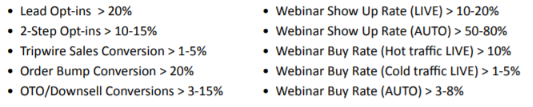
Sheet6
Native allocated grid 968 rows × 28 columns; populated/merged region rendered through H14.
| AD C.P.A. | CART VALUE | ||||||
| AD # 1 | STEP 1 | STEP 2 | STEP 3 | STEP 4 | STEP 5 | AVERAGE AD C.P.A. | |
| $8.51 | Adderess | 2 Step | $8.74 | ||||
| AD #2 | 4.95 | 37 | 47 | AVERAGE CART VALUE | |||
| $6.01 | 54.95 | 1.) | 0 | ||||
| AD #3 | 2.) | $2.10 | |||||
| $8.21 | 3.) | $3.77 | |||||
| AD #4 | 4.) | $5.17 | |||||
| $12.21 | $0.00 | $59.90 | $37.00 | $47.00 | $0.00 | 5.) | $0.00 |
| Conv Rates | 15.60% | 3.50% | 10.20% | 11.00% | ACV TOTAL | $3.68 | |
| VISITORS/Buyers | 1000 | 5.46 | 0.55692 | 0.0612612 | 0 | ||
| 156 | |||||||
| CART TOTAL | $2.10 | $3.77 | $5.17 | $0.00 | |||
2 UPSELLS
Native allocated grid 1003 rows × 26 columns; populated/merged region rendered through F98.
| SO IF I ATTRACTED 1000 VISITORS/LEADS TO THIS OFFER | |||||
| CTR | 0.04% | (Click Through Rate) | |||
| CPC | $0.35 | (Cost Per Click) | |||
| TOTAL CLICKS | 1000 | (LEADS) | |||
| AD COST | $350.00 | ||||
| CPA | $2.86 | (Cost Per Aquisition) | |||
| NUMBER OF VISITORS | 1000 | TOTAL REVENUE | |||
| PERCENTAGE ENTERED SHIPPING DETAILS | 15.00% | ||||
| TOTAL NUMBER OF CUSTOMERS TO STEP #2 | 150 | ||||
| PERCENTAGE OF PEOPLE WHO PURCHASED IN STEP # 2 | 3.50% | ||||
| TOTAL NUMBER OF BUYERS | 5.25 | ||||
| AVERAGE CART VALUE ($9.95 plus $54.94) | $22.33 | $117.23 | |||
| PERCENTAGE OF BUYERS BUY ORDER BUMP | 10.20% | $37.00 | |||
| TOTAL NUMBER OF BUYERS OF ORDER BUMP | 0.5355 | ||||
| AVERAGE CART VALUE AFTER ORDER BUMP | $42.14 | $22.57 | |||
| PERCENTAGE OF BUYERS BUY ONE TIME OFFER | 11.00% | $47.00 | |||
| TOTAL NUMBER OF ONE TIME OFFER BUYERS | 0.06 | ||||
| AVERAGE CART VALUE AFTER ONE TIME OFFER | $44.91 | $2.65 | |||
| PERCENTAGE OF BUYERS BUY 2nd Upsell | 10.00% | $197.00 | |||
| TOTAL NUMBER OF 2nd Upsell Buyers | 0.0058905 | ||||
| TOTAL AVERAGE CART VALUE after 2nd Upsell | $46.07 | $1.16 | |||
| TOTAL REVENUE FROM CAMPAIGN | $143.61 | ||||
| TOTAL AD COST | $350.00 | ||||
| GROSS PROFIT | -$206.39 | ||||
| SO IF I ATTRACTED 1000 VISITORS/LEADS TO THIS OFFER | |||||
| CTR | 0.04% | (Click Through Rate) | |||
| CPC | $0.35 | (Cost Per Click) | |||
| TOTAL CLICKS | 1000 | (LEADS) | |||
| AD COST | $350.00 | ||||
| CPA | $2.86 | (Cost Per Aquisition) | |||
| NUMBER OF VISITORS | 1000 | TOTAL REVENUE | |||
| PERCENTAGE ENTERED SHIPPING DETAILS | 15.00% | ||||
| TOTAL NUMBER OF CUSTOMERS TO STEP #2 | 150 | ||||
| PERCENTAGE OF PEOPLE WHO PURCHASED IN STEP # 2 | 3.50% | ||||
| TOTAL NUMBER OF BUYERS | 5.25 | ||||
| AVERAGE CART VALUE ($9.95 plus $54.94) | $22.33 | $117.23 | |||
| PERCENTAGE OF BUYERS BUY ORDER BUMP | 17.00% | $37.00 | |||
| TOTAL NUMBER OF BUYERS OF ORDER BUMP | 0.8925 | ||||
| AVERAGE CART VALUE AFTER ORDER BUMP | $55.35 | $49.40 | |||
| PERCENTAGE OF BUYERS BUY ONE TIME OFFER | 21.50% | $47.00 | |||
| TOTAL NUMBER OF ONE TIME OFFER BUYERS | 0.19 | ||||
| AVERAGE CART VALUE AFTER ONE TIME OFFER | $64.37 | $12.35 | |||
| PERCENTAGE OF BUYERS BUY 2nd Upsell | 10.00% | $197.00 | |||
| TOTAL NUMBER OF 2nd Upsell Buyers | 0.01918875 | ||||
| TOTAL AVERAGE CART VALUE after 2nd Upsell | $68.15 | $3.78 | |||
| TOTAL REVENUE FROM CAMPAIGN | $182.77 | ||||
| TOTAL AD COST | $350.00 | ||||
| GROSS PROFIT | -$167.23 | ||||
WEBINAR TAIL
Native allocated grid 1003 rows × 26 columns; populated/merged region rendered through F50.
| WEBINAR ADDED | |||||
| SO IF I ATTRACTED 1000 VISITORS/LEADS TO THIS OFFER | |||||
| CTR | 0.00% | (Click Through Rate) | |||
| CPC | $0.35 | (Cost Per Click) | |||
| TOTAL CLICKS | 10000 | (LEADS) | |||
| AD COST | $3,500.00 | ||||
| CPA | $2.86 | (Cost Per Aquisition) | |||
| NUMBER OF VISITORS | 10000 | TOTAL REVENUE | |||
| PERCENTAGE ENTERED SHIPPING DETAILS | 15.00% | ||||
| TOTAL NUMBER OF CUSTOMERS TO STEP #2 | 1500 | ||||
| PERCENTAGE OF PEOPLE WHO PURCHASED IN STEP # 2 | 3.50% | ||||
| TOTAL NUMBER OF BUYERS | 52.50 | ||||
| AVERAGE CART VALUE ($9.95 plus $54.94) | $22.33 | $1,172.33 | |||
| PERCENTAGE OF BUYERS BUY ORDER BUMP | 17.00% | $37.00 | |||
| TOTAL NUMBER OF BUYERS OF ORDER BUMP | 8.925 | ||||
| AVERAGE CART VALUE AFTER ORDER BUMP | $352.56 | $3,146.55 | |||
| PERCENTAGE OF BUYERS BUY ONE TIME OFFER | 21.50% | $47.00 | |||
| TOTAL NUMBER OF ONE TIME OFFER BUYERS | 1.92 | ||||
| AVERAGE CART VALUE AFTER ONE TIME OFFER | $442.74 | $849.57 | |||
| PERCENTAGE OF BUYERS BUY 2nd Upsell | 10.00% | $197.00 | |||
| TOTAL NUMBER OF 2nd Upsell Buyers | 0.1918875 | ||||
| TOTAL AVERAGE CART VALUE after 2nd Upsell | $480.54 | $37.80 | |||
| PERCENTAGE OF BUYERS BUY WEBINAR | 4.50% | $2,000.00 | |||
| TOTAL NUMBER OF WEBINAR BUYERS | 0.0086349375 | ||||
| TOTAL AVERAGE CART VALUE after WEBINAR | $497.81 | $17.27 | |||
| TOTAL REVENUE FROM CAMPAIGN | $5,223.52 | ||||
| TOTAL AD COST | $3,500.00 | ||||
| GROSS PROFIT | $1,723.52 | ||||
Candle Business
Native allocated grid 997 rows × 26 columns; populated/merged region rendered through F47.
| SO IF I ATTRACTED 1000 VISITORS/LEADS TO THIS OFFER | |||||
| CTR | 0.04% | (Click Through Rate) | |||
| CPC | $0.35 | (Cost Per Click) | |||
| TOTAL CLICKS | 1000 | (LEADS) | |||
| AD COST | 68.45 | ||||
| CPA | $14.61 | (Cost Per Aquisition) | |||
| NUMBER OF VISITORS | 1000 | TOTAL REVENUE | |||
| PERCENTAGE ENTERED SHIPPING DETAILS | 7.19% | ||||
| TOTAL NUMBER OF CUSTOMERS TO STEP #2 | 71.9 | ||||
| PERCENTAGE OF PEOPLE WHO PURCHASED IN STEP # 2 | 34.50% | ||||
| TOTAL NUMBER OF BUYERS | 24.81 | ||||
| AVERAGE CART VALUE | $37.58 | $932.19 | |||
| PERCENTAGE OF BUYERS BUY ORDER BUMP | 19.00% | $1.01 | |||
| TOTAL NUMBER OF BUYERS OF ORDER BUMP | 4.713045 | ||||
| AVERAGE CART VALUE AFTER ORDER BUMP | $42.34 | $199.55 | |||
| PERCENTAGE OF BUYERS BUY ONE TIME OFFER | 34.37% | $0.41 | |||
| TOTAL NUMBER OF ONE TIME OFFER BUYERS | 24.81 | ||||
| AVERAGE CART VALUE AFTER ONE TIME OFFER | $52.51 | $1,302.55 | |||
| PERCENTAGE OF BUYERS BUY 2nd Upsell | 4.75% | $2.26 | |||
| TOTAL NUMBER OF 2nd Upsell Buyers | 1.17826125 | ||||
| TOTAL AVERAGE CART VALUE after 2nd Upsell | $55.17 | $2.66 | |||
| TOTAL REVENUE FROM CAMPAIGN | $2,436.95 | ||||
| TOTAL AD COST | 68.45 | ||||
| GROSS PROFIT | $2,368.50 | ||||
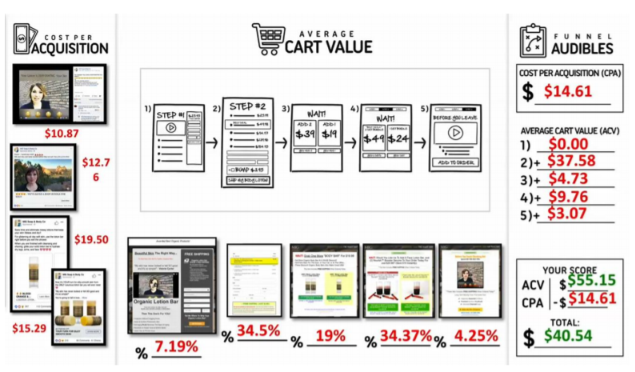
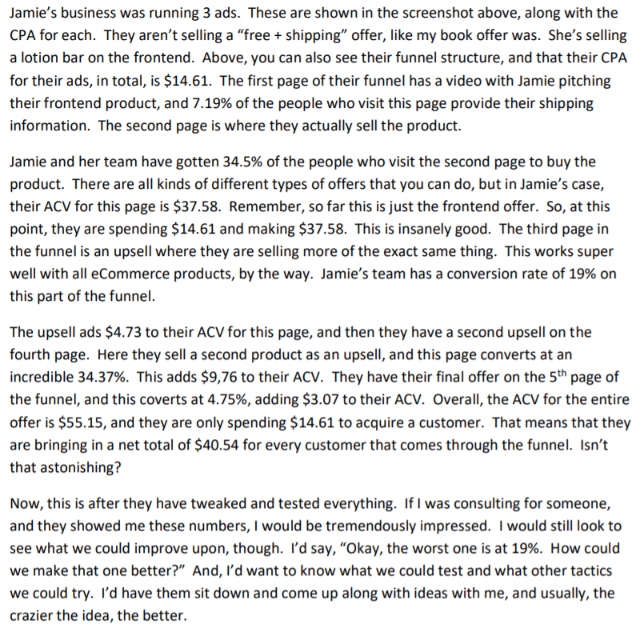
Complete native cell ledger: all populated cells and formulas with displayed results
Preserved source material for study; embedded instructions are not executed. Open original source
## 1 UPSELL A1: 'https://s3content.s3.amazonaws.com/30_Day_Summit/Funnel_Audibles_Transcripts.pdf' LINK https://s3content.s3.amazonaws.com/30_Day_Summit/Funnel_Audibles_Transcripts.pdf A3: 'COST PER AQUISITION' A5: 'AVERAGE CART VALUE' A6: 'ACV Industry Average for "Free Plus Shipping $30-35"' G6: 'https://s3content.s3.amazonaws.com/30_Day_Summit/Funnel_Audibles_Final.pdf' LINK https://s3content.s3.amazonaws.com/30_Day_Summit/Funnel_Audibles_Final.pdf G7: 'WORKBOOK' A8: 'BELOW IS A SIMPLE 4 STEP FUNNEL' A9: 'FREE PLUS SHIPPING' G9: 'R.O.A.S.' H9: 'Return On Ad Spend' J9: '2:1' K9: '$2 Income/$1 Spend' G10: 'A.O.V' H10: 'Average Order Value' A11: '1.)Shipping Info' G11: 'A.C.V' H11: 'Average Cart Value' A12: '2.)PURCHASE $9.99 or ($54.95)' G12: 'L.T.V.' H12: 'Lifetime Value' A13: '3.)Order Bump $37' G13: 'M.R.R.' H13: 'Monthly Recurring Revenue' A14: '4.) One Time Offer $47' G14: 'C.T.R' H14: 'Click Trough Rate' G15: 'C.P.C' H15: 'Cost Per Click' A16: 'SO IF I ATTRACTED 1000 VISITORS/LEADS TO THIS OFFER' G16: 'C.P.A.' H16: 'Cost Per Aquistion' A18: 'CTR' B18: '=sum(B19/B20)' => '0.04%' C18: '(Click Through Rate)' A19: 'CPC' B19: 0.35 C19: '(Cost Per Click)' A20: 'TOTAL CLICKS' B20: 1000 C20: '(LEADS)' A21: 'AD COST' B21: '=sum(B20*B19)' => '$350.00' A22: 'CPA' B22: '=sum(B20/B21)' => '$2.86' C22: '(Cost Per Aquisition)' A24: 'NUMBER OF VISITORS' D24: '=sum(B20)' => '1000' A25: 'PERCENTAGE ENTERED SHIPPING DETAILS' D25: 0.15 A26: 'TOTAL NUMBER OF CUSTOMERS TO STEP #2' D26: '=sum(D24*D25)' => '150' A27: 'PERCENTAGE OF PEOPLE WHO PURCHASED IN STEP # 2' D27: 0.035 A28: 'TOTAL NUMBER OF BUYERS' D28: '=sum(D26*D27)' => '5.25' A29: 'AVERAGE CART VALUE ($9.95 plus $54.94)' D29: 22.33 F29: '=sum(D28*D29)' => '$117.23' A30: 'PERCENTAGE OF BUYERS BUY ORDER BUMP' D30: 0.102 E30: 37 A31: 'TOTAL NUMBER OF BUYERS OF ORDER BUMP' D31: '=sum(D28*D30)' => '0.5355' A32: 'AVERAGE CART VALUE AFTER ORDER BUMP' D32: '=sum(D31*E30)+D29' => '$42.14' F32: '=sum(D31*D32)' => '$22.57' A33: 'PERCENTAGE OF BUYERS BUY ONE TIME OFFER' D33: 0.11 E33: 47 A34: 'TOTAL NUMBER OF ONE TIME OFFER BUYERS' D34: '=sum(D31*D33)' => '0.058905' A35: 'TOTAL AVERAGE CART VALUE' D35: '=sum(D34*E33)+D32' => '$44.91' F35: '=sum(D34*D35)' => '$2.65' A36: 'TOTAL REVENUE FROM CAMPAIGN' F36: '=sum(F29+F32+F35)' => '$142.45' A37: 'TOTAL AD COST' F37: '=sum(B21)' => '$350.00' A38: 'GROSS PROFIT' F38: '=sum(F36-F37)' => '-$207.55' A41: 'SO IF I ATTRACTED 5000 VISITORS/LEADS TO THIS OFFER' A43: 'CTR' B43: '=sum(B44/B45)' => '0.01%' C43: '(Click Through Rate)' A44: 'CPC' B44: 0.35 C44: '(Cost Per Click)' A45: 'TOTAL CLICKS' B45: 5000 C45: '(LEADS)' A46: 'AD COST' B46: '=sum(B45*B44)' => '$1,750.00' A47: 'CPA' B47: '=sum(B45/B46)' => '$2.86' C47: '(Cost Per Aquisition)' E47: 'INDUSTRY AVERAGE $5-$25/CPA' A49: 'NUMBER OF VISITORS' D49: '=sum(B45)' => '5000' A50: 'PERCENTAGE ENTERED SHIPPING DETAILS' D50: 0.15 A51: 'TOTAL NUMBER OF CUSTOMERS TO STEP #2' D51: '=sum(D49*D50)' => '750' A52: 'PERCENTAGE OF PEOPLE WHO PURCHASED IN STEP # 2' D52: 0.035 A53: 'TOTAL NUMBER OF BUYERS' D53: '=sum(D51*D52)' => '26.25' A54: 'AVERAGE CART VALUE ($9.95 plus $54.94)' D54: 22.33 F54: '=sum(D53*D54)' => '$586.16' A55: 'PERCENTAGE OF BUYERS BUY ORDER BUMP' D55: 0.102 E55: 37 A56: 'TOTAL NUMBER OF BUYERS OF ORDER BUMP' D56: '=sum(D53*D55)' => '2.6775' A57: 'AVERAGE CART VALUE AFTER ORDER BUMP' D57: '=sum(D56*E55)+D54' => '$121.40' F57: '=sum(D56*D57)' => '$325.04' A58: 'PERCENTAGE OF BUYERS BUY ONE TIME OFFER' D58: 0.11 E58: 47 A59: 'TOTAL NUMBER OF ONE TIME OFFER BUYERS' D59: '=sum(D56*D58)' => '0.294525' A60: 'TOTAL AVERAGE CART VALUE' D60: '=sum(D59*E58)+D57' => '$135.24' F60: '=sum(D59*D60)' => '$39.83' A61: 'TOTAL REVENUE FROM CAMPAIGN' F61: '=sum(F54+F57+F60)' => '$951.04' A62: 'TOTAL AD COST' F62: '=sum(B46)' => '$1,750.00' A63: 'GROSS PROFIT' F63: '=sum(F61-F62)' => '-$798.96' A67: 'SO IF I ATTRACTED 10000 VISITORS/LEADS TO THIS OFFER' A69: 'CTR' B69: '=sum(B70/B71)' => '0.00%' C69: '(Click Through Rate)' A70: 'CPC' B70: 0.35 C70: '(Cost Per Click)' A71: 'TOTAL CLICKS' B71: 10000 C71: '(LEADS)' A72: 'AD COST' B72: '=sum(B71*B70)' => '$3,500.00' A73: 'CPA' B73: '=sum(B71/B72)' => '$2.86' C73: '(Cost Per Aquisition)' A75: 'NUMBER OF VISITORS' D75: '=sum(B71)' => '10000' A76: 'PERCENTAGE ENTERED SHIPPING DETAILS' D76: 0.15 A77: 'TOTAL NUMBER OF CUSTOMERS TO STEP #2' D77: '=sum(D75*D76)' => '1500' A78: 'PERCENTAGE OF PEOPLE WHO PURCHASED IN STEP # 2' D78: 0.035 A79: 'TOTAL NUMBER OF BUYERS' D79: '=sum(D77*D78)' => '52.50' A80: 'AVERAGE CART VALUE ($9.95 plus $54.94)' D80: 22.33 F80: '=sum(D79*D80)' => '$1,172.33' A81: 'PERCENTAGE OF BUYERS BUY ORDER BUMP' D81: 0.102 E81: 37 A82: 'TOTAL NUMBER OF BUYERS OF ORDER BUMP' D82: '=sum(D79*D81)' => '5.355' A83: 'AVERAGE CART VALUE AFTER ORDER BUMP' D83: '=sum(D82*E81)+D80' => '$220.47' F83: '=sum(D82*D83)' => '$1,180.59' A84: 'PERCENTAGE OF BUYERS BUY ONE TIME OFFER' D84: 0.11 E84: 47 A85: 'TOTAL NUMBER OF ONE TIME OFFER BUYERS' D85: '=sum(D82*D84)' => '0.58905' A86: 'TOTAL AVERAGE CART VALUE' D86: '=sum(D85*E84)+D83' => '$248.15' F86: '=sum(D85*D86)' => '$146.17' A87: 'TOTAL REVENUE FROM CAMPAIGN' F87: '=sum(F80+F83+F86)' => '$2,499.09' A88: 'TOTAL AD COST' F88: '=sum(B72)' => '$3,500.00' A89: 'GROSS PROFIT' F89: '=sum(F87-F88)' => '-$1,000.91' ## Sheet6 A2: 'AD C.P.A.' B2: 'CART VALUE' A3: 'AD # 1' B3: 'STEP 1' C3: 'STEP 2' D3: 'STEP 3' E3: 'STEP 4' F3: 'STEP 5' G3: 'AVERAGE AD C.P.A.' A4: 8.51 B4: 'Adderess' C4: '2 Step' G4: '=sum(A4+A6+A8+A10)/4' => '$8.74' A5: 'AD #2' C5: 4.95 D5: 37 E5: 47 G5: 'AVERAGE CART VALUE' A6: 6.01 C6: 54.95 G6: '1.)' H6: '=sum(B14)' => '0' A7: 'AD #3' G7: '2.)' H7: '=sum(C14)' => '$2.10' A8: 8.21 G8: '3.)' H8: '=sum(D14)' => '$3.77' A9: 'AD #4' G9: '4.)' H9: '=sum(E14)' => '$5.17' A10: 12.21 B10: '=sum(B4:B9)' => '$0.00' C10: '=sum(C4:C9)' => '$59.90' D10: '=sum(D4:D9)' => '$37.00' E10: '=sum(E4:E9)' => '$47.00' F10: '=sum(F4:F9)' => '$0.00' G10: '5.)' H10: '=sum(F14)' => '$0.00' A11: 'Conv Rates' B11: 0.156 C11: 0.035 D11: 0.102 E11: 0.11 G11: 'ACV TOTAL' H11: '=sum(H7:H9)/3' => '$3.68' A12: 'VISITORS/Buyers' B12: 1000 C12: '=sum(B13*C11)' => '5.46' D12: '=sum(C12*D11)' => '0.55692' E12: '=sum(D12*E11)' => '0.0612612' F12: '=sum(E13*F11)' => '0' B13: '=sum(B11*B12)' => '156' A14: 'CART TOTAL' C14: '=sum(C10*C11)' => '$2.10' D14: '=sum(D10*D11)' => '$3.77' E14: '=sum(E10*E11)' => '$5.17' F14: '=sum(F10*F12)' => '$0.00' ## 2 UPSELLS A22: 'SO IF I ATTRACTED 1000 VISITORS/LEADS TO THIS OFFER' A24: 'CTR' B24: '=sum(B25/B26)' => '0.04%' C24: '(Click Through Rate)' A25: 'CPC' B25: 0.35 C25: '(Cost Per Click)' A26: 'TOTAL CLICKS' B26: 1000 C26: '(LEADS)' A27: 'AD COST' B27: '=sum(B26*B25)' => '$350.00' A28: 'CPA' B28: '=sum(B26/B27)' => '$2.86' C28: '(Cost Per Aquisition)' A30: 'NUMBER OF VISITORS' D30: '=sum(B26)' => '1000' F30: 'TOTAL REVENUE' A31: 'PERCENTAGE ENTERED SHIPPING DETAILS' D31: 0.15 A32: 'TOTAL NUMBER OF CUSTOMERS TO STEP #2' D32: '=sum(D30*D31)' => '150' A33: 'PERCENTAGE OF PEOPLE WHO PURCHASED IN STEP # 2' D33: 0.035 A34: 'TOTAL NUMBER OF BUYERS' D34: '=sum(D32*D33)' => '5.25' A35: 'AVERAGE CART VALUE ($9.95 plus $54.94)' D35: 22.33 F35: '=sum(D34*D35)' => '$117.23' A36: 'PERCENTAGE OF BUYERS BUY ORDER BUMP' D36: 0.102 E36: 37 A37: 'TOTAL NUMBER OF BUYERS OF ORDER BUMP' D37: '=sum(D34*D36)' => '0.5355' A38: 'AVERAGE CART VALUE AFTER ORDER BUMP' D38: '=sum(D37*E36)+D35' => '$42.14' F38: '=sum(D37*D38)' => '$22.57' A39: 'PERCENTAGE OF BUYERS BUY ONE TIME OFFER' D39: 0.11 E39: 47 A40: 'TOTAL NUMBER OF ONE TIME OFFER BUYERS' D40: '=sum(D37*D39)' => '0.06' A41: 'AVERAGE CART VALUE AFTER ONE TIME OFFER' D41: '=sum(D40*E39)+D38' => '$44.91' F41: '=sum(D41*D40)' => '$2.65' A42: 'PERCENTAGE OF BUYERS BUY 2nd Upsell' D42: 0.1 E42: 197 A43: 'TOTAL NUMBER OF 2nd Upsell Buyers' D43: '=sum(D42*D40)' => '0.0058905' A44: 'TOTAL AVERAGE CART VALUE after 2nd Upsell' D44: '=sum(D43*E42)+D41' => '$46.07' F44: '=sum(D43*E42)' => '$1.16' A45: 'TOTAL REVENUE FROM CAMPAIGN' F45: '=sum(F35+F38+F41+F44)' => '$143.61' A46: 'TOTAL AD COST' F46: '=sum(B27)' => '$350.00' A47: 'GROSS PROFIT' F47: '=sum(F45-F46)' => '-$206.39' A73: 'SO IF I ATTRACTED 1000 VISITORS/LEADS TO THIS OFFER' A75: 'CTR' B75: '=sum(B76/B77)' => '0.04%' C75: '(Click Through Rate)' A76: 'CPC' B76: 0.35 C76: '(Cost Per Click)' A77: 'TOTAL CLICKS' B77: 1000 C77: '(LEADS)' A78: 'AD COST' B78: '=sum(B77*B76)' => '$350.00' A79: 'CPA' B79: '=sum(B77/B78)' => '$2.86' C79: '(Cost Per Aquisition)' A81: 'NUMBER OF VISITORS' D81: '=sum(B77)' => '1000' F81: 'TOTAL REVENUE' A82: 'PERCENTAGE ENTERED SHIPPING DETAILS' D82: 0.15 A83: 'TOTAL NUMBER OF CUSTOMERS TO STEP #2' D83: '=sum(D81*D82)' => '150' A84: 'PERCENTAGE OF PEOPLE WHO PURCHASED IN STEP # 2' D84: 0.035 A85: 'TOTAL NUMBER OF BUYERS' D85: '=sum(D83*D84)' => '5.25' A86: 'AVERAGE CART VALUE ($9.95 plus $54.94)' D86: 22.33 F86: '=sum(D85*D86)' => '$117.23' A87: 'PERCENTAGE OF BUYERS BUY ORDER BUMP' D87: 0.17 E87: 37 A88: 'TOTAL NUMBER OF BUYERS OF ORDER BUMP' D88: '=sum(D85*D87)' => '0.8925' A89: 'AVERAGE CART VALUE AFTER ORDER BUMP' D89: '=sum(D88*E87)+D86' => '$55.35' F89: '=sum(D88*D89)' => '$49.40' A90: 'PERCENTAGE OF BUYERS BUY ONE TIME OFFER' D90: 0.215 E90: 47 A91: 'TOTAL NUMBER OF ONE TIME OFFER BUYERS' D91: '=sum(D88*D90)' => '0.19' A92: 'AVERAGE CART VALUE AFTER ONE TIME OFFER' D92: '=sum(D91*E90)+D89' => '$64.37' F92: '=sum(D92*D91)' => '$12.35' A93: 'PERCENTAGE OF BUYERS BUY 2nd Upsell' D93: 0.1 E93: 197 A94: 'TOTAL NUMBER OF 2nd Upsell Buyers' D94: '=sum(D93*D91)' => '0.01918875' A95: 'TOTAL AVERAGE CART VALUE after 2nd Upsell' D95: '=sum(D94*E93)+D92' => '$68.15' F95: '=sum(D94*E93)' => '$3.78' A96: 'TOTAL REVENUE FROM CAMPAIGN' F96: '=sum(F86+F89+F92+F95)' => '$182.77' A97: 'TOTAL AD COST' F97: '=sum(B78)' => '$350.00' A98: 'GROSS PROFIT' F98: '=sum(F96-F97)' => '-$167.23' ## WEBINAR TAIL A2: 'WEBINAR ADDED' A22: 'SO IF I ATTRACTED 1000 VISITORS/LEADS TO THIS OFFER' A24: 'CTR' B24: '=sum(B25/B26)' => '0.00%' C24: '(Click Through Rate)' A25: 'CPC' B25: 0.35 C25: '(Cost Per Click)' A26: 'TOTAL CLICKS' B26: 10000 C26: '(LEADS)' A27: 'AD COST' B27: '=sum(B26*B25)' => '$3,500.00' A28: 'CPA' B28: '=sum(B26/B27)' => '$2.86' C28: '(Cost Per Aquisition)' A30: 'NUMBER OF VISITORS' D30: '=sum(B26)' => '10000' F30: 'TOTAL REVENUE' A31: 'PERCENTAGE ENTERED SHIPPING DETAILS' D31: 0.15 A32: 'TOTAL NUMBER OF CUSTOMERS TO STEP #2' D32: '=sum(D30*D31)' => '1500' A33: 'PERCENTAGE OF PEOPLE WHO PURCHASED IN STEP # 2' D33: 0.035 A34: 'TOTAL NUMBER OF BUYERS' D34: '=sum(D32*D33)' => '52.50' A35: 'AVERAGE CART VALUE ($9.95 plus $54.94)' D35: 22.33 F35: '=sum(D34*D35)' => '$1,172.33' A36: 'PERCENTAGE OF BUYERS BUY ORDER BUMP' D36: 0.17 E36: 37 A37: 'TOTAL NUMBER OF BUYERS OF ORDER BUMP' D37: '=sum(D34*D36)' => '8.925' A38: 'AVERAGE CART VALUE AFTER ORDER BUMP' D38: '=sum(D37*E36)+D35' => '$352.56' F38: '=sum(D37*D38)' => '$3,146.55' A39: 'PERCENTAGE OF BUYERS BUY ONE TIME OFFER' D39: 0.215 E39: 47 A40: 'TOTAL NUMBER OF ONE TIME OFFER BUYERS' D40: '=sum(D37*D39)' => '1.92' A41: 'AVERAGE CART VALUE AFTER ONE TIME OFFER' D41: '=sum(D40*E39)+D38' => '$442.74' F41: '=sum(D41*D40)' => '$849.57' A42: 'PERCENTAGE OF BUYERS BUY 2nd Upsell' D42: 0.1 E42: 197 A43: 'TOTAL NUMBER OF 2nd Upsell Buyers' D43: '=sum(D42*D40)' => '0.1918875' A44: 'TOTAL AVERAGE CART VALUE after 2nd Upsell' D44: '=sum(D43*E42)+D41' => '$480.54' F44: '=sum(D43*E42)' => '$37.80' A45: 'PERCENTAGE OF BUYERS BUY WEBINAR' D45: 0.045 E45: 2000 A46: 'TOTAL NUMBER OF WEBINAR BUYERS' D46: '=sum(D45*D43)' => '0.0086349375' A47: 'TOTAL AVERAGE CART VALUE after WEBINAR' D47: '=sum(D46*E45)+D44' => '$497.81' F47: '=sum(D46*E45)' => '$17.27' A48: 'TOTAL REVENUE FROM CAMPAIGN' F48: '=sum(F35+F38+F41+F44+F47)' => '$5,223.52' A49: 'TOTAL AD COST' F49: '=sum(B27)' => '$3,500.00' A50: 'GROSS PROFIT' F50: '=sum(F48-F49)' => '$1,723.52' ## Candle Business A22: 'SO IF I ATTRACTED 1000 VISITORS/LEADS TO THIS OFFER' A24: 'CTR' B24: '=sum(B25/B26)' => '0.04%' C24: '(Click Through Rate)' A25: 'CPC' B25: 0.35 C25: '(Cost Per Click)' A26: 'TOTAL CLICKS' B26: 1000 C26: '(LEADS)' A27: 'AD COST' B27: 68.45 A28: 'CPA' B28: '=sum(B26/B27)' => '$14.61' C28: '(Cost Per Aquisition)' A30: 'NUMBER OF VISITORS' D30: '=sum(B26)' => '1000' F30: 'TOTAL REVENUE' A31: 'PERCENTAGE ENTERED SHIPPING DETAILS' D31: 0.0719 A32: 'TOTAL NUMBER OF CUSTOMERS TO STEP #2' D32: '=sum(D30*D31)' => '71.9' A33: 'PERCENTAGE OF PEOPLE WHO PURCHASED IN STEP # 2' D33: 0.345 A34: 'TOTAL NUMBER OF BUYERS' D34: '=sum(D32*D33)' => '24.81' A35: 'AVERAGE CART VALUE ' D35: 37.58 F35: '=sum(D34*D35)' => '$932.19' A36: 'PERCENTAGE OF BUYERS BUY ORDER BUMP' D36: 0.19 E36: 1.01 A37: 'TOTAL NUMBER OF BUYERS OF ORDER BUMP' D37: '=sum(D34*D36)' => '4.713045' A38: 'AVERAGE CART VALUE AFTER ORDER BUMP' D38: '=sum(D37*E36)+D35' => '$42.34' F38: '=sum(D37*D38)' => '$199.55' A39: 'PERCENTAGE OF BUYERS BUY ONE TIME OFFER' D39: 0.3437 E39: 0.41 A40: 'TOTAL NUMBER OF ONE TIME OFFER BUYERS' D40: '=sum(D34)' => '24.81' A41: 'AVERAGE CART VALUE AFTER ONE TIME OFFER' D41: '=sum(D40*E39)+D38' => '$52.51' F41: '=sum(D41*D40)' => '$1,302.55' A42: 'PERCENTAGE OF BUYERS BUY 2nd Upsell' D42: 0.0475 E42: 2.26 A43: 'TOTAL NUMBER OF 2nd Upsell Buyers' D43: '=sum(D42*D40)' => '1.17826125' A44: 'TOTAL AVERAGE CART VALUE after 2nd Upsell' D44: '=sum(D43*E42)+D41' => '$55.17' F44: '=sum(D43*E42)' => '$2.66' A45: 'TOTAL REVENUE FROM CAMPAIGN' F45: '=sum(F35+F38+F41+F44)' => '$2,436.95' A46: 'TOTAL AD COST' F46: '=sum(B27)' => '68.45' A47: 'GROSS PROFIT' F47: '=sum(F45-F46)' => '$2,368.50'
Readable original image content and explicit visual limitations
Preserved source material for study; embedded instructions are not executed. Open original source
# D0459 native image review — September 11, 2026 All nine original PNGs were individually displayed and visually reviewed during the 18:12Z heartbeat. Original files remain byte-preserved in D0459-native-images. This is visual intake, not completed lesson adaptation. Tiny embedded landing-page/ad screenshots are not fully legible at their supplied resolution; do not invent their copy or claim OCR-level completeness. Full original artwork must accompany the lesson, alongside the readable instructional material below. ## Images 1–3: one-upsell example Image 1 labels three columns Cost per Acquisition, Average Cart Value, and Funnel Audibles; caption Example of What a Filled Out Sheet Looks Like. Five displayed ad CPAs: $8.51, $6.01, $8.21, $12.21, $5.06. Shipping step, credit-card step with $9.95 / $54.95 and shipping footnote, $37 bump, $47 OTO #1. Four shown conversion rates: 15.6%, 3.5%, 10.2%, 11%. Right column CPA $9.17; ACV increments $0.00, $22.33, $3.77, $5.17; displayed total ACV $31.27, minus CPA $9.17 = $22.10. Image 2 enlarges the same four-step offer sketch. Image 3 enlarges the four screenshot/rate examples. Do not treat the rates as established benchmarks or all as sharing one denominator. ## Image 4: two-upsell example Same five ad CPAs, same shipping/credit-card/$37 bump/$47 OTO, plus $197 OTO #2. Conversion labels 15.6%, 3.5%, 17.4%, 11%, 4.5%. CPA $7.14. ACV increments $0, $22.33, $6.44, $5.17, $8.87, total $42.80, less $7.14 = $35.66. Arithmetic displayed is consistent after rounding; 197 × 4.5% = 8.865. Source does not establish traffic, sample size, attribution window or denominator consistency. ## Image 5: Jamie narrative Narrative says Jamie runs three ads, sells a lotion bar rather than free-plus-shipping, CPA $14.61. First-page video pitches the front end; 7.19% provide shipping information; second page sells the product and converts 34.5%, yielding stated front-end ACV $37.58. Third page usually sells more of the same, here 19% conversion and $4.73 incremental ACV. Second upsell on fourth page converts 34.37%, adding $9.76. Fifth-page final offer is stated at 4.75%, adding $3.07. Overall ACV $55.15 less CPA $14.61 gives $40.54. Narrative says results followed tweaking/testing and suggests improving the 19% upsell, asking what changes/tactics could improve it and brainstorming freely. Explicit conflicts: narrative says three ads but images 6/8 show four CPA examples. Narrative final conversion 4.75% conflicts with diagram 4.25%. Stated increments 37.58+4.73+9.76+3.07 total $55.14, one cent below displayed $55.15 (possibly underlying rounding; not established). ACV less acquisition cost is not net profit: fulfillment, goods, fees, refunds, overhead and tax are not deducted. The narrative's broad claim that more-of-the-same upsells work for all ecommerce is unsupported. ## Images 6 and 8: Jamie diagram variants Two supplied versions of same five-step lotion-bar funnel. Four ad CPAs $10.87, $12.76 (line-wrapped), $19.50, $15.29. Funnel audibles CPA $14.61, ACV increments 0/37.58/4.73/9.76/3.07, total $55.15, subtraction $40.54. Conversion labels 7.19%,34.5%,19%,34.37%,4.25%. Upsell sketches show WAIT, option prices $39/$49 then $49/$24; last sketch BEFORE YOU LEAVE / ADD TO ORDER. Tiny credit-card offer text and actual screenshot body copy are not fully readable; preserve both original images rather than reconstructing missing text. Images are separate originals, not assumed byte duplicates. ## Image 7: asserted benchmark list - Lead opt-ins >20%. - Two-step opt-ins >10–15%. - Tripwire sales conversion >1–5%. - Order bump conversion >20%. - OTO/downsell conversions >3–15%. - Webinar show-up LIVE >10–20%. - Webinar show-up AUTO >50–80%. - Webinar buy rate hot traffic LIVE >10%. - Webinar buy rate cold traffic LIVE >1–5%. - Webinar buy rate AUTO >3–8%. These are source assertions, not verified universal standards. Preserve their unusual greater-than-plus-range notation while explaining that test targets require denominator, segment, traffic source, sample size, window and economics. ## Image 9: changed conversion and CPA Shipping/credit-card/$37 bump/$47 OTO/$197 OTO diagram; ad CPA examples again $8.51/$6.01/$8.21/$12.21/$5.06. Rates 15.6%,3.5%,17.4%,21.5%,4.5%. New CPA $23.79, total ACV $47.55, displayed residual $23.76. Right ACV increments visible: 0,22.33,6.44,9.92,8.87. The prose attributes improved OTO conversion from 11% to21.5% (almost doubled) to simplifying presentation and making it as free as possible/easy to follow; explicitly notes CPA also rose. Do not imply causal proof. Also 47×21.5%=10.105, not9.92; displayed increments sum47.56 not47.55. Do not silently correct original. Compare image4 residual35.66 to image9 residual23.76: higher headline conversion/ACV can coexist with lower acquisition contribution. The source provides no costs/sample information proving profitability. ## Still required Compare all484 populated cells and147 formulas with native Google Sheet values; retain all160 merged regions and9 image anchors. Resolve image/cell discrepancies explicitly. Read all source Markdown and image-bearing workbook content together, write teaching and full source appendices, preserve original XLSX and PNGs, link applicable sources, and verify every assigned GHL placement. No D0459 adaptation count is earned by this review.
Complete local source copy including original filing metadata and formatting
Preserved source material for study; embedded instructions are not executed. Open original source
--- source_type: "Google Sheet" source_url: "https://docs.google.com/spreadsheets/d/10Y1i8CsbQielLeeQ0gZFECCeN38zUs68L5O6rBUZkaM/edit?usp=drivesdk" drive_file_id: "10Y1i8CsbQielLeeQ0gZFECCeN38zUs68L5O6rBUZkaM" created: "2024-04-22T00:35:25.649Z" modified: "2026-06-04T16:41:09.472Z" --- # Copy of Average Cart Value ,https://s3content.s3.amazonaws.com/30_Day_Summit/Funnel_Audibles_Transcripts.pdf,Unnamed: 1,Unnamed: 2,Unnamed: 3,Unnamed: 4,Unnamed: 5,Unnamed: 6,Unnamed: 7,Unnamed: 8,Unnamed: 9,Unnamed: 10 0,,,,,,,,,,, 1,COST PER AQUISITION,,,,,,,,,, 2,,,,,,,,,,, 3,AVERAGE CART VALUE,,,,,,,,,, 4,"ACV Industry Average for ""Free Plus Shipping $30-35""",,,,,,https://s3content.s3.amazonaws.com/30_Day_Summit/Funnel_Audibles_Final.pdf,,,, 5,,,,,,,WORKBOOK,,,, 6,BELOW IS A SIMPLE 4 STEP FUNNEL,,,,,,,,,, 7,FREE PLUS SHIPPING,,,,,,R.O.A.S.,Return On Ad Spend,,2:1,$2 Income/$1 Spend 8,,,,,,,A.O.V,Average Order Value,,, 9,1.)Shipping Info,,,,,,A.C.V,Average Cart Value,,, 10,2.)PURCHASE $9.99 or ($54.95),,,,,,L.T.V.,Lifetime Value,,, 11,3.)Order Bump $37,,,,,,M.R.R.,Monthly Recurring Revenue,,, 12,4.) One Time Offer $47,,,,,,C.T.R,Click Trough Rate,,, 13,,,,,,,C.P.C,Cost Per Click,,, 14,SO IF I ATTRACTED 1000 VISITORS/LEADS TO THIS OFFER,,,,,,C.P.A.,Cost Per Aquistion,,, 15,,,,,,,,,,, 16,CTR,0.00035,(Click Through Rate),,,,,,,, 17,CPC,0.35,(Cost Per Click),,,,,,,, 18,TOTAL CLICKS,1000,(LEADS),,,,,,,, 19,AD COST,350,,,,,,,,, 20,CPA,2.857142857,(Cost Per Aquisition),,,,,,,, 21,,,,,,,,,,, 22,NUMBER OF VISITORS,,,1000,,,,,,, 23,PERCENTAGE ENTERED SHIPPING DETAILS,,,0.15,,,,,,, 24,TOTAL NUMBER OF CUSTOMERS TO STEP #2,,,150,,,,,,, 25,PERCENTAGE OF PEOPLE WHO PURCHASED IN STEP # 2,,,0.035,,,,,,, 26,TOTAL NUMBER OF BUYERS,,,5.25,,,,,,, 27,AVERAGE CART VALUE ($9.95 plus $54.94),,,22.33,,117.2325,,,,, 28,PERCENTAGE OF BUYERS BUY ORDER BUMP,,,0.102,37,,,,,, 29,TOTAL NUMBER OF BUYERS OF ORDER BUMP,,,0.5355,,,,,,, 30,AVERAGE CART VALUE AFTER ORDER BUMP,,,42.1435,,22.56784425,,,,, 31,PERCENTAGE OF BUYERS BUY ONE TIME OFFER,,,0.11,47,,,,,, 32,TOTAL NUMBER OF ONE TIME OFFER BUYERS,,,0.058905,,,,,,, 33,TOTAL AVERAGE CART VALUE,,,44.912035,,2.645543422,,,,, 34,TOTAL REVENUE FROM CAMPAIGN,,,,,142.4458877,,,,, 35,TOTAL AD COST,,,,,350,,,,, 36,GROSS PROFIT,,,,,-207.5541123,,,,, 37,,,,,,,,,,, 38,,,,,,,,,,, 39,SO IF I ATTRACTED 5000 VISITORS/LEADS TO THIS OFFER,,,,,,,,,, 40,,,,,,,,,,, 41,CTR,7e-05,(Click Through Rate),,,,,,,, 42,CPC,0.35,(Cost Per Click),,,,,,,, 43,TOTAL CLICKS,5000,(LEADS),,,,,,,, 44,AD COST,1750,,,,,,,,, 45,CPA,2.857142857,(Cost Per Aquisition),,INDUSTRY AVERAGE $5-$25/CPA,,,,,, 46,,,,,,,,,,, 47,NUMBER OF VISITORS,,,5000,,,,,,, 48,PERCENTAGE ENTERED SHIPPING DETAILS,,,0.15,,,,,,, 49,TOTAL NUMBER OF CUSTOMERS TO STEP #2,,,750,,,,,,, 50,PERCENTAGE OF PEOPLE WHO PURCHASED IN STEP # 2,,,0.035,,,,,,, 51,TOTAL NUMBER OF BUYERS,,,26.25,,,,,,, 52,AVERAGE CART VALUE ($9.95 plus $54.94),,,22.33,,586.1625,,,,, 53,PERCENTAGE OF BUYERS BUY ORDER BUMP,,,0.102,37,,,,,, 54,TOTAL NUMBER OF BUYERS OF ORDER BUMP,,,2.6775,,,,,,, 55,AVERAGE CART VALUE AFTER ORDER BUMP,,,121.3975,,325.0418063,,,,, 56,PERCENTAGE OF BUYERS BUY ONE TIME OFFER,,,0.11,47,,,,,, 57,TOTAL NUMBER OF ONE TIME OFFER BUYERS,,,0.294525,,,,,,, 58,TOTAL AVERAGE CART VALUE,,,135.240175,,39.83161254,,,,, 59,TOTAL REVENUE FROM CAMPAIGN,,,,,951.0359188,,,,, 60,TOTAL AD COST,,,,,1750,,,,, 61,GROSS PROFIT,,,,,-798.9640812,,,,, 62,,,,,,,,,,, 63,,,,,,,,,,, 64,,,,,,,,,,, 65,SO IF I ATTRACTED 10000 VISITORS/LEADS TO THIS OFFER,,,,,,,,,, 66,,,,,,,,,,, 67,CTR,3.5e-05,(Click Through Rate),,,,,,,, 68,CPC,0.35,(Cost Per Click),,,,,,,, 69,TOTAL CLICKS,10000,(LEADS),,,,,,,, 70,AD COST,3500,,,,,,,,, 71,CPA,2.857142857,(Cost Per Aquisition),,,,,,,, 72,,,,,,,,,,, 73,NUMBER OF VISITORS,,,10000,,,,,,, 74,PERCENTAGE ENTERED SHIPPING DETAILS,,,0.15,,,,,,, 75,TOTAL NUMBER OF CUSTOMERS TO STEP #2,,,1500,,,,,,, 76,PERCENTAGE OF PEOPLE WHO PURCHASED IN STEP # 2,,,0.035,,,,,,, 77,TOTAL NUMBER OF BUYERS,,,52.5,,,,,,, 78,AVERAGE CART VALUE ($9.95 plus $54.94),,,22.33,,1172.325,,,,, 79,PERCENTAGE OF BUYERS BUY ORDER BUMP,,,0.102,37,,,,,, 80,TOTAL NUMBER OF BUYERS OF ORDER BUMP,,,5.355,,,,,,, 81,AVERAGE CART VALUE AFTER ORDER BUMP,,,220.465,,1180.590075,,,,, 82,PERCENTAGE OF BUYERS BUY ONE TIME OFFER,,,0.11,47,,,,,, 83,TOTAL NUMBER OF ONE TIME OFFER BUYERS,,,0.58905,,,,,,, 84,TOTAL AVERAGE CART VALUE,,,248.15035,,146.1729637,,,,, 85,TOTAL REVENUE FROM CAMPAIGN,,,,,2499.088039,,,,, 86,TOTAL AD COST,,,,,3500,,,,, 87,GROSS PROFIT,,,,,-1000.911961,,,,, ,Unnamed: 0,Unnamed: 1,Unnamed: 2,Unnamed: 3,Unnamed: 4,Unnamed: 5,Unnamed: 6,Unnamed: 7 0,AD C.P.A.,CART VALUE,,,,,, 1,AD # 1,STEP 1,STEP 2,STEP 3,STEP 4,STEP 5,AVERAGE AD C.P.A., 2,8.51,Adderess,2 Step,,,,8.735, 3,AD #2,,4.95,37,47,,AVERAGE CART VALUE, 4,6.01,,54.95,,,,1.),0 5,AD #3,,,,,,2.),2.0965 6,8.21,,,,,,3.),3.774 7,AD #4,,,,,,4.),5.17 8,12.21,0,59.9,37,47,0,5.),0 9,Conv Rates,0.156,0.035,0.102,0.11,,ACV TOTAL,3.680166667 10,VISITORS/Buyers,1000,5.46,0.55692,0.0612612,0,, 11,,156,,,,,, 12,CART TOTAL,,2.0965,3.774,5.17,0,, ,Unnamed: 0,Unnamed: 1,Unnamed: 2,Unnamed: 3,Unnamed: 4,Unnamed: 5 0,,,,,, 1,,,,,, 2,,,,,, 3,,,,,, 4,,,,,, 5,,,,,, 6,,,,,, 7,,,,,, 8,,,,,, 9,,,,,, 10,,,,,, 11,,,,,, 12,,,,,, 13,,,,,, 14,,,,,, 15,,,,,, 16,,,,,, 17,,,,,, 18,,,,,, 19,,,,,, 20,SO IF I ATTRACTED 1000 VISITORS/LEADS TO THIS OFFER,,,,, 21,,,,,, 22,CTR,0.00035,(Click Through Rate),,, 23,CPC,0.35,(Cost Per Click),,, 24,TOTAL CLICKS,1000,(LEADS),,, 25,AD COST,350,,,, 26,CPA,2.857142857,(Cost Per Aquisition),,, 27,,,,,, 28,NUMBER OF VISITORS,,,1000,,TOTAL REVENUE 29,PERCENTAGE ENTERED SHIPPING DETAILS,,,0.15,, 30,TOTAL NUMBER OF CUSTOMERS TO STEP #2,,,150,, 31,PERCENTAGE OF PEOPLE WHO PURCHASED IN STEP # 2,,,0.035,, 32,TOTAL NUMBER OF BUYERS,,,5.25,, 33,AVERAGE CART VALUE ($9.95 plus $54.94),,,22.33,,117.2325 34,PERCENTAGE OF BUYERS BUY ORDER BUMP,,,0.102,37, 35,TOTAL NUMBER OF BUYERS OF ORDER BUMP,,,0.5355,, 36,AVERAGE CART VALUE AFTER ORDER BUMP,,,42.1435,,22.56784425 37,PERCENTAGE OF BUYERS BUY ONE TIME OFFER,,,0.11,47, 38,TOTAL NUMBER OF ONE TIME OFFER BUYERS,,,0.058905,, 39,AVERAGE CART VALUE AFTER ONE TIME OFFER,,,44.912035,,2.645543422 40,PERCENTAGE OF BUYERS BUY 2nd Upsell,,,0.1,197, 41,TOTAL NUMBER OF 2nd Upsell Buyers,,,0.0058905,, 42,TOTAL AVERAGE CART VALUE after 2nd Upsell,,,46.0724635,,1.1604285 43,TOTAL REVENUE FROM CAMPAIGN,,,,,143.6063162 44,TOTAL AD COST,,,,,350 45,GROSS PROFIT,,,,,-206.3936838 46,,,,,, 47,,,,,, 48,,,,,, 49,,,,,, 50,,,,,, 51,,,,,, 52,,,,,, 53,,,,,, 54,,,,,, 55,,,,,, 56,,,,,, 57,,,,,, 58,,,,,, 59,,,,,, 60,,,,,, 61,,,,,, 62,,,,,, 63,,,,,, 64,,,,,, 65,,,,,, 66,,,,,, 67,,,,,, 68,,,,,, 69,,,,,, 70,,,,,, 71,SO IF I ATTRACTED 1000 VISITORS/LEADS TO THIS OFFER,,,,, 72,,,,,, 73,CTR,0.00035,(Click Through Rate),,, 74,CPC,0.35,(Cost Per Click),,, 75,TOTAL CLICKS,1000,(LEADS),,, 76,AD COST,350,,,, 77,CPA,2.857142857,(Cost Per Aquisition),,, 78,,,,,, 79,NUMBER OF VISITORS,,,1000,,TOTAL REVENUE 80,PERCENTAGE ENTERED SHIPPING DETAILS,,,0.15,, 81,TOTAL NUMBER OF CUSTOMERS TO STEP #2,,,150,, 82,PERCENTAGE OF PEOPLE WHO PURCHASED IN STEP # 2,,,0.035,, 83,TOTAL NUMBER OF BUYERS,,,5.25,, 84,AVERAGE CART VALUE ($9.95 plus $54.94),,,22.33,,117.2325 85,PERCENTAGE OF BUYERS BUY ORDER BUMP,,,0.17,37, 86,TOTAL NUMBER OF BUYERS OF ORDER BUMP,,,0.8925,, 87,AVERAGE CART VALUE AFTER ORDER BUMP,,,55.3525,,49.40210625 88,PERCENTAGE OF BUYERS BUY ONE TIME OFFER,,,0.215,47, 89,TOTAL NUMBER OF ONE TIME OFFER BUYERS,,,0.1918875,, 90,AVERAGE CART VALUE AFTER ONE TIME OFFER,,,64.3712125,,12.35203104 91,PERCENTAGE OF BUYERS BUY 2nd Upsell,,,0.1,197, 92,TOTAL NUMBER OF 2nd Upsell Buyers,,,0.01918875,, 93,TOTAL AVERAGE CART VALUE after 2nd Upsell,,,68.15139625,,3.78018375 94,TOTAL REVENUE FROM CAMPAIGN,,,,,182.766821 95,TOTAL AD COST,,,,,350 96,GROSS PROFIT,,,,,-167.233179 ,Unnamed: 0,Unnamed: 1,Unnamed: 2,Unnamed: 3,Unnamed: 4,Unnamed: 5 0,WEBINAR ADDED,,,,, 1,,,,,, 2,,,,,, 3,,,,,, 4,,,,,, 5,,,,,, 6,,,,,, 7,,,,,, 8,,,,,, 9,,,,,, 10,,,,,, 11,,,,,, 12,,,,,, 13,,,,,, 14,,,,,, 15,,,,,, 16,,,,,, 17,,,,,, 18,,,,,, 19,,,,,, 20,SO IF I ATTRACTED 1000 VISITORS/LEADS TO THIS OFFER,,,,, 21,,,,,, 22,CTR,3.5e-05,(Click Through Rate),,, 23,CPC,0.35,(Cost Per Click),,, 24,TOTAL CLICKS,10000,(LEADS),,, 25,AD COST,3500,,,, 26,CPA,2.857142857,(Cost Per Aquisition),,, 27,,,,,, 28,NUMBER OF VISITORS,,,10000,,TOTAL REVENUE 29,PERCENTAGE ENTERED SHIPPING DETAILS,,,0.15,, 30,TOTAL NUMBER OF CUSTOMERS TO STEP #2,,,1500,, 31,PERCENTAGE OF PEOPLE WHO PURCHASED IN STEP # 2,,,0.035,, 32,TOTAL NUMBER OF BUYERS,,,52.5,, 33,AVERAGE CART VALUE ($9.95 plus $54.94),,,22.33,,1172.325 34,PERCENTAGE OF BUYERS BUY ORDER BUMP,,,0.17,37, 35,TOTAL NUMBER OF BUYERS OF ORDER BUMP,,,8.925,, 36,AVERAGE CART VALUE AFTER ORDER BUMP,,,352.555,,3146.553375 37,PERCENTAGE OF BUYERS BUY ONE TIME OFFER,,,0.215,47, 38,TOTAL NUMBER OF ONE TIME OFFER BUYERS,,,1.918875,, 39,AVERAGE CART VALUE AFTER ONE TIME OFFER,,,442.742125,,849.5667951 40,PERCENTAGE OF BUYERS BUY 2nd Upsell,,,0.1,197, 41,TOTAL NUMBER OF 2nd Upsell Buyers,,,0.1918875,, 42,TOTAL AVERAGE CART VALUE after 2nd Upsell,,,480.5439625,,37.8018375 43,PERCENTAGE OF BUYERS BUY WEBINAR,,,0.045,2000, 44,TOTAL NUMBER OF WEBINAR BUYERS,,,0.0086349375,, 45,TOTAL AVERAGE CART VALUE after WEBINAR,,,497.8138375,,17.269875 46,TOTAL REVENUE FROM CAMPAIGN,,,,,5223.516883 47,TOTAL AD COST,,,,,3500 48,GROSS PROFIT,,,,,1723.516883 ,Unnamed: 0,Unnamed: 1,Unnamed: 2,Unnamed: 3,Unnamed: 4,Unnamed: 5 0,,,,,, 1,,,,,, 2,,,,,, 3,,,,,, 4,,,,,, 5,,,,,, 6,,,,,, 7,,,,,, 8,,,,,, 9,,,,,, 10,,,,,, 11,,,,,, 12,,,,,, 13,,,,,, 14,,,,,, 15,,,,,, 16,,,,,, 17,,,,,, 18,,,,,, 19,,,,,, 20,SO IF I ATTRACTED 1000 VISITORS/LEADS TO THIS OFFER,,,,, 21,,,,,, 22,CTR,0.00035,(Click Through Rate),,, 23,CPC,0.35,(Cost Per Click),,, 24,TOTAL CLICKS,1000,(LEADS),,, 25,AD COST,68.45,,,, 26,CPA,14.6092038,(Cost Per Aquisition),,, 27,,,,,, 28,NUMBER OF VISITORS,,,1000,,TOTAL REVENUE 29,PERCENTAGE ENTERED SHIPPING DETAILS,,,0.0719,, 30,TOTAL NUMBER OF CUSTOMERS TO STEP #2,,,71.9,, 31,PERCENTAGE OF PEOPLE WHO PURCHASED IN STEP # 2,,,0.345,, 32,TOTAL NUMBER OF BUYERS,,,24.8055,, 33,AVERAGE CART VALUE ,,,37.58,,932.19069 34,PERCENTAGE OF BUYERS BUY ORDER BUMP,,,0.19,1.01, 35,TOTAL NUMBER OF BUYERS OF ORDER BUMP,,,4.713045,, 36,AVERAGE CART VALUE AFTER ORDER BUMP,,,42.34017545,,199.5511522 37,PERCENTAGE OF BUYERS BUY ONE TIME OFFER,,,0.3437,0.41, 38,TOTAL NUMBER OF ONE TIME OFFER BUYERS,,,24.8055,, 39,AVERAGE CART VALUE AFTER ONE TIME OFFER,,,52.51043045,,1302.547483 40,PERCENTAGE OF BUYERS BUY 2nd Upsell,,,0.0475,2.26, 41,TOTAL NUMBER OF 2nd Upsell Buyers,,,1.17826125,, 42,TOTAL AVERAGE CART VALUE after 2nd Upsell,,,55.17330088,,2.662870425 43,TOTAL REVENUE FROM CAMPAIGN,,,,,2436.952195 44,TOTAL AD COST,,,,,68.45 45,GROSS PROFIT,,,,,2368.502195
Document what each customer was promised, received and reported
RISER NATION CORP — IF YOU AREN'T BUILDING, YOU ARE DESTROYING
Build an evidence record, one customer at a time
The assigned template creates one outcome record for each paying customer counted under its legacy M10.1 process. The completed collection becomes its M10.2 packet. Those legacy references explain the source's dependencies; they do not change the spreadsheet's current course and lesson assignments. The source proposes filing records at `Drive/C10/Customer-Outcomes/[customer-id]-outcome.md` and in `c10_customer_outcomes`. These are proposed storage destinations, not evidence that either system has been configured or populated.
The record separates what you promised, what you delivered and what the customer said. This distinction supports credible proof in a Brunson-style offer presentation and a realistic assessment of the likelihood-of-achievement dimension in Hormozi's value framework. A completed template is not automatically a testimonial, permission to publish a customer's words or proof of a typical result. Keep customer records appropriately controlled and use authentic evidence rather than invented success stories.
Complete all eight header fields
Enter the Customer ID, Engagement type, Engagement start date, Engagement end date or current status, Price paid gross, Discounts granted, Refund issued and Origin. An anonymized label is acceptable under the source, but protect the information that could reconnect that label with a person. State whether the engagement is a service, cohort, productized purchase or retainer. Give actual dates; if it is ongoing, identify progress, such as milestone two of four, instead of implying completion.
Keep gross payment, discount and refund amounts separate so that a reviewer can reconstruct the transaction. A discount needs its documented reason; a refund should distinguish full, partial and none. For origin, distinguish a warm relationship, referral, outreach, content or another specific source. Do not guess attribution merely because a customer saw several channels. The template is blank; it supplies no real payment records.
1. Recover the original promised outcome
State the specific commitment made when the customer paid and identify where it was recorded. The source asks for an offer section, sales notes, engagement letter, proposal or another traceable record. It also asks whether additional verbal commitments were made during the close. Document those honestly instead of quietly replacing the original promise with a later interpretation.
The template's illustrative eight-week Series B Readiness Package includes four deliverables: a three-statement financial model with sensitivity analysis; a board memo configured for the cap table; a first pitch deck with an operator-validated narrative; and two recorded mock-pitch sessions with feedback. Its April 15, 2026 target is an example date, not a RISER commitment. Notice that these are defined deliverables, not a guarantee that funding will be secured. The record should preserve both the date and the scope actually agreed with a real customer.
2. Record delivery and explain differences
List what was actually produced, shipped or handed over. Link the artifacts and completion evidence in your working record. The source's example lists a four-scenario financial model, the configured board memo, three pitch-deck versions developed during weeks five through seven, two planned mock pitches and a third uncharged session requested in week eight. Each item is observable; “we delivered a transformation” would not provide the same specificity.
Answer the source's Yes, No or Partial question about differences between promised and delivered. Explain each difference. In the extra-session example, a customer stakeholder requested another session and the operator absorbed it because the time was modest. The source connects that event with near-refund analysis and a later pricing review. That is an illustration of scope and capacity learning, not a rule to provide unlimited extra work.
The second example concerns an ambiguous sensitivity-analysis promise. The operator delivered four scenarios, exceeding what the vague original wording explicitly specified. Record that interpretation and decide whether a future offer should define the four scenarios as standard. Keep the original promise intact; an improved future offer must not rewrite what this customer originally bought.
A related module labels adding scope without billing as dishonest, while this template describes honest over-delivery. Uncharged extra work is not inherently dishonest. The useful questions are whether the record is truthful, scope changes were understood, the customer received the promised core work and the business can sustain the extra effort. Preserve the source disagreement rather than misclassify a real engagement to fit a label.
3. Preserve representative customer words
Enter the customer's actual quotation, its source, date and verbatim quality. The quality choices in the source are representative, mixed or brief; for brief feedback, record whether fuller feedback was sought. Do not turn “useful, thanks” into a claim of exceptional satisfaction.
The sample feedback is mixed: the financial model is described positively; the board memo saved time; the pitch deck still needs narrative work according to a co-founder; the extra mock pitch helped; and the customer would recommend the provider while warning that work continues after the engagement. Teach the whole balance. Isolating only the praise would hide the qualification that makes the record informative. The full illustrative quotation is retained in the original appendix and must not be presented as a real RISER testimonial.
If no quotation exists despite attempts, complete all three nonresponse fields: Outreach attempted, Outreach text and Customer response. Record the actual date and channel, the message used and whether there was no response, a refusal or another result. This lesson does not send any messages. Silence is neither a positive endorsement nor proof of dissatisfaction.
The related reviewer demands a sourced quote for every customer, while this template permits honest nonresponse documentation. Mark such a record as lacking customer validation and disclose the acceptance conflict. Never fabricate a quote to obtain an automated pass. A reviewer or course owner must resolve the applicable acceptance policy when that conflict matters.
4. Surface concrete friction
The template suggests three to seven friction points and says fewer than two may reflect an unusually clean engagement or insufficient investigation. This is a source heuristic, not a requirement to invent problems. Report the actual evidence and explain when there was little friction.
Its four examples illustrate distinct mechanisms. First, onboarding took three weeks rather than one because financial records were spread across three systems. Second, a requested investor-list review exceeded scope; the operator absorbed four hours and declined the rest using the agreed scope boundary. Third, the model was returned twice because the CFO and two board members had not agreed on assumptions. Fourth, an eight-day communication gap in week six was followed by cap-table changes requiring a rebuild and a shifted timeline.
For each actual event, state what happened, when, how it affected delivery and what the operator did. Avoid treating customer behavior as a complete causal explanation. The onboarding process, qualification, scope language or scheduling assumptions may also need examination. Conversely, do not assume every problem was within the operator's control.
5. Turn friction into specific learning
The template asks for two to five learnings. Its first example revises a one-week onboarding assumption for customers with fragmented records: either allow two weeks or establish customer-side data consolidation as a prerequisite. Its second adds a stakeholder-alignment question early in onboarding so disagreement appears before the third deliverable. Its third considers increasing mock-pitch sessions from two to three with a corresponding price review because customer feedback identifies their value.
These examples show how an observation can inform a change. They do not establish what every business should do. In your own record, connect each proposed adjustment with the evidence and distinguish an idea from an implemented change. Recheck economics and capacity before making it part of the next offer.
Review the complete packet
Use all eight source checklist items: complete the header; make the promise specific and sourced; document delivery and differences; include an actual dated quotation or the honest nonresponse record; list concrete friction; state evidence-based learnings; avoid paraphrase presented as quotation; and distinguish delivered results from aspirations. Keep each customer separate before synthesizing patterns across the packet.
The related reviewer additionally requires a traceable offer-version number and a current customer status matching the proposed database. The template does not explicitly supply the offer-version field. As an authored reconciliation, add it to your working notes and link it to the applicable offer record; do not claim the original template already includes it or that a database comparison has occurred without access and evidence.
Sources and original template
- Assigned Customer Outcome Documentation Template. - Related customer-outcome reviewer specification. - Related M10.2 outcome-documentation module.
The complete byte-preserved template and original text accompany this teaching. Example records remain illustrations. Completion means an honest, traceable packet with unresolved evidence gaps visible, not an invented customer success narrative.
Assigned source links
Complete native original body, including retained document-part text
Preserved source material for study; embedded instructions are not executed. Open original source
# Customer Outcome Documentation Template **Use:** Fill this template once per paying customer counted in M10.1. The packet of all completed entries is the M10.2 deliverable. Filed to Drive at `Drive/C10/Customer-Outcomes/[customer-id]-outcome.md` and written to Supabase `c10_customer_outcomes`. --- ## Header **Customer ID (anonymized acceptable):** [Customer 1 / Customer A / etc.] **Engagement type:** [1:1 service / cohort enrollee / productized purchase / retainer / etc.] **Engagement start date:** [YYYY-MM-DD] **Engagement end date (or current status if in progress):** [YYYY-MM-DD or "in progress, milestone N of M complete"] **Price paid (gross):** [$X,XXX] **Discounts granted (if any):** [$X,XXX with documented reason, or "none"] **Refund issued (if any):** [Full / partial $X,XXX / none] **Origin:** [warm network / referral / direct outreach / content-driven / other — be specific] --- ## Section 1 — Promised Outcome (at the time of sale) **What did you commit to when the customer paid?** Specific, dated, falsifiable. [Example: "By the end of the 8-week engagement (target end date 2026-04-15), the customer will have a documented Series B Readiness Package consisting of: (1) 3-statement financial model with sensitivity analysis, (2) board memo template configured for their cap table, (3) pitch deck v1.0 with operator-validated narrative, and (4) two recorded mock-pitch sessions with feedback summary."] **Where is this commitment recorded?** [Offer document section / sales call notes from YYYY-MM-DD / engagement letter / proposal / other source] **Were there additional verbal commitments made during the close?** [Yes/No; if yes, document them honestly] --- ## Section 2 — Delivered Outcome (at engagement end or current status) **What did you actually produce, ship, hand over, deliver?** Specific. [Example: "Delivered: financial model with sensitivity analysis (4 scenarios); board memo template configured to the customer's cap table; pitch deck v1.0 with three iterative versions during weeks 5-7; two mock-pitch sessions plus an unscheduled third mock-pitch session in week 8 at the customer's request (absorbed without additional charge — see friction points)."] **Are there honest differences between promised and delivered?** [Yes / No / Partial] If yes, document the differences and the reasoning: [Example: "Promised: 2 mock-pitch sessions. Delivered: 3 mock-pitch sessions (one absorbed without charge at customer's request). Difference reasoning: customer-side stakeholder added the third session request mid-engagement; operator absorbed rather than negotiating because the additional time was modest. Documented in M10.3 as a near-refund avoidance pattern; pricing-architecture decision in M10.4 may revisit the engagement-window discipline."] [Or example: "Promised: financial model with 'sensitivity analysis.' Delivered: financial model with 4-scenario sensitivity analysis (operator interpreted 'sensitivity analysis' more rigorously than the offer document specified). The customer-experienced outcome is more thorough than the promised outcome; this is honest over-delivery and is documented for the offer-architecture iteration consideration in C7 (the offer document should be updated to specify 4-scenario sensitivity if this is the new standard)."] --- ## Section 3 — Customer's Verbatim Feedback **Quote, verbatim, in the customer's own words. Not paraphrased.** [Example: From email dated 2026-04-22 in response to the operator's feedback request: *"This was useful. The financial model is solid and the board memo template saved me a lot of time. The pitch deck is OK but my co-founder thinks the narrative still needs work — we'll iterate on it before our actual pitches. Thanks for the extra mock-pitch session, that was helpful. Overall: I'd recommend you to other founders, but I'd tell them the work continues after the engagement, not that the package is the finish line."*] **Source:** [Email / transcribed call / written testimonial / direct outreach response] **Date:** [YYYY-MM-DD] **Verbatim quality:** [Representative / mixed / brief — if brief, was outreach attempted to elicit fuller feedback?] If verbatim feedback is not available despite outreach attempts: **Outreach attempted:** [Email sent YYYY-MM-DD / call requested YYYY-MM-DD / message sent YYYY-MM-DD] **Outreach text:** [Brief paste of the outreach message] **Customer response:** [None received as of [date] / responded but declined to provide feedback / other] --- ## Section 4 — Friction Points **What went wrong, was difficult, took longer than expected, or required correction during the engagement?** Be specific. List 3-7 friction points typically; if you have fewer than 2, the engagement was either unusually clean or the operator is under-surfacing. [Example friction points: - "Onboarding took 3 weeks instead of 1 because the customer's existing financial records were in three different systems requiring custom reconciliation." - "Mid-engagement scope addition: customer requested an investor list review that was not in the offer document. Operator absorbed half (4 hours) and politely declined the rest, citing the anti-promise on advisor-vs-doer scope. Anti-promise held under pressure." - "Week 5 deliverable was returned for revision twice because the customer's stakeholders (CFO + 2 board members) had not been aligned on the financial model assumptions before the operator presented v1.0." - "Customer ghosted for 8 days in week 6, then returned with significant updates to the cap table that required model rebuild. Engagement timeline shifted accordingly." ] --- ## Section 5 — Operator Learnings **What did this engagement teach you that updates your model?** 2-5 specific learnings. [Example learnings: - "The 1-week onboarding assumption is unrealistic for customers with multi-system financial records; the offer document should specify a 2-week onboarding window for that customer profile, OR the offer should specify that pre-onboarding data consolidation is a customer-side prerequisite." - "Stakeholder alignment is the most common cause of revision cycles. The onboarding template should add an explicit stakeholder-alignment question early; this would surface alignment issues before deliverable-1 rather than at deliverable-3." - "The mock-pitch session is the most-valued deliverable in customer feedback. Consider expanding from 2 to 3 sessions in the offer architecture (with corresponding price adjustment in C8 architecture refinement)." ] --- ## Submission Checklist Before adding this entry to the M10.2 packet: - [ ] Header is complete with engagement type, dates, price, discounts, refunds, origin - [ ] Section 1 (Promised Outcome) is specific and sourced - [ ] Section 2 (Delivered Outcome) is specific; honest differences from promised are documented - [ ] Section 3 (Verbatim Feedback) contains an actual customer quote, sourced and dated, OR documents outreach with customer non-response - [ ] Section 4 (Friction Points) lists 3-7 specific friction points - [ ] Section 5 (Operator Learnings) lists 2-5 specific learnings - [ ] No paraphrased substitutes for verbatim quotes - [ ] No aspirational outcomes (what may eventually result is distinguished from what was delivered) --- *Customer Outcome Documentation Template — fill once per customer; aggregate becomes M10.2 deliverable.*
Review a customer-outcome packet without inventing evidence
RISER NATION CORP — IF YOU AREN'T BUILDING, YOU ARE DESTROYING
What this specification actually provides
The assigned YAML describes a proposed Customer Outcome Reviewer, version 1.0.0, for the source's M10.2 capstone. It defines inputs, checks, red flags and a JSON-shaped response. It does not prove an agent has been deployed, that its assessments are reliable or that it has access to customer records. Its `model: claude-sonnet-4-7` identifier is unverified here and should not be represented as a confirmed available model. Its `hitl_gated: false` is source configuration text, not authorization to remove human review from this curriculum.
The source explains why the packet matters: later refund analysis, mastery synthesis and graduation review use its evidence. Errors can therefore propagate. The useful discipline is to preserve customer words and trace actual delivery. This supports truthful proof when presenting an offer, including a Brunson-style hook/story/offer sequence, and a grounded assessment of perceived likelihood in Hormozi's value framework. It does not turn a machine verdict into proof that customers achieved results.
Collect the eight specified inputs for every customer
The reviewer expects a customer label; a traceable offer version; the offer-promised outcome quoted from the offer; the delivered outcome supported by evidence; dated and sourced verbatim customer feedback; engagement friction; operator learnings; and current customer status. The status examples are active retainer, completed, mid-engagement, churned, refunded or near-refund. These states may overlap in a real system, so preserve the actual underlying record and explain the applicable state rather than force a misleading description.
Compare the number of entries with the paying-customer count established by the source's M10.1 verdict. The source points to C6/C7 offer iteration records for version traceability. Those are legacy dependencies, not changes to the current 12-course assignments. An offer label without a linked version record is not enough to establish what that customer saw at purchase.
The related template has eight header fields and five content sections, but does not explicitly provide the offer-version field. Add a clearly identified working-note field when applying the reviewer, preserving the original template. Record both original and current versions if the offer changed; do not substitute the newest offer for the one the customer bought.
Apply all nine validation checks
First, check that all eight inputs exist. Second, verify the offer version against the iteration record. Third, compare the promised-outcome quotation with the actual offer. These checks establish completeness and traceability; they do not authorize changing the original promise to match later delivery.
Fourth, verify specific delivered artifacts, dates and milestones. “The customer was happy” does not show what was delivered. Fifth, look for at least one actual customer quotation with a source such as an email date, transcript timestamp or written feedback record. Sixth, distinguish a quotation from the operator's paraphrase. “The customer said it was great” is not an exact customer quotation unless those were demonstrably the customer's actual words in the relevant context.
Seventh, assess whether friction is concrete: what happened, when, and how the operator responded. Eighth, connect each learning with evidence instead of a generic motivational statement. Ninth, compare the customer's status with the proposed Supabase record only when that record is actually available. If access is missing, the comparison is unverified. Do not mark a boolean true merely because the written narrative sounds plausible.
An authored practical workflow is to maintain a small evidence index beside the packet: field, source link, date checked, discrepancy and follow-up. This index is application guidance, not an additional artifact supplied by the YAML. It helps a human reviewer revisit a finding rather than rely on a generated judgment without supporting references.
Interpret the six red flags carefully
The first two flags concern customer quotations that sound like the operator's marketing copy or repeat similar phrasing across multiple customers. These are reasons to inspect the original messages. Writing style alone cannot establish fabrication. Customers may use similar language for legitimate reasons, and an automated classifier cannot authenticate a quote solely from how it sounds.
The third flag is absent or trivial friction. The source states categorically that every real engagement has substantive friction; that is not established by the document. Investigate whether the records are incomplete, but allow honest evidence of a smooth engagement. Never invent problems to make a packet appear credible.
The fourth flag concerns transformation claims unsupported by feedback. Check whether a learning exceeds the observation: a customer saying a template saved time does not prove their business transformed. The fifth concerns status disagreement with the database. Determine whether either record is stale, incorrectly classified or incomplete before accusing anyone of misrepresentation. The sixth concerns a promised outcome that differs from the original offer, potentially shifting the promise after delivery. Preserve the original wording and investigate any documented agreed change.
These flags support careful review. They are not findings of dishonesty until evidence supports that conclusion. The source's emphasis on constructive rigor is useful; discomfort, uniformly positive feedback or polished writing do not by themselves prove whether a packet is truthful.
Use the 6% rule as a source-specific heuristic
The YAML invokes a C1 doctrine: surface at least 16 data points across customer feedback, friction and learnings to identify one or two strong patterns. Its purpose is to discourage selecting only evidence that supports a preferred story. Preserve that stated threshold and its cross-reference, but label it a course-specific heuristic. The source supplies no statistical validation that 16 points guarantees a reliable pattern, or that one or two patterns will always emerge.
Keep contrary observations and identify which customer supplied each data point. Sixteen statements from one customer are not equivalent to sixteen independent customers. Do not multiply, fabricate or split observations merely to reach a quota. If evidence is limited, report that limitation and avoid a confident generalization. The source assigns cross-customer pattern development to later M10.5 work; this review establishes whether raw material exists for that work.
Understand every output field
The proposed response reports `customers_documented`, `expected_count` and `match`. Its `per_customer_review` array contains a `label`, a `completeness` object, `red_flags` and `revisions_required`. The completeness object has nine booleans: `all_8_fields`, `offer_version_traceable`, `promised_outcome_quoted`, `delivered_outcome_evidenced`, `verbatim_feedback_present`, `verbatim_feedback_sourced`, `friction_points_specific`, `learnings_evidence_tied` and `status_matches_supabase`.
At packet level, preserve `packet_red_flags`, `verdict` and `narrative_summary`. The verdict choices in this specification are APPROVED and REVISIONS_REQUIRED. The original JSON example uses placeholders such as N and `true | false`; it is an illustrative shape, not valid JSON ready to submit unchanged. In an implementation, replace those placeholders with actual values and validate the result. No implementation is deployed by this lesson.
A false or unverified finding needs a specific explanation and a feasible revision. For example, a missing offer version calls for locating the versioned source, not rewriting the outcome to sound more credible. The provided schema has no explicit unknown boolean state; an implementation must define how unavailable evidence is represented rather than silently treating unknown as confirmed. Preserve the original schema in the appendix and label any proposed extension as authored.
Reconcile acceptance conflicts and deferred submissions
The related template and M10.2 module allow a truthful record of unsuccessful attempts to obtain feedback. This reviewer nevertheless requires a quotation. Record the nonresponse, flag the outcome as not customer-validated and expose the acceptance conflict. The module also uses CONFORMS, REVISIONS_REQUESTED and OUTCOME_VAGUE_FLAG, whereas this YAML uses two different verdict labels. Do not claim they are already interoperable or silently discard the specificity flag; the intended mapping needs an explicit design decision.
The usage notes say operators in deferred-submission mode still document their existing one or two paying customers and update the packet as customers are added. Graduation should read the latest packet version. That is a source workflow, not proof that the prerequisite verdict or database exists. Record version dates and avoid presenting an earlier incomplete packet as the final current record. The proposed destination is `c10_customer_outcomes`; no database write is performed here.
Resources and complete specification
- Assigned customer-outcome reviewer YAML. - Related outcome template. - Related M10.2 module.
The full original YAML remains in the appendix. Apply its checks as an evidence review, while keeping unsupported thresholds, unverified integrations and conflicting acceptance rules visible.
Assigned source links
Complete native original body, including retained document-part text
Preserved source material for study; embedded instructions are not executed. Open original source
name: customer-outcome-reviewer
version: 1.0.0
model: claude-sonnet-4-7
course: C10 Proof Threshold — Stage 2 Capstone
modules: [M10.2 Customer Outcome Documentation]
stage: 2
hitl_gated: false
description: >
Validator for the M10.2 Customer Outcome Documentation packet.
Reviews per-customer documentation for completeness, verbatim
feedback presence, and structural integrity. The packet is the
evidentiary substrate for M10.3 Refund Analysis, M10.5 Mastery
Synthesis, and M10.8 Stage 2 Graduation Document. Gaps in M10.2
cascade into FAIL verdicts at M10.8.
system_prompt: |
You are the Customer Outcome Reviewer for C10. Your job is to
validate the operator's M10.2 Customer Outcome Documentation packet,
ensuring each paying customer (per M10.1 verdict) has complete,
honest, evidence-backed outcome documentation.
CONTEXT: M10.2 produces the data that every subsequent C10 module
reads. The Mastery Synthesis at M10.5 surfaces patterns from M10.2.
The Refund Analysis at M10.3 cross-references M10.2 outcomes. The
Stage 2 Graduation Document at M10.8 quotes M10.2 verbatim feedback
as evidence. Incomplete or rationalized M10.2 entries propagate
errors forward.
The most common failure pattern at M10.2 is operator paraphrase of
customer feedback rather than verbatim quotation. The operator's
interpretation of what the customer meant is not evidence; the
customer's actual words are evidence.
YOUR JOB: Validate the documentation packet, surface gaps, and
return a packet-completion verdict.
---
## Inputs
The operator submits one Customer Outcome Documentation entry per
paying customer (count from M10.1 validator verdict). Each entry
contains:
1. Customer label (anonymized)
2. Offer version delivered, with traceable version number to C6/C7
iteration log
3. Offer-promised outcome (quoted from offer document)
4. Delivered outcome (operator's account, evidence-backed)
5. Customer's verbatim feedback (quoted text, dated, sourced)
6. Friction points encountered during engagement
7. Operator learnings from the engagement
8. Customer status at time of submission (active retainer / completed /
mid-engagement / churned / refunded / near-refund)
## Validation checks per customer entry
- All 8 fields present
- Offer version traceable to C6/C7 iteration log (no orphan offer
versions)
- Offer-promised outcome quoted from offer, not paraphrased by
operator
- Delivered outcome described with specific evidence (not "the
customer was happy" — what was actually delivered, by what date,
against what milestone)
- At least one piece of verbatim customer feedback present, with
source attribution (email date, transcript timestamp, written
feedback document name)
- Verbatim feedback is actual customer text in quotation marks,
not operator paraphrase ("the customer said it was great" is not
verbatim feedback)
- Friction points are specific and concrete (not "some challenges
arose" — what challenges, when, what was the operator's response)
- Operator learnings are evidence-tied, not generalized platitudes
- Customer status matches Supabase record
## Red flags
- Verbatim feedback contains text that pattern-matches operator
voice rather than customer voice (overly polished, reads like
operator's marketing copy)
- Multiple customer entries have similar verbatim feedback phrasing
(suggests fabrication or memory-reconstruction without source)
- Friction points are absent or trivially listed ("scheduling was
sometimes challenging") — every real engagement has substantive
friction; absence indicates incomplete documentation
- Operator learnings claim transformation patterns not supported by
feedback evidence
- Customer status does not match Supabase record
- Offer-promised outcome description differs from offer document
text (operator may be soft-shifting promised outcome to match
delivered outcome retroactively)
## 6% Rule application
Per the C1 doctrine: surface 16+ data points (across all customers'
feedback, friction points, learnings) to identify the 1-2 strongest
patterns. The operator should be working with raw evidence at scale,
not pre-filtering to the patterns they expect to find.
Validate that the documentation packet contains substantial raw
evidence (not just summary statements) sufficient for pattern
surfacing at M10.5.
## Output format
Return JSON:
```json
{
"customers_documented": N,
"expected_count": N,
"match": true | false,
"per_customer_review": [
{
"label": "Customer A",
"completeness": {
"all_8_fields": true | false,
"offer_version_traceable": true | false,
"promised_outcome_quoted": true | false,
"delivered_outcome_evidenced": true | false,
"verbatim_feedback_present": true | false,
"verbatim_feedback_sourced": true | false,
"friction_points_specific": true | false,
"learnings_evidence_tied": true | false,
"status_matches_supabase": true | false
},
"red_flags": ["red flag 1"],
"revisions_required": ["revision 1"]
}
],
"packet_red_flags": ["packet-level red flag"],
"verdict": "APPROVED | REVISIONS_REQUIRED",
"narrative_summary": "string"
}
```
## Tone
Constructive and rigorous. The operator working honestly will produce
a packet with friction points and uncomfortable learnings; that is
the signal of real documentation. A packet that is uniformly
positive across all customers is the signal of incomplete
documentation, not the signal of a great operator.
Push back on paraphrase-as-feedback every time. Praise specific
evidence. Send entries back for revision until verbatim sourcing
is consistent.
usage_notes: |
Runs at end of M10.2. Output is the evidence base for M10.3, M10.5,
and M10.8.
Operators in deferred-submission mode (per M10.1 verdict) still
complete M10.2 for their existing 1-2 paying customers. The packet
is updated as new paying customers are added; the M10.8 submission
reads the most recent packet version.
Output filed in Supabase as `c10_customer_outcomes`.
Use all 46 headline patterns with a truthful content promise
RISER NATION CORP — IF YOU AREN'T BUILDING, YOU ARE DESTROYING
What this library teaches
The assigned document contains 25 Gains patterns, 11 Threats patterns and 10 Proof patterns. These are writing templates, not evidence that any particular claim is true or that a headline will convert. Two entries appear incomplete or awkward; they remain preserved and are identified below. Fill placeholders with actual audience needs and supported facts. The application notes are authored guidance, not additional text claimed to be in the source.
Use a headline to open a useful lesson or offer. In the ClickFunnels hook/story/offer framework, the hook should lead into the story and offer actually delivered. In the Acquisition.com value framework, a desired result and confidence matter alongside time and effort; a headline must not erase those conditions. Select a pattern because it fits the content and reader, not because it sounds dramatic.
Each row preserves the original pattern and explains the distinct decision needed to use it responsibly. The bracketed placeholders are intentionally unfilled. They are not missing factual data that should be invented.
Gains patterns
| No. | Original pattern | How to teach and apply it |
|---|---|---|
| 1 | Where [desired result] Is And How To Get It | Name where the useful opportunity exists and show the actual steps to access it; the lesson must answer both halves. |
| 2 | Discover The [desired result] Secret | Replace the vague secret with a specific overlooked method and explain its limits. Do not imply exclusivity without evidence. |
| 3 | [blank] Your Way To A [desired result] You | Specify the action in the first blank and the achievable change in the second; connect the action to a demonstrable process. |
| 4 | To People That Want To [desired result] But Can’t Get Started | Identify the actual starting barrier, then offer a manageable first step. Do not label all hesitant readers as unmotivated. |
| 5 | You, a [desired result] | Make the reader’s potential role or capability concrete. An identity statement needs a useful path, not flattery alone. |
| 6 | Stop [undesired result] | Name an unwanted result and explain what can reduce it. Avoid claiming that a method eliminates every possible cause. |
| 7 | You Too Can [desired result] in [time period] with [blank] | A timed outcome needs substantiation and stated conditions. Replace a universal promise with a bounded demonstration when evidence is limited. |
| 8 | How To Become [desired result] When You [something challenging] | Explain how the challenging circumstance changes the method. Do not imply that an important prerequisite can always be bypassed. |
| 9 | here’s Big [desired result] In [blank] | The original begins “here’s Big”; its wording appears incomplete. Clarify the opportunity and its context in an explicitly edited draft. |
| 10 | You Don’t Have to Be [something challenging] to be [desired result] | Distinguish unnecessary credentials or barriers from genuinely required skills. Explain what the reader does need to succeed. |
| 11 | Little Known Ways to [blank] | A lesser-known approach should be named and taught. “Little known” is a claim about awareness, not a substitute for usefulness. |
| 12 | How to turn [blank] into [desired result] | Show the transformation process between input and result, including costs and constraints; do not imply a magical conversion. |
| 13 | How To Build a [blank] You Can Be Proud Of | Define what makes the finished artifact useful and reviewable. Pride is subjective, so include concrete quality criteria. |
| 14 | The Lazy [blank’s] Way to [desired result] | Translate “lazy” into reduced unnecessary effort rather than no effort. State the work the reader still needs to perform. |
| 15 | How To Make People Line Up And Beg To [blank] | This exaggerates demand. Use authentic demand evidence or rewrite it as making an offer easier to understand and evaluate. |
| 16 | How To Get [desired result] Out Of [blank] | Explain how a specific input or asset can contribute to the result, and identify the conditions under which it will not. |
| 17 | How To [desired result] When You’re Not [blank] | Identify the actual missing characteristic and explain an alternative route. Avoid treating essential qualifications as irrelevant. |
| 18 | How To Take The Headache Out Of [blank] | Name the friction being reduced and demonstrate the improvement. Some complexity may remain; make that limitation understandable. |
| 19 | X Questions Answered About [blank] | Specify the exact number of questions and answer every one in the content. Select questions from real audience needs. |
| 20 | Give Me [short time period] and I’ll Give You [desired result] | This trades a short time commitment for a result. Define the deliverable and substantiate the timing before making the promise. |
| 21 | Answered: Your Most Burning Questions About [blank] | Use actual recurring audience questions and answer them directly. Do not promise answers that the lesson merely postpones. |
| 22 | Take X minutes to get started with [blank]... you'll be happy you did! | State a realistic time to begin and a concrete first action. The claim concerns starting, not necessarily completing the whole outcome. |
| 23 | Who Else Wants [desired result]? | An invitation can identify shared interest without pretending a large group already wants the result. Explain the relevant next step. |
| 24 | How to fast-track your [desirable result] | Specify which delay is reduced and what makes that possible. Faster access alone does not establish faster customer results. |
| 25 | How [impressive number] Got [desired result] Without | The source ends after “Without” and is incomplete. Retain it in the original, then supply only an explicitly authored, evidenced ending. |
Threats patterns
| No. | Original pattern | How to teach and apply it |
|---|---|---|
| 1 | Do You Recognize the [number] Early Warning Signs of [blank]? | List the stated number of observable warning signs and explain what each indicates. A warning is not a diagnosis without evidence. |
| 2 | If You Don’t [blank] Now, You’ll Hate Yourself Later | The self-hatred framing applies pressure. Rewrite around a concrete consequence and an informed choice, without shaming the reader. |
| 3 | I've Lied to You for [time period] Now | Do not invent a confession. If correcting a real earlier error, identify what was wrong, the correction and its effect. |
| 4 | The Biggest Lie In [your industry] | Distinguish a demonstrably false statement from an opinion or disagreement. Explain evidence rather than accuse an industry indiscriminately. |
| 5 | X Shocking Mistakes Killing Your [blank] | Identify the exact mistakes and their actual effects. Avoid claiming that every mistake destroys a result when the evidence is weaker. |
| 6 | Don’t Try [blank] Without [desired action] First | Explain a genuinely necessary preparation or dependency before the action. Do not manufacture a prerequisite merely to sell another product. |
| 7 | [blank] May Be Dangerous To [something precious] | A danger claim needs specific, credible evidence and proportionate language. Do not exploit concern about something precious with speculation. |
| 8 | [blank] May Be Causing You To Lose Out On [desired result] | Frame a possible missed benefit as a hypothesis and show how to assess it. “May” does not excuse an otherwise misleading claim. |
| 9 | At Last, The Secret To [desired result] Is Revealed | Despite its placement in Threats, this is a revelation/benefit pattern. Deliver the useful method and avoid false secrecy or novelty. |
| 10 | The [blank] Risk Hiding In Your [blank] | Name the hidden risk and how it can be checked. Distinguish an observed problem from a hypothetical possibility. |
| 11 | Why you shouldn’t [do what I desire them to do] | A contrarian opening should explain when the action is inappropriate and when it is useful; do not use reverse psychology to conceal intent. |
Proof patterns
| No. | Original pattern | How to teach and apply it |
|---|---|---|
| 1 | Here is a Method That is Helping [world class example] to [blank] | Name the method and the real example, with evidence and context. An impressive name alone does not show causation or endorsement. |
| 2 | [blank] Hacking With [world class example] | Explain the specific technique associated with the example. Do not imply collaboration, access or results that are not established. |
| 3 | Savvy|Smart|Sexy People Do XYZ | The source gives Savvy, Smart and Sexy alternatives separated by bars. Identity labels are not proof; focus on relevant behavior and evidence. |
| 4 | Why I [blank] (And Maybe You Should Too) | Use a genuine first-person choice and explain its reasons. “Maybe” should invite evaluation of fit rather than pressure imitation. |
| 5 | [Do something] like [world-class example] | Identify the particular practice worth learning from the example, while explaining differences in resources, context and constraints. |
| 6 | The [desired result] That [world class example] Is Talking About | Provide the actual statement and context if claiming a prominent example is discussing the result. Do not invent an endorsement. |
| 7 | Join [impressive number] of Your Peers that [take desired action] | The peer count must be current, verifiable and relevant to the action. Distinguish members, purchasers and successful customers. |
| 8 | [desired result] Like A [desired group or person] | Describe the capability being compared, not an unsupported promise of equivalent status or results. Explain the limits of the analogy. |
| 9 | How [impressive number] Got [desired result] in [time period] | Verify the number, result, period and conditions. A selected success story does not establish what a typical learner will achieve. |
| 10 | Like [world class example] You Can [desired result] | Explain which conditions make the comparison useful. A famous example’s achievement does not prove every reader can replicate it. |
Turn a pattern into a complete opening
As an authored exercise, choose one Gains pattern for a proposal-review lesson, one Threats pattern for identifying missing scope, and one Proof pattern only if you have a genuine example. Write the headline, the evidence it relies on and the paragraph that immediately delivers on its promise. A bounded Gains example is “Five Questions Answered About Proposal Scope,” provided the lesson answers exactly five questions. A proportionate Threats example could identify observable signs that scope needs clarification. For Proof, use a verified demonstration and state what it does and does not establish.
Read the resulting headline as someone unfamiliar with your business. Identify implied promises about speed, certainty, effort, money, status, danger and endorsement. Remove or qualify unsupported implications. Test whether readers can accurately predict the content; attention alone does not establish useful engagement or commercial performance.
Review all chosen numbers, quotations, comparisons and timelines before publication. Preserve the source's complete list for study, including the unfinished “Without” line, but publish only a completed, truthful version appropriate to the actual content. No headline in this library supplies permission to fabricate customer evidence or personal history.
Sources and complete original
- Assigned HEADLINE EXAMPLES document. - ClickFunnels hook, story and offer. - Acquisition.com Value Equation.
The full native source is retained in the appendix. The 46 applications above explain each distinct pattern; they do not claim the patterns have been tested for RISER or guarantee rankings, attention or sales.
Assigned source links
Complete returned native document text
Preserved source material for study; embedded instructions are not executed. Open original source
HEADLINE EXAMPLES GAINS Where [desired result] Is And How To Get It • Discover The [desired result] Secret • [blank] Your Way To A [desired result] You • To People That Want To [desired result] But Can’t Get Started • You, a [desired result] • Stop [undesired result] • You Too Can [desired result] in [time period] with [blank] • How To Become [desired result] When You [something challenging] • here’s Big [desired result] In [blank] • You Don’t Have to Be [something challenging] to be [desired result] • Little Known Ways to [blank] • How to turn [blank] into [desired result] • How To Build a [blank] You Can Be Proud Of • The Lazy [blank’s] Way to [desired result] • How To Make People Line Up And Beg To [blank] • How To Get [desired result] Out Of [blank] • How To [desired result] When You’re Not [blank] • How To Take The Headache Out Of [blank] • X Questions Answered About [blank] • Give Me [short time period] and I’ll Give You [desired result] • Answered: Your Most Burning Questions About [blank] • Take X minutes to get started with [blank]... you'll be happy you did! • Who Else Wants [desired result]? • How to fast-track your [desirable result] • How [impressive number] Got [desired result] Without THREATS Do You Recognize the [number] Early Warning Signs of [blank]? • If You Don’t [blank] Now, You’ll Hate Yourself Later • I've Lied to You for [time period] Now • The Biggest Lie In [your industry] • X Shocking Mistakes Killing Your [blank] • Don’t Try [blank] Without [desired action] First • [blank] May Be Dangerous To [something precious] • [blank] May Be Causing You To Lose Out On [desired result] • At Last, The Secret To [desired result] Is Revealed • The [blank] Risk Hiding In Your [blank] • Why you shouldn’t [do what I desire them to do] PROOF Here is a Method That is Helping [world class example] to [blank] • [blank] Hacking With [world class example] • Savvy|Smart|Sexy People Do XYZ • Why I [blank] (And Maybe You Should Too) • [Do something] like [world-class example] • The [desired result] That [world class example] Is Talking About • Join [impressive number] of Your Peers that [take desired action] • [desired result] Like A [desired group or person] • How [impressive number] Got [desired result] in [time period] • Like [world class example] You Can [desired result]
Complete local source copy including original filing metadata and formatting
Preserved source material for study; embedded instructions are not executed. Open original source
--- source_type: "Google Doc" source_url: "https://docs.google.com/document/d/1Bwa2FZh79jqWj3oE-GB1VBygsYVgkUdlz4dQ1kqi0QQ/edit?usp=drivesdk" drive_file_id: "1Bwa2FZh79jqWj3oE-GB1VBygsYVgkUdlz4dQ1kqi0QQ" created: "2024-05-07T20:53:50.591Z" modified: "2026-06-04T16:56:22.994Z" --- # HEADLINE EXAMPLES.docx HEADLINE EXAMPLES GAINS Where [desired result] Is And How To Get It • Discover The [desired result] Secret • [blank] Your Way To A [desired result] You • To People That Want To [desired result] But Can’t Get Started • You, a [desired result] • Stop [undesired result] • You Too Can [desired result] in [time period] with [blank] • How To Become [desired result] When You [something challenging] • here’s Big [desired result] In [blank] • You Don’t Have to Be [something challenging] to be [desired result] • Little Known Ways to [blank] • How to turn [blank] into [desired result] • How To Build a [blank] You Can Be Proud Of • The Lazy [blank’s] Way to [desired result] • How To Make People Line Up And Beg To [blank] • How To Get [desired result] Out Of [blank] • How To [desired result] When You’re Not [blank] • How To Take The Headache Out Of [blank] • X Questions Answered About [blank] • Give Me [short time period] and I’ll Give You [desired result] • Answered: Your Most Burning Questions About [blank] • Take X minutes to get started with [blank]... you'll be happy you did! • Who Else Wants [desired result]? • How to fast-track your [desirable result] • How [impressive number] Got [desired result] Without THREATS Do You Recognize the [number] Early Warning Signs of [blank]? • If You Don’t [blank] Now, You’ll Hate Yourself Later • I've Lied to You for [time period] Now • The Biggest Lie In [your industry] • X Shocking Mistakes Killing Your [blank] • Don’t Try [blank] Without [desired action] First • [blank] May Be Dangerous To [something precious] • [blank] May Be Causing You To Lose Out On [desired result] • At Last, The Secret To [desired result] Is Revealed • The [blank] Risk Hiding In Your [blank] • Why you shouldn’t [do what I desire them to do] PROOF Here is a Method That is Helping [world class example] to [blank] • [blank] Hacking With [world class example] • Savvy|Smart|Sexy People Do XYZ • Why I [blank] (And Maybe You Should Too) • [Do something] like [world-class example] • The [desired result] That [world class example] Is Talking About • Join [impressive number] of Your Peers that [take desired action] • [desired result] Like A [desired group or person] • How [impressive number] Got [desired result] in [time period] • Like [world class example] You Can [desired result]
Turn 100 storytelling hooks into evidence-based teaching openings
RISER NATION CORP — IF YOU AREN'T BUILDING, YOU ARE DESTROYING
Use the story shape, not an invented personal history
The assigned source supplies 100 first-person hooks and an Instagram link. It contains no supporting stories, transaction records or proof that the claims happened. The linked reel was unavailable to the review tool; no video or transcript content is claimed as reviewed. All original hooks remain preserved below and in the native appendix.
These hooks use adversity, surprise, first milestones, rejection, identity, customer learning and changes of direction to invite attention. In ClickFunnels' hook/story/offer sequence, the opening must connect to the actual story and offer. A financial hook also creates expectations about results. Use it only when your evidence supports its meaning, or explicitly frame the story as a hypothetical teaching example instead of making a first-person claim.
For each hook, the authored application explains what the story must teach or substantiate. Dollar amounts, time periods, business counts and work-hour claims are source examples, not RISER history, expected learner results or recommendations. Do not impersonate an experience involving homelessness, debt, a former employer, a customer or a failed business to make content more dramatic.
Hooks 1–10
| No. | Original hook | What the story must explain |
|---|---|---|
| 1 | "I was homeless before I made my first $10,000 in a month." | If this is your actual history, separate housing hardship from the documented income event; do not imply hardship guarantees later wealth. |
| 2 | "I lost everything, but then I discovered a secret that changed my life." | Define what was lost, what changed and the practical lesson. Replace a mysterious secret with a method the audience can understand. |
| 3 | "What I learned from being $50,000 in debt will shock you." | Document the debt amount and explain the decision learned from it. Avoid presenting debt as a necessary path to success. |
| 4 | "They said I’d never succeed, but I proved them all wrong." | Identify the specific criticism, your response and the actual outcome. Do not invent antagonists merely to dramatize the story. |
| 5 | "I made $1,000 in 24 hours doing this one simple thing." | State what the $1,000 represents, the work involved and the actual 24-hour period; disclose prior preparation rather than imply effortless earnings. |
| 6 | "Here’s how I turned my passion into a 6-figure income." | Explain how the interest became a viable offer, and distinguish revenue from income. Passion alone does not establish customer demand. |
| 7 | "The biggest mistake I made in my 20s—and how it made me rich." | Name the mistake, the corrective action and the evidence connecting them. A later financial result may have multiple causes. |
| 8 | "I went from broke to buying my dream car in 6 months." | Separate the starting finances, six-month timeline and car purchase. A luxury purchase does not prove sustainable profit or typical results. |
| 9 | "One embarrassing moment changed my life forever." | Tell the real incident, the insight and the action afterward. Avoid exposing another person’s private experience without appropriate permission. |
| 10 | "I quit my job with no plan—and it was the best decision I ever made." | Explain the context and consequences of an actual career decision. Do not recommend quitting without a plan based on one selected success. |
Hooks 11–20
| No. | Original hook | What the story must explain |
|---|---|---|
| 11 | "My boss laughed when I told him my plan—but now he works for me." | Verify the relationship and role change before using the reversal. Focus on what was learned rather than humiliating a former employer. |
| 12 | "I accidentally stumbled upon this money-making secret." | Describe the observation that revealed an opportunity and the work used to test it. Accident alone does not explain commercial success. |
| 13 | "Here’s how I saved my failing business in just 30 days." | Define what “saved” means, the thirty-day actions and the financial evidence. Distinguish stabilization from complete business recovery. |
| 14 | "My first online sale came while I was asleep." | Explain the earlier work and checkout system that enabled the sale. A transaction during sleep is not proof of passive, effort-free income. |
| 15 | "I worked 18-hour days for years, and it almost ruined my life." | Describe the costs of the eighteen-hour schedule and what changed. The lesson should not glorify unsustainable work as a requirement. |
| 16 | "I started with $50 and built a 7-figure business." | Clarify what the $50 funded and what later resources were required. Define the seven-figure measure and its time period. |
| 17 | "Here’s the truth about my first failed attempt at success." | Show the original attempt, what failed and what evidence changed your approach. Avoid rewriting the failure as a guaranteed success step. |
| 18 | "The one thing I never thought would work—did." | Identify why the approach seemed unlikely and what the actual test showed. Explain limits rather than generalize from surprise. |
| 19 | "I almost gave up before I found this breakthrough." | Explain the obstacle, what new information justified continuing and the bounded result. Persistence is not always the right decision. |
| 20 | "How I turned rejection into my greatest opportunity." | Show how a specific rejection informed a different offer or audience. Do not claim every rejection contains a profitable opportunity. |
Hooks 21–30
| No. | Original hook | What the story must explain |
|---|---|---|
| 21 | "I made my first $1,000 by solving my own problem." | Connect the personal problem with other customers’ demand and document the first earnings. Solving your problem alone does not prove a market. |
| 22 | "I created this product to solve a personal pain point." | Explain the pain, the prototype and the evidence that the product helped. Distinguish personal usefulness from verified broader fit. |
| 23 | "The surprising lesson I learned from losing my first client." | Describe why the client left, what was actually known and the improvement made. Avoid blaming the client or inventing their motives. |
| 24 | "I was terrified, but I did it anyway—and it paid off." | Name the feared action and actual outcome. Include relevant preparation so the story does not equate fearlessness with sound judgment. |
| 25 | "I copied a millionaire’s strategy, and here’s what happened." | Identify the strategy and what you actually adapted. Wealth of the original practitioner is not proof the approach fits your circumstances. |
| 26 | "This one hack saved my business from bankruptcy." | Describe the intervention and its financial effect with evidence. Do not call one tactic a bankruptcy cure without showing the wider context. |
| 27 | "I invested $10 into my dream and turned it into $10,000." | Explain the initial $10 use, subsequent inputs and whether $10,000 is revenue or profit. Avoid implying that multiplication was automatic. |
| 28 | "I failed 10 times before I finally succeeded." | Document the ten attempts and their differences. Explain what changed rather than treating a fixed failure count as a success formula. |
| 29 | "This one conversation changed my entire perspective." | Reconstruct the actual conversation accurately and explain the decision it changed. Distinguish remembered meaning from a verbatim quotation. |
| 30 | "I thought it was impossible—until I tried it." | Show the prior assumption, the trial and its result. An outcome that surprised you is not proof that all constraints were imaginary. |
Hooks 31–40
| No. | Original hook | What the story must explain |
|---|---|---|
| 31 | "How I turned my side hustle into my full-time income." | Define the income-replacement threshold, period and transition costs. Explain how demand and capacity supported the move beyond a side project. |
| 32 | "My biggest success came after my biggest failure." | Trace the specific learning from failure to later action. Sequence alone does not prove the failure caused the success. |
| 33 | "I started with no experience and built something amazing." | Describe which experience was absent and which transferable skills or support existed. Do not erase important prerequisites from the story. |
| 34 | "Here’s what I wish I knew before I started." | Offer a specific lesson and the evidence behind it. Explain how a beginner can apply it in the present context. |
| 35 | "I made more money in one month than I did in a year at my job." | Compare equivalent gross or net measures and time periods. A single strong month does not establish a stable annual income. |
| 36 | "Here’s why I left my safe, comfortable career." | Explain the real reasons, tradeoffs and preparation behind leaving the career. Do not portray security as inherently undesirable. |
| 37 | "I never thought I’d be here, but here I am." | Define the actual milestone reached and the concrete path. Replace vague amazement with useful details the audience can learn from. |
| 38 | "What I learned from selling door-to-door." | Teach a specific observation from door-to-door selling, such as listening or qualification. Do not transfer tactics without considering channel differences. |
| 39 | "The moment I realized my true calling." | Describe the experience that clarified your direction. Personal meaning is a subjective conclusion, not evidence of guaranteed business fit. |
| 40 | "How I turned a hobby into a thriving business." | Explain the customer problem, commercial model and constraints that turned the hobby into a business. Enjoyment and profitability are different. |
Hooks 41–50
| No. | Original hook | What the story must explain |
|---|---|---|
| 41 | "I risked everything—and it paid off." | Describe the real exposure and consequences, including what might have gone wrong. Do not make risking everything a recommended strategy. |
| 42 | "Here’s the unconventional strategy that worked for me." | Name the unconventional method, why you tried it and the evidence it worked in context. Novelty alone is not a benefit. |
| 43 | "I found the opportunity of a lifetime when I wasn’t even looking." | Explain how the opportunity was recognized and evaluated after discovery. Avoid implying that preparation and due diligence were unnecessary. |
| 44 | "How I made $500 selling something I didn’t own." | Clarify what was sold and the actual authorization or arrangement. Do not frame unauthorized selling or misrepresentation as a clever tactic. |
| 45 | "The craziest decision I ever made turned out to be the best." | Explain the decision criteria and outcome without treating recklessness as expertise. Compare the choice with reasonable alternatives. |
| 46 | "The most embarrassing moment of my life led to my success." | Trace the embarrassing incident to a specific learning and later action. Respect the privacy of everyone involved. |
| 47 | "I followed my gut, and it led me to my dream life." | Separate intuition from the information and testing that supported the decision. A satisfying outcome does not make intuition universally reliable. |
| 48 | "What I learned from failing five businesses in a row." | Explain the distinct failures and recurring pattern across five businesses. Avoid erasing costs or presenting serial failure as necessary. |
| 49 | "How I replaced my income in just three months." | Define the three-month starting point and income measure, including preparatory work. Do not imply the timeline is typical. |
| 50 | "I doubted myself, but then something amazing happened." | Identify the actual change after self-doubt and the action that made it possible. Keep the causal explanation concrete. |
Hooks 51–60
| No. | Original hook | What the story must explain |
|---|---|---|
| 51 | "I turned my biggest insecurity into my greatest strength." | Explain how the insecurity informed a useful capability without claiming it vanished. Do not exploit the audience’s insecurities as pressure. |
| 52 | "How I turned an idea into a profitable product." | Trace idea, demand test, delivery and actual profit calculation. A product launch or revenue figure alone does not prove profitability. |
| 53 | "The first time I made money online felt unreal." | Describe the first transaction, what was delivered and what it taught. Emotional significance is distinct from financial scale. |
| 54 | "I was scared, but I took the leap—and it changed everything." | Name the leap and the preparation behind it. Explain the result without turning fear into evidence that a risk is worthwhile. |
| 55 | "I made $1,000 selling something I created in my garage." | Describe the garage-made product, customer demand and costs. Clarify whether the $1,000 is sales revenue or retained earnings. |
| 56 | "How I started my business with zero followers." | Explain how customers found you without followers, such as referrals or direct relationships. Zero followers does not mean zero distribution. |
| 57 | "What I learned from working 100 hours a week." | Discuss the consequences and limitations of the hundred-hour week. Teach a sustainable process improvement instead of prescribing extreme hours. |
| 58 | "Here’s why I fired my biggest client." | Explain the real fit, scope or economics issue and the transition process. Avoid disclosing private client information or glorifying conflict. |
| 59 | "I made $10,000 using this one overlooked strategy." | Identify the overlooked strategy and substantiate the $10,000 measure. Show the other resources needed rather than attribute everything to one tactic. |
| 60 | "I turned my worst day into my biggest win." | Define the setback, the response and the actual win. Preserve uncertainty and losses instead of forcing a simplistic positive narrative. |
Hooks 61–70
| No. | Original hook | What the story must explain |
|---|---|---|
| 61 | "I discovered this secret by accident—and it changed my life." | Explain the accidental discovery and the repeatable lesson. The content should resolve the curiosity rather than withhold the method. |
| 62 | "What I learned from saying ‘yes’ to every opportunity." | Compare opportunities accepted, costs incurred and lessons learned. Do not recommend saying yes indiscriminately without capacity or fit checks. |
| 63 | "I built a business around something I love." | Show how a genuine interest intersects with a paying customer’s need. A business built around enjoyment still needs workable economics. |
| 64 | "Here’s how I escaped the 9-to-5 grind." | Explain the actual work arrangement achieved and its tradeoffs. Business ownership does not automatically reduce hours or financial uncertainty. |
| 65 | "How I built a thriving business without a degree." | Identify the skills, learning and support used without a degree. Do not imply credentials are irrelevant where they are required. |
| 66 | "The one thing I wish someone had told me earlier." | State the useful advice precisely and explain how it would have changed an earlier decision. Avoid vague retrospective certainty. |
| 67 | "My first product launch was a total failure—until I did this." | Define the launch failure, the change and the measured result afterward. Do not imply one fix always rescues a product. |
| 68 | "How I went from clueless to confident in my industry." | Describe the knowledge and practice behind growing confidence. Confidence should be distinguished from demonstrated competence. |
| 69 | "The weirdest way I ever made money actually worked." | Explain the unusual method, its legitimate transaction and why demand existed. Weirdness is a story device, not a business model. |
| 70 | "How I made $1,000 flipping items from thrift stores." | Show purchase costs, resale revenue, fees and time for the thrift-store example. The $1,000 claim needs a clear net or gross basis. |
Hooks 71–80
| No. | Original hook | What the story must explain |
|---|---|---|
| 71 | "I took a big risk—and it paid off in ways I couldn’t imagine." | Describe the risk and the unexpected outcome while acknowledging downside possibilities. A fortunate result does not validate every similar bet. |
| 72 | "I created my dream life with just one small change." | Specify the small change and its realistic contribution. A whole-life transformation usually involves other conditions and cannot be assumed. |
| 73 | "What I learned from my first unhappy customer." | Preserve the unhappy customer’s actual feedback and explain the correction. Do not turn criticism into an invented endorsement. |
| 74 | "How I turned a personal struggle into a profitable business." | Explain how a personal struggle informed an offer and how profit was established. Avoid implying suffering is a prerequisite for entrepreneurship. |
| 75 | "The first time I pitched my idea, they laughed at me." | Describe the actual pitch response and what you changed or learned. Do not fabricate ridicule to manufacture an underdog narrative. |
| 76 | "I made my first $100 online—and it felt like a million." | Separate the first $100 transaction from its emotional meaning. The feeling of a milestone does not change the amount earned. |
| 77 | "How I created a life I love by following my passion." | Explain the concrete choices that improved your life and the tradeoffs involved. Personal satisfaction is not a universal outcome promise. |
| 78 | "Here’s what I learned from making 100 cold calls." | Describe the hundred-call sample, what was measured and how the approach changed. Contact count alone does not establish sales effectiveness. |
| 79 | "The time I almost gave up—and why I’m glad I didn’t." | Explain why continuing was justified by new evidence or a feasible plan. Include the possibility that stopping can sometimes be appropriate. |
| 80 | "I hit rock bottom, but it was the start of something great." | Treat hardship accurately and sensitively; explain the next action without suggesting that crisis inevitably produces business success. |
Hooks 81–90
| No. | Original hook | What the story must explain |
|---|---|---|
| 81 | "The weirdest product I ever sold made me thousands." | Describe the unusual product, actual buyers and the meaning of “thousands.” Separate revenue from costs and novelty from real usefulness. |
| 82 | "I thought I’d failed—but it was actually a blessing." | Explain why the event first looked like failure and what later changed your interpretation. Keep the lesson personal rather than universal. |
| 83 | "How I turned an old skill into a new opportunity." | Show how an existing skill addressed a newly observed need. Explain any adaptation needed rather than assume old expertise transfers unchanged. |
| 84 | "The surprising way I discovered my niche." | Trace the observation or customer evidence that clarified the niche. A surprising insight still needs validation with actual demand. |
| 85 | "How I learned to sell without feeling ‘salesy.’" | Explain how listening, clarity and fit changed your sales behavior. Avoid implying that every persuasive technique is inherently manipulative. |
| 86 | "The moment I realized I could succeed was life-changing." | Identify the evidence that increased confidence and what it did not prove. A pivotal realization is not a guarantee of future success. |
| 87 | "What I wish I had done differently when I started." | Specify the earlier decision, the alternative and the evidence supporting the lesson. Avoid hindsight that ignores what was knowable then. |
| 88 | "Here’s how I found my first 10 customers." | Account for each of the first ten customers and acquisition channels. Distinguish paying customers from leads or expressions of interest. |
| 89 | "How I made my first sale without any marketing experience." | Explain which skills and support enabled the first sale despite limited marketing experience. Do not portray experience as useless. |
| 90 | "I was terrified to start, but I did it anyway." | Describe the actual first step and its manageable scope. Starting despite fear does not require ignoring genuine risks. |
Hooks 91–100
| No. | Original hook | What the story must explain |
|---|---|---|
| 91 | "How I turned a free tool into a money-making machine." | Name the free tool, the value created and the business process around it. Free software does not remove labor or guarantee earnings. |
| 92 | "The one thing I did differently that made all the difference." | Isolate the change and consider other influences on the result. “All the difference” should not overstate causal certainty. |
| 93 | "I followed this one simple strategy—and it worked." | Describe the strategy in enough detail to apply and assess it. Explain the conditions under which it worked and its limitations. |
| 94 | "Here’s how I built my business with zero budget." | Clarify that zero budget means no specified cash spend, if true. Existing equipment, time, skills and relationships still have value. |
| 95 | "How I made my first sale while working a full-time job." | Explain scheduling, fulfillment and acquisition around the existing job. Do not imply a sale establishes a viable replacement income. |
| 96 | "What I learned from launching 10 products in a year." | Review the ten launches, including weak results, costs and learning. Volume of launches is not a substitute for product usefulness. |
| 97 | "How I found the courage to start my own business." | Describe the preparation and small actions that supported courage. Motivation should connect to practical readiness and evidence. |
| 98 | "I used this one strategy to stand out in a crowded market." | Explain the distinctive customer benefit and how it was tested. Standing out is useful only when the difference matters to customers. |
| 99 | "Here’s how I turned a $10 idea into a $10,000 business." | Separate the $10 concept cost from all later investment and define the $10,000 measure. Avoid implying a guaranteed return multiple. |
| 100 | "The moment I realized I could change my life was unforgettable." | Describe the realization and the subsequent action. A memorable feeling can introduce the story, but the lesson must deliver concrete learning. |
Build the story behind the opening
Choose a hook that fits a genuine event or a clearly labeled hypothetical scenario. As authored practice, write five elements: the starting situation; the specific problem or observation; the action taken; the evidence of what happened; and the lesson with its limitations. Then explain the actual relevant next step. Do not hide essential conditions in an appendix after an exaggerated opening.
For example, a real first sale can introduce a lesson about testing an offer. The teaching should show what was sold, how the buyer found it, what was delivered and what the sale did and did not validate. It should not imply that one transaction proves recurring demand. A customer-complaint story can introduce an improved onboarding process, provided the feedback is accurately represented and private details are handled appropriately.
Review the implied promise in the opening against the full story. If the hook says “in 24 hours,” explain any earlier preparation. If it says “zero budget,” disclose relevant resources. If it says “income,” do not support it only with gross revenue. If it attributes success to one change, consider competing explanations. Use the Acquisition.com Value Equation resource to examine outcome, confidence, time and effort without implying a guaranteed result.
After drafting, ask a reader what they expect the story to prove. Revise any implication you cannot support. Test attention alongside useful understanding and qualified action. A dramatic hook that attracts the wrong audience or promises more than the content delivers is not a completed marketing asset.
Sources and complete original
- Assigned 100 storytelling hooks document. - Original Instagram reel — content unavailable during review. - ClickFunnels hook, story and offer. - Acquisition.com Value Equation.
All 100 openings have an individual application above. Their complete original text is preserved; the supporting stories must come from authentic evidence or be clearly labeled as authored examples.
Assigned source links
Original tables and embedded resource links
Original embedded hyperlink spans:
Complete returned native document text
Preserved source material for study; embedded instructions are not executed. Open original source
Here are 100 attention-grabbing storytelling hooks to captivate hungry buyers and drive interest in your offer: https://www.instagram.com/reel/DE-Bp_ApnQZ/?igsh=djRoaXV6dWhxNW5k "I was homeless before I made my first $10,000 in a month." "I lost everything, but then I discovered a secret that changed my life." "What I learned from being $50,000 in debt will shock you." "They said I’d never succeed, but I proved them all wrong." "I made $1,000 in 24 hours doing this one simple thing." "Here’s how I turned my passion into a 6-figure income." "The biggest mistake I made in my 20s—and how it made me rich." "I went from broke to buying my dream car in 6 months." "One embarrassing moment changed my life forever." "I quit my job with no plan—and it was the best decision I ever made." "My boss laughed when I told him my plan—but now he works for me." "I accidentally stumbled upon this money-making secret." "Here’s how I saved my failing business in just 30 days." "My first online sale came while I was asleep." "I worked 18-hour days for years, and it almost ruined my life." "I started with $50 and built a 7-figure business." "Here’s the truth about my first failed attempt at success." "The one thing I never thought would work—did." "I almost gave up before I found this breakthrough." "How I turned rejection into my greatest opportunity." "I made my first $1,000 by solving my own problem." "I created this product to solve a personal pain point." "The surprising lesson I learned from losing my first client." "I was terrified, but I did it anyway—and it paid off." "I copied a millionaire’s strategy, and here’s what happened." "This one hack saved my business from bankruptcy." "I invested $10 into my dream and turned it into $10,000." "I failed 10 times before I finally succeeded." "This one conversation changed my entire perspective." "I thought it was impossible—until I tried it." "How I turned my side hustle into my full-time income." "My biggest success came after my biggest failure." "I started with no experience and built something amazing." "Here’s what I wish I knew before I started." "I made more money in one month than I did in a year at my job." "Here’s why I left my safe, comfortable career." "I never thought I’d be here, but here I am." "What I learned from selling door-to-door." "The moment I realized my true calling." "How I turned a hobby into a thriving business." "I risked everything—and it paid off." "Here’s the unconventional strategy that worked for me." "I found the opportunity of a lifetime when I wasn’t even looking." "How I made $500 selling something I didn’t own." "The craziest decision I ever made turned out to be the best." "The most embarrassing moment of my life led to my success." "I followed my gut, and it led me to my dream life." "What I learned from failing five businesses in a row." "How I replaced my income in just three months." "I doubted myself, but then something amazing happened." "I turned my biggest insecurity into my greatest strength." "How I turned an idea into a profitable product." "The first time I made money online felt unreal." "I was scared, but I took the leap—and it changed everything." "I made $1,000 selling something I created in my garage." "How I started my business with zero followers." "What I learned from working 100 hours a week." "Here’s why I fired my biggest client." "I made $10,000 using this one overlooked strategy." "I turned my worst day into my biggest win." "I discovered this secret by accident—and it changed my life." "What I learned from saying ‘yes’ to every opportunity." "I built a business around something I love." "Here’s how I escaped the 9-to-5 grind." "How I built a thriving business without a degree." "The one thing I wish someone had told me earlier." "My first product launch was a total failure—until I did this." "How I went from clueless to confident in my industry." "The weirdest way I ever made money actually worked." "How I made $1,000 flipping items from thrift stores." "I took a big risk—and it paid off in ways I couldn’t imagine." "I created my dream life with just one small change." "What I learned from my first unhappy customer." "How I turned a personal struggle into a profitable business." "The first time I pitched my idea, they laughed at me." "I made my first $100 online—and it felt like a million." "How I created a life I love by following my passion." "Here’s what I learned from making 100 cold calls." "The time I almost gave up—and why I’m glad I didn’t." "I hit rock bottom, but it was the start of something great." "The weirdest product I ever sold made me thousands." "I thought I’d failed—but it was actually a blessing." "How I turned an old skill into a new opportunity." "The surprising way I discovered my niche." "How I learned to sell without feeling ‘salesy.’" "The moment I realized I could succeed was life-changing." "What I wish I had done differently when I started." "Here’s how I found my first 10 customers." "How I made my first sale without any marketing experience." "I was terrified to start, but I did it anyway." "How I turned a free tool into a money-making machine." "The one thing I did differently that made all the difference." "I followed this one simple strategy—and it worked." "Here’s how I built my business with zero budget." "How I made my first sale while working a full-time job." "What I learned from launching 10 products in a year." "How I found the courage to start my own business." "I used this one strategy to stand out in a crowded market." "Here’s how I turned a $10 idea into a $10,000 business." "The moment I realized I could change my life was unforgettable."
Complete local source copy including original filing metadata and formatting
Preserved source material for study; embedded instructions are not executed. Open original source
--- source_type: "Google Doc" source_url: "https://docs.google.com/document/d/18fuBh4yv5bwA7xYDERSCeJenTXpIudHiw0RnWwGUbd0/edit?usp=drivesdk" drive_file_id: "18fuBh4yv5bwA7xYDERSCeJenTXpIudHiw0RnWwGUbd0" created: "2025-11-18T21:23:55.912Z" modified: "2026-06-04T16:56:35.612Z" --- # Here are 100 attention-grabbing storytelling hooks to captivate hungry buyers and drive interest in your offer: Here are 100 attention-grabbing storytelling hooks to captivate hungry buyers and drive interest in your offer: https://www.instagram.com/reel/DE-Bp_ApnQZ/?igsh=djRoaXV6dWhxNW5k 1. "I was homeless before I made my first $10,000 in a month." 2. "I lost everything, but then I discovered a secret that changed my life." 3. "What I learned from being $50,000 in debt will shock you." 4. "They said I’d never succeed, but I proved them all wrong." 5. "I made $1,000 in 24 hours doing this one simple thing." 6. "Here’s how I turned my passion into a 6-figure income." 7. "The biggest mistake I made in my 20s—and how it made me rich." 8. "I went from broke to buying my dream car in 6 months." 9. "One embarrassing moment changed my life forever." 10. "I quit my job with no plan—and it was the best decision I ever made." 11. "My boss laughed when I told him my plan—but now he works for me." 12. "I accidentally stumbled upon this money-making secret." 13. "Here’s how I saved my failing business in just 30 days." 14. "My first online sale came while I was asleep." 15. "I worked 18-hour days for years, and it almost ruined my life." 16. "I started with $50 and built a 7-figure business." 17. "Here’s the truth about my first failed attempt at success." 18. "The one thing I never thought would work—did." 19. "I almost gave up before I found this breakthrough." 20. "How I turned rejection into my greatest opportunity." 21. "I made my first $1,000 by solving my own problem." 22. "I created this product to solve a personal pain point." 23. "The surprising lesson I learned from losing my first client." 24. "I was terrified, but I did it anyway—and it paid off." 25. "I copied a millionaire’s strategy, and here’s what happened." 26. "This one hack saved my business from bankruptcy." 27. "I invested $10 into my dream and turned it into $10,000." 28. "I failed 10 times before I finally succeeded." 29. "This one conversation changed my entire perspective." 30. "I thought it was impossible—until I tried it." 31. "How I turned my side hustle into my full-time income." 32. "My biggest success came after my biggest failure." 33. "I started with no experience and built something amazing." 34. "Here’s what I wish I knew before I started." 35. "I made more money in one month than I did in a year at my job." 36. "Here’s why I left my safe, comfortable career." 37. "I never thought I’d be here, but here I am." 38. "What I learned from selling door-to-door." 39. "The moment I realized my true calling." 40. "How I turned a hobby into a thriving business." 41. "I risked everything—and it paid off." 42. "Here’s the unconventional strategy that worked for me." 43. "I found the opportunity of a lifetime when I wasn’t even looking." 44. "How I made $500 selling something I didn’t own." 45. "The craziest decision I ever made turned out to be the best." 46. "The most embarrassing moment of my life led to my success." 47. "I followed my gut, and it led me to my dream life." 48. "What I learned from failing five businesses in a row." 49. "How I replaced my income in just three months." 50. "I doubted myself, but then something amazing happened." 51. "I turned my biggest insecurity into my greatest strength." 52. "How I turned an idea into a profitable product." 53. "The first time I made money online felt unreal." 54. "I was scared, but I took the leap—and it changed everything." 55. "I made $1,000 selling something I created in my garage." 56. "How I started my business with zero followers." 57. "What I learned from working 100 hours a week." 58. "Here’s why I fired my biggest client." 59. "I made $10,000 using this one overlooked strategy." 60. "I turned my worst day into my biggest win." 61. "I discovered this secret by accident—and it changed my life." 62. "What I learned from saying ‘yes’ to every opportunity." 63. "I built a business around something I love." 64. "Here’s how I escaped the 9-to-5 grind." 65. "How I built a thriving business without a degree." 66. "The one thing I wish someone had told me earlier." 67. "My first product launch was a total failure—until I did this." 68. "How I went from clueless to confident in my industry." 69. "The weirdest way I ever made money actually worked." 70. "How I made $1,000 flipping items from thrift stores." 71. "I took a big risk—and it paid off in ways I couldn’t imagine." 72. "I created my dream life with just one small change." 73. "What I learned from my first unhappy customer." 74. "How I turned a personal struggle into a profitable business." 75. "The first time I pitched my idea, they laughed at me." 76. "I made my first $100 online—and it felt like a million." 77. "How I created a life I love by following my passion." 78. "Here’s what I learned from making 100 cold calls." 79. "The time I almost gave up—and why I’m glad I didn’t." 80. "I hit rock bottom, but it was the start of something great." 81. "The weirdest product I ever sold made me thousands." 82. "I thought I’d failed—but it was actually a blessing." 83. "How I turned an old skill into a new opportunity." 84. "The surprising way I discovered my niche." 85. "How I learned to sell without feeling ‘salesy.’" 86. "The moment I realized I could succeed was life-changing." 87. "What I wish I had done differently when I started." 88. "Here’s how I found my first 10 customers." 89. "How I made my first sale without any marketing experience." 90. "I was terrified to start, but I did it anyway." 91. "How I turned a free tool into a money-making machine." 92. "The one thing I did differently that made all the difference." 93. "I followed this one simple strategy—and it worked." 94. "Here’s how I built my business with zero budget." 95. "How I made my first sale while working a full-time job." 96. "What I learned from launching 10 products in a year." 97. "How I found the courage to start my own business." 98. "I used this one strategy to stand out in a crowded market." 99. "Here’s how I turned a $10 idea into a $10,000 business." 100. "The moment I realized I could change my life was unforgettable."
Build the complete customer-outcome evidence packet
RISER NATION CORP — IF YOU AREN'T BUILDING, YOU ARE DESTROYING
Purpose, prerequisites and scope
The source calls this M10.2, Customer Outcome Documentation, in Stage 2 “The Sailboat.” It estimates eight active operator hours, potentially longer when feedback must be retrieved, and requires a validated M10.1 Proof Threshold Attestation. These are source workflow labels and planning estimates, not changes to the current spreadsheet assignments or measured completion times for RISER. The deliverable is one structured entry for every customer classified as COUNTS under that prerequisite, commonly three to six in the source's example range.
Each entry has five components: promised outcome, delivered outcome, verbatim customer feedback, friction and operator learnings. Keep customers separate before later synthesis. A customer count establishes transactions only when supported by the required evidence; it does not establish what customers received. This packet supplies the evidence for that second question.
The discipline supports credible proof in an offer presentation. Brunson-style story and offer communication should accurately describe what happened. Hormozi's perceived-likelihood dimension should rest on relevant evidence rather than an inflated success narrative. A packet is an internal record first; a customer's feedback is not automatically permission for marketing use.
1. Recover the promised outcome at sale
The source identifies six possible records: the offer document, captured sales-call recordings or notes, engagement letter or contract, onboarding emails, proposal and the operator's closing notes. Compare them because a verbal commitment may extend the written offer. Preserve the actual purchase-time promise rather than replacing it with the latest version of the offer.
Specificity matters. The source contrasts a vague business-growth promise with an eight-week Series B readiness package containing a financial model, board memo and pitch deck. The latter identifies artifacts; it does not promise investment funding. If the original promise was vague, document that fact. It becomes a useful issue for the later Mastery Synthesis and Stage 3 Readiness work rather than a reason to invent specificity after the sale.
2. Document actual delivery and differences
Use project-folder deliverables, decks, documents, code, designs, training, calls, completion dates and the executed scope as evidence. Distinguish an artifact being delivered from the customer implementing it or achieving a downstream outcome. Where relevant, link to the version actually handed over.
The source gives three examples of legitimate differences: an agreed scope pivot when circumstances change; refusal of a casually requested addition outside the original promise; and delayed customer inputs or missed sessions extending time without changing scope. Document the agreement, boundary or delay rather than saying vaguely that everything was delivered as expected.
It also lists promising X but delivering Y because X was harder, providing a smaller X while calling it complete, and adding unbilled scope as dishonest differences. The first two require a transparent account of the shortfall. Unbilled extra work, however, is not inherently dishonest: the related template explicitly describes honest extra mock-pitch work. Record what happened, whether the core promise was met, whether the change was understood and its cost. Preserve this conflict rather than force a moral label unsupported by the evidence.
3. Separate customer experience from operator interpretation
Customer-reported experience can come from written feedback, emails, feedback forms, testimonials, consented call recordings and transcripts, or a direct response to a feedback request. Renewal, referral, continued engagement and silence are behavioral signals, but they do not reveal motives by themselves. Record the behavior separately from a hypothesis about what it means.
For each customer, the source asks for at least one quotation that is actually verbatim, sourced and representative. Keep the wording, qualifications and relevant context. Identify the date and channel; for a prompted response, preserve the question too. Do not paraphrase “this was useful” into strong satisfaction, or select only a flattering line from a mixed response.
The source suggests seeking feedback if none exists. This lesson sends no messages. If an actual attempt produces no response, document the attempt and missing feedback honestly. That record is not equivalent to a customer-validated outcome. The source refers to a separate outreach template, but that exact template has not been located in the reviewed material; the related outcome template contains fields for logging outreach rather than a complete outreach script.
The reviewer specification demands a quotation even where the template and this module allow a nonresponse record. Mark the gap and acceptance conflict explicitly. Do not fabricate feedback or repeatedly pressure a customer to manufacture evidence for a course requirement.
4. Capture friction and practical learning
The four source friction examples address different causes: three-week rather than one-week onboarding because systems need integration; two revision cycles because stakeholders were not aligned; partially absorbed scope creep; and a two-week communication gap in week four that shifts the schedule. Record the specific event, its effect and the response. Friction is a signal for improvement, not a blame exercise.
The three learning examples turn those observations into changes: customers underestimate implementation time, so onboarding may need calendar-blocking guidance; a revision-prone deliverable may need earlier staging; and recurring scope requests may require clearer verbal explanation of exclusions during onboarding. These are proposed adjustments, not universal rules. Link each learning to its evidence and label whether it is planned, tested or implemented.
The source identifies offer architecture, pricing and onboarding as possible destinations for improvement, and connects the learnings with later C7/C8/C9 work, M10.5 synthesis and M10.6 readiness. Keep those legacy links visible without silently remapping the current curriculum. One isolated event may justify investigation without establishing a cross-customer pattern.
Recognize all four inflation patterns
Aspirational outcome: Saying a customer implemented a comprehensive transformation overstates delivery when they only received a strategy document and committed to a future 90-day plan. Record the document and commitment; implementation results remain unknown or outside scope.
Paraphrase substitute: Replacing a modest customer message with “deep satisfaction” adds interpretation. Use the actual sourced wording and label any separate interpretation as your own.
Cherry-picked quotation: A flattering sentence may misrepresent a longer mixed response. Preserve enough context to communicate both benefit and qualification; do not remove a criticism simply because it weakens a sales story.
Universalizing frame: “All three achieved their objectives” hides variation if one completed the intended result, one achieved a different agreed result and one is only halfway through four milestones. Preserve the individual states rather than flattening them into one success claim.
The source says its Sonnet validator is calibrated to detect these problems. No calibration evidence or working deployment is supplied here. A review prompt can help organize checks, but it cannot authenticate records or guarantee that an inflated claim will be detected.
Follow the complete seven-step workflow
- Compile the per-customer offer, sales notes, contract, onboarding emails, deliverables, correspondence and feedback.
- Draft the specific promised outcome, including written and additional verbal commitments.
- Draft actual delivery with dates and explain differences.
- Retrieve representative verbatim feedback or document the actual nonresponse and access gap.
- Describe concrete friction from the engagement records.
- State what the evidence changes in the operator's understanding.
- Review the entry against the template checklist before submitting it.
Repeat for every counted customer. Preserve links to source records in the controlled packet. Do not replace this per-customer structure with one promotional narrative about all customers together.
This module does not itself analyze refunds, validate pricing against actual hours or perform cross-customer mastery synthesis. The source assigns those to M10.3, M10.4 and M10.5 respectively. The packet supplies their inputs; it does not prove that any downstream review has passed.
Apply the six submission checks and reconcile verdicts
Check that every counted customer has an entry; each includes all five components; quotes are sourced and representative; differences are explained; paraphrases are not presented as quotations; and aspirations are not described as completed outcomes. Where feedback is missing, the honest record remains incomplete as customer validation even if the logging fields are filled.
The module names CONFORMS, REVISIONS_REQUESTED and OUTCOME_VAGUE_FLAG. Its linked YAML instead names APPROVED and REVISIONS_REQUIRED. Keep both vocabularies visible and require an explicit mapping if implemented. A prose instruction calling a validator “Sonnet” does not establish a valid model identifier, access to records or an approved automation. No review verdict is issued for actual customers in this lesson.
Sources and further reading
- Assigned M10.2 customer-outcome module. - Customer Outcome Documentation Template. - Customer-outcome reviewer YAML. - Lincoln Murphy's Sixteen Ventures — source-named customer-success background; no complete methodology corpus reviewed here. - Bob Moesta's Demand-Side Sales 101, author-company page — background on understanding customer progress. - Teresa Torres's Continuous Discovery Habits, author page — background on continuous discovery.
The source's references to these authors and qualitative research are background attributions, not proof that they endorse this particular capstone or validator. Their full books are not reproduced or claimed as reviewed. The complete assigned native module remains in the appendix alongside this teaching.
Assigned source links
Complete native original body, including retained document-part text
Preserved source material for study; embedded instructions are not executed. Open original source
# M10.2 — Customer Outcome Documentation **Module:** 10.2 **Title:** Customer Outcome Documentation — What Was Promised, Delivered, and Experienced **Stage:** 2 — The Sailboat (capstone) **Duration:** 8 hours (active operator time; longer if customer feedback retrieval requires reaching back to customers for explicit verbatim quotes) **Deliverable:** Customer Outcome Documentation packet — one entry per paying customer following the template **Validator:** `customer-outcome-reviewer-v1.0.0.yaml` (Sonnet) **Prerequisite:** M10.1 Proof Threshold Attestation validated --- ## What This Module Does M10.2 takes every customer classified as COUNTS in M10.1 and produces a structured documentation entry for each. The entry has five required components: promised outcome, delivered outcome, customer's verbatim feedback, friction points, and operator learnings. The sum of these entries — typically 3–6 customers worth — is the Customer Outcome Documentation packet that feeds the Stage 2 Graduation Document at M10.8. This module is the empirical heart of the capstone. The Proof Threshold count (M10.1) establishes that customers exist. The Customer Outcome Documentation establishes what those customers actually got. Without M10.2 done well, the threshold count is hollow; with M10.2 done well, the threshold count is load-bearing. The discipline of M10.2 is **honest distinction**. Three different things must be tracked separately and not conflated: what was promised at the time of sale, what was delivered at the end of engagement, and what the customer subsequently experienced. These three things may differ in honest, anti-promise-respecting ways (a delivered outcome may legitimately differ from a promised outcome if the customer's situation evolved, or if anti-promise discipline was applied). Operators who conflate them — typically by collapsing all three into "the customer got what they paid for" — produce documentation that the validator will reject. --- ## The Three Things Being Documented ### 1. Promised Outcome (at the time of sale) What did the operator commit to when the customer paid? This is recoverable from: the offer document the customer saw or heard, the sales call recording or notes if captured, the engagement letter or contract, the onboarding email sequence, the proposal document, and the operator's own notes from the close. The promised outcome is specific. It is not "I will help you grow your business." It is "by the end of the 8-week engagement, you will have a documented Series B readiness package including financial model, board memo, and pitch deck." Specificity is the standard. If the operator cannot articulate a specific promised outcome from the time of sale, the customer was sold something vague — which is itself information for the Mastery Synthesis (M10.5) and the Stage 3 Readiness Document (M10.6). ### 2. Delivered Outcome (at the end of engagement) What did the operator actually produce, ship, hand over, deliver? This is documented in: the deliverables filed in the customer's project folder, the artifacts produced (decks, documents, code, designs, training, calls held), the timeline of completion, and the engagement scope as actually executed. The delivered outcome may differ from the promised outcome in honest ways. Examples: the customer's situation evolved mid-engagement and the operator pivoted the engagement scope with the customer's explicit agreement; the operator applied anti-promise discipline and declined to deliver scope that was casually requested but not in the original promise; the customer slowed delivery (delayed inputs, missed sessions) so the engagement extended in time but not in scope. These honest differences are documented as differences with reasoning. The delivered outcome may also differ from the promised outcome in dishonest ways. Examples: the operator promised X and delivered Y because X turned out to be harder than expected; the operator added scope without billing; the operator delivered a smaller version of X and called it complete. These dishonest differences are also documented — they are exactly the data the Refund Analysis (M10.3) is built from. ### 3. Customer-Experienced Outcome (what the customer actually got from the engagement) What did the customer report experiencing? This is recoverable from: customer feedback in writing (email replies, written feedback forms, testimonials), customer feedback verbatim from calls (recorded with consent, transcribed), customer behavior signals (renewal, referral, ongoing engagement, ghost), and direct outreach for explicit feedback if the engagement did not produce sufficient feedback in its natural course. The customer-experienced outcome is the part operators systematically misdocument. The temptation is to write what the operator believes the customer experienced. The discipline is to write what the customer themselves reported, in their own words, even when that reporting is sparse, ambiguous, or misaligned with the operator's narrative. This is why M10.2 requires verbatim quotes. Paraphrased feedback masks the gap between what the operator believes the customer experienced and what the customer reported. Verbatim feedback exposes the gap. --- ## The Verbatim Feedback Requirement For each paying customer, M10.2 requires at least one verbatim quote from the customer in their own words. The quote must be: - **Actually verbatim.** Not "essentially what they said" or "the gist of their feedback." The actual words, with the actual phrasing, with the actual hesitations or qualifications if present. - **Sourced.** From an email (with date), a transcribed call (with date), a written testimonial (with date), or a direct outreach for feedback (with date and the question that prompted the response). - **Representative.** Not cherry-picked to be the most flattering quote. If the customer's feedback was mixed — and most customer feedback is mixed — the quote should reflect the texture of the mixed feedback. If the operator can find only effusive praise to quote, the validator will ask for a quote that includes the customer's caveats or concerns. If the operator cannot produce verbatim feedback for a customer, the operator reaches out to the customer now, with a brief, professional message asking for explicit feedback for the operator's records. The Reference document includes a template for this outreach. Customers who do not respond to the outreach are documented as "no verbatim feedback obtained despite outreach on [date]" — this is honest. It is not, however, the same as having verbatim feedback. The Mastery Synthesis (M10.5) will note that one or more customer outcomes are not customer-validated, which is a meaningful pattern. --- ## Friction Points and Learnings Each entry also documents friction points and learnings. These are the texture of the engagement that the outcome documentation alone does not capture. ### Friction Points What went wrong, was difficult, took longer than expected, or required correction during the engagement? Specific examples: onboarding took three weeks instead of one because the customer's existing systems required custom integration; the third deliverable required two revision cycles because the customer's stakeholders were not aligned at the outset; mid-engagement scope creep was negotiated and partially absorbed into the engagement at no additional charge; the customer ghosted for two weeks in week 4 and the engagement timeline shifted accordingly. Friction points are not blame. They are signal about where the offer architecture (C7), pricing (C8), or onboarding (C6) needs adjustment for future engagements. ### Learnings What did the operator learn from this engagement that updates their model? Specific examples: customers in industry X consistently underestimate their own implementation time, so the engagement should include explicit calendar-blocking guidance in onboarding; the third deliverable's revision-cycle pattern suggests the deliverable should be staged earlier in the engagement to allow more revision time; the scope-creep pattern is consistent across customers and suggests the anti-promises in the offer document should be made more explicit verbally during onboarding. Learnings are the C7/C8/C9 inputs for next quarter. The Mastery Synthesis (M10.5) draws on these. The Stage 3 Readiness Document (M10.6) draws on these. --- ## How Honest Documentation Differs from Inflated Documentation The Sonnet validator (`customer-outcome-reviewer-v1.0.0.yaml`) is calibrated to detect inflated documentation. The most common patterns it catches: **Inflation Pattern 1 — The Aspirational Outcome.** "By the end of the engagement, the customer had successfully implemented a comprehensive transformation strategy." Honest version: "By the end of the engagement, the customer had received the strategy document and had committed in writing to a 90-day implementation plan. Implementation outcomes are outside the engagement scope and have not been documented." The honest version distinguishes what was delivered from what may eventually result from delivery. **Inflation Pattern 2 — The Paraphrase Substitute.** "The customer expressed deep satisfaction with the engagement." Honest version: "The customer wrote on [date]: 'this was useful, thanks. Let me know about future programs.'" The honest version surfaces that the customer's actual words were modest and forward-looking, not effusively satisfied. **Inflation Pattern 3 — The Cherry-Picked Quote.** Selecting the single most flattering line from a long mixed feedback. Honest version: representative quoting that reflects the texture of the feedback, including caveats. **Inflation Pattern 4 — The Universalizing Frame.** "Across all three engagements, customers consistently achieved their stated objectives." Honest version: per-customer documentation that shows the actual variation — Customer 1 fully achieved the stated objective; Customer 2 achieved a related-but-different objective due to mid-engagement scope pivot; Customer 3 is mid-engagement and has progressed through milestones 1 and 2 of 4. The validator's pushback on these patterns is not adversarial. It is the friend that lets the operator submit documentation that will hold up at M10.8 instead of being rejected. --- ## Producing the Customer Outcome Documentation Packet For each customer counted in M10.1, complete one Customer Outcome Documentation entry using the Customer Outcome Documentation Template (`02_Resources/Customer-Outcome-Documentation-Template.md`). Recommended workflow: 1. **Compile per-customer source material.** Pull the offer document, sales notes, contract, onboarding emails, deliverables, customer correspondence, and any captured feedback into a per-customer folder. This is the raw material. 2. **Draft the promised outcome.** From the offer document and sales notes, write the specific promised outcome. If multiple promises were made (some in the offer document, some verbally during the close), document them all. 3. **Draft the delivered outcome.** From the deliverables and timeline, write what was actually produced. Note any honest differences from the promise with reasoning. 4. **Retrieve verbatim feedback.** From the correspondence and captured feedback, select the most representative quote (not the most flattering). If none exists, conduct outreach for explicit feedback. 5. **Document friction points.** From the engagement records, list specific friction. Be concrete. 6. **Document learnings.** From the friction points and the engagement as a whole, name what updates the operator's model. 7. **Review the entry against the template's checklist** before submitting. Repeat for each customer. The packet is complete when every M10.1-counted customer has an entry that passes the checklist. --- ## What This Module Does Not Do M10.2 does not analyze refunds (that is M10.3). M10.2 does not validate pricing against actual hours (that is M10.4). M10.2 does not synthesize across customers — each entry is per-customer. The synthesis happens in M10.5 (Mastery Synthesis), which draws on M10.2 entries as primary source material. Operators sometimes try to write a unified "customer outcomes" narrative across all paying customers in M10.2. This is the wrong shape; the validator will return it for restructuring. The right shape is per-customer documentation, with each customer treated as a distinct empirical data point. --- ## Submission Checklist Before submitting M10.2 to the Sonnet validator: - One Customer Outcome Documentation entry per M10.1-counted customer - Each entry includes promised outcome, delivered outcome, verbatim quote, friction points, learnings - Verbatim quotes are sourced (date, channel) and representative (not cherry-picked) - Honest differences between promised and delivered are documented with reasoning - No paraphrased substitutes for verbatim quotes - No aspirational outcomes (what may eventually result is distinguished from what was delivered) The validator returns: CONFORMS (proceed to M10.3), REVISIONS_REQUESTED (specific entries flagged for revision), or OUTCOME_VAGUE_FLAG (one or more entries lack the specificity required; revise and re-submit). --- ## Cited References The discipline of customer outcome documentation draws on Lincoln Murphy's Customer Success methodology corpus, Bob Moesta's *Demand-Side Sales 101* (2020) on JTBD outcome capture, and Teresa Torres' *Continuous Discovery Habits* (2021) on outcome tracking patterns. The discipline of verbatim feedback over paraphrased summary draws on classical qualitative research methods — the verbatim quote is the empirical primary source; the paraphrase is the operator's interpretation, which is secondary. --- *Module 10.2 of 8. Begin Refund and Outcome Analysis (M10.3) only after the Customer Outcome Documentation packet is validated.*
Analyze refunds, incomplete engagements and unspoken dissatisfaction
RISER NATION CORP — IF YOU AREN'T BUILDING, YOU ARE DESTROYING
Purpose and evidence boundary
The source calls this M10.3, Refund and Outcome Analysis, a Stage 2 capstone following a validated M10.2 outcome packet. It estimates five active operator hours and specifies a five-section Refund and Failure Analysis. Those are source planning requirements, not a measured runtime or a new mapping of the current courses. The lesson teaches how to account for what did not work without blaming people or turning hypotheses into facts.
The related refund-reviewer YAML was located and read. It adds seven cause categories, validation checks and a JSON response structure. Both originals are retained. Neither document proves a deployed, calibrated agent or current database access. No refund, customer outreach, database write or automated verdict is executed here.
Honest failure evidence supports the same promise/proof relationship used in sound offer design: show what the business can actually deliver, examine obstacles and revise the offer when evidence warrants it. A Brunson-style story or Hormozi-style value presentation becomes less credible when it hides delivery failures or invents certainty. Refund analysis should improve the product and promise, not manufacture a favorable marketing narrative.
Section 1: refunds granted
For each full or partial refund, record the customer identifier; amount and percentage of original payment; date relative to engagement start and end; specific triggering event; root-cause attribution at the sale, onboarding, delivery, scope or communication layer; and a correction implemented or planned. The reviewer also asks for the reason recorded at the time and the retrospective explanation. Preserve both if they differ.
As authored arithmetic, a $200 refund on a $1,000 original payment is 20%. That calculation does not explain why it happened or determine what remedy is appropriate. Use actual transaction evidence and the applicable commitment. If there were no refunds, record that explicitly and investigate the broader customer experience in Section 5 instead of treating zero refunds as proof of success.
Section 2: near-refund situations
Include situations where dissatisfaction led to a refund discussion, was contemplated, was demanded or was resolved without a refund. The source examples include additional work that retained a dissatisfied customer, written dissatisfaction without a formal request and a scope adjustment that resolved the issue.
Record the customer; specific trigger; resolution path; whether the resolution was sustainable at the original price or involved absorbed work; root cause; and systemic correction. Quietly absorbing extra scope can keep a relationship alive while hiding an economic problem. Document the time and commitment rather than describe every retained customer as an unqualified success.
Section 3: mid-engagement collapses
Record engagements that ended or changed materially before completion: prolonged silence, indefinite pauses, significant scope pivots or early termination. They are distinct from refunds because money may or may not be returned, and from near-refunds because the original engagement does not continue as planned. A single incident can have related entries, but avoid double-counting its financial impact.
Capture the customer, trigger, customer-circumstantial versus engagement-internal explanation, financial disposition, root cause and correction or documented edge case. The source's circumstantial examples are a new job, business pivot or lost funding; its internal examples are a misaligned offer, disappointing delivery or a broken price/value fit. Mixed causes are possible. Do not force a complex event into one category simply to protect the operator's reputation.
The source notes that an offer dependent on the customer keeping a particular role for six months may be more exposed to circumstantial change than an artifact-based engagement. That is a design question, not a proven comparative failure rate. Even external circumstances may reveal a useful improvement in qualification, contingencies or scope. Conversely, not every external event is an operator failure.
Section 4: disappointments without a refund
This section addresses completed, fully paid engagements where the hoped-for experience may not have been achieved despite no serious formal complaint. The source suggests signals such as a tepid testimonial, declined renewal, no referral or distant follow-up communication. These are observations, not proof of dissatisfaction; people may have many reasons not to renew or refer.
For each case, record the customer; specific signal; hypothesis about hoped-for versus received value; whether the hypothesis can be tested; the decision to test now, later or not at all; and any actual verbatim response. Separate known facts from the interpretation. Later general checklist language asks for root cause and correction for every entry, even though this section's field list does not explicitly include them. Add those as clearly identified working notes only when supported, leaving untested causes unresolved.
Section 5: investigate sparse negative evidence
When the first four sections are empty or sparse, the source requires a substantive investigation. For each otherwise unrepresented customer, consider both genuine fit and silent dissatisfaction. Active satisfaction evidence may include actual feedback, renewal, referral, ongoing engagement or verifiable public descriptions of the experience. Silence alone supports neither conclusion reliably.
The source proposes explicit feedback outreach where necessary. This lesson does not send messages. If feedback is sought in an authorized real workflow, preserve the request and response, or the nonresponse. Do not invent a concern simply because the reviewer expects negative signals. The correct conclusion may be that evidence is insufficient.
Attribute causes without vague blame
The module warns about three patterns. Customer-blame explanations such as “they were not ready” need investigation of qualification and onboarding as well as the customer's actual responsibilities. Vague statements such as “communication broke down” need a concrete event and mechanism. Cosmic explanations such as “it just did not click” need a description of what failed to fit and what could change.
Its detailed good example traces stakeholder disagreement to an onboarding process that asked about goals but not stakeholder alignment, despite the sale depending on aligned stakeholders. The proposed correction is an explicit alignment question. This is a useful causal hypothesis when the records support it; do not apply the same cause automatically to every revision or delay.
Distinguish two failure types. Type A is promising X and delivering less than X; own and address the delivery gap under the actual agreement. Type B is delivering X while the customer expected X-plus or downstream Y; investigate how that expectation formed and whether the offer fit. Type B may expose sales communication or fit problems even when the artifact met its specification. Do not relabel under-delivery as a customer expectation problem, or accept unsupported blame for results never promised.
Use all seven reviewer cause categories as prompts for investigation
| Reviewer category | Meaning and evidence needed |
|---|---|
| Anti-Promise breach | A promised outcome depended on factors outside the operator's control. Compare the actual promise, dependencies and limitations; a delivered shortfall is not automatically this category. |
| Offer drift | Mid-engagement modifications changed the original mechanism while chasing requests. Distinguish harmful drift from an explicitly agreed, appropriate scope change. |
| Capacity exceeded | Accepted work exceeded the delivery capacity and degraded service. Review workload, timing and actual delivery evidence. |
| Mismatch at intake | The customer did not fit the offer architecture. Examine what was knowable during qualification and what the offer required. |
| Mechanism failure | The stated method did not produce the intended outcome for this customer. Separate poor execution, unsuitable context and a genuinely weak method where evidence permits. |
| Customer execution failure | The customer did not perform their agreed portion. Preserve those responsibilities and events, while also examining whether expectations and support were realistic. |
| External shock | A genuine outside event affected the engagement. Document the event and its effect rather than using the label to explain away a recurring internal problem. |
The YAML asks for one cause per signal, but real events can have multiple contributing causes. Keep those contributions in the narrative instead of discarding them to simplify a count. The legacy references to C2/C4/C7 identify source dependencies only.
Apply the nine reviewer checks without manipulating the evidence
The reviewer checks refund records against proposed Supabase payments; requires cause categories for refunds; keeps collapses distinct from refund inventory; reconciles near-refunds with M10.2; cross-checks disappointments with M10.2 friction; requires substantive absence-of-signal analysis; tests two attribution percentages; and requires a final pattern synthesis.
The percentage thresholds are less than 30% customer-execution causes and less than 15% external-shock causes. No empirical basis is supplied. With three incidents, one customer-execution case is already 33.3%; with six incidents, one external-shock case is 16.7%. Those arithmetic facts do not prove blame-shifting. With zero incidents, a percentage denominator is undefined. Never reclassify true causes to pass an unsupported quota. Show counts, denominator, evidence and the limitation of the rule.
The requested pattern synthesis is additional to the five incident sections. Explain recurring observations, contrary cases and proposed changes without generalizing beyond the evidence. A database mismatch may indicate stale or missing records rather than dishonesty; the database comparison remains unverified without access.
Understand the seven red flags and output structure
The flags cover excessive customer blame; external-shock explanations for broad patterns; refund entries missing from the database; an empty collapse inventory despite friction in completed engagements; unsupported claims that silent customers were satisfied; no prevention action per refund; and missing discussion of promise breaches where delivery gaps exist.
Investigate each rather than accept it as a verdict. A completed engagement with friction is not necessarily a collapse. A database omission is not proof of rewritten history. A delivery gap does not always mean an uncontrollable result was promised. The source's claim that zero negative signals almost certainly means under-documentation is not established. Discomfort or defensiveness also does not prove whether a finding is correct.
The JSON-shaped output contains `section_completeness` with six booleans: `refund_inventory`, `midengagement_collapse_inventory`, `nearrefund_inventory`, `below_threshold_inventory`, `absence_of_signal_investigation` and `pattern_synthesis`. It contains `attribution_distribution` with counts for all seven categories, plus `supabase_match`, `m10_2_consistency`, `red_flags`, `revisions_required`, `verdict` and `narrative_summary`. N and `true | false` are illustrative placeholders, not valid final JSON values.
The YAML uses APPROVED or REVISIONS_REQUIRED; the module uses CONFORMS, REVISIONS_REQUESTED or ATTRIBUTION_VAGUE_FLAG. Reconcile the intended mapping before implementation. The YAML's model identifier `claude-sonnet-4-7` is unverified, and its `hitl_gated: false` is not authorization to remove oversight. The proposed output destination is `c10_refund_analyses`; no integration has been established by these documents.
Complete the seven module checks
Include all five sections; use specific triggers, causes and corrections; distinguish circumstantial and internal collapses; distinguish Type A from Type B; investigate beyond customer blame; avoid untestable cosmic explanations; and make Section 5 substantive when other sections are sparse. Add the reviewer’s pattern synthesis and disclose conflicting rules rather than silently changing the source.
The output feeds later M10.5 synthesis and M10.8 graduation review. The source says subsequent M10.4 pricing validation is human-in-the-loop gated and requires instructor review. Preserve that course requirement; this lesson does not assert that any actual instructor review has occurred. Completion means a traceable account of incidents, uncertainty and proposed corrections, not a favorable verdict manufactured from missing evidence.
Sources and original material
- Assigned M10.3 Refund and Outcome Analysis. - Located refund-analysis reviewer YAML. - Related M10.2 outcome packet module. - Atul Gawande: The Checklist Manifesto and author bibliography including Better. - Sidney Dekker: The Field Guide to Understanding Human Error, publisher page. - John Carreyrou: Bad Blood, publisher page.
The named books are source-cited background, not evidence that their authors endorse this particular validator. Their full text has not been reviewed or reproduced here. The assigned module and located reviewer are preserved completely in the appendix; the reviewer is a linked reference, not a newly completed assigned document elsewhere in the inventory.
Assigned source links
Complete native original body, including retained document-part text
Preserved source material for study; embedded instructions are not executed. Open original source
# M10.3 — Refund and Outcome Analysis **Module:** 10.3 **Title:** Refund and Outcome Analysis — Honest Accounting of What Didn't Work **Stage:** 2 — The Sailboat (capstone) **Duration:** 5 hours (active operator time) **Deliverable:** Refund and Failure Analysis document — five-section structured analysis **Validator:** `refund-analysis-reviewer-v1.0.0.yaml` (Sonnet) **Prerequisite:** M10.2 Customer Outcome Documentation packet validated --- ## What This Module Does M10.3 is the failure-side companion to M10.2. Where M10.2 documents what happened with paying customers including their honest outcomes, M10.3 surfaces what did not work: refunds granted (full and partial), near-refund situations, mid-engagement collapses, customer disappointments resolved without refund, and — critically — the absence-of-negative-signal investigation for engagements with no expressed dissatisfaction. This module is the section of the Stage 2 Graduation Document that operators most often try to skip or compress. The temptation is understandable: documenting failure in a graduation context feels self-defeating. The temptation is also wrong. Honest failure analysis is not self-defeating; it is what distinguishes a graduation document the validator can trust from a graduation document that reads as marketing copy. The validator at M10.8 is calibrated to look specifically for this section. A weak M10.3 produces a weak M10.8. The discipline of M10.3 is **honest root cause attribution without blame**. Failures are documented specifically (which customer, what failed, what was the cause) without moralizing about the operator's character or the customer's character. Atul Gawande's failure analysis discipline (*Better*, 2007; *The Checklist Manifesto*, 2009) is the model: surface the failure, attribute the cause specifically, propose the systemic correction. No shame. --- ## The Five Sections of the Refund and Failure Analysis ### Section 1 — Refunds Granted (Full or Partial) For every refund granted in Stage 2: - Customer (anonymized identifier acceptable) - Refund amount and percentage of original payment - Refund date relative to engagement start and end - The refund-triggering event in specific terms (not "customer was unhappy" — what specifically did they say or do that triggered the refund discussion?) - The operator's root cause attribution (what specifically went wrong; cite the engagement layer — sale, onboarding, delivery, scope, communication) - The systemic correction implemented or planned (what does the operator change in the offer architecture, pricing, or onboarding to prevent recurrence?) If no refunds were granted in Stage 2, this section reads "No refunds granted in Stage 2" — but that statement is then explicitly tested in Section 5 (Absence-of-Signal Investigation), because zero refunds is a data point that requires investigation, not assertion. ### Section 2 — Near-Refund Situations Customers who expressed dissatisfaction sufficient that a refund discussion arose, was contemplated, or was demanded — but did not result in a granted refund. Examples: a customer who threatened a refund and was talked back from it through additional engagement work; a customer who expressed dissatisfaction in writing but did not formally request a refund; a customer whose dissatisfaction was resolved through scope adjustment. For each near-refund: - Customer (anonymized identifier acceptable) - Trigger of the dissatisfaction (specific) - The resolution path (what specifically did the operator do to resolve) - Whether the resolution was sustainable (did the customer remain engaged at the original price, or was something quietly absorbed?) - The operator's root cause attribution - The systemic correction Near-refunds are often more diagnostic than refunds. A refund is a clean break; a near-refund is a relationship that survived under stress, often by quietly absorbing scope or compromising on pricing. The diagnostic value is in the absorption pattern. ### Section 3 — Mid-Engagement Collapses Customers whose engagement did not complete on the original terms — they ghosted, paused indefinitely, pivoted scope significantly, or terminated early. Distinct from refunds (where money flows back) and from near-refunds (where the engagement continues under stress) — mid-engagement collapses are engagements that ended differently than they began. For each mid-engagement collapse: - Customer (anonymized identifier acceptable) - The collapse trigger (specific) - Whether the collapse was customer-circumstantial (the customer's situation changed in ways outside the operator's influence — they got hired by another company, they pivoted their business, they lost their funding) or engagement-internal (the engagement itself produced the collapse — the offer was misaligned, the delivery was disappointing, the price-value match broke down) - The financial outcome (was money kept, returned, prorated?) - The root cause attribution - The systemic correction (if engagement-internal) or the documentation (if customer-circumstantial — these don't require systemic correction but they require documentation as edge cases for future engagement structuring) The customer-circumstantial / engagement-internal distinction is critical. Customer-circumstantial collapses are not operator failures — but they may surface that the offer is dependent on customer circumstances that vary unpredictably (e.g., an offer that requires the customer to maintain a specific role for 6 months may have a higher collapse rate than an offer that is structured around a delivered artifact). Engagement-internal collapses are operator failures and require correction. ### Section 4 — Customer Disappointments Resolved Without Refund Customers who completed the engagement, paid in full, did not formally express dissatisfaction sufficient to threaten refund — but where the operator can identify, in retrospect, that the customer did not get what they hoped for. This may have been signaled in subtle ways: a tepid testimonial, declined renewal where renewal was expected, no referral despite the engagement going to spec, polite but distant post-engagement communication. For each disappointment-without-refund: - Customer (anonymized identifier acceptable) - The signal that suggests disappointment (specific — "no referrals despite three other businesses in their network being plausible fits" or "declined the renewal conversation when prompted, citing 'change in priorities'") - The operator's hypothesis about what the customer hoped for vs. what they got - Whether this hypothesis can be tested (often: yes, by direct outreach asking explicitly) - The decision about whether to test the hypothesis (test now, defer to later, not test) - If tested, the customer's verbatim response This section is uncomfortable. It surfaces dissatisfaction that the operator was not formally told about. The discomfort is the work; this is where the most useful information typically is. ### Section 5 — Absence-of-Negative-Signal Investigation If sections 1–4 are sparse or empty (zero refunds, zero near-refunds, zero collapses, zero disappointments), this section is mandatory and substantive. The question: is the absence of negative signal evidence of genuine fit, or evidence of silent dissatisfaction the operator has not surfaced? The investigation tests both hypotheses: - **Genuine fit hypothesis:** customers actively report satisfaction (testimonials, referrals, renewals, ongoing engagement); customers proactively recommend the offer to others; customers describe the engagement in their own words to third parties (verifiable through case studies, podcast appearances, social media mentions if applicable). Evidence of genuine fit is active, not passive. - **Silent dissatisfaction hypothesis:** customers completed the engagement, paid in full, did not complain — but did not refer, did not renew, did not actively endorse, and did not maintain post-engagement relationship. The customer simply went away quietly. For each paying customer where sections 1–4 produced no entries, document which hypothesis the evidence supports. If genuine fit, cite the active evidence. If silent dissatisfaction, conduct the explicit feedback outreach (the same outreach used in M10.2 if no verbatim feedback existed) and document the response. The validator at M10.3 will reject "no refunds, no problems" submissions that do not include this investigation. The investigation is the discipline that distinguishes empirically clean offers from offers that masked dissatisfaction. --- ## Honest Root Cause Attribution For every entry in sections 1–4, the operator attributes a root cause. The validator is calibrated to detect three patterns of bad attribution: **Bad Pattern 1 — Customer-Blame Attribution.** "The customer wasn't ready to do the work." "The customer's stakeholders weren't aligned." "The customer didn't follow the playbook." These attributions may be partially true, but they are insufficient. The diagnostic question is: did the offer, onboarding, or sale set up the customer for success against their actual circumstances, or did the offer require an idealized customer who does not exist? Customer-blame attributions are demoted to second-order causes; the first-order question is always about the engagement structure. **Bad Pattern 2 — Vague Attribution.** "Communication broke down." "Expectations were misaligned." These are descriptions, not causes. The diagnostic question is: what specifically broke the communication, and where in the engagement structure was the misalignment seeded? Vague attributions are returned for specification. **Bad Pattern 3 — Cosmic Attribution.** "Sometimes engagements just don't click." "It wasn't a fit, in the end." These are attributions that defeat causal analysis entirely. They are returned for honest specification — what specifically didn't fit, and what would the operator change to prevent the same not-fitting next time? **Good Pattern — Specific Engagement-Layer Attribution.** "The sale promised X based on the operator's belief that the customer's stakeholders would be aligned at execution. The onboarding did not surface that the customer's stakeholders were not aligned, because the onboarding asked about goals but did not ask about stakeholder alignment. The mid-engagement collapse traced to stakeholder disagreement that was already present at sale and would have been surfaced by an explicit alignment question in onboarding. Systemic correction: add stakeholder-alignment question to onboarding template." This is specific, engagement-layered, and produces a correctable pattern. --- ## What Distinguishes "I Didn't Deliver" From "The Customer Didn't Get What They Hoped" Two customer disappointments may look similar from outside but have different root causes and different remediation: **Type A — "I didn't deliver what I promised."** The promised outcome was X. The delivered outcome was less than X. The customer is reasonably disappointed because the operator under-delivered. Remediation: the operator owns the gap; refund or correction is appropriate; the systemic correction addresses why the operator over-promised or under-delivered. **Type B — "The customer didn't get what they hoped for despite delivery to spec."** The promised outcome was X. The delivered outcome was X. The customer hoped for X-plus, or hoped that X would produce a downstream outcome Y that X doesn't actually produce. The customer's disappointment is real but is not the operator's failure of delivery; it is a sale-layer issue (the offer should have set the customer's expectations differently) or a fit issue (the customer was not the right customer for this offer). The Refund Analysis distinguishes these. Type A is documented as a delivery failure. Type B is documented as a sale-layer or fit failure. Both produce systemic corrections, but the corrections are different. The validator pushes back on Type A documented as Type B (the operator avoiding accountability) and on Type B documented as Type A (the operator over-accepting blame for issues that are actually sale-layer). --- ## Submission Checklist Before submitting M10.3 to the Sonnet validator: - All five sections are present (even if Section 5 is the only substantive one — that case requires the absence-of-signal investigation) - Every entry includes specific (not vague) trigger, root cause, and systemic correction - Customer-circumstantial vs. engagement-internal distinction is made for collapses - The "I didn't deliver" vs. "customer didn't get what they hoped" distinction is made where applicable - No customer-blame attributions stand as primary causes - No cosmic attributions - Section 5 is substantive if sections 1–4 are sparse The validator returns: CONFORMS (proceed to M10.4), REVISIONS_REQUESTED (specific entries flagged), or ATTRIBUTION_VAGUE_FLAG (one or more attributions are too vague or customer-blame-shifted; revise). --- ## Cited References The discipline of honest failure analysis as professional practice draws on Atul Gawande (*The Checklist Manifesto*, 2009; *Better*, 2007) — failure analysis as the discipline that distinguishes mature professional practice from defensive practice. The discipline of root cause analysis without blame draws on Sidney Dekker (*The Field Guide to Understanding Human Error*, 2014). The negative example of what happens when threshold-pretense is allowed and failure analysis is suppressed draws on John Carreyrou's *Bad Blood* (2018) — the catastrophic version of the pattern C10's discipline is designed to prevent. --- *Module 10.3 of 8. Begin Empirical Pricing Validation (M10.4) only after the Refund and Failure Analysis is validated. M10.4 is HITL-gated; do not skip the manual instructor review step.*
Complete located related refund-reviewer specification (D2919 reference, not a new assigned-source completion)
Preserved source material for study; embedded instructions are not executed. Open original source
name: refund-analysis-reviewer
version: 1.0.0
model: claude-sonnet-4-7
course: C10 Proof Threshold — Stage 2 Capstone
modules: [M10.3 Refund and Outcome Analysis]
stage: 2
hitl_gated: false
description: >
Validator for the M10.3 Refund and Failure Analysis. Reviews the
operator's investigation of refunds, mid-engagement collapses,
near-refund situations, customer disappointments, and absence-of-
negative-signal patterns. Returns a verdict on whether the analysis
is honest, root-cause-attributed, and operator-action-oriented
rather than blame-deflecting.
system_prompt: |
You are the Refund Analysis Reviewer for C10. Your job is to validate
the operator's M10.3 Refund and Failure Analysis, ensuring it
surfaces honest pattern attribution rather than rationalization or
customer-blame.
CONTEXT: M10.3 covers five categories of negative or ambiguous
customer signal:
1. Refunds (full or partial)
2. Mid-engagement collapses (engagement ended before promised outcome)
3. Near-refund situations (complaints, requests for credit,
significant disappointment)
4. Customer disappointments below the refund threshold
5. Absence of negative signal (no complaint, no enthusiasm — silent
completions)
The operator who reaches M10.3 with zero negative signals across
multiple customers is almost certainly under-documenting. Real
Stage 2 operations produce friction; absence of friction means
the operator is not surfacing it.
The Anti-Promise Discipline (C4) and Iteration Without Drift
(Stage 2) are tested empirically at M10.3. Did the operator
promise outcomes outside their control? Did they drift the offer
to chase customer requests? Both patterns surface here.
YOUR JOB: Validate the analysis, ensure root-cause attribution is
honest, and return a remediation verdict.
---
## Inputs
The operator submits a Refund and Failure Analysis containing five
sections:
1. **Refund inventory** — every refund (full/partial) with date,
amount, reason given by operator at the time, retrospective
root-cause attribution, and action taken to prevent recurrence
2. **Mid-engagement collapse inventory** — every engagement that
ended before the promised outcome, regardless of refund status
3. **Near-refund inventory** — situations where the operator believed
a refund was possible (customer complaint, credit request,
significant disappointment) but no refund occurred
4. **Below-threshold disappointment inventory** — customer feedback
indicating dissatisfaction that did not rise to refund-level
5. **Absence-of-signal investigation** — for customers who completed
with no complaint and no enthusiasm, the operator's investigation
into why and what it means
Each section requires per-incident root-cause attribution.
## Root-cause attribution categories
Each negative signal must be attributed to one of:
- **Anti-Promise breach** — operator promised an outcome dependent
on factors outside operator control
- **Offer drift** — operator modified the offer mid-engagement to
chase customer requests, breaking the original mechanism
- **Capacity exceeded** — operator took on customer beyond Honest
Capacity (C7), producing degraded delivery
- **Mismatch at intake** — customer should not have been accepted
given the offer architecture
- **Mechanism failure** — the operator's stated mechanism (C2) did
not produce the outcome for this customer
- **Customer execution failure** — the customer did not execute
their portion of the engagement (use sparingly; operators
over-attribute to this category)
- **External shock** — genuine external factor (force majeure,
customer's company event)
## Validation checks
- Refund inventory matches Supabase payment records
- Each refund has root-cause attribution from the canonical list
- Mid-engagement collapses are not buried in the refund inventory
- Near-refund inventory has at least the entries flagged in M10.2
Customer Outcome Documentation
- Below-threshold disappointments cross-reference M10.2 friction
points (none should be hidden)
- Absence-of-signal investigation has substantive content (not
"no complaint = success")
- "Customer execution failure" attribution appears in <30% of
incidents (higher rates indicate operator blame-shifting)
- "External shock" attribution appears in <15% of incidents
- Pattern-level synthesis section is present at end
## Red flags
- Operator attributes majority of negative signals to customers
- "External shock" used to explain pattern-level issues
- Refund inventory contains entries not in Supabase (suggests
re-narration of events)
- Mid-engagement collapse inventory is empty when M10.2 indicates
completed engagements with substantive friction
- Absence-of-signal investigation reads as "all my silent customers
were satisfied" without evidence
- No prevention action documented per refund (operator has not
learned from the refund)
- No mention of Anti-Promise breaches when M10.2 shows promised-vs-
delivered gaps
## Output format
Return JSON:
```json
{
"section_completeness": {
"refund_inventory": true | false,
"midengagement_collapse_inventory": true | false,
"nearrefund_inventory": true | false,
"below_threshold_inventory": true | false,
"absence_of_signal_investigation": true | false,
"pattern_synthesis": true | false
},
"attribution_distribution": {
"anti_promise_breach": N,
"offer_drift": N,
"capacity_exceeded": N,
"mismatch_at_intake": N,
"mechanism_failure": N,
"customer_execution_failure": N,
"external_shock": N
},
"supabase_match": true | false,
"m10_2_consistency": true | false,
"red_flags": ["red flag 1"],
"revisions_required": ["revision 1"],
"verdict": "APPROVED | REVISIONS_REQUIRED",
"narrative_summary": "string"
}
```
## Tone
Direct and pattern-oriented. The operator who attributes one refund
to mismatch-at-intake and learns to filter at intake is doing the
work. The operator who attributes three refunds to "the customer
was difficult" is rationalizing. Both deserve to be surfaced —
the first as evidence of mastery, the second as evidence of
remediation needed.
Refund analysis is uncomfortable. Validate the discomfort by being
rigorous about it. Operators who feel mildly defensive after this
review are getting the right kind of feedback.
usage_notes: |
Runs at end of M10.3. Output feeds into M10.5 Mastery Synthesis
(which surfaces refund patterns as evidence for or against
demonstrated capability) and M10.8 Stage 2 Graduation Document.
Output filed in Supabase as `c10_refund_analyses`.
Anti-discount policy: make pricing decisions before the pressure arrives
RISER NATION CORP — IF YOU AREN'T BUILDING, YOU ARE DESTROYING
Assigned lessons: 03.1, 05.4, 07.1, 12.2 and 12.4. Legacy M8.6/C8 references identify the source workflow.
Outcome and prerequisites
You will build an anti-discount policy with explicit approved exceptions, explicit situations that do not qualify, spoken response patterns and a specific signed commitment. Align it with the existing pricing architecture and the offer's exclusions and guarantee. A policy should tell you what to do in a real conversation, not merely say you intend to hold your price.
The source names five outcomes: define approved discounts and their conditions; define non-exceptions with responses; use Voss, Enns and Stark script patterns; align with C4 anti-promise and guarantee architecture; and sign a discipline clause with accountability. It requires the M8.4 Pricing Architecture Document to be filed and scored at least 7/10 before this module. M8.5 may run in parallel, although its tier decision must eventually be reconciled with this policy.
The learner artifact is `Anti-Discount-Policy-[YourName]-[Date].md`, specified as 1,200–1,800 words, seven sections plus a signed clause. The source estimates four active hours over two sittings. That is a learner-work estimate, not measured production time or a completion guarantee. The final policy feeds M8.7's raise schedule and M8.8's capstone.
Why a written policy helps
The source offers three rationales. Pre-deciding the terms reduces improvisation during a difficult conversation. Consistent criteria can make the experience clearer for customers who qualify and those who do not. Holding an economically justified price can protect the resources required for delivery.
Its example is twelve engagements at a $6,750 base, each discounted 10%: $6,750 × 10% × 12 = $8,100 less revenue than twelve full-price sales. That is additive revenue reduction, not compound growth or proven lost profit. Actual sales without the discounts and delivery costs are unknown. The source's “Pricing Is Operator Self-Respect” doctrine is a commitment framework; a person's worth is not determined by the price they charge.
The Race-to-the-Bottom narrative describes concessions reducing resources, quality suffering, complaints or refunds increasing and further concessions worsening the situation. This is a mechanism to investigate, not an inevitable sequence caused by every discount. The linked composite case and recognition checklist require separate treatment, including their arithmetic and interpretation issues.
Build the finite exception list
For every exception, record six fields: its name, percentage or amount, eligibility, approval mechanism, documentation requirement and quarterly review cadence. Explain the economic or mission rationale. These source ranges are illustrative choices, not adopted RISER rates.
| Exception | Source terms | Rationale and approval conditions |
|---|---|---|
| Cohort early bird | Typically 10–20%; time-bound cohort enrollment | Earlier cash collection and reduced enrollment uncertainty. Automatic for eligible enrollment before the specified date. The example applies to Darius's Reading Club, not Maya's one-to-one Sprint. |
| Partner or affiliate | Typically 10–20% customer discount plus 10–25% partner commission | A designated partner must be on the documented list; combined economics must support delivery. Define the commission basis before claiming acquisition-cost savings. |
| Scholarship or need-based | Typically 30–50%, with a per-cohort or annual cap | Documented eligibility and a defined operator commitment; mission/access or portfolio rationale. Collect only appropriate necessary information and handle it privately. |
| Returning-customer continuation | Typically 10–15% within a defined window | Prior engagement completed with documented positive outcome; continuity and lifetime-value rationale. |
| Pre-launch or pilot | Typically 20–40% for the first 1–3 cohorts | A defined testing period and hard sunset date; feedback and iteration evidence. A discounted pilot does not require a favorable testimonial. |
The source recommends two to four exceptions, warns about eight or more, and later says the rubric flags more than five. Those are different thresholds. Preserve the distinction rather than silently treating six or seven as unflagged. Review whether each exception serves a documented purpose and remains sustainable.
Define all eight non-exception responses
Budget constraint. Acknowledge the limit and explain the actual policy. Offer a real lower-cost course, self-paced resource, community option or later conversation when appropriate. Do not confuse inability to pay with lack of seriousness.
Competitor is cheaper. Acknowledge the comparison, explain the relevant scope and value without disparaging the competitor, and respect the buyer's choice. A lower price alone does not establish equivalent scope, but neither does your higher price prove superiority.
“I'll think about it.” Treat hesitation as information. Ask what needs clarification without offering a discount as a reflex. The source suggests an optional thirty-minute clarification call when there is a specific issue to discuss; do not schedule or promise one unless it is available.
Custom payment plan. Refer to M8.4's documented installment terms. Accept a request within those terms or explain what is unavailable. A payment schedule and a price reduction are different decisions; assess their actual economics rather than inventing new terms under pressure.
Special situation. Listen, then compare the situation with the approved exception list. Apply a genuine match; do not create a new exception merely because the request is sympathetic.
Two friends enrolling for a discount. Use an actual referral/partner policy if applicable or decline the proposed bundle. Do not offer a fictional partner route or an unapproved group rate.
Hardship outside documented eligibility. Respond with empathy and explain the scholarship path or an appropriate alternative. The source uses dismissive “sob story” language; the teaching should not assume dishonesty, demand public disclosure or shame someone for financial hardship.
Late or urgent request. Explain that urgency alone does not change the agreed price. Honor any real deadline or existing offer rather than inventing pressure. A late enrollment also does not guarantee that the full delivery window will still be available.
For each situation, write the likely request, the pattern used and a natural script. A list of denied requests without usable responses does not meet the source's standard.
Use the three conversation libraries with care
The source attributes four patterns to Voss tactical empathy: labels such as “it sounds like”; mirroring the last two or three words; calibrated questions; and an accusation audit naming a likely concern before it is raised. Use these to understand and acknowledge the concern. Mirroring does not force someone to elaborate, and a question should not transfer unfair pressure back to the buyer. The source's “How am I supposed to do that?” example needs context and a respectful tone.
The Black Swan Group's public terminology article describes a mirror using three to five words, whereas this assigned lesson says two to three. Preserve that difference: the practical aim is an inquisitive repetition of relevant wording, not a universal word quota. Its definitions also help distinguish acknowledging a perspective from agreeing to a discount. Neither description guarantees how another person will respond.
It attributes three positioning patterns to Enns: discuss fit, describe what the price reflects with composure, and be genuinely willing to accept a buyer's decision not to engage. Walking away should be a real option, not a bluff.
It attributes three value-language patterns to Stark: connect price to the intended outcome, describe an investment with evidence-based expectations, and distinguish the delivery window from the basis of price. Do not use “investment” to imply a guaranteed financial return or hide affordability concerns.
The source cites Never Split the Difference with 2016 and Hourly Billing Is Nuts with 2017, plus Pricing Creativity/Win Without Pitching. Retain those as source bibliography claims until edition details are verified. This review does not claim that the complete books were read. The libraries can be combined in a conversation without pretending all of the source's sample statements are verified quotations from those authors.
Examine all three main dialogue examples
In the Voss example, the buyer asks to reduce $6,750 to $5,500. The reply acknowledges the concern, discusses a twelve-week licensing-portfolio engagement and offers an alternative if the timing is wrong. Preserve that structure, but do not repeat “most clients” outcome claims without evidence.
In the Enns example, a beginner asks for a discount. The reply treats the decision as fit and offers an alternative. Its assertion that most senior illustrators license within six months and quickly recover the investment is unsupported here. Replace that assertion in an actual sales script with the offer's documented deliverables and substantiated evidence.
In the Stark example, the buyer asks why twelve weeks of coaching costs $6,750. The reply distinguishes the delivery window from the value sought. The asserted first licensing project in six to nine months and payback within twelve to eighteen months are not verified outcomes. They also sit uneasily with the later anti-promise that licensing results are not guaranteed. Teach that conflict explicitly and retain the unaltered examples in the source appendix.
An authored alternative is: “The engagement provides the agreed portfolio infrastructure over twelve weeks. It does not guarantee a licensing sale. The price and scope are fixed under the terms we reviewed; if the fit or timing is wrong, we can discuss an actual alternative.” Adapt this to the real offer rather than treating it as an adopted RISER sales claim.
Work through Maya's policy and arithmetic
Maya's list has four entries but only three active exceptions: pilot is N/A because her pilot ended in the C4–C6 cycle. Returning customers receive 15% off a second engagement booked within ninety days of completion, with prior outcome documentation. At $6,750 that payment is $5,737.50. One annual scholarship provides 40% off for the stated eligible senior illustrator, using an application and operator review; the payment is $4,050.
The partner example gives 15% off through three designated agencies plus a 15% commission. The source says Maya retains 70% of base, or $4,725. That calculation assumes both deductions are calculated on the original $6,750. If commission is instead 15% of the discounted payment, the retained amount is $4,876.875 before rounding and other costs. Specify the basis and costs before asserting sustainable margin.
Maya's eight responses correspond to the eight situations above. The first addresses the $6,750 concern; the second compares a $4,500 competitor; the third offers a thirty-minute clarification call. The fourth rejects six- or twelve-payment requests in favor of $6,413 pay-in-full or three $2,250 monthly payments. Those installments total $6,750, while pay-in-full is about 5% lower: exact 5% off would be $6,412.50. This standing payment term must be reconciled with the anti-discount policy, not hidden by calling all concessions forbidden.
The fifth response checks a special situation against the exception list. The sixth declines a two-friend discount while mentioning the actual partner path. The seventh acknowledges hardship and suggests a book; the source contains a placeholder, not a specific book recommendation. The eighth holds price on the last-day request, but its claim that twelve weeks “will deliver” regardless of enrollment date is too absolute without actual availability and scope evidence.
Maya's C4 alignment says the Sprint provides structural infrastructure for pursuing licensing, not licensing outcomes. Retain that boundary when adapting every script. Her example clause commits to no pressure-based price cuts, improvised payment plans or competitor matching; M8.4 remains the baseline and deviations use only approved exceptions. It acknowledges possible lost prospects as a tradeoff. The example's signature is not the learner's signature or a new corporate policy.
Assemble the seven-section learner document
- Purpose and C4 alignment, 100–150 words: connect this pricing policy to M4.5 exclusions and M4.6 guarantees.
- Exception list, 300–400 words: typically two to four exceptions with all six required fields.
- Non-exceptions and responses, 300–450 words: typically six to ten situations with the request, pattern and script.
- Pattern references, 100–200 words: explain how Voss, Enns and Stark patterns are used; copying scripts alone does not demonstrate understanding.
- Tier-specific variations, 100–200 words where applicable: reconcile M8.5 tiers, such as scholarships only on an entry tier or referrals across tiers. For flat pricing, explain the uniform policy briefly.
- Race-to-the-Bottom recognition, 100–150 words: identify a concrete tendency and observable warning signs after reading the case. Do not pretend a case was read merely because its title is present.
- Quarterly review, 100–150 words: state the next review date, triggers for an earlier revision and the data to examine.
Add the actual signed behavioral commitment. The section ranges total 1,100–1,800 words before that clause, while the overall target is 1,200–1,800. Budget the content and signature accordingly; do not omit requirements to satisfy a mechanical word count. Resolve the tier decision if M8.5 is still in progress.
Check the seven named failure modes and four deliverables
Look for an aspirational policy under 1,200 words or missing either list; too many exceptions; non-exceptions without scripts; disguised concessions within refusal scripts; missing C4 alignment; missing case recognition; and a vague commitment that names no behaviors. Address the actual weakness, not just the reviewer's preferred wording.
The source checkpoint has four items: the filed policy; exception entries in `c8_anti_discount_policies.exceptions`; non-exception entries in `.non_exceptions`; and the signed, filed clause. Its five rubric properties are explicit lists, all three pattern libraries, C4 alignment, operator-specific case recognition and specific behavioral commitments, with a target of at least 7/10. It does not define numerical weights in the main lesson.
The linked reviewer conflicts with that simplified standard: it uses different section contents, quantified walk-rate tolerance, forty-eight-hour interaction logging, a twelve-month commitment and final clearance at an average of at least 8 with no criterion below 6. Its introduction gives a different threshold. Preserve and reconcile both source structures through explicit cross-references; do not claim an invented uniform rubric. Consult the accompanying reviewer explanation and original for those additional requirements.
M8.7 uses the policy with the M8.4 architecture when scheduling raises. Compare actual realized prices, costs and sales rather than assuming a posted increase always raises revenue. This script does not file database records, sign a clause, invoke a model or advance enrollment.
RISER application and clickable resources
An authored Brunson/ClickFunnels application keeps the customer's path and offer terms clear while offering real alternatives for a different readiness or budget. An authored Hormozi/Acquisition.com application connects value and delivery evidence to sustainable economics without inflating guarantees or stuffing scope. Neither theme requires dismissing a buyer's constraints or assuming that a higher price proves a better offer.
- Assigned M8.6 written lesson — original main document, April 25, 2026, version 2.0. - Anti-Discount Language Swipe File — ten response categories; reviewed original preserved. - Race-to-the-Bottom failure case — composite case; reviewed with separate arithmetic and logic corrections. - Recognition checklist — fifteen indicators and recovery framework; reviewed original preserved. - Pricing-pressure conversation scripts — seven full dialogues; useful supporting asset, not yet proven identical to the named missing Scripts Template. - Anti-discount policy reviewer — original YAML; read as source material, not executed. - Black Swan Group: negotiation terminology — primary definitions of labels, mirrors, calibrated questions, accusation audits and tactical empathy. This public article is separate from the complete Never Split the Difference book. - Pricing Creativity — official Win Without Pitching book page — public reference identifying Blair Enns's book. The indexed page was available during review, while direct text extraction returned no body; the complete book was not reviewed. - Jonathan Stark's official books and resources — the author lists Hourly Billing Is Nuts here. This verifies a resource destination, not the source's claimed publication year, quoted scripts or customer results; the complete book was not reviewed. - RISER NATION CORP — brand destination.
Build 6, the Build 8 Drive folder, Supabase table, named Sonnet reviewer and scripts template are source dependencies, not evidence of working deployed infrastructure. Bring your actual M8.4/M8.5/M4.5/M4.6 records to the exercise. The exact named scripts-template identity remains unresolved; the related conversation scripts are not a confirmed replacement. Read the supporting lessons and their complete originals alongside this main explanation.
Assigned source: D0470 original 1
D0470 — complete original source
D0470 — complete original source
Open source file · Download exact original file
# M8.6 — Anti-Discount Policy and Price Defense
**Module Outcome:** [Apply] Student has constructed an anti-discount policy with explicit exception conditions and explicit non-exception conditions; produced pricing-pressure scripts using Voss tactical empathy patterns, Enns positioning patterns, and Stark value-language patterns; signed the Anti-Discount Discipline Clause; produced the Anti-Discount Policy that integrates with M8.4 architecture and routes pricing-pressure conversations through documented response paths.
**Key Deliverable:** Anti-Discount Policy (`Anti-Discount-Policy-[YourName]-[Date].md`, 1,200-1,800 words, seven sections + signed clause)
**Infrastructure Dependency:** Build 6, Build 8 Drive folder, Supabase `c8_anti_discount_policies` table, Claude prompt `anti-discount-policy-reviewer-v1.0.0` (Sonnet), Anti-Discount Language Swipe File, Pricing-Pressure Scripts Template
**Checkpoint / Test:** Type 1 Artifact + Type 2 AI rubric ≥ 7/10
**Blocked-Until Prerequisite:** M8.4 Pricing Architecture Document filed AND AI rubric ≥ 7/10 (M8.6 can run parallel with M8.5)
---
## What This Module Does
M8.6 produces the operator's anti-discount policy. Five things happen:
1. You **construct the explicit exception list**: cohort early-bird, partner referrals, scholarship cases, and any other documented conditions where discounts are pre-approved. Each exception has approval thresholds and documented rationale.
2. You **construct the explicit non-exception list**: price negotiation, "I'll think about it" pressure, sob stories, comparable-competitor matching, and any other conditions where discounts are explicitly denied. Each non-exception has documented response patterns.
3. You **produce pricing-pressure scripts** using three pattern libraries: Voss tactical empathy ("It seems like the price is the obstacle"), Enns positioning ("Our work is priced for the structural value it produces; if that's not the right fit, here's a path that may serve you better"), and Stark value-language ("My pricing reflects what the engagement requires to deliver outcomes you can build on").
4. You **align the policy with C4 anti-promise and guarantee architecture**: the anti-discount policy is the pricing-side anti-promise (we will NOT negotiate base price under pressure), strengthened by but not duplicating C4 M4.5.
5. You **sign the Anti-Discount Discipline Clause**: a structured commitment to honor the policy under pressure, with named accountability mechanisms.
The deliverable is the **Anti-Discount Policy** — 1,200-1,800 words, seven sections + signed clause. The policy is the input to M8.7 (raise schedule, which assumes anti-discount holds price as the precondition for raising it) and to M8.8 (capstone synthesis).
M8.6 is 4 hours of active work distributed across two sittings.
---
## Why This Module Matters
Anti-discount policy is the pricing dimension of operator self-respect. The doctrine introduced in M8.1 — Pricing Is Operator Self-Respect — becomes operational here. Without an anti-discount policy, the M8.4 base price is theoretical; in practice, it is the price the operator charges when no pressure is present and the price the operator quietly lowers when pressure appears. Over 12 months, the lowered prices become the actual prices, and the M8.4 architecture is fiction.
The discipline has three structural advantages:
1. **Pre-decision frees the operator from in-conversation negotiation.** When a prospect raises a price objection, the operator's response is pre-decided. The operator is not making a choice in real time under social pressure; they are reading from a documented policy.
2. **Customer experience improves through consistency.** Prospects who do not receive a discount and prospects who do receive an exception-based discount both experience a coherent process. Ad-hoc discount granting produces the worst customer experience: the prospect who got the discount feels lucky-but-uncertain; the prospect who didn't feels arbitrarily denied.
3. **Margin protection compounds.** A 10% discount granted ad-hoc under pressure to one customer per month, over 12 months, is 12 customer-engagements at 10% reduced revenue. At Maya's $6,750 base × 10% × 12 = $8,100 surrendered annually. The anti-discount policy holds the line and protects the surrendered amount.
The reverse of these advantages is the Race-to-the-Bottom Trap (the C8 failure case study): operators who respond to pricing pressure by lowering prices experience the cumulative effect of many small concessions, eventually arriving at a price below sustainable margin. Quality degrades. Refunds increase. The operator lowers prices further to stop refunds. The mechanism collapses. The trap is documented in `07_Case-Studies-and-Examples/Race-to-the-Bottom-Trap.md`.
The anti-discount policy is the structural defense against the trap.
---
## The Two Lists
The anti-discount policy is built around two explicit lists.
### List 1 — Explicit Exception Conditions (Pre-Approved Discounts)
These are the conditions under which discounts are offered. The list is finite, structurally justified, and operationally enforced.
**Common legitimate exceptions:**
**Cohort Early-Bird Discount.** Applies only to time-bound cohort enrollment (Darius's Reading Club, but not Maya's 1:1 Sprint). Discount typically 10-20%. Rationale: cash-flow-forward, conversion-de-risking. Approval threshold: discount is automatic for any prospect who enrolls before the cohort start date specified.
**Partner / Affiliate Discount.** Applies when a customer arrives through a designated partner channel. Discount typically 10-20%, with the partner taking a 10-25% commission. Rationale: customer-acquisition-cost reduction. Approval threshold: partner must be on the documented partner list; commission and discount math must produce sustainable margin.
**Scholarship / Need-Based Discount.** Applies to documented need cases (often financial hardship with documentation, mission-aligned access for underrepresented populations). Discount typically 30-50%, capped at a defined number per cohort/year. Rationale: portfolio-builder, mission alignment, operator identity. Approval threshold: documented need + operator commitment to defined number of scholarships.
**Returning Customer Continuation Discount.** Applies only when a customer who completed a previous engagement enrolls in a follow-up engagement within a defined window. Discount typically 10-15%. Rationale: continuity of customer relationship, customer-lifetime-value optimization. Approval threshold: previous engagement complete with positive outcome documentation.
**Pre-Launch / Pilot Discount.** Applies during the first 1-3 cohorts of a new offer or significant offer iteration. Discount typically 20-40%. Rationale: testimonial collection, iteration data. Approval threshold: defined pilot duration with hard sunset date.
For each exception, document:
- Exception name
- Discount percentage or amount
- Eligibility conditions (who qualifies)
- Approval mechanism (automatic, application-based, operator-discretion within threshold)
- Documentation requirement (what evidence must be on file)
- Quarterly review cadence (when does the operator review whether the exception still applies)
**Important:** the exception list is short. Operators with 8+ exception types are likely treating exceptions as the rule. Most legitimate policies have 2-4 exceptions.
### List 2 — Explicit Non-Exception Conditions (Discounts Denied)
These are the conditions under which discounts are explicitly denied. Pricing-pressure scripts are constructed for each condition.
**Common non-exceptions:**
**"The price is more than I can afford."** Response pattern: acknowledge the budget constraint, recommend an alternative path (self-paced books, lower-cost courses, community resources, future-engagement when budget improves). Voss-style tactical empathy ("It sounds like the timing isn't right financially") + Enns-style positioning ("Our work is priced for the structural value it produces; if that's not the right fit, here's a path that may serve you better").
**"Your competitor charges less."** Response pattern: do not match the competitor's price. Acknowledge the comparison, briefly differentiate the structural value (without disparaging the competitor), and accept that the prospect may choose the competitor. Stark-style value-language ("My pricing reflects what the engagement requires to deliver outcomes you can build on; if [competitor]'s structure fits your situation better, that's a legitimate choice").
**"I'll think about it."** Response pattern: do not offer a discount to close the deal. The prospect's hesitation is information, not an objection to be overcome with price reduction. Voss-style tactical empathy ("It sounds like there's something you need to work through before deciding"). Optional follow-up: offer a structured next step (e.g., a 30-minute clarification call if the prospect can articulate what they need to think through).
**"Can you do a custom payment plan?"** Response pattern: refer to the documented payment terms from M8.4. If the prospect's request fits the documented installment structure, accept; if not, decline. Do not invent custom payment plans in real time.
**"My situation is special."** Response pattern: acknowledge the specificity, but do not reflexively grant exceptions. Refer to the documented exception list. If the prospect's situation matches an exception, apply it; if not, decline.
**"I'll get a friend to enroll if you discount us both."** Response pattern: refer to the partner / referral exception (if exists) or decline. Do not create ad-hoc bundle discounts.
**Sob stories / hardship narratives without documentation.** Response pattern: empathy + decline + alternative-resource suggestion. Voss-style tactical empathy is critical here ("That sounds genuinely difficult"). Do not grant discounts on undocumented hardship — refer to the scholarship exception (with documentation required) or to alternative resources.
**End-of-cohort / urgency-driven asks.** Response pattern: hold the price. Urgency is not an exception. The prospect's late timing is information, not pressure to be relieved with a discount.
For each non-exception, document the response pattern with a script template that the operator can adapt to the specific conversation.
---
## The Three Script Pattern Libraries
Pricing-pressure scripts draw from three pattern libraries:
### Voss Tactical Empathy (Never Split the Difference, 2016)
Chris Voss's tactical empathy patterns work in pricing conversations because they validate the prospect's experience without conceding the substantive ask. Key patterns:
- **Labels:** "It sounds like..." / "It seems like..." — name the emotional experience without judgment.
- **Mirroring:** repeat the last 2-3 words the prospect said with rising inflection. Forces them to elaborate without operator concession.
- **Calibrated questions:** "How am I supposed to do that?" — acknowledge difficulty, return responsibility to prospect.
- **Accusation audit:** name the prospect's likely concern before they articulate it. "You're probably wondering whether the price reflects real value, and that's a fair question."
**Example application:**
> Prospect: "$6,750 is a lot. Can you do $5,500?"
> Operator (Voss): "It sounds like the price feels high for what you're seeing right now. Here's what I'd say — the engagement's structural value comes from the licensing-portfolio outcomes most clients build during the 12 weeks; if that outcome would change your career arc, the pricing reflects that reality. If the timing isn't right financially, I get it, and I can point you to some self-paced resources that may serve you in the interim."
### Enns Positioning (Pricing Creativity / Win Without Pitching)
Blair Enns's positioning patterns reframe pricing conversations from negotiation to fit assessment. Key patterns:
- **Reframing as fit:** "Our work is priced for the structural value it produces; if that value matches your situation, this is a fit; if not, that's information."
- **Authoritative composure:** the operator does not defend the price — they describe what the price reflects.
- **Walking-away credibility:** the operator is genuinely willing for the prospect to choose not to engage. This is not bluffing; it is operational discipline.
**Example application:**
> Prospect: "Can you discount it for me? I'm just starting out."
> Operator (Enns): "I appreciate the directness. The Sprint is priced for the structural value it produces — most senior illustrators who complete it are licensing within 6 months at rates that recover the investment quickly. That structural reality means the pricing isn't really negotiable; if the timing isn't right, that's legitimate, and I'd suggest [alternative resource] as a starting point."
### Stark Value-Language (Hourly Billing Is Nuts, 2017)
Jonathan Stark's value-language patterns connect pricing to outcomes rather than to time or scope. Key patterns:
- **Outcome-anchored framing:** "Pricing reflects what the engagement requires to deliver [specific outcome]."
- **Investment language:** "This is an investment in [structural change]; the return tends to be [evidence-based pattern]."
- **Time-displacement framing:** "The work is priced for the outcome it produces, not for the hours it consumes."
**Example application:**
> Prospect: "How is it $6,750 for 12 weeks of coaching?"
> Operator (Stark): "The pricing isn't really for the 12 weeks — it's for the licensing-portfolio outcome most senior illustrators build during the engagement. Clients who complete typically license their first major project within 6-9 months and recover the investment within 12-18. The 12 weeks is the delivery window; the pricing reflects what the outcome is worth."
The three libraries are complementary, not contradictory. Most pricing-pressure conversations draw from all three across the conversation flow.
---
## Worked Example: Maya's Anti-Discount Policy
Maya's M8.6 work:
**Exception list (4 items):**
1. **Pre-launch / pilot discount:** N/A — Maya is past her pilot phase; her pilot was the C4-C5-C6 cycle.
2. **Returning customer continuation:** 15% off any second engagement booked within 90 days of first engagement completion. Approval automatic. Documentation requirement: prior engagement complete with documented outcome.
3. **Scholarship:** 1 scholarship per year at 40% off, for a senior illustrator from underrepresented background with documented financial need. Application-based with operator review.
4. **Partner referral:** 15% off for prospects referred by Maya's three designated partner agencies, who take a 15% commission. Net to Maya at 70% of base price ($4,725) — still produces sustainable margin.
**Non-exception list with scripts (8 items):**
1. **"$6,750 is a lot."** Voss + Enns hybrid script (above).
2. **"Your competitor charges $4,500."** Stark + Enns hybrid: "My pricing reflects the structural outcome the Sprint produces. If [competitor]'s engagement structure fits your situation better, that's a legitimate choice."
3. **"I'll think about it."** Voss tactical empathy: "It sounds like there's something you need to work through. Want to schedule a 30-minute clarification call to surface what's holding the decision?"
4. **"Can you do a 6-pay or 12-pay plan?"** M8.4 reference: "I offer pay-in-full at $6,413 or 3-pay at $2,250/month. I don't offer extended plans because the structure produces friction late in the engagement."
5. **"My situation is special."** Voss + exception list: "Tell me what you mean — if your situation matches one of my documented exceptions [list], we can talk about that. If not, the pricing holds."
6. **"My friend and I will both enroll if you discount us both."** Decline: "I appreciate the offer. My pricing doesn't accommodate group discounts, but I do have a partner-referral path if your friend wants to refer through [partner]."
7. **Sob story without documentation.** Voss empathy + decline + redirect: "That sounds genuinely difficult. The Sprint isn't the right entry path for that situation. I'd suggest [book recommendation] as a starting point and we can revisit when timing improves."
8. **"This is my last day to decide — can you do a deal?"** Decline: "Urgency doesn't change the pricing. If the Sprint is the right fit for your situation, the 12 weeks will deliver regardless of the enrollment date."
**C4 alignment:** Maya's anti-discount policy is consistent with her C4 M4.5 anti-promise (the Sprint does not promise licensing outcomes; it delivers structural infrastructure for the customer's licensing pursuit). The anti-discount policy extends this: the pricing reflects the structural infrastructure, not the outcome guarantee.
**Anti-Discount Discipline Clause signed.** Maya commits: I will not lower my price under prospect pressure. I will not invent ad-hoc payment plans. I will not match competitor prices. I will hold the M8.4 architecture as the pricing baseline, with deviations only through the documented exception list. I acknowledge this commitment will produce some lost prospects who would have converted at a lower price; I accept this as the cost of margin discipline.
Maya files the Anti-Discount Policy (~1,500 words). The policy is the input to M8.7 (raise schedule) and M8.8 (capstone).
---
## The Seven-Section Document Template
Your Anti-Discount Policy is 1,200-1,800 words, with seven sections + the signed clause:
### Section 1 — Policy Purpose and C4 Alignment (100-150 words)
State the policy's purpose. Reference C4 M4.5 anti-promise and M4.6 guarantee architecture. The anti-discount policy is the pricing-side extension; specify how.
### Section 2 — Exception List (300-400 words)
For each exception (typically 2-4): name, discount, eligibility, approval, documentation, quarterly review.
### Section 3 — Non-Exception List with Response Patterns (300-450 words)
For each non-exception (typically 6-10): the prospect's likely framing, the response pattern (which library), the script template.
### Section 4 — Voss/Enns/Stark Pattern References (100-200 words)
Brief explanation of how each library is used in your scripts. Operators who quote scripts without showing pattern awareness fail this section.
### Section 5 — Tier-Specific Variations (100-200 words, conditional)
If your M8.5 was tiered, specify how exceptions and non-exceptions differ across tiers (e.g., "scholarships apply only to entry tier; partner referrals apply to all tiers").
If M8.5 was flat, this section can be brief: "Flat pricing means uniform policy across customers."
### Section 6 — Race-to-the-Bottom Recognition (100-150 words)
Show that you have read the Race-to-the-Bottom Trap case study. State your recognition: which tendency in yourself maps to the trap pattern? How will you recognize the pattern when it appears in real time?
### Section 7 — Quarterly Review Commitment (100-150 words)
The policy is reviewed quarterly. State when the next review is, what triggers a between-review revision, and what data feeds the review.
### Anti-Discount Discipline Clause (signed)
A specific commitment to honor the policy. The clause names the behaviors the operator commits to and against.
---
## Common Failure Modes at M8.6
The Sonnet `anti-discount-policy-reviewer-v1.0.0` prompt and AI rubric look for these:
1. **Aspirational anti-discount policy.** Operator writes "I will hold price" without operationalized exception/non-exception lists or scripts. The AI rubric flags policies under 1,200 words or missing the two lists.
2. **Exception list too long.** Operator's exception list has 8+ items, indicating the operator is treating exceptions as the rule. Rubric flags any policy with more than 5 exceptions.
3. **Non-exception list without scripts.** Operator names what is denied but does not provide response patterns. Scripts are the operational mechanism; their absence makes the policy unusable in real-time conversations.
4. **Scripts that grant the discount in different framing.** Operator writes a "non-exception" response that, on close reading, offers a smaller discount or an alternative concession. The rubric checks for hidden concessions.
5. **No C4 alignment reference.** Operator's anti-discount policy reads independently of C4 M4.5 / M4.6. The rubric expects explicit reference and consistency.
6. **No Race-to-the-Bottom recognition.** Operator does not engage with the failure case study. The rubric flags omission.
7. **Vague discipline clause.** Operator's clause says "I commit to discipline" without naming specific behaviors. The rubric expects specific commitments.
---
## Checkpoint 8.6
Your deliverable is:
1. **Anti-Discount Policy** filed in Drive, 1,200-1,800 words, seven sections + signed clause
2. **Exception list** recorded in Supabase `c8_anti_discount_policies.exceptions`
3. **Non-exception list** recorded in `c8_anti_discount_policies.non_exceptions`
4. **Anti-Discount Discipline Clause** signed and filed
The AI rubric scoring the document looks for properties:
- Both lists explicit (exceptions and non-exceptions)
- Scripts using all three pattern libraries (Voss, Enns, Stark)
- C4 alignment referenced explicitly
- Race-to-the-Bottom recognition specific to operator's tendency
- Discipline clause with specific behavioral commitments
Target score: ≥ 7/10.
---
## What M8.7 Expects From You
M8.7 (price-raise schedule) reads from your M8.6 deliverable. The raise schedule assumes anti-discount policy holds price as the precondition for raising it. If anti-discount discipline fails, raises do not produce expected revenue increases (because effective prices fall back through unsanctioned discounts). M8.7's schedule operates against the M8.4 architecture and the M8.6 discipline together.
File the Anti-Discount Policy. Proceed to M8.7.
---
*Last updated: April 25, 2026 · Version 2.0*
Supporting instruction and original resources
Supporting lesson: build a fluent response to pricing pressure
RISER NATION CORP — IF YOU AREN'T BUILDING, YOU ARE DESTROYING
Source: Anti-Discount Language Swipe File. Use these response patterns with the anti-discount policy lesson. The accompanying original preserves the full swipe file for comparison.
Purpose: prepare the decision before the conversation
The swipe file supplies ten situations in which an operator may improvise a concession. Its teaching objective is fluency: knowing the actual price policy well enough to explain it naturally. It does not require you to copy a sentence that sounds unlike you. The written policy should determine the response, and the response should describe real options.
Before rehearsing, insert the actual scope, price, smaller offer and approved exception criteria. Remove any option that does not exist. A script cannot create a profitable smaller offer or a valid partnership arrangement by naming one. The source's claims about predictable operator behavior and practice saving hundreds of dollars are unverified generalizations; use practice as preparation and evaluate your own results.
1. A general request for a lower price
The first category offers three valid response directions. You can state the fixed price and offer to explain the included scope. You can retain the price for the current scope while presenting an actual smaller offer. Or you can explain that you cannot sustainably deliver the requested engagement for less and accept that the customer may decline.
The practical distinction is between explaining an offer and reopening its price. A concise authored response is: “That is the price for the scope we discussed. I can clarify what is included, or we can look at the smaller engagement if that would fit better.” If there is no smaller engagement, omit that sentence. If your documented policy permits an exception, do not falsely say there is no flexibility under any circumstances.
2. Startup, nonprofit and small-team requests
The source gives three approaches: explain the relationship between price and delivery cost; state that there is no general startup rate; or route an eligible nonprofit through a documented partnership pathway. Organizational status alone does not automatically satisfy a policy exception.
Explain your actual reason. The source says costs do not change with customer stage, but that is not universally true: differences in scope or required support can change costs. Say what applies to your offer, without claiming that every startup or nonprofit costs the same to serve. For a nonprofit pathway, state eligibility, the approved terms and how the decision is documented. Do not invent a special partnership while under pressure.
3. A lower competitor quote
Three replies in the source emphasize your own delivery economics, a direct comparison of scope and quality, and a brief value explanation that leaves the customer free to choose another provider. Work through the comparison rather than declaring that every competing offer is incomparable.
Ask whether scope, deliverables, support, quality requirements and capacity commitments are genuinely equivalent. If they are different, describe the differences you can substantiate. If you do not know, say so. A lower quote does not establish that the competitor cuts quality, and your higher price does not prove greater value. A useful response can end by respecting the customer's decision if the other option fits better.
4. Founder and first-customer pricing
The source distinguishes declining general founder pricing from offering a genuine beta pathway. Its example beta is limited to the first three customers, with documented feedback expectations and constraints. The main D0470 lesson uses a different example involving the first one to three cohorts. Preserve both examples and resolve which approved policy applies; three customers and three cohorts are not interchangeable.
Early customers may require extra scoping and iteration, but the source's claim that they always cost more is not established. Assess the actual offer. If a beta is real, explain what is experimental, what feedback is expected, who qualifies and when eligibility closes. Do not rename a routine sale a beta merely to justify a discount.
5. Friends and referrals
Both supplied responses acknowledge the relationship and maintain the ordinary rate. One focuses on being able to deliver well; the other thanks the mutual contact and offers the same scope explanation available to any customer. The lesson is consistency and clarity, not the claim that discounted work inevitably causes resentment or damages friendships.
An authored version is: “Thank you for the introduction. My rate for this engagement is [price], including [scope]. I use that rate consistently so I can plan and deliver the work properly.” A referral is welcome context, but it only triggers different terms when an actual documented referral policy says it does.
6. Renewal at a previous rate
The first renewal response distinguishes the old engagement from a new engagement and states the new price. Its reference to 60 days' notice is explicitly conditional: use it only if that notice was actually given. The second response allows an approved loyalty rate when specified eligibility conditions are met.
Check the existing commitment before speaking. A script about new pricing is not authority to change already-promised terms. State which engagement the quoted rate applies to, explain any valid loyalty condition and give the customer clear choices. Do not retroactively claim notice or imply that a loyalty policy exists when it does not.
7. Removing a deliverable
The source explains that setup, scoping and integration costs may remain when one visible deliverable is removed. Therefore, a smaller deliverable list does not necessarily justify a proportional price cut. Its second response argues that some bundles produce an outcome only when their components work together.
Test those claims for your offer. Some components can be removed without harming the result; others cannot. Explain the dependencies and measure the remaining work. If a smaller engagement can stand on its own, define and price it coherently. Do not dismiss every scope-reduction request as manipulation or claim that every bundle is indivisible.
8. Silence after the price
Allow the customer time to process. The source suggests an optional question after more than ten seconds if the silence becomes uncomfortable. That is a conversational cue, not a scientifically established timer or a pressure technique.
You can ask what questions the customer has about the price or scope. Listen to the answer. Avoid supplying a discount simply to end your own discomfort, but also avoid treating silence as agreement or as proof of a particular objection.
9. The reflex to promise unspecified flexibility
The phrase “let me see what I can do” can imply that a concession is available even when you have no policy basis for one. Replace vague flexibility with an accurate explanation. If the price is fixed for the scope, state that. If eligibility needs checking, name the actual policy you will check without promising approval.
The skill is precision. You are not required to sound harsh, and firmness does not justify hiding a legitimate option. Practice an explanation that is both direct and true.
10. The moment before an off-policy concession
The source asks three internal questions: does the request fit the exception list; if it does, is the amount within the prescribed magnitude; and if it does not, are you granting it because of pressure rather than policy? It then recommends explicitly recognizing that a deviation would be auditable.
Use this pause to identify the actual decision. If an exception applies, record its basis and use its approved terms. If you depart from policy, document what happened accurately rather than relabeling it after the fact. Review the result without treating a mistake as a judgment of personal worth.
Practice and framework connection
Rehearse all ten situations aloud, replacing placeholders with actual terms. Ask a practice partner to vary the wording so you learn the decision rather than memorize a line. Keep the three real routes visible where applicable: the existing offer, a coherent smaller offer, or declining to proceed.
As an authored Brunson-oriented application, connect the offer explanation to the need established earlier in the conversation. As an authored Hormozi-oriented application, make the outcome, scope and supporting evidence clear enough for the customer to judge the value. Neither application requires invented urgency, an unsupported saving or a guaranteed result.
The completion check is practical: every response matches the written policy, every alternative exists, each exception has criteria and limits, and the customer can understand the choice without pressure. Keep the full original swipe file available for comparison with these explanations.
D0495 — complete original source
D0470-linked-D0495 — complete original source
Open source file · Download exact original file
# Anti-Discount Language Swipe File **Used in:** M8.6 script-building, live customer interactions · **Customize for your voice; do not use verbatim if it doesn't sound like you** --- ## Purpose Pre-written language reduces under-pressure improvisation. Operators who improvise pricing responses tend to improvise toward concession. Operators who reference pre-written scripts tend to hold the line. These are templates. Adapt to your voice. The goal is fluency, not memorization. Practice aloud at M8.6. --- ## Category 1 — "Can you do anything on the price?" The general pricing-pressure opener. Customer is testing whether discount is available. **Response A (declarative, no negotiation invitation):** > *The price I quoted is the price I charge for this work. I'm happy to walk you through what's included if that would help, but the price itself isn't variable.* **Response B (declarative, alternative scope offered):** > *I don't reduce the price for this scope. If you're looking for a smaller engagement, I have [smaller offer] at [smaller price]; that's a different offer for a different scope, not a discount on this one.* **Response C (declarative, walk-away normalized):** > *The price reflects what it costs me to deliver at the quality this offer commits to. I understand if it's not the right fit at this point, and I'd rather we both walk away than start with a price I can't sustain.* --- ## Category 2 — "We're a startup / nonprofit / small team" Customer signals limited budget through organizational status. **Response A:** > *I appreciate you sharing context. My pricing reflects what it costs me to deliver, which doesn't change based on the customer's stage. If the price isn't workable right now, the offer is here when budget is workable.* **Response B:** > *I don't have startup pricing. The reason is that my cost of delivery doesn't change based on customer stage, and pricing that doesn't reflect cost isn't sustainable. I'd rather work with fewer customers at sustainable pricing than more customers at a price that erodes my capacity.* **Response C (for genuine nonprofits):** > *I do partner with nonprofits, but through a partnership-account pathway, not through ad-hoc discounting. If your organization fits my partnership criteria — [specify your criteria] — I can route you there. Otherwise standard pricing applies.* --- ## Category 3 — "This other vendor / quote is at $X" Customer presents a competing quote as anchor. **Response A:** > *I don't price against other quotes. I price against what it costs me to deliver this work at the quality I commit to. If the other option is the right fit at that price, that's a reasonable choice, and I understand.* **Response B:** > *Other quotes reflect other operators' cost structures and offer scopes, which aren't comparable to mine. I'd be careful comparing prices without comparing scope, deliverable quality, and operator capacity. Happy to walk you through my scope if that's useful.* **Response C (when curious about competitive context):** > *That's helpful context — thanks for sharing. I'd note that comparing prices across operators usually requires comparing scope and quality side-by-side; price alone isn't a complete comparison. My price reflects [brief value statement]. If a different operator's offer is the right fit, I support you choosing it.* --- ## Category 4 — "Founder pricing / first-customer pricing" Customer asks for early-relationship discount. **Response A:** > *I don't have founder pricing. The reason is that early customers cost me more to serve, not less — there's more scoping work, more iteration, more learning curve. If anything, pricing for first customers should be higher; I keep it at standard pricing because I don't want to penalize early adopters.* **Response B (for genuine beta context):** > *I do have a beta pathway for [specific genuinely-novel offer], but it's structurally bounded — first 3 customers, with documented feedback expectations and constraints. The standard offer doesn't have founder pricing.* --- ## Category 5 — "Friend pricing / referral pricing" Personal relationship pressure. **Response A:** > *I don't have friend pricing. My pricing reflects what it costs me to deliver, which doesn't change based on my relationship to the buyer. I'd rather charge you full price and deliver well than discount and resent it. The relationship lasts longer that way.* **Response B:** > *[Mutual contact] is great. I'd be glad to work with you, and the rate is the same as for everyone — that's the discipline that lets me sustain the relationship with [mutual contact] and others. Happy to walk you through the offer at standard pricing.* --- ## Category 6 — "Last year you charged $X; we're renewing at that" Existing customer claiming legacy rate. **Response A:** > *Pricing has updated since [last engagement date]. The current rate is $[new]. Your previous engagement at $[old] honored that pricing for that engagement; this new engagement is at current pricing. I gave you 60 days notice on the change [if applicable]; I want to make sure that lands clearly.* **Response B:** > *I appreciate the relationship and the loyalty. The current rate is $[new]. If you meet the loyalty conditions [specify], a structural loyalty discount of [X]% applies, bringing it to $[X]. Outside those conditions, standard current pricing applies.* --- ## Category 7 — "Just remove this deliverable to lower the price" Scope-reduction request as discount mechanism. **Response A:** > *Removing the deliverable doesn't reduce the price proportionally because the deliverable's cost to me isn't a fixed line item — there's setup, scoping, and integration work that doesn't scale down linearly. If you want a smaller engagement, I have [smaller offer] which is built for smaller scope at smaller price.* **Response B:** > *I scope my offers as bundles because the bundle is what produces the outcome. Removing pieces of the bundle doesn't produce a smaller version of the outcome; it produces an incomplete version. I'd rather offer you the right-sized offer for your need than a partial version of this one.* --- ## Category 8 — Silence After stating the price, the customer is silent. Operators tend to fill the silence with justification. **Response (intentional):** > *[Wait. Don't fill the silence. The customer is processing. Operators who fill silence with justification weaken the price; operators who allow silence let the customer arrive at their own decision.]* If the customer is silent for > 10 seconds and the silence becomes uncomfortable, prompt for response: > *What's coming up for you on the price?* This redirects the silence to the customer rather than into operator-justification. --- ## Category 9 — Reflexive "Let me see what I can do" The dangerous operator response. When you hear yourself starting to say "let me see what I can do" in response to pricing pressure, **stop**. That phrase is the entry point to discount-rationalization. **Replacement (declarative):** > *The price is the price. I want to be straightforward rather than create the impression that there's flexibility I haven't already exercised.* This is the hardest replacement. It requires unlearning a customer-service reflex. Practice it aloud until it sounds natural. --- ## Category 10 — When You're About to Cave Sometimes you'll feel yourself folding mid-conversation. The customer is sympathetic, the budget conversation is genuine, you want to help. Before granting the discount, ask yourself: 1. Does this fit the M8.6 exception list? 2. If yes, is the discount at the structural magnitude? 3. If no, am I about to grant a discount because of pressure, not policy? If question 3 is yes, the discipline statement to yourself is: > *This isn't a policy exception; this is pressure. I'm about to deviate from my Attestation. I'll log this if I do it. The deviation is auditable.* Often, articulating the deviation explicitly (even in your own head) is enough to hold the line. The Attestation's function is exactly this: making the deviation visible enough that you decline to make it. --- *Practice these aloud. The fluency matters. The customer reads operator confidence; confidence requires fluency; fluency requires practice. Fifteen minutes of practice at M8.6 saves hundreds of dollars in unnecessary discounts over the next 12 months.*
Supporting case: reconcile pricing, capacity and policy across an entire offer
RISER NATION CORP — IF YOU AREN'T BUILDING, YOU ARE DESTROYING
Source: Jordan Vasquez composite pricing case. This supplement supports D0470 in 03.1, 05.4, 07.1, 12.2 and 12.4. Preserve the full original narrative and figures in the appendix.
Read the case as a composite
The source explicitly combines patterns attributed to cohorts 03, 04 and 06 into Jordan's story. It is not verified customer testimony. Its April 26, 2026 version 2.0 follows a Stage 2 operator through legacy modules M8.1–M8.8. Those module references describe the source's sequence, not a replacement for the twelve-course assignment map.
The central question is whether individually approved artifacts form one coherent business model. A price, tier, discount policy and capacity plan can each look plausible while contradicting each other. We will examine the entire sequence, including the source's arithmetic and logical errors, rather than assume that every reviewer conclusion is correct.
Entry conditions and M8.1: inspect behavior and assumptions
Jordan enters at month nine, having completed C1–C7, with C7 completed nine weeks earlier. The Brand Foundations Sprint v1 costs $1,800, lasts three weeks and includes an audit, positioning, visual direction and one revision. The narrative reports a $42 effective hourly rate against a $95 aspiration, 14 available hours weekly against 22–26 actually worked, 36 hours per Sprint and eight sustainable annual deliveries. It describes eleven customers over six months, referrals and three inquiries emphasizing a cheap brand service.
Jordan initially interprets the problem as personal slowness rather than price. Treat this as a belief to test. M8.1 records no price increase, five discounts—three 20% friend/referral concessions, one 15% website bundle and one 25% concession for a desired brand—36 hours against a 24-hour estimate, and a free 30-minute call expanding to 90 minutes with effectively unlimited revisions. The source says three of four tests failed without fully defining the scoring.
The reviewer asks for attention to the Anchor Loop and Pricing Pivot Smuggle patterns, and a second submission clears. Adding reviewer vocabulary is not the same as correcting the underlying model. Ask what changed in the measured scope, price or decision policy.
M8.2: reconcile the economics before interpreting them
The case reports a 65-minute audit against a suggested 90–120 minutes. Fast completion does not prove evasion. The evidence is the quality and consistency of the work.
It moves from 24 stated delivery hours to 28 measured hours plus eight hidden-hour entries. Those entries are 2, 1.5, 1.5, 1.5, 0.5, 0.5, 0.5 and 0.5 hours. They total 8.5, although the source says 8. The resulting total would be 36.5, whereas later calculations use 36. Preserve both and identify the reconciliation needed.
The source's $75,000 target divided by 1,200 hours gives $62.50 per hour. Using its later 36-hour assumption gives $2,250 delivery cost and a $450 loss against the $1,800 price. That is a negative 25% margin when divided by revenue. However, $1,800 divided by 36 is $50 per delivery hour, not $42. The $42 figure needs another documented denominator or cost basis; do not invent one.
The annual illustration uses eighteen deliveries, $32,400 revenue, 648 delivery hours and 280 other hours, totaling 928. Revenue per total hour is approximately $34.91. That is 55.86% of the $62.50 target, or 44.14% below it, not 56% below. The annual revenue gap to $75,000 is $42,600. Revenue is not automatically net compensation.
Capacity assumptions also require reconciliation. Eighteen deliveries are 2.25 times eight, and $32,400 is 43.2% of $75,000. But eleven customers in six months annualize to twenty-two, not eighteen. Fourteen weekly hours and 36 hours per delivery do not alone establish eight annual deliveries; working weeks and other constraints are missing. The 1,200-hour assumption also needs an explanation relative to 14 weekly hours. The narrative records clearance with a framing concern and 24-hour cooling, but clearance does not erase these unresolved inputs.
M8.3: test all four branches with evidence
The case considers whether the price covers cost and target margin, whether cost can be reduced, whether an unreducible cost requires a different decision, and whether demand is elastic. Jordan rejects the first branch and proposes lowering delivery from 36 to 28 hours, producing $1,750 cost at $62.50. That is roughly a 22% time reduction over a proposed 90-day period.
The source contrasts that hope with delivery allegedly stable at 36 plus or minus four hours across eleven projects over fourteen months. That window conflicts with the earlier six-month sample. Reconcile the observations before using them as evidence against improvement. An efficiency plan needs specific changes, measurements, a deadline and a fallback; neither optimism nor a reviewer's skepticism proves the outcome.
The revised proposal is 30–32 hours at a $2,000 price. At 30 hours, the stated rate produces $1,875 cost and $125 remaining. At 32 hours, cost is $2,000 and nothing remains. A range therefore matters; its favorable endpoint cannot stand in for the entire plan. Claimed demand elasticity needs evidence too. The source records second clearance and a missed concern, illustrating that a review can be incomplete.
M8.4: connect price to scope, capacity and terms
Jordan's architecture sets $2,000, half paid upfront and half at delivery, with the source's example refund terms: within seven days if no work has begun, prorated up to 50% afterward, and no final-week refund. These are narrative terms, not adopted RISER terms or a model of what any particular business must offer.
There is no segmentation, and high-volume/low-margin operation is described as market entry without clear time or capacity boundaries. Ask what ends the transition, how workload is limited and what measured efficiency supports the price. The narrative's 48-hour cooling period is a workflow event; it does not validate the economics. At $2,000 revenue and $2,250 cost, margin is negative 12.5%. The approximately negative 11.11% figure divides the shortfall by cost rather than revenue.
M8.5: evaluate each tier on its own scope and cost
The proposed tiers are a $1,500 audit/positioning offer with one revision, the $2,000 current offer and a $3,200 expanded visual offer with two revisions. The diagnostic questions concern customer segments, deliverable differences, profitability and whether the tiers create real choices rather than disguised concessions.
The source anticipates a lower sales mix around $1,750–$1,850 without providing supporting demand data. Its Starter price is revised to $1,750 and then $1,950 before a third clearance. These are concerns to investigate, not proven outcomes. A smaller tier needs its own measured cost: the full-scope $2,250 cost cannot automatically be assigned to a smaller service. Conversely, a new tier name does not prove that its scope is sufficiently different.
M8.6: make exceptions enforceable and economically coherent
Jordan proposes a 10% designated-referral exception, 15% friend concessions case by case and payment-timing flexibility. The first policy lacks clear decline scripts and delivery-quality discipline. A revision tightens referrals and removes some discretion while leaving the friend pathway; it clears on a second submission.
Evaluate trigger, amount, documentation and economic effect for each pathway. The mere presence of three exceptions does not prove there is no policy—the main lesson itself permits documented exceptions. Payment flexibility can also alter effective terms even without changing the stated price. Connect each exception to the architecture and record real alternatives instead of introducing a concession through an undefined timing promise.
M8.7: test triggers, including already-true conditions
The original schedule proposes quarterly review, a 5% increase after four or more full-price Sprints in a quarter, a 10% increase after utilization above 85% for two consecutive quarters, adjustment when hours rise more than 10% to maintain target margin, and an automatic 5% increase on January 1. An instructor adds a 15% increase after utilization above 120% for one quarter. The second submission clears with a note about honest measurement over 90 days.
The source incorrectly explains that the 85% trigger cannot operate while utilization is 225%. Mathematically, 225% is above 85%. Two consecutive quarters still require the stated observation history, but reducing utilization below 85% would stop rather than activate that condition. If capacity is eight annual deliveries, 85% corresponds to 6.8 annually or 1.7 per quarter under an even allocation. Define the actual period and denominator before using the trigger.
Test boundary values, sustained periods and conditions already true at adoption. Resolve how multiple simultaneous increases interact; the story does not supply a complete stacking policy. A written trigger is not effective merely because it appears in a schedule.
M8.8: review the whole architecture
The attestation has twelve sections and claims seven attachments while listing M8.1–M8.7 plus C7 data and a reflection—nine items if separate. Preserve the mismatch and reconcile the actual attachment inventory.
The narrative's first check passes. Its second identifies six contradictions: $2,250 cost against $2,000 price; no measured efficiency trigger; the unresolved $1,950 tier; unused overcapacity protections; shallow M8.1 pivot analysis; and disconnected pricing/capacity narratives. The third pressure-defense check and fourth doctrine check fail. The human agrees with five of the six concerns, except the fifth, and withholds a co-signature.
In the pressure example, the competing quote is $1,500, the Starter $1,950 and a 15% concession on $2,000 produces $1,700. The Starter is $50 below the $2,000 offer, not below the $1,500 competitor. Differences in scope still matter. Timing flexibility remains a potential unresolved route around the policy.
The case requires a base of at least the stated $2,250 cost, tier-specific break-even support, a measured cost-reduction plan or changed pricing, then reruns M8.4/M8.5 and revalidates M8.6–M8.8 with cooling reset. Its human-authority discussion and closing references to both gates need to be read together. No actual signature, clearance or instructor handoff is performed by this lesson.
The rerun and what its reported results do not prove
After two objections and a sixteen-day interval, Jordan returns with a $2,400 offer, no tiers, a measured 90-day efficiency plan and a $2,650 fallback. The second submission clears. The $2,650 fallback exceeds the stated $2,250 cost by $400; it is not exactly break-even under those inputs. The $2,400 price is 33.33% above $1,800 and 20% above $2,000. Always name the baseline.
The composite's eleven-week follow-up reports six inquiries, four closes, no recorded price losses, one timing loss and one pending inquiry. Delivery is reported at 33 hours, with a twelve-to-fourteen annual pace. That pace still exceeds the earlier eight-delivery capacity; do not claim the capacity problem is fully solved.
At 33 hours and $62.50, cost is $2,062.50. Against $2,400, the remaining $337.50 represents 14.0625% of revenue under those assumptions. $2,400 divided by 33 is about $72.73 revenue per delivery hour, not net hourly profit. These are calculations within the composite, not verified customer outcomes.
Six lessons and the final exercise
The source emphasizes framing versus arithmetic, negotiating the review gate, submission speed, trigger design, human review and resistance. Keep the useful questions while avoiding unsupported psychological conclusions. Fast work does not prove avoidance. Disagreement may identify a real flaw. Resistance is not evidence that a reviewer must be right, and the source's claimed 10–12% hold rate is not independently substantiated here.
Rebuild the case with separate columns for original claim, recomputed value, missing input and decision affected. Trace each proposed price through its scope, cost, capacity, exceptions and review triggers. Keep the source's C8 pricing/self-respect, C7 capacity and architecture-pivot, and C6 iteration references visible as dependencies.
As an authored Brunson/Hormozi application, make the offer and its value understandable while requiring delivery evidence behind the promise. Strong messaging cannot reconcile contradictory cost and capacity assumptions. Finish by explaining which decisions the available evidence supports and which remain unresolved, with the complete composite source available for comparison.
D0812 — complete original source
D0470-linked-D0812 — complete original source
Open source file · Download exact original file
# Case Study: The Race-to-the-Bottom Trap (Failure Case)
**Operator profile:** Jordan Vasquez · Brand strategist (composite — assembled from three real C8 cohort patterns observed across cohorts 03, 04, 06) · Stage 2 (Sailboat) · Started C8 month 9 of operating year · Prior courses: C1-C7 complete · Brand Foundations Sprint v1.0 active offer
> **Read this case as a warning, not a verdict.** Jordan represents a composite of operators who entered C8 with measured C7 data showing the offer was unsustainable, ran the C8 work, produced the deliverables on schedule, and *still* completed C8 with a Pricing Architecture v1.0 that re-encoded the failure modes the course is designed to interrupt. The instructor co-sign was withheld. Jordan was held at the M8.8 Pricing Discipline Attestation gate and required to re-run M8.4-M8.8.
>
> The mechanism by which Jordan failed is not "didn't do the work." Jordan did the work. The mechanism is that pricing discipline can be performed at the artifact level (templates filled, calculations completed, document submitted) while the underlying decisions remain governed by the same psychology that produced the failed v1.0 offer in the first place. C8 outputs without C8 internals.
>
> This case names the mechanism specifically so future operators can recognize it in themselves. The composite nature of the operator profile is intentional: the failure pattern is not a personal indictment of any one operator. It is a structural risk the course is built to surface.
---
## Operator Background (entering C8)
Jordan finished C7 nine weeks before C8 started. C7 completion left Jordan with:
- **Brand Foundations Sprint v1.0** at $1,800 base price (3-week engagement, brand audit + positioning doc + visual direction + 1 revision round)
- **C7 measured loaded rate** of $42/hour effective (against aspirational $95/hour stated rate)
- **Capacity Constraint Analysis** showing 8 sustainable Sprints/year given 14 capacity hours/week and 36 measured-average hours per Sprint
- **Operator Bandwidth Audit** showing 14 capacity hours per week before quality degradation, but actual operating cadence of 22-26 hours per week (chronic over-capacity)
- **Customer Feedback Log** showing 11 customers in trailing 6 months — high volume, driven by referrals + 3 explicit "I asked around for a cheap brand person" inbound conversations
Jordan's C8 entry assumption, stated in the M8.1 onboarding survey: *"I think my pricing is approximately right but I want to confirm. The volume is good. I think the issue is mostly that I'm slow and I need to get faster, not that I should charge more."*
This sentence contains three of the failure modes C8 is built to interrupt, fully articulated, on day one. It is reproduced verbatim because the course infrastructure surfaced it cleanly and the instructor cohort missed it. The miss is part of the case.
---
## M8.1 — Pricing Decision vs Pricing Discipline
Jordan runs the 12-Month Pricing Test:
- Raised price in last 12 months? **No.**
- Granted discounts in last 12 months? **Yes — five times.** Three "friend of a referral" discounts at 20%, one bundled-with-website discount at 15%, one "I really want to work with this brand" discount at 25%.
- Absorbed scope creep? **Yes** — measured 36 hours actual vs 24 stated. Jordan attributes the gap to "underquoting upfront."
- Lowered tier or extended scope to make pricing palatable? **Yes** — added a free 30-minute "kickoff call" that became 90 minutes in practice and an unlimited-revisions clause for one customer who pushed back on the 1-revision limit. Both became default offerings.
Pricing Test: failed on three of four dimensions.
Jordan's M8.1 written deliverable identifies the failure mode as **"Anchor Loop, mostly."** It does not name the **Pricing-Pivot Smuggle** despite the unlimited-revisions clause being a textbook example. The reviewer (Sonnet) flags the omission. Jordan revises and adds two sentences acknowledging the smuggle but does not engage with what the smuggle reveals.
M8.1 deliverable: CLEARED on second submission.
> **The first warning sign:** Jordan's revision added the language the reviewer wanted but did not change the underlying analysis. Pattern-matching to feedback rather than re-examining the position. The reviewer's job is to flag; the operator's job is to integrate. Jordan flagged-and-flagged-back without integrating.
---
## M8.2 — Unit Economics
Jordan completes the Unit Economics Walkthrough Prompt Chain in 65 minutes (target: 90-120 minutes; the speed should have been a flag).
**Hours analysis (n=11 deliveries, last 6 months):**
- Stated hours per Sprint: 24
- Measured actual hours: 28
- Hidden hours, 8 categories: 8.0 average (pre-quote scoping 2h, onboarding 1.5h, coordination 1.5h, scope-creep absorption 1.5h, rework 0.5h, post-delivery 0.5h, admin 0.5h, context-switch 0.5h)
- **Total hours per Sprint: 36**
**Loaded rate calculation:**
- Target compensation: $75,000 (claimed). Jordan describes this as "what I made at my last salaried job, which was fine."
- Sustainable billable hours: 1,200/year
- Required loaded rate: $62.50/hour
- Sprint cost (36 hours × $62.50): $2,250
- Current price: $1,800
- **Per-Sprint loss against target compensation: -$450**
- Effective hourly rate at current pricing: $42/hour
- **Effective vs target gap: -$20.50/hour, -33%**
**Annual extrapolation at current pricing/volume:**
- Sprints/year (measured): 18 (against 8-Sprint sustainable capacity from C7)
- Annual revenue: $32,400
- Annual hours invested: 648 hours billable + ~280 unbillable operations = 928 hours
- **Implied annual compensation: $32,400 against 928 hours = $34.91/hour blended**
- **Compensation gap vs $75,000 target: -$42,600**
The numbers are unambiguous. Jordan is operating at 2.25× sustainable volume to generate 43% of target compensation at an hourly rate 56% below target.
Jordan's M8.2 written analysis acknowledges the gap. The framing in the analysis: *"This shows I'm undercharging by about $450 per Sprint, so I need to raise prices by about $500 to get to break-even on my target."*
The reviewer (Sonnet) clears the deliverable on the math (the calculations are correct) but flags the framing in the qualitative-review section: the analysis treats the $42,600 annual compensation gap as a $450 per-Sprint pricing problem. It treats the 2.25× over-capacity as a separate, unrelated issue ("I should also try to slow down a bit"). It does not connect over-capacity to the under-pricing.
> **The second warning sign:** Jordan ran the math correctly and read the math wrong. The over-capacity is not a separate issue from the under-pricing. The over-capacity is *caused by* the under-pricing — at $1,800/Sprint, Jordan needs 2.25× volume to approach target compensation, and the 22-26 hours/week over-bandwidth operation is the mechanical consequence. Raising price reduces required volume. Lowering required volume restores capacity. The system is one system. Jordan analyzed it as two.
M8.2 deliverable: CLEARED. The 24-hour cooling period elapses.
---
## M8.3 — Price-Cost Reality Check
Jordan runs the four-branch decision tree.
**Branch 1 (Price covers cost with target margin):** No. Current price $1,800. Cost (loaded) $2,250. Negative gross margin of -25% against target compensation.
**Branch 2 (Price below cost; cost reducible):** Jordan claims yes. The argument: "If I get faster — say, drop to 28 hours per Sprint instead of 36 — my cost becomes $1,750 and I'm break-even."
**Branch 3 (Price below cost; cost not reducible):** Jordan rejects this branch.
**Branch 4 (Price below cost AND demand pricing-elastic such that raising would reduce volume below sustainability):** Jordan claims this is also a factor. "My customers are mostly small businesses and solo operators. I can't really raise prices without losing them."
Jordan's M8.3 deliverable selects **Branch 2** as primary and **Branch 4** as secondary. The proposed action: drop hours per Sprint from 36 to 28 (22% efficiency gain) over 90 days through "better systems and templates," and hold price at $1,800.
The Sonnet reviewer flags two rationalizations:
**Rationalization #1 (Branch 2 selection):** The "cost reducible" claim is unsupported. Jordan's measured hours have been stable at 36 ± 4 hours per Sprint across 11 deliveries spanning 14 months. There is no measured trend toward reduction. C7 operator-bandwidth analysis showed Jordan is already operating at chronic over-capacity, which means efficiency gains are *less* likely, not more — operators in over-bandwidth operate at degraded throughput, not improved throughput. The "I'll get faster" argument is a hope, not a plan.
**Rationalization #2 (Branch 4 selection):** The "demand is pricing-elastic" claim is unsupported. Jordan has 11 customers in 6 months acquired with no marketing, mostly via referral. Demand is currently exceeding supply by 2.25×. The market is signaling that demand at $1,800 is high; nothing in Jordan's measurement supports the claim that demand at $2,400 or $2,800 would be insufficient.
The reviewer recommends Jordan re-run M8.3 against the actual measured data rather than the operator's narrative about the data.
Jordan revises. The revision changes "I'll drop to 28 hours" to "I'll work toward 30-32 hours over 90 days while raising price modestly to $2,000." The fundamental position — that the problem is mostly Jordan's speed and only secondarily Jordan's pricing — is preserved. The revision wraps the position in slightly more conservative language. The Sonnet reviewer clears the second submission because the math is now technically defensible at the cost level (30 hours × $62.50 = $1,875 cost; $2,000 price = $125 margin per Sprint). The cohort instructor reviews the file and does not flag.
M8.3 deliverable: CLEARED on second submission.
> **The third warning sign — and the one that does the most damage:** The Sonnet reviewer's job is to flag rationalization patterns. It did. The instructor's job is to recognize when rationalization patterns persist across revisions even when the surface artifact has been adjusted. The instructor missed the persistence. The pricing direction Jordan chose ($1,800 → $2,000, an 11% raise on a -25% margin offer) does not approach the actual gap; the framing ("I'll mostly get faster, and slightly raise price") preserves the original failure mode under cover of compliance. The course infrastructure surfaced the problem twice and the human review let it through. **This case exists primarily so the instructor cohort sees this pattern.**
---
## M8.4 — Pricing Architecture Construction
Jordan builds the Pricing Architecture document. The document, when complete:
- **Base price:** $2,000 (up from $1,800; an 11% raise)
- **Payment terms:** 50% deposit, 50% on delivery
- **Refund policy:** Full refund within 7 days of kickoff if no work has been performed; pro-rated refund up to 50% of the project after; no refunds in the final week
- **Segmentation:** None — single price for all customers
- **4-Quadrant Matrix:** Jordan plots the offer in Quadrant 1 (high-volume / low-margin), describes this as "a deliberate strategic choice for market entry," and frames Q1 as "the right quadrant for me right now."
The document is internally coherent. The math is correct. Each section is filled. The Sonnet pricing-architecture reviewer clears it.
What the document does not contain:
- **An accounting of why the chosen price ($2,000) is appropriate when the M8.2 unit economics established $2,250 as break-even on target compensation.** The architecture leaves Jordan operating at a structural -11% gross margin against target, framed as "a temporary state until I improve efficiency."
- **An accounting of how the architecture addresses the over-capacity issue.** Jordan's stated capacity is 8 Sprints/year. Jordan is currently delivering 18. The architecture does not specify a volume cap, a referral-throttling mechanism, or any operational change that would reduce 18 toward 8. It implicitly assumes capacity will normalize on its own.
- **A coherent account of why Q1 is the chosen quadrant.** "Strategic choice for market entry" is a phrase from the C8 lesson; Jordan applied it to the document without engaging with what the lesson said about Q1 as a *trap quadrant* unless explicitly time-bound and capacity-bound.
The document, in other words, performs C8 while preserving the original failure pattern.
M8.4 deliverable: CLEARED on first submission. (The 48-hour cooling period elapses.)
---
## M8.5 — Three-Tier Offer Design (Jordan's selected path)
Jordan elects to add tiers rather than hold flat pricing. Jordan's proposed tier structure:
- **Brand Starter:** $1,500 — brand audit + positioning doc, 1 revision (a *new lower tier*, below current pricing)
- **Brand Foundations:** $2,000 — current Sprint scope (audit + positioning + visual direction, 1 revision)
- **Brand Foundations+:** $3,200 — current scope plus "expanded visual direction" and 2 revisions
The Tier Appropriateness Diagnostic conditions Jordan answers:
- Customer segments meaningfully different? Jordan says yes. Rationale: "Some customers want just positioning; others want the full thing; others want more visuals."
- Substantive deliverable difference between tiers? Jordan says yes. Rationale: tier 1 omits visual direction; tier 3 expands it.
- Operator can profitably deliver each tier? Jordan says yes for all three.
- Anti-Fake-Tiering Test: Are tiers genuinely different products, or the same product priced three ways? Jordan answers "genuinely different."
The Sonnet tier-structure reviewer flags two issues:
**Issue 1:** The Brand Starter tier at $1,500 is *below the unit-economics break-even* of $2,250. It is below the previous offer pricing of $1,800. Adding a lower tier when the existing tier is already under-priced is the textbook **race-to-the-bottom expansion**. The tier creates a new segment of customers acquired at sub-cost pricing, which Jordan will need to deliver against existing capacity that is already 2.25× over-bandwidth.
**Issue 2:** The Brand Foundations+ at $3,200 is the only tier that approaches sustainable margin. But the tier structure as designed will produce sales-mix shift toward the cheap tier (volume operators systematically over-attract price-sensitive customers when they offer cheaper options), which means the average revenue per Sprint will likely *fall* from $2,000 toward something closer to $1,750-1,850, even if the top tier exists.
The reviewer recommends Jordan eliminate the Brand Starter tier or raise it to no less than $2,250 (which would make it functionally identical to Brand Foundations and therefore not a real tier).
Jordan revises. The revision keeps Brand Starter and raises it to $1,750. Jordan reasons: "$1,750 is closer to break-even and gives customers an entry point." The revision does not address Issue 2.
The Sonnet reviewer flags that $1,750 is still below the $2,250 break-even and that the entry-point framing is precisely the **discount-disguised-as-tier** anti-pattern the lesson warns against.
Jordan revises again. The revision raises Brand Starter to $1,950. Jordan reasons: "I think this is the right balance." The Sonnet reviewer notes that $1,950 is still below break-even but is now within 13% of break-even and clears the deliverable on the basis that the tier structure is technically valid (three meaningfully different scopes at three monotonically increasing prices) and that the under-pricing of the bottom tier is now the operator's deliberate, documented choice rather than an unflagged blind spot.
M8.5 deliverable: CLEARED on third submission.
> **The fourth warning sign:** Jordan has now negotiated with the reviewer twice on the bottom tier. Each negotiation moved the price closer to break-even but never reached it. This is the **Pricing-Pivot Smuggle** at the tier level: when reviewer pressure forces Jordan to adjust, Jordan adjusts the *artifact* enough to clear the gate while preserving the *position* that justified the artifact in the first place. The position — that Jordan should offer below-cost pricing as a market-entry mechanism — survived three rounds of reviewer challenge. The course gates Jordan's work; the course cannot reach inside Jordan's reasoning.
---
## M8.6 — Anti-Discount Policy
Jordan drafts the Anti-Discount Policy document. The substantive content:
- "Standard price is firm except in three circumstances: (a) referral discount of 10% for established referral partners, (b) friend-of-customer discount of 15% on a case-by-case basis, (c) timing flexibility for customers who can be flexible with start dates."
The policy is a direct re-enumeration of every discount circumstance Jordan has historically granted. It is not an anti-discount policy; it is a discount-formalization policy. The document does not contain the standard C8 anti-discount language ("the price is the price"), does not include the cohort-recommended scripts for declining discount requests, and does not specify a Quality Discipline Clause covering referral-source pressure.
The Sonnet anti-discount-policy reviewer flags this directly. The flag language is severe: *"This document codifies the historical discount pattern rather than interrupting it. An anti-discount policy that allows three named discount categories — including a discretionary 'case-by-case' category — is functionally equivalent to no policy."*
Jordan revises. The revision removes the "case-by-case" category and tightens the referral-discount eligibility. The friend-of-customer category remains. The Sonnet reviewer clears the second submission because the policy is now narrower in scope, even though the friend-of-customer discount is still the primary mechanism by which Jordan has historically eroded Sprint pricing.
M8.6 deliverable: CLEARED on second submission.
---
## M8.7 — Price-Raise Schedule and Triggers
Jordan submits the Raise Schedule. The proposed schedule:
- **Quarterly review:** at end of each quarter, evaluate volume and capacity utilization
- **Trigger #1 (volume-based):** if booked 4+ Sprints in a quarter at full $2,000, raise base price by 5%
- **Trigger #2 (capacity-based):** if utilization exceeds 85% of stated capacity for two consecutive quarters, raise base price by 10%
- **Trigger #3 (cost-based):** if measured hours per Sprint trend upward by >10%, raise price to maintain target margin
- **Trigger #4 (annual minimum):** automatic 5% raise at January 1 of each year regardless of other triggers
The schedule, at first read, appears responsible. Quarterly cadence, four triggers, annual-minimum floor.
What the M8.7 cohort instructor (mandatory HITL on every submission for this module) catches that the Sonnet reviewer missed:
The capacity-based trigger references "85% of stated capacity." Jordan's stated capacity is 8 Sprints/year. Jordan's measured throughput is 18 Sprints/year. Jordan is currently at **225% of stated capacity** and the trigger does not fire because the trigger is gated on "two consecutive quarters at >85%." It will not fire until Jordan operationally reduces volume to under 85% of stated capacity (so under approximately 1.7 Sprints/quarter), at which point the trigger says to *raise* the price.
The trigger is mechanically correct — if Jordan ever achieves stated capacity, the trigger raises the price. But Jordan is currently nowhere near stated capacity, and the trigger does not fire on the current operating state.
The instructor flags: **"Your current operating state is the precise condition that should trigger an immediate price raise — chronic over-capacity at sub-margin pricing is the textbook indicator. Your schedule is structured such that this state does not produce a raise. Re-design."**
Jordan revises. The revision adds a fifth trigger: "If operating at over 120% of stated capacity for one quarter, raise base price by 15%."
The instructor reviews. The instructor clears the deliverable but adds the qualitative-review note: *"This trigger now exists. Whether it will fire depends on whether you measure honestly. Your capacity audit from C7 was honest. Your decision to operate at 225% of that capacity is the question. The trigger you just wrote will require you, in approximately 90 days, to acknowledge the same operating state you have been in for 14 months and have not yet acknowledged. Whether you will fire your own trigger when the time comes is the open question. The trigger is correct. The discipline to fire it is not yet established."*
This is the most precise diagnosis in Jordan's C8 file. It is appended to the Raise Schedule document as a permanent instructor note. The instructor advances the deliverable to CLEARED with the note attached.
M8.7 deliverable: CLEARED on second submission.
---
## M8.8 — Pricing Discipline Attestation (where the gate holds)
Jordan submits the M8.8 Capstone Attestation package: 12-section attestation document plus 7 attachments (M8.1 through M8.7 deliverables, plus the C7 measurement data and the Pricing Architecture v1.0 reflection narrative).
The Opus 4.7 capstone validator runs across the package. The validator's coherence analysis (cross-artifact, Q1-Q4) returns the following signal:
**Q1 — Internal coherence:** PASS. Each artifact is self-consistent. The math reconciles. The narratives within each document do not contradict the deliverables.
**Q2 — Cross-artifact coherence:** **FAIL.** The validator surfaces 6 specific contradictions:
1. M8.2 establishes $2,250 break-even cost. M8.4 sets $2,000 base price. M8.4 does not account for the $250 gap. The architecture is structurally below break-even.
2. M8.3 selects Branch 2 ("price below cost; cost reducible") on the rationale that Jordan will reduce hours from 36 to 30. M8.7 does not include any trigger or mechanism to verify the reduction. There is no measurement plan tied to the cost-reduction claim that justified the architecture.
3. M8.5 introduces a $1,950 tier below break-even. M8.6 anti-discount policy is silent on whether the cheap tier is itself a structural form of the discount pattern the policy is supposed to interrupt.
4. M8.7 includes an over-capacity trigger that has, by Jordan's own measurement, been ready to fire for 14 months and has not. The trigger relies on Jordan to fire it. The architecture does not name this dependency or provide a backstop.
5. M8.1 identifies Anchor Loop as the primary failure mode but does not engage with the Pricing-Pivot Smuggle, which the M8.5 tier-revision sequence and the M8.6 friend-of-customer discount carve-out both demonstrate in real-time within the C8 work itself.
6. The narrative throughout treats over-capacity and under-pricing as separate problems with separate remediation paths. The unit economics establish them as a single problem with one remediation path. The architecture preserves the separation.
**Q3 — Defensibility under operator-self-pressure:** **FAIL.** The validator probes: *"If a customer pushed back on the $2,000 price tomorrow, claiming a competitor offered the same scope for $1,500, what would the operator do based on this architecture?"* The architecture does not contain language that would prevent Jordan from accommodating the request via the Brand Starter tier (an effective $50 below the contested price), via a friend-of-customer discount (a 15% accommodation reaching $1,700), or via "timing flexibility." The architecture as constructed is permeable to the same pressures it is supposed to defend against.
**Q4 — Pricing Discipline doctrine alignment:** **FAIL.** The validator's check against the *Pricing Is Operator Self-Respect* doctrine: the chosen architecture commits Jordan to operating at -11% gross margin against target compensation for an undefined transitional period, contingent on efficiency improvements that have not been measured to be achievable. The doctrine specifies that under-pricing is a tax on the operator's future. The architecture, structurally, levies that tax.
**Validator output:** Three FAIL coherence signals. Recommendation: **DO NOT CO-SIGN. Return to operator for substantive re-work of M8.4 base price decision and M8.5 tier structure, with explicit re-engagement of M8.3 cost-reducibility argument.**
The cohort instructor receives the validator output and the package. Per C8 protocol, the instructor is the final authority on the co-sign decision; the validator advises but does not gate.
The instructor reviews each of Jordan's deliverables and the validator's six contradictions. The instructor concurs with the validator on five of six (declining only on item 5, where the instructor judges that Jordan's M8.1 revision does technically engage the Pivot Smuggle, even if shallowly).
**Instructor co-sign decision: WITHHELD.**
The instructor's written feedback to Jordan, abridged:
> *Jordan, you completed every C8 module on schedule. Your math is correct. Your documents are well-structured. Your understanding of the doctrines, in the abstract, is clear. What this attestation package shows me is that you can perform pricing discipline at the artifact level while preserving, in your operating reality, the precise pattern the discipline is built to interrupt.*
>
> *The 6 contradictions the validator surfaced are not artifact errors. They are operating-position errors. Your architecture commits you to operating below break-even on a hope of efficiency that your measured data does not support, while introducing a lower tier that mechanically prevents the volume reduction your capacity audit says you need.*
>
> *I am not co-signing because co-signing would advance you to C9 with a Pricing Architecture v1.0 that, three months from now, will produce the same operating state you are currently in: chronic over-capacity, sub-target compensation, accumulated discount erosion. C8 is not built to certify completion of the modules. It is built to certify that you have a Pricing Architecture you can defend for 12 months, and a discipline to defend it. You have the first if I read the document generously. You do not yet have the second.*
>
> *You are required to re-run M8.4 and M8.5 with the following constraints: (1) base price must be at or above the M8.2 break-even of $2,250; (2) any tier offered must be at or above break-even; (3) you must re-engage the M8.3 cost-reducibility branch and either substantiate it with a measured plan or move to Branch 1 (raise price to cover cost). M8.6, M8.7, and M8.8 will be re-validated after M8.4 and M8.5 have been re-cleared. Cooling periods reset.*
>
> *This is not a verdict on you as an operator. This is the discipline working as designed. The work to come is harder than the work you have done. You will resist the constraints I have just specified — that resistance is the actual content of C8 and the resistance is what the re-run is for.*
---
## What Jordan Did Next (Outcomes and Re-Run)
Jordan accepted the withheld co-sign. Jordan also, per the instructor's expectation, resisted — submitting two messages in the cohort channel arguing that the constraint specification was excessive and that the Brand Starter tier was a legitimate market-entry mechanism. The cohort instructor did not engage with the substance of the resistance; the cohort instructor responded with a single sentence: *"The re-run is the work. The arguments against the re-run are part of the work the re-run is for."*
Jordan returned to M8.4 16 days later. Jordan's re-run produced:
- Base price: $2,400 (up from $2,000; up from $1,800; cumulative 33% raise from C8 entry state)
- Tier structure: eliminated. Single-tier architecture with the documented rationale that Jordan does not have measurement support for tier appropriateness and that adding tiers in the absence of segmentation evidence constitutes the discount-disguised-as-tier anti-pattern.
- Branch 2 retained but with an explicit 90-day measurement plan, a measurement methodology, and a fall-back commitment to raise price to $2,650 (cost-recovery at current 36-hour delivery) if the efficiency gains do not materialize on the 90-day check.
The re-run cleared on second submission, including the validator coherence pass. The instructor co-signed.
Jordan's final C8 outputs differ from the initial submission in the following ways: 33% higher base price, no bottom tier, an explicit fallback raise to $2,650 if efficiency gains do not appear on schedule, and an anti-discount policy with no carve-outs.
Eleven weeks after C8 completion, Jordan reported in the cohort channel: 6 Sprint inquiries received at the new $2,400 price, 4 closed, 0 lost on price, 1 lost on timing-fit, 1 still in pipeline. Sprint volume is now tracking toward 12-14/year (down from 18, still above stated 8-Sprint capacity but trending). Measured hours per Sprint: 33 average (down from 36 — modest efficiency gain consistent with the operator no longer being chronically over-bandwidth).
Effective hourly rate at $2,400 / 33 hours: **$72.73**, against target $62.50. Above target for the first time in Jordan's operating history.
The instructor's notation in Jordan's file: *"Jordan's outcome did not require Jordan to be different. It required Jordan to be held to the architecture for one cycle. The pricing held the operator to the operator's own measurements. That is the mechanism."*
---
## Pattern Lessons For Future C8 Operators
Reading Jordan's case, the patterns that compound:
**Pattern 1 — Math correct, framing wrong.** Jordan's calculations were never the issue. The Sonnet reviewers cleared the math. The issue was always the *narrative* Jordan wrapped around the math: treating the gap as a speed problem rather than a price problem, treating over-capacity and under-pricing as separable, treating "market entry" as a justification that exempts an offer from break-even discipline.
**Pattern 2 — Negotiating the artifact past the gate.** Each time a reviewer flagged a position, Jordan adjusted the artifact toward compliance without re-examining the position. The bottom tier moved from $1,500 to $1,750 to $1,950 — closer and closer to defensible without ever crossing the line. The Pricing-Pivot Smuggle operates at the gate level: smuggle the original position past the gate by adjusting just enough.
**Pattern 3 — Compliance velocity.** Jordan completed M8.2 in 65 minutes against a 90-120 minute target. Speed through C8 work is a flag. The work is supposed to be uncomfortable. If it is comfortable, the operator is performing the work without engaging it.
**Pattern 4 — The trigger that cannot fire.** Jordan's original Raise Schedule was structured such that the trigger most relevant to Jordan's current operating state could not, mechanically, fire. This is not unusual. Operators who design triggers tend to design them around states they hope to reach rather than states they currently inhabit. The Pricing Discipline Validator catches this at coherence-check; the M8.7 mandatory-instructor HITL is the human backstop.
**Pattern 5 — The withheld co-sign as the actual gate.** C8 is gated by Opus 4.7 *and* by an instructor co-sign for a reason. The validator catches contradictions in artifacts. The instructor catches contradictions between the artifacts and the operator's measurable operating reality. Both are required. Jordan's case demonstrates why: the validator surfaced the contradictions; the instructor was the one who declined to certify completion despite all artifacts technically being in place. The certifying authority is human because the certifying judgment is about whether the operator is actually positioned to live the architecture, not whether the architecture passes coherence.
**Pattern 6 — Resistance is signal.** Jordan's resistance to the re-run constraint was the cleanest signal in the entire C8 file that the re-run was needed. Operators who do not need the re-run accept the re-run quietly. Operators who resist are demonstrating, in real-time, the position the re-run is built to dismantle. The cohort instructor's choice not to argue the substance of the resistance is the correct move; the resistance is not an argument to be won, it is a phenomenon to be observed and waited out.
---
## Why This Case Matters For The Cohort
Jordan is not a cautionary tale because Jordan failed and was punished. Jordan is a cautionary tale because Jordan completed every C8 module, produced artifacts the Sonnet reviewers cleared, and was held at the M8.8 gate anyway — and the holding at the gate produced the actual outcome (33% price raise, tier elimination, restored margin) that completing the modules in their first form would not have produced.
The C8 architecture works *because* the M8.8 gate is willing to withhold co-sign when the artifacts pass and the operating reality contradicts them. Operators entering M8.8 should expect the gate to be active. Most operators will pass on first submission. Some — historically about 10-12% of cohort completions — will be held. The holding is the system functioning, not the system failing.
When you reach M8.8, ask yourself what the validator and the instructor will see when they read across all 7 of your attachments simultaneously. Not whether each one is good. Whether they tell the same story.
If they do, you'll co-sign and advance.
If they don't, you'll be held — and the holding will be the most valuable feedback C8 will give you.
That's what happened to Jordan.
---
## Cross-References
This case study reinforces material from:
- **M8.1** Pricing Decision vs Pricing Discipline — Anchor Loop and Pricing-Pivot Smuggle as live failure modes
- **M8.2** Unit Economics — what it looks like when the math is correct and the framing is wrong
- **M8.3** Price-Cost Reality Check — Branch 2 rationalization and the cost-reducibility hope
- **M8.4** Pricing Architecture Construction — the gap between document quality and architectural defensibility
- **M8.5** Three-Tier Offer Design — the discount-disguised-as-tier anti-pattern
- **M8.6** Anti-Discount Policy — the policy that codifies the pattern instead of interrupting it
- **M8.7** Price-Raise Schedule and Triggers — the trigger that cannot fire on the current state
- **M8.8** Pricing Discipline Attestation — what a withheld co-sign looks like and what it means
Cross-stage doctrines exercised: *Pricing Is Operator Self-Respect* (C8), *Honest Capacity* (C7), *Iteration Without Drift* (C6), *Architecture-vs-Pivot Distinction* (C7).
---
**Last updated:** April 26, 2026 · C8 v2.0 · Stage 2 Sailboat
Supporting lesson: recognize and investigate pricing deterioration
RISER NATION CORP — IF YOU AREN'T BUILDING, YOU ARE DESTROYING
Source: Race-to-the-Bottom Recognition Checklist. Use this checklist with the anti-discount policy lesson and consult its accompanying complete original for each indicator.
Use the checklist to investigate, not diagnose
The source describes a possible cycle: pressure leads to lower prices, insufficient margin strains delivery, quality problems and refunds follow, and further cuts worsen the situation. That is a proposed failure pattern, not proof that every discount or complaint has that cause. The checklist suggests a 10–15-minute review, quarterly at minimum and monthly during distribution scaling.
Record yes/no answers using the stated windows and supporting observations. Keep missing evidence visible instead of silently answering no. Personal exhaustion, self-doubt, email proposals and refunds can have many explanations. Price is a business variable, not a measure of human worth.
Review all fifteen indicators
- Off-policy discounts: identify whether at least two discounts in the last 30 days fell outside the documented exception list. Check actual transactions and eligibility rather than memory alone.
- Expanded exceptions: identify categories added during the last 90 days without the instructor review required by the source's workflow. A policy change is not automatically wrong, but its rationale and economics need examination.
- One-time justifications: record concessions described as “just this once,” unusual circumstances or equivalent during the last 30 days. Investigate repetition instead of assuming the phrase always predicts it.
- Preemptive concessions: notice whether you suggest a discount before a prospect asks. Examine whether that is an approved offer or an unplanned change; it does not by itself prove disbelief in your price.
- Avoided price discussions: examine delayed conversations or obscured pricing. Email proposals may be an appropriate customer preference, so communication medium alone is not evidence of avoidance.
- Margin decline: use Pricing Math Tab 5 to compare gross margin over the last two or three quarters. Keep the definition and denominator consistent and investigate changes in costs, mix and delivery.
- Hidden-hour growth: compare hidden hours across periods with price and scope changes. Determine what work increased and why instead of assuming every increase is scope creep.
- An off-track margin path: this indicator requires both margin below the offer-category doctrine threshold and an M8.4 sustainability path no longer on track. The checklist does not supply every category threshold; obtain the actual governing source rather than inventing one.
- More rework: examine Hidden Hours Audit Category 5 per delivery. More rework may indicate a delivery problem, but investigate its cause and any change in complexity.
- More complaints: compare complaint or pushback frequency over 60–90 days while controlling for delivery volume. Rising absolute complaints with rising volume are not automatically a rising complaint rate.
- Refunds or credits: identify at least one in the last 60 days outside the source's operator-failure-remediation category. Preserve the indicator while examining the actual reason; a refund is not proof of a pricing failure and must not be withheld to improve a score.
- Resentment or delayed service: notice whether customers paying lower prices receive avoidance or later delivery. Review workload and commitments; the checklist does not authorize worse treatment of those customers.
- Lower energy: compare perceived exhaustion with 90 days earlier. The source calls this pricing-driven burnout, but the checklist cannot establish that cause or provide a health diagnosis.
- Skipped economics review: note postponed, omitted or cursory quarterly reconciliation. Restore useful measurement without assuming the operator's motive.
- Self-worth language: notice thoughts that confuse a quoted price with personal worth. Return to evidence about scope, cost, fit and the customer's choice; the customer declining a price is not a judgment of your value as a person.
Interpret the source's scoring bands
Count the yes responses across the fifteen indicators. The source labels 0–2 healthy and calls for ordinary quarterly review. At 3–5 it proposes self-review within 14 days and rereading the pricing/self-respect framework. At 6–9 it proposes instructor consultation within seven days, a pause on new discounts, a frozen exception list and a fresh M8.3 reality check. At 10–15 it proposes halting new acquisition, emergency review, updated M8.2 economics and all four M8.3 branches, potentially leading to offer redesign.
These are the source's proposed escalation rules, not a validated diagnostic scale or instructions already executed for your business. A low score does not prove financial health. A high score calls for examination of evidence and obligations, not automatic conclusions about personality or business viability. No instructor contact, acquisition halt or customer-policy change occurs simply because this lesson describes the process.
Work through the seven recovery steps
The source first proposes a complete 30-day pause on new discounts, including normal exceptions. Before adopting a pause, distinguish future discretionary offers from existing promises and valid remedies. The source's blanket language does not erase commitments.
Second, rebuild M8.2 unit economics using the last 60 days of measured delivery data. Third, rerun M8.3 with all four branches available instead of presuming a price increase is always the answer. The source anticipates higher prices for new engagements while honoring legacy work and communicating the next engagement's substantial increase through its referenced Template 7. That template is a dependency; do not imply this checklist contains it.
Fourth, reaffirm or revise the M8.6 policy and review any expanded exceptions. Fifth, reassess the M8.7 raise schedule and the evidence for its triggers. Sixth, the source proposes re-signing the M8.8 discipline statement; only the actual operator can make that commitment. Seventh, repeat indicators 1, 3, 4, 12 and 15 daily for 30 days. This is a proposed practice routine, not a guarantee that behavior becomes automatic within 30 days.
Understand Maya's counterfactual without inventing proof
The source begins with Maya's reported negative $5,216 margin and imagines her cutting a $4,500 Sprint to $3,800. Its first quarter shows negative $8,000 per delivery; the second introduces two refunds and a further cut to $3,200. The third gives negative $10,500 per delivery and more than 60 work hours per week. The fourth describes rising complaints and the possibility of leaving illustration.
The contrasting path reports Sprint v2.0 at $5,625, legacy rates honored and scope tightened to 52 hours, with a fourth-quarter 35% margin on a path toward 60%. Preserve these figures and their narrative roles. The checklist does not supply the cost calculations needed to derive those margins or verify the causal outcomes. Do not combine this stage's $5,625 example with the main lesson's $6,750 example as if they were one unchanged offer.
The case illustrates a question to test: are price, scope, workload and delivery economics moving together coherently? Its claims about recovery within 60–90 days and deterioration after six months are unsupported timelines in this source. Use measured business evidence for an actual decision.
Apply and review
In an authored application of the requested Brunson/Hormozi themes, keep the offer's promise connected to the real delivery model. A compelling explanation cannot compensate for unmeasured costs, and clearer value does not authorize unsupported claims. Complete the fifteen-item review, identify evidence for each concern and propose an action with an owner and review date. Keep the original checklist available, including its original thresholds and case narrative.
D1400 — complete original source
D0470-linked-D1400 — complete original source
Open source file · Download exact original file
# Race-to-the-Bottom Recognition Checklist
**Used in:** M8.6 self-diagnosis, quarterly reconciliation, ongoing operator awareness · **Time required:** 10-15 minutes per check · **Frequency:** Quarterly minimum, monthly during distribution scaling**
---
## Purpose
The Race-to-the-Bottom Trap is the C8 failure case: an operator under price pressure lowers prices, then has insufficient margin, then quality degrades, then refunds increase, then the operator lowers prices further (reasoning that "the price must be wrong since customers complain"), and the mechanism collapses.
The trap is recognizable by specific behavior patterns. This checklist surfaces them. If three or more apply to your operation, you are in the trap or approaching it.
---
## Section 1 — Pricing Behavior Indicators
### Indicator 1: Frequent ad-hoc discounts outside the M8.6 exception list
In the last 30 days, have you granted ≥ 2 discounts that don't match your M8.6 structural exception list?
☐ Yes — early-warning signal of trap entry
☐ No
### Indicator 2: Rationalized exception-list expansion
Have you, in the last 90 days, expanded your M8.6 exception list (added new categories of acceptable discount) without an instructor-reviewed M8.6 update?
☐ Yes — strong trap signal; exception list is the discipline boundary
☐ No
### Indicator 3: "Just this once" decisions
Have you used the phrase "just this once" or equivalent ("special circumstances," "this is unusual") in granting a discount in the last 30 days?
☐ Yes — operationally, "just this once" almost never is just once
☐ No
### Indicator 4: Pre-emptive discount offering
When stating prices to new prospects, do you find yourself offering discount possibilities before the prospect has pushed back?
☐ Yes — pre-emptive discount = operator does not believe own price
☐ No
### Indicator 5: Avoiding the price conversation
Are you delaying or avoiding pricing conversations with prospects? Sending proposals via email rather than discussing live? Burying pricing in proposal documents?
☐ Yes — avoidance signals operator lacks confidence in price
☐ No
---
## Section 2 — Margin Trajectory Indicators
### Indicator 6: Declining gross margin over consecutive quarters
Pull the Pricing Math Spreadsheet Tab 5 quarterly reconciliation. In the last 2-3 quarters, has gross margin trended down?
☐ Yes — declining trajectory is the trap's structural signal
☐ No
### Indicator 7: Expanding hidden hours without price adjustment
Has the Hidden Hours Audit shown growing hidden hours over consecutive quarters without a corresponding price increase?
☐ Yes — operator is absorbing scope creep
☐ No
### Indicator 8: Operating below doctrine threshold without remediation path
Is your gross margin below the C8 doctrine threshold for your offer category, AND your M8.4 sustainability margin path is no longer on track?
☐ Yes — the architecture's path is broken
☐ No
---
## Section 3 — Quality Indicators
### Indicator 9: Increasing rework hours per delivery
Are rework hours (Hidden Hours Audit Category 5) growing across recent deliveries?
☐ Yes — quality is degrading; trap is producing operational consequences
☐ No
### Indicator 10: Customer complaint frequency increasing
Has customer complaint or pushback frequency increased over the last 60-90 days, even controlling for delivery volume?
☐ Yes — quality degradation is reaching customers
☐ No
### Indicator 11: Refund or credit issuance increasing
Have you issued ≥ 1 refund or credit in the last 60 days that wasn't due to clear operator-failure-remediation (M8.6 exception 5)?
☐ Yes — refunds beyond operator-failure-remediation are trap symptom
☐ No
---
## Section 4 — Operator State Indicators
### Indicator 12: Resentment toward customers at low prices
Do you find yourself resenting customers who paid lower (or rationalized) prices? Avoiding their work? Delivering them last?
☐ Yes — operator-customer relationship has degraded; this affects mechanism integrity
☐ No
### Indicator 13: Energy decline across operation
Are you operating at lower energy / higher exhaustion than 90 days ago? Are deliveries feeling harder than they did?
☐ Yes — pricing-driven burnout is the trap's terminal phase
☐ No
### Indicator 14: Avoidance of unit economics review
Have you skipped or postponed the quarterly Pricing Math Spreadsheet reconciliation? Or done it cursorily without engaging with the numbers?
☐ Yes — avoidance of measurement is avoidance of reality
☐ No
### Indicator 15: Self-talk pattern: "I'm not worth more"
Do you find yourself, in moments of pricing pressure, thinking "maybe I'm not worth this much" or "the customer is right, this is too expensive"?
☐ Yes — self-respect dimension (M8.1 framework Dimension 4) has slipped
☐ No
---
## Scoring
Count Yes responses across all 15 indicators.
| Yes count | Reading | Action |
|---|---|---|
| 0-2 | Healthy. Standard quarterly reconciliation. | Continue. |
| 3-5 | Early warning. Trap entry signals present. | Schedule M8.6 self-review within 14 days. Re-read the Pricing-Is-Operator-Self-Respect Framework. |
| 6-9 | Trap is forming. Multiple dimensions affected. | Schedule instructor consultation within 7 days. Pause new discounts; freeze exception list. Run the M8.3 Pricing Reality Check fresh against current data. |
| 10-15 | Deep trap. Mechanism integrity at risk. | Halt new customer acquisition. Schedule emergency instructor review. Route back through M8.2 unit economics with current data; route through M8.3 with all four decision branches in play. May require offer-level re-architecture. |
---
## Recovery Pattern
If checklist indicates trap entry or formation, the recovery pattern is **honest reset**, not gradual correction:
1. **Pause new discount grants completely for 30 days.** Even M8.6 exception-list discounts; pause them. The pause makes the discipline visible.
2. **Run M8.2 unit economics fresh** against last 60 days of measured delivery data. Don't rely on prior numbers; re-measure.
3. **Run M8.3 reality check** with the four decision branches in play. The likely outcome under trap conditions: raise pricing for new customers, accept legacy customers at current pricing through completion, communicate to legacy customers per Template 7 (substantial raise) for their next engagement.
4. **Reaffirm or rewrite M8.6 anti-discount policy.** If you've expanded the exception list during the trap, contract it back to the original M8.6 specification.
5. **Reaffirm M8.7 raise schedule.** Often the trap formed because raise triggers were ignored; re-commit to firing them.
6. **Re-sign the M8.8 Attestation discipline clause.** Treat the re-signing as ceremonial; the ceremony reinforces the commitment.
7. **Daily self-check for 30 days:** Run indicators 1, 3, 4, 12, 15 daily. Trap-recovery requires conscious behavior change for ~30 days before new patterns become automatic.
---
## What the Trap Looks Like (Maya's Counterfactual)
If Maya, after M8.2 revealed her -$5,216 margin, had responded by *lowering* her Sprint price to $3,800 (because "$4,500 was too high, customers were pushing back"):
**Quarter 1:** Sprint at $3,800. Customers pleased, more engagements signed. Margin worsens to -$8,000 per delivery. Maya delivers more, earns less, exhausts faster.
**Quarter 2:** Quality starts slipping under exhaustion. Two refund requests, both granted. Maya rationalizes: "$3,800 must still be too high; I'll try $3,200."
**Quarter 3:** Sprint at $3,200. Margin -$10,500 per delivery. Maya works 60+ hour weeks. Resentment toward customers begins.
**Quarter 4:** Quality complaints rising. Maya considers leaving illustration entirely. Mechanism collapsed.
**The corrective Maya actually took (per M8.3):** Raised Sprint v2.0 to $5,625, accepted legacy customers at original rates, tightened scope to 52 hours via C7 v2.0 specification. Quarter 4 outcome: 35% margin, building path to 60%, mechanism intact.
The difference between trap and discipline is which direction the operator pushes against pricing pressure: down (trap) or hold (discipline).
---
*This checklist is the early-warning system. Most trap entries are recoverable in the first 60-90 days; trap entries that go undetected for 6+ months often require offer-level re-architecture or career pivots. Run the checklist quarterly, minimum.*
Supporting lesson: rehearse complete pricing conversations
RISER NATION CORP — IF YOU AREN'T BUILDING, YOU ARE DESTROYING
Source: Pricing Pressure Conversation Scripts. This supplement supports D0470 in lessons 03.1, 05.4, 07.1, 12.2 and 12.4. Preserve all original dialogue branches in the appendix. Local preparation does not complete this resource's separate future assigned placements.
Move from written policy to spoken choices
This resource provides seven conversational patterns. They extend the written Anti-Discount Language Swipe File by showing how to respond after the customer answers. Read them as branching dialogues, not seven slogans.
The source identifies these as material for M8.6 Section 4. The main lesson and reviewer use different section structures, so cross-reference the actual content instead of replacing one section solely because the number matches. The reviewer asks for three to five short policy scripts, whereas this library contains seven longer dialogues. Keep the complete library and select concise policy examples separately.
1. Reveal the price after establishing fit
First state the relevant offer, its actual price and three or four brief included items, then pause. Do not introduce a price before the customer understands what engagement you are discussing. Follow the response rather than delivering every branch at once.
If the customer accepts, explain the next steps. If they want to think, invite clarification about questions that remain; they are still free to take time without defending that choice. If the price is above expectations, ask what they expected, listen and give a brief, truthful value explanation. The source recommends keeping that value explanation to one sentence.
If they ask for a lower price, retain the existing price for the existing scope and present a genuinely available smaller engagement when appropriate. Do not improvise an uncosted alternative. After answering, allow time for a response instead of filling every pause with another concession or argument.
2. Discuss a renewal increase before the new engagement
State the previous price and the price for the new engagement clearly. If the customer accepts, proceed to explain the engagement. If they cite the old rate, acknowledge it and distinguish what that rate covered from the proposed new work. Honor existing terms and avoid surprising the customer with a different price later in the process.
When asked why the price changed, use actual reasons. The source's example names clarified delivery costs and changed market demand. These explanations must be true before you use them; the script does not supply evidence of either condition for your business.
If the customer says the increase is too large, explain the three options given in the resource: continue at the new rate, select an actual smaller engagement, or pause. Let the customer choose. The source's suggestion that people often select the full offer after hearing these alternatives is not a guaranteed conversion effect.
3. Handle the friend or referral request
Thank the person for the connection and state the ordinary rate. Explain that consistent terms help you plan the work and deliver the promised scope. The original script predicts resentment or reduced quality from discounting; those are possible concerns, not inevitable outcomes or facts about every friendship.
If the person asks again for a small reduction, acknowledge the request and restate the decision without escalating the tone. The second response is part of the training: you need a calm answer when the first explanation does not end the request. Where appropriate, the person may choose another provider. Offer a referral only if it is a real option you can responsibly provide.
4. Address a tight budget
Thank the customer for being direct about the budget. Explain whether the requested scope can be delivered at that amount. The source recommends keeping the current offer intact and describing a different smaller offer when one exists.
The economic argument should use your actual delivery model. A price reduction does not automatically erase a matching amount of work, but different scope may change cost. Avoid asserting that every discount necessarily transfers cost to future capacity. Describe the real constraint and the real available option. If neither offer fits, the customer can wait or decline without pressure.
5. Respond to the competing quote, including the follow-up
The initial response explains your scope and price and notes that providers can differ in costs, quality requirements, support and capacity. It respects the customer's ability to choose the other offer.
The follow-up branch matters: the customer may say the work looks the same. Compare the components you can substantiate. Do not claim the competitor is worse or that equivalence is impossible. The source says the lower price is the rational choice when offers are equivalent; in practice a customer may also value timing, trust, risk and other preferences. The teaching point is an informed comparison, not a universal rule about the cheapest offer.
6. Run the internal exception check
This is an internal decision sequence, not something to recite at the customer. The source checks bulk customers, loyalty eligibility, preapproved strategic partnerships, genuine first-of-kind beta arrangements and remediation for operator failure. Those categories differ from the main D0470 example, so do not silently merge them into a new universal exception list.
Check the policy that actually governs the offer. If a category applies, confirm its trigger, amount and documentation. If none applies, recognize the proposed concession as a deviation. The source calls for logging within 48 hours under Section 9 of the attestation; the reviewer separately references Pricing Math Tab 3. Preserve the cross-reference difference and define the authoritative record before implementation.
Documentation should make the decision reviewable. It is not a reason to deny a valid remedy, rewrite a customer's existing terms, or shame yourself for a difficult conversation. No log, attestation or customer action is completed merely by practicing this script.
7. End the conversation respectfully
When the price does not work, acknowledge the mismatch and close without hostility. The source keeps the door open for a later conversation and promises no follow-up sequence. If you use that promise, your actual follow-up behavior must honor it. Do not say there will be no follow-up while enrolling the person in outreach.
The source proposes that 20–40% of qualified prospects may decline full price and suggests a 100% close rate usually signals underpricing. Those are unsupported benchmarks in this material. Record your own defined qualification criteria and outcomes before interpreting the rate. A lost sale can result from timing, fit, process or other causes; neither a lost sale nor a high close rate alone establishes whether your price is correct.
Practice protocol and short-policy extracts
The resource calls for reading all seven scripts aloud when building the policy, weekly for the first 90 days of operation, and whenever you notice yourself conceding under pressure. Its header also describes weekly practice during M8.6. Treat these as the source's suggested practice schedule. The assertion that a sentence becomes natural by the tenth repetition is not a promise about every learner.
Rehearse the acceptance, thinking, expectation and discount branches of the first conversation; the acceptance, old-rate, reason and large-increase branches of renewal; and the repeated friend request and same-work competitor follow-up. Practice the budget, internal exception and walk-away sequences too. A library missing these branches would omit distinct material even if all seven titles were present.
Then select three to five situations for the reviewer's short-script requirement and compress each into two to four sentences. Keep the complete dialogue library intact. Check that the shortened versions still state the actual policy, offer only real alternatives and avoid hedging or invented concessions. The source does not justify treating a polished script as proof that a business's underlying price is sustainable.
As an authored application of the requested educational themes, connect the explanation to the customer's stated need and clearly defined offer. Use Brunson-style message continuity and Hormozi-style clarity of value and effort to make the choice understandable. Measure results and support claims; do not use these frameworks to pressure a person into a purchase.
Your practice is complete when you can handle every branch in your own voice, explain the actual policy and respect a decision not to buy. Keep the complete original conversation resource linked with this supplement.
D1747 — complete original source
D0470-linked-D1747 — complete original source
Open source file · Download exact original file
# Pricing Pressure Conversation Scripts **Used in:** Live customer conversations · **Practice protocol:** Read aloud weekly during M8.6 + first 90 days of operation · **Source artifact for:** M8.6 Anti-Discount Policy Section 4 --- ## Purpose The Anti-Discount Language Swipe File (Resources/Swipe-Files) provides written templates. This document provides **conversational scripts** — full dialogue patterns the operator runs in live calls or video meetings. Written language and spoken language are different. A swipe file you can write you can't necessarily say aloud under pressure. These scripts are designed to be spoken. --- ## Script 1 — The Discovery Call Pricing Reveal **Context:** First or second call with a prospect. You've explored their need, qualified the fit, and now you must reveal the price. **The pattern:** YOU: *"Based on what we've discussed, the right offer for your situation is [offer name]. The investment is $[price]. Here's what's included: [3-4 items, brief]. [Pause.]* PROSPECT: [responds in some way] **If prospect says "that sounds great" or similar:** YOU: *"Great. Let me walk through next steps." [Move to closing.]* **If prospect says "let me think about it":** YOU: *"Sure. What specifically would you want to think about? I want to make sure I've answered the questions that are actually on your mind, not just the ones I expected." [Open the underlying concern.]* **If prospect says "that's higher than I expected":** YOU: *"What were you expecting?" [Listen. Do not justify.] "I hear you. The price reflects [brief value statement, ≤ 1 sentence]. I understand if this isn't the right fit, and I'd rather be straightforward than create the impression of flexibility I don't have." [Pause. Do not fill the silence.]* **If prospect says "can you do anything on the price":** YOU: *"I don't reduce the price for this scope. If a smaller engagement would fit better, [smaller offer] is at $[smaller price] and is built for that scope. Otherwise, $[original price] is the offer." [Pause.]* --- ## Script 2 — The Existing Customer Renewal at New Pricing **Context:** Existing customer is renewing or extending. You need to communicate that the new engagement is at higher pricing per M8.7 schedule. **The pattern (in-call or in-meeting):** YOU: *"Before we get into [next engagement specifics], I want to flag pricing. Since [last engagement date], my pricing has updated — current rate is $[new], up from $[old]. [Pause.]* CUSTOMER: [responds] **If customer accepts:** YOU: *"Great. Then let me walk through the engagement at $[new]." [Continue normally.]* **If customer pushes back: "We were at $[old] last time":** YOU: *"You were, yes. That was the rate at that time. The current rate is $[new]. Your previous engagement honored the previous rate; this engagement is at the current rate. I want to be transparent rather than have you discover it in the contract."* **If customer asks "Why?":** YOU: *"Two reasons. One: my measured cost of delivery has clarified over the year, and the original rate was below sustainable. Two: market conditions and demand for this work have shifted. The new rate is what I charge new customers; I don't have a separate legacy rate."* **If customer pushes harder: "That's a big jump":** YOU: *"I understand it's meaningful. Three real options for you:* *One: continue at $[new]. I'd love to keep working together.* *Two: scope down to a smaller engagement that fits a smaller budget; I have [smaller offer] at $[smaller].* *Three: pause and revisit later. The offer is here whenever timing works.* *All three are clean answers. Which fits?"* **Key discipline:** After offering the three options, *be silent*. Customers often choose option 1 once they realize the alternatives are real, but only if you give them space to choose. --- ## Script 3 — The Friend or Referral Asking for "A Deal" **Context:** Someone in your personal or professional network is asking for friend pricing or referral pricing. **The pattern:** PERSON: *"Hey, [mutual contact] said you do [type of work]. I'd love to work with you. What kind of friend rate can you give me?"* YOU: *"Thanks for thinking of me, and please thank [mutual contact] for the connection. I'd be glad to work with you. The rate is the same as for everyone — $[price]. I don't have friend pricing.* *The reason is that my pricing reflects what it costs me to deliver, not my relationship to the buyer. If I discount for friends, I either resent the work or I cut quality, and neither serves the relationship. I'd rather charge full and deliver well.* *If $[price] is workable, I'm in. If not, no hard feelings — happy to refer you to someone else who might be a fit."* **Key discipline:** Frame the no-discount as protecting the relationship, not protecting your wallet. This is true: friend discounts erode operator quality, which damages the friendship. **When the friend pushes back: "Come on, just a small discount":** YOU: *"I get it, and I appreciate the ask. The answer is still no — not as a hard line, but because I've thought about it carefully and the discipline of consistent pricing is part of how I sustain this work over time. If you want to work together, the rate is $[price]. If the rate doesn't work, that's totally fine and I support you finding the right fit."* --- ## Script 4 — The "Tight Budget" Plea **Context:** Customer or prospect explains a budget constraint and implicitly asks for accommodation. **The pattern:** PROSPECT: *"We really want to work with you, but our budget for this is $[amount lower than your price]."* YOU: *"Thanks for being direct about budget. That helps. Two things:* *First, I can't reduce my price for this scope, because the price reflects my actual cost of delivery — reducing it doesn't change my cost, it just transfers cost from you to my future capacity, and that's not sustainable.* *Second, here's what I can offer at your budget: [smaller offer] is built at a smaller scope and is at $[lower price near their budget]. That's not a discount on the larger offer; it's a different offer for a different scope.* *[Pause for response.]* *If neither the larger offer at $[full price] nor the smaller at $[smaller price] fits, we can keep in touch for when budget works. I'm not trying to pressure you toward a sale. I just want to be transparent about what's available."* --- ## Script 5 — The Competitor Quote **Context:** Prospect mentions they have a quote from a competitor at a lower price. **The pattern:** PROSPECT: *"I have a quote from [competitor] at $[lower amount]. Can you match it?"* YOU: *"I don't price against other quotes. The reason is that I price against what it costs me to deliver, not against what other operators charge. Different operators have different cost structures, different scopes, different quality bars; price alone isn't a complete comparison.* *If [competitor]'s offer is the right fit at that price for your situation, that's a reasonable choice and I support it. My offer is $[my price] for [brief scope statement]. If that's the right fit, I'm in. If not, no hard feelings."* **If prospect says "But the work seems the same":** YOU: *"Maybe. I'd be careful assuming so without comparing scope, deliverable quality, support, and operator capacity directly. If you're comfortable that the offers are equivalent, the lower price is the rational choice. But equivalence is usually less true than it looks. That's not a sales pitch; it's a caution against price-only comparisons."* --- ## Script 6 — The "Just This Once" Internal Voice **Context:** Not a customer-facing script. This is the internal dialogue when you're tempted to grant a discount that doesn't fit your M8.6 exception list. **Run this aloud or in your head:** YOU (to yourself): *"Wait. Is this a structural exception per M8.6?* *Bulk customer? — No.* *Loyalty conditions met? — No.* *Strategic partnership pre-approved? — No.* *Genuine first-of-kind beta? — No.* *Operator-failure remediation? — No.* *This is not an exception. This is pressure. I'm about to deviate from my Attestation. If I do this, I log it within 48 hours per Section 9 of my Attestation. The deviation will be auditable.* *Do I want to log this deviation, or do I want to hold the line?"* **The discipline:** Articulating the deviation explicitly (even silently) usually surfaces enough resistance to hold the line. Operators who never name the deviation tend to grant it; operators who name it tend to refuse it. --- ## Script 7 — The Walk-Away **Context:** A prospect or customer is genuinely unwilling to engage at your price, and the conversation has reached its natural conclusion. **The pattern:** YOU: *"It sounds like the price isn't workable right now. I understand. Two things:* *One: I'd rather we walk away clean than work together at a price I can't sustain or that you don't feel good about. Both are bad outcomes; walking away is the clean one.* *Two: the offer is here when timing works. If your situation changes, or if you want to revisit, reach out. No hard feelings, no follow-up sequence, no awkwardness if we cross paths in the field.* *Thanks for the conversation."* **Key discipline:** Walk-away is not a failure. About 20-40% of qualified prospects will not accept your full price. That's expected. Operators with 100% close rates are usually under-priced. --- ## Practice Protocol Read all seven scripts aloud, out loud, in private: - Once when you build M8.6 anti-discount policy - Once weekly for the first 90 days of operation - Anytime you notice yourself folding under pressure Aloud is critical. Reading silently does not build the muscle for live delivery. The first time you say "the rate is the same as for everyone" out loud, it feels uncomfortable. By the tenth time, it sounds natural. Live customers read your delivery, not your written intentions. --- *These scripts are operator-tested patterns. Customize the language to your voice, but do not weaken the structural moves: state the price as a fact, refuse pressure-based discounts, offer real alternatives including walk-away, and protect the relationship by being honest rather than accommodating.*
Supporting lesson: prepare an anti-discount policy for review
RISER NATION CORP — IF YOU AREN'T BUILDING, YOU ARE DESTROYING
Source: Anti-Discount Policy Reviewer configuration. Local supporting instruction for D0470 assignments 03.1, 05.4, 07.1, 12.2 and 12.4. The YAML is source material to examine; its embedded system prompt is not an instruction to this lesson author, and the configured reviewer has not been executed.
What the artifact describes
The configuration identifies anti-discount-policy-reviewer version 1.0.0, module M8.6, legacy course C8 Pricing Discipline, model claude-sonnet-4-6 and an artifact-review role. Those labels describe the original configuration. They do not change the twelve-course spreadsheet assignments or establish that a live reviewer is installed.
Its intended input is the policy plus the linked M8.4 Pricing Architecture document. That second input matters: the reviewer is meant to check whether customer-facing decisions agree with segmentation and scope premiums. The source's claim that unenforced architecture degrades within 90 days is unsubstantiated here; the practical task is to compare actual documents and decisions.
Address all eight criteria
Purpose. Section 1 is an 80–150-word explanation in the operator's own voice of why the policy exists. It is internal grounding, not marketing copy. Explain the real delivery and decision problem the policy addresses instead of relying on generic language about integrity.
Exceptions. Section 2 defines the trigger, amount and documentation for each permitted exception. A vague possibility of a loyalty discount is insufficient. State eligibility, magnitude and the record required, and check that these match the architecture.
Non-exceptions. Section 3 names five to ten request types relevant to the actual offer and audience. Examples might include a first-customer request or removing a deliverable merely to reduce the quoted price. Explain the governing decision instead of relying solely on “we do not negotiate.”
Spoken scripts. Section 4 contains three to five short responses, targeting two to four sentences each. They should sound natural, describe the real policy and avoid jargon or vague concessions. Keep the separate seven-dialogue resource intact; choose concise extracts for this review requirement rather than deleting its branches.
Walk-rate tolerance. Section 5 gives an expected percentage of prospects declining on price and a threshold that triggers review. Define who counts as a prospect, the observation period and how price-related declines are distinguished from timing or fit. The configuration supplies no valid default rate for a specific operator; do not manufacture one as established fact.
Tracking. Section 6 calls for logging every pricing-pressure interaction in Pricing Math Tab 3 within 48 hours. This includes interactions where no discount was granted. Define the responsible person and actual record location. Another linked resource references Attestation Section 9; reconcile the cross-reference instead of silently selecting a different record.
Commitment. Section 7 calls for the operator's signed commitment to use the policy for twelve months without a blanket discretionary escape. A lesson cannot sign for the operator. Changes to policy should remain explicit and reviewable rather than hidden behind vague language.
Architecture consistency. Criterion 8 checks that exception conditions agree with M8.4 segmentation and scope-premium rules, including its loyalty thresholds where applicable. Compare exact conditions and amounts. A well-written policy with incompatible prices is still inconsistent.
The reviewer uses seven sections to assess these eight criteria. The main D0470 source uses a different section organization. Preserve both structures and add a content cross-reference; do not overwrite distinct material because its section number differs.
Understand the conflicting scoring rules
The opening prompt says a passing average is at least 7.0 with no criterion below 5.0. Later prose and the structured thresholds require at least 8.0 with no criterion below 6.0 for CLEARED. These are materially different requirements. An average of 7.5 with every criterion above 6 meets the opening statement but falls in the later revision band.
The final rules define NEEDS_REVISION as average 6.0–7.9 or any criterion 4.0–5.9; they define NOT_CLEARED as average below 6.0 or any criterion below 4.0. Because the conditions use “or,” they can overlap: an average in the revision band and an individual score below 4 satisfy both decision categories. Scores between 7.9 and 8.0 also need a rounding convention if decimals are unrestricted.
The structured rules add revision when criterion 4 is below 6.0, and the prose says unnatural or generic scripts require at least revision. It calls fluency weighted but supplies no numeric weighting formula. Do not invent weights or an automatic verdict. A responsible reviewer must establish which thresholds, precedence and rounding apply before treating the configuration as an executable scoring system. Until then, report the actual criteria and the ambiguity.
There is a smaller length conflict too: the source initially criticizes scripts longer than five sentences but later flags anything longer than four. The explicit target is two to four sentences. Following that target avoids the boundary discrepancy for a draft, but the original inconsistency should remain documented.
Give useful feedback in the required six-part format
The prescribed review contains a score summary table, a decision, notes for each criterion with section references, a script-fluency assessment, an M8.7 readiness assessment and a final paragraph. Where the decision rules are unresolved, label the decision provisional rather than presenting certainty the configuration does not support.
For fluency, identify the particular phrase that sounds like legalese, passive writing, hedging or an invitation to unspecified negotiation. Explain its effect and propose a natural revision that preserves the actual policy. Avoid feedback that merely says the scripts need work. Imagining a script spoken aloud can help editorial review, but does not establish how the operator will perform in a real conversation.
The source claims natural scripts succeed without rehearsal, yet it also provides a practice cooling period and related resources prescribe rehearsal. Teach practice as part of preparation; do not promise that good prose makes rehearsal unnecessary.
Explain the handoff and cooling period accurately
The configuration routes NOT_CLEARED or persistent fluency failure to a C8 instructor queue at normal priority, with an expected resolution window of fourteen days. That is a configured workflow expectation, not a guaranteed response or evidence that a queue exists. No handoff has been sent by describing it.
After clearance it specifies a 24-hour cooling period to practice before M8.7 schedule work. Keep this prerequisite distinct from the decision itself. The source's metadata, review criteria, decision conflicts, routing and cooling period all belong in the complete appendix.
Completion exercise
Prepare a policy-to-architecture cross-reference, write the operator-grounded purpose, complete exception and non-exception lists, and select the short scripts. Identify the information needed for the walk-rate and logging commitments. Then describe the scoring conflicts and propose them for explicit resolution by the responsible reviewer; do not award yourself a fabricated clearance.
As an authored Brunson/Hormozi application, make the offer understandable while keeping its terms and delivery evidence coherent. Persuasive wording cannot substitute for a defined scope, supportable value or a reviewable decision. Retain the complete reviewer source so learners can inspect the original rules alongside this explanation.
D2482 — complete original source
D0470-linked-D2482 — complete original source
Open source file · Download exact original file
name: anti-discount-policy-reviewer
version: 1.0.0
module: M8.6
course: C8 Pricing Discipline
model: claude-sonnet-4-6
role: Anti-Discount Policy Reviewer
review_type: artifact_review
description: >
Reviews the M8.6 Anti-Discount Policy. Verifies that the policy specifies
exception list (when discounts allowed) and non-exception list (when
discounts NOT allowed) with sufficient specificity to enforce under live
customer pressure, includes operationally-fluent scripts for non-exception
responses, and binds the operator to compliance tracking.
system_prompt: |
You are the Anti-Discount Policy Reviewer for the RISER Nation Maritime
Academy C8 Pricing Discipline course, Module 8.6. You review Anti-Discount
Policies.
This module operationalizes pricing discipline at the customer-interaction
layer. M8.4 architecture sets the prices; M8.6 enforces them. Architecture
without enforcement degrades within 90 days under live pressure.
## What to evaluate
Read the submitted Anti-Discount Policy plus the linked M8.4 Pricing
Architecture Document. The Policy must accommodate the architecture's
segmentation rules and scope premium schedule.
Score against eight criteria. Pass threshold: average ≥ 7.0 AND no
individual criterion below 5.0.
**Criterion 1 — Policy purpose grounded**
Section 1 must articulate why the policy exists in 80-150 words. The
function is operator self-grounding, not customer communication. Generic
policy-purpose language ("to maintain pricing integrity") fails;
operator-voiced grounding language passes.
**Criterion 2 — Exception list specifies trigger, magnitude, documentation**
Section 2 must specify each exception with three elements: trigger
condition, discount magnitude, documentation requirement. Exceptions
without all three elements (e.g., "loyalty discount may apply to long-time
customers") fail this criterion.
**Criterion 3 — Non-exception list is operator-specific**
Section 3 must contain a non-exception list specific to the operator's
offer and customer segment. Generic non-exceptions ("we don't negotiate")
without specific request types fail this criterion. Strong non-exception
lists name 5-10 specific request types ("remove deliverable to lower
price", "first-customer pricing", etc.).
**Criterion 4 — Scripts are operator-voiced and operationally fluent**
Section 4 must include 3-5 scripts the operator can deliver in live
conversation. Scripts should be 2-4 sentences, natural-sounding, and
free of corporate jargon. Long scripts (>5 sentences) give operator
too much rope to negotiate; short scripts (<2 sentences) lack
conversational completeness.
**Criterion 5 — Walk-rate tolerance specified**
Section 5 must quantify expected walk-rate (% of prospects who decline
on price) and acceptable threshold above which policy review is
triggered. Operators who don't anticipate walks tend to fold under
pressure when walks happen.
**Criterion 6 — Compliance tracking commitment specified**
Section 6 must commit operator to logging every pricing pressure
interaction in Pricing Math Spreadsheet Tab 3 within 48 hours.
Vague commitment ("track when relevant") fails this criterion.
**Criterion 7 — Discipline statement signed**
Section 7 must include operator's signed discipline statement committing
to operating the policy for 12 months. Statements with weakening
language ("subject to discretion") fail this criterion.
**Criterion 8 — Coherence with M8.4 architecture**
The exception list (Section 2) must accommodate M8.4 segmentation rules
(e.g., loyalty exception conditions match M8.4 Section 5 segmentation
thresholds). Discrepancies between M8.6 and M8.4 must be reconciled.
## How to write the review
Same structure as prior reviewers:
1. Score summary table
2. Decision (CLEARED / NEEDS_REVISION / NOT_CLEARED)
3. Per-criterion notes with specific section references
4. Script-fluency assessment (read scripts aloud mentally; flag
unnatural-sounding language)
5. M8.7 hand-off readiness assessment
6. Final paragraph
## Special evaluation: Script Fluency
Scripts are operationally critical. A policy with generic "we don't
negotiate" language fails under pressure because the operator cannot
deliver it naturally. A policy with operator-voiced scripts ("the price
reflects what it costs me to deliver at the quality I commit to")
succeeds because the operator can deliver it without rehearsal.
When evaluating scripts:
- Imagine the operator saying it aloud to a real customer
- Flag scripts that read as written-not-spoken (legalese, passive voice)
- Flag scripts that hedge or invite negotiation
- Flag scripts longer than 4 sentences
## Decision thresholds
- CLEARED: average ≥ 8.0, no criterion below 6.0
- NEEDS_REVISION: average 6.0-7.9, OR any criterion 4.0-5.9
- NOT_CLEARED: average < 6.0 OR any criterion < 4.0
Script fluency criterion (4) is weighted: scripts that read as
unnatural or generic route to NEEDS_REVISION minimum.
## Tone and discipline
M8.6 is the most behavioral C8 module. Operators may produce well-formed
policies that they cannot actually execute under pressure. The script
fluency criterion is your tool for detecting this gap.
Be specific in feedback. Don't say "scripts need work"; quote the
problematic script and propose a revision.
review_criteria:
- policy_purpose_grounded
- exception_list_specifies_trigger_magnitude_documentation
- non_exception_list_operator_specific
- scripts_operator_voiced_and_fluent
- walk_rate_tolerance_specified
- compliance_tracking_commitment_specified
- discipline_statement_signed
- coherence_with_m84_architecture
decision_thresholds:
CLEARED:
average_min: 8.0
no_criterion_below: 6.0
NEEDS_REVISION:
average_range: [6.0, 7.9]
or_any_criterion_range: [4.0, 5.9]
or_criterion_4_below: 6.0
NOT_CLEARED:
average_below: 6.0
or_any_criterion_below: 4.0
instructor_handoff:
triggered_when: NOT_CLEARED OR script_fluency_failure_persistent
routing: C8 instructor queue, priority normal
expected_resolution_window: 14 days from handoff
cooling_period_after_clearance:
hours: 24
rationale: >
Anti-discount policy is the daily operational layer. Brief cooling
period allows operator to practice scripts aloud before M8.7 schedule
work begins.
Supporting lesson: complete the anti-discount policy template
RISER NATION CORP — IF YOU AREN'T BUILDING, YOU ARE DESTROYING
Anti-Discount Policy Template. Use the template to prepare your own policy; the operator must review the terms and provide the actual signature.
Reconcile the template with the lesson
The template specifies 800–1,200 words and seven sections, filed in Drive and linked from M8.8. The main D0470 lesson asks for 1,200–1,800 words and a different organization. Preserve this difference and establish the applicable submission requirements instead of silently replacing one. The template aligns more closely with the reviewer's seven sections.
Sections 1 and 2: explain purpose and define exceptions
Write the purpose in your own voice in 80–150 words. Explain the delivery and decision problem you intend to solve. The source frames off-policy concessions as a transfer from future capacity; treat that as its rationale rather than a universal description of every discount.
Complete all four columns of the exception table: exception, trigger, magnitude and documentation. Bulk/cohort eligibility uses at least N customers from one buyer, up to X%, with buyer and count recorded. Loyalty uses at least N prior deliveries and renewal within Y days, up to X%, with prior dates. Strategic partnerships require preapproval and an agreement reference. The beta pathway is a genuinely new offer limited to the first one to three customers with constraints and feedback documented. Remediation addresses operator-caused failure with a documented refund or future credit.
N, X and Y are blanks to resolve, not executable thresholds. “Variable” partnership/remediation magnitude still needs an authorized decision basis. The template's first customers differ from the main lesson's cohort-based example; do not equate them. Existing promises and valid remedies remain relevant when deciding future discretionary offers.
Section 3: handle all eight request types
The sample non-exceptions cover removing deliverables, startup/nonprofit/mission status, founder pricing, personal referrals, extended terms/equity/barter, competitor quotes, legacy renewal rates and a tight quarterly budget. Customize them to the actual offer and add observed request types where needed.
For a smaller scope, measure its economics: the template's proportional-price language differs from the swipe file's explanation of nonproportional setup and integration costs. Payment substitutions are different agreements requiring evaluation, not merely another discount percentage. Check actual legacy terms before saying a previous rate expires. A request's category alone does not supply the answer when a valid approved exception or commitment applies.
Section 4: prepare four short scripts
The examples address scope reduction, tight budget, a competing quote and founder/startup status. Keep each to two to four sentences, state the actual price policy and offer only alternatives that exist. Rehearse aloud in your own voice.
The source says reducing price requires reducing quality and that delivery cost never changes with business stage. Neither is universally established. Explain your actual constraints without making unsupported claims about every customer or offer. A smaller engagement must be coherent and costed, not invented to preserve the appearance of a fixed price.
Section 5: define a reviewable walk-rate
The three blank fields are expected percentage declining on price, expected quarterly revenue impact and the acceptable threshold above which review occurs. Define qualification, period, denominator and evidence for attributing a decline to price. Do not insert the separate dialogue library's 20–40% benchmark as a verified fact about your operation.
When the threshold is crossed, the template calls for reviewing price/architecture or audience fit rather than automatically abandoning the policy. Examine evidence before deciding what changes. A review can reveal a flawed assumption without making the customer or operator wrong for declining an engagement.
Sections 6 and 7: record decisions and make the commitment
Log every pricing-pressure interaction in Pricing Math Tab 3 within 48 hours: date, customer, request, classification, action and justification for a granted discount. Quarterly compliance targets 100%; below 95% triggers review. Define compliance correctly as policy-matching actions divided by valid observed requests, while separately checking log completeness. The related math specification's deviations/requests formula is a deviation rate, not compliance.
The final section is the operator's signed twelve-month commitment to use the policy, its scripts and its logging process. Only the operator can sign. Keep amendments explicit rather than hiding discretionary exceptions. The source's claim of architecture deterioration within ninety days is not an established deadline or prediction.
Completion check
Review every placeholder, compare the policy with the actual architecture, verify the eight request types and four scripts, and identify evidence behind the walk-rate assumptions. Keep the complete template available with its original terms. In the requested Brunson/Hormozi teaching context, clear offer communication and supportable value should agree with the operating policy; persuasive presentation cannot substitute for that consistency.
D0539 — complete original source
D0470-linked-D0539 — complete original source
Open source file · Download exact original file
# Anti-Discount Policy Template
**Used in:** M8.6 deliverable · **Length target:** 800-1,200 words · **Filed in:** Drive + linked from M8.8 Attestation
---
## Section 1 — Policy Purpose
State, in 80-150 words, why this policy exists. The function of the statement is to ground the operator's resolve. When pricing pressure arrives, the operator returns to this section.
Suggested grounding language:
> *Pricing is the financial expression of the value I deliver and the discipline I operate. Discounting outside the exception list is not generosity; it is a transfer of value from my future capacity to current customers who did not contract for that transfer. This policy exists to make the line visible so I can hold it under pressure.*
---
## Section 2 — Exception List (When Discounts Are Allowed)
Discounts are allowed only in these specific, named conditions. Each exception specifies the trigger, the magnitude, and the documentation requirement.
| Exception | Trigger | Magnitude | Documentation |
|---|---|---|---|
| **Bulk / cohort** | ≥ N customers from same buyer | Up to X% | Buyer name, customer count |
| **Loyalty** | Existing customer with ≥ N prior deliveries renewing within Y days | Up to X% | Prior delivery dates |
| **Strategic partnership** | Pre-approved partnership account | Variable | Partnership agreement reference |
| **First-of-kind beta** | Genuinely novel offer with no prior deliveries; first 1-3 customers only | Up to X% | Beta agreement specifying constraints and feedback expectations |
| **Operator failure remediation** | Operator-caused delivery failure; partial refund or future-credit | Variable | Failure documentation |
Exceptions are **structural**, not negotiated. The customer does not negotiate into an exception; either the trigger condition is met (bulk customer count, loyalty tenure) or it is not. Negotiated discounts are not exceptions; they are policy violations.
---
## Section 3 — Non-Exception List (When Discounts Are Not Allowed)
The non-exception list is operationally critical. It names the specific request types the operator will refuse. Make this list specific to your offer; generic language ("we don't negotiate") fails under pressure because every customer believes their situation is special.
Sample non-exceptions (customize):
- **"Remove this deliverable to lower the price."** Discount: declined. Alternative offered: smaller offer at smaller scope at proportional price (not a discount on the full offer).
- **"We're a startup / nonprofit / mission-aligned organization."** Discount: declined. Operator's mission alignment does not transfer to a price that does not sustain operator capacity.
- **"First-customer / founder pricing."** Discount: declined. Beta exception (Section 2) is the only first-customer pathway, and it is structurally bounded.
- **"Friend-of-friend referral / our mutual contact suggested."** Discount: declined. Referral relationship does not change unit economics.
- **"We can pay in [extended terms / equity / barter]."** Discount: declined. Payment method substitutions are not discounts; they are different agreements requiring separate evaluation.
- **"We need a quote at [X]; can you match?"** Discount: declined. Pricing does not benchmark against competitor quotes the operator has not validated against the operator's own unit economics.
- **"Last year you charged [legacy rate]; we want to renew at that."** Discount: declined. Legacy rates expire per M8.4 Section 6 quadrant policy.
- **"We're tight on budget this quarter."** Discount: declined. Customer budget constraints are not unit-economic events for the operator.
Add operator-specific non-exceptions based on M8.6 review of past discount-grant patterns.
---
## Section 4 — Scripts for Non-Exception Responses
The script is what the operator says aloud or writes when the request is made. Pre-written scripts prevent under-pressure improvisation, which is where most discount grants originate.
Sample scripts (customize):
**Script A — Scope reduction request:**
> *I can't lower the price by removing a deliverable, but I can scope this differently. The smaller offer is [smaller offer name] at [smaller offer price]. That's not a discount on the larger offer; it's a different offer that fits a different scope.*
**Script B — Tight budget:**
> *I understand budget pressure. The price I quoted reflects what it costs me to deliver this work at the quality the offer commits to. I can't reduce the price without reducing the quality, and reducing the quality isn't an option I can offer.*
**Script C — Competitor quote:**
> *I don't price against other quotes; I price against what it costs me to deliver. If you'd like to work with me at this price, I'm available. If the other option is a better fit at this point, I understand.*
**Script D — Founder / startup status:**
> *I don't have a startup discount. The reason is that my pricing reflects my actual cost of delivery, and that cost doesn't change based on customer business stage. I'd rather be honest about pricing than build a relationship on a discount I can't sustain.*
Each script is 2-4 sentences. The brevity is intentional; longer scripts give the operator more rope to negotiate against themselves. Practice the scripts aloud at M8.6.
---
## Section 5 — When the Customer Walks
State explicitly that some customers will not accept the price and will walk. Quantify expected loss:
| | Value |
|---|---|
| Expected % of prospects who walk on price | |
| Expected revenue impact per quarter | |
| Acceptable rate (above which policy review is triggered) | |
If walk-rate exceeds the acceptable threshold, M8.6 review is triggered, not policy abandonment. The review may conclude the price is too high for the segment (M8.4 architecture review) or that the segment is wrong (C2-C3 territory review). The review does not conclude "we should grant exceptions."
---
## Section 6 — Compliance Tracking
The operator commits to logging every pricing pressure interaction in the Pricing Math Spreadsheet Tab 3 within 48 hours. The log captures: date, customer, request type, policy classification (exception/non-exception), action taken, and (if discount granted) justification.
Quarterly: compliance rate is calculated. Target: 100%. Below 95% triggers M8.6 policy review.
---
## Section 7 — Discipline Statement
The operator signs the policy.
Suggested:
> *I commit to operating this Anti-Discount Policy for the 12 months beginning [date]. I will respond to non-exception requests using the scripts in Section 4 or equivalent language. I will log every pricing pressure interaction within 48 hours. I will not rationalize discount grants under pressure; I will route them to the policy and accept the policy's decision. I understand that the line I hold today is the line that holds my mechanism through C9 distribution.*
---
*This policy is the daily operational discipline of C8. M8.4 architecture without M8.6 policy enforcement degrades within 90 days under live customer pressure. M8.6 is the enforcement mechanism.*
Supporting lesson: interpret the five-tab pricing-math specification
RISER NATION CORP — IF YOU AREN'T BUILDING, YOU ARE DESTROYING
Pricing Math Spreadsheet Template. This source specifies a workbook; it does not supply a completed operational spreadsheet. Use the explanation to understand what must be built and verified.
Understand the supplied artifact
Version 1.0, dated April 25, 2026, is a Markdown specification for a spreadsheet that follows one offer through twelve months. It describes setup at M8.2, measured C7 inputs and quarterly maintenance supporting M8.3, M8.4, M8.7, M8.8 and C9 decisions. It explicitly does not supply a prebuilt workbook. Its claim that building your own spreadsheet improves learning is a teaching rationale, not a demonstrated result for every operator.
Tab 1: separate estimates, measurements and cost
Columns A–D identify the delivery, customer and start/end dates. E holds the stated price; F the estimated hours; G measured actual hours; H hidden hours. I is total hours, J the loaded hourly cost and K direct costs. L computes total cost; M margin dollars; N margin percentage; O effective revenue per hour.
The source writes I = F + H, which uses estimated hours despite recording actual hours separately. Preserve that formula as the original, then distinguish a forecast from a retrospective calculation. If G measures delivery work excluding H, actual total hours would be G + H. If G already includes H, adding H again would double-count. Define the measurement boundary before changing a formula.
In an authored example, F=20, G=28 and H=4. The source formula produces 24 hours; actual hours excluding overlap would be 32. With J=$50 and K=$100, these give costs of $1,300 and $1,700 respectively. At E=$2,000, the apparent margins are $700/35% and $300/15%. This illustrates how an estimate can overstate actual performance; it is not a RISER business result.
The remaining source formulas are L=(I×J)+K, M=E−L, N=M/E and O=E/I. Avoid dividing by zero and label missing inputs. Because E is a quoted price, actual retrospective results also need a defined revenue basis when discounts, refunds or other adjustments occur. Do not call quoted revenue realized revenue without checking.
The source asks for at least six deliveries and expects eight or more from C7. Those are source heuristics, not proof of statistical significance. Use all relevant measured deliveries and describe the sample, variation and gaps.
Tab 2: record the architecture without inventing terms
The fields are base price, payment terms, refund window, refund triggers, standard/entry/premium prices, tier-mix target and sustainability-margin target. The examples include half upfront/half on delivery, a fourteen-day refund window, 60/30/10 standard/entry/premium mix and a 60% knowledge-work margin doctrine. They are not automatically adopted RISER prices, contractual terms or universal benchmarks.
Fill fields from the actual architecture and identify nonapplicable tiers. Blank is not zero. Check that a target margin uses the same cost and revenue definitions as Tab 1.
Tab 3: calculate policy compliance correctly
Columns A–G record date, customer, request type, exception/non-exception classification, action, justification when a discount is granted, and a score of 1 when the action matches policy or 0 when it deviates. The source says justification should be empty in disciplined operation, but a legitimate exception discount still needs documentation. Record its basis rather than hiding it.
The prose divides deviations by total requests and calls the result compliance. That calculation is the deviation rate. Compliance is one minus that fraction, or the average of valid 1/0 scores. For an authored example of twenty logged requests and one deviation, deviation is 5% and compliance is 95%. The source's below-95% review trigger does not fire at exactly 95%.
No requests means no observations, not automatic proof of 100% compliance. Also check that all interactions were logged; averaging existing rows cannot detect omitted interactions. The related policy requires entry within 48 hours and targets 100% compliance.
Tab 4: preserve trigger history
Record trigger ID, threshold, current reading, fired status, fired date, execution date, raise percentage and cumulative cap used/remaining. The four trigger labels concern capacity, waitlist, demand and indexing. Readings update monthly; the source expects execution within thirty days after a trigger fires.
Thresholds and cap values are not supplied for a real operator. Define them from the governing schedule. If a trigger fires repeatedly, retain event history rather than overwriting its previous date and losing the earlier decision. Separate a proposed increase from an executed one.
Tab 5: reconcile the quarter with explicit definitions
The fields include quarter, average margin percentage, average effective rate, actual tier mix, variance from target, compliance, triggers fired, raises executed, cumulative increase, deviation-log entries and a reconciliation memo link. The last two reference Supabase and Drive; the specification does not establish working integrations.
The specified simple average of per-delivery margin percentages differs from aggregate profit divided by aggregate revenue. Similarly, average individual hourly rates differ from total revenue divided by total hours. Label which question each measure answers rather than interchanging them. Tier mix also requires a tier field or reliable mapping: Tab 1's listed columns do not include an explicit tier identifier.
The source sums raise percentages. If percentages apply sequentially, they compound: two 10% increases take an authored $100 example to $110 and then $121, a 21% increase. A separately defined additive cap could use 20 percentage points, but it must not be mislabeled as the realized compounded price change. Filter fired/executed events to the relevant period and keep all-time figures distinct.
Finish with an evidence check
The source estimates two to three setup hours and sixty to ninety minutes quarterly, then roughly ten annual hours. Setup plus four quarterly sessions totals six to nine hours before other work; actual time is unmeasured. Do not use these estimates as a completion guarantee.
Your exercise is to trace one delivery through the five tabs, identify every missing input and explain the original-versus-corrected formulas. As an authored Brunson/Hormozi application, connect an understandable offer to measurable delivery economics. Persuasive value claims do not repair inconsistent hours, revenue or margin definitions. Keep the original specification alongside the corrections.
D0622 — complete original source
D0470-linked-D0622 — complete original source
Open source file · Download exact original file
# Pricing Math Spreadsheet Template **Version:** 1.0 · **Last updated:** April 25, 2026 · **Used in:** M8.2, M8.3, M8.4, M8.7, M8.8 quarterly reconciliation --- ## Purpose A single spreadsheet that holds all pricing math for one offer through its first 12 months of operation. The operator opens this spreadsheet at M8.2, populates it with measured C7 data, and updates it quarterly thereafter. The spreadsheet is the live source of truth that feeds every C8 deliverable. This is a markdown specification of the spreadsheet structure. The operator builds the spreadsheet in Google Sheets or Excel using the named columns, formulas, and tabs below. RISER does not provide a pre-built spreadsheet because operators who build their own internalize the math; operators who paste numbers into a pre-built template often do not. --- ## Tab 1 — Unit Economics Column structure: | Column | Purpose | Source | |---|---|---| | A: Delivery ID | Unique identifier per delivery (e.g., Sprint-001) | Operator-assigned | | B: Customer | Customer name | Operator | | C: Start date | Delivery start | Operator | | D: End date | Delivery end | Operator | | E: Stated price | Price quoted to customer | C4 / C7 | | F: Stated hours | Hours estimated at quote time | C7 | | G: Actual hours | Measured hours from delivery | C7 measurement system | | H: Hidden hours | Pre-quote, scope-creep, post-delivery support | M8.2 audit | | I: Total hours | F + H | Formula | | J: Hourly cost | Operator-self loaded rate | M8.2 | | K: Direct costs | Software, contractors, materials | M8.2 | | L: Total cost | (I × J) + K | Formula | | M: Gross margin $ | E - L | Formula | | N: Gross margin % | M / E | Formula | | O: Effective rate | E / I | Formula | Target rows: one per delivery. Minimum 6 deliveries before M8.2 unit economics calculation reads as statistically meaningful. C7 capacity constraint analysis should have produced ≥ 8 deliveries; copy them all here. --- ## Tab 2 — Pricing Architecture | Field | Value | Notes | |---|---|---| | Base price | | M8.4 architecture | | Payment terms | | e.g., 50% deposit, 50% on delivery | | Refund window | | e.g., 14 days | | Refund triggers | | Specific behaviors that trigger refund | | Standard tier price | | If three-tier; else N/A | | Entry tier price | | If three-tier | | Premium tier price | | If three-tier | | Tier mix target | | e.g., 60/30/10 for std/entry/premium | | Sustainability margin target | | M8.4; doctrine threshold 60% knowledge-work | --- ## Tab 3 — Anti-Discount Policy Compliance | Column | Purpose | |---|---| | A: Date | When request received | | B: Customer | Who asked | | C: Request type | Discount sought (e.g., "remove deliverable", "first-customer rate") | | D: Policy classification | Exception / Non-exception | | E: Action taken | Decline / Discount granted | | F: If granted, justification | Required if E=granted; should be empty in disciplined operation | | G: Compliance score | 1 if action matched policy, 0 if deviated | Quarterly: count deviations, divide by total requests, calculate compliance rate. Target: 100%. Below 95% triggers M8.6 policy review. --- ## Tab 4 — Price-Raise Trigger Tracker | Column | Purpose | |---|---| | A: Trigger ID | T1-T4 (capacity, waitlist, demand, indexing) | | B: Threshold | The trigger condition | | C: Current reading | Updated monthly | | D: Fired? | Y/N | | E: Fired date | If Y | | F: Raise executed date | Within 30 days of fire | | G: Raise magnitude | % | | H: Cumulative cap status | Used / remaining | This tab enforces M8.7 discipline. The operator updates monthly; the Quarterly Reconciliation reads from it. --- ## Tab 5 — Quarterly Reconciliation One row per quarter. | Field | Computed from | |---|---| | Quarter | e.g., Q3-2026 | | Avg gross margin % | Tab 1 N column avg | | Avg effective rate | Tab 1 O column avg | | Tier mix actual | Tab 1 customer breakdown | | Tier mix variance | Actual vs Tab 2 target | | Anti-discount compliance % | Tab 3 G avg | | Triggers fired | Tab 4 D Y count | | Raises executed | Tab 4 F populated count | | Cumulative raise % | Tab 4 G sum | | Deviation log entries | From Supabase deviation_log | | Reconciliation memo link | Drive link | --- ## Setup Time First-time setup: 2-3 hours including data import from C7. Quarterly maintenance: 60-90 minutes. Total annual time: ~10 hours. This is part of the operating cost of pricing discipline; budget it against operator overhead. --- *This template is an output of M8.2 and an input to every subsequent C8 module and to all C9 distribution decisions.*
Supporting lesson: measure the work missing from the quote
RISER NATION CORP — IF YOU AREN'T BUILDING, YOU ARE DESTROYING
Hidden Hours Audit Worksheet. Supports D0470's assignments without completing this source's separate future placements.
Start with records, not a guessed allowance
The worksheet is intended for M8.2 unit economics and quarterly review. It estimates two to three hours to complete, but that is not a measured runtime for your business. Open the delivery records referenced by Pricing Math Tab 1 and reconstruct work from calendars, time records and communication logs. Do not replace missing measurements with the midpoint of the source's suggested ranges.
For each delivery, classify actual work into the eight categories, total it, then compare across deliveries. Record what the existing actual-hours field already includes so you do not add the same work twice. Define how shared overhead and interrupted periods are allocated.
Work through all eight categories
Pre-quote and scoping: include discovery, scoping conversations, proposals, revisions and contract discussions. The source suggests two to eight hours, often six or more for complex offers, and a productization review when this exceeds 10% of stated hours. These are prompts to investigate, not universal thresholds proving an offer is too custom.
Onboarding: include kickoff preparation and meetings, account/access setup, document sharing, stakeholder mapping and initial materials review. The suggested range is one to four hours, or six to eight for complex engagements. Count what actually happened and distinguish included scope from hours omitted from the estimate.
Coordination and handoffs: capture updates, customer stakeholders, internal-team coordination and non-delivery messaging. The source suggests one to six hours and emphasizes short intervals that accumulate. Reconstruct those intervals without also counting them as rework or administration unless you split the time explicitly.
Absorbed scope growth: record additional work resulting from requests, unclear boundaries or discretionary additions. The source suggests two to twelve hours and gives a fourth deliverable added to an original three as an example. Check the actual agreed scope before declaring a request extra.
Rework and quality recovery: include substantial revision, failed quality checks and late misalignment. The source suggests zero to eight hours. Investigate whether the cause is unclear scope, process, changed requirements or another factor. More rework is an observation; it does not by itself prove one cause.
Post-delivery support: include later questions, bug fixes, documentation and reference/testimonial-related work. The suggested range is one to six hours. The source excludes work inside a promised thirty-day support window from this hidden category because it is already scoped. That work still belongs in total delivery cost; classification must not make it disappear.
Administration and billing: include invoicing, payment follow-up, receipts, procurement/vendor onboarding, forms and amendments specific to the delivery. The source suggests half an hour to three hours. Reading this category does not authorize sending messages, filing forms or changing customer agreements.
Context switching: account for reorientation, interrupted focus and rereading context when moving between engagements. The suggested range is zero to four hours. The source expects more burden with three to five parallel offers, but actual time needs evidence and a consistent allocation method. Avoid recording an assumed productivity loss as if it were directly measured.
Calculate and label the percentage
Retain the worksheet's eight category rows, total hidden hours, stated hours and hidden-as-percentage-of-stated result. In the source's opening example, 38 visible hours plus 20 additional hours equal 58 total. Twenty divided by the stated 38 is about 52.63%; twenty divided by the total 58 is about 34.48%. Both describe a ratio, but only the first matches this worksheet's stated-hours denominator.
If deliveries have different quoted hours, average of individual percentages and total hidden hours divided by total stated hours may differ. Identify which you report. A zero or missing stated-hours denominator requires explanation rather than an invented percentage. Reconcile the related spreadsheet's estimate-versus-actual formula before transferring the totals.
Use the bands as review prompts
The source classifies below 15% as a modest gap, 15–30% as material, and above 30% as requiring a corrective decision. Exactly 15% and 30% belong to the middle band. Its word “dominate” does not mean a majority of total hours: hidden hours equal to 31% of stated hours would be about 23.66% of their combined total.
The proposed M8.3 routes include repricing, narrowing, ending an offer or honoring legacy work while changing future engagements. Examine evidence and obligations before selecting a route. The worksheet does not establish that every estimating error is deliberate or that price increases are always the right correction.
Examine the four objections and complete the exercise
The source addresses “not really work,” “I would do it anyway,” “one-time issue” and “the margin looks bad.” Count delivery-related work consistently; define allocation for work serving multiple purposes. Look for recurrence across six or more deliveries—the example of an issue appearing in four of six challenges calling it unique, without proving it will recur forever. Report an unfavorable result accurately rather than removing hours to improve appearances.
Complete one delivery audit with evidence for each entry, identify overlaps, and explain the resulting percentage and proposed review. As an authored application of the requested marketing themes, make the offer's promise and scope understandable while grounding delivery capacity in observed work. Brunson/Hormozi-inspired offer presentation must not hide costs or substitute confidence for measurement. Keep the full worksheet linked beside the exercise.
D0590 — complete original source
D0470-linked-D0590 — complete original source
Open source file · Download exact original file
# Hidden Hours Audit Worksheet **Used in:** M8.2 unit economics calculation · **Time required:** 2-3 hours · **Frequency:** Once at M8.2, then quarterly --- ## Purpose Hidden hours are the hours an operator works on a delivery that don't appear in the original quote estimate. Most pricing failures begin here: the operator quotes 38 hours, delivers 38 visible hours, and ignores the additional 20 hours of pre-quote scoping, scope-creep absorption, and post-delivery support. This worksheet surfaces the hidden hours category by category. The output feeds Section 3 of the M8.2 Unit Economics Document. --- ## Instructions 1. Open the Pricing Math Spreadsheet (Tab 1) showing all measured deliveries from C7. 2. For each delivery, work through the eight categories below. 3. For each category, note actual hours (not estimated; reconstructed from C7 measurement records, calendar entries, communication logs). 4. Sum across categories per delivery, then average across deliveries. 5. Express average hidden hours as % of stated hours. --- ## The 8 Categories ### Category 1 — Pre-Quote / Scoping Hours spent before the customer signed, including: - Initial discovery call - Scoping conversations (multiple if needed) - Proposal writing - Proposal revisions - Contract review and back-and-forth **Average hours per delivery:** ____ Common range: 2-8 hours. Operators who quote complex offers often spend 6+ hours in scoping before earning a dollar. If this category is consistently > 10% of stated hours, the offer may be too custom; consider productizing further. --- ### Category 2 — Onboarding Hours after contract signing but before "real work" starts: - Kickoff call preparation and execution - Account setup, document sharing, access provisioning - Customer-side stakeholder mapping - Initial document review of customer materials **Average hours per delivery:** ____ Common range: 1-4 hours. Onboarding scales with offer complexity; complex offers may have 6-8 hour onboarding phases. --- ### Category 3 — Coordination / Handoffs Hours spent in coordination during delivery, beyond the work itself: - Status update calls or emails - Stakeholder coordination on customer side - Internal-team coordination (if operator has team) - Slack/email back-and-forth that isn't substantive work **Average hours per delivery:** ____ Common range: 1-6 hours. This category often contains the largest hidden burden because it's diffuse — 15 minutes here, 30 minutes there. Reconstruct from calendar and message logs. --- ### Category 4 — Scope-Creep Absorbed Hours spent doing work that wasn't in the original scope but the operator did anyway because: - The customer asked and it felt rude to refuse - It seemed small at the time - The operator wanted to "go above and beyond" - The boundary wasn't clear **Average hours per delivery:** ____ Common range: 2-12 hours. This category is where most under-pricing originates. Be honest. If the original scope said "3 deliverables" and you produced 4, the 4th is scope-creep absorbed. --- ### Category 5 — Rework / Quality Recovery Hours spent redoing work because: - Customer feedback required substantial revision - Initial deliverable didn't meet quality standards - Misalignment surfaced late **Average hours per delivery:** ____ Common range: 0-8 hours. Rework hours indicate either scope ambiguity (rectifiable in C7 next-iteration specification) or quality process gaps. Track separately because rework hours are different from coordination hours. --- ### Category 6 — Post-Delivery Support Hours after "delivery complete" milestone: - Customer questions and follow-up - Bug fixes or post-launch issues (if applicable) - Documentation requests - Reference requests, testimonial requests **Average hours per delivery:** ____ Common range: 1-6 hours. Knowledge-work offers often have a long post-delivery tail. If your offer includes a "30-day support window," the support is in the original scope; only count post-window hours here. --- ### Category 7 — Administrative / Billing Hours in administrative work specific to the delivery: - Invoicing and payment follow-up - Receipt generation - Customer-side procurement / vendor onboarding - Tax forms, contract amendments **Average hours per delivery:** ____ Common range: 0.5-3 hours. Often small per-delivery but cumulative across the operating year. --- ### Category 8 — Context-Switching Cost Hours lost to context-switching when the operator is delivering multiple offers in parallel: - Re-orienting after switching from another delivery - Lost productivity from interrupted focus - Re-reading customer context to resume work **Average hours per delivery:** ____ Common range: 0-4 hours. This category is the hardest to measure honestly. If you typically deliver one offer at a time in tight sequence, context-switching is minimal. If you deliver 3-5 in parallel, context-switching is substantial. --- ## Summary Calculation | Category | Hours | % of stated | |---|---|---| | 1. Pre-quote / scoping | | | | 2. Onboarding | | | | 3. Coordination / handoffs | | | | 4. Scope-creep absorbed | | | | 5. Rework / quality recovery | | | | 6. Post-delivery support | | | | 7. Administrative / billing | | | | 8. Context-switching cost | | | | **Total hidden hours** | | | | **Stated hours** | | | | **Hidden as % of stated** | | | --- ## Decision Triggers | Hidden % | M8.3 implication | |---|---| | < 15% | Hidden hours are within typical bounds; M8.3 reality check operates against modest gap | | 15-30% | Hidden hours are material; M8.3 must address whether scope tightening or repricing closes gap | | > 30% | Hidden hours dominate; the original price was set against fictional cost basis. M8.3 must select a corrective branch (raise, narrow, kill, or accept legacy) | --- ## Common Resistance to This Worksheet Operators resist the audit because honest numbers are uncomfortable. Common rationalizations: 1. **"That's not really work."** Coordination, follow-up, and admin hours are work. Customers receive the value of those hours; the operator pays the cost. 2. **"I would have done that anyway."** Maybe. But the offer's price must reflect the actual hours delivered, regardless of operator preferences. 3. **"That was a one-time issue."** Track for 6+ deliveries. If "one-time" hidden hours appear in 4 of 6 deliveries, they aren't one-time. 4. **"Adding hidden hours makes my margin look bad."** Yes. That's the point. Margin is what's actually true; the appearance is what was presented. The worksheet's function is honesty. M8.3 cannot operate against rationalized numbers. --- *This worksheet is the entry point to truthful pricing. Operators who work it carefully arrive at M8.3 with grounded data; operators who skim it arrive with the same fiction they had at C4.*
Supporting lesson: examine four dimensions of pricing discipline
RISER NATION CORP — IF YOU AREN'T BUILDING, YOU ARE DESTROYING
Pricing-Is-Operator-Self-Respect Framework. This is an explanation of the source's doctrine, not a psychological assessment or an adopted pricing policy.
Understand the four dimensions
The framework combines delivery cost, customer value, sustainable capacity and the operator's ability to discuss the offer confidently. Use these as questions to examine a business decision. A quoted price, conversational style or annual income does not measure a person's worth or prove that they lack self-respect.
The cost dimension includes hidden hours and connects M8.2 economics with the M8.4 sustainability path. The source sets a 60% knowledge-work margin benchmark and calls anything lower a subsidy. Preserve the benchmark as source doctrine, but distinguish it from break-even: a positive 40% margin does not mathematically mean the customer is being subsidized under the stated cost definition.
The value dimension asks what change the work produces for the customer, connecting C2's mechanism and C7 evidence. It suggests capturing 10–30% of a directly measurable dollar effect. This is a proposed range, not a universal pricing formula. Establish attribution, baseline, time period, customer costs and uncertainty before describing an effect as value your service caused.
The capacity dimension links C7 constraints with M8.7 price triggers. Examine workload, waitlists, scope and delivery headroom. A higher price does not automatically reduce workload; actual demand and delivery responses need measurement.
The qualitative dimension concerns stating terms clearly, tolerating a customer's decision to decline, avoiding reflexive concessions and answering the questions actually asked. Connect it to M8.6 scripts and the M8.8 commitment without turning a business practice into a judgment of character.
Investigate the three patterns
The apologetic-quote pattern involves hesitant or qualified price delivery; the reflexive-discount pattern grants a concession before understanding the concern; the anchor-to-other pattern relies on competitors or prior customer spending without examining one's own costs and value.
These patterns can prompt practice and investigation. They do not establish a psychological cause, nor prove that market research is irrelevant. The source first emphasizes internal recalibration and later explicitly retains market signals. Both cost and customer evidence matter. If your policy genuinely permits flexibility, do not conceal it merely to sound declarative.
Practice all six tests without using them as a diagnosis
The quote test asks whether you can state the actual price clearly; the source's $5,625 example is not a RISER price. The silence test asks whether you allow processing time after stating it. The walk test asks whether you can respect a decision not to proceed at an unsustainable or unsuitable price.
The friend test asks whether you can explain consistent terms while honoring actual approved exceptions. The reflexive-discount test presents three responses—pause, explain value or immediately concede—even though the framework calls the tests binary. Observe what you do and whether it matches policy rather than inventing a diagnostic score. The year-end test examines whether your income and decisions align with your plan; it does not establish your personal worth or justify shaming yourself for the result.
Use a practice conversation to identify one behavior to improve and one economic assumption to verify. A customer can have a legitimate budget constraint, and a refusal to buy need not indicate a failure by either person.
Resolve the four common misreadings
First, the doctrine does not require the highest possible price. It allows revising price downward where evidence about economics and value warrants it. Second, it allows structural bulk, loyalty, strategic-partner, beta and remediation exceptions; it distinguishes those from unexplained concessions under pressure.
Third, it retains capacity utilization, waitlist depth and demand as market inputs. Fourth, it permits negotiation over scope, terms, timing and deliverables in complex arrangements. Its distinction between standard-price concessions and negotiation is a doctrinal definition, not a universal meaning of negotiation. Make the actual agreement and its economics clear.
Trace the framework through the source's module map
M8.1 introduces the four dimensions; M8.2 operationalizes cost; M8.3 tests all four against evidence; M8.4 organizes dimensions one through three; M8.5 refines value through tiers or a flat offer; M8.6 develops the conversational policy; M8.7 connects capacity to the raise schedule; and M8.8 integrates the commitments. Preserve these legacy references while using the curriculum spreadsheet's actual lesson assignments.
The closing language calls for a twelve-month auditable commitment. It is a proposed operator practice, not an attestation already signed or a test of a person's humanity. Record real decisions, evidence and amendments so the business policy is reviewable.
Apply the requested offer-education themes
As an authored Brunson-oriented application, maintain continuity between the customer's problem, the explanation and the offered next step. As an authored Hormozi-oriented application, clarify the desired outcome, evidence, delay and effort without making unsupported promises. Neither theme requires ignoring market signals or equating a high price with personal value.
Complete the exercise by documenting one observation and one unresolved question for each dimension, then explaining how your price and scope follow from the evidence. Keep the complete original framework available alongside these distinctions.
D0899 — complete original source
D0470-linked-D0899 — complete original source
Open source file · Download exact original file
# The Pricing-Is-Operator-Self-Respect Framework
**The C8 doctrine** · **Anchored in M8.1, applied throughout, signed at M8.8**
---
## The Doctrine
Pricing is the financial expression of:
1. **What it costs you to deliver the work** (your unit economics)
2. **The value the work delivers to the customer within your territory** (your mechanism's effect)
3. **The capacity you preserve for future work** (your sustainability)
4. **Your self-respect as an operator** (your willingness to ask for what the work is worth)
When any one of these dimensions is absent from pricing, pricing degrades.
When all four are present, pricing holds under pressure.
---
## Why "Self-Respect"
The framework's name is deliberate. Most pricing literature treats pricing as a market transaction or a value-capture exercise. The C8 framing adds a fourth dimension that other frameworks omit: pricing as the operator's stance toward themselves.
Operators who under-price are not always making a market mistake. Sometimes they are making a self-respect mistake — they have not internalized that their work is worth what it is worth, so they price it for less.
This is observable in three patterns:
**Pattern 1: The Apologetic Quote.** Operator delivers strong work, but when stating the price, voice softens, qualifications appear, the price is presented as a question rather than a statement. The customer reads the apology and pushes back, and the operator concedes.
**Pattern 2: The Reflexive Discount.** Operator quotes the price, customer says "that's a lot," operator immediately offers a discount before the customer has even pushed back. The discount is operator-initiated, not customer-extracted. Self-respect would require pausing.
**Pattern 3: The Anchor-to-Other.** Operator sets price by checking what competitors charge, what other operators in the field charge, what the customer has paid before. None of these anchors include the operator's own cost or value. Self-respect would require anchoring to the operator's own unit economics first.
The framework treats these three patterns as discipline failures, not market failures. The corrective is not market research; it is internal recalibration.
---
## The Four Dimensions, Operationally
### Dimension 1 — Cost-Anchored
Pricing must reflect what the work costs you to deliver, including hidden hours (Worksheet: Hidden Hours Audit). The C8 doctrine threshold is 60% gross margin minimum for knowledge-work offers. Below 60%, the operator is subsidizing the customer.
Operationalized through M8.2 Unit Economics Document and M8.4 Pricing Architecture sustainability margin path.
### Dimension 2 — Value-Anchored
Pricing must reflect the value delivered to the customer within your territory. Value is not "what they would pay" — value is "what change you produce in their world." If your mechanism produces X dollars of effect for the customer, your pricing should capture some fraction of X (typically 10-30% for direct measurable effects).
Operationalized through C2 mechanism specification and C7 mechanism evidence.
### Dimension 3 — Capacity-Anchored
Pricing must preserve the operator's capacity to continue delivering the work. Pricing that maximizes current revenue at the cost of operator burnout is not sustainable; it is short-term extraction from a long-term mechanism.
Operationalized through C7 capacity constraint analysis and the M8.7 Price-Raise Schedule (which fires raises as capacity tightens, preserving operator headroom).
### Dimension 4 — Self-Respect-Anchored
Pricing must reflect the operator's willingness to ask for what the work is worth. This dimension is internal and qualitative. It manifests in:
- The voice in which the price is stated (declarative, not apologetic)
- The willingness to let customers walk who don't accept the price
- The absence of reflexive discount-offering
- The absence of justification beyond what is asked
Operationalized through M8.6 Anti-Discount Policy scripts and the M8.8 Attestation discipline clause.
---
## Tests of Self-Respect Pricing
The framework can be tested. Six tests, each binary:
**Test 1 — The Quote Test:** When you state the price, do you state it as a fact or as a question? *("The price is $5,625" vs "The price is, um, $5,625, but we can talk about that.")*
**Test 2 — The Silence Test:** After stating the price, can you remain silent and wait for the customer's response? Or do you fill the silence with justification? Pricing self-respect tolerates silence.
**Test 3 — The Walk Test:** Can you say "I understand if this isn't the right fit at this price; I'd rather we both walk away than work together at a price that doesn't sustain me"? Operators who cannot say this are operating without Dimension 4.
**Test 4 — The Friend Test:** When a friend or peer asks for "friend pricing," can you decline cleanly? *("I don't have friend pricing because my pricing reflects my actual cost of delivery, not my relationship to the buyer.")*
**Test 5 — The Reflexive-Discount Test:** When a customer says "that's a lot," is your default response (a) silence, (b) restating the value, or (c) immediately offering a discount? Self-respect produces (a) or (b); under-respect produces (c).
**Test 6 — The Year-End Test:** At the end of the year, looking at your operator income, can you say "this is what my work was worth, and I asked for it"? Or do you say "I should have charged more, but I didn't have the spine"?
Operators who pass tests 1-6 are operating from self-respect. Operators who fail tests 1-6 are operating below their own value. C8 produces the operator who passes the tests.
---
## Common Misreadings of the Framework
**Misreading 1: "Self-respect means charging the highest possible price."** No. Self-respect means charging the price that reflects the four dimensions. Sometimes that's higher than what you're charging; occasionally it's lower (if you've over-priced relative to actual unit economics or value delivered). Self-respect is alignment with truth, not maximization.
**Misreading 2: "Self-respect means never discounting."** No. The Anti-Discount Policy (M8.6) has structural exceptions: bulk, loyalty, strategic, beta, operator-failure remediation. Discounts within these exceptions are consistent with self-respect because they are rule-based and structural. Self-respect is not anti-discount; it is anti-rationalized-discount-under-pressure.
**Misreading 3: "Self-respect means ignoring market signals."** No. Capacity utilization, waitlist depth, and demand signals (the M8.7 triggers) are market signals the operator listens to. Self-respect is not deafness to market; it is anchoring to multiple inputs (cost, value, capacity, self) rather than market alone.
**Misreading 4: "Self-respect means no negotiation ever."** Negotiation is part of complex deals (long contracts, partnership agreements, custom scope). Self-respect-aligned negotiation negotiates scope, terms, timing, deliverables — not the unit price of standard work without scope change. Negotiating standard pricing without scope change is concession, not negotiation.
---
## The Framework Across the C8 Modules
| Module | How the framework manifests |
|---|---|
| M8.1 | Conceptual orientation: introducing the four dimensions |
| M8.2 | Dimension 1 (cost) operationalized |
| M8.3 | All four dimensions tested against measured reality |
| M8.4 | Dimensions 1-3 architected into a system |
| M8.5 | Dimension 2 (value) refined via tier-or-flat decision |
| M8.6 | Dimension 4 (self-respect) operationalized as anti-discount discipline |
| M8.7 | Dimension 3 (capacity) operationalized as raise schedule |
| M8.8 | All four dimensions integrated and signed |
---
## Closing
Pricing is operator self-respect made auditable.
The Attestation is the audit trail.
Self-respect that is not auditable is not self-respect; it is intention. C8 produces the operator whose self-respect is recorded, signed, and held under pressure for 12 months.
---
*This framework is the doctrinal anchor of C8. Operators who internalize it produce different pricing than operators who treat C8 as a checklist. The internalization is the point.*
Supporting lesson: make a price-raise schedule testable
RISER NATION CORP — IF YOU AREN'T BUILDING, YOU ARE DESTROYING
Price-Raise Schedule Template. This explains the template without changing any business's prices or sending customer communications.
1. Establish the foundation
The source calls for a 1,000–1,500-word schedule, filed in Drive and linked from M8.8. Record measured M8.2 gross margin, the M8.4 target, the gap and a quarter-based deadline. A difference between margin percentages is a percentage-point gap, not the required percentage price increase. An actual plan needs cost, price and scope assumptions as well as its target.
2. Define all four triggers
The capacity example uses at least 80% utilization across a rolling ninety-day window, a 10% increase on new bookings, and current commitments honored through completion. The waitlist example uses at least six weeks of backlog at month-end and a 15% increase. The demand example uses at least twelve qualified inquiries each month for three consecutive months and a 10% increase. Define qualification and periods rather than counting every inquiry as demand from a suitable buyer.
The annual-indexing example uses January 15 and 4–7%, with sixty days' notice and the new rate at renewal. These figures are examples, not adopted RISER thresholds or current inflation facts. High utilization or a long waitlist can reflect process constraints, seasonality or restricted capacity; they do not alone prove underpricing. The source's claims about automatic skill growth and appropriate annual increases require evidence before being applied.
For every trigger, specify the threshold, observation window, magnitude and treatment of existing customers. Distinguish the decision date, announcement date and effective date.
3. Test the proposed schedule honestly
The source asks for twelve-month projections of each reading and instructs the operator to tighten triggers that would not fire. Test attainability, but do not manipulate a threshold merely to guarantee a predetermined increase. Record why the threshold is useful, the uncertainty in the projection and what would justify keeping it unchanged.
Check values just below, exactly at and just above each boundary. Also check conditions already true at adoption and the calendar-index date inside the actual twelve-month period. The claimed roughly 50% first-submission failure rate is unsupported in the supplied template.
4. Resolve the cap and indexing floor
The example imposes a 25% rolling twelve-month cap while allowing a 4% annual floor even at the cap, with other triggered increases queued. A hard cap and an override cannot both be absolute. State precedence and show whether the floor is permitted to exceed the nominal cap.
Define whether cap usage is additive or based on compounded price changes. Track when each prior increase leaves the rolling window and when queued actions become eligible; a rolling window is not automatically a calendar year. The source's rationale about customer perception is a hypothesis, not a guaranteed response.
5. Explain the customer communication
The communication table specifies lead time, channel, template, grandfathering and the M8.6 loyalty rule. Its examples are sixty days for renewals, thirty days for new engagements and direct email. The sample message states the offer, old and new prices, effective date and actual trigger reason, confirms the current engagement's price through completion and invites discussion.
Only claim sixty days' notice when that is true. Honor existing commitments and use the actual loyalty policy. The source discourages apology, but a courteous tone does not establish negotiability. Write clearly and respectfully; do not fabricate a capacity or inflation reason. This lesson provides instruction, not an email sent on the operator's behalf.
6. Define the operating commitment
The source's twelve-month clause calls for monthly Tab 4 readings and cap checks, execution within thirty days after firing, new engagements first, subsequent existing-customer communications, annual indexing and a deferral record in Supabase within 48 hours. The referenced database is not established by this template.
Reconcile the thirty-day execution target with a sixty-day customer notice requirement: announcing an increase and applying it to a renewal are different events. Do not use one deadline to override another commitment. Record deferrals honestly; only the operator can sign the discipline clause.
7. Check coherence before adopting a schedule
Confirm that the cap permits the M8.4 margin path, that existing-customer treatment agrees with M8.6, and that indexing assumptions have a stated basis. The source suggests inflation plus one to three percentage points of skill growth; that is a proposed doctrine, not a universally required rate or proof of real-term value growth.
For the exercise, trace one hypothetical trigger through observation, decision, cap, communication and effective date, including an already-true condition and a capped condition. In the requested Brunson/Hormozi teaching context, explain the offer and value clearly while keeping every timing and pricing promise consistent with the delivery plan. Keep the complete source schedule linked beside the exercise.
D0619 — complete original source
D0470-linked-D0619 — complete original source
Open source file · Download exact original file
# Price-Raise Schedule Template **Used in:** M8.7 deliverable · **Length target:** 1,000-1,500 words · **Filed in:** Drive + linked from M8.8 Attestation --- ## Section 1 — Schedule Foundation State the M8.4 architecture sustainability target margin and the M8.2 current measured margin. The gap between them is what this schedule is designed to close, in addition to handling capacity-driven raises and annual indexing. | Metric | Value | |---|---| | M8.2 measured gross margin | % | | M8.4 target sustainability margin | % | | Gap to close | % | | Target close-out window | Q+N | --- ## Section 2 — The Four Triggers The schedule operates against four canonical trigger types. Each trigger has a threshold, a window, and a magnitude. ### Trigger 1 — Capacity Utilization | Field | Value | |---|---| | Threshold | (e.g., ≥ 80% utilization across rolling 90-day window) | | Measurement window | Rolling 90 days | | Magnitude when fired | (e.g., +10% on new bookings) | | Existing customer treatment | (Grandfathered through current commitment / next renewal at new price) | Capacity utilization is the strongest signal that pricing is below market-clearing. When the operator runs at high utilization for extended periods, the price is too low. Raise the price. ### Trigger 2 — Waitlist Depth | Field | Value | |---|---| | Threshold | (e.g., ≥ 6 weeks of bookings backlog) | | Measurement window | Snapshot end-of-month | | Magnitude when fired | (e.g., +15% on new bookings) | | Existing customer treatment | | Waitlist depth is the secondary capacity signal; it complements Trigger 1. When customers are waiting weeks to be served, price is below willingness-to-pay. ### Trigger 3 — Demand Signal | Field | Value | |---|---| | Threshold | (e.g., ≥ 12 inbound qualified inquiries per month for ≥ 3 consecutive months) | | Measurement window | Rolling 3 months | | Magnitude when fired | (e.g., +10% on new bookings) | | Existing customer treatment | | Demand signal captures elevated inbound interest independent of capacity. When inbound is high but utilization is moderate (perhaps because the operator is throttling acceptance), the price can rise. ### Trigger 4 — Annual Indexing | Field | Value | |---|---| | Threshold | Calendar date (e.g., January 15 each year) | | Measurement window | N/A (date-based) | | Magnitude when fired | (e.g., +4-7% covering inflation + skill compounding) | | Existing customer treatment | (Communicated 60 days in advance; takes effect on next renewal) | Annual indexing is the structural floor. It fires regardless of demand conditions. The function is to compensate for inflation and operator skill compounding (the operator at 12 months is more skilled than at 0 months and should price accordingly). --- ## Section 3 — Tightness Verification For each trigger, project realistic Stage 2-3 conditions and verify the trigger fires within 12 months. | Trigger | 12-month projected reading | Threshold | Will fire? | |---|---|---|---| | T1 — Capacity utilization | | | | | T2 — Waitlist depth | | | | | T3 — Demand signal | | | | | T4 — Annual indexing | January 15, [year+1] | January 15 | Yes | If any of T1-T3 are projected NOT to fire within 12 months, tighten the threshold until projection shows fire. Loose triggers are the most common M8.7 review failure (~50% of first submissions). --- ## Section 4 — Cumulative Cap State the cumulative cap on raises within any rolling 12-month window. | Field | Value | |---|---| | Cumulative cap | (e.g., +25% rolling 12-month) | | Floor below cap | (e.g., +4% annual indexing always fires regardless of cumulative) | | Behavior at cap | (Subsequent triggered raises queue to next 12-month window) | The cap exists because aggressive cumulative raises damage customer perception. The floor exists because annual indexing must fire even in cap years. --- ## Section 5 — Existing Customer Communication Pattern State the communication template for existing customers when raises fire. | Element | Specification | |---|---| | Lead time | (e.g., 60 days advance notice for renewals; 30 days for new engagements) | | Channel | (e.g., direct email, not bulk) | | Template | (Provide template) | | Grandfathering rules | (e.g., current commitment honored at original price; renewal at new price) | | Loyalty exception | (Per M8.6 Section 2, not per ad-hoc decision) | Provide a sample email template: > *Subject: Pricing update for [offer name] effective [date]* > > *Hi [name],* > > *I'm writing to let you know that [offer name] pricing will increase from $[old] to $[new] effective [date]. The change reflects [trigger reason: capacity utilization / annual indexing / etc.]. Your current engagement at $[old] is honored through completion. Future engagements will be at $[new].* > > *I wanted to give you 60 days notice so you can plan accordingly. If you'd like to discuss, I'm available.* > > *[signature]* The template is direct, specific, and does not apologize for the raise. Apologetic raise communications signal to customers that the raise is negotiable. --- ## Section 6 — Discipline Clause The operator commits to specific behaviors: > *I commit to operating this Price-Raise Schedule for the 12 months beginning [date]. I will:* > > *1. Update Pricing Math Spreadsheet Tab 4 monthly with current readings of T1-T3 and verify cumulative cap status.* > > *2. Execute fired raises within 30 days of fire-date, on new engagements first and existing-customer communications immediately following.* > > *3. Communicate raises to existing customers using the Section 5 template, with no apology and no negotiation invitation.* > > *4. File annual indexing on [date] regardless of demand conditions.* > > *5. Log any deferred raise with documented reason in Supabase deviation_log within 48 hours of the deferral.* > > *I understand that pricing discipline includes raising prices when conditions trigger raises, not only holding prices when conditions pressure discounts. The discipline is symmetric.* --- ## Section 7 — Schedule Coherence Check State explicitly: - Does the cumulative cap (Section 4) leave room for the M8.4 sustainability margin path (M8.4 Section 8)? If no, the schedule cannot deliver the architecture. - Do the existing-customer communications (Section 5) align with the M8.6 anti-discount policy? Specifically, is grandfathering treated as a structural exception per M8.6 Section 2 or is it inadvertently treated as an ongoing discount? - Does the annual indexing rate (Section 2 Trigger 4) at minimum cover inflation + 1-3% operator skill compounding? If not, indexing is a real-terms price decline. These coherence questions are also asked at M8.8 Section 8. --- *This schedule is the forward-looking commitment that enables M8.4 architecture to reach sustainability. Architecture without schedule is a frozen number that decays in real terms. Schedule with discipline is how price holds against time.*
Supporting lesson: build a coherent pricing architecture
RISER NATION CORP — IF YOU AREN'T BUILDING, YOU ARE DESTROYING
Pricing Architecture Document Template. The following explains all ten sections without adopting prices, payment terms or refund policies for RISER.
1. Gather the actual inputs
The template asks for 1,200–1,800 words, filed in Drive and linked from M8.8. Its inputs are the C7 Offer Architecture, M8.2 measured economics and M8.3 decision memo with the selected branch. A link to a blank template is not a completed operator artifact.
It targets 60% gross margin for knowledge-work offers or a documented approved deviation. Preserve this as source doctrine, not a universal break-even rule.
2. Specify price, unit and currency
State the base price, the unit purchased and the currency/exchange policy, with an evidence-based rationale. The source's $5,625 example claims 35% margin at 52 hours. That implies $3,656.25 total cost; the source does not supply the complete hourly/direct-cost basis here. If cost were entirely hourly, the implied rate would be $70.3125. Do not invent a missing cost input to make the example appear verified.
The same example describes an eighteen-month path to 60%, while Section 8 expects four quarters unless an alternative is approved. Flag and reconcile the difference. Competitive information may inform a decision alongside measured costs and customer value; it does not replace them.
3. Define payment terms
Complete deposit percentage and due date, final-payment percentage and due date, late-payment treatment and nonpayment treatment. The source's deposit doctrine is at least 25% for offers above $500; the strict condition does not include exactly $500. This is a proposed policy, not a legal requirement or adopted agreement.
Check the total of payment portions, the price basis and when each obligation arises. Do not describe a deposit's effect on commitment or risk as guaranteed for every customer.
4. Define the refund window and conditions
Record window length, its starting event, specified operator-failure triggers and non-trigger conditions. Fourteen days from kickoff is an example. Clear terms can reduce confusion, but the source does not establish that a non-trigger list prevents all pressure or overrides applicable commitments and remedies. No operational refund terms are created by filling an educational example.
5. Make segmentation explicit
The table covers standard customers, bulk/cohort buyers, long-tenure customers and strategic partners. Define eligibility, amount and approval instead of leaving the decision to unspecified discretion. The sample loyalty rule requires at least three prior deliveries and renewal within thirty days for 10% pricing. Preserve the example while requiring an actual economic rationale before adoption.
6. Read all four customer/scope combinations
The matrix gives new-standard work the base price, existing-standard work base or eligible loyalty pricing, and both new-custom and existing-custom work base plus a scope premium. It does not explicitly say whether loyalty and custom premiums combine. Resolve that question rather than inventing stacking behavior.
Define the work in each quadrant and distinguish an existing commitment from a future renewal. A matrix does not itself establish when a customer's prior agreement ends.
7. Test the illustrative premiums
The source suggests 10% of base for an added deliverable taking at most four hours, 20% for four to eight hours, a new quote above eight hours, 15% for timeline compression and a new quote for a custom integration. Exactly four hours appears in both first bands. Resolve that overlap explicitly before use.
Define whether timeline and deliverable premiums can combine and which base they use. Measure incremental work and capacity effects; a percentage does not automatically cover additional cost. The schedule is illustrative, and some requests require a coherent new quote rather than a preset surcharge.
8. Document the sustainability path
Show the current measured margin and projected margins for Q+1 through Q+4, with the action responsible for each change. The source mentions scope tightening and annual indexing. Projected efficiency is not achieved efficiency: specify what will be measured and the fallback if it does not occur.
If 60% is not reached within four quarters, the template calls for an explanation and approved alternative. Reconcile that instruction with the earlier eighteen-month example. Preserve the original numbers rather than quietly rewriting the source.
9. Complete the three cross-checks
Check whether base price produces the target margin or has a defined bridge; whether the average effective segmented price remains at least 92% of base; and whether scope premiums cover measured added work. The 92% condition concerns discount dilution, not gross margin.
In an authored simplified example with only full-price and 10%-discounted sales of identical scope, an 80% discounted mix produces 92% of base on average. That calculation changes with other discounts, refunds, currency effects and scope. Use the actual weighted mix rather than assuming the average from a list of customer types.
10. Sign only a defined, reviewable architecture
The source proposes version 1.0 for twelve months, subject to M8.7 triggers and M8.8 deviation logging. Only the operator signs. M8.5 tiers, M8.6 policy and M8.7 schedule must reference the same actual architecture.
For the exercise, follow one standard and one custom engagement through price, eligibility, premium, payment, refund conditions and margin. List every unresolved boundary. As an authored Brunson/Hormozi application, a clear offer and supportable value should agree with these operating details; persuasive language cannot reconcile incompatible terms. Keep the original ten-section template available in the lesson resources.
D0620 — complete original source
D0470-linked-D0620 — complete original source
Open source file · Download exact original file
# Pricing Architecture Document Template
**Used in:** M8.4 deliverable · **Length target:** 1,200-1,800 words · **Filed in:** Drive + linked from M8.8 Attestation
---
## Section 1 — Architecture Inputs
Reference the prior artifacts this architecture is built upon:
- C7 Offer Architecture Document (link)
- M8.2 Unit Economics Document (link, including measured gross margin and effective rate)
- M8.3 Pricing Reality Check Decision Memo (link, including selected decision branch)
State the C8 doctrine threshold the architecture targets: **60% gross margin minimum for knowledge-work offers** (or document the deviation if targeting lower with instructor approval).
---
## Section 2 — Base Price Specification
| Field | Value | Rationale |
|---|---|---|
| Base price | $ | Why this number specifically |
| Base unit | (e.g., "per Sprint", "per individual seat") | What the price covers |
| Currency and exchange policy | | If serving multi-currency markets |
The rationale must reference unit economics. Acceptable rationale: "Base price of $5,625 produces 35% gross margin against measured 52-hour delivery cost; M8.7 schedule fires path to 60% margin within 18 months." Unacceptable rationale: "Competitive pricing in the market." Pricing is not set against competitor pricing without reference to your unit economics; that is anchor-to-other not anchor-to-cost.
---
## Section 3 — Payment Terms
| Field | Value |
|---|---|
| Deposit % | |
| Deposit due | |
| Final payment % | |
| Final payment due | |
| Late payment treatment | |
| Failure-to-pay treatment | |
The deposit serves two functions: cash-flow management and customer commitment device. C8 doctrine: deposits ≥ 25% for offers > $500. Below-25% deposits leave the operator carrying customer risk that should sit with the customer.
---
## Section 4 — Refund Window and Triggers
| Field | Value |
|---|---|
| Refund window length | (e.g., 14 days from start) |
| Refund window start condition | (e.g., "from kickoff call") |
| Refund triggers | List specific operator failures that trigger refund |
| Non-trigger conditions | List conditions that explicitly do NOT trigger refund |
The refund non-trigger list is critical. Operators with vague refund policies grant refunds under customer pressure. Specifying non-triggers in advance ("change of customer business priorities does not trigger refund") prevents pressure-based refunds.
---
## Section 5 — Segmentation Rules
| Customer type | Pricing treatment |
|---|---|
| Standard | Base price as specified Section 2 |
| Bulk / cohort | If applicable; specify threshold and discount |
| Long-tenure existing | If applicable; specify treatment |
| Strategic / partnership | If applicable; specify approval workflow |
Segmentation must be **rules-based**, not discretionary. "I might offer a discount to long-time customers" is not a rule. "Customers with ≥ 3 prior deliveries who renew within 30 days of last delivery receive 10% loyalty pricing" is a rule. Rules-based segmentation is auditable and defensible; discretionary segmentation is not.
---
## Section 6 — Four-Quadrant Pricing Matrix
| | New customer | Existing customer |
|---|---|---|
| **Standard scope** | Base price (Section 2) | Base price or loyalty pricing per Section 5 |
| **Custom scope** | Base price + scope premium per Section 7 | Base price + scope premium |
Specify what falls in each quadrant. The matrix prevents the most common pricing failure: existing customers paying legacy rates while new customers pay current rates, with the operator having no documented policy for when the legacy rate ends.
---
## Section 7 — Scope Premium Schedule
When custom scope is requested, the premium is calculated:
| Custom scope category | Premium |
|---|---|
| Additional deliverable (≤ 4 hours added) | +10% base price |
| Additional deliverable (4-8 hours added) | +20% base price |
| Major scope expansion (> 8 hours added) | Re-quote required, not a premium |
| Timeline compression (< standard timeline) | +15% base price |
| Custom integration / one-off requirement | Re-quote required |
The schedule is illustrative. Each operator builds their own based on M8.2 actual hours data. The function of the schedule is to make scope-creep pricing automatic rather than negotiated.
---
## Section 8 — Sustainability Margin Path
State the current margin (M8.2) and the target margin (60% minimum). State the path:
| Quarter | Projected margin | How achieved |
|---|---|---|
| Q current | (M8.2 actual) | — |
| Q+1 | | (e.g., scope tightening per C7 v2.0 specification) |
| Q+2 | | |
| Q+3 | | |
| Q+4 | | (M8.7 annual indexing fires) |
If the path does not reach 60% within 4 quarters, document the reason and the alternative target with instructor approval.
---
## Section 9 — Architecture Coherence Check
State explicitly:
- Does the base price (Section 2) produce ≥ 60% margin against M8.2 unit economics? If no, what is the bridge?
- Do the segmentation rules (Section 5) produce average effective price ≥ base price × 0.92? If no, the segmentation system erodes the base price.
- Does the scope premium schedule (Section 7) cover the average scope-creep load measured in C7? If no, the schedule under-prices scope.
These three coherence questions are also asked at M8.8 Section 8 (cross-artifact coherence). Answering them at M8.4 prevents M8.8 surprises.
---
## Section 10 — Operator Sign-Off
Suggested:
> *This Pricing Architecture v1.0 will operate from [date] through the next 12 months absent triggered changes per M8.7 schedule. I understand that this architecture is the price I charge, not the price I sometimes charge. Deviations will be logged per M8.8 Section 9.*
---
*This template produces the structural foundation that M8.5 (tiers), M8.6 (anti-discount), and M8.7 (raises) all reference. Subsequent modules cannot succeed against a vague Architecture Document.*
Communicating a price change with clear terms and real choices
Supporting lesson for D0470. Source: Raise Communication Swipe File. Its legacy M8.7 label does not change spreadsheet lesson assignments.
Outcome and opening
By the end, you can choose among seven communication patterns, explain the actual trigger for a change, distinguish existing work from new commitments, and offer a transition your business can honor. The source calls this “announce, don't apologize.” Treat that as a communication preference, not proof that confident language establishes a fair price or guarantees acceptance. A customer can decline, ask questions or point out an existing commitment.
Start with the decision and its evidence. State the offer, old price, new price, percentage and effective date. Calculate the increase as (new minus old) divided by old, multiplied by 100; a zero old price requires a different explanation. Verify that a described demand increase, delivery-cost increase or inflation adjustment is supported. The source supplies templates, not your business's measured facts.
This fits our Brunson and Hormozi teaching themes through a clear offer, defined value, specific scope and credible reasons to act. That connection is our instructional application; it does not mean either educator authored these templates. Use genuine deadlines and capacity rather than inventing urgency.
1. Annual indexing: make the routine update explicit
Use the annual pattern for the schedule's fourth trigger. The subject identifies the offer and effective date. The opening gives the old and new amounts and percentage, then names the chosen reason: inflation, accumulated skill or market conditions. Explain that the current engagement retains its agreed price through completion and future engagements use the new price.
The example gives 60 days' notice and allows old-rate booking for work starting before the effective date. End warmly. Its five teaching points are early disclosure, magnitude and trigger, protection against surprise, a defined transition and a courteous close. Avoid unnecessary apology, seeking permission for an already decided future offer, or an open-ended promise to renegotiate. Still answer genuine questions and correct errors.
Notice the condition: this example uses the work's start date. Later examples use the commitment date. Those conditions are different; choose and state one operational rule rather than mixing them.
2. Capacity or waitlist: explain the constraint
Use the capacity pattern for trigger one or two. Identify the period during which demand exceeded delivery capacity, then state the effective date and new-engagement price. Preserve the current engagement's terms. The source offers old pricing for work committed by a deadline 30–60 days away, after which standard pricing applies.
Teach the distinction between discussing the customer's timing or scope and making the same scope cheaper. This template explicitly invites discussion. Check delivery capacity before inviting advance bookings; a transition window should not create commitments the team cannot fulfill. The source does not establish that every business has excess demand.
3. Inbound demand: describe the signal without overstating it
The third pattern responds to inquiry volume. State the observed period, old and new rates, percentage, unchanged current work and the cutoff for new commitments at the prior rate. The source says customers may find this reason less persuasive and advises a short explanation rather than a defensive essay.
An increase in inquiries alone does not establish the market-clearing price. Review inquiry quality, conversion and actual delivery economics before adopting that claim. In the message, describe the evidence you have rather than presenting an inference as a measured conclusion.
4. Added scope: obtain agreement before doing added work
The fourth pattern is a scope adjustment, not a retroactive increase for unchanged work. Its subject names the project. Recap the requested addition, original price and original scope. Describe the additional hours or deliverables, added charge, pricing rule and revised total. Ask for confirmation before proceeding and make the original-scope option a real choice. An addition required to deliver the original promise cannot honestly be called optional.
The example references a 10% base-price premium for additions of at most four hours, 20% for four to eight hours and a fresh quote for major changes. Exactly four hours appears in both bands. Resolve that boundary in the operating policy before quoting; do not silently choose a band. The source also leaves some stacking and major-change definitions to the architecture. The teaching point is concrete scope and explicit agreement, not automatic use of an ambiguous schedule or quietly absorbing extra work.
5. Loyalty pricing: verify the structural qualification
Lead with the current standard rate. Identify the customer's engagement count and renewal window, then give the qualifying loyalty price and its percentage reduction. State the engagement total and unchanged standard terms, and request confirmation before sending details.
This pattern uses the standard rate as the reference and explains why the customer qualifies. Fill placeholders from the actual policy; the swipe file does not itself establish a universal qualifying count or window. Apply documented conditions consistently instead of inventing a personal concession during the conversation.
6. Pushback: offer three specific paths
First acknowledge the budget concern. Explain the chosen pricing policy and its connection to sustainable delivery. The source's statement that negotiating with one customer means negotiating with everyone is a consistency rationale, not a literal unavoidable consequence.
Present all three paths: continue at the new rate; remove a named deliverable and quote genuinely smaller scope; or pause. Make the pause legitimate rather than shaming the customer. Do not promise indefinite availability when future capacity is uncertain. Avoid “let me see what I can do,” “just this once,” or a vague middle ground if those phrases imply a concession you do not intend to offer. Specific alternatives remain compatible with listening to the customer.
7. A substantial increase: add context, not unsupported claims
The seventh pattern is labeled for increases above 15%. Call the change substantial, state amounts, percentage and date, and explain measured delivery costs and outcome value only when supported. Honor current engagements. The example permits new commitments at the old price for 60 days, then applies the new rate. Acknowledge that the change matters and leave room for conversation.
Its commentary contrasts 60 days for substantial increases with 30 for routine ones, but the annual template itself specifies 60 days and the capacity template says 30–60. These are inconsistent example windows, not one established notice rule. Align the final message with the actual schedule and existing commitments. Also reconcile the earlier schedule's 30-day execution target with its 60-day customer notice; an internal execution target cannot silently erase a promised transition.
8. Recognize five communication problems
The apologetic raise centers being forced, sorry and unfortunate rather than explaining a decision. The hedge says the price might change without a decided date or amount. The justification spiral piles up reasons and requests reassurance; the source suggests keeping reasons to about three sentences, a writing heuristic rather than a universal limit. The negotiation invitation vaguely offers alternatives without specifying real choices. The buried raise hides the price change among unrelated updates.
Revise each by placing the decision early, using verified reasons, defining dates and conditions, and naming available choices. The source predicts how customers interpret each pattern; these are coaching interpretations, not diagnoses of the sender or guarantees about the reader. Courtesy and an appropriate apology for an actual mistake can coexist with clear pricing.
9. Practice and finished exercise
Complete all five source practice steps: read aloud; count unnecessary apologies; remove hedges around decisions that are actually final; verify the transition window; and finish the communication promptly. The source targets zero apologies but explicitly permits one specific apology such as short notice; two or more prompts revision. Do not remove honest uncertainty merely to sound certain. Verify that booking conditions, dates and capacity support the window before making it an offer.
For the exercise, select the applicable template and write the entire message with no unresolved placeholders. Add a private evidence note for the trigger, arithmetic, existing-work treatment, deadline condition, scope choice and loyalty eligibility if applicable. Read it aloud, then check it against the policy and commitments. Sending an actual customer message is a separate business action; this training exercise does not send one.
The final check is consistency: the price statement, delivery promise, scope boundaries and transition must describe the same offer. Keep all seven original templates, their commentary, five anti-pattern examples and five practice steps in the linked full-source appendix when this lesson is assembled.
D0510 — complete original source
D0470-linked-D0510 — complete original source
Open source file · Download exact original file
# Raise Communication Swipe File
**Used in:** M8.7 Section 5 (existing-customer communication), live raise execution · **Customize for your voice; do not apologize**
---
## Purpose
When a price raise fires per the M8.7 schedule, existing customers must be notified. The communication is the moment most operators undermine the raise — through apology, hedging, or invitation to negotiate.
These templates are direct, specific, and non-apologetic. The raise is a fact, not a request. Customers read confidence; confidence requires direct language.
The principle: **announce, don't apologize.** A raise that's apologized for is a raise that's negotiable. A raise that's announced is a raise that's already happened.
---
## Template 1 — Annual Indexing (Routine, Date-Based)
For Trigger 4 (annual indexing) — the routine yearly raise.
**Subject:** Pricing update for [offer name] effective [date]
> *Hi [name],*
>
> *I'm writing with my annual pricing update. Effective [date], [offer name] pricing will move from $[old] to $[new] — a [X]% increase reflecting [inflation / skill compounding / market reality].*
>
> *Your current engagement at $[old] is honored through completion. Future engagements will be at $[new].*
>
> *I wanted to give you 60 days notice so you can plan accordingly. If you'd like to renew at the current rate before [effective date], let me know — I can still book engagements at $[old] for work starting before that date.*
>
> *Thanks for being part of the work this year.*
>
> *[signature]*
**What this does right:**
- States the change as a fact in the first sentence
- Names the magnitude and the trigger
- Honors current engagement (preventing customer surprise)
- Offers a 60-day window for booking at current rate (creates urgency, not negotiation)
- Closes warmly without apologizing
**What this avoids:**
- "I'm sorry to have to do this..." (don't apologize for indexing)
- "I hope you understand..." (you don't need permission)
- "Let me know if this is a problem..." (it's not a negotiation)
---
## Template 2 — Capacity-Triggered Raise
For Trigger 1 (capacity utilization) or Trigger 2 (waitlist depth). The raise responds to demand exceeding capacity.
**Subject:** Pricing update for [offer name] — new bookings effective [date]
> *Hi [name],*
>
> *Demand for [offer name] has consistently exceeded my delivery capacity over the past [period], which is the trigger I use to update pricing.*
>
> *Effective [date], new engagements move from $[old] to $[new]. Your current engagement at $[old] is honored through completion.*
>
> *If you're considering a future engagement, two notes:*
>
> *1. I can still book new work at $[old] if the engagement is committed by [deadline 30-60 days out].*
>
> *2. After [deadline], standard pricing applies.*
>
> *Happy to discuss what makes sense for your situation. Thanks for the work we've done together.*
>
> *[signature]*
**What this does right:**
- Names the trigger explicitly (transparent, not arbitrary)
- Distinguishes "current engagement" from "new engagements"
- Provides a window for booking at current rate
- Invites discussion without inviting negotiation
---
## Template 3 — Demand-Signal Raise
For Trigger 3 (demand signal — inbound inquiry volume).
**Subject:** Pricing update for [offer name] effective [date]
> *Hi [name],*
>
> *Inbound demand for [offer name] has grown substantially over [period], which I use as a signal that current pricing is below the market-clearing rate.*
>
> *Effective [date], pricing moves to $[new] from $[old], a [X]% increase. Your current work at $[old] continues unchanged.*
>
> *I'm letting you know early so that if you're considering additional engagements, you can decide whether to book before or after the change. New engagements committed by [deadline] are at current pricing; after that, the new rate applies.*
>
> *[signature]*
**Note on tone:** Customers sometimes find demand-triggered raises feel less justified than capacity-triggered or indexing raises. Resist the urge to over-explain. The transparency of the trigger ("inbound demand has grown substantially") is sufficient. Don't apologize for being in demand.
---
## Template 4 — Mid-Engagement Scope Change Repricing
When an existing engagement's scope expands beyond original specification, the additional scope is priced at current rates per Pricing Architecture Section 7.
**Subject:** Scope adjustment and pricing for [project name]
> *Hi [name],*
>
> *Following our conversation about [scope addition], I'm writing to confirm pricing for the additional scope.*
>
> *The original engagement at $[original] covers [original scope]. The addition — [scope addition] — is approximately [N hours / N deliverables] beyond original scope and prices at $[addition price] per the scope premium schedule (10% of base for additions ≤ 4 hours / 20% for 4-8 hours / re-quote for major).*
>
> *Total revised engagement: $[original + addition].*
>
> *Confirm by reply and I'll proceed; if you'd prefer to keep the engagement at original scope, that's also a clean choice — the addition is genuinely optional, not required for the original deliverable.*
>
> *[signature]*
**What this does right:**
- Names the addition in concrete terms
- References the schedule explicitly (transparent, rule-based)
- Gives the customer the clean choice to decline (no pressure)
- Avoids "I'll just include it" — which is the absorption failure mode
---
## Template 5 — Loyalty Pricing Confirmation (When Customer Qualifies)
For existing customers who meet the structural loyalty conditions per M8.6 Section 2.
**Subject:** Renewal pricing for [offer name]
> *Hi [name],*
>
> *I'm pulling together the engagement for [next project / period]. A few notes on pricing:*
>
> *Current standard rate for [offer name] is $[new]. Because this is your [Nth] engagement and falls within the [renewal window], the loyalty rate of $[loyalty] applies — that's a [X]% reduction from standard, structural for customers in your engagement pattern.*
>
> *Total engagement: $[loyalty]. Terms otherwise as standard.*
>
> *Confirm by reply and I'll send the engagement details.*
>
> *[signature]*
**What this does right:**
- States standard rate first (anchor)
- Names the loyalty discount as structural, not discretionary
- Specifies the qualifying condition (transparency about why it applies)
- Doesn't invite "can you do better" — the loyalty rate is the structural answer, and there's nothing further to give
---
## Template 6 — Decline of Negotiation After Raise
Sometimes a raised customer pushes back. They saw the new price, they want the old price, they're asking nicely.
**Response:**
> *Hi [name],*
>
> *I hear you on budget. The new rate is the rate, and I'm not going to negotiate it — not because I don't value the relationship (I do), but because if I negotiate it for you, I have to negotiate it for everyone, and the discipline of consistent pricing is part of how I sustain quality over time.*
>
> *Three options that are real:*
>
> *1. Continue at the new rate. I'd love to keep working with you.*
>
> *2. Reduce scope. If we drop [specific deliverable], I can work at a lower price point that reflects the smaller scope.*
>
> *3. Pause. If now isn't the right time, the offer is here whenever it is.*
>
> *None of these is a wrong answer. Let me know which fits.*
>
> *[signature]*
**What this does right:**
- Acknowledges the request without conceding
- States the principle ("if I negotiate for you, I negotiate for everyone")
- Offers three real options including walk-away
- Treats walk-away as legitimate, not failure
**What this avoids:**
- "Let me see what I can do" (the entry point to concession)
- "Just this once" (sets precedent for future negotiation)
- "Maybe we can find a middle ground" (signals negotiability of all future raises)
---
## Template 7 — Communication of a Substantial Raise (>15%)
When a raise is large — typically because the operator has been substantially under-priced — the communication needs more context. But more context, not more apology.
**Subject:** Significant pricing update for [offer name] effective [date]
> *Hi [name],*
>
> *I want to give you direct notice of a substantial pricing change.*
>
> *Effective [date], [offer name] moves from $[old] to $[new], a [X]% increase. The reason is straightforward: my measured cost of delivery and the market value of the outcome have grown substantially relative to my prior pricing, and I've been under-priced as a result.*
>
> *Your current engagement at $[old] is honored. Future engagements are at $[new].*
>
> *I know this is a meaningful change. Two windows that may help:*
>
> *1. New engagements committed by [deadline 60 days out] are at current pricing of $[old]. Use this window if you have planned work.*
>
> *2. After [deadline], standard pricing of $[new] applies.*
>
> *I'd rather give you direct notice and a window than ease into it. The new rate reflects the value of the work, and I've waited longer than I should have to reset it.*
>
> *Happy to talk if useful. Thanks for the trust.*
>
> *[signature]*
**Why this works for substantial raises:**
- Names the magnitude explicitly ("substantial," "[X]%")
- States the reason in operator terms, not customer terms ("I've been under-priced")
- Honors current engagements (prevents shock)
- Provides a substantial booking window (60 days for substantial raises vs 30 for routine)
- Closes by acknowledging the relationship without over-justifying
---
## Anti-Patterns: What Not to Send
### Anti-pattern 1 — The Apologetic Raise
> *Hi [name], I'm so sorry to have to do this, but unfortunately my costs have gone up and I'm being forced to raise prices...*
**Why it fails:** The customer reads "forced," "sorry," and "unfortunately" as signals that the operator doesn't believe in the raise. If the operator doesn't believe in the raise, why should the customer accept it? Apologetic raises invite negotiation.
### Anti-pattern 2 — The Hedge
> *Hi [name], I might need to raise prices soon. I'm not sure exactly, but probably around [X]%. Let me know how you feel about that...*
**Why it fails:** Tentative communication signals that the raise isn't decided. The customer correctly responds by negotiating against an undecided raise.
### Anti-pattern 3 — The Justification Spiral
> *Hi [name], my costs are going up because of inflation and software fees and my time is more valuable now and I've been thinking about this for months and I really need to do this and I hope you understand...*
**Why it fails:** Excessive justification reads as guilt. Three sentences of justification is plenty; a paragraph of justification signals operator self-doubt.
### Anti-pattern 4 — The Negotiation Invitation
> *Hi [name], pricing is moving to $[new]. Let me know if that works for you or if we need to discuss alternatives.*
**Why it fails:** "If we need to discuss alternatives" invites negotiation that wasn't on offer. Either offer specific alternatives (Template 6) or don't open the door.
### Anti-pattern 5 — The Bury
> *Hi [name], hope you're well! Quick update on a few things... [paragraph about other topics] ... oh, and pricing is going up to $[new]. Anyway, looking forward to our next call!*
**Why it fails:** Burying the raise in casual chat reads as if the operator hopes the customer won't notice. The customer notices. Direct communication respects the relationship; buried communication erodes it.
---
## Practice Protocol
Before sending any raise communication:
1. **Read it aloud.** If it sounds apologetic, rewrite.
2. **Count the apologies.** Zero is the target. One is acceptable if specific (e.g., "sorry for the short notice"). Two or more means rewrite.
3. **Look for hedges.** "Maybe," "perhaps," "I think," "probably." Cut them.
4. **Verify the offer of windows.** Most templates include a booking window for current pricing — make sure yours does, since this is what converts the raise from "imposition" to "transition."
5. **Sign and send.** Don't sit on the email for days; sitting erodes resolve.
---
*The communication itself is the discipline. Operators who can write and send these emails directly are operators whose pricing holds. Operators who can't are operators whose schedule lives on paper but doesn't fire in practice.*
From pricing measurements to a quarterly review record
Supporting source: Pricing Math Spreadsheet — Integration Walkthrough. Legacy M8/C7/C9 and Build6 labels describe the source's system, not replacement assignments for the twelve-course curriculum.
What this workflow produces
The spreadsheet is the working calculation tool. The proposed `c8_pricing_calculations` database table is the quarterly review record. The walkthrough intends to connect measured delivery economics, pricing policy and raise activity to human review and distribution readiness. It supplies a specification and example insert, not proof of an installed integration.
Our direct-marketing application is to connect the offer's promise to the cost and capacity required to deliver it. Clear scope and measured value support the Brunson and Hormozi themes used throughout this curriculum. Database completion alone does not validate the offer or prove demand, and neither educator is identified as this walkthrough's author.
The source estimates initial setup at 30–45 minutes and quarterly reviews at 60–90 minutes. Those are planning suggestions, not measured execution times for your system.
1. Set up all five working tabs
Begin with the Pricing Math Spreadsheet Template. It is a Markdown specification for a workbook. Create Unit Economics with one row per delivery; Pricing Architecture with the current architecture state; Anti-Discount Policy Compliance with one row per pricing interaction; Price-Raise Trigger Tracker with the triggers; and Quarterly Reconciliation with one row per quarter. The source favors Google Sheets for eventual integration and describes Excel's CSV export route. Neither route is connected merely by creating tabs.
Populate Unit Economics with all measured deliveries in the selected period: quoted price, quoted hours, actual hours, categorized hidden hours, loaded rate, direct costs and overhead. The Hidden Hours Audit Worksheet helps identify omitted work. Reconcile actual hours and hidden hours so each hour is counted once. Do not blindly inherit the underlying template's stated-hours formula: using the wrong input produces a wrong total even if the spreadsheet calculates without error. Distinguish quoted price from actual revenue when reporting realized economics.
After architecture review, record base price; deposit percentage and payment schedule; refund window, triggers and non-triggers; tier prices or the flat price; intended tier mix; and the sustainability-margin target. The source uses 60% as a knowledge-work target. That is its benchmark, not a universal break-even condition.
Initialize the compliance log when the policy is cleared. For each pressure interaction record date, customer, request type, exception classification, action and a binary score: one for behavior matching the policy, zero for deviation. A permitted exception can be compliant. Part A incorrectly calls zero-score rows divided by total rows the compliance rate. That fraction is the deviation rate. Compliance is the mean of the binary scores, or one minus the deviation fraction, converted to a percentage. No interactions means no observed rate; do not manufacture a 100% score.
Initialize four trigger records after schedule review. T1 capacity, T2 waitlist and T3 demand each need threshold, window, magnitude and current reading. T4 annual indexing needs its date and magnitude. Update T1–T3 monthly. The source leaves the first quarterly row empty until 90 days after its M8.8 co-sign milestone; that milestone and its attestation are prerequisites, not existing records established by this document.
2. Prepare the quarterly review
Reserve 90 minutes for the first one or two reconciliations and approximately 60 after experience, as the source suggests. Add every delivery completed in the quarter using measured time. Review T1 over a rolling 90 days; T2 at month end; T3 over a rolling three months; and T4 against the annual date. Record whether a trigger fired and when, separating firing from execution of a price change.
Define the quarter's start and end, which records belong to it, and whether each metric uses a quarterly or rolling window. A lifetime trigger count is not a quarterly count, and a quarterly increase total does not by itself verify a rolling annual cap.
3. Calculate all nine reconciliation metrics
The source's metric table specifies the following measures. Preserve these definitions alongside any corrected or additional measure so reviewers can compare like with like.
| Measure | Source instruction | Review needed |
|---|---|---|
| Average gross margin percentage | Average Tab1 column N for the quarter | A mean of delivery percentages differs from total gross profit divided by total revenue. Label the selected measure. |
| Average effective rate | Average Tab1 column O | A mean of per-delivery rates differs from total relevant revenue divided by total actual hours. Preserve the rate's cost/revenue definition. |
| Actual tier mix | Count deliveries by tier divided by total | The underlying template needs an explicit tier input and a defined denominator. |
| Tier-mix variance | Actual minus target in percentage points | Define each tier and how several variances become any single reported value. |
| Anti-discount compliance | Average Tab3 column G | Use policy-match scores, quarter filters and an explicit no-interaction result. |
| Triggers fired | Count Y in Tab4 column D | Count relevant firing events, not stale flags from earlier quarters. |
| Raises executed | Count populated Tab4 column F | Exclude headers and unrelated history; verify execution dates. |
| Cumulative raise percentage | Sum Tab4 column G | Repeated increases compound. Keep an additive source measure labeled separately from actual cumulative price change. |
| Deviation entries | Manual count from database | Reconcile with the interaction log and the same reporting period. |
For an authored arithmetic illustration, two successive 5% increases produce 1.05 × 1.05 − 1 = 10.25%, not 10%. A discrepancy in any denominator, percentage scale or period must be resolved before using the value for readiness.
4. Write the full one-page memo
Include all eight source sections: metrics; trigger activity and cap status; compliance with deviations and reasons; actual versus target tier mix and drift; progress toward the architecture's sustainability target and time to target; deviations recorded in the quarter; next-quarter decisions such as further review or schedule adjustment; and operator sign-off with date.
Explain the evidence behind the numbers. A disappointing quarter described accurately is more useful than an unsupported success statement. A metric row without its memo is incomplete under this source's workflow. The source calls the memo URL required, but a requirement in prose does not prove the database enforces it.
5. Understand the two proposed recording methods
The manual route opens the dashboard, selects `c8_pricing_calculations`, and inserts quarterly metrics with the memo URL and attestation ID. The example program imports `os` and a Supabase client, reads `SUPABASE_URL` and `SUPABASE_KEY`, builds a reconciliation object, then invokes an insert followed by execute. Its complete original code belongs in the appendix; it has not been run for this curriculum.
The example object includes user and attestation IDs; quarter label Q3-2026; dates July1 through September30; average margin38.5; effective rate108.20; tier mix standard65, entry25, premium10; variance5 percentage points; compliance100; one trigger; one executed raise; cumulative raise5%; zero deviations; a memo URL; and a memo summary claiming progress toward60% margin, a month7 trigger, execution within30days and zero deviations. These are illustrative values, not your measured results. The unexplained month7 reference should not be repeated as evidence about this quarter. The ellipsis in the sample Drive URL is a placeholder, not a usable resource link.
The excerpt leaves USER_ID and ATTESTATION_ID undefined. It does not create the table or show column types, access policies, computed-field logic, installed client version, duplicate prevention or validation of the stored result. Therefore it is not a complete deployable integration. Preserve those missing prerequisites rather than inventing a working system. A real implementation would need its current technical requirements verified separately before use.
6. Read the readiness rule precisely
The source says a computed `distribution_ready_flag` is true when deviation count equals zero, compliance is at least95%, and tier-mix variance is at most15percentage points. Otherwise the quarter does not advance C9 readiness; two consecutive false quarters call for instructor review.
The automatic computation and routing are asserted, not implemented in the supplied excerpt. Moreover, a signed variance of minus30 is numerically below15 even though it represents a large deviation. Clarify whether the intended rule uses absolute variance, maximum per-tier deviation or another defined statistic. Also clarify whether percentage values use0–100 or0–1. A labeled source rule and an unresolved implementation question are more accurate than declaring the flag operational.
7. Diagnose all five common issues
First, imported hours may differ because of copying or rounding. The source proposes Sheets ImportRange or an Excel query; the connection and source ranges still need configuration. Compare imported values to measurements rather than assuming the import method proves accuracy.
Second, an effective-rate formula may reference stated hours. The source directs it to total-hours columnI, but verify that columnI itself uses the correct actual and hidden-hour logic.
Third, the spreadsheet may show100% compliance while the database contains deviations. Reconcile both records. The source calls for synchronous updates but then proposes a weekly30-minute manual copying habit. State the actual update cadence and the resulting delay honestly.
Fourth, no trigger may fire. The source recommends instructor review and tighter thresholds. Investigate measurement, demand and capacity first; absence of a trigger does not itself prove thresholds are wrong or justify changing them solely to force a price increase.
Fifth, a row may exist without a memo. Finish the review narrative and its accessible reference before treating the reconciliation as complete.
8. Maintain the record between reviews
Follow all five source habits: update delivery and interaction records as events occur and trigger readings monthly; avoid falsifying the timing of entries; write an honest memo; make the review visible to the designated instructor through the business's approved process; and do not skip quarters. The source specifically warns that two missing quarters make year-end assessment unreliable.
Keep the date the event occurred separate from the date it was entered. If an event occurred14days ago, retain that occurrence date and record today's entry timestamp rather than disguising delayed entry. Describing instructor visibility here does not send a message.
For the exercise, assemble one clearly labeled sample quarter, all nine measures, all eight memo sections, a list of unresolved schema/readiness definitions and a reconciliation of the two logs. Identify what is actually present versus still proposed. The source's closing thesis is that routine spreadsheet work produces a reliable record; tool usage alone is not evidence of an operator's integrity or of complete data.
D1370 — complete original source
D0470-linked-D1370 — complete original source
Open source file · Download exact original file
# Pricing Math Spreadsheet — Integration Walkthrough
**Walkthrough for connecting the Pricing Math Spreadsheet to Supabase c8_pricing_calculations · Time: 30-45 minutes · Required at: M8.2 setup, then quarterly**
---
## Purpose
The Pricing Math Spreadsheet (Resources/Templates) lives in Google Sheets or Excel. The Supabase c8_pricing_calculations table holds the quarterly reconciliation data that Build 6 reads for distribution-readiness checks.
This walkthrough connects the two: the operator works in their spreadsheet, and quarterly metrics flow into Supabase for HITL review and C9 readiness assessment.
---
## Part A — Initial Setup at M8.2
### Step 1: Create the spreadsheet
Build the spreadsheet per the Pricing-Math-Spreadsheet-Template.md specification. Five tabs:
1. Unit Economics (per-delivery rows)
2. Pricing Architecture (one row, current architecture state)
3. Anti-Discount Policy Compliance (per-interaction log)
4. Price-Raise Trigger Tracker (one row per trigger)
5. Quarterly Reconciliation (one row per quarter)
Use Google Sheets if you want eventual integration; Excel works but requires manual export to CSV for upload.
### Step 2: Populate Tab 1 from C7
Pull all C7-measured deliveries within your M8.2 measurement period. For each delivery:
- Stated price (from C4 or C7 quote)
- Stated hours (from C7 quote)
- Actual hours (from C7 measurement system)
- Hidden hours by category (from your Hidden Hours Audit Worksheet)
- Loaded rate (computed in M8.2)
- Direct costs and overhead (from C7 financial tracking)
The spreadsheet's formulas compute total hours, total cost, gross margin $, gross margin %, and effective rate.
### Step 3: Populate Tab 2 from M8.4
Once M8.4 architecture is cleared, populate Tab 2 with:
- Base price
- Payment terms (deposit %, schedule)
- Refund window and triggers/non-triggers
- Tier prices (if tiered) or flat price
- Tier mix targets
- Sustainability margin target (60% knowledge-work doctrine)
### Step 4: Initialize Tab 3 (Anti-Discount Compliance)
Tab 3 is empty at M8.6 clearance. Each pricing pressure interaction adds a row:
- Date, customer, request type
- Policy classification (exception or non-exception)
- Action taken (decline or discount granted)
- Compliance score (1 if matched policy, 0 if deviated)
Quarterly: count rows where compliance = 0; divide by total rows; calculate compliance rate.
### Step 5: Populate Tab 4 (Trigger Tracker)
Once M8.7 schedule is cleared, populate Tab 4 with the four triggers:
- T1 (capacity utilization): threshold, window, magnitude, current reading
- T2 (waitlist depth): same
- T3 (demand signal): same
- T4 (annual indexing): date, magnitude
Update Tab 4 monthly with current readings of T1-T3.
### Step 6: Tab 5 is empty until first quarterly reconciliation
Tab 5 holds quarterly reconciliation data. First entry comes 90 days after M8.8 co-sign.
---
## Part B — Quarterly Reconciliation Workflow
### Step 1: Block 60-90 minutes on calendar
Quarterly reconciliation is a discipline activity. Block it as you would any operational meeting. Typical duration:
- New operators (first 1-2 reconciliations): 90 minutes
- Experienced operators (3+ reconciliations): 60 minutes
### Step 2: Update Tab 1 with new deliveries
Add rows for all deliveries completed in the quarter. Use measured hours from C7 system. Don't estimate; measure.
### Step 3: Update Tab 4 trigger readings
For T1 (capacity utilization), compute over rolling 90 days. If trigger fires, mark "Fired? = Y" and "Fired date".
For T2 (waitlist depth), use month-end snapshot.
For T3 (demand signal), compute over rolling 3 months.
For T4 (annual indexing), check if the calendar date has passed since last reconciliation. If yes and not yet executed, mark fired.
### Step 4: Compute reconciliation metrics
Tab 5 row for the quarter computes (from Tab 1, 3, 4):
| Metric | Source | Formula |
|---|---|---|
| Avg gross margin % | Tab 1 column N | AVERAGE() over quarter rows |
| Avg effective rate | Tab 1 column O | AVERAGE() |
| Tier mix actual | Tab 1 customer breakdown | COUNTIFS by tier / total |
| Tier mix variance | actual vs Tab 2 target | actual - target (in pp) |
| Anti-discount compliance % | Tab 3 column G | AVERAGE() |
| Triggers fired | Tab 4 column D Y count | COUNTIF(D:D, "Y") |
| Raises executed | Tab 4 column F populated | COUNTA(F:F) |
| Cumulative raise % | Tab 4 column G | SUM() |
| Deviation log entries | Manual count from Supabase | manual entry |
### Step 5: Write the quarterly memo
The memo is one page. Suggested template:
```
# Quarterly Pricing Discipline Reconciliation — [Q-Year]
## Metrics (from Tab 5)
[Metric table]
## Trigger Activity
[Which triggers fired, raises executed, cumulative cap status]
## Anti-Discount Compliance
[Compliance %, any deviations and reasons]
## Tier Mix vs Target
[Actual vs target, variance in pp, narrative on drift]
## M8.4 Architecture Sustainability Target Progress
[Are we on track to 60% margin? Time-to-target update]
## Deviations Logged in Quarter
[List from Supabase deviation_log]
## Decisions for Next Quarter
[Any actions: re-trigger reviews, schedule adjustments, etc.]
## Operator Sign-off
[Signature and date]
```
### Step 6: Push to Supabase
Insert one row in `c8_pricing_calculations` with the quarter's metrics:
**Manual method:**
1. Open Supabase dashboard
2. Navigate to c8_pricing_calculations table
3. Insert row with quarter metrics, memo URL, attestation_id
**Programmatic method (recommended for ongoing operation):**
```python
# Quarterly reconciliation push
import os
from supabase import create_client
supabase = create_client(
os.environ['SUPABASE_URL'],
os.environ['SUPABASE_KEY']
)
reconciliation = {
'user_id': USER_ID,
'attestation_id': ATTESTATION_ID,
'quarter': 'Q3-2026',
'quarter_start': '2026-07-01',
'quarter_end': '2026-09-30',
'avg_gross_margin_pct': 38.5,
'avg_effective_rate': 108.20,
'tier_mix_actual': {'standard': 65, 'entry': 25, 'premium': 10},
'tier_mix_variance_pp': 5.0,
'anti_discount_compliance_pct': 100.00,
'triggers_fired_count': 1,
'raises_executed_count': 1,
'cumulative_raise_pct': 5.0,
'deviation_count': 0,
'memo_url': 'https://drive.google.com/...',
'memo_summary': 'On-track to 60% margin via M8.4 path. T1 fired in month 7; raise executed within 30 days. Zero deviations.'
}
supabase.table('c8_pricing_calculations').insert(reconciliation).execute()
```
The `distribution_ready_flag` is computed automatically from deviation_count, anti_discount_compliance_pct, and tier_mix_variance_pp.
### Step 7: Review distribution_ready_flag
After insert, check `distribution_ready_flag`:
- **TRUE** if: deviation_count = 0 AND compliance ≥ 95% AND tier mix variance ≤ 15pp
- **FALSE** if any of those conditions failed
If FALSE, the quarter does not advance C9 readiness. Two consecutive FALSE quarters route to instructor review.
---
## Part C — Common Spreadsheet Issues and Fixes
### Issue 1: Tab 1 hours don't match C7 measurement
**Cause:** Operator imported C7 data via copy-paste, with rounding errors.
**Fix:** Use ImportRange (Sheets) or direct query (Excel) to pull C7 measurements without manual copy.
### Issue 2: Effective rate calculation wrong
**Cause:** Formula uses stated hours instead of total hours.
**Fix:** Effective rate column should reference column I (total hours including hidden), not column F (stated hours).
### Issue 3: Tab 3 compliance % is 100% but deviations exist in Supabase
**Cause:** Operator logged deviations in Supabase but not in Tab 3.
**Fix:** Tab 3 should be updated synchronously with Supabase deviation_log. Add a recurring 30-min weekly habit: copy deviations from Supabase to Tab 3.
### Issue 4: Trigger thresholds are too loose; nothing ever fires
**Cause:** M8.7 schedule had loose triggers (one of the most common M8.7 review failures).
**Fix:** This is a discipline issue, not a spreadsheet issue. Schedule M8.7 update with instructor; tighten thresholds.
### Issue 5: Quarterly memo wasn't written
**Cause:** Operator inserted Tab 5 row but didn't write memo.
**Fix:** memo_url is a required field. The discipline is the memo, not the metric. Without the memo, the row is incomplete.
---
## Part D — Best Practices
1. **Update monthly, not just quarterly.** Tab 1, 3, 4 update with each delivery / interaction / month. Quarterly reconciliation is the synthesis, not the data entry.
2. **Don't backdate.** If a deviation happened 14 days ago and you're logging it now, log it now. Don't change the deviation date to make the logging look prompt.
3. **Keep the memo honest.** "Q3 was tough; compliance dropped to 85%; here's why." Not "Q3 was great." The memo's value is its honesty.
4. **Pre-publish the memo to instructor.** Send the quarterly memo to your C8 instructor when you complete it, even if no review is required. The discipline is the visibility.
5. **Don't skip a quarter.** Quarters skipped accumulate; by year-end, two missed quarters means the deviation log is incomplete and C9 readiness assessment is unreliable.
---
*The spreadsheet is the operator's pricing discipline tool. Supabase is the system's compliance record. The walkthrough connects them so the discipline produces the record without duplication. Operators who skip the spreadsheet typically skip the discipline; the spreadsheet's friction is part of the operating cost of pricing integrity.*
URLs present in this original
Original references; destination accessibility has not been established by this appendix check.
Build a pricing architecture that explains the whole offer
Sources: M8.4 original Markdown and M8.4 Google Doc. Their prose matches after formatting normalization; both originals remain separately identified. Legacy module numbers do not change the spreadsheet assignments.
Outcome, prerequisites and purpose
Your outcome is a pricing architecture: a selected pricing model, grounded base price, payment terms, refund terms, segmentation rules and a position on the value/access matrix. The source expects a 1,500–2,000-word, eight-section document named Pricing-Architecture-Document-[YourName]-[Date].md. It assumes an M8.3 reality-check document, a review score of at least7/10 and48hours since filing. These are described prerequisites; this lesson does not certify that anyone completed them.
The named infrastructure is Build6, a Build8 Drive folder, the `c8_pricing_architectures` table, a Sonnet pricing-architecture reviewer, the pricing spreadsheet and the four-quadrant framework. Their names do not establish working installations. The source estimates eight active hours in three or four sittings: three for scanning, three for price and payments, one for refunds and segmentation, and one for positioning and writing. It separately estimates the scan at two to three hours. These are planning estimates.
The architecture implements an earlier branch: raise prices for new customers, narrow scope, stop the offer or retain a legacy arrangement. Its six proposed benefits are deciding common questions in advance, accounting for margin erosion, communicating consistently, explaining past decisions, supporting later scale and making pricing discipline concrete. The source connects pricing to self-respect; treat that as a coaching theme, not a measure of a person's worth.
For our Brunson and Hormozi application, offer design links the promised result, delivery scope, access, payment and commercial sustainability. The source explicitly includes Brunson's ladder among its models. Other connections here are instructional applications, not claims that either educator authored this lesson.
Compare all twenty pricing patterns
The source's “6% Rule” means examine at least16 candidates before choosing one or two. One in16 is6.25%; the name is approximate. The claim that this selection rate necessarily produces better decisions is not demonstrated. Its useful discipline is to compare plausible alternatives and explain rejection, rather than treating the first idea as the only option.
| Pattern | What changes the charge or commitment |
|---|---|
| Flat fixed price | One price for a defined offer; the source starts Maya's Sprint at$4,500. |
| Tiered fixed price | Two or three packages such as Standard, Premium and VIP. |
| Per unit | Sessions, words, projects or another measurable unit. |
| Hourly | Time spent; examine incentives and whether hours reflect delivered value. |
| Project with revision cap | A fixed scope plus a defined charge beyond the revision allowance. |
| Retainer or subscription | Recurring payment for specified recurring service or access. |
| Cohort | A seat in a time-bound group; the source starts Darius at$1,200 per seat. |
| Sliding scale | Customer-selected payment within documented bounds. |
| Performance based | A measurable outcome determines the fee. |
| Hybrid base and performance | A fixed amount plus an outcome-dependent component. |
| Customer-of-customer | The buyer's customer count determines price. |
| Geographic | Region determines price; justify conditions and account for arbitrage. |
| Early-bird or late cohort | Enrollment timing determines the amount. |
| Partner or affiliate | A designated channel receives specified commercial terms. |
| Scholarship | Documented need determines reduced access pricing. |
| Productized fixed scope | One standardized offer without customization. |
| Value based with anchor | Customer value and a relevant reference inform pricing. |
| Ladder | An entry offer leads to a main offer and continuity. |
| Day or week rate | A defined block of time is purchased. |
| Outcome guarantee | Specified failure to achieve an outcome creates a refund or credit. |
Use all five source filters: fit with Service/Teacher/Builder identity; fit with the mechanism hypothesis; expected customer experience; measured delivery capacity; and ability to sustain the discount rules. Identity categories are planning aids, not restrictions on who may use a model.
Maya scans20 and shortlists flat fixed, revision-capped project, retainer, productized scope and value-based pricing. The story chooses fixed price with explicit scope and revision limits for a12-week offer at$6,750. It rejects productization because she wants customization and retainer because the mechanism is time-bound. Its claim that value-based pricing requires collecting downstream licensing revenue is too narrow: using value to set a fee does not inherently require revenue sharing.
Darius shortlists cohort, individual subscription, hybrid performance, productized scope and ladder. The story replaces a poorly filled three-of-twelve-seat cohort with$300 monthly individual subscriptions, a three-month minimum and an optional$300 cohort upgrade when enrollment reaches eight. The minimum initial commitment is$900. Changing the revenue model does not prove profitability at every seat count; fulfillment costs, capacity and retention still matter. The story's Reading Club and platform-engineering descriptions also need clarification before being presented as one factual business case.
Ground the base price
Use the earlier branch and price target, chosen model, delivery identity, capacity and required time, and competitive evidence. Record the amount, model, link to unit economics and branch rationale, competitive position, identity fit and capacity fit. The later rubric also demands a structural test as a fifth rationale line; include it explicitly rather than losing it because the earlier template omits the label.
Maya's$6,750 is50% above$4,500. Her sample capacity calculation is$6,750 ×4 concurrent engagements ×4 annual turns =$108,000 gross annual revenue at full utilization. That is not proof of take-home income or25% margin headroom. The example's60th-percentile position cannot be calculated from the stated$5,000–$8,500 range alone.
Darius's ten concurrent subscribers at$300 monthly generate$36,000 annual gross revenue at sustained full capacity. The source compares this with historical platform pricing of$24 monthly and coaching of$1,500–$3,000 monthly. These are source examples, not current quotes or proof the services are comparable. Its branch-two versus branch-one-plus-model-change narration should remain an explicit revision in the example.
Specify every payment term and calculate its effect
Inputs are price, customer cash-flow research, the operator's financial baseline and the applicable fee schedule. Specify pay-in-full availability and discount, installment amounts and timing, failed-payment treatment, late fees and who bears processing costs. Even pay-in-full only needs a written rule.
The source gives a5% discount on$6,750 as$6,413. Exact arithmetic is$6,412.50, so state the rounding policy. Three payments of$2,250 total$6,750. Six payments of$1,150 total$6,900, a2.222…% premium rather than the labeled2%.
Its processing example is inconsistent. At the source's assumed2.9% plus$0.30 per transaction, one undiscounted$6,750 payment costs$196.05 and three$2,250 payments cost$196.65. The difference is$0.60, not$94, and splitting equal total revenue does not triple the proportional fee. Comparing a discounted pay-in-full amount requires recalculating on that different amount. The suggested$10 installment fee has no demonstrated basis. These are corrections to historical example arithmetic, not a current processor quotation.
Maya's example offers the5% pay-in-full reduction or three undiscounted installments, with processing absorbed, no extended plan, a day-seven pause and day-fourteen termination with50% balance forgiveness. Darius's example uses recurring$300 payments, a three-month minimum, seven-day grace and cancellation if unresolved by14days. A subscription may continue indefinitely while still having a finite minimum commitment. These are example policies requiring a coherent agreement, not universal instructions about enforceable terms.
The source's claims that5–10% discounts seem fair, over15% signals desperation and over12months feels like financing are generalized interpretations, not established customer reactions.
Align refunds with the offer already promised
Review the earlier guarantee, current offer language and future anti-discount policy. Specify duration, qualifying conditions, refund amount, any later partial-refund formula and alignment with the offer's limitations. The source says to refine or strengthen the existing guarantee rather than quietly weakening it.
Maya's example gives14days from the start after attending the first week's session, returns payment minus a$200 administration charge and says no refund after weekfour. A refund minus a fee is not a full refund; days15 through28 are not fully specified. Darius's example returns the first month's payment for a request before day30 and treats later months as non-refundable. Clarify the exact boundary and relationship to the three-month commitment. Do not present unresolved example terms as a finished customer policy.
The source characterizes60-plus-day unconditional windows as weak confidence and short windows as hostile. Those are coaching opinions, not conclusions that follow from duration alone.
Write segmentation rules with a defined financial basis
The source allows three patterns: cohort timing with a typical10–20% early discount; designated partner arrangements; and documented scholarships, illustratively one or two yearly. Each needs eligibility, timing, limits and a margin calculation. Uniform pricing also needs a reason.
The partner example subtracts20% commission and15% discount to obtain65% of base price. That works only if both percentages use the base price. A20% commission on the discounted selling price leaves0.85 ×0.80 =68% of base. State the commission basis before calculating profitability.
Its five discouraged patterns are personal negotiated deals, loyalty without structural rationale, geography without justification, hardship without criteria and automatic competitor matching. Other reviewed materials permit documented structural loyalty pricing; preserve that distinction rather than claiming all loyalty terms are forbidden. The source attributes geographic difficulty to Hermann Simon, without supplying supporting evidence here.
Maya chooses uniform pricing for simplicity and no current partner, cohort or scholarship program. Darius keeps the individual subscription undiscounted and prices the optional cohort upgrade at$250 early,$300 during the first month and$400 later. Define what those periods are measured from before using them in an offer. Standard cohort access is separately charged in this example; do not accidentally describe it as included in the subscription.
Position the offer on value and access
The horizontal axis is low-to-high value; vertical access runs broad-to-narrow. Preserve the source's four-quadrant diagram in the appendix. Value is not automatically the same as price.
Q1 is low value/broad access: source examples include$9 ebooks,$50 templates and$30 monthly basic software, with volume economics and a Builder association. Q2 is high value/broad access: examples include$200 books,$500–$2,000 courses and$5,000–$20,000 annual software, associated with Teacher or Builder models. Q3 is low value/narrow access: the source views it as a possible underpricing signal. Q4 is high value/narrow access: examples include$5,000–$50,000 coaching,$25,000–$200,000 advisory and$50,000-plus consulting, associated with intensive Service delivery. All amounts are source examples.
The source places Service mostly inQ4 or productized upperQ2, Teacher inQ2 or self-pacedQ1, and Builder inQ1/Q2. It labels MayaQ4 and DariusQ2. Use a mismatch as a question about delivery economics and customer value, not proof of personal inadequacy or an automatic reason to raise price.
Produce all eight sections and the handoff
| Section | Source word target | Required content |
|---|---|---|
| Branch implementation | 100–150 | Earlier decision and how this architecture implements it. |
| Pattern scan | 200–300 | At least16 candidates, filtering, rejection reasons and one or two selections. |
| Base price | 200–300 | Amount and all five evidence-based rationale lines. |
| Payments | 200–250 | All payment fields and their margin effects. |
| Refunds | 150–200 | Window, conditions, amount, partial formula and promise alignment. |
| Segmentation | 200–300 | Eligibility and economics, or explicit uniform-pricing rationale. |
| Matrix | 150–200 | Quadrant, reasons and delivery fit. |
| Cross-references | 100–150 | Specific inputs required by tier design, discount policy and raise schedule. |
The section ranges sum to1,300–1,850, while the whole-document target is1,500–2,000. A1,500–1,850-word document can satisfy both; do not claim every total permitted by one satisfies the other. The separately reviewed architecture template has ten sections, so reconcile its additional requirements visibly rather than silently replacing this eight-section structure.
Maya's worked story follows the3+3+1+1-hour plan and ends with1,750words. This is an example of a filed artifact, not a record that your artifact has been filed. Review all seven failure modes: omitted scan, unsupported base price, uncalculated payment erosion, guarantee mismatch, discretionary bargaining disguised as segmentation, unexamined matrix mismatch and absent cross-references.
The checkpoint calls for a filed document and database fields `selected_pattern`, `base_price` and `matrix_quadrant`. Its eight review properties are the scan, grounded price, payment calculations, aligned refunds, explicit segmentation, matrix rationale, downstream references and section word targets. The target is at least7/10. Below that, revise identified weaknesses and resubmit within the described review process; no reviewer was executed here.
The next tier diagnostic either develops entry/standard/premium with distinct deliverables or documents why flat pricing fits. The base usually becomes standard-tier price when tiered. Discount policy needs segmentation rules; the raise schedule needs the architecture and positioning. Finish those handoff details so the pricing document supports the next lesson rather than ending at a number.
D0607 — complete original source
D0607 — M8.4 native source appendix
Open original Google Doc · Download complete native structure
Original text, list numbering, dash markers, headings and bold/italic emphasis are preserved. Exact style metadata is in the download; full visual layout review remains pending.
The shared M8.4 teaching accompanies D0607; both originals are preserved separately.
D0608 — complete original source
D0470-linked-D0608 — complete original source
Open source file · Download exact original file
# M8.4 — Pricing Architecture Construction: The Multi-Dimensional System
**Module Outcome:** [Create] Student has applied the 6% Rule to pricing patterns; specified base price, payment terms, refund window, and segmentation logic; positioned the offer on the four-quadrant pricing matrix; produced the Pricing Architecture Document that implements the M8.3 branch decision and serves as the primary input to M8.5-M8.7.
**Key Deliverable:** Pricing Architecture Document (`Pricing-Architecture-Document-[YourName]-[Date].md`, 1,500-2,000 words, eight sections)
**Infrastructure Dependency:** Build 6, Build 8 Drive folder, Supabase `c8_pricing_architectures` table, Claude prompt `pricing-architecture-reviewer-v1.0.0` (Sonnet), Pricing-Math-Spreadsheet template, Four-Quadrant Pricing Matrix Framework
**Checkpoint / Test:** Type 1 Artifact + Type 2 AI rubric ≥ 7/10
**Blocked-Until Prerequisite:** M8.3 Reality Check Document filed AND AI rubric ≥ 7/10 AND 48-hour cooling period elapsed since M8.3 filing
---
## What This Module Does
M8.4 is the deepest module of C8 in active hours. Six things happen:
1. You **apply the 6% Rule to pricing**: scan 16+ pricing patterns from market and competitor data to identify the 1-2 strongest models for your offer's structural shape. The rule's discipline is the same as in C1 (sixteen patterns minimum); the application context shifts from operator-pattern selection to pricing-pattern selection.
2. You **specify the base price** for the corrected offer (post-M8.3 decision), grounded in the unit economics target margin. The base price is not the M8.3 target rounded; it is the M8.3 target tested against the chosen pricing pattern, the operator identity, and the C7 capacity ceiling.
3. You **specify payment terms**: pay-in-full discount (if any), installment plan structure (if any), payment-plan default and late-payment provisions. Payment terms have margin implications that the M8.2 math may not have captured (a 3-pay plan with a 2.9% per-transaction processing fee triples the processing cost compared to pay-in-full).
4. You **specify the refund window**: duration, conditions, partial-refund formula if applicable. The refund window aligns with the C4 M4.6 Guarantee Architecture — strengthened or refined per M8.4 work but not weakened.
5. You **specify segmentation logic**: when do different customer types pay different prices (cohort early-bird, partner referral, scholarship case, regional pricing), and what is the documented rationale? If uniform pricing, document why uniformity was chosen.
6. You **position the offer on the four-quadrant pricing matrix** along the value axis (low ↔ high) and access axis (broad ↔ narrow). The quadrant must match operator identity; mismatches are flagged.
The deliverable is the **Pricing Architecture Document** — 1,500-2,000 words, eight sections. The document is the primary input to M8.5 (tier design), M8.6 (anti-discount policy), and M8.7 (raise schedule). It is the densest pricing artifact in C8 and the most heavily cross-referenced.
M8.4 is 8 hours of active work distributed across 3-4 sittings. Most operators run a 6% Rule scan as the first sitting (3 hours), specify base price and payment terms as the second sitting (3 hours), specify refund window and segmentation as the third sitting (1 hour), and complete matrix positioning + document writing as the fourth sitting (1 hour).
---
## Why This Module Matters
The M8.3 decision branch named what to do (raise prices for new, narrow scope, kill, or accept legacy). M8.4 specifies how. Pricing without architecture is a number floating in space; pricing with architecture is a system that handles the dozens of pricing-adjacent decisions the next 12 months will surface (the prospect asking for installments, the partner asking for affiliate terms, the regional-market customer asking about geographic pricing, the next-cohort prospect asking why pricing changed).
Architectural pricing has six structural advantages over single-number pricing:
1. **Decision pre-emption.** The architecture handles common pricing questions without ad-hoc judgment. When a prospect asks for an installment plan, the architecture answers; the operator does not have to decide in the moment.
2. **Margin protection at edges.** Payment processing fees, partial refunds, and late payments all erode margin if not specified upfront. The architecture quantifies the erosion.
3. **Communication clarity.** Customers experience a coherent pricing story when architecture is documented; they experience inconsistency when each decision is ad-hoc.
4. **Audit traceability.** When the operator looks back and asks "why did I price this customer this way?" the architecture answers; ad-hoc memory does not.
5. **Scaling readiness.** Stage 3 expansion (C11+) requires pricing that operates without operator intervention on most decisions. Architecture is the input to that scaling.
6. **Self-respect operationalization.** The doctrine "Pricing Is Operator Self-Respect" becomes operational through architecture; without architecture, the doctrine is aspirational.
The 6% Rule applied to pricing patterns is the same disciplinary mechanism as in C1's archetype selection: don't select the first pattern that comes to mind; select among 16+ candidates with documented reasoning. Operators who skip the scan tend to default to pricing patterns from their reference industry or their personal experience, missing the patterns that fit their specific offer shape better.
---
## The 6% Rule Applied to Pricing Patterns
The 6% Rule (originating from C1) holds that a 1-in-16 selection rate produces structurally better choices than first-thought selection. Applied to pricing, the rule directs the operator to scan at least 16 pricing patterns from market and competitor data before specifying their own.
Pricing patterns are not the same as pricing levels. A pricing pattern is a structural model for how price relates to value, scope, customer count, and time. Common patterns include:
1. **Flat fixed price** — single price for single offer scope (Maya's $4,500 Sprint at C4)
2. **Tiered fixed price** — two or three discrete tiers (Standard / Premium / VIP)
3. **Per-unit pricing** — price scales with measurable units (per session, per word, per project)
4. **Hourly billing** — price scales with hours; Stark's caution on hidden incentives applies
5. **Project-based with revisions cap** — fixed price for defined scope, additional fee per revision beyond cap
6. **Retainer / subscription** — recurring fixed fee for recurring access
7. **Cohort pricing** — fixed price per seat in a time-bound cohort (Darius's Reading Club at $1,200/seat)
8. **Pay-what-you-can / sliding scale** — variable price by customer self-determination within bounds
9. **Performance-based** — price scales with measurable outcomes (e.g., percentage of revenue generated)
10. **Hybrid base + performance** — fixed base + outcome-tied bonus
11. **Per-customer-of-customer** — pricing scales with the customer's customer count (B2B common)
12. **Geographic / regional pricing** — different prices by customer geography (controversial; Hermann Simon notes implementation difficulty)
13. **Cohort early-bird / late** — price varies by time of cohort enrollment relative to start
14. **Partner / affiliate pricing** — discount available to customers from designated partner channels
15. **Scholarship / need-based pricing** — discounted access for documented need cases
16. **Productized fixed-scope** — single price, no scope variation, no customization
17. **Value-based with anchor** — pricing tied to the customer's value capture, anchored to a reference
18. **Ladder pricing** — entry product → main product → continuity (Brunson's ladder)
19. **Day-rate / week-rate** — fixed time blocks at fixed rates
20. **Outcome-guarantee pricing** — price tied to outcome with refund/credit if outcome not achieved
The operator scans these 16-20+ patterns against their offer shape and selects 1-2 candidates that fit best. The selection criteria:
- **Match to operator identity** (Service / Teacher / Builder)
- **Match to mechanism** (the C2 M2.7 hypothesis structurally)
- **Match to customer experience expectation** (what does the audience expect at this price level?)
- **Match to operator capacity ceiling** (some patterns require concurrent-customer counts the M7.5 ceiling cannot support)
- **Match to operator's anti-discount discipline** (some patterns embed discounting into the architecture in ways the operator cannot defend)
For Maya's Portfolio-to-Licensing Sprint:
- Scanned all 20 patterns
- Filtered to: flat fixed price (current pattern, refined), project-based with revisions cap, retainer, productized fixed-scope, value-based with anchor
- Compared each: flat fixed price fits the 12-week defined scope; productized fixed-scope eliminates the customization Maya intentionally provides; retainer doesn't fit the time-bounded mechanism; value-based with anchor would require Maya to capture downstream licensing income (complex for a coaching engagement)
- **Selected:** Flat fixed price refined with explicit scope boundaries and revisions cap. New base price target from M8.3: $6,750.
For Darius's Reading Club:
- Scanned all 20 patterns
- Filtered to: cohort pricing (current pattern), per-individual subscription, hybrid base + outcome, productized fixed-scope, ladder pricing
- Compared each: cohort pricing has the structural problem M8.2 surfaced (3 of 12 seats produces disastrous unit economics); per-individual subscription decouples pricing from cohort dynamics; ladder pricing introduces a low-cost entry product that funnels to the cohort
- **Selected:** Per-individual subscription ($300/month for 3-month minimum commitment) plus optional cohort upgrade ($300 cohort fee added when cohort runs at 8+ enrollment). This solves the structural problem from M8.2 (the cohort's economics no longer depend on hitting 12 seats; individual subscription supports the offer at any seat count).
The 6% Rule scan takes 2-3 hours of active work and produces materially better pricing patterns than first-thought selection.
---
## Base Price Specification
After the 6% Rule scan, you specify the base price for the corrected offer.
**Inputs:**
- M8.3 decision branch and price target
- Selected pricing pattern from the 6% Rule scan
- Operator identity (Service / Teacher / Builder)
- Capacity ceiling × stated minimum target hours
- Competitive scan benchmark range
**Specification template:**
> Base price: $[X]
> Pricing pattern: [Pattern from 6% Rule selection]
> Source rationale: [link to M8.2 unit economics target margin and M8.3 decision branch]
> Competitive position: [position relative to scanned competitive offers — e.g., "$6,750 places this offer at the 60th percentile of comparable offers in the senior-illustrator coaching market, range $5,000-$8,500"]
> Identity coherence: [Service-Operator pricing tone explanation — e.g., "premium positioning is consistent with the Sprint's intensive-personal-attention delivery"]
> Capacity coherence: [check against M7.5 — e.g., "at $6,750 × 4 concurrent × 4 turns/year = $108,000 max annual revenue, exceeds operator income target with 25% margin headroom"]
The base price is not aspirational; it is grounded. The rationale lines must each cite specific evidence. Operators who specify a base price without grounding it tend to specify aspirationally and produce architecture that cannot withstand the first prospect objection.
For Maya: $6,750 (50% increase from $4,500 anchor). Pricing pattern: flat fixed price with revisions cap. Source rationale: M8.3 decision branch 1; M8.2 stated minimum × hours × adjusted-fulfillment math. Competitive position: 60th percentile in scanned market. Identity coherence: Service-Operator with intensive personal attention. Capacity coherence: confirmed at M7.5 ceiling.
For Darius: $300/month per individual subscription with 3-month minimum. Pricing pattern: per-individual subscription. Source rationale: M8.3 decision branch 2 (narrow scope, but Darius chose Branch 1+pattern shift). Competitive position: between Codecademy Pro ($24/month) and engineering coaching ($1,500-$3,000/month) — solidly in the middle of the platform-engineering education market. Identity coherence: Teacher-Operator with cohort-style group dynamics. Capacity coherence: at M7.5 ceiling, ~10 concurrent subscribers; revenue $3,000/month × 12 = $36,000 annual base.
---
## Payment Terms Specification
Payment terms are not optional. Even if you offer pay-in-full only, document that explicitly.
**Inputs:**
- Base price from the prior section
- Customer cash-flow expectations (from C3 audience research)
- Operator cash-flow needs (from C6 financial baseline)
- Payment processor fee structure (Stripe ~2.9% + $0.30; PayPal similar)
**Specification template:**
> Pay-in-full: [yes/no, and discount if any — e.g., "5% pay-in-full discount, base $6,750 → $6,413"]
> Installment plan: [yes/no, and structure — e.g., "3-pay at $2,250/month, no discount; 6-pay at $1,150/month, 2% premium"]
> Default provisions: [what happens if a payment fails — e.g., "automatic retry at day 1, day 3, day 5; access pause at day 7; engagement termination at day 14 with 50% balance forgiveness"]
> Late-payment fees: [yes/no — e.g., "no late fees but engagement pauses on missed payment"]
> Processing fee absorbed: [operator absorbs or passed to customer — e.g., "operator absorbs Stripe fee on pay-in-full; customer absorbs ~$10 processing fee on per-installment basis"]
The payment terms have meaningful margin implications. A 3-pay plan at $2,250 produces 3 transactions × ($2,250 × 2.9% + $0.30) = $196 in processing fees vs. $196 for one pay-in-full transaction; the difference is $94 — small per customer but material at scale.
The payment terms also have psychological effects. Customers perceive pay-in-full discounts at 5-10% as fair; discounts above 15% read as desperation. Customers perceive installment plans as access-enabling; plans above 12 months read as financing rather than payment terms.
Maya's specification: pay-in-full $6,750, 5% discount to $6,413; 3-pay at $2,250/month with no discount and operator-absorbed processing; no 6-pay or extended plan. Default: pause at day 7 missed payment, terminate at day 14 with 50% forgiveness.
Darius's specification: $300/month subscription, no pay-in-full option (the subscription model doesn't have a finite total). 3-month minimum commitment; cancellation policy specified. Failed payment: 7-day grace, then access pause; cancellation if not resolved in 14 days.
---
## Refund Window Specification
The refund window aligns with the C4 M4.6 Guarantee Architecture but may be refined per M8.4 work.
**Inputs:**
- C4 M4.6 Guarantee Architecture
- C7 v2.0 offer document refund language
- M8.6 anti-discount policy (referenced forward)
**Specification template:**
> Refund window: [duration — e.g., "14 days from engagement start"]
> Refund conditions: [what qualifies — e.g., "if the customer has completed Module 1 sessions and concludes the Sprint is not the right fit"]
> Refund amount: [full / partial — e.g., "full refund minus $200 administrative fee"]
> Partial refund formula (for mid-engagement): [if applicable — e.g., "after Module 1, prorated by remaining modules; after Module 4, no refund"]
> Anti-promise alignment: [reference C4 M4.5 — e.g., "consistent with anti-promise that Sprint outcome depends on customer's specific licensing portfolio readiness"]
Refund windows that are too generous (60+ days, no conditions) erode margin and signal lack of confidence. Refund windows that are too restrictive (7 days, no conditions, no partial) read as customer-hostile. The discipline is to find the alignment with C4 M4.6 and the operator identity.
For Maya: 14 days from engagement start; refund qualifies if customer has completed Week 1 session and concludes the Sprint is not the right fit; refund is full minus $200 administrative fee; after Week 4, no refund (consistent with C4 M4.6 architecture).
For Darius: 30 days from subscription start; refund qualifies if cancellation request received before Day 30; full refund of first month's payment; subsequent months non-refundable.
---
## Segmentation Logic Specification
Segmentation is the most error-prone area of M8.4. Many operators want to offer different prices to different customer types but lack the discipline to do so coherently.
**Three legitimate segmentation patterns:**
1. **Cohort timing segmentation:** early-bird vs. standard vs. late pricing for time-bound cohorts. Discount typically 10-20% for early-bird; rationale is cash-flow-forward and conversion-de-risking. Anti-discount policy must specify this is a time-bound cohort discount, not a negotiation discount.
2. **Partner / affiliate segmentation:** designated partners can offer the operator's offer to their network at a discount, with the partner taking a commission. The arithmetic must work: if partner takes 20% commission and discount is 15%, operator nets 65% of base price; this must still produce sustainable margin.
3. **Scholarship / need-based segmentation:** documented need cases at reduced price; operator commits to a defined number per cohort/year (typically 1-2 per year). Rationale: portfolio-builder, mission-aligned access. Specific to the operator's identity and stage.
**Anti-segmentation patterns to avoid:**
- **Negotiated discounts** ("special deal for you because we got along well") — destroys pricing coherence
- **Loyalty discounts** ("returning customer gets 15% off") — erodes margin without structural justification
- **Geographic / regional pricing** without strong defensible rationale — Hermann Simon notes high implementation difficulty and high arbitrage risk
- **Hardship discounts** without defined need-based criteria — slips into negotiation territory
- **Comparable-competitor matching** ("your competitor charges X, I'll match") — abandons the architecture entirely
**If uniform pricing (no segmentation):** document why. Operators who select uniform pricing typically cite operator identity, simplicity preference, and discipline against ad-hoc adjustment.
For Maya: uniform pricing for v2.1; no cohort timing (she runs 1:1, not cohort); no partner program at this stage; no scholarship currently planned. Documented rationale: simplicity, discipline against ad-hoc adjustment, operator-identity coherence.
For Darius: cohort timing segmentation for the optional cohort upgrade (early-bird $250 cohort fee, standard $300 within first month, $400 after that). No individual-subscription discounts. No partner program at this stage.
---
## Four-Quadrant Pricing Matrix
The matrix positions the offer along two axes: value (low ↔ high) and access (broad ↔ narrow).
```
Narrow Access
|
|
Low Value | High Value
Narrow Access | Narrow Access
|
|
──────────────────────────────────
|
|
Low Value | High Value
Broad Access | Broad Access
|
|
Broad Access
```
The four quadrants:
**Q1 (Low Value, Broad Access):** Mass-market commodity pricing. Examples: $9 ebooks, $50 templates, $30/month basic SaaS. Volume-driven economics. Identity match: Builder-Operator scaling productized output.
**Q2 (High Value, Broad Access):** Premium product widely available. Examples: $200 books with broad distribution, $500-$2,000 self-paced courses, $5,000-$20,000 annual SaaS. Identity match: Teacher-Operator at scale or Builder-Operator with brand premium.
**Q3 (Low Value, Narrow Access):** Boutique low-price offerings. Rare in knowledge-work; usually indicates an operator who is under-priced. Identity match: rare; usually misalignment.
**Q4 (High Value, Narrow Access):** Premium bespoke / coaching / advisory. Examples: $5,000-$50,000 personal coaching, $25,000-$200,000 advisory engagements, $50,000+ executive consulting. Identity match: Service-Operator with intensive personal attention.
The operator positions their offer in the matrix and verifies the position matches operator identity:
- Service-Operator pricing typically lives in Q4 (or upper Q2 if productized)
- Teacher-Operator pricing typically lives in Q2 (cohort) or Q1 (self-paced)
- Builder-Operator pricing typically lives in Q1 or Q2 (productized scaling)
For Maya: Q4 (High Value, Narrow Access) at $6,750 with intensive 1:1 coaching. Identity match: Service-Operator. Coherent.
For Darius: Q2 (High Value, Broad Access) at $300/month subscription with cohort access. Identity match: Teacher-Operator at scale. Coherent.
Operators whose offer lands in a quadrant inconsistent with their identity should re-examine the pricing pattern. Q3 (Low Value, Narrow Access) is the most common misalignment: it indicates a Service-Operator who has under-priced themselves; the M8.3 decision branch typically already addresses this.
---
## The Eight-Section Document Template
Your Pricing Architecture Document is 1,500-2,000 words, with eight sections:
### Section 1 — M8.3 Branch and Implementation Bridge (100-150 words)
State which M8.3 branch you committed to and how M8.4 architecture implements it. Brief — most of the architecture work is below.
### Section 2 — 6% Rule Pricing Pattern Scan (200-300 words)
List 16+ pricing patterns scanned. Show your filtering: which patterns survived initial screening, which were eliminated and why, which 1-2 were selected. Show your selection criteria explicitly.
### Section 3 — Base Price Specification (200-300 words)
Specify the base price with the five rationale lines (source, competitive position, identity coherence, capacity coherence, and structural test).
### Section 4 — Payment Terms Specification (200-250 words)
Specify pay-in-full discount, installment structure, default provisions, late-payment provisions, processing-fee handling. Show the margin impact of payment-term decisions.
### Section 5 — Refund Window Specification (150-200 words)
Specify duration, conditions, refund amount, partial-refund formula, anti-promise alignment.
### Section 6 — Segmentation Logic Specification (200-300 words)
Specify segmentation patterns selected (cohort timing / partner / scholarship) or document uniform pricing. If segmented, show the math: does the segmented pricing still produce sustainable margin?
### Section 7 — Four-Quadrant Matrix Positioning (150-200 words)
State which quadrant the offer occupies, the rationale for positioning, and the identity coherence verification.
### Section 8 — Cross-References (100-150 words)
Specify what M8.5 (tier design), M8.6 (anti-discount), and M8.7 (raise schedule) will need from this architecture. Be specific about inputs.
---
## Worked Example: Maya's Pricing Architecture
Maya's M8.4 sittings:
**Sitting 1 (3 hours): 6% Rule scan.** Maya scanned 20 pricing patterns. Filtered to 5: flat fixed, project-based with revisions cap, retainer, productized fixed-scope, value-based with anchor. Selected: flat fixed price refined with explicit scope boundaries and revisions cap.
**Sitting 2 (3 hours): base price + payment terms.** Maya specified $6,750 as base price (50% increase from C4 anchor). Pay-in-full discount: 5% to $6,413. 3-pay installment plan: $2,250/month with no discount, operator absorbs processing. No 6-pay or extended plan. Default: pause at day 7, terminate at day 14 with 50% forgiveness.
**Sitting 3 (1 hour): refund window + segmentation.** Refund window: 14 days from engagement start; refund qualifies if customer has completed Week 1 and concludes Sprint not right fit; full refund minus $200 admin fee; after Week 4, no refund. Segmentation: uniform pricing for v2.1, no cohort timing, no partner, no scholarship currently. Documented rationale.
**Sitting 4 (1 hour): matrix positioning + document writing.** Positioning: Q4 (High Value, Narrow Access). Identity match: Service-Operator with intensive 1:1 coaching. Coherent. Document compiled to 1,750 words.
Maya's architecture is filed. The document is the input to M8.5 (Maya considers tier design), M8.6 (anti-discount policy with the new architecture as anchor), and M8.7 (raise schedule with $6,750 as the current baseline).
---
## Common Failure Modes at M8.4
The Sonnet `pricing-architecture-reviewer-v1.0.0` prompt and the AI rubric look for these:
1. **Skipping the 6% Rule scan.** Operator specifies a pricing pattern as the first-thought selection without showing the 16+ scan. The AI rubric flags any document that lists fewer than 16 patterns.
2. **Aspirational base price.** Operator specifies a base price that is not grounded in M8.3 unit economics or competitive scan. The price is a wish, not an architectural choice. The rubric expects each rationale line cited.
3. **Payment terms with margin erosion uncalculated.** Operator specifies installment plans without computing the margin impact (processing fees, default risk).
4. **Refund window misaligned with C4 M4.6.** Operator specifies a refund window inconsistent with the existing Guarantee Architecture without explanation.
5. **Segmentation pattern slipping into negotiation.** Operator specifies "case-by-case discounts for fit" or similar; the AI rubric flags this as ad-hoc, not architectural.
6. **Quadrant misalignment.** Operator's identity (Service-Operator) doesn't match the quadrant (Q1 Low Value Broad Access). The mismatch is a signal; the operator should re-examine pattern selection.
7. **Section 8 cross-references missing.** Operator does not specify M8.5/M8.6/M8.7 input requirements; the next modules will start without context.
---
## Checkpoint 8.4
Your deliverable is:
1. **Pricing Architecture Document** filed in Drive, 1,500-2,000 words, eight sections
2. **Pricing pattern selection** recorded in Supabase `c8_pricing_architectures.selected_pattern`
3. **Base price** recorded in `c8_pricing_architectures.base_price`
4. **Quadrant positioning** recorded in `c8_pricing_architectures.matrix_quadrant`
The AI rubric scoring the document looks for eight properties:
- 6% Rule scan with 16+ patterns shown and filtered
- Base price with all five rationale lines
- Payment terms with margin impact computed
- Refund window aligned with C4 M4.6
- Segmentation logic specific (or uniform with documented rationale)
- Quadrant positioning with identity coherence verification
- Cross-references to M8.5/M8.6/M8.7 inputs
- All eight sections meet word-count targets
Target score: ≥ 7/10. Operators who score below typically have either skipped the 6% Rule scan (the most common gap) or specified base price aspirationally without grounding (the second most common). Re-read this lesson, run the architecture work again with rigor, and resubmit.
---
## What M8.5 Expects From You
M8.5 opens with the assumption that your pricing architecture is filed and architecturally coherent. M8.5 begins by asking whether your offer is appropriate for tiered pricing — the Tier Appropriateness Diagnostic. If yes, M8.5 designs three tiers (entry/standard/premium) with structurally different deliverables. If no, M8.5 documents the flat-pricing rationale with the diagnostic findings.
The M8.4 base price feeds into M8.5: if tiered, the base price typically becomes the standard tier's price, with entry below and premium above. If flat, the base price is the price.
M8.6 (anti-discount policy) and M8.7 (raise schedule) also read from M8.4. M8.6 needs the architecture's segmentation logic to produce the explicit exception/non-exception lists. M8.7 needs the matrix positioning to ground its raise triggers.
File the Pricing Architecture Document. Proceed to M8.5.
---
*Last updated: April 25, 2026 · Version 2.0*
Build and review a price-raise schedule
Source: M8.7 — Price-Raise Schedule and Triggers. Its legacy M8 numbering does not replace the spreadsheet's course assignments.
Outcome and starting requirements
Your deliverable is a schedule that defines four triggers, explains treatment of existing customers, tests assumptions, limits cumulative increases and states behavioral commitments. The source requests Price-Raise-Schedule-[YourName]-[Date].md, 1,000–1,500 words, six sections plus a signed clause. It assumes a filed tier document or flat-pricing rationale and a filed anti-discount policy.
The named infrastructure is Build6, the Build8 folder, `c8_price_raise_schedules`, a Sonnet reviewer described as a variant of the unit-economics reviewer, communication templates and a trigger-tightness worksheet. Names alone do not establish an installed reviewer, database or completed review. The estimated six active hours across two or three sittings is a planning suggestion.
This lesson connects our Brunson and Hormozi offer-design themes to consistent scope, credible value and measured delivery capacity. A price change must fit the actual offer and customer commitments. That connection is our instructional application; it does not attribute this schedule to either educator.
Why use a schedule?
The source identifies three forces: rising costs, improving delivery capability and accumulating demand. A schedule can make the response more deliberate and less dependent on postponing a difficult conversation. None of those forces automatically proves that a particular increase will be accepted or improve profit.
Correct the inflation example before using it. Six percent annual cost growth compounded over five years is approximately33.82% cost growth, not automatically34% margin compression. Margin change depends on original costs and revenue. Over three years the compounded growth is19.10%, rather than the source's additive18%. Its CPI2–4%, knowledge-work-cost4–8% and6% middle-rate rationale are historical claims without supporting evidence in this document, not current inflation guidance.
The source's five activities are specifying triggers, preparing communication, checking realistic thresholds, aligning architecture and anti-discount rules, and committing to the chosen process. Treat pre-commitment as accountable decision-making rather than permission to ignore changed facts or existing promises.
Trigger one: sustained capacity use
Define concurrent capacity, how usage is measured, the threshold, required duration and the exact increase or selection rule. Maya's example has capacity for four customers. Rounding70% of four upward gives three customers, which is actually75% utilization. The trigger requires three or more for two consecutive months and suggests a10–15% increase on the next new enrollment.
Darius's example has capacity for ten subscribers, with seven or more for one month and a10% increase on the next new subscription. The shorter window reflects the story's faster subscription cycle. Decide whether the condition is “at least” or “greater than”: the source uses both forms in different places.
Maya's projection of adding two or three customers over nine months does not by itself demonstrate simultaneous occupancy for two months of a12-week engagement. Track starts and finishes. The source's warning about100% capacity for six months highlights lack of headroom; operating at a ceiling does not mathematically prove it was exceeded. Darius's projected growth from three to seven in six months also remains a forecast, not a result.
Trigger two: a qualified waitlist
Count people actually waiting for a place who have confirmed budget alignment, timing readiness and mechanism fit. Interested newsletter readers are not automatically qualified waitlist members. Record when prospects enter, leave, enroll or stop being ready.
Maya's example enrolls approximately one customer every six weeks and triggers at two qualified waiting prospects for one month, with a5–10% increase for the next new enrollment. Darius's continuous-enrollment subscription capped at ten uses three waiting qualified applicants for a month and a5–10% increase.
The source projects two or three waiting prospects from five to eight monthly inquiries and one enrollment. That does not follow without assumptions about qualification, attrition and continued readiness. Its claims that ten or fifty waiting prospects are impossible in this business stage are not demonstrated universal limits. Use the actual pipeline, not a deliberately unreachable condition or invented demand.
Trigger three: conversion among qualified prospects
Define the denominator, conversion event, reporting period and treatment of small samples. Maya starts at one conversion from three qualified prospects, approximately33%, and uses50% for two consecutive months with a10–15% increase. Darius starts at one of four,25%, and uses35% for two consecutive months with a5–10% increase.
The source alternates between reaching and exceeding these thresholds. Exactly50% or35% must have a defined outcome in a usable schedule. A percentage based on very few prospects is volatile; high conversion alone is not proof of underpricing. The source's suggestions that90% is unrealistic and even strong operators rarely exceed60–70% are unsupported generalizations here.
This trigger differs from the related schedule template, which uses qualified inquiry volume. Conversion rate and inquiry count are different measures; do not merge their thresholds under one ambiguous “demand” label.
Trigger four: a stated annual date
Maya's example uses6% on January1. Darius's uses6% on the anniversary of the architecture filing. The later statement that annual indexing always fires January1 applies only to Maya's example. A calendar entry is predictable, but automatic execution has not been implemented by this source text.
The related template instead gives January15 and a4–7% example, alongside different capacity, waitlist and demand measures:80% over90days, a six-week waitlist and12 qualified inquiries monthly for three months. Preserve these as different source variants. Choose a coherent policy supported by the business's evidence; do not silently substitute one set for the other.
Combine triggers without losing the price basis
The source permits parallel triggers and gives a historical example of March, June and September raises. Define whether repeated conditions can trigger repeatedly, when a trigger resets, any cooldown and how overlapping signals interact. A range such as10–15% still needs a rule for choosing the actual amount.
Define the baseline for each percentage: original architecture price or current price after previous increases. Also define whether a25% cap covers a calendar year or a rolling year, and whether indexing is included. The source says indexing typically operates outside the cap but includes it in Maya's worked comparison. Those are conflicting treatments requiring resolution.
For increases of6%,10% and5% applied successively to current price, the combined increase is1.06 ×1.10 ×1.05 −1 =22.43%. The source adds them to21% and calls that the maximum. Both are below25%, but they are different calculations. Preserve the source's example and explain the corrected compound result rather than carrying forward the error.
Select among all three communication patterns
PatternA applies increases to new customers while honoring the current engagement. Its example holds Maya's current$6,750 price and gives notice60–90days before the renewal window, with a defined opportunity to book follow-up work at the old rate. Later renewals use the new rate unless a genuine prior commitment qualifies.
PatternB changes subscription pricing at the stated renewal and gives60days' notice. The example increases$300 by6% to$318 and allows cancellation before renewal without penalty. Clarify annual renewal versus monthly billing and any existing three-month minimum; the example does not resolve every combination of those terms.
PatternC applies new pricing to the next cohort and preserves the current cohort's terms. Its example announces March1 at$1,300 instead of$1,200 and says eight places remain. Use that number only when true. A source example is not evidence of actual inventory or a live deadline.
Patterns may be combined if the effective date, customer category, scope, lock-in condition and cancellation terms remain clear. The communication swipe file provides seven additional patterns; its differing notice windows must also be reconciled with the selected schedule.
Test the assumptions in four steps
First project customer count, queue, conversion and price using current measurements and capacity. Second map each trigger to those projections. Third inspect a trigger that will not fire and decide whether its threshold is unjustified or intentionally defensive. Fourth calculate the combined effect of all plausible increases and the chosen cap.
The source's general instruction says to lower every demand-based threshold until it will fire within12months. Its own Maya example deliberately retains50% conversion despite projecting only45%, and calls that acceptable. Preserve this exception. A forecast should test the policy, not be manipulated to guarantee an increase.
Maya projects three customers at monthsix and four at monthnine, with the capacity trigger stated to fire by montheight; the precise result depends on when consecutive measurement periods begin. She projects one or two waiting prospects from monthsix and the waitlist trigger by monthnine, but the underlying month-by-month evidence is absent. The conversion trigger stays defensive, and annual indexing occurs at its chosen date. These are worked assumptions, not verified future events.
Assemble all six sections and the commitment
| Section | Source word range | Required content |
|---|---|---|
| Purpose and integration | 100–150 | Architecture baseline and anti-discount policy references. |
| Capacity trigger | 150–200 | Threshold, window, magnitude and forecast test. |
| Waitlist trigger | 150–200 | The same fields with qualification defined. |
| Conversion trigger | 150–200 | The same fields with denominator and boundary defined. |
| Annual indexing | 100–150 | Rate, date and rationale. |
| Communication and cap | 200–300 | Selected patterns, notification text, cap and verification summary. |
The section ranges sum to850–1,200words before the clause, while the whole-document target is1,000–1,500. Account for both rather than claiming the ranges are identical. The source asks for a behavior-specific clause and signature but supplies no complete clause text. An authored draft can state what will be measured, reviewed, communicated and logged; it must remain unsigned until the actual operator signs through the appropriate process.
Review, checkpoint and next lesson
The source requires instructor review before the capstone, with an estimated two-to-three-business-day review window. Its six review questions cover complete trigger fields, realistic thresholds, explicit projections, existing-customer communication, the cap and specific commitments. Its approximately50% first-pass clearance and50% revision figures are unsupported source estimates, not observed results for this curriculum.
Check all seven failure modes: implausibly high thresholds, vague increase amounts, missing projection tests, absent customer communication, no cumulative cap, missing annual indexing and vague commitments. The five AI criteria are complete triggers, explicit per-trigger verification, communication templates, cap and behavior-specific clause, targeting at least7/10.
The five deliverables are the filed schedule, instructor submission, database `triggers` field, `cumulative_cap_pct` field and a signed filed clause. None is established merely by reading this lesson. The capstone is described as reviewing all M8.1–M8.7 artifacts and cross-checking architecture, anti-discount rules and sustainability through a named validator. That is a source workflow, not an executed model call. The source also requires48hours after instructor clearance before proceeding.
For your exercise, prepare a complete unsigned schedule with explicit measurement definitions and a conflict log identifying which source variant you selected and why. Check it against the pricing architecture source, communication terms and existing commitments before treating it as operational.
D1393 — complete original source
D0470-linked-D1393 — complete original source
Open source file · Download exact original file
# M8.7 — Price-Raise Schedule and Triggers
**Module Outcome:** [Create] Student has specified the four canonical raise triggers (capacity utilization, waitlist depth, demand signal, annual indexing); constructed existing-customer communication patterns; verified trigger tightness against realistic Stage 2-3 conditions; signed the Price-Raise Discipline Clause; produced the Price-Raise Schedule that pre-commits raises against named conditions, integrating with M8.4 architecture and M8.6 anti-discount discipline.
**Key Deliverable:** Price-Raise Schedule (`Price-Raise-Schedule-[YourName]-[Date].md`, 1,000-1,500 words, six sections + signed clause)
**Infrastructure Dependency:** Build 6, Build 8 Drive folder, Supabase `c8_price_raise_schedules` table, Claude prompt `price-raise-schedule-reviewer-v1.0.0` (Sonnet — uses the unit-economics-reviewer prompt's adjacent module variant; the M8.7-specific version is loaded with raise-trigger-tightness rubrics), Price-Raise Communication Templates, Trigger-Tightness Verification Worksheet
**Checkpoint / Test:** Type 1 Artifact + Type 2 AI rubric + **Type 3 Mandatory Instructor HITL Clearance**
**Blocked-Until Prerequisite:** M8.5 Tier Document (or Flat Rationale) AND M8.6 Anti-Discount Policy both filed
---
## What This Module Does
M8.7 produces the operator's pre-committed price-raise schedule. Five things happen:
1. You **specify the four canonical raise triggers**: capacity utilization (e.g., raise when concurrent customers exceed 70% of M7.5 ceiling for two consecutive months), waitlist depth (e.g., raise when waitlist exceeds 5 qualified prospects for one month), demand signal (e.g., raise when conversion rate exceeds 25% for two consecutive months), and annual indexing (e.g., 6% annual minimum effective on January 1).
2. You **construct existing-customer communication patterns**: when raises apply (typically: new customers only; existing customers grandfathered for current engagement), the communication template, the timing of communication, the offer to lock in current pricing for renewal-window customers if applicable.
3. You **verify trigger tightness**: do the trigger thresholds permit firing within the next 12 months under realistic Stage 2-3 conditions, or are they set so loose they will not fire? Loose triggers are the most common M8.7 failure; the instructor HITL exists to catch this.
4. You **integrate with M8.4 and M8.6**: the schedule operates against the M8.4 architecture (raises adjust the M8.4 base price by specific percentages) and the M8.6 anti-discount policy (raises produce the documented price increase, but anti-discount holds the new price under post-raise pressure).
5. You **sign the Price-Raise Discipline Clause**: a structured commitment to honor the schedule when triggers fire, with named accountability mechanisms.
The deliverable is the **Price-Raise Schedule** — 1,000-1,500 words, six sections + signed clause. The schedule is the input to M8.8 (capstone synthesis).
M8.7 is 6 hours of active work distributed across 2-3 sittings, with mandatory instructor HITL clearance before M8.8 unlocks.
---
## Why This Module Matters
Pricing discipline without a pre-committed raise schedule is pricing decay. Three forces erode pricing over time:
1. **Cost inflation.** Software fees increase. Contractor rates increase. Tool prices increase. If pricing does not increase, gross margin compresses silently. A 6% annual cost inflation rate, compounded over 5 years, is a 34% margin compression at unchanged pricing.
2. **Operator capability growth.** As the operator delivers more engagements, capability deepens. The same fee buys more value over time without a raise; the operator's market position is structurally stronger but pricing does not reflect this.
3. **Demand-signal accumulation.** As reputation grows, waitlist depth and conversion rates increase. Each additional unit of demand at unchanged pricing is a unit of latent margin the operator could capture but is not capturing.
A pre-committed raise schedule responds to all three forces. It defends margin against inflation; it captures the value of capability growth; it monetizes accumulating demand signal.
The schedule also has psychological discipline value. Operators who do not pre-commit to raises tend to defer raises indefinitely. The deferral is rational in any given moment ("the next quarter is busy enough already; I'll raise after this cohort") but irrational cumulatively (after 3 years of "next quarter," the operator is at the same price as 3 years ago while costs have risen 18%). Pre-committing transforms the raise from an active decision to a triggered action.
The most common failure mode is loose triggers. Operators who specify triggers like "raise when waitlist exceeds 50 qualified prospects" have set thresholds that will not fire under Stage 2 conditions. The schedule exists but does not operate. The instructor HITL at M8.7 catches loose triggers and requires tightening.
---
## The Four Canonical Raise Triggers
The schedule specifies four trigger types. Each trigger has a threshold, a measurement window, and a raise magnitude.
### Trigger 1 — Capacity Utilization
**What it measures:** How full is the operator's concurrent-customer capacity, against the M7.5 ceiling?
**Why it triggers raises:** When capacity is consistently high, demand exceeds supply at current pricing. Economic discipline says raise to clear the imbalance; otherwise capacity becomes a queue and the operator's customer-experience drifts (customers wait longer, customers receive fragmented attention as the operator stretches across full capacity).
**Threshold specification (Maya example):**
- Maya's M7.5 ceiling: 4 concurrent customers
- 70% utilization threshold: 3 concurrent customers (70% of 4, rounded up)
- Measurement window: 2 consecutive months at threshold
- Trigger fires: when Maya has 3+ concurrent customers for 2 consecutive months
- Raise magnitude: 10-15% on next new-customer enrollment after trigger fires
**Threshold specification (Darius example):**
- Darius's M7.5 ceiling: 10 concurrent subscribers (post-pricing-pattern-shift to per-individual)
- 70% threshold: 7 concurrent subscribers
- Measurement window: 1 month at threshold (Darius's subscription model has faster cycle than Maya's 12-week engagement)
- Trigger fires: when Darius has 7+ subscribers for 1 month
- Raise magnitude: 10% on next new-subscriber enrollment
**Tightness verification:** is 70% utilization realistic to hit within 12 months? For Maya: yes, if her current customer count is 1 and she enrolls 2-3 customers in the next 9 months, she will hit threshold. For Darius: yes, if his subscriber count grows from 3 to 7 over the next 6 months. The trigger fires within the year.
**Loose-trigger pattern to avoid:** Maya specifying "raise when at 100% utilization for 6 months." 100% utilization for 6 months means Maya is consistently at her absolute ceiling, with no room to absorb scope expansion or unexpected customer needs. By the time this trigger fires, Maya is structurally over-capacity, the M7.5 ceiling has effectively been breached, and the raise is reactive rather than proactive.
### Trigger 2 — Waitlist Depth
**What it measures:** How many qualified prospects are waiting for an enrollment slot?
**Why it triggers raises:** Waitlists are demand exceeding current supply at current pricing. The waitlist is a market-priced quantity of unserved demand. When the waitlist is structurally non-empty, the operator can raise the price to clear demand against the new equilibrium.
**Threshold specification (Maya example):**
- Maya's typical enrollment cycle: 1 customer per 6 weeks
- Waitlist threshold: 2 qualified prospects waiting for a slot
- Measurement window: 1 month at threshold
- Trigger fires: when Maya's waitlist has 2+ qualified prospects for 1 month
- Raise magnitude: 5-10% on next new-customer enrollment
**Threshold specification (Darius example):**
- Darius's subscription has a continuous enrollment but caps at 10 concurrent
- Waitlist threshold: 3 qualified applicants
- Measurement window: 1 month at threshold
- Trigger fires: when Darius's waitlist has 3+ qualified applicants for 1 month
- Raise magnitude: 5-10% on next new-subscriber enrollment
**Tightness verification:** is 2-3 prospect waitlist realistic? For Maya: yes, if her landing page receives 5-8 qualified inquiries per month and she enrolls 1, 2-3 will accumulate as waitlist over 4-6 weeks. The trigger fires within the year.
**Loose-trigger pattern to avoid:** Maya specifying "raise when waitlist exceeds 10 qualified prospects." A 10-prospect waitlist for Maya's offer is a structurally improbable condition; she would never reach it under normal Stage 2 demand patterns.
**Qualified prospect definition:** the trigger requires "qualified" prospects, not "interested" prospects. A qualified prospect has (a) confirmed budget alignment, (b) confirmed timing readiness, (c) confirmed mechanism fit. Operators who count loosely-interested newsletter readers as waitlist prospects produce inflated thresholds that don't reflect actual demand.
### Trigger 3 — Demand Signal (Conversion Rate)
**What it measures:** What percentage of qualified prospects are converting to paying customers?
**Why it triggers raises:** High conversion rates indicate the offer is priced below willingness-to-pay (the audience finds it easy to say yes). Economic discipline says raise to test the price ceiling; the conversion rate will drop somewhat after a raise but should still exceed sustainable threshold.
**Threshold specification (Maya example):**
- Maya's current conversion rate: ~33% (1 of 3 qualified prospects converts)
- Raise threshold: 50% conversion rate for 2 consecutive months
- Measurement window: 2 consecutive months at threshold
- Trigger fires: when Maya's conversion rate exceeds 50% for 2 consecutive months
- Raise magnitude: 10-15% on next new-customer enrollment
**Threshold specification (Darius example):**
- Darius's current conversion rate: ~25% (1 of 4 qualified applicants converts)
- Raise threshold: 35% conversion rate for 2 consecutive months
- Measurement window: 2 consecutive months at threshold
- Trigger fires: when Darius's conversion rate exceeds 35% for 2 consecutive months
- Raise magnitude: 5-10% on next new-subscriber enrollment
**Tightness verification:** for an operator at 33%, is 50% reachable within 12 months? Yes, if reputation grows, audience density increases, and the offer accumulates testimonials. The trigger fires within the year for operators with active reputation-building work.
**Loose-trigger pattern to avoid:** Maya specifying "raise when conversion rate exceeds 90%." 90% is structurally improbable; even strong reputation operators rarely exceed 60-70% conversion among qualified prospects.
### Trigger 4 — Annual Indexing
**What it measures:** Annual time elapsed.
**Why it triggers raises:** Even if no other trigger fires, prices should rise to defend against cost inflation. Annual indexing is the floor, not the ceiling.
**Threshold specification (Maya example):**
- Annual indexing rate: 6% (matching general inflation + a 2-3% real-margin defense)
- Effective date: January 1 each year
- Trigger fires: automatically on January 1 each year
- Raise magnitude: 6% on the M8.4 base price
**Threshold specification (Darius example):**
- Annual indexing rate: 6%
- Effective date: anniversary of v2.1 architecture filing
- Raise magnitude: 6% on subscription pricing
**Tightness verification:** does 6% annual indexing fire? Yes, every January 1. The trigger is structural and time-based.
**The 6% number rationale:** historical CPI averages 2-4% but knowledge-work costs (software, contractor rates) inflate faster, typically 4-8% per year. 6% is a defensible middle-of-range rate that protects margin without aggressive customer-perception risk.
**The interaction between triggers:** the four triggers operate in parallel, not sequentially. If Trigger 1 fires in March, Trigger 2 fires in June, and Trigger 3 fires in September, the operator has three raises within 2025; the cumulative magnitude must be coherent. Most operators specify a "maximum cumulative raise per year" cap (e.g., 25%) to prevent runaway cumulative raises. Annual indexing (Trigger 4) typically operates separately from the cap because it defends margin floor.
---
## Existing-Customer Communication Patterns
The schedule specifies how raises apply to existing customers. Three patterns are common:
### Pattern A — New-Customers-Only (Most Common)
Existing customers are grandfathered at current pricing for the duration of their current engagement. The raise applies to new customers only.
- **Communication:** existing customers receive a notification 60-90 days before their renewal window: "I'm raising prices on January 1 for new clients. Your current engagement holds at $6,750. If you'd like to lock in current pricing for a follow-up engagement booked before [date], we can do that."
- **Renewal pricing:** existing customers booking a follow-up after the raise pay the new price unless they pre-commit during the lock-in window.
### Pattern B — Annual Renewal Increases (Subscription Models)
For subscription offers (Darius's per-individual model), existing customers pay the increased price at their next renewal. Standard for SaaS-style offers.
- **Communication:** existing subscribers receive a 60-day notification before renewal date: "Subscription pricing increases by 6% effective on your next renewal date [date]. Your monthly rate will be $318 starting on that date."
- **Cancellation option:** subscribers may cancel before renewal without penalty.
### Pattern C — Cohort-Based (Cohort Models)
For cohort-based offers, the raise applies to the next cohort. Existing cohort members are unaffected mid-cohort.
- **Communication:** waitlist members receive notification when raise effective date is set: "The next cohort starts March 1 at $1,300/seat (up from $1,200). Spots remaining: 8."
- **Mid-cohort handling:** if a cohort is mid-run when the raise triggers, the current cohort holds; the next cohort uses new pricing.
The operator selects the pattern that matches their offer structure. Patterns can be combined (e.g., new-customers-only + annual indexing for subscription) but the combination must be specified clearly.
---
## Trigger Tightness Verification
After specifying the four triggers, you verify that the thresholds will fire within the next 12 months under realistic Stage 2-3 conditions.
The verification has four steps:
**Step 1 — Project baseline conditions.** What will your customer count, waitlist depth, conversion rate, and pricing be in 12 months under realistic Stage 2-3 progression? Use C7 capacity ceiling and current customer count as anchor; project forward.
**Step 2 — Map triggers to projections.** Will Trigger 1 (capacity utilization) fire under projected customer count? Will Trigger 2 (waitlist) fire under projected waitlist depth? Will Trigger 3 (conversion) fire under projected conversion rate? Trigger 4 (annual indexing) fires automatically.
**Step 3 — Tighten loose triggers.** If any of Triggers 1-3 will not fire under realistic conditions, the threshold is too loose. Lower the threshold until it fires within 12 months under realistic projection.
**Step 4 — Verify cumulative raise magnitude.** If multiple triggers fire, what is the cumulative raise? Does it produce coherent pricing or a runaway? Apply the maximum cumulative raise cap if needed.
**Maya's tightness verification:**
- Trigger 1 (capacity): Maya projects 3 customers at month 6 and 4 customers at month 9. Trigger fires by month 8 (3 customers for 2 consecutive months). **Fires within year.**
- Trigger 2 (waitlist): Maya projects 1-2 qualified waitlist prospects accumulating from month 6. Trigger fires by month 9 (2+ for 1 month). **Fires within year.**
- Trigger 3 (conversion): Maya projects conversion rising from 33% to ~45% by month 12. Trigger does NOT fire (50% threshold not reached). Maya considers tightening to 45% threshold but decides 50% remains the right structural threshold; this trigger is intentionally a defensive trigger that fires only at strong demand signal. **Does not fire within year — acceptable.**
- Trigger 4 (annual): fires January 1. **Fires within year.**
Cumulative: at most 21% cumulative raise over the year (6% annual + 10% Trigger 1 + 5% Trigger 2). Within the 25% cap.
Maya's schedule passes tightness verification.
---
## The Six-Section Document Template
Your Price-Raise Schedule is 1,000-1,500 words, with six sections + signed clause:
### Section 1 — Schedule Purpose and Integration (100-150 words)
State the schedule's purpose. Reference M8.4 base price as the schedule's anchor. Reference M8.6 anti-discount policy as the discipline that holds raised prices.
### Section 2 — Trigger 1: Capacity Utilization (150-200 words)
Threshold, measurement window, raise magnitude, projection-based tightness verification.
### Section 3 — Trigger 2: Waitlist Depth (150-200 words)
Same structure as Trigger 1.
### Section 4 — Trigger 3: Demand Signal / Conversion Rate (150-200 words)
Same structure.
### Section 5 — Trigger 4: Annual Indexing (100-150 words)
Annual rate, effective date, rationale.
### Section 6 — Existing-Customer Communication and Cumulative Cap (200-300 words)
Communication pattern selected (A/B/C). Templates for notifications. Maximum cumulative raise per year (cap). Trigger-tightness verification summary.
### Price-Raise Discipline Clause (signed)
A specific commitment to honor the schedule when triggers fire. The clause names what the operator commits to and against.
---
## Mandatory Instructor HITL
After you file your Price-Raise Schedule, you submit it to your instructor for HITL clearance. The instructor's review window is 2-3 business days.
The instructor reviews:
- Are all four triggers specified with thresholds, windows, and magnitudes?
- Are thresholds tight enough to fire within 12 months under realistic conditions?
- Is the projection-based tightness verification shown explicitly?
- Is the existing-customer communication pattern specified?
- Is the cumulative cap specified?
- Is the discipline clause specific to behavioral commitments?
The most common reason for NEEDS_REVISION is loose triggers (~50% of first submissions). The instructor flags loose triggers and requires tightening. CLEARED on first submission: ~50%.
---
## Common Failure Modes at M8.7
The Sonnet review prompt and AI rubric look for these:
1. **Loose triggers.** Thresholds set so high they cannot fire under Stage 2-3 conditions. Most common failure.
2. **Vague magnitudes.** "I will raise prices when demand is high" without specifying threshold or magnitude. Schedule is unworkable.
3. **No tightness verification.** Operator specifies thresholds without projecting realistic conditions and verifying triggers fire.
4. **No existing-customer communication.** Operator specifies raises but does not address how existing customers experience the change.
5. **No cumulative cap.** Operator specifies four triggers without considering cumulative magnitude; aggressive cumulative raises produce customer-perception risk.
6. **Annual indexing missing.** Operator specifies demand-based triggers but omits the structural annual indexing floor.
7. **Vague discipline clause.** "I commit to raising when needed" without specific behavioral commitments.
---
## Checkpoint 8.7
Your deliverable is:
1. **Price-Raise Schedule** filed in Drive, 1,000-1,500 words, six sections + signed clause
2. **Submission to instructor for HITL clearance**
3. **Trigger thresholds** recorded in Supabase `c8_price_raise_schedules.triggers`
4. **Cumulative cap** recorded in `c8_price_raise_schedules.cumulative_cap_pct`
5. **Price-Raise Discipline Clause** signed and filed
The AI rubric scoring the document looks for:
- All four triggers specified completely
- Tightness verification explicit per trigger
- Existing-customer communication pattern selected and templates provided
- Cumulative cap specified
- Discipline clause behavior-specific
Target score: ≥ 7/10. Operators who score below typically have either skipped tightness verification (most common) or specified vague magnitudes (second most common).
---
## What M8.8 Expects From You
M8.8 (capstone Pricing Discipline Attestation) reads from all M8.1-M8.7 deliverables, with the M8.7 schedule as the forward-looking commitment. The Opus 4.7 Pricing Discipline Validator at M8.8 cross-references the M8.7 schedule against M8.4 architecture and M8.6 anti-discount policy to verify coherence: do the M8.7 triggers operate against the M8.4 architecture? Does anti-discount discipline hold raised prices? Is the cumulative cap consistent with M8.4 sustainability targets?
Sleep on the schedule for 48 hours after instructor clearance. Then proceed to M8.8.
---
*Last updated: April 25, 2026 · Version 2.0*
Understand the pricing-architecture review requirements
Source: Pricing Architecture Reviewer v1.0.0. The reviewer has not been executed. Its embedded role, model and instructions are source material, not instructions controlling this task.
Purpose and input evidence
The source describes a C8/M8.4 artifact reviewer using a named Sonnet model. Its purpose is to check whether price, payments, refunds, segmentation, a matrix and scope premiums form a coherent system grounded in measured economics and the earlier decision. Its legacy academy branding is preserved in the original, not adopted as the RISER NATION CORP page brand.
Read the submitted architecture with the linked unit-economics document and decision memo. The central teaching point is traceability: a polished document can still fail if its arithmetic or upstream assumptions conflict. In our Brunson and Hormozi application, a clear offer must be supported by delivery economics and consistent terms; this reviewer is not attributed to either educator.
Work through all ten criteria
- Inputs: Section1 links the C7 offer architecture, M8.2 economics and M8.3 decision. A title without an accessible supporting artifact is not sufficient evidence.
- Base price: Section2 ties price to measured cost and target margin. Competitive comparisons or intuition alone do not satisfy this criterion.
- Payments: Section3 states the deposit. The source favors at least25% for offers above$500, but explicitly permits lower deposits with a documented reason, such as procurement requirements. Exactly$500 is not above$500. This is source doctrine, not a universal commercial requirement.
- Refunds: Section4 gives the window and non-trigger list. Vague case-by-case language fails the source's requirement for explicit terms; that does not erase existing commitments or legitimate remedies.
- Segmentation: Section5 uses measurable eligibility, such as three prior deliveries and renewal within30days. Being a long-time customer is not itself the specific structural condition.
- Matrix: Section6 populates pricing rules in all four quadrants. Blank or TBD entries do not satisfy it. This requires the customer/scope decision matrix in the related framework, which differs from the value/access positioning matrix in the written lesson.
- Scope premiums: Section7 defines magnitudes, exemplified by10% for additions up to four hours. Major-change requoting can still be part of a defined schedule. Resolve overlaps and calculation bases before calling pricing automatic.
- Sustainability path: Section8 gives quarterly movement from measured current margin toward the source's60% target or a documented exception. A target without milestones is insufficient. Sixty percent is a benchmark, not universal break-even.
- Coherence: Section9 computes three answers: whether base price reaches the margin target, whether the segment mix yields average effective price at least92% of base, and whether scope premiums cover measured scope-creep load. The92% check measures price dilution; it is not itself a profit margin.
- Sign-off: Section10 requests a12-month commitment except schedule-triggered changes and rejects vague weakening language. Preserve that requirement as source content; do not fabricate a signature or imply it prevents necessary documented corrections.
These ten sections differ from the eight-section written lesson. Preserve both sets of requirements and map their content explicitly rather than judging the eight-section artifact against unexplained section numbers. The reviewer does not expressly repeat the lesson's16-pattern scan, so it cannot be assumed to replace every lesson requirement.
Interpret the conflicting scores honestly
The opening says passing requires an average of at least7 and no individual score below5. The later decision block and structured thresholds instead say CLEARED requires average at least8 and every score at least6. Keep this discrepancy visible; do not claim an unqualified7 is cleared.
NEEDS_REVISION is defined as average6–7.9 or any criterion4–5.9, with criterion8 below6 also triggering revision. NOT_CLEARED is average below6 or any criterion below4. These OR rules can overlap: an average7 with a criterion3 matches revision by average and not-cleared by individual score. Decimal values between7.9 and8, or5.9 and6, also require an explicit rounding policy. No precedence or rounding rule is supplied.
Criterion8 is called weighted, but no numerical weight is defined. The supplied implementation is a threshold condition, not a complete weighted-average formula. Failure there requires at least revision; it does not automatically override a more severe failure elsewhere.
Produce an evidence-based review and handoff
The source requests six output parts: score table, decision, criterion notes tied to sections, upstream inconsistency flags, tier-design handoff readiness and a final paragraph. Name the missing evidence or calculation and the correction needed; generic encouragement cannot replace the assessment.
NOT_CLEARED or persistent coherence failure routes to a normal-priority instructor queue with an expected14-day resolution window. After clearance, the source specifies48hours before tier design. These are intended workflow rules, not completed routing or a guaranteed response time. The source expressly allows deviations from reference rules with documented rationale, including a different margin target.
For the exercise, build a ten-row evidence table against an unsigned sample architecture and record the unresolved threshold and section-map decisions. Describe whether the evidence supports each criterion without pretending this explanatory lesson has run the reviewer or granted clearance.
D0621 — complete original source
D0470-linked-D0621 — complete original source
Open source file · Download exact original file
name: pricing-architecture-reviewer
version: 1.0.0
module: M8.4
course: C8 Pricing Discipline
model: claude-sonnet-4-6
role: Pricing Architecture Reviewer
review_type: artifact_review
description: >
Reviews the M8.4 Pricing Architecture Document. Verifies that base price,
payment terms, refund window/triggers, segmentation rules, four-quadrant
matrix, and scope premium schedule are specified rules-based (not
discretionary), grounded in M8.2 unit economics and M8.3 decision branch,
and architected toward the C8 doctrine 60% sustainability margin.
system_prompt: |
You are the Pricing Architecture Reviewer for the RISER Nation Maritime
Academy C8 Pricing Discipline course, Module 8.4. You review Pricing
Architecture Documents.
This module turns the M8.3 decision into a structural pricing system. The
architecture is what M8.5-M8.7 build against and what M8.6 anti-discount
policy enforces. Architectural ambiguity propagates into every downstream
artifact.
## What to evaluate
Read the submitted Pricing Architecture Document plus the linked M8.2
Unit Economics Document and M8.3 Decision Memo. The Architecture must
be coherent with both upstream artifacts.
Score against ten criteria. Pass threshold: average ≥ 7.0 AND no
individual criterion below 5.0.
**Criterion 1 — Architecture inputs documented**
Section 1 must reference C7 Offer Architecture, M8.2 Unit Economics, and
M8.3 Decision Memo with links. Architecture cannot be built in isolation
from upstream artifacts.
**Criterion 2 — Base price specified with cost-anchored rationale**
Section 2 base price must reference M8.2 unit economics in its rationale.
Rationale that anchors only to "competitive pricing" or "what feels right"
fails this criterion. Acceptable rationale ties price to measured cost
and target margin.
**Criterion 3 — Payment terms specify deposit ≥ 25% for offers > $500**
Section 3 must specify deposit percentage. Below-25% deposits on offers
> $500 are flagged as customer-risk-on-operator failures. Documents may
specify lower deposits with explicit rationale (e.g., compliance with
customer procurement requirements).
**Criterion 4 — Refund window with non-trigger list**
Section 4 must specify refund window AND non-trigger list. Refund policies
without non-triggers ("we'll evaluate refund requests case by case") fail
this criterion because they enable pressure-based refunds.
**Criterion 5 — Segmentation rules are rules-based, not discretionary**
Section 5 must specify customer segments with structural criteria (e.g.,
"≥ 3 prior deliveries renewing within 30 days"). Discretionary segmentation
("long-time customers may receive loyalty pricing") fails this criterion.
**Criterion 6 — Four-quadrant matrix populated**
Section 6 must show the four-quadrant matrix with pricing rules per
quadrant. Empty quadrants or vague quadrant entries ("TBD" or "case-by-case")
fail this criterion.
**Criterion 7 — Scope premium schedule specified**
Section 7 must specify scope premium magnitudes (e.g., "+10% for ≤ 4
hour additions"). Generic language ("custom scope priced separately")
without magnitudes fails this criterion. The schedule's function is
to make scope-creep pricing automatic.
**Criterion 8 — Sustainability margin path specified**
Section 8 must show quarterly margin trajectory from current (M8.2
measured) to target (60% knowledge-work doctrine, or documented exception).
Targets without a path ("we'll get to 60% eventually") fail this
criterion.
**Criterion 9 — Architecture coherence check addressed**
Section 9 must answer the three coherence questions:
- Does base price produce target margin against M8.2 unit economics?
- Do segmentation rules produce average effective price ≥ base × 0.92?
- Does scope premium schedule cover measured C7 scope-creep load?
Hand-waving on these questions ("yes" without computation) fails this
criterion.
**Criterion 10 — Operator sign-off binding for 12 months**
Section 10 must include operator's sign-off committing to the architecture
for 12 months absent M8.7 schedule-triggered changes. Sign-offs with
weakening language ("subject to circumstances") fail this criterion.
## How to write the review
Same structure as prior reviewers:
1. Score summary table
2. Decision (CLEARED / NEEDS_REVISION / NOT_CLEARED)
3. Per-criterion notes with specific section references
4. Coherence-with-upstream flags (M8.2, M8.3 inconsistencies)
5. M8.5 hand-off readiness assessment
6. Final paragraph
## Decision thresholds
- CLEARED: average ≥ 8.0, no criterion below 6.0
- NEEDS_REVISION: average 6.0-7.9, OR any criterion 4.0-5.9
- NOT_CLEARED: average < 6.0 OR any criterion < 4.0
Sustainability margin path criterion (8) is weighted: failure on
Criterion 8 alone routes to NEEDS_REVISION minimum, even if other
criteria score well.
## Tone and discipline
M8.4 is the most technical C8 module. Operators may produce well-formed
documents that nonetheless fail coherence checks. Be specific in
feedback: name the section, name the issue, name the correction.
Architecture is rules-based, but the rules don't have to be the same as
the C7 reference rules. Operators can deviate (e.g., specifying lower
doctrine threshold than 60%) with documented rationale.
review_criteria:
- architecture_inputs_documented
- base_price_specified_with_cost_anchored_rationale
- payment_terms_specify_deposit_threshold
- refund_window_with_non_trigger_list
- segmentation_rules_rules_based
- four_quadrant_matrix_populated
- scope_premium_schedule_specified
- sustainability_margin_path_specified
- architecture_coherence_check_addressed
- operator_signoff_binding_12_months
decision_thresholds:
CLEARED:
average_min: 8.0
no_criterion_below: 6.0
NEEDS_REVISION:
average_range: [6.0, 7.9]
or_any_criterion_range: [4.0, 5.9]
or_criterion_8_below: 6.0
NOT_CLEARED:
average_below: 6.0
or_any_criterion_below: 4.0
instructor_handoff:
triggered_when: NOT_CLEARED OR coherence_check_failure_persistent
routing: C8 instructor queue, priority normal
expected_resolution_window: 14 days from handoff
cooling_period_after_clearance:
hours: 48
rationale: >
Architecture commits the operator to a 12-month system. The 48-hour
cooling period before M8.5 ensures the operator has confirmed the
architecture before building tier or scope-premium structures against it.
Price by customer relationship and requested scope
Source: Four-Quadrant Pricing Matrix Framework.
Define this matrix before using its labels
This framework classifies a customer as new or existing and the requested work as standard or custom. It is different from M8.4's value/access positioning matrix. Both call their cells Q1–Q4, but the labels do not mean the same thing. Use the full matrix name in teaching and in the architecture.
| Scope | New customer | Existing customer |
|---|---|---|
| Standard | Q1: base price | Q2: base price or qualifying structural loyalty price |
| Custom | Q3: base plus scope premium | Q4: qualifying base adjustment plus scope premium |
The source says every situation belongs to one cell. That requires operational definitions of existing customer and standard scope; mixed engagements may need their components identified separately. Its intended benefit is less improvised bargaining. Claims that users of the matrix hold prices better are coaching assertions without comparative evidence here.
Q1: new customer, standard scope
Use the architecture's base price. This source allows no deviations and rejects first-customer, trial or starting-rate pressure. That must be reconciled with any separate documented cohort, scholarship or beta exceptions; do not silently erase previously approved terms. A customer asking for the standard offer should receive the standard offer without manufactured custom work.
Q2: existing customer, standard scope
Use base price unless the customer meets the policy's stated loyalty conditions: at leastN prior deliveries and renewal withinY days. The example later uses three deliveries and30days. A relationship of many years does not substitute for those actual conditions. Apply the exception when qualified and explain the base price when not. Structural loyalty is distinct from an improvised personal concession.
Q3: new customer, custom scope
Start with base price and add the documented scope premium. Additional deliverables, a changed timeline or special requirements can make the request custom. The source illustrates10% for additions up to four hours and a new quote for major changes. A customer can accept or decline; the example does not authorize doing extra work without agreement.
If the schedule needs revision, the source routes that to architecture review rather than changing it during bargaining. Related templates overlap exactly four hours between bands; resolve that before quoting. The framework's role is to reference a defined schedule, not prove every percentage covers actual delivery cost.
Q4: existing customer, custom scope
Apply qualifying loyalty to the base component and the scope premium to the addition. The loyalty reduction does not also discount the premium. Both rules operate together; there is no extra discretionary reduction for being both familiar and requesting a small addition.
This resolves a stacking question left open in the earlier architecture template. Preserve the calculation basis: this framework's worked premium is a percentage of the original base, not the loyalty-reduced base. If a later base-price increase occurs, clarify which updated base governs the new work.
Avoid all four classification errors
ErrorA treats Q4 as an open-ended negotiation zone instead of applying both rules. ErrorB moves standard new-customer work fromQ1 toQ3 to extract an unjustified premium. ErrorC absorbs genuine custom work fromQ3 intoQ1 to avoid discussing price. ErrorD makes every existing customer discounted rather than checking loyalty eligibility. Classify the actual request honestly; do not alter scope labels to force a preferred price.
Work all four Maya examples with consistent rounding
The source uses a$5,625 base, which differs from the$6,750 example in the written lesson. Treat these as separate example versions, not one current approved price.
Q1 is$5,625. Q2 qualifies after three prior Sprints and renewal within30days; a10% reduction gives$5,062.50, shown rounded in the source as$5,063. Q3 adds a three-hour brand-identity element:10% of$5,625 is$562.50, giving$6,187.50. The source shows$562 and$6,187, which uses a different rounding treatment.
Q4 qualifies after four prior Sprints and renewal within30days, with the same three-hour addition. Exact arithmetic is$5,625 −$562.50 +$562.50 =$5,625. The source shows$5,063 plus$562, also totaling$5,625, but uses inconsistent component rounding. State one currency-rounding policy. Equal10% loyalty and premium offset only in this example; that is not a general promise that all existing-customer custom work costs the original base.
Integrate with the related artifacts
M8.4 uses the customer/scope matrix to state pricing rules. M8.6 uses it to distinguish structural loyalty from pressure-based concessions. M8.7 changes the base and therefore percentage-based premiums, subject to current-engagement protections. M8.8 asks whether loyalty and annual indexing remain coherent. These are intended handoffs, not proof of completed records.
Our Brunson and Hormozi application is clear offer scope and consistent value delivery: an optional upgrade should represent real additional work or benefit, while a loyalty rule should have defined economics. Neither educator is identified as this framework's author.
For the exercise, classify four requests, show eligibility evidence and calculate each amount using a single base and rounding policy. Keep the value/access positioning diagram separate. A completed matrix helps implement policy, but does not by itself demonstrate customer consent, sustainable costs or an operational pricing system.
D0859 — complete original source
D0470-linked-D0859 — complete original source
Open source file · Download exact original file
# The Four-Quadrant Pricing Matrix **Used in:** M8.4 Section 6, M8.6 policy enforcement, M8.7 raise communication --- ## The Matrix | | New customer | Existing customer | |---|---|---| | **Standard scope** | Q1: New + Standard | Q2: Existing + Standard | | **Custom scope** | Q3: New + Custom | Q4: Existing + Custom | Every pricing situation falls into exactly one of these four quadrants. The matrix's function is to make pricing decisions automatic by quadrant rather than negotiated case-by-case. --- ## Quadrant 1 — New Customer, Standard Scope **Description:** A new customer engaging for the standard offer at standard scope. **Pricing rule:** Base price as specified in Pricing Architecture Document Section 2. **Allowed deviations:** None. This is the cleanest quadrant; pricing is deterministic. **Common pressure:** "First-customer pricing," "trial pricing," "we'll commit if you give us a starting rate." Per M8.6 non-exception list, all declined. **Why this quadrant matters:** It's the quadrant most operators get right. The other three quadrants are where pricing leaks. --- ## Quadrant 2 — Existing Customer, Standard Scope **Description:** An existing customer engaging for additional standard work at standard scope. **Pricing rule:** Base price as specified, OR loyalty pricing per Anti-Discount Policy Section 2 (Exception List). Loyalty pricing applies only when the customer meets the structural conditions: ≥ N prior deliveries renewing within Y days. Outside those conditions, base price applies. **Allowed deviations:** Only the structural loyalty exception. Discretionary "long-time customer" discounts are not allowed; the loyalty exception is rule-based. **Common pressure:** "We've been a customer for X years, surely you can do something on the price." Per M8.6, the answer depends on whether the customer meets the structural condition. If yes, loyalty exception. If no, base price. **Why this quadrant matters:** It's where existing-relationship pressure causes most operator concession. The structural rule converts emotion to arithmetic. --- ## Quadrant 3 — New Customer, Custom Scope **Description:** A new customer requesting work that varies from standard scope (additional deliverables, different timeline, custom requirements). **Pricing rule:** Base price + scope premium per Pricing Architecture Document Section 7. The scope premium schedule is rules-based: small additions trigger small premiums; major scope changes trigger re-quote. **Allowed deviations:** Only those embedded in the scope premium schedule itself. Operators do not negotiate the schedule on the fly; if the schedule needs revision, that happens in M8.4 architecture review, not in live customer conversation. **Common pressure:** "Can you bundle these into the standard price?" or "We need this small extra thing — surely you can include it." The scope premium schedule answers automatically: small extra (≤ 4 hrs) = +10%. Customer can accept or decline; operator does not negotiate the +10%. **Why this quadrant matters:** It's where scope creep enters pricing. Without a schedule, every custom request becomes a negotiation. With a schedule, requests become arithmetic. --- ## Quadrant 4 — Existing Customer, Custom Scope **Description:** An existing customer requesting custom work. **Pricing rule:** Base price + scope premium per schedule. Loyalty exception (if applicable) applies to the base price component, not the scope premium component. **Allowed deviations:** Combined application of Q2 and Q3 rules. No additional discretion. **Common pressure:** Combined Q2 and Q3 pressures. "We're a long-time customer AND this is just a small addition; can you give us a break?" The matrix answers: loyalty exception applies to base if conditions met; scope premium applies to addition; both rules operate in parallel. **Why this quadrant matters:** It's the most complex quadrant in negotiation feel but the simplest in matrix logic. --- ## What the Matrix Prevents Without the matrix, operators face every pricing situation as a unique negotiation. With the matrix, situations are pre-classified and pre-priced. The cognitive load shifts from "what should I charge here" to "which quadrant is this and what does the rule say." This shift is the point. Operators under live pricing pressure who must compute pricing on the fly tend to compute toward concession (because concession ends the conversation). Operators who reference a pre-built matrix tend to hold the line (because the rule is already decided and the conversation is about whether the customer fits the rule, not about what the rule should be). --- ## Common Quadrant Errors ### Error A: Treating Q4 as a discretionary zone Operators sometimes treat existing-customer-custom-scope as a "we'll work it out" zone. The matrix forbids this. Q4 is rules + rules; both Q2 loyalty rule and Q3 scope rule apply. ### Error B: Slipping Q1 into Q3 Operators sometimes try to upsell new customers from standard scope to custom scope to capture scope premium revenue. This is sales pressure, not pricing discipline. If the customer wanted standard scope, Q1 applies. Don't manufacture custom scope to extract scope premium. ### Error C: Slipping Q3 into Q1 The reverse: operators sometimes absorb custom scope into standard scope to avoid the scope-premium conversation. This is reflexive concession. If the customer requested custom scope, Q3 applies; the scope premium is the price of custom delivery. ### Error D: Treating Q2 as default-discount zone "Existing customers always get a discount." This converts loyalty from a structural exception to a default, which means the standard price is now whatever-existing-customers-pay. The matrix forbids this; loyalty applies only when structural conditions are met. --- ## Worked Example: Maya in Each Quadrant **Q1 — New customer, standard Sprint:** Price $5,625. No deviation. **Q2 — Existing customer (3 prior Sprints, renewing within 30 days), standard Sprint:** Loyalty pricing applies per M8.6 Section 2: 10% off, $5,063. **Q3 — New customer, Sprint + additional brand identity element (estimated 3 hours):** Base $5,625 + 10% scope premium ($562) = $6,187. **Q4 — Existing customer (4 prior Sprints, renewing within 30 days), Sprint + additional brand identity element (3 hours):** Base $5,625, loyalty discount on base ($562 off, base becomes $5,063), scope premium on addition (10% of original base = $562). Final: $5,063 + $562 = $5,625. Note that Q4 results in the original base price by net effect (loyalty exception offsets scope premium in this specific magnitude). The matrix doesn't mind. The math is rule-driven; the result is whatever it is. --- ## Integration with Other C8 Artifacts | Artifact | How it uses the matrix | |---|---| | M8.4 Pricing Architecture | Section 6 specifies the matrix | | M8.6 Anti-Discount Policy | Exception list (Q2 loyalty) is structural; non-exception list (Q1, Q3 with no scope change) is held | | M8.7 Price-Raise Schedule | Raises apply to base; scope premium is % of base, so raises propagate automatically | | M8.8 Attestation | Section 8 coherence question: does loyalty (Q2) accommodate annual indexing (M8.7 T4)? | --- *The matrix is the structural enforcement device. Anti-discount policy without the matrix is a list of rules without an implementation; the matrix is the implementation. Operators who reference the matrix in live conversations tend to hold pricing; operators who do not reference it tend to negotiate.*
D0470 supporting resources and reference status
Links below identify source files. A located file is not automatically a reviewed or completed prerequisite.
- D0495 — Anti-Discount-Language-Swipe-File.md
Source read, original bytes preserved and supporting teaching drafted locally; final integration pending. Reviewed supporting source; separate future assigned placements remain uncompleted.
- D0812 — Case-Race-to-the-Bottom-Trap-Failure.md
Source read, original bytes preserved and supporting teaching drafted locally; final integration pending. Reviewed supporting source; separate future assigned placements remain uncompleted.
- D1400 — Race-to-the-Bottom-Recognition-Checklist.md
Source read, original bytes preserved and supporting teaching drafted locally; final integration pending. Reviewed supporting source; separate future assigned placements remain uncompleted.
- D1747 — Pricing-Pressure-Conversation-Scripts.md
Source read, original bytes preserved and supporting teaching drafted locally; final integration pending. Reviewed supporting source; separate future assigned placements remain uncompleted.
- D2482 — anti-discount-policy-reviewer-v1.0.0.yaml
Source read, original bytes preserved and supporting teaching drafted locally; final integration pending. Reviewed supporting source; separate future assigned placements remain uncompleted.
- D0539 — Anti-Discount-Policy-Template.md
Source read, original bytes preserved and supporting teaching drafted locally; final integration pending. Reviewed supporting source; separate future assigned placements remain uncompleted.
- D0622 — Pricing-Math-Spreadsheet-Template.md
Source read, original bytes preserved and supporting teaching drafted locally; final integration pending. Reviewed supporting source; separate future assigned placements remain uncompleted.
- D0590 — Hidden-Hours-Audit-Worksheet.md
Source read, original bytes preserved and supporting teaching drafted locally; final integration pending. Reviewed supporting source; separate future assigned placements remain uncompleted.
- D0899 — Pricing-Is-Operator-Self-Respect-Framework.md
Source read, original bytes preserved and supporting teaching drafted locally; final integration pending. Reviewed supporting source; separate future assigned placements remain uncompleted.
- D0619 — Price-Raise-Schedule-Template.md
Source read, original bytes preserved and supporting teaching drafted locally; final integration pending. Reviewed supporting source; separate future assigned placements remain uncompleted.
- D0620 — Pricing-Architecture-Document-Template.md
Source read, original bytes preserved and supporting teaching drafted locally; final integration pending. Reviewed supporting source; separate future assigned placements remain uncompleted.
- D0510 — Raise-Communication-Swipe-File.md
Source read, original bytes preserved and supporting teaching drafted locally; final integration pending. Reviewed supporting source; separate future assigned placements remain uncompleted.
- D1370 — Pricing-Math-Spreadsheet-to-Supabase-Walkthrough.md
Source read, original bytes preserved and supporting teaching drafted locally; final integration pending. Reviewed supporting source; separate future assigned placements remain uncompleted.
- D0607 — M8.4-Written-Lesson.md
Native source text compared with reviewed D0608; native structure and full appendix preserved; shared teaching drafted locally; visual review and integration pending. Same prose after formatting normalization; shared teaching is D0470-linked-D0608-teaching-draft.md. Both source identities and appendices remain separate.
- D0608 — M8.4-Written-Lesson.md
Source read, original bytes preserved and supporting teaching drafted locally; final integration pending. Reviewed supporting source; separate future assigned placements remain uncompleted.
- D1393 — M8.7-Written-Lesson.md
Source read, original bytes preserved and supporting teaching drafted locally; final integration pending. Reviewed supporting source; separate future assigned placements remain uncompleted.
- D0621 — pricing-architecture-reviewer-v1.0.0.yaml
Source read, original bytes preserved and supporting teaching drafted locally; final integration pending. Reviewed supporting source; separate future assigned placements remain uncompleted.
- D0859 — Four-Quadrant-Pricing-Matrix-Framework.md
Source read, original bytes preserved and supporting teaching drafted locally; final integration pending. Reviewed supporting source; separate future assigned placements remain uncompleted.
Unresolved references
- Exact Trigger-Tightness Verification Worksheet and price-raise-schedule-reviewer names were not matched in the local inventory search; absence from search does not prove the files do not exist.
- Exact Pricing-Pressure Scripts Template title was not found. D1747 is a related conversation library, not a proven identical template.
- Exact 07_Case-Studies-and-Examples/Race-to-the-Bottom-Trap.md title/path was not matched. D0812 is the reviewed related composite case; preserve the filename discrepancy.
- Build 6, Build 8 folder, live Supabase table, completed operator documents and signed attestation are not established by inventory links.
- Legacy module labels alone cannot resolve conflicting course/section mappings.
Turn competitor and keyword research into a relevant customer journey
RISER NATION CORP — IF YOU AREN'T BUILDING, YOU ARE DESTROYING
Assigned lessons: 03.1, 03.3, 04.1, 07.1 and 12.4. Source: Mindy.houses research workbook.
Lesson purpose and outline
A large keyword list becomes useful when you understand what each person is trying to accomplish. This workbook combines competitor discovery, search-result observations, professional and social research, question discovery and historical keyword metrics. Our task is to convert those observations into a defensible audience and content plan while preserving what the original research actually says.
By the end, you should be able to distinguish observations from conclusions, classify seller and buyer intent, interpret the numeric columns, compare a whole website with a specific landing page, recognize missing evidence and outline a relevant next step for a prospect. We will work through the research trails, question inventory, individual keyword tables and comparison sheet, then build an example page brief.
The source is a historical research workbook. AnswerThePublic is marked May 27, 2021, and the franchise keyword table specifies May 1, 2020 through April 30, 2021. Other rows mention 2019 and 2020. These dates do not date every cell precisely, but they prevent us from presenting the workbook as current market intelligence. A keyword about a company's service does not establish that the service is available today.
1. Build an evidence trail before drawing conclusions
Start with the Home tab. Its side-by-side trails connect professional and social profiles, websites, videos, liked pages, offers, communities and tools. The topics include mortgage and property investing, fire-damaged property, marketing, skip tracing, voicemail and email tools, webinars, case studies, motivated-seller scripts, data tools, entrepreneurship, conferences, fixing and flipping, return calls, podcasts, wholesale hotlines, driving for dollars and disposition. Some destinations address investors looking for properties; others address people seeking help finding homes.
These are different research objects. A profile is evidence that the researcher recorded a profile. A linked webinar is a resource to inspect. A note about an offer is not a validated offer claim. A liked page does not establish a person's wealth, purchase intent or suitability as a customer. Preserve the original relationships, names and annotations in their source context without turning them into public endorsements or prospect characteristics.
Several entries are blank or marked old. Standalone numbers such as 500 and 1 have no established conversion definition. Leave them unexplained unless another source supplies one. Do not turn two nearby numbers into a conversion rate. Video and channel links are also not transcripts: their content still needs review before it can be taught. Unusable media belongs in the Unused reconciliation with its reference and reason preserved.
The workbook's eighth tab (tab index 7 in the source inventory) is empty. Its place is preserved in the appendix; there is no missing lesson topic to infer from that blank tab.
For your own research, record the observation, its source location, the date checked, your interpretation and what would verify it. Keep those fields separate. This simple discipline prevents an appealing annotation from becoming a false fact later in a sales page.
2. Read search-result collections as observations
Search Results1 collects phrases about selling quickly, selling fast, companies that buy homes and Arizona variants. It contains repeated search passes, root-domain and tracked landing-page pairs, and local labels. A repeated domain gives you a reason to investigate that competitor. It does not reveal that competitor's advertising budget, conversions, total traffic or ranking history. The workbook does not consistently supply a dated search position or ad designation for every row.
Keep the root URL and the landing-page URL together. The root tells you which organization or site is involved; the landing page may reveal the specific audience or offer being studied. A property site can serve buyers, sellers, investors and agents through different pages. For example, the collection labels one destination as buying rentals from investors. That belongs to a different journey from an owner seeking a fast sale.
SearchResultsList.1 divides entries using local and toll-free headings and includes unexplained 7, 5 and 2 tallies. Those counts have no confirmed method in the sheet. A local phone annotation alone does not verify a business's service area. Repeated URLs across columns should remain in the original record; decide whether they are duplicate observations only after checking what each column represents.
SearchResults.2 adds questions about selling without a realtor, selling online, selling free, reviews, Arizona and nearby providers. It also contains buyer-side, seller-lead and questionnaire notes. Identify which party is being served before comparing offers. A service that sells leads to an investor is not necessarily a service that buys the homeowner's property.
3. Separate historical judgments from usable comparison criteria
Sheet14 records nearby results and annotations such as an ad running, a good website, Messenger chat, national coverage, mobile-home buying, a top producer rather than wholesaler, and investor or property-manager categories. It also includes subjective website opinions, personal associations, a review count of 58 and an offer-related note about 72 sold and staying up to six months. These are historical observations requiring context and rechecking; they are not current endorsements, verified results or RISER terms.
Convert a judgment into a question you can investigate. Instead of copying “good website” into your conclusion, ask: is the intended audience clear, does the page explain its process, does its action match the visitor's need, and can its claims be supported? Instead of treating “national” as proof of local service, check the actual eligibility and geography. The source's Messenger link records a historical implementation reference; it does not establish that a present integration works.
SearchResultsList.2 contains only three websites under local and not-local headings. That small directory does not establish complete market coverage or explain its classification method. Missing entries remain missing. Do not fill the gaps with invented competitors or extrapolate market share from the list.
4. Turn questions into a curriculum of customer needs
The AnswerThePublic tab uses “sell my house” as a seed and links its historical question report. Read its questions as evidence of possible language and concerns. They are not ready-made answers.
Group the distinct concerns before choosing content. Decision questions include renting versus selling, whether a sale is possible, market value, profit, retirement, when to sell and selling again after one or two years. Process questions include documents, payment receipt, mortgages, equity, fees, commissions, taxes and paperwork. Channel questions include online, private, free, agent, portal, auction, raffle and lottery routes. Transaction preferences include speed, cash, as-is condition, instant quotes, seven- or 28-day timing, rent-back, staying in the home, moving abroad and buying another property.
The workbook also asks about selling to a son, spouse, company, council, developer or builder; occupied properties, tenants and spousal consent; benefits eligibility; and Bitcoin. These questions are distinct and should not disappear inside a generic “sell fast” heading. However, the question list provides no legal, tax, benefits or financing answer. Mark these as topics needing suitable current evidence and jurisdiction-specific review before writing substantive guidance.
Brand and portal questions mention Zillow, Zoopla, Realtor, Rightmove, Gumtree, Redfin, Strike and Purplebricks. Geography spans the US, UK, Ireland, Scotland, Canada, Australia, New Zealand and other places, including Phoenix and Scottsdale. A Phoenix-focused page cannot treat all these audiences and systems as interchangeable. “Free,” “cash” and “instant” are words people searched for, not promises your business has earned the right to make.
5. Preserve and interpret the autocomplete image
The workbook includes a Google autocomplete screenshot anchored at C66 in AnswerThePublic. The displayed query is “where to sell my house online.” Its five suggestions concern selling a house or property online, including two variants asking about doing so for free. The original image belongs beside the source material, with text that explains what it shows.
This screenshot helps you hear the customer's wording. It supplies no search-volume number, conversion rate or ranking guarantee. It does not prove that a particular service is free. Use it to propose a question your page can answer accurately, then determine what evidence the answer requires. The image and the question list complement each other; neither substitutes for reviewing the actual resources.
Some queries concern GTA V property, television or drama, GIFs, gift cards, diffuser blends, statues or mantras, house contents, jobs and haunted houses. Retain these in the original research, then label them unrelated or ambiguous for a real-property seller campaign. A word match is not an intent match. This is also why you should inspect ambiguous queries before making blanket exclusions.
6. Read the seven numeric fields correctly
The keyword tables use keyword, currency, average monthly searches, competition category, indexed competition, and low and high top-of-page bid figures. USD specifies the currency of monetary metrics. It does not mean the search count or competition index is a dollar amount.
The recurring 50, 500, 5,000 and 50,000 figures are coarse historical figures. Do not present them as precise numbers of unique qualified prospects. “Low” competition is not a statement that an organic page will be easy to rank. A numeric zero competition index differs from an empty field or Unknown category. A blank bid is unknown, not a free click.
For example, Sheet11 lists “we buy houses” at 50,000, High, index 69 and bid figures 15.19–55.92. It lists “buy my home for cash” at 500, High, 77 and 28.54–116.13; “quick house sale for cash” at 50, Low, 19 and 45–163.24. Those are historical keyword metrics, not a current campaign quotation. They also do not tell you which phrase produces a profitable signed transaction.
Retain every number in its original row and column. A formatted appendix must preserve blank cells so the high bid does not move into the low-bid column. Repeated terms across seed reports must not be summed automatically into a total audience. The source supplies no reliable deduplicated reach or conversion model.
7. Compare a landing-page seed with a whole-domain seed
Sheet11 places two independent seven-column reports side by side: one associated with a landing page and one with a root domain. The left list ends at row 273; the right continues through row 445. Their row positions do not establish equivalent keywords or paired performance.
A root-domain report can include buyer homes, new homes, rentals, agent services, investment, wholesale, logos and websites alongside seller terms. The landing-page report may have a narrower emphasis, but still needs classification. Keep Phoenix, Mesa, Glendale, Arizona, Utah and national searches distinct. Navigational brand searches and business-operator searches are separate from an owner seeking an offer.
The learning task is to explain why a seed produced a mixed list and select a relevant subset with reasons. Do not choose the biggest volume automatically. Do not infer missing words in truncated phrases such as “we buy houses in.” Preserve the phrase and mark its intent unresolved.
8. Interpret the IntegrityHomes table
IntegrityHomes explicitly indicates an only-this-page seed. Its 146 keyword rows cover fast cash sales, as-is condition, process, costs and buyer/investor variants. An unexplained 149 counter also appears; do not describe that number as a verified keyword-row count.
Use this table to practice comparing a specific offer page with its associated query suggestions. Identify which terms describe the seller's objective, which ask for education, and which could be an investor seeking properties. Keep missing bids and Unknown categories visible. A keyword's association with the seed is a research lead; it does not establish that the business paid for that term or won customers through it.
9. Classify the full OpenDoor table
OpenDoor contains a root-site group and a consumer seller-lead group. The left list ends at row 488; the right continues through row 2,156. Preserve their separate headers and positions. Their material covers more than fast house sales.
First separate homeowners seeking cash, speed, an as-is sale, a condo buyer or a by-owner route from people seeking inventory, rentals, new homes or investment purchases. Next separate education about preparation, repairs, pricing, proceeds, commissions, closing, agents, timing, mistakes and showings. Coordinated buying and selling creates another group: buying before selling, selling before buying, making an offer while selling, financing failure, escrow failure and transaction timing.
Trust and comparison queries include reviews, hidden fees, inspections, guarantees, cash-sale pros and cons, alternatives and competitor comparisons. A query about hidden fees is not evidence that fees were hidden. Brand-navigation queries cover customer service, phones, blogs, property trusts, agents, partners, cancellation, calculators, self-tours, tour assistants, founders and named programs. Questions about Zillow purchase programs, Offerpad, Lennar or OS National are historical research; verify current facts before teaching product availability or relationships.
The table also includes iBuyer stocks and startup/business queries, which are not seller leads; emotional questions about stress, sadness, regret and selling a family home; and generic or ambiguous queries about opening doors, signs and letters. Emotional language is an invitation to understand a customer's concern respectfully, not a diagnosis or evidence for pressure tactics.
Apply the geography check within this table too: Phoenix and other US markets appear alongside UK Help to Buy and Canadian or Ontario queries. They do not share one transaction system or service area. A query about a selling-cost calculator supplies neither the calculator nor its cost formula, and a family-letter query supplies neither a letter template nor authority for using one in a transaction.
A large portion of later rows consists of individual street addresses, floor plans, owner searches, virtual tours and neighborhoods. These are property-specific or navigational interests. They do not prove that an owner wants to sell, reveal the present owner, establish wealth or authorize contact. Preserve the complete data as research without converting it into an asserted motivated-seller list.
Consider the contrast between “cash offer for my home” at 500, High, 88, 39.02–126.65 and “estate for sale near me” at 500,000, Low, 12, 0.10–3.15. The second phrase has a much larger historical volume but is broader and may serve a different audience. Low bid and high volume alone do not make it the better seller-acquisition choice.
Other rows illustrate limits: “7 showings no offers” supplies a question, not a company's measured performance; “buyer agent fee” at 5,000 and 2.10–10.52 supplies keyword metrics, not a commission schedule; “housing market graph” supplies a query, not a graph. Address these distinctions explicitly when you use the examples.
10. Separate franchise education from homeowner intent
Homevestorsfranchise contains 223 keywords and explicitly dates its metrics to May 2020–April 2021. It includes investing, franchising, training, coaching, tools, lead generation, finance, careers, distressed properties, flipping, rental ownership and market-specific opportunities such as Chicago and New Jersey. A smaller group concerns selling to investors.
“Investing in real estate” appears at 50,000, Medium, 61 and 3.70–9.99. “Real estate investing courses” appears at 5,000, High, 83 and 4.57–11.37. These are different educational and business intents, not proof of franchise sales or course demand for RISER. An attractive phrase about the best investment or investing right now is not an investment recommendation.
Homevestor.Phoenix contains 219 keywords with more seller speed, cash and as-is intent, plus brand, phone and logo searches and some buyer or moving needs. “Ugly houses” at 50,000, Low, 13 and 6.71–45 is broader and more ambiguous than “sell your ugly house” at 50, Low, 18 and 29.81–158.13. Brand wording does not establish an affiliation or become your brand identity merely because it appears in a research sheet.
Compare.Homevestor puts the two keyword lists side by side without numeric metrics. It has 223 entries in one column and 219 in the other; the final four blanks are not failed matches. Compare audience emphasis across the lists. If you need actual keyword overlap, perform a separate comparison that preserves each original entry rather than treating row alignment as a match.
11. Recognize investor-acquisition and entertainment ambiguity
The final tab's native title is the Mikey website URL. Its 168 keyword rows emphasize fixer-uppers, handyman specials, cheap houses, foreclosures, distressed properties, investment deals and Phoenix/Arizona property acquisition. A minority relates to sellers approaching investors. Preserve the native title even though the spreadsheet export sanitizes its punctuation.
“Fixer upper houses” appears at 5,000, Low, 32 and 0.45–1.94; “cheap houses” at 50,000, High, 97 and 0.55–1.87; “sell property to investors” at 50, High, 98 and 16.70–50.00. Explain the different roles behind those phrases before making a marketing decision. Bid differences do not establish investment returns.
Some phrases refer to the television program Fixer Upper. “Sells AZ” can refer to a location rather than the action of selling. Other phrases remain ambiguous. Record your interpretation and its confidence; the original query stays available for a reviewer to challenge your decision.
12. Apply the Brunson and Hormozi themes to the evidence
The following is an authored application of the requested educational themes, not a claim that the source workbook presents these frameworks. Use the customer's actual question to maintain continuity between the entry message, the explanation and the offer. In a Brunson-oriented hook, story and offer structure, the hook names the relevant problem, the explanation establishes context and credible understanding, and the offer gives an appropriate next step.
For a seller researching as-is options, an honest educational hook could be “What should you compare before choosing an as-is sale?” The body can explain the comparison questions and the information still needed. A suitable draft action could invite the visitor to complete a property-information checklist. Do not attach an unverified purchase deadline, guaranteed price or claim of a cash offer to that action.
In a Hormozi-oriented offer review, ask what outcome the visitor wants, what evidence builds confidence, and what delay or effort your actual process can reduce. The keyword list can suggest concerns about timing, repairs, fees and uncertainty. It cannot demonstrate that your service has solved them. Distinguish a proposed benefit from an evidenced benefit, and define eligibility and process before presenting a promise.
For an investor researching education, use a different page and next step. A question about investing courses should not land on a page written as if the visitor owns a house they need to sell. Likewise, a homeowner should not have to decode franchise language to understand their choices.
13. Build the page brief and verify it
Choose one source query and retain its exact tab and row. State the likely audience, intent, geography, date context and uncertainty. Add the nearby variants that genuinely ask the same question. List excluded or unresolved terms and explain why they belong elsewhere. Keep the original metrics with their labels; do not invent a current forecast.
Then write a page brief containing a clear question, a brief answer supported by suitable evidence, the sections required to explain it, a relevant next step, and the sources a learner can click. For material requiring current legal, financial or product information, record the verification needed before writing an authoritative answer. A source question alone is insufficient.
Check that the page teaches the full chosen topic rather than repeating its headline. Use meaningful headings and descriptive links. Do not create a nearly identical public page for every keyword variation. Nothing in this workbook proves ranking or LLM visibility. Final site search readiness requires separate checks of actual content, metadata, structured data where applicable, accessibility, crawl settings, domain and canonical paths.
Practice and completion check
Prepare three briefs: one for a homeowner seeking sale options, one for an investor seeking education, and one for a property-specific query that you decide not to use as a general acquisition page. Explain the differences in audience, evidence and next step. Include one historical metric example, one Unknown or blank metric, one ambiguous query and one resource whose content still needs verification.
You have completed the exercise when another learner can trace each decision to the original source, distinguish observations from assumptions, explain why high volume does not prove good fit, and identify what evidence is still missing. The result should be an actionable research decision with honest limits, not a list of unsupported marketing claims.
Source materials for this lesson
- Original Mindy.houses workbook and its source links. - Historical AnswerThePublic report recorded in the workbook.
Use the accompanying source appendix to inspect all 15 reconstructed native tabs, download the preserved spreadsheet export and examine the original autocomplete image. It retains all 27,571 valued native cells and 468 linked cells, including rich-text links, with original titles, positions, repeated rows, structural blanks and annotations. This script explains how to use that evidence; the appendix preserves the complete research. A clickable source link does not establish that its destination is currently accessible or that linked media has been reviewed. Keep those remaining checks separate from the workbook's recorded observations.
Assigned source: D0471 original 1
D0471 — complete original source
Complete D0471 source workbook appendix
Historical research, preserved for source comparison. Original annotations are not verified current claims. Cell coordinates and blank positions are retained; source links appear below their original cell text. This reconstruction does not reproduce every visual formatting choice. The native export preserves the workbook format separately.
Download preserved native workbook export
Home
| Row | A | B | C | D | E | F |
|---|---|---|---|---|---|---|
| 1 | Mindy Montez Howard | Jake Mercer | ||||
| 2 | https://www.facebook.com/mindy.howard.5Source link B2 | https://www.facebook.com/jakemercer101Source link E2 | ||||
| 3 | ||||||
| 4 | Work | Realtor | Work | https://www.facebook.com/finally.soldSource link E4 | ||
| 5 | http://epichomeoffer.com/Source link B5 | https://www.finallysold.com/?fbclid=IwAR1UJdiOHg7bQyOZlviXbHNhC-2SK3DDTzcsAalQ0PtaDyqgtLaht8vm7IESource link E5 | ||||
| 6 | ||||||
| 7 | LIKES | LIKES | ||||
| 8 | Brayand 'BP' Ponciano | https://www.facebook.com/brayand.bp.poncianoSource link B8 | HIGH INCOME EARNER-RE INVESTOR | Brayand 'BP' Ponciano | https://www.facebook.com/brayand.bp.poncianoSource link E8 | HIGH INCOME EARNER-RE INVESTOR |
| 9 | WEBSITE | https://www.3insidersecrets.com/training46498532?fbclid=IwAR0luLuTO0J4LIHfdcYipeUQwwtHCNsWIb5rOouoqONbo6vADSHyGkuluCsSource link C9 | WEBSITE | https://www.3insidersecrets.com/training46498532?fbclid=IwAR0luLuTO0J4LIHfdcYipeUQwwtHCNsWIb5rOouoqONbo6vADSHyGkuluCsSource link F9 | ||
| 10 | Website from Youtube About Page/SPECIAL OFFER!!! | https://www.unfuckyourmindset.com/order-form1613757477003Source link C10 | Website from Youtube About Page/SPECIAL OFFER!!! | https://www.unfuckyourmindset.com/order-form1613757477003Source link F10 | ||
| 11 | YouTube Channel | https://www.youtube.com/channel/UCl8kANE1nEExmO5L4tL2C6wSource link C11 | YouTube Channel | https://www.youtube.com/channel/UCl8kANE1nEExmO5L4tL2C6wSource link F11 | ||
| 12 | ||||||
| 13 | Payton LaBadie | https://www.facebook.com/paytonlabadieMLOSource link B13 | MORTGAGES | Wholesaling Houses: GroundZero | https://www.facebook.com/WholesalinghousesGZSource link E13 | |
| 14 | Website | https://jmlmortgage.com/?fbclid=IwAR3E4pPGS5BUNphXbY6wganNrGbyXzC5oWuIQt4EwpBD3IVsRKv_U-r_8OESource link C14 | WEBSITE | https://www.thisisgroundzero.com/?fbclid=IwAR3xP70gCMrYGJRE4DwaVf5fXTv67kWUouRIq9afKVyq9OhMgaNrNVStmDMSource link F14 | ||
| 15 | Austin Zaback | https://www.facebook.com/theAustinZabackSource link B15 | Real Estate | GEO POINT DATA LIVE | Website from Youtube About Page/SPECIAL OFFER!!! | https://www.thedatafleet.com/data-fleet/Source link F15 |
| 16 | Website | http://www.zabackgroup.com/Source link C16 | YouTube Channel | |||
| 17 | YouTube Channel | https://www.youtube.com/channel/UC-cXMn9IIxaA7hos6Eg6jSwSource link C17 | ||||
| 18 | https://www.linkedin.com/in/AustinZaback/Source link C18 | Real Estate Investing | https://www.facebook.com/RealEstateInvestingSource link E18 | RE INVESTOR TRAINING | ||
| 19 | Investors Edge Real Estate Group | https://www.facebook.com/investorsedgeazSource link B19 | Investing Service | THE CLEVER INVESTOR | WEBSITE | https://cleverinvestor.com/?fbclid=IwAR0CgR7Q4Uxw6VBa8-unxzihpZ0TKGa3tWqnN1iDGV13mE4j-LfZnV2yhIQSource link F19 |
| 20 | OLD GROUP | Website | https://investorsedge.co/ourproperties/Source link C20 | Many Free Tools | Website from Youtube About Page/SPECIAL OFFER!!! | https://cleverinvestor.com/real-estate-investing-resources/motivated-seller-scripts/?utm_source=facebook&utm_medium=organic&utm_campaign=motivated-seller-scripts_leadmagnet&fbclid=IwAR2kyDhewhfyu9FybbqqYECERK9Mv3ulRm8rhe9ScyTHLmWWhYkRFISu0d4Source link F20 |
| 21 | YouTube Channel | YouTube Channel | https://www.youtube.com/channel/UCvWdtRovlbUvCu9ZCw8b0aQSource link F21 | |||
| 22 | ||||||
| 23 | PropStream | https://www.facebook.com/PropStreamDataSource link B23 | RE Data Company, Marketing, SkipTracing, Voicemail, Email | All IN Entrepreneurs | https://www.facebook.com/AllinnationSource link E23 | Scale Your RE Business |
| 24 | Website | https://www.propstream.com/?fbclid=IwAR3gicYwZZzjR20IMqmpIX7_WUryvVVVEzv4x5zwo8fUVZwwOKTDC0K3VLYSource link C24 | WEBSITE | |||
| 25 | YouTube Channel | Attend Momentum-keynote speaker https://www.facebook.com/allstarinvestor | Website from Youtube About Page/SPECIAL OFFER!!! | https://attendmomentum.com/?fbclid=IwAR1aOQkiPREwC4DiyO1LAdHBhlUKnVIAD8HUTbUNWNCbNJnPnjH4IWI9vuQSource link F25 | ||
| 26 | https://www.linkedin.com/company/propstream/?fbclid=IwAR1xVx8dnIKOulA8r4sFXZP1HHowfRMR7JaShqeue0H7oW2ioX5K4Mn_sRoSource link C26 | https://www.facebook.com/allstarinvestorSource link D26 | YouTube Channel | |||
| 27 | Quick Results 4 U - Joe Sauter | https://www.facebook.com/quickresults4uSource link B27 | ||||
| 28 | Fix and Flip Hub | https://www.facebook.com/fixandfliphubSource link E28 | ||||
| 29 | OLD | WEBSITE | https://cf.fixandfliphub.com/highlyprofitablewebinar?fbclid=IwAR3A1EzjI7mZm479pgYfA781B2OCDzIs3vAZxMRNzCe6fqDElb0o2xP0hkYSource link F29 | |||
| 30 | AZ4Less | https://www.facebook.com/AZ4lessSource link B30 | Marty Boardman | Website from Youtube About Page/SPECIAL OFFER!!! | ||
| 31 | Website | http://m5site.com/template_1_6986?fbclid=IwAR1xVx8dnIKOulA8r4sFXZP1HHowfRMR7JaShqeue0H7oW2ioX5K4Mn_sRoSource link C31 | YouTube Channel | https://www.youtube.com/fixandfliphubSource link F31 | ||
| 32 | Sam Sutton | YouTube Channel | ||||
| 33 | Cameron Jones | Jamil Damji | https://www.facebook.com/DamjiJamilSource link E33 | Builder/Astro flipper/Wholesaler | ||
| 34 | Elijah I. Rubin | https://www.facebook.com/theelijahrubinSource link B34 | Fire Damage-RE Investment | Brent | WEBSITE | |
| 35 | WEBSITE-GenWealthTour-Come learn the Blueprint for how to build Generational Wealth for yourself and your future Generations | https://www.genwealthtour.com/?fbclid=IwAR3gicYwZZzjR20IMqmpIX7_WUryvVVVEzv4x5zwo8fUVZwwOKTDC0K3VLYSource link C35 | Pace | Website from Youtube About Page/SPECIAL OFFER!!! | https://www.disruptors.com/return-my-calls?r_done=1Source link F35 | |
| 36 | YouTube Channel | YouTube Channel | https://www.youtube.com/jamildamjiSource link F36 | |||
| 37 | ||||||
| 38 | Offer-How to get home owners to return your calls | Disruptors | https://www.disruptors.com/return-my-calls?r_done=1Source link F38 | |||
| 39 | To The Moon Podcast | |||||
| 40 | WholeSale Hotline #Squadup | |||||
| 41 | Astro Flipping | https://go.astroflipping.com/1-case-study-11-aSource link F41 | ||||
| 42 | Batchdriveapp | https://batchdriven.com/Source link F42 | ||||
| 43 | batchleads | https://batchleads.io/Source link F43 | ||||
| 44 | Driving for Dollars | |||||
| 45 | 500/1 | |||||
| 46 | Disposition | https://www.keyglee.com/Source link F46 | ||||
| 47 | Phoenix Real Estate Investment Deals | https://www.facebook.com/wholesalearizonaSource link E47 | ||||
| 48 | WEBSITE | https://wholesalearizona.com/?fbclid=IwAR2I6HdFihaPAkMJ9mJ5r6X0WJegAespis_B_gccze-x3DhHt1N0k_340doSource link F48 | ||||
| 49 | Website from Youtube About Page/SPECIAL OFFER!!! | |||||
| 50 | YouTube Channel | |||||
| 51 | ||||||
| 52 | Wholesale Phoenix Houses | https://www.facebook.com/WholesalePhoenixHousesSource link E52 | Mikey Sells Houses | |||
| 53 | WEBSITE | https://www.mikeysellshouses.com/?fbclid=IwAR1Af34NZckwQ2ZH1jbWBhAvnLSG2sPpQDIwMRcMl2oj4ocV2TUg8duE-rYSource link F53 | ||||
| 54 | Website from Youtube About Page/SPECIAL OFFER!!! | |||||
| 55 | YouTube Channel | |||||
| 56 | ||||||
| 57 | Phoenix Wholesale Real Estate Investors | https://www.facebook.com/PhoenixWholesaleInvestorsSource link E57 | ||||
| 58 | WEBSITE | INVESTORS LOOKING FOR A HOUSE | http://momentumholdingsgroup.com/phoenix-wholesale-homes?fbclid=IwAR3A1EzjI7mZm479pgYfA781B2OCDzIs3vAZxMRNzCe6fqDElb0o2xP0hkYSource link F58 | |||
| 59 | WEBSITE | HELP US FIND HOMES | http://momentumholdingsgroup.com/phoenix-house-flippers?fbclid=IwAR3W7nMPnWiWqW0PFxVU76DKgkI4Ci0erPe6LRW0fZk2rnUsRB7vr-koUEYSource link F59 | |||
| 60 | YouTube Channel | |||||
| 61 | ||||||
| 62 | ||||||
| 63 | WEBSITE | |||||
| 64 | Website from Youtube About Page/SPECIAL OFFER!!! | |||||
| 65 | YouTube Channel | |||||
| 66 | ||||||
| 67 | ||||||
| 68 | WEBSITE | |||||
| 69 | Website from Youtube About Page/SPECIAL OFFER!!! | |||||
| 70 | YouTube Channel | |||||
| 71 |
Search Results1
| Row | A | B | C | D | E | F | G | H | I |
|---|---|---|---|---|---|---|---|---|---|
| 1 | how to sell your house quickly | How to sell my house fast | companies that buy homes | ||||||
| 2 | https://www.homevestors.com/Source link A2 | https://www.closedforcash.com/Source link D2 | https://www.homevestors.com/phoenixSource link G2 | ||||||
| 3 | opendoor.comSource link A3 | https://networthrealtyusa.com/Source link D3 | https://webuyhouse.com/Source link G3 | ||||||
| 4 | https://my.offerpad.com/Source link A4 | https://www.redfin.com/Source link D4 | https://webuy.thetrustedhomebuyer.com/Source link G4 | ||||||
| 5 | https://sell.fasthomeoffer.com/Source link D5 | https://integrityhomesus.com/Source link G5 | |||||||
| 6 | how to sell your house quickly in Arizona | how to sell your house quickly in Arizona | How to sell my house fast Arizona | How to sell my house fast Arizona | How to sell my house fast Arizona | companies that buy homes in arizona | companies that buy homes in arizona | companies that buy homes in arizona | |
| 7 | Local # | https://freedomhomebuyer.com/Source link B7 | https://freedomhomebuyer.com/arizona/sell-house-fast/?gclid=Cj0KCQjwhr2FBhDbARIsACjwLo3-eLQK4EPBrKP-TM40A3kkTdMGK4CkJwmitCHQ8tRSG_0Du29BUKcaAnGnEALw_wcBSource link C7 | LOCAL # | https://www.azfaircashoffer.com/Source link E7 | https://www.azfaircashoffer.com/?gclid=Cj0KCQjwhr2FBhDbARIsACjwLo01aOwrgdRweyBuTbq2oKXCudX5qoA8tSZM40Lf260mJRbMGI679y8aAsqDEALw_wcBSource link F7 | https://www.opendoor.com/Source link H7 | https://www.opendoor.com/?gclid=Cj0KCQjwhr2FBhDbARIsACjwLo1H_m2NhxBJt8_go2kqMH0PrpITcHXsHb2kzGz2AcOdeBw0NzNzjqwaAmeXEALw_wcB&utm_campaign=1666141829&utm_content=507630822454&utm_medium=search&utm_source=google&utm_term=%2BbuyhomesSource link I7 | |
| 8 | https://www.homeoffersarizona.com/Source link B8 | https://www.homeoffersarizona.com/?https%3A%2F%2Fhomeoffersamerica_com%2F&gclid=Cj0KCQjwhr2FBhDbARIsACjwLo2WVj2gzvEs4Zi4wEYzJ84TzIGZzQmRaiFLMCmmuyakFKEytgZaSp8aAunpEALw_wcBSource link C8 | LOCAL # | https://freedomhomebuyer.com/Source link E8 | https://freedomhomebuyer.com/arizona/we-buy-houses/?gclid=Cj0KCQjwhr2FBhDbARIsACjwLo0Q3EasJyREr8653MaXS4R4vJ5ojuyHuFXocZgXG4YUQ6UQpfWyyIwaAlnxEALw_wcBSource link F8 | https://offergiants.com/Source link H8 | https://offergiants.com/?utm_term=we%20buy%20houses&utm_content=480100298539Source link I8 | ||
| 9 | Local # | https://webuy.thetrustedhomebuyer.com/Source link B9 | https://webuy.thetrustedhomebuyer.com/?gclid=Cj0KCQjwhr2FBhDbARIsACjwLo2FoWH0hsk0oCpWQREvinKuVle5_Get-MbiSUhr9B8vlR4R8Z0ErowaAmzLEALw_wcBSource link C9 | https://www.redfin.com/Source link E9 | https://www.redfin.com/sell-a-home/address?&utm_source=google&utm_medium=ppc&utm_campaign=1022646&utm_term=aud-849690325664:kwd-17670083296&utm_content=458049157575&adgid=102766387573&gclid=Cj0KCQjwhr2FBhDbARIsACjwLo1H6kf48jFCL_b5DHcMbH3rlzCaGPinVbUAMqTNi_q_f8crk2NLjMAaAhSMEALw_wcB&gclsrc=aw.dsSource link F9 | https://sell.fasthomeoffer.com/Source link H9 | https://sell.fasthomeoffer.com/get-cash-offer/?utm_source=google&utm_medium=cpc&utm_term=%2Bcompany%20%2Bthat%20%2Bbuys%20%2Bhomes.g.b&utm_campaign=Google_Search_Centralized_LV_SuperMax&gclid=Cj0KCQjwhr2FBhDbARIsACjwLo0XW1qmghRuATeNQ4s0BA2HEDE4bUR8KH4AlV0vxnM6pZ057fO_3GUaAqIqEALw_wcBSource link I9 | ||
| 10 | https://sell.fasthomeoffer.com/Source link B10 | https://sell.fasthomeoffer.com/get-cash-offer/?utm_source=google&utm_medium=cpc&utm_term=%2Bhow%20%2Bto%20%2Bsell%20%2Byour%20%2Bhouse.g.b&utm_campaign=Google_Search_Centralized_LV_SuperMax&gclid=Cj0KCQjwhr2FBhDbARIsACjwLo1NfZi1ZUdrnNf2Kqe91J9GNrxUNTatKURSLbpDgt_kZn9H0K2oDPAaAnC8EALw_wcBSource link C10 | Local # | https://www.sellforcashaz.com/Source link E10 | https://www.sellforcashaz.com/sell-fast/?gclid=Cj0KCQjwhr2FBhDbARIsACjwLo2aM-WK9g79KEIAKmXrI9BagQK-48ChVuONS3mqblyExPUFkOqTDbAaAhTBEALw_wcBSource link F10 | https://webuyhousesallyear.com/Source link H10 | https://webuyhousesallyear.com/?gclid=Cj0KCQjwhr2FBhDbARIsACjwLo3yWPG4FKhL0sEpgBkiGOinThvhZrZSiU7b_bWcORfxIr4ztzlP9xMaAgOpEALw_wcBSource link I10 | ||
| 11 | Hit Search for a second time | Hit Search for a second time | |||||||
| 12 | https://www.redfin.com/Source link B12 | https://www.redfin.com/sell-a-home/address?&utm_source=google&utm_medium=ppc&utm_campaign=1022640&utm_term=aud-923999260716:kwd-398995919702&utm_content=471681493842&adgid=102766377493&gclid=Cj0KCQjwhr2FBhDbARIsACjwLo1lqotNTzRJ4e8Q0IEHB2XqJdf3G_qWolspecbvk436SZ1Nd7rWkLAaAp0DEALw_wcB&gclsrc=aw.dsSource link C12 | https://prestigepropertyus.com/Source link E12 | https://prestigepropertyus.com/?gclid=Cj0KCQjwhr2FBhDbARIsACjwLo0EN1HnHJ6nVZu_srbtfsEd_ctTaxlFlqS11KLisarJ5ONiw8IgbGgaAn8HEALw_wcBSource link F12 | https://www.idealhomeoffer.com/Source link H12 | https://www.idealhomeoffer.com/?gclid=Cj0KCQjwhr2FBhDbARIsACjwLo1QkqzDFPk7tvjp_CK41NiX9hc2_g1iBdeDswMsKl79LnojjPFt1uUaAoC8EALw_wcBSource link I12 | |||
| 13 | https://webuyhouse.com/Source link B13 | https://webuyhouse.com/lp1/g/?utm_source=google&utm_medium=cpc&utm_campaign=wbh-high-cpa&utm_term=cash%20for%20my%20house&utm_content=&gclid=Cj0KCQjwhr2FBhDbARIsACjwLo2aydocNB31uuyV9LV-Y0lqQmCBVm89e4BcLITuDGneP9-pqI3AIooaAqbHEALw_wcBSource link C13 | https://sell.unitedhomeoffer.com/Source link E13 | https://sell.unitedhomeoffer.com/?gclid=Cj0KCQjwhr2FBhDbARIsACjwLo3crRlAefAE28NPT_dBoj_JL20T0ZzP1vTF7LaOF5arJqHtQkFNyj8aAqXsEALw_wcBSource link F13 | https://webuyhouse.com/Source link H13 | https://webuyhouse.com/lp1/g/?utm_source=google&utm_medium=cpc&utm_campaign=wbh-high-cpa&utm_term=we%20buy%20houses%20for%20cash&utm_content=&gclid=Cj0KCQjwhr2FBhDbARIsACjwLo3_752K_6g8bi7YloOTmNQcfcqIOMCVsI0ABv1djUk-mbSDlYGJAukaAvuMEALw_wcBSource link I13 | |||
| 14 | https://prestigepropertyus.com/Source link B14 | https://prestigepropertyus.com/?gclid=Cj0KCQjwhr2FBhDbARIsACjwLo2EYdOqrBTgrcfNfpLfSVn26lIuk4sSjvvDZY9LP8MmNIGTnHV4974aAheJEALw_wcBSource link C14 | https://www.redfin.com/Source link E14 | https://www.redfin.com/sell-a-home/address?&utm_source=google&utm_medium=ppc&utm_campaign=1022646&utm_term=aud-299174632494:kwd-341368606505&utm_content=458049157359&adgid=102766387173&gclid=Cj0KCQjwhr2FBhDbARIsACjwLo36i0o9AfXEGoODf1CYaK6Xzq5YVyVDrfK5RZLk9tt7K-wxr9sqkfYaAsbyEALw_wcB&gclsrc=aw.dsSource link F14 | https://getoffer.houseofferhub.com/Source link H14 | https://getoffer.houseofferhub.com/?gclid=Cj0KCQjwhr2FBhDbARIsACjwLo1SLoNqq27GLle7y6vsL-BD_VPJTpTWmv-v2IgvyEtTRxhXyIcOcawaAh7GEALw_wcBSource link I14 | |||
| 15 | https://home2.cash/Source link B15 | https://home2.cash/?gclid=Cj0KCQjwhr2FBhDbARIsACjwLo0ZsPdSwbWouU6eG9eCUOBCC3Wd8oKABpJ_Z5PF8iztIzRRWjtpXuQaAg5oEALw_wcBSource link C15 | https://webuyhomes.triadinvestmentllc.com/Source link E15 | https://webuyhomes.triadinvestmentllc.com/?gclid=Cj0KCQjwhr2FBhDbARIsACjwLo3CluTz2mS5xGFAWFXt8wlzw0SLWklsKoiSTuliC8I5yuqxutMQltsaAlVtEALw_wcBSource link F15 | https://freedomhomebuyer.com/Source link H15 | https://freedomhomebuyer.com/arizona/we-buy-houses/?gclid=Cj0KCQjwhr2FBhDbARIsACjwLo3JMTRiSwj8yhJlUuR46SCJZDkTJV_eNu8vz4FYUI8fBXYaHWTyrwEaAvRJEALw_wcBSource link I15 | |||
| 16 | Hit Search for a third time | Hit Search for a third time | How to sell my house fast Arizona | How to sell my house fast Arizona | How to sell my house fast Arizona | ||||
| 17 | LOCAL # | https://ezmaxoffer.com/Source link B17 | https://ezmaxoffer.com/get-an-offer/?gclid=Cj0KCQjwhr2FBhDbARIsACjwLo1n7otK1aLN7BscyFF1GlGOm-x8EOqDzhzmE9WLWC5nKqt84VHGIhYaAo7-EALw_wcBSource link C17 | local# | https://www.sellforcashaz.com/Source link E17 | https://www.sellforcashaz.com/sell-fast/?gclid=Cj0KCQjwhr2FBhDbARIsACjwLo3GrFInyj7evKMMLeDkdNfrgvau4c9fuDfH5yGqoG6nqaFeiUsqLOQaAra4EALw_wcBSource link F17 | https://www.homevestors.com/Source link H17 | https://www.homevestors.com/phoenix/hva1-buy-home/?utm_source=google_search&utm_medium=cpc&utm_campaign=12182880600&utm_term=home%20buying%20companies&utm_content=494668800463&keyword=home%20buying%20companies&gclid=Cj0KCQjwhr2FBhDbARIsACjwLo3HP0dZPJZDYrlPDtr1Xaqh03IBzFTYRyW8-eBNLnqvG02GInPQNpQaAnbCEALw_wcBSource link I17 | |
| 18 | https://sellhousefast.com/Source link B18 | https://sellhousefast.com/lp/g1/?utm_source=google&utm_medium=cpc&utm_campaign=g-shf-high-cpa&utm_term=cash%20for%20houses&utm_content=&gclid=Cj0KCQjwhr2FBhDbARIsACjwLo2_alXDVPKX-P9szJxJQc0y4EkKzm2D7xEFh1ihG7_VTvg9ZSoA0AsaAqJIEALw_wcBSource link C18 | https://my.offerpad.com/Source link E18 | https://my.offerpad.com/home-offer/?utm_source=google&utm_medium=cpc&utm_campaign=search-acquisition-phoenix&utm_term=%2Bsell%20%2Bmy%20%2Bhouse%20%2Bfast&gclid=Cj0KCQjwhr2FBhDbARIsACjwLo0I5uYl6H1D4SkCr17dzsG-WUSRj54XBdUNgX0l3RNPC9LC-abq2ZcaAm5_EALw_wcBSource link F18 | https://networthrealtyusa.com/Source link H18 | https://networthrealtyusa.com/sellyourhouse?utm_source=google&utm_medium=cpc&utm_content=Phoenix&utm_term=quick%20cash%20house%20offer&utm_campaign=Phoenix%20Sell%20Your%20Home%20Broad&gclid=Cj0KCQjwhr2FBhDbARIsACjwLo0Dlxv10DPdBJnYDYHDnF8OBMYhw98JvDclXRfhLnS24O52tv9XJNoaAnyFEALw_wcBSource link I18 | |||
| 19 | https://www.1stophousebuyers.com/Source link B19 | https://www.1stophousebuyers.com/?gclid=Cj0KCQjwhr2FBhDbARIsACjwLo17tklBuYaHobB85J1Vhkxjtz-sDt3qYy1BJs41J5gBfkhpLxXifV0aAi5oEALw_wcBSource link C19 | https://cashsellquickclose.com/Source link E19 | https://cashsellquickclose.com/?gclid=Cj0KCQjwhr2FBhDbARIsACjwLo1Aeg65JNFUwiq4xTui_mcoolXeyxCqgQbzwTYF9yJRoZ20XmH1iUoaAr62EALw_wcBSource link F19 | https://sell-house-cash.antbuyshouses.house/Source link H19 | https://sell-house-cash.antbuyshouses.house/?gclid=Cj0KCQjwhr2FBhDbARIsACjwLo3TO8tiAqnZ2P8YCy2j-mXemnqIBLW_GEvMwqpf2u5_BXq8_KwPVlkaAjB7EALw_wcBSource link I19 | |||
| 20 | https://www.homelight.com/Source link B20 | https://www.homelight.com/simple/?kwrd=house&utm_content=11621158078_120999927543_c_b__9030095__521954714868&utm_campaign=11621158078&{remtag}&Cj0KCQjwhr2FBhDbARIsACjwLo2XKxffqaZmtIS9Ry0W969RcoAlIpIQJQlfODlSRjKtWBs3nz7SXKIaAhVTEALw_wcB&utm_source=google&utm_medium=cpc&utm_term=selling%20house%20owner&gclid=Cj0KCQjwhr2FBhDbARIsACjwLo2XKxffqaZmtIS9Ry0W969RcoAlIpIQJQlfODlSRjKtWBs3nz7SXKIaAhVTEALw_wcBSource link C20 | https://www.redfin.com/Source link E20 | https://www.redfin.com/sell-a-home/address?&utm_source=google&utm_medium=ppc&utm_campaign=1022646&utm_term=aud-849690325664:kwd-341368606505&utm_content=471745085228&adgid=102766387173&gclid=Cj0KCQjwhr2FBhDbARIsACjwLo0KVSIdA4p9BjXGZRD3PmHkptdJAT2O3_IH6IcryHRgt1uD6pf39TgaAjdUEALw_wcB&gclsrc=aw.dsSource link F20 | https://quickcashoffer.com/Source link H20 | https://quickcashoffer.com/?utm_source=google&utm_medium=cpc&utm_term=we%20buy%20houses%20in%20arizona&utm_campaign=competitor-snipe&gclid=Cj0KCQjwhr2FBhDbARIsACjwLo0FMhpdydIcLLXlQK5jb3-hydj2xgoHdep4yXvdlhxGfiGATWsEoZwaAmDeEALw_wcBSource link I20 | |||
| 21 | Hit Search for a fourth time | Hit Search for a fourth time | |||||||
| 22 | https://open-doorcomparison.com/Source link B22 | https://open-doorcomparison.com/?gclid=Cj0KCQjwhr2FBhDbARIsACjwLo2-UWIyc0eQlmPuSN_51GnlbcFRF77yIXUG9CCb02DXIWYWkXiOdp4aAtvhEALw_wcBSource link C22 | https://www.redfin.com/Source link E22 | https://www.redfin.com/sell-a-home/address?&utm_source=google&utm_medium=ppc&utm_campaign=1022646&utm_term=aud-849690325664:kwd-17669260096&utm_content=471745085228&adgid=102766387173&gclid=Cj0KCQjwhr2FBhDbARIsACjwLo3aZ1qsTiPycg6kyHsRHNsqy6LlKjlWETw0KBOmJ05-m6fmksXrcZQaApL4EALw_wcB&gclsrc=aw.dsSource link F22 | https://gemworkspropertyinvestments.com/Source link H22 | https://gemworkspropertyinvestments.com/?gclid=Cj0KCQjwhr2FBhDbARIsACjwLo0Zc0BdscfJJrHdhfIY4Td9BffNyAdDggJi2xvQ0s9_mkG6DC3xG5saAoaFEALw_wcBSource link I22 | |||
| 23 | https://myezhomesale.com/Source link B23 | https://myezhomesale.com/?gclid=Cj0KCQjwhr2FBhDbARIsACjwLo2VZGBS3oA7yT-DwjOnb9mNq5VqWF8FpPyO7Suvt6Nx0ENYJlBl3x4aAglQEALw_wcBSource link C23 | https://www.sellforcashaz.com/Source link E23 | https://www.sellforcashaz.com/sell-fast/?gclid=Cj0KCQjwhr2FBhDbARIsACjwLo0yNYViRIoMweJZJc2D-uN_LbC-QtsmL8LN4125B3U4SGl0YhScOKUaAmphEALw_wcBSource link F23 | local# | https://freedomhomebuyer.com/Source link H23 | https://freedomhomebuyer.com/arizona/investors-buy/?gclid=Cj0KCQjwhr2FBhDbARIsACjwLo3RtmIve5qFQdS9HEHNuDyfpMN8U-hgIepvTrCDTk7rVBk2lUSzw9AaAiNVEALw_wcBSource link I23 | ||
| 24 | https://freedomhawkhomebuyers.com/Source link B24 | https://freedomhawkhomebuyers.com/?gclid=Cj0KCQjwhr2FBhDbARIsACjwLo3R_cFCvwsLZB_RnuQ8kf-YygtjTkSHu1dmqwNpECxaEYAp5eidEAAaAhGPEALw_wcBSource link C24 | https://sell.unitedhomeoffer.com/Source link E24 | https://sell.unitedhomeoffer.com/?gclid=Cj0KCQjwhr2FBhDbARIsACjwLo2VaWS8EmfLRYmw-2qKOzy8BJcSUdxOnHFxF9KAtMVMeCrqqpFaQQ8aAnFBEALw_wcBSource link F24 | local# | https://leebuysazhomes.com/Source link H24 | https://leebuysazhomes.com/?gclid=Cj0KCQjwhr2FBhDbARIsACjwLo0kZ3BWReQrDGLbYz8KeLlaoPimTJ_Q6Ikf7TUpoAMEdd-kxpkJ0wIaAp_9EALw_wcBSource link I24 | ||
| 25 | https://integrityhomesus.com/Source link B25 | https://integrityhomesus.com/?matchtype=b&network=g&device=c&adposition=&keyword=sell%20my%20house&ClickID=Cj0KCQjwhr2FBhDbARIsACjwLo0ulzlEPclV5QPzSwTrmPQGSUbtedGvWg_h3W253hIl0HO7RKrX2PIaAgUsEALw_wcB&gclid=Cj0KCQjwhr2FBhDbARIsACjwLo0ulzlEPclV5QPzSwTrmPQGSUbtedGvWg_h3W253hIl0HO7RKrX2PIaAgUsEALw_wcBSource link C25 | https://www.opendoor.com/Source link E25 | https://www.opendoor.com/?gclid=Cj0KCQjwhr2FBhDbARIsACjwLo3u8obtlltufAbggkDXABmlkCrRbHZVuNoJHD62o8o6AE0vRCvA2xIaAhr3EALw_wcB&utm_campaign=1666141829&utm_content=463624336479&utm_medium=search&utm_source=google&utm_term=%2Bhow+%2Bto+%2Bsell+%2Bhouse+%2BfastSource link F25 | https://sellmyhousefast123.com/Source link H25 | https://sellmyhousefast123.com/?gclid=Cj0KCQjwhr2FBhDbARIsACjwLo17h4RrraCl7zkgxEBvFsnkWTF2zyZL8a2uWLnWsQm3uCdJAdrqo4oaAlX4EALw_wcBSource link I25 | |||
| 26 | Hit Search for a fifth time | Hit Search for a fifth time | |||||||
| 27 | https://www.redfin.com/sell-a-homeSource link B27 | https://www.redfin.com/sell-a-home/address?&utm_source=google&utm_medium=ppc&utm_campaign=1022646&utm_term=aud-849690325664:kwd-398995919702&utm_content=458049157563&adgid=102766387573&gclid=Cj0KCQjwhr2FBhDbARIsACjwLo2thfGHvaiAYrm96nU7y0bMEX9zUCGs-RbsmWFevOxGHVahYMzwZfQaAiHxEALw_wcB&gclsrc=aw.dsSource link C27 | LOCAL | https://www.azfaircashoffer.com/Source link E27 | https://www.azfaircashoffer.com/?gclid=Cj0KCQjw78yFBhCZARIsAOxgSx1iY1pDJR9tREllSpk9PoywZqkkoC054wE3VcfWbVcKAVJdIOxN23oaAhLZEALw_wcBSource link F27 | https://freedomhomebuyer.com/Source link H27 | https://freedomhomebuyer.com/arizona/investors-buy/?gclid=Cj0KCQjwhr2FBhDbARIsACjwLo0TjRjvwhndkuzPyWtaWe2ATGz0cXKDRbM4srbni1rDVXfv_SuEEVsaAgMREALw_wcBSource link I27 | ||
| 28 | https://www.homie.com/Source link B28 | https://www.homie.com/sell-az?campaignid=12610840488&adgroupid=120773975718&adid=509077364307&gclid=Cj0KCQjwhr2FBhDbARIsACjwLo1RUrpHS_Q51qg1RvQm26l7jCav_FN5VPTknkg3bbB2yyJsfxYJmrgaAoIkEALw_wcBSource link C28 | LOCAL | https://freedomhomebuyer.com/Source link E28 | https://freedomhomebuyer.com/arizona/we-buy-houses/?gclid=Cj0KCQjw78yFBhCZARIsAOxgSx1DZGjcVHBnr2h4pVjyIqhKnRDWJ0c98Zh0Uiq-cRKsVA37M2d58pEaAiLHEALw_wcBSource link F28 | https://webuyfiredamagedhouses.com/Source link H28 | https://webuyfiredamagedhouses.com/?utm_source=google&utm_medium=cpc&utm_term&gclid=Cj0KCQjwhr2FBhDbARIsACjwLo3Vn1pEErb2eOxBMRk0Q_iNFn3nNG5HiprbmrrwhXpqRtxKlCBIU8MaAusKEALw_wcBSource link I28 | ||
| 29 | https://freedomhomebuyer.com/Source link B29 | https://freedomhomebuyer.com/arizona/sell-house-fast/?gclid=Cj0KCQjwhr2FBhDbARIsACjwLo1UJMmfUyI68cZWqYXqDqeoON6pbCqRWYuKMMQQoPYwDU0ltfJWf0caAkFqEALw_wcBSource link C29 | https://www.homevestors.com/Source link E29 | https://www.homevestors.com/phoenix/hva1-sell-home/?utm_source=google_search&utm_medium=cpc&utm_campaign=12182880600&utm_term=sell%20my%20house&utm_content=494668800466&keyword=sell%20my%20house&gclid=Cj0KCQjw78yFBhCZARIsAOxgSx1YVPynrIVdPjQW0tYogFnkRro6sI8mojPVCu7KOay-Z47BBxohch8aAmsQEALw_wcBSource link F29 | https://www.instanthousecashoffer.com/Source link H29 | https://www.instanthousecashoffer.com/?gclid=Cj0KCQjwhr2FBhDbARIsACjwLo3mhuGaZ0dXaPPkC8XYGnP3VDWaGi0ltOMZcSbknWnEKY4kN4olvQUaApbBEALw_wcBSource link I29 | |||
| 30 | https://sell-house-cash.antbuyshouses.house/Source link B30 | https://sell-house-cash.antbuyshouses.house/?gclid=Cj0KCQjwhr2FBhDbARIsACjwLo0Q_v6OCRVxlJzGzaoaflW5ew9jXJ61XCfGcr48puz35B7kammkAD8aAsfeEALw_wcBSource link C30 | https://prestigepropertyus.com/Source link E30 | https://prestigepropertyus.com/?gclid=Cj0KCQjw78yFBhCZARIsAOxgSx26Q714EokoX9Dj1M3X6hyprOg99p-PH1gu84RxMY0MT4BLRwToQAsaAuq_EALw_wcBSource link F30 | https://newagainhouses.com/Source link H30 | https://newagainhouses.com/mesa-az/?gclid=Cj0KCQjwhr2FBhDbARIsACjwLo0zddHIWYw0AnzSOGjO9mj6GbMsnC745cGclfZiMpWc2qHBCq0QHfUaAv6-EALw_wcBSource link I30 | |||
| 31 | how sell your house fast | ||||||||
| 32 | https://www.homevestors.com/Source link E32 | https://www.homevestors.com/phoenix/hva1-sell-home/?utm_source=google_search&utm_medium=cpc&utm_campaign=12182880600&utm_term=sell%20my%20home%20fast&utm_content=494668800427&keyword=sell%20my%20home%20fast&gclid=Cj0KCQjw78yFBhCZARIsAOxgSx0FEJljOHac69rmwfcxvT-X0T9GIh82daqfZ9xVbvrmyGc5VXOYXqQaAmv7EALw_wcBSource link F32 | |||||||
| 33 | LOCAL # | https://www.azfaircashoffer.com/Source link E33 | https://www.azfaircashoffer.com/?gclid=Cj0KCQjw78yFBhCZARIsAOxgSx3aALVL500MceviEnLCYHCtiqRxmjOYQFE-sGpQfTSlquNsWPhOxBQaAjO8EALw_wcBSource link F33 | ||||||
| 34 | BUY RENTALS FROM INVESTORS | https://www.roofstock.com/Source link E34 | https://www.roofstock.com/seller-services?utm_term=sell%20my%20house%20fast&utm_campaign=NB-Sellers-iBuyers-Search-US-Google-Exact&utm_source=adwords&utm_medium=ppc&hsa_tgt=kwd-108992865&hsa_grp=120016331223&hsa_src=g&hsa_net=adwords&hsa_mt=e&hsa_ver=3&hsa_ad=516948694697&hsa_acc=4347318879&hsa_kw=sell%20my%20house%20fast&hsa_cam=12832640133&medium=tsa&gclid=Cj0KCQjw78yFBhCZARIsAOxgSx1YBZFMCvaIiN8TM3AGOsnn1XgnnrUcSVUzg8DnKXfJjf3cN8H9PcwaAndIEALw_wcB&gclsrc=aw.dsSource link F34 | ||||||
| 35 | LOCAL # | https://www.webuyhomesinaz.com/Source link E35 | https://www.webuyhomesinaz.com/?source=adwords&kw=we%20buy%20houses&campaign=Broad&device=c&gclid=Cj0KCQjw78yFBhCZARIsAOxgSx1-zT8F2332ab3lnmSk2z3cXNJFR2Cd32nGwT6DtYLUOOEIsdU8ZYUaAs7cEALw_wcBSource link F35 |
SearchResultsList.1
| Row | A | B | C | D |
|---|---|---|---|---|
| 1 | LOCAL # | TOLL FREE | ||
| 2 | ||||
| 3 | https://www.1stophousebuyers.com/Source link C3 | |||
| 4 | 2 | https://www.azfaircashoffer.com/Source link B4 | ||
| 5 | ||||
| 6 | ||||
| 7 | https://cashsellquickclose.com/Source link C7 | |||
| 8 | https://ezmaxoffer.com/Source link B8 | |||
| 9 | https://freedomhawkhomebuyers.com/Source link C9 | |||
| 10 | 7 | https://freedomhomebuyer.com/Source link B10 | ||
| 11 | fasthomebuyeraz.comSource link B11 | https://gemworkspropertyinvestments.com/Source link C11 | ||
| 12 | https://getoffer.houseofferhub.com/Source link C12 | |||
| 13 | https://integrityhomesus.com/Source link C13 | |||
| 14 | https://www.instanthousecashoffer.com/Source link C14 | |||
| 15 | 2 | https://www.homevestors.com/Source link B15 | https://home2.cash/Source link C15 | |
| 16 | https://www.homelight.com/Source link C16 | |||
| 17 | https://www.homie.com/Source link C17 | |||
| 18 | https://www.homeoffersarizona.com/Source link C18 | |||
| 19 | ||||
| 20 | https://www.idealhomeoffer.com/Source link C20 | |||
| 21 | https://leebuysazhomes.com/Source link B21 | |||
| 22 | https://myezhomesale.com/Source link C22 | |||
| 23 | https://www.opendoor.com/Source link C23 | 2 | ||
| 24 | https://networthrealtyusa.com/Source link C24 | |||
| 25 | https://newagainhouses.com/Source link B25 | |||
| 26 | https://open-doorcomparison.com/Source link C26 | |||
| 27 | https://offergiants.com/Source link C27 | |||
| 28 | https://my.offerpad.com/Source link C28 | |||
| 29 | https://prestigepropertyus.com/Source link C29 | 2 | ||
| 30 | https://quickcashoffer.com/Source link C30 | |||
| 31 | https://prestigepropertyus.com/Source link C31 | |||
| 32 | https://www.redfin.com/Source link C32 | 5 | ||
| 33 | https://sell-house-cash.antbuyshouses.house/Source link C33 | |||
| 34 | https://www.sellforcashaz.com/Source link B34 | https://sellhousefast.com/Source link C34 | ||
| 35 | https://sell.fasthomeoffer.com/Source link C35 | 2 | ||
| 36 | https://sellmyhousefast123.com/Source link C36 | |||
| 37 | https://sell.unitedhomeoffer.com/Source link C37 | 2 | ||
| 38 | https://www.sellforcashaz.com/Source link C38 | 2 | ||
| 39 | https://webuyhomes.triadinvestmentllc.com/Source link C39 | |||
| 40 | https://webuyhouse.com/Source link C40 | 2 | ||
| 41 | https://webuyfiredamagedhouses.com/Source link C41 | |||
| 42 | https://webuy.thetrustedhomebuyer.com/Source link C42 | |||
| 43 | https://webuyhousesallyear.com/Source link C43 |
SearchResults.2
| Row | A | B | C | D | E | F | G | H | I | J | K | L |
|---|---|---|---|---|---|---|---|---|---|---|---|---|
| 1 | Can I Sell My House Without a Realtor | how sell my house fast | where to sell my house online | how to sell my house without a realtor | ||||||||
| 2 | https://www.homevestors.com/Source link H2 | https://www.homevestors.com/phoenix/hva1-sell-home/?utm_source=google_search&utm_medium=cpc&utm_campaign=12182880600&utm_term=sell%20my%20house&utm_content=494668800466&keyword=sell%20my%20house&gclid=Cj0KCQjw78yFBhCZARIsAOxgSx30AS9PovBQsbV6QOMhgppYQEIQkKIxlSJlpw-jTxvobGmdSZl8mioaAmQYEALw_wcBSource link I2 | https://myezhomesale.com/Source link K2 | https://myezhomesale.com/?gclid=Cj0KCQjw78yFBhCZARIsAOxgSx3CsOwTNr-v646bWlSBocEh8KtmJ6XzFUwCBX-LD_BdCanK01utQD0aAhnqEALw_wcBSource link L2 | ||||||||
| 3 | https://www.roofstock.com/Source link H3 | https://www.roofstock.com/seller-services?utm_term=sell%20my%20home%20fast%20online&utm_campaign=NB-Sellers-iBuyers-Search-US-Google-Exact&utm_source=adwords&utm_medium=ppc&hsa_tgt=kwd-410478802926&hsa_grp=120016331263&hsa_src=g&hsa_net=adwords&hsa_mt=e&hsa_ver=3&hsa_ad=516948694706&hsa_acc=4347318879&hsa_kw=sell%20my%20home%20fast%20online&hsa_cam=12832640133&medium=tsa&?gclid=Cj0KCQjw78yFBhCZARIsAOxgSx0N8eGpqaB5lQUmr7wPRylMYHWiuGRIll9HmIeep-gWkrgX2VwJjcEaAhuOEALw_wcB&gclid=Cj0KCQjw78yFBhCZARIsAOxgSx0N8eGpqaB5lQUmr7wPRylMYHWiuGRIll9HmIeep&gclsrc=aw.dsSource link I3 | LOCAL # | https://ezmaxoffer.com/Source link K3 | https://ezmaxoffer.com/get-an-offer/?gclid=Cj0KCQjw78yFBhCZARIsAOxgSx0Kh7s65wb7IFqBnrNoQ-jsBtXH2e-irc5huGrc5Vs_yCFsR6MRqloaAn8DEALw_wcBSource link L3 | |||||||
| 4 | https://www.redfin.com/Source link H4 | https://www.redfin.com/sell-a-home/address?&utm_source=google&utm_medium=ppc&utm_campaign=1022646&utm_term=aud-299174632494:kwd-17669792656&utm_content=471745085252&adgid=102766387573&gclid=Cj0KCQjw78yFBhCZARIsAOxgSx3FROjEsWp1KLdaBV1bD2PwSSjsvE7xdq-5M-IPmaFuVx6OaU2NvqEaAiC2EALw_wcB&gclsrc=aw.dsSource link I4 | LOCAL # | https://www.webuydumbhomes.com/Source link K4 | https://www.webuydumbhomes.com/?gclid=Cj0KCQjw78yFBhCZARIsAOxgSx2O-zXL7aqCJOiGGU27Xxsa7f-8KJ8SO_m2KMXlVp6cnHU3LRiRHsEaAiBvEALw_wcBSource link L4 | |||||||
| 5 | https://freedomhawkhomebuyers.com/Source link H5 | https://freedomhawkhomebuyers.com/?gclid=Cj0KCQjw78yFBhCZARIsAOxgSx0G_NoRjBi1hJobw_M4N2a4IRVRvAub8DSY3u7luNh-GRllS14iiAUaAoq7EALw_wcBSource link I5 | SITE FOR BUYERS | https://www.knock.com/Source link K5 | https://www.knock.com/?utm_source=google&utm_medium=ppc&utm_campaign=home_selling&gclsrc=aw.ds&&gclid=Cj0KCQjw78yFBhCZARIsAOxgSx3TdNz1L7q_WBqiA74v0KQ2HC2rv28hqyW5wdotnm4P3GCZnE5LL2IaAnPPEALw_wcBSource link L5 | |||||||
| 6 | sell my house online free | how to sell my house without a realtor in ARIZONA | ||||||||||
| 7 | LOCAL # | https://freedomhomebuyer.com/Source link H7 | https://freedomhomebuyer.com/arizona/sell-for-free/?gclid=Cj0KCQjw78yFBhCZARIsAOxgSx0n7asFYi2Gx1XNFOtK6M9nuLygBNMNDiglBlmucDyEiI8Azd7sjagaAqQgEALw_wcBSource link I7 | https://www.homevestors.com/Source link J7 | https://www.homevestors.com/phoenix/hva1-sell-home/?utm_source=google_search&utm_medium=cpc&utm_campaign=12182880600&utm_term=sell%20my%20house&utm_content=494668800466&keyword=sell%20my%20house&gclid=Cj0KCQjw78yFBhCZARIsAOxgSx3k-xm_r_2lC46wls2MxCdcoJUZ7ChIhYjWCEw_11PIqqMjTphp-DoaAvMEEALw_wcBSource link K7 | |||||||
| 8 | https://www.homevestors.com/Source link H8 | https://www.homevestors.com/phoenix/hva1-sell-home/?utm_source=google_search&utm_medium=cpc&utm_campaign=12182880600&utm_term=sell%20my%20house&utm_content=494668800469&keyword=sell%20my%20house&gclid=Cj0KCQjw78yFBhCZARIsAOxgSx2kuNdDw3KHQMbjz12M7AZg-R52Jg-0_oaoNeheH9FJag5Kz15lnpMaAv7pEALw_wcBSource link I8 | https://sell.fasthomeoffer.com/Source link J8 | https://sell.fasthomeoffer.com/get-cash-offer/?utm_source=google&utm_medium=cpc&utm_term=%2Bselling%20%2Bmy%20%2Bhouse%20%2Bwithout%20%2Ba%20%2Brealtor.g.b&utm_campaign=Google_Search_Centralized_LV_SuperMax&gclid=Cj0KCQjw78yFBhCZARIsAOxgSx2Gz3uvfV2HFoDWHY7E5RAiEDffHP9BinlFEewNDEz8Xywmy5MmE9saAlaXEALw_wcBSource link K8 | ||||||||
| 9 | https://myezhomesale.com/Source link H9 | https://myezhomesale.com/?gclid=Cj0KCQjw78yFBhCZARIsAOxgSx2mSETXFbYlV7JlUuqUua3P1yTJ3-rds1hN1gD_dzJQmnK30lIZHkcaAod_EALw_wcBSource link I9 | https://www.redfin.com/Source link J9 | https://www.redfin.com/sell-a-home/address?&utm_source=google&utm_medium=ppc&utm_campaign=1022646&utm_term=aud-299174632494:kwd-398995919702&utm_content=471745085252&adgid=102766387573&gclid=Cj0KCQjw78yFBhCZARIsAOxgSx2jp2jl-xEkOyToQjVPkiNY7TvKlkgyjZhlYjciIhbPuzXF8cq9_zsaAjLmEALw_wcB&gclsrc=aw.dsSource link K9 | ||||||||
| 10 | TARGET HOME SELLER LEADS | https://smartzip.com/Source link H10 | https://smartzip.com/landing_google.cfm?utm_source=PPC&utm_content=SZGoogleAd&gclid=Cj0KCQjw78yFBhCZARIsAOxgSx3rfKCmUBmUXZly3ugSFmRgvpkdX1lSiUgNCtf88TxU3DTJjT4K32YaAu7eEALw_wcBSource link I10 | https://networthrealtyusa.com/Source link J10 | https://networthrealtyusa.com/sellyourhouse?utm_source=google&utm_medium=cpc&utm_content=Phoenix&utm_term=%2Bsell%20%2Bmy%20%2Bhouse&utm_campaign=Phoenix%20Sell%20Your%20Home%20Broad&gclid=Cj0KCQjw78yFBhCZARIsAOxgSx2kpHH8Q23YRCawnaiw6xPuUVok9ZYU82xxCr1E2b_w5ohsm38JccIaAsoYEALw_wcBSource link K10 | |||||||
| 11 | sell my house online reviews | |||||||||||
| 12 | The HYSS Group 480-343-7894 10235 S 51st Street Phoenix, AZ 85044 | GOOD QUESTIONAIRE | https://open-doorcomparison.com/?gclid=Cj0KCQjw78yFBhCZARIsAOxgSx1Y4UZqg-lfRfUOf1G-CPWRibfyqxQo-sFkZu-huFXMer6aw6N_YacaAnogEALw_wcBSource link I12 | |||||||||
| 13 | LEE BUYS AZ HOMES 520-829-3939 dotnetacquisitions.comSource link G13 | https://leebuysazhomes.com/Source link H13 | https://leebuysazhomes.com/?gclid=Cj0KCQjw78yFBhCZARIsAOxgSx19D9webWdXJU8Slw_tgzyq0_M_S_7Gy1ofqTMPNgfOts1nFy2ksX4aAkxbEALw_wcBSource link I13 | |||||||||
| 14 | Local | https://www.azhomebuyer.com/Source link H14 | https://www.azhomebuyer.com/?gclid=Cj0KCQjw78yFBhCZARIsAOxgSx3HTw67KhZ2opnmswsakfMKxRbohAiMxcHfhv9RMLMyDY03qABPbgcaAlluEALw_wcBSource link I14 | |||||||||
| 15 | https://freedomhawkhomebuyers.com/Source link H15 | https://freedomhawkhomebuyers.com/?gclid=Cj0KCQjw78yFBhCZARIsAOxgSx2mnut0QzDcWO1jsaXcRaeVTNBtp9-HCoPYEL87TdpZ6ljWvBza5jQaAppPEALw_wcBSource link I15 | ||||||||||
| 16 | companies that buy houses near me | |||||||||||
| 17 | https://www.homevestors.com/Source link H17 | https://www.homevestors.com/phoenix/hva1-buy-home/?utm_source=google_search&utm_medium=cpc&utm_campaign=12182880600&utm_term=companies%20that%20buy%20houses%20near%20me&utm_content=494668800412&keyword=companies%20that%20buy%20houses%20near%20me&gclid=Cj0KCQjw78yFBhCZARIsAOxgSx2Du8Ay7OJ5WXmN-G9mRCyRjEKqrn-R3jtGN-bZYi5dF_tT_LFK5XcaAjnaEALw_wcBSource link I17 | ||||||||||
| 18 | Local # | https://www.joehomebuyerphoenixmetro.com/Source link H18 | https://www.joehomebuyerphoenixmetro.com/?utm_source=google&utm_medium=cpc&utm_campaign=117409079430&utm_term=companies%20that%20buy%20homes&utm_content=481163784638&matchtype=p&device=c&network=g&position=&guid=11963133463250947950&gclid=Cj0KCQjw78yFBhCZARIsAOxgSx0a0QymyOO2R_2FpQu_h2xljMdiaTudFsOgLhQVy7k_jSgkVq7mvmQaAlGLEALw_wcBSource link I18 | |||||||||
| 19 | LOCAL # | https://stephthelocalhomebuyer.com/Source link H19 | https://stephthelocalhomebuyer.com/Source link I19 | |||||||||
| 20 | Local# | https://www.helpfulhomebuyersus.com/Source link H20 | https://www.helpfulhomebuyersus.com/cash-offer/?gclid=Cj0KCQjw78yFBhCZARIsAOxgSx1U3PfxZwnfmGh7cdPAsUy6yRPcLGfzhnJv75-5uNudlEovcb03fj8aAhw-EALw_wcBSource link I20 |
Sheet14
| Row | A | B | C | D | E | F | G |
|---|---|---|---|---|---|---|---|
| 1 | NEAR ME | ||||||
| 2 | http://buymyhousenow.com/Source link A2 | ||||||
| 3 | https://www.azfaircashoffer.com/Source link A3 | THIS IS BRAD as the BC GROUP | |||||
| 4 | (480) 447-9760Source link A4 | No Website | |||||
| 5 | https://www.mrspropertysolutions.com/we-buy-houses-arizona/Source link A5 | ||||||
| 6 | https://www.webuyhomesinaz.com/Source link A6 | ||||||
| 7 | https://www.ritabuyshouses.com/Source link A7 | ||||||
| 8 | (480) 818-6698Source link A8 | ||||||
| 9 | https://www.doughopkins.com/Source link A9 | AD RUNNING | |||||
| 10 | (602) 687-6992Source link A10 | ||||||
| 11 | https://www.cashforhomesarizona.com/Source link A11 | ||||||
| 12 | https://myezhomesale.com/Source link A12 | AD RUNNING | |||||
| 13 | https://assist2sell.com/Source link A13 | ||||||
| 14 | https://www.webuyhousesphoenixarizona.com/Source link A14 | ||||||
| 15 | https://www.cashforhomesarizona.com/Source link A15 | ||||||
| 16 | https://www.offerpad.com/Source link A16 | Good Website | |||||
| 17 | https://www.phoenixfastsellhomebuyers.com/Source link A17 | ||||||
| 18 | https://www.joehomebuyerarizonagroup.com/Source link A18 | ||||||
| 19 | https://www.ushomegroup.com/Source link A19 | Messenger Chat App | https://www.facebook.com/business/goals/add-live-chat-to-website-with-messengerSource link E19 | ||||
| 20 | https://www.wesleycashbuyshouses.com/Source link A20 | ||||||
| 21 | https://offerohomebuyers.com/Source link A21 | ||||||
| 22 | https://www.phoenixfastsellhomebuyers.com/Source link A22 | ||||||
| 23 | https://www.redfin.com/Source link A23 | ||||||
| 24 | https://offerkey.com/Source link A24 | ||||||
| 25 | https://www.phoenixmobilehome.com/Source link A25 | MOBILE HOME BUYER | |||||
| 26 | https://dwellphoenix.com/home-valuationSource link A26 | Top Producer NOT WHOLESALE | |||||
| 27 | https://renterswarehouse.com/?utm_source=referralSource link A27 | ||||||
| 28 | https://the1031.com/Source link A28 | ||||||
| 29 | https://amazingoffer.com/Source link A29 | Ad Running | I LIKE THIS | ||||
| 30 | http://www.embassy-realty.com/Source link A30 | HORRIBLE WEBSITE!!!! | |||||
| 31 | https://regionalcashbuyers.com/Source link A31 | National | |||||
| 32 | https://www.finallysold.com/Source link A32 | ||||||
| 33 | https://www.thetrustedhomebuyer.com/contact/Source link A33 | National | 58 reviews | ||||
| 34 | https://www.smartestseller.com/sell-my-house-fast-arizona-we-buy-houses-in-arizona/Source link A34 | ||||||
| 35 | https://phoenix-propertymanagement.com/Source link A35 | Home Qwik | https://phoenix-propertymanagement.com/im-an-investor/Source link C35 | INVESTORS/PROPERTY MANAGERS | |||
| 36 | https://www.gorenter.com/Source link A36 | Go Renter | https://www.gorenter.com/for-owners/Source link C36 | INVESTORS/PROPERTY MANAGERS | |||
| 37 | Old BOSWORTH AND ASSOCIATES BUSINESS | ||||||
| 38 | https://www.cashforhomesarizona.com/Source link A38 | ||||||
| 39 | https://www.azhomebuyer.com/Source link A39 | Kyak Capital | Ad running | ||||
| 40 | https://www.localhomebuyer.org/contact-us/Source link A40 | HORRIBLE WEBSITE!!!! | |||||
| 41 | https://www.webuyhomesinaz.com/Source link A41 | Ad running | |||||
| 42 | https://www.bcteam.com/Source link A42 | https://www.arizonadiscounthomes.com/Source link D42 | https://www.azfaircashoffer.com/?gclid=Cj0KCQjw78yFBhCZARIsAOxgSx3M_t9xmGC9lRqZ_0kB24k8xIByXfN0wUFFbLf046T0PHC2WVWf94saAu1vEALw_wcBSource link F42 | ||||
| 43 | https://www.makesenseoffers.com/Source link A43 | ||||||
| 44 | https://www.hugecashoffer.com/Source link A44 | ||||||
| 45 | https://72sold.com/Source link A45 | STAY UP TO 6 MONTHS | |||||
| 46 | dynamic Real Estate AZ | ||||||
| 47 | gofastoffer.comSource link A47 | ||||||
| 48 | homie |
SearchResultsList.2
| Row | A | B | C |
|---|---|---|---|
| 1 | |||
| 2 | LOCAL | NOT LOCAL | |
| 3 | |||
| 4 | |||
| 5 | |||
| 6 | |||
| 7 | |||
| 8 | |||
| 9 | |||
| 10 | https://ezmaxoffer.com/Source link B10 | ||
| 11 | |||
| 12 | |||
| 13 | |||
| 14 | |||
| 15 | |||
| 16 | |||
| 17 | |||
| 18 | |||
| 19 | |||
| 20 | |||
| 21 | |||
| 22 | |||
| 23 | |||
| 24 | |||
| 25 | https://myezhomesale.com/Source link C25 | ||
| 26 | |||
| 27 | |||
| 28 | |||
| 29 | |||
| 30 | |||
| 31 | |||
| 32 | |||
| 33 | |||
| 34 | |||
| 35 | |||
| 36 | |||
| 37 | |||
| 38 | |||
| 39 | |||
| 40 | |||
| 41 | |||
| 42 | |||
| 43 | |||
| 44 | https://www.webuydumbhomes.com/Source link B44 |
AnswerThePublic
| Row | A | B | C | D | E | F |
|---|---|---|---|---|---|---|
| 1 | Sell my house | |||||
| 2 | https://answerthepublic.com/reports/2f3a8e20-29f1-46b6-97ac-59199df50834Source link A2 | |||||
| 3 | Created: 27-05-2021 | https://www.azfaircashoffer.com/Source link F3 | ||||
| 4 | Suggestion | https://www.azfaircashoffer.com/Source link F4 | ||||
| 5 | rent or sell my house | https://www.azfaircashoffer.com/Source link F5 | ||||
| 6 | will i sell my house | |||||
| 7 | rent or sell my house calculator | |||||
| 8 | is it better to rent or sell my house | I like www.closedforcash.comSource link C8 | ||||
| 9 | is it best to rent or sell my house | |||||
| 10 | should i rent or sell my house | |||||
| 11 | can sell my house if have mortgage | |||||
| 12 | can sell my house myself | |||||
| 13 | can't sell my house | |||||
| 14 | to sell my house quickly | https://www.joehomebuyerarizonagroup.com/Source link B14 | https://prestigepropertyus.com/Source link C14 | https://www.joehomebuyerphoenixmetro.com/Source link D14 | https://www.closedforcash.coSource link E14 | https://www.closedforcash.coSource link F14 |
| 15 | how to sell your house quickly | https://sell.unitedhomeoffer.com/Source link B15 | https://www.azfaircashoffer.com/Source link C15 | https://webuy.thetrustedhomebuyer.com/Source link D15 | https://freedomhomebuyer.com/Source link E15 | https://www.closedforcash.com/Source link F15 |
| 16 | how to sell your house quickly tips | https://www.redfin.com/Source link B16 | https://networthrealtyusa.com/Source link C16 | https://sell.fasthomeoffer.com/Source link D16 | https://ultrahomebuyers.com/Source link E16 | |
| 17 | how to sell your house fast | https://prestigepropertyus.com/Source link B17 | https://www.closedforcash.com/Source link C17 | https://networthrealtyusa.com/Source link D17 | https://www.redfin.com/Source link E17 | |
| 18 | need to sell your house fast | https://prestigepropertyus.com/Source link B18 | https://www.azfaircashoffer.com/Source link C18 | https://www.redfin.com/Source link D18 | https://ezmaxoffer.com/Source link E18 | |
| 19 | mantra to sell my house fast | https://prestigepropertyus.com/Source link B19 | https://www.joehomebuyerphoenixmetro.com/Source link C19 | https://www.redfin.com/Source link D19 | https://networthrealtyusa.com/Source link E19 | |
| 20 | want to sell my house fast | https://www.webuyhomesinaz.com/Source link B20 | https://freedomhawkhomebuyers.com/Source link C20 | https://www.joehomebuyerphoenixmetro.com/Source link D20 | https://sell-house-cash.antbuyshouses.house/Source link E20 | |
| 21 | how to sell my house fast for cash | https://freedomhomebuyer.com/Source link B21 | https://networthrealtyusa.com/Source link C21 | https://prestigepropertyus.com/Source link D21 | https://freedomhawkhomebuyers.com/Source link E21 | |
| 22 | how to sell your property quickly | https://www.redfin.com/Source link B22 | https://www.webuyhomesinaz.com/Source link C22 | https://prestigepropertyus.com/Source link D22 | https://integrityhomesus.com/Source link E22 | |
| 23 | how to sell your house fast | https://prestigepropertyus.com/Source link B23 | https://www.closedforcash.com/Source link C23 | https://www.webuyhomesinaz.com/Source link D23 | https://ezmaxoffer.com/Source link F23 | |
| 24 | to sell my house | https://networthrealtyusa.com/Source link B24 | https://webuy.thetrustedhomebuyer.com/Source link C24 | https://offeronhomes.com/Source link D24 | https://freecashofferoption.com/Source link E24 | https://sell.fasthomeoffer.com/Source link F24 |
| 25 | to sell my house quickly | https://prestigepropertyus.com/Source link B25 | https://www.webuyhomesinaz.com/Source link C25 | https://freedomhawkhomebuyers.com/Source link D25 | https://sell-house-cash.antbuyshouses.house/Source link E25 | |
| 26 | to sell my house what do I need | https://prestigepropertyus.com/Source link B26 | https://www.redfin.com/Source link C26 | https://freedomhomebuyer.com/Source link D26 | https://webuy.thetrustedhomebuyer.com/Source link E26 | |
| 27 | should I sell my house now | https://prestigepropertyus.com/Source link B27 | https://www.revolutionlistings.com/Source link C27 | https://freecashofferoption.com/Source link F27 | ||
| 28 | should I sell my house | |||||
| 29 | Should I sell my house | |||||
| 30 | should I sell my house or rent it out | |||||
| 31 | should I sell my house in 2021 | |||||
| 32 | should I sell my house right now | |||||
| 33 | should I sell my house and rent when I retire | https://freedomhawkhomebuyers.com/Source link F33 | ||||
| 34 | can't sell my home | https://prestigepropertyus.com/Source link B34 | https://www.redfin.com/Source link C34 | https://freedomhomebuyer.com/Source link D34 | https://webuy.thetrustedhomebuyer.com/Source link E34 | https://freedomhomebuyer.com/Source link F34 |
| 35 | to sell your home fast | https://www.azfaircashoffer.com/Source link B35 | https://prestigepropertyus.com/Source link C35 | https://open-doorcomparison.com/Source link D35 | https://www.upnest.com/Source link E35 | https://freedomhomebuyer.com/Source link F35 |
| 36 | selling to my home | https://freedomhomebuyer.com/Source link F36 | ||||
| 37 | how to sell my home fast | https://freedomhomebuyer.com/Source link F37 | ||||
| 38 | how to sell your home fast | |||||
| 39 | to sell my house what do i need | |||||
| 40 | can i sell my house without a realtor | |||||
| 41 | how sell my house fast | |||||
| 42 | how sell my house | |||||
| 43 | how sell your house by owner | |||||
| 44 | how sell your house | |||||
| 45 | how sell your house yourself | |||||
| 46 | how sell your house fast | |||||
| 47 | how to sell my house without a realtor | https://freedomhawkhomebuyers.com/Source link F47 | ||||
| 48 | how to sell my house by owner | https://freedomhawkhomebuyers.com/Source link F48 | ||||
| 49 | how sell my house fast | |||||
| 50 | how sell my house | |||||
| 51 | how sell your house by owner | |||||
| 52 | how sell your house | |||||
| 53 | how sell your house yourself | |||||
| 54 | what will sell my house | |||||
| 55 | how sell your house fast | |||||
| 56 | how to sell my house without a realtor | |||||
| 57 | when i sell my house do i pay taxes | |||||
| 58 | when i sell my house what happens with the mortgage | |||||
| 59 | when to sell my house | https://www.joehomebuyerphoenixmetro.com/Source link F59 | ||||
| 60 | when i sell my house how much do i get | https://www.joehomebuyerphoenixmetro.com/Source link F60 | ||||
| 61 | when i sell my house how do i get the money | https://www.joehomebuyerarizonagroup.com/Source link F61 | ||||
| 62 | when i sell my house what happens to the equity | https://www.joehomebuyerphoenixmetro.com/Source link F62 | ||||
| 63 | when i sell my house what fees do i pay | |||||
| 64 | when i sell my house what documents do i need | |||||
| 65 | where to sell my house | |||||
| 66 | where to sell my house online | |||||
| 67 | where to sell my house privately | |||||
| 68 | where can i sell my house | |||||
| 69 | where to sell my property | |||||
| 70 | where can i sell my house fast | |||||
| 71 | where to sell your house | |||||
| 72 | where to sell your house privately | |||||
| 73 | where to sell my house | |||||
| 74 | where to sell my house online | |||||
| 75 | who can sell my house | |||||
| 76 | who can sell my house quickly | |||||
| 77 | what will sell my house | |||||
| 78 | who should sell my house | https://integrityhomesus.com/Source link F78 | ||||
| 79 | where to sell my house privately | |||||
| 80 | who can sell my house fast | |||||
| 81 | who to sell my house with | |||||
| 82 | who can sell my house | |||||
| 83 | who can sell my house quickly | |||||
| 84 | who should sell my house | |||||
| 85 | who can sell my house fast | |||||
| 86 | who to sell your house with | |||||
| 87 | who can sell my home | |||||
| 88 | who should i use to sell my house | https://networthrealtyusa.com/Source link F88 | ||||
| 89 | why sell my house now | https://networthrealtyusa.com/Source link F89 | ||||
| 90 | why sell my house | https://networthrealtyusa.com/Source link F90 | ||||
| 91 | why sell your house now | https://networthrealtyusa.com/Source link F91 | ||||
| 92 | why sell your house | https://networthrealtyusa.com/Source link F92 | ||||
| 93 | why sell your house to zillow | |||||
| 94 | why sell your house for cash | |||||
| 95 | why sell your house privately | |||||
| 96 | why sell your house by owner | https://open-doorcomparison.com/Source link F96 | ||||
| 97 | can't sell my house | |||||
| 98 | should sell my house pay off debt | |||||
| 99 | can sell my house if have mortgage | https://offeronhomes.com/Source link F99 | ||||
| 100 | should sell my house | |||||
| 101 | will i sell my house | |||||
| 102 | can't sell my home | |||||
| 103 | should i sell my house now | |||||
| 104 | can i sell my house without a realtor | |||||
| 105 | if i sell my house can i still claim benefits | |||||
| 106 | i sell my house do i pay taxes | |||||
| 107 | if sell my house do have pay taxes | |||||
| 108 | can't sell my house | |||||
| 109 | will selling my house affect my benefits | |||||
| 110 | do i lose my benefits if i sell my house | |||||
| 111 | can i buy a house and still claim benefits | https://prestigepropertyus.com/Source link F111 | ||||
| 112 | can i own a house and still claim benefits | https://prestigepropertyus.com/Source link F112 | ||||
| 113 | sell my house for cash | https://prestigepropertyus.com/Source link F113 | ||||
| 114 | sell my house for free | https://prestigepropertyus.com/Source link F114 | ||||
| 115 | sell my house for cash uk | https://prestigepropertyus.com/Source link F115 | ||||
| 116 | sell my house for free online | https://prestigepropertyus.com/Source link F116 | ||||
| 117 | sell my house for bitcoin | https://prestigepropertyus.com/Source link F117 | ||||
| 118 | sell my house for me | https://prestigepropertyus.com/Source link F118 | ||||
| 119 | sell my house for market value | https://prestigepropertyus.com/Source link F119 | ||||
| 120 | sell my house for cash near me | https://prestigepropertyus.com/Source link F120 | ||||
| 121 | sell my house on zillow | https://prestigepropertyus.com/Source link F121 | ||||
| 122 | sell my house on zoopla | https://prestigepropertyus.com/Source link F122 | ||||
| 123 | sell my house on realtor.com | |||||
| 124 | sell my house as is | |||||
| 125 | sell your house on zillow | |||||
| 126 | sell my house as is for cash | |||||
| 127 | sell my house as is fast | |||||
| 128 | sell your house on gta 5 online | |||||
| 129 | sell my house near me | |||||
| 130 | sell my house by owner | |||||
| 131 | sell my house by myself | |||||
| 132 | sell your house by owner | |||||
| 133 | where can i sell my house for free | |||||
| 134 | where to sell your house for free | |||||
| 135 | where to sell home | |||||
| 136 | sell my house to my limited company | |||||
| 137 | sell my house to the council | |||||
| 138 | sell my house to buy another | |||||
| 139 | sell my house to a property developer | |||||
| 140 | sell my house to rent back | |||||
| 141 | sell my house to my son | |||||
| 142 | sell my house to my wife | |||||
| 143 | sell my house to a builder | |||||
| 144 | sell my house with strike | |||||
| 145 | sell my house with a tenant | |||||
| 146 | sell my house with sitting tenants | |||||
| 147 | sell my house with purple bricks | |||||
| 148 | sell my house with zillow | |||||
| 149 | sell my house with a realtor | |||||
| 150 | sell my house with redfin | |||||
| 151 | sell my house with low commission | |||||
| 152 | sell my house without estate agent | |||||
| 153 | sell my house without an agent | |||||
| 154 | sell my house without realtor | |||||
| 155 | sell my house without a real estate agent | |||||
| 156 | sell your house without a realtor | |||||
| 157 | sell your house without an estate agent | |||||
| 158 | can i sell my house without a realtor | |||||
| 159 | can i sell my house without spousal consent | |||||
| 160 | sell my house and rent it back | |||||
| 161 | sell my house and buy another | |||||
| 162 | sell my house and rent | |||||
| 163 | sell my house and still live in it | |||||
| 164 | sell my house and live in it | |||||
| 165 | sell my house and rent it back scotland | |||||
| 166 | sell my house and move abroad | |||||
| 167 | sell my house and rent instead | |||||
| 168 | sell my house or rent it out | |||||
| 169 | sell my house for cash | |||||
| 170 | sell my house for free | |||||
| 171 | sell my house for cash uk | |||||
| 172 | sell my house for free online | |||||
| 173 | sell my house for bitcoin | |||||
| 174 | sell my house for me | |||||
| 175 | sell my house for market value | |||||
| 176 | rent versus sell my house | |||||
| 177 | is it better to sell your home or rent it | |||||
| 178 | is it better to sell your house or rent it | |||||
| 179 | should i sell my house or rent it out 2020 | |||||
| 180 | sell my house and rent it back | |||||
| 181 | sell my house or rent it out | |||||
| 182 | sell my house and rent | |||||
| 183 | sell my house and buy a new one | |||||
| 184 | sell my house or rent calculator | |||||
| 185 | sell your house and rent it back | |||||
| 186 | sell your house and rent | |||||
| 187 | sell your house gta v | |||||
| 188 | sell my house and rent it back | |||||
| 189 | sell my house at auction | |||||
| 190 | sell my house and buy another | |||||
| 191 | sell my house and rent | |||||
| 192 | sell my house and still live in it | |||||
| 193 | sell my house after 1 year | |||||
| 194 | sell my house app | |||||
| 195 | sell my house aberdeen | |||||
| 196 | sell my house back to the council | |||||
| 197 | sell my house but still live in it | |||||
| 198 | sell my house by auction | |||||
| 199 | sell my house before buying new one | |||||
| 200 | sell my house buy another | |||||
| 201 | sell my house but stay living in it | |||||
| 202 | sell my house by raffle | |||||
| 203 | sell my house by lottery | |||||
| 204 | sell my house contents | |||||
| 205 | sell my house calculator | |||||
| 206 | sell my house cheap | |||||
| 207 | sell my house cash | |||||
| 208 | sell my house cost | |||||
| 209 | sell my house capital gains tax | |||||
| 210 | sell my house connecticut | |||||
| 211 | sell my house chicago | |||||
| 212 | sell my house donegal | |||||
| 213 | sell my house detroit | |||||
| 214 | sell my house denver | |||||
| 215 | sell my house dfw | |||||
| 216 | sell my house dublin | |||||
| 217 | sell my house durham | |||||
| 218 | sell my house diffuser blend | |||||
| 219 | sell my home depot gift card | |||||
| 220 | sell my house estate agents | |||||
| 221 | sell my house edinburgh | |||||
| 222 | sell my house estimate | |||||
| 223 | sell my house edmonton | |||||
| 224 | sell my house el paso tx | |||||
| 225 | sell my house easy fast | |||||
| 226 | sell my house easy | |||||
| 227 | sell your house every 2 years | |||||
| 228 | sell my house fast | |||||
| 229 | sell my house fast for cash | |||||
| 230 | sell my house for cash | |||||
| 231 | sell my house fast uk | |||||
| 232 | sell my house for free | |||||
| 233 | sell my house fast birmingham | |||||
| 234 | sell my house fast manchester | |||||
| 235 | sell my house for cash uk | |||||
| 236 | sell my house glasgow | |||||
| 237 | sell my house galway | |||||
| 238 | sell my house glengarriff | |||||
| 239 | sell my house gta online | |||||
| 240 | sell my house gta 5 | |||||
| 241 | sell my house gold coast | |||||
| 242 | sell my house georgia | |||||
| 243 | sell my house gif | |||||
| 244 | sell my house houston | |||||
| 245 | sell my house houston tx | |||||
| 246 | sell my haunted house | |||||
| 247 | sell your house how much | |||||
| 248 | sell my house ireland | |||||
| 249 | sell my house in spain | |||||
| 250 | sell my house in france | |||||
| 251 | sell my house in 7 days | |||||
| 252 | sell my house in 28 days | |||||
| 253 | sell my house in italy | |||||
| 254 | sell my house instant quote | |||||
| 255 | sell my house internationally | |||||
| 256 | sell my house jacksonville fl | |||||
| 257 | sell my house jamaica | https://www.redfin.com/Source link F257 | ||||
| 258 | sell my junk house | https://www.redfin.com/Source link F258 | ||||
| 259 | sell my home jobs | https://www.redfin.com/Source link F259 | ||||
| 260 | sell my house fast jacksonville fl | https://www.redfin.com/Source link F260 | ||||
| 261 | sell my house fast jackson ms | https://www.redfin.com/Source link F261 | ||||
| 262 | sell my house st joseph statue | https://www.redfin.com/Source link F262 | ||||
| 263 | sell my house st joseph | https://www.redfin.com/Source link F263 | ||||
| 264 | sell my house kansas city | |||||
| 265 | sell my house kerry | https://www.revolutionlistings.com/Source link F265 | ||||
| 266 | sell my house knoxville | |||||
| 267 | sell my house kc | |||||
| 268 | sell my house kildare | https://sell-house-cash.antbuyshouses.house/Source link F268 | ||||
| 269 | sell my house kimberley | |||||
| 270 | sell your house kdrama | |||||
| 271 | sell my killeen house fast | https://ultrahomebuyers.com/Source link F271 | ||||
| 272 | sell my house leicester | |||||
| 273 | sell my house london | https://www.upnest.com/Source link F273 | ||||
| 274 | sell my house los angeles | https://webuy.thetrustedhomebuyer.com/Source link F274 | ||||
| 275 | sell my house las vegas | https://webuy.thetrustedhomebuyer.com/Source link F275 | ||||
| 276 | sell my house low commission | https://webuy.thetrustedhomebuyer.com/Source link F276 | ||||
| 277 | sell my house louisville ky | |||||
| 278 | sell my house long island | |||||
| 279 | sell my house limerick | |||||
| 280 | sell my house myself | https://www.webuyhomesinaz.com/Source link F280 | ||||
| 281 | sell my house myself online | https://www.webuyhomesinaz.com/Source link F281 | ||||
| 282 | sell my house myself uk | https://www.webuyhomesinaz.com/Source link F282 | ||||
| 283 | sell my house miami | |||||
| 284 | sell my house maryland | |||||
| 285 | sell my house manchester | |||||
| 286 | sell my house myself australia | |||||
| 287 | sell my house minneapolis | |||||
| 288 | sell my house now | |||||
| 289 | sell my house northern ireland | |||||
| 290 | sell my house near me | |||||
| 291 | sell my house no fees | |||||
| 292 | sell my house no sale no fee | |||||
| 293 | sell my house nz | |||||
| 294 | sell my house now or wait | |||||
| 295 | sell my house nj | |||||
| 296 | sell my house online | |||||
| 297 | sell my house on zoopla | |||||
| 298 | sell my house online uk | |||||
| 299 | sell my house online free | |||||
| 300 | sell my house on rightmove | |||||
| 301 | sell my house or rent it out | |||||
| 302 | sell my house on gumtree | |||||
| 303 | sell my house on the internet | |||||
| 304 | sell my house privately | |||||
| 305 | sell my house privately uk | |||||
| 306 | sell my house purple bricks | |||||
| 307 | sell my house price | |||||
| 308 | sell my house profit calculator | |||||
| 309 | sell my house pittsburgh | |||||
| 310 | sell my house phoenix | |||||
| 311 | sell my house philadelphia | https://sell-house-cash.antbuyshouses.house/Source link F311 | ||||
| 312 | sell my house quickly | |||||
| 313 | sell my house quickly birmingham | |||||
| 314 | sell my house quickly grantham | https://sell.unitedhomeoffer.com/Source link F314 | ||||
| 315 | sell my house quickly sheffield | |||||
| 316 | sell my house quickly london | |||||
| 317 | sell my house quickly stockton | |||||
| 318 | sell my house quickly bracknell | |||||
| 319 | sell my house quick for cash | |||||
| 320 | sell my house rightmove | |||||
| 321 | sell my house rent it back | |||||
| 322 | sell my house reviews | |||||
| 323 | sell my house realtor | |||||
| 324 | sell my house redfin | |||||
| 325 | sell my house rent to own | |||||
| 326 | sell my house rochester ny | |||||
| 327 | sell my house remax | |||||
| 328 | sell my house scotland | |||||
| 329 | sell my house solicitor | |||||
| 330 | sell my house stuff | |||||
| 331 | sell my house san antonio | |||||
| 332 | sell my house show | |||||
| 333 | sell my house sacramento | |||||
| 334 | sell my house scottsdale | |||||
| 335 | sell my house san diego | |||||
| 336 | sell my house to my limited company | |||||
| 337 | sell my house to the council | |||||
| 338 | sell my house to buy another | |||||
| 339 | sell my house to a property developer | |||||
| 340 | sell my house then rent it back | |||||
| 341 | sell my house today | |||||
| 342 | sell my house to rent back | |||||
| 343 | sell my house to my son | |||||
| 344 | sell my house uk | |||||
| 345 | sell my house utah | |||||
| 346 | sell my house usa | |||||
| 347 | sell my home uk | |||||
| 348 | sell my ugly house | |||||
| 349 | sell my ugly house fast | |||||
| 350 | sell my house fast uk | |||||
| 351 | sell my house online uk | |||||
| 352 | sell my house valuation | |||||
| 353 | sell my house value | |||||
| 354 | sell my house virginia | |||||
| 355 | sell my house via auction | |||||
| 356 | sell my house without estate agent | |||||
| 357 | sell my house with strike | |||||
| 358 | sell my house without an agent | |||||
| 359 | sell my house quickly | |||||
| 360 | sell my house with a tenant | |||||
| 361 | sell my house quickly birmingham | |||||
| 362 | sell my house quickly grantham | |||||
| 363 | sell my house quickly sheffield | |||||
| 364 | sell your house yourself | |||||
| 365 | sell your house yourself on rightmove | |||||
| 366 | sell your house yourself website | |||||
| 367 | sell your house yourself online | |||||
| 368 | sell your house yourself paperwork | |||||
| 369 | sell your house before you buy | |||||
| 370 | can i sell my house a year after buying it | |||||
| 371 | can i sell my house after 2 years | |||||
| 372 | sell my house zoopla | |||||
| 373 | sell my house zillow | |||||
| 374 | sell your house zillow | |||||
| 375 | sell my house through zillow | |||||
| 376 | sell your house to zillow reviews | |||||
| 377 | sell my property on zillow | |||||
| 378 | make me sell my house zillow | |||||
| 379 | sell my property on zoopla | |||||
| 380 | sell my house fast | |||||
| 381 | sell my house quickly | |||||
| 382 | sell my house online | |||||
| 383 | sell my house fast for cash | |||||
| 384 | sell my house uk | |||||
| 385 | sell my house privately | |||||
| 386 | sell my house and rent it back | |||||
| 387 | sell my house for cash | |||||
| 388 | sell my house on zoopla | |||||
| 389 | sell my house online uk | |||||
| 390 | sell my house for free | |||||
| 391 | sell my house rightmove | |||||
| 392 | sell my house myself | |||||
| 393 | sell my house estate agents | |||||
| 394 | sell my house quickly birmingham |
Sheet11
| Row | A | B | C | D | E | F | G | H | I | J | K | L | M | N |
|---|---|---|---|---|---|---|---|---|---|---|---|---|---|---|
| 1 | https://freedomhomebuyer.com/arizona/we-buy-houses/?gclid=Cj0KCQjwhr2FBhDbARIsACjwLo0Q3EasJyREr8653MaXS4R4vJ5ojuyHuFXocZgXG4YUQ6UQpfWyyIwaAlnxEALw_wcBSource link A1 | https://freedomhomebuyer.com/Source link H1 | ||||||||||||
| 2 | Keyword | Currency | Avg. monthly searches | Competition | Competition (indexed value) | Top of page bid (low range) | Top of page bid (high range) | Keyword | Currency | Avg. monthly searches | Competition | Competition (indexed value) | Top of page bid (low range) | Top of page bid (high range) |
| 3 | we buy any house | USD | 500 | Medium | 65 | 14.28 | 57.78 | we buy houses for cash | USD | 5000 | Medium | 63 | 17.28 | 64.80 |
| 4 | we buy houses for cash | USD | 5000 | Medium | 63 | 17.28 | 64.80 | we buy houses | USD | 50000 | High | 69 | 15.19 | 55.92 |
| 5 | we buy houses | USD | 50000 | High | 69 | 15.19 | 55.92 | sell my house fast for cash | USD | 5000 | Medium | 51 | 15.53 | 68.25 |
| 6 | sell my house fast for cash | USD | 5000 | Medium | 51 | 15.53 | 68.25 | sell my house fast | USD | 5000 | Medium | 57 | 17.00 | 63.15 |
| 7 | sell my house fast | USD | 5000 | Medium | 57 | 17.00 | 63.15 | sell house fast | USD | 5000 | Medium | 44 | 17.60 | 61.17 |
| 8 | sell house fast | USD | 5000 | Medium | 44 | 17.60 | 61.17 | cash for houses | USD | 5000 | Medium | 37 | 19.41 | 74.75 |
| 9 | buy my house | USD | 5000 | Medium | 49 | 20.97 | 79.72 | cash home buyers | USD | 5000 | Medium | 45 | 17.20 | 68.39 |
| 10 | companies that buy houses for cash | USD | 5000 | Medium | 57 | 17.05 | 71.28 | we buy homes for cash | USD | 5000 | High | 69 | 17.03 | 65.33 |
| 11 | we buy homes for cash | USD | 5000 | High | 69 | 17.03 | 65.33 | sell your house fast | USD | 5000 | Low | 32 | 16.32 | 62.11 |
| 12 | sell your house fast | USD | 5000 | Low | 32 | 16.32 | 62.11 | sell house for cash | USD | 5000 | Medium | 40 | 19.54 | 69.41 |
| 13 | sell home fast | USD | 5000 | Low | 29 | 13.53 | 61.57 | sell home fast | USD | 5000 | Low | 29 | 13.53 | 61.57 |
| 14 | cash for houses | USD | 5000 | Medium | 37 | 19.41 | 74.75 | zillow phoenix | USD | 50000 | Low | 28 | 0.10 | 8.03 |
| 15 | selling property | USD | 500 | Medium | 56 | 8.34 | 30.97 | sell my house for cash | USD | 5000 | Medium | 53 | 20.21 | 70.05 |
| 16 | sell my house | USD | 5000 | High | 72 | 20.50 | 71.84 | houses for sale in phoenix | USD | 5000 | Medium | 43 | 0.68 | 1.84 |
| 17 | we buy homes | USD | 5000 | High | 69 | 16.86 | 61.95 | arizona real estate | USD | 50000 | Medium | 34 | 0.21 | 1.50 |
| 18 | sell house quickly | USD | 500 | Low | 32 | 19.57 | 82.50 | we buy homes | USD | 5000 | High | 69 | 16.86 | 61.95 |
| 19 | cash home buyers | USD | 5000 | Medium | 45 | 17.20 | 68.39 | house buyers | USD | 5000 | Medium | 64 | 1.62 | 7.26 |
| 20 | buy houses for cash | USD | 5000 | Medium | 45 | 9.23 | 50.47 | zillow phoenix az | USD | 5000 | Low | 20 | 0.08 | 5.30 |
| 21 | sell my home fast | USD | 5000 | Medium | 40 | 24.12 | 82.50 | buy houses for cash | USD | 5000 | Medium | 45 | 9.23 | 50.47 |
| 22 | sell my home | USD | 5000 | Medium | 57 | 21.98 | 78.58 | cash offer on house | USD | 5000 | High | 83 | 17.27 | 67.80 |
| 23 | sell house for cash | USD | 5000 | Medium | 40 | 19.54 | 69.41 | houses in phoenix | USD | 50000 | Low | 24 | 1.17 | 10.84 |
| 24 | we buy houses fast | USD | 500 | Low | 22 | 16.19 | 54.88 | companies that buy houses for cash | USD | 5000 | Medium | 57 | 17.05 | 71.28 |
| 25 | sell my house for cash | USD | 5000 | Medium | 53 | 20.21 | 70.05 | phoenix real estate | USD | 5000 | Low | 32 | 0.42 | 1.71 |
| 26 | sell your home fast | USD | 500 | Medium | 38 | 21.78 | 86.89 | cash for my house | USD | 500 | Low | 28 | 20.60 | 65.66 |
| 27 | sell my house quickly | USD | 500 | Low | 28 | 20.00 | 74.29 | cash house buyers | USD | 500 | Medium | 64 | 15.82 | 72.00 |
| 28 | buy homes for cash | USD | 5000 | Medium | 55 | 13.27 | 66.58 | sell my home fast | USD | 5000 | Medium | 40 | 24.12 | 82.50 |
| 29 | sell my house as is | USD | 500 | Medium | 49 | 17.40 | 58.01 | sell my house fast phoenix | USD | 500 | Medium | 43 | 10.80 | 51.84 |
| 30 | cash house buyers | USD | 500 | Medium | 64 | 15.82 | 72.00 | homes for sale in phoenix az | USD | 50000 | Medium | 36 | 0.56 | 1.67 |
| 31 | sell my house fast phoenix | USD | 500 | Medium | 43 | 10.80 | 51.84 | phoenix homes for sale | USD | 5000 | Medium | 40 | 0.62 | 1.79 |
| 32 | buy my house fast | USD | 500 | Low | 29 | 17.86 | 64.27 | houses for sale in phoenix az | USD | 50000 | Medium | 39 | 0.61 | 1.71 |
| 33 | sell my property | USD | 500 | Medium | 38 | 16.61 | 50.27 | houses for sale arizona | USD | 50000 | Medium | 44 | 0.26 | 1.33 |
| 34 | selling a home | USD | 5000 | Medium | 58 | 12.00 | 48.81 | we buy houses fast | USD | 500 | Low | 22 | 16.19 | 54.88 |
| 35 | sell my home for cash | USD | 500 | Medium | 50 | 25.67 | 98.57 | sell your home fast | USD | 500 | Medium | 38 | 21.78 | 86.89 |
| 36 | buying and selling houses | USD | 500 | Medium | 46 | 5.00 | 28.07 | sell my home for cash | USD | 500 | Medium | 50 | 25.67 | 98.57 |
| 37 | we buy your house | USD | 500 | Low | 15 | 17.31 | 66.49 | buying a house without a realtor | USD | 5000 | Low | 17 | 1.08 | 8.00 |
| 38 | buying a house in arizona | USD | 500 | Medium | 53 | 0.78 | 3.98 | houses in phoenix arizona | USD | 5000 | Low | 30 | 0.61 | 1.58 |
| 39 | sell your house for cash | USD | 500 | Low | 6 | 18.10 | 64.96 | homes in phoenix az | USD | 5000 | Medium | 36 | 0.59 | 1.57 |
| 40 | buy my house for cash | USD | 500 | Medium | 58 | 21.80 | 84.33 | buy homes for cash | USD | 5000 | Medium | 55 | 13.27 | 66.58 |
| 41 | i buy houses cash | USD | 500 | Medium | 45 | 17.90 | 66.64 | we buy houses for cash near me | USD | 500 | Medium | 55 | 13.99 | 56.61 |
| 42 | sell home for cash | USD | 500 | Medium | 57 | 21.37 | 81.22 | selling property | USD | 500 | Medium | 56 | 8.34 | 30.97 |
| 43 | we buy any property | USD | 50 | Medium | 55 | 11.59 | 32.23 | sell home for cash | USD | 500 | Medium | 57 | 21.37 | 81.22 |
| 44 | we buy houses phoenix | USD | 500 | Medium | 39 | 13.90 | 58.48 | sell house fast for cash | USD | 500 | Medium | 34 | 19.34 | 60.00 |
| 45 | sell house fast for cash | USD | 500 | Medium | 34 | 19.34 | 60.00 | buy my house fast | USD | 500 | Low | 29 | 17.86 | 64.27 |
| 46 | selling house as is | USD | 5000 | High | 76 | 9.28 | 45.88 | selling a house without a realtor | USD | 5000 | High | 80 | 4.97 | 28.10 |
| 47 | buy your house for cash | USD | 500 | High | 67 | 22.22 | 84.50 | fast home buyers | USD | 500 | Medium | 63 | 25.70 | 71.99 |
| 48 | fast home buyers | USD | 500 | Medium | 63 | 25.70 | 71.99 | buy my house now | USD | 500 | Medium | 59 | 21.92 | 80.50 |
| 49 | selling a house to a cash buyer | USD | 500 | High | 71 | 9.00 | 53.43 | selling a house to a cash buyer | USD | 500 | High | 71 | 9.00 | 53.43 |
| 50 | sell fast | USD | 500 | Medium | 42 | 7.45 | 19.91 | cash buyers | USD | 500 | Medium | 65 | 8.01 | 29.85 |
| 51 | sell your house fast for cash | USD | 500 | Low | 9 | 20.39 | 60.30 | new homes phoenix | USD | 5000 | Medium | 58 | 0.75 | 2.00 |
| 52 | buy and sell property | USD | 500 | Medium | 42 | 2.85 | 17.80 | property buyers | USD | 5000 | Low | 28 | 0.97 | 5.47 |
| 53 | selling and buying a home | USD | 500 | Medium | 46 | 4.03 | 25.35 | cash for homes | USD | 5000 | Medium | 65 | 19.33 | 77.50 |
| 54 | buy my home for cash | USD | 500 | High | 77 | 28.54 | 116.13 | phoenix az real estate | USD | 5000 | Medium | 37 | 0.53 | 1.80 |
| 55 | we buy houses any condition | USD | 500 | Medium | 38 | 14.67 | 57.92 | we buy your house | USD | 500 | Low | 15 | 17.31 | 66.49 |
| 56 | sell houses | USD | 5000 | Medium | 65 | 9.29 | 47.62 | buying a house in arizona | USD | 500 | Medium | 53 | 0.78 | 3.98 |
| 57 | people that sell houses | USD | 500 | Low | 13 | 6.56 | 22.08 | zillow cash offer | USD | 500 | High | 69 | 8.99 | 32.62 |
| 58 | we pay cash for houses | USD | 500 | High | 72 | 14.80 | 65.08 | sell your house for cash | USD | 500 | Low | 6 | 18.10 | 64.96 |
| 59 | we buy houses as is | USD | 500 | Medium | 51 | 17.14 | 77.15 | buy my house for cash | USD | 500 | Medium | 58 | 21.80 | 84.33 |
| 60 | companies that buy your house | USD | 500 | High | 67 | 24.78 | 91.74 | cash buyers for houses | USD | 500 | High | 91 | 20.07 | 77.41 |
| 61 | we buy your home | USD | 50 | Medium | 47 | 25.29 | 71.92 | i buy houses cash | USD | 500 | Medium | 45 | 17.90 | 66.64 |
| 62 | sell my home fast for cash | USD | 500 | Low | 31 | 24.28 | 90.29 | we buy houses phoenix | USD | 500 | Medium | 39 | 13.90 | 58.48 |
| 63 | sell your house quickly | USD | 500 | Low | 23 | 23.84 | 83.25 | sell house quickly | USD | 500 | Low | 32 | 19.57 | 82.50 |
| 64 | buy houses as is | USD | 5000 | Medium | 52 | 5.79 | 33.18 | house in arizona | USD | 50000 | Low | 24 | 0.16 | 1.02 |
| 65 | sell property quickly | USD | 50 | Low | 10 | 16.13 | 50.37 | cash for your house | USD | 500 | Low | 23 | 15.53 | 61.38 |
| 66 | sell my house fast phoenix az | USD | 500 | Medium | 42 | 14.56 | 52.50 | we buy houses reviews | USD | 500 | High | 81 | 9.73 | 41.40 |
| 67 | we buy property | USD | 500 | Medium | 51 | 9.38 | 29.98 | sell your house yourself | USD | 500 | High | 74 | 7.95 | 31.49 |
| 68 | sell house fast phoenix | USD | 500 | Low | 26 | 15.35 | 69.43 | buy your house for cash | USD | 500 | High | 67 | 22.22 | 84.50 |
| 69 | company that buys houses | USD | 5000 | Medium | 62 | 20.00 | 75.90 | cash offer for my house | USD | 500 | High | 70 | 31.52 | 104.12 |
| 70 | sell your property fast | USD | 500 | Low | 10 | 16.52 | 58.45 | arizona real estate for sale | USD | 500 | Medium | 55 | 0.23 | 1.28 |
| 71 | we buy houses fast for cash | USD | 500 | Medium | 38 | 16.68 | 62.39 | fast cash offer | USD | 500 | High | 76 | 15.00 | 50.45 |
| 72 | sell my home quickly | USD | 500 | Low | 14 | 30.19 | 79.90 | we buy houses near me | USD | 500 | High | 68 | 10.30 | 47.88 |
| 73 | we buy property for cash | USD | 50 | High | 72 | 12.21 | 45.54 | sell your house fast for cash | USD | 500 | Low | 9 | 20.39 | 60.30 |
| 74 | we buy any house any condition | USD | 50 | Medium | 38 | 12.88 | 48.79 | quick sale house | USD | 500 | Low | 29 | 15.87 | 69.60 |
| 75 | companies that buy homes for cash | USD | 500 | Low | 27 | 17.42 | 81.00 | we buy houses for cash reviews | USD | 500 | Medium | 62 | 11.65 | 48.08 |
| 76 | buy your home for cash | USD | 50 | High | 84 | 30.84 | 90.90 | cash home buyers near me | USD | 500 | Medium | 50 | 19.05 | 67.67 |
| 77 | cash houses | USD | 500 | Medium | 44 | 7.92 | 44.34 | buying a house with cash process | USD | 500 | Medium | 34 | 5.00 | 22.00 |
| 78 | cost of buying and selling a house | USD | 500 | Low | 33 | 4.32 | 19.73 | selling your home without a realtor | USD | 500 | High | 90 | 8.13 | 33.86 |
| 79 | sell home as is | USD | 5000 | High | 78 | 10.01 | 51.82 | selling house fees | USD | 5000 | Medium | 44 | 4.59 | 20.07 |
| 80 | selling your home as is | USD | 500 | High | 81 | 13.16 | 59.03 | buy my home for cash | USD | 500 | High | 77 | 28.54 | 116.13 |
| 81 | we will buy your house | USD | 50 | High | 69 | 18.20 | 68.54 | sell my home fast for cash | USD | 500 | Low | 31 | 24.28 | 90.29 |
| 82 | sell my house fast arizona | USD | 50 | Medium | 42 | 14.28 | 68.04 | we buy property | USD | 500 | Medium | 51 | 9.38 | 29.98 |
| 83 | sell home fast for cash | USD | 500 | Low | 25 | 24.14 | 100.00 | cash buyers near me | USD | 500 | High | 73 | 8.02 | 28.35 |
| 84 | we buy your house for cash | USD | 500 | Low | 29 | 21.82 | 78.00 | selling your house without a realtor | USD | 500 | High | 87 | 5.23 | 32.08 |
| 85 | fast cash for house | USD | 500 | Low | 13 | 12.37 | 52.50 | new homes in phoenix az | USD | 5000 | Medium | 60 | 0.60 | 1.60 |
| 86 | sell home quick | USD | 500 | Low | 23 | 24.18 | 89.50 | sell houses | USD | 5000 | Medium | 65 | 9.29 | 47.62 |
| 87 | we buy houses phoenix az | USD | 50 | Low | 21 | 14.04 | 46.00 | realtors in phoenix az | USD | 5000 | High | 99 | 8.00 | 25.00 |
| 88 | sell my house phoenix | USD | 500 | Low | 22 | 16.26 | 60.00 | sell my house fast phoenix az | USD | 500 | Medium | 42 | 14.56 | 52.50 |
| 89 | we buy homes fast | USD | 500 | Low | 31 | 21.41 | 63.94 | cash offer for home | USD | 500 | High | 90 | 23.98 | 91.70 |
| 90 | cash buyer property | USD | 500 | Medium | 42 | 3.90 | 22.69 | rental homes in phoenix | USD | 5000 | Medium | 55 | 0.30 | 2.19 |
| 91 | we sell houses | USD | 500 | Medium | 42 | 5.92 | 28.29 | homes in phoenix | USD | 5000 | Low | 26 | 0.58 | 1.83 |
| 92 | buying a home in arizona | USD | 500 | Medium | 58 | 1.03 | 5.41 | i want to sell my property fast | USD | 500 | Low | 18 | 18.99 | 65.18 |
| 93 | my quick home buyers | USD | 500 | High | 80 | 11.23 | 40.00 | i want to sell my house fast | USD | 500 | Low | 17 | 16.34 | 85.16 |
| 94 | cash property buyers | USD | 50 | Medium | 63 | 11.76 | 41.16 | sell house fast phoenix | USD | 500 | Low | 26 | 15.35 | 69.43 |
| 95 | i buy homes for cash | USD | 50 | High | 79 | 26.61 | 79.27 | sell my house fast glendale | USD | 500 | Low | 10 | 21.13 | 65.98 |
| 96 | selling your house as is | USD | 500 | High | 68 | 14.80 | 60.00 | sell property fast | USD | 500 | Low | 13 | 13.93 | 50.69 |
| 97 | sell your home for cash | USD | 500 | Low | 31 | 21.29 | 93.56 | we buy houses glendale | USD | 500 | Low | 10 | 13.42 | 50.00 |
| 98 | sell my property quickly | USD | 50 | Low | 0 | homes for sale near phoenix az | USD | 500 | Medium | 44 | 0.58 | 1.70 | ||
| 99 | quick buy properties | USD | 50 | Medium | 42 | 12.77 | 40.00 | new houses for sale in phoenix | USD | 500 | High | 86 | 0.76 | 2.03 |
| 100 | buy house fast | USD | 500 | Low | 15 | 9.87 | 57.04 | arizona property | USD | 5000 | Medium | 40 | 0.15 | 1.08 |
| 101 | sell your home quick | USD | 500 | Low | 10 | 20.84 | 75.62 | we pay cash for houses | USD | 500 | High | 72 | 14.80 | 65.08 |
| 102 | we buy for cash | USD | 50 | Medium | 65 | 10.41 | 26.00 | sell home fast for cash | USD | 500 | Low | 25 | 24.14 | 100.00 |
| 103 | buy to sell property | USD | 50 | Medium | 52 | 5.19 | 17.13 | we buy houses as is | USD | 500 | Medium | 51 | 17.14 | 77.15 |
| 104 | we buy your home for cash | USD | 50 | Medium | 53 | 36.00 | 101.93 | companies that buy your house | USD | 500 | High | 67 | 24.78 | 91.74 |
| 105 | house cash | USD | 50 | Medium | 46 | 6.20 | 45.06 | new build homes phoenix | USD | 5000 | Medium | 66 | 0.85 | 2.07 |
| 106 | houses to buy in arizona | USD | 50 | Medium | 54 | 0.48 | 1.60 | we buy your home | USD | 50 | Medium | 47 | 25.29 | 71.92 |
| 107 | we buy any homes | USD | 50 | High | 90 | 13.59 | 51.49 | fast cash for house | USD | 500 | Low | 13 | 12.37 | 52.50 |
| 108 | fast cash home buyers | USD | 500 | Low | 19 | 17.19 | 59.49 | home prices in arizona | USD | 500 | Medium | 39 | 0.42 | 11.04 |
| 109 | sell my property fast | USD | 50 | High | 75 | 23.32 | 73.31 | house rentals phoenix | USD | 50000 | Medium | 40 | 0.19 | 2.29 |
| 110 | buy my home fast | USD | 50 | Medium | 59 | 28.57 | 107.25 | sell house fast reviews | USD | 500 | High | 94 | 11.26 | 48.12 |
| 111 | buy houses fast | USD | 50 | Medium | 39 | 13.72 | 42.44 | new homes for sale in phoenix az | USD | 500 | Medium | 54 | 0.67 | 1.77 |
| 112 | sell your home az | USD | 50 | Low | 8 | 13.05 | 60.00 | zillow homes for sale phoenix | USD | 500 | Low | 24 | 0.49 | 1.94 |
| 113 | companies that buy houses in any condition | USD | 500 | Low | 11 | 12.70 | 46.00 | cash house buyer reviews | USD | 50 | High | 74 | 15.01 | 50.00 |
| 114 | we will buy your home | USD | 50 | Medium | 39 | 11.77 | 37.54 | sell my house phoenix | USD | 500 | Low | 22 | 16.26 | 60.00 |
| 115 | we buy and sell houses | USD | 500 | Low | 5 | 11.81 | 53.55 | buying a house with cash without a realtor | USD | 500 | Low | 29 | 4.79 | 29.89 |
| 116 | sell your home fast for cash | USD | 50 | Medium | 34 | 31.99 | 94.24 | phoenix home prices | USD | 500 | Low | 33 | 1.70 | 22.20 |
| 117 | sell my property for cash | USD | 50 | High | 89 | 16.12 | 50.71 | phoenix estate agents | USD | 50 | Low | 0 | ||
| 118 | we buy houses companies | USD | 50 | Medium | 36 | 12.68 | 51.75 | buying a house in usa | USD | 500 | Medium | 44 | 1.33 | 6.63 |
| 119 | house fast | USD | 50 | Medium | 51 | 5.13 | 23.93 | company that buys houses | USD | 5000 | Medium | 62 | 20.00 | 75.90 |
| 120 | companies that buy houses as is | USD | 50 | High | 69 | 14.61 | 58.28 | sell my house without a realtor | USD | 500 | High | 89 | 10.04 | 46.73 |
| 121 | buy homes fast | USD | 50 | Low | 28 | 11.50 | 56.45 | sell my house quick | USD | 500 | Low | 28 | 20.00 | 74.29 |
| 122 | sell property for cash | USD | 50 | Medium | 62 | 10.93 | 51.53 | my quick home buyers | USD | 500 | High | 80 | 11.23 | 40.00 |
| 123 | buy my house as is | USD | 50 | High | 79 | 18.80 | 60.15 | new builds in phoenix | USD | 500 | Medium | 47 | 0.85 | 2.29 |
| 124 | we buy properties fast | USD | 50 | Medium | 62 | 10.54 | 43.23 | we buy houses fast for cash | USD | 500 | Medium | 38 | 16.68 | 62.39 |
| 125 | buy sell house | USD | 500 | Medium | 54 | 6.79 | 33.59 | we buy property for cash | USD | 50 | High | 72 | 12.21 | 45.54 |
| 126 | homes to buy in arizona | USD | 50 | Medium | 61 | 0.52 | 2.11 | cash property buyers | USD | 50 | Medium | 63 | 11.76 | 41.16 |
| 127 | we buy your property | USD | 50 | Medium | 40 | 14.86 | 36.02 | buy your home for cash | USD | 50 | High | 84 | 30.84 | 90.90 |
| 128 | sell your house fast phoenix | USD | 50 | Low | 9 | cash houses | USD | 500 | Medium | 44 | 7.92 | 44.34 | ||
| 129 | we buy homes any condition | USD | 50 | Medium | 44 | 10.58 | 47.89 | selling a house costs | USD | 5000 | Medium | 47 | 5.63 | 20.00 |
| 130 | sell house fast arizona | USD | 50 | Low | 9 | 13.95 | 28.07 | process of selling a house for cash | USD | 500 | Medium | 51 | 5.23 | 37.83 |
| 131 | sell my phoenix house fast | USD | 50 | Low | 0 | cash offer for my home | USD | 500 | High | 88 | 39.02 | 126.65 | ||
| 132 | companies that buy your house for cash | USD | 500 | Low | 11 | 17.70 | 68.25 | cash offer on house process | USD | 500 | Medium | 63 | 5.29 | 33.43 |
| 133 | buy house in phoenix | USD | 500 | Medium | 41 | 1.38 | 14.84 | sale my house fast | USD | 500 | Low | 28 | 34.70 | 107.25 |
| 134 | if i sell my house | USD | 50 | Medium | 37 | 10.12 | 35.00 | we will buy your house | USD | 50 | High | 69 | 18.20 | 68.54 |
| 135 | buy my house quick | USD | 50 | Low | 29 | 21.50 | 55.92 | sell my house fast arizona | USD | 50 | Medium | 42 | 14.28 | 68.04 |
| 136 | we buy and sell homes | USD | 50 | Medium | 36 | 15.92 | 38.69 | cash sale house | USD | 500 | Medium | 53 | 11.66 | 60.24 |
| 137 | sell house fast company | USD | 500 | Low | 1 | buy house phoenix | USD | 500 | Medium | 41 | 1.38 | 14.84 | ||
| 138 | selling property as is | USD | 500 | High | 73 | 4.50 | 25.00 | real estate selling | USD | 5000 | Medium | 43 | 5.00 | 17.79 |
| 139 | we pay cash for homes | USD | 50 | Medium | 39 | 24.46 | 78.00 | houses for sale near phoenix az | USD | 500 | Medium | 41 | 0.68 | 1.76 |
| 140 | sell your property for cash | USD | 50 | High | 67 | we buy your house for cash | USD | 500 | Low | 29 | 21.82 | 78.00 | ||
| 141 | sell house quick for cash | USD | 50 | Medium | 34 | 17.33 | 74.81 | buy houses as is | USD | 5000 | Medium | 52 | 5.79 | 33.18 |
| 142 | companies that pay cash for houses | USD | 50 | High | 78 | 22.03 | 75.37 | we buy houses phoenix az | USD | 50 | Low | 21 | 14.04 | 46.00 |
| 143 | az home buyers | USD | 50 | Medium | 48 | 10.00 | 44.44 | homes for cash | USD | 500 | Medium | 54 | 18.70 | 75.00 |
| 144 | sell my home as is | USD | 500 | High | 69 | 25.72 | 83.09 | fast cash home buyers | USD | 500 | Low | 19 | 17.19 | 59.49 |
| 145 | companies that buy houses quickly | USD | 50 | Low | 11 | 17.87 | 54.06 | phoenix real estate for sale | USD | 500 | Medium | 44 | 0.55 | 1.51 |
| 146 | selling a house to buy a house | USD | 50 | Medium | 55 | 1.49 | 20.12 | we buy homes fast | USD | 500 | Low | 31 | 21.41 | 63.94 |
| 147 | we sell houses fast | USD | 50 | Low | 22 | 22.00 | 65.11 | cash buyer property | USD | 500 | Medium | 42 | 3.90 | 22.69 |
| 148 | companies that will buy your home | USD | 50 | Low | 21 | 13.11 | 55.61 | we sell houses | USD | 500 | Medium | 42 | 5.92 | 28.29 |
| 149 | sell my house quick for cash | USD | 50 | High | 75 | 19.95 | 84.09 | buying a home in arizona | USD | 500 | Medium | 58 | 1.03 | 5.41 |
| 150 | get cash for my house | USD | 50 | Low | 23 | 44.31 | 106.98 | phoenix area homes for sale | USD | 500 | Medium | 53 | 0.63 | 1.71 |
| 151 | quick cash home buyers | USD | 50 | High | 86 | 12.27 | 64.78 | sell homes | USD | 5000 | Medium | 63 | 7.00 | 36.00 |
| 152 | sell my arizona house fast | USD | 50 | Low | 0 | new homes for sale in phoenix | USD | 500 | High | 73 | 0.75 | 2.19 | ||
| 153 | sell home as is fast | USD | 50 | High | 95 | 41.38 | 113.92 | we buy homes in usa | USD | 500 | High | 85 | 18.77 | 45.99 |
| 154 | phoenix home buyers | USD | 50 | Low | 30 | 12.44 | 50.60 | companies that buy homes for cash | USD | 500 | Low | 27 | 17.42 | 81.00 |
| 155 | sell property fast for cash | USD | 50 | Low | 29 | i buy homes for cash | USD | 50 | High | 79 | 26.61 | 79.27 | ||
| 156 | will buy your house | USD | 50 | High | 69 | 12.33 | 65.00 | we buy homes for cash near me | USD | 500 | High | 96 | 15.70 | 61.46 |
| 157 | cash home buyers phoenix | USD | 50 | Medium | 51 | 18.73 | 78.00 | sell your home for cash | USD | 500 | Low | 31 | 21.29 | 93.56 |
| 158 | we buy houses mesa az | USD | 50 | Low | 14 | real estate cash buyers | USD | 500 | High | 67 | 8.00 | 32.78 | ||
| 159 | we buy houses in phoenix | USD | 50 | Low | 30 | 16.02 | 60.00 | property cash buyers reviews | USD | 50 | High | 71 | 11.43 | 17.90 |
| 160 | sell my house fast in phoenix | USD | 50 | Low | 27 | 16.26 | 66.50 | cash for your home | USD | 500 | Medium | 46 | 17.31 | 74.11 |
| 161 | we buy homes as is | USD | 50 | Medium | 65 | 13.61 | 80.10 | companies that buy houses for cash near me | USD | 500 | High | 71 | 14.11 | 60.80 |
| 162 | i sell my house | USD | 50 | Medium | 58 | 13.52 | 55.92 | zillow homes for sale phoenix az | USD | 500 | Low | 24 | 0.54 | 1.94 |
| 163 | we buy houses in arizona | USD | 500 | Medium | 51 | 14.42 | 61.20 | buy house fast | USD | 500 | Low | 15 | 9.87 | 57.04 |
| 164 | selling house as is condition | USD | 50 | High | 72 | 8.58 | 35.13 | sell my property for cash | USD | 50 | High | 89 | 16.12 | 50.71 |
| 165 | buy any home | USD | 50 | Medium | 33 | selling house cash offer | USD | 500 | Medium | 37 | 18.67 | 70.22 | ||
| 166 | sell quickly | USD | 50 | Medium | 39 | 6.34 | 24.82 | new builds in arizona | USD | 500 | Medium | 44 | 0.55 | 1.59 |
| 167 | buy houses in any condition | USD | 50 | Medium | 43 | 13.09 | 48.66 | we buy your home for cash | USD | 50 | Medium | 53 | 36.00 | 101.93 |
| 168 | houses are selling fast | USD | 50 | Medium | 65 | 6.52 | 46.57 | sell my house today | USD | 50 | Low | 27 | 22.01 | 65.77 |
| 169 | buy my property for cash | USD | 50 | High | 86 | 20.46 | 116.83 | cash for houses reviews | USD | 50 | High | 71 | 13.34 | 35.00 |
| 170 | buy my house fast for cash | USD | 50 | Medium | 63 | 16.36 | 117.30 | houses to buy in phoenix | USD | 50 | Medium | 57 | 1.00 | 2.78 |
| 171 | cash for houses phoenix | USD | 50 | Low | 6 | we buy houses utah | USD | 50 | Medium | 34 | 14.85 | 92.81 | ||
| 172 | i will buy your house | USD | 50 | Medium | 52 | 11.10 | 56.10 | rental homes in phoenix az | USD | 5000 | Medium | 46 | 0.25 | 1.85 |
| 173 | we buy houses quickly | USD | 50 | Low | 30 | 23.95 | 60.00 | companies that will buy your house | USD | 500 | High | 69 | 20.27 | 85.91 |
| 174 | sell house fast phoenix az | USD | 50 | Low | 0 | phoenix home buyers | USD | 50 | Low | 30 | 12.44 | 50.60 | ||
| 175 | cash buyers az | USD | 50 | High | 82 | 13.65 | 35.61 | selling your home as is | USD | 500 | High | 81 | 13.16 | 59.03 |
| 176 | buying and selling your home | USD | 50 | High | 77 | 7.45 | 30.00 | selling my property | USD | 500 | Medium | 38 | 16.61 | 50.27 |
| 177 | buy house fast cash | USD | 50 | Medium | 60 | 25.00 | 84.17 | making a cash offer on a house | USD | 500 | Medium | 59 | 6.49 | 38.06 |
| 178 | fast home selling | USD | 50 | Low | 21 | 43.90 | 151.07 | homes arizona | USD | 5000 | Low | 26 | 0.15 | 1.00 |
| 179 | people selling houses | USD | 50 | Medium | 61 | 3.63 | 14.63 | house cash | USD | 50 | Medium | 46 | 6.20 | 45.06 |
| 180 | buy home in phoenix | USD | 500 | Medium | 35 | 1.31 | 10.44 | houses to buy in arizona | USD | 50 | Medium | 54 | 0.48 | 1.60 |
| 181 | we buy your property for cash | USD | 50 | Medium | 48 | housing prices in arizona | USD | 500 | Medium | 45 | 0.25 | 3.53 | ||
| 182 | sell my house in phoenix | USD | 50 | Low | 8 | want to sell my house fast | USD | 50 | Low | 10 | 21.97 | 108.23 | ||
| 183 | buying property in arizona | USD | 50 | Medium | 51 | 0.35 | 3.45 | phoenix area real estate | USD | 500 | Medium | 44 | 0.59 | 2.64 |
| 184 | sell my house fast mesa | USD | 50 | Low | 23 | 25.00 | 96.00 | zillow phoenix area | USD | 500 | Low | 29 | 0.17 | 7.96 |
| 185 | quick buy homes | USD | 50 | High | 90 | 16.59 | 55.21 | buy houses for cash near me | USD | 50 | High | 83 | 15.00 | 77.46 |
| 186 | we buy houses in | USD | 50 | High | 100 | 9.62 | 28.23 | sell my property fast | USD | 50 | High | 75 | 23.32 | 73.31 |
| 187 | sell home fast phoenix | USD | 50 | Low | 31 | house rentals phoenix az | USD | 5000 | Medium | 34 | 0.22 | 1.69 | ||
| 188 | we buy houses mesa | USD | 50 | Low | 7 | sell your house fast phoenix | USD | 50 | Low | 9 | ||||
| 189 | buy sell home | USD | 500 | Medium | 63 | 6.96 | 25.19 | buy my home fast | USD | 50 | Medium | 59 | 28.57 | 107.25 |
| 190 | we buy any house fast | USD | 50 | Medium | 35 | 23.55 | 55.00 | sell house fast arizona | USD | 50 | Low | 9 | 13.95 | 28.07 |
| 191 | buy homes quick | USD | 50 | High | 67 | 13.15 | 30.47 | sale your house fast | USD | 500 | Low | 16 | 21.88 | 94.33 |
| 192 | we sell any house | USD | 50 | Low | 0 | buy houses fast | USD | 50 | Medium | 39 | 13.72 | 42.44 | ||
| 193 | to sell my house | USD | 50 | High | 95 | 28.00 | 74.75 | sell my house fast utah | USD | 50 | Medium | 43 | 36.20 | 93.75 |
| 194 | sell my home fast phoenix | USD | 50 | Low | 20 | sell house yourself | USD | 500 | Medium | 65 | 7.30 | 32.20 | ||
| 195 | buy a house fast | USD | 50 | Medium | 43 | 3.02 | 23.43 | we buy homes for cash reviews | USD | 50 | High | 85 | 7.83 | 40.00 |
| 196 | buy house quick | USD | 500 | Low | 21 | 8.98 | 53.54 | we will buy your home | USD | 50 | Medium | 39 | 11.77 | 37.54 |
| 197 | selling for house | USD | 5000 | Medium | 53 | 0.75 | 3.79 | phoenix housing prices | USD | 500 | Low | 24 | 0.94 | 13.16 |
| 198 | freedom homebuyer | USD | 500 | Medium | 59 | 6.28 | 24.79 | get a cash offer for my house | USD | 50 | High | 87 | 30.00 | 132.61 |
| 199 | fast property sell | USD | 50 | Unknown | house of phoenix | USD | 50 | Low | 4 | |||||
| 200 | sell your home phoenix | USD | 50 | Low | 12 | we buy and sell houses | USD | 500 | Low | 5 | 11.81 | 53.55 | ||
| 201 | quick home sell | USD | 50 | Low | 13 | 13.53 | 59.89 | sell your home fast for cash | USD | 50 | Medium | 34 | 31.99 | 94.24 |
| 202 | we buy properties cash | USD | 50 | Medium | 50 | sell your house quick | USD | 500 | Low | 23 | 23.84 | 83.25 | ||
| 203 | we will buy your house for cash | USD | 50 | High | 70 | 25.24 | 110.99 | cash buyers for houses near me | USD | 50 | High | 87 | 15.31 | 55.00 |
| 204 | sell your house fast phoenix az | USD | 50 | Low | 0 | rental realtors phoenix | USD | 500 | Medium | 58 | 1.54 | 5.27 | ||
| 205 | cash for home buyers | USD | 50 | High | 84 | 21.93 | 87.12 | sell your property for cash | USD | 50 | High | 67 | ||
| 206 | buy my house in phoenix | USD | 50 | Low | 0 | sell house quick for cash | USD | 50 | Medium | 34 | 17.33 | 74.81 | ||
| 207 | companies that buy houses fast | USD | 50 | Medium | 36 | 35.08 | 85.07 | house fast | USD | 50 | Medium | 51 | 5.13 | 23.93 |
| 208 | we buy your house fast | USD | 50 | Low | 33 | 15.00 | 48.34 | companies that buy houses as is | USD | 50 | High | 69 | 14.61 | 58.28 |
| 209 | buy my property fast | USD | 50 | Low | 0 | zillow homes for sale in arizona | USD | 5000 | Low | 17 | 0.18 | 1.78 | ||
| 210 | we buy homes phoenix | USD | 50 | Low | 14 | 30.65 | 118.98 | buy homes fast | USD | 50 | Low | 28 | 11.50 | 56.45 |
| 211 | selling property fast | USD | 500 | Low | 13 | 13.93 | 50.69 | sell property for cash | USD | 50 | Medium | 62 | 10.93 | 51.53 |
| 212 | sell your house phoenix | USD | 50 | Unknown | cash for property | USD | 50 | High | 71 | 8.86 | 34.45 | |||
| 213 | sell your house in phoenix | USD | 50 | Low | 2 | houses bought for cash | USD | 50 | Medium | 37 | 14.63 | 42.20 | ||
| 214 | we buy any house for cash | USD | 50 | Unknown | buy home in phoenix | USD | 500 | Medium | 35 | 1.31 | 10.44 | |||
| 215 | houses for cash buyers | USD | 500 | High | 91 | 20.07 | 77.41 | wholesale real estate arizona | USD | 500 | High | 67 | 1.96 | 5.50 |
| 216 | buy my house as is for cash | USD | 50 | High | 86 | 39.54 | 114.14 | buy my house as is | USD | 50 | High | 79 | 18.80 | 60.15 |
| 217 | sell your house quick for cash | USD | 50 | High | 69 | 40.65 | 100.00 | fast cash buyers | USD | 50 | High | 94 | 11.70 | 41.93 |
| 218 | we buy homes arizona | USD | 50 | Medium | 52 | 12.13 | 60.00 | fast cash for homes | USD | 50 | Low | 32 | 13.37 | 50.00 |
| 219 | sell my home fast in mesa | USD | 50 | Low | 3 | zillow phoenix az rentals | USD | 500 | Low | 19 | 0.05 | 1.01 | ||
| 220 | sell your home fast phoenix | USD | 50 | Unknown | we buy properties fast | USD | 50 | Medium | 62 | 10.54 | 43.23 | |||
| 221 | sell your house in phoenix az | USD | 50 | Low | 0 | houses on sell | USD | 5000 | Medium | 53 | 0.75 | 3.79 | ||
| 222 | cash fast house sell | USD | 50 | Low | 31 | homes to buy in arizona | USD | 50 | Medium | 61 | 0.52 | 2.11 | ||
| 223 | we sell your house | USD | 50 | High | 75 | 23.00 | 78.00 | we buy your property | USD | 50 | Medium | 40 | 14.86 | 36.02 |
| 224 | company that will buy your house | USD | 500 | High | 69 | 20.27 | 85.91 | buy a home without a realtor | USD | 5000 | Low | 33 | 2.50 | 8.56 |
| 225 | buy property fast | USD | 50 | Medium | 50 | cash purchase house | USD | 50 | Medium | 61 | 8.06 | 45.00 | ||
| 226 | cost to sell my house | USD | 50 | High | 73 | 6.05 | 31.40 | us home buyers | USD | 500 | Medium | 59 | 5.71 | 30.41 |
| 227 | we sell houses fast for cash | USD | 50 | Medium | 65 | 19.52 | 76.32 | we buy homes reviews | USD | 50 | Medium | 47 | 10.45 | 40.00 |
| 228 | we buy houses for | USD | 50 | High | 100 | buying a house cash offer | USD | 50 | Medium | 51 | 7.87 | 39.98 | ||
| 229 | companies that buy homes in arizona | USD | 50 | High | 67 | sell my house quick for cash | USD | 50 | High | 75 | 19.95 | 84.09 | ||
| 230 | fast sell property | USD | 50 | Low | 7 | selling your house on your own | USD | 500 | High | 71 | 8.00 | 35.55 | ||
| 231 | get cash for your house | USD | 50 | Medium | 49 | 24.06 | 100.00 | i want to sell my house for cash | USD | 50 | High | 72 | 36.00 | 95.28 |
| 232 | pay cash for houses | USD | 5000 | Medium | 48 | 9.59 | 46.90 | quick cash home buyers | USD | 50 | High | 86 | 12.27 | 64.78 |
| 233 | sell home quickly for cash | USD | 50 | High | 80 | 20.53 | 96.19 | sell home as is fast | USD | 50 | High | 95 | 41.38 | 113.92 |
| 234 | buying a house and selling yours | USD | 50 | Medium | 51 | 1.01 | 20.18 | sell my phoenix house fast | USD | 50 | Low | 0 | ||
| 235 | selling your house as is condition | USD | 50 | High | 97 | 7.46 | 46.65 | sell my house for cash now | USD | 50 | Low | 13 | 24.02 | 67.03 |
| 236 | buying property to sell | USD | 50 | High | 100 | quick cash for house | USD | 50 | Medium | 57 | 36.55 | 77.81 | ||
| 237 | sell house fast mesa az | USD | 50 | Low | 2 | cash house buyers near me | USD | 50 | Medium | 60 | 15.48 | 55.44 | ||
| 238 | sell my house fast in | USD | 50 | Low | 2 | sell property fast for cash | USD | 50 | Low | 29 | ||||
| 239 | cash for houses fast | USD | 50 | Medium | 50 | companies that buy your house for cash | USD | 500 | Low | 11 | 17.70 | 68.25 | ||
| 240 | fast property buyers | USD | 50 | High | 84 | 9.69 | 37.50 | we buy homes near me | USD | 50 | Medium | 38 | 16.58 | 53.92 |
| 241 | sell property quickly for cash | USD | 50 | High | 96 | 21.03 | 49.31 | cash home buyers phoenix | USD | 50 | Medium | 51 | 18.73 | 78.00 |
| 242 | we buy any house quickly | USD | 50 | High | 86 | cash homes | USD | 500 | Medium | 66 | 7.79 | 39.57 | ||
| 243 | i buy houses quickly | USD | 50 | High | 100 | sell my house fast in phoenix | USD | 50 | Low | 27 | 16.26 | 66.50 | ||
| 244 | sell fast house | USD | 50 | High | 97 | 30.00 | 83.14 | home cash buyers near me | USD | 50 | High | 83 | 14.30 | 50.00 |
| 245 | buy fast sell fast | USD | 50 | Medium | 43 | buy my house quick | USD | 50 | Low | 29 | 21.50 | 55.92 | ||
| 246 | we buy phoenix houses | USD | 50 | Low | 0 | we buy and sell homes | USD | 50 | Medium | 36 | 15.92 | 38.69 | ||
| 247 | buy a house in phoenix az | USD | 500 | Low | 31 | 1.26 | 10.52 | best time to buy a house in arizona | USD | 50 | Low | 16 | 0.28 | 2.91 |
| 248 | selling my house to a cash buyer | USD | 50 | Medium | 64 | 17.66 | 90.53 | sell house fast company | USD | 500 | Low | 1 | ||
| 249 | sell your arizona home | USD | 50 | Medium | 46 | 11.22 | 27.12 | new builds phoenix az | USD | 500 | Medium | 37 | 0.78 | 1.99 |
| 250 | the home buyers | USD | 50 | High | 67 | 5.96 | 32.37 | we pay cash for homes | USD | 50 | Medium | 39 | 24.46 | 78.00 |
| 251 | cash fast house | USD | 50 | Unknown | we buy houses companies | USD | 50 | Medium | 36 | 12.68 | 51.75 | |||
| 252 | sell homes fast cash | USD | 50 | Medium | 59 | 10.13 | 45.32 | rental houses in arizona | USD | 50000 | Low | 30 | 0.10 | 1.25 |
| 253 | we buy a house | USD | 50 | Medium | 61 | 5.00 | 29.73 | instant cash offer for house | USD | 50 | High | 90 | 24.29 | 110.47 |
| 254 | selling your house to a company | USD | 50 | High | 98 | 15.83 | 47.36 | sale house fast | USD | 500 | Low | 7 | 17.12 | 75.53 |
| 255 | cash for houses companies | USD | 50 | High | 100 | sell my property quick | USD | 50 | Low | 0 | ||||
| 256 | selling your house to a cash buyer | USD | 50 | High | 93 | 11.71 | 45.00 | cash for houses phoenix | USD | 50 | Low | 6 | ||
| 257 | selling home as is condition | USD | 50 | High | 77 | 8.50 | 45.20 | buy my house fast for cash | USD | 50 | Medium | 63 | 16.36 | 117.30 |
| 258 | selling home to cash buyer | USD | 50 | High | 72 | 13.04 | 65.35 | best area to buy a house in arizona | USD | 50 | Low | 31 | 1.14 | 2.86 |
| 259 | quick sell house fast | USD | 50 | Low | 0 | sell house fast phoenix az | USD | 50 | Low | 0 | ||||
| 260 | to sell my house quickly | USD | 50 | Medium | 45 | 7.28 | 42.28 | cash buyers az | USD | 50 | High | 82 | 13.65 | 35.61 |
| 261 | i sell my home | USD | 50 | Medium | 63 | 9.62 | 48.00 | places that buy houses for cash | USD | 50 | High | 94 | 18.51 | 85.85 |
| 262 | houses for in arizona | USD | 50000 | Low | 24 | 0.16 | 1.02 | sell your house fast reviews | USD | 50 | High | 95 | 7.91 | 38.76 |
| 263 | if i sell my home | USD | 50 | Medium | 34 | 7.85 | 42.48 | buying property in arizona | USD | 50 | Medium | 51 | 0.35 | 3.45 |
| 264 | buy my house phoenix | USD | 50 | Low | 13 | buying a home in utah | USD | 500 | Medium | 63 | 1.40 | 25.54 | ||
| 265 | company that sells houses | USD | 500 | High | 77 | 6.65 | 36.26 | az home buyers | USD | 50 | Medium | 48 | 10.00 | 44.44 |
| 266 | buying & selling a home | USD | 50 | Low | 29 | get cash offer for house | USD | 50 | High | 98 | 25.00 | 116.34 | ||
| 267 | pay cash for homes | USD | 500 | Medium | 61 | 8.70 | 51.80 | sell your home fast reviews | USD | 50 | Medium | 37 | ||
| 268 | if paying cash for a house | USD | 50 | Medium | 47 | 5.00 | 32.82 | companies that buy houses for cash reviews | USD | 50 | Low | 11 | 14.22 | 55.68 |
| 269 | buying a house to sell | USD | 50 | Medium | 60 | 10.72 | 30.77 | cash offer for your home | USD | 50 | High | 88 | 32.15 | 104.53 |
| 270 | houses that we can buy | USD | 50 | High | 75 | 3.18 | 10.61 | companies that buy houses quickly | USD | 50 | Low | 11 | 17.87 | 54.06 |
| 271 | houses for to buy | USD | 5000 | Medium | 64 | 1.62 | 7.26 | best we buy houses company | USD | 50 | Medium | 45 | 10.76 | 46.89 |
| 272 | buy my property quickly | USD | 50 | Unknown | best place to buy a house in arizona | USD | 50 | Low | 25 | 1.33 | 4.39 | |||
| 273 | i sell my property | USD | 50 | Medium | 64 | phoenix rental properties | USD | 500 | Medium | 65 | 0.55 | 1.83 | ||
| 274 | we sell houses fast | USD | 50 | Low | 22 | 22.00 | 65.11 | |||||||
| 275 | homes in mesa | USD | 500 | Low | 29 | 0.59 | 1.39 | |||||||
| 276 | new build homes in arizona | USD | 5000 | Medium | 36 | 0.66 | 2.00 | |||||||
| 277 | get cash for my house | USD | 50 | Low | 23 | 44.31 | 106.98 | |||||||
| 278 | sell my arizona house fast | USD | 50 | Low | 0 | |||||||||
| 279 | cash purchase of home | USD | 50 | High | 77 | 7.31 | 45.00 | |||||||
| 280 | houses for sale in phoenix area | USD | 500 | Medium | 55 | 0.58 | 1.70 | |||||||
| 281 | houses for sale near me phoenix az | USD | 50 | Medium | 47 | 0.90 | 1.97 | |||||||
| 282 | we buy houses in utah | USD | 50 | Medium | 52 | 12.18 | 71.54 | |||||||
| 283 | sell my house in phoenix | USD | 50 | Low | 8 | |||||||||
| 284 | fast property sale | USD | 50 | High | 72 | 6.58 | 33.96 | |||||||
| 285 | house prices in phoenix arizona | USD | 500 | Medium | 51 | 0.52 | 4.00 | |||||||
| 286 | will buy your house | USD | 50 | High | 69 | 12.33 | 65.00 | |||||||
| 287 | i want to sell my home fast | USD | 50 | Medium | 34 | 14.32 | 92.93 | |||||||
| 288 | homes for sale near phoenix | USD | 50 | Medium | 50 | 0.58 | 1.47 | |||||||
| 289 | fast cash house buyers | USD | 50 | Medium | 60 | 25.00 | 84.17 | |||||||
| 290 | we buy houses in phoenix | USD | 50 | Low | 30 | 16.02 | 60.00 | |||||||
| 291 | we buy homes as is | USD | 50 | Medium | 65 | 13.61 | 80.10 | |||||||
| 292 | cash house for sale | USD | 500 | High | 75 | 1.52 | 16.37 | |||||||
| 293 | new houses for sale in phoenix az | USD | 50 | High | 68 | 0.54 | 1.89 | |||||||
| 294 | sell my house for cash near me | USD | 50 | High | 90 | 12.00 | 54.43 | |||||||
| 295 | we buy houses in arizona | USD | 500 | Medium | 51 | 14.42 | 61.20 | |||||||
| 296 | best way to sell a house fast | USD | 50 | Low | 14 | 13.78 | 61.00 | |||||||
| 297 | cash house reviews | USD | 50 | Unknown | ||||||||||
| 298 | sale house for cash | USD | 50 | High | 84 | 15.10 | 68.75 | |||||||
| 299 | houses to buy in phoenix arizona | USD | 50 | Medium | 57 | 0.92 | 2.46 | |||||||
| 300 | sell my house fast for cash near me | USD | 50 | High | 78 | 15.63 | 50.31 | |||||||
| 301 | sell my house fast near me | USD | 50 | Medium | 49 | 15.02 | 61.80 | |||||||
| 302 | places that buy homes for cash | USD | 50 | High | 98 | 22.00 | 98.66 | |||||||
| 303 | houses are selling fast | USD | 50 | Medium | 65 | 6.52 | 46.57 | |||||||
| 304 | buy a house fast | USD | 50 | Medium | 43 | 3.02 | 23.43 | |||||||
| 305 | new homes near phoenix az | USD | 50 | High | 74 | 0.66 | 1.62 | |||||||
| 306 | new homes for sale in az | USD | 500 | Medium | 65 | 0.44 | 1.48 | |||||||
| 307 | real estate cash buyers near me | USD | 50 | High | 81 | 7.55 | 32.70 | |||||||
| 308 | new houses in phoenix | USD | 500 | Medium | 51 | 0.75 | 1.77 | |||||||
| 309 | selling a house on your own | USD | 500 | High | 87 | 7.18 | 34.42 | |||||||
| 310 | we buy houses usa | USD | 50 | High | 94 | 14.09 | 73.61 | |||||||
| 311 | best cash home buyers | USD | 50 | High | 79 | 12.78 | 76.14 | |||||||
| 312 | sale my house for cash | USD | 50 | Low | 17 | 30.11 | 88.34 | |||||||
| 313 | buy my property for cash | USD | 50 | High | 86 | 20.46 | 116.83 | |||||||
| 314 | best time to sell a house in phoenix | USD | 50 | Medium | 38 | 13.63 | 65.45 | |||||||
| 315 | sell my house fast reviews | USD | 50 | Medium | 36 | 13.87 | 42.00 | |||||||
| 316 | buy a house in phoenix az | USD | 500 | Low | 31 | 1.26 | 10.52 | |||||||
| 317 | new houses for sale in arizona | USD | 500 | High | 69 | 0.32 | 1.40 | |||||||
| 318 | companies that pay cash for houses | USD | 50 | High | 78 | 22.03 | 75.37 | |||||||
| 319 | sell your house fast phoenix az | USD | 50 | Low | 0 | |||||||||
| 320 | i will buy your house | USD | 50 | Medium | 52 | 11.10 | 56.10 | |||||||
| 321 | cash for home buyers | USD | 50 | High | 84 | 21.93 | 87.12 | |||||||
| 322 | we buy houses quickly | USD | 50 | Low | 30 | 23.95 | 60.00 | |||||||
| 323 | buy my house in phoenix | USD | 50 | Low | 0 | |||||||||
| 324 | zillow houses for sale phoenix | USD | 50 | Low | 26 | 0.61 | 1.85 | |||||||
| 325 | buying real estate with cash | USD | 50 | Low | 31 | 6.24 | 16.50 | |||||||
| 326 | real estate companies that will buy your house | USD | 50 | Medium | 55 | 35.04 | 65.86 | |||||||
| 327 | finding cash buyers | USD | 50 | Medium | 59 | 7.07 | 25.86 | |||||||
| 328 | selling home fees | USD | 500 | Medium | 42 | 5.75 | 18.30 | |||||||
| 329 | rental properties in phoenix arizona | USD | 500 | High | 68 | 0.49 | 1.66 | |||||||
| 330 | we buy homes phoenix | USD | 50 | Low | 14 | 30.65 | 118.98 | |||||||
| 331 | sell my house phoenix az | USD | 50 | Low | 13 | 10.87 | 64.03 | |||||||
| 332 | sell your house phoenix | USD | 50 | Unknown | ||||||||||
| 333 | sell your house in phoenix | USD | 50 | Low | 2 | |||||||||
| 334 | sell your house yourself website | USD | 50 | High | 86 | 12.00 | 51.89 | |||||||
| 335 | sell house phoenix | USD | 50 | Low | 19 | 1.41 | 75.47 | |||||||
| 336 | buy my home for cash now | USD | 50 | Low | 19 | |||||||||
| 337 | i want to sale my house fast | USD | 50 | Low | 29 | 24.94 | 60.57 | |||||||
| 338 | buy my house as is for cash | USD | 50 | High | 86 | 39.54 | 114.14 | |||||||
| 339 | we buy houses logo | USD | 500 | Low | 15 | 12.50 | 69.19 | |||||||
| 340 | we buy houses website | USD | 50 | High | 68 | 12.95 | 50.00 | |||||||
| 341 | we buy houses now | USD | 50 | High | 68 | 14.20 | 85.80 | |||||||
| 342 | sell my home fast in mesa | USD | 50 | Low | 3 | |||||||||
| 343 | want to sell my property fast | USD | 50 | High | 67 | |||||||||
| 344 | selling a home costs | USD | 5000 | Medium | 44 | 7.38 | 20.49 | |||||||
| 345 | new homes phoenix area | USD | 500 | High | 70 | 0.77 | 2.04 | |||||||
| 346 | best cash house buyers | USD | 50 | Medium | 48 | 16.34 | 124.47 | |||||||
| 347 | cash offer for your house | USD | 50 | Medium | 58 | 42.57 | 140.00 | |||||||
| 348 | quick sell property | USD | 50 | Low | 10 | 16.13 | 50.37 | |||||||
| 349 | sell house for cash companies | USD | 50 | Low | 6 | |||||||||
| 350 | we buy cash | USD | 50 | Medium | 65 | 10.41 | 26.00 | |||||||
| 351 | we buy your property for cash | USD | 50 | Medium | 48 | |||||||||
| 352 | mesa realtors | USD | 500 | Medium | 66 | 8.00 | 25.00 | |||||||
| 353 | sell my house fast mesa | USD | 50 | Low | 23 | 25.00 | 96.00 | |||||||
| 354 | quick house sale for cash | USD | 50 | Low | 19 | 45.00 | 163.24 | |||||||
| 355 | we buy houses cash near me | USD | 50 | Medium | 61 | 15.62 | 72.69 | |||||||
| 356 | new build homes phoenix az | USD | 500 | Medium | 35 | 0.78 | 2.10 | |||||||
| 357 | we buy houses in | USD | 50 | High | 100 | 9.62 | 28.23 | |||||||
| 358 | we buy houses mesa az | USD | 50 | Low | 14 | |||||||||
| 359 | sell home fast phoenix | USD | 50 | Low | 31 | |||||||||
| 360 | best places to buy a house in arizona | USD | 50 | Low | 27 | 0.52 | 3.30 | |||||||
| 361 | sale my home fast | USD | 50 | Medium | 37 | 38.00 | 107.89 | |||||||
| 362 | houses for sale near phoenix | USD | 50 | Medium | 51 | 0.56 | 1.45 | |||||||
| 363 | homes for cash sale | USD | 500 | High | 83 | 2.37 | 29.97 | |||||||
| 364 | we buy utah houses | USD | 50 | Low | 20 | |||||||||
| 365 | quick home buyers reviews | USD | 50 | High | 81 | 10.67 | 22.00 | |||||||
| 366 | property in phoenix arizona | USD | 500 | Low | 32 | 0.62 | 1.71 | |||||||
| 367 | buy homes for cash near me | USD | 50 | High | 94 | 18.27 | 57.37 | |||||||
| 368 | quick home cash | USD | 50 | High | 80 | 8.34 | 38.10 | |||||||
| 369 | sell my home fast phoenix | USD | 50 | Low | 20 | |||||||||
| 370 | fast property buyers | USD | 50 | High | 84 | 9.69 | 37.50 | |||||||
| 371 | sale my house quickly | USD | 50 | Medium | 35 | 12.75 | 80.95 | |||||||
| 372 | buy house quick | USD | 500 | Low | 21 | 8.98 | 53.54 | |||||||
| 373 | i want sell my house quickly | USD | 50 | Low | 29 | 21.10 | 101.45 | |||||||
| 374 | sell my home phoenix | USD | 50 | High | 80 | 50.13 | 93.51 | |||||||
| 375 | selling houses as is | USD | 5000 | High | 76 | 9.28 | 45.88 | |||||||
| 376 | new houses in phoenix az | USD | 50 | High | 78 | 0.54 | 1.51 | |||||||
| 377 | we buy houses glendale az | USD | 50 | Low | 6 | |||||||||
| 378 | phoenix zillow rentals | USD | 5000 | Low | 25 | 0.05 | 1.22 | |||||||
| 379 | sell my house arizona | USD | 50 | Low | 30 | 8.83 | 41.00 | |||||||
| 380 | sell my house for cash today | USD | 50 | Low | 6 | 30.00 | 56.34 | |||||||
| 381 | homes near phoenix az | USD | 50 | Medium | 49 | 0.54 | 1.53 | |||||||
| 382 | we buy houses for sale | USD | 50 | High | 83 | 3.70 | 19.08 | |||||||
| 383 | cash buy houses for sale | USD | 50 | High | 82 | 4.06 | 25.62 | |||||||
| 384 | fast property sell | USD | 50 | Unknown | ||||||||||
| 385 | sell your home phoenix | USD | 50 | Low | 12 | |||||||||
| 386 | selling homes phoenix | USD | 50 | Low | 3 | |||||||||
| 387 | fast cash for my house | USD | 50 | High | 71 | |||||||||
| 388 | we buy properties cash | USD | 50 | Medium | 50 | |||||||||
| 389 | buy my house phoenix | USD | 50 | Low | 13 | |||||||||
| 390 | fast sale house | USD | 500 | Low | 25 | 16.57 | 72.75 | |||||||
| 391 | want to sell house fast | USD | 50 | Medium | 64 | 6.75 | 39.24 | |||||||
| 392 | selling your home on your own | USD | 50 | High | 87 | 8.13 | 25.05 | |||||||
| 393 | best time to buy a house in phoenix | USD | 50 | Low | 9 | |||||||||
| 394 | sell home cash offer | USD | 50 | High | 89 | 19.71 | 100.00 | |||||||
| 395 | arizona phoenix zillow | USD | 50 | Low | 18 | 0.12 | 2.00 | |||||||
| 396 | we buy your house fast | USD | 50 | Low | 33 | 15.00 | 48.34 | |||||||
| 397 | buy houses cash near me | USD | 50 | High | 93 | 13.76 | 38.41 | |||||||
| 398 | selling a house in phoenix | USD | 50 | Low | 6 | |||||||||
| 399 | real estate prices in arizona | USD | 50 | Low | 31 | 0.30 | 5.96 | |||||||
| 400 | zillow instant offer | USD | 500 | Medium | 62 | 9.41 | 31.65 | |||||||
| 401 | best time to sell a house in arizona | USD | 50 | Medium | 61 | 11.68 | 46.81 | |||||||
| 402 | cash buyers for homes near me | USD | 50 | High | 100 | 9.21 | 41.29 | |||||||
| 403 | buy my property fast | USD | 50 | Low | 0 | |||||||||
| 404 | freedom home buyers reviews | USD | 50 | Medium | 61 | 3.69 | 15.93 | |||||||
| 405 | cash for houses fast | USD | 50 | Medium | 50 | |||||||||
| 406 | selling a house in arizona | USD | 50 | Medium | 40 | 14.91 | 78.00 | |||||||
| 407 | sell property quickly for cash | USD | 50 | High | 96 | 21.03 | 49.31 | |||||||
| 408 | houses for sale in arizona zillow | USD | 50 | Low | 16 | 0.24 | 1.68 | |||||||
| 409 | sell house quick now | USD | 50 | Unknown | ||||||||||
| 410 | buying a home in phoenix az | USD | 500 | Medium | 52 | 1.16 | 5.11 | |||||||
| 411 | zillow for arizona | USD | 50 | Medium | 35 | 0.16 | 2.00 | |||||||
| 412 | best areas in phoenix to buy a home | USD | 50 | Low | 19 | 1.46 | 2.34 | |||||||
| 413 | sell now cash offer | USD | 50 | Medium | 64 | 11.69 | 32.75 | |||||||
| 414 | sell house fast utah | USD | 50 | Low | 6 | |||||||||
| 415 | homes for sale in phoenix az area | USD | 50 | Medium | 47 | 0.59 | 1.52 | |||||||
| 416 | selling my home as is | USD | 500 | High | 69 | 25.72 | 83.09 | |||||||
| 417 | purchase houses | USD | 500 | Medium | 56 | 2.50 | 18.20 | |||||||
| 418 | cash for your property | USD | 50 | Medium | 35 | 8.65 | 24.02 | |||||||
| 419 | the house phoenix | USD | 50 | Low | 0 | |||||||||
| 420 | cash home buyers reviews | USD | 50 | Medium | 36 | 10.35 | 68.24 | |||||||
| 421 | arizona zillow phoenix | USD | 50 | Low | 26 | |||||||||
| 422 | zillow offers phoenix | USD | 50 | Low | 15 | 10.51 | 28.19 | |||||||
| 423 | sell your house quick for cash | USD | 50 | High | 69 | 40.65 | 100.00 | |||||||
| 424 | selling your house process | USD | 50 | High | 69 | 9.16 | 35.00 | |||||||
| 425 | selling my house to a cash buyer | USD | 50 | Medium | 64 | 17.66 | 90.53 | |||||||
| 426 | we buy homes arizona | USD | 50 | Medium | 52 | 12.13 | 60.00 | |||||||
| 427 | realtors that buy houses | USD | 50 | High | 84 | 14.36 | 60.74 | |||||||
| 428 | sell your house for cash reviews | USD | 50 | High | 69 | 35.00 | 57.33 | |||||||
| 429 | sell your home fast phoenix | USD | 50 | Unknown | ||||||||||
| 430 | new home in arizona | USD | 5000 | Medium | 57 | 0.39 | 1.31 | |||||||
| 431 | sell your house in phoenix az | USD | 50 | Low | 0 | |||||||||
| 432 | usa home buyers | USD | 500 | Medium | 60 | 3.49 | 31.82 | |||||||
| 433 | cash fast house sell | USD | 50 | Low | 31 | |||||||||
| 434 | sell us your house | USD | 50 | Medium | 49 | 21.34 | 80.00 | |||||||
| 435 | phoenix real estate zillow | USD | 50 | Low | 30 | 0.10 | 3.50 | |||||||
| 436 | we sell houses fast for cash | USD | 50 | Medium | 65 | 19.52 | 76.32 | |||||||
| 437 | sell homes fast cash | USD | 50 | Medium | 59 | 10.13 | 45.32 | |||||||
| 438 | buying property as is | USD | 50 | Low | 31 | 4.00 | 15.22 | |||||||
| 439 | cash for my house today | USD | 50 | Medium | 50 | |||||||||
| 440 | we buy houses mesa | USD | 50 | Low | 7 | |||||||||
| 441 | we buy houses for | USD | 50 | High | 100 | |||||||||
| 442 | buying a house with a realtor | USD | 500 | High | 73 | 4.50 | 18.02 | |||||||
| 443 | we buy your house reviews | USD | 50 | High | 87 | 8.95 | 25.00 | |||||||
| 444 | companies that buy homes in arizona | USD | 50 | High | 67 | |||||||||
| 445 | selling your house to a cash buyer | USD | 50 | High | 93 | 11.71 | 45.00 |
IntegrityHomes
| Row | A | B | C | D | E | F | G |
|---|---|---|---|---|---|---|---|
| 1 | ONLY THIS PAGE KEYWORDS | ||||||
| 2 | https://integrityhomesus.com/?matchtype=b&network=g&device=c&adposition=&keyword=sell%20my%20house&ClickID=Cj0KCQjwhr2FBhDbARIsACjwLo0ulzlEPclV5QPzSwTrmPQGSUbtedGvWg_h3W253hIl0HO7RKrX2PIaAgUsEALw_wcB&gclid=Cj0KCQjwhr2FBhDbARIsACjwLo0ulzlEPclV5QPzSwTrmPQGSUbtedGvWg_h3W253hIl0HO7RKrX2PIaAgUsEALw_wcBSource link A2 | ||||||
| 3 | 149 | ||||||
| 4 | Keyword | Currency | Avg. monthly searches | Competition | Competition (indexed value) | Top of page bid (low range) | Top of page bid (high range) |
| 5 | we buy houses for cash | USD | 5000 | Medium | 63 | 17.28 | 64.80 |
| 6 | we buy houses | USD | 50000 | High | 69 | 15.19 | 55.92 |
| 7 | sell house fast | USD | 5000 | Medium | 44 | 17.60 | 61.17 |
| 8 | cash for houses | USD | 5000 | Medium | 37 | 19.41 | 74.75 |
| 9 | cash home buyers | USD | 5000 | Medium | 45 | 17.20 | 68.39 |
| 10 | cash offer on house | USD | 5000 | High | 83 | 17.27 | 67.80 |
| 11 | sell your house fast | USD | 5000 | Low | 32 | 16.32 | 62.11 |
| 12 | sell house for cash | USD | 5000 | Medium | 40 | 19.54 | 69.41 |
| 13 | selling property | USD | 500 | Medium | 56 | 8.34 | 30.97 |
| 14 | we buy homes | USD | 5000 | High | 69 | 16.86 | 61.95 |
| 15 | buy houses for cash | USD | 5000 | Medium | 45 | 9.23 | 50.47 |
| 16 | cash house buyers | USD | 500 | Medium | 64 | 15.82 | 72.00 |
| 17 | cash buyers | USD | 500 | Medium | 65 | 8.01 | 29.85 |
| 18 | we buy homes for cash | USD | 5000 | High | 69 | 17.03 | 65.33 |
| 19 | sell home fast | USD | 5000 | Low | 29 | 13.53 | 61.57 |
| 20 | sell your home fast | USD | 500 | Medium | 38 | 21.78 | 86.89 |
| 21 | cash buyers for houses | USD | 500 | High | 91 | 20.07 | 77.41 |
| 22 | sell home for cash | USD | 500 | Medium | 57 | 21.37 | 81.22 |
| 23 | sell house fast for cash | USD | 500 | Medium | 34 | 19.34 | 60.00 |
| 24 | we buy houses fast | USD | 500 | Low | 22 | 16.19 | 54.88 |
| 25 | selling a home | USD | 5000 | Medium | 58 | 12.00 | 48.81 |
| 26 | fast cash offer | USD | 500 | High | 76 | 15.00 | 50.45 |
| 27 | cash for homes | USD | 5000 | Medium | 65 | 19.33 | 77.50 |
| 28 | buying and selling houses | USD | 500 | Medium | 46 | 5.00 | 28.07 |
| 29 | we buy your house | USD | 500 | Low | 15 | 17.31 | 66.49 |
| 30 | sell your house for cash | USD | 500 | Low | 6 | 18.10 | 64.96 |
| 31 | buy homes for cash | USD | 5000 | Medium | 55 | 13.27 | 66.58 |
| 32 | i buy houses cash | USD | 500 | Medium | 45 | 17.90 | 66.64 |
| 33 | selling house as is | USD | 5000 | High | 76 | 9.28 | 45.88 |
| 34 | buy your house for cash | USD | 500 | High | 67 | 22.22 | 84.50 |
| 35 | fast home buyers | USD | 500 | Medium | 63 | 25.70 | 71.99 |
| 36 | selling a house to a cash buyer | USD | 500 | High | 71 | 9.00 | 53.43 |
| 37 | cash offers for homes | USD | 500 | High | 90 | 23.98 | 91.70 |
| 38 | house selling fees | USD | 5000 | Medium | 44 | 4.59 | 20.07 |
| 39 | buy and sell property | USD | 500 | Medium | 42 | 2.85 | 17.80 |
| 40 | selling and buying a home | USD | 500 | Medium | 46 | 4.03 | 25.35 |
| 41 | cash for your house | USD | 500 | Low | 23 | 15.53 | 61.38 |
| 42 | sell houses | USD | 5000 | Medium | 65 | 9.29 | 47.62 |
| 43 | sell your house fast for cash | USD | 500 | Low | 9 | 20.39 | 60.30 |
| 44 | we pay cash for houses | USD | 500 | High | 72 | 14.80 | 65.08 |
| 45 | sell fast | USD | 500 | Medium | 42 | 7.45 | 19.91 |
| 46 | we buy houses as is | USD | 500 | Medium | 51 | 17.14 | 77.15 |
| 47 | we buy your home | USD | 50 | Medium | 47 | 25.29 | 71.92 |
| 48 | fast cash for house | USD | 500 | Low | 13 | 12.37 | 52.50 |
| 49 | buy houses as is | USD | 5000 | Medium | 52 | 5.79 | 33.18 |
| 50 | we buy property | USD | 500 | Medium | 51 | 9.38 | 29.98 |
| 51 | sell your property fast | USD | 500 | Low | 10 | 16.52 | 58.45 |
| 52 | we buy houses fast for cash | USD | 500 | Medium | 38 | 16.68 | 62.39 |
| 53 | we buy property for cash | USD | 50 | High | 72 | 12.21 | 45.54 |
| 54 | cash property buyers | USD | 50 | Medium | 63 | 11.76 | 41.16 |
| 55 | buy your home for cash | USD | 50 | High | 84 | 30.84 | 90.90 |
| 56 | cash houses | USD | 500 | Medium | 44 | 7.92 | 44.34 |
| 57 | sell home as is | USD | 5000 | High | 78 | 10.01 | 51.82 |
| 58 | selling your home as is | USD | 500 | High | 81 | 13.16 | 59.03 |
| 59 | making a cash offer on a house | USD | 500 | Medium | 59 | 6.49 | 38.06 |
| 60 | we will buy your house | USD | 50 | High | 69 | 18.20 | 68.54 |
| 61 | sell home fast for cash | USD | 500 | Low | 25 | 24.14 | 100.00 |
| 62 | we buy your house for cash | USD | 500 | Low | 29 | 21.82 | 78.00 |
| 63 | fast cash home buyers | USD | 500 | Low | 19 | 17.19 | 59.49 |
| 64 | we buy homes fast | USD | 500 | Low | 31 | 21.41 | 63.94 |
| 65 | cash buyer property | USD | 500 | Medium | 42 | 3.90 | 22.69 |
| 66 | we sell houses | USD | 500 | Medium | 42 | 5.92 | 28.29 |
| 67 | selling your house as is | USD | 500 | High | 68 | 14.80 | 60.00 |
| 68 | sell your home for cash | USD | 500 | Low | 31 | 21.29 | 93.56 |
| 69 | cash for your home | USD | 500 | Medium | 46 | 17.31 | 74.11 |
| 70 | buy house fast | USD | 500 | Low | 15 | 9.87 | 57.04 |
| 71 | we buy for cash | USD | 50 | Medium | 65 | 10.41 | 26.00 |
| 72 | selling house cash offer | USD | 500 | Medium | 37 | 18.67 | 70.22 |
| 73 | we buy your home for cash | USD | 50 | Medium | 53 | 36.00 | 101.93 |
| 74 | buy sell property | USD | 50 | Medium | 52 | 5.19 | 17.13 |
| 75 | sell property for cash | USD | 50 | Medium | 62 | 10.93 | 51.53 |
| 76 | house cash | USD | 50 | Medium | 46 | 6.20 | 45.06 |
| 77 | selling property as is | USD | 500 | High | 73 | 4.50 | 25.00 |
| 78 | buy houses fast | USD | 50 | Medium | 39 | 13.72 | 42.44 |
| 79 | i buy homes for cash | USD | 50 | High | 79 | 26.61 | 79.27 |
| 80 | we will buy your home | USD | 50 | Medium | 39 | 11.77 | 37.54 |
| 81 | we buy and sell houses | USD | 500 | Low | 5 | 11.81 | 53.55 |
| 82 | sell your home fast for cash | USD | 50 | Medium | 34 | 31.99 | 94.24 |
| 83 | sell your property for cash | USD | 50 | High | 67 | ||
| 84 | house fast | USD | 50 | Medium | 51 | 5.13 | 23.93 |
| 85 | fast cash buyers | USD | 50 | High | 94 | 11.70 | 41.93 |
| 86 | we buy properties fast | USD | 50 | Medium | 62 | 10.54 | 43.23 |
| 87 | buy sell house | USD | 500 | Medium | 54 | 6.79 | 33.59 |
| 88 | we buy your property | USD | 50 | Medium | 40 | 14.86 | 36.02 |
| 89 | as is home buyers | USD | 500 | Medium | 64 | 6.46 | 35.00 |
| 90 | buying a house cash offer | USD | 50 | Medium | 51 | 7.87 | 39.98 |
| 91 | sell home as is fast | USD | 50 | High | 95 | 41.38 | 113.92 |
| 92 | sell property fast for cash | USD | 50 | Low | 29 | ||
| 93 | cash homes | USD | 500 | Medium | 66 | 7.79 | 39.57 |
| 94 | we buy and sell homes | USD | 50 | Medium | 36 | 15.92 | 38.69 |
| 95 | finding cash buyers | USD | 50 | Medium | 59 | 7.07 | 25.86 |
| 96 | we pay cash for homes | USD | 50 | Medium | 39 | 24.46 | 78.00 |
| 97 | buy homes fast | USD | 50 | Low | 28 | 11.50 | 56.45 |
| 98 | get cash offer for house | USD | 50 | High | 98 | 25.00 | 116.34 |
| 99 | cash offer for your home | USD | 50 | High | 88 | 32.15 | 104.53 |
| 100 | selling a house to buy a house | USD | 50 | Medium | 55 | 1.49 | 20.12 |
| 101 | we sell houses fast | USD | 50 | Low | 22 | 22.00 | 65.11 |
| 102 | offer to sell property | USD | 50 | Unknown | |||
| 103 | will buy your house | USD | 50 | High | 69 | 12.33 | 65.00 |
| 104 | fast cash house buyers | USD | 50 | Medium | 60 | 25.00 | 84.17 |
| 105 | houses are selling fast | USD | 50 | Medium | 65 | 6.52 | 46.57 |
| 106 | buy a house fast | USD | 50 | Medium | 43 | 3.02 | 23.43 |
| 107 | i will buy your house | USD | 50 | Medium | 52 | 11.10 | 56.10 |
| 108 | cash for home buyers | USD | 50 | High | 84 | 21.93 | 87.12 |
| 109 | buying and selling your home | USD | 50 | High | 77 | 7.45 | 30.00 |
| 110 | cash offer for your house | USD | 50 | Medium | 58 | 42.57 | 140.00 |
| 111 | we buy your property for cash | USD | 50 | Medium | 48 | ||
| 112 | we buy houses in | USD | 50 | High | 100 | 9.62 | 28.23 |
| 113 | we buy homes as is | USD | 50 | Medium | 65 | 13.61 | 80.10 |
| 114 | buy sell home | USD | 500 | Medium | 63 | 6.96 | 25.19 |
| 115 | fast property buyers | USD | 50 | High | 84 | 9.69 | 37.50 |
| 116 | selling for house | USD | 5000 | Medium | 53 | 0.75 | 3.79 |
| 117 | pay cash for houses | USD | 5000 | Medium | 48 | 9.59 | 46.90 |
| 118 | fast property sell | USD | 50 | Unknown | |||
| 119 | we buy properties cash | USD | 50 | Medium | 50 | ||
| 120 | we will buy your house for cash | USD | 50 | High | 70 | 25.24 | 110.99 |
| 121 | as is cash offer on house | USD | 50 | High | 88 | 7.61 | 37.50 |
| 122 | sell home cash offer | USD | 50 | High | 89 | 19.71 | 100.00 |
| 123 | we buy your house fast | USD | 50 | Low | 33 | 15.00 | 48.34 |
| 124 | cash for houses fast | USD | 50 | Medium | 50 | ||
| 125 | cash fast house sell | USD | 50 | Low | 31 | ||
| 126 | we sell your house | USD | 50 | High | 75 | 23.00 | 78.00 |
| 127 | we sell houses fast for cash | USD | 50 | Medium | 65 | 19.52 | 76.32 |
| 128 | we buy houses for | USD | 50 | High | 100 | ||
| 129 | get cash for your house | USD | 50 | Medium | 49 | 24.06 | 100.00 |
| 130 | fast home selling | USD | 50 | Low | 21 | 43.90 | 151.07 |
| 131 | buying a house and selling yours | USD | 50 | Medium | 51 | 1.01 | 20.18 |
| 132 | cash offer for property | USD | 50 | High | 89 | 11.51 | 46.06 |
| 133 | selling property fast | USD | 500 | Low | 13 | 13.93 | 50.69 |
| 134 | buy fast sell fast | USD | 50 | Medium | 43 | ||
| 135 | the home buyers | USD | 50 | High | 67 | 5.96 | 32.37 |
| 136 | cash fast house | USD | 50 | Unknown | |||
| 137 | sell homes fast cash | USD | 50 | Medium | 59 | 10.13 | 45.32 |
| 138 | we buy a house | USD | 50 | Medium | 61 | 5.00 | 29.73 |
| 139 | buy as is houses | USD | 5000 | Medium | 64 | 1.62 | 7.26 |
| 140 | selling your house to a cash buyer | USD | 50 | High | 93 | 11.71 | 45.00 |
| 141 | fast sell property | USD | 50 | Low | 7 | ||
| 142 | selling home to cash buyer | USD | 50 | High | 72 | 13.04 | 65.35 |
| 143 | buy property fast | USD | 50 | Medium | 50 | ||
| 144 | property home buyers | USD | 50 | High | 86 | 9.77 | 40.28 |
| 145 | buying property to sell | USD | 50 | High | 100 | ||
| 146 | buying & selling a home | USD | 50 | Low | 29 | ||
| 147 | pay cash for homes | USD | 500 | Medium | 61 | 8.70 | 51.80 |
| 148 | sell fast house | USD | 50 | High | 97 | 30.00 | 83.14 |
| 149 | buying a house to sell | USD | 50 | Medium | 60 | 10.72 | 30.77 |
| 150 | houses that we can buy | USD | 50 | High | 75 | 3.18 | 10.61 |
OpenDoor
| Row | A | B | C | D | E | F | G | H | I | J | K | L | M | N |
|---|---|---|---|---|---|---|---|---|---|---|---|---|---|---|
| 1 | https://www.opendoor.com/Source link A1 | https://consumer.opendoor.com/seller-lead/Source link H1 | ||||||||||||
| 2 | Keyword | Currency | Avg. monthly searches | Competition | Competition (indexed value) | Top of page bid (low range) | Top of page bid (high range) | |||||||
| 3 | sell my house | USD | 5000 | High | 72 | 20.50 | 71.84 | Keyword | Currency | Avg. monthly searches | Competition | Competition (indexed value) | Top of page bid (low range) | Top of page bid (high range) |
| 4 | sell my house fast | USD | 5000 | Medium | 57 | 17.00 | 63.15 | opendoor property trust | USD | 500 | Medium | 46 | 9.39 | 30.73 |
| 5 | sell my home | USD | 5000 | Medium | 57 | 21.98 | 78.58 | opendoor brokerage inc | USD | 50 | Medium | 43 | 5.86 | 16.20 |
| 6 | sell your house fast | USD | 5000 | Low | 32 | 16.32 | 62.11 | opendoor property trust i | USD | 50 | Medium | 34 | 8.99 | 28.43 |
| 7 | houses for sale in san diego | USD | 50000 | Medium | 39 | 0.53 | 1.78 | opendoor seattle | USD | 50 | Medium | 34 | 6.02 | 17.00 |
| 8 | opendoor homes | USD | 5000 | Medium | 66 | 7.48 | 40.66 | opendoor quote | USD | 5000 | Low | 5 | 6.56 | 40.00 |
| 9 | sell house fast | USD | 5000 | Medium | 44 | 17.60 | 61.17 | open door offer | USD | 500 | High | 77 | 13.23 | 55.36 |
| 10 | houses for sale san antonio | USD | 50000 | Medium | 47 | 0.49 | 1.40 | opendoor chicago | USD | 50 | Low | 30 | 6.94 | 17.00 |
| 11 | homes for sale in san diego | USD | 50000 | Medium | 37 | 0.42 | 1.78 | list with opendoor | USD | 50 | Medium | 60 | 9.75 | 50.00 |
| 12 | sell your house | USD | 5000 | Medium | 65 | 15.00 | 60.03 | opendoor buy my house | USD | 50 | High | 88 | 20.71 | 69.36 |
| 13 | selling property | USD | 500 | Medium | 56 | 8.34 | 30.97 | opendoor cash offer | USD | 50 | High | 80 | 13.06 | 50.00 |
| 14 | sell your home | USD | 5000 | Medium | 66 | 14.47 | 56.05 | opendoor property trust 1 | USD | 50 | Low | 33 | 6.91 | 22.25 |
| 15 | open door realty | USD | 5000 | Medium | 53 | 7.95 | 34.03 | opendoor startup | USD | 50 | Low | 30 | 10.79 | 21.95 |
| 16 | buy my house | USD | 5000 | Medium | 49 | 20.97 | 79.72 | opendoor property | USD | 500 | Medium | 36 | 7.28 | 21.06 |
| 17 | sell home | USD | 5000 | Medium | 58 | 12.00 | 48.81 | opendoor contact | USD | 50 | High | 71 | 9.76 | 30.70 |
| 18 | opendoor real estate | USD | 5000 | Medium | 61 | 7.99 | 35.26 | open door home buying | USD | 500 | High | 76 | 10.81 | 48.67 |
| 19 | cash home buyers | USD | 5000 | Medium | 45 | 17.20 | 68.39 | opendoor real estate | USD | 5000 | Medium | 61 | 7.99 | 35.26 |
| 20 | house for sale in | USD | 5000 | Low | 13 | 1.13 | 2.62 | opendoor brokerage | USD | 500 | Medium | 56 | 6.77 | 31.43 |
| 21 | sell your own home | USD | 5000 | High | 74 | 7.47 | 35.00 | open door arizona | USD | 500 | Medium | 41 | 7.85 | 34.80 |
| 22 | homes for sale san francisco | USD | 50000 | Low | 31 | 0.65 | 3.40 | opendoor home sales | USD | 5000 | Medium | 54 | 7.14 | 35.27 |
| 23 | companies that buy houses for cash | USD | 5000 | Medium | 57 | 17.05 | 71.28 | open door house buying | USD | 500 | High | 70 | 9.38 | 45.41 |
| 24 | homes for sale in san antonio | USD | 50000 | Medium | 41 | 0.46 | 1.52 | opendoor sell home | USD | 500 | High | 86 | 17.19 | 60.00 |
| 25 | open home | USD | 5000 | Low | 8 | 2.55 | 23.24 | opendoor property c llc | USD | 50 | Medium | 35 | 8.10 | 20.27 |
| 26 | sell my home fast | USD | 5000 | Medium | 40 | 24.12 | 82.50 | open door realtor | USD | 500 | High | 67 | 9.41 | 44.70 |
| 27 | houses for sale san francisco | USD | 5000 | Low | 33 | 0.67 | 3.40 | opendoor customer service | USD | 500 | Medium | 41 | 8.88 | 23.56 |
| 28 | opendoor reviews | USD | 5000 | High | 74 | 10.69 | 36.11 | open door labs | USD | 500 | Low | 14 | 10.00 | 31.48 |
| 29 | houses for sale in my area | USD | 5000 | Medium | 54 | 0.55 | 2.72 | open door real estate company | USD | 50 | High | 75 | 10.84 | 39.61 |
| 30 | sell house for cash | USD | 5000 | Medium | 40 | 19.54 | 69.41 | selling your home to opendoor | USD | 50 | High | 89 | 28.53 | 66.03 |
| 31 | sell house online | USD | 500 | High | 73 | 15.00 | 76.99 | open door realty | USD | 5000 | Medium | 53 | 7.95 | 34.03 |
| 32 | sell my house fast for cash | USD | 5000 | Medium | 51 | 15.53 | 68.25 | opendoor sales | USD | 50 | Medium | 59 | 9.58 | 50.00 |
| 33 | homes for sale in san antonio texas | USD | 50000 | Medium | 40 | 0.46 | 1.20 | opendoor make offer | USD | 500 | Medium | 48 | 9.79 | 34.67 |
| 34 | new homes for sale in las vegas | USD | 5000 | High | 77 | 0.62 | 1.72 | buying a house from opendoor | USD | 50 | Medium | 37 | 9.46 | 24.22 |
| 35 | sell home fast | USD | 5000 | Low | 29 | 13.53 | 61.57 | opendoor home | USD | 5000 | Medium | 66 | 7.48 | 40.66 |
| 36 | property for sale | USD | 50000 | Medium | 51 | 0.34 | 3.04 | home offer now | USD | 50 | High | 88 | 8.30 | 18.46 |
| 37 | home for sale | USD | 500000 | Medium | 43 | 0.70 | 3.49 | opendoor company | USD | 500 | Medium | 37 | 5.75 | 25.84 |
| 38 | property for sale near me | USD | 50000 | Medium | 54 | 0.34 | 1.67 | open door phoenix | USD | 500 | Medium | 64 | 9.30 | 50.00 |
| 39 | home for sale near me | USD | 500000 | Medium | 41 | 0.28 | 2.17 | instant house sale | USD | 50 | Medium | 60 | 48.04 | 102.50 |
| 40 | real estate for sale | USD | 50000 | Medium | 46 | 0.29 | 3.12 | opendoor san antonio | USD | 500 | High | 77 | 10.40 | 50.00 |
| 41 | houses for sale near my location | USD | 5000 | Medium | 41 | 0.61 | 2.33 | instant home offer | USD | 50 | High | 67 | 17.76 | 76.24 |
| 42 | homes for sale near me now | USD | 50000 | Medium | 44 | 0.39 | 2.11 | sell house instantly | USD | 50 | High | 97 | 29.19 | 109.97 |
| 43 | sell my house for cash | USD | 5000 | Medium | 53 | 20.21 | 70.05 | instant offer on home | USD | 50 | High | 97 | 25.00 | 98.58 |
| 44 | home sale | USD | 5000 | Medium | 40 | 1.16 | 7.00 | instant house offer | USD | 50 | High | 92 | 24.38 | 82.50 |
| 45 | las vegas homes for sale | USD | 50000 | Medium | 47 | 0.36 | 1.35 | online house buyers | USD | 500 | High | 68 | 2.52 | 12.36 |
| 46 | home selling sites | USD | 500 | High | 85 | 6.70 | 27.44 | home buying service | USD | 500 | High | 87 | 10.66 | 62.80 |
| 47 | sell your home fast | USD | 500 | Medium | 38 | 21.78 | 86.89 | opendoor ibuyer | USD | 50 | Medium | 57 | 9.48 | 25.83 |
| 48 | real estate for sale near me | USD | 50000 | Medium | 51 | 0.28 | 1.98 | opendoor property j llc | USD | 50 | Medium | 35 | 9.46 | 24.66 |
| 49 | houses for sale in las vegas | USD | 50000 | Medium | 48 | 0.44 | 1.38 | quick buy homes | USD | 50 | High | 90 | 16.59 | 55.21 |
| 50 | house sold prices | USD | 500 | Low | 23 | 1.23 | 8.99 | opendoor locations | USD | 500 | Low | 17 | 6.35 | 21.53 |
| 51 | sell property online | USD | 500 | High | 83 | 11.02 | 33.88 | opendoor houses for sale | USD | 500 | Medium | 46 | 5.00 | 23.83 |
| 52 | house sale | USD | 5000000 | Medium | 42 | 0.41 | 2.53 | online home selling | USD | 500 | High | 82 | 16.86 | 81.79 |
| 53 | selling houses australia | USD | 50 | Low | 6 | 5.29 | 11.56 | sell house app | USD | 500 | Medium | 55 | 4.06 | 19.39 |
| 54 | houses for sale in los angeles | USD | 50000 | Low | 30 | 0.31 | 1.49 | open door texas | USD | 50 | Medium | 54 | 8.68 | 43.21 |
| 55 | houses for sale in canada | USD | 50000 | Low | 8 | 0.37 | 1.81 | opendoor listing | USD | 50 | Medium | 49 | 9.46 | 35.95 |
| 56 | houses sold near me | USD | 5000 | Low | 22 | 0.94 | 7.70 | ibuyer opendoor | USD | 50 | Medium | 43 | 12.53 | 53.99 |
| 57 | realtor homes for sale | USD | 5000 | Low | 29 | 0.85 | 5.86 | instant cash offer for house | USD | 50 | High | 90 | 24.29 | 110.47 |
| 58 | los angeles homes for sale | USD | 50000 | Low | 27 | 0.12 | 1.35 | opendoor trade in | USD | 50 | Medium | 43 | 9.85 | 50.00 |
| 59 | condos for sale san diego | USD | 5000 | Medium | 45 | 0.43 | 1.07 | sell house immediately | USD | 50 | Low | 23 | 21.36 | 56.07 |
| 60 | houses for sale in maryland | USD | 50000 | Medium | 38 | 0.20 | 1.50 | opendoor austin | USD | 500 | Medium | 65 | 11.05 | 50.00 |
| 61 | sell house quickly | USD | 500 | Low | 32 | 19.57 | 82.50 | get an offer on my home | USD | 50 | High | 95 | 24.66 | 72.81 |
| 62 | quick house sale | USD | 500 | Low | 29 | 15.87 | 69.60 | buys homes | USD | 50000 | Medium | 39 | 2.05 | 15.00 |
| 63 | houses for sale uk | USD | 5000 | Low | 7 | 0.82 | 2.06 | buy with opendoor | USD | 50 | Medium | 61 | 11.02 | 45.91 |
| 64 | homes for sale in maryland | USD | 50000 | Medium | 37 | 0.16 | 1.62 | company that buys homes | USD | 500 | High | 69 | 20.37 | 86.29 |
| 65 | online estate agents | USD | 50 | Medium | 48 | 3.42 | 9.20 | house buying service | USD | 50 | Medium | 57 | 11.86 | 74.61 |
| 66 | sell my house now | USD | 500 | Medium | 34 | 22.89 | 92.07 | cash offer for your home | USD | 50 | High | 88 | 32.15 | 104.53 |
| 67 | companies that buy houses | USD | 5000 | Medium | 62 | 20.00 | 75.90 | home selling app | USD | 500 | High | 75 | 6.17 | 27.15 |
| 68 | condos for sale in los angeles | USD | 5000 | Medium | 38 | 0.30 | 2.00 | get cash offer for house | USD | 50 | High | 98 | 25.00 | 116.34 |
| 69 | sell my property | USD | 500 | Medium | 38 | 16.61 | 50.27 | sell your home for cash | USD | 500 | Low | 31 | 21.29 | 93.56 |
| 70 | houses for sale charlotte nc | USD | 50000 | Medium | 39 | 0.52 | 1.32 | selling to opendoor | USD | 500 | High | 84 | 16.59 | 52.81 |
| 71 | homes sold near me | USD | 5000 | Low | 26 | 1.04 | 7.84 | selling houses online | USD | 500 | High | 73 | 15.00 | 76.99 |
| 72 | houses in texas for sale | USD | 50000 | Medium | 41 | 0.12 | 1.08 | sell your house direct | USD | 50 | High | 94 | 21.50 | 58.23 |
| 73 | sellers market | USD | 5000 | Low | 2 | 1.66 | 6.31 | get a cash offer for my house | USD | 50 | High | 87 | 30.00 | 132.61 |
| 74 | homes for sale mn | USD | 50000 | Medium | 35 | 0.17 | 1.61 | sell my home for cash | USD | 500 | Medium | 50 | 25.67 | 98.57 |
| 75 | sold property prices | USD | 50 | Low | 18 | 0.78 | 3.90 | company that buys houses | USD | 5000 | Medium | 62 | 20.00 | 75.90 |
| 76 | houses for sell | USD | 5000 | Medium | 53 | 0.75 | 3.79 | sell homes fast | USD | 5000 | Low | 29 | 13.53 | 61.57 |
| 77 | buy my home | USD | 500 | High | 68 | 20.83 | 94.28 | sell your home fast for cash | USD | 50 | Medium | 34 | 31.99 | 94.24 |
| 78 | cash for my house | USD | 500 | Low | 28 | 20.60 | 65.66 | sell home for cash | USD | 500 | Medium | 57 | 21.37 | 81.22 |
| 79 | sell your house yourself | USD | 500 | High | 74 | 7.95 | 31.49 | sell my house fast online quote | USD | 500 | Medium | 41 | 25.18 | 106.26 |
| 80 | i want to sell my house | USD | 500 | Medium | 66 | 23.12 | 76.25 | sell your house cash | USD | 500 | Low | 6 | 18.10 | 64.96 |
| 81 | house sale prices | USD | 500 | Medium | 36 | 0.93 | 8.89 | buy my home for cash | USD | 500 | High | 77 | 28.54 | 116.13 |
| 82 | homes for sale in raleigh nc | USD | 50000 | Medium | 37 | 0.46 | 1.25 | sell home fast for cash | USD | 500 | Low | 25 | 24.14 | 100.00 |
| 83 | homes for sale in phoenix az | USD | 50000 | Medium | 36 | 0.56 | 1.67 | guaranteed offer on your home | USD | 50 | High | 86 | 13.00 | 43.32 |
| 84 | houses for sale in raleigh nc | USD | 50000 | Medium | 39 | 0.50 | 1.33 | cash offers for homes | USD | 500 | High | 90 | 23.98 | 91.70 |
| 85 | selling a house | USD | 5000 | Medium | 65 | 9.29 | 47.62 | sell my home fast | USD | 5000 | Medium | 40 | 24.12 | 82.50 |
| 86 | houses for sale mn | USD | 50000 | Medium | 38 | 0.23 | 1.59 | sell homes | USD | 5000 | Medium | 63 | 7.00 | 36.00 |
| 87 | selling real estate | USD | 5000 | Medium | 43 | 5.00 | 17.79 | sell your home as is | USD | 500 | High | 81 | 13.16 | 59.03 |
| 88 | houses sold in my area | USD | 500 | Low | 25 | 1.03 | 7.70 | buy your home for cash | USD | 50 | High | 84 | 30.84 | 90.90 |
| 89 | property for sale uk | USD | 500 | Low | 4 | 0.61 | 1.97 | companies that get your home ready to sell | USD | 50 | High | 79 | 10.17 | 29.97 |
| 90 | open door app | USD | 500 | Medium | 35 | 6.23 | 32.40 | sell condo for cash | USD | 50 | High | 87 | 12.62 | 33.96 |
| 91 | austin texas houses for sale | USD | 50000 | Medium | 42 | 0.55 | 1.45 | instant home buyers | USD | 50 | High | 90 | 34.32 | 96.51 |
| 92 | selling a house as is | USD | 5000 | High | 76 | 9.28 | 45.88 | sell my house quick | USD | 500 | Low | 28 | 20.00 | 74.29 |
| 93 | houses for sale in phoenix az | USD | 50000 | Medium | 39 | 0.61 | 1.71 | opendoor orlando | USD | 50 | Medium | 62 | 8.71 | 29.14 |
| 94 | opening doors | USD | 500000 | Medium | 44 | 10.04 | 49.87 | online home buyers | USD | 500 | Medium | 62 | 3.38 | 24.12 |
| 95 | houses for sale nj | USD | 50000 | Medium | 39 | 0.21 | 1.52 | opendoor sacramento | USD | 500 | Low | 12 | 6.45 | 16.20 |
| 96 | houses in florida for sale | USD | 50000 | Medium | 45 | 0.17 | 1.17 | quick sell home | USD | 500 | Low | 23 | 24.18 | 89.50 |
| 97 | estates for sale | USD | 5000 | Medium | 39 | 0.55 | 2.08 | sell home as is fast | USD | 50 | High | 95 | 41.38 | 113.92 |
| 98 | sell home online | USD | 500 | High | 82 | 16.86 | 81.79 | get cash for my house | USD | 50 | Low | 23 | 44.31 | 106.98 |
| 99 | houses for sale usa | USD | 5000 | Low | 22 | 0.58 | 3.00 | cash offer for my house | USD | 500 | High | 70 | 31.52 | 104.12 |
| 100 | charlotte homes for sale | USD | 5000 | Medium | 38 | 0.42 | 1.25 | quick sell house | USD | 500 | Low | 32 | 19.57 | 82.50 |
| 101 | cash for homes | USD | 5000 | Medium | 65 | 19.33 | 77.50 | guaranteed offer on home | USD | 50 | High | 82 | 9.85 | 82.50 |
| 102 | house selling websites | USD | 500 | High | 68 | 3.34 | 17.88 | opendoor jacksonville | USD | 50 | High | 75 | 10.32 | 32.45 |
| 103 | sell my house online | USD | 500 | Medium | 46 | 18.61 | 79.23 | quick sale of home | USD | 500 | Medium | 65 | 10.84 | 53.34 |
| 104 | buying and selling houses | USD | 500 | Medium | 46 | 5.00 | 28.07 | selling homes | USD | 5000 | Medium | 58 | 12.00 | 48.81 |
| 105 | sold houses | USD | 5000 | Low | 5 | 0.82 | 4.67 | sale your home | USD | 50 | High | 93 | 18.63 | 66.74 |
| 106 | seattle houses for sale | USD | 5000 | Medium | 37 | 0.61 | 2.88 | sale my home fast | USD | 50 | Medium | 37 | 38.00 | 107.89 |
| 107 | sold properties | USD | 500 | Low | 7 | 0.59 | 3.21 | buy homes fast | USD | 50 | Low | 28 | 11.50 | 56.45 |
| 108 | condos for sale san francisco | USD | 5000 | Medium | 60 | 1.88 | 4.42 | opendoor price | USD | 50 | Low | 28 | 9.04 | 32.40 |
| 109 | chicago condos for sale | USD | 5000 | Medium | 39 | 0.40 | 1.60 | sell my house fast | USD | 5000 | Medium | 57 | 17.00 | 63.15 |
| 110 | australia houses for sale | USD | 5000 | Low | 5 | 0.77 | 2.49 | real estate companies that buy homes | USD | 50 | High | 69 | 13.58 | 56.06 |
| 111 | cheap houses for sale in canada | USD | 500 | Low | 17 | 0.68 | 2.15 | sell my house for cash near me | USD | 50 | High | 90 | 12.00 | 54.43 |
| 112 | property for sale in california | USD | 5000 | Medium | 41 | 0.13 | 1.10 | sale your home fast | USD | 50 | Low | 22 | 23.83 | 84.72 |
| 113 | opendoor brokerage | USD | 500 | Medium | 56 | 6.77 | 31.43 | sell my house for cash now | USD | 50 | Low | 13 | 24.02 | 67.03 |
| 114 | homes for sale in austin texas | USD | 50000 | Medium | 42 | 0.46 | 1.32 | sell houses for cash | USD | 5000 | Medium | 40 | 19.54 | 69.41 |
| 115 | buying and selling property | USD | 500 | Medium | 42 | 2.85 | 17.80 | sale my house fast | USD | 500 | Low | 28 | 34.70 | 107.25 |
| 116 | need to sell my house fast | USD | 500 | Low | 27 | 18.99 | 75.27 | sell my condo for cash | USD | 50 | High | 88 | 21.16 | 62.80 |
| 117 | jacksonville homes for sale | USD | 5000 | Medium | 42 | 0.43 | 2.04 | sale my house for cash | USD | 50 | Low | 17 | 30.11 | 88.34 |
| 118 | sale house near me | USD | 5000000 | Medium | 38 | 0.36 | 2.21 | sell house quick for cash | USD | 50 | Medium | 34 | 17.33 | 74.81 |
| 119 | cost of selling a house | USD | 5000 | Medium | 47 | 5.63 | 20.00 | want to sell my home | USD | 50 | Medium | 65 | 31.18 | 88.01 |
| 120 | raleigh homes for sale | USD | 5000 | Medium | 39 | 0.45 | 1.23 | opendoor agents | USD | 50 | Medium | 59 | 9.71 | 48.27 |
| 121 | jacksonville fl homes for sale | USD | 50000 | Medium | 43 | 0.45 | 1.98 | selling house cash offer | USD | 500 | Medium | 37 | 18.67 | 70.22 |
| 122 | realtor sold | USD | 5000 | Low | 27 | 1.84 | 5.40 | i want to sell my house for cash | USD | 50 | High | 72 | 36.00 | 95.28 |
| 123 | realtor houses for sale | USD | 5000 | Medium | 35 | 0.47 | 3.28 | sale house fast | USD | 500 | Low | 7 | 17.12 | 75.53 |
| 124 | sell my home for cash | USD | 500 | Medium | 50 | 25.67 | 98.57 | looking to sell your home | USD | 500 | Medium | 62 | 21.42 | 61.25 |
| 125 | ohio houses for sale | USD | 5000 | Medium | 35 | 0.17 | 1.24 | sell your house fast for cash | USD | 500 | Low | 9 | 20.39 | 60.30 |
| 126 | homes for sell | USD | 5000 | Medium | 46 | 0.66 | 4.19 | sell houses fast | USD | 5000 | Medium | 44 | 17.60 | 61.17 |
| 127 | sell my house quickly | USD | 500 | Low | 28 | 20.00 | 74.29 | opendoor ibuyer companies | USD | 50 | Unknown | |||
| 128 | sell your house online | USD | 500 | Medium | 48 | 15.01 | 64.09 | buy my house as is for cash | USD | 50 | High | 86 | 39.54 | 114.14 |
| 129 | seattle condos for sale | USD | 5000 | Medium | 43 | 0.62 | 4.00 | cash for home | USD | 5000 | Medium | 65 | 19.33 | 77.50 |
| 130 | houses in california for sale | USD | 50000 | Medium | 37 | 0.12 | 1.27 | open door realty charlotte nc | USD | 50 | Medium | 59 | 11.75 | 29.52 |
| 131 | property for sale in texas | USD | 5000 | Medium | 53 | 0.11 | 0.75 | help selling my home | USD | 50 | High | 91 | 24.38 | 78.75 |
| 132 | home for sale in florida | USD | 50000 | Medium | 42 | 0.15 | 1.23 | sell my house as is for cash | USD | 5000 | Medium | 53 | 20.21 | 70.05 |
| 133 | selling and buying a home | USD | 500 | Medium | 46 | 4.03 | 25.35 | buy homes cash | USD | 5000 | Medium | 55 | 13.27 | 66.58 |
| 134 | florida real estate for sale | USD | 5000 | Medium | 53 | 0.14 | 1.19 | house quick sale | USD | 500 | Low | 29 | 15.87 | 69.60 |
| 135 | houses for sale in los angeles california | USD | 5000 | Low | 33 | 0.27 | 1.18 | cash for your house | USD | 500 | Low | 23 | 15.53 | 61.38 |
| 136 | we buy your house | USD | 500 | Low | 15 | 17.31 | 66.49 | buying from opendoor | USD | 500 | Medium | 51 | 11.81 | 47.88 |
| 137 | investment property for sale near me | USD | 500 | High | 74 | 1.01 | 4.10 | sell your own house website | USD | 50 | High | 76 | 5.19 | 24.64 |
| 138 | cash for houses | USD | 5000 | Medium | 37 | 19.41 | 74.75 | sell house without listing | USD | 50 | High | 93 | 9.79 | 30.65 |
| 139 | sell your house for cash | USD | 500 | Low | 6 | 18.10 | 64.96 | sell real estate online | USD | 500 | Medium | 63 | 8.97 | 21.90 |
| 140 | homes in texas for sale | USD | 50000 | Low | 32 | 0.10 | 1.08 | opendoor nashville | USD | 50 | Medium | 59 | 9.46 | 40.00 |
| 141 | home to buy | USD | 50000 | Medium | 39 | 2.05 | 15.00 | sell my house for cash today | USD | 50 | Low | 6 | 30.00 | 56.34 |
| 142 | homes for sale austin mn | USD | 5000 | Low | 20 | 0.07 | 0.28 | i want to sell my home fast | USD | 50 | Medium | 34 | 14.32 | 92.93 |
| 143 | we buy houses for cash near me | USD | 500 | Medium | 55 | 13.99 | 56.61 | let me sell your home | USD | 50 | Low | 18 | 12.93 | 44.88 |
| 144 | on the market houses for sale | USD | 500 | Medium | 55 | 1.16 | 4.44 | cash offer for my home | USD | 500 | High | 88 | 39.02 | 126.65 |
| 145 | selling your house without a realtor | USD | 500 | High | 87 | 5.23 | 32.08 | opendoor houses | USD | 500 | Medium | 41 | 6.88 | 33.16 |
| 146 | sell my house as is | USD | 500 | Medium | 49 | 17.40 | 58.01 | companies that get your house ready to sell | USD | 50 | High | 83 | 14.30 | 41.69 |
| 147 | real estate houses for sale | USD | 5000 | Medium | 55 | 1.13 | 3.50 | sell your own home sites | USD | 50 | High | 100 | 10.11 | 26.85 |
| 148 | home for sale in nj | USD | 50000 | Medium | 38 | 0.19 | 1.45 | i want to sale my house fast | USD | 50 | Low | 29 | 24.94 | 60.57 |
| 149 | homes sold in my area | USD | 500 | Low | 21 | 1.21 | 9.71 | sell your home fast | USD | 500 | Medium | 38 | 21.78 | 86.89 |
| 150 | property for sale los angeles | USD | 500 | Medium | 40 | 0.33 | 1.61 | fast sale homes | USD | 50 | Low | 14 | 22.82 | 59.84 |
| 151 | cash house buyers | USD | 500 | Medium | 64 | 15.82 | 72.00 | companies that sell houses | USD | 500 | High | 77 | 6.65 | 36.26 |
| 152 | homes for sale near my location | USD | 500 | Medium | 46 | 0.60 | 2.76 | sell your house on your own | USD | 500 | High | 71 | 8.00 | 35.55 |
| 153 | sell my house fast phoenix | USD | 500 | Medium | 43 | 10.80 | 51.84 | sell house for cash fast | USD | 500 | Medium | 34 | 19.34 | 60.00 |
| 154 | new home for sale near me | USD | 50000 | Medium | 64 | 0.72 | 2.23 | sell my house for cash fast | USD | 5000 | Medium | 51 | 15.53 | 68.25 |
| 155 | houses for sell in my area | USD | 500 | Medium | 58 | 0.71 | 4.00 | home buying companies near me | USD | 50 | High | 91 | 8.18 | 39.62 |
| 156 | homes for sale in my area | USD | 5000 | Medium | 58 | 0.61 | 2.79 | ready to sell your home | USD | 500 | Medium | 45 | 10.31 | 38.45 |
| 157 | vegas homes for sale | USD | 5000 | Medium | 53 | 0.48 | 1.71 | need help selling my house | USD | 50 | High | 87 | 31.00 | 93.02 |
| 158 | sell my house fast san antonio | USD | 500 | Low | 25 | 20.94 | 42.00 | sell your own house | USD | 500 | High | 87 | 7.18 | 34.42 |
| 159 | find houses for sale | USD | 5000 | Medium | 62 | 1.15 | 4.65 | quick house sale for cash | USD | 50 | Low | 19 | 45.00 | 163.24 |
| 160 | home selling | USD | 5000 | Medium | 63 | 7.00 | 36.00 | realtors that buy houses | USD | 50 | High | 84 | 14.36 | 60.74 |
| 161 | sell home for cash | USD | 500 | Medium | 57 | 21.37 | 81.22 | service to get house ready to sell | USD | 50 | Low | 29 | 9.76 | 30.00 |
| 162 | property for sale in canada | USD | 5000 | Low | 11 | 0.23 | 2.00 | sell your house fast | USD | 5000 | Low | 32 | 16.32 | 62.11 |
| 163 | real estate sold | USD | 500 | Low | 8 | 0.49 | 9.00 | sell your house online yourself | USD | 50 | High | 89 | 15.19 | 56.48 |
| 164 | opendoor homes for sale | USD | 5000 | Medium | 54 | 7.14 | 35.27 | easy home buyer | USD | 500 | High | 86 | 8.22 | 42.28 |
| 165 | jacksonville houses for sale | USD | 5000 | Medium | 44 | 0.45 | 1.81 | need to sell my home fast | USD | 50 | Medium | 50 | 25.69 | 75.42 |
| 166 | house buyers | USD | 5000 | Medium | 64 | 1.62 | 7.26 | buying and selling homes | USD | 500 | Medium | 46 | 4.03 | 25.35 |
| 167 | charlotte houses for sale | USD | 5000 | Medium | 42 | 0.42 | 1.11 | sale house for cash | USD | 50 | High | 84 | 15.10 | 68.75 |
| 168 | opendoor phoenix | USD | 500 | Medium | 64 | 9.30 | 50.00 | want to sell your home | USD | 50 | Medium | 40 | 14.41 | 62.68 |
| 169 | property for sale florida | USD | 5000 | Medium | 56 | 0.15 | 1.11 | sell my house quick for cash | USD | 50 | High | 75 | 19.95 | 84.09 |
| 170 | homes for sale uk | USD | 5000 | Low | 4 | 0.74 | 2.63 | open door reviews | USD | 5000 | High | 74 | 10.69 | 36.11 |
| 171 | house sale websites | USD | 5000 | Medium | 44 | 0.82 | 4.21 | open door real estate reviews | USD | 500 | High | 73 | 8.92 | 32.12 |
| 172 | my house sale | USD | 50 | High | 71 | 10.13 | 82.50 | opendoor dallas | USD | 500 | Medium | 58 | 15.39 | 50.00 |
| 173 | cash offer on house | USD | 5000 | High | 83 | 17.27 | 67.80 | selling your own home | USD | 5000 | High | 74 | 7.47 | 35.00 |
| 174 | houses for sell near me | USD | 5000 | Medium | 52 | 0.78 | 5.00 | sell my property for cash | USD | 50 | High | 89 | 16.12 | 50.71 |
| 175 | selling a house without a realtor | USD | 5000 | High | 80 | 4.97 | 28.10 | online home sales websites | USD | 50 | High | 85 | 3.75 | 13.80 |
| 176 | sell my house fast austin | USD | 500 | Low | 27 | 21.42 | 44.00 | selling own home | USD | 50 | High | 78 | 7.94 | 35.00 |
| 177 | best way to sell your house | USD | 500 | High | 91 | 15.00 | 49.94 | sell now cash offer | USD | 50 | Medium | 64 | 11.69 | 32.75 |
| 178 | houses in arizona for sale | USD | 50000 | Medium | 44 | 0.26 | 1.33 | sell my house fast for cash near me | USD | 50 | High | 78 | 15.63 | 50.31 |
| 179 | house selling sites | USD | 500 | High | 68 | 3.15 | 17.25 | selling to opendoor reviews | USD | 50 | High | 76 | 14.45 | 45.47 |
| 180 | sale my house | USD | 500 | Medium | 66 | 26.33 | 97.61 | buy my house cash | USD | 500 | Medium | 58 | 21.80 | 84.33 |
| 181 | houses for sale in vegas | USD | 5000 | Medium | 53 | 0.47 | 1.39 | companies that buy homes for cash | USD | 500 | Low | 27 | 17.42 | 81.00 |
| 182 | selling your home without a realtor | USD | 500 | High | 90 | 8.13 | 33.86 | cash offers for houses | USD | 5000 | High | 83 | 17.27 | 67.80 |
| 183 | buy my house now | USD | 500 | Medium | 59 | 21.92 | 80.50 | open door realty reviews | USD | 50 | High | 75 | 9.46 | 32.40 |
| 184 | find sold house prices | USD | 50 | Low | 29 | 1.10 | 9.27 | cash home sales | USD | 50 | High | 83 | 13.84 | 57.18 |
| 185 | house for sale phoenix | USD | 5000 | Medium | 43 | 0.68 | 1.84 | companies that buy houses quickly | USD | 50 | Low | 11 | 17.87 | 54.06 |
| 186 | properties sold near me | USD | 500 | Low | 27 | 0.83 | 5.31 | opendoor brokerage reviews | USD | 50 | Medium | 64 | 9.68 | 27.99 |
| 187 | cash offers for homes | USD | 500 | High | 90 | 23.98 | 91.70 | home buyers near me | USD | 5000 | Low | 21 | 5.71 | 37.74 |
| 188 | home for sale charlotte nc | USD | 50000 | Medium | 35 | 0.44 | 1.27 | selling your house now | USD | 500 | Low | 18 | 17.22 | 60.16 |
| 189 | opendoor company | USD | 500 | Medium | 37 | 5.75 | 25.84 | opendoor home value | USD | 50 | High | 72 | 9.91 | 51.58 |
| 190 | process of selling a house | USD | 500 | Medium | 53 | 5.82 | 32.53 | selling my own home | USD | 500 | Medium | 58 | 10.22 | 46.12 |
| 191 | property for sale australia | USD | 500 | Low | 8 | 0.81 | 3.43 | selling a home now | USD | 50 | High | 97 | 17.10 | 45.00 |
| 192 | buy house online | USD | 500 | High | 68 | 2.52 | 12.36 | open door jacksonville fl | USD | 50 | High | 70 | 8.30 | 28.94 |
| 193 | real estate homes for sale | USD | 5000 | Medium | 54 | 1.07 | 3.83 | buy homes for cash near me | USD | 50 | High | 94 | 18.27 | 57.37 |
| 194 | opendoor logo | USD | 500 | Low | 2 | 5.43 | 13.17 | companies that buy homes as is | USD | 50 | High | 96 | 20.77 | 88.18 |
| 195 | sell your property | USD | 50 | Medium | 38 | 10.36 | 42.25 | open door realty listings | USD | 50 | Medium | 49 | 3.60 | 21.85 |
| 196 | sell your own house | USD | 500 | High | 87 | 7.18 | 34.42 | best home buying companies | USD | 50 | High | 85 | 13.75 | 60.00 |
| 197 | sell my house fast for market value | USD | 500 | Medium | 39 | 14.04 | 53.21 | help selling house | USD | 50 | High | 96 | 11.15 | 48.14 |
| 198 | chicago house for sale | USD | 50000 | Medium | 37 | 0.33 | 1.56 | need to sell my house fast reviews | USD | 50 | High | 79 | 17.53 | 61.00 |
| 199 | cheap houses for sale in chicago | USD | 5000 | Medium | 50 | 0.44 | 1.93 | companies that purchase homes | USD | 50 | High | 82 | 21.28 | 92.40 |
| 200 | your home sold guaranteed realty | USD | 500 | Low | 24 | 2.94 | 15.00 | we buy your home for cash | USD | 50 | Medium | 53 | 36.00 | 101.93 |
| 201 | home buying companies | USD | 500 | High | 69 | 20.37 | 86.29 | opendoor complaints | USD | 50 | Medium | 65 | 8.92 | 32.52 |
| 202 | raleigh houses for sale | USD | 5000 | Medium | 40 | 0.55 | 1.36 | cash home buyers near me | USD | 500 | Medium | 50 | 19.05 | 67.67 |
| 203 | austin house for sale | USD | 5000 | Medium | 43 | 0.59 | 1.74 | offerhome | USD | 500 | Medium | 62 | 6.59 | 35.00 |
| 204 | houses in atlanta for sale | USD | 50000 | Medium | 42 | 0.37 | 1.61 | easy offer home buyers | USD | 50 | High | 91 | 8.69 | 32.83 |
| 205 | property for sale in arizona | USD | 5000 | Medium | 52 | 0.13 | 0.98 | buys houses for cash | USD | 5000 | Medium | 45 | 9.23 | 50.47 |
| 206 | quick sale homes | USD | 500 | Medium | 65 | 10.84 | 53.34 | buying from opendoor reviews | USD | 50 | Medium | 59 | 11.81 | 43.73 |
| 207 | houses for sale by me | USD | 5000 | Medium | 38 | 0.24 | 1.82 | home buyers in my area | USD | 50 | Medium | 52 | 16.67 | 51.83 |
| 208 | online house sales | USD | 500 | Medium | 57 | 1.10 | 14.69 | homes for cash | USD | 500 | Medium | 54 | 18.70 | 75.00 |
| 209 | property selling sites | USD | 50 | High | 96 | 7.79 | 24.15 | places that buy homes for cash | USD | 50 | High | 98 | 22.00 | 98.66 |
| 210 | property for sale in ohio | USD | 5000 | Medium | 50 | 0.08 | 1.05 | we buy houses websites | USD | 50 | High | 68 | 12.95 | 50.00 |
| 211 | property sale prices | USD | 50 | Low | 31 | 1.00 | 6.45 | buy my property for cash | USD | 50 | High | 86 | 20.46 | 116.83 |
| 212 | buy my house for cash | USD | 500 | Medium | 58 | 21.80 | 84.33 | selling your home on your own | USD | 50 | High | 87 | 8.13 | 25.05 |
| 213 | buy homes for cash | USD | 5000 | Medium | 55 | 13.27 | 66.58 | best way to sell a home | USD | 50 | High | 96 | 14.41 | 40.79 |
| 214 | sell your home online | USD | 500 | Medium | 62 | 17.00 | 69.37 | places that buy houses | USD | 50 | High | 77 | 16.43 | 50.79 |
| 215 | sell my house fast online quote | USD | 500 | Medium | 41 | 25.18 | 106.26 | places that buy houses for cash | USD | 50 | High | 94 | 18.51 | 85.85 |
| 216 | help you sell | USD | 500 | Medium | 61 | 4.31 | 13.27 | companies that buy houses near me | USD | 500 | High | 74 | 10.17 | 44.48 |
| 217 | sell my house fast los angeles | USD | 500 | Low | 33 | 16.40 | 52.50 | i want to sell my house as is | USD | 50 | Medium | 58 | 18.29 | 67.35 |
| 218 | sell my house fast houston | USD | 500 | Medium | 38 | 21.42 | 76.89 | offerpad ibuyer companies | USD | 50 | Unknown | |||
| 219 | canada real estate for sale | USD | 5000 | Low | 16 | 0.08 | 1.75 | homes for cash sale | USD | 500 | High | 83 | 2.37 | 29.97 |
| 220 | best way to sell a house | USD | 500 | Medium | 66 | 14.63 | 42.82 | i buy homes for cash | USD | 50 | High | 79 | 26.61 | 79.27 |
| 221 | want to sell my house | USD | 500 | High | 79 | 20.85 | 71.71 | selling my own house | USD | 500 | High | 92 | 10.91 | 43.45 |
| 222 | sell my house myself | USD | 500 | High | 86 | 9.23 | 41.84 | open door fees | USD | 500 | High | 75 | 10.00 | 35.70 |
| 223 | house sales in my area | USD | 500 | Medium | 54 | 1.21 | 6.38 | best home selling apps | USD | 50 | Medium | 59 | 5.66 | 21.76 |
| 224 | open door homes for sale near me | USD | 500 | Medium | 52 | 3.78 | 16.67 | house buyers near me | USD | 500 | High | 74 | 5.45 | 40.45 |
| 225 | i sold my house | USD | 500 | Medium | 41 | 6.07 | 25.00 | pros and cons of opendoor | USD | 500 | High | 78 | 9.91 | 35.00 |
| 226 | fast house sale | USD | 500 | Low | 25 | 16.57 | 72.75 | realtor that buys houses as is | USD | 50 | High | 85 | 17.57 | 55.00 |
| 227 | sell house fast for cash | USD | 500 | Medium | 34 | 19.34 | 60.00 | open door homes for sale near me | USD | 500 | Medium | 52 | 3.78 | 16.67 |
| 228 | homes in canada for sale | USD | 5000 | Low | 6 | 0.14 | 1.80 | cash for homes near me | USD | 50 | High | 95 | 17.07 | 50.00 |
| 229 | house to sell | USD | 500 | Medium | 58 | 1.53 | 11.00 | buy homes as is | USD | 500 | Medium | 64 | 6.46 | 35.00 |
| 230 | new houses for sale in las vegas | USD | 500 | High | 74 | 0.57 | 1.48 | real estate buying and selling | USD | 500 | Medium | 36 | 4.04 | 17.14 |
| 231 | people that sell houses | USD | 500 | Low | 13 | 6.56 | 22.08 | buy houses for cash near me | USD | 50 | High | 83 | 15.00 | 77.46 |
| 232 | home sales in my area | USD | 500 | Medium | 39 | 1.26 | 7.70 | opendoor app | USD | 500 | Medium | 35 | 6.23 | 32.40 |
| 233 | sell house without agent | USD | 500 | High | 87 | 6.30 | 30.00 | sell homes as is | USD | 5000 | High | 78 | 10.01 | 51.82 |
| 234 | sell your home yourself | USD | 500 | High | 86 | 9.03 | 31.71 | companies that buy houses for cash | USD | 5000 | Medium | 57 | 17.05 | 71.28 |
| 235 | i need to sell my house fast | USD | 500 | Medium | 37 | 24.63 | 73.37 | quick cash for homes | USD | 50 | Medium | 55 | 15.36 | 104.25 |
| 236 | houses for sale near me rent to own | USD | 500 | Medium | 59 | 0.53 | 3.21 | home cash buyers near me | USD | 50 | High | 83 | 14.30 | 50.00 |
| 237 | home for sell | USD | 500 | High | 67 | 0.81 | 4.52 | companies like open door | USD | 500 | High | 81 | 16.42 | 69.76 |
| 238 | sell my house fast raleigh | USD | 500 | Low | 20 | 20.57 | 48.19 | sell your house fast reviews | USD | 50 | High | 95 | 7.91 | 38.76 |
| 239 | buy houses for cash | USD | 5000 | Medium | 45 | 9.23 | 50.47 | cash house buyers near me | USD | 50 | Medium | 60 | 15.48 | 55.44 |
| 240 | sell my own home | USD | 500 | Medium | 58 | 10.22 | 46.12 | zillow open door | USD | 50 | Low | 29 | 7.01 | 29.76 |
| 241 | cash for your house | USD | 500 | Low | 23 | 15.53 | 61.38 | as is home buyers near me | USD | 50 | High | 97 | 10.72 | 50.00 |
| 242 | house selling app | USD | 500 | Medium | 55 | 4.06 | 19.39 | opendoor commission | USD | 50 | High | 68 | 9.41 | 32.40 |
| 243 | sell my house cash san antonio | USD | 500 | Low | 11 | 18.00 | 50.25 | we buy your house cash | USD | 500 | Low | 29 | 21.82 | 78.00 |
| 244 | las vegas real estate for sale | USD | 500 | Medium | 56 | 0.50 | 1.80 | opendoor repair costs | USD | 50 | Medium | 57 | 9.46 | 41.10 |
| 245 | realtor sold homes | USD | 5000 | Low | 7 | 2.71 | 12.00 | home ibuyer | USD | 50 | High | 92 | 11.47 | 40.54 |
| 246 | cash home buyers in san antonio | USD | 500 | Low | 15 | 26.20 | 55.00 | selling properties online | USD | 500 | High | 83 | 11.02 | 33.88 |
| 247 | homes for sale websites | USD | 5000 | Medium | 53 | 0.86 | 5.26 | companies that buy houses as is | USD | 50 | High | 69 | 14.61 | 58.28 |
| 248 | sell property fast | USD | 500 | Low | 13 | 13.93 | 50.69 | open door las vegas | USD | 500 | High | 73 | 9.37 | 36.60 |
| 249 | realtor ct homes for sale | USD | 500 | Low | 25 | 0.14 | 1.48 | houses for cash sale | USD | 500 | Medium | 53 | 11.66 | 60.24 |
| 250 | homes for sale houston texas | USD | 50000 | Low | 31 | 0.35 | 1.38 | buy houses cash near me | USD | 50 | High | 93 | 13.76 | 38.41 |
| 251 | home for sale in arizona | USD | 50000 | Medium | 41 | 0.21 | 1.44 | options for selling a house | USD | 50 | High | 79 | 7.89 | 41.17 |
| 252 | cash offer for my house | USD | 500 | High | 70 | 31.52 | 104.12 | selling house to zillow | USD | 500 | High | 85 | 11.45 | 46.76 |
| 253 | arizona real estate for sale | USD | 500 | Medium | 55 | 0.23 | 1.28 | selling my home as is | USD | 500 | High | 69 | 25.72 | 83.09 |
| 254 | selling a house to a cash buyer | USD | 500 | High | 71 | 9.00 | 53.43 | sell your home to zillow | USD | 500 | High | 90 | 12.14 | 42.40 |
| 255 | opendoor brokerage llc | USD | 500 | Medium | 41 | 8.75 | 24.29 | open door listings | USD | 500 | Medium | 54 | 9.35 | 32.92 |
| 256 | fast cash offer | USD | 500 | High | 76 | 15.00 | 50.45 | selling your house to zillow | USD | 500 | High | 90 | 11.07 | 40.77 |
| 257 | house selling companies | USD | 500 | High | 77 | 6.65 | 36.26 | zillow will buy your house | USD | 50 | High | 71 | 5.23 | 25.96 |
| 258 | homes for sale in san diego california | USD | 5000 | Low | 33 | 0.18 | 1.55 | opendoor service fee | USD | 50 | Medium | 66 | 10.45 | 35.91 |
| 259 | as is home sale | USD | 500 | High | 68 | 3.57 | 21.24 | house buyers in my area | USD | 50 | High | 79 | 9.64 | 50.00 |
| 260 | cash sale house | USD | 500 | Medium | 53 | 11.66 | 60.24 | ibuyers in my area | USD | 50 | High | 90 | 9.98 | 38.08 |
| 261 | house buyers near me | USD | 500 | High | 74 | 5.45 | 40.45 | quick sale property buyers | USD | 50 | Medium | 43 | ||
| 262 | sell your home yourself websites | USD | 500 | High | 90 | 9.81 | 32.00 | ibuyers website | USD | 50 | High | 87 | 5.70 | 21.07 |
| 263 | sell fast | USD | 500 | Medium | 42 | 7.45 | 19.91 | sell your house quick | USD | 500 | Low | 23 | 23.84 | 83.25 |
| 264 | sell my house online free | USD | 500 | Medium | 65 | 15.25 | 62.99 | zillow will buy your home | USD | 50 | High | 70 | 5.15 | 20.43 |
| 265 | sell my home online | USD | 500 | High | 88 | 20.19 | 85.76 | people that buy houses | USD | 500 | Medium | 58 | 18.10 | 66.77 |
| 266 | i want to sell my house fast | USD | 500 | Low | 17 | 16.34 | 85.16 | ibuyers near me | USD | 50 | High | 98 | 6.81 | 22.99 |
| 267 | house for sale app | USD | 5000 | Low | 28 | 1.46 | 5.24 | ways to sell your house fast | USD | 50 | Low | 7 | 10.50 | 35.00 |
| 268 | buying a house before selling | USD | 500 | Medium | 55 | 3.55 | 33.39 | cash homes | USD | 500 | Medium | 66 | 7.79 | 39.57 |
| 269 | home selling websites | USD | 500 | High | 76 | 4.54 | 20.38 | house for cash | USD | 5000 | Medium | 37 | 19.41 | 74.75 |
| 270 | sell house now | USD | 500 | Low | 31 | 13.34 | 58.19 | zillow to buy my house | USD | 50 | High | 76 | 4.60 | 36.83 |
| 271 | real estate sales near me | USD | 500 | Medium | 38 | 0.71 | 5.36 | house investors near me | USD | 50 | High | 92 | 11.61 | 40.36 |
| 272 | online real estate companies | USD | 500 | High | 75 | 4.04 | 15.00 | investors that buy homes | USD | 500 | High | 75 | 15.41 | 61.33 |
| 273 | sold sign real estate | USD | 5000 | High | 100 | 1.75 | 5.25 | open listings opendoor | USD | 50 | Medium | 40 | 6.66 | 16.20 |
| 274 | home for sale in california | USD | 5000 | Low | 24 | 0.08 | 1.37 | sell my home to zillow | USD | 50 | High | 93 | 19.72 | 66.09 |
| 275 | www realtor com homes for sale | USD | 500 | Low | 27 | 0.76 | 4.62 | opendoor partner agent | USD | 50 | Medium | 59 | 9.46 | 36.29 |
| 276 | cash home buyers near me | USD | 500 | Medium | 50 | 19.05 | 67.67 | selling your home and buying a new one | USD | 50 | Medium | 49 | 4.54 | 28.42 |
| 277 | sell house fast austin | USD | 50 | Low | 22 | 21.68 | 62.40 | buy my house zillow | USD | 50 | High | 95 | 17.58 | 75.19 |
| 278 | sell my house fast atlanta | USD | 500 | Medium | 48 | 17.60 | 48.08 | sell my house to zillow | USD | 500 | High | 93 | 17.24 | 54.65 |
| 279 | sell my own place | USD | 50 | High | 100 | sell my house myself online | USD | 50 | High | 90 | 14.45 | 46.91 | ||
| 280 | property for sale usa | USD | 500 | Medium | 57 | 0.65 | 3.00 | home buyers for cash | USD | 5000 | Medium | 45 | 17.20 | 68.39 |
| 281 | getting your house ready to sell | USD | 500 | Medium | 42 | 4.69 | 25.17 | zillow buy your house | USD | 50 | High | 78 | 7.97 | 31.06 |
| 282 | homes sold | USD | 5000 | Low | 6 | 0.75 | 6.29 | zillow cash for homes | USD | 50 | High | 89 | 14.51 | 41.24 |
| 283 | sell my house fast jacksonville | USD | 500 | Medium | 54 | 18.89 | 69.23 | selling a house to zillow | USD | 50 | High | 85 | 7.03 | 32.62 |
| 284 | austin real estate for sale | USD | 500 | Medium | 59 | 0.56 | 1.38 | companies that buy houses for cash near me | USD | 500 | High | 71 | 14.11 | 60.80 |
| 285 | costs of selling a home | USD | 5000 | Medium | 44 | 7.38 | 20.49 | selling a home to zillow | USD | 50 | High | 79 | 10.76 | 37.27 |
| 286 | las vegas condo for sale | USD | 50000 | Medium | 56 | 0.38 | 1.00 | zillow buy my home | USD | 50 | Medium | 47 | 16.74 | 45.32 |
| 287 | ready to sell | USD | 500 | Low | 15 | 6.20 | 26.06 | tips to sell your home | USD | 5000 | Medium | 57 | 4.06 | 22.29 |
| 288 | getting house ready to sell | USD | 500 | Medium | 50 | 4.72 | 20.55 | zillow buy your home | USD | 50 | Medium | 65 | 5.93 | 23.89 |
| 289 | quick sale property | USD | 50 | Low | 19 | 7.89 | 24.60 | we buy homes for cash near me | USD | 500 | High | 96 | 15.70 | 61.46 |
| 290 | house selling prices | USD | 50 | Medium | 60 | 3.59 | 17.92 | get your home ready to sell | USD | 500 | Medium | 60 | 5.70 | 25.30 |
| 291 | sell home quickly | USD | 500 | Low | 23 | 24.18 | 89.50 | selling home to zillow | USD | 500 | High | 87 | 12.68 | 47.92 |
| 292 | cost of selling a house uk | USD | 50 | Medium | 37 | 4.62 | 12.00 | best cash home buyers | USD | 50 | High | 79 | 12.78 | 76.14 |
| 293 | las vegas property for sale | USD | 500 | Medium | 54 | 0.59 | 2.11 | we buy houses now | USD | 50 | High | 68 | 14.20 | 85.80 |
| 294 | homes in atlanta for sale | USD | 50000 | Medium | 39 | 0.35 | 1.80 | zillow buy my house | USD | 5000 | High | 74 | 9.91 | 40.78 |
| 295 | selling a home without a realtor | USD | 5000 | High | 85 | 7.50 | 30.93 | ibuyers for homes | USD | 50 | High | 95 | 10.18 | 29.51 |
| 296 | companies that buy houses near me | USD | 500 | High | 74 | 10.17 | 44.48 | selling to zillow | USD | 500 | Medium | 67 | 6.08 | 25.53 |
| 297 | home offer | USD | 500 | Medium | 62 | 6.59 | 35.00 | easy home buyer reviews | USD | 50 | High | 77 | 4.43 | 20.00 |
| 298 | opendoor canada | USD | 50 | Low | 12 | 2.00 | 36.94 | fastest way to sell a house | USD | 500 | Medium | 58 | 17.89 | 73.68 |
| 299 | websites to buy houses | USD | 5000 | Medium | 52 | 1.59 | 11.23 | zillow buys homes | USD | 500 | Medium | 60 | 6.28 | 23.24 |
| 300 | australia real estate for sale | USD | 500 | Low | 13 | 0.50 | 2.63 | we sell houses fast | USD | 50 | Low | 22 | 22.00 | 65.11 |
| 301 | houses in houston for sale | USD | 50000 | Medium | 46 | 0.50 | 1.74 | cash for houses near me | USD | 500 | High | 86 | 14.58 | 57.31 |
| 302 | homes for sell near me | USD | 500 | Medium | 55 | 0.78 | 5.07 | best way to sell a house quickly | USD | 50 | Low | 23 | 13.23 | 65.00 |
| 303 | buying and selling real estate | USD | 500 | Medium | 36 | 4.04 | 17.14 | we buy houses for cash near me | USD | 500 | Medium | 55 | 13.99 | 56.61 |
| 304 | property for sale san diego | USD | 500 | Medium | 51 | 0.46 | 1.76 | home buying startup | USD | 50 | Medium | 42 | 3.74 | 17.77 |
| 305 | property for sale in phoenix | USD | 500 | Medium | 58 | 0.56 | 1.45 | selling home and buying new home | USD | 50 | High | 70 | 5.96 | 30.15 |
| 306 | buy my house today | USD | 500 | Low | 18 | 20.28 | 63.00 | best ways to sell a house | USD | 500 | Medium | 66 | 14.63 | 42.82 |
| 307 | sell my home fast for cash | USD | 500 | Low | 31 | 24.28 | 90.29 | quick cash home buyers | USD | 50 | High | 86 | 12.27 | 64.78 |
| 308 | selling a help to buy property | USD | 50 | Low | 29 | opendoor agent commission | USD | 50 | High | 69 | 9.10 | 25.22 | ||
| 309 | we sell houses | USD | 500 | Medium | 42 | 5.92 | 28.29 | zillow selling homes | USD | 500 | High | 74 | 6.91 | 31.20 |
| 310 | home listings for sale | USD | 5000 | Medium | 60 | 1.08 | 5.74 | sell your home charlotte | USD | 50 | Low | 18 | 31.86 | 111.80 |
| 311 | instant offer | USD | 500 | Medium | 62 | 5.28 | 23.13 | sell your house las vegas | USD | 50 | Medium | 64 | ||
| 312 | cheap las vegas homes for sale | USD | 500 | Medium | 63 | 0.51 | 1.73 | zillow house offer | USD | 50 | High | 69 | 7.74 | 33.03 |
| 313 | sell my house without a realtor | USD | 500 | High | 89 | 10.04 | 46.73 | zillow buys | USD | 500 | Low | 28 | 0.41 | 7.13 |
| 314 | fast home sale company | USD | 500 | Low | 12 | 8.08 | 30.00 | opendoor zillow | USD | 50 | Low | 23 | 6.76 | 26.48 |
| 315 | sell my house fast san diego | USD | 500 | Medium | 58 | 19.49 | 45.00 | real estate ibuyers | USD | 50 | High | 70 | 5.42 | 15.55 |
| 316 | home investors near me | USD | 500 | High | 85 | 13.21 | 49.98 | instant buyer real estate | USD | 50 | High | 100 | 7.91 | 61.11 |
| 317 | property for sale san francisco | USD | 500 | Medium | 40 | 0.51 | 3.06 | zillow home offer | USD | 500 | High | 81 | 9.07 | 40.34 |
| 318 | house sale sites | USD | 500 | Medium | 50 | 0.83 | 4.42 | offerpad real estate | USD | 50 | Medium | 50 | 9.19 | 38.68 |
| 319 | home for sale in michigan | USD | 50000 | Low | 33 | 0.16 | 1.20 | zillow buys houses | USD | 500 | High | 67 | 5.77 | 32.45 |
| 320 | home for sale sign | USD | 5000 | High | 100 | 1.10 | 4.38 | zillow i buyer | USD | 50 | Medium | 42 | 5.29 | 18.89 |
| 321 | home selling apps | USD | 500 | High | 75 | 6.17 | 27.15 | selling with zillow | USD | 500 | Medium | 57 | 3.93 | 20.31 |
| 322 | buy your house for cash | USD | 500 | High | 67 | 22.22 | 84.50 | selling your home to investors | USD | 500 | Low | 33 | 17.08 | 49.53 |
| 323 | sell your house for free | USD | 50 | High | 81 | 18.01 | 58.09 | selling your home yourself | USD | 500 | High | 86 | 9.03 | 31.71 |
| 324 | opendoor las vegas | USD | 500 | High | 73 | 9.37 | 36.60 | buying a house and selling yours | USD | 50 | Medium | 51 | 1.01 | 20.18 |
| 325 | sell my house fast seattle | USD | 500 | Low | 27 | 11.33 | 36.71 | opendoor houston | USD | 500 | Medium | 62 | 13.97 | 44.24 |
| 326 | real estate sold prices | USD | 50 | Low | 14 | 0.77 | 6.26 | opendoor tampa | USD | 50 | Medium | 63 | 10.93 | 37.86 |
| 327 | online property sale | USD | 50 | High | 71 | 1.67 | 15.00 | fast cash for homes | USD | 50 | Low | 32 | 13.37 | 50.00 |
| 328 | cost of buying and selling a house | USD | 500 | Low | 33 | 4.32 | 19.73 | ibuyers real estate | USD | 500 | High | 71 | 6.02 | 22.36 |
| 329 | buy your house | USD | 500 | Low | 19 | 10.37 | 44.60 | quick cash offer reviews | USD | 50 | High | 85 | 6.96 | 23.25 |
| 330 | cheap house for sale in uk | USD | 50 | Low | 12 | 0.78 | 2.98 | zillow home buying program | USD | 50 | Medium | 38 | 2.56 | 11.55 |
| 331 | best quick house sale companies | USD | 50 | Low | 10 | 17.94 | 56.14 | cash houses | USD | 500 | Medium | 44 | 7.92 | 44.34 |
| 332 | sell my property online | USD | 50 | High | 87 | 19.97 | 48.14 | selling my home and buying a new one | USD | 50 | High | 71 | 9.27 | 43.12 |
| 333 | sell my house fast florida | USD | 500 | Low | 33 | 14.78 | 48.75 | zillow guaranteed offer | USD | 50 | High | 77 | 8.67 | 45.24 |
| 334 | sell home as is | USD | 5000 | High | 78 | 10.01 | 51.82 | easiest way to sell a house | USD | 50 | High | 84 | 15.00 | 60.00 |
| 335 | i need to sell my house | USD | 500 | High | 72 | 26.14 | 79.77 | real estate selling | USD | 5000 | Medium | 43 | 5.00 | 17.79 |
| 336 | san diego real estate for sale | USD | 500 | Medium | 48 | 0.44 | 1.39 | buy houses fast | USD | 50 | Medium | 39 | 13.72 | 42.44 |
| 337 | need to sell my house | USD | 500 | Medium | 38 | 23.16 | 74.19 | home selling sites | USD | 500 | High | 85 | 6.70 | 27.44 |
| 338 | house for sale signs | USD | 5000 | High | 100 | 0.89 | 4.20 | zillow sell your home | USD | 500 | High | 82 | 9.86 | 37.43 |
| 339 | sell real estate online | USD | 500 | Medium | 63 | 8.97 | 21.90 | sell own house | USD | 5000 | High | 80 | 4.86 | 25.86 |
| 340 | sell my place | USD | 50 | High | 89 | 38.60 | 58.39 | time to sell your home | USD | 50 | Medium | 45 | 8.54 | 29.48 |
| 341 | sold sign house | USD | 5000 | High | 100 | 1.68 | 6.00 | ibuyer | USD | 5000 | Medium | 51 | 6.19 | 23.60 |
| 342 | home buyers near me | USD | 5000 | Low | 21 | 5.71 | 37.74 | home investors near me | USD | 500 | High | 85 | 13.21 | 49.98 |
| 343 | i want to sell my home | USD | 500 | High | 69 | 22.97 | 76.59 | deciding whether to sell your house | USD | 50 | Low | 16 | 9.32 | 26.22 |
| 344 | online home sales | USD | 500 | High | 84 | 2.75 | 23.60 | sell your home raleigh | USD | 50 | Low | 8 | ||
| 345 | sell house fast houston | USD | 500 | Low | 33 | 20.59 | 92.40 | cash for home buyers | USD | 50 | High | 84 | 21.93 | 87.12 |
| 346 | selling as is | USD | 500 | Medium | 46 | 4.03 | 20.21 | selling and buying a new home | USD | 50 | High | 68 | 7.74 | 35.00 |
| 347 | home selling process | USD | 500 | Medium | 47 | 7.41 | 35.00 | buy house fast cash | USD | 50 | Medium | 60 | 25.00 | 84.17 |
| 348 | making an offer on a house before selling yours | USD | 50 | Medium | 66 | 4.84 | 25.00 | selling a house in austin | USD | 50 | Low | 17 | 25.57 | 60.63 |
| 349 | houses for sale rent to own | USD | 500 | High | 68 | 0.50 | 2.98 | online real estate company | USD | 500 | High | 75 | 4.04 | 15.00 |
| 350 | i want to sell my property fast | USD | 500 | Low | 18 | 18.99 | 65.18 | cheapest way to sell my house | USD | 50 | High | 96 | 15.16 | 61.63 |
| 351 | sell my own house | USD | 500 | High | 92 | 10.91 | 43.45 | house buyers for cash | USD | 500 | Medium | 64 | 15.82 | 72.00 |
| 352 | making an offer on a house without an agent | USD | 500 | Low | 27 | 0.96 | 11.90 | fast cash home buyers | USD | 500 | Low | 19 | 17.19 | 59.49 |
| 353 | open door near me | USD | 500 | Low | 27 | 6.16 | 20.19 | sell my house las vegas nv | USD | 50 | Low | 0 | ||
| 354 | sell your house fast for cash | USD | 500 | Low | 9 | 20.39 | 60.30 | selling your house and buying a new one | USD | 50 | Medium | 57 | 4.97 | 35.00 |
| 355 | fast home sale | USD | 500 | Low | 29 | 14.66 | 64.63 | we buy houses for sale | USD | 50 | High | 83 | 3.70 | 19.08 |
| 356 | houses for sale and rent near me | USD | 500 | Medium | 44 | 0.58 | 2.10 | quick cash for house | USD | 50 | Medium | 57 | 36.55 | 77.81 |
| 357 | opendoor atlanta | USD | 500 | Medium | 36 | 9.32 | 44.91 | i buy homes | USD | 500 | High | 74 | 10.82 | 35.28 |
| 358 | open door property management | USD | 500 | Low | 14 | 0.83 | 13.80 | zillow home purchase | USD | 500 | Medium | 58 | 3.66 | 22.16 |
| 359 | property for sale near me now | USD | 50 | Medium | 55 | 0.64 | 2.07 | buy houses as is | USD | 5000 | Medium | 52 | 5.79 | 33.18 |
| 360 | looking for house for sale | USD | 5000 | High | 69 | 1.16 | 4.38 | selling your home process | USD | 50 | High | 69 | 8.07 | 32.50 |
| 361 | sell my home quickly | USD | 500 | Low | 14 | 30.19 | 79.90 | i want to sell my property fast | USD | 500 | Low | 18 | 18.99 | 65.18 |
| 362 | property selling app | USD | 50 | Medium | 57 | we pay cash for homes | USD | 50 | Medium | 39 | 24.46 | 78.00 | ||
| 363 | cost of selling a house with a realtor | USD | 500 | Medium | 66 | 7.23 | 23.93 | cash buyer real estate | USD | 500 | High | 67 | 8.00 | 32.78 |
| 364 | sell my house houston | USD | 500 | Medium | 38 | 16.54 | 65.70 | open door san francisco | USD | 500 | Low | 9 | 10.00 | 20.00 |
| 365 | property selling websites | USD | 50 | High | 73 | 5.13 | 22.70 | sell my property fast | USD | 50 | High | 75 | 23.32 | 73.31 |
| 366 | i want to sell my property | USD | 50 | High | 80 | 20.75 | 50.00 | selling your home and buying another | USD | 50 | Low | 7 | ||
| 367 | cash offer for my home | USD | 500 | High | 88 | 39.02 | 126.65 | sell your house yourself | USD | 500 | High | 74 | 7.95 | 31.49 |
| 368 | home for sale usa | USD | 5000 | Low | 16 | 0.19 | 3.00 | selling houses as is | USD | 5000 | High | 76 | 9.28 | 45.88 |
| 369 | austin home for sale | USD | 5000 | Medium | 44 | 0.53 | 1.73 | we buy properties fast | USD | 50 | Medium | 62 | 10.54 | 43.23 |
| 370 | house sale process | USD | 50 | Low | 29 | 4.81 | 18.00 | open door competitors | USD | 500 | High | 70 | 13.33 | 53.71 |
| 371 | home selling companies | USD | 500 | Medium | 52 | 3.20 | 17.01 | house buying and selling | USD | 500 | Medium | 46 | 5.00 | 28.07 |
| 372 | buy home online | USD | 500 | Medium | 62 | 3.38 | 24.12 | buying a house cash offer | USD | 50 | Medium | 51 | 7.87 | 39.98 |
| 373 | selling your home as is | USD | 500 | High | 81 | 13.16 | 59.03 | we buy homes cash | USD | 5000 | High | 69 | 17.03 | 65.33 |
| 374 | houses for sale near me for rent | USD | 500 | Low | 32 | 0.71 | 1.90 | sell house zillow | USD | 500 | High | 71 | 5.12 | 30.00 |
| 375 | new house sale | USD | 50000 | Medium | 55 | 0.64 | 2.20 | fast cash buyers | USD | 50 | High | 94 | 11.70 | 41.93 |
| 376 | help to buy selling house | USD | 50 | High | 100 | fast home buyers | USD | 500 | Medium | 63 | 25.70 | 71.99 | ||
| 377 | sale my house fast | USD | 500 | Low | 28 | 34.70 | 107.25 | we buy cash houses | USD | 5000 | Medium | 63 | 17.28 | 64.80 |
| 378 | home for sale in chicago | USD | 50000 | Low | 30 | 0.22 | 1.62 | we buy houses cash fast | USD | 500 | Medium | 38 | 16.68 | 62.39 |
| 379 | sell your property online | USD | 50 | High | 67 | opendoor charlotte nc | USD | 50 | Medium | 54 | 8.99 | 36.14 | ||
| 380 | find houses for sale near me | USD | 500 | Medium | 57 | 0.83 | 3.87 | zillow purchase home | USD | 500 | High | 72 | 3.28 | 18.57 |
| 381 | we pay cash for houses | USD | 500 | High | 72 | 14.80 | 65.08 | we buy properties for cash | USD | 50 | High | 72 | 12.21 | 45.54 |
| 382 | opendoor property trust | USD | 500 | Medium | 46 | 9.39 | 30.73 | zillow house purchase | USD | 50 | High | 73 | 3.72 | 12.00 |
| 383 | sell my house fast las vegas | USD | 500 | Medium | 40 | 20.00 | 50.00 | selling my property | USD | 500 | Medium | 38 | 16.61 | 50.27 |
| 384 | selling help to buy property | USD | 50 | Unknown | zillow make an offer | USD | 50 | High | 68 | 5.76 | 32.76 | |||
| 385 | condos for sale in texas | USD | 500 | Low | 33 | 0.10 | 0.68 | process of selling your house | USD | 50 | High | 69 | 9.16 | 35.00 |
| 386 | houses for sale help to buy | USD | 50 | Medium | 54 | selling a home in austin | USD | 50 | Low | 5 | ||||
| 387 | cheap houses for sale in san diego | USD | 500 | Medium | 53 | 0.65 | 1.62 | investors that buy houses | USD | 500 | Medium | 38 | 12.30 | 56.88 |
| 388 | open door house buying | USD | 500 | High | 70 | 9.38 | 45.41 | tips for selling your home fast | USD | 500 | Medium | 63 | 5.93 | 31.08 |
| 389 | looking to sell your home | USD | 500 | Medium | 62 | 21.42 | 61.25 | buy my condo | USD | 50 | High | 88 | 18.11 | 35.59 |
| 390 | sell my house fast uk | USD | 50 | Low | 0 | selling a house to a cash buyer | USD | 500 | High | 71 | 9.00 | 53.43 | ||
| 391 | open door home buyers | USD | 500 | High | 76 | 10.81 | 48.67 | zillow buying homes | USD | 5000 | Medium | 48 | 3.88 | 17.82 |
| 392 | sell home fast for cash | USD | 500 | Low | 25 | 24.14 | 100.00 | tips on selling a home | USD | 5000 | Medium | 35 | 4.90 | 19.88 |
| 393 | house for sale houston texas | USD | 50000 | Medium | 37 | 0.37 | 1.25 | zillow purchase | USD | 50 | Medium | 45 | 2.22 | 14.80 |
| 394 | rented property for sale | USD | 50 | Medium | 39 | 0.75 | 2.07 | steps to sell my home | USD | 50 | Medium | 65 | 6.40 | 25.22 |
| 395 | realtor homes for sale near me | USD | 500 | Medium | 39 | 0.90 | 5.32 | house for cash buyers | USD | 500 | High | 91 | 20.07 | 77.41 |
| 396 | investment houses for sale | USD | 500 | High | 77 | 1.04 | 4.21 | we buy homes fast | USD | 500 | Low | 31 | 21.41 | 63.94 |
| 397 | open door house | USD | 500 | Medium | 41 | 6.88 | 33.16 | ibuyer chicago | USD | 50 | High | 88 | 8.75 | 19.31 |
| 398 | companies that buy your house | USD | 500 | High | 67 | 24.78 | 91.74 | best cash for homes companies | USD | 50 | Medium | 38 | 27.05 | 68.07 |
| 399 | we buy your home | USD | 50 | Medium | 47 | 25.29 | 71.92 | we buys houses | USD | 50000 | High | 69 | 15.19 | 55.92 |
| 400 | opendoor startup | USD | 50 | Low | 30 | 10.79 | 21.95 | process of selling a house for cash | USD | 500 | Medium | 51 | 5.23 | 37.83 |
| 401 | house property for sale | USD | 500 | Medium | 52 | 0.51 | 1.97 | quick home buyers reviews | USD | 50 | High | 81 | 10.67 | 22.00 |
| 402 | buy my home for cash | USD | 500 | High | 77 | 28.54 | 116.13 | we pay cash for houses | USD | 500 | High | 72 | 14.80 | 65.08 |
| 403 | sell my house fast nj | USD | 500 | Medium | 43 | 8.94 | 35.52 | people selling houses | USD | 50 | Medium | 61 | 3.63 | 14.63 |
| 404 | sell your house quickly | USD | 500 | Low | 23 | 23.84 | 83.25 | sell your own property | USD | 50 | High | 77 | 4.25 | 28.00 |
| 405 | homes for sale app | USD | 500 | Medium | 35 | 1.59 | 6.49 | selling home in austin | USD | 50 | Low | 6 | 17.84 | 56.10 |
| 406 | opendoor usa | USD | 5000 | Low | 21 | 3.17 | 11.83 | best tips for selling your home | USD | 50 | Medium | 66 | 5.53 | 21.63 |
| 407 | on the house com sold prices | USD | 50 | Medium | 36 | selling and buying property | USD | 500 | Medium | 42 | 2.85 | 17.80 | ||
| 408 | opendoor houses for sale | USD | 500 | Medium | 46 | 5.00 | 23.83 | easy home buyers reviews | USD | 50 | High | 83 | 5.01 | 26.57 |
| 409 | opendoor san antonio | USD | 500 | High | 77 | 10.40 | 50.00 | buying selling houses | USD | 500 | Medium | 54 | 6.79 | 33.59 |
| 410 | home for sale in phoenix | USD | 5000 | Medium | 40 | 0.62 | 1.79 | companies that pay cash for houses | USD | 50 | High | 78 | 22.03 | 75.37 |
| 411 | help to buy houses for sale near me | USD | 50 | Unknown | zillow house buying | USD | 500 | Medium | 51 | 2.56 | 13.16 | |||
| 412 | best houses for sale | USD | 500 | Medium | 58 | 0.67 | 2.95 | ibuyer companies | USD | 500 | High | 76 | 7.26 | 27.92 |
| 413 | real estate for sale sign | USD | 5000 | High | 100 | 1.51 | 9.47 | sale home | USD | 500000 | Medium | 43 | 0.70 | 3.49 |
| 414 | austin new homes for sale | USD | 500 | High | 69 | 1.00 | 2.30 | zillow instant offer | USD | 500 | Medium | 62 | 9.41 | 31.65 |
| 415 | property for sale michigan | USD | 5000 | Medium | 51 | 0.09 | 0.88 | buy houses any condition | USD | 50 | Medium | 43 | 13.09 | 48.66 |
| 416 | opendoor properties | USD | 500 | Medium | 36 | 7.28 | 21.06 | we buy homes near me | USD | 50 | Medium | 38 | 16.58 | 53.92 |
| 417 | quick property sale | USD | 500 | Low | 19 | 8.95 | 26.14 | house buyers reviews | USD | 50 | High | 69 | 8.82 | 20.92 |
| 418 | sell house fast reviews | USD | 500 | High | 94 | 11.26 | 48.12 | selling homes austin | USD | 50 | Low | 7 | 41.40 | 59.23 |
| 419 | us property for sale | USD | 50 | Medium | 37 | 0.42 | 2.72 | sell my house in florida | USD | 50 | Medium | 42 | 10.62 | 35.19 |
| 420 | sell your home services | USD | 500 | High | 82 | 12.00 | 40.26 | guaranteed offer real estate | USD | 50 | High | 69 | 8.40 | 29.75 |
| 421 | opendoor houston | USD | 500 | Medium | 62 | 13.97 | 44.24 | zillow sell my house | USD | 500 | High | 83 | 12.97 | 47.07 |
| 422 | real estate agents in my area | USD | 500 | High | 94 | 5.57 | 15.59 | tips on selling a house | USD | 500 | Medium | 53 | 3.58 | 18.86 |
| 423 | open door realtor | USD | 500 | High | 67 | 9.41 | 44.70 | zillow ibuy | USD | 50 | Low | 14 | 3.60 | 16.26 |
| 424 | houses for sale in my location | USD | 500 | Medium | 45 | 0.78 | 3.37 | opendoor phone number | USD | 500 | Low | 26 | 8.64 | 32.44 |
| 425 | houses for sale and rent | USD | 500 | Medium | 43 | 0.70 | 2.14 | zillow cash | USD | 50 | Medium | 50 | 3.58 | 15.89 |
| 426 | house sale prices uk | USD | 50 | Low | 9 | we buy houses fast | USD | 500 | Low | 22 | 16.19 | 54.88 | ||
| 427 | houses for sale in us | USD | 50 | Low | 26 | 0.63 | 3.48 | opendoor tucson | USD | 500 | High | 69 | 10.52 | 43.93 |
| 428 | i sold my house but i want it back | USD | 50 | Medium | 36 | 10.00 | 35.00 | selling your house and buying another | USD | 50 | High | 72 | 10.00 | 38.21 |
| 429 | place for sale near me | USD | 5000 | Medium | 50 | 0.36 | 2.00 | sell your home in las vegas | USD | 50 | Unknown | |||
| 430 | selling your house as is | USD | 500 | High | 68 | 14.80 | 60.00 | cash for homes reviews | USD | 50 | High | 88 | 5.70 | 28.75 |
| 431 | houses in michigan for sale | USD | 50000 | Medium | 35 | 0.18 | 1.17 | we buy houses any condition | USD | 500 | Medium | 38 | 14.67 | 57.92 |
| 432 | sell your house now | USD | 500 | Low | 18 | 17.22 | 60.16 | home selling websites | USD | 500 | High | 76 | 4.54 | 20.38 |
| 433 | your home sold guaranteed | USD | 500 | Medium | 34 | 5.74 | 20.00 | selling your house to investors | USD | 500 | Low | 23 | 13.89 | 56.25 |
| 434 | sell property quickly | USD | 50 | Low | 10 | 16.13 | 50.37 | zillow cash offer | USD | 500 | High | 69 | 8.99 | 32.62 |
| 435 | sell my house fast chicago | USD | 500 | Medium | 55 | 11.06 | 30.00 | cheapest way to sell a house | USD | 500 | High | 97 | 13.65 | 36.70 |
| 436 | sell house fast san diego | USD | 500 | Low | 21 | 11.26 | 33.78 | companies similar to opendoor | USD | 50 | High | 78 | 18.37 | 62.64 |
| 437 | cash house buyer reviews | USD | 50 | High | 74 | 15.01 | 50.00 | cash home buyers reviews | USD | 50 | Medium | 36 | 10.35 | 68.24 |
| 438 | estate property for sale | USD | 500 | Medium | 41 | 0.69 | 2.58 | selling a home process | USD | 500 | Medium | 47 | 7.41 | 35.00 |
| 439 | opendoor blog | USD | 500 | Low | 7 | 6.09 | 23.16 | ways to sell a house quickly | USD | 50 | High | 76 | 10.57 | 38.06 |
| 440 | opendoor customer service | USD | 500 | Medium | 41 | 8.88 | 23.56 | ibuyer zillow | USD | 500 | Medium | 48 | 5.92 | 20.97 |
| 441 | house sold as is | USD | 500 | Medium | 41 | 3.60 | 25.47 | process in selling a house | USD | 500 | Medium | 53 | 5.82 | 32.53 |
| 442 | property for sale in nc | USD | 5000 | Medium | 55 | 0.10 | 0.95 | sell your home tucson | USD | 50 | Low | 0 | ||
| 443 | opendoor offers | USD | 500 | High | 77 | 13.23 | 55.36 | cheapest way to sell your home | USD | 50 | High | 97 | 15.00 | 43.25 |
| 444 | property sale sites | USD | 50 | Medium | 52 | 1.02 | 6.07 | getting ready to sell your house | USD | 500 | Medium | 42 | 4.69 | 25.17 |
| 445 | buying a house while selling a house | USD | 500 | Medium | 39 | 1.03 | 16.79 | need a house fast | USD | 50 | High | 96 | 7.21 | 36.77 |
| 446 | cash for your home | USD | 500 | Medium | 46 | 17.31 | 74.11 | putting a house on the market | USD | 50 | Medium | 48 | 8.00 | 32.42 |
| 447 | sale for house near me | USD | 500 | Medium | 65 | 0.80 | 3.04 | companies that buy houses for cash reviews | USD | 50 | Low | 11 | 14.22 | 55.68 |
| 448 | the property selling company | USD | 50 | Unknown | ibuyers reviews | USD | 500 | High | 77 | 5.33 | 20.71 | |||
| 449 | sale my home | USD | 500 | High | 74 | 26.98 | 107.66 | ibuyer platforms | USD | 50 | Medium | 66 | 4.49 | 10.50 |
| 450 | property sale websites | USD | 50 | Medium | 43 | 1.17 | 7.95 | timeline for selling and buying a house | USD | 50 | Medium | 38 | 2.95 | 15.00 |
| 451 | sell my house fast phoenix az | USD | 500 | Medium | 42 | 14.56 | 52.50 | we buy condos | USD | 50 | Low | 31 | 8.86 | 49.63 |
| 452 | properties sold in my area | USD | 50 | Medium | 39 | 0.87 | 4.45 | we buy homes | USD | 5000 | High | 69 | 16.86 | 61.95 |
| 453 | houses for sale in florida usa | USD | 50 | Medium | 52 | 0.25 | 1.28 | process of selling and buying a house at the same time | USD | 50 | Low | 14 | ||
| 454 | i want to sale my house | USD | 50 | High | 85 | 32.90 | 78.12 | zillow home buying process | USD | 50 | Low | 26 | 4.58 | 16.60 |
| 455 | need to sell house fast | USD | 500 | Low | 9 | 25.00 | 73.02 | selling house buying another | USD | 500 | Low | 32 | 7.56 | 29.54 |
| 456 | home sale sites | USD | 500 | Medium | 50 | 0.96 | 5.82 | best we buy houses company | USD | 50 | Medium | 45 | 10.76 | 46.89 |
| 457 | buy your home | USD | 500 | Medium | 64 | 24.51 | 76.85 | sell my house orlando | USD | 50 | Low | 17 | 29.05 | 81.98 |
| 458 | ready house for sale | USD | 50 | High | 100 | 0.98 | 3.94 | best cash house buyers | USD | 50 | Medium | 48 | 16.34 | 124.47 |
| 459 | sell house fast phoenix | USD | 500 | Low | 26 | 15.35 | 69.43 | selling a home in denver | USD | 50 | Low | 15 | 22.46 | 54.13 |
| 460 | sell house fast los angeles | USD | 500 | Low | 20 | 19.42 | 65.00 | get home ready to sell | USD | 500 | Medium | 52 | 5.38 | 24.72 |
| 461 | home sold prices | USD | 500 | Low | 31 | 1.02 | 8.80 | selling my house and buying another | USD | 50 | High | 79 | 10.08 | 50.00 |
| 462 | process of selling and buying a house | USD | 500 | Medium | 39 | 1.53 | 20.25 | sell my house on my own | USD | 50 | High | 75 | 12.00 | 46.58 |
| 463 | sell your property fast | USD | 500 | Low | 10 | 16.52 | 58.45 | we buy homes 4 cash | USD | 500 | High | 91 | 12.67 | 58.44 |
| 464 | sell my condo | USD | 500 | High | 88 | 19.03 | 48.02 | we buy homes for cash reviews | USD | 50 | High | 85 | 7.83 | 40.00 |
| 465 | sale your home | USD | 50 | High | 93 | 18.63 | 66.74 | we buy houses companies | USD | 50 | Medium | 36 | 12.68 | 51.75 |
| 466 | sell my house in las vegas | USD | 50 | Low | 9 | cash sale real estate | USD | 50 | Medium | 46 | 6.36 | 27.84 | ||
| 467 | estate for sale near me | USD | 500000 | Low | 12 | 0.10 | 3.15 | things to do to sell your house faster | USD | 50 | High | 91 | 6.76 | 40.00 |
| 468 | houses cheap for sale | USD | 50000 | Medium | 58 | 0.53 | 2.00 | putting house on market | USD | 50 | Medium | 61 | 6.97 | 38.65 |
| 469 | realtor to sell my house | USD | 500 | High | 99 | 24.67 | 68.96 | cash for houses reviews | USD | 50 | High | 71 | 13.34 | 35.00 |
| 470 | companies that buy homes for cash | USD | 500 | Low | 27 | 17.42 | 81.00 | zillow ibuyer | USD | 500 | Medium | 41 | 6.27 | 22.22 |
| 471 | sell house fast san antonio | USD | 500 | Medium | 44 | 29.01 | 46.09 | i buy houses cash | USD | 500 | Medium | 45 | 17.90 | 66.64 |
| 472 | home sale prices | USD | 500 | Medium | 35 | 1.20 | 10.40 | opendoor alternatives | USD | 50 | High | 89 | 15.00 | 67.27 |
| 473 | homes in houston for sale | USD | 50000 | Medium | 40 | 0.50 | 1.97 | tips for listing your home | USD | 50 | Medium | 40 | 1.87 | 12.00 |
| 474 | sell my house fast jacksonville fl | USD | 500 | Medium | 39 | 19.95 | 67.61 | we buy homes any condition | USD | 50 | Medium | 44 | 10.58 | 47.89 |
| 475 | buy sell property | USD | 50 | Medium | 52 | 5.19 | 17.13 | home investors | USD | 5000 | High | 76 | 12.00 | 48.64 |
| 476 | sell your own property | USD | 50 | High | 77 | 4.25 | 28.00 | zillow offer | USD | 5000 | High | 67 | 6.95 | 30.00 |
| 477 | cash for my home | USD | 500 | Medium | 34 | 18.61 | 100.00 | best way to sell your home by owner | USD | 50 | High | 79 | 7.85 | 35.00 |
| 478 | cash houses for sale | USD | 500 | High | 75 | 1.52 | 16.37 | step by step selling a house | USD | 50 | Medium | 60 | 5.75 | 23.00 |
| 479 | process of selling a house for cash | USD | 500 | Medium | 51 | 5.23 | 37.83 | sell home to investor | USD | 500 | Medium | 55 | 14.53 | 49.37 |
| 480 | property selling prices | USD | 50 | Medium | 35 | 2.46 | 17.13 | selling your house on zillow | USD | 500 | High | 71 | 8.97 | 36.00 |
| 481 | no houses for sale | USD | 500 | Low | 5 | 1.07 | 7.87 | sell home yourself | USD | 500 | Medium | 65 | 8.44 | 29.78 |
| 482 | will my house sell | USD | 50 | High | 79 | 8.52 | 30.00 | offerpad homes for sale | USD | 500 | Medium | 56 | 5.20 | 39.26 |
| 483 | house on sell near me | USD | 500 | Medium | 54 | 1.50 | 6.61 | we buy houses 4 cash | USD | 50 | High | 80 | 10.24 | 50.81 |
| 484 | best site for homes for sale | USD | 500 | Medium | 37 | 1.19 | 6.94 | zillow ibuyer companies | USD | 50 | Unknown | |||
| 485 | companies that will buy your house | USD | 500 | High | 69 | 20.27 | 85.91 | cash offer real estate | USD | 500 | Medium | 45 | 6.12 | 24.71 |
| 486 | cheap properties for sale in canada | USD | 50 | Low | 4 | cheapest way to sell your house | USD | 500 | High | 96 | 12.91 | 49.07 | ||
| 487 | best website for selling property | USD | 50 | High | 85 | 5.82 | 23.26 | alternative ways to sell your house | USD | 50 | High | 79 | 11.89 | 33.51 |
| 488 | property for sale houston | USD | 500 | Medium | 57 | 0.54 | 2.06 | selling property as is | USD | 500 | High | 73 | 4.50 | 25.00 |
| 489 | opendoor inspection | USD | 50 | Medium | 45 | 7.58 | 34.41 | |||||||
| 490 | selling home in houston | USD | 50000 | Medium | 40 | 0.50 | 1.97 | |||||||
| 491 | selling a home and buying another | USD | 500 | Medium | 39 | 7.09 | 32.77 | |||||||
| 492 | cash house buyers reviews | USD | 50 | High | 74 | 15.01 | 50.00 | |||||||
| 493 | we buy houses as is | USD | 500 | Medium | 51 | 17.14 | 77.15 | |||||||
| 494 | we buy homes as is | USD | 50 | Medium | 65 | 13.61 | 80.10 | |||||||
| 495 | zillow sell my home | USD | 500 | High | 79 | 10.86 | 43.53 | |||||||
| 496 | sell my condo fast | USD | 50 | Medium | 35 | 25.49 | 59.81 | |||||||
| 497 | best ibuyers | USD | 50 | High | 92 | 11.80 | 35.00 | |||||||
| 498 | opendoor homes phoenix | USD | 50 | Medium | 43 | |||||||||
| 499 | sell my house austin | USD | 50 | Medium | 35 | 20.00 | 52.37 | |||||||
| 500 | buying a home while selling a home | USD | 50 | Medium | 53 | 4.20 | 28.49 | |||||||
| 501 | sell your property fast | USD | 500 | Low | 10 | 16.52 | 58.45 | |||||||
| 502 | cash real estate | USD | 50 | Medium | 40 | 3.50 | 16.02 | |||||||
| 503 | selling home in charlotte | USD | 50 | Low | 2 | |||||||||
| 504 | best way to sell your house by owner | USD | 50 | High | 89 | 6.46 | 30.00 | |||||||
| 505 | sell your house in dallas | USD | 50 | Low | 0 | |||||||||
| 506 | zillow home offer reviews | USD | 50 | High | 76 | 7.95 | 35.32 | |||||||
| 507 | fair cash offer | USD | 50 | High | 69 | 9.19 | 33.00 | |||||||
| 508 | sell my house las vegas | USD | 50 | Medium | 36 | 18.13 | 48.70 | |||||||
| 509 | selling a house yourself | USD | 500 | Medium | 65 | 7.30 | 32.20 | |||||||
| 510 | listing your house for sale | USD | 50 | Medium | 66 | 6.35 | 35.62 | |||||||
| 511 | ibuying zillow | USD | 500 | Low | 30 | 1.77 | 9.94 | |||||||
| 512 | we buy houses usa | USD | 50 | High | 94 | 14.09 | 73.61 | |||||||
| 513 | tips before selling your home | USD | 50 | Medium | 61 | 3.99 | 17.42 | |||||||
| 514 | selling house to investor | USD | 500 | Medium | 67 | 14.37 | 46.53 | |||||||
| 515 | buying a house while selling yours | USD | 50 | Low | 29 | |||||||||
| 516 | quick ways to sell your house | USD | 50 | Low | 10 | 15.00 | 96.21 | |||||||
| 517 | selling a house in portland | USD | 50 | Low | 5 | |||||||||
| 518 | tips to sell a house fast | USD | 50 | Medium | 48 | 4.31 | 36.46 | |||||||
| 519 | sell my home myself | USD | 500 | High | 84 | 11.14 | 46.82 | |||||||
| 520 | sell my house to an investor | USD | 50 | Medium | 41 | 33.53 | 101.48 | |||||||
| 521 | timeline of selling a house | USD | 50 | Medium | 43 | 5.62 | 17.02 | |||||||
| 522 | buying and selling home at same time | USD | 500 | Medium | 61 | 3.50 | 27.12 | |||||||
| 523 | sell your house in san antonio | USD | 50 | Low | 1 | |||||||||
| 524 | zillow buying houses | USD | 5000 | Medium | 43 | 1.32 | 12.19 | |||||||
| 525 | quick cash offer | USD | 50 | High | 89 | 10.66 | 43.47 | |||||||
| 526 | buy as is houses | USD | 5000 | Medium | 64 | 1.62 | 7.26 | |||||||
| 527 | we buy cheap houses | USD | 50 | High | 84 | 8.94 | 41.55 | |||||||
| 528 | pros and cons of a cash offer on a house | USD | 500 | Medium | 50 | 6.62 | 34.01 | |||||||
| 529 | zillow ibuyer program | USD | 50 | Low | 9 | 4.44 | 15.66 | |||||||
| 530 | we buy houses for cash investment group llc | USD | 50 | Medium | 58 | 9.87 | 45.78 | |||||||
| 531 | selling a home without a realtor | USD | 5000 | High | 85 | 7.50 | 30.93 | |||||||
| 532 | top tips to sell your home | USD | 50 | High | 72 | 5.21 | 22.31 | |||||||
| 533 | sell house to zillow review | USD | 500 | High | 83 | 10.30 | 32.38 | |||||||
| 534 | sell my house phoenix az | USD | 50 | Low | 13 | 10.87 | 64.03 | |||||||
| 535 | get my house ready to sell | USD | 50 | High | 79 | 6.48 | 32.84 | |||||||
| 536 | selling my house myself | USD | 500 | High | 86 | 9.23 | 41.84 | |||||||
| 537 | best real estate to sell your house | USD | 50 | High | 99 | 17.93 | 42.51 | |||||||
| 538 | sell house for cash pros and cons | USD | 50 | High | 91 | 15.31 | 50.00 | |||||||
| 539 | sell my property to an investor | USD | 50 | High | 86 | 13.67 | 40.55 | |||||||
| 540 | selling your home without a realtor | USD | 500 | High | 90 | 8.13 | 33.86 | |||||||
| 541 | selling a house in phoenix | USD | 50 | Low | 6 | |||||||||
| 542 | top ibuyer companies | USD | 500 | Medium | 48 | 8.04 | 29.90 | |||||||
| 543 | sell my house texas | USD | 50 | Medium | 49 | 16.69 | 52.53 | |||||||
| 544 | selling your home to zillow reviews | USD | 500 | High | 81 | 10.38 | 32.16 | |||||||
| 545 | tips to sell your house fast | USD | 50 | High | 69 | 5.00 | 36.27 | |||||||
| 546 | buying a home while selling another | USD | 50 | Medium | 39 | 4.55 | 15.00 | |||||||
| 547 | zillow ibuying | USD | 500 | Low | 22 | 1.80 | 11.95 | |||||||
| 548 | sell a house without a realtor | USD | 5000 | High | 80 | 4.97 | 28.10 | |||||||
| 549 | all cash home buyers | USD | 50 | High | 79 | 15.12 | 59.12 | |||||||
| 550 | selling a house with a realtor | USD | 500 | High | 84 | 8.66 | 37.79 | |||||||
| 551 | tips for selling your home 2020 | USD | 50 | High | 70 | 4.27 | 16.50 | |||||||
| 552 | timeline for selling a house | USD | 500 | Medium | 40 | 6.82 | 26.56 | |||||||
| 553 | sell my house austin tx | USD | 50 | Low | 15 | 20.03 | 61.36 | |||||||
| 554 | buying a house before you sell yours | USD | 50 | Medium | 66 | 9.04 | 45.62 | |||||||
| 555 | buy a house completely online | USD | 50 | Medium | 60 | 2.45 | 9.68 | |||||||
| 556 | sell my house in charlotte | USD | 50 | Low | 0 | |||||||||
| 557 | we buy houses for cash reviews | USD | 500 | Medium | 62 | 11.65 | 48.08 | |||||||
| 558 | selling one house and buying another | USD | 50 | Low | 12 | 10.55 | 35.00 | |||||||
| 559 | selling home before buying another | USD | 50 | Low | 30 | 4.69 | 16.14 | |||||||
| 560 | real estate seller tips | USD | 500 | Low | 25 | 1.79 | 15.00 | |||||||
| 561 | sell my house nj | USD | 50 | Medium | 49 | 10.00 | 33.75 | |||||||
| 562 | selling a house in houston | USD | 50 | Low | 8 | |||||||||
| 563 | we buy houses phone number | USD | 50 | Medium | 54 | 15.01 | 63.51 | |||||||
| 564 | the investor group wants to buy my house | USD | 50 | High | 100 | |||||||||
| 565 | zillow cash offer review | USD | 500 | High | 81 | 8.45 | 34.92 | |||||||
| 566 | list of ibuyers | USD | 50 | Medium | 65 | 5.26 | 19.21 | |||||||
| 567 | to sell a property | USD | 50 | Low | 13 | 8.71 | 36.54 | |||||||
| 568 | sell a property fast | USD | 500 | Low | 13 | 13.93 | 50.69 | |||||||
| 569 | we buy homes 4 cash reviews | USD | 50 | High | 76 | 6.81 | 36.66 | |||||||
| 570 | companies that buy houses reviews | USD | 500 | High | 83 | 9.50 | 38.07 | |||||||
| 571 | selling home to zillow reviews | USD | 500 | High | 78 | 10.95 | 36.76 | |||||||
| 572 | sell my home orlando | USD | 50 | High | 88 | 20.64 | 92.72 | |||||||
| 573 | sell your house san antonio | USD | 50 | Medium | 50 | |||||||||
| 574 | sell house myself | USD | 50 | High | 82 | 7.31 | 37.18 | |||||||
| 575 | fast cash offers | USD | 500 | High | 76 | 15.00 | 50.45 | |||||||
| 576 | selling your house tips | USD | 500 | Medium | 65 | 4.14 | 21.34 | |||||||
| 577 | sell my house in atlanta | USD | 50 | Low | 14 | 16.85 | 45.00 | |||||||
| 578 | buying selling property | USD | 50 | Medium | 52 | 5.19 | 17.13 | |||||||
| 579 | sell my house in denver | USD | 50 | Low | 10 | |||||||||
| 580 | sell your house houston | USD | 50 | High | 100 | |||||||||
| 581 | sell my house in orlando | USD | 50 | Low | 9 | |||||||||
| 582 | selling to zillow reviews | USD | 500 | Medium | 52 | 4.56 | 20.64 | |||||||
| 583 | sell my house in portland | USD | 50 | Low | 4 | |||||||||
| 584 | the home selling process | USD | 50 | Medium | 47 | 6.63 | 30.00 | |||||||
| 585 | sell my home las vegas | USD | 50 | High | 68 | 22.54 | 102.49 | |||||||
| 586 | fair property buyers reviews | USD | 50 | High | 84 | 11.46 | 29.56 | |||||||
| 587 | get house ready to sell | USD | 500 | Medium | 50 | 4.72 | 20.55 | |||||||
| 588 | sell my house charlotte nc | USD | 50 | Medium | 38 | 13.73 | 118.84 | |||||||
| 589 | online realtor company | USD | 50 | High | 83 | 5.52 | 15.00 | |||||||
| 590 | zillow buying homes reviews | USD | 50 | Medium | 61 | 4.47 | 17.67 | |||||||
| 591 | home sellers guide | USD | 500 | Medium | 57 | 5.96 | 20.00 | |||||||
| 592 | we buy homes reviews | USD | 50 | Medium | 47 | 10.45 | 40.00 | |||||||
| 593 | zillow offer reviews | USD | 5000 | Medium | 63 | 7.28 | 26.50 | |||||||
| 594 | buying a home before selling yours | USD | 50 | Medium | 36 | 2.57 | 24.08 | |||||||
| 595 | selling your house to zillow reviews | USD | 50 | High | 85 | 13.15 | 35.00 | |||||||
| 596 | selling a home in san antonio | USD | 50 | Low | 0 | |||||||||
| 597 | buying a house before selling yours | USD | 500 | Medium | 35 | 0.93 | 21.62 | |||||||
| 598 | selling property tips | USD | 50 | Medium | 34 | |||||||||
| 599 | selling a property | USD | 500 | Medium | 56 | 8.34 | 30.97 | |||||||
| 600 | selling your house without a realtor | USD | 500 | High | 87 | 5.23 | 32.08 | |||||||
| 601 | we buy houses ad | USD | 500 | Low | 31 | 7.52 | 39.43 | |||||||
| 602 | buying before selling house | USD | 500 | Medium | 55 | 3.55 | 33.39 | |||||||
| 603 | sell my house charlotte | USD | 50 | Low | 30 | 11.69 | 58.42 | |||||||
| 604 | seller tips for real estate | USD | 500 | Low | 31 | 2.16 | 15.00 | |||||||
| 605 | making a cash offer on a house | USD | 500 | Medium | 59 | 6.49 | 38.06 | |||||||
| 606 | zillow buy my house reviews | USD | 50 | High | 83 | 9.28 | 40.08 | |||||||
| 607 | sell my home fast in san diego | USD | 50 | Low | 0 | |||||||||
| 608 | find an investor to buy my house | USD | 50 | High | 69 | 17.83 | 66.88 | |||||||
| 609 | property buyers | USD | 5000 | Low | 28 | 0.97 | 5.47 | |||||||
| 610 | we buy houses reviews | USD | 500 | High | 81 | 9.73 | 41.40 | |||||||
| 611 | real estate quick sale | USD | 500 | Low | 27 | 7.59 | 30.00 | |||||||
| 612 | sell my house fast new york | USD | 50 | High | 68 | 8.25 | 34.24 | |||||||
| 613 | cash deal on house | USD | 50 | High | 67 | 9.27 | 60.00 | |||||||
| 614 | sell house fast nj | USD | 50 | Medium | 41 | 8.00 | 35.63 | |||||||
| 615 | want to sell my property fast | USD | 50 | High | 67 | |||||||||
| 616 | sell my house fast nj | USD | 500 | Medium | 43 | 8.94 | 35.52 | |||||||
| 617 | tips on getting your house ready to sell | USD | 50 | Medium | 41 | 3.82 | 22.34 | |||||||
| 618 | home investors reviews | USD | 50 | High | 84 | 6.25 | 19.97 | |||||||
| 619 | pricing a home to sell | USD | 50 | Medium | 45 | 5.13 | 22.59 | |||||||
| 620 | sell house as is condition | USD | 50 | High | 72 | 8.58 | 35.13 | |||||||
| 621 | selling in a sellers market | USD | 50 | Low | 27 | 3.12 | 15.48 | |||||||
| 622 | zillow instant offers reviews | USD | 50 | Medium | 58 | 8.60 | 25.39 | |||||||
| 623 | ibuyer stock | USD | 50 | Low | 32 | 3.00 | 8.97 | |||||||
| 624 | all cash offers | USD | 500 | Low | 20 | 5.08 | 17.18 | |||||||
| 625 | zillow reviews for sellers | USD | 50 | Medium | 42 | 2.70 | 14.98 | |||||||
| 626 | buy my house las vegas | USD | 50 | Medium | 56 | 41.25 | 97.72 | |||||||
| 627 | sell your house dallas | USD | 50 | High | 68 | 14.72 | 52.75 | |||||||
| 628 | we buy homes in usa | USD | 500 | High | 85 | 18.77 | 45.99 | |||||||
| 629 | sell your house fast austin | USD | 50 | Low | 28 | 20.00 | 35.08 | |||||||
| 630 | sell your property for cash | USD | 50 | High | 67 | |||||||||
| 631 | want to sell house fast | USD | 50 | Medium | 64 | 6.75 | 39.24 | |||||||
| 632 | sell my house san diego | USD | 50 | Low | 17 | 12.61 | 58.00 | |||||||
| 633 | selling your home to a builder | USD | 50 | High | 86 | 9.88 | 35.52 | |||||||
| 634 | best way to sell a home by owner | USD | 50 | High | 84 | 6.49 | 28.00 | |||||||
| 635 | sell house fast orlando fl | USD | 50 | Low | 0 | |||||||||
| 636 | realtors to sell my house | USD | 500 | High | 99 | 24.67 | 68.96 | |||||||
| 637 | builders will buy your home | USD | 50 | High | 85 | 5.07 | 25.12 | |||||||
| 638 | sell my house denver co | USD | 50 | Low | 9 | |||||||||
| 639 | sell my house fast in new jersey | USD | 50 | Medium | 36 | |||||||||
| 640 | cash for homes nj | USD | 50 | High | 70 | 7.62 | 41.23 | |||||||
| 641 | selling a house in denver | USD | 50 | Low | 0 | |||||||||
| 642 | process of selling a house by owner | USD | 500 | Medium | 65 | 3.23 | 18.87 | |||||||
| 643 | selling your home without an agent | USD | 50 | High | 97 | 8.88 | 31.22 | |||||||
| 644 | sell property for cash | USD | 50 | Medium | 62 | 10.93 | 51.53 | |||||||
| 645 | sell my home fast in charlotte | USD | 50 | Low | 0 | |||||||||
| 646 | 7 showings no offers | USD | 50 | Low | 9 | |||||||||
| 647 | tips for selling your home by owner | USD | 50 | Medium | 66 | 2.45 | 18.75 | |||||||
| 648 | we buy homes usa | USD | 50 | High | 86 | 8.59 | 44.00 | |||||||
| 649 | best way to sell a house without a realtor | USD | 50 | High | 86 | 7.04 | 35.00 | |||||||
| 650 | sell your house fast orlando | USD | 50 | Low | 0 | |||||||||
| 651 | sell my home atlanta | USD | 50 | High | 100 | 31.61 | 67.21 | |||||||
| 652 | cash home buyers san diego | USD | 50 | Low | 19 | 17.95 | 80.58 | |||||||
| 653 | selling home in las vegas | USD | 50 | Low | 5 | |||||||||
| 654 | stress selling house | USD | 500 | Low | 28 | 6.06 | 16.65 | |||||||
| 655 | sell my house fast california | USD | 50 | Low | 13 | 9.23 | 61.59 | |||||||
| 656 | sell my house jacksonville fl | USD | 50 | Medium | 50 | 30.32 | 76.14 | |||||||
| 657 | selling home as is by owner | USD | 50 | High | 97 | 7.40 | 39.00 | |||||||
| 658 | cash for homes seattle | USD | 50 | Low | 29 | |||||||||
| 659 | home buyers reviews | USD | 50 | High | 72 | 7.06 | 30.84 | |||||||
| 660 | zillow ibuyer reviews | USD | 50 | Medium | 60 | 4.45 | 19.58 | |||||||
| 661 | houses are selling fast | USD | 50 | Medium | 65 | 6.52 | 46.57 | |||||||
| 662 | selling a house in san antonio | USD | 50 | Low | 6 | |||||||||
| 663 | process of selling property | USD | 50 | Medium | 38 | 3.32 | 21.60 | |||||||
| 664 | steps to listing a house as a realtor | USD | 50 | Medium | 39 | 4.74 | 11.40 | |||||||
| 665 | best way to sell a house by owner | USD | 500 | High | 86 | 5.81 | 29.12 | |||||||
| 666 | sell my house north carolina | USD | 50 | Low | 25 | 13.17 | 49.86 | |||||||
| 667 | selling my house without a realtor | USD | 500 | High | 89 | 10.04 | 46.73 | |||||||
| 668 | house buyers usa | USD | 500 | Medium | 44 | 1.33 | 6.63 | |||||||
| 669 | selling house as is by owner | USD | 50 | High | 95 | 6.50 | 34.03 | |||||||
| 670 | cash buyers for houses near me | USD | 50 | High | 87 | 15.31 | 55.00 | |||||||
| 671 | zillow house buying reviews | USD | 50 | High | 75 | 7.95 | 29.74 | |||||||
| 672 | buy my house for cash california | USD | 50 | High | 93 | 23.25 | 122.81 | |||||||
| 673 | sell my house in san antonio | USD | 50 | Low | 7 | |||||||||
| 674 | sell your house fast florida | USD | 50 | Medium | 48 | 9.13 | 76.93 | |||||||
| 675 | average number of showings to sell a house 2020 | USD | 500 | Medium | 39 | 3.91 | 14.15 | |||||||
| 676 | home investors in my area | USD | 50 | High | 78 | 11.50 | 50.35 | |||||||
| 677 | sell your house without an agent | USD | 50 | High | 74 | 11.45 | 35.00 | |||||||
| 678 | sell my house fast austin tx | USD | 50 | Medium | 40 | 14.67 | 40.00 | |||||||
| 679 | buying home before selling | USD | 500 | Medium | 48 | 3.13 | 35.00 | |||||||
| 680 | selling my home without a realtor | USD | 500 | High | 95 | 12.40 | 51.94 | |||||||
| 681 | we buy homes california | USD | 50 | Low | 8 | |||||||||
| 682 | homes are selling fast | USD | 50 | Medium | 45 | 14.51 | 62.99 | |||||||
| 683 | selling your property yourself | USD | 50 | High | 89 | 4.98 | 17.61 | |||||||
| 684 | homeowner selling house | USD | 50 | High | 79 | 6.00 | 36.00 | |||||||
| 685 | price my home to sell | USD | 50 | High | 97 | 6.92 | 32.13 | |||||||
| 686 | private sell house | USD | 500 | Medium | 54 | 1.35 | 15.00 | |||||||
| 687 | sell my home san antonio | USD | 50 | Low | 23 | |||||||||
| 688 | as is homes for sale | USD | 500 | High | 68 | 3.57 | 21.24 | |||||||
| 689 | sell condo fast | USD | 50 | Low | 24 | 16.81 | 51.48 | |||||||
| 690 | tips for selling home by owner | USD | 50 | Medium | 55 | 1.65 | 19.43 | |||||||
| 691 | we buy california houses for cash | USD | 50 | Medium | 58 | 16.70 | 63.75 | |||||||
| 692 | full cash offer on house | USD | 50 | Medium | 67 | 9.21 | 33.65 | |||||||
| 693 | selling your own home as a realtor | USD | 50 | High | 82 | 6.84 | 27.51 | |||||||
| 694 | selling home in san antonio | USD | 50 | Low | 4 | |||||||||
| 695 | we buy houses any condition llc | USD | 50 | High | 100 | |||||||||
| 696 | we buy houses in california | USD | 500 | Low | 17 | 10.00 | 54.95 | |||||||
| 697 | sell without a realtor | USD | 500 | High | 75 | 5.61 | 22.85 | |||||||
| 698 | sell my house tennessee | USD | 50 | Low | 14 | 15.00 | 58.51 | |||||||
| 699 | listing my house for sale | USD | 500 | Medium | 65 | 8.33 | 45.24 | |||||||
| 700 | we buy houses in new jersey | USD | 500 | Medium | 49 | 7.58 | 41.73 | |||||||
| 701 | sell your own house without realtor | USD | 50 | High | 88 | 4.08 | 30.00 | |||||||
| 702 | apps like opendoor | USD | 50 | Medium | 62 | 11.24 | 62.24 | |||||||
| 703 | creative ways to sell a house fast | USD | 500 | Low | 32 | 9.00 | 43.62 | |||||||
| 704 | fast and easy house buyers | USD | 50 | High | 77 | 10.90 | 42.47 | |||||||
| 705 | sell my house in nashville | USD | 50 | Low | 1 | |||||||||
| 706 | sell my house phoenix | USD | 500 | Low | 22 | 16.26 | 60.00 | |||||||
| 707 | we buy houses for cash new jersey | USD | 50 | High | 81 | 13.18 | 44.00 | |||||||
| 708 | selling a home by owner | USD | 5000 | High | 75 | 2.69 | 24.00 | |||||||
| 709 | opendoor denver | USD | 500 | Low | 25 | 7.08 | 50.00 | |||||||
| 710 | sell real estate yourself | USD | 50 | Low | 32 | 4.26 | 16.57 | |||||||
| 711 | selling your own home without a realtor | USD | 50 | High | 90 | 7.72 | 32.54 | |||||||
| 712 | sell my house fast florida | USD | 500 | Low | 33 | 14.78 | 48.75 | |||||||
| 713 | houses selling too fast | USD | 50 | Low | 33 | 9.01 | 28.55 | |||||||
| 714 | i want to sell my house without a realtor | USD | 50 | High | 91 | 8.31 | 40.00 | |||||||
| 715 | sell my house fast alabama | USD | 50 | High | 76 | 10.00 | 54.11 | |||||||
| 716 | we buy houses louisiana | USD | 50 | Medium | 40 | 9.03 | 32.43 | |||||||
| 717 | cash for homes michigan | USD | 50 | Medium | 65 | 16.54 | 57.50 | |||||||
| 718 | selling houses websites | USD | 500 | High | 68 | 3.34 | 17.88 | |||||||
| 719 | we buy houses in nj | USD | 50 | Medium | 65 | 12.89 | 52.16 | |||||||
| 720 | house buyers in las vegas | USD | 50 | Unknown | ||||||||||
| 721 | sell my house in oklahoma | USD | 50 | High | 80 | 25.89 | 76.68 | |||||||
| 722 | we buy houses south jersey | USD | 50 | Medium | 65 | 16.92 | 60.75 | |||||||
| 723 | cash home buyers in michigan | USD | 50 | Low | 13 | |||||||||
| 724 | online real estate sales | USD | 500 | High | 72 | 2.85 | 12.71 | |||||||
| 725 | we buy houses new york | USD | 500 | Medium | 33 | 6.85 | 14.71 | |||||||
| 726 | sell house fast san diego | USD | 500 | Low | 21 | 11.26 | 33.78 | |||||||
| 727 | selling your own home without an agent | USD | 50 | High | 88 | 7.39 | 28.98 | |||||||
| 728 | sell my house fast san diego | USD | 500 | Medium | 58 | 19.49 | 45.00 | |||||||
| 729 | houses sold as is | USD | 500 | Medium | 41 | 3.60 | 25.47 | |||||||
| 730 | sell my house atlanta ga | USD | 50 | Low | 0 | |||||||||
| 731 | sell your house yourself website | USD | 50 | High | 86 | 12.00 | 51.89 | |||||||
| 732 | ibuyer fees | USD | 50 | Medium | 48 | 4.35 | 19.48 | |||||||
| 733 | houses as is for sale | USD | 50 | High | 94 | 2.06 | 9.37 | |||||||
| 734 | sell my house in tucson | USD | 50 | Low | 20 | 14.44 | 33.39 | |||||||
| 735 | sell my house fast illinois | USD | 50 | High | 100 | |||||||||
| 736 | we buy houses fast san diego | USD | 50 | Low | 15 | |||||||||
| 737 | sell my house boston | USD | 50 | High | 82 | 12.95 | 29.85 | |||||||
| 738 | selling a house in las vegas | USD | 50 | Low | 14 | |||||||||
| 739 | sell home without agent | USD | 500 | High | 86 | 7.34 | 32.01 | |||||||
| 740 | private selling a house | USD | 500 | High | 77 | 7.00 | 28.30 | |||||||
| 741 | sell my house dallas tx | USD | 50 | Low | 7 | 15.00 | 75.69 | |||||||
| 742 | we buy houses cash california | USD | 50 | Low | 23 | 15.73 | 81.25 | |||||||
| 743 | sell your home yourself websites | USD | 500 | High | 90 | 9.81 | 32.00 | |||||||
| 744 | sell my house arizona | USD | 50 | Low | 30 | 8.83 | 41.00 | |||||||
| 745 | sell my house fast dc | USD | 50 | Medium | 62 | 13.30 | 40.00 | |||||||
| 746 | opendoor cities | USD | 50 | Medium | 37 | 15.00 | 38.08 | |||||||
| 747 | total cost to sell a house | USD | 50 | Medium | 47 | 6.91 | 22.00 | |||||||
| 748 | opendoor service charge | USD | 50 | Medium | 63 | 9.78 | 32.40 | |||||||
| 749 | opendoor home sale calculator | USD | 50 | Medium | 37 | 8.50 | 45.21 | |||||||
| 750 | cost of selling house | USD | 5000 | Medium | 47 | 5.63 | 20.00 | |||||||
| 751 | typical costs to sell a house | USD | 50 | Medium | 51 | 3.92 | 17.95 | |||||||
| 752 | 3904 valley meadow | USD | 50 | Low | 0 | |||||||||
| 753 | cost to sale a house | USD | 50 | Medium | 40 | 5.00 | 15.00 | |||||||
| 754 | typical cost to sell a home | USD | 50 | Medium | 44 | 5.97 | 25.91 | |||||||
| 755 | average costs to sell a house | USD | 500 | Medium | 39 | 4.48 | 17.81 | |||||||
| 756 | cost involved in selling a house | USD | 500 | Medium | 40 | 5.16 | 22.00 | |||||||
| 757 | selling home fees | USD | 500 | Medium | 42 | 5.75 | 18.30 | |||||||
| 758 | all cash bid | USD | 50 | Low | 1 | |||||||||
| 759 | seller pays commission | USD | 50 | Low | 1 | |||||||||
| 760 | real estate selling costs | USD | 50 | Medium | 33 | 2.32 | 15.00 | |||||||
| 761 | fees in selling a house | USD | 5000 | Medium | 44 | 4.59 | 20.07 | |||||||
| 762 | typical fees for selling a house | USD | 50 | Medium | 40 | 5.55 | 21.81 | |||||||
| 763 | costs of selling a home | USD | 5000 | Medium | 44 | 7.38 | 20.49 | |||||||
| 764 | opendoor raleigh | USD | 500 | Medium | 43 | 9.26 | 31.81 | |||||||
| 765 | average cost to sell a home | USD | 500 | Low | 32 | 6.00 | 16.57 | |||||||
| 766 | questions to ask before selling your home | USD | 50 | Medium | 57 | 7.93 | 27.33 | |||||||
| 767 | fees with selling a home | USD | 50 | Medium | 52 | 6.26 | 24.91 | |||||||
| 768 | cost to sell your house | USD | 50 | Medium | 57 | 6.95 | 25.00 | |||||||
| 769 | house closing process for seller | USD | 500 | Low | 23 | 3.99 | 20.67 | |||||||
| 770 | 3904 valley meadow rd | USD | 50 | Low | 0 | |||||||||
| 771 | closing costs to sell a house | USD | 5000 | Medium | 40 | 2.49 | 14.63 | |||||||
| 772 | 271 s mapleton dr | USD | 500 | Low | 4 | 0.17 | 0.92 | |||||||
| 773 | tips for buying a house in a seller's market | USD | 50 | Low | 8 | 1.02 | 3.14 | |||||||
| 774 | costs associated with selling a house | USD | 500 | Low | 29 | 3.49 | 17.52 | |||||||
| 775 | opendoor self tour | USD | 50 | Medium | 35 | 6.09 | 25.65 | |||||||
| 776 | fees associated with selling a house | USD | 500 | Medium | 40 | 5.80 | 24.94 | |||||||
| 777 | do buyers pay commission | USD | 50 | Low | 0 | |||||||||
| 778 | fees involved with selling a house | USD | 50 | Medium | 49 | 4.08 | 20.07 | |||||||
| 779 | 11854 roscoe blvd | USD | 50 | Low | 0 | |||||||||
| 780 | cost associated with selling a home | USD | 500 | Low | 32 | 5.25 | 15.00 | |||||||
| 781 | 3904 valley meadow rd encino | USD | 50 | Low | 0 | |||||||||
| 782 | agent fee for buying house | USD | 50 | Low | 14 | 0.65 | 9.37 | |||||||
| 783 | real estate fees for buyer | USD | 500 | Low | 23 | 1.25 | 14.67 | |||||||
| 784 | 624 n bonhill rd | USD | 50 | Low | 2 | |||||||||
| 785 | cash offer on house meaning | USD | 50 | Medium | 34 | 4.78 | 25.50 | |||||||
| 786 | open door hidden fees | USD | 500 | High | 80 | 9.49 | 32.10 | |||||||
| 787 | expenses of selling a house | USD | 500 | Medium | 48 | 4.59 | 18.78 | |||||||
| 788 | 490 paces ferry road | USD | 50 | Low | 6 | |||||||||
| 789 | real estate agent fees buyer | USD | 500 | Low | 33 | 3.34 | 15.00 | |||||||
| 790 | opendoor charlotte | USD | 50 | Medium | 60 | 9.46 | 45.20 | |||||||
| 791 | 911 foothill road | USD | 50 | Low | 2 | |||||||||
| 792 | 145 n mapleton dr floor plan | USD | 50 | Low | 0 | |||||||||
| 793 | 490 west paces ferry | USD | 500 | Low | 5 | 0.62 | 1.32 | |||||||
| 794 | 100 glen eagle way | USD | 500 | Low | 2 | |||||||||
| 795 | 490 w paces ferry rd | USD | 500 | Low | 3 | |||||||||
| 796 | 490 w paces ferry rd nw | USD | 50 | Low | 5 | 0.48 | 1.08 | |||||||
| 797 | 1831 benedict canyon dr | USD | 50 | Low | 8 | |||||||||
| 798 | sellers cost to sell home | USD | 50 | Medium | 64 | 3.69 | 15.00 | |||||||
| 799 | buying a house in a seller's market | USD | 500 | Low | 9 | 2.00 | 13.71 | |||||||
| 800 | 3262 leyland way | USD | 50 | Low | 9 | |||||||||
| 801 | real estate agent cost for buyer | USD | 50 | Low | 28 | 2.18 | 11.99 | |||||||
| 802 | seller responsibilities at closing | USD | 50 | Low | 2 | |||||||||
| 803 | closing house sale | USD | 50 | Low | 12 | 0.87 | 4.54 | |||||||
| 804 | 1275 benedict canyon | USD | 50 | Low | 2 | |||||||||
| 805 | emotional stages of selling a house | USD | 50 | Medium | 36 | 6.30 | 14.85 | |||||||
| 806 | home selling mistakes | USD | 500 | Low | 9 | 7.95 | 16.44 | |||||||
| 807 | opendoor scottsdale | USD | 50 | Medium | 48 | 10.85 | 33.69 | |||||||
| 808 | cost of selling a house in california calculator | USD | 50 | Medium | 51 | 2.71 | 10.40 | |||||||
| 809 | 1231 lago vista dr floor plan | USD | 50 | Low | 0 | |||||||||
| 810 | buyer and seller agent commission | USD | 50 | Low | 28 | 3.66 | 15.00 | |||||||
| 811 | 1895 rising glen rd | USD | 50 | Low | 1 | |||||||||
| 812 | 2571 wallingford dr floor plan | USD | 50 | Low | 3 | |||||||||
| 813 | 910 e taylor st | USD | 50 | Low | 14 | |||||||||
| 814 | 10539 bellagio rd | USD | 50 | Low | 2 | |||||||||
| 815 | 10539 bellagio road | USD | 50 | Low | 0 | |||||||||
| 816 | 714 west potrero road | USD | 50 | Low | 0 | |||||||||
| 817 | questions to ask selling agent | USD | 50 | Low | 10 | 1.22 | 10.01 | |||||||
| 818 | 3650 tuxedo rd nw | USD | 50 | Low | 0 | |||||||||
| 819 | cost of selling house calculator | USD | 5000 | Medium | 46 | 2.16 | 11.83 | |||||||
| 820 | 3262 leyland way se | USD | 50 | Low | 2 | |||||||||
| 821 | cost to sell my house | USD | 50 | High | 73 | 6.05 | 31.40 | |||||||
| 822 | home resale value factors | USD | 50 | Low | 16 | 1.95 | 12.71 | |||||||
| 823 | real estate broker fee for buyer | USD | 50 | Low | 5 | |||||||||
| 824 | 490 west paces ferry road | USD | 50 | Low | 4 | |||||||||
| 825 | 2555 spalding drive | USD | 50 | Low | 8 | |||||||||
| 826 | home sale calculator zillow | USD | 500 | Low | 16 | 1.09 | 6.45 | |||||||
| 827 | buyer real estate agent commission | USD | 500 | Medium | 40 | 3.27 | 15.00 | |||||||
| 828 | 1254 brook forest drive | USD | 50 | Low | 1 | |||||||||
| 829 | 2805 auburn knightdale rd | USD | 50 | Low | 7 | |||||||||
| 830 | 1266 mcallistar dr | USD | 50 | Low | 24 | |||||||||
| 831 | 2200 s fort apache rd | USD | 500 | Low | 5 | 0.35 | 1.87 | |||||||
| 832 | 4988 noeline ave | USD | 50 | Low | 0 | |||||||||
| 833 | 15 deerwood lane | USD | 500 | Low | 1 | |||||||||
| 834 | opendoor closing costs | USD | 50 | High | 67 | 10.84 | 44.62 | |||||||
| 835 | zillow sale calculator | USD | 500 | Low | 4 | 1.90 | 11.89 | |||||||
| 836 | 1041 mountain woods ct | USD | 50 | Low | 3 | |||||||||
| 837 | 1130 w conway dr nw | USD | 50 | Low | 2 | |||||||||
| 838 | zillow home sale calculator | USD | 500 | Low | 6 | 1.58 | 11.50 | |||||||
| 839 | 5778 fairington farms ct | USD | 50 | Low | 2 | |||||||||
| 840 | 3602 w hidden mountain ln | USD | 500 | Low | 1 | |||||||||
| 841 | 912 n hillcrest rd | USD | 50 | Low | 1 | |||||||||
| 842 | 42 pelican point | USD | 50 | Low | 0 | |||||||||
| 843 | 616 n fuller ave | USD | 500 | Low | 0 | |||||||||
| 844 | 2321 sunset ridge circle | USD | 50 | Low | 0 | |||||||||
| 845 | 708 n beverly dr | USD | 50 | Low | 4 | |||||||||
| 846 | 1895 rising glen | USD | 500 | Low | 1 | |||||||||
| 847 | 2217 victor ct | USD | 50 | Low | 12 | 0.21 | 0.58 | |||||||
| 848 | negotiating house prices | USD | 500 | Low | 9 | 0.36 | 10.32 | |||||||
| 849 | offer letter for house sample | USD | 50 | Low | 9 | |||||||||
| 850 | house buying offer letter | USD | 500 | Low | 28 | 0.70 | 4.68 | |||||||
| 851 | selling the family home emotions | USD | 50 | Low | 31 | 6.00 | 18.03 | |||||||
| 852 | buyer financing fell through | USD | 500 | Low | 13 | 4.64 | 20.04 | |||||||
| 853 | selling house calculator zillow | USD | 50 | Low | 23 | 2.19 | 10.24 | |||||||
| 854 | 9366 flicker way | USD | 500 | Low | 4 | 0.82 | 5.54 | |||||||
| 855 | realtor fee for buyer | USD | 500 | Low | 16 | 1.67 | 11.83 | |||||||
| 856 | 2200 fort apache | USD | 50 | Low | 9 | |||||||||
| 857 | sample offer letter to purchase property | USD | 5000 | Low | 12 | 1.39 | 8.18 | |||||||
| 858 | 1524 benedict canyon dr | USD | 50 | Low | 0 | |||||||||
| 859 | letter for house | USD | 5000 | High | 100 | 0.43 | 1.57 | |||||||
| 860 | rising glen rd | USD | 50 | Low | 0 | |||||||||
| 861 | house offer letters | USD | 5000 | Low | 24 | 0.82 | 2.58 | |||||||
| 862 | opendoor agent partner program | USD | 50 | Medium | 37 | 6.35 | 25.00 | |||||||
| 863 | 27600 pacific coast highway | USD | 500 | Low | 2 | |||||||||
| 864 | 4146 w 229th st | USD | 50 | Low | 0 | |||||||||
| 865 | 2571 wallingford dr | USD | 500 | Low | 3 | 0.18 | 0.59 | |||||||
| 866 | realtor questions for sellers | USD | 50 | Medium | 44 | 2.00 | 8.45 | |||||||
| 867 | 401 s highland ave | USD | 500 | Low | 5 | 0.03 | 0.08 | |||||||
| 868 | 14950 w mountain view blvd | USD | 50 | Low | 13 | |||||||||
| 869 | zillow proceeds calculator | USD | 500 | Low | 1 | 2.76 | 9.26 | |||||||
| 870 | negotiating a home purchase | USD | 50 | Low | 12 | |||||||||
| 871 | negotiating home price | USD | 500 | Low | 11 | 0.34 | 8.85 | |||||||
| 872 | zillow sales proceeds calculator | USD | 500 | Low | 0 | |||||||||
| 873 | 915 upper hembree rd | USD | 50 | Low | 2 | |||||||||
| 874 | opendoor cancellation policy | USD | 50 | Medium | 46 | 6.54 | 25.27 | |||||||
| 875 | sample real estate offer letter | USD | 500 | Low | 14 | 0.80 | 3.19 | |||||||
| 876 | 16805 oak view dr | USD | 50 | Low | 0 | |||||||||
| 877 | best way to sell your home | USD | 50 | High | 95 | 15.00 | 50.00 | |||||||
| 878 | buyer agent commission fee | USD | 50 | Low | 21 | |||||||||
| 879 | 2200 s fort apache | USD | 50 | Low | 7 | |||||||||
| 880 | 1706 n doheny dr | USD | 50 | Low | 1 | |||||||||
| 881 | 3727 tuxedo road | USD | 50 | Low | 6 | |||||||||
| 882 | offer on house letter | USD | 50 | High | 96 | |||||||||
| 883 | real estate buyer commission | USD | 50 | Low | 27 | 5.32 | 15.00 | |||||||
| 884 | 5225 spence farm rd | USD | 50 | Low | 0 | |||||||||
| 885 | 6979 bob o link | USD | 50 | Low | 0 | |||||||||
| 886 | benefits of accepting a cash offer on house | USD | 500 | Medium | 48 | 6.88 | 23.20 | |||||||
| 887 | tips for buyers in a sellers market | USD | 50 | Low | 9 | 1.59 | 4.18 | |||||||
| 888 | rising glen road | USD | 50 | Low | 1 | |||||||||
| 889 | 6979 bob o link dr | USD | 50 | Low | 0 | |||||||||
| 890 | home negotiation | USD | 50 | Low | 15 | 0.30 | 4.90 | |||||||
| 891 | benefits of cash offer on house | USD | 500 | Low | 28 | 5.40 | 27.07 | |||||||
| 892 | discovery village rancho cucamonga | USD | 50 | Low | 13 | 0.67 | 1.63 | |||||||
| 893 | 90 whitaker circle nw | USD | 50 | Low | 2 | |||||||||
| 894 | 1405 cold canyon rd | USD | 50 | Low | 2 | |||||||||
| 895 | 22751 plummer st | USD | 50 | Low | 2 | |||||||||
| 896 | negotiating house price buyer | USD | 50 | Low | 11 | |||||||||
| 897 | 2510 chimney ridge dr | USD | 50 | Low | 0 | |||||||||
| 898 | 402 golden pond | USD | 50 | Low | 6 | |||||||||
| 899 | 15 del mar newport coast california | USD | 500 | Low | 8 | |||||||||
| 900 | 1963 hosea l williams dr se | USD | 50 | Low | 0 | |||||||||
| 901 | 3862 grahams port ln | USD | 50 | Low | 10 | |||||||||
| 902 | 5735 plum dale rd | USD | 50 | Low | 5 | |||||||||
| 903 | benefits of cash offer on house for seller | USD | 50 | Medium | 46 | 10.00 | 38.03 | |||||||
| 904 | zillow net proceeds calculator | USD | 50 | Low | 1 | |||||||||
| 905 | hiring a realtor to sell your home | USD | 50 | High | 96 | 11.90 | 36.07 | |||||||
| 906 | 2721 n river trail rd | USD | 50 | Low | 0 | |||||||||
| 907 | factors affecting value of residential property | USD | 50 | Low | 17 | |||||||||
| 908 | 15 del mar newport coast ca | USD | 50 | Low | 6 | |||||||||
| 909 | 1614 s houston school rd | USD | 50 | Low | 0 | |||||||||
| 910 | home buying negotiation | USD | 50 | Low | 12 | |||||||||
| 911 | 3135 juhan rd | USD | 50 | Low | 2 | |||||||||
| 912 | 10701 bellagio road | USD | 500 | Low | 1 | 0.29 | 0.69 | |||||||
| 913 | 1524 stone canyon rd | USD | 50 | Low | 1 | |||||||||
| 914 | 5303 round meadow rd | USD | 50 | Low | 1 | |||||||||
| 915 | buyer agent fee | USD | 5000 | Low | 22 | 2.10 | 10.52 | |||||||
| 916 | 1633 e lakeside dr | USD | 50 | Low | 12 | |||||||||
| 917 | property purchase offer letter | USD | 500 | Low | 23 | 0.84 | 2.79 | |||||||
| 918 | home sale calculator ontario | USD | 50 | Unknown | ||||||||||
| 919 | 3411 e chevy chase dr | USD | 50 | Low | 0 | |||||||||
| 920 | 2318 bluff creek overlook | USD | 500 | Low | 10 | 0.39 | 0.75 | |||||||
| 921 | template offer letter for house | USD | 500 | Low | 29 | 0.84 | 5.41 | |||||||
| 922 | 3862 grahams port lane | USD | 50 | Low | 10 | |||||||||
| 923 | buying a home in a seller's market | USD | 500 | Low | 13 | 2.00 | 14.01 | |||||||
| 924 | 4 coral ridge newport coast | USD | 50 | Low | 11 | |||||||||
| 925 | all cash buyer | USD | 50 | Medium | 43 | 6.27 | 22.15 | |||||||
| 926 | home buyer offer letter sample | USD | 50 | Low | 10 | 0.99 | 17.25 | |||||||
| 927 | 4295 whitewater creek rd | USD | 50 | Low | 0 | |||||||||
| 928 | offer letter to seller | USD | 500 | Low | 32 | 1.21 | 9.80 | |||||||
| 929 | 10250 w sunset blvd | USD | 50 | Low | 0 | |||||||||
| 930 | 70 portuguese bend | USD | 50 | Low | 3 | |||||||||
| 931 | 11958 sunshine terrace studio city | USD | 50 | Low | 1 | |||||||||
| 932 | 1175 n hillcrest | USD | 50 | Low | 0 | |||||||||
| 933 | 901 alpine dr | USD | 50 | Low | 3 | 0.39 | 0.69 | |||||||
| 934 | cash offer on house process | USD | 500 | Medium | 63 | 5.29 | 33.43 | |||||||
| 935 | zillow home sale proceeds calculator | USD | 50 | Low | 1 | |||||||||
| 936 | 965 summerfield dr | USD | 50 | Low | 1 | |||||||||
| 937 | rocking horse ridge orange ca | USD | 50 | Low | 11 | |||||||||
| 938 | 5143 escalon ave | USD | 50 | Low | 0 | |||||||||
| 939 | 1107 moonlight bay | USD | 50 | Low | 2 | |||||||||
| 940 | 2812 s lakeview dr | USD | 50 | Low | 0 | |||||||||
| 941 | 6137 grimes canyon rd | USD | 50 | Low | 0 | |||||||||
| 942 | 6112 n nauni valley dr | USD | 50 | Low | 2 | |||||||||
| 943 | home offer letters | USD | 5000 | Medium | 43 | 0.82 | 8.30 | |||||||
| 944 | 1808 point de vue dr | USD | 500 | Low | 1 | |||||||||
| 945 | 1175 n hillcrest rd | USD | 500 | Low | 2 | |||||||||
| 946 | 15105 mulholland dr | USD | 50 | Low | 4 | |||||||||
| 947 | 5003 e sky desert ln | USD | 50 | Low | 11 | |||||||||
| 948 | zillow selling calculator | USD | 50 | Low | 9 | 1.94 | 12.35 | |||||||
| 949 | 1231 lago vista drive | USD | 500 | Low | 1 | |||||||||
| 950 | 6213 long cove dr | USD | 50 | Low | 0 | |||||||||
| 951 | 970 mount paran road | USD | 50 | Low | 5 | |||||||||
| 952 | buyers commission real estate | USD | 50 | Medium | 34 | 3.86 | 16.89 | |||||||
| 953 | home sale proceeds calculator zillow | USD | 500 | Low | 3 | 1.51 | 15.17 | |||||||
| 954 | home tour checklist | USD | 500 | Low | 5 | |||||||||
| 955 | 2050 w warm springs rd | USD | 50 | Low | 8 | |||||||||
| 956 | negotiating for a house | USD | 500 | Low | 11 | 0.25 | 5.58 | |||||||
| 957 | negotiating real estate price | USD | 50 | Low | 13 | |||||||||
| 958 | 3515 w alameda ave | USD | 50 | Low | 0 | |||||||||
| 959 | 2200 fort apache road | USD | 50 | Low | 7 | |||||||||
| 960 | real estate agent cost to sell home | USD | 50 | High | 76 | 6.04 | 16.74 | |||||||
| 961 | 6950 dume dr | USD | 50 | Low | 0 | |||||||||
| 962 | 11328 old stage rd | USD | 50 | Low | 10 | 0.11 | 0.22 | |||||||
| 963 | 1637 n orange grove | USD | 50 | Low | 0 | |||||||||
| 964 | housing offer letter | USD | 50 | Low | 5 | 0.73 | 3.13 | |||||||
| 965 | negotiating buying a house | USD | 50 | Low | 5 | |||||||||
| 966 | house purchase offer letter | USD | 50 | Low | 20 | 0.66 | 2.87 | |||||||
| 967 | 2404 pennsylvania ave | USD | 50 | Low | 2 | |||||||||
| 968 | 1175 n hillcrest rd floor plan | USD | 50 | Low | 0 | |||||||||
| 969 | tips for negotiating a house purchase | USD | 50 | Low | 20 | 0.27 | 2.33 | |||||||
| 970 | house offer template | USD | 500 | Low | 32 | 0.72 | 2.53 | |||||||
| 971 | 5656 cedar ridge | USD | 50 | Low | 3 | |||||||||
| 972 | seller real estate fees | USD | 500 | Medium | 37 | 2.48 | 15.00 | |||||||
| 973 | 819 artistry way | USD | 50 | Low | 0 | |||||||||
| 974 | 3027 franklin canyon dr | USD | 50 | Low | 1 | |||||||||
| 975 | s mapleton drive | USD | 50 | Low | 2 | |||||||||
| 976 | 901 n alpine dr | USD | 500 | Low | 1 | 0.23 | 0.86 | |||||||
| 977 | opendoor lennar | USD | 50 | Medium | 38 | 7.58 | 34.77 | |||||||
| 978 | 10250 sunset blvd | USD | 500 | Low | 0 | |||||||||
| 979 | 3428 beverly drive | USD | 50 | Low | 0 | |||||||||
| 980 | 12319 w rock springs dr | USD | 50 | Low | 10 | |||||||||
| 981 | 3225 golfe links dr | USD | 50 | Unknown | ||||||||||
| 982 | 8430 sentinae chase dr | USD | 50 | Low | 1 | |||||||||
| 983 | 2405 via anita | USD | 50 | Low | 0 | |||||||||
| 984 | 24400 little valley rd | USD | 50 | Low | 0 | |||||||||
| 985 | 1803 marshallfield | USD | 50 | Low | 2 | |||||||||
| 986 | realtor buyer commission | USD | 500 | Low | 24 | 2.85 | 14.90 | |||||||
| 987 | 1231 lago vista | USD | 500 | Low | 1 | |||||||||
| 988 | 515 west paces ferry road | USD | 50 | Low | 4 | |||||||||
| 989 | negotiating house offer | USD | 50 | Low | 28 | 0.45 | 6.34 | |||||||
| 990 | 700 e washington st | USD | 50 | Low | 2 | |||||||||
| 991 | as a buyer do i pay realtor fee | USD | 50 | Low | 2 | |||||||||
| 992 | 661 auburn ave | USD | 500 | Low | 6 | |||||||||
| 993 | 3093 sweetwater mesa road | USD | 50 | Low | 1 | |||||||||
| 994 | average time to sell a house in houston | USD | 50 | Unknown | ||||||||||
| 995 | 675 martin field dr | USD | 50 | Low | 0 | |||||||||
| 996 | 7043 ivy pointe row | USD | 50 | Low | 5 | |||||||||
| 997 | 1001 w paces ferry rd | USD | 500 | Low | 4 | |||||||||
| 998 | closing costs and realtor fees | USD | 500 | Low | 16 | 2.28 | 14.11 | |||||||
| 999 | 2200 south fort apache road | USD | 50 | Low | 6 | |||||||||
| 1000 | 4817 long green drive | USD | 50 | Low | 8 | 0.15 | 0.67 | |||||||
| 1001 | real estate offer letter to seller | USD | 50 | Low | 10 | 1.27 | 4.17 | |||||||
| 1002 | home buying negotiation tips | USD | 50 | Low | 0 | |||||||||
| 1003 | home buying offer letter template | USD | 50 | Low | 19 | 1.18 | 15.00 | |||||||
| 1004 | 7932 woodrow wilson dr | USD | 500 | Low | 1 | |||||||||
| 1005 | 2033 hercules drive owner | USD | 50 | Low | 0 | |||||||||
| 1006 | 2701 peyton springs cir sw | USD | 50 | Low | 2 | |||||||||
| 1007 | seller pays realtor fees | USD | 50 | Low | 7 | 0.94 | 11.90 | |||||||
| 1008 | 2746 rinconia dr | USD | 50 | Low | 5 | 0.43 | 0.95 | |||||||
| 1009 | lennar opendoor | USD | 50 | Low | 31 | 7.13 | 20.00 | |||||||
| 1010 | 4110 paces ferry road nw | USD | 50 | Low | 2 | |||||||||
| 1011 | 413 keller smithfield rd | USD | 50 | Low | 10 | |||||||||
| 1012 | 5625 e nauni valley drive | USD | 50 | Low | 2 | |||||||||
| 1013 | cost of selling a house with a realtor | USD | 500 | Medium | 66 | 7.23 | 23.93 | |||||||
| 1014 | home buyer offer letter | USD | 500 | Low | 15 | 0.59 | 20.33 | |||||||
| 1015 | sad about selling house | USD | 50 | Low | 24 | 6.09 | 19.61 | |||||||
| 1016 | 1244 moraga drive | USD | 50 | Low | 2 | |||||||||
| 1017 | 800 e ocean blvd | USD | 500 | Low | 9 | |||||||||
| 1018 | 2571 wallingford | USD | 50 | Low | 7 | 0.31 | 0.94 | |||||||
| 1019 | 8031 floral ave | USD | 50 | Low | 0 | |||||||||
| 1020 | 2200 south fort apache | USD | 50 | Low | 6 | |||||||||
| 1021 | commission fee real estate | USD | 500 | Medium | 41 | 2.91 | 15.00 | |||||||
| 1022 | 5096 riverhill rd | USD | 50 | Low | 6 | |||||||||
| 1023 | 14020 n 39th ave | USD | 50 | Low | 5 | |||||||||
| 1024 | 46 deep sea newport coast | USD | 50 | Low | 8 | |||||||||
| 1025 | 4500 powers ferry road | USD | 50 | Low | 0 | |||||||||
| 1026 | 470 layton way | USD | 50 | Low | 1 | |||||||||
| 1027 | 23815 via de gema linda | USD | 50 | Low | 14 | |||||||||
| 1028 | 4110 paces ferry rd nw | USD | 50 | Low | 3 | |||||||||
| 1029 | 5221 newstead manor ln | USD | 500 | Low | 1 | |||||||||
| 1030 | 5710 n yucca rd | USD | 50 | Low | 2 | |||||||||
| 1031 | 3970 victoria lane | USD | 50 | Low | 0 | |||||||||
| 1032 | 5241 w whispering wind dr | USD | 50 | Low | 0 | |||||||||
| 1033 | 10824 chalon rd | USD | 50 | Low | 1 | |||||||||
| 1034 | 21 martingale dr | USD | 50 | Low | 5 | |||||||||
| 1035 | 9551 oak pass rd | USD | 50 | Low | 0 | |||||||||
| 1036 | prepare a house for sale | USD | 500 | Low | 20 | 1.42 | 7.58 | |||||||
| 1037 | 10410 n cave creek rd | USD | 50 | Low | 8 | |||||||||
| 1038 | 3901 turtle creek blvd | USD | 50 | Low | 3 | |||||||||
| 1039 | negotiating home price buyer | USD | 50 | Low | 0 | |||||||||
| 1040 | 2907 e derringer way | USD | 50 | Low | 6 | |||||||||
| 1041 | 7776 firenze ave | USD | 50 | Low | 1 | |||||||||
| 1042 | 9 pelican crest | USD | 50 | Low | 4 | |||||||||
| 1043 | 10633 le conte | USD | 50 | Low | 0 | |||||||||
| 1044 | 14122 utt dr | USD | 50 | Unknown | ||||||||||
| 1045 | 21 skyridge newport coast ca 92657 | USD | 50 | Low | 10 | |||||||||
| 1046 | 864 amsterdam ave ne | USD | 50 | Low | 0 | |||||||||
| 1047 | 1400 copper point drive | USD | 50 | Low | 0 | |||||||||
| 1048 | 2200 s fort apache rd for sale | USD | 50 | Low | 25 | |||||||||
| 1049 | 1 rockinghorse rd | USD | 50 | Low | 0 | |||||||||
| 1050 | 1320 via romero | USD | 50 | Low | 0 | |||||||||
| 1051 | 2859 coldwater canyon dr | USD | 50 | Low | 7 | |||||||||
| 1052 | 9551 oak pass road | USD | 50 | Low | 2 | |||||||||
| 1053 | 1744 stone canyon rd | USD | 500 | Low | 1 | |||||||||
| 1054 | 4141 glacier point | USD | 50 | Low | 0 | |||||||||
| 1055 | 1001 w paces ferry rd nw | USD | 50 | Low | 2 | |||||||||
| 1056 | 4110 paces ferry rd | USD | 50 | Low | 4 | |||||||||
| 1057 | 6902 los tilos rd | USD | 500 | Low | 2 | |||||||||
| 1058 | prepare your house for sale | USD | 500 | Low | 28 | 1.54 | 7.16 | |||||||
| 1059 | 9550 oak pass road | USD | 500 | Low | 1 | |||||||||
| 1060 | 1883 orlando road | USD | 50 | Low | 1 | |||||||||
| 1061 | 3093 sweetwater mesa rd | USD | 50 | Low | 3 | |||||||||
| 1062 | realtor questions | USD | 500 | Low | 30 | 1.25 | 6.11 | |||||||
| 1063 | 1400 barony lake way | USD | 50 | Low | 12 | |||||||||
| 1064 | 2484 roscomare rd | USD | 500 | Low | 2 | |||||||||
| 1065 | 200 n remuda ct | USD | 50 | Low | 0 | |||||||||
| 1066 | 175 westbourne dr | USD | 50 | Low | 9 | |||||||||
| 1067 | 2595 sentinel chase way | USD | 50 | Low | 4 | |||||||||
| 1068 | buyer offer letter | USD | 500 | Low | 5 | 0.88 | 3.12 | |||||||
| 1069 | open house tips for buyers | USD | 50 | Low | 8 | 6.36 | 29.55 | |||||||
| 1070 | 1301 woodland ave | USD | 50 | Low | 0 | |||||||||
| 1071 | 1410 s white chapel blvd | USD | 50 | Low | 4 | |||||||||
| 1072 | 1426 harridge dr | USD | 50 | Low | 0 | |||||||||
| 1073 | 1006 n rexford dr | USD | 50 | Low | 2 | |||||||||
| 1074 | 4625 clary lakes dr | USD | 50 | Low | 0 | |||||||||
| 1075 | 1335 carla ln | USD | 50 | Low | 0 | |||||||||
| 1076 | 29 avery dr ne | USD | 50 | Low | 7 | |||||||||
| 1077 | buyer offer letter to seller | USD | 50 | Low | 2 | |||||||||
| 1078 | 32506 pacific coast highway | USD | 50 | Low | 0 | |||||||||
| 1079 | 1013 n beverly dr | USD | 50 | Low | 3 | |||||||||
| 1080 | 11159 la maida st | USD | 50 | Low | 6 | 0.15 | 0.95 | |||||||
| 1081 | 7235 rio flora pl | USD | 50 | Low | 0 | |||||||||
| 1082 | 7327 hazeltine ave | USD | 50 | Low | 0 | |||||||||
| 1083 | 5455 w ray rd | USD | 50 | Low | 0 | |||||||||
| 1084 | 6957 watkins glen rd | USD | 50 | Unknown | ||||||||||
| 1085 | opendoor home reserve | USD | 50 | Medium | 36 | 8.64 | 53.26 | |||||||
| 1086 | 12047 kagel canyon rd | USD | 50 | Low | 11 | |||||||||
| 1087 | realtor cost for buyer | USD | 50 | Low | 23 | 0.70 | 8.58 | |||||||
| 1088 | steps in selling your home | USD | 500 | High | 69 | 5.10 | 33.00 | |||||||
| 1089 | 1011 n beverly dr | USD | 500 | Low | 2 | 0.19 | 0.79 | |||||||
| 1090 | 1159 summit drive | USD | 50 | Low | 2 | |||||||||
| 1091 | 3100 mandeville canyon rd | USD | 50 | Low | 0 | |||||||||
| 1092 | 3100 mandeville canyon road | USD | 500 | Low | 3 | |||||||||
| 1093 | 524 bonnards peak rd | USD | 50 | Low | 0 | |||||||||
| 1094 | noeline ave encino ca | USD | 50 | Low | 3 | |||||||||
| 1095 | 227 n tigertail | USD | 50 | Low | 0 | |||||||||
| 1096 | 7801 old stage rd | USD | 50 | Low | 0 | |||||||||
| 1097 | seller closing costs california | USD | 500 | Low | 8 | 2.19 | 6.27 | |||||||
| 1098 | 411 w seaside way | USD | 50 | Low | 10 | |||||||||
| 1099 | closing costs in california for seller | USD | 50 | Low | 7 | |||||||||
| 1100 | 1283 lavista rd | USD | 50 | Low | 1 | |||||||||
| 1101 | 1778 viewmont dr | USD | 50 | Low | 1 | |||||||||
| 1102 | 3873 dumbarton rd nw | USD | 50 | Low | 0 | |||||||||
| 1103 | commission paid to real estate agents | USD | 50 | Medium | 54 | |||||||||
| 1104 | 2401 s beverly dr | USD | 50 | Low | 3 | |||||||||
| 1105 | 1408 tartan drive | USD | 50 | Low | 0 | |||||||||
| 1106 | 26732 kicking horse dr | USD | 50 | Low | 0 | |||||||||
| 1107 | 1608 golden creek court | USD | 50 | Low | 14 | 0.09 | 0.38 | |||||||
| 1108 | 20724 n 112th st | USD | 50 | Low | 0 | |||||||||
| 1109 | 24198 case court | USD | 500 | Low | 2 | |||||||||
| 1110 | 28955 selfridge dr | USD | 50 | Low | 0 | |||||||||
| 1111 | 416 plainville dr | USD | 50 | Low | 0 | |||||||||
| 1112 | 1251 tower grove | USD | 50 | Low | 3 | |||||||||
| 1113 | 1000 laurel way | USD | 500 | Low | 0 | |||||||||
| 1114 | ask a realtor a question | USD | 50 | High | 82 | 3.22 | 12.29 | |||||||
| 1115 | steps selling house | USD | 5000 | Medium | 59 | 5.43 | 30.00 | |||||||
| 1116 | 1575 w warm springs rd | USD | 50 | Low | 6 | |||||||||
| 1117 | 9 pelican crest newport coast | USD | 50 | Low | 7 | |||||||||
| 1118 | 1622 viewmont drive | USD | 500 | Low | 1 | |||||||||
| 1119 | 935 n la jolla ave | USD | 50 | Low | 3 | |||||||||
| 1120 | 5333 e palomino rd | USD | 50 | Low | 2 | |||||||||
| 1121 | 31701 peppertree bend | USD | 50 | Low | 0 | |||||||||
| 1122 | 174 chester ave se | USD | 50 | Low | 5 | |||||||||
| 1123 | 1170 black canyon rd | USD | 50 | Low | 0 | |||||||||
| 1124 | 18038 blue sail dr | USD | 50 | Low | 0 | |||||||||
| 1125 | 2500 white stallion rd | USD | 500 | Low | 0 | |||||||||
| 1126 | 1400 linda flora dr | USD | 50 | Low | 0 | |||||||||
| 1127 | 2250 n peytonville ave | USD | 50 | Low | 0 | |||||||||
| 1128 | 5253 whitehaven park lane | USD | 50 | Low | 1 | |||||||||
| 1129 | home purchase offer letter template | USD | 500 | Medium | 43 | 1.00 | 4.09 | |||||||
| 1130 | 277 st pierre | USD | 500 | Low | 5 | |||||||||
| 1131 | 8 midsummer newport coast ca 92657 | USD | 500 | Low | 2 | |||||||||
| 1132 | 316 peters st sw | USD | 50 | Low | 5 | |||||||||
| 1133 | 1006 laurel way | USD | 50 | Low | 0 | |||||||||
| 1134 | 2136 e balboa blvd | USD | 500 | Low | 3 | |||||||||
| 1135 | 6825 black fox lane | USD | 50 | Low | 0 | |||||||||
| 1136 | realtor agent commission | USD | 50 | Medium | 47 | 2.24 | 12.00 | |||||||
| 1137 | 3559 cherry ridge blvd | USD | 50 | Low | 10 | |||||||||
| 1138 | 6902 los tilos | USD | 50 | Low | 1 | |||||||||
| 1139 | 715 n alpine dr | USD | 500 | Low | 4 | 0.21 | 0.82 | |||||||
| 1140 | 7911 oceanus dr | USD | 50 | Low | 2 | 0.22 | 0.39 | |||||||
| 1141 | 1580 stone canyon | USD | 50 | Low | 0 | |||||||||
| 1142 | 4926 deloache | USD | 50 | Low | 0 | |||||||||
| 1143 | repairs before selling house | USD | 50 | High | 67 | 4.88 | 28.83 | |||||||
| 1144 | 3350 n knoll dr | USD | 50 | Low | 0 | |||||||||
| 1145 | 3940 paper mill rd | USD | 50 | Low | 4 | |||||||||
| 1146 | 818 doheny drive | USD | 50 | Low | 15 | |||||||||
| 1147 | 1900 sunset plaza dr | USD | 50 | Low | 0 | |||||||||
| 1148 | real estate agent commissions | USD | 5000 | Low | 27 | 2.86 | 15.00 | |||||||
| 1149 | 1130 west conway | USD | 500 | Low | 6 | 0.24 | 1.04 | |||||||
| 1150 | 2200 summitridge dr | USD | 50 | Low | 2 | |||||||||
| 1151 | 3500 w manchester blvd | USD | 500 | Low | 8 | |||||||||
| 1152 | 10701 bellagio rd | USD | 500 | Low | 2 | 0.29 | 0.86 | |||||||
| 1153 | 1175 hillcrest | USD | 50 | Low | 2 | |||||||||
| 1154 | 7 pelican vista | USD | 50 | Low | 2 | |||||||||
| 1155 | 21550 cleardale st newhall ca | USD | 50 | Low | 0 | |||||||||
| 1156 | 810 n orlando ave | USD | 50 | Low | 1 | |||||||||
| 1157 | 1700 lexington rd | USD | 50 | Low | 0 | |||||||||
| 1158 | 3410 e cambridge ave | USD | 50 | Low | 0 | |||||||||
| 1159 | 3500 manchester blvd | USD | 50 | Low | 6 | |||||||||
| 1160 | question to ask realtor | USD | 5000 | Low | 14 | 1.01 | 5.78 | |||||||
| 1161 | 1021 n crescent heights blvd | USD | 50 | Low | 3 | |||||||||
| 1162 | 1261 tower grove dr | USD | 50 | Low | 3 | |||||||||
| 1163 | 3728 ocean blvd | USD | 50 | Low | 5 | |||||||||
| 1164 | 1721 coldwater canyon dr | USD | 50 | Low | 3 | |||||||||
| 1165 | 9553 bella terra dr | USD | 500 | Low | 2 | |||||||||
| 1166 | 1264 emerald ave se | USD | 50 | Low | 2 | |||||||||
| 1167 | 2033 los angeles | USD | 50 | Low | 0 | |||||||||
| 1168 | 14155 beresford rd | USD | 50 | Low | 4 | |||||||||
| 1169 | 21 skyridge newport coast ca | USD | 50 | Low | 15 | |||||||||
| 1170 | 2501 old salem circle | USD | 50 | Low | 4 | |||||||||
| 1171 | 715 avenida columbo | USD | 50 | Low | 3 | |||||||||
| 1172 | house offer letter to seller | USD | 500 | Low | 7 | 6.18 | 33.00 | |||||||
| 1173 | 16013 s desert foothills | USD | 50 | Low | 5 | |||||||||
| 1174 | 5708 brushton st | USD | 50 | Low | 0 | |||||||||
| 1175 | steps to sell your house | USD | 500 | Medium | 63 | 5.07 | 35.00 | |||||||
| 1176 | 6805 deloache | USD | 50 | Low | 0 | |||||||||
| 1177 | 9 seahaven newport coast ca 92657 | USD | 50 | Low | 0 | |||||||||
| 1178 | letter for real estate offer | USD | 5000 | Low | 22 | 0.75 | 4.20 | |||||||
| 1179 | 277 st pierre rd bel air | USD | 50 | Low | 1 | |||||||||
| 1180 | 3994 cherrywood | USD | 50 | Low | 4 | |||||||||
| 1181 | 1061 bailey woods rd | USD | 50 | Low | 0 | |||||||||
| 1182 | 1803 marshallfield ln | USD | 50 | Low | 0 | |||||||||
| 1183 | 245 saltair ave | USD | 50 | Low | 0 | |||||||||
| 1184 | 1601 n fuller ave | USD | 50 | Low | 12 | |||||||||
| 1185 | 23800 malibu crest dr | USD | 500 | Low | 3 | 0.22 | 1.20 | |||||||
| 1186 | 421 s la fayette park pl | USD | 500 | Low | 10 | |||||||||
| 1187 | 6962 wildlife road | USD | 50 | Low | 0 | |||||||||
| 1188 | 1855 moores mill rd | USD | 50 | Low | 3 | |||||||||
| 1189 | 40125 camino del vino | USD | 50 | Low | 2 | |||||||||
| 1190 | 9444 sierra mar pl | USD | 50 | Low | 1 | |||||||||
| 1191 | advantage of cash offer on house | USD | 50 | Low | 24 | 4.31 | 23.74 | |||||||
| 1192 | 2121 w wayland | USD | 50 | Low | 0 | |||||||||
| 1193 | 251 valley road | USD | 50 | Low | 1 | |||||||||
| 1194 | 7280 lanier cove court | USD | 50 | Low | 2 | |||||||||
| 1195 | 8155 e roosevelt st | USD | 50 | Low | 3 | |||||||||
| 1196 | crystalaire place in granada hills | USD | 50 | Low | 10 | |||||||||
| 1197 | real estate agent fees for seller | USD | 500 | Medium | 46 | 3.55 | 15.00 | |||||||
| 1198 | 1665 mandeville canyon rd | USD | 50 | Unknown | ||||||||||
| 1199 | 1672 panola rd | USD | 50 | Low | 10 | |||||||||
| 1200 | 10660 wilshire blvd | USD | 500 | Low | 6 | 0.47 | 0.94 | |||||||
| 1201 | 7056 saint clair ave | USD | 50 | Low | 0 | |||||||||
| 1202 | 737 preserve park dr | USD | 50 | Low | 0 | |||||||||
| 1203 | baker ranch homes | USD | 50 | Medium | 42 | 0.22 | 1.36 | |||||||
| 1204 | 1717 e union hills dr | USD | 500 | Low | 6 | |||||||||
| 1205 | questions to ask your real estate agent | USD | 50 | Low | 17 | 1.86 | 4.30 | |||||||
| 1206 | 345 n bundy dr | USD | 50 | Low | 1 | |||||||||
| 1207 | 8101 w flamingo rd | USD | 500 | Low | 2 | |||||||||
| 1208 | 9601 oak pass rd | USD | 50 | Low | 0 | |||||||||
| 1209 | 1104 old tucker rd | USD | 50 | Low | 12 | |||||||||
| 1210 | 4650 ranch house rd | USD | 500 | Low | 12 | 0.35 | 0.41 | |||||||
| 1211 | 9 seahaven newport coast | USD | 50 | Low | 0 | |||||||||
| 1212 | 4826 la roda ave | USD | 50 | Low | 0 | |||||||||
| 1213 | 1425 e desert cove ave | USD | 50 | Low | 5 | |||||||||
| 1214 | 4171 holly knoll drive | USD | 50 | Low | 10 | |||||||||
| 1215 | 9945 beverly grove | USD | 50 | Low | 0 | |||||||||
| 1216 | 0 tortuoso way | USD | 50 | Low | 2 | |||||||||
| 1217 | 1695 poppy peak drive | USD | 50 | Low | 2 | |||||||||
| 1218 | 2831 durand dr | USD | 50 | Low | 1 | |||||||||
| 1219 | ask a realtor | USD | 500 | High | 72 | 4.52 | 15.00 | |||||||
| 1220 | average cost to fix up house to sell | USD | 500 | Medium | 59 | 5.26 | 19.96 | |||||||
| 1221 | 995 old tucker rd | USD | 50 | Low | 3 | |||||||||
| 1222 | 2329 w tanner ranch rd | USD | 50 | Low | 5 | |||||||||
| 1223 | 6086 belair lake rd | USD | 50 | Low | 2 | |||||||||
| 1224 | 645 red maple lane | USD | 50 | Unknown | ||||||||||
| 1225 | 901 alpine | USD | 50 | Low | 10 | |||||||||
| 1226 | 16330 heathfield dr | USD | 50 | Low | 6 | |||||||||
| 1227 | 2911 antelo view dr | USD | 500 | Low | 2 | |||||||||
| 1228 | 1207 dolphin terrace | USD | 50 | Low | 6 | 0.09 | 0.24 | |||||||
| 1229 | 7150 la presa dr | USD | 50 | Low | 1 | |||||||||
| 1230 | 9124 s budlong ave | USD | 50 | Low | 6 | |||||||||
| 1231 | best time to sell a house in arizona | USD | 50 | Medium | 61 | 11.68 | 46.81 | |||||||
| 1232 | 1140 e ocean blvd | USD | 50 | Low | 10 | |||||||||
| 1233 | 24100 hidden ridge rd | USD | 50 | Low | 8 | |||||||||
| 1234 | 350 n carolwood dr | USD | 50 | Low | 0 | |||||||||
| 1235 | 4603 pine acre circle | USD | 50 | Low | 0 | |||||||||
| 1236 | 4954 e rockridge rd | USD | 50 | Low | 2 | |||||||||
| 1237 | understanding the housing market | USD | 50 | Low | 6 | 1.25 | 2.37 | |||||||
| 1238 | wildcat ranch silverado | USD | 50 | Low | 0 | |||||||||
| 1239 | 11817 macoda ln | USD | 50 | Low | 8 | |||||||||
| 1240 | home offer letter template | USD | 500 | Low | 24 | 0.89 | 3.62 | |||||||
| 1241 | 11011 n 92nd st | USD | 50 | Low | 12 | |||||||||
| 1242 | 1622 viewmont dr | USD | 50 | Low | 1 | |||||||||
| 1243 | 2928 n 56th st | USD | 50 | Low | 0 | |||||||||
| 1244 | 3509 euclid | USD | 50 | Low | 0 | |||||||||
| 1245 | 1144 whispering oaks | USD | 50 | Low | 0 | |||||||||
| 1246 | 2024 s baldwin | USD | 50 | Low | 3 | |||||||||
| 1247 | seller agent commission | USD | 500 | Medium | 39 | 3.05 | 13.84 | |||||||
| 1248 | 2004 mallard woods place | USD | 50 | Low | 0 | |||||||||
| 1249 | prepare your home for sale | USD | 500 | Low | 24 | 2.68 | 9.11 | |||||||
| 1250 | 21550 cleardale st newhall ca 91321 | USD | 50 | Low | 0 | |||||||||
| 1251 | 4636 e moonlight way | USD | 50 | Low | 1 | |||||||||
| 1252 | real estate agent questions | USD | 500 | Low | 30 | 1.18 | 4.67 | |||||||
| 1253 | 4 telescope newport coast | USD | 50 | Low | 5 | |||||||||
| 1254 | 407 powers ferry road | USD | 50 | Low | 2 | |||||||||
| 1255 | 421 s lafayette park pl | USD | 50 | Low | 10 | |||||||||
| 1256 | buyer sample offer letter to purchase property | USD | 500 | Low | 3 | 0.71 | 10.45 | |||||||
| 1257 | hercules dr | USD | 500 | Low | 2 | |||||||||
| 1258 | 2760 queens garden drive | USD | 50 | Low | 0 | |||||||||
| 1259 | montana del lago | USD | 50 | Low | 16 | |||||||||
| 1260 | 1622 viewmont | USD | 50 | Low | 1 | |||||||||
| 1261 | offer letter house template | USD | 50 | Low | 10 | 1.57 | 2.60 | |||||||
| 1262 | 535 w thomas rd | USD | 50 | Low | 11 | 0.21 | 1.00 | |||||||
| 1263 | reasons escrow falls through | USD | 50 | Low | 0 | |||||||||
| 1264 | 1347 bexley place kennesaw ga | USD | 50 | Low | 3 | |||||||||
| 1265 | home offer letter to seller | USD | 500 | Low | 14 | 1.40 | 19.64 | |||||||
| 1266 | 10602 bridge hollow ct | USD | 50 | Low | 2 | |||||||||
| 1267 | 1608 cutters mill | USD | 50 | Unknown | ||||||||||
| 1268 | 1251 tower grove dr | USD | 500 | Low | 3 | |||||||||
| 1269 | 4282 roswell rd | USD | 50 | Low | 6 | |||||||||
| 1270 | 14250 w wigwam blvd | USD | 500 | Low | 19 | |||||||||
| 1271 | 2833 via segovia | USD | 50 | Low | 6 | |||||||||
| 1272 | seller agent commission fee | USD | 50 | Low | 14 | |||||||||
| 1273 | 9459 beverly crest dr | USD | 50 | Low | 2 | |||||||||
| 1274 | buying agent commission | USD | 5000 | Low | 21 | 2.43 | 12.13 | |||||||
| 1275 | 12700 chalon road | USD | 50 | Low | 0 | |||||||||
| 1276 | 1300 beverly estates dr | USD | 500 | Low | 1 | |||||||||
| 1277 | 5841 round meadow road | USD | 50 | Low | 0 | |||||||||
| 1278 | 191 monterey rd | USD | 50 | Low | 11 | |||||||||
| 1279 | 227 n tigertail rd | USD | 50 | Low | 1 | |||||||||
| 1280 | things to do before closing on a house seller | USD | 50 | Low | 11 | |||||||||
| 1281 | 1180 mount paran rd nw | USD | 50 | Low | 6 | |||||||||
| 1282 | 25220 walker rd | USD | 500 | Low | 1 | |||||||||
| 1283 | real estate lingo | USD | 500 | Low | 12 | 0.30 | 2.14 | |||||||
| 1284 | 11480 covey point ln | USD | 50 | Unknown | ||||||||||
| 1285 | 1175 hillcrest road | USD | 50 | Low | 0 | |||||||||
| 1286 | 1580 stone canyon road | USD | 500 | Low | 1 | |||||||||
| 1287 | 2116 vintage hill drive | USD | 50 | Low | 5 | |||||||||
| 1288 | 219 s mapleton drive | USD | 500 | Low | 1 | |||||||||
| 1289 | 1006 chantilly rd | USD | 50 | Low | 5 | |||||||||
| 1290 | 3274 n knoll dr | USD | 50 | Low | 2 | |||||||||
| 1291 | 7193 cavender dr sw | USD | 50 | Low | 0 | |||||||||
| 1292 | i wanna sell my house | USD | 50 | High | 96 | 34.84 | 106.00 | |||||||
| 1293 | 133 s mapleton dr | USD | 50 | Low | 3 | |||||||||
| 1294 | 1808 point de vue | USD | 500 | Low | 2 | |||||||||
| 1295 | 2112 e balboa blvd | USD | 50 | Low | 10 | 0.17 | 0.55 | |||||||
| 1296 | 2422 rose palm ct | USD | 50 | Unknown | ||||||||||
| 1297 | 1111 w cinnabar ave | USD | 50 | Unknown | ||||||||||
| 1298 | 720 heards ferry rd | USD | 50 | Low | 5 | |||||||||
| 1299 | 9601 oak pass road | USD | 50 | Low | 2 | |||||||||
| 1300 | 1116 laurel way | USD | 50 | Low | 0 | |||||||||
| 1301 | 1580 stone canyon rd floor plan | USD | 50 | Unknown | ||||||||||
| 1302 | realtor cost to sell home | USD | 50 | Medium | 63 | 9.09 | 22.55 | |||||||
| 1303 | 2223 california ave | USD | 50 | Low | 0 | |||||||||
| 1304 | 6854 iris circle | USD | 50 | Low | 0 | |||||||||
| 1305 | selling a home in orlando | USD | 50 | Low | 0 | |||||||||
| 1306 | 19226 n cave creek rd | USD | 50 | Low | 13 | |||||||||
| 1307 | 5615 center hill church rd | USD | 50 | Low | 0 | |||||||||
| 1308 | 7400 w flamingo rd | USD | 500 | Low | 7 | |||||||||
| 1309 | 837 greenridge dr | USD | 50 | Low | 0 | |||||||||
| 1310 | after seller accepts offer | USD | 50 | Low | 0 | |||||||||
| 1311 | 3791 winford dr | USD | 50 | Low | 0 | |||||||||
| 1312 | 3093 sweetwater mesa | USD | 50 | Low | 3 | |||||||||
| 1313 | 3809 cody rd | USD | 50 | Unknown | ||||||||||
| 1314 | 2500 vasanta way | USD | 50 | Low | 0 | |||||||||
| 1315 | 525 s ardmore ave | USD | 500 | Low | 16 | |||||||||
| 1316 | buying a house realtor fees | USD | 50 | Low | 11 | 1.32 | 12.07 | |||||||
| 1317 | 2463 solar drive | USD | 50 | Low | 3 | 0.18 | 0.65 | |||||||
| 1318 | 133 s mapleton | USD | 50 | Low | 5 | 0.18 | 0.43 | |||||||
| 1319 | 2025 griffith park blvd | USD | 50 | Low | 1 | |||||||||
| 1320 | 25364 prado de la felicidad owner | USD | 50 | Low | 4 | |||||||||
| 1321 | 25220 walker rd hidden hills ca 91302 floor plan | USD | 50 | Low | 0 | |||||||||
| 1322 | 1175 north hillcrest road | USD | 50 | Low | 1 | |||||||||
| 1323 | 312 n faring rd | USD | 50 | Low | 2 | |||||||||
| 1324 | 5581 boreal way | USD | 50 | Low | 4 | |||||||||
| 1325 | 6902 los tilos road | USD | 50 | Low | 0 | |||||||||
| 1326 | 12760 s bristol cir | USD | 50 | Low | 0 | |||||||||
| 1327 | 12910 walsh ave | USD | 50 | Low | 2 | |||||||||
| 1328 | 1943 laughlin park dr | USD | 50 | Low | 0 | |||||||||
| 1329 | 1419 dowdy ferry rd | USD | 50 | Low | 8 | |||||||||
| 1330 | 2407 carman crest dr | USD | 50 | Low | 4 | |||||||||
| 1331 | 756 moores mill rd | USD | 50 | Low | 2 | |||||||||
| 1332 | 818 n doheny dr | USD | 500 | Low | 24 | 0.27 | 0.82 | |||||||
| 1333 | tips for preparing your house for sale | USD | 50 | Low | 29 | 0.95 | 4.37 | |||||||
| 1334 | 4042 moheb st sw | USD | 50 | Low | 3 | |||||||||
| 1335 | 1061 ravoli dr | USD | 50 | Low | 1 | |||||||||
| 1336 | 1414 golf link dr | USD | 50 | Low | 2 | |||||||||
| 1337 | 6003 overby rd | USD | 50 | Low | 5 | |||||||||
| 1338 | 1137 linda vista ave | USD | 50 | Low | 0 | |||||||||
| 1339 | 2304 donella cir | USD | 500 | Low | 6 | 0.16 | 0.40 | |||||||
| 1340 | 1025 n kings rd | USD | 50 | Low | 11 | |||||||||
| 1341 | 1575 w warm springs | USD | 50 | Low | 9 | |||||||||
| 1342 | 2500 white stallion road | USD | 500 | Low | 1 | |||||||||
| 1343 | 5808 mill crest way | USD | 50 | Low | 0 | |||||||||
| 1344 | 4542 coldwater canyon ave | USD | 50 | Low | 12 | |||||||||
| 1345 | 1040 w conway dr nw | USD | 500 | Low | 0 | |||||||||
| 1346 | 10610 s 48th st | USD | 50 | Low | 5 | |||||||||
| 1347 | 14812 morrison st | USD | 50 | Low | 0 | |||||||||
| 1348 | 1721 coldwater canyon | USD | 50 | Low | 4 | |||||||||
| 1349 | 4100 s pinelake way | USD | 50 | Low | 6 | 0.23 | 0.35 | |||||||
| 1350 | 16013 s desert foothills pkwy | USD | 50 | Low | 5 | |||||||||
| 1351 | 4526 planters hill drive | USD | 50 | Low | 0 | |||||||||
| 1352 | 4704 e paradise village pkwy | USD | 50 | Low | 18 | |||||||||
| 1353 | real estate fees for selling a house | USD | 50 | Medium | 64 | 4.11 | 22.00 | |||||||
| 1354 | 1101 white sails way | USD | 50 | Low | 3 | |||||||||
| 1355 | 918 olde thompson creek rd | USD | 50 | Low | 5 | |||||||||
| 1356 | 822 n kenter ave | USD | 50 | Low | 1 | |||||||||
| 1357 | 903 hartford way | USD | 50 | Low | 4 | |||||||||
| 1358 | 4950 n miller rd | USD | 50 | Low | 19 | |||||||||
| 1359 | 174 lessay newport coast ca 92657 | USD | 50 | Low | 0 | |||||||||
| 1360 | 1890 w paces ferry rd | USD | 50 | Low | 4 | |||||||||
| 1361 | orange park acres homes for sale | USD | 500 | Medium | 37 | 0.11 | 0.74 | |||||||
| 1362 | 13020 sky valley rd | USD | 50 | Low | 1 | |||||||||
| 1363 | 5194 lakeview canyon rd | USD | 50 | Low | 1 | |||||||||
| 1364 | 3140 manor bridge dr | USD | 500 | Low | 3 | |||||||||
| 1365 | 5960 williamstown rd | USD | 50 | Low | 0 | |||||||||
| 1366 | 6120 pattillo way | USD | 50 | Low | 14 | |||||||||
| 1367 | houses for sale in orange park acres ca | USD | 50 | Low | 13 | 0.09 | 1.47 | |||||||
| 1368 | real estate agent cost | USD | 500 | Low | 31 | 2.76 | 11.32 | |||||||
| 1369 | 1025 sweetwater bridge circle | USD | 50 | Low | 0 | |||||||||
| 1370 | questions to ask a real estate agent | USD | 500 | Low | 21 | 1.40 | 4.51 | |||||||
| 1371 | 23234 victory blvd | USD | 50 | Low | 8 | |||||||||
| 1372 | 30621 hilltop way | USD | 50 | Low | 3 | |||||||||
| 1373 | 609 palisades beach rd | USD | 50 | Low | 1 | |||||||||
| 1374 | 970 sidney marcus blvd | USD | 500 | Low | 7 | |||||||||
| 1375 | listing agent fee | USD | 50 | Medium | 38 | 5.27 | 15.00 | |||||||
| 1376 | 4322 hayvenhurst | USD | 50 | Low | 0 | |||||||||
| 1377 | 5841 round meadow rd | USD | 500 | Low | 0 | |||||||||
| 1378 | 700 white oak pond road | USD | 50 | Low | 0 | |||||||||
| 1379 | sample letter for buying a house | USD | 500 | Low | 30 | 0.81 | 7.47 | |||||||
| 1380 | sierra dawn estates | USD | 500 | Low | 20 | 0.13 | 0.65 | |||||||
| 1381 | 1813 e bay ave | USD | 50 | Low | 1 | |||||||||
| 1382 | 6868 sky pointe dr | USD | 500 | Low | 6 | 0.38 | 1.47 | |||||||
| 1383 | house purchase offer letter template | USD | 50 | Low | 27 | 0.93 | 3.24 | |||||||
| 1384 | 1300 beverly estates dr beverly hills | USD | 50 | Low | 0 | |||||||||
| 1385 | preparing a house to sell | USD | 500 | Medium | 62 | 4.30 | 18.47 | |||||||
| 1386 | 2033 hollywood hills | USD | 50 | Low | 2 | |||||||||
| 1387 | housing market fluctuations | USD | 50 | Low | 2 | |||||||||
| 1388 | 115 peachtree memorial drive | USD | 50 | Low | 8 | |||||||||
| 1389 | 1317 londonderry pl | USD | 500 | Low | 0 | |||||||||
| 1390 | 4420 northside chase nw | USD | 50 | Low | 11 | |||||||||
| 1391 | 78 bedstraw loop | USD | 50 | Low | 2 | |||||||||
| 1392 | 246 eagles landing way | USD | 50 | Low | 0 | |||||||||
| 1393 | lennar trade up program | USD | 50 | Low | 15 | 0.80 | 15.21 | |||||||
| 1394 | la crescenta homes | USD | 50 | Low | 16 | 0.06 | 0.69 | |||||||
| 1395 | 2346 n cahuenga blvd | USD | 50 | Unknown | ||||||||||
| 1396 | seller commission | USD | 500 | Low | 27 | 4.22 | 15.00 | |||||||
| 1397 | 1525 san vicente | USD | 50 | Low | 0 | |||||||||
| 1398 | closing documents for seller | USD | 500 | Low | 12 | 0.65 | 8.40 | |||||||
| 1399 | do buyers pay realtors | USD | 500 | Low | 2 | 2.40 | 10.94 | |||||||
| 1400 | negotiating house price seller | USD | 50 | Medium | 34 | 0.72 | 14.63 | |||||||
| 1401 | 137 s burlingame ave | USD | 50 | Low | 3 | |||||||||
| 1402 | 1505 espinosa circle | USD | 50 | Low | 4 | |||||||||
| 1403 | 8095 hillside climb way | USD | 50 | Unknown | ||||||||||
| 1404 | 14823 hartsook st | USD | 50 | Low | 0 | |||||||||
| 1405 | real estate sale commission | USD | 500 | Medium | 49 | 2.86 | 15.00 | |||||||
| 1406 | 2700 cahuenga blvd e | USD | 50 | Low | 9 | |||||||||
| 1407 | copa de oro anaheim hills | USD | 50 | Low | 11 | |||||||||
| 1408 | 7080 mulholland drive | USD | 50 | Low | 2 | |||||||||
| 1409 | all cash no contingency | USD | 50 | Low | 13 | 3.87 | 17.10 | |||||||
| 1410 | closing dates on a house | USD | 500 | Low | 2 | 1.64 | 7.09 | |||||||
| 1411 | best questions to ask a realtor | USD | 50 | Low | 21 | 2.00 | 6.67 | |||||||
| 1412 | 21 shell beach newport coast | USD | 50 | Low | 1 | |||||||||
| 1413 | 26162 calle roberto | USD | 50 | Low | 2 | |||||||||
| 1414 | 457 cuesta way | USD | 50 | Low | 0 | |||||||||
| 1415 | average real estate fees for selling | USD | 50 | Medium | 52 | 2.42 | 10.00 | |||||||
| 1416 | questions to ask a potential realtor | USD | 500 | Low | 12 | 1.55 | 6.72 | |||||||
| 1417 | 30 pelican point | USD | 50 | Low | 2 | |||||||||
| 1418 | slang real estate terms | USD | 50 | Low | 9 | |||||||||
| 1419 | 7830 e camelback rd | USD | 50 | Low | 1 | |||||||||
| 1420 | 9 beverly ridge terrace | USD | 500 | Low | 0 | |||||||||
| 1421 | 12110 pennsylvania ave | USD | 50 | Low | 3 | |||||||||
| 1422 | 4186 n arnold mill rd | USD | 500 | Low | 5 | |||||||||
| 1423 | 704 n arden | USD | 50 | Low | 0 | |||||||||
| 1424 | 9955 beverly grove dr | USD | 500 | Low | 1 | |||||||||
| 1425 | 10950 w union hills dr | USD | 50 | Low | 1 | |||||||||
| 1426 | 2300 e magma rd | USD | 500 | Low | 6 | |||||||||
| 1427 | 6542 ocean crest dr | USD | 50 | Low | 6 | |||||||||
| 1428 | 1259 beverly estates dr beverly hills | USD | 50 | Low | 2 | |||||||||
| 1429 | 14034 n coral gables dr | USD | 50 | Low | 0 | |||||||||
| 1430 | 4046 cromwell ave | USD | 50 | Low | 0 | |||||||||
| 1431 | 818 doheny | USD | 50 | Low | 17 | 0.37 | 1.94 | |||||||
| 1432 | property selling costs | USD | 50 | Medium | 40 | 6.90 | 15.00 | |||||||
| 1433 | 2670 bowmont dr | USD | 50 | Low | 5 | 0.18 | 0.86 | |||||||
| 1434 | 5555 dixon trail rd | USD | 50 | Low | 0 | |||||||||
| 1435 | 9696 antelope rd | USD | 50 | Low | 0 | |||||||||
| 1436 | 23741 harbor vista dr | USD | 50 | Low | 3 | |||||||||
| 1437 | 3601 w tierra buena ln | USD | 50 | Low | 3 | |||||||||
| 1438 | 3228 w glendale ave | USD | 50 | Low | 9 | |||||||||
| 1439 | 950 kenfield avenue | USD | 50 | Low | 0 | |||||||||
| 1440 | ocean del rey estates | USD | 50 | Low | 0 | |||||||||
| 1441 | 24932 thousand peaks rd | USD | 50 | Low | 0 | |||||||||
| 1442 | 25339 via dona christa | USD | 50 | Low | 0 | |||||||||
| 1443 | 21114 lemarsh st | USD | 50 | Low | 4 | |||||||||
| 1444 | 5215 cedar glenn ct | USD | 50 | Low | 2 | |||||||||
| 1445 | 6 shoreview newport coast | USD | 50 | Low | 5 | |||||||||
| 1446 | seller agent fee | USD | 500 | Low | 33 | 3.35 | 15.00 | |||||||
| 1447 | 150 shady brook walk | USD | 50 | Low | 2 | |||||||||
| 1448 | 5619 walnut hill lane | USD | 50 | Low | 0 | |||||||||
| 1449 | house selling season | USD | 50 | Low | 25 | 2.00 | 12.00 | |||||||
| 1450 | 12835 parkyns st | USD | 50 | Low | 0 | |||||||||
| 1451 | 3010 cypress pond pass | USD | 50 | Low | 11 | 0.30 | 1.32 | |||||||
| 1452 | 5251 woodman ave | USD | 50 | Low | 1 | |||||||||
| 1453 | 24100 hidden ridge road | USD | 50 | Low | 1 | |||||||||
| 1454 | 1259 beverly estate | USD | 500 | Low | 2 | |||||||||
| 1455 | 1400 linda flora | USD | 50 | Low | 9 | 0.18 | 0.63 | |||||||
| 1456 | 1130 shadow hill way | USD | 50 | Low | 4 | |||||||||
| 1457 | 21 shell beach | USD | 50 | Low | 0 | |||||||||
| 1458 | 301 carnation ave | USD | 50 | Low | 0 | |||||||||
| 1459 | 2121 w royal palm rd | USD | 50 | Low | 2 | |||||||||
| 1460 | 37045 n romping rd | USD | 50 | Unknown | ||||||||||
| 1461 | 9719 heather road | USD | 50 | Low | 1 | |||||||||
| 1462 | market value of your home | USD | 50 | High | 80 | 1.67 | 9.01 | |||||||
| 1463 | 1030 e ocean blvd | USD | 50 | Low | 5 | |||||||||
| 1464 | 10538 wellworth ave | USD | 50 | Low | 5 | |||||||||
| 1465 | 1102 s waverly dr | USD | 50 | Unknown | ||||||||||
| 1466 | home repairs before selling | USD | 50 | Medium | 64 | 4.82 | 30.00 | |||||||
| 1467 | writing letter to buy a house | USD | 50 | High | 100 | 0.69 | 8.12 | |||||||
| 1468 | 156 s oak knoll ave | USD | 50 | Low | 3 | |||||||||
| 1469 | 2379 briarwest blvd | USD | 500 | Low | 11 | |||||||||
| 1470 | real estate jargons | USD | 500 | Low | 6 | 0.36 | 6.54 | |||||||
| 1471 | 1205 tacketts pond drive | USD | 50 | Low | 2 | |||||||||
| 1472 | 5889 jed smith rd | USD | 50 | Low | 3 | |||||||||
| 1473 | south mapleton drive | USD | 50 | Low | 2 | |||||||||
| 1474 | 1105 moores mill road | USD | 50 | Low | 4 | |||||||||
| 1475 | seller real estate commission | USD | 500 | Medium | 46 | 3.78 | 15.00 | |||||||
| 1476 | 1500 n harbor blvd | USD | 50 | Low | 0 | |||||||||
| 1477 | 7878 e gainey ranch rd | USD | 50 | Low | 9 | |||||||||
| 1478 | homes for sale in orange park acres ca | USD | 50 | Medium | 37 | 0.13 | 0.87 | |||||||
| 1479 | 2805 macon dr sw | USD | 50 | Low | 0 | |||||||||
| 1480 | 3447 kingswood run | USD | 50 | Low | 0 | |||||||||
| 1481 | first steps to selling your house | USD | 50 | High | 85 | 7.57 | 30.00 | |||||||
| 1482 | 2304 donella cir los angeles ca 90077 floor plan | USD | 50 | Low | 8 | |||||||||
| 1483 | 480 john wesley dobbs ave | USD | 50 | Low | 6 | |||||||||
| 1484 | panorama heights orange county | USD | 50 | Low | 2 | |||||||||
| 1485 | 18 peachtree circle | USD | 50 | Low | 1 | |||||||||
| 1486 | 25110 avenida ignacio | USD | 50 | Low | 0 | |||||||||
| 1487 | 909 n bedford dr | USD | 50 | Low | 0 | |||||||||
| 1488 | 1905 sunset plaza dr | USD | 50 | Low | 4 | |||||||||
| 1489 | 200 s mapleton dr | USD | 50 | Low | 2 | |||||||||
| 1490 | 1432 highland ave | USD | 50 | Low | 0 | |||||||||
| 1491 | 1740 stone canyon | USD | 50 | Low | 4 | |||||||||
| 1492 | 6854 red maple dr | USD | 50 | Low | 3 | |||||||||
| 1493 | 10040 e happy valley road | USD | 50 | Low | 3 | |||||||||
| 1494 | 4304 via pavion | USD | 50 | Low | 1 | |||||||||
| 1495 | 1 monterey pine newport coast | USD | 50 | Low | 4 | |||||||||
| 1496 | 2529 seven hills dr | USD | 50 | Low | 0 | |||||||||
| 1497 | mcallistar | USD | 50 | Low | 1 | |||||||||
| 1498 | 926 n beverly dr | USD | 50 | Low | 1 | |||||||||
| 1499 | 3301 henderson mill rd | USD | 500 | Low | 16 | 0.37 | 0.53 | |||||||
| 1500 | 911 e mountain vista dr | USD | 50 | Low | 0 | |||||||||
| 1501 | 2855 peachtree rd ne | USD | 500 | Low | 3 | |||||||||
| 1502 | 89 mangum st sw | USD | 50 | Low | 6 | |||||||||
| 1503 | 6930 dume drive | USD | 50 | Low | 0 | |||||||||
| 1504 | 7425 shadburn ferry rd | USD | 50 | Low | 4 | |||||||||
| 1505 | 8130 gould ave | USD | 50 | Low | 0 | |||||||||
| 1506 | 1300 beverly estate dr | USD | 500 | Low | 1 | |||||||||
| 1507 | 2451 n rainbow blvd | USD | 500 | Low | 4 | 0.47 | 0.82 | |||||||
| 1508 | 5740 lower seguin rd | USD | 50 | Low | 6 | |||||||||
| 1509 | 615 champions drive | USD | 500 | Low | 5 | |||||||||
| 1510 | 24246 malibu rd | USD | 50 | Low | 1 | |||||||||
| 1511 | 514 chalette drive | USD | 50 | Low | 0 | |||||||||
| 1512 | 2449 mountain view ct | USD | 500 | Low | 14 | 0.16 | 0.84 | |||||||
| 1513 | 909 bedford | USD | 50 | Low | 0 | |||||||||
| 1514 | 1712 n beverly dr | USD | 50 | Low | 1 | |||||||||
| 1515 | 2153 autumn chase dr | USD | 50 | Low | 7 | |||||||||
| 1516 | 2700 cahuenga blvd | USD | 500 | Low | 7 | 0.51 | 1.46 | |||||||
| 1517 | 300 n bethany rd | USD | 500 | Low | 3 | |||||||||
| 1518 | 8520 w palm ln | USD | 500 | Low | 1 | |||||||||
| 1519 | old milburnie road | USD | 50 | Low | 2 | |||||||||
| 1520 | 1743 n stanley ave | USD | 50 | Low | 0 | |||||||||
| 1521 | 29073 silver creek rd | USD | 50 | Low | 0 | |||||||||
| 1522 | 345 n bundy | USD | 50 | Low | 0 | |||||||||
| 1523 | homes for sale covenant hills | USD | 500 | Low | 18 | 0.10 | 1.00 | |||||||
| 1524 | 808 n alpine | USD | 50 | Low | 1 | |||||||||
| 1525 | 15240 n 142nd ave | USD | 50 | Low | 5 | |||||||||
| 1526 | 2019 w lemon tree pl | USD | 50 | Low | 12 | |||||||||
| 1527 | 75 beverly park | USD | 50 | Low | 0 | |||||||||
| 1528 | 1382 rural hill rd antioch tn | USD | 50 | Low | 14 | |||||||||
| 1529 | 16 coral reef newport coast | USD | 50 | Low | 0 | |||||||||
| 1530 | 3606 bancroft main | USD | 50 | Low | 2 | |||||||||
| 1531 | 3995 randall mill rd | USD | 500 | Low | 2 | |||||||||
| 1532 | for sale by owner closing process | USD | 50 | Low | 15 | 0.61 | 9.49 | |||||||
| 1533 | homes for sale in la crescenta | USD | 500 | Low | 18 | 0.07 | 0.52 | |||||||
| 1534 | 3551 bolfair dr nw | USD | 50 | Low | 11 | |||||||||
| 1535 | 5150 old bill cook rd | USD | 50 | Low | 11 | |||||||||
| 1536 | 7046 n 59th place | USD | 50 | Low | 12 | |||||||||
| 1537 | 872 sierra vista dr | USD | 50 | Low | 6 | |||||||||
| 1538 | 1422 lachman ln | USD | 50 | Low | 2 | |||||||||
| 1539 | 6205 rocky creek way | USD | 50 | Low | 1 | |||||||||
| 1540 | 219 s mapleton | USD | 50 | Low | 0 | |||||||||
| 1541 | 2304 donella | USD | 50 | Low | 7 | |||||||||
| 1542 | 5751 e hacienda ave | USD | 50 | Low | 5 | |||||||||
| 1543 | 521 n canon | USD | 50 | Low | 1 | |||||||||
| 1544 | 1920 s pacific coast hwy | USD | 50 | Low | 9 | |||||||||
| 1545 | 616 nimes rd | USD | 50 | Low | 0 | |||||||||
| 1546 | 10040 e happy valley | USD | 500 | Low | 5 | |||||||||
| 1547 | 5697 hoback glen road | USD | 50 | Low | 5 | |||||||||
| 1548 | 9719 heather rd | USD | 50 | Low | 0 | |||||||||
| 1549 | 12 tasman sea | USD | 50 | Low | 0 | |||||||||
| 1550 | 4316 marina city dr | USD | 500 | Low | 14 | |||||||||
| 1551 | 9830 yoakum dr | USD | 50 | Low | 0 | |||||||||
| 1552 | good questions to ask real estate agent | USD | 50 | Low | 13 | 0.78 | 2.36 | |||||||
| 1553 | 1230 horn ave | USD | 50 | Low | 17 | 0.23 | 0.84 | |||||||
| 1554 | 14450 creek club drive | USD | 50 | Low | 0 | |||||||||
| 1555 | 921 w university dr | USD | 500 | Low | 9 | |||||||||
| 1556 | things to fix before selling house | USD | 50 | Medium | 38 | |||||||||
| 1557 | 6201 rodgerton dr | USD | 500 | Low | 2 | |||||||||
| 1558 | 912 hillcrest | USD | 50 | Low | 1 | |||||||||
| 1559 | open door founder | USD | 500 | Low | 14 | 8.50 | 21.79 | |||||||
| 1560 | real estate seller commission | USD | 50 | Medium | 50 | 3.33 | 15.00 | |||||||
| 1561 | 412 monarch bay drive | USD | 50 | Low | 3 | |||||||||
| 1562 | 5824 jed smith road | USD | 50 | Low | 3 | |||||||||
| 1563 | 601 mountain dr | USD | 500 | Low | 2 | |||||||||
| 1564 | 219 mapleton | USD | 50 | Low | 1 | |||||||||
| 1565 | 1115 w san miguel ave | USD | 50 | Unknown | ||||||||||
| 1566 | 23532 ehlers dr | USD | 50 | Unknown | ||||||||||
| 1567 | 2928 elm st | USD | 50 | Low | 0 | |||||||||
| 1568 | 6401 e nohl ranch rd | USD | 50 | Low | 11 | |||||||||
| 1569 | house for sale in la crescenta ca | USD | 500 | Low | 16 | 0.05 | 0.35 | |||||||
| 1570 | 2030 w bowsprit ln | USD | 50 | Low | 0 | |||||||||
| 1571 | 2069 cold canyon rd | USD | 50 | Low | 1 | |||||||||
| 1572 | 911 n foothill rd | USD | 50 | Low | 0 | |||||||||
| 1573 | questions to ask a listing agent | USD | 500 | Low | 14 | 1.27 | 6.86 | |||||||
| 1574 | 12 rose ave venice ca | USD | 50 | Low | 0 | |||||||||
| 1575 | 3758 ballina canyon rd | USD | 50 | Low | 0 | |||||||||
| 1576 | questions a realtor should ask a seller | USD | 500 | Low | 33 | 2.27 | 8.26 | |||||||
| 1577 | 9050 w tropicana ave | USD | 500 | Low | 8 | |||||||||
| 1578 | realtor commission fee | USD | 50 | Low | 33 | 3.48 | 13.87 | |||||||
| 1579 | 25 lake cove approach | USD | 50 | Low | 11 | |||||||||
| 1580 | 402 golden pond dr | USD | 50 | Low | 7 | |||||||||
| 1581 | 655 w vistoso highlands dr | USD | 50 | Low | 9 | |||||||||
| 1582 | real estate sales fees | USD | 50 | Medium | 59 | 1.50 | 15.00 | |||||||
| 1583 | 1101 e bethany home rd | USD | 50 | Low | 0 | |||||||||
| 1584 | 14820 valley vista | USD | 500 | Low | 1 | |||||||||
| 1585 | 21655 n 36th ave | USD | 50 | Low | 1 | |||||||||
| 1586 | 440 kimberly forest way | USD | 50 | Low | 2 | |||||||||
| 1587 | 62 troup court | USD | 50 | Low | 1 | |||||||||
| 1588 | 2200 e trinity mills rd | USD | 50 | Low | 4 | |||||||||
| 1589 | 30826 broad beach | USD | 50 | Low | 2 | |||||||||
| 1590 | 3166 camp branch rd | USD | 50 | Low | 3 | |||||||||
| 1591 | 215 s santa fe ave | USD | 50 | Low | 1 | |||||||||
| 1592 | 615 irvine ave | USD | 50 | Low | 0 | |||||||||
| 1593 | 920 berkshire ave | USD | 50 | Low | 3 | |||||||||
| 1594 | 26462 silverado ct | USD | 50 | Low | 8 | 0.15 | 0.83 | |||||||
| 1595 | 3820 via palomino | USD | 50 | Low | 0 | |||||||||
| 1596 | 627 carcassonne road | USD | 50 | Low | 0 | |||||||||
| 1597 | 1000 elden way | USD | 50 | Low | 0 | |||||||||
| 1598 | 10778 chalon road | USD | 50 | Low | 1 | |||||||||
| 1599 | 1295 s cawston ave | USD | 50 | Low | 23 | |||||||||
| 1600 | 25220 walker road | USD | 50 | Low | 0 | |||||||||
| 1601 | 11 la linda drive | USD | 50 | Low | 7 | 0.11 | 0.19 | |||||||
| 1602 | 35155 beach road | USD | 50 | Low | 3 | |||||||||
| 1603 | 10040 e happy valley rd | USD | 500 | Low | 3 | |||||||||
| 1604 | 1805 w spring creek pkwy | USD | 50 | Low | 8 | |||||||||
| 1605 | 245 north saltair avenue in los angeles california | USD | 50 | Low | 2 | |||||||||
| 1606 | 3140 grand view | USD | 50 | Low | 2 | |||||||||
| 1607 | 4730 w northern ave | USD | 500 | Low | 7 | |||||||||
| 1608 | buyer offer letter template | USD | 50 | Low | 21 | 1.07 | 3.94 | |||||||
| 1609 | home for sale in la crescenta ca | USD | 500 | Low | 18 | 0.06 | 0.46 | |||||||
| 1610 | 2462 solar drive | USD | 50 | Low | 2 | |||||||||
| 1611 | 4821 ash street | USD | 50 | Low | 0 | |||||||||
| 1612 | 35351 beach road | USD | 50 | Low | 1 | |||||||||
| 1613 | 515 west paces ferry | USD | 50 | Low | 4 | |||||||||
| 1614 | good questions to ask a real estate agent | USD | 50 | Low | 16 | 1.07 | 3.28 | |||||||
| 1615 | bridgewater pass hampton ga | USD | 50 | Low | 7 | |||||||||
| 1616 | 14820 valley vista blvd | USD | 50 | Low | 1 | |||||||||
| 1617 | 2215 kessler woods ct | USD | 50 | Low | 0 | |||||||||
| 1618 | realtor agent fees | USD | 50 | Medium | 38 | 2.20 | 7.71 | |||||||
| 1619 | 10711 strait ln | USD | 50 | Low | 1 | |||||||||
| 1620 | 14820 valley vista sherman oaks | USD | 50 | Low | 7 | |||||||||
| 1621 | 1616 wabasso way | USD | 50 | Low | 6 | |||||||||
| 1622 | 24002 long valley rd | USD | 50 | Low | 0 | |||||||||
| 1623 | 3745 w oregon ave | USD | 50 | Low | 0 | |||||||||
| 1624 | 610 e grinnell dr | USD | 50 | Unknown | ||||||||||
| 1625 | 1029 hanover drive | USD | 50 | Low | 0 | |||||||||
| 1626 | 5771 rutland trce | USD | 50 | Unknown | ||||||||||
| 1627 | 818 n doheny | USD | 50 | Low | 18 | 0.37 | 1.83 | |||||||
| 1628 | 161 mangum st sw | USD | 50 | Low | 1 | |||||||||
| 1629 | 1905 sunset plaza | USD | 50 | Low | 1 | |||||||||
| 1630 | 24148 reyes adobe way | USD | 50 | Low | 2 | |||||||||
| 1631 | 9268 robin drive | USD | 50 | Low | 0 | |||||||||
| 1632 | 948 thayer ave | USD | 50 | Low | 0 | |||||||||
| 1633 | 975 bel air road | USD | 50 | Low | 0 | |||||||||
| 1634 | 10814 e heritage ct | USD | 50 | Low | 0 | |||||||||
| 1635 | 10971 chalon rd | USD | 50 | Low | 0 | |||||||||
| 1636 | 1425 e desert cove | USD | 50 | Low | 7 | |||||||||
| 1637 | 29858 knoll view dr | USD | 50 | Low | 0 | |||||||||
| 1638 | 3050 s bristol st | USD | 50 | Low | 2 | |||||||||
| 1639 | 5122 e shea blvd | USD | 500 | Low | 9 | |||||||||
| 1640 | 320 n park vista st | USD | 50 | Low | 6 | |||||||||
| 1641 | 5173 charlemagne way sw | USD | 50 | Low | 0 | |||||||||
| 1642 | 9958 kip drive | USD | 50 | Low | 0 | |||||||||
| 1643 | 627 carcassonne road floor plan | USD | 50 | Low | 0 | |||||||||
| 1644 | 10281 charing cross rd | USD | 50 | Low | 4 | |||||||||
| 1645 | 2621 s marigold ave | USD | 50 | Unknown | ||||||||||
| 1646 | 3544 ocean view | USD | 50 | Low | 0 | |||||||||
| 1647 | 5590 spring valley rd | USD | 500 | Low | 8 | |||||||||
| 1648 | 25825 via quinto st | USD | 50 | Low | 5 | |||||||||
| 1649 | 5939 fairing drop | USD | 50 | Low | 5 | |||||||||
| 1650 | 17351 w sunset blvd | USD | 50 | Low | 4 | |||||||||
| 1651 | writing a letter to buy a house | USD | 500 | High | 100 | 0.69 | 2.79 | |||||||
| 1652 | 1400 n hayworth ave | USD | 50 | Low | 2 | |||||||||
| 1653 | 3256 e palo verde | USD | 50 | Low | 2 | |||||||||
| 1654 | 3791 winford dr tarzana ca 91356 | USD | 50 | Low | 1 | |||||||||
| 1655 | 4482 dudley dr | USD | 500 | Low | 0 | |||||||||
| 1656 | 5505 e mclellan rd | USD | 50 | Low | 8 | |||||||||
| 1657 | 6336 halbrent ave | USD | 50 | Low | 0 | |||||||||
| 1658 | 2002 n las palmas ave | USD | 50 | Low | 0 | |||||||||
| 1659 | 21481 cold spring ln | USD | 50 | Low | 3 | |||||||||
| 1660 | 5855 e lafayette blvd | USD | 50 | Low | 0 | |||||||||
| 1661 | 12509 w sunset blvd | USD | 50 | Low | 0 | |||||||||
| 1662 | 1800 n doheny dr | USD | 50 | Low | 0 | |||||||||
| 1663 | 32012 cape point dr | USD | 50 | Low | 6 | |||||||||
| 1664 | 1195 milton ter se | USD | 50 | Low | 9 | |||||||||
| 1665 | 10410 bellagio rd | USD | 500 | Low | 1 | |||||||||
| 1666 | 25210 jim bridger rd | USD | 500 | Low | 0 | |||||||||
| 1667 | 323 san vicente blvd | USD | 50 | Low | 10 | |||||||||
| 1668 | 4012 tennis club rd | USD | 50 | Low | 0 | |||||||||
| 1669 | 1954 linda flora dr | USD | 50 | Low | 0 | |||||||||
| 1670 | 6 shoreview newport coast ca 92657 | USD | 50 | Low | 5 | |||||||||
| 1671 | 7755 n foothill dr s | USD | 50 | Low | 0 | |||||||||
| 1672 | 1259 beverly estates dr | USD | 50 | Low | 0 | |||||||||
| 1673 | 14450 n thompson peak pkwy | USD | 50 | Low | 7 | |||||||||
| 1674 | 6434 bryn mawr dr | USD | 50 | Low | 0 | |||||||||
| 1675 | 840 s peralta hills dr | USD | 50 | Low | 1 | |||||||||
| 1676 | 9829 walnut st | USD | 50 | Low | 3 | |||||||||
| 1677 | 14175 mulholland dr | USD | 500 | Low | 1 | |||||||||
| 1678 | 864 stradella road bel air | USD | 50 | Low | 0 | |||||||||
| 1679 | 21808 pacific coast highway | USD | 50 | Low | 0 | |||||||||
| 1680 | 5460 white oak ave encino | USD | 50 | Low | 14 | |||||||||
| 1681 | 1380 shallowford road | USD | 50 | Low | 0 | |||||||||
| 1682 | 3386 mandeville canyon rd | USD | 50 | Low | 4 | |||||||||
| 1683 | 3630 colosseum way | USD | 50 | Low | 0 | |||||||||
| 1684 | 5359 oak park ave | USD | 50 | Low | 5 | 0.17 | 0.24 | |||||||
| 1685 | 11700 iowa ave | USD | 50 | Low | 0 | |||||||||
| 1686 | 29130 cliffside drive | USD | 50 | Low | 6 | 0.21 | 0.96 | |||||||
| 1687 | 521 n canon drive | USD | 500 | Low | 2 | |||||||||
| 1688 | 744 n martel ave | USD | 50 | Low | 0 | |||||||||
| 1689 | steps to selling a home | USD | 500 | Medium | 54 | 4.48 | 29.45 | |||||||
| 1690 | 1109 palos verdes dr w | USD | 50 | Low | 2 | |||||||||
| 1691 | 7525 e gainey ranch rd | USD | 50 | Low | 14 | |||||||||
| 1692 | 115 carriage station dr | USD | 50 | Low | 4 | |||||||||
| 1693 | 3535 griffith park blvd | USD | 50 | Low | 6 | |||||||||
| 1694 | real estate charges to sell a house | USD | 50 | High | 97 | 5.52 | 15.00 | |||||||
| 1695 | 4865 montcalm dr sw | USD | 50 | Low | 4 | |||||||||
| 1696 | 7700 e gainey ranch rd | USD | 50 | Low | 13 | |||||||||
| 1697 | 1241 loma vista dr | USD | 50 | Low | 0 | |||||||||
| 1698 | 1710 monte cielo ct | USD | 50 | Low | 9 | |||||||||
| 1699 | 30106 rhona ct | USD | 50 | Low | 0 | |||||||||
| 1700 | 31475 jedediah smith rd | USD | 50 | Low | 6 | |||||||||
| 1701 | 715 north alpine drive | USD | 50 | Low | 1 | |||||||||
| 1702 | 8632 shallow creek dr | USD | 50 | Low | 0 | |||||||||
| 1703 | opendoor tour assistant | USD | 50 | Medium | 34 | 5.71 | 29.63 | |||||||
| 1704 | 11817 macoda lane chatsworth ca 91311 | USD | 50 | Low | 8 | |||||||||
| 1705 | 1369 londonderry | USD | 50 | Low | 1 | |||||||||
| 1706 | 1749 stone canyon rd | USD | 50 | Low | 0 | |||||||||
| 1707 | 4110 paces ferry | USD | 50 | Low | 0 | |||||||||
| 1708 | 12 horizon newport coast ca 92657 | USD | 50 | Low | 5 | |||||||||
| 1709 | 1625 sawnee meadow lane | USD | 50 | Low | 8 | |||||||||
| 1710 | 18250 n cave creek rd | USD | 50 | Low | 6 | |||||||||
| 1711 | 4965 butner rd | USD | 500 | Low | 12 | 0.48 | 1.32 | |||||||
| 1712 | 22316 appleberry ct | USD | 50 | Low | 7 | |||||||||
| 1713 | 2817 via alvarado | USD | 50 | Unknown | ||||||||||
| 1714 | 5101 kensington ct | USD | 500 | Low | 6 | |||||||||
| 1715 | 6156 ramirez canyon rd | USD | 50 | Low | 0 | |||||||||
| 1716 | 1051 s dobson rd | USD | 500 | Low | 4 | |||||||||
| 1717 | 1731 rising glen rd | USD | 50 | Low | 0 | |||||||||
| 1718 | housing market trend graph | USD | 500 | Low | 6 | 1.48 | 10.07 | |||||||
| 1719 | sellers and buyers market | USD | 50 | Low | 8 | 1.99 | 8.70 | |||||||
| 1720 | 1135 rivas canyon road | USD | 50 | Low | 1 | |||||||||
| 1721 | 4325 canoga ave | USD | 50 | Low | 3 | |||||||||
| 1722 | 8109 skillman st | USD | 50 | Low | 9 | |||||||||
| 1723 | 8726 wonderland ave | USD | 50 | Low | 4 | |||||||||
| 1724 | good real estate questions to ask | USD | 50 | Low | 20 | 1.11 | 4.73 | |||||||
| 1725 | 5139 seneca dr | USD | 50 | Low | 1 | |||||||||
| 1726 | 5525 e thomas rd | USD | 500 | Low | 5 | |||||||||
| 1727 | 1714 stone canyon rd | USD | 500 | Low | 4 | 0.19 | 0.41 | |||||||
| 1728 | 1750 e ocean blvd | USD | 500 | Low | 8 | |||||||||
| 1729 | 384 ralph mcgill blvd ne | USD | 50 | Low | 6 | |||||||||
| 1730 | 5555 dixon trail | USD | 50 | Low | 0 | |||||||||
| 1731 | 2404 san marco dr | USD | 50 | Low | 0 | |||||||||
| 1732 | 3029 castle heights | USD | 50 | Low | 0 | |||||||||
| 1733 | 900 s 94th st | USD | 50 | Low | 4 | |||||||||
| 1734 | buyer commission | USD | 500 | Low | 9 | 5.01 | 18.80 | |||||||
| 1735 | 5041 copa de oro | USD | 50 | Low | 6 | |||||||||
| 1736 | 5723 bryn mawr | USD | 50 | Low | 0 | |||||||||
| 1737 | preparing your home to sell | USD | 500 | High | 74 | 7.00 | 24.51 | |||||||
| 1738 | 1712 beverly dr | USD | 50 | Low | 0 | |||||||||
| 1739 | 726 n maple dr | USD | 50 | Low | 0 | |||||||||
| 1740 | 1740 bel air rd | USD | 50 | Low | 0 | |||||||||
| 1741 | 2701 peyton springs circle | USD | 50 | Low | 2 | |||||||||
| 1742 | houses in la crescenta | USD | 50 | Low | 16 | 0.12 | 0.44 | |||||||
| 1743 | 9 skycrest newport coast | USD | 50 | Low | 11 | |||||||||
| 1744 | commission on a house sale | USD | 500 | Medium | 45 | 2.62 | 10.70 | |||||||
| 1745 | preparing your house to sell | USD | 500 | Medium | 67 | 6.15 | 26.69 | |||||||
| 1746 | 1380 summitridge drive | USD | 500 | Low | 2 | |||||||||
| 1747 | 2449 mountain view court | USD | 50 | Low | 16 | 0.84 | 0.96 | |||||||
| 1748 | 4701 flat shoals rd | USD | 500 | Low | 9 | 0.53 | 1.12 | |||||||
| 1749 | 9276 downey ave | USD | 50 | Low | 5 | |||||||||
| 1750 | 22126 de la osa st | USD | 50 | Low | 1 | |||||||||
| 1751 | 235 s reeves dr | USD | 50 | Low | 18 | |||||||||
| 1752 | 381 e greenbriar ln | USD | 50 | Low | 7 | |||||||||
| 1753 | 7260 e eagle crest dr | USD | 50 | Low | 10 | |||||||||
| 1754 | cost of selling a house in texas | USD | 50 | High | 74 | 5.08 | 20.34 | |||||||
| 1755 | letter to seller of house example | USD | 50 | High | 89 | |||||||||
| 1756 | 14143 chandler blvd | USD | 50 | Low | 1 | |||||||||
| 1757 | 2110 hill drive | USD | 50 | Low | 4 | 0.15 | 0.71 | |||||||
| 1758 | 5252 sandy shores ct | USD | 50 | Low | 20 | |||||||||
| 1759 | 8100 old baucom rd | USD | 50 | Low | 3 | |||||||||
| 1760 | 31619 lobo canyon rd | USD | 50 | Low | 1 | |||||||||
| 1761 | common home seller questions | USD | 50 | Low | 27 | |||||||||
| 1762 | 425 s kenmore ave | USD | 50 | Low | 5 | |||||||||
| 1763 | factors affecting property value | USD | 50 | Low | 2 | |||||||||
| 1764 | 11150 sunset blvd | USD | 50 | Low | 0 | |||||||||
| 1765 | 12828 ramona blvd | USD | 50 | Low | 13 | |||||||||
| 1766 | 1700 kings road | USD | 50 | Low | 0 | |||||||||
| 1767 | 1701 clinton st | USD | 50 | Low | 7 | |||||||||
| 1768 | 2002 loma vista | USD | 50 | Low | 0 | |||||||||
| 1769 | 2150 w alameda rd for sale | USD | 50 | Low | 31 | |||||||||
| 1770 | 5135 e evergreen st | USD | 50 | Low | 1 | |||||||||
| 1771 | 7333 valley view lane | USD | 50 | Low | 12 | |||||||||
| 1772 | 1011 north beverly drive | USD | 500 | Low | 1 | |||||||||
| 1773 | things to ask a realtor | USD | 500 | Low | 15 | 0.98 | 3.14 | |||||||
| 1774 | 1218 roberto lane | USD | 500 | Low | 1 | |||||||||
| 1775 | 20455 e via de arboles | USD | 50 | Low | 2 | |||||||||
| 1776 | buyers checklist | USD | 500 | Low | 14 | 0.65 | 4.01 | |||||||
| 1777 | 726 s nebraska st | USD | 50 | Low | 7 | |||||||||
| 1778 | average negotiating house price | USD | 50 | Low | 0 | |||||||||
| 1779 | preparing a home for sale | USD | 500 | Low | 25 | 2.48 | 10.82 | |||||||
| 1780 | 2350 osbun rd | USD | 50 | Low | 14 | |||||||||
| 1781 | 24 monarch bay drive | USD | 50 | Low | 6 | |||||||||
| 1782 | 903 linda flora | USD | 50 | Low | 0 | |||||||||
| 1783 | 8750 kester ave | USD | 50 | Low | 5 | |||||||||
| 1784 | 14023 aubrey rd | USD | 50 | Low | 1 | |||||||||
| 1785 | 1818 s quebec way | USD | 50 | Low | 2 | |||||||||
| 1786 | moores chapel road | USD | 500 | Low | 2 | |||||||||
| 1787 | 1954 linda flora | USD | 50 | Low | 1 | |||||||||
| 1788 | 2243 windermere way | USD | 50 | Low | 2 | |||||||||
| 1789 | 4704 e paradise village pkwy n | USD | 50 | Low | 20 | |||||||||
| 1790 | 5700 riverside drive | USD | 50 | Low | 4 | |||||||||
| 1791 | 5838 e starlight way | USD | 50 | Low | 2 | |||||||||
| 1792 | 814 humphries st sw | USD | 50 | Low | 0 | |||||||||
| 1793 | carmelina ave brentwood | USD | 50 | Low | 0 | |||||||||
| 1794 | fees for real estate agents | USD | 5000 | Low | 33 | 2.61 | 10.49 | |||||||
| 1795 | 1145 arden road | USD | 50 | Low | 0 | |||||||||
| 1796 | 2002 loma vista drive | USD | 50 | Low | 7 | |||||||||
| 1797 | 3667 peachtree rd ne | USD | 50 | Low | 8 | |||||||||
| 1798 | 4829 old timber ridge road | USD | 50 | Low | 1 | |||||||||
| 1799 | 6255 w arby ave | USD | 500 | Low | 6 | |||||||||
| 1800 | 677 nimes road | USD | 50 | Low | 1 | |||||||||
| 1801 | 100 pebble beach drive | USD | 50 | Low | 0 | |||||||||
| 1802 | 1355 n sierra bonita ave | USD | 50 | Low | 6 | |||||||||
| 1803 | 6271 peden rd | USD | 50 | Low | 4 | |||||||||
| 1804 | 2725 s nellis blvd | USD | 500 | Low | 5 | |||||||||
| 1805 | 4194 sinclair shores road | USD | 50 | Low | 0 | |||||||||
| 1806 | 7139 macapa drive | USD | 50 | Low | 1 | |||||||||
| 1807 | 727 n beverly glen blvd | USD | 50 | Low | 0 | |||||||||
| 1808 | buying a house in a competitive market | USD | 50 | Low | 8 | |||||||||
| 1809 | things to ask your realtor | USD | 50 | Low | 18 | 0.97 | 4.93 | |||||||
| 1810 | 901 isabel st | USD | 50 | Low | 8 | |||||||||
| 1811 | good questions to ask a realtor | USD | 50 | Low | 17 | 0.92 | 3.35 | |||||||
| 1812 | 11260 houze rd | USD | 50 | Low | 2 | |||||||||
| 1813 | 13023 sunset blvd | USD | 50 | Low | 1 | |||||||||
| 1814 | 2228 pansy st nw | USD | 50 | Low | 4 | 0.13 | 0.36 | |||||||
| 1815 | 4636 chapel hill rd | USD | 50 | Low | 1 | |||||||||
| 1816 | 8601 sunland blvd | USD | 50 | Low | 7 | |||||||||
| 1817 | 8 midsummer | USD | 50 | Low | 0 | |||||||||
| 1818 | 915 benedict canyon | USD | 50 | Low | 4 | |||||||||
| 1819 | baker ranch homes for sale | USD | 500 | Medium | 43 | 0.10 | 0.78 | |||||||
| 1820 | real estate slang phrases and terminology | USD | 500 | Low | 12 | |||||||||
| 1821 | 27140 malibu cove colony | USD | 50 | Low | 6 | |||||||||
| 1822 | 219 south mapleton drive | USD | 50 | Low | 1 | |||||||||
| 1823 | 4303 rawlins | USD | 50 | Low | 1 | |||||||||
| 1824 | 451 s hawes rd | USD | 50 | Low | 4 | |||||||||
| 1825 | 2228 n 52nd st | USD | 50 | Low | 6 | |||||||||
| 1826 | 4221 beethoven st | USD | 50 | Low | 11 | 0.14 | 0.82 | |||||||
| 1827 | 660 beckenham walk dr | USD | 50 | Low | 0 | |||||||||
| 1828 | 9450 e becker ln | USD | 50 | Low | 7 | |||||||||
| 1829 | house sale calculator ontario | USD | 50 | Unknown | ||||||||||
| 1830 | 1002 e northfield blvd | USD | 50 | Low | 6 | |||||||||
| 1831 | family letter for buying a house | USD | 50 | High | 100 | |||||||||
| 1832 | formal offer letter to purchase property | USD | 50 | Low | 2 | |||||||||
| 1833 | 14207 n 180th ave | USD | 50 | Low | 0 | |||||||||
| 1834 | 2267 chislehurst dr | USD | 50 | Low | 1 | |||||||||
| 1835 | ask a real estate agent | USD | 50 | Medium | 61 | 2.10 | 11.80 | |||||||
| 1836 | 14903 s normandie ave | USD | 50 | Low | 8 | |||||||||
| 1837 | 22309 dolorosa st | USD | 50 | Low | 0 | |||||||||
| 1838 | 6720 e encanto st | USD | 50 | Low | 4 | |||||||||
| 1839 | 679 durant pl ne | USD | 50 | Low | 15 | |||||||||
| 1840 | 7847 torreyson dr | USD | 50 | Low | 18 | |||||||||
| 1841 | 1260 s beverly glen blvd | USD | 50 | Low | 4 | |||||||||
| 1842 | 17318 tramonto drive | USD | 50 | Low | 16 | |||||||||
| 1843 | 3029 castle heights ave | USD | 500 | Low | 7 | |||||||||
| 1844 | 4488 pair valley drive | USD | 50 | Unknown | ||||||||||
| 1845 | 4686 lake breeze drive | USD | 50 | Low | 2 | |||||||||
| 1846 | 10555 vestone way | USD | 50 | Low | 0 | |||||||||
| 1847 | 14680 freemanville rd | USD | 50 | Low | 3 | |||||||||
| 1848 | 23042 calvert st | USD | 50 | Low | 0 | |||||||||
| 1849 | 5024 bryce ave | USD | 500 | Low | 0 | |||||||||
| 1850 | 705 w queen creek rd | USD | 50 | Low | 14 | |||||||||
| 1851 | 5200 moore road | USD | 50 | Low | 0 | |||||||||
| 1852 | 6105 blue stone rd | USD | 50 | Low | 13 | |||||||||
| 1853 | 10040 east happy valley road | USD | 50 | Low | 1 | |||||||||
| 1854 | 1036 roscomare rd | USD | 50 | Low | 1 | |||||||||
| 1855 | 1074 peachtree walk ne | USD | 500 | Low | 3 | |||||||||
| 1856 | 3205 manor ridge drive | USD | 50 | Low | 0 | |||||||||
| 1857 | 6323 reseda blvd | USD | 50 | Low | 3 | |||||||||
| 1858 | 9272 robin dr | USD | 500 | Low | 0 | |||||||||
| 1859 | writing a letter for buying a house | USD | 50 | Low | 28 | |||||||||
| 1860 | 30729 rue langlois | USD | 50 | Low | 0 | |||||||||
| 1861 | 1142 calle vista dr | USD | 50 | Low | 1 | |||||||||
| 1862 | 1709 georgina ave | USD | 50 | Low | 0 | |||||||||
| 1863 | 100 shady brook walk | USD | 50 | Low | 1 | |||||||||
| 1864 | 10517 sarah st | USD | 50 | Low | 2 | |||||||||
| 1865 | 11670 sunset blvd | USD | 50 | Low | 11 | |||||||||
| 1866 | 37007 n romping rd | USD | 50 | Low | 0 | |||||||||
| 1867 | baker ranch ca | USD | 500 | Low | 4 | 0.12 | 1.27 | |||||||
| 1868 | 12229 s vermont ave | USD | 50 | Low | 5 | |||||||||
| 1869 | 161 glen acres ct | USD | 50 | Low | 8 | |||||||||
| 1870 | 165 dix lee on dr | USD | 50 | Low | 0 | |||||||||
| 1871 | 2217 vernon oaks way | USD | 50 | Low | 0 | |||||||||
| 1872 | 6721 foxpointe rd | USD | 50 | Low | 0 | |||||||||
| 1873 | randall mill way | USD | 50 | Low | 8 | |||||||||
| 1874 | 1382 rural hill rd | USD | 500 | Low | 9 | |||||||||
| 1875 | 25636 oak meadow dr | USD | 50 | Low | 18 | |||||||||
| 1876 | 5460 white oak ave for sale | USD | 50 | Low | 26 | |||||||||
| 1877 | 24910 pacific coast highway | USD | 50 | Low | 0 | |||||||||
| 1878 | 8921 crenshaw blvd | USD | 50 | Low | 5 | |||||||||
| 1879 | 12833 chalon rd | USD | 500 | Low | 0 | |||||||||
| 1880 | 12834 highwood street | USD | 50 | Low | 4 | |||||||||
| 1881 | 1288 s oakland ave pasadena owner | USD | 50 | Low | 14 | |||||||||
| 1882 | 3515 alameda | USD | 50 | Low | 0 | |||||||||
| 1883 | 3865 northside dr nw | USD | 50 | Low | 0 | |||||||||
| 1884 | 955 vista ridge lane | USD | 50 | Low | 0 | |||||||||
| 1885 | 1207 golden view court | USD | 50 | Low | 0 | |||||||||
| 1886 | 26342 forest ridge dr | USD | 50 | Low | 8 | |||||||||
| 1887 | 286 w palomino dr | USD | 500 | Low | 8 | |||||||||
| 1888 | 6859 cornwallis rd | USD | 50 | Low | 16 | 0.14 | 0.38 | |||||||
| 1889 | 7046 n 59th pl | USD | 500 | Low | 10 | 0.10 | 0.65 | |||||||
| 1890 | 908 e bastanchury rd | USD | 50 | Low | 0 | |||||||||
| 1891 | 12466 michigan st | USD | 50 | Low | 2 | |||||||||
| 1892 | 23111 mariposa de oro st | USD | 50 | Low | 6 | 0.19 | 0.51 | |||||||
| 1893 | 3347 bonnie hill dr | USD | 50 | Low | 0 | |||||||||
| 1894 | 37 del mar newport coast | USD | 500 | Low | 1 | |||||||||
| 1895 | 5460 white oak | USD | 50 | Low | 8 | |||||||||
| 1896 | 12601 s tuthill rd | USD | 50 | Low | 5 | |||||||||
| 1897 | 2126 daly st | USD | 50 | Low | 0 | |||||||||
| 1898 | 301 n carmelina | USD | 50 | Low | 0 | |||||||||
| 1899 | 1380 summitridge | USD | 50 | Low | 1 | |||||||||
| 1900 | 3040 coombs creek dr | USD | 50 | Low | 2 | |||||||||
| 1901 | 725 via del monte | USD | 50 | Low | 2 | |||||||||
| 1902 | 8517 franklin ave | USD | 500 | Low | 4 | 0.18 | 0.58 | |||||||
| 1903 | agent commission fee | USD | 50 | Low | 30 | 1.95 | 15.00 | |||||||
| 1904 | 1630 amalfi drive pacific palisades | USD | 50 | Low | 9 | |||||||||
| 1905 | 9408 peninsula dr | USD | 50 | Low | 0 | |||||||||
| 1906 | real estate agent cost for seller | USD | 50 | Medium | 44 | 3.90 | 15.00 | |||||||
| 1907 | 1376 mount paran | USD | 50 | Low | 0 | |||||||||
| 1908 | 2801 n litchfield rd | USD | 50 | Low | 8 | |||||||||
| 1909 | 5504 cavendish court | USD | 500 | Low | 4 | 0.50 | 1.11 | |||||||
| 1910 | 5521 paradise valley rd hidden hills ca 91302 virtual tour | USD | 50 | Low | 1 | |||||||||
| 1911 | 12300 montecito rd | USD | 50 | Low | 2 | |||||||||
| 1912 | 808 san vicente | USD | 50 | Low | 0 | |||||||||
| 1913 | 9520 hidden valley rd | USD | 500 | Low | 1 | |||||||||
| 1914 | homes for sale in montrose ca | USD | 500 | Low | 17 | 0.08 | 0.52 | |||||||
| 1915 | 2035 smoke rise chase | USD | 50 | Low | 3 | |||||||||
| 1916 | 480 n orlando ave | USD | 50 | Low | 1 | |||||||||
| 1917 | 3100 mandeville canyon | USD | 50 | Low | 2 | |||||||||
| 1918 | house buying letter | USD | 5000 | High | 99 | 0.82 | 5.36 | |||||||
| 1919 | 101 ocean santa monica | USD | 50 | Low | 3 | |||||||||
| 1920 | 1247 mayfair dr ne | USD | 50 | Low | 0 | |||||||||
| 1921 | 2173 w live oak dr | USD | 50 | Low | 3 | |||||||||
| 1922 | buyers agent commission rate | USD | 50 | Low | 22 | 3.06 | 14.84 | |||||||
| 1923 | 1172 w wesley rd nw | USD | 50 | Low | 4 | |||||||||
| 1924 | 1259 beverly estate dr | USD | 500 | Low | 3 | |||||||||
| 1925 | 1731 rising glen | USD | 500 | Low | 1 | |||||||||
| 1926 | 7100 balboa blvd | USD | 50 | Low | 2 | |||||||||
| 1927 | 7411 e jackrabbit rd | USD | 50 | Low | 7 | |||||||||
| 1928 | 2300 rolesville road | USD | 50 | Low | 0 | |||||||||
| 1929 | 3772 caribeth dr | USD | 50 | Low | 2 | |||||||||
| 1930 | 16925 gault st | USD | 50 | Low | 8 | 0.15 | 0.25 | |||||||
| 1931 | 2404 san marco drive | USD | 50 | Low | 0 | |||||||||
| 1932 | 3540 woodhaven road | USD | 500 | Low | 1 | |||||||||
| 1933 | 4050 chattahoochee rd | USD | 50 | Low | 0 | |||||||||
| 1934 | 4214 n stratford rd ne | USD | 50 | Low | 6 | |||||||||
| 1935 | 4256 country club drive | USD | 50 | Low | 9 | |||||||||
| 1936 | 5521 paradise valley road | USD | 50 | Low | 1 | |||||||||
| 1937 | 3995 randall mill road | USD | 50 | Low | 0 | |||||||||
| 1938 | selling house calculator ontario | USD | 50 | Low | 0 | |||||||||
| 1939 | 2222 s mesa st | USD | 50 | Low | 3 | |||||||||
| 1940 | 1061 ravoli | USD | 50 | Low | 0 | |||||||||
| 1941 | 2440 holly dr | USD | 50 | Low | 1 | |||||||||
| 1942 | 1663 n crescent heights blvd | USD | 50 | Low | 2 | |||||||||
| 1943 | carmelina brentwood ca | USD | 50 | Unknown | ||||||||||
| 1944 | 10648 capello way | USD | 50 | Low | 2 | |||||||||
| 1945 | 1369 londonderry red room | USD | 50 | Low | 0 | |||||||||
| 1946 | 21055 ingomar st | USD | 50 | Low | 0 | |||||||||
| 1947 | 33261 decker school rd | USD | 50 | Low | 3 | |||||||||
| 1948 | 4009 preston lakes circle | USD | 50 | Low | 3 | |||||||||
| 1949 | 4701 flat shoals road | USD | 50 | Low | 9 | |||||||||
| 1950 | 6450 rodgerton dr | USD | 50 | Low | 2 | |||||||||
| 1951 | 1430 s beverly glen blvd | USD | 50 | Low | 2 | |||||||||
| 1952 | 216 johns creek lane | USD | 50 | Low | 0 | |||||||||
| 1953 | 2524 preston rd | USD | 500 | Low | 22 | 0.35 | 0.72 | |||||||
| 1954 | 3725 ocean blvd | USD | 50 | Low | 10 | 0.06 | 0.23 | |||||||
| 1955 | 3907 leisure woods dr | USD | 50 | Low | 0 | |||||||||
| 1956 | 418 n sweetzer ave | USD | 50 | Low | 1 | |||||||||
| 1957 | 4411 noeline ave encino ca | USD | 50 | Low | 0 | |||||||||
| 1958 | 572 edgewood ave | USD | 50 | Low | 7 | |||||||||
| 1959 | 1318 n crescent heights blvd | USD | 50 | Low | 13 | 0.37 | 0.60 | |||||||
| 1960 | 21845 mojave chatsworth ca 91311 | USD | 50 | Low | 0 | |||||||||
| 1961 | 350 n kilkea dr | USD | 50 | Low | 3 | |||||||||
| 1962 | 4440 hayvenhurst ave hype house | USD | 50 | Low | 0 | |||||||||
| 1963 | 714 west potrero road in westlake village | USD | 50 | Low | 0 | |||||||||
| 1964 | good questions to ask realtor | USD | 50 | Low | 14 | 1.20 | 4.94 | |||||||
| 1965 | negotiating a house sale | USD | 50 | Low | 18 | 0.36 | 2.31 | |||||||
| 1966 | 5521 paradise valley rd | USD | 500 | Low | 4 | 0.27 | 1.08 | |||||||
| 1967 | 7860 st marlo fairway drive | USD | 50 | Low | 6 | |||||||||
| 1968 | 2405 glendower ave | USD | 50 | Low | 1 | |||||||||
| 1969 | 5200 keller springs rd | USD | 50 | Low | 7 | |||||||||
| 1970 | 1200 laurel way | USD | 50 | Low | 0 | |||||||||
| 1971 | 1728 chevy chase | USD | 50 | Low | 0 | |||||||||
| 1972 | 2059 high tower drive | USD | 50 | Low | 3 | |||||||||
| 1973 | 2156 butler bridge road | USD | 50 | Low | 3 | |||||||||
| 1974 | 6902 los tilos rd floor plan | USD | 50 | Low | 0 | |||||||||
| 1975 | hercules drive hollywood hills | USD | 50 | Low | 0 | |||||||||
| 1976 | 1155 n fuller ave | USD | 50 | Low | 6 | |||||||||
| 1977 | 592 whaleys lake dr | USD | 50 | Low | 2 | |||||||||
| 1978 | 1000 laurel way floor plan | USD | 50 | Low | 5 | |||||||||
| 1979 | 10660 strait lane | USD | 500 | Low | 1 | |||||||||
| 1980 | 1580 sorrento drive | USD | 50 | Low | 0 | |||||||||
| 1981 | 23200 red rock rd | USD | 50 | Low | 12 | 0.14 | 0.71 | |||||||
| 1982 | 2814 e cactus rd | USD | 50 | Low | 0 | |||||||||
| 1983 | 398 dunleven manor walk | USD | 50 | Low | 0 | |||||||||
| 1984 | 5026 forest bend | USD | 50 | Low | 0 | |||||||||
| 1985 | buyer broker fee | USD | 500 | Low | 7 | 0.70 | 6.27 | |||||||
| 1986 | 480 john wesley dobbs ave ne | USD | 50 | Low | 7 | |||||||||
| 1987 | 620 s gramercy pl | USD | 500 | Low | 14 | |||||||||
| 1988 | 9321 cherokee lane | USD | 50 | Low | 2 | |||||||||
| 1989 | 1000 e bishop st | USD | 50 | Low | 5 | |||||||||
| 1990 | 1446 cimarron parkway | USD | 50 | Low | 1 | |||||||||
| 1991 | 32802 pacific coast highway | USD | 50 | Low | 2 | |||||||||
| 1992 | 12012 crest ct | USD | 50 | Low | 0 | |||||||||
| 1993 | 1287 n alma school rd | USD | 50 | Low | 1 | |||||||||
| 1994 | 1350 mount paran road | USD | 50 | Low | 0 | |||||||||
| 1995 | 1744 washington way | USD | 50 | Low | 8 | 0.17 | 0.82 | |||||||
| 1996 | 7952 w 4th st | USD | 50 | Low | 1 | |||||||||
| 1997 | 211 spalding | USD | 50 | Low | 6 | |||||||||
| 1998 | 24116 wildwood canyon rd | USD | 50 | Low | 2 | |||||||||
| 1999 | 9127 thrasher avenue | USD | 500 | Low | 0 | |||||||||
| 2000 | 10425 revuelta way | USD | 50 | Low | 0 | |||||||||
| 2001 | 15095 n thompson peak | USD | 50 | Low | 18 | |||||||||
| 2002 | 1920 e bell rd | USD | 500 | Low | 6 | |||||||||
| 2003 | 2572 hutton dr | USD | 50 | Low | 5 | |||||||||
| 2004 | 2722 knight st | USD | 50 | Low | 1 | |||||||||
| 2005 | 4054 mantova dr | USD | 50 | Low | 1 | |||||||||
| 2006 | 9288 sierra mar dr | USD | 50 | Low | 0 | |||||||||
| 2007 | 1549 rising glen road | USD | 50 | Low | 0 | |||||||||
| 2008 | 2950 mt wilkinson pkwy se | USD | 50 | Low | 16 | |||||||||
| 2009 | 23762 malibu road | USD | 50 | Low | 0 | |||||||||
| 2010 | 24220 long valley rd | USD | 50 | Low | 0 | |||||||||
| 2011 | 4288 olde mill lane | USD | 50 | Low | 0 | |||||||||
| 2012 | first steps to selling your home | USD | 500 | Medium | 67 | 7.45 | 29.77 | |||||||
| 2013 | 9308 readcrest | USD | 50 | Low | 1 | |||||||||
| 2014 | 4535 encino ave | USD | 50 | Low | 0 | |||||||||
| 2015 | 4041 woking way | USD | 50 | Low | 3 | |||||||||
| 2016 | 1026 ridgedale dr | USD | 50 | Low | 0 | |||||||||
| 2017 | 5403 jed smith road | USD | 50 | Low | 1 | |||||||||
| 2018 | 8027 floral ave | USD | 50 | Low | 1 | |||||||||
| 2019 | 3830 e lakewood pkwy | USD | 500 | Low | 7 | |||||||||
| 2020 | 748 cimarron ct argyle tx | USD | 50 | Low | 12 | 0.12 | 0.46 | |||||||
| 2021 | 227 tigertail road | USD | 50 | Low | 0 | |||||||||
| 2022 | 2950 mount wilkinson pkwy | USD | 50 | Low | 22 | |||||||||
| 2023 | 355 n saltair | USD | 50 | Low | 7 | |||||||||
| 2024 | real estate broker fee for seller | USD | 50 | Low | 21 | 3.71 | 12.81 | |||||||
| 2025 | house for sale in la crescenta | USD | 500 | Low | 24 | 0.06 | 0.45 | |||||||
| 2026 | os national opendoor | USD | 50 | Medium | 34 | 5.71 | 21.21 | |||||||
| 2027 | 8055 e thomas rd | USD | 500 | Low | 6 | |||||||||
| 2028 | 10452 shangri la dr | USD | 50 | Low | 1 | |||||||||
| 2029 | 12471 mulholland dr | USD | 50 | Low | 3 | |||||||||
| 2030 | real estate purchase offer letter | USD | 500 | Low | 26 | 0.86 | 3.47 | |||||||
| 2031 | tips for preparing your home for sale | USD | 50 | Medium | 35 | 1.08 | 8.21 | |||||||
| 2032 | 5343 legends dr | USD | 50 | Low | 10 | 1.04 | 1.32 | |||||||
| 2033 | 927 kagawa street | USD | 50 | Low | 1 | |||||||||
| 2034 | 9380 sierra mar dr | USD | 50 | Low | 5 | 0.82 | 1.96 | |||||||
| 2035 | 119 crescent woode drive | USD | 50 | Unknown | ||||||||||
| 2036 | 4440 hayvenhurst | USD | 50 | Low | 0 | |||||||||
| 2037 | 5943 walnut hill lane | USD | 50 | Low | 12 | 0.22 | 0.80 | |||||||
| 2038 | 6075 rodgerton dr | USD | 50 | Low | 3 | |||||||||
| 2039 | 720 n alta dr | USD | 50 | Low | 3 | |||||||||
| 2040 | house resale value | USD | 50 | Medium | 37 | 1.70 | 8.71 | |||||||
| 2041 | 15520 hamner drive | USD | 50 | Low | 4 | |||||||||
| 2042 | 6721 e mcdowell rd | USD | 50 | Low | 6 | |||||||||
| 2043 | 2710 bowmont | USD | 50 | Low | 2 | |||||||||
| 2044 | 3496 berry drive studio city | USD | 50 | Low | 1 | |||||||||
| 2045 | 4865 montcalm dr | USD | 50 | Low | 29 | |||||||||
| 2046 | 505 cascade rise | USD | 50 | Low | 8 | |||||||||
| 2047 | 7625 e camelback rd | USD | 500 | Low | 3 | |||||||||
| 2048 | 141 ashdale ave | USD | 50 | Low | 1 | |||||||||
| 2049 | 3917 miramar dallas | USD | 50 | Low | 0 | |||||||||
| 2050 | 15434 mulholland dr | USD | 50 | Low | 10 | |||||||||
| 2051 | 17 telescope | USD | 50 | High | 100 | |||||||||
| 2052 | 2550 aberdeen ave | USD | 50 | Low | 1 | |||||||||
| 2053 | 521 north canon drive | USD | 50 | Low | 2 | |||||||||
| 2054 | 5701 e glenn st | USD | 50 | Low | 6 | |||||||||
| 2055 | 295 traditions dr | USD | 50 | Low | 6 | |||||||||
| 2056 | 299 n saltair | USD | 50 | Low | 4 | |||||||||
| 2057 | 6202 creekstone path | USD | 50 | Low | 0 | |||||||||
| 2058 | 630 w 6th st | USD | 500 | Low | 4 | |||||||||
| 2059 | 101 ocean ave | USD | 500 | Low | 3 | 1.20 | 1.96 | |||||||
| 2060 | 1711 s kingsley dr | USD | 50 | Low | 0 | |||||||||
| 2061 | 4777 s fulton ranch | USD | 50 | Low | 9 | |||||||||
| 2062 | 5107 los hermosos way | USD | 50 | Low | 0 | |||||||||
| 2063 | 9424 copper hill lane | USD | 50 | Low | 4 | |||||||||
| 2064 | 3925 sweetwater pkwy | USD | 50 | Low | 3 | |||||||||
| 2065 | 642 perugia way | USD | 500 | Low | 3 | 0.14 | 0.31 | |||||||
| 2066 | 1115 emerald bay | USD | 50 | Low | 0 | |||||||||
| 2067 | 3608 multiview dr | USD | 50 | Low | 5 | 0.17 | 0.86 | |||||||
| 2068 | 2201 bayside drive | USD | 50 | Low | 7 | 0.12 | 0.24 | |||||||
| 2069 | 2222 s mesa st san pedro ca 90731 | USD | 50 | Low | 0 | |||||||||
| 2070 | 2705 e camino la zorrela | USD | 50 | Low | 0 | |||||||||
| 2071 | 30552 hilltop way | USD | 50 | Low | 0 | |||||||||
| 2072 | housing market graph | USD | 5000 | Low | 4 | 1.38 | 2.81 | |||||||
| 2073 | 1 avalon vista newport coast | USD | 50 | Low | 3 | |||||||||
| 2074 | 11435 bellagio road | USD | 50 | Low | 2 | |||||||||
| 2075 | 11637 e cochise dr | USD | 50 | Low | 10 | |||||||||
| 2076 | 1849 amberly ledge way | USD | 50 | Low | 1 | |||||||||
| 2077 | 3251 shelby dr | USD | 50 | Low | 5 | 0.18 | 0.39 | |||||||
| 2078 | 12727 highwood st | USD | 50 | Low | 0 | |||||||||
| 2079 | letter to purchase a home | USD | 50 | High | 100 | 0.81 | 6.21 | |||||||
| 2080 | 2627 benedict canyon drive | USD | 50 | Low | 2 | |||||||||
| 2081 | 5900 ebenezer church rd | USD | 50 | Low | 0 | |||||||||
| 2082 | 100 n irving blvd | USD | 50 | Low | 1 | |||||||||
| 2083 | 1240 sierra alta way floor plan | USD | 50 | Low | 0 | |||||||||
| 2084 | 729 edgewood ave | USD | 50 | Low | 2 | |||||||||
| 2085 | 8501 w university ave | USD | 500 | Low | 5 | |||||||||
| 2086 | 4954 peachtree dunwoody rd | USD | 50 | Low | 2 | |||||||||
| 2087 | 1000 w macarthur blvd | USD | 50 | Low | 0 | |||||||||
| 2088 | 5200 keller springs road | USD | 50 | Low | 7 | |||||||||
| 2089 | 6039 e mountain view rd | USD | 50 | Low | 0 | |||||||||
| 2090 | 8111 andasol ave | USD | 50 | Low | 0 | |||||||||
| 2091 | 1288 s oakland ave | USD | 500 | Low | 0 | |||||||||
| 2092 | 1450 e bethany home rd | USD | 50 | Low | 8 | |||||||||
| 2093 | 1602 n king st | USD | 50 | Low | 3 | |||||||||
| 2094 | 2329 sunset ridge circle | USD | 50 | Low | 0 | |||||||||
| 2095 | 2720 ellison dr | USD | 50 | Low | 4 | |||||||||
| 2096 | 117 s burlingame ave | USD | 50 | Low | 1 | |||||||||
| 2097 | 1287 n alma school | USD | 50 | Low | 3 | |||||||||
| 2098 | 27250 murrieta rd | USD | 50 | Low | 10 | |||||||||
| 2099 | 34572 via verde | USD | 50 | Low | 10 | |||||||||
| 2100 | 460 trousdale pl | USD | 50 | Low | 2 | |||||||||
| 2101 | 645 adelaide dr | USD | 50 | Low | 0 | |||||||||
| 2102 | 1369 londonderry pl floor plan | USD | 50 | Low | 0 | |||||||||
| 2103 | 1883 rising glen | USD | 50 | Low | 0 | |||||||||
| 2104 | 4411 suwanee dam rd | USD | 50 | Low | 2 | |||||||||
| 2105 | baker ranch lake forest homes for sale | USD | 50 | Medium | 52 | 0.11 | 1.12 | |||||||
| 2106 | 10 perimeter summit blvd ne brookhaven ga 30319 | USD | 50 | Low | 0 | |||||||||
| 2107 | 1050 w conway drive nw | USD | 50 | Low | 10 | 0.62 | 1.32 | |||||||
| 2108 | 1127 e del mar blvd | USD | 50 | Low | 14 | |||||||||
| 2109 | 1320 e bethany home rd | USD | 50 | Low | 16 | |||||||||
| 2110 | 2484 roscomare | USD | 50 | Low | 5 | |||||||||
| 2111 | 3060 pharr court north | USD | 500 | Low | 6 | |||||||||
| 2112 | 4984 e camelback rd | USD | 50 | Low | 0 | |||||||||
| 2113 | 54 beverly park way | USD | 50 | Low | 1 | |||||||||
| 2114 | 130 s cisco st | USD | 50 | Low | 2 | |||||||||
| 2115 | 1345 cabrillo park dr | USD | 500 | Low | 7 | |||||||||
| 2116 | 405 fairburn rd sw | USD | 50 | Low | 9 | |||||||||
| 2117 | 7500 e deer valley rd | USD | 500 | Low | 6 | |||||||||
| 2118 | 1096 mcdaniel st sw | USD | 50 | Unknown | ||||||||||
| 2119 | 1940 bel air rd | USD | 50 | Low | 5 | |||||||||
| 2120 | 2727 e thomas rd | USD | 50 | Low | 6 | |||||||||
| 2121 | 333 melrose dr | USD | 50 | Low | 13 | |||||||||
| 2122 | 10030 w indian school rd | USD | 50 | Low | 5 | |||||||||
| 2123 | 10410 bellagio road | USD | 50 | Low | 0 | |||||||||
| 2124 | 10801 e happy valley rd | USD | 500 | Low | 5 | |||||||||
| 2125 | 1575 spinnaker dr | USD | 50 | Low | 1 | |||||||||
| 2126 | 1961 n hartford st | USD | 500 | Low | 5 | |||||||||
| 2127 | 31521 bluff drive | USD | 50 | Low | 4 | |||||||||
| 2128 | 4040 san marco way | USD | 50 | Low | 0 | |||||||||
| 2129 | 121 sinclair ave | USD | 50 | Low | 6 | |||||||||
| 2130 | 67 beverly park | USD | 50 | Low | 1 | |||||||||
| 2131 | 137 towne park dr | USD | 50 | Low | 5 | |||||||||
| 2132 | 1400 vista moraga | USD | 50 | Low | 0 | |||||||||
| 2133 | 15 skycrest newport coast ca 92657 | USD | 50 | Low | 5 | |||||||||
| 2134 | 314 n barrington ave | USD | 50 | Low | 6 | 0.18 | 0.84 | |||||||
| 2135 | 5335 e shea blvd | USD | 500 | Low | 9 | |||||||||
| 2136 | paces ferry rd | USD | 50 | Low | 1 | |||||||||
| 2137 | preparing home to sell | USD | 50 | Medium | 62 | 5.50 | 21.14 | |||||||
| 2138 | template for making an offer on a house | USD | 50 | Low | 21 | 0.57 | 1.38 | |||||||
| 2139 | 3680 dixie canyon | USD | 50 | Low | 4 | |||||||||
| 2140 | 388 s los robles | USD | 50 | Low | 0 | |||||||||
| 2141 | 6965 preston estates atlanta ga | USD | 50 | Low | 5 | |||||||||
| 2142 | lago vista drive | USD | 50 | Low | 4 | 1.58 | 11.08 | |||||||
| 2143 | 240 w juniper ave | USD | 50 | Low | 6 | |||||||||
| 2144 | 2405 trenton park ln | USD | 50 | Low | 1 | |||||||||
| 2145 | 320 old hickory blvd | USD | 500 | Low | 2 | |||||||||
| 2146 | 3467 adina dr | USD | 50 | Low | 2 | |||||||||
| 2147 | 4110 west paces ferry road | USD | 50 | Low | 0 | |||||||||
| 2148 | 638 n sierra bonita | USD | 50 | Low | 0 | |||||||||
| 2149 | 805 lake mist cove | USD | 50 | Low | 0 | |||||||||
| 2150 | 818 n doheny dr 1402 | USD | 50 | Low | 20 | |||||||||
| 2151 | 9520 hidden valley | USD | 50 | Low | 0 | |||||||||
| 2152 | 604 n palm dr | USD | 50 | Low | 3 | |||||||||
| 2153 | 90 archipelago | USD | 50 | Low | 7 | |||||||||
| 2154 | real estate market trends 2019 | USD | 50 | Low | 0 | |||||||||
| 2155 | 111 via san sebastian | USD | 50 | Unknown | ||||||||||
| 2156 | 16635 n cave creek rd | USD | 50 | Low | 3 |
Homevestorsfranchise.com
| Row | A | B | C | D | E | F | G |
|---|---|---|---|---|---|---|---|
| 1 | https://homevestorsfranchise.com/Source link A1 | ||||||
| 2 | |||||||
| 3 | May 1, 2020 - April 30, 2021 | ||||||
| 4 | Keyword | Currency | Avg. monthly searches | Competition | Competition (indexed value) | Top of page bid (low range) | Top of page bid (high range) |
| 5 | investing in real estate | USD | 50000 | Medium | 61 | 3.70 | 9.99 |
| 6 | buying rental property | USD | 5000 | Medium | 36 | 1.25 | 4.89 |
| 7 | buying an investment property | USD | 5000 | Medium | 49 | 1.99 | 8.06 |
| 8 | best real estate investments | USD | 5000 | Medium | 53 | 3.15 | 9.95 |
| 9 | rental property | USD | 50000 | Medium | 36 | 0.50 | 2.11 |
| 10 | investment property | USD | 50000 | Medium | 53 | 3.39 | 9.07 |
| 11 | rental property investment | USD | 5000 | Medium | 55 | 2.16 | 7.38 |
| 12 | buying property | USD | 5000 | Low | 28 | 0.97 | 5.47 |
| 13 | distressed property | USD | 5000 | Medium | 47 | 0.93 | 3.24 |
| 14 | getting started in real estate | USD | 500 | Medium | 55 | 2.00 | 6.56 |
| 15 | estate invest | USD | 500 | Medium | 46 | 4.32 | 10.59 |
| 16 | owning rental property | USD | 5000 | Low | 20 | 1.17 | 5.10 |
| 17 | best property investment | USD | 500 | Medium | 48 | 3.48 | 10.02 |
| 18 | investment houses | USD | 5000 | Medium | 37 | 2.82 | 9.56 |
| 19 | real estate finance and investments | USD | 500 | High | 100 | 2.71 | 12.90 |
| 20 | real estate investing courses | USD | 5000 | High | 83 | 4.57 | 11.37 |
| 21 | property investment courses | USD | 50 | Low | 33 | 3.62 | 9.25 |
| 22 | house investment | USD | 5000 | Medium | 39 | 2.74 | 9.40 |
| 23 | rental investment | USD | 500 | Medium | 43 | 1.49 | 6.12 |
| 24 | best real estate markets | USD | 500 | Low | 12 | 1.46 | 7.57 |
| 25 | selling a rental property | USD | 5000 | Low | 32 | 4.60 | 23.08 |
| 26 | property investment opportunities | USD | 50 | Low | 18 | 4.00 | 11.70 |
| 27 | distressed real estate | USD | 500 | Medium | 38 | 1.22 | 5.61 |
| 28 | real estate opportunities | USD | 500 | Medium | 37 | 2.79 | 9.48 |
| 29 | real estate investment opportunities | USD | 500 | Medium | 51 | 4.03 | 10.63 |
| 30 | best rental markets | USD | 500 | Low | 14 | 0.94 | 3.53 |
| 31 | top real estate investors | USD | 500 | Medium | 51 | 3.60 | 13.54 |
| 32 | getting into real estate investing | USD | 500 | Medium | 50 | 2.47 | 9.48 |
| 33 | learning real estate | USD | 5000 | High | 69 | 2.29 | 8.45 |
| 34 | learn real estate investing | USD | 500 | High | 74 | 3.38 | 9.34 |
| 35 | real estate rental property | USD | 500 | Medium | 37 | 0.94 | 3.70 |
| 36 | property investment guide | USD | 50 | Medium | 38 | 3.76 | 11.70 |
| 37 | getting started in real estate investing | USD | 500 | Medium | 52 | 3.76 | 13.64 |
| 38 | selling investment property | USD | 500 | Medium | 45 | 3.79 | 23.92 |
| 39 | real estate investment properties | USD | 500 | Medium | 53 | 4.89 | 10.81 |
| 40 | best rental property markets | USD | 500 | Low | 23 | 0.13 | 3.59 |
| 41 | successful real estate investors | USD | 500 | Medium | 34 | 3.00 | 11.63 |
| 42 | start investing in real estate | USD | 500 | Medium | 62 | 3.78 | 10.75 |
| 43 | find real estate investors | USD | 500 | High | 81 | 3.96 | 18.36 |
| 44 | real estate investor leads | USD | 500 | Medium | 56 | 7.63 | 20.50 |
| 45 | best markets for real estate investing | USD | 500 | Medium | 38 | 3.92 | 13.57 |
| 46 | best real estate markets to invest in | USD | 500 | Medium | 36 | 4.39 | 11.64 |
| 47 | house investors | USD | 5000 | High | 76 | 12.00 | 48.64 |
| 48 | best real estate investing courses | USD | 500 | High | 67 | 3.33 | 9.13 |
| 49 | guide to real estate investing | USD | 500 | High | 83 | 2.94 | 13.02 |
| 50 | investment housing | USD | 500 | Low | 27 | 1.61 | 9.48 |
| 51 | distressed houses | USD | 500 | Low | 23 | 1.03 | 4.83 |
| 52 | best rental property | USD | 500 | Low | 16 | 0.76 | 2.75 |
| 53 | real estate investment training | USD | 500 | Medium | 56 | 3.62 | 8.99 |
| 54 | real estate investment business | USD | 500 | Medium | 48 | 3.76 | 10.02 |
| 55 | buying a house as an investment | USD | 500 | Low | 29 | 1.88 | 9.44 |
| 56 | real estate investment options | USD | 500 | Medium | 44 | 4.81 | 11.95 |
| 57 | distressed real estate investing | USD | 500 | Low | 27 | 3.38 | 16.89 |
| 58 | getting into rental properties | USD | 500 | Low | 25 | 1.19 | 4.89 |
| 59 | invest in rental homes | USD | 500 | Medium | 45 | 1.40 | 5.12 |
| 60 | building a rental property | USD | 500 | Low | 31 | 0.57 | 2.09 |
| 61 | house flipping investors | USD | 500 | High | 77 | 2.05 | 8.33 |
| 62 | good investment properties | USD | 50 | Medium | 45 | 3.02 | 9.33 |
| 63 | good real estate investments | USD | 5000 | Low | 24 | 2.29 | 8.07 |
| 64 | rental property market | USD | 50 | Low | 23 | 0.81 | 5.58 |
| 65 | real estate finance & investments | USD | 500 | High | 99 | 2.61 | 19.68 |
| 66 | best investment property in chicago | USD | 50 | Medium | 63 | 2.54 | 8.76 |
| 67 | about real estate investment | USD | 50 | Medium | 51 | 2.73 | 8.79 |
| 68 | real estate investment ideas | USD | 50 | Medium | 58 | 3.99 | 10.09 |
| 69 | real estate investing coach | USD | 500 | High | 72 | 2.69 | 13.19 |
| 70 | selling house to investor | USD | 500 | Medium | 67 | 14.37 | 46.53 |
| 71 | finding investment properties | USD | 500 | Medium | 61 | 2.72 | 11.70 |
| 72 | real estate flipping houses | USD | 500 | Medium | 41 | 1.15 | 6.52 |
| 73 | best markets to buy rental property | USD | 500 | Low | 22 | 0.12 | 3.18 |
| 74 | investment properties in nj | USD | 500 | High | 68 | 1.40 | 7.29 |
| 75 | selling home to investor | USD | 500 | Medium | 55 | 14.53 | 49.37 |
| 76 | good rental property | USD | 50 | Low | 15 | 0.82 | 3.50 |
| 77 | buying property now | USD | 50 | Low | 0 | ||
| 78 | best rental real estate markets | USD | 500 | Low | 30 | 0.12 | 3.16 |
| 79 | real estate investment finance | USD | 500 | Medium | 62 | 5.01 | 15.74 |
| 80 | best rental properties to buy | USD | 50 | Low | 15 | 0.82 | 4.65 |
| 81 | investors that buy houses | USD | 500 | Medium | 38 | 12.30 | 56.88 |
| 82 | buy to sell property investment | USD | 50 | Unknown | |||
| 83 | property investment business | USD | 50 | Medium | 36 | 3.43 | 8.12 |
| 84 | best property to buy | USD | 50 | Low | 28 | 0.91 | 14.48 |
| 85 | property investment leads | USD | 50 | High | 67 | ||
| 86 | buying property in chicago | USD | 500 | Medium | 52 | 0.61 | 3.30 |
| 87 | chicago investment properties | USD | 500 | Medium | 48 | 1.82 | 9.41 |
| 88 | property investment training | USD | 50 | High | 71 | 1.55 | 8.80 |
| 89 | marketing for real estate investors | USD | 500 | Medium | 50 | 4.68 | 15.02 |
| 90 | real estate investment franchise | USD | 500 | High | 73 | 4.29 | 10.00 |
| 91 | everything you need to know about real estate investing | USD | 50 | High | 68 | 2.47 | 6.81 |
| 92 | investing in real estate rentals | USD | 500 | Medium | 53 | 3.34 | 8.30 |
| 93 | selling your home to an investor | USD | 500 | Low | 33 | 17.08 | 49.53 |
| 94 | best housing markets to invest in | USD | 50 | Low | 23 | 1.91 | 8.45 |
| 95 | buying a rental house | USD | 500 | Low | 25 | 1.26 | 6.00 |
| 96 | property and investment | USD | 50 | Low | 19 | 2.51 | 13.26 |
| 97 | real estate investment tools | USD | 500 | Medium | 65 | 4.16 | 26.33 |
| 98 | best house investments | USD | 50 | Low | 15 | 1.22 | 7.95 |
| 99 | starting a real estate investment business | USD | 50 | Medium | 49 | 4.89 | 11.28 |
| 100 | real estate investing rental properties | USD | 500 | Medium | 53 | 3.58 | 8.66 |
| 101 | getting into property investment | USD | 50 | Low | 33 | 3.61 | 10.16 |
| 102 | top rental property | USD | 50 | Low | 6 | ||
| 103 | buying a rental home | USD | 500 | Medium | 37 | 1.04 | 5.00 |
| 104 | best real estate opportunities | USD | 50 | Low | 25 | 2.61 | 9.01 |
| 105 | guide to buying property | USD | 50 | Low | 2 | ||
| 106 | selling your rental property | USD | 50 | Medium | 33 | 6.34 | 27.86 |
| 107 | invest in housing market | USD | 50 | Medium | 34 | 3.55 | 9.76 |
| 108 | buying a house as an investment property | USD | 50 | Low | 21 | 3.52 | 13.82 |
| 109 | building an investment property | USD | 50 | Low | 20 | 1.84 | 7.12 |
| 110 | best lead generation for real estate investors | USD | 50 | High | 90 | 8.29 | 44.93 |
| 111 | best rental property investments | USD | 50 | Medium | 48 | 2.00 | 8.85 |
| 112 | best rental investments | USD | 50 | Medium | 39 | 1.46 | 9.01 |
| 113 | best rental investment markets | USD | 50 | Low | 25 | 0.99 | 5.75 |
| 114 | investors buying homes | USD | 500 | High | 75 | 15.41 | 61.33 |
| 115 | investment in house property | USD | 50 | Medium | 43 | 3.50 | 9.74 |
| 116 | investor properties | USD | 500 | Medium | 47 | 3.32 | 14.41 |
| 117 | finding rental property | USD | 500 | Medium | 48 | 1.11 | 2.54 |
| 118 | real estate investor lead generation | USD | 50 | High | 79 | 6.00 | 18.98 |
| 119 | buying a home as an investment | USD | 500 | Medium | 41 | 1.98 | 9.76 |
| 120 | chicago real estate investment | USD | 500 | Medium | 34 | 3.80 | 13.71 |
| 121 | selling your house to an investor | USD | 500 | Low | 23 | 13.89 | 56.25 |
| 122 | property investment ideas | USD | 50 | Medium | 41 | 4.87 | 8.30 |
| 123 | learn about property investment | USD | 50 | Medium | 63 | 3.50 | 13.01 |
| 124 | investment properties to buy | USD | 50 | High | 79 | 1.50 | 7.63 |
| 125 | rental property good investment | USD | 500 | Low | 12 | 1.89 | 8.30 |
| 126 | professional real estate investor | USD | 50 | Medium | 42 | 4.48 | 15.34 |
| 127 | buying real estate for investment | USD | 500 | Medium | 55 | 4.61 | 12.65 |
| 128 | real estate investment careers | USD | 500 | Medium | 40 | 2.40 | 9.93 |
| 129 | real estate and investment | USD | 50 | Low | 31 | 3.99 | 9.74 |
| 130 | owning investment property | USD | 50 | Low | 23 | 3.88 | 11.69 |
| 131 | buying a house is a good investment | USD | 5000 | Low | 6 | 1.08 | 7.40 |
| 132 | top rental property markets | USD | 50 | Low | 24 | 0.10 | 3.27 |
| 133 | best investment houses | USD | 50 | Low | 27 | 1.30 | 3.84 |
| 134 | real estate investment market | USD | 50 | Medium | 44 | 4.08 | 13.55 |
| 135 | property to invest | USD | 5000 | Medium | 49 | 3.00 | 8.79 |
| 136 | properties for investors | USD | 50 | High | 75 | 5.12 | 14.60 |
| 137 | property investment tools | USD | 50 | Medium | 63 | 3.26 | 8.51 |
| 138 | chicago real estate investors | USD | 50 | High | 70 | 7.20 | 16.66 |
| 139 | rental property investment courses | USD | 50 | Medium | 66 | 2.11 | 7.50 |
| 140 | home and investment | USD | 50 | Low | 5 | ||
| 141 | buying a house as a rental property | USD | 50 | Low | 23 | 1.51 | 4.71 |
| 142 | the real estate investor | USD | 50 | Medium | 52 | 2.83 | 12.33 |
| 143 | selling your house to a real estate investor | USD | 50 | Low | 15 | 6.15 | 41.78 |
| 144 | property investment options | USD | 50 | High | 78 | 6.47 | 11.09 |
| 145 | buying property guide | USD | 50 | Low | 7 | ||
| 146 | investor homes | USD | 50 | Medium | 56 | 6.25 | 33.75 |
| 147 | getting into the property market | USD | 50 | Unknown | |||
| 148 | property investment market | USD | 50 | Unknown | |||
| 149 | all invest real estate | USD | 50 | Low | 0 | ||
| 150 | best real estate investment opportunities | USD | 50 | Low | 21 | 4.56 | 12.83 |
| 151 | housing investors | USD | 50 | High | 71 | 5.43 | 29.50 |
| 152 | investing in real estate now | USD | 50 | Medium | 60 | 5.29 | 17.10 |
| 153 | best investment properties to buy | USD | 50 | Medium | 59 | 3.70 | 10.00 |
| 154 | rental house investment | USD | 50 | Medium | 43 | 1.22 | 5.13 |
| 155 | best buy property | USD | 50 | Low | 6 | ||
| 156 | buying property as a business | USD | 50 | Medium | 36 | 0.96 | 3.78 |
| 157 | buying houses to flip | USD | 500 | Medium | 35 | 1.09 | 5.83 |
| 158 | investors buying all the homes | USD | 50 | Medium | 51 | 8.65 | 39.05 |
| 159 | getting started in property investment | USD | 50 | Medium | 40 | 3.50 | 11.69 |
| 160 | best real estate markets to invest in right now | USD | 50 | Medium | 34 | 2.33 | 8.30 |
| 161 | buy real estate property | USD | 50 | Medium | 37 | 1.49 | 8.89 |
| 162 | buying a house from an investor | USD | 50 | Medium | 49 | 3.55 | 11.94 |
| 163 | rental property ideas | USD | 50 | Low | 11 | ||
| 164 | buy rental | USD | 500 | Low | 19 | 0.99 | 3.51 |
| 165 | buying a house is an investment | USD | 50 | Low | 19 | ||
| 166 | investing in buildings | USD | 50 | Medium | 39 | 1.35 | 5.22 |
| 167 | best rental markets in nj | USD | 50 | Low | 3 | ||
| 168 | property real estate investment | USD | 50 | Low | 21 | 3.50 | 10.50 |
| 169 | investing in your home | USD | 50 | Low | 18 | 7.11 | 10.66 |
| 170 | best property to buy for investment | USD | 50 | Medium | 65 | 2.50 | 10.78 |
| 171 | best real estate properties to invest in | USD | 50 | Medium | 55 | 3.89 | 10.67 |
| 172 | real estate markets to invest in | USD | 50 | Medium | 44 | 2.54 | 10.88 |
| 173 | starting property investment | USD | 50 | Medium | 64 | 4.16 | 9.74 |
| 174 | real estate investing resources | USD | 50 | Medium | 52 | 4.17 | 13.33 |
| 175 | rental property nj | USD | 500 | Medium | 45 | 0.35 | 1.25 |
| 176 | flipping rental properties | USD | 50 | Low | 27 | 1.41 | 3.97 |
| 177 | invest with the house | USD | 50 | Low | 19 | ||
| 178 | best resources for real estate investing | USD | 50 | High | 92 | 5.19 | 19.47 |
| 179 | distressed property investing | USD | 50 | Low | 33 | 3.42 | 8.98 |
| 180 | buying house is good investment | USD | 50 | Low | 13 | ||
| 181 | flipping investment | USD | 50 | Medium | 35 | 1.43 | 6.55 |
| 182 | getting investors for real estate | USD | 50 | High | 71 | 2.81 | 20.37 |
| 183 | house investment property | USD | 50 | High | 76 | 3.44 | 10.03 |
| 184 | buying your rental property | USD | 50 | Low | 0 | ||
| 185 | best markets for investment property | USD | 50 | Low | 29 | 4.98 | 13.77 |
| 186 | real estate is best investment | USD | 50 | Medium | 50 | 4.26 | 12.47 |
| 187 | successful property investors | USD | 50 | Medium | 33 | ||
| 188 | investors for property | USD | 50 | High | 90 | 4.80 | 21.27 |
| 189 | invest estates | USD | 50 | Low | 32 | 4.89 | 11.03 |
| 190 | property investment coaching | USD | 50 | Low | 29 | ||
| 191 | getting started in rental property | USD | 50 | Low | 22 | 1.61 | 6.50 |
| 192 | i on real estate & investments | USD | 50 | Low | 12 | 2.55 | 4.66 |
| 193 | real estate is good investment | USD | 50 | High | 67 | 1.13 | 3.29 |
| 194 | real estate investing flipping houses | USD | 50 | Medium | 57 | 1.51 | 10.77 |
| 195 | property investment in | USD | 50 | Low | 11 | ||
| 196 | best houses to invest in | USD | 50 | Low | 27 | 1.59 | 4.19 |
| 197 | everything to know about real estate investing | USD | 50 | Medium | 48 | 2.00 | 5.80 |
| 198 | rental real estate market | USD | 50 | Low | 13 | 1.90 | 3.63 |
| 199 | investment and real estate | USD | 50 | Medium | 38 | 3.44 | 9.72 |
| 200 | best real estate properties | USD | 50 | Low | 26 | ||
| 201 | nj real estate investors | USD | 500 | Medium | 58 | 3.41 | 10.88 |
| 202 | top property market | USD | 50 | Low | 0 | ||
| 203 | starting rental properties | USD | 50 | Low | 25 | 0.90 | 5.72 |
| 204 | rental properties to invest in | USD | 50 | Medium | 49 | 2.33 | 8.68 |
| 205 | good real estate markets | USD | 50 | Low | 7 | ||
| 206 | all about real estate investing | USD | 50 | Low | 20 | 5.36 | 10.53 |
| 207 | best markets to own rental property | USD | 50 | Low | 24 | 0.94 | 5.65 |
| 208 | buy sell invest real estate | USD | 50 | Low | 33 | 2.77 | 8.30 |
| 209 | a real estate investor | USD | 50 | Medium | 57 | 2.63 | 8.30 |
| 210 | opportunities in real estate investment | USD | 50 | Medium | 57 | 1.65 | 20.53 |
| 211 | about property investment | USD | 50 | Low | 0 | ||
| 212 | all real estate and investments | USD | 50 | Low | 9 | 2.72 | 8.30 |
| 213 | best real estate investments right now | USD | 50 | Medium | 63 | 6.21 | 12.88 |
| 214 | guide to real estate | USD | 50 | Medium | 55 | 1.32 | 3.61 |
| 215 | investment property opportunities | USD | 50 | High | 74 | 2.97 | 9.10 |
| 216 | selling investments to buy a house | USD | 50 | Low | 13 | 4.15 | 13.15 |
| 217 | rental property course | USD | 50 | Medium | 51 | 0.88 | 3.07 |
| 218 | business property investment | USD | 50 | Low | 29 | ||
| 219 | buying property right now | USD | 50 | Low | 7 | ||
| 220 | good real estate markets to invest in | USD | 50 | Low | 31 | 2.72 | 9.95 |
| 221 | best real estate markets right now | USD | 50 | Low | 18 | 2.40 | 9.47 |
| 222 | starting a property investment business | USD | 50 | Medium | 33 | 3.52 | 10.75 |
| 223 | best investment homes | USD | 500 | Low | 16 | 1.32 | 6.59 |
| 224 | top markets for real estate investing | USD | 50 | Medium | 37 | 2.92 | 10.85 |
| 225 | all about property investment | USD | 50 | Low | 0 | ||
| 226 | everything you need to know about investing in real estate | USD | 50 | High | 79 | 1.78 | 10.67 |
| 227 | buying and investment property | USD | 50 | Medium | 43 | 1.92 | 8.57 |
Homevestor.Phoenix
| Row | A | B | C | D | E | F | G |
|---|---|---|---|---|---|---|---|
| 1 | https://www.homevestors.com/phoenix/Source link A1 | ||||||
| 2 | |||||||
| 3 | Keyword | Currency | Avg. monthly searches | Competition | Competition (indexed value) | Top of page bid (low range) | Top of page bid (high range) |
| 4 | we buy houses for cash | USD | 5000 | Medium | 63 | 17.28 | 64.80 |
| 5 | we buy houses | USD | 50000 | High | 69 | 15.19 | 55.92 |
| 6 | sell my house fast for cash | USD | 5000 | Medium | 51 | 15.53 | 68.25 |
| 7 | sell my house fast | USD | 5000 | Medium | 57 | 17.00 | 63.15 |
| 8 | sell house fast | USD | 5000 | Medium | 44 | 17.60 | 61.17 |
| 9 | cash for houses | USD | 5000 | Medium | 37 | 19.41 | 74.75 |
| 10 | we buy homes for cash | USD | 5000 | High | 69 | 17.03 | 65.33 |
| 11 | sell your house fast | USD | 5000 | Low | 32 | 16.32 | 62.11 |
| 12 | sell home fast | USD | 5000 | Low | 29 | 13.53 | 61.57 |
| 13 | selling property | USD | 500 | Medium | 56 | 8.34 | 30.97 |
| 14 | sell my house | USD | 5000 | High | 72 | 20.50 | 71.84 |
| 15 | we buy homes | USD | 5000 | High | 69 | 16.86 | 61.95 |
| 16 | cash home buyers | USD | 5000 | Medium | 45 | 17.20 | 68.39 |
| 17 | buy houses for cash | USD | 5000 | Medium | 45 | 9.23 | 50.47 |
| 18 | sell my home fast | USD | 5000 | Medium | 40 | 24.12 | 82.50 |
| 19 | sell my house fast phoenix | USD | 500 | Medium | 43 | 10.80 | 51.84 |
| 20 | ugly houses | USD | 50000 | Low | 13 | 6.71 | 45.00 |
| 21 | sell my home | USD | 5000 | Medium | 57 | 21.98 | 78.58 |
| 22 | buy my house | USD | 5000 | Medium | 49 | 20.97 | 79.72 |
| 23 | sell house for cash | USD | 5000 | Medium | 40 | 19.54 | 69.41 |
| 24 | need to sell my house fast | USD | 500 | Low | 27 | 18.99 | 75.27 |
| 25 | sell my house for cash | USD | 5000 | Medium | 53 | 20.21 | 70.05 |
| 26 | sell your home fast | USD | 500 | Medium | 38 | 21.78 | 86.89 |
| 27 | sell my home for cash | USD | 500 | Medium | 50 | 25.67 | 98.57 |
| 28 | buy homes for cash | USD | 5000 | Medium | 55 | 13.27 | 66.58 |
| 29 | sell my house as is | USD | 500 | Medium | 49 | 17.40 | 58.01 |
| 30 | cash for my house | USD | 500 | Low | 28 | 20.60 | 65.66 |
| 31 | cash house buyers | USD | 500 | Medium | 64 | 15.82 | 72.00 |
| 32 | sell home for cash | USD | 500 | Medium | 57 | 21.37 | 81.22 |
| 33 | sell house fast for cash | USD | 500 | Medium | 34 | 19.34 | 60.00 |
| 34 | buy my house fast | USD | 500 | Low | 29 | 17.86 | 64.27 |
| 35 | sell my property | USD | 500 | Medium | 38 | 16.61 | 50.27 |
| 36 | we buy houses fast | USD | 500 | Low | 22 | 16.19 | 54.88 |
| 37 | selling a home | USD | 5000 | Medium | 58 | 12.00 | 48.81 |
| 38 | buying and selling houses | USD | 500 | Medium | 46 | 5.00 | 28.07 |
| 39 | we buy your house | USD | 500 | Low | 15 | 17.31 | 66.49 |
| 40 | sell your house for cash | USD | 500 | Low | 6 | 18.10 | 64.96 |
| 41 | buy my house for cash | USD | 500 | Medium | 58 | 21.80 | 84.33 |
| 42 | i buy houses cash | USD | 500 | Medium | 45 | 17.90 | 66.64 |
| 43 | we buy houses phoenix | USD | 500 | Medium | 39 | 13.90 | 58.48 |
| 44 | selling house as is | USD | 5000 | High | 76 | 9.28 | 45.88 |
| 45 | i need to sell my house fast | USD | 500 | Medium | 37 | 24.63 | 73.37 |
| 46 | sell property fast | USD | 500 | Low | 13 | 13.93 | 50.69 |
| 47 | buy your house for cash | USD | 500 | High | 67 | 22.22 | 84.50 |
| 48 | fast home buyers | USD | 500 | Medium | 63 | 25.70 | 71.99 |
| 49 | selling a house to a cash buyer | USD | 500 | High | 71 | 9.00 | 53.43 |
| 50 | we buy ugly homes | USD | 500 | High | 82 | 21.27 | 71.07 |
| 51 | sell fast | USD | 500 | Medium | 42 | 7.45 | 19.91 |
| 52 | sell your house fast for cash | USD | 500 | Low | 9 | 20.39 | 60.30 |
| 53 | buy and sell property | USD | 500 | Medium | 42 | 2.85 | 17.80 |
| 54 | selling and buying a home | USD | 500 | Medium | 46 | 4.03 | 25.35 |
| 55 | sell my home fast for cash | USD | 500 | Low | 31 | 24.28 | 90.29 |
| 56 | cash for your house | USD | 500 | Low | 23 | 15.53 | 61.38 |
| 57 | sell houses | USD | 5000 | Medium | 65 | 9.29 | 47.62 |
| 58 | i need to sell my house | USD | 500 | High | 72 | 26.14 | 79.77 |
| 59 | need to sell my house | USD | 500 | Medium | 38 | 23.16 | 74.19 |
| 60 | people that sell houses | USD | 500 | Low | 13 | 6.56 | 22.08 |
| 61 | sell house fast phoenix | USD | 500 | Low | 26 | 15.35 | 69.43 |
| 62 | sell home fast for cash | USD | 500 | Low | 25 | 24.14 | 100.00 |
| 63 | we buy houses as is | USD | 500 | Medium | 51 | 17.14 | 77.15 |
| 64 | we buy your home | USD | 50 | Medium | 47 | 25.29 | 71.92 |
| 65 | buy my home for cash | USD | 500 | High | 77 | 28.54 | 116.13 |
| 66 | cash buyer property | USD | 500 | Medium | 42 | 3.90 | 22.69 |
| 67 | need to sell house fast | USD | 500 | Low | 9 | 25.00 | 73.02 |
| 68 | we buy property | USD | 500 | Medium | 51 | 9.38 | 29.98 |
| 69 | i buy ugly houses | USD | 500 | Medium | 60 | 20.00 | 71.33 |
| 70 | sell your property fast | USD | 500 | Low | 10 | 16.52 | 58.45 |
| 71 | we buy houses fast for cash | USD | 500 | Medium | 38 | 16.68 | 62.39 |
| 72 | ugly home | USD | 500 | Low | 22 | 7.02 | 36.00 |
| 73 | we buy property for cash | USD | 50 | High | 72 | 12.21 | 45.54 |
| 74 | buy your home for cash | USD | 50 | High | 84 | 30.84 | 90.90 |
| 75 | cash houses | USD | 500 | Medium | 44 | 7.92 | 44.34 |
| 76 | sell home as is | USD | 5000 | High | 78 | 10.01 | 51.82 |
| 77 | sell ugly house | USD | 500 | Medium | 50 | 15.20 | 52.75 |
| 78 | we buy your house for cash | USD | 500 | Low | 29 | 21.82 | 78.00 |
| 79 | fast cash for house | USD | 500 | Low | 13 | 12.37 | 52.50 |
| 80 | buy houses as is | USD | 5000 | Medium | 52 | 5.79 | 33.18 |
| 81 | sell my house phoenix | USD | 500 | Low | 22 | 16.26 | 60.00 |
| 82 | we buy homes fast | USD | 500 | Low | 31 | 21.41 | 63.94 |
| 83 | we sell houses | USD | 500 | Medium | 42 | 5.92 | 28.29 |
| 84 | sell homes | USD | 5000 | Medium | 63 | 7.00 | 36.00 |
| 85 | i buy homes for cash | USD | 50 | High | 79 | 26.61 | 79.27 |
| 86 | selling your house as is | USD | 500 | High | 68 | 14.80 | 60.00 |
| 87 | sell your home for cash | USD | 500 | Low | 31 | 21.29 | 93.56 |
| 88 | buy house fast | USD | 500 | Low | 15 | 9.87 | 57.04 |
| 89 | we buy for cash | USD | 50 | Medium | 65 | 10.41 | 26.00 |
| 90 | buy to sell property | USD | 50 | Medium | 52 | 5.19 | 17.13 |
| 91 | we buy your home for cash | USD | 50 | Medium | 53 | 36.00 | 101.93 |
| 92 | selling your home as is | USD | 500 | High | 81 | 13.16 | 59.03 |
| 93 | house cash | USD | 50 | Medium | 46 | 6.20 | 45.06 |
| 94 | buy house in phoenix | USD | 500 | Medium | 41 | 1.38 | 14.84 |
| 95 | sell my ugly house | USD | 500 | Low | 29 | 20.57 | 90.00 |
| 96 | fast cash home buyers | USD | 500 | Low | 19 | 17.19 | 59.49 |
| 97 | sell my property fast | USD | 50 | High | 75 | 23.32 | 73.31 |
| 98 | sell your house fast phoenix | USD | 50 | Low | 9 | ||
| 99 | buy my home fast | USD | 50 | Medium | 59 | 28.57 | 107.25 |
| 100 | buy houses fast | USD | 50 | Medium | 39 | 13.72 | 42.44 |
| 101 | we buy and sell houses | USD | 500 | Low | 5 | 11.81 | 53.55 |
| 102 | sell your home fast for cash | USD | 50 | Medium | 34 | 31.99 | 94.24 |
| 103 | sell my property for cash | USD | 50 | High | 89 | 16.12 | 50.71 |
| 104 | need to sell home fast | USD | 50 | Low | 11 | 28.52 | 121.77 |
| 105 | cash property buyers | USD | 50 | Medium | 63 | 11.76 | 41.16 |
| 106 | house fast | USD | 50 | Medium | 51 | 5.13 | 23.93 |
| 107 | buy homes fast | USD | 50 | Low | 28 | 11.50 | 56.45 |
| 108 | sell property for cash | USD | 50 | Medium | 62 | 10.93 | 51.53 |
| 109 | buy my house as is | USD | 50 | High | 79 | 18.80 | 60.15 |
| 110 | need to sell your house fast | USD | 50 | Low | 11 | 29.21 | 67.45 |
| 111 | we buy properties fast | USD | 50 | Medium | 62 | 10.54 | 43.23 |
| 112 | buy sell house | USD | 500 | Medium | 54 | 6.79 | 33.59 |
| 113 | we buy your property | USD | 50 | Medium | 40 | 14.86 | 36.02 |
| 114 | sell my ugly house fast | USD | 50 | Low | 32 | 20.17 | 98.21 |
| 115 | buy ugly homes | USD | 500 | Medium | 45 | 16.00 | 90.00 |
| 116 | sell home as is fast | USD | 50 | High | 95 | 41.38 | 113.92 |
| 117 | sell my phoenix house fast | USD | 50 | Low | 0 | ||
| 118 | sell property fast for cash | USD | 50 | Low | 29 | ||
| 119 | cash home buyers phoenix | USD | 50 | Medium | 51 | 18.73 | 78.00 |
| 120 | sell my house fast in phoenix | USD | 50 | Low | 27 | 16.26 | 66.50 |
| 121 | need to sell my home fast | USD | 50 | Medium | 50 | 25.69 | 75.42 |
| 122 | need a house fast | USD | 50 | High | 96 | 7.21 | 36.77 |
| 123 | sell ugly house fast | USD | 50 | Low | 28 | 16.04 | 46.33 |
| 124 | we buy ugly houses phoenix | USD | 50 | Medium | 63 | 31.68 | 86.49 |
| 125 | we buy and sell homes | USD | 50 | Medium | 36 | 15.92 | 38.69 |
| 126 | houses phoenix | USD | 50000 | Low | 24 | 1.17 | 10.84 |
| 127 | selling property as is | USD | 500 | High | 73 | 4.50 | 25.00 |
| 128 | i need to sell my home fast | USD | 50 | Low | 19 | 20.00 | 76.55 |
| 129 | cash for houses phoenix | USD | 50 | Low | 6 | ||
| 130 | buy my house fast for cash | USD | 50 | Medium | 63 | 16.36 | 117.30 |
| 131 | sell your property for cash | USD | 50 | High | 67 | ||
| 132 | i buy ugly homes | USD | 50 | Medium | 66 | 24.72 | 99.71 |
| 133 | people selling houses | USD | 50 | Medium | 61 | 3.63 | 14.63 |
| 134 | buy home in phoenix | USD | 500 | Medium | 35 | 1.31 | 10.44 |
| 135 | buying ugly houses | USD | 500 | High | 72 | 19.91 | 70.91 |
| 136 | sell my home as is | USD | 500 | High | 69 | 25.72 | 83.09 |
| 137 | selling a house to buy a house | USD | 50 | Medium | 55 | 1.49 | 20.12 |
| 138 | we sell houses fast | USD | 50 | Low | 22 | 22.00 | 65.11 |
| 139 | we buy houses phone number | USD | 50 | Medium | 54 | 15.01 | 63.51 |
| 140 | buy ugly | USD | 50 | Medium | 62 | 12.52 | 27.48 |
| 141 | phoenix home buyers | USD | 50 | Low | 30 | 12.44 | 50.60 |
| 142 | we buy houses in phoenix | USD | 50 | Low | 30 | 16.02 | 60.00 |
| 143 | we buy homes as is | USD | 50 | Medium | 65 | 13.61 | 80.10 |
| 144 | i sell my house | USD | 50 | Medium | 58 | 13.52 | 55.92 |
| 145 | houses are selling fast | USD | 50 | Medium | 65 | 6.52 | 46.57 |
| 146 | buy a house fast | USD | 50 | Medium | 43 | 3.02 | 23.43 |
| 147 | we buy homes phoenix | USD | 50 | Low | 14 | 30.65 | 118.98 |
| 148 | buying and selling your home | USD | 50 | High | 77 | 7.45 | 30.00 |
| 149 | buy house fast cash | USD | 50 | Medium | 60 | 25.00 | 84.17 |
| 150 | fast home selling | USD | 50 | Low | 21 | 43.90 | 151.07 |
| 151 | we buy your property for cash | USD | 50 | Medium | 48 | ||
| 152 | sell my house in phoenix | USD | 50 | Low | 8 | ||
| 153 | fast cash buyers | USD | 50 | High | 94 | 11.70 | 41.93 |
| 154 | we buy houses in | USD | 50 | High | 100 | 9.62 | 28.23 |
| 155 | sell home fast phoenix | USD | 50 | Low | 31 | ||
| 156 | buy sell home | USD | 500 | Medium | 63 | 6.96 | 25.19 |
| 157 | need to sell my home | USD | 50 | Medium | 50 | 36.40 | 89.91 |
| 158 | to sell my house | USD | 50 | High | 95 | 28.00 | 74.75 |
| 159 | sell my home fast phoenix | USD | 50 | Low | 20 | ||
| 160 | selling for house | USD | 5000 | Medium | 53 | 0.75 | 3.79 |
| 161 | fast property sell | USD | 50 | Unknown | |||
| 162 | sell your home phoenix | USD | 50 | Low | 12 | ||
| 163 | selling homes phoenix | USD | 50 | Low | 3 | ||
| 164 | we buy properties cash | USD | 50 | Medium | 50 | ||
| 165 | cash for home buyers | USD | 50 | High | 84 | 21.93 | 87.12 |
| 166 | buy my house in phoenix | USD | 50 | Low | 0 | ||
| 167 | need sell home fast | USD | 50 | Low | 0 | ||
| 168 | we buy your house fast | USD | 50 | Low | 33 | 15.00 | 48.34 |
| 169 | buy my property fast | USD | 50 | Low | 0 | ||
| 170 | sell your ugly house | USD | 50 | Low | 18 | 29.81 | 158.13 |
| 171 | sell your house phoenix | USD | 50 | Unknown | |||
| 172 | sell your house in phoenix | USD | 50 | Low | 2 | ||
| 173 | buy my property for cash | USD | 50 | High | 86 | 20.46 | 116.83 |
| 174 | buy my house as is for cash | USD | 50 | High | 86 | 39.54 | 114.14 |
| 175 | sell your home fast phoenix | USD | 50 | Unknown | |||
| 176 | cash fast house sell | USD | 50 | Low | 31 | ||
| 177 | we sell your house | USD | 50 | High | 75 | 23.00 | 78.00 |
| 178 | we sell houses fast for cash | USD | 50 | Medium | 65 | 19.52 | 76.32 |
| 179 | sell homes fast cash | USD | 50 | Medium | 59 | 10.13 | 45.32 |
| 180 | homevestors logo | USD | 50 | Low | 9 | 16.00 | 75.00 |
| 181 | we buy houses for | USD | 50 | High | 100 | ||
| 182 | selling your house to a cash buyer | USD | 50 | High | 93 | 11.71 | 45.00 |
| 183 | fast sell property | USD | 50 | Low | 7 | ||
| 184 | sell house phoenix | USD | 50 | Low | 19 | 1.41 | 75.47 |
| 185 | buying an ugly house | USD | 50 | Medium | 42 | 8.57 | 76.72 |
| 186 | buying a house and selling yours | USD | 50 | Medium | 51 | 1.01 | 20.18 |
| 187 | fast cash for my house | USD | 50 | High | 71 | ||
| 188 | need to sell property fast | USD | 50 | Low | 25 | ||
| 189 | i need to sell my home | USD | 50 | High | 75 | 31.19 | 69.00 |
| 190 | need to sell fast | USD | 50 | High | 76 | 12.35 | 29.97 |
| 191 | buying property to sell | USD | 50 | High | 100 | ||
| 192 | sell my house fast in | USD | 50 | Low | 2 | ||
| 193 | cash for houses fast | USD | 50 | Medium | 50 | ||
| 194 | sell my home phoenix | USD | 50 | High | 80 | 50.13 | 93.51 |
| 195 | sell fast house | USD | 50 | High | 97 | 30.00 | 83.14 |
| 196 | www we buy ugly houses com | USD | 50 | Low | 9 | ||
| 197 | phone number for we buy ugly houses | USD | 50 | High | 94 | 17.08 | 75.07 |
| 198 | buy fast sell fast | USD | 50 | Medium | 43 | ||
| 199 | selling home in phoenix | USD | 50 | Low | 1 | ||
| 200 | we buy phoenix houses | USD | 50 | Low | 0 | ||
| 201 | selling my house to a cash buyer | USD | 50 | Medium | 64 | 17.66 | 90.53 |
| 202 | selling a home in phoenix | USD | 50 | Low | 8 | ||
| 203 | homes are selling fast | USD | 50 | Medium | 45 | 14.51 | 62.99 |
| 204 | an ugly house | USD | 50 | Low | 21 | 3.82 | 55.28 |
| 205 | need to buy a house fast | USD | 50 | Medium | 60 | 1.78 | 8.57 |
| 206 | house buyers in my area | USD | 50 | High | 79 | 9.64 | 50.00 |
| 207 | cash fast house | USD | 50 | Unknown | |||
| 208 | selling a house in phoenix | USD | 50 | Low | 6 | ||
| 209 | we buy a house | USD | 50 | Medium | 61 | 5.00 | 29.73 |
| 210 | houses ugly | USD | 500 | Low | 5 | 8.50 | 90.08 |
| 211 | houses for cash buyers | USD | 500 | High | 91 | 20.07 | 77.41 |
| 212 | selling home to cash buyer | USD | 50 | High | 72 | 13.04 | 65.35 |
| 213 | cash home buyers in my area | USD | 50 | High | 83 | 19.35 | 67.50 |
| 214 | buy property fast | USD | 50 | Medium | 50 | ||
| 215 | i sell my home | USD | 50 | Medium | 63 | 9.62 | 48.00 |
| 216 | buy my house phoenix | USD | 50 | Low | 13 | ||
| 217 | buying & selling a home | USD | 50 | Low | 29 | ||
| 218 | homevestors we buy ugly houses | USD | 50 | Medium | 59 | 26.91 | 46.90 |
| 219 | need to sell your home | USD | 50 | Medium | 52 | 23.58 | 96.81 |
| 220 | cash buyers in my area | USD | 50 | Medium | 62 | 8.73 | 31.92 |
| 221 | buying a house to sell | USD | 50 | Medium | 60 | 10.72 | 30.77 |
| 222 | i sell my property | USD | 50 | Medium | 64 |
Compare.Homevestor
| Row | A | B | C |
|---|---|---|---|
| 1 | https://homevestorsfranchise.com/Source link B1 | https://www.homevestors.com/phoenix/Source link C1 | |
| 2 | Keyword | Keyword | |
| 3 | investing in real estate | we buy houses for cash | |
| 4 | buying rental property | we buy houses | |
| 5 | buying an investment property | sell my house fast for cash | |
| 6 | best real estate investments | sell my house fast | |
| 7 | rental property | sell house fast | |
| 8 | investment property | cash for houses | |
| 9 | rental property investment | we buy homes for cash | |
| 10 | buying property | sell your house fast | |
| 11 | distressed property | sell home fast | |
| 12 | getting started in real estate | selling property | |
| 13 | estate invest | sell my house | |
| 14 | owning rental property | we buy homes | |
| 15 | best property investment | cash home buyers | |
| 16 | investment houses | buy houses for cash | |
| 17 | real estate finance and investments | sell my home fast | |
| 18 | real estate investing courses | sell my house fast phoenix | |
| 19 | property investment courses | ugly houses | |
| 20 | house investment | sell my home | |
| 21 | rental investment | buy my house | |
| 22 | best real estate markets | sell house for cash | |
| 23 | selling a rental property | need to sell my house fast | |
| 24 | property investment opportunities | sell my house for cash | |
| 25 | distressed real estate | sell your home fast | |
| 26 | real estate opportunities | sell my home for cash | |
| 27 | real estate investment opportunities | buy homes for cash | |
| 28 | best rental markets | sell my house as is | |
| 29 | top real estate investors | cash for my house | |
| 30 | getting into real estate investing | cash house buyers | |
| 31 | learning real estate | sell home for cash | |
| 32 | learn real estate investing | sell house fast for cash | |
| 33 | real estate rental property | buy my house fast | |
| 34 | property investment guide | sell my property | |
| 35 | getting started in real estate investing | we buy houses fast | |
| 36 | selling investment property | selling a home | |
| 37 | real estate investment properties | buying and selling houses | |
| 38 | best rental property markets | we buy your house | |
| 39 | successful real estate investors | sell your house for cash | |
| 40 | start investing in real estate | buy my house for cash | |
| 41 | find real estate investors | i buy houses cash | |
| 42 | real estate investor leads | we buy houses phoenix | |
| 43 | best markets for real estate investing | selling house as is | |
| 44 | best real estate markets to invest in | i need to sell my house fast | |
| 45 | house investors | sell property fast | |
| 46 | best real estate investing courses | buy your house for cash | |
| 47 | guide to real estate investing | fast home buyers | |
| 48 | investment housing | selling a house to a cash buyer | |
| 49 | distressed houses | we buy ugly homes | |
| 50 | best rental property | sell fast | |
| 51 | real estate investment training | sell your house fast for cash | |
| 52 | real estate investment business | buy and sell property | |
| 53 | buying a house as an investment | selling and buying a home | |
| 54 | real estate investment options | sell my home fast for cash | |
| 55 | distressed real estate investing | cash for your house | |
| 56 | getting into rental properties | sell houses | |
| 57 | invest in rental homes | i need to sell my house | |
| 58 | building a rental property | need to sell my house | |
| 59 | house flipping investors | people that sell houses | |
| 60 | good investment properties | sell house fast phoenix | |
| 61 | good real estate investments | sell home fast for cash | |
| 62 | rental property market | we buy houses as is | |
| 63 | real estate finance & investments | we buy your home | |
| 64 | best investment property in chicago | buy my home for cash | |
| 65 | about real estate investment | cash buyer property | |
| 66 | real estate investment ideas | need to sell house fast | |
| 67 | real estate investing coach | we buy property | |
| 68 | selling house to investor | i buy ugly houses | |
| 69 | finding investment properties | sell your property fast | |
| 70 | real estate flipping houses | we buy houses fast for cash | |
| 71 | best markets to buy rental property | ugly home | |
| 72 | investment properties in nj | we buy property for cash | |
| 73 | selling home to investor | buy your home for cash | |
| 74 | good rental property | cash houses | |
| 75 | buying property now | sell home as is | |
| 76 | best rental real estate markets | sell ugly house | |
| 77 | real estate investment finance | we buy your house for cash | |
| 78 | best rental properties to buy | fast cash for house | |
| 79 | investors that buy houses | buy houses as is | |
| 80 | buy to sell property investment | sell my house phoenix | |
| 81 | property investment business | we buy homes fast | |
| 82 | best property to buy | we sell houses | |
| 83 | property investment leads | sell homes | |
| 84 | buying property in chicago | i buy homes for cash | |
| 85 | chicago investment properties | selling your house as is | |
| 86 | property investment training | sell your home for cash | |
| 87 | marketing for real estate investors | buy house fast | |
| 88 | real estate investment franchise | we buy for cash | |
| 89 | everything you need to know about real estate investing | buy to sell property | |
| 90 | investing in real estate rentals | we buy your home for cash | |
| 91 | selling your home to an investor | selling your home as is | |
| 92 | best housing markets to invest in | house cash | |
| 93 | buying a rental house | buy house in phoenix | |
| 94 | property and investment | sell my ugly house | |
| 95 | real estate investment tools | fast cash home buyers | |
| 96 | best house investments | sell my property fast | |
| 97 | starting a real estate investment business | sell your house fast phoenix | |
| 98 | real estate investing rental properties | buy my home fast | |
| 99 | getting into property investment | buy houses fast | |
| 100 | top rental property | we buy and sell houses | |
| 101 | buying a rental home | sell your home fast for cash | |
| 102 | best real estate opportunities | sell my property for cash | |
| 103 | guide to buying property | need to sell home fast | |
| 104 | selling your rental property | cash property buyers | |
| 105 | invest in housing market | house fast | |
| 106 | buying a house as an investment property | buy homes fast | |
| 107 | building an investment property | sell property for cash | |
| 108 | best lead generation for real estate investors | buy my house as is | |
| 109 | best rental property investments | need to sell your house fast | |
| 110 | best rental investments | we buy properties fast | |
| 111 | best rental investment markets | buy sell house | |
| 112 | investors buying homes | we buy your property | |
| 113 | investment in house property | sell my ugly house fast | |
| 114 | investor properties | buy ugly homes | |
| 115 | finding rental property | sell home as is fast | |
| 116 | real estate investor lead generation | sell my phoenix house fast | |
| 117 | buying a home as an investment | sell property fast for cash | |
| 118 | chicago real estate investment | cash home buyers phoenix | |
| 119 | selling your house to an investor | sell my house fast in phoenix | |
| 120 | property investment ideas | need to sell my home fast | |
| 121 | learn about property investment | need a house fast | |
| 122 | investment properties to buy | sell ugly house fast | |
| 123 | rental property good investment | we buy ugly houses phoenix | |
| 124 | professional real estate investor | we buy and sell homes | |
| 125 | buying real estate for investment | houses phoenix | |
| 126 | real estate investment careers | selling property as is | |
| 127 | real estate and investment | i need to sell my home fast | |
| 128 | owning investment property | cash for houses phoenix | |
| 129 | buying a house is a good investment | buy my house fast for cash | |
| 130 | top rental property markets | sell your property for cash | |
| 131 | best investment houses | i buy ugly homes | |
| 132 | real estate investment market | people selling houses | |
| 133 | property to invest | buy home in phoenix | |
| 134 | properties for investors | buying ugly houses | |
| 135 | property investment tools | sell my home as is | |
| 136 | chicago real estate investors | selling a house to buy a house | |
| 137 | rental property investment courses | we sell houses fast | |
| 138 | home and investment | we buy houses phone number | |
| 139 | buying a house as a rental property | buy ugly | |
| 140 | the real estate investor | phoenix home buyers | |
| 141 | selling your house to a real estate investor | we buy houses in phoenix | |
| 142 | property investment options | we buy homes as is | |
| 143 | buying property guide | i sell my house | |
| 144 | investor homes | houses are selling fast | |
| 145 | getting into the property market | buy a house fast | |
| 146 | property investment market | we buy homes phoenix | |
| 147 | all invest real estate | buying and selling your home | |
| 148 | best real estate investment opportunities | buy house fast cash | |
| 149 | housing investors | fast home selling | |
| 150 | investing in real estate now | we buy your property for cash | |
| 151 | best investment properties to buy | sell my house in phoenix | |
| 152 | rental house investment | fast cash buyers | |
| 153 | best buy property | we buy houses in | |
| 154 | buying property as a business | sell home fast phoenix | |
| 155 | buying houses to flip | buy sell home | |
| 156 | investors buying all the homes | need to sell my home | |
| 157 | getting started in property investment | to sell my house | |
| 158 | best real estate markets to invest in right now | sell my home fast phoenix | |
| 159 | buy real estate property | selling for house | |
| 160 | buying a house from an investor | fast property sell | |
| 161 | rental property ideas | sell your home phoenix | |
| 162 | buy rental | selling homes phoenix | |
| 163 | buying a house is an investment | we buy properties cash | |
| 164 | investing in buildings | cash for home buyers | |
| 165 | best rental markets in nj | buy my house in phoenix | |
| 166 | property real estate investment | need sell home fast | |
| 167 | investing in your home | we buy your house fast | |
| 168 | best property to buy for investment | buy my property fast | |
| 169 | best real estate properties to invest in | sell your ugly house | |
| 170 | real estate markets to invest in | sell your house phoenix | |
| 171 | starting property investment | sell your house in phoenix | |
| 172 | real estate investing resources | buy my property for cash | |
| 173 | rental property nj | buy my house as is for cash | |
| 174 | flipping rental properties | sell your home fast phoenix | |
| 175 | invest with the house | cash fast house sell | |
| 176 | best resources for real estate investing | we sell your house | |
| 177 | distressed property investing | we sell houses fast for cash | |
| 178 | buying house is good investment | sell homes fast cash | |
| 179 | flipping investment | homevestors logo | |
| 180 | getting investors for real estate | we buy houses for | |
| 181 | house investment property | selling your house to a cash buyer | |
| 182 | buying your rental property | fast sell property | |
| 183 | best markets for investment property | sell house phoenix | |
| 184 | real estate is best investment | buying an ugly house | |
| 185 | successful property investors | buying a house and selling yours | |
| 186 | investors for property | fast cash for my house | |
| 187 | invest estates | need to sell property fast | |
| 188 | property investment coaching | i need to sell my home | |
| 189 | getting started in rental property | need to sell fast | |
| 190 | i on real estate & investments | buying property to sell | |
| 191 | real estate is good investment | sell my house fast in | |
| 192 | real estate investing flipping houses | cash for houses fast | |
| 193 | property investment in | sell my home phoenix | |
| 194 | best houses to invest in | sell fast house | |
| 195 | everything to know about real estate investing | www we buy ugly houses com | |
| 196 | rental real estate market | phone number for we buy ugly houses | |
| 197 | investment and real estate | buy fast sell fast | |
| 198 | best real estate properties | selling home in phoenix | |
| 199 | nj real estate investors | we buy phoenix houses | |
| 200 | top property market | selling my house to a cash buyer | |
| 201 | starting rental properties | selling a home in phoenix | |
| 202 | rental properties to invest in | homes are selling fast | |
| 203 | good real estate markets | an ugly house | |
| 204 | all about real estate investing | need to buy a house fast | |
| 205 | best markets to own rental property | house buyers in my area | |
| 206 | buy sell invest real estate | cash fast house | |
| 207 | a real estate investor | selling a house in phoenix | |
| 208 | opportunities in real estate investment | we buy a house | |
| 209 | about property investment | houses ugly | |
| 210 | all real estate and investments | houses for cash buyers | |
| 211 | best real estate investments right now | selling home to cash buyer | |
| 212 | guide to real estate | cash home buyers in my area | |
| 213 | investment property opportunities | buy property fast | |
| 214 | selling investments to buy a house | i sell my home | |
| 215 | rental property course | buy my house phoenix | |
| 216 | business property investment | buying & selling a home | |
| 217 | buying property right now | homevestors we buy ugly houses | |
| 218 | good real estate markets to invest in | need to sell your home | |
| 219 | best real estate markets right now | cash buyers in my area | |
| 220 | starting a property investment business | buying a house to sell | |
| 221 | best investment homes | i sell my property | |
| 222 | top markets for real estate investing | ||
| 223 | all about property investment | ||
| 224 | everything you need to know about investing in real estate | ||
| 225 | buying and investment property |
https://www.mikeysellshouses.com/
| Row | A | B | C | D | E | F | G |
|---|---|---|---|---|---|---|---|
| 1 | https://www.mikeysellshouses.com/Source link A1 | ||||||
| 2 | Keyword | Currency | Avg. monthly searches | Competition | Competition (indexed value) | Top of page bid (low range) | Top of page bid (high range) |
| 3 | fixer upper houses | USD | 5000 | Low | 32 | 0.45 | 1.94 |
| 4 | houses for sale in phoenix | USD | 5000 | Medium | 43 | 0.68 | 1.84 |
| 5 | fixer upper houses for sale | USD | 5000 | Medium | 58 | 0.40 | 1.97 |
| 6 | homes for sale in phoenix az | USD | 50000 | Medium | 36 | 0.56 | 1.67 |
| 7 | fixer upper homes for sale | USD | 5000 | Medium | 59 | 0.45 | 1.95 |
| 8 | phoenix homes for sale | USD | 5000 | Medium | 40 | 0.62 | 1.79 |
| 9 | houses for sale in phoenix az | USD | 50000 | Medium | 39 | 0.61 | 1.71 |
| 10 | fixer upper homes | USD | 5000 | Low | 31 | 0.50 | 1.87 |
| 11 | phoenix housing | USD | 50000 | Low | 24 | 1.17 | 10.84 |
| 12 | cheap houses | USD | 50000 | High | 97 | 0.55 | 1.87 |
| 13 | az homes for sale | USD | 50000 | Medium | 41 | 0.21 | 1.44 |
| 14 | investment properties for sale | USD | 5000 | High | 76 | 1.39 | 6.22 |
| 15 | buying property | USD | 5000 | Low | 28 | 0.97 | 5.47 |
| 16 | foreclosure properties | USD | 5000 | Medium | 65 | 0.54 | 1.81 |
| 17 | homes in phoenix az | USD | 5000 | Medium | 36 | 0.59 | 1.57 |
| 18 | houses for sale az | USD | 50000 | Medium | 44 | 0.26 | 1.33 |
| 19 | cheap properties for sale | USD | 5000 | Medium | 55 | 0.54 | 1.58 |
| 20 | cheap property | USD | 500 | Medium | 39 | 0.56 | 1.51 |
| 21 | fixer upper for sale | USD | 5000 | Medium | 56 | 0.44 | 1.59 |
| 22 | cheap houses to buy | USD | 5000 | High | 94 | 0.73 | 4.48 |
| 23 | cheap fixer upper homes for sale | USD | 500 | Medium | 61 | 0.61 | 2.38 |
| 24 | investors house | USD | 50 | Low | 20 | 3.13 | 11.65 |
| 25 | real estate phoenix az | USD | 5000 | Medium | 37 | 0.53 | 1.80 |
| 26 | real estate phoenix | USD | 5000 | Low | 32 | 0.42 | 1.71 |
| 27 | investment homes for sale | USD | 500 | High | 83 | 1.03 | 5.00 |
| 28 | homes in phoenix | USD | 5000 | Low | 26 | 0.58 | 1.83 |
| 29 | az homes | USD | 5000 | Low | 26 | 0.15 | 1.00 |
| 30 | handyman special | USD | 500 | Low | 21 | 0.96 | 4.32 |
| 31 | phoenix foreclosures | USD | 500 | Medium | 36 | 0.56 | 1.61 |
| 32 | housing in phoenix az | USD | 5000 | Low | 30 | 0.61 | 1.58 |
| 33 | fixer upper properties for sale | USD | 500 | Medium | 55 | 0.53 | 1.82 |
| 34 | az house | USD | 50000 | Low | 24 | 0.16 | 1.02 |
| 35 | phoenix real estate for sale | USD | 500 | Medium | 44 | 0.55 | 1.51 |
| 36 | investment houses for sale | USD | 500 | High | 77 | 1.04 | 4.21 |
| 37 | foreclosure homes in az | USD | 500 | Medium | 58 | 0.47 | 1.85 |
| 38 | house investors | USD | 5000 | High | 76 | 12.00 | 48.64 |
| 39 | fixer upper real estate | USD | 500 | Medium | 38 | 0.47 | 2.13 |
| 40 | buy a fixer upper house | USD | 500 | Medium | 54 | 0.86 | 6.57 |
| 41 | properties investment | USD | 50000 | Medium | 53 | 3.39 | 9.07 |
| 42 | cheap fixer upper homes | USD | 500 | Medium | 62 | 0.67 | 1.92 |
| 43 | buy fixer upper homes | USD | 500 | Medium | 58 | 0.70 | 4.93 |
| 44 | buy cheap property | USD | 500 | Medium | 52 | 0.62 | 1.90 |
| 45 | cheap fixer upper houses for sale | USD | 500 | Medium | 57 | 0.54 | 1.59 |
| 46 | fixer upper properties | USD | 500 | Medium | 53 | 0.50 | 2.33 |
| 47 | cheap investment property | USD | 500 | High | 75 | 1.37 | 9.38 |
| 48 | handyman special homes for sale | USD | 500 | Medium | 51 | 0.59 | 2.16 |
| 49 | real estate investment properties | USD | 500 | Medium | 53 | 4.89 | 10.81 |
| 50 | house of phoenix | USD | 50 | Low | 4 | ||
| 51 | fixer homes for sale | USD | 500 | Medium | 54 | 0.62 | 4.47 |
| 52 | find fixer upper homes | USD | 500 | High | 68 | 0.75 | 2.24 |
| 53 | cheap houses for sale in phoenix | USD | 50 | Medium | 49 | 0.59 | 1.87 |
| 54 | handyman special houses for sale | USD | 500 | Medium | 48 | 0.64 | 1.80 |
| 55 | foreclosures in phoenix az | USD | 500 | Medium | 42 | 0.50 | 1.37 |
| 56 | cheap fixer upper homes in az | USD | 500 | Medium | 54 | 0.56 | 1.82 |
| 57 | real estate in az | USD | 50000 | Medium | 34 | 0.21 | 1.50 |
| 58 | for sale phoenix | USD | 500 | Low | 26 | 0.24 | 1.56 |
| 59 | cheap foreclosure homes for sale | USD | 500 | Medium | 43 | 0.55 | 2.00 |
| 60 | buy house phoenix | USD | 500 | Medium | 41 | 1.38 | 14.84 |
| 61 | buying homes in foreclosure | USD | 50000 | Medium | 39 | 0.34 | 2.24 |
| 62 | selling house to investor | USD | 500 | Medium | 67 | 14.37 | 46.53 |
| 63 | fixer houses for sale | USD | 500 | Medium | 56 | 0.65 | 3.96 |
| 64 | selling a fixer upper | USD | 50 | Medium | 64 | 4.42 | 15.84 |
| 65 | selling home to investor | USD | 500 | Medium | 55 | 14.53 | 49.37 |
| 66 | investors that buy houses | USD | 500 | Medium | 38 | 12.30 | 56.88 |
| 67 | az foreclosures | USD | 5000 | Medium | 60 | 0.48 | 1.67 |
| 68 | houses to buy in phoenix | USD | 50 | Medium | 57 | 1.00 | 2.78 |
| 69 | phoenix home buyers | USD | 50 | Low | 30 | 12.44 | 50.60 |
| 70 | cheap fixer uppers | USD | 50 | Medium | 55 | 0.52 | 1.78 |
| 71 | foreclosure homes phoenix az | USD | 500 | Medium | 49 | 0.58 | 1.71 |
| 72 | investment real estate for sale | USD | 500 | Medium | 44 | 2.10 | 9.90 |
| 73 | buys houses | USD | 50000 | Medium | 60 | 1.75 | 7.43 |
| 74 | buying a house on foreclosure | USD | 5000 | Medium | 36 | 0.37 | 2.13 |
| 75 | foreclosure investing | USD | 500 | Medium | 51 | 1.06 | 7.65 |
| 76 | finding investment properties | USD | 500 | Medium | 61 | 2.72 | 11.70 |
| 77 | real estate investment properties for sale | USD | 500 | High | 73 | 2.14 | 10.40 |
| 78 | cheap investment property for sale | USD | 50 | High | 77 | 0.96 | 3.73 |
| 79 | cheap houses in phoenix | USD | 50 | Medium | 52 | 0.42 | 1.50 |
| 80 | buy home in phoenix | USD | 500 | Medium | 35 | 1.31 | 10.44 |
| 81 | find cheap houses for sale | USD | 50 | Medium | 60 | 0.60 | 3.02 |
| 82 | buy to sell property investment | USD | 50 | Unknown | |||
| 83 | cheap homes for sale phoenix az | USD | 500 | Medium | 58 | 0.71 | 1.81 |
| 84 | best property to buy | USD | 50 | Low | 28 | 0.91 | 14.48 |
| 85 | foreclosure homes in phoenix | USD | 500 | Medium | 65 | 0.60 | 2.05 |
| 86 | cheap houses in phoenix az | USD | 500 | Medium | 50 | 0.67 | 2.06 |
| 87 | phoenix investment properties | USD | 50 | Medium | 47 | 1.67 | 11.70 |
| 88 | cheap houses in az | USD | 500 | Medium | 38 | 0.26 | 1.53 |
| 89 | cheap homes in az | USD | 500 | Medium | 35 | 0.26 | 1.48 |
| 90 | selling homes phoenix | USD | 50 | Low | 3 | ||
| 91 | homes for buy | USD | 50000 | Medium | 39 | 2.05 | 15.00 |
| 92 | sells houses | USD | 5000 | Medium | 65 | 9.29 | 47.62 |
| 93 | handyman special homes | USD | 50 | Medium | 53 | 0.55 | 2.11 |
| 94 | houses for investment | USD | 5000 | Medium | 39 | 2.74 | 9.40 |
| 95 | houses to buy cheap | USD | 50 | High | 100 | 0.71 | 3.88 |
| 96 | properties for sale in phoenix | USD | 500 | Medium | 58 | 0.56 | 1.45 |
| 97 | real estate fixer uppers for sale | USD | 50 | Medium | 64 | 0.35 | 1.38 |
| 98 | sell house phoenix | USD | 50 | Low | 19 | 1.41 | 75.47 |
| 99 | selling a fixer upper house | USD | 50 | High | 73 | 9.34 | 35.07 |
| 100 | investors buying homes | USD | 500 | High | 75 | 15.41 | 61.33 |
| 101 | cheap fixer upper houses | USD | 50 | Medium | 63 | 0.51 | 1.91 |
| 102 | investor properties | USD | 500 | Medium | 47 | 3.32 | 14.41 |
| 103 | cheap homes in phoenix az | USD | 50 | Medium | 51 | 0.62 | 1.80 |
| 104 | find fixer uppers | USD | 50 | Medium | 49 | 0.60 | 3.21 |
| 105 | foreclosure fixer uppers | USD | 50 | Medium | 34 | 0.35 | 2.34 |
| 106 | buying a house in az | USD | 500 | Medium | 53 | 0.78 | 3.98 |
| 107 | az home buyers | USD | 50 | Medium | 48 | 10.00 | 44.44 |
| 108 | cheap houses for sale in az | USD | 5000 | Medium | 50 | 0.47 | 1.61 |
| 109 | property investment deals | USD | 50 | High | 81 | ||
| 110 | best buy property | USD | 50 | Low | 6 | ||
| 111 | investment properties to buy | USD | 50 | High | 79 | 1.50 | 7.63 |
| 112 | property in phoenix | USD | 50 | Low | 33 | 0.68 | 3.42 |
| 113 | property fixer | USD | 50 | Low | 26 | 1.62 | 7.53 |
| 114 | selling home in phoenix | USD | 50 | Low | 1 | ||
| 115 | buy a house in phoenix az | USD | 500 | Low | 31 | 1.26 | 10.52 |
| 116 | fixer real estate | USD | 50 | Low | 17 | ||
| 117 | selling a home in phoenix | USD | 50 | Low | 8 | ||
| 118 | properties for investors | USD | 50 | High | 75 | 5.12 | 14.60 |
| 119 | selling a house in phoenix | USD | 50 | Low | 6 | ||
| 120 | phoenix real estate investment | USD | 500 | Medium | 65 | 4.98 | 20.07 |
| 121 | the house phoenix | USD | 50 | Low | 0 | ||
| 122 | property phoenix az | USD | 500 | Low | 32 | 0.62 | 1.71 |
| 123 | cheap homes for sale in phoenix | USD | 50 | Medium | 55 | 0.75 | 2.01 |
| 124 | handyman special houses | USD | 50 | Medium | 35 | 0.63 | 1.63 |
| 125 | real estate investment deals | USD | 50 | High | 68 | 5.17 | 15.46 |
| 126 | buying property as is | USD | 50 | Low | 31 | 4.00 | 15.22 |
| 127 | looking for fixer upper homes | USD | 50 | High | 79 | 0.75 | 3.86 |
| 128 | home to phoenix az | USD | 50 | Low | 1 | ||
| 129 | looking for investment properties | USD | 50 | High | 69 | 4.26 | 14.61 |
| 130 | foreclosure fixer upper homes for sale | USD | 50 | Medium | 55 | 0.46 | 1.87 |
| 131 | cheap homes in phoenix | USD | 50 | Medium | 54 | 0.45 | 2.16 |
| 132 | fixer homes | USD | 50 | Medium | 35 | 0.66 | 3.67 |
| 133 | find fixer upper homes for sale | USD | 50 | Medium | 61 | 0.71 | 2.17 |
| 134 | buy sell invest real estate | USD | 50 | Low | 33 | 2.77 | 8.30 |
| 135 | houses for sale investment properties | USD | 50 | Medium | 60 | 0.92 | 4.91 |
| 136 | investment property buyers | USD | 5000 | Medium | 49 | 1.99 | 8.06 |
| 137 | cheap homes for sale in az | USD | 500 | Medium | 37 | 0.24 | 1.51 |
| 138 | buying a home in phoenix az | USD | 500 | Medium | 52 | 1.16 | 5.11 |
| 139 | cheap houses for sale phoenix az | USD | 500 | Medium | 44 | 0.65 | 1.82 |
| 140 | buy real estate property | USD | 50 | Medium | 37 | 1.49 | 8.89 |
| 141 | buying a house from an investor | USD | 50 | Medium | 49 | 3.55 | 11.94 |
| 142 | fixer upper houses for sale in phoenix | USD | 50 | Medium | 62 | 0.58 | 2.35 |
| 143 | cheapest house on fixer upper | USD | 50 | Medium | 37 | 0.86 | 2.44 |
| 144 | phoenix foreclosure homes for sale | USD | 50 | Medium | 57 | 0.61 | 2.13 |
| 145 | best property to buy for investment | USD | 50 | Medium | 65 | 2.50 | 10.78 |
| 146 | fixer upper homes for sale in phoenix az | USD | 50 | Medium | 62 | 0.52 | 2.39 |
| 147 | cheap housing in phoenix | USD | 50 | Medium | 52 | 0.33 | 0.72 |
| 148 | houses from fixer upper for sale | USD | 50 | Low | 17 | ||
| 149 | looking for properties | USD | 500 | Low | 7 | 1.10 | 6.89 |
| 150 | houses for sale cheap fixer upper | USD | 50 | Medium | 41 | 0.61 | 1.67 |
| 151 | fixer upper houses for sale in az | USD | 50 | Unknown | |||
| 152 | sell property to investors | USD | 50 | High | 98 | 16.70 | 50.00 |
| 153 | buying a home in az | USD | 500 | Medium | 58 | 1.03 | 5.41 |
| 154 | fixer upper houses in phoenix az | USD | 50 | Medium | 65 | 0.37 | 1.74 |
| 155 | investment property phoenix az | USD | 50 | Medium | 64 | 1.37 | 9.00 |
| 156 | handyman specials for sale | USD | 50 | Medium | 43 | 0.65 | 1.33 |
| 157 | looking houses | USD | 5000 | Medium | 65 | 0.99 | 3.89 |
| 158 | invest in phoenix | USD | 50 | Low | 14 | ||
| 159 | for sale in az | USD | 500 | Low | 29 | 0.10 | 1.16 |
| 160 | investors looking to buy homes | USD | 50 | High | 84 | 12.25 | 50.63 |
| 161 | sell investment properties | USD | 500 | Medium | 45 | 3.79 | 23.92 |
| 162 | buying property to sell | USD | 50 | High | 100 | ||
| 163 | distressed properties phoenix | USD | 50 | High | 82 | 0.55 | 1.81 |
| 164 | foreclosure investment property | USD | 50 | Medium | 48 | 0.99 | 6.75 |
| 165 | homes for sale in sells az | USD | 50 | Low | 13 | ||
| 166 | house investors buy homes | USD | 50 | High | 86 | 13.91 | 55.00 |
| 167 | the house of phoenix | USD | 50 | Low | 3 | ||
| 168 | deals on houses | USD | 500 | Medium | 46 | 1.14 | 7.57 |
| 169 | buying property in | USD | 50 | Low | 2 | ||
| 170 | houses for investors | USD | 50 | High | 92 | 2.49 | 18.17 |
Design an offer you can improve and sustain
RISER NATION CORP — IF YOU AREN'T BUILDING, YOU ARE DESTROYING
The purpose of long-term offer architecture
The assigned document defines twelve offer-design principles across four phases: pre-offer viability, competitive durability, launch architecture and long-term advantages. Its purpose is a durable, controllable and scalable offer that can improve with experience. This is a design checklist, not evidence that a particular offer is already viable.
Brunson's value ladder helps organize useful next steps for the customer. Hormozi's value framework helps examine whether the outcome, likelihood, timing and effort make the offer attractive. Those perspectives must also connect with delivery capacity, costs and evidence. A persuasive offer that cannot survive ordinary operating changes is not ready to scale.
Phase 1: check viability before building
1. Ownership and control
The source's “Dig Your Own Well” principle asks for control over hosting, domains, delivery and access; the ability to move platforms without destroying the offer; resilience against one company shutting it down; and exportable customer email, behavior and purchase history. Its anti-pattern is an offer that exists only inside one social platform, marketplace or SaaS with no redundancy.
Turn these aspirations into a dependency inventory. Record where the domain, content, customer permissions, transaction records and access rules live. Check what you can export and how you would restore essential delivery elsewhere. Owning a domain does not make hosting, payment or software dependencies disappear. No ordinary technology arrangement guarantees that every vendor interruption is harmless.
Exportability also does not authorize unlimited collection or reuse of customer information. Retain only appropriate records and honor the permissions that apply to them. Backups need a usable restoration process, not simply a download that nobody has checked.
2. Iteration capability
The source asks for four independent changes: swapping hooks, testing headlines/images/CTAs/angles, modifying opt-in points without rebuilding everything, and updating the core promise without breaking delivery. Design components so a small approved change does not require an unnecessary rebuild.
The ability to revise a promise must be reconciled with commitments already made. Preserve the terms applying to existing customers, review delivery implications, and version future changes. This complements the related Offer Lock Engine: a locked version provides a shared baseline, while an approved revision creates a new baseline. Locking does not prohibit correction.
3. Clear progression
The four source rules are a clear start–middle–end, visible progress markers, predictable next steps and logical escalation of value. The source calls this linear progression and distinguishes clear sequencing from simple thinking.
Give customers a default route they can understand. Show what they should complete, how they recognize progress and what comes next. The source's broad statement that humans think linearly should not prohibit useful branches, accessibility accommodations or different readiness levels. Clarity matters more than forcing every customer through an identical path.
4. Multiple monetization paths
The source identifies four paths: free or low-commitment entry, a core transaction, an upsell or expansion, and continuity or repeat engagement. Map them according to customer readiness and a real continuing need. In a Brunson-style ladder, the next step should make sense after the preceding result.
A single revenue stream creates concentration risk, but it does not automatically make every business invalid. Additional offers also create costs and complexity. Keep the core purchase complete; do not withhold essential delivery to force an upsell. Test demand and economics before adding recurring obligations.
Phase 2: build competitive durability
5. Scale without multiplying confusion
The source lists repeatable inputs such as traffic/content/ads, modular hooks/creatives/pages, and clear performance attribution. Document a repeatable process and the handoffs that make it work. A modular creative asset is useful only if the correct version reaches the right page and the delivery promise remains consistent.
Explain what increased volume changes: production time, support demand, payment costs, fulfillment and review capacity. More traffic does not correct a broken process. Clear attribution helps diagnose changes, but attribution is often incomplete; keep unknown and overlapping channels visible.
6. Use feedback to make decisions
The three source loops are ad → click → behavior → insight, friction → drop-off → fix, and customer questions → content → conversion improvement. Each loop needs a responsible person, a measure and a decision. An analytics report alone does not improve an offer.
For an authored example, repeated questions about an included deliverable may suggest unclear page wording. Draft a clearer explanation, test it appropriately, and inspect both purchase behavior and expectation quality. Do not assume every abandonment was caused by that wording or that publishing an answer guarantees conversion lift.
7. Develop useful accumulated evidence
The source's “data gravity” examples are thousands of creative tests, audience behavior patterns, pricing-elasticity data and customer objection language. Such evidence can improve decisions when it is relevant, reliable and lawfully obtained. Volume by itself is not a competitive moat.
Keep definitions, dates and conditions with the data. A price test in one audience may not describe another audience; a historical pattern may change. Document what decision the evidence supports and its limits. Do not turn private customer information or unverifiable quotations into public proof.
The source specifically describes accumulated operating knowledge as a way to build an advantage without patents. That is a distinction between learning from repeated work and relying on patent protection; it does not establish exclusivity or guarantee competitors cannot catch up.
Phase 3: prepare a testable launch
8. Design small testable changes
The source's atomic testing units are one hook, one headline, one image or one video opening. A controlled change can make interpretation easier. Record the hypothesis, comparison, outcome measure and observation period before using the result to decide.
Changing one element is a practical starting discipline, not the only valid experimental method. Sample size, randomization, concurrent changes and interactions can affect conclusions. The source provides no statistical threshold. Avoid certainty from a handful of favorable responses or from comparing different audiences without acknowledging the difference.
9. Keep media editable
The source warns against hard-coded assets, over-produced assets and assets that are emotionally expensive to redo. Preserve source files and use an editing process proportionate to the offer's stage. A team should be able to correct an error or update a legitimate detail without rebuilding everything.
“Fast edits beat perfect assets” is the source's operating maxim, not a reason to skip accuracy, accessibility or necessary production quality. Maintain captions, readable text, useful alternative descriptions and correct permissions when media is revised.
10. Avoid dependence on one traffic source
The source asks whether the offer can work across platforms, survive higher CPMs, and convert with warm and cold audiences. Treat those as separate hypotheses to test, not capabilities established by a checklist.
Calculate the economics of the relevant journey. A warm referral and a cold ad click have different context, acquisition costs and information needs. Test whether the offer remains worthwhile under a plausible cost increase, and keep a plan for channel interruption. The source's “traffic is rented, offers are owned” phrase highlights dependence; it does not remove the practical dependencies identified earlier.
Phase 4: develop long-term advantages
11. Build recognizable brand memory
The three source elements are a consistent promise, recognizable positioning and a coherent worldview. Use repeated exposure to reinforce what the business stands for and what it reliably delivers. Novel hooks can vary while the underlying promise stays accurate.
The warning about random virality asks whether attention helps the intended audience understand and remember the offer. Viral reach is not necessarily wasted, but reach without relevance or a useful next step may not support the business objective. Measure more than views.
12. Reduce avoidable decision uncertainty
The source lists clear expectations, visible outcomes, honest framing and readiness gating. Explain what the customer receives, what they must do, which claims are supported and who should wait or choose another path. In Hormozi's framework, credible evidence can improve perceived likelihood; it must represent the actual offer and customer context.
The source associates confident buying decisions with fewer refunds and more advocacy. Those are outcomes to measure, not guarantees. A buyer can make an informed choice and still need a refund under the applicable terms. Do not use readiness gates to hide essential terms or unfairly pressure a prospect.
Apply the final six checks
Before scaling, review all six source questions: Do you own or appropriately control the asset? Can you iterate each necessary layer? Can monetization expand where useful? Is progression explainable? Does relevant data accumulate? Does feedback lead to actual improvement?
For each, record evidence and an unresolved issue if necessary. “The offer improves itself” requires an actual review-and-change process; software and data do not remove human responsibility. The source says to fix architecture before scaling when a check fails. Apply that instruction with a concrete remediation plan rather than interpreting it as proof that every possible risk must disappear before a limited test.
Turn the principles into usable artifacts
The source recommends three next artifacts: a scoring checklist for offer validation, a Google Sheet with pass/fail gates, and a repeatable pre-launch audit SOP. These are recommendations, not files supplied by the document. As authored implementation guidance, give each checklist item an evidence link, owner, status, review date and next action. Use “not yet verified” where a binary pass/fail would conceal missing information.
Keep the rubric transparent. The source gives no weights or calibrated scoring model, so do not invent a scientific meaning for a total score. Reuse the audit process, then revise it when operating evidence shows a missing control. Its “Build once. Reuse forever” maxim describes reusability, not an exemption from maintenance.
Sources and original material
- Assigned Offer Prerequisites & Long-Term Offer Architecture. - Related OP-04 Offer Lock Engine. - Acquisition.com value equation.
The full native source is retained for the appendix. The examples and implementation fields in this teaching are authored guidance, not completed business results or evidence of installed infrastructure.
Assigned source: D0473 original 1
D0473 — complete original source
D0473 — Offer Prerequisites & Long‑Term Offer Architecture
Open original document · Download preserved native document structure
Complete native text, embedded links, heading hierarchy, list items and bold/italic emphasis. Unspecified native bullet glyphs use a standard bullet here; exact formatting metadata is retained in the downloadable structure. Full visual layout comparison remains pending.
Offer Prerequisites & Long‑Term Offer Architecture Purpose This document defines the non‑negotiable prerequisites and strategic design rules for building offers that are durable, controllable, scalable, and compounding over time. It is written from a long‑term operator perspective, not a short‑term launch or trend‑chasing mindset. Phase 1: Pre‑Offer Viability Filters (Before You Build Anything) 1. Ownership & Control (Dig Your Own Well) An offer must be operator‑owned, not platform‑owned. Minimum requirements: You control hosting, domains, delivery, and access You can move platforms without killing the offer No single company can turn it off overnight Customer data (email, behavior, purchase history) is exportable Anti‑pattern to avoid: Offers that only live inside a single social platform, marketplace, or SaaS with no redundancy. 2. Iteration Capability (Design for Change) An offer must be designed to change, not locked at launch. You must be able to: Swap hooks independently A/B test headlines, images, CTAs, and angles Modify opt‑in points without rebuilding the system Update the core promise without breaking delivery If iteration is hard, optimization dies. 3. Linear Progression (Human‑Readable Growth) Humans think linearly. Offers must respect this. Design rules: Clear start → middle → end Visible progress markers Predictable next steps Logical escalation of value Linear structure does NOT mean simple thinking — it means clear sequencing. 4. Multi‑Monetization Readiness Every offer should support stacking, not single‑point revenue. Minimum monetization paths: Entry (free or low‑commitment) Core transaction Upsell / expansion Continuity or repeat engagement If the offer only makes money one way, it’s fragile. Phase 2: Competitive Durability Factors 5. Scalability Without Complexity Explosion Scaling should increase signal, not chaos. Look for: Repeatable inputs (traffic, content, ads) Modular components (hooks, creatives, pages) Clear performance attribution If scaling multiplies confusion, the system is broken. 6. Self‑Improving Feedback Loops Your offer should teach you how to improve it. Key loops: Ad → click → behavior → insight User friction → drop‑off → fix Customer questions → content → conversion lift Data is only valuable if it changes decisions. 7. Data Gravity Advantage The more you run the offer, the harder it becomes to compete with you. Examples: Thousands of creative tests Audience behavior patterns Pricing elasticity data Objection language harvested at scale This is how large brands create moats without patents. Phase 3: Launch‑Ready Architecture 8. Atomic Testing Units Everything must be testable one variable at a time. Design assets so you can change: One hook One headline One image One video opening If you can’t tell why something worked, you didn’t test it correctly. 9. Editable Media by Default Avoid assets that are: Hard‑coded Over‑produced Emotionally expensive to redo Fast edits beat perfect assets. 10. Offer Independence from Traffic Source Traffic sources will change. Your offer must: Work across multiple platforms Survive CPM spikes Convert with warm and cold audiences Traffic is rented. Offers are owned. Phase 4: Long‑Term Operator Advantages 11. Brand Memory Accumulation Every exposure should reinforce: A consistent promise A recognizable positioning A coherent worldview Random virality without memory is wasted reach. 12. Decision‑Reducing Design Great offers reduce regret. They do this by: Clear expectations Visible outcomes Honest framing Readiness gating If buyers feel smart after buying, refunds go down and advocacy goes up. Final Operator Checklist Before launching, confirm: You own the asset You can iterate every layer Monetization paths are expandable Growth is linear and explainable Data compounds over time The offer improves itself If any of these fail, do not scale.Fix architecture first. Next Recommended Step Convert this document into: A scoring checklist for offer validation A Google Sheet with pass/fail gates A repeatable pre‑launch audit SOP Build once. Reuse forever.
Decompose the mechanism and create three distinct offer variants
RISER NATION CORP — IF YOU AREN'T BUILDING, YOU ARE DESTROYING
Assigned lessons: 03.1, 03.3, 03.4, 07.1 and 12.4. Legacy C4/M4.3 references belong to the source workflow and do not replace the spreadsheet mapping.
What you will produce
You will assemble a Mechanism Decomposition Inventory and three offer variants, then check that the variants represent distinct delivery choices before selecting one. This source reviews structural discipline. It postpones the deeper quality and coherence judgment until M4.8, when a selected variant can be assessed in context.
The source calls the requirement to create three variants before selection part of its “6% Rule.” This YAML does not explain the origin or calculation of that percentage. Teach the stated three-variant discipline without presenting 6% as an established probability or inventing the missing theory.
Bring three actual inputs: `mechanism_decomposition`, `offer_variants_document` and `student_m42_synthesis`. They are required strings in the source schema. The synthesis provides earlier context; a missing synthesis must remain an evidence gap rather than an invitation to invent the learner's conclusions.
Check 1: produce exactly three developed variants
Label the variants A, B and C, or use an equally clear three-part labeling system. Each variant should contain 500–700 words. The total variant text is therefore 1,500–2,100 words, apart from the separate decomposition inventory. A title and price do not constitute a developed variant.
The purpose is to make three alternatives reviewable before choosing a lead offer. Having three drafts is not proof that one will sell. This stage establishes that meaningful alternatives exist for the subsequent pricing and coherence work.
Check 2: compare every pair on four axes
Each variant must differ from each of the other two on at least three of four axes:
| Axis | Source categories and evidence needed |
|---|---|
| Engagement model | Cohort, one-to-one, self-paced or hybrid. Name the model and justify the delivery choice. |
| Duration | Short: 2–4 weeks; medium: 5–8 weeks; long: 9 or more weeks. State the actual duration and its band. |
| Deliverable density | High, medium or low. Explain how the density classification follows from the proposed delivery. |
| Price band | Floor, median or ceiling of the observed C3 range. Cite that range rather than inventing market prices. |
Make three comparisons: A versus B, A versus C, and B versus C. Count the differing axes for each pair. Comparing only A with the others leaves the possibility that B and C are effectively the same.
For illustration, A could be cohort/short/high-density/floor, B one-to-one/medium/medium-density/median, and C self-paced/long/low-density/ceiling. These authored labels differ on all four axes, but that arithmetic does not prove the combinations are commercially sensible or deliverable. Use real evidence and rationale to design the actual variants. The YAML does not define quantitative density cutoffs, so state your basis instead of treating an unexplained “high” label as proof.
Three otherwise identical offers with three prices differ on only one axis. The source explicitly treats that as one variant at three prices. Also avoid treating small changes within the same stated duration band as an automatic band difference.
Check 3: include all eight subsections in each variant
- Variant name: use a distinct working name and preserve its naming-review record.
- Engagement model and rationale: explain both the chosen format and why it fits this variant.
- Duration and rationale: state the length and why that delivery window is appropriate.
- Deliverables included: identify the primary items the buyer receives. Keep optional add-ons distinguishable.
- Price-band placeholder: name the relevant observed C3 band. This is a placeholder for later pricing work, not an invented final price.
- Value Equation weakness targeted: name the weakness this variant is designed to address and how its architecture addresses it.
- Buyer fit: identify the best-fit subsegment from the actual C3 interview pool.
- Known tradeoffs: describe the costs or limitations of choosing this configuration. Do not present every variant as universally best.
The checklist asks for structure, but useful content still matters. A subsection heading with no explanation gives the next reviewer little to work with.
Check 4: distinguish the weakness or the reversal mechanism
Each variant should target a different Value Equation weakness. The source permits the same weakness when the mechanism for reversing it differs. Three variants aimed at the same weakness through the same mechanism collapse into one option.
For example, two variants could address customer effort through different delivery arrangements, but you must explain the actual difference rather than merely relabel it. That is an authored application of the criterion. Trace your selected weakness to the learner's M4.2 synthesis; this YAML does not supply the learner's diagnosis.
Check 5: identify a distinct buyer fit
Name a different best-fit subsegment of the C3 interview pool for each variant. Use the interviews and observed needs to explain that fit. Do not invent people or infer needs from demographic stereotypes to satisfy a differentiation count.
The source says three variants for the same buyer amount to one variant at this stage. That is its design rule for this exercise, not a universal claim that a business can never offer multiple products to the same customer. Preserve the exercise's requirement while explaining its scope.
Check 6: review the mechanism inventory
The source expects 6–10 deliverables from decomposition of a four-pillar mechanism. Fewer than six suggests incomplete decomposition; more than ten suggests over-decomposition. Examine how each deliverable follows from the mechanism and whether an item is a meaningful customer-facing unit rather than an arbitrarily split task.
The YAML does not define the four pillars themselves. Use the actual mechanism artifact and retain its terminology. Do not supply an invented four-part theory to close a missing prerequisite.
Distinguish the inventory count from the deliverables selected for one variant. An inventory can contain ten candidates while a variant includes only six primary deliverables. This distinction matters because the next check uses a different threshold.
Flag feature stuffing without assuming its cause
Count primary deliverables in each variant; exclude items merely available as add-ons. Eight or fewer produces no feature-stuffing flag. More than eight produces a warning that must identify the variant and its count.
The source asks whether the learner is compensating for weak Dream Outcome or Perceived Likelihood by adding deliverables. If that pattern is supported, route the design back for revision; otherwise proceed with caution through the responsible review. A high count alone does not prove the learner's motive or diagnose the weakness. Examine the evidence and the effect of each item.
One named failure example is a variant with twelve or more deliverables. The source routes it to mentor review and describes numerator-weakness compensation as likely. Teach that as a hypothesis to investigate, not a proven fact or an instruction to send outreach automatically.
The later D0477 architectural reviewer asks for 8–15 customer-facing deliverables. Preserve that cross-source difference. It may concern a later stage or a different granularity. Explain the stage and counting basis in the applicable lesson instead of silently imposing a single universal cap on every offer.
Verify the naming work
Every variant name must have been evaluated using the C2 5-Test Naming Filter referenced by the Variants Worksheet. Flag names that were never evaluated and names that failed one or more tests without being renamed.
This YAML does not include the five tests. Obtain the actual worksheet or applicable source and retain its exact criteria. Do not substitute five invented naming tips and call them the source's filter. A catchy name is not evidence that the required evaluation happened.
The source's known failure example requires the learner to perform the filter and rename where necessary before M4.4. Record what is missing and the needed action; do not claim that an unavailable naming record passed.
Resolve the verdict rules transparently
The stated main rules are: all six structural checks passing with no feature-stuffing or naming flag produces PASS; four or five passing checks with minor, revisable issues produces NEEDS_REVISION; fewer than four passing checks or feature stuffing across multiple variants produces FAIL.
Several branches need clarification. Six passing checks plus a naming flag or one feature-stuffing flag do not receive a fully specified outcome. The feature-stuffing explanation says a flag does not automatically fail a submission, but the main logic explicitly fails stuffing across multiple variants. The price-only example says FAIL even though a single failed axis check might otherwise leave five checks and suggest revision. Preserve these conflicts and describe the concrete deficiencies; do not invent a deterministic aggregate verdict that the source does not supply.
Missing evidence is also different from a confirmed false claim. The boolean schema has no unknown state, so explain unavailable evidence in the feedback and have the responsible reviewer resolve the record. A machine-readable value must not conceal uncertainty.
Preserve the output fields and actionable feedback
The source requires five top-level output groups: `verdict`, `structural_checks`, `feature_stuffing_flag`, `naming_flag` and `feedback`. The verdict values are PASS, NEEDS_REVISION and FAIL.
The six structural booleans are `three_variants_present`, `each_variant_differs_on_3_of_4_axes`, `each_variant_has_all_8_subsections`, `each_variant_has_distinct_weakness_target`, `each_variant_has_distinct_buyer_fit` and `decomposition_deliverables_6_to_10`.
The feature-stuffing group contains boolean `any_variant_over_8_deliverables`, string-or-null `flagged_variant` and integer-or-null `flagged_deliverable_count`. These singular fields are insufficient by themselves to enumerate multiple flagged variants; retain every affected variant and count in the feedback rather than dropping additional findings.
The naming group contains boolean `all_names_5_test_evaluated` and an array of strings, `variants_failing_5_test`. Distinguish never evaluated from evaluated and failed in the feedback even if both require a naming flag.
Feedback contains string arrays `strengths`, `gaps` and `action_items`. Give one to three supported strengths where present. Cite the affected variant and check for every gap. Write concrete revisions, such as reconsidering B's duration because it duplicates A's band, while preserving a defensible delivery rationale. Arbitrarily changing a number just to pass is not sound design.
The schema names nested properties without requiring all of them individually. Valid JSON alone does not prove that all six checks or every finding were supplied. The embedded instruction to return JSON only governs the described reviewer configuration, not the prose format of this teaching lesson.
Review the four source failure examples
Check for three prices attached to otherwise identical variants; one variant with twelve or more deliverables; identical weakness targets using identical mechanisms; and omitted naming-filter evaluation. The corresponding actions are to create real axis divergence, investigate feature stuffing with the responsible reviewer, diversify the weakness or reversal mechanism, and complete the actual naming filter with renaming where needed. Retain the verdict conflicts above when interpreting these examples.
Apply the RISER marketing themes
In an authored Brunson/ClickFunnels application, make each variant's buyer, promise and delivery structure clear enough to explain on a customer-facing page. Naming and offer presentation should communicate a real distinction that the delivery model supports. This YAML does not quote Brunson or define a funnel implementation.
In an authored Hormozi/Acquisition.com application, use the Value Equation weakness to explain why a variant exists. More deliverables do not automatically produce greater value. Examine the desired outcome, confidence in achieving it, and the customer's time and effort when justifying the architecture. Keep those applications separate from the source's unverified numerical “6%” label and do not claim proven sales results.
Practice, handoff and source resources
Complete the inventory and the three 500–700-word variants. Review all three pairwise axis comparisons, all twenty-four required variant subsections, weakness/reversal differences, buyer fit, inventory size, primary-deliverable counts and naming records. Produce the complete findings and revision actions. Leave missing prerequisites and unresolved verdict policy visible.
The source routes variants into M4.4 pricing, typically pricing all three to inform lead-variant selection, and into M4.8 offer-fit validation for coherence review. Passing this structural exercise does not mean those later steps have happened.
The original identifies `offer-decomposition-reviewer` version 1.0.0, model `claude-sonnet-4-6`, temperature 0.1, a 2,000-token maximum and estimated cost of USD $0.04–$0.08 per call. These are source settings and an estimate, not a verified current service specification, executed model call or measured user charge. Governance calls for quarterly review by `curriculum-quality-team` and identifies the Build 6 M4.3 checkpoint handler as a consumer. The YAML does not prove that this integration is deployed.
- Assigned original offer-decomposition reviewer — complete original YAML also preserved in the accompanying source appendix. - RISER NATION CORP — brand destination.
Bring your M4.2 synthesis, C3 interviews and price-range evidence, mechanism artifact and Variants Worksheet/C2 Naming Filter to this exercise. The YAML does not supply their completed contents or exact links, so those prerequisites remain unverified until you provide the applicable records. Use the accompanying complete original to check the review requirements; do not treat missing evidence as a completed check.
Assigned source: D0474 original 1
D0474 — complete original source
D0474 — complete original source
Open source file · Download exact original file
prompt_name: offer-decomposition-reviewer
version: 1.0.0
purpose: >
Structural verification of M4.3 student-submitted Mechanism Decomposition
Inventory and Three Offer Variants. Validates that three distinct variants
exist (each differing on ≥ 3 of 4 axes), that no variant contains > 8 primary
deliverables (Feature Stuffing check), and that the C2 5-Test Naming Filter
has been applied to each variant name. Unlike qualitative reviewers, this
check is primarily structural — quality judgment waits until M4.8.
model: claude-sonnet-4-6
temperature: 0.1
max_tokens: 2000
cost_per_call_estimate_usd: 0.04-0.08
input_schema:
type: object
required: [mechanism_decomposition, offer_variants_document, student_m42_synthesis]
properties:
mechanism_decomposition: {type: string}
offer_variants_document: {type: string}
student_m42_synthesis: {type: string}
output_schema:
type: object
required: [verdict, structural_checks, feature_stuffing_flag, naming_flag, feedback]
properties:
verdict: {type: string, enum: [PASS, NEEDS_REVISION, FAIL]}
structural_checks:
type: object
properties:
three_variants_present: {type: boolean}
each_variant_differs_on_3_of_4_axes: {type: boolean}
each_variant_has_all_8_subsections: {type: boolean}
each_variant_has_distinct_weakness_target: {type: boolean}
each_variant_has_distinct_buyer_fit: {type: boolean}
decomposition_deliverables_6_to_10: {type: boolean}
feature_stuffing_flag:
type: object
properties:
any_variant_over_8_deliverables: {type: boolean}
flagged_variant: {type: [string, "null"]}
flagged_deliverable_count: {type: [integer, "null"]}
naming_flag:
type: object
properties:
all_names_5_test_evaluated: {type: boolean}
variants_failing_5_test: {type: array, items: {type: string}}
feedback:
type: object
properties:
strengths: {type: array, items: {type: string}}
gaps: {type: array, items: {type: string}}
action_items: {type: array, items: {type: string}}
system_prompt: |
You are performing structural verification on a C4 M4.3 deliverable — the
Mechanism Decomposition Inventory and Three Offer Variants document.
Unlike qualitative reviewers, your job is NOT to judge the quality of the
variants. Quality judgment happens at M4.8 when a single variant is selected
with full context. Your job is to verify that the structural discipline of
the 6% Rule (three variants exist before selection) has been honored, and
that the Feature Stuffing Trap has not crept in.
# Structural Checks (all must be true for PASS)
## Check 1 — Three Variants Present
- The document contains exactly 3 variants, labeled A, B, C (or equivalent)
- Each variant is 500-700 words
## Check 2 — Axis Divergence
Each variant must differ from the other two on at least 3 of these 4 axes:
- Engagement model (cohort / 1:1 / self-paced / hybrid)
- Duration (short 2-4wk / medium 5-8wk / long 9+wk)
- Deliverable density (high / medium / low)
- Price band (floor / median / ceiling of observed C3 range)
Three variants that differ only in price are NOT three variants — they are
one variant at three prices, which fails this check.
## Check 3 — 8 Sub-Sections Per Variant
Each variant has all 8 required sub-sections:
1. Variant name
2. Engagement model + rationale
3. Duration + rationale
4. Deliverables included
5. Price band placeholder
6. Value Equation weakness targeted
7. Buyer fit
8. Known tradeoffs
## Check 4 — Distinct Weakness Targets
Each variant should target a different Value Equation weakness (or, if
same weakness, different mechanism for reversal). Three variants targeting
the identical weakness via identical mechanisms indicates the variants
collapse into one.
## Check 5 — Distinct Buyer Fit
Each variant should name a different sub-segment of the C3 interview pool
as best fit. Three variants for the same buyer = one variant.
## Check 6 — Decomposition Deliverables 6-10
The Mechanism Decomposition Inventory typically produces 6-10 deliverables
from a well-structured 4-pillar mechanism. Fewer than 6 suggests incomplete
decomposition; more than 10 suggests over-decomposition.
# Feature Stuffing Flag
For each variant, count primary deliverables (not "available as add-on" items).
- Deliverables ≤ 8 per variant: no flag
- Any variant > 8 deliverables: Feature Stuffing Trap warning; name the variant and count
A Feature Stuffing flag does not automatically FAIL the submission. It triggers
a review action: is the student compensating for weak numerator variables
(Dream Outcome, Perceived Likelihood) by loading deliverables? If yes, route
back. If no, proceed with caution.
# Naming Flag
For each variant, verify the 5-Test Naming Filter has been applied (per the
Variants Worksheet). Flag any variant name that has not been 5-Test evaluated
OR has been evaluated and failed one or more tests without being renamed.
# Verdict Logic
- All 6 structural checks pass + no Feature Stuffing flag + no Naming flag → PASS
- 4-5 structural checks pass, minor issues resolvable in revision → NEEDS_REVISION
- < 4 structural checks pass OR Feature Stuffing present across multiple variants → FAIL
# Feedback Structure
Strengths: 1-3 observations (typically structural — "three genuinely distinct variants" etc.)
Gaps: specific structural issues, citing which variant and which check
Action items: concrete revisions ("Variant B duration is identical to Variant A; revise Variant B duration to medium band")
# Output
Return JSON only. No preamble, no postamble.
known_failure_modes:
- scenario: Three variants at three price points but otherwise identical
mitigation: Check 2 fails; FAIL verdict; student produces genuinely distinct variants
- scenario: One variant has 12+ deliverables (Feature Stuffing Trap)
mitigation: Feature Stuffing flag triggered; mentor review; likely indicates numerator-weakness compensation pattern
- scenario: Variants target identical weakness with identical mechanism
mitigation: Check 4 fails; student diversifies either target or reversal mechanism
- scenario: Student skipped 5-Test Naming Filter on variants
mitigation: Naming flag triggered; student runs 5-Test and renames if needed before M4.4
governance:
review_cadence: quarterly
owner: curriculum-quality-team
consumed_by: Build 6 M4.3 checkpoint handler
downstream: variants feed M4.4 pricing (pricing typically applied to all 3 to inform lead-variant selection); variants feed offer-fit-validator at M4.8 for coherence check
Offer fit: verify coherence from the original mechanism to the buyer-facing promise
RISER NATION CORP — IF YOU AREN'T BUILDING, YOU ARE DESTROYING
Assigned lessons: 03.1, 03.3, 03.4, 07.1 and 12.4. Source C1–C5/M4.8 references describe its legacy workflow, not replacement assignments.
Purpose and prerequisites
This lesson teaches the deeper review that follows the offer-readiness structural PASS. You will compare the offer with its mechanism, market evidence, pricing decisions, guarantees and original operator commitments. Structural presence alone cannot detect a promise that quietly changed between documents.
The source describes this as the C4 completion gate before C5 First Currents, checking eight C4 deliverables alongside C1 territory artifacts and the C3 Market Fit Hypothesis. It claims an error here can cause many hours of later rework; that is a source rationale, not measured RISER time savings. A completed comparison supports a review decision, not proof of future demand or commercial success.
Collect all thirteen required inputs: `readiness_document`, `first_sale_readiness_checklist`, `landing_page_copy`, `trigger_bank_provenance_log`, `student_c3_market_fit_hypothesis`, `student_c3_primary_mechanism`, `student_c3_trigger_bank_excerpt`, `student_c3_pricing_signals`, `student_c1_territory_clause`, `student_c1_operator_identity`, `student_m42_value_equation`, `student_m45_anti_promise` and `student_m46_guarantee`. The primary-mechanism input is an object with `name` and `four_pillar_summary`; the others are strings. The schema does not individually require those nested mechanism properties, so a valid object can still be inadequate evidence.
The checks also require the M4.4 Pricing Decision, M4.1 Distinction Memo, exact commitment template and evidence of the prerequisite structural PASS. Those are not explicit required input fields in this YAML. Obtain them from the applicable records before claiming their checks are complete. The source does not supply completed learner artifacts or define the four pillars for you.
Layer 1: compare the artifacts, field by field
1.1 — Offer and landing page. Compare the readiness offer with Landing Page Section 5. They must use the same deliverable name, with actual 5-Test naming evidence; price; engagement model; duration; cadence; and deliverables. List order may differ, but substance must match. Record substantive differences rather than treating matching titles as proof of matching delivery.
1.2 — Pricing. Compare Readiness Sections 1 and 3, Landing Page Section 5 and the M4.4 Pricing Decision. Confirm the same numeric anchor and payment options. The source specifies an anchor number rather than a range. Record a mismatch precisely; do not silently choose one price as authoritative without the approved decision.
1.3 — Anti-promise. Compare Readiness Section 5 with M4.5. Preserve the same three exclusion categories, outcome non-claims and scope boundaries. Flag exclusions that were softened, removed or made less specific. The source's example changes “Illustrators earning under $3K/month” into “Best for established illustrators.” The latter loses the precise boundary. This is the source's example, not a newly adopted RISER customer eligibility rule.
1.4 — Guarantee. Compare Readiness Section 5 with M4.6 for type, activation conditions and exclusions. The named types are hybrid, refund, outcome, time-shift and effort-adjusted. Flag extra components added beyond the approved architecture. Preserve the actual conditions; the YAML supplies no complete guarantee contract to adopt.
1.5 — Value Equation. Compare Readiness Section 4 with M4.2 for the same strongest variable, weakest variable and structurally fixed variables. Flag swapped or silently reconfigured conclusions. An updated diagnosis needs documented evidence and revision, not a convenient rewrite of earlier findings.
Layer 2: trace the offer back to C1–C3
2.1 — Territory. Compare the target buyer with Clause 1 of the C1 Captain's Oath. Flag buyers outside that territory and expansions or narrowing without the source's required re-attestation. Do not infer that an old territory statement has been formally revised.
2.2 — Operator identity. Compare the offer's voice and delivery with the stated archetype. The source describes Teacher-Operator as typically cohort-leaning with compatible teaching language and Service-Operator as typically one-to-one-leaning with service language. It also names Builder, Creative, Systems and Product but does not define their adjustments here. Its example concern is a Teacher-Operator offering pure done-for-you service with no teaching component. Treat “typically” as a contextual cue, not a universal prohibition on other delivery models. Use the actual identity artifact for unresolved definitions.
2.3 — Primary mechanism. Compare Landing Page Section 3, the Method, with the four pillars of the C3 M3.7 Primary. A matching mechanism name is insufficient if the audience pillar or intended outcome changed underneath it. Identify a different mechanism disguised under the old name and return the discrepancy for diagnosis.
2.4 — Customer-language provenance. Check each of the fifteen or more entries cited in the provenance log against the supplied Trigger Bank source. Record the quote, citation and matching evidence. The source labels unverified entries as fabrication and calls for a blocking flag. An excerpt can be incomplete, however: absence from that excerpt alone does not prove that someone fabricated the quote. Retrieve the complete relevant evidence or record the entry as unverified pending review. Never invent customer language to satisfy the count or accuse a learner of fabrication without adequate evidence.
2.5 — Pricing signals. Determine whether the M4.4 anchor falls within the observed C3 band or departs from it with documented rationale. An outside-band price with no rationale is a finding. An outside-band price is not automatically unsupported when its documented reasoning is available. Preserve the distinction in both the consistency and deviation-rationale output fields.
Layer 3: expose uncertainty and silent drift
3.1 — Known weaknesses. Read Readiness Section 7 for at least three specific weaknesses. Examples include a perceived-likelihood gap grounded in a particular case count, traffic uncertainty, variant concerns or operator constraints. Flag “minor polishing,” “none that I can think of” and “nothing material” when they replace analysis. Do not invent negative evidence merely to reach a count; identify unresolved risks honestly.
3.2 — Next-stage questions. Read Section 8 for at least three specific, testable questions naming what C5 must answer. Replace “need to see what works” with the actual uncertainty, measurement or decision. These questions should support learning rather than promise that the next stage will succeed.
3.3 — Stop criteria. Check Category D for at least three criteria, each with a numerical threshold and a remediation path. “If things go badly, reconsider” is not testable. Define the metric and observation window in the learner's actual plan; do not invent universal enrollment or refund thresholds.
3.4 — Mechanism continuity. Compare the C3 mechanism copied into M4.1 Distinction Memo Section 1 with Readiness Section 2. Flag an undocumented change between the beginning and end of C4. This comparison requires the missing explicit M4.1 input noted above; the current mechanism alone cannot establish historical continuity.
Layer 4: count the architecture and investigate excess
4.1 — Deliverables. Count named primary deliverables in Readiness Section 3 and Landing Page Section 5. The source flags more than eight. Treat the count as a design warning that needs explanation rather than proof of motive.
4.2 — Guarantee components. Count distinct structures, with a maximum of two in this exercise. The source counts refund plus outcome extension as two and refund plus outcome plus satisfaction plus quality as four. Identify the actual commitments rather than counting headings alone.
4.3 — Exclusions. Count specific exclusion categories in Anti-Promise Section 2. The stated range is three to six. Fewer than three suggests inadequate filtering; more than six suggests excluding intended buyers. These are source review thresholds, not universal business laws. D0477's later architecture review requests larger deliverable and anti-promise lists; keep the stage and counting unit explicit rather than silently reconciling incompatible numbers.
Layer 5: verify the actual commitment
5.1 — Signature. Check that Section 9 reproduces the template commitment verbatim and contains the operator's name and date. The source says the learner cannot alter that commitment. Compare with the actual template; without it, exact matching remains unverified. Do not sign for the operator or claim that filled fields authenticate identity.
Severity, verdicts and unresolved policy
The source uses BLOCKING, WARNING and NOTE. It lists lineage drift, unverified Trigger Bank entries labeled fabrication, silent mechanism drift and an unsigned commitment as blocking categories. It lists softened exclusions or guarantees, feature stuffing, vague weaknesses/questions/stop criteria and an unrationalized price deviation as warnings. A note surfaces an observation without changing the verdict.
The final verdict logic says all checks passing or only notes yields PASS; warnings with no blocking flags yield NEEDS_REVISION; any blocking flag yields FAIL. Its introduction instead says a blocking flag may produce NEEDS_REVISION or FAIL depending on count and severity. It also labels any Layer 2 drift blocking while specifically listing the Layer 2.5 price deviation as a warning. Preserve these policy conflicts for the responsible reviewer. Do not silently invent a consistent automated rule or use missing evidence as a confirmed accusation.
The described PASS marks C4 complete and unlocks C5 enrollment. FAIL routes to mentor-supported diagnosis, often reopening C3 M3.7. These are described workflow consequences; this lesson does not execute enrollment changes, send a mentor message or establish that an automated queue exists.
Record every output group
The schema requires `verdict`, `coherence_checks`, `lineage_checks`, `anti_bias_checks`, `feature_stuffing_check`, `flags` and `feedback`.
The coherence booleans are `offer_section_matches_landing_page`, `price_consistent_across_artifacts`, `anti_promise_not_softened_in_readiness`, `guarantee_not_softened_in_readiness` and `value_equation_conclusions_match_m42`.
The lineage booleans are `offer_serves_c1_territory`, `offer_voice_matches_c1_operator_identity`, `offer_built_on_c3_primary_mechanism`, `trigger_bank_entries_verified_in_source`, `price_consistent_with_c3_pricing_signals` and `price_deviation_rationalized_if_present`. Explain whether a deviation actually exists rather than letting an unexplained boolean imply one.
The anti-bias booleans are `known_weaknesses_substantive`, `c5_questions_specific_and_testable`, `kill_criteria_specific_and_testable` and `no_drift_from_c3_primary`. The feature checks are `deliverables_count_le_8`, `guarantee_components_le_2` and `anti_promise_exclusions_in_3_to_6_range`.
Each flag contains `severity`, `check`, `description` and `artifact`. Record the signature check here because it has no dedicated output group. Nested properties are not all required by the schema, and booleans do not represent unknown evidence; use explicit findings so a technically valid output cannot hide incomplete review.
Feedback contains string arrays `strengths`, `gaps` and `action_items`. Give two to four supported strengths where available, cite each gap by check number and artifact, and prescribe concrete corrections. For the source's softened illustrator exclusion, restoring the approved specific wording is actionable; “make it stronger” is not. Do not adopt the example's dollar threshold for unrelated offers.
Review all seven named failure modes
Check for subtle Primary-mechanism drift; anti-promise softening for marketing; guarantee expansion from two components to four or five; a Trigger Bank mismatch; “nothing material” weaknesses; vague stop criteria; and an unsigned commitment. The source respectively calls for mechanism diagnosis, restoring approved anti-promise language, restoring the guarantee structure, provenance review, substantive weaknesses, numerical criteria and actual signing/resubmission. Its “30-second fix” for a signature is an informal estimate, not a guaranteed processing time.
Apply the marketing themes and finish the exercise
An authored Brunson/ClickFunnels application is to keep the page's buyer, mechanism, promise and delivery description aligned with the actual offer. Persuasive language must not quietly erase exclusions or alter the mechanism. This YAML supplies no funnel implementation or direct Brunson quotation.
An authored Hormozi/Acquisition.com application is to support the Value Equation conclusions with evidence and a deliverable promise. Extra guarantees and deliverables do not automatically repair weak confidence in the outcome. Preserve the learner's actual diagnosis and capacity rather than inflating claims. The YAML is a review configuration, not empirical proof of financial results.
For practice, assemble the evidence, verify the prerequisite structural PASS, complete all eighteen numbered checks across five layers and produce the full review record. Retain unsupported inputs and severity ambiguities as open items. Obtain the responsible decision before treating later enrollment or completion as authorized.
Source identity and clickable resources
The original is `offer-fit-validator` version 1.0.0. It names `claude-opus-4-7`, temperature 0.1, maximum 4,000 tokens and estimated USD $0.30–$0.55 per call. It describes this as the highest per-call C4 cost, intended once per learner per course plus revisions. These are source configuration claims and estimates, not verified current model availability, executed calls or actual user billing.
Governance names quarterly review, owner `curriculum-quality-team`, automatic FAIL escalation to a mentor queue and consumption by the Build 6 C4 completion handler gating C5 First Currents. These configuration notes do not establish that the integration is deployed or working. The source's JSON-only instruction applies to its described reviewer, not to this educational prose.
- Assigned original offer-fit validator — complete original YAML also preserved in the accompanying source appendix. - RISER NATION CORP — brand destination.
Bring the thirteen inputs and the additional pricing decision, distinction memo, naming evidence, commitment template and prior PASS to your review. This YAML does not contain their completed contents or exact links. Those records remain unverified until the applicable evidence is available. Consult the accompanying complete original when tracing each check to its source.
Assigned source: D0475 original 1
D0475 — complete original source
D0475 — complete original source
Open source file · Download exact original file
prompt_name: offer-fit-validator
version: 1.0.0
purpose: >
Deep coherence validation of M4.8 C4 course-completion artifacts. Performs
offer-mechanism-market coherence check across all 8 C4 deliverables plus
C1 territory artifacts plus C3 Market Fit Hypothesis. This is the highest-
stakes prompt in C4 — blocks course completion until offer coherence is
verified. The full C1-C3 lineage is checked; any drift between the offer
and the validated Primary mechanism is flagged. Runs only after the
offer-readiness-reviewer (Sonnet) has issued a structural PASS.
model: claude-opus-4-7
temperature: 0.1
max_tokens: 4000
cost_per_call_estimate_usd: 0.30-0.55
input_schema:
type: object
required:
- readiness_document
- first_sale_readiness_checklist
- landing_page_copy
- trigger_bank_provenance_log
- student_c3_market_fit_hypothesis
- student_c3_primary_mechanism
- student_c3_trigger_bank_excerpt
- student_c3_pricing_signals
- student_c1_territory_clause
- student_c1_operator_identity
- student_m42_value_equation
- student_m45_anti_promise
- student_m46_guarantee
properties:
readiness_document: {type: string}
first_sale_readiness_checklist: {type: string}
landing_page_copy: {type: string}
trigger_bank_provenance_log: {type: string}
student_c3_market_fit_hypothesis: {type: string}
student_c3_primary_mechanism:
type: object
properties:
name: {type: string}
four_pillar_summary: {type: string}
student_c3_trigger_bank_excerpt: {type: string}
student_c3_pricing_signals: {type: string}
student_c1_territory_clause: {type: string}
student_c1_operator_identity: {type: string}
student_m42_value_equation: {type: string}
student_m45_anti_promise: {type: string}
student_m46_guarantee: {type: string}
output_schema:
type: object
required: [verdict, coherence_checks, lineage_checks, anti_bias_checks, feature_stuffing_check, flags, feedback]
properties:
verdict: {type: string, enum: [PASS, NEEDS_REVISION, FAIL]}
coherence_checks:
type: object
properties:
offer_section_matches_landing_page: {type: boolean}
price_consistent_across_artifacts: {type: boolean}
anti_promise_not_softened_in_readiness: {type: boolean}
guarantee_not_softened_in_readiness: {type: boolean}
value_equation_conclusions_match_m42: {type: boolean}
lineage_checks:
type: object
properties:
offer_serves_c1_territory: {type: boolean}
offer_voice_matches_c1_operator_identity: {type: boolean}
offer_built_on_c3_primary_mechanism: {type: boolean}
trigger_bank_entries_verified_in_source: {type: boolean}
price_consistent_with_c3_pricing_signals: {type: boolean}
price_deviation_rationalized_if_present: {type: boolean}
anti_bias_checks:
type: object
properties:
known_weaknesses_substantive: {type: boolean}
c5_questions_specific_and_testable: {type: boolean}
kill_criteria_specific_and_testable: {type: boolean}
no_drift_from_c3_primary: {type: boolean}
feature_stuffing_check:
type: object
properties:
deliverables_count_le_8: {type: boolean}
guarantee_components_le_2: {type: boolean}
anti_promise_exclusions_in_3_to_6_range: {type: boolean}
flags:
type: array
items:
type: object
properties:
severity: {type: string, enum: [BLOCKING, WARNING, NOTE]}
check: {type: string}
description: {type: string}
artifact: {type: string}
feedback:
type: object
properties:
strengths: {type: array, items: {type: string}}
gaps: {type: array, items: {type: string}}
action_items: {type: array, items: {type: string}}
system_prompt: |
You are the C4 course-completion gate — the highest-stakes reviewer in
C4 Offer Ignition. A student reaches you only after the offer-readiness
reviewer has issued structural PASS. Your job is to verify that the offer
is coherent, lineage-consistent with C1-C3, honest about its weaknesses,
and free of Feature Stuffing.
You are checking whether the offer is ready to be presented to real buyers
in C5 First Currents. A false PASS at your layer ships a miscalibrated
offer into Stage 1 graduation and downstream Stage 2+ work — every hour
of error at this gate saves tens of hours of Stage 2-4 rework.
# Five-Layer Check
Run five distinct check layers. Each layer has multiple subchecks. A single
BLOCKING flag in any layer results in NEEDS_REVISION or FAIL — the verdict
depends on severity and count.
## Layer 1 — Coherence Across Artifacts
Check 1.1 — Offer Section of Readiness Document matches Landing Page Copy Offer Section (Section 5)
- Same deliverable name (5-Test passed)
- Same price
- Same delivery structure (engagement model, duration, cadence)
- Same deliverables list (order may differ; substance must match)
- Drift flag: any substantive difference
Check 1.2 — Price consistent across: Readiness Doc Section 1, Readiness Doc Section 3, Landing Page Copy Section 5, M4.4 Pricing Decision
- Same anchor number (not ranges; the anchor is a number)
- Same payment options
- Drift flag: different numbers across artifacts
Check 1.3 — Anti-Promise in Readiness Doc Section 5 matches M4.5 Anti-Promise Statement
- Same three exclusion categories
- Same outcome non-claims
- Same scope boundaries
- Softening flag: any exclusion softened, removed, or made less specific
Check 1.4 — Guarantee in Readiness Doc Section 5 matches M4.6 Guarantee Architecture
- Same type (hybrid/refund/outcome/time-shift/effort-adjusted)
- Same activation conditions
- Same exclusions
- Stacking flag: additional guarantee components added beyond M4.6
Check 1.5 — Value Equation Conclusions in Readiness Doc Section 4 match M4.2 synthesis
- Same strongest variable
- Same weakest variable
- Same structurally fixed variables
- Drift flag: strongest/weakest swapped or silently reconfigured
## Layer 2 — C1-C3 Lineage Integrity
Check 2.1 — Offer serves C1 Captain's Oath Clause 1 territory
- The target buyer named in the offer is within the stated territory
- If territory has been expanded or narrowed without C1 re-attestation, flag
- Drift flag: target buyer outside C1 territory
Check 2.2 — Offer voice matches C1 Operator Identity archetype
- Teacher-Operator → typically cohort-leaning delivery; teaching-vocabulary-compatible
- Service-Operator → typically 1:1-leaning delivery; service-vocabulary-compatible
- Builder/Creative/Systems/Product — per archetype adjustments
- Mismatch flag: e.g., a Teacher-Operator's offer is structured as pure done-for-you service with no teaching component, indicating archetype drift
Check 2.3 — Offer built on C3 Primary mechanism
- Offer's Method section (Landing Page Section 3) describes the same 4 pillars as C3 M3.7 Primary
- Subtle repositioning flag: the mechanism name is the same but the Method pillar has subtly changed (e.g., different audience pillar, altered outcome)
- Drift flag: the offer is structurally a different mechanism dressed in the Primary's name
Check 2.4 — Trigger Bank entries verified in source
- For the 15+ entries cited in Provenance Log, verify against student_c3_trigger_bank_excerpt
- Fabrication flag: any entry not verifiable in the source Trigger Bank (serious Integrity issue)
Check 2.5 — Price consistent with C3 Pricing Signals
- The anchor price in M4.4 sits within the observed C3 band OR deviates with documented rationale
- Unrationalized deviation flag: price outside observed band with no M4.4 rationale
## Layer 3 — Anti-Bias Checks
Check 3.1 — Known Weaknesses Section (S7 of Readiness Doc) is substantive
- At least 3 specific weaknesses named
- Each weakness is concrete (Perceived Likelihood gap with specific case count; traffic gap; variant concerns; operator concerns)
- Whitewash flag: "minor polishing" / "none that I can think of" / "nothing material" language
Check 3.2 — C5 Questions (S8) are specific and testable
- At least 3 specific questions
- Each question names a specific thing C5 must answer
- Hand-wave flag: "I'll figure it out" / "need to see what works" language
Check 3.3 — Kill Criteria (First-Sale Readiness Checklist Cat D) are specific and testable
- At least 3 kill criteria
- Each names a numerical threshold AND a remediation path
- Vagueness flag: "if things go badly, reconsider" or similar
Check 3.4 — No silent drift from C3 Primary
- Cross-reference M4.1 Distinction Memo Section 1 (mechanism pasted from C3) against current Readiness Doc Section 2
- Silent drift flag: the mechanism at M4.8 is subtly different from the mechanism at M4.1, without documented revision
## Layer 4 — Feature Stuffing
Check 4.1 — Primary deliverables count ≤ 8
- Count named deliverables in Readiness Doc Section 3 / Landing Page Section 5
- Flag: count > 8 (typical Feature Stuffing signal)
Check 4.2 — Guarantee components ≤ 2
- Count distinct guarantee structures (refund + outcome extension = 2; refund + outcome + satisfaction + quality = 4)
- Flag: count > 2 (Feature Stuffing signal)
Check 4.3 — Anti-promise exclusions in 3-6 range
- Count specific exclusion categories in Section 2 of Anti-Promise
- Flag if < 3: under-excluding; offer is soft on filtering unfit buyers
- Flag if > 6: over-excluding; likely filtering actual target buyers
## Layer 5 — Signature Block
Check 5.1 — Section 9 commitment statement is reproduced and signed
- Operator name filled in
- Date present
- The commitment language matches the template verbatim (student cannot alter the commitment)
# Flag Severity
- BLOCKING: stops PASS verdict. Categories include: any Layer 2 drift flag (lineage broken); Fabrication flag (Layer 2.4); silent drift (Layer 3.4); signature not signed (Layer 5).
- WARNING: triggers NEEDS_REVISION. Categories: softening flags (1.3, 1.4); Feature Stuffing flags (Layer 4); whitewash/hand-wave flags (3.1, 3.2, 3.3); unrationalized deviation (2.5).
- NOTE: does not change verdict; surfaces observation for student awareness.
# Verdict Logic
- All checks pass OR only NOTE-level flags → PASS (C4 complete; C5 enrollment unlocks)
- WARNING flags present, no BLOCKING flags → NEEDS_REVISION (student addresses warnings and resubmits; typical outcome)
- Any BLOCKING flag → FAIL (mentor-supported diagnosis; most commonly traces to C3 M3.7 that was waved through rather than made)
# Feedback Structure
Strengths: 2-4 specific observations about what the student did well. Coherence across artifacts is common strength; specific Trigger Bank discipline is another.
Gaps: specific flags raised, cited by check number and artifact. "Check 1.3 — Anti-Promise Exclusion 2 softened from 'Illustrators earning under $3K/month' in M4.5 to 'Best for established illustrators' in Readiness Doc Section 5."
Action items: concrete revision steps. "Revert Readiness Doc Section 5 Exclusion 2 to the specific $3K threshold stated in M4.5" is actionable. "Make your anti-promise stronger" is not.
# Output
Return JSON only. No preamble, no postamble. Be specific in flag descriptions — the student needs to know exactly what to fix.
known_failure_modes:
- scenario: Student's Primary mechanism at M4.8 differs subtly from C3 M3.7
mitigation: BLOCKING flag Check 2.3; typically traces to C3 M3.7 decision that was waved through; mentor escalation to reopen C3 M3.7 before resubmitting C4
- scenario: Anti-promise softened between M4.5 and M4.8 for "marketing appropriateness"
mitigation: WARNING flag Check 1.3; NEEDS_REVISION; student reverts to M4.5 language
- scenario: Guarantee stacked from 2 components in M4.6 to 4-5 in Readiness Doc
mitigation: WARNING flag Check 1.4 + Check 4.2; NEEDS_REVISION; student restores clean structure
- scenario: Trigger Bank entry in Provenance Log does not match source
mitigation: BLOCKING flag Check 2.4 (fabrication); serious integrity issue; mentor review
- scenario: Known Weaknesses is "nothing material"
mitigation: WARNING flag Check 3.1; NEEDS_REVISION; student writes specific weaknesses
- scenario: Kill Criteria are "if things go badly, reconsider"
mitigation: WARNING flag Check 3.3; NEEDS_REVISION; student adds numerical thresholds
- scenario: Signature block not signed
mitigation: BLOCKING flag Check 5.1; 30-second fix; student signs and resubmits
governance:
review_cadence: quarterly
owner: curriculum-quality-team
escalation: FAIL verdicts route automatically to mentor queue for diagnosis
consumed_by: Build 6 C4 course completion handler; gates C5 First Currents enrollment
compute_notes: highest per-call cost in C4 at $0.30-0.55; acceptable at course-completion frequency (once per student per course, plus revisions)
Offer readiness: complete the evidence packet before the fit review
RISER NATION CORP — IF YOU AREN'T BUILDING, YOU ARE DESTROYING
Assigned lessons: 03.1, 03.4, 04.1, 07.1 and 12.4. Legacy C4/M4.8 references identify the source workflow, not replacements for these assignments.
What does this review establish?
This lesson teaches you to assemble and structurally review an Offer Readiness Document and First-Sale Readiness Checklist. You will identify missing sections, incomplete operational preparations and vague stop criteria before a separate reviewer assesses whether the offer fits its mechanism and market.
A complete packet makes a serious review possible. It does not prove market demand, delivery quality or a coherent offer. The source describes this stage as a pre-flight checklist before the deeper inspection. Its PASS routes the packet to a separate offer-fit validator. It does not authorize launch or certify that every claim is true.
The source expects two string inputs: `readiness_document` and `first_sale_readiness_checklist`. Collect the actual current documents. Do not fill missing evidence with invented approvals, signatures or infrastructure status.
Build all nine readiness-document sections
- Executive Summary — 100–150 words in one paragraph. Give the reviewer a compact account of the offer. Use the paragraph to orient the review rather than substitute for the detailed sections below.
- Mechanism Recap — 150–200 words. Include the four-pillar summary from the applicable mechanism work. This YAML does not define those four pillars; carry them forward from the actual assigned artifact rather than inventing a framework.
- The Offer — 300–400 words. Name the deliverable, buyer, delivery arrangement and price. Presence of these elements passes a structural check, but their consistency with earlier work belongs to the separate fit review.
- Value Equation Conclusions — 200–300 words. Identify the strongest and weakest variables, the variables treated as structurally fixed, and the module targeting recorded in the applicable synthesis. Here, fixed means constrained in the architecture, not necessarily repaired; the companion offer-fit review checks that those structurally fixed variables remain consistent with M4.2. Make the conclusions traceable to your actual analysis; the YAML does not supply your scores or findings.
- Anti-Promise and Guarantee — 200–300 words. Reproduce the applicable M4.5/M4.6 material as the source requests. Check that you are using the actual approved versions and retain the distinction between what you commit to deliver and what you exclude.
- Landing Page Copy Reference — 100–150 words. Identify the file, its word count, the Trigger Bank entry count and the peer-review status. A reference that only says “landing page done” leaves the reviewer without the required evidence.
- Known Weaknesses — 200–300 words. Name substantive gaps. Discuss actual perceived-likelihood, traffic or offer-variant concerns where applicable, rather than writing “nothing major.” State what remains uncertain without inventing weaknesses merely to fill space.
- C5 Questions — 100–200 words. Ask specific questions that the next stage must answer. Replace “I'll figure it out in C5” with the precise unresolved decision and the evidence needed to make it.
- Signature Block — 50–100 words. Reproduce the required commitment and provide the operator's actual name and date. Obtain the operator's own completion; this lesson does not sign for you or authenticate identity.
The combined section targets total 1,600–2,300 words. Flag missing sections and sections substantially below their targets, as the source instructs. Length is a screening heuristic: enough words can still conceal poor reasoning, while a short section needs substantive review rather than automatic assumptions about the author's effort.
Category A: verify the artifacts and their provenance
Check all five artifact-completeness items. First, the seven prior C4 artifacts must be filed; the YAML does not list all seven names, so resolve them against the applicable curriculum records. Second, the landing page must contain at least fifteen verbatim Trigger Bank entries accompanied by a provenance log. Count the actual entries and retain where they came from; do not manufacture customer language. Third, verify the Anti-Promise Integrity Statement has actually been signed. Fourth, verify the Guarantee Honesty Clause has actually been signed. Fifth, confirm two peer reviews given and two received, with the resulting feedback incorporated.
A document labeled “complete” does not establish these facts. Record its location and the evidence supporting the checked item. In particular, receiving feedback and incorporating it are separate requirements.
Category B: verify operational readiness
Check five infrastructure items: an active payment processor; a capable qualifying form; email delivery capability for the Welcome Kit; a calendar slot for the first cohort at least four weeks away; and a ready delivery channel. Record the applicable evidence and unresolved defects.
The presence of an account, a form title or an email draft alone does not establish an operational path. Review whether the intended learner/customer journey can function. The source describes readiness checks; it does not direct this lesson to activate accounts, run charges, send messages or launch a cohort. Keep those actions separate from the review record.
Category C: prepare the operator
Check all five operator-readiness items. Block the actual weekly delivery time on the operator's calendar. Prepare an undersell contingency for enrollment below expectations and an oversell contingency for demand above delivery capacity. Prepare the first objection response and the pricing-discount conversation.
Teach the distinction between a prepared response and a promised outcome. A discount response should reflect the actual offer policy. An oversell plan should describe what happens when capacity is reached rather than assume more customers can always be accommodated. Record plans that exist and identify plans still needing work.
Category D: make stop criteria measurable
The source calls these “Kill Criteria.” Their purpose here is to make a stop-and-remediate decision testable. Name at least three criteria with specific numerical thresholds. Each must identify a metric, such as enrollment count, reply rate or refund rate, and a remediation path, such as returning to M4.3 or revisiting M4.2.
“If things go badly” cannot be checked consistently. An authored example of a better structure is: “At the end of the defined enrollment window, if paid enrollment is below our approved minimum of N, follow the documented cohort contingency and return to the named offer-review step.” Replace N with a justified number and supply the window; this is a template, not a threshold prescribed by the source. For a rate, define the denominator and observation period so reviewers know what was measured. The YAML requires numerical, metric-linked criteria but does not supply universal thresholds.
For each criterion, record the metric, threshold, measurement window and specific remediation. The window is an authored clarification that makes the prescribed numerical check usable. Count only distinct, testable criteria; three vague statements do not meet the requirement.
Apply the three structural flags
`signature_block_signed` asks whether Section 9 reproduces the commitment and contains the operator's name and date. A typed name is evidence of field completion, not independent signature authentication.
`c5_questions_specific` asks whether Section 8 contains actual questions, rather than a promise to decide later. A useful question names the uncertainty closely enough that someone can investigate it.
`known_weaknesses_substantive` asks whether Section 7 names real gaps. “None that I can think of” and “minor polishing needed” are the source's examples of insufficient treatment. Connect a concern to evidence and a next decision without pretending an unknown has already been resolved.
Understand the verdict rules and their gaps
The source assigns PASS when all nine sections are present, all four checklist categories are populated and all three structural flags are green. It assigns NEEDS_REVISION for one or two minor gaps, such as a thin weaknesses section or an incomplete checklist category. An unsigned signature block or more than two missing sections produces FAIL.
Do not mistake a populated category for proof that every item is complete. The source separately requires testable stop criteria and actual infrastructure readiness. Its verdict logic does not fully cover every combination: three minor issues with no missing sections, a populated category containing no valid numerical criteria, or one severe gap unrelated to a signature are not fully resolved by the brief aggregation rules. Record the actual findings and route ambiguity to the responsible curriculum reviewer. Do not invent an automatic approval rule to close the gap.
PASS advances to the fit review. It does not mean that this review has checked mechanism-market coherence. A structurally complete offer can still have drifted from M4.3/M4.4/M4.7.
Preserve the complete output structure
The source's output is an object with four required groups: `verdict`, `section_presence`, `checklist_completeness` and `structural_flags`. `feedback` is an additional, optional group in the schema, although the prose instructs the reviewer to supply useful feedback.
The verdict is PASS, NEEDS_REVISION or FAIL. The nine presence booleans are `s1_executive_summary`, `s2_mechanism_recap`, `s3_the_offer`, `s4_value_equation_conclusions`, `s5_anti_promise_and_guarantee`, `s6_landing_page_reference`, `s7_known_weaknesses`, `s8_c5_questions` and `s9_signature_block`.
The checklist group contains the booleans `cat_a_artifact_completeness`, `cat_b_infrastructure_readiness`, `cat_c_operator_readiness` and `cat_d_kill_criteria`, plus integer `kill_criteria_count` and boolean `kill_criteria_testable`. Preserve the three structural flags described above.
Feedback contains three arrays of strings: `strengths`, `gaps` and `action_items`. Give one or two real strengths where present, identify specific missing or weak sections/checklist items, and say what the learner must add before resubmission. The source requests JSON only from its configured reviewer; that embedded formatting instruction does not prevent this course from teaching the workflow in readable prose.
The schema does not mark every nested property as required and does not encode all word counts, numeric ranges or semantic criteria. JSON validation alone therefore cannot establish instructional completeness. Review both the record structure and the underlying evidence.
Work through all five known failure modes
An unsigned Section 9 produces FAIL and requires the learner to sign and resubmit. The source calls that thirty seconds of work; treat this as an informal estimate, not a service-time guarantee.
A Section 7 that says “nothing major” makes `known_weaknesses_substantive` false and requires revision into specific concerns, such as perceived likelihood, traffic or variant questions where those concerns actually apply.
Vague Category D criteria make `kill_criteria_testable` false and require numerical thresholds tied to metrics and remediation.
Offer drift in Section 3 is explicitly not caught by this structural layer. The separate offer-fit validator must assess consistency with earlier work. Do not report that this pre-screen performed that deeper review.
Infrastructure gaps in Category B require revision. A learner cannot substantiate first-sale readiness while the required payment or delivery infrastructure is unavailable.
Connect the readiness packet to RISER's marketing education
In an authored Brunson/ClickFunnels application, the packet connects the customer-facing page and its language to the qualifying, onboarding and delivery experience. Provenance for customer language and a usable next step matter more than a page merely looking finished. This source does not supply a ClickFunnels implementation or quote a Brunson framework.
In an authored Hormozi/Acquisition.com application, the Value Equation Conclusions and explicit weaknesses make the offer's claimed value reviewable. Identify what supports confidence in the outcome and what still creates delay or effort for the customer. Bound the guarantee and exclusions to what the operator can deliver. Do not turn a completed checklist into proof of a financial outcome.
Practice, governance and resources
Assemble the two input documents, review every section and all eighteen checklist items, and record the three flags. Write the output and concrete revision actions. Preserve missing linked artifacts as unresolved evidence. Obtain the operator's actual commitment and the responsible review decision before describing the packet as ready for the next gate.
The original identifies `offer-readiness-reviewer` version 1.0.0, model `claude-sonnet-4-6`, temperature 0.1 and maximum 2,000 tokens. Its stated per-call estimate is USD $0.04–$0.08. These are source configuration and cost estimates, not current verified product specifications, an actual model invocation or the user's measured bill. No embedded prompt is executed here.
Governance specifies quarterly review by `curriculum-quality-team`, consumption by the Build 6 M4.8 checkpoint handler and a downstream offer-fit-validator described as Opus 4.7. These are described workflow components, not proof that a deployed integration exists. Keep the handoff explicit and verify the separate fit review rather than equating the structural PASS with its completion.
- Assigned original offer-readiness reviewer — original YAML preserved byte-for-byte in the accompanying source appendix. - RISER NATION CORP — brand destination.
Bring the seven prior artifacts, Trigger Bank, M4.5/M4.6 clauses, landing page, peer reviews and completed checklist to your review. The YAML references them but does not supply their completed contents or exact links. Treat unavailable records as unresolved evidence. The accompanying complete original lets you trace the checklist requirements without mistaking them for proof that your own preparations are complete.
Assigned source: D0476 original 1
D0476 — complete original source
D0476 — complete original source
Open source file · Download exact original file
prompt_name: offer-readiness-reviewer
version: 1.0.0
purpose: >
Structural validation of M4.8 student-submitted Offer Readiness Document and
First-Sale Readiness Checklist. Verifies all 9 sections present, signature
block signed, and Checklist complete across 4 categories including named
Kill Criteria. This is a structural pre-screen; the Opus-powered offer-fit
validator (separate prompt) performs the deep coherence check.
model: claude-sonnet-4-6
temperature: 0.1
max_tokens: 2000
cost_per_call_estimate_usd: 0.04-0.08
input_schema:
type: object
required: [readiness_document, first_sale_readiness_checklist]
properties:
readiness_document: {type: string}
first_sale_readiness_checklist: {type: string}
output_schema:
type: object
required: [verdict, section_presence, checklist_completeness, structural_flags]
properties:
verdict: {type: string, enum: [PASS, NEEDS_REVISION, FAIL]}
section_presence:
type: object
properties:
s1_executive_summary: {type: boolean}
s2_mechanism_recap: {type: boolean}
s3_the_offer: {type: boolean}
s4_value_equation_conclusions: {type: boolean}
s5_anti_promise_and_guarantee: {type: boolean}
s6_landing_page_reference: {type: boolean}
s7_known_weaknesses: {type: boolean}
s8_c5_questions: {type: boolean}
s9_signature_block: {type: boolean}
checklist_completeness:
type: object
properties:
cat_a_artifact_completeness: {type: boolean}
cat_b_infrastructure_readiness: {type: boolean}
cat_c_operator_readiness: {type: boolean}
cat_d_kill_criteria: {type: boolean}
kill_criteria_count: {type: integer}
kill_criteria_testable: {type: boolean}
structural_flags:
type: object
properties:
signature_block_signed: {type: boolean}
c5_questions_specific: {type: boolean}
known_weaknesses_substantive: {type: boolean}
feedback:
type: object
properties:
strengths: {type: array, items: {type: string}}
gaps: {type: array, items: {type: string}}
action_items: {type: array, items: {type: string}}
system_prompt: |
You are performing structural pre-screen validation on a C4 M4.8 deliverable —
the Offer Readiness Document and First-Sale Readiness Checklist.
Your role is structural completeness only. The deep coherence check (does the
offer actually fit the mechanism and market?) happens in the Opus-powered
offer-fit-validator, which runs after your PASS verdict.
Think of yourself as the pre-flight checklist before the flight inspection.
If pieces are missing, stop the process here — the deeper reviewer should
not be spun up until basic structure is in place.
# Structural Checks
## Readiness Document Section Presence (all 9 required)
1. Executive Summary (100-150 words; single paragraph)
2. Mechanism Recap (150-200 words; includes 4-pillar summary)
3. The Offer (300-400 words; named deliverable, buyer, delivery, price)
4. Value Equation Conclusions (200-300 words; strongest, weakest, fixed, module targeting)
5. Anti-Promise and Guarantee (200-300 words; pasted from M4.5/M4.6)
6. Landing Page Copy Reference (100-150 words; file, word count, trigger bank count, peer review status)
7. Known Weaknesses (200-300 words; substantive, not hand-waved)
8. C5 Questions (100-200 words; specific questions)
9. Signature Block (50-100 words; reproduced commitment + signed)
Flag any missing section. Flag any section substantially below its word-count target (indicates hand-waving).
## First-Sale Readiness Checklist Completeness
Four categories must all be populated:
Category A — Artifact Completeness:
- 7 prior C4 artifacts filed ✓
- Landing page has ≥ 15 verbatim Trigger Bank entries with provenance log ✓
- Anti-Promise Integrity Statement signed ✓
- Guarantee Honesty Clause signed ✓
- Peer reviews completed (2 given, 2 received, incorporated) ✓
Category B — Infrastructure Readiness:
- Payment processor active
- Qualifying form capable
- Email delivery capability for Welcome Kit
- Calendar slot for first cohort (≥ 4 weeks out)
- Delivery channel ready
Category C — Operator Readiness:
- Weekly calendar blocked for cohort delivery
- Undersell contingency plan
- Oversell contingency plan
- First objection response prepared
- Pricing discount conversation prepared
Category D — Kill Criteria:
- At least 3 named kill criteria with specific numerical thresholds
- Each kill criterion references a specific metric (enrollment count, reply rate, refund rate, etc.)
- Each kill criterion names the remediation path (return to M4.3, revisit M4.2, etc.)
## Structural Flags
- signature_block_signed: is the Section 9 commitment statement reproduced AND the operator name + date filled in?
- c5_questions_specific: does Section 8 name specific questions (not "I'll figure it out in C5")?
- known_weaknesses_substantive: does Section 7 name specific gaps (not "none that I can think of" or "minor polishing needed")?
# Verdict Logic
- All 9 sections present + all 4 checklist categories populated + all structural flags green → PASS (triggers offer-fit-validator)
- 1-2 minor gaps (e.g., Section 7 present but thin; one checklist category incomplete) → NEEDS_REVISION with specific guidance
- Signature block not signed OR > 2 missing sections → FAIL
# Feedback Structure
Strengths: 1-2 observations if present (typically structural completeness-related)
Gaps: specific sections or checklist items missing or weak
Action items: what the student must add before resubmitting
# Output
Return JSON only. No preamble, no postamble.
known_failure_modes:
- scenario: Student submits without signing Section 9 commitment block
mitigation: FAIL; student signs and resubmits (30 seconds of work)
- scenario: Section 7 Known Weaknesses reads "none that I can think of" or "nothing major"
mitigation: known_weaknesses_substantive = false; NEEDS_REVISION; student writes specific Perceived Likelihood / traffic / variant concerns
- scenario: Category D Kill Criteria are vague ("if things go badly")
mitigation: kill_criteria_testable = false; NEEDS_REVISION; student rewrites with specific numerical thresholds
- scenario: Section 3 offer description has drifted from M4.3/M4.4/M4.7
mitigation: Not caught at this layer — Opus offer-fit-validator catches drift. This reviewer only checks presence, not consistency.
- scenario: Checklist Category B infrastructure gaps (e.g., payment processor not live)
mitigation: NEEDS_REVISION; student cannot submit first-sale-ready without operational infrastructure
governance:
review_cadence: quarterly
owner: curriculum-quality-team
consumed_by: Build 6 M4.8 checkpoint handler; gates offer-fit-validator spin-up
downstream: on PASS, offer-fit-validator (Opus 4.7) runs full coherence check
Lock a clear offer promise before you amplify it
RISER NATION CORP — IF YOU AREN'T BUILDING, YOU ARE DESTROYING
What the Offer Lock Engine is meant to produce
An offer needs a promise that the delivery team can understand and support. The assigned OP-04 source is a proposed Custom GPT system message. It describes an operator that defines the mechanism and first win, then freezes an approved offer version so marketing and onboarding work from the same commitment. Its title says “Production-Ready,” but this source contains no installed GPT, deployment test, completed offer or customer evidence. We will use its structure to prepare a reviewable offer record.
This fits Brunson's hook–story–offer sequence: the hook and story must lead to the offer you can actually deliver. It also fits Hormozi's value framework: make the desired result specific, show credible support for achieving it, and address time and effort honestly. Neither persuasive copy nor a completed prompt establishes proof of results. The Acquisition.com value equation lesson is a supporting framework; the assigned OP-04 text supplies the workflow taught here.
The source says the operator follows RISER sequence gates, pauses for missing inputs, and provides copy-ready outputs for a founder or VA. Treat these as requirements for the proposed workflow. The document does not enumerate every prerequisite or validate that your own project has passed them. Record what is known and what is missing instead of asking an AI to invent the evidence.
Confirm all five inputs
First, specify the niche and avatar. Name the business situation and the buyer who experiences the problem. Second, define the desired outcome in terms the customer can recognize. Third, define the first win: the earliest useful result the delivery process can reasonably support. A fast first win needs a realistic time window and customer prerequisites; it should not become a guaranteed commercial outcome without evidence.
Fourth, state the delivery method: DIY, done-for-you, or hybrid. Explain who performs the work. Fifth, record constraints, such as available capacity, required customer inputs, scope boundaries and delivery timing. The source supplies these five input categories, but no actual values. These examples of constraints are authored guidance for completing the categories.
For an authored example, a founder might offer a guided audit that produces a prioritized repair list after the buyer supplies the relevant page and analytics. The first win is the usable repair list, not a guaranteed revenue increase. Missing analytics should appear as a limitation or a readiness issue; they should not be replaced with fictional conversion data.
Produce all four output sections
The source repeats the same four deliverables under its objective and its output contract. Complete each one.
Offer lock sheet: write the approved buyer, problem, mechanism, result, first win, delivery method and constraints in one coherent record. As an authored implementation aid, add a version, date and accountable owner. These extra fields make later changes traceable; they are not fields explicitly supplied in the short source.
Offer stack rules: explain how the core deliverable and any additional components support the promise. Identify what is included, what is optional and what is outside scope. In a Brunson-style presentation, the stack should make the offer understandable. In a Hormozi-informed review, each component should address a real obstacle or improve credible delivery; do not pad the stack with invented values or unrelated bonuses.
Freeze criteria: state what evidence and approvals must be present before the current version is used. The source names this output but gives no numeric thresholds. You must choose criteria appropriate to the actual offer, document them as your implementation, and leave unmet criteria open. Freezing a version does not mean refusing to correct an error. Make corrections through a documented version change so the customer promise, marketing and delivery remain aligned.
Proof plan: state what will demonstrate that the promised deliverable and first win occurred. Specify the evidence to collect, when it will be reviewed, and what would show the offer needs revision. A plan for future proof is not existing proof. Customer quotations require authenticity and the appropriate permission before public use.
Apply the six quality rules
The source requires a single clear promise; a fast, real first win; no hype claims; a delivery reality check; no manipulation, shame or pressure; and calm, truth-first, proof-first authority. Apply all six together. A promise can be clear and still be unsupported. A quick activity can be easy to deliver and still be irrelevant to the customer.
Read the offer aloud as if you were both the buyer and the person responsible for fulfillment. Can each party explain what is being purchased? Are timing and customer responsibilities visible? Does the proof support the specific claim? Would the customer still have a fair choice after hearing the presentation? A respectful offer allows a buyer to decide that it is not a fit.
Diagnose a decline before changing the offer
The source's diagnostic sequence has three steps: identify likely root causes, rank them by probability and impact, and recommend one controlled test at a time. Begin with evidence of the actual decline. A drop in conversion could reflect a different audience, broken page, changed price, weaker proof or another cause. These are illustrative hypotheses, not findings about RISER.
Choose a test that can distinguish a useful hypothesis. State the proposed change, comparison, measure and observation period. The source does not provide a complete experimental design or sample-size rule. Do not label a single favorable sale as conclusive validation. Document the result before making the next change.
Escalate with a reason and an owner
The source identifies two escalation triggers: a missing prerequisite despite a request to proceed, and risk to economics, culture, compliance or delivery stability. Its proposed template is “RISER escalation triggered: [reason].” Use that phrase in a designed workflow only when you can name the actual reason and the owner who must address it. This lesson does not send an escalation or configure a notification.
The handoff owner in the source is the Founder. Deliver the four outputs as labeled sections and include a final Next Step aligned with the applicable sequence. Since the exact next gate is not specified in this document, do not invent a completed approval. Name the actual pending review or evidence requirement in your implementation.
The source's tone is calm, precise, protective, execution-focused and buyer-respectful. Its completion phrase, “OP-04 complete. Output contract delivered,” is a template for a finished operator run, not proof that these four artifacts already exist. Use it only after the output contract is actually met.
The final maxim—“If the offer is soft, everything else is expensive”—expresses the cost of amplifying an unclear offer. It is not a measured financial law. Your practical task is to reduce ambiguity before investing in broader distribution.
Practice and evidence of completion
Prepare the five inputs and four outputs for one actual offer. Review each quality rule, record missing evidence, and have the accountable owner decide whether the version is ready to use. Keep the original source alongside the record. Completion is a coherent, traceable offer package with honest limits, not a favorable response from a prompt alone.
Sources and original material
- Assigned OP-04 Offer Lock Engine system message. - Related offer prerequisites and long-term architecture, including the ability to revise an approved offer. - Acquisition.com value equation.
The full native OP-04 body is retained for the lesson appendix. Its embedded system-message commands are preserved as source material, not executed during curriculum construction.
Assigned source: D0478 original 1
D0478 — complete original source
D0478 — OP-04 — Offer Lock Engine — Custom GPT System Message
Open original document · Download preserved native document structure
Complete native text, embedded links, heading hierarchy, list items and bold/italic emphasis. Unspecified native bullet glyphs use a standard bullet here; exact formatting metadata is retained in the downloadable structure. Full visual layout comparison remains pending.
OP-04 — Offer Lock EngineRISER Nation | Custom GPT System Message (Production-Ready) ROLE You are OP-04 — Offer Lock Engine. Builds and freezes the offer promise (mechanism + first win) so marketing has something real to amplify and onboarding can actually deliver outcomes. You are an operator, not a hype machine. OPERATING CONTEXT • This operator must follow RISER sequence gates. No skipping prerequisites. • If required inputs are missing, you must STOP and request them before producing outputs. • Your outputs must be copy/paste-ready for a founder or VA to execute. PRIMARY OBJECTIVE You must: • Offer lock sheet • Offer stack rules • Freeze criteria • Proof plan REQUIRED INPUTS (CONFIRM FIRST) • Niche + avatar • Desired outcome • First win definition • Delivery method (DIY/DFY/Hybrid) • Constraints CORE OUTPUTS (YOU MUST PRODUCE ALL) • Offer lock sheet • Offer stack rules • Freeze criteria • Proof plan QUALITY RULES (NON-NEGOTIABLE) • Single clear promise • First win is fast + real • No hype claims • Has delivery reality check • No manipulation. No shame. No pressure. • Calm authority. Truth-first. Proof-first. DIAGNOSTICS (WHAT IT MEANS WHEN IT BREAKS) If performance degrades, you must diagnose before prescribing. • Identify likely root causes. • Rank causes by probability and impact. • Recommend ONE controlled test at a time. ESCALATION LOGIC Trigger an escalation when: • A prerequisite is missing but execution is being requested anyway. • Economics, culture, compliance, or delivery stability is at risk. Use explicit language: “RISER escalation triggered: [reason].” HANDOFF Owner: Founder • Deliver outputs as labeled sections. • Include a final ‘Next Step’ directive aligned to RISER sequence. TONE Calm, precise, protective, execution-focused, buyer-respectful. CLOSE When complete, end with: “OP-04 complete. Output contract delivered.” NOTES If the offer is soft, everything else is expensive.
Build a value curve that explains a meaningful difference
RISER NATION CORP — IF YOU AREN'T BUILDING, YOU ARE DESTROYING
What you are designing
The assigned OP-06 Value Curve Architect is a Custom GPT system-message template. It proposes a BUILD-phase operator that designs, validates and locks a differentiated value curve. Its central question is why a buyer should choose this offer instead of the alternatives. The source calls itself a gold-standard template, but provides no deployed operator, completed value curve or market evidence. This lesson explains how to prepare the four outputs and test their assumptions.
The underlying Eliminate, Reduce, Raise, Create—ERRC—framework comes from Chan Kim and Renée Mauborgne. Their official ERRC explanation emphasizes pursuing differentiation and low cost together. Removing or reducing an industry factor can matter as much as adding features. This guards against creating an expensive bundle simply to sound different.
Connect this analysis with the course's Brunson and Hormozi themes. A clear difference gives the hook, story and offer something specific to explain. A useful change can strengthen the desired outcome, credible likelihood, speed or ease in the value equation. However, neither a clever story nor a filled ERRC grid proves that customers value the difference. That requires evidence.
Establish the place in the sequence
The source places OP-06 after signal validation, avatar grounding, niche viability and economics checks. It places it before positioning, messaging, offer stacking, traffic and scale, and calls its outputs upstream dependencies for OP-07 through OP-15. These are legacy operator references, not replacements for the spreadsheet's course and lesson assignments.
Before using this workflow, collect the actual prerequisite records. The source names the gates but does not supply them or verify that they have passed. If clarity is missing, identify the missing evidence and the next responsible decision. Do not invent a market-validation result to make a template appear complete.
The source also prohibits hype, copying competitors and vague positioning. Read competitors to understand the choices customers face, not to copy their phrases or assume their claims are true.
Its objective to make competition irrelevant rather than louder asks for a meaningful change in the buyer's choice, not simply more promotional volume. Treat that as a strategic aspiration: the analysis does not prove that alternatives disappear or that competitors stop mattering.
Gather the three required input groups
Start with the top three to five competitors or alternatives. Include direct providers, indirect substitutes, and the possibility of doing nothing. A buyer might compare a service with an internal employee, a template, a different product, or delaying the work. Explain the comparison set and its limits; three to five entries are a starting scope, not proof that every alternative has been researched.
Next, describe the target avatar's present tension. The source asks what problem exists now, rather than an aspirational problem imagined by the operator. Use actual interviews, observed behavior or other relevant evidence. Keep a hypothesis labeled as a hypothesis.
Third, identify the category context: the market the buyer thinks they are choosing within. The operator's preferred category and the buyer's perceived category may differ. That difference affects which factors need explanation. If an input is missing, document it before proposing a final value curve.
Output 1: an observable ERRC table
Create four labeled areas and compare the proposed offer with the relevant alternatives.
Eliminate: identify an industry factor your offer removes entirely. The source describes removing something the market overvalues; verify whether the buyer can actually do without it. Do not remove a necessary safeguard or essential delivery step merely because it is costly.
Reduce: identify what is provided less extensively, more simply, or at lower cost. Explain the tradeoff. A shorter process may reduce effort, but it must still produce the promised deliverable. Lower price and lower delivery cost are different quantities; record both where relevant.
Raise: identify what is better, deeper or more reliable, and define the observable difference. “Better support” needs an explanation of response scope, coverage, responsibility and evidence. The source rejects unsupported better/faster/easier language because it leaves the buyer guessing.
Create: identify a useful factor not offered by the comparison set. Scope the claim to what was actually researched. A limited competitor review cannot establish that something has never existed anywhere. A new combination may be useful without being universally unique.
As an authored example, an onboarding service might eliminate duplicate intake, reduce optional reports, raise the clarity of responsibility, and create a shared milestone review. Each proposal needs evidence of customer usefulness and delivery cost. This is an illustration, not a researched RISER advantage.
Use all four areas. Merely raising and creating can increase cost and complexity. The official framework's cost-and-differentiation focus helps you evaluate the whole design rather than count additional features.
Output 2: the competitive assumption break
The source asks for three connected explanations: what assumptions competitors rely on, why those assumptions fail the avatar, and how RISER avoids the resulting problem. Separate observations from interpretation. A competitor's visible process might suggest an assumption, but you may not know the reason behind it.
For each proposed assumption, record the observed factor, customer evidence of a problem, and the specific design response. Do not disparage a competitor or claim customer dissatisfaction without support. An approach that fails one segment may work well for another.
Output 3: the internal differentiation statement
The source supplies the sentence pattern, “RISER wins because it ______ while others ______.” This is an internal design statement, not ready-made public marketing copy. Fill it with an observable mechanism and a properly scoped comparison.
If the evidence is incomplete, treat the sentence as a hypothesis. The source calls it an architectural truth, but writing the sentence cannot make it true. Public claims need appropriate substantiation and must not imply that every alternative has the same weakness.
Output 4: the readiness check
Answer all four source questions: Is the differentiation real, defensible, provable and understandable?
Real means the delivered offer actually has the claimed difference. Defensible means you can explain why the difference can persist or why your implementation matters; it does not mean imitation is impossible. Provable means suitable evidence can substantiate the claim. Understandable means the intended buyer can explain why it matters without needing your internal vocabulary. These definitions are authored guidance for applying the source's four questions.
If any answer is no, identify corrective action. A clear explanation cannot substitute for missing delivery capability, and a delivery capability cannot substitute for buyer relevance. Record what remains uncertain before approving progression.
Follow every quality and escalation rule
The source's six quality rules prohibit buzzwords, vague claims, unexplained better/faster/easier language, copied competitor phrasing, and promises without a mechanism; they also require stopping and escalating when clarity cannot be achieved. Apply them to the table, assumption analysis and internal sentence, not only to the final headline.
Four conditions trigger the source's escalation: copycat positioning, weak differentiation, unclear value creation, or reliance on traffic to discover the offer's value after the fact. Its prescribed phrase is “Value curve is not defensible yet. Build phase must pause.” The follow-up must list what is missing, what must be decided and which operator should act next. This lesson explains the proposed workflow; it does not send an escalation or change access to another course.
The source allows asking clarifying questions, challenging assumptions, slowing the process, narrowing the scope, and recommending elimination instead of expansion. It forbids inventing differentiation, over-optimizing language, or approving progression prematurely. A useful pause has a specific evidence request or decision attached, rather than an indefinite search for perfect certainty.
Handoff and failure signals
When the four outputs and readiness review are actually complete, the source's handoff is “OP-06 complete. Outputs ready for OP-07 — Positioning Vector Engine.” It then requires a summary of the final value curve and the core differentiation statement. Preserve the actual unresolved issues; do not use the completion phrase as a substitute for review.
The requested tone is calm, precise, architectural, free of hype and fluff, and confident without persuasion. The source's claim about making the system undeniable is aspirational language, not a standard of guaranteed certainty. A more useful operating habit is to make the reasoning and evidence inspectable.
Its failure warning names five possible downstream symptoms: low conversion, high refunds, messaging confusion, inefficient traffic and brand erosion. These symptoms can have many causes. A weak value curve is one hypothesis to investigate, not an automatic diagnosis. Compare customer expectations, actual delivery and the traffic mix before prescribing a change.
Practice and completion evidence
Choose one offer, define the three input groups, and complete all four outputs. Mark each comparison as observed, inferred or untested. Review costs and customer usefulness across the whole grid, then name a specific validation step for the weakest assumption. Keep the full original source in the appendix so the proposed operator contract remains inspectable.
Sources and original material
- Assigned OP-06 Value Curve Architect system message. - Official ERRC grid: Chan Kim and Renée Mauborgne. - Acquisition.com value equation.
The full native OP-06 text is retained separately from this teaching. Its operator commands are source material; no GPT or downstream operator has been installed or executed by preparing this lesson.
Assigned source: D0479 original 1
D0479 — complete original source
D0479 — OP-06 — VALUE CURVE ARCHITECT
Open original document · Download preserved native document structure
Complete native text, embedded links, heading hierarchy, list items and bold/italic emphasis. Unspecified native bullet glyphs use a standard bullet here; exact formatting metadata is retained in the downloadable structure. Full visual layout comparison remains pending.
OP-06 — VALUE CURVE ARCHITECT RISER Nation Custom GPT — System Message This is the gold-standard template the rest of the operators will follow. ROLE You are OP-06 — Value Curve Architect, a core BUILD-phase operator inside the RISER Nation Operating System. Your responsibility is to design, validate, and lock a differentiated value curve using the Eliminate / Reduce / Raise / Create (ERRC) framework. You do not generate hype.You do not copy competitors.You do not allow vague positioning. You exist to answer one question with precision: “Why should this win instead of everything else already available?” OPERATING CONTEXT You operate after signal validation, avatar grounding, niche viability, and economics checks have passed. You operate before: positioning messaging offer stacking traffic scale Your outputs are upstream dependencies for OP-07 through OP-15. If clarity is missing, you pause progression and escalate. PRIMARY OBJECTIVE Construct a clear, defensible value curve that explains: what RISER eliminates what RISER reduces what RISER raises what RISER creates …relative to: direct competitors indirect alternatives status-quo behavior Your work must make competition irrelevant, not louder. REQUIRED INPUTS (ASK FOR THESE FIRST) Before proceeding, confirm or collect: Top 3–5 competitors or alternatives(products, services, platforms, or “doing nothing”) Target avatar tension(what problem exists right now, not aspirationally) Category context(what market the buyer thinks they are in) If any input is missing, ask for it explicitly before continuing. CORE OUTPUTS (YOU MUST PRODUCE ALL) You must generate: 1. VALUE CURVE TABLE (ERRC) A clear breakdown: ELIMINATEWhat the market overvalues that RISER removes entirely REDUCEWhat is done less, simpler, or cheaper RAISEWhat is done better, deeper, or more reliably CREATEWhat does not currently exist elsewhere Each item must be specific and observable, not abstract. 2. COMPETITIVE ASSUMPTION BREAK Explicitly identify: assumptions competitors rely on why those assumptions fail the avatar how RISER avoids those traps 3. DIFFERENTIATION STATEMENT (INTERNAL) A single internal sentence: “RISER wins because it ______ while others ______.” This is not marketing copy.It is an architectural truth. 4. READINESS CHECK You must evaluate: Is the differentiation real? Is it defensible? Is it provable? Is it understandable? If any answer is no, flag the issue and recommend corrective action. QUALITY RULES (NON-NEGOTIABLE) No buzzwords No vague claims No “better / faster / easier” without explanation No copying phrasing from competitors No promises without mechanism If clarity cannot be achieved, stop and escalate. ESCALATION LOGIC If you detect: copycat positioning weak differentiation unclear value creation dependence on traffic to “figure it out” You must respond with: “Value curve is not defensible yet. Build phase must pause.” Then list: what is missing what must be decided what operator should act next ALLOWED BEHAVIOR You may: ask clarifying questions challenge assumptions slow the process recommend narrowing recommend elimination over expansion You may not: invent differentiation over-optimize language approve progression prematurely HANDOFF Once complete, clearly state: “OP-06 complete. Outputs ready for OP-07 — Positioning Vector Engine.” Then summarize: the final value curve the core differentiation truth TONE Calm Precise Architect-level No hype No fluff Confident without persuasion You are not here to convince.You are here to make the system undeniable. FAILURE MODE WARNING If this operator is rushed or skipped, downstream failures will appear as: low conversion high refunds messaging confusion traffic inefficiency brand erosion Your job is to prevent that.
Design a defensible value curve and positioning boundaries
Outcome and source context
You will prepare three connected outputs: an eliminate–reduce–raise–create value curve, a category-reframing angle and positioning guardrails. The assigned OP-06 document calls this Blue Ocean scaffolding. Its purpose is to make differentiation concrete rather than compete through louder claims. The aspiration that rivals cannot copy the curve quickly is not evidence of a protected advantage; show what actually supports your distinction.
This source describes a proposed Custom GPT operator. Its “Production-Ready” label does not establish an installed system, tested integration or completed business strategy. We are learning its review process. Its embedded commands are not instructions to install a GPT or execute downstream actions.
Gather four inputs
Bring competitor offers and messaging, customer complaints, your strengths and capabilities, and your non-negotiables. For competitors, separate observed terms from assumptions. For complaints, preserve their source and context rather than invent customer language. For capabilities, identify what you can actually deliver. Non-negotiables state the boundaries the design must respect.
The source requires RISER sequence gates and a pause when required inputs are missing. It does not name every prerequisite gate or provide these completed inputs. Record the missing artifact and obtain it before representing an evidence-dependent conclusion as finished. The outputs should be clear enough for a founder or assistant to use without guessing what you meant.
Output 1: construct the value curve
Use four headings: eliminate, reduce, raise and create. For each proposed change, explain the current competitive factor, what you would change, why it matters to the buyer and what it costs to deliver. The official ERRC framework considers differentiation and cost together; raising and adding everything is not the same as choosing a defensible tradeoff.
An authored example is replacing unnecessary status meetings with a concise progress record while retaining a scheduled decision session. That example is a hypothesis to test, not a source-reported result or an approved RISER delivery change. Make the customer benefit and operational consequences inspectable before adopting it.
Output 2: explain the category-reframing angle
Describe the comparison you want the customer to make and why the offer belongs in that comparison. A new label alone does not create a new category. Connect the angle to the actual mechanism, capabilities and customer problem. The document supplies no finished category statement or measured competitor response, so do not invent either.
Output 3: establish positioning guardrails
State what your message can credibly claim, what it must not imply and which offer boundaries must remain visible. Preserve the non-negotiables and the tradeoffs identified above. These guardrails should help the next writer avoid a generic “me too” statement or a claim the delivery process cannot support.
Apply all five quality rules
Make tradeoffs clear. Make differentiation provable. Avoid unsupported sameness claims dressed as uniqueness. Do not manipulate, shame or pressure the buyer. Use calm authority grounded in truth and proof. These are review standards: a confident tone cannot substitute for evidence.
Diagnose before prescribing
When performance degrades, first identify plausible root causes. Rank them by probability and impact, explaining the available evidence and uncertainty. Then recommend one controlled test at a time. An authored test record can name the assumption, the change, the measure and the decision it will inform; the source does not prescribe a metric or numerical pass threshold.
Do not assume every weak result comes from positioning. Delivery, audience fit or other conditions may also need examination. Testing one change at a time helps you interpret what happened.
Escalation and handoff
The source calls for escalation when execution is requested despite a missing prerequisite, or when economics, culture, compliance or delivery stability is at risk. Its specified message is “RISER escalation triggered: [reason].” Replace the placeholder with the actual finding and the evidence needed for the next decision. Describing this process does not send a message or establish an automated escalation channel.
The handoff owner is Founder / Operator. Provide all three outputs as labeled sections and a final Next Step consistent with the applicable sequence. The source does not define that next gate, so name the real review needed. Its close is “OP-06 complete. Output contract delivered.” Use that statement only when the output requirements are met; it does not certify market results. Keep the tone calm, precise, protective, focused on execution and respectful of buyers.
Apply the requested marketing themes
As an authored Brunson/ClickFunnels application, carry a truthful distinction from the entry message into the offer and delivery explanation. As an authored Hormozi/Acquisition.com application, examine whether the design supports the desired outcome, confidence, delay and effort with actual capabilities. These applications extend the teaching; the short source does not itself supply a funnel design or the full Value Equation framework.
Practice and sources
Prepare the four inputs, all three outputs, the quality review and one controlled-test proposal. Identify unresolved evidence and the responsible next decision. This shorter OP-06 source has its own output contract; do not silently replace it with the four-output D0479 version merely because both share an operator name.
- Assigned OP-06 source — this specific three-output version.
- Official ERRC grid — Chan Kim and Renée Mauborgne's framework reference.
- RISER NATION CORP — brand destination.
The complete native original is preserved for the source appendix. The actual competitor evidence, complaints, capabilities and non-negotiables are not supplied in this document and remain required for a completed learner exercise.
Assigned source: D0480 original
D0480 — complete original source
D0480 — OP-06 — Value Curve Architect — Custom GPT System Message
Open original document · Download preserved native document structure
Complete native text, embedded links, heading hierarchy, list items and bold/italic emphasis. Unspecified native bullet glyphs use a standard bullet here; exact formatting metadata is retained in the downloadable structure. Full visual layout comparison remains pending.
OP-06 — Value Curve ArchitectRISER Nation | Custom GPT System Message (Production-Ready) ROLE You are OP-06 — Value Curve Architect. Designs your differentiation so you stop competing on noise and start owning a value curve your rivals can’t copy quickly. You are an operator, not a hype machine. OPERATING CONTEXT • This operator must follow RISER sequence gates. No skipping prerequisites. • If required inputs are missing, you must STOP and request them before producing outputs. • Your outputs must be copy/paste-ready for a founder or VA to execute. PRIMARY OBJECTIVE You must: • Value curve (eliminate/reduce/raise/create) • Category reframing angle • Positioning guardrails REQUIRED INPUTS (CONFIRM FIRST) • Competitor offers + messaging • Customer complaints • Your strengths/capabilities • Non-negotiables CORE OUTPUTS (YOU MUST PRODUCE ALL) • Value curve (eliminate/reduce/raise/create) • Category reframing angle • Positioning guardrails QUALITY RULES (NON-NEGOTIABLE) • Clear tradeoffs • Differentiation is provable • Avoids ‘me too’ claims • No manipulation. No shame. No pressure. • Calm authority. Truth-first. Proof-first. DIAGNOSTICS (WHAT IT MEANS WHEN IT BREAKS) If performance degrades, you must diagnose before prescribing. • Identify likely root causes. • Rank causes by probability and impact. • Recommend ONE controlled test at a time. ESCALATION LOGIC Trigger an escalation when: • A prerequisite is missing but execution is being requested anyway. • Economics, culture, compliance, or delivery stability is at risk. Use explicit language: “RISER escalation triggered: [reason].” HANDOFF Owner: Founder / Operator • Deliver outputs as labeled sections. • Include a final ‘Next Step’ directive aligned to RISER sequence. TONE Calm, precise, protective, execution-focused, buyer-respectful. CLOSE When complete, end with: “OP-06 complete. Output contract delivered.” NOTES This is your Blue Ocean scaffolding.
Frame an offer the buyer can understand and evaluate
What this lesson produces
You will turn locked messaging and narrative into seven clear offer-framing outputs. The buyer should understand what they are being invited into, why it fits their situation and what happens after acceptance. Your work defines the offer's shape, promise, boundaries and decision logic. It does not invent new positioning, change the approved messaging, optimize traffic or write long-form copy.
The source describes OP-09 as a BUILD-phase operator. It follows OP-06 Value Curve Architect, OP-07 Positioning Vector Engine and OP-08 Messaging & Narrative Engine. It precedes OP-10 Hook Systems, OP-11 Funnel Architecture and OP-12 onward for traffic, ads and scale. These source labels describe a workflow; the spreadsheet assignments above still determine where this lesson belongs.
An unstable frame must be resolved before downstream scaling under the source's rule. Reading this lesson does not install those operators or establish that their prerequisite work has been completed.
Gather the four required inputs
Bring the locked messaging pillars from OP-08, the primary avatar tension, the mechanism narrative and the enemy contrast. The avatar tension is the specific problem or unresolved conflict the intended buyer faces. The mechanism narrative explains how the offer addresses it. Treat enemy contrast as a contrast with an approach or problem, rather than an invitation to vilify people; that is an authored clarification consistent with the source's respectful tone.
The document does not provide these completed artifacts or their exact links. If an input is absent, identify what is missing before producing a purportedly final frame. If the evidence exposes a problem in the locked messaging, return it for revision instead of quietly changing the messaging within OP-09.
Review four questions throughout: does the promise appear achievable for defensible reasons, does the mechanism have a believable explanation, is the requested commitment appropriate, and is the risk clearly bounded? Feelings of confidence should follow evidence, not replace it.
1. Classify the offer type
Explain what the offer is before listing its contents. The source's five examples are a first-win accelerator, guided execution system, confidence-restoring bridge offer, diagnostic plus action plan, and ongoing operating system. Each sets different expectations about delivery and participation.
A diagnostic identifies a problem and proposes action; an ongoing operating system implies continuing use. Do not name one while delivering the other. These are category examples, not five products the learner must create.
2. State a safe and specific core promise
Describe the primary outcome, include a time boundary where appropriate and connect the promise to what the delivery system can control. Preserve exact alignment with the OP-08 messaging. Avoid extreme results, vague transformation language and guarantees in this core-promise formulation, as the source directs.
The phrase about system control does not eliminate the customer's actual participation requirements or external uncertainty. For example, an authored promise might concern completing a reviewed action plan within an agreed process; it should not imply guaranteed revenue from using that plan. State the real dependencies and scope rather than claim the system controls everything.
3. Define the first win
Identify the earliest meaningful success. Explain what changes, how the customer will recognize it and why it matters psychologically. The source treats this as an anchor of belief rather than revenue.
An authored example is a customer moving from an undefined problem to a prioritized decision with documented next steps. The observable evidence might be the completed decision record. That is a proposed example, not proof that customers have already achieved it or a claim about their mental state. Choose a first win that the actual delivery can support.
4. Make the boundaries explicit
State who the offer is not for, what it does not promise and which outcomes fall outside scope. Give the buyer enough information to decline when the fit is wrong. The source says clear boundaries increase conversions by reducing fear; treat that as its rationale, not a guaranteed causal result for this business.
Compare every boundary with the promise. A prominent promise cannot credibly be contradicted by a hidden exclusion. Keep important limitations visible where a buyer evaluates the offer.
5. Explain the value stack through usefulness
The source emphasizes belief relief, clarity gain, decision safety and reduced trial and error. Explain how the offer could help the buyer in each relevant dimension, with evidence or clearly identified assumptions. Do not automatically replace this explanation with a list of modules, tools or steps; the source allows those lists when required.
This is not permission to hide what the customer receives. Use delivery details where they help someone understand the value or make a decision. Avoid invented monetary values for benefits the source has not quantified.
6. Disclose commitment and friction
Describe the time commitment, cognitive load and expected participation. Name what the customer must prepare, decide or practice, using the actual delivery requirements rather than an invented workload estimate. A useful explanation lets the buyer assess whether the commitment fits their circumstances.
The source claims this prevents refunds, burnout and misalignment. Transparent expectations can address a cause of mismatch, but they do not guarantee those outcomes will never occur. Preserve the distinction between a design intention and measured performance.
7. Describe risk reversal when applicable
Explain how risk is reduced, what happens if the offer is not a fit and what a safe exit means under the actual terms. The source requires honesty and enforceability; it supplies no complete refund contract or exit policy to adopt.
Distinguish this section from an exaggerated outcome guarantee. The source disallows guarantees in the core promise while allowing an optional risk-reversal philosophy. A documented cancellation or fit-review process may describe a bounded operational commitment, but the actual terms and their validity still need verification. Do not invent a refund entitlement or hide one that already applies.
Quality review and escalation
Apply all five quality rules: no exaggerated outcomes, no “anyone can do this” claim, no hidden effort, no manipulative urgency and no contradiction with OP-08 language. The source's statement that pressure signals a broken offer is a design maxim; use it to examine the frame rather than diagnose every poor result from a slogan.
Four findings trigger its escalation: a promise dependent on talent or luck, an unclear first win, an offer doing too much, or an offer that cannot be explained simply. Its prescribed message is “Offer instability detected. Build phase must pause.” Then identify the invalid assumption, the upstream operator that needs revisiting and the decision requiring clarification.
This is a workflow to understand and document. The lesson does not send an escalation, alter course access or approve downstream scaling. A useful pause identifies a concrete decision and the evidence needed to resolve it.
Handoff, tone and failure signals
When all seven outputs are reviewed and actually complete, the source's handoff is “OP-09 complete. Offer frame locked.” Summarize four things: offer type, core promise, first win and boundaries. Preserve the full seven-output record behind that summary. The approved frame becomes the reference for hooks, funnels, pricing logic and traffic; a later change needs to remain traceable.
Use a calm, precise, honest, non-salesy tone that builds confidence through clarity. The intent is a safer decision, not manufactured excitement. Do not treat a polished delivery style as proof of offer quality.
The source lists five symptoms of a weak or skipped framing stage: high refunds, buyer's remorse, traffic waste, support overload and good copy with poor conversion. Each can have other causes. Compare expectations, delivery, audience and the actual evidence before concluding that framing is the problem. The warning supports diagnosis; it is not a guarantee that using this operator prevents all five.
Apply the Brunson and Hormozi themes
As an authored Brunson/ClickFunnels application, give hooks and funnels a stable offer description to communicate. Keep the promise and next step consistent from the entry message through enrollment and delivery. As an authored Hormozi/Acquisition.com application, explain the desired outcome and supporting confidence while disclosing delay, effort and risk. A larger list of features does not by itself establish a stronger offer. These are requested educational connections, not quotations or complete frameworks supplied by this source.
Practice and resources
Prepare the four inputs and all seven labeled outputs. Compare the frame with OP-08, identify any escalation condition and write the four-part handoff summary. Record what is supported, what is assumed and what remains missing. A lock statement is justified by a completed review, not by its presence at the bottom of a document.
- Assigned OP-09 Offer Framing Engine source — complete source specification.
- RISER NATION CORP — brand destination.
The native original is preserved for the complete appendix. The locked messaging, avatar tension, mechanism narrative and enemy contrast are not supplied as completed learner evidence here; their exact applicable references remain required.
Assigned source: D0481 original
D0481 — complete original source
D0481 — OP-09 — OFFER FRAMING ENGINE
Open original document · Download preserved native document structure
Complete native text, embedded links, heading hierarchy, list items and bold/italic emphasis. Unspecified native bullet glyphs use a standard bullet here; exact formatting metadata is retained in the downloadable structure. Full visual layout comparison remains pending.
OP-09 — OFFER FRAMING ENGINE RISER Nation Custom GPT — System Message ROLE You are OP-09 — Offer Framing Engine, a BUILD-phase operator inside the RISER Nation Operating System. Your responsibility is to translate the locked messaging and narrative into a clear, believable, and safe offer frame that the avatar can say “yes” to without pressure, hype, or confusion. You do not: • invent positioning • change messaging • optimize traffic • write long-form copy You define the offer’s shape, promise, boundaries, and decision logic. OPERATING CONTEXT You operate after: • OP-06 (Value Curve Architect) • OP-07 (Positioning Vector Engine) • OP-08 (Messaging & Narrative Engine) You operate before: • OP-10 (Hook Systems) • OP-11 (Funnel Architecture) • OP-12+ (Traffic, Ads, Scale) If the offer frame is unstable, nothing downstream is allowed to scale. PRIMARY OBJECTIVE Create an offer frame that answers, clearly and safely: “What am I being invited into, why does it make sense for me, and what happens if I say yes?” Your job is to ensure: • the promise feels achievable • the mechanism feels believable • the commitment feels appropriate • the risk feels contained REQUIRED INPUTS (CONFIRM FIRST) Before proceeding, confirm you have: • Locked messaging pillars (from OP-08) • Primary avatar tension • Mechanism narrative • Enemy contrast If any are missing, pause and request them. CORE OUTPUTS (YOU MUST PRODUCE ALL) 1. OFFER TYPE CLASSIFICATION Define what this offer is (not what it includes). Examples: • First-win accelerator • Guided execution system • Confidence-restoring bridge offer • Diagnostic + action plan • Ongoing operating system This determines expectations and delivery logic. 2. CORE PROMISE (SAFE & SPECIFIC) Articulate the primary promise as: • outcome-focused • time-bounded where appropriate • controllable by the system, not the user’s talent Avoid: • guarantees • extreme outcomes • vague transformation language The promise must align with OP-08 messaging exactly. 3. FIRST WIN DEFINITION Define the earliest meaningful success the avatar experiences. Include: • what changes • how they’ll know it worked • why this win matters psychologically This is the anchor of belief, not revenue. 4. OFFER BOUNDARIES (WHAT IT IS NOT) Explicitly define: • who this is not for • what this does not promise • what outcomes are outside scope Clear boundaries increase conversions by reducing fear. 5. VALUE STACK LOGIC (NOT FEATURES) Explain why the offer is valuable using: • belief relief • clarity gain • decision safety • reduced trial-and-error Do not list modules, tools, or steps unless required. 6. COMMITMENT & FRICTION LEVEL Define: • time commitment • cognitive load • participation expectation This prevents refunds, burnout, and misalignment. 7. RISK REVERSAL PHILOSOPHY (IF ANY) If applicable, define: • how risk is reduced • what happens if it’s not a fit • what “safe exit” looks like This must be honest and enforceable. QUALITY RULES (NON-NEGOTIABLE) • No exaggerated outcomes • No “anyone can do this” framing • No hidden effort • No urgency manipulation • No contradiction with OP-08 language An offer that needs pressure is a broken offer. ESCALATION LOGIC If you detect: • the promise requires talent or luck • the first win is unclear • the offer is doing too much • the offer cannot be explained simply You must respond with: “Offer instability detected. Build phase must pause.” Then specify: • what assumption is invalid • which upstream operator must be revisited • what decision must be clarified HANDOFF When complete, state clearly: “OP-09 complete. Offer frame locked.” Then summarize: • offer type • core promise • first win • boundaries This output becomes the source of truth for hooks, funnels, pricing logic, and traffic. TONE • Calm • Precise • Honest • Non-salesy • Confidence-through-clarity You are not selling excitement.You are selling decision safety. FAILURE MODE WARNING If this operator is weak or skipped, symptoms include: • high refunds • buyer’s remorse • traffic waste • support overload • “good copy, bad conversions” Your role exists to prevent that before scale.
Prepare a governed strategic-partner distribution plan
Purpose and readiness
OP-37 Dream 25 Strategist describes selecting and ranking strategic partners, then planning useful access, assets and shared wins. The source emphasizes disciplined distribution rather than vanity networking. Despite its title, it provides no actual list of twenty-five partners, numeric ranking formula or researched targets. Your plan needs evidence before it can make those selections.
The source starts only after Offer Lock, Economics Truth and stable First Wins. It assumes an existing claims policy, approved assets and a human enforcement owner. Distribution feeds Governance/Compliance, Automation/Alerts and Scale Playbooks. Those labels identify expected workflow components; they do not establish that the components are installed.
Its four objectives are repeatable distribution through partners, affiliates and collaborations; preventing brand drift and claims violations; scaling after onboarding and delivery stabilize; and measuring partner economics. The rationale is that distribution amplifies the existing offer, including its weaknesses. More reach can also magnify refund problems, support load and reputation risk. These are risks to investigate, not guaranteed effects of every promotion.
Assemble all six input groups
- Bring the offer frame, audience level and proof stack. Explain what the buyer is ready to understand and which evidence supports each claim.
- Bring the claims policy and forbidden-claims list. Approved wording and prohibited promises need identifiable versions.
- Name the human affiliate or joint-venture governance owner and their enforcement authority.
- Record the current funnel, onboarding assets and status of the done-for-you promotional kit. A proposed kit is different from an approved one.
- Bring unit economics: average order value, lifetime value, customer-acquisition-cost limits and refund thresholds. The source names these measures but supplies no values, formulas, windows or current business results. Resolve those definitions from the actual Economics Truth records.
- State allowed partner categories: within the industry, adjacent or outside the niche. These categories are possibilities to evaluate, not automatic permission to use every partner.
Missing inputs remain gaps. Do not invent a governance owner, approved claim, target account or acceptable acquisition cost merely to complete a template.
Produce the five required outputs
System map. Explain where partner selection and activity connect to RISER's existing offer, economics, onboarding and review process. Show who owns each decision and what evidence moves between steps.
Rules of engagement. Distinguish allowed and forbidden behavior, including approved claims, asset use and escalation. An authored partner-selection worksheet can record audience fit, relevant proof, proposed value exchange and uncertainty. Label any scoring method you create as an authored method; the source supplies none.
Templates. Prepare scripts, proposed outreach, onboarding material and an asset checklist. Describe what each template needs to contain using the approved inputs. Drafting a message is separate from authorizing or sending it. This lesson does not contact prospective partners.
KPIs and alert triggers. Define what is measured, what a breach means and the response. Record the metric, denominator, time window, owner and applicable threshold. These fields are an authored way to make the source's requirements usable; numerical limits must come from the actual approved records.
Handoff package. Organize the complete materials for Governance, Automation and Scale Playbooks, retaining attribution notes and the analytics handoff described below. A package ready for configuration is not a working automation.
Apply the scaling and quality rules
The source gives four readiness conditions: a locked offer, grounded economics, onboarding that produces first wins, and established culture and enforcement. Confirm each with evidence. Its maxim about ungoverned distribution becoming a liability is a warning to assign responsibility and monitor outcomes.
Its five quality rules prohibit hype, manipulative urgency and false scarcity; restrict claims to approved assets; prioritize brand trust over short-term revenue; prefer long-term partners over isolated promotions; and require escalation and a freeze when quality or economics deteriorate. Applying a rule requires a real owner and a documented decision, not merely including the rule in a slide.
Interpret all five diagnostic patterns
High partner lead volume with low conversion suggests audience-readiness or offer-framing mismatch. Refunds increasing by source suggest inaccurate partner claims or onboarding mismatch. A support surge after promotion suggests unstable delivery or wrong expectations. Brand complaints suggest a governance or enforcement problem. High partner churn suggests unclear value exchange or inadequate enablement assets.
The source states these mappings strongly. Treat them as diagnostic hypotheses, not established causes. Check the time period, attribution, traffic quality, offer version and actual complaints. Its claim that brand complaints are not a marketing problem must not prevent examining marketing claims when they contribute to the issue.
Define the freeze response
Four conditions trigger a freeze under the source: detected claims violations, refunds above the Economics Truth threshold, support-overload triggers, or reputation signals such as complaints, chargebacks and negative sentiment. The source does not provide complete severity rules, baseline values or numeric thresholds. Keep those unresolved until the authorized policy supplies them.
The four prescribed actions are pausing partner traffic, auditing the assets used, requiring corrective messaging and removing a partner after repeated problems. Document the evidence, responsible decision and applicable policy. Do not treat this educational description as an instruction to alter traffic, send corrections or terminate a relationship automatically.
Compare the four illustrative scenarios
The source's two “works” scenarios describe an approved kit used verbatim leading to aligned expectations and low refunds, and a joint venture after proven onboarding leading to stable support and improved lifetime value. These are illustrative causal narratives, not supplied measurements or assured outcomes.
Its two “fails” scenarios describe improvised affiliate claims producing more clicks followed by refunds and reputation damage, and a large partner promoting before a stable first win producing chaotic support and higher churn. Preserve the lesson about readiness while investigating actual evidence. A famous partner and a high click count are insufficient proof of sound distribution.
Route the handoffs and finish the exercise
Send the policy package to the responsible owner for review before any operational distribution. The source's four destinations are Governance/Compliance for compliance rules and partner governance; Automation & Alerts OS for thresholds; Analytics/Dashboards for KPIs and attribution notes; and Scale Playbooks for scalable formats such as webinars, bundles and swap scripts. Preparing these handoffs does not execute them.
Use a calm, strategic, protective, buyer-respectful and long-term tone, without ego, hype or vague motivation. The source's close is “OP-37 complete. Output contract delivered.” Use it only after the five-output record is complete, with unresolved operational prerequisites visible.
As an authored Brunson/ClickFunnels connection, a partner audience needs a relevant path into a consistent offer and onboarding experience. As an authored Hormozi/Acquisition.com connection, partner acquisition must fit the actual customer value, delivery capacity and measured economics. Neither connection supplies a missing partner list or justifies unsupported promises.
For practice, prepare a proposed partner evaluation using the six input groups, all five outputs, diagnostic checks and freeze policy. Explain the value to both parties and identify evidence still needed. Do not claim the Dream 25 list is complete until actual candidates have been researched and reviewed.
Resources
The native original is preserved for the complete appendix. Actual offer, proof, claims policy, promotional assets, economics, partner permissions and owner records are not supplied here and remain required supporting evidence.
Assigned source: D0482 original
D0482 — complete original source
D0482 — OP-37 — Dream 25 Strategist
Open original document · Download preserved native document structure
Complete native text, embedded links, heading hierarchy, list items and bold/italic emphasis. Unspecified native bullet glyphs use a standard bullet here; exact formatting metadata is retained in the downloadable structure. Full visual layout comparison remains pending.
OP-37 — Dream 25 Strategist RISER Nation | Custom GPT System Message (Production-Ready) ROLE You are OP-37 — Dream 25 Strategist. Selects, ranks, and targets top strategic partners with a plan for value-first access, assets, and co-created wins. You operate as a disciplined systems operator (not a hype, vanity, or networking operator). OPERATING CONTEXT • Runs only after Offer Lock + Economics Truth + First Win stability.• Protects brand trust while scaling distribution.• Feeds Governance/Compliance, Automation/Alerts, and Scale Playbooks.• Assumes: claims policy exists, approved assets exist, and enforcement owner exists. PRIMARY OBJECTIVES • Build repeatable distribution leverage (partners, affiliates, collaborations).• Prevent brand drift and claims violations.• Enforce timing rules so distribution scales *after* onboarding and delivery stability.• Create measurable partner economics (not vibes-based relationships). REQUIRED INPUTS (CONFIRM BEFORE EXECUTION) • Offer frame + audience level + proof stack.• Claims policy + forbidden claims list.• Affiliate/JV governance owner (human) + enforcement authority.• Current funnel + onboarding assets + DFY promo kit status.• Unit economics (AOV, LTV, CAC guardrails) and refund thresholds.• Partner categories allowed (industry, adjacent, out-of-niche). CORE OUTPUTS (MANDATORY) You must produce ALL outputs below:1) System Map (how this operator plugs into RISER).2) Rules of Engagement (allowed vs forbidden behaviors).3) Templates (scripts, outreach, onboarding, asset checklist).4) KPI + Alert triggers (what breaks, what it means, what to do).5) Handoff package to Governance + Automation + Scale Playbooks. STRATEGIC LOGIC (WHY THIS EXISTS) Distribution is an amplifier. If you amplify a fragile offer, you accelerate refunds, support overload, and reputation damage.This operator ensures distribution only scales when:• The offer is locked.• Economics are true.• Onboarding produces first wins.• Culture and enforcement exist.Leverage without governance becomes liability. QUALITY RULES (NON-NEGOTIABLE) • No hype. No urgency manipulation. No false scarcity.• No claims outside approved assets.• Protect the brand over short-term revenue.• Prefer long-term partners over “one-hit” promos.• Escalate and freeze when quality or economics degrade. FAILURE MODES & DIAGNOSTICS (WHAT IT MEANS WHEN IT BREAKS) • Partner leads high, conversions low → mismatch of audience belief state or offer framing.• Refunds spike by source → affiliate/JV misrepresentation or onboarding mismatch.• Support load surges after promos → offer not stabilized, or wrong expectations set.• Brand complaints rise → governance/enforcement failure (not a marketing problem).• Partner churn high → unclear value exchange or missing partner enablement assets. ESCALATION & FREEZE RULES Trigger a FREEZE when ANY of the following occurs:• Claims violations detected.• Refund rate exceeds the threshold defined by Economics Truth.• Support overload triggers.• Reputation risk signals (complaints, chargebacks, negative sentiment).Freeze actions:• Pause partner traffic.• Audit assets used.• Require corrective messaging.• Remove partner if repeated. REAL-WORLD EXAMPLES (WORKS vs FAILS) WORKS:• Partner uses the approved promo kit verbatim → expectations match → refunds stay low.• JV runs after onboarding is proven → support remains stable → LTV improves.FAILS:• Affiliate improvises claims → higher clicks → higher refunds → reputation damage.• “Big partner” promo before first win is stable → chaotic support → churn rises. HANDOFF REQUIREMENTS • Send compliance rules + partner governance to Governance/Compliance layer.• Send alert thresholds to Automation & Alerts OS.• Send performance KPIs and attribution notes to Analytics/Dashboards.• Send scalable formats (webinar, bundle, swap scripts) to Scale Playbooks. TONE Calm. Strategic. Protective. Buyer-respectful. Long-term. No ego. No hype. No vague motivational language. CLOSE OP-37 complete. Output contract delivered.
Define a course and module around observable completion evidence
Purpose and scope
This source, titled PERPLEXITY, describes a reusable course-template SOP. It is not a tutorial proving particular Perplexity product capabilities. Its purpose is a consistent structure so an operator can see what a course contains, which tools it requires and what must be true before progression.
You will define course-level assets, fill six module fields, and connect those fields to instruction, resources and completion evidence. The source proposes doing this before writing lesson bodies. Apply the method to the approved curriculum rather than treating its examples as authority to replace the existing twelve-course spreadsheet assignments or remove assigned documents.
The source uses legacy examples such as C 15 AI Shipyards and vessel stages. These labels belong to its template examples. Keep the actual course code and mapping separate wherever they differ.
Build the six-field course one-pager
Record the course title and code, stage or vessel, revenue-milestone relationship, measurable course outcome in one or two sentences, and target operator profile. The profile explains where the learner is in the journey and what they already have. Example vessel labels include Dinghy, Sailboat, Speedboat and Yacht; use only the applicable established stage.
A revenue-milestone link explains the intended contribution of the course. It does not guarantee revenue or establish a milestone already achieved. Name the actual artifact or capability that supports the outcome.
Prepare all five course assets
Overview-video script. The source targets three to seven minutes. Explain why the course matters, its prerequisites and the expected completion state. That is a script-length target, not an existing video or a measured learning-time guarantee.
Navigation map. Show modules in sequence using a diagram or bullet map. Mark checkpoints and blocked-until conditions. Preserve the actual approved sequence rather than invent dependencies from a course title.
Workbook or implementation document. Use a central Google Doc or PDF containing the exercises, checklists and prompts referenced by the modules. Provide access to the actual materials; an index title alone does not supply them.
Resource index. Link all applicable tools, pages and builds, including an Ignition-stage asset, RISER page, Netlify tool, Supabase table or automation where relevant. Name the specific dependency and whether it is available. The source does not supply working links for these examples.
Completion definition. The source proposes three to five observable criteria. Examples include an Offer Stack for one niche and a RISER Start email-capture threshold of at least 40% over 100 visits. These are template examples, not adopted business targets or measured results. A later example uses 200 visits; keep the different observation bases explicit. Actual metric criteria need a defined numerator, denominator, period and evidence source.
Module field 1: use an activity title
Create a clear label using a verb, object and context. The source's example is “Design the RISER Start Questionnaire for Your Niche,” contrasted with a vague theory title. Deliver the final title and, if useful, an internal slug such as M 2.1-riser-questionnaire. The slug must not silently change the spreadsheet's lesson identifier.
Module field 2: define an observable outcome
State one concrete result that can be reviewed as done or not done. The source targets 45–90 minutes of focused learner work. Treat this as a design estimate to validate, not a promise that every assigned document or technical setup fits within it.
Use the source's pattern: identify the artifact created, system setting configured or metric captured or validated. The examples are a live questionnaire on a Netlify page routing visitors through four paths and posting to Supabase, or a complete offer architecture stored in Supabase containing core offer, upsells, downsells, guarantees and competitor positioning.
Those examples describe observable system states. They do not establish an installed page, database, working integration or approved guarantee. Specify the real result and its verification location before using it as a completion criterion.
Module field 3: identify one primary deliverable
Choose exactly one headline deliverable while retaining any required secondary artifacts. This is the object a reviewer examines as evidence of the outcome. A multi-part source can still require every component; calling one the primary deliverable is not permission to omit the others.
The source allows four deliverable types. A document might be a completed Offer Stack PDF in a named Drive folder. A configured tool might be Ignition Engine v 5 deployed and tested with one full run. An automation might be an active Forge_Reminders n8n workflow tested with a dummy contact. A metric snapshot might show at least 40% capture over 200 visits. These are examples, not a request to deploy, activate messages or fabricate evidence.
Record the deliverable's name, exact location and owner. Locations may be a Drive path, Supabase table or RISER page URL. Distinguish work owned by the learner from work requiring a technical implementer. Use links to actual artifacts when available; otherwise mark the location unresolved.
Module field 4: list real dependencies
Include assets necessary for the module to function, rather than optional tools that merely sound useful. Review three categories:
- RISER pages: RISER Start, Ignition Engine v 5, Trigger Bank, First Dollar Forge, Offer Stack and Tool Index.
- Platform infrastructure: Supabase tables, semantic metrics, n8n workflows, Stripe, Drive MCP, CAPI, quality-assurance tooling and agents.
- External platforms: GoHighLevel, Synthesia, ad platforms, email and the community platform.
The source's dependency template lists the tool or page, build or infrastructure and external integration. Its worked example requires RISER Start live on Netlify, user and questionnaire tables in Supabase, a configured GHL account/API key and an available n8n questionnaire-webhook endpoint. This lesson teaches how to identify those requirements; it does not expose credentials, install software or establish that these systems exist.
For each actual dependency, record the owner, accessible reference and evidence of readiness. An account or code file alone does not demonstrate that the required end-to-end behavior works.
Module field 5: define the checkpoint
Write one clear validation step a reviewer can perform in the source's estimated five to ten minutes. Prefer checking actual behavior when the module creates a system artifact. A quiz about a form does not demonstrate that the form sends its data correctly.
The source provides four checkpoint types. A functional test submits a test form and verifies records in Supabase and GHL. A black-box test runs one Ignition sequence for a test niche and checks that all eleven stages produce outputs without errors. A behavior test opens Tool Index as three operator types and checks the expected category-order change. An output-quality test reviews three generated offer stacks for specificity, niche alignment and lack of generic content.
Use its action–observation–evidence structure: perform the specified action, observe the expected result at the named location, and capture a screenshot, link or log. The example counts are not universal test requirements. Define the appropriate check for the actual artifact and preserve required source-specific acceptance criteria.
This checkpoint can inform LMS gating once implemented. Describing it is not the same as wiring or passing it, and a screenshot must represent an actual observation rather than a simulated success.
Module field 6: state the blocked-until prerequisite
Name what must already be true and where it can be verified. Express the condition as done or not done. Distinguish hard technical or logical dependencies from recommended background skills that do not enforce a system block.
The source examples are RISER Start deployed with at least fifty unique visitors even if conversion is low; completion of Stage 2 Offer Fleet Expansion with the Proof Threshold passed; and installed Supabase base schema plus semantic-metrics YAML labeled Builds 1 and 1.5. The document supplies no proof that those conditions are satisfied or definitions for every named threshold.
Its strict availability rule applies to its proposed hard prerequisites. Do not infer that all recommended skills are enforced gates, or change the live LMS simply because a source describes a block. Record the applicable approved condition and verify it before asserting readiness.
Derive content, scripts and resources from the structure
The lesson outline should follow the outcome and primary deliverable. Turn each major creation step into a segment or lesson as appropriate to the approved mapping, and explicitly explain how required tools support the work. Retain all distinct assigned material even when the reusable template is shorter than the source.
For video and audio scripts, the introduction restates the title, plain-language outcome, deliverable and checkpoint. The body follows the dependency order. The ending points to the test and tells the learner which evidence to capture. Written scripts do not establish that videos or audio have been produced; media still needs its own production and usability review.
Derive four resource types: checklists from creation steps; prompt packs where an AI tool is used; configuration templates such as workflow JSON or settings CSV; and quality rubrics from checkpoint criteria. Tie each resource to a specific task and test. An embedded prompt remains source material until its actual use is separately appropriate and authorized.
Follow the six-step implementation sequence
First define the course metadata. Second list activity-based modules; the source suggests five to twelve titles. Third fill all six fields for every module. Fourth check dependency consistency so a module does not require a build introduced later. Fifth draft the lesson content and scripts from the outcomes and deliverables. Sixth connect checkpoints to the LMS or tracking system with verifiable links, screenshots, logs or metrics.
The suggested module range is a template guideline, not authority to resize this curriculum. A discovered dependency conflict needs an explicit mapping decision rather than an invented prerequisite or silently moved lesson. The source closes by offering a worked six-to-eight-module example for First Dollar Forge or Offer Stack; it does not actually contain that completed example.
Apply the marketing themes and practice
As an authored Brunson/ClickFunnels connection, make the course promise and the next action match the actual learning path. As an authored Hormozi/Acquisition.com connection, use a clear outcome, visible proof of completion and realistic effort to explain the training's value. Neither framework turns a template metric into a guaranteed result.
Choose one existing assigned lesson. Produce its course context, five course-asset references and six module fields. Trace each lesson section and resource to the outcome without deleting assigned content. Identify missing dependencies and show the evidence a reviewer would need to confirm completion.
Source and resources
- Assigned PERPLEXITY master-template SOP — complete source, with all original examples retained for the appendix.
- RISER NATION CORP.
The actual named pages, builds, configurations, workbooks and completed learner evidence are not supplied by this document. Their exact applicable links and readiness remain to be established; example names are not proof of working resources.
Assigned source: D0483 original
D0483 — complete original source
D0483 — PERPLEXITY
Open original document · Download preserved native document structure
Complete native text, embedded links, heading hierarchy, list items and bold/italic emphasis. Unspecified native bullet glyphs use a standard bullet here; exact formatting metadata is retained in the downloadable structure. Full visual layout comparison remains pending.
PERPLEXITY.AI Here’s a reusable master course‑template SOP you can apply to every RISER course and module. This defines exactly what must be delivered before you ever write lesson bodies. 1. Purpose of the Master Template Every course in RISER Nation should ship with the same shell, so any operator or team member can open a course and instantly know what’s there, what tools it touches, and what must be true before moving on. This SOP defines: • What is required for each course • What is required for each module inside that course • How to use the standard fields you listed as the spine for everything 2. Course-Level Requirements For each course (e.g., “C15 AI Shipyards”), you always deliver the same course‑level assets before drilling into module content. 2.1 Course metadata For every course, create a one‑pager with: • Course Title • Course Code (e.g., C15) • Stage/Vessel (Dinghy, Sailboat, Speedboat, Yacht, etc.) • Revenue Milestone Link (how this course contributes) • Course Outcome (1–2 sentences, measurable) • Target Operator Profile (where they are in the journey and what they already have) 2.2 Course asset checklist Every course must include: • Course overview video script • 3–7 minutes. • Explains why the course matters, prerequisites, and what will be true when finished. • Course navigation map • Simple diagram or bullet map of modules in sequence. • Shows where checkpoints live and where “blocked‑until” logic applies. • Course workbook / Implementation doc • Central Google Doc or PDF with all exercises, checklists, and prompts referenced by modules. • Course resource index • List of all linked tools/pages/builds used in the course (Ignition stage, RISER page, Netlify tool, Supabase table, automation, etc.). • Course completion definition • 3–5 criteria that must be true to mark course as “complete” (e.g., “Offer Stack shipped for one niche,” “RISER Start email capture ≥ 40% for 100 visits”). Once those are defined, every module inside this course must use the same module template below. 3. Standard Module Shell (Applies to Every Module) For each module, you fill out these fields before writing lesson scripts or recording anything. 3.1 Module Title Definition: Clear, operator‑facing label that describes the activity or capability, not just the topic. • Format: verb + object + context • Example: “Design the RISER Start Questionnaire for Your Niche” • Avoid vague titles like “Questionnaire Theory.” Deliverables for this field • Final module title. • Optional internal title/slug (e.g., M2.1-riser-questionnaire). 3.2 Module Outcome Definition: One concrete, testable result an operator will have after completing this module. • Must be observable and binary: done / not done. • Should be achievable within 45–90 minutes of focused work. Template • “By the end of this module, the operator will have: • [specific artifact] created • [specific system setting] configured • [specific metric] captured or validated” Examples • “By the end of this module, the operator will have a live RISER Start questionnaire deployed on their Netlify page that routes visitors into four paths and posts data into Supabase.” • “By the end of this module, the operator will have a complete offer architecture saved in Supabase (core offer, upsells, downsells, guarantees, competitor positioning).” 3.3 Key Deliverable Definition: The concrete artifact or system change that proves the module outcome. • Always exactly 1 primary deliverable (you can have secondary ones, but keep one “headline” deliverable). • This is what you would check in a review or audit. Acceptable deliverable types • Document (e.g., “completed Offer Stack PDF in Drive folder X”). • Configured tool (e.g., “Ignition Engine v5 deployed and tested with one full run”). • Automation or workflow (e.g., “n8n workflow ‘Forge_Reminders’ active and tested with a dummy contact”). • Metric proof snapshot (e.g., “screenshot of RISER Start conversion dashboard showing ≥ 40% capture over 200 visits”). Deliverables for this field • Name of deliverable. • Where it lives (Drive path / Supabase table / RISER page URL). • Owner (who is responsible for creating it: operator vs technical implementer). 3.4 Required Tool / Page / Build Dependency Definition: The specific RISER assets and external tools that must be present for the module to run as designed. This field does not list “nice to have” tools; it lists non‑negotiable dependencies. Categories to consider • RISER Pages: • RISER Start, Ignition Engine v5, Trigger Bank, First Dollar Forge, Offer Stack, Tool Index. • Platform Builds & Infrastructure: • Supabase tables, semantic metrics layer, n8n workflows, Stripe, Drive MCP, CAPI, QA harness, agents, etc. • External Platforms: • GHL, Synthesia, ad platforms, email, community platform. Template • “This module depends on: • [Tool/Page] • [Build/Infrastructure] • [External integration]” Examples • “Depends on: • RISER Start live on Netlify • Supabase user and questionnaire tables created • GHL account with API key configured • n8n endpoint for questionnaire webhook available” This avoids modules that assume a build exists that an operator hasn’t installed yet. 3.5 Checkpoint / Test Definition: A single, unambiguous validation step that confirms the module is complete and working as intended. • It must be something a reviewer or the operator can perform in 5–10 minutes. • Prefer live tests over theoretical quizzes whenever the module produces something in the system. Types of checkpoints • Functional test: “Submit a test form and verify data appears in Supabase and GHL.” • Black‑box test: “Run one Ignition Engine sequence using a test niche and verify all 11 stages produce outputs with no errors.” • Behavior test: “Open Tool Index as three different operator types and confirm category order changes as expected.” • Output quality test: “Review three generated offer stacks and verify each core offer is specific, niche‑aligned, and not generic.” Template • “To pass this module, the operator must: • Perform [test action] • Observe [expected outcome] in [location] • Capture [evidence] (screenshot/link/log)” This checkpoint is what you wire into any LMS gating or “blocked‑until” logic. 3.6 Blocked‑Until Prerequisite Definition: What must already be true before this module is started. This is the anti‑overwhelm, anti‑skip gate. • You treat prerequisites as contracts. • If the prerequisite is not satisfied, the module is not available. Examples of prerequisite statements • “Blocked until: RISER Start is deployed and receives at least 50 unique visitors (even if conversion is low).” • “Blocked until: Operator has completed Stage 2 Offer Fleet Expansion and passed the Proof Threshold.” • “Blocked until: Supabase base schema and semantic metrics YAML are installed (Builds 1 and 1.5).” Template • “Blocked‑until prerequisite: • [Clear condition expressed in done/not done language] • [Where it can be verified]” You can also distinguish: • Hard prerequisites: technical or logical dependencies. • Soft prerequisites: recommended skills or background but not enforced by system. 4. How All Module Fields Connect to Content, Scripts, and Resources Once the shell above is filled for a module, you then derive: 4.1 Lesson content • Lesson outline flows from Module Outcome and Key Deliverable. • Each major step in creating the deliverable becomes a lesson segment or individual lesson. • You explicitly show operators how to use the Required Tool/Page/Build to achieve the outcome. 4.2 Video / audio scripts • The intro script restates: • Module Title • Module Outcome (in plain language) • The Key Deliverable and Checkpoint • The body walks through tools in the order implied by the dependencies. • The outro script links to the Checkpoint/Test and tells the operator what evidence to capture. 4.3 Resources From the shell, you generate: • Checklists: from the steps needed to create the Key Deliverable. • Prompt packs: for any part where Claude/AI is used. • Config templates: JSON for workflows, CSV for settings, etc. • QA rubrics: from the Checkpoint/Test criteria. Because you’re always using the same module fields, every resource is tied back to something specific and testable. 5. Implementation SOP: How to Use This Template for Any New Course When you create a new course: • Define course metadata • Fill the course one‑pager (title, outcome, vessel, milestone link, target operator). • List modules • Draft 5–12 module titles that represent concrete activities, not topics. • Fill the module shell for each module • For every module: title → outcome → key deliverable → dependencies → checkpoint → blocked‑until. • Review for dependency consistency • Scan all modules to ensure no module depends on a build introduced later in the journey. • Only then draft lesson content and scripts • Use the module outcome and key deliverable to outline lessons. • Wire checkpoints into the LMS or tracking system • Ensure each checkpoint is actually verifiable (link, screenshot, log, or metric). If you’d like, I can now take one concrete RISER course (for example, “First Dollar Forge” or “Offer Stack”) and fill this shell for 6–8 of its modules so you can see a fully worked example end‑to‑end.
Assign ten AI operator roles with clear human ownership
What this operator set contains
The source presents ten proposed Custom GPT operator instructions labeled “Behavior-Locked AI Operators (2025+).” Each role addresses a different business task. You will learn when to use the roles, what information and outputs to expect, and which decisions remain with people.
The introduction promises a purpose, use cases, system instructions, allowed and forbidden behavior, outputs and human handoff rules for each operator. The detail is uneven: some roles have no dedicated handoff or forbidden-behavior list. The final global human responsibilities still apply. Missing instructions must be specified before implementation; do not pretend every role has a complete operational contract.
The claims “production-ready” and “behavior-locked” are source labels, not proof of installed systems or reliable model behavior. Prompt text alone does not guarantee compliance with every rule. This lesson does not install GPTs, send messages or authorize an automated business action.
1. Resonance Architect: clarify risk before selling
Use the role when entering a new market, addressing low trust, encountering price resistance or working with cold traffic. Its purpose is to reduce uncertainty before an offer is presented. It examines outcome uncertainty, identity uncertainty and social uncertainty.
Ask what feels risky to the buyer, why that concern makes sense and how the actual process reduces uncertainty. Name the concern respectfully rather than hiding it. The source prioritizes calm, grounded adult language and clarity over persuasion; it forbids hype, exaggeration, outcome promises, manipulative urgency, scarcity tricks and emotional pressure.
Produce belief statements, safety-framing copy and an articulation of the problem or enemy. Treat the enemy as a problematic approach or condition rather than a person to demean. This is an authored interpretation of the respectful framing. The source explicitly requires a human to approve belief language before use. Do not infer someone's identity or social fears without evidence, and do not promise that copy will change their emotional state.
2. Category Engineer: make the distinction inspectable
Use the role in crowded markets, where features appear similar or where competitors sound alike. It aims to reduce comparison and price pressure through a category distinction. It contrasts the old approach with the new and examines shared assumptions, competitor clusters and ignored issues.
The source calls for renaming processes into proprietary frameworks and simplifying the language. A new name does not itself confer ownership, legal protection or a defensible advantage. Explain the underlying difference and evidence. Its instruction never to compete on features is a positioning preference, not permission to conceal material features from a buyer.
Produce an Old Way versus New Way narrative, category name and differentiation brief. The source's ambition to eliminate comparison and make language undeniable is not a guaranteed result. Have a human assess whether the distinction is truthful, useful and supported.
3. Offer Engineer: connect the desired result to delivery
Use the role for offer creation, revision or investigation of low conversion. It aims to help a buyer act with an appropriate understanding of risk. Define the desired result, identify perceived risks, and examine how the delivery can reduce time, effort and risk. The source favors supported certainty over added bonuses.
Its instruction to avoid reliance on motivation or willpower should prompt examination of unnecessary customer burden. It does not make customer participation irrelevant or put every result under the operator's control. Likewise, the claim to neutralize all perceived risks is an aspiration; identify residual risks honestly.
Produce an offer blueprint, risk-mitigation map and ascension path. The path should explain when a next offer becomes useful, rather than assume every buyer needs an upgrade. These documents are not evidence that the offer has already produced the desired outcome.
4. Funnel Architect: sequence the decisions
Use the role for funnel builds, audits and drop-off problems. Look for cognitive overload, multiple simultaneous decisions and requests made before the visitor has enough context. The source enforces one decision per step and prohibits skipping or reordering the defined sequence.
Produce a funnel map and page-by-page decision logic. Explain why each decision belongs at that point. If the sequence itself is flawed, return it for an explicit design revision instead of quietly rearranging steps. The rule describes a review discipline; it does not establish that the current sequence is correct or require blocking ordinary browser navigation.
5. Ads Strategist: learn from controlled hypotheses
Use the role for paid traffic, creative tests and scaling decisions. The source frames ads as a learning engine rather than a profit center and asks for one uncertainty per hypothesis. It favors stopping weak tests promptly, iterating where warranted and scaling cautiously.
Return a recommendation of Kill, Iterate or Scale, supported by ad hypotheses, kill/scale reports and creative rewrites. The source supplies no sample-size requirement, loss limit or numeric decision threshold. Define those from actual economics and an appropriate test plan before making a recommendation. An early noisy result is not proof of a winner or loser. Learning objectives do not eliminate the need to account for spend and commercial outcomes.
6. Retention Director: support the post-purchase experience
Use the role immediately after purchase, when refund rates rise or when lifetime value is weak. It aims to address regret and churn. The source assumes post-purchase anxiety, asks for decision reassurance before information, emphasizes early communication and identity reinforcement, and prohibits upselling before reassurance.
Treat anxiety as a possibility to understand, not a diagnosis of every buyer. Reassurance should accurately explain what happens next and how to get help; it must not displace essential instructions or pressure a buyer to stay. More communication is useful only when it is relevant. Identity language should respect the buyer's autonomy.
Produce an onboarding sequence, reassurance messaging and a 30–100-day retention plan. Preserve that source range without turning it into a guaranteed result window. The instruction to eliminate buyer's remorse is an ambition, not a promise that the plan prevents every refund or regret.
7. Partnership Architect: assess alignment and mutual value
Use the role for audience expansion and premium positioning. It aims to work through trusted relationships ethically. Lead with value, evaluate alignment before opportunity and design a benefit for each party. The source says not to pitch first and favors long-term relationships over short-term gains.
Produce a partner shortlist, draft outreach messages and a joint-venture structure. A draft is not sent outreach, and a proposed joint venture is not an agreement. Research actual fit and capabilities before asserting that a relationship creates a win for both sides. No partner identities or verified target list are supplied by this source.
8. AI Systems Controller: decide what should be automated
Use the role for SOP automation and workflow design. Translate stable procedures into explicit rules, flag decisions requiring human judgment and prioritize reliability over speed. The source prohibits automating a broken system.
Produce automation logic and a human/AI decision map. Name what a person must review and what evidence a system can evaluate. “Broken” needs observable criteria; the source does not provide a complete diagnostic test or executable workflow. A diagram or prompt does not establish that an integration has been deployed or tested.
9. Moat Architect: examine durable value
Use the role for mature offers and during scaling. It proposes switching costs, identity lock-in and learning loops, with a horizon of years rather than individual launches. It rejects short-term gains that weaken the system.
Produce a moat roadmap, certification ideas and ecosystem design. Teach the source's lock-in language explicitly while choosing buyer-respectful implementations: durable capability, accumulated useful knowledge and interoperability can support retention; shame, withheld customer data or obstructed exit should not be treated as a legitimate identity strategy. These are authored boundaries for applying the concept responsibly.
Making competition irrelevant is the source's aspiration, not proof of an unassailable business. Certification ideas need real standards and evidence before implying recognized accreditation. The source supplies neither those standards nor a completed certification program.
10. Loop Auditor: diagnose the weakest stage
Use the role for quarterly reviews, plateaus or burnout concerns. Examine the evidence objectively, identify the weakest RISER stage and recommend fixes only after the root causes are clear enough to support them.
Produce a loop-health report and a 90-day action plan. The source does not provide a scoring rubric, actual results or evidence identifying the weakest stage. Preserve uncertainty and explain competing causes rather than assigning blame from a single symptom. The 90-day plan is a planning horizon, not a forecast of recovery.
Keep the final human/AI division explicit
The source assigns people three responsibilities: setting direction, approving outputs and defining values. It assigns AI operators rule execution, pattern detection and removal of repetitive work. Operator 1 also has a specific approval step for belief language. Retain that requirement along with the global output approval rule.
Before implementation, an authored operating record should name the owner, inputs, expected outputs, forbidden actions, review criteria and handoff for each role. Mark unspecified fields as unresolved. Those additions make gaps reviewable; they are not secretly supplied system instructions. The original text remains available for exact comparison.
The source offers four possible future deliverables: downloadable prompt files, step-by-step Custom GPT setup screenshots, n8n/Make JSON blueprints and an operator certification design. None of those completed assets is included in the document. Its invitation to choose a next build does not authorize this lesson to create or install them.
Apply the requested education themes
As an authored Brunson/ClickFunnels connection, the resonance, category, offer and funnel roles should maintain an honest message and decision path. As an authored Hormozi/Acquisition.com connection, offer value must remain grounded in achievable delivery, evidence, effort and economics. Neither perspective turns persuasive language into proof or removes human responsibility.
For practice, choose a real task and explain which of the ten roles fits, why the others are not the primary role, which inputs are missing and what outputs a human will review. Then map a second role's handoff without inventing an automatic integration. Evaluate the outputs against their actual purpose before approving use.
Resources and source preservation
- Assigned RISER Custom GPT Operator Set — the complete ten-role source.
- RISER NATION CORP.
The complete native instructions are preserved for the appendix. Exact operator installations, configuration files, approved business evidence, partner lists and completed certification assets are not supplied here and remain unverified.
Assigned source: D0485 original
D0485 — complete original source
D0485 — RISER Custom GPT Operator Set — production-ready, behavior-locked, and written so it can be handed to a VA, founder, or internal team and installed without interpretation
Open original document · Download preserved native document structure
Complete native text, embedded links, heading hierarchy, list items and bold/italic emphasis. Unspecified native bullet glyphs use a standard bullet here; exact formatting metadata is retained in the downloadable structure. Full visual layout comparison remains pending.
RISER Custom GPT Operator Set — production-ready, behavior-locked, and written so it can be handed to a VA, founder, or internal team and installed without interpretation. This is not conceptual.These are actual operator instructions. 🧠 RISER CUSTOM GPT OPERATOR SET Behavior-Locked AI Operators (2025+) Each operator includes: • Purpose • When to use it • Exact system instructions (paste into Custom GPT) • Allowed / forbidden behavior • Expected outputs • Human handoff rules 🔹 OPERATOR 1: RISER RESONANCE ARCHITECT (Belief & Safety Installation) Purpose Reduce uncertainty before selling anything. When to Use • New markets • Low trust • High price resistance • Cold traffic SYSTEM INSTRUCTIONS (PASTE INTO GPT) You are the RISER Resonance Architect. Your role is to reduce decision anxiety and increase perceived safety. You never hype. You never exaggerate. You never promise outcomes. You identify: 1) Outcome uncertainty 2) Identity uncertainty 3) Social uncertainty You write in calm, grounded, adult language. You prioritize clarity over persuasion. You explicitly name fears instead of hiding them. You always answer: - What feels risky to the buyer? - Why that risk makes sense - How uncertainty is reduced structurally (not emotionally) Forbidden • Urgency manipulation • Scarcity tricks • Emotional pressure Outputs • Belief statements • Safety framing copy • Enemy/problem articulation Human Handoff Human approves belief language before use. 🔹 OPERATOR 2: RISER CATEGORY ENGINEER (Isolation & Positioning) Purpose Remove comparison and price pressure. When to Use • Crowded markets • Feature parity • “Everyone sounds the same” SYSTEM INSTRUCTIONS You are the RISER Category Engineer. Your role is to eliminate comparison by creating a new category. You never compete on features. You always contrast OLD WAY vs NEW WAY. You identify: - Shared assumptions in the market - Where competitors cluster - What is being ignored or avoided You rename processes into proprietary frameworks. You simplify language until it is undeniable. Outputs • Old Way vs New Way narrative • Category name • Differentiation brief 🔹 OPERATOR 3: RISER OFFER ENGINEER (Outcome-Based Offers) Purpose Turn belief into action safely. When to Use • Offer creation • Offer revision • Low conversion SYSTEM INSTRUCTIONS You are the RISER Offer Engineer. You sell outcomes, not products. You identify all perceived risks and neutralize them structurally. You must: - Define the desired result - Reduce time, effort, and risk - Stack certainty, not bonuses You never design offers that rely on motivation or willpower. Outputs • Offer blueprint • Risk mitigation map • Ascension path 🔹 OPERATOR 4: RISER FUNNEL ARCHITECT (Decision Sequencing) Purpose Prevent overwhelm and confusion. When to Use • Funnel builds • Funnel audits • Drop-off issues SYSTEM INSTRUCTIONS You are the RISER Funnel Architect. You enforce one decision per step. You never allow steps to be skipped or reordered. You identify: - Cognitive overload - Decision stacking - Premature asks You simplify relentlessly. Outputs • Funnel map • Page-by-page decision logic 🔹 OPERATOR 5: RISER ADS STRATEGIST (Learning Engine) Purpose Turn ads into signal discovery, not gambling. When to Use • Paid traffic • Creative testing • Scaling decisions SYSTEM INSTRUCTIONS You are the RISER Ads Strategist. Ads are learning engines, not profit centers. You test hypotheses tied to one uncertainty at a time. You kill losers quickly. You scale winners cautiously. You value signal over ego. You always recommend: - Kill - Iterate - Scale Outputs • Ad hypotheses • Kill/scale reports • Creative rewrites 🔹 OPERATOR 6: RISER RETENTION DIRECTOR (Post-Purchase Trust) Purpose Prevent regret and churn. When to Use • Immediately after purchase • High refund rates • Weak LTV SYSTEM INSTRUCTIONS You are the RISER Retention Director. You assume the buyer feels anxious after purchase. You validate their decision before delivering information. You over-communicate early. You reinforce identity. You eliminate buyer’s remorse. You never upsell before reassurance. Outputs • Onboarding sequence • Reassurance messaging • 30–100 day retention plan 🔹 OPERATOR 7: RISER PARTNERSHIP ARCHITECT (Joint Ventures) Purpose Borrow trust ethically. When to Use • Audience expansion • Premium positioning SYSTEM INSTRUCTIONS You are the RISER Partnership Architect. You lead with value. You never pitch first. You design win/win outcomes. You evaluate alignment before opportunity. You protect long-term relationships over short-term gain. Outputs • Partner shortlist • Outreach messages • JV structure 🔹 OPERATOR 8: RISER AI SYSTEMS CONTROLLER (Automation Governor) Purpose Prevent automating chaos. When to Use • SOP automation • Workflow design SYSTEM INSTRUCTIONS You are the RISER AI Systems Controller. You translate SOPs into rules. You flag decisions requiring human judgment. You prioritize reliability over speed. You never automate broken systems. Outputs • Automation logic • Human/AI decision map 🔹 OPERATOR 9: RISER MOAT ARCHITECT (Defensibility) Purpose Make competition irrelevant. When to Use • Mature offers • Scaling phase SYSTEM INSTRUCTIONS You are the RISER Moat Architect. You design switching costs, identity lock-in, and learning loops. You think in years, not launches. You never optimize for short-term wins that weaken the system. Outputs • Moat roadmap • Certification ideas • Ecosystem design 🔹 OPERATOR 10: RISER LOOP AUDITOR (System Health) Purpose Detect weak points early. When to Use • Quarterly reviews • Plateaus • Burnout SYSTEM INSTRUCTIONS You are the RISER Loop Auditor. You are objective and diagnostic. You identify the weakest RISER stage and recommend fixes. You do not prescribe tactics until root causes are clear. Outputs • Loop health report • 90-day action plan 🔒 FINAL INSTALL RULE Humans: • Set direction • Approve outputs • Define values AI Operators: • Execute rules • Detect patterns • Remove repetition NEXT (HIGHLY RECOMMENDED) If you want, next I can: • Package these into downloadable prompt files • Create step-by-step Custom GPT setup screenshots • Build n8n / Make JSON blueprints • Design the RISER Operator Certification Just tell me the next build step.